Strategies for Teaching in a
      Hybrid* Environment
     Sarah Egan Warren & Sarah Glova

*Strategies will be applicable to online and in-person courses as well
Welcome!
   TodaysMeet Link: www.todaysmeet.com/TwoSarahs

   Slideshare Link: www.slideshare.net/TwoSarahs
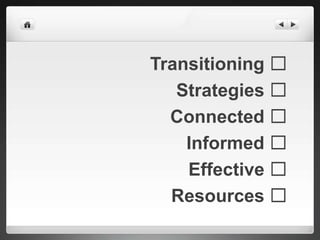
Transitioning ☐
   Strategies ☐
  Connected ☐
    Informed ☐
    Effective ☐
  Resources ☐
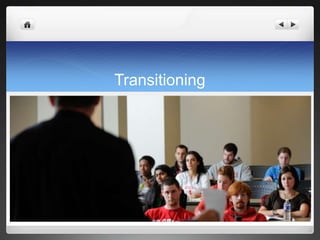
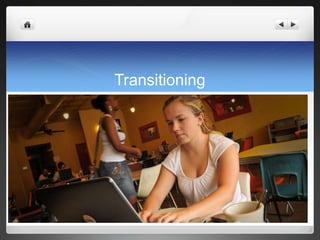
Transitioning
Transitioning
Transitioning

“When moving to a distance
format, an instructor cannot
simply replicate what is done
in a traditional classroom.”
Transitioning

   Has taught hybrid? Online?
   Will be teaching hybrid/online?
   Taken a hybrid/online class?
   Traditional, interested in technology?
Transitioning 
   Strategies ☐
  Connected ☐
    Informed ☐
    Effective ☐
  Resources ☐
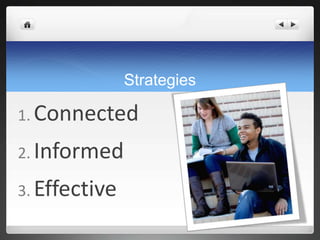
Strategies

1. Connected

2. Informed

3. Effective
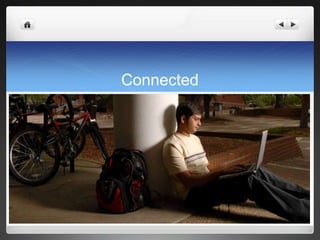
Connected
Connected

“Most poignantly, students broached
[their top] concerns about the hybrid
courses… [one being that they] missed
coming to their face-to-face classes.”
Connected
How do we foster connections
   between ourselves and our students
   amongst the students
                  …in a hybrid or online class?
Connected
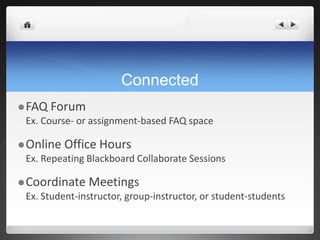
 FAQ   Forum
 Ex. Course- or assignment-based FAQ space

 Online   Office Hours
 Ex. Repeating Blackboard Collaborate Sessions

 Coordinate    Meetings
 Ex. Student-instructor, group-instructor, or student-students
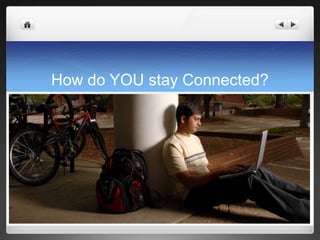
How do YOU stay Connected?
Transitioning 
   Strategies 
  Connected 
    Informed ☐
    Effective ☐
  Resources ☐
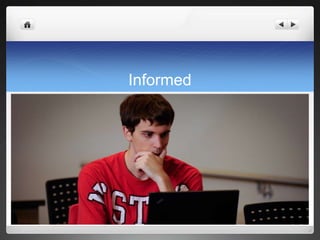
Informed
Informed

“A well-defined social presence (learners presenting
themselves as real people), teaching presence (appropriate
instruction and support), and cognitive presence
(constructing meaning through sustained communication) all
work together to promote deep and meaningful learning.”
Informed
How do we inform our students about:
   their progress
   other perspectives
   course announcements, updates
                     …in hybrid or online course?
Informed
 Progress   Reports
 Ex. Group or individual progress

 Outside   Perspectives
 Ex. Guest Skype calls, TED Talks, Khan Academy

 Podcast,Vodcast, or     Blog
 Ex. Instructor updates, group progress, assignment descriptions
Informed
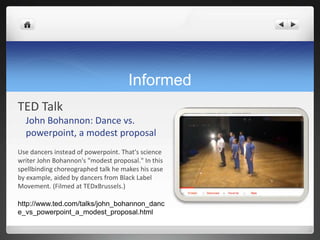
TED Talk
  John Bohannon: Dance vs.
  powerpoint, a modest proposal
Use dancers instead of powerpoint. That's science
writer John Bohannon's "modest proposal." In this
spellbinding choreographed talk he makes his case
by example, aided by dancers from Black Label
Movement. (Filmed at TEDxBrussels.)

http://www.ted.com/talks/john_bohannon_danc
e_vs_powerpoint_a_modest_proposal.html
How do YOU keep Informed?
Transitioning 
   Strategies 
  Connected 
    Informed 
    Effective ☐
  Resources ☐
Effective
Effective

“Instructors who take on the challenge of
teaching in a distance format often must
serve as role models, problem
solvers, and liaisons.”
Effective
How do we effectively:
 gauge student understanding

 work with different levels of students

 grade, provide feedback, monitor progress

 maintain teaching responsibilities (!)

                   …in hybrid or online courses?
Effective
 Survey   of Students
 Ex. Post-unit survey to test comfort with material; new-
 semester survey about backgrounds, interests, experience

 On-Demand      Resource Spaces
 Ex. Resources for lower-level skills; feedback for effective
 grading

 Prepare   students for class
 Ex. Links to online resources to prepare for class activity
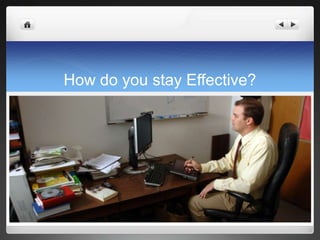
How do you stay Effective?
Transitioning 
   Strategies 
  Connected 
    Informed 
    Effective 
  Resources ☐
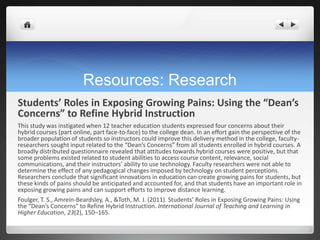
Resources: Research
Students’ Roles in Exposing Growing Pains: Using the “Dean’s
Concerns” to Refine Hybrid Instruction
This study was instigated when 12 teacher education students expressed four concerns about their
hybrid courses (part online, part face-to-face) to the college dean. In an effort gain the perspective of the
broader population of students so instructors could improve this delivery method in the college, faculty-
researchers sought input related to the “Dean’s Concerns” from all students enrolled in hybrid courses. A
broadly distributed questionnaire revealed that attitudes towards hybrid courses were positive, but that
some problems existed related to student abilities to access course content, relevance, social
communications, and their instructors’ ability to use technology. Faculty researchers were not able to
determine the effect of any pedagogical changes imposed by technology on student perceptions.
Researchers conclude that significant innovations in education can create growing pains for students, but
these kinds of pains should be anticipated and accounted for, and that students have an important role in
exposing growing pains and can support efforts to improve distance learning.
Foulger, T. S., Amrein-Beardsley, A., &Toth, M. J. (2011). Students’ Roles in Exposing Growing Pains: Using
the “Dean’s Concerns” to Refine Hybrid Instruction. International Journal of Teaching and Learning in
Higher Education, 23(2), 150–165.
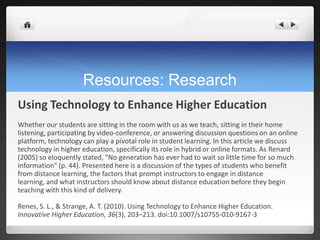
Resources: Research
Using Technology to Enhance Higher Education
Whether our students are sitting in the room with us as we teach, sitting in their home
listening, participating by video-conference, or answering discussion questions on an online
platform, technology can play a pivotal role in student learning. In this article we discuss
technology in higher education, specifically its role in hybrid or online formats. As Renard
(2005) so eloquently stated, "No generation has ever had to wait so little time for so much
information" (p. 44). Presented here is a discussion of the types of students who benefit
from distance learning, the factors that prompt instructors to engage in distance
learning, and what instructors should know about distance education before they begin
teaching with this kind of delivery.

Renes, S. L., & Strange, A. T. (2010). Using Technology to Enhance Higher Education.
Innovative Higher Education, 36(3), 203–213. doi:10.1007/s10755-010-9167-3
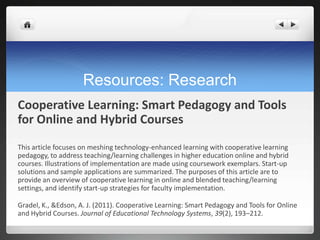
Resources: Research
Cooperative Learning: Smart Pedagogy and Tools
for Online and Hybrid Courses
This article focuses on meshing technology-enhanced learning with cooperative learning
pedagogy, to address teaching/learning challenges in higher education online and hybrid
courses. Illustrations of implementation are made using coursework exemplars. Start-up
solutions and sample applications are summarized. The purposes of this article are to
provide an overview of cooperative learning in online and blended teaching/learning
settings, and identify start-up strategies for faculty implementation.

Gradel, K., &Edson, A. J. (2011). Cooperative Learning: Smart Pedagogy and Tools for Online
and Hybrid Courses. Journal of Educational Technology Systems, 39(2), 193–212.
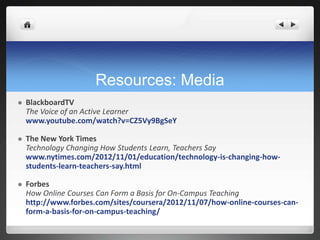
Resources: Media
   BlackboardTV
    The Voice of an Active Learner
    www.youtube.com/watch?v=CZ5Vy9BgSeY

   The New York Times
    Technology Changing How Students Learn, Teachers Say
    www.nytimes.com/2012/11/01/education/technology-is-changing-how-
    students-learn-teachers-say.html

   Forbes
    How Online Courses Can Form a Basis for On-Campus Teaching
    http://www.forbes.com/sites/coursera/2012/11/07/how-online-courses-can-
    form-a-basis-for-on-campus-teaching/
Transitioning 
   Strategies 
  Connected 
    Informed 
    Effective 
  Resources 
Strategies for Teaching in a
   Hybrid* Environment
Sarah Egan Warren & Sarah Glova

Hybrid/Online Teaching Strategies

  • 1.
    Strategies for Teachingin a Hybrid* Environment Sarah Egan Warren & Sarah Glova *Strategies will be applicable to online and in-person courses as well
  • 2.
    Welcome!  TodaysMeet Link: www.todaysmeet.com/TwoSarahs  Slideshare Link: www.slideshare.net/TwoSarahs
  • 3.
    Transitioning ☐ Strategies ☐ Connected ☐ Informed ☐ Effective ☐ Resources ☐
  • 4.
  • 5.
  • 6.
    Transitioning “When moving toa distance format, an instructor cannot simply replicate what is done in a traditional classroom.”
  • 7.
    Transitioning  Has taught hybrid? Online?  Will be teaching hybrid/online?  Taken a hybrid/online class?  Traditional, interested in technology?
  • 8.
    Transitioning  Strategies ☐ Connected ☐ Informed ☐ Effective ☐ Resources ☐
  • 9.
  • 10.
  • 11.
    Connected “Most poignantly, studentsbroached [their top] concerns about the hybrid courses… [one being that they] missed coming to their face-to-face classes.”
  • 12.
    Connected How do wefoster connections  between ourselves and our students  amongst the students …in a hybrid or online class?
  • 13.
    Connected  FAQ Forum Ex. Course- or assignment-based FAQ space  Online Office Hours Ex. Repeating Blackboard Collaborate Sessions  Coordinate Meetings Ex. Student-instructor, group-instructor, or student-students
  • 14.
    How do YOUstay Connected?
  • 15.
    Transitioning  Strategies  Connected  Informed ☐ Effective ☐ Resources ☐
  • 16.
  • 17.
    Informed “A well-defined socialpresence (learners presenting themselves as real people), teaching presence (appropriate instruction and support), and cognitive presence (constructing meaning through sustained communication) all work together to promote deep and meaningful learning.”
  • 18.
    Informed How do weinform our students about:  their progress  other perspectives  course announcements, updates …in hybrid or online course?
  • 19.
    Informed  Progress Reports Ex. Group or individual progress  Outside Perspectives Ex. Guest Skype calls, TED Talks, Khan Academy  Podcast,Vodcast, or Blog Ex. Instructor updates, group progress, assignment descriptions
  • 20.
    Informed TED Talk John Bohannon: Dance vs. powerpoint, a modest proposal Use dancers instead of powerpoint. That's science writer John Bohannon's "modest proposal." In this spellbinding choreographed talk he makes his case by example, aided by dancers from Black Label Movement. (Filmed at TEDxBrussels.) http://www.ted.com/talks/john_bohannon_danc e_vs_powerpoint_a_modest_proposal.html
  • 21.
    How do YOUkeep Informed?
  • 22.
    Transitioning  Strategies  Connected  Informed  Effective ☐ Resources ☐
  • 23.
  • 24.
    Effective “Instructors who takeon the challenge of teaching in a distance format often must serve as role models, problem solvers, and liaisons.”
  • 25.
    Effective How do weeffectively:  gauge student understanding  work with different levels of students  grade, provide feedback, monitor progress  maintain teaching responsibilities (!) …in hybrid or online courses?
  • 26.
    Effective  Survey of Students Ex. Post-unit survey to test comfort with material; new- semester survey about backgrounds, interests, experience  On-Demand Resource Spaces Ex. Resources for lower-level skills; feedback for effective grading  Prepare students for class Ex. Links to online resources to prepare for class activity
  • 27.
    How do youstay Effective?
  • 28.
    Transitioning  Strategies  Connected  Informed  Effective  Resources ☐
  • 29.
    Resources: Research Students’ Rolesin Exposing Growing Pains: Using the “Dean’s Concerns” to Refine Hybrid Instruction This study was instigated when 12 teacher education students expressed four concerns about their hybrid courses (part online, part face-to-face) to the college dean. In an effort gain the perspective of the broader population of students so instructors could improve this delivery method in the college, faculty- researchers sought input related to the “Dean’s Concerns” from all students enrolled in hybrid courses. A broadly distributed questionnaire revealed that attitudes towards hybrid courses were positive, but that some problems existed related to student abilities to access course content, relevance, social communications, and their instructors’ ability to use technology. Faculty researchers were not able to determine the effect of any pedagogical changes imposed by technology on student perceptions. Researchers conclude that significant innovations in education can create growing pains for students, but these kinds of pains should be anticipated and accounted for, and that students have an important role in exposing growing pains and can support efforts to improve distance learning. Foulger, T. S., Amrein-Beardsley, A., &Toth, M. J. (2011). Students’ Roles in Exposing Growing Pains: Using the “Dean’s Concerns” to Refine Hybrid Instruction. International Journal of Teaching and Learning in Higher Education, 23(2), 150–165.
  • 30.
    Resources: Research Using Technologyto Enhance Higher Education Whether our students are sitting in the room with us as we teach, sitting in their home listening, participating by video-conference, or answering discussion questions on an online platform, technology can play a pivotal role in student learning. In this article we discuss technology in higher education, specifically its role in hybrid or online formats. As Renard (2005) so eloquently stated, "No generation has ever had to wait so little time for so much information" (p. 44). Presented here is a discussion of the types of students who benefit from distance learning, the factors that prompt instructors to engage in distance learning, and what instructors should know about distance education before they begin teaching with this kind of delivery. Renes, S. L., & Strange, A. T. (2010). Using Technology to Enhance Higher Education. Innovative Higher Education, 36(3), 203–213. doi:10.1007/s10755-010-9167-3
  • 31.
    Resources: Research Cooperative Learning:Smart Pedagogy and Tools for Online and Hybrid Courses This article focuses on meshing technology-enhanced learning with cooperative learning pedagogy, to address teaching/learning challenges in higher education online and hybrid courses. Illustrations of implementation are made using coursework exemplars. Start-up solutions and sample applications are summarized. The purposes of this article are to provide an overview of cooperative learning in online and blended teaching/learning settings, and identify start-up strategies for faculty implementation. Gradel, K., &Edson, A. J. (2011). Cooperative Learning: Smart Pedagogy and Tools for Online and Hybrid Courses. Journal of Educational Technology Systems, 39(2), 193–212.
  • 32.
    Resources: Media  BlackboardTV The Voice of an Active Learner www.youtube.com/watch?v=CZ5Vy9BgSeY  The New York Times Technology Changing How Students Learn, Teachers Say www.nytimes.com/2012/11/01/education/technology-is-changing-how- students-learn-teachers-say.html  Forbes How Online Courses Can Form a Basis for On-Campus Teaching http://www.forbes.com/sites/coursera/2012/11/07/how-online-courses-can- form-a-basis-for-on-campus-teaching/
  • 33.
    Transitioning  Strategies  Connected  Informed  Effective  Resources 
  • 34.
    Strategies for Teachingin a Hybrid* Environment Sarah Egan Warren & Sarah Glova

Editor's Notes

  • #2 Sarah Glova“Traditional teaching can also benefit from what has proven effective for distance education classes... Colleges, instructors, and students must continue to work to together to improve the way education is delivered.”
  • #3 Sarah Glova
  • #4 Sarah Glova
  • #5 Sarah GlovaThe traditional classroom and the online environment are very different.
  • #6 Sarah GlovaThe traditional classroom and the online environment are very different. In today’s discussion, we’ll try to highlight some strategies that work effectively for online spaces. These strategies will be useful in any classroom that utilizes technologies (from traditional to hybrid to online)
  • #7 Sarah Glova“When moving to a distance format, an instructor cannot simply replicate what is done in a traditional classroom” (Chaney et al. 2008; Dykman and Davis 2008c; Keramidas et al. 2007; Tallent-Runnells et al. 2006; Vaughn 2007; Zhao et al. 2009).Renes, S. L., & Strange, A. T. (2010). Using Technology to Enhance Higher Education. Innovative Higher Education, 36(3), 203–213. doi:10.1007/s10755-010-9167-3
  • #8 Sarah GlovaSurvey of presentation audience.
  • #10 Sarah E-WToday we’ll focus on three different themes. We organized our strategies into these themes because we felt these themes are consistent concerns for both students and instructors when using online resources. All instructors and students worry about whether they’ll be able to stay connected online, whether they’ll be informed about the progress of the course or about the activities of others, and whether they’ll be effective, whether that means effective graders or effective participants.
  • #11 Sarah E-W
  • #12 Sarah E-WMost poignantly, students broached concerns about the hybrid courses being offered, specifically noting their perceptions that: (1) professors unnecessarily assigned students more “busy work” and “tedious tasks” (defined as active work of little value to course objectives) just to keep students occupied online within hybrid courses; (2) the online activities in which students were required to engage were confusing, disorganized, and complicated by the use of technology and other online resources which hindered student learning; (3) students missed coming to their face-to-face classes…Foulger, T. S., Amrein-Beardsley, A., & Toth, M. J. (2011). Students’ Roles in Exposing Growing Pains: Using the “Dean’s Concerns” to Refine Hybrid Instruction. International Journal of Teaching and Learning in Higher Education, 23(2), 150–165.
  • #13 Sarah E-W
  • #14 Sarah E-W
  • #15 Sarah E-WAsk audience.
  • #17 Sarah GlovaNext we’ll talk about “Informed.”
  • #18 Sarah GlovaStudents need to be informed about themselves, their peers, and their instructor. Instruction and support are important for teaching presence. Sustained communication is important to cognitive presence. “A well-defined social presence (learners presenting themselves as real people), teaching presence (appropriate instruction and support), and cognitive presence (constructing meaning through sustained communication) all work together to promote deep and meaningful learning.”Renes, S. L., & Strange, A. T. (2010). Using Technology to Enhance Higher Education. Innovative Higher Education, 36(3), 203–213. doi:10.1007/s10755-010-9167-3
  • #19 Sarah Glova
  • #20 Sarah Glova
  • #21 Sarah E-W
  • #22 Sarah GlovaAsk participants
  • #24 Sarah E-W
  • #25 Sarah E-WMany instructors worry that taking on hybrid or online responsibilities will create too many additional “hats” for them.“Instructors who take on the challenge of teaching in a distance format often must serve as role models, problem solvers, and liaisons” (Zhao et al. 2009).Renes, S. L., & Strange, A. T. (2010). Using Technology to Enhance Higher Education. Innovative Higher Education, 36(3), 203–213. doi:10.1007/s10755-010-9167-3
  • #26 Sarah E-W
  • #27 Sarah E-W
  • #28 Sarah E-W
  • #30 Glova
  • #31 Glova
  • #32 Glova