Human-Environment System
Arevalo, Juvy Ann P.
Articulo, Marla D.
Baran, Mary luz
What is an human environment?
•A human environment is the
area that a human lives in. They
are varied from there, even more
so by humans ability to adapt
the environment to us and us to
the environment.
Objectives
• Human-Environment Systems.
• Distinguish the ways by which human-
environment interactions shape cultural
and natural landscapes.
• Interpret thematic and mental maps to
understand landscape changes and an
individual’s sense of place.
• Explain environmental and social issues
through the analysis of spatial
distributions and spatial processes.
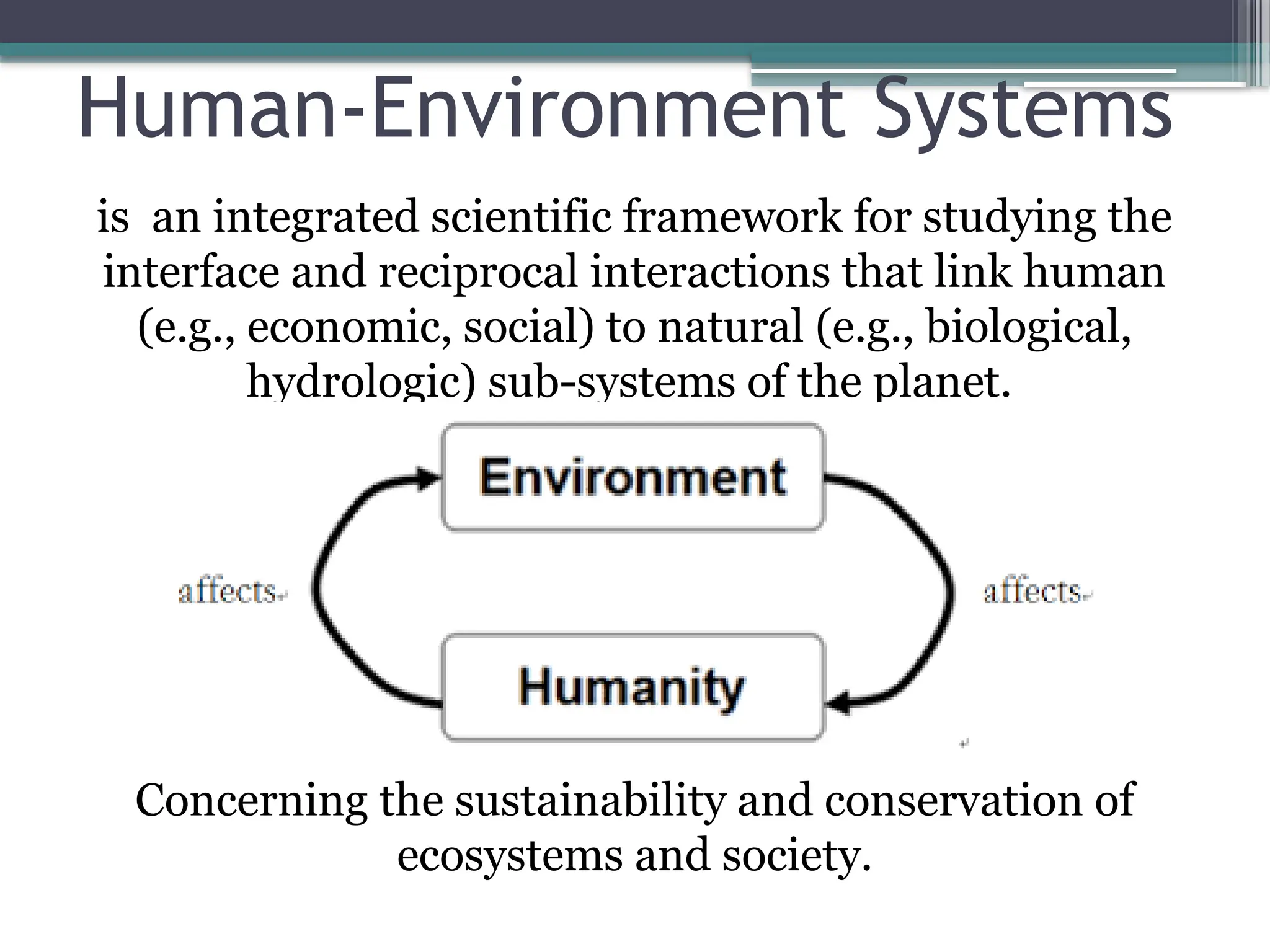
Human-Environment Systems
is an integrated scientific framework for studying the
interface and reciprocal interactions that link human
(e.g., economic, social) to natural (e.g., biological,
hydrologic) sub-systems of the planet.
Concerning the sustainability and conservation of
ecosystems and society.
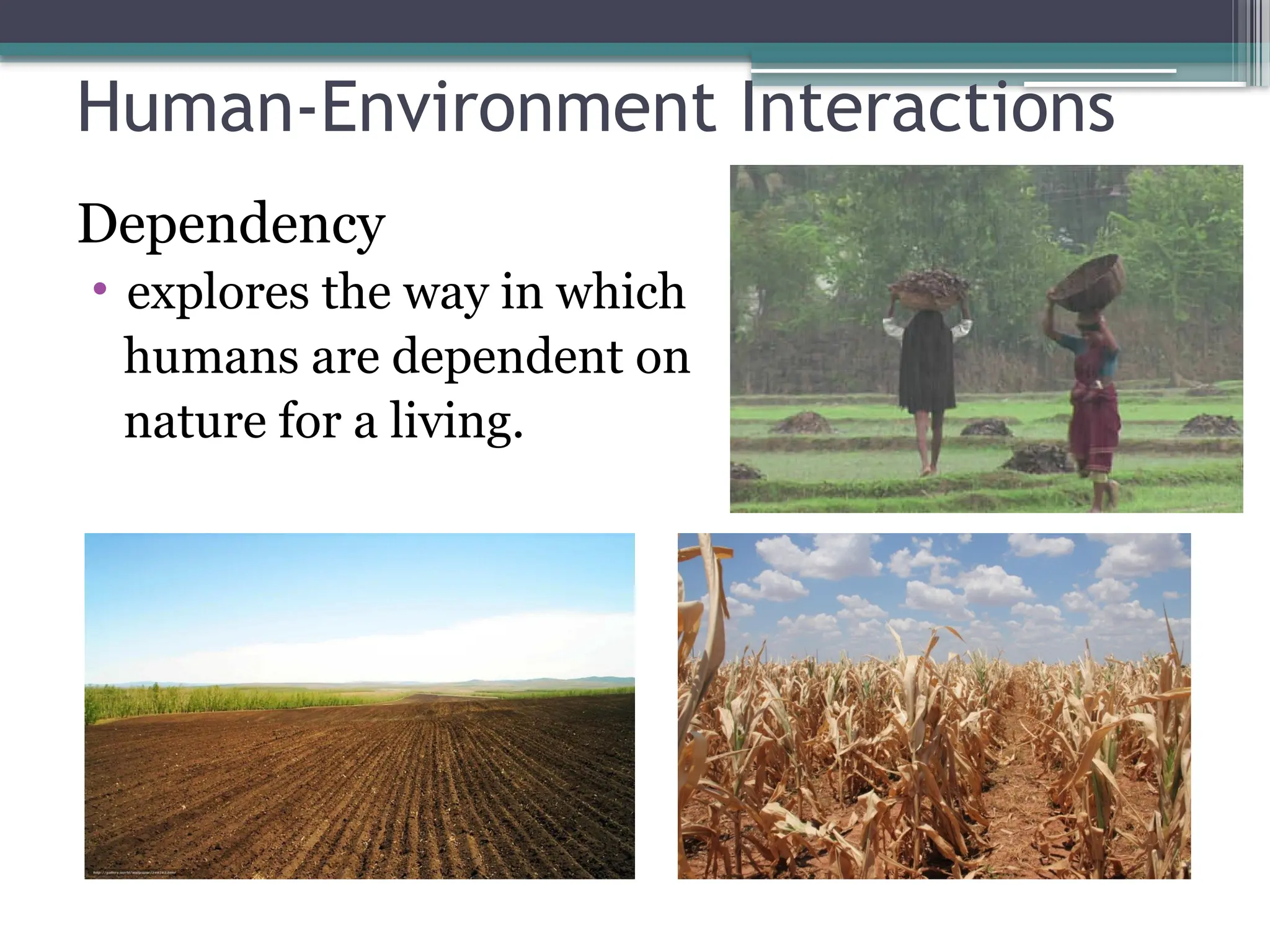
Human-Environment Interactions
Dependency
• explores the way in which
humans are dependent on
nature for a living.
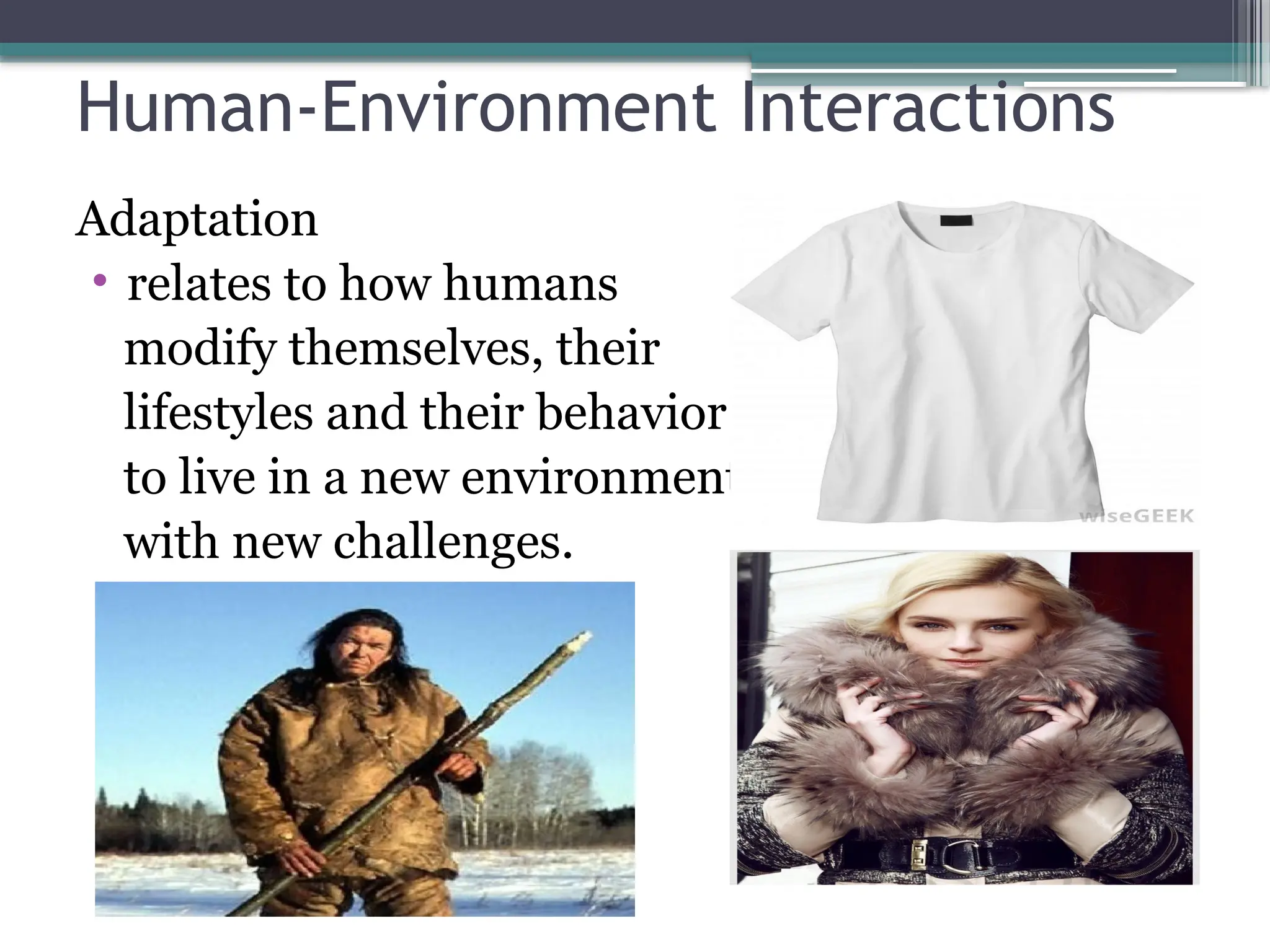
Human-Environment Interactions
Adaptation
• relates to how humans
modify themselves, their
lifestyles and their behavior
to live in a new environment
with new challenges.
Human-Environment Interactions
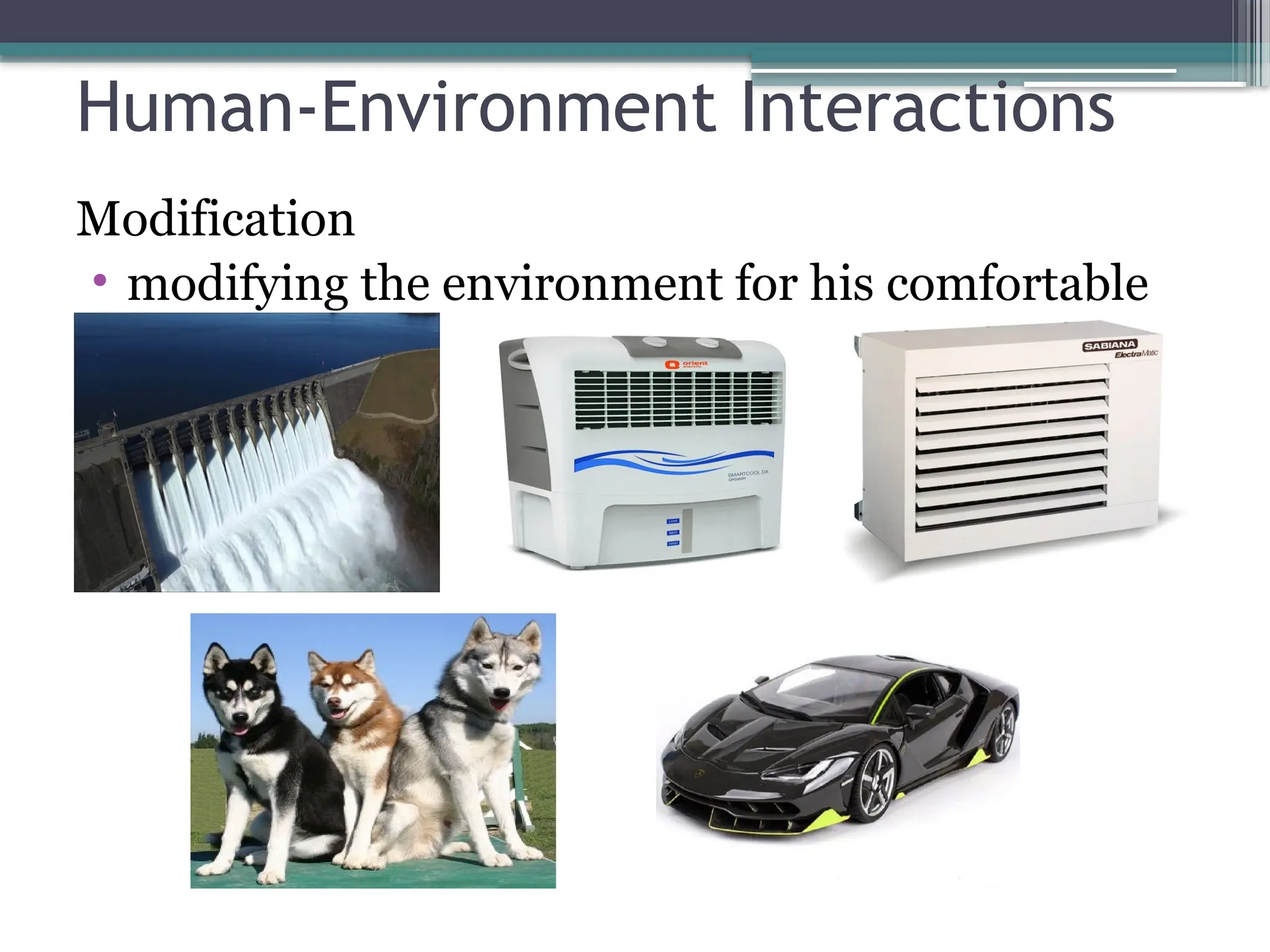
Modification
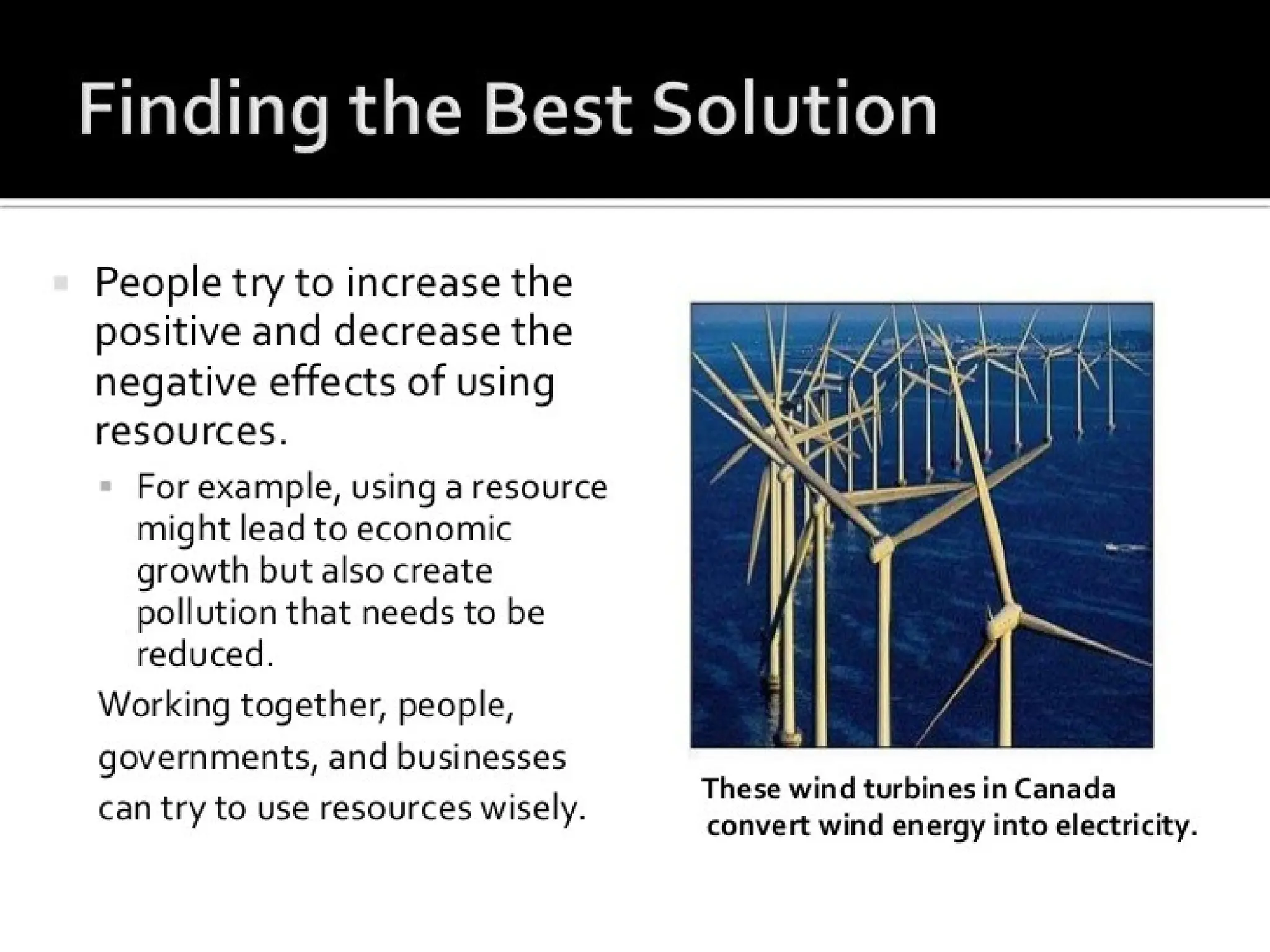
• modifying the environment for his comfortable
living.
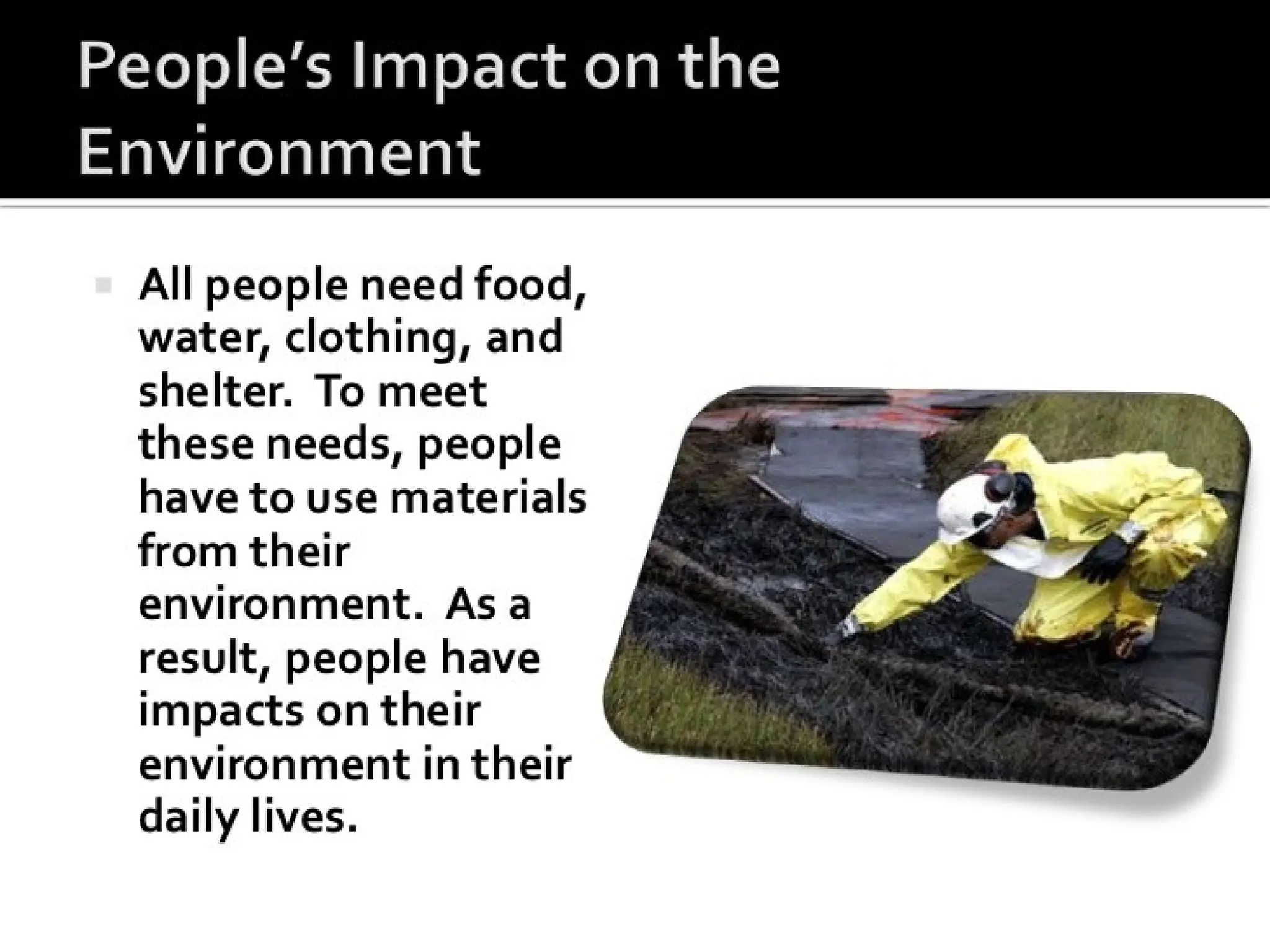
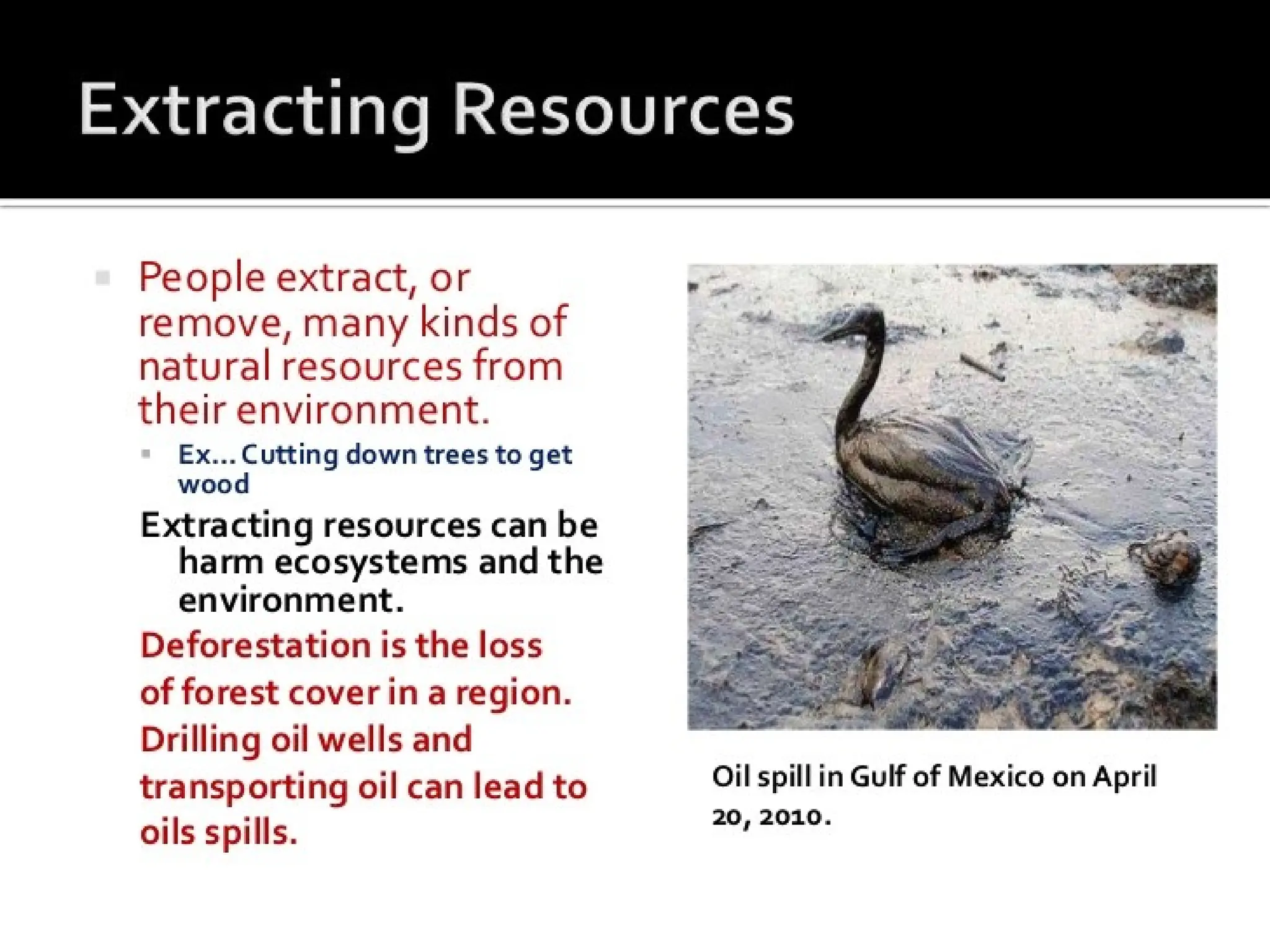
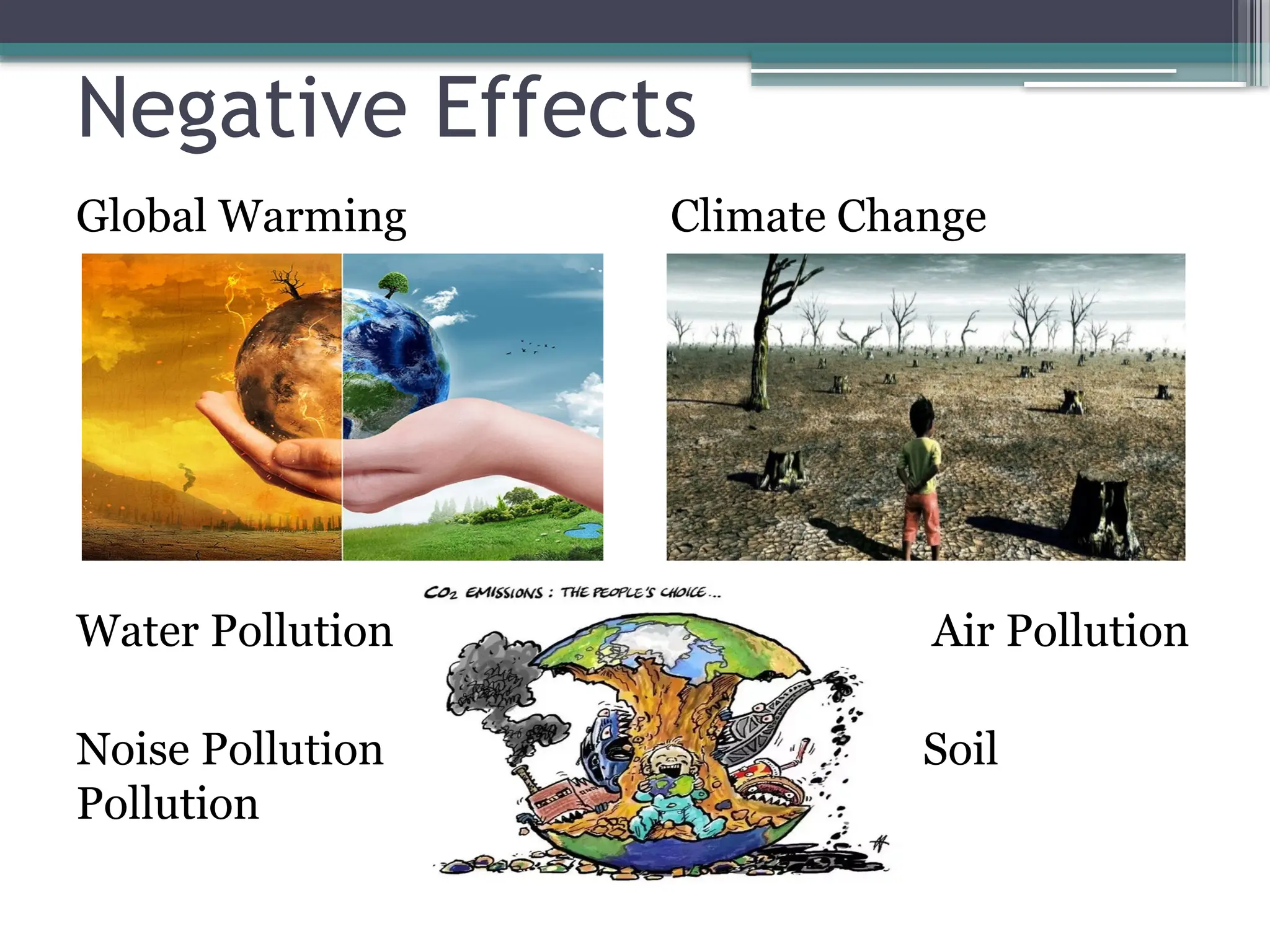
Negative Effects
Global Warming Climate Change
Water Pollution Air Pollution
Noise Pollution Soil
Pollution
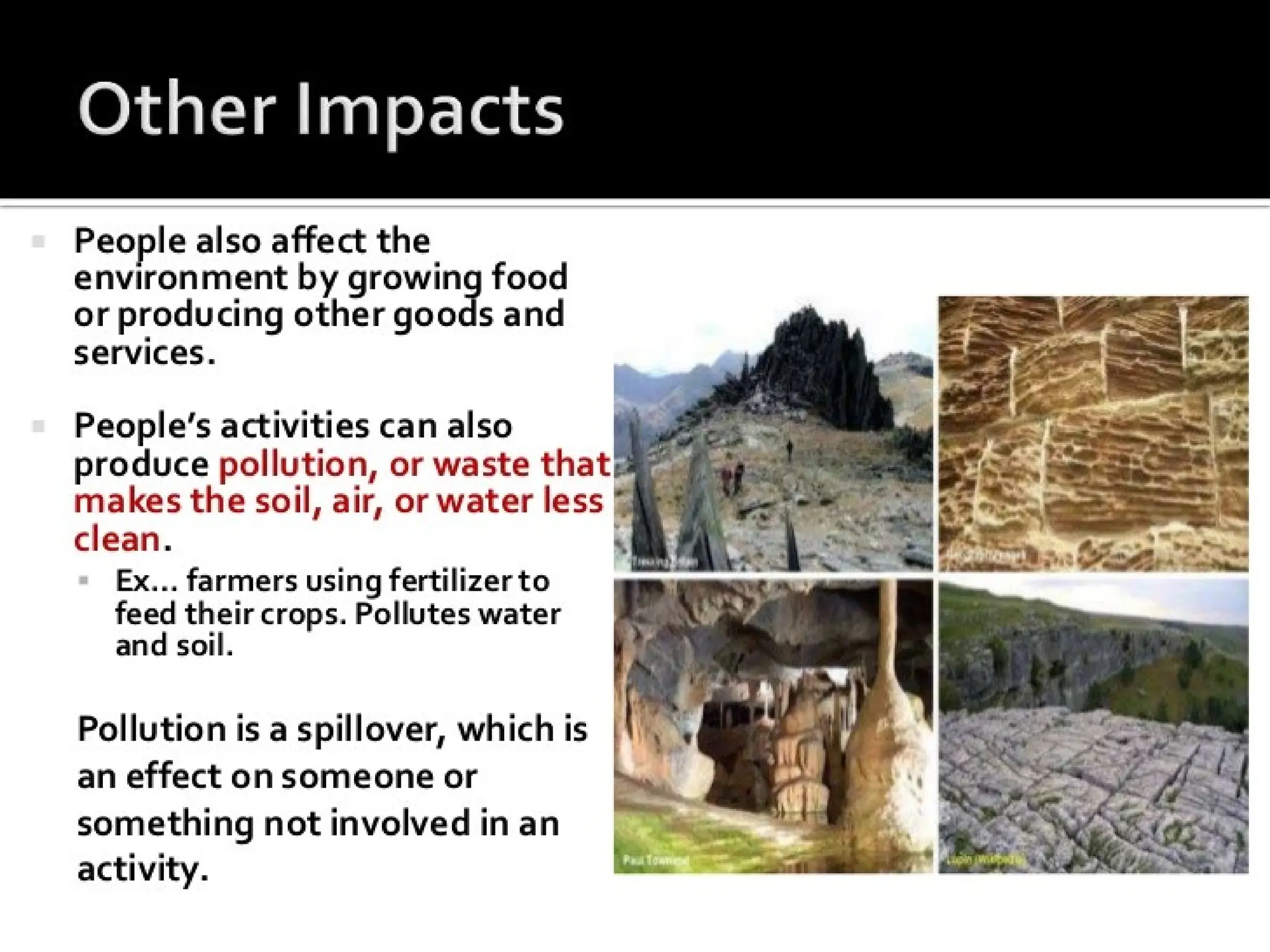
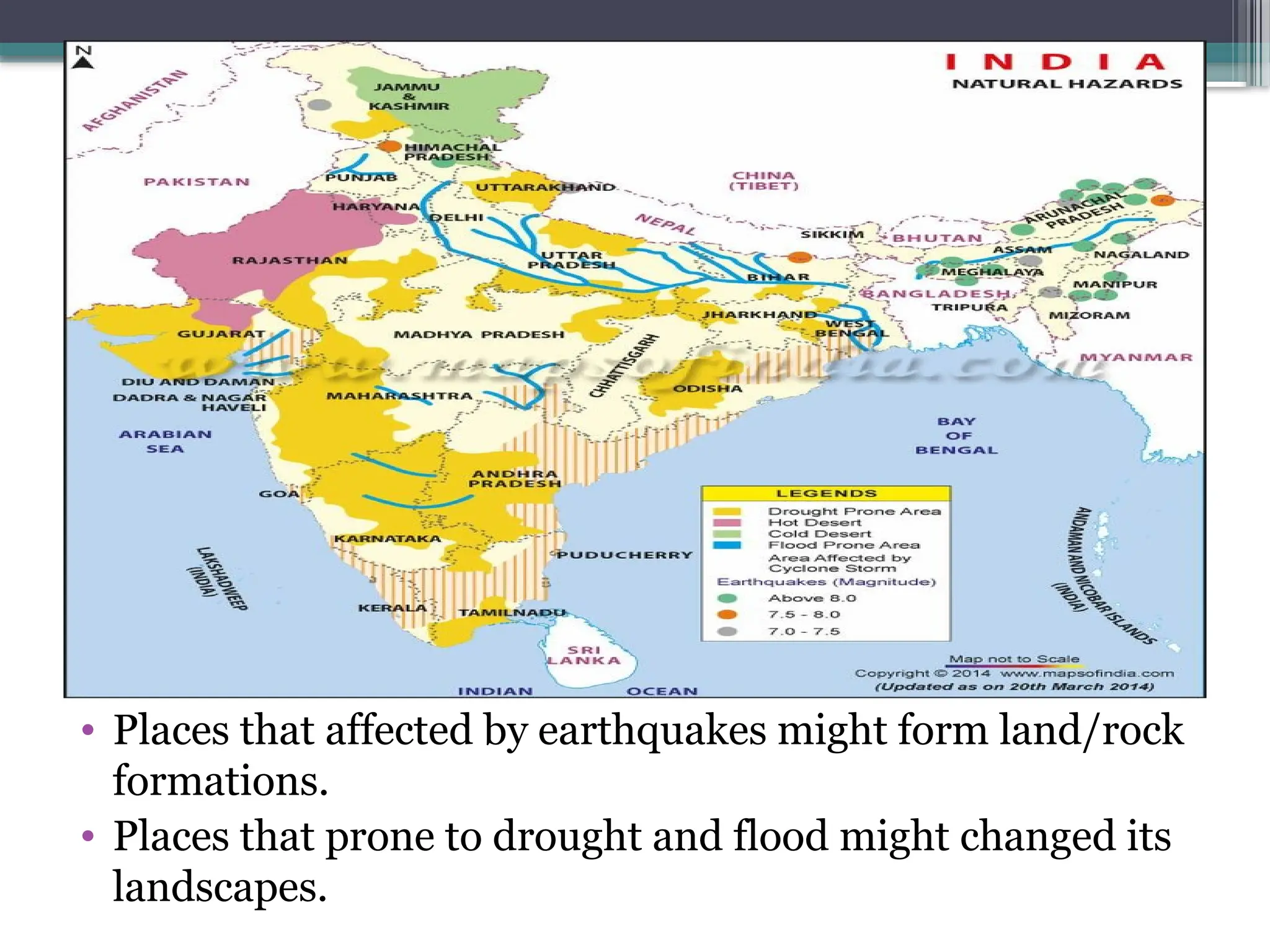
• Places that affected by earthquakes might form land/rock
formations.
• Places that prone to drought and flood might changed its
landscapes.
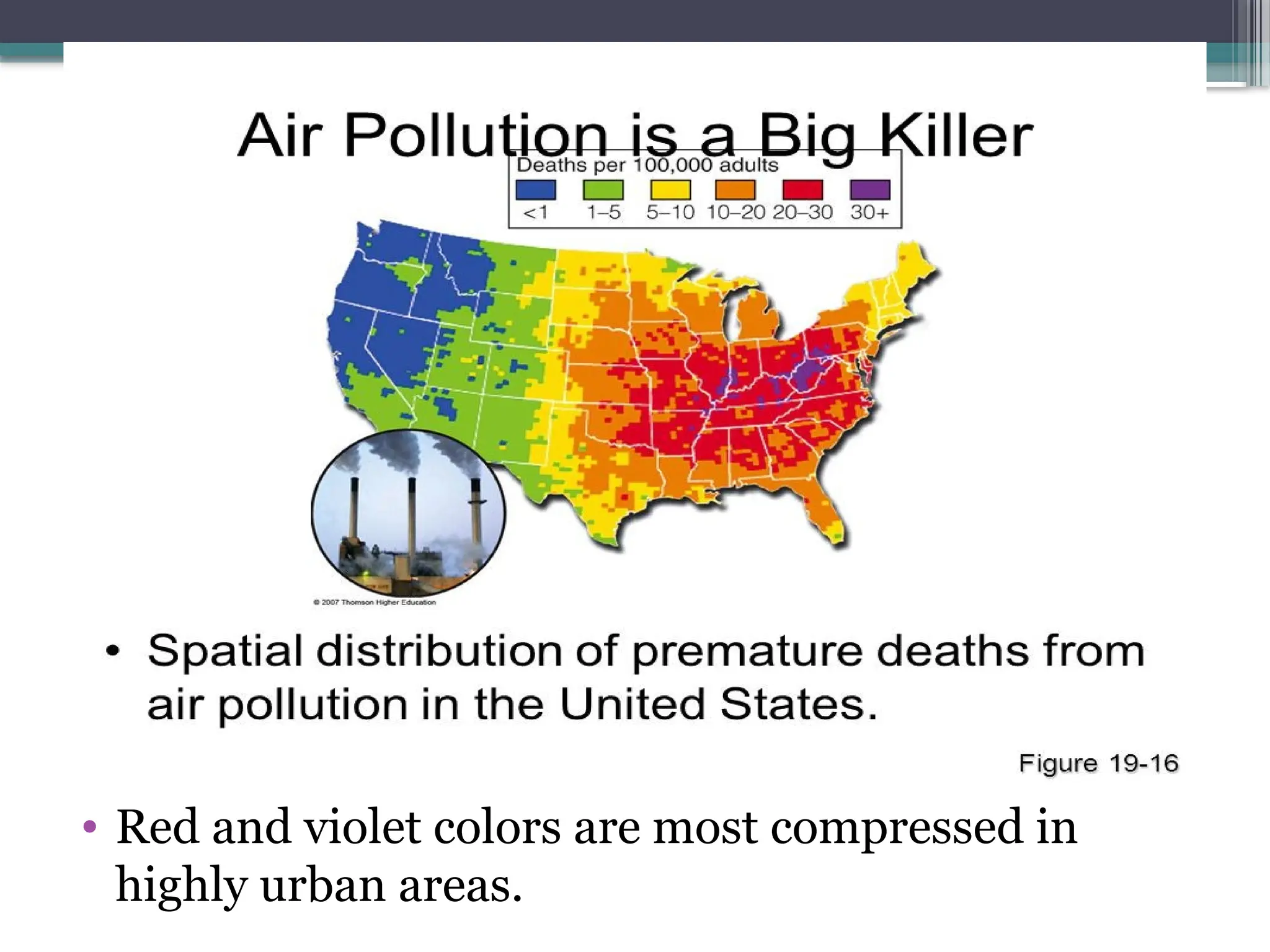
• Red and violet colors are most compressed in
highly urban areas.
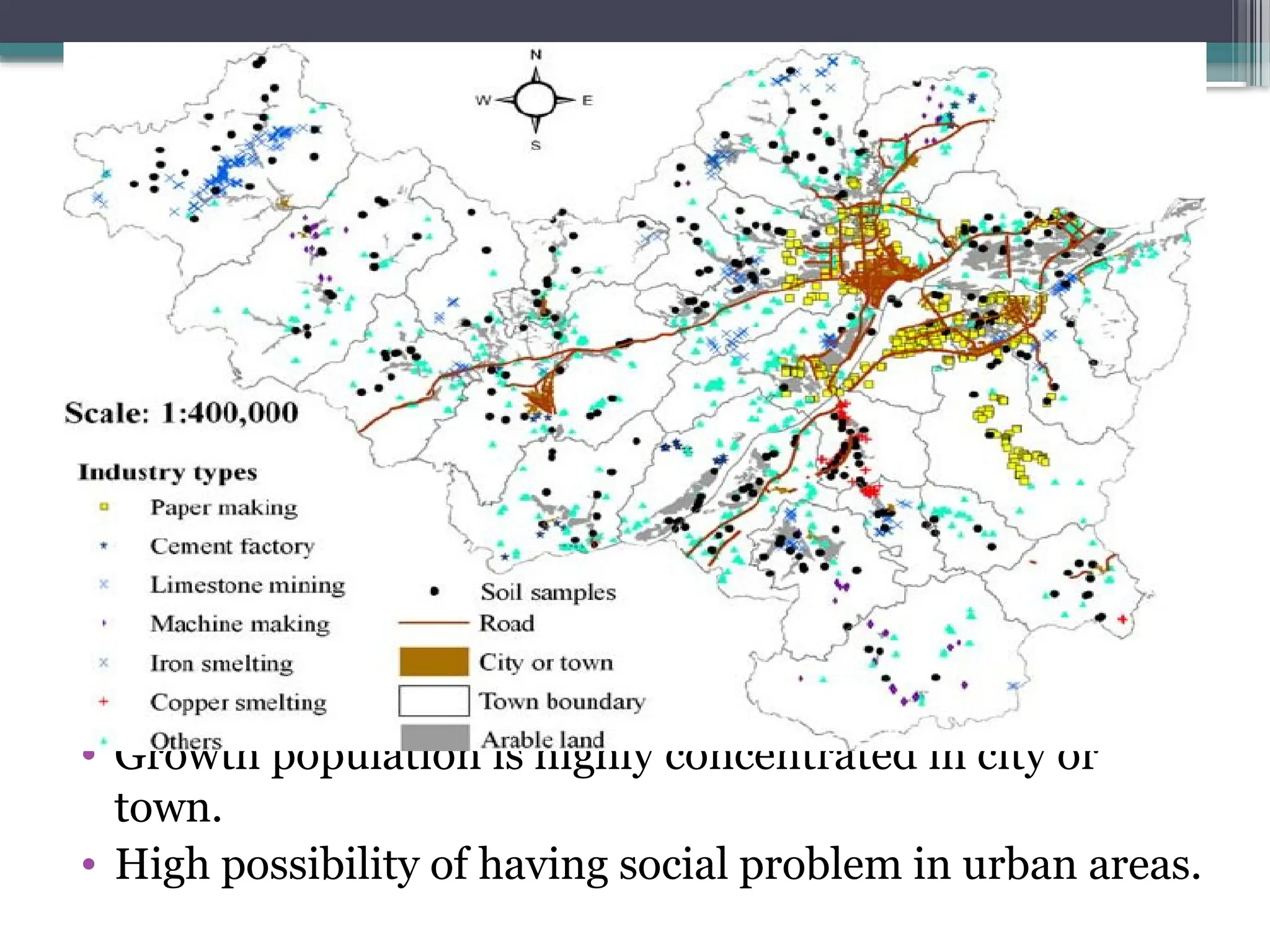
• Growth population is highly concentrated in city or
town.
• High possibility of having social problem in urban areas.
The human environment is concerned with
people who live in different environments,
their activities and the environmental
features which they have created. We also
look at the interdependence of people in the
local community-this is developed from the
infant classes looking at those who help us in
the locality. Following the spiral nature of the
curriculum this theme of interdependence is
further developed from third to 6th
class .Through the study of one European and
one non European country we look at how we
depend as countries on each other and how
different cultures enrich one another.
Our earth is human environment. By this I mean
that though humans are less in number than the
animals, insects, and birds combined, we dominate
the earth by our habitats. Anywhere where humans
live and create facilities is a human environment. It
is not limited to buildings and other infrastructure,
but consists of the way we function, the way we
influence our surroundings by our thoughts and
actions. It encompasses our philosophy, our art,
culture, our social structure, our economic activities
and their impact on the environment, our behavior
as a result of our thinking and so on.
Human_environment_system_discipline.pptx

Human_environment_system_discipline.pptx

  • 1.
    Human-Environment System Arevalo, JuvyAnn P. Articulo, Marla D. Baran, Mary luz
  • 2.
    What is anhuman environment? •A human environment is the area that a human lives in. They are varied from there, even more so by humans ability to adapt the environment to us and us to the environment.
  • 13.
    Objectives • Human-Environment Systems. •Distinguish the ways by which human- environment interactions shape cultural and natural landscapes. • Interpret thematic and mental maps to understand landscape changes and an individual’s sense of place. • Explain environmental and social issues through the analysis of spatial distributions and spatial processes.
  • 14.
    Human-Environment Systems is anintegrated scientific framework for studying the interface and reciprocal interactions that link human (e.g., economic, social) to natural (e.g., biological, hydrologic) sub-systems of the planet. Concerning the sustainability and conservation of ecosystems and society.
  • 15.
    Human-Environment Interactions Dependency • exploresthe way in which humans are dependent on nature for a living.
  • 16.
    Human-Environment Interactions Adaptation • relatesto how humans modify themselves, their lifestyles and their behavior to live in a new environment with new challenges.
  • 17.
    Human-Environment Interactions Modification • modifyingthe environment for his comfortable living.
  • 18.
    Negative Effects Global WarmingClimate Change Water Pollution Air Pollution Noise Pollution Soil Pollution
  • 19.
    • Places thataffected by earthquakes might form land/rock formations. • Places that prone to drought and flood might changed its landscapes.
  • 21.
    • Red andviolet colors are most compressed in highly urban areas.
  • 22.
    • Growth populationis highly concentrated in city or town. • High possibility of having social problem in urban areas.
  • 23.
    The human environmentis concerned with people who live in different environments, their activities and the environmental features which they have created. We also look at the interdependence of people in the local community-this is developed from the infant classes looking at those who help us in the locality. Following the spiral nature of the curriculum this theme of interdependence is further developed from third to 6th class .Through the study of one European and one non European country we look at how we depend as countries on each other and how different cultures enrich one another.
  • 24.
    Our earth ishuman environment. By this I mean that though humans are less in number than the animals, insects, and birds combined, we dominate the earth by our habitats. Anywhere where humans live and create facilities is a human environment. It is not limited to buildings and other infrastructure, but consists of the way we function, the way we influence our surroundings by our thoughts and actions. It encompasses our philosophy, our art, culture, our social structure, our economic activities and their impact on the environment, our behavior as a result of our thinking and so on.