How do the everyday Human Rights we all have affect the adults with 
Intellectual Disabilities?
Human rights are anything that is 
entitled to everyone regardless 
of residence, race, gender, etc. 
States must take a position to 
ensure human rights are enjoyed 
by everyone. 
Individuals should respect and 
assist in the maintenance of 
others’ human rights. 
Born free & equal 
Live in freedom & safety 
To have these rights without 
discrimination 
To not be a slave 
Not to be tortured 
Equal use of the law 
To be protected by the law 
Avoid unfair detainment 
Privacy 
Go where we want as we wish 
Marry & have a family 
Possess your own things 
To believe what we want 
Fair wages for work 
To not lose these rights
What is an Intellectual 
disability 
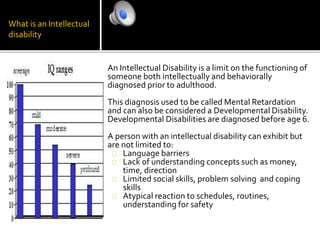
An Intellectual Disability is a limit on the functioning of 
someone both intellectually and behaviorally 
diagnosed prior to adulthood. 
This diagnosis used to be called Mental Retardation 
and can also be considered a Developmental Disability. 
Developmental Disabilities are diagnosed before age 6. 
A person with an intellectual disability can exhibit but 
are not limited to: 
Language barriers 
Lack of understanding concepts such as money, 
time, direction 
Limited social skills, problem solving and coping 
skills 
Atypical reaction to schedules, routines, 
understanding for safety
Segregation from society 
Parents thought they had “imperfect” 
children 
Thought to have no worth or offering 
Institutionalization 
 Research testing 
 Shock therapy 
 Families told not to visit
2008 started a mass investigation into the 
treatment of individuals with ID while 
institutionalized and the violations of human 
rights and the compliance with the ADA 
(Americans with Disabilities Act) and the 
CRIPA (Civil Rights of Institutionalized 
Persons Act) 
The investigation was based on complaints of 
family members concerned about their loved 
ones
The five training centers (institutions) were 
not integrating the residents as law required 
The centers were not offering appropriate 
community services 
The centers had poor methods for integrating 
people from the center to the community 
permanently 
Some people had never seen the world from 
outside the institution's walls for more than 
30 years
The most integrated services and settings will be put 
into place to include high standard community based 
options 
By 2016 the individuals living in the training centers 
must be transitioned into community based living 
alternatives like group homes and apartments 
There must be something in place to continually 
monitor & evaluate the services for the individual and 
by the provider 
All of this must be done by 2020; however, Virginia has 
agreed to meet deadlines between this time period 
for things like closing the institutions
Individuals with ID have historically not been 
afforded the same human rights that 
everyone is entitiled 
They were not given the opportunity to work 
They were restricted from receiving the same 
standards of living those 
without the disabilities 
have
LAW 
Americans with Disabilities 
Act (ADA) 
Civil Rights of 
Institutionalized Persons 
ACT (CRIPA) 
DETAILS 
1990-anti-discrimination 
law based on disability in 
employment, 
accommodations, 
transport, communication 
Attorney General can 
investigate suspicions of 
health & safety risks
LAW 
Individuals with Disabilities 
Education Act (IDEA) 
DETAILS 
Children must have access 
to free education in the 
least restrictive setting that 
addresses their specific 
need
Cost for alternative living to a training center 
is almost $100, 000 less per person each year 
Medicaid waiver slots will open 4, 170 over 10 
years to accommodate to avoid burdening 
family members which will move the 6, 000 
others already on the waiver waiting list into 
community based services faster as well 
With a tighter inspection method the chances 
of something like this happening again will be 
decreased
The plans implemented for them is about them 
and not what most benefit the facility 
They have primary say in what they want to do 
Self-esteem and dignity is uplifted due to the 
feeling of being most important and treated 
equally 
They can take the same risks as anyone else by 
getting jobs, making non-paid relationships and 
participating in activities 
Being integrated into the community has proven 
to help with health & safety skill building as well 
as growth in learning & interaction

Human rights & id

  • 1.
    How do theeveryday Human Rights we all have affect the adults with Intellectual Disabilities?
  • 2.
    Human rights areanything that is entitled to everyone regardless of residence, race, gender, etc. States must take a position to ensure human rights are enjoyed by everyone. Individuals should respect and assist in the maintenance of others’ human rights. Born free & equal Live in freedom & safety To have these rights without discrimination To not be a slave Not to be tortured Equal use of the law To be protected by the law Avoid unfair detainment Privacy Go where we want as we wish Marry & have a family Possess your own things To believe what we want Fair wages for work To not lose these rights
  • 3.
    What is anIntellectual disability An Intellectual Disability is a limit on the functioning of someone both intellectually and behaviorally diagnosed prior to adulthood. This diagnosis used to be called Mental Retardation and can also be considered a Developmental Disability. Developmental Disabilities are diagnosed before age 6. A person with an intellectual disability can exhibit but are not limited to: Language barriers Lack of understanding concepts such as money, time, direction Limited social skills, problem solving and coping skills Atypical reaction to schedules, routines, understanding for safety
  • 4.
    Segregation from society Parents thought they had “imperfect” children Thought to have no worth or offering Institutionalization  Research testing  Shock therapy  Families told not to visit
  • 5.
    2008 started amass investigation into the treatment of individuals with ID while institutionalized and the violations of human rights and the compliance with the ADA (Americans with Disabilities Act) and the CRIPA (Civil Rights of Institutionalized Persons Act) The investigation was based on complaints of family members concerned about their loved ones
  • 6.
    The five trainingcenters (institutions) were not integrating the residents as law required The centers were not offering appropriate community services The centers had poor methods for integrating people from the center to the community permanently Some people had never seen the world from outside the institution's walls for more than 30 years
  • 7.
    The most integratedservices and settings will be put into place to include high standard community based options By 2016 the individuals living in the training centers must be transitioned into community based living alternatives like group homes and apartments There must be something in place to continually monitor & evaluate the services for the individual and by the provider All of this must be done by 2020; however, Virginia has agreed to meet deadlines between this time period for things like closing the institutions
  • 8.
    Individuals with IDhave historically not been afforded the same human rights that everyone is entitiled They were not given the opportunity to work They were restricted from receiving the same standards of living those without the disabilities have
  • 9.
    LAW Americans withDisabilities Act (ADA) Civil Rights of Institutionalized Persons ACT (CRIPA) DETAILS 1990-anti-discrimination law based on disability in employment, accommodations, transport, communication Attorney General can investigate suspicions of health & safety risks
  • 10.
    LAW Individuals withDisabilities Education Act (IDEA) DETAILS Children must have access to free education in the least restrictive setting that addresses their specific need
  • 11.
    Cost for alternativeliving to a training center is almost $100, 000 less per person each year Medicaid waiver slots will open 4, 170 over 10 years to accommodate to avoid burdening family members which will move the 6, 000 others already on the waiver waiting list into community based services faster as well With a tighter inspection method the chances of something like this happening again will be decreased
  • 12.
    The plans implementedfor them is about them and not what most benefit the facility They have primary say in what they want to do Self-esteem and dignity is uplifted due to the feeling of being most important and treated equally They can take the same risks as anyone else by getting jobs, making non-paid relationships and participating in activities Being integrated into the community has proven to help with health & safety skill building as well as growth in learning & interaction

Editor's Notes

  • #3 http://www1.umn.edu/humanrts/edumat/hreduseries/hereandnow/Part-5/8_udhr-abbr.htm
  • #4 http://aaidd.org/intellectual-disability/definition/faqs-on-intellectual-disability#.VHCp4d5gPlI
  • #5 http://cirrie.buffalo.edu/encyclopedia/en/article/143/1950 intellectual
  • #6 http://www.dbhds.virginia.gov/individuals-and-families/developmental-disabilities/doj-settlement-agreement http://pubs.niaaa.nih.gov/publications/Social/Module10IDisabilities/Module10I.html
  • #11 http://www.ada.gov/cguide.htm
  • #12 http://www.washingtontimes.com/news/2012/jan/26/virginia-doj-reach-settlement-care-disabled/?page=all