By: Miguel A. Martínez
Course: Principios Tecnológicos
Table of Contents
 What is HTML?
 What is the difference between a
  programming language and a
  markup language?
 How does HTML work?
 Tags and Attributes
 Making your first simple web page
What is HTML?

 HTML stands   for Hyper Text Markup
  Language
 It is a computer language that is used to
  create web sites.
 A web site is created by many lines of
  short codes using this language.
 With a web browser, the .html document
  can be seen as the web site that was
  formed by the numerous line of code.
 HyperText   is the method by which
  you move around on the web —
  by clicking on special text
  called hyperlinks which bring
  you to the next page.
 Click Here
 Markup    is what HTML
  tags do to the text inside
  them. They mark it as a
  certain type of text
  (italicized text, for example).
 HTML is a Language, as it
  has code-words and syntax
  like any other language.
What is the difference between
a programming language and a
markup language?
 Markup  language by its definition “is
 a modern system for annotating a
 text in a way that is syntactically
 distinguishable from that text." For
 example, in HTML, you have your
 text. Then you have your Hyper Text
 Markup Language which defines
 how that text should look.
 Programming  language is designed
 to communicate instructions to a
 computer. So the main difference is
 that programming languages are
 designed to write programs and
 software. A markup language is
 designed to manipulate the content
 it's marking up, hence the term
 Markup Language.
How does HTML work?
 The   HTML documents known by the
  file type .html or .htm are composed
  of its elements. These are its tags
  and its plain text.
 Tags are what separate normal text
  from HTML text.
 These tags are keywords
  surrounded by angle brackets like
  so: <html>.
Tags and Attributes
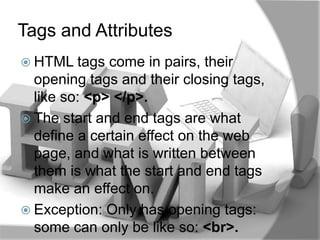
 HTML tags   come in pairs, their
  opening tags and their closing tags,
  like so: <p> </p>.
 The start and end tags are what
  define a certain effect on the web
  page, and what is written between
  them is what the start and end tags
  make an effect on.
 Exception: Only has opening tags:
  some can only be like so: <br>.
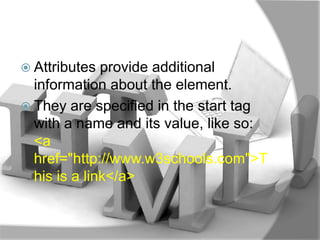
 Attributes  provide additional
  information about the element.
 They are specified in the start tag
  with a name and its value, like so:
  <a
  href="http://www.w3schools.com">T
  his is a link</a>
Making your first simple web
    page
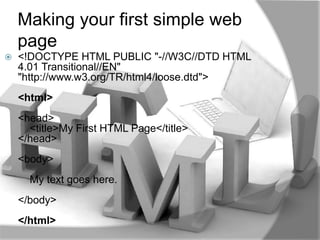
   <!DOCTYPE HTML PUBLIC "-//W3C//DTD HTML
    4.01 Transitional//EN"
    "http://www.w3.org/TR/html4/loose.dtd">
    <html>
    <head>
      <title>My First HTML Page</title>
    </head>
    <body>
      My text goes here.
    </body>
    </html>
References
   http://en.wikipedia.org/wiki/HTML#Markup
   http://www.w3schools.com
   http://www.yourhtmlsource.com
   http://www.web-
    source.net/html_codes_chart.htm
   http://en.wikipedia.org/wiki/Programming_l
    anguage
   http://en.wikipedia.org/wiki/Markup_langua
    ges

HTML

  • 1.
    By: Miguel A.Martínez Course: Principios Tecnológicos
  • 2.
    Table of Contents What is HTML?  What is the difference between a programming language and a markup language?  How does HTML work?  Tags and Attributes  Making your first simple web page
  • 3.
    What is HTML? HTML stands for Hyper Text Markup Language  It is a computer language that is used to create web sites.  A web site is created by many lines of short codes using this language.  With a web browser, the .html document can be seen as the web site that was formed by the numerous line of code.
  • 4.
     HyperText is the method by which you move around on the web — by clicking on special text called hyperlinks which bring you to the next page.  Click Here
  • 6.
     Markup is what HTML tags do to the text inside them. They mark it as a certain type of text (italicized text, for example).  HTML is a Language, as it has code-words and syntax like any other language.
  • 7.
    What is thedifference between a programming language and a markup language?  Markup language by its definition “is a modern system for annotating a text in a way that is syntactically distinguishable from that text." For example, in HTML, you have your text. Then you have your Hyper Text Markup Language which defines how that text should look.
  • 8.
     Programming language is designed to communicate instructions to a computer. So the main difference is that programming languages are designed to write programs and software. A markup language is designed to manipulate the content it's marking up, hence the term Markup Language.
  • 9.
    How does HTMLwork?  The HTML documents known by the file type .html or .htm are composed of its elements. These are its tags and its plain text.  Tags are what separate normal text from HTML text.  These tags are keywords surrounded by angle brackets like so: <html>.
  • 10.
    Tags and Attributes HTML tags come in pairs, their opening tags and their closing tags, like so: <p> </p>.  The start and end tags are what define a certain effect on the web page, and what is written between them is what the start and end tags make an effect on.  Exception: Only has opening tags: some can only be like so: <br>.
  • 11.
     Attributes provide additional information about the element.  They are specified in the start tag with a name and its value, like so: <a href="http://www.w3schools.com">T his is a link</a>
  • 12.
    Making your firstsimple web page  <!DOCTYPE HTML PUBLIC "-//W3C//DTD HTML 4.01 Transitional//EN" "http://www.w3.org/TR/html4/loose.dtd"> <html> <head> <title>My First HTML Page</title> </head> <body> My text goes here. </body> </html>
  • 13.
    References  http://en.wikipedia.org/wiki/HTML#Markup  http://www.w3schools.com  http://www.yourhtmlsource.com  http://www.web- source.net/html_codes_chart.htm  http://en.wikipedia.org/wiki/Programming_l anguage  http://en.wikipedia.org/wiki/Markup_langua ges