Enhancing care by Sharing Data and 
Information 
Abraham George, Consultant in Public Health/Assistant 
Director of Public Health, Kent County Council 
Jochen Worsley, Head of Long Term Conditions, East 
Kent Federation of CCGs 
Bruce Pollington, Deputy Medical Director, Kent 
Community Health Trust/Chief Clinical Information Officer 
at Kent Integration Pioneer
The scale of the problem and the 
20% 
75% 
cost 
40% 
15% 
Multiple complex 
conditions 
Single LTC/ at risk 
Healthy / minor 
risk 
Population segments Cost
Commissioning in silos 
Acute Community Mental Health Social Care Voluntary/ 
• All PbR 
(except YoC or 
package 
currencies) 
Independent 
Primary care 
Primary care 
prescribing 
NHS England 
as commissioner 
• Non-PbR block 
contract 
• PbR excl drugs 
• Crit. Care 
Personal 
healthcare 
budget 
Specialised MH 
Services 
Means-tested 
services (incl. 
residential) 
Within currency 
Rehabilitation 
palliative & 
end of life 
Maternity pathway 
• Reablement 
• Adult Services 
PbR MH 
clusters 
Children’s 
services 
GP services 
Include if possible 
Residential 
continuing 
care (Include if 
possible) 
Include if 
possible
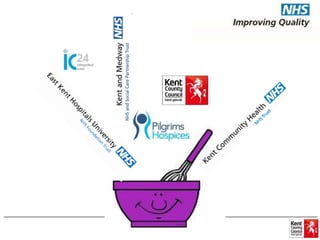
How we created our Year of Care 
currency
Identifying patients suitable for YoC 
• Risk stratification tool applied 
• LTC codes applied (18 in total - QoF) 
• List segmented by LTC currency (Bands B – E applied - 
B=2,C=3-5,D=6-8,E=9), 
• Risk Score over time mapped (looking for rise in risk 
score in last 6 mths – 4 of 6 show an increase) or 
• Rapid Riser in last 3 mths (mthly increase in risk 
score over past 3 mths and overall increase of 
>15pts). 
• Kent – 80 GP practices, Band B = 2197, Band C= 
3506, Band D =261, Band E= 5 Total 6369 of 729, 275 
• Now driving increased engagement in risk stratification
Issues highlighted 
Gap Identified by Date identified Action 
No standard definitions for 
Integrated Care service 
across system 
EK PG Jan 2014 Flag to WK and link to 
Integrated Care plan 
work 
No method to share care 
plans once MDT completed. 
(Not even seen by GPs) 
EK Project Group Feb 2014 Flag to SRO 
Not all practices submitting 
data to HISBi 
EK PG 
WK PG 
April 2014 
May 2014 
Flag to SRO 
Ongoing 
PLICS and RiO system in 
KMPT not flowing data 
correctly 
KMPT when requested to 
submit first data 
submission 
June 2014 Resolved by KMPT 
No standard definition for 
integrated care within KCHT 
Impact identified by 
Programme on YoC ability 
to assess impact of ITC 
services V’s WP 
July 2014 PM worked with KCHT 
to standardise 
definition. Recording 
process agreed Sept 
2014 
Variable in recording 
practice of GP codes in Non 
–NHS data 
Programme when we 
introduced “black box” 
solution 
Sept 2014 Highlighted to 
organisations. With 3rd 
sector provided list to 
facilitate update.
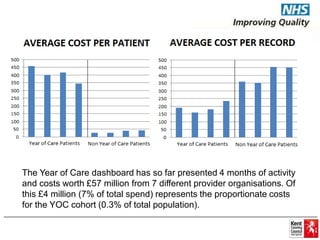
The Year of Care dashboard has so far presented 4 months of activity 
and costs worth £57 million from 7 different provider organisations. Of 
this £4 million (7% of total spend) represents the proportionate costs 
for the YOC cohort (0.3% of total population).
YoC & the wider context 
• Shift from service orientated Integrated Care as 
the definition to Patient focused Integrated Care 
Plan (ICP). 
• The YoC Cohort identified in primary care for ICP 
• Changing behaviour to meeting patients needs 
and wishes and not the services ability to deliver. 
• Plans shared system wide using the developing 
Care Plan Management system 
• Developed with and visible to the patients. 
• Their wishes, their plan.
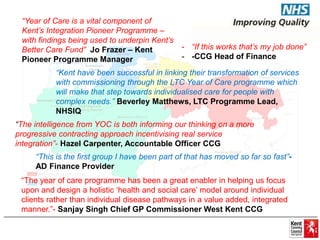
“Year of Care is a vital component of 
Kent’s Integration Pioneer Programme – 
with findings being used to underpin Kent’s 
Better Care Fund” Jo Frazer – Kent 
Pioneer Programme Manager 
- “If this works that’s my job done” 
- -CCG Head of Finance 
“Kent have been successful in linking their transformation of services 
with commissioning through the LTC Year of Care programme which 
will make that step towards individualised care for people with 
complex needs.” Beverley Matthews, LTC Programme Lead, 
NHSIQ 
“The intelligence from YOC is both informing our thinking on a more 
progressive contracting approach incentivising real service 
integration”- Hazel Carpenter, Accountable Officer CCG 
“This is the first group I have been part of that has moved so far so fast”- 
AD Finance Provider 
“The year of care programme has been a great enabler in helping us focus 
upon and design a holistic ‘health and social care’ model around individual 
clients rather than individual disease pathways in a value added, integrated 
manner.”- Sanjay Singh Chief GP Commissioner West Kent CCG
Hsj awards dragons den

Hsj awards dragons den

  • 1.
    Enhancing care bySharing Data and Information Abraham George, Consultant in Public Health/Assistant Director of Public Health, Kent County Council Jochen Worsley, Head of Long Term Conditions, East Kent Federation of CCGs Bruce Pollington, Deputy Medical Director, Kent Community Health Trust/Chief Clinical Information Officer at Kent Integration Pioneer
  • 2.
    The scale ofthe problem and the 20% 75% cost 40% 15% Multiple complex conditions Single LTC/ at risk Healthy / minor risk Population segments Cost
  • 3.
    Commissioning in silos Acute Community Mental Health Social Care Voluntary/ • All PbR (except YoC or package currencies) Independent Primary care Primary care prescribing NHS England as commissioner • Non-PbR block contract • PbR excl drugs • Crit. Care Personal healthcare budget Specialised MH Services Means-tested services (incl. residential) Within currency Rehabilitation palliative & end of life Maternity pathway • Reablement • Adult Services PbR MH clusters Children’s services GP services Include if possible Residential continuing care (Include if possible) Include if possible
  • 4.
    How we createdour Year of Care currency
  • 5.
    Identifying patients suitablefor YoC • Risk stratification tool applied • LTC codes applied (18 in total - QoF) • List segmented by LTC currency (Bands B – E applied - B=2,C=3-5,D=6-8,E=9), • Risk Score over time mapped (looking for rise in risk score in last 6 mths – 4 of 6 show an increase) or • Rapid Riser in last 3 mths (mthly increase in risk score over past 3 mths and overall increase of >15pts). • Kent – 80 GP practices, Band B = 2197, Band C= 3506, Band D =261, Band E= 5 Total 6369 of 729, 275 • Now driving increased engagement in risk stratification
  • 7.
    Issues highlighted GapIdentified by Date identified Action No standard definitions for Integrated Care service across system EK PG Jan 2014 Flag to WK and link to Integrated Care plan work No method to share care plans once MDT completed. (Not even seen by GPs) EK Project Group Feb 2014 Flag to SRO Not all practices submitting data to HISBi EK PG WK PG April 2014 May 2014 Flag to SRO Ongoing PLICS and RiO system in KMPT not flowing data correctly KMPT when requested to submit first data submission June 2014 Resolved by KMPT No standard definition for integrated care within KCHT Impact identified by Programme on YoC ability to assess impact of ITC services V’s WP July 2014 PM worked with KCHT to standardise definition. Recording process agreed Sept 2014 Variable in recording practice of GP codes in Non –NHS data Programme when we introduced “black box” solution Sept 2014 Highlighted to organisations. With 3rd sector provided list to facilitate update.
  • 9.
    The Year ofCare dashboard has so far presented 4 months of activity and costs worth £57 million from 7 different provider organisations. Of this £4 million (7% of total spend) represents the proportionate costs for the YOC cohort (0.3% of total population).
  • 10.
    YoC & thewider context • Shift from service orientated Integrated Care as the definition to Patient focused Integrated Care Plan (ICP). • The YoC Cohort identified in primary care for ICP • Changing behaviour to meeting patients needs and wishes and not the services ability to deliver. • Plans shared system wide using the developing Care Plan Management system • Developed with and visible to the patients. • Their wishes, their plan.
  • 11.
    “Year of Careis a vital component of Kent’s Integration Pioneer Programme – with findings being used to underpin Kent’s Better Care Fund” Jo Frazer – Kent Pioneer Programme Manager - “If this works that’s my job done” - -CCG Head of Finance “Kent have been successful in linking their transformation of services with commissioning through the LTC Year of Care programme which will make that step towards individualised care for people with complex needs.” Beverley Matthews, LTC Programme Lead, NHSIQ “The intelligence from YOC is both informing our thinking on a more progressive contracting approach incentivising real service integration”- Hazel Carpenter, Accountable Officer CCG “This is the first group I have been part of that has moved so far so fast”- AD Finance Provider “The year of care programme has been a great enabler in helping us focus upon and design a holistic ‘health and social care’ model around individual clients rather than individual disease pathways in a value added, integrated manner.”- Sanjay Singh Chief GP Commissioner West Kent CCG

Editor's Notes

  • #3 Multiple data flows between provider, CCG and CSU, Public Health – no systematisation improving data quality and data completeness Complex organisation set up in Kent – commissioning at various levels Starting with top 5% of population who utilise the largest proportion of spend. Looking to commission for this population only. One thing we do really well is care pathways for people with single conditions.
  • #4 Moving from programme/service focused commissioning to system commissioning. To achieve this we need to develop a new currency. Traditionally commission vertically looking to commission horizontally that accurately describes a patient journey for defined cohort rather than individual services. In order to commission in this way we need to develop new currencies and tariffs that reflect journey of integrated care for defined cohort.
  • #5 Currency developed using LTC as Risk Strat alone is not a good proxy for H&SC need. Currency allows a common language and understanding to develop. How select currency, used work of pilot cohort to give us the bases for developing a currency using ltc. Cohort segmented into LTC and cost brackets. Each bracket will have a separate tariff for all activities within the systems (across those in scope above) covered by the currency. Called capitated funding model, same principle as PC working out an average cost and get paid that whether you see them or not. Encouraging the system to work n an integrated way as its in all their interest to keep someone well.
  • #7 No consistent approach in monitoring and evaluating integrated care