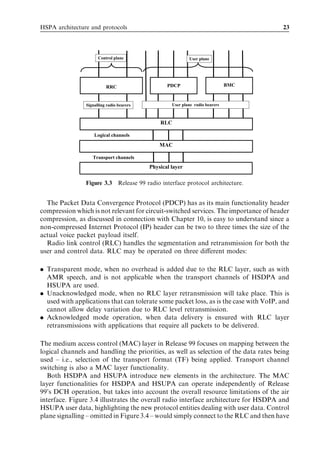
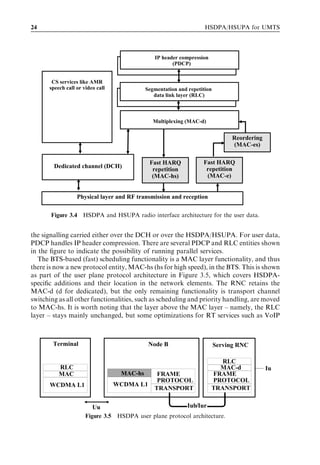
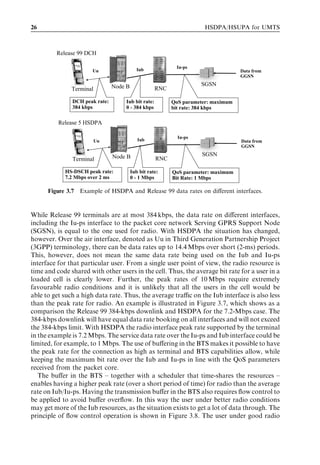
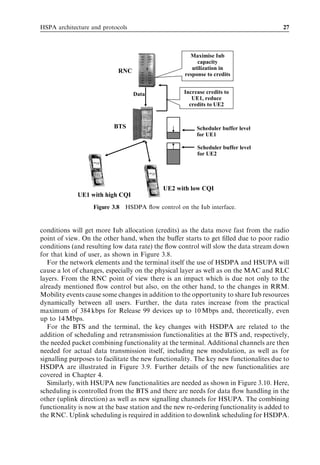
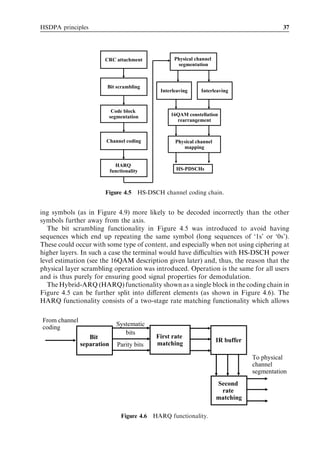
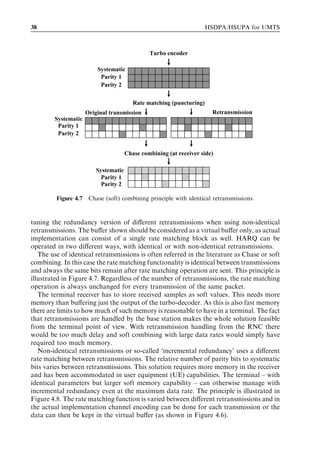
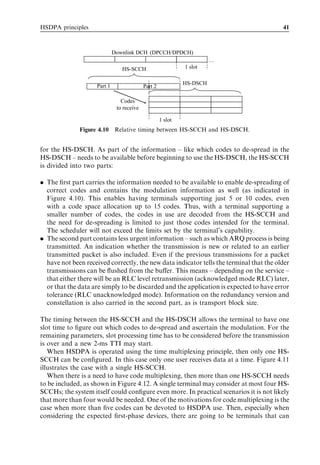
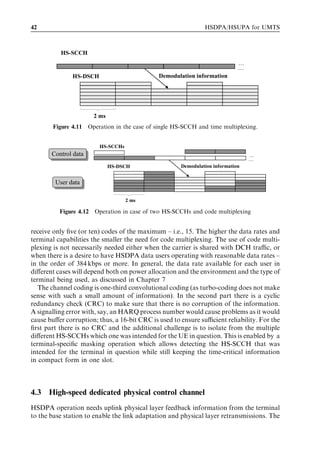
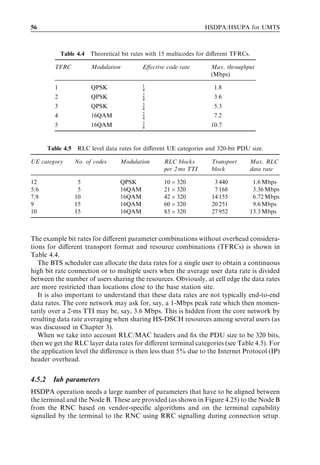
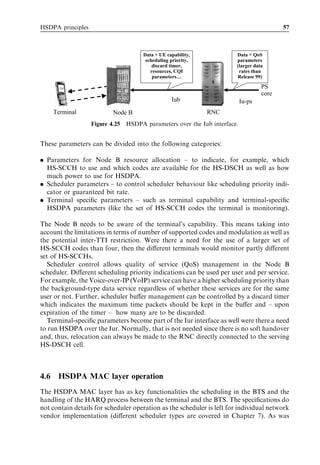
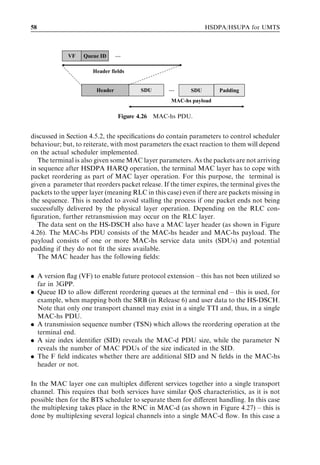
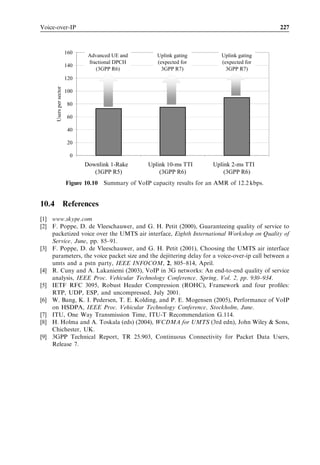
HSDPA/HSUPA for UMTS


HSDPA/HSUPA for UMTS: High Speed Radio Access for Mobile Communications Edited by Harri Holma
and Antti Toskala © 2006 John Wiley & Sons, Ltd. ISBN: 0-470-01884-4
HSDPA/HSUPA
for UMTS
High Speed Radio Access for Mobile Communications


Edited by

Harri Holma and Antti Toskala
Both of Nokia Networks, Finland
Copyright # 2006 John Wiley & Sons Ltd, The Atrium, Southern Gate, Chichester,
                 West Sussex PO19 8SQ, England
                 Telephone (þ44) 1243 779777
Email (for orders and customer service enquiries): cs-books@wiley.co.uk
Visit our Home Page on www.wiley.com
All Rights Reserved. No part of this publication may be reproduced, stored in a retrieval
system or transmitted in any form or by any means, electronic, mechanical, photocopying,
recording, scanning or otherwise, except under the terms of the Copyright, Designs and
Patents Act 1988 or under the terms of a licence issued by the Copyright Licensing Agency
Ltd, 90 Tottenham Court Road, London W1T 4LP, UK, without the permission in writing of
the Publisher. Requests to the Publisher should be addressed to the Permissions Department,
John Wiley & Sons Ltd, The Atrium, Southern Gate, Chichester, West Sussex PO19 8SQ,
England, or emailed to permreq@wiley.co.uk, or faxed to (þ44) 1243 770620.
Designations used by companies to distinguish their products are often claimed as trademarks.
All brand names and product names used in this book are trade names, trademarks or registered
trademarks of their respective owners. The Publisher is not associated with any product or vendor
mentioned in this book.
This publication is designed to provide accurate and authoritative information in regard to
the subject matter covered. It is sold on the understanding that the Publisher is not engaged
in rendering professional services. If professional advice or other expert assistance is
required, the services of a competent professional should be sought.

Other Wiley Editorial Offices
John Wiley & Sons, Inc., 111 River Street, Hoboken, NJ 07030, USA
Jossey-Bass, 989 Market Street, San Francisco, CA 94103-1741, USA
Wiley-VCH Verlag GmbH, Boschstr. 12, D-69469 Weinheim, Germany
John Wiley & Sons Australia Ltd, 42 McDougall Street, Milton, Queensland 4064, Australia
John Wiley & Sons (Asia) Pte Ltd, 2 Clementi Loop #02-01, Jin Xing Distripark, Singapore 129809
John Wiley & Sons Canada Ltd, 22 Worcester Road, Etobicoke, Ontario, Canada M9W 1L1

Wiley also publishes its books in a variety of electronic formats. Some content that appears
in print may not be available in electronic books.


British Library Cataloguing in Publication Data
A catalogue record for this book is available from the British Library
ISBN-13 978-0-470-01884-2 (HB)
ISBN-10 0-470-01884-4 (HB)
Project management by Originator, Gt Yarmouth, Norfolk (typeset in 10/12pt Times).
Printed and bound in Great Britain by Antony Rowe Ltd, Chippenham, Wiltshire.
This book is printed on acid-free paper responsibly manufactured from sustainable forestry
in which at least two trees are planted for each one used for paper production.
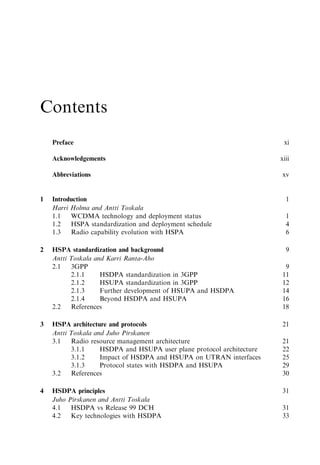
Contents
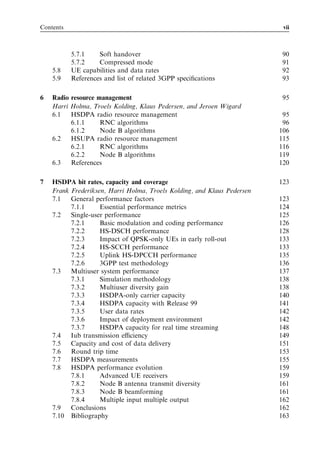
    Preface                                                             xi

    Acknowledgements                                                   xiii

    Abbreviations                                                      xv


1   Introduction                                                         1
    Harri Holma and Antti Toskala
    1.1   WCDMA technology and deployment status                         1
    1.2   HSPA standardization and deployment schedule                   4
    1.3   Radio capability evolution with HSPA                           6

2   HSPA standardization and background                                  9
    Antti Toskala and Karri Ranta-Aho
    2.1   3GPP                                                          9
          2.1.1     HSDPA standardization in 3GPP                      11
          2.1.2     HSUPA standardization in 3GPP                      12
          2.1.3     Further development of HSUPA and HSDPA             14
          2.1.4     Beyond HSDPA and HSUPA                             16
    2.2   References                                                   18

3   HSPA architecture and protocols                                    21
    Antti Toskala and Juho Pirskanen
    3.1   Radio resource management architecture                       21
          3.1.1     HSDPA and HSUPA user plane protocol architecture   22
          3.1.2     Impact of HSDPA and HSUPA on UTRAN interfaces      25
          3.1.3     Protocol states with HSDPA and HSUPA               29
    3.2   References                                                   30

4   HSDPA principles                                                   31
    Juho Pirskanen and Antti Toskala
    4.1   HSDPA vs Release 99 DCH                                      31
    4.2   Key technologies with HSDPA                                  33
vi                                                                    Contents


           4.2.1    High-speed downlink shared channel                     35
           4.2.2    High-speed shared control channel                      40
     4.3   High-speed dedicated physical control channel                   42
           4.3.1    Fractional DPCH                                        45
           4.3.2    HS-DSCH link adaptation                                47
           4.3.3    Mobility                                               50
     4.4   BTS measurements for HSDPA operation                            53
     4.5   Terminal capabilities                                           54
           4.5.1    L1 and RLC throughputs                                 55
           4.5.2    Iub parameters                                         56
     4.6   HSDPA MAC layer operation                                       57
     4.7   References                                                      60


5    HSUPA principles                                                      61
     Karri Ranta-Aho and Antti Toskala
     5.1   HSUPA vs Release 99 DCH                                         61
     5.2   Key technologies with HSUPA                                     62
           5.2.1     Introduction                                          62
           5.2.2     Fast L1 HARQ for HSUPA                                64
           5.2.3     Scheduling for HSUPA                                  64
     5.3   E-DCH transport channel and physical channels                   66
           5.3.1     Introduction                                          66
           5.3.2     E-DCH transport channel processing                    66
           5.3.3     E-DCH dedicated physical data channel                 68
           5.3.4     E-DCH dedicated physical control channel              70
           5.3.5     E-DCH HARQ indicator channel                          72
           5.3.6     E-DCH relative grant channel                          73
           5.3.7     E-DCH absolute grant channel                          75
           5.3.8     Motivation and impact of two TTI lengths              76
     5.4   Physical layer procedures                                       77
           5.4.1     HARQ                                                  77
           5.4.2     HARQ and soft handover                                79
           5.4.3     Measurements with HSUPA                               79
     5.5   MAC layer                                                       80
           5.5.1     User plane                                            80
           5.5.2     MAC-e control message – scheduling information        81
           5.5.3     Selection of a transport format for E-DCH             82
           5.5.4     E-DCH coexistence with DCH                            84
           5.5.5     MAC-d flow-specific HARQ parameters                     85
           5.5.6     HSUPA scheduling                                      85
           5.5.7     HSUPA scheduling in soft handover                     86
           5.5.8     Advanced HSUPA scheduling                             88
           5.5.9     Non-scheduled transmissions                           88
     5.6   Iub parameters                                                  89
     5.7   Mobility                                                        90
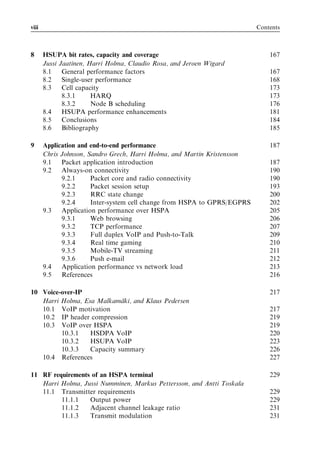
Contents                                                                  vii


           5.7.1    Soft handover                                        90
           5.7.2    Compressed mode                                      91
    5.8    UE capabilities and data rates                                92
    5.9    References and list of related 3GPP specifications             93

6   Radio resource management                                             95
    Harri Holma, Troels Kolding, Klaus Pedersen, and Jeroen Wigard
    6.1   HSDPA radio resource management                                 95
          6.1.1     RNC algorithms                                        96
          6.1.2     Node B algorithms                                    106
    6.2   HSUPA radio resource management                                115
          6.2.1     RNC algorithms                                       116
          6.2.2     Node B algorithms                                    119
    6.3   References                                                     120

7   HSDPA bit rates, capacity and coverage                               123
    Frank Frederiksen, Harri Holma, Troels Kolding, and Klaus Pedersen
    7.1   General performance factors                                    123
          7.1.1     Essential performance metrics                        124
    7.2   Single-user performance                                        125
          7.2.1     Basic modulation and coding performance              126
          7.2.2     HS-DSCH performance                                  128
          7.2.3     Impact of QPSK-only UEs in early roll-out            133
          7.2.4     HS-SCCH performance                                  133
          7.2.5     Uplink HS-DPCCH performance                          135
          7.2.6     3GPP test methodology                                136
    7.3   Multiuser system performance                                   137
          7.3.1     Simulation methodology                               138
          7.3.2     Multiuser diversity gain                             138
          7.3.3     HSDPA-only carrier capacity                          140
          7.3.4     HSDPA capacity with Release 99                       141
          7.3.5     User data rates                                      142
          7.3.6     Impact of deployment environment                     142
          7.3.7     HSDPA capacity for real time streaming               148
    7.4   Iub transmission efficiency                                      149
    7.5   Capacity and cost of data delivery                             151
    7.6   Round trip time                                                153
    7.7   HSDPA measurements                                             155
    7.8   HSDPA performance evolution                                    159
          7.8.1     Advanced UE receivers                                159
          7.8.2     Node B antenna transmit diversity                    161
          7.8.3     Node B beamforming                                   161
          7.8.4     Multiple input multiple output                       162
    7.9   Conclusions                                                    162
    7.10 Bibliography                                                    163
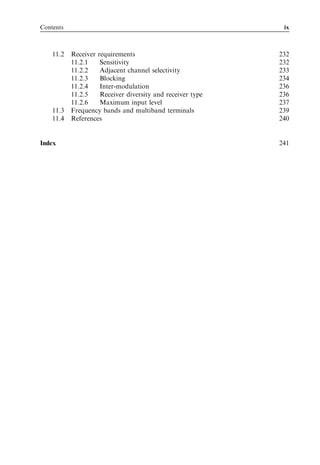
viii                                                                      Contents


8      HSUPA bit rates, capacity and coverage                                 167
       Jussi Jaatinen, Harri Holma, Claudio Rosa, and Jeroen Wigard
       8.1    General performance factors                                     167
       8.2    Single-user performance                                         168
       8.3    Cell capacity                                                   173
              8.3.1     HARQ                                                  173
              8.3.2     Node B scheduling                                     176
       8.4    HSUPA performance enhancements                                  181
       8.5    Conclusions                                                     184
       8.6    Bibliography                                                    185

9      Application and end-to-end performance                                 187
       Chris Johnson, Sandro Grech, Harri Holma, and Martin Kristensson
       9.1   Packet application introduction                                  187
       9.2   Always-on connectivity                                           190
             9.2.1     Packet core and radio connectivity                     190
             9.2.2     Packet session setup                                   193
             9.2.3     RRC state change                                       200
             9.2.4     Inter-system cell change from HSPA to GPRS/EGPRS       202
       9.3   Application performance over HSPA                                205
             9.3.1     Web browsing                                           206
             9.3.2     TCP performance                                        207
             9.3.3     Full duplex VoIP and Push-to-Talk                      209
             9.3.4     Real time gaming                                       210
             9.3.5     Mobile-TV streaming                                    211
             9.3.6     Push e-mail                                            212
       9.4   Application performance vs network load                          213
       9.5   References                                                       216

10 Voice-over-IP                                                              217
   Harri Holma, Esa Malkama¨ki, and Klaus Pedersen
   10.1 VoIP motivation                                                       217
   10.2 IP header compression                                                 219
   10.3 VoIP over HSPA                                                        219
         10.3.1   HSDPA VoIP                                                  220
         10.3.2   HSUPA VoIP                                                  223
         10.3.3   Capacity summary                                            226
   10.4 References                                                            227

11 RF requirements of an HSPA terminal                                        229
   Harri Holma, Jussi Numminen, Markus Pettersson, and Antti Toskala
   11.1 Transmitter requirements                                              229
         11.1.1   Output power                                                229
         11.1.2   Adjacent channel leakage ratio                              231
         11.1.3   Transmit modulation                                         231
Contents                                                     ix


    11.2   Receiver requirements                            232
           11.2.1    Sensitivity                            232
           11.2.2    Adjacent channel selectivity           233
           11.2.3    Blocking                               234
           11.2.4    Inter-modulation                       236
           11.2.5    Receiver diversity and receiver type   236
           11.2.6    Maximum input level                    237
    11.3   Frequency bands and multiband terminals          239
    11.4   References                                       240


Index                                                       241
Preface
When the first edition of WCDMA for UMTS was published by John Wiley & Sons, Ltd
6 years ago (in April 2000), 3GPP had just completed the first set of wideband CDMA
(WCDMA) specifications, called ‘Release 99’. At the same time, the Universal Mobile
Telecommunication Services (UMTS) spectrum auction was taking place in Europe.
UMTS was ready to go. The following years were spent on optimizing UMTS system
specifications, handset and network implementations, and mobile applications. As a
result, WCDMA has been able to bring tangible benefits to operators in terms of network
quality, voice capacity, and new data service capabilities. WCDMA has turned out to
be the most global mobile access technology with deployments covering Europe, Asia
including Korea and Japan, and the USA, and it is expected to be deployed soon in large
markets like China, India, and Latin America.
   WCDMA radio access has evolved strongly alongside high-speed downlink packet
access (HSDPA) and high-speed uplink packet access (HSUPA), together called ‘high-
speed packet access’ (HSPA). When the International Telegraphic Union (ITU) defined
the targets for IMT-2000 systems in the 1990s, the required bit rate was 2 Mbps.
3rd Generation Partnership Project (3GPP) Release 99 does support up to 2 Mbps in
the specifications, but the practical peak data rate chosen for implementations is limited
to 384 kbps. HSPA is now able to push practical bit rates beyond 2 Mbps and is expected
to exceed 10 Mbps in the near future. In addition to the higher peak data rate, HSPA also
reduces latency and improves network capacity. The new radio capabilities enable a new
set of packet-based applications to go wireless in an efficient way. For operators the
network upgrade from WCDMA to HSPA is straightforward as the HSPA solution
builds on top of the WCDMA radio network, reusing all network elements. The first
commercial HSDPA networks were launched during the last quarter of 2005.
   This book was motivated by the fact that HSDPA and HSUPA are the next big steps in
upgrading WCDMA networks. While the WCDMA operation has experienced some
enhancements on top of dedicated channel operation, there was a clear need – it was felt –
to focus just on HSDPA and HSUPA issues without having to repeat what was
already presented in the different editions of WCDMA for UMTS for Release 99
based systems. Also, valuable feedback obtained from different lecturing events on
HSDPA and HSUPA training sessions had clearly indicated a shift in the learning
focus from basic WCDMA to the HSPA area. Thus, this book’s principal task is to
focus on HSPA specifications, optimization, and performance. The presentation con-
centrates on the differences that HSPA has brought to WCDMA radio access. Detailed
information about WCDMA radio can be obtained from WCDMA for UMTS.
xii                                                                                 Preface


                                                                    Chapter 11 : Terminal
                                                                    RF requirements
                   Chapters 9 and 10
           Application performance including VoIP


           Chapters 7                  Chapters 8
      HSDPA performance             HSUPA performance


                        Chapter 6
                Radio resource management


                         Chapter 3
                 Architecture and protocols
           Chapter 4                   Chapter 5
                                                         Chapter 2 : HSPA
      HSDPA specifications       HSUPA specifications
                                                         standardization

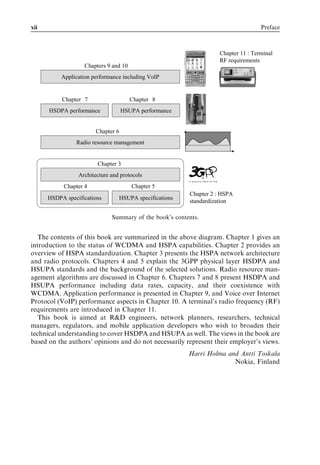
                              Summary of the book’s contents.


   The contents of this book are summarized in the above diagram. Chapter 1 gives an
introduction to the status of WCDMA and HSPA capabilities. Chapter 2 provides an
overview of HSPA standardization. Chapter 3 presents the HSPA network architecture
and radio protocols. Chapters 4 and 5 explain the 3GPP physical layer HSDPA and
HSUPA standards and the background of the selected solutions. Radio resource man-
agement algorithms are discussed in Chapter 6. Chapters 7 and 8 present HSDPA and
HSUPA performance including data rates, capacity, and their coexistence with
WCDMA. Application performance is presented in Chapter 9, and Voice over Internet
Protocol (VoIP) performance aspects in Chapter 10. A terminal’s radio frequency (RF)
requirements are introduced in Chapter 11.
   This book is aimed at R&D engineers, network planners, researchers, technical
managers, regulators, and mobile application developers who wish to broaden their
technical understanding to cover HSDPA and HSUPA as well. The views in the book are
based on the authors’ opinions and do not necessarily represent their employer’s views.
                                                         Harri Holma and Antti Toskala
                                                                       Nokia, Finland
Acknowledgements
The editors would like to acknowledge the effort from their colleagues to contribute
to this book. Besides the editors themselves, the other contributors to this book were:
Frank Frederiksen, Sandro Grech, Jussi Jaatinen, Chris Johnson, Troels Kolding,
Martin Kristensson, Esa Malkamaki, Jussi Numminen, Karri Ranta-Aho, Claudio
                                    ¨
Rosa, Klaus Pedersen, Markus Pettersson, Juho Pirskanen, and Jeroen Wigard.
  In addition to their direct contribution, we would also like to acknowledge the
constructive suggestions, illustrations, and comments received from Erkka Ala-
Tauriala, Jorma Kaikkonen, Sami Kekki, Markku Kuusela, Svend Lauszus, Juhani
Onkalo, Jussi Reunanen, Kai Sahala, Sasi Sasitharan, and Tuomas Tormanen. Further,
                                                                      ¨   ¨
we are grateful for the good suggestions received from the people participating in
HSDPA/HSUPA training events in different locations who came up with suggestions
as to what constitutes the key topics of interest and what issues deserve attention.
  The team at John Wiley & Sons, Ltd deserve to be acknowledged as well for their
patience and support during the production process.
  We are grateful to our families, as well as the families of all contributors, for the
personal time needed in the evening and weekends for writing and editing work.
  Special thanks are due to our employer, Nokia Networks, for supporting and en-
couraging such an effort and for providing some of the illustrations in this book.
  We would like to acknowledge Sierra Wireless for permission to use their product
picture in the book.
  Finally, it is good to remember that this book would not have been possible without
the huge effort invested by our colleagues in the wireless industry within the 3rd
Generation Partnership Project (3GPP) to produce the different specification releases
of the global WCDMA/HSDPA/HSUPA standard and, thereby, making the writing of
this book possible.
  The editors and authors welcome any comments and suggestions for improvements or
changes that could be implemented in forthcoming editions of this book.
                                                    Harri Holma and Antti Toskala
                                                                    Espoo, Finland
                                 harri.holma@nokia.com and antti.toskala@nokia.com
Abbreviations
16QAM    16 Quadrature Amplitude Modulation
2G       Second Generation
3G       Third Generation
3GPP     3rd Generation Partnership Project
64QAM    64 Quadrature Amplitude Modulation
8PSK     8 Phase Shift Keying
A-DPCH   Associated DPCH
AAL      ATM Adaptation Layer
AC       Admission Control
ACIR     Adjacent Channel Interference Ratio
ACK      ACKnowledgement
ACLR     Adjacent Channel Leakage Ratio
ACS      Adjacent Channel Selectivity
AG       Absolute Grant
AGC      Automatic Gain Control
ALCAP    Access Link Control Application Part
AM       Acknowledged Mode
AMC      Adaptive Modulation and Coding
AMR      Adaptive Multi-Rate
APN      Access Point Name
ARIB     Association of Radio Industries and Businesses (Japan)
ARP      Allocation and Retention Priority
ARQ      Automatic Repeat reQuest
ASN.1    Abstract Syntax Notation 1
ATIS     Alliance for Telecommunications Industry Solutions (US)
ATM      Asynchronous Transfer Mode
AWGN     Additive White Gaussian Noise
BCCH     BroadCast Control CHannel (logical channel)
BCFE     Broadcast Control Functional Entity
BCH      Broadcast CHannel (transport channel)
BER      Bit Error Rate
BLEP     BLock Error Probability
BLER     BLock Error Rate
BMC      Broadcast/Multicast Control protocol
BPSK     Binary Phase Shift Keying
xvi                                                               Abbreviations


BS        Base Station
BSC       Base Station Controller
BSS       Base Station Subsystem
BTS       Base Transceiver Station
C/I       Carrier-to-Interference ratio
CC        Congestion Control
CC        Chase Combining
CCSA      China Communications Standards Association
CCTrCH    Coded Composite Transport CHannel
CDMA      Code Division Multiple Access
CFN       Connection Frame Number
CLTD      Closed Loop Transmit Diversity
CLTD2     Closed Loop Transmit Diversity mode-2
CM        Cubic Metric
CN        Core Network
COST                            ´
          COoperation Europeenne dans le domaine de la recherche Scientifique et
          Technique
CP        Cyclic Prefix
CPICH     Common PIlot CHannel
CQI       Channel Quality Information
CRC       Cyclic Redundancy Check
CRNC      Controlling RNC
CS        Circuit Switched
CT        Core and Terminals
DAB       Digital Audio Broadcasting
DCCH      Dedicated Control CHannel (logical channel)
DCH       Dedicated CHannel (transport channel)
DDI       Data Description Indicator
DL        DownLink
DPCCH     Dedicated Physical Control CHannel
DPCH      Dedicated Physical CHannel
DPDCH     Dedicated Physical Data CHannel
DRNC      Drift RNC
DRX       Discontinuous Reception
DS-CDMA   Direct Spread Code Division Multiple Access
DSCH      Downlink Shared CHannel
DSL       Digital Subscriber Line
DT        Discard Timer
DTCH      Dedicated Traffic CHannel
DTX       Discontinuous Transmission
DVB       Digital Video Broadcasting
E-AGCH    E-DCH Absolute Grant CHannel
E-DCH     Enhanced uplink Dedicated CHannel
E-DPCCH   E-DCH Dedicated Physical Control CHannel
E-DPDCH   E-DCH Dedicated Physical Data CHannel
E-HICH    E-DCH Hybrid ARQ Indicator CHannel
Abbreviations                                                          xvii


E-RGCH          E-DCH Relative Grant CHannel
E-RNTI          E-DCH Radio Network Temporary Identifier
E-TFC           E-DCH Transport Format Combination
E-TFCI          E-DCH Transport Format Combination Indicator
ECR             Effective Code Rate
EDGE            Enhanced Data rates for GSM Evolution
EDGE            Enhanced Data Rate for Global Evolution
EGPRS           Enhanced GPRS
EGPRS           Extended GPRS
ETSI            European Telecommunications Standards Institute
EVM             Error Vector Magnitude
F-DCH           Fractional Dedicated CHannel
F-DPCH          Fractional Dedicated Physical CHannel
FACH            Forward Access CHannel
FBI             FeedBack Information
FCC             Federal Communications Commission
FCS             Fast Cell Selection
FDD             Frequency Division Duplex
FDMA            Frequency Division Multiple Access
FER             Frame Error Ratio
FER             Frame Erasure Rate
FFT             Fast Fourier Transform
FP              Frame Protocol
FRC             Fixed Reference Channel
FTP             File Transfer Protocol
G-factor        Geometry factor
GB              GigaByte
GBR             Guaranteed Bit Rate
GERAN           GSM/EDGE RAN
GGSN            Gateway GPRS Support Node
GI              Guard Interval
GP              Processing gain
GPRS            General Packet Radio Service
GSM             Global System for Mobile Communications
HARQ            Hybrid Automatic Repeat reQuest
HC              Handover Control
HLBS            Highest priority Logical channel Buffer Status
HLID            Highest priority Logical channel ID
HLR             Home Location Register
HS-DPCCH        Uplink High-Speed Dedicated Physical Control CHannel
HS-DSCH         High-Speed Downlink Shared CHannel
HS-PDSCH        High-Speed Physical Downlink Shared CHannel
HS-SCCH         High-Speed Shared Control CHannel
HSDPA           High-Speed Downlink Packet Access
HSPA            High-Speed Packet Access
HSUPA           High-Speed Uplink Packet Access
xviii                                                                   Abbreviations


HTTP       Hypertext markup language
IFFT       Inverse Fast Fourier Transform
IP         Internet Protocol
IR         Incremental Redundancy
IRC        Interference Rejection Combining
IS-95      Interim Standard 95
ITU        International Telecommunication Union
ITU        International Telegraphic Union
LAU        Location Area Update
LMMSE      Linear Minimum Mean Square Error
LTE        Long-Term Evolution
MAC        Medium Access Control
MAC-d      dedicated MAC
MAC-es/s   E-DCH MAC
MAC-hs     high-speed MAC
MAI        Multiple Access Interference
MAP        Maximum A Posteriori
max-C/I    maximum Carrier-to-Interference ratio
MB         MegaByte
MBMS       Multimedia Broadcast and Multicast Service
MIMO       Multiple Input Multiple Output
min-GBR    minimum Guaranteed Bit Rate
MRC        Maximal Ratio Combining
MS         Mobile Station
MSC        Mobile Switching Centre
MSC/VLR    Mobile services Switching Centre/Visitor Location Register
MUD        MultiUser Detection
MUX        Multiplexing
NACC       Network Assisted Cell Change
NBAP       Node B Application Part
NF         Noise Figure
Node B     Base station
O&M        Operation & Maintenance
OFDM       Orthogonal Frequency Division Multiplexing
OFDMA      Orthogonal Frequency Division Multiple Access
OLPC       Outer Loop Power Control
OMA        Open Mobile Alliance
OSS        Operations Support System
OTDOA      Observed Time Difference Of Arrival
OVSF       Orthogonal Variable Spreading Factor
P-CPICH    Primary CPICH
PA         Power Amplifier
PAD        PADding
PAR        Peak-to-Average Ratio
PAS        Power Azimuth Spectrum
PC         Power Control
Abbreviations                                                        xix


PCCC            Parallel Concatenated Convolutional Code
PCH             Paging CHannel
PCMCIA          Personal Computer Memory Card Industry Association
PCS             Personal Communication Services
PCS             Personal Communication System
PDCP            Packet Data Convergence Protocol
PDP             Packet Data Protocol
PDU             Protocol Data Unit
PDU             Payload Data Unit
PF              Proportional Fair
POC             Push-to-talk Over Cellular
PRACH           Physical RACH
PS              Packet Switched
PU              Payload Unit
QAM             Quadrature Amplitude Modulation
QoS             Quality of Service
QPSK            Quadrature Phase Shift Keying
RAB             Radio Access Bearer
RACH            Random Access CHannel
RAN             Radio Access Network
RANAP           Radio Access Network Application Part
RAU             Routing Area Update
RB              Radio Bearer
RF              Radio Frequency
RG              Relative Grant
RLC             Radio Link Control
RLL             Radio Link Layer
RLS             Radio Link Set
RM              Resource Manager
RNC             Radio Network Controller
RNTI            Radio Network Temporary Identifier
ROHC            RObust Header Compression
RR              Round Robin
RRC             Radio Resource Control
RRM             Radio Resource Management
RSCP            Received Signal Code Power
RSN             Retransmission Sequence Number
RSSI            Received Signal Strength Indicator
RTCP            Real Time Control Protocol
RTO             Retransmission TimeOut
RTP             Real Time Protocol
RTT             Round Trip Time
RTWP            Received Total Wideband Power
S-CCPCH         Secondary CCPCH
SA              Services and system Architecture
SC-FDMA         Single Carrier FDMA
xx                                                             Abbreviations


SCCP       Signalling Connection Control Part
SCCPCH     Secondary Common Control Physical CHannel
SDU        Service Data Unit
SF         Spreading Factor
SGSN       Serving GPRS Support Node
SI         Scheduling Information
SIB        System Information Block
SID        Size index IDentifier
SINR       Signal-to-Interference-plus-Noise Ratio
SIR        Signal to Interference Ratio
SNR        Signal to Noise Ratio
SPI        Scheduling Priority Indicator
SRB        Signalling Radio Bearer
SRNC       Serving RNC
SRNS       Serving Radio Network System
STTD       Space Time Transmit Diversity
TC         Traffic Class
TCP        Transmission Control Protocol
TD-SCDMA   Time division synchronous CDMA
TDD        Time Division Duplex
TEBS       Total E-DCH Buffer Status
TF         Transport Format
TFCI       Transport Format Combination Indicator
TFRC       Transport Format and Resource Combination
THP        Traffic Handling Priority
TMSI       Temporary Mobile Subscriber Identity
TPC        Transmission Power Control
TR         Technical Report
TS         Technical Specification
TSG        Technical Specification Group
TSN        Transmission Sequence Number
TTA        Telecommunications Technology Association (Korea)
TTC        Telecommunication Technology Committee (Japan)
TTI        Transmission Time Interval
TX GAP     Transmit GAP
TxAA       Transmit Adaptive Antennas
UDP        User Datagram Protocol
UE         User Equipment
UL         UpLink
UM         Unacknowledged Mode
UM-RLC     Unacknowledged Mode RLC
UMTS       Universal Mobile Telecommunications System
UPH        UE Power Headroom
UPH        UE transmission Power Headroom
URA        UTRAN Registration Area
UTRA       UMTS Terrestrial Radio Access (ETSI)
Abbreviations                                                     xxi


UTRA            Universal Terrestrial Radio Access (3GPP)
UTRAN           UMTS Terrestrial Radio Access Network
VCC             Virtual Channel Connection
VF              Version Flag
VoIP            Voice over IP
VPN             Virtual Private Network
WAP             Wireless Application Protocol
WCDMA           Wideband CDMA
WG              Working Group
Wimax           Worldwide Interoperability for microwave access
WLAN            Wireless Local Area Network
WWW             World Wide Web 9
1
Introduction

Harri Holma and Antti Toskala


1.1   WCDMA technology and deployment status
The first Third Generation Partnership Project (3GPP) Wideband Code Division
Multiple Access (WCDMA) networks were launched during 2002. By the end of 2005
there were 100 open WCDMA networks and a total of over 150 operators having
frequency licenses for WCDMA operation. Currently, the WCDMA networks are
deployed in Universal Mobile Telecommunications System (UMTS) band around 2 GHz
in Europe and Asia including Japan and Korea. WCDMA in America is deployed in the
existing 850 and 1900 spectrum allocations while the new 3G band at 1700/2100 is
expected to be available in the near future. 3GPP has defined the WCDMA operation
also for several additional bands, which are expected to be taken into use during the
coming years.
   The number of WCDMA subscribers globally was 17 million at the end of 2004 and
over 50 million by February 2006. The subscriber growth rate is illustrated in Figure 1.1.
WCDMA subscribers represent currently 2% of all global mobile subscribers, while in
Western Europe WCDMA’s share is 5%, in the UK 8%, in Italy 14% and in Japan over
25%. The reason for the relatively high WCDMA penetrations in the UK and Italy is
Three, the greenfield 3G operator, and in Japan NTT Docomo, who are pushing the
technology forward. These two operators were also the ones behind the first large-scale
commercial WCDMA operation that took place between 2001 and 2003.
   The mobile business is driven by the availability of attractive terminals. In order to
reach a major market share, terminal offering for all market segments is required. There
are currently available over 200 different WCDMA terminal models from more than 30
suppliers launched by 2005. As an example, Nokia WCDMA terminal portfolio
evolution is illustrated in Figure 1.2. In 2003, Nokia launched one new WCDMA
handset, in 2004 two, and during 2005 more than 10 new WCDMA handsets were
launched. It is expected that soon all new medium-price and high-end terminals will
support WCDMA.
   As WCDMA mobile penetration increases, it allows WCDMA networks to carry a
larger share of voice and data traffic. WCDMA technology provides a few advantages for

HSDPA/HSUPA for UMTS: High Speed Radio Access for Mobile Communications Edited by Harri Holma
and Antti Toskala © 2006 John Wiley & Sons, Ltd. ISBN: 0-470-01884-4
2                                                                     HSDPA/HSUPA for UMTS


                                   WCDMA subscribers globally February 2006
                       60
                       50
                       40
             Million


                       30
                       20
                       10
                        0

                          b 04

                             y 4


                          b 05

                             y 5
                           ay 4


                           ay 5
                  S e Jul 0 4


                  S e Jul 0 5
                            ch 4


                    ov ber 4


                            ch 5


                    ov er 5


                                  06
                       n u 00


                       n u 00
                                  0


                                  0
                                  0


                          b 0
                                  0


                                  0
                       em 20


                       em 20
                               20


                               20
                       em 0


                       em 0
                               20


                               20
                       M 20


                       M 20


                               20
                     Ja er 2


                     Ja er 2
                     pt y 2


                     pt y 2
                            ry


                          ar


                          ar
                         ua

                         ar


                         ar
                        M


                        M
                n
             Ja


                  N


                  N
                       Figure 1.1 3G WCDMA subscriber growth monthly.


                             USA


    2003                       2004                              2005
                        Figure 1.2 Evolution of Nokia 3G terminal offering.
                                            [www.nokia.com]


the operator in that it enables data but also improves basic voice. The offered voice
capacity is very high because of interference control mechanisms including frequency
reuse of 1, fast power control and soft handover. Figure 1.3 shows the estimated number
of voice minutes per subscriber per month that can be supported with a two-carrier,
three-sector, 2 þ 2 þ 2 WCDMA site depending on the number of subscribers in the site
coverage area. Adaptive multi-rate (AMR) 5.9-kbps voice codec is assumed in the
calculation. With 2000 subscribers in each base station coverage area, 4300 minutes
per month can be offered to each subscriber, while with 4000 subscribers even more than
2100 minutes can be used. These capacities include both incoming and outgoing minutes.
Global average usage today is below 300 minutes per month. This calculation shows that
Introduction                                                                                         3


                  10000
                   9000
                   8000
                   7000
        Minutes


                   6000
                   5000
                   4000
                   3000
                   2000
                   1000
                                       300 min
                      0
                               1000              2000                 3000            4000
                                                  Subscribers per site
        Figure 1.3 Voice minutes per subscriber per month (minutes of usage, mou).


WCDMA makes it possible to offer substantially more voice minutes to customers. At
the same time WCDMA can also enhance the voice service with wideband AMR codec,
which provides clearly better voice quality than the fixed land line telephone. In short,
WCDMA can offer more voice minutes with better quality.
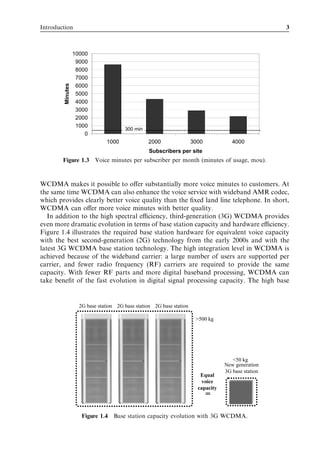
   In addition to the high spectral efficiency, third-generation (3G) WCDMA provides
even more dramatic evolution in terms of base station capacity and hardware efficiency.
Figure 1.4 illustrates the required base station hardware for equivalent voice capacity
with the best second-generation (2G) technology from the early 2000s and with the
latest 3G WCDMA base station technology. The high integration level in WCDMA is
achieved because of the wideband carrier: a large number of users are supported per
carrier, and fewer radio frequency (RF) carriers are required to provide the same
capacity. With fewer RF parts and more digital baseband processing, WCDMA can
take benefit of the fast evolution in digital signal processing capacity. The high base


                    2G base station 2G base station 2G base station

                                                                       >500 kg


                                                                                      <50 kg
                                                                                   New generation
                                                                                   3G base station
                                                                         Equal
                                                                         voice
                                                                        capacity
                                                                             =

                     Figure 1.4 Base station capacity evolution with 3G WCDMA.
4                                                                        HSDPA/HSUPA for UMTS


station integration level allows efficient building of high-capacity sites since the
complexity of RF combiners, extra antennas or feeder cables can be avoided.
   WCDMA operators are able to provide interesting data services including browsing,
person-to-person video calls, sports and news video clips and mobile-TV. WCDMA
enables simultaneous voice and data which allows, for example, browsing or emailing
during voice conferencing, or real time video sharing during voice calls. The operators
also offer laptop connectivity to the Internet and corporate intranet with the maximum
bit rate of 384 kbps both in downlink and in uplink. The initial terminals and networks
were limited to 64–128 kbps in uplink while the latest products provide 384-kbps uplink.


1.2    HSPA standardization and deployment schedule
High-speed downlink packet access (HSDPA) was standardized as part of 3GPP Release
5 with the first specification version in March 2002. High-speed uplink packet access
(HSUPA) was part of 3GPP Release 6 with the first specification version in December
2004. HSDPA and HSUPA together are called ‘high-speed packet access’ (HSPA). The
first commercial HSDPA networks were available at the end of 2005 and the commercial
HSUPA networks are expected to be available by 2007. The estimated HSPA schedule is
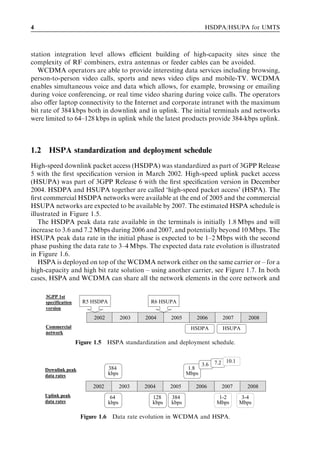
illustrated in Figure 1.5.
   The HSDPA peak data rate available in the terminals is initially 1.8 Mbps and will
increase to 3.6 and 7.2 Mbps during 2006 and 2007, and potentially beyond 10 Mbps. The
HSUPA peak data rate in the initial phase is expected to be 1–2 Mbps with the second
phase pushing the data rate to 3–4 Mbps. The expected data rate evolution is illustrated
in Figure 1.6.
   HSPA is deployed on top of the WCDMA network either on the same carrier or – for a
high-capacity and high bit rate solution – using another carrier, see Figure 1.7. In both
cases, HSPA and WCDMA can share all the network elements in the core network and

      3GPP 1st
      specification     R5 HSDPA                   R6 HSUPA
      version

                            2002          2003   2004     2005      2006         2007       2008
      Commercial                                                  HSDPA          HSUPA
      network

                      Figure 1.5 HSPA standardization and deployment schedule.


                                                                        3.6   7.2 10.1
      Downlink peak                384                           1.8
      data rates                   kbps                          Mbps

                            2002          2003   2004     2005      2006        2007       2008
      Uplink peak                   64             128    384                  1-2        3-4
      data rates                   kbps            kbps   kbps                Mbps       Mbps

                       Figure 1.6 Data rate evolution in WCDMA and HSPA.
Introduction                                                                             5


                       f2
                        f2
                       f1
                        f1


                                 Base          RNC          3G-SGSN   GGSN
                                station

Figure 1.7 HSPA deployment with (f2) new carrier deployed with HSPA and (f1) carrier shared
between WCDMA and HSPA.


in the radio network including base stations, Radio Network Controller (RNC),
Serving GPRS Support Node (SGSN) and Gateway GPRS Support Node (GGSN).
WCDMA and HSPA are also sharing the base station sites, antennas and antenna lines.
The upgrade from WCDMA to HSPA requires new software package and, potentially,
some new pieces of hardware in the base station and in RNC to support the higher data
rates and capacity. Because of the shared infrastructure between WCDMA and HSPA,
the cost of upgrading from WCDMA to HSPA is very low compared with building a
new standalone data network.
   The first HSDPA terminals are data cards providing fast connectivity for laptops. An
example terminal – Sierra Wireless AirCard 850 – is shown in Figure 1.8 providing 1.8-
Mbps downlink and 384-kbps uplink peak data rates.
   HSDPA terminal selection will expand beyond PCMCIA cards when integrated
HSDPA mobile terminals are available during 2006. It is expected that HSPA will be
a standard feature of most 3G terminals after some years in the same way as Enhanced
Data Rates for GSM Evolution (EDGE) capability is included in most GSM/GPRS
terminals. HSDPA will also be integrated to laptop computers in the future, as is
indicated already by some of the laptop manufacturers.


                    Figure 1.8 Example of first-phase HSDPA terminal.
                                  [Courtesy of Sierra Wireless]
6                                                               HSDPA/HSUPA for UMTS


1.3   Radio capability evolution with HSPA
The performance of the radio system defines how smoothly applications can be used over
the radio network. The key parameters defining application performance include data
rate and network latency. There are applications that are happy with low bit rates of a
few tens of kbps but require very low delay, like voice-over-IP (VoIP) and real time action
games. On the other hand, the download time of a large file is only defined by the
maximum data rate, and latency does not play any role. GPRS Release 99 typically
provides 30–40 kbps with latency of 600 ms. EGPRS Release 4 pushes the bit rates 3–4
times higher and also reduces latency below 300 ms. The EGPRS data rate and latency
allow smooth application performance for several mobile-based applications including
Wireless Application Protocol (WAP) browsing and push-to-talk.
   WCDMA enables peak data rates of 384 kbps with latency 100–200 ms, which makes
Internet access close to low-end digital subscriber line (DSL) connections and provides
good performance for most low-delay Internet Protocol (IP) applications as well.
   HSPA pushes the data rates up to 1–2 Mbps in practice and even beyond 3 Mbps in
good conditions. Since HSPA also reduces network latency to below 100 ms, the end user
experienced performance is similar to the fixed line DSL connections. No or only little
effort is required to adapt Internet applications to the mobile environment. Essentially,
HSPA is a broadband access with seamless mobility and extensive coverage. Radio
capability evolution from GPRS to HSPA is illustrated in Figure 1.9.
   HSPA was initially designed to support high bit rate non-real time services. The
simulation results show, however, that HSPA can provide attractive capacity also for
low bit rate low-latency applications like VoIP. 3GPP Releases 6 and 7 further improve
the efficiency of HSPA for VoIP and other similar applications.


           Typical end user bit
           rates in macro cells
                  [kbps]
                  3
                 Mbps                                               HSPA

                  1
                 Mbps
                                                          WCDMA
                 300
                 kbps
                                              EGPRS
                 100
                 kbps
                                  GPRS
                  30
                 kbps

                                  600               300                  0
                                         Round trip time [ms]
                          Figure 1.9 Radio capability evolution.
Introduction                                                                          7


                         Cell capacity [per sector per 5 MHz]
              5000
              4500   Downlink
                     Uplink
              4000
              3500
              3000
       kbps


              2500
              2000
              1500
              1000
               500
                 0
                        WCDMA              HSPA Basic           HSPA Enhanced

                         Figure 1.10 Capacity evolution with HSPA.


   Higher cell capacity and higher spectral efficiency are required to provide higher data
rates and new services with the current base station sites. Figure 1.10 illustrates the
estimated cell capacity per sector per 5 MHz with WCDMA, with basic HSPA and with
enhanced HSPA in the macro-cell environment. Basic HSPA includes a one-antenna
Rake receiver in the terminals and two-branch antenna diversity in the base stations.
Enhanced HSPA includes two-antenna equalizer mobiles and interference cancellation
in the base station. The simulation results show that HSPA can provide substantial
capacity benefit. Basic HSDPA offers up to three times WCDMA downlink capacity,
and enhanced HSDPA up to six times WCDMA. The spectral efficiency of enhanced
HSDPA is close to 1 bit/s/Hz/cell. The uplink capacity improvement with HSUPA is
estimated between 30% and 70%. HSPA capacity is naturally suited for supporting not
only symmetric services but also asymmetric services with higher data rates and volumes
in downlink.
2
HSPA standardization
and background

Antti Toskala and Karri Ranta-Aho


This chapter introduces the standardization framework around high-speed downlink
packet access (HSDPA) and high-speed uplink packet access (HSUPA) and presents
the standardization schedule and future development for HSDPA and HSUPA currently
on-going. Also the developments beyond HSDPA and HSUPA are introduced at the end
of this chapter.


2.1   3GPP
The 3rd Generation Partnership Project (3GPP) is the forum [1] where standardization is
handled for HSDPA and HSUPA, as well as has been handled from the first wideband
code division multiple access (WCDMA) specification release. Further, 3GPP also has
responsibility for Global System for Mobile Communications (GSM)/Enhanced Data
Rates for Global Evolution (EDGE) standardization. The background of 3GPP is in the
days when WCDMA technology was being standardized following technology selections
in different regions during 1997. Following that, WCDMA was chosen in several places
as the basis for third-generation mobile communication systems and there was regional
activity in several places around the same technological principles. It became evident,
however, that this would not lead to a single global standard aligned down to bit level
details. Thus, at the end of 1998 the US, Europe, Korea and Japan joined forces and
created 3GPP. China followed a bit later. Note also that the related standardization
organization, although marked as regional, usually had members from other countries/
regions as well.
   The first major milestone was reached at the end of 1999 when Release 99 specifications
were published, containing the first full series of WCDMA specifications. Release 4
specifications followed in early 2001. The working method had been moved between
Release 99 and Release 4 away from the yearly ‘release’ principle. The release cycle was

HSDPA/HSUPA for UMTS: High Speed Radio Access for Mobile Communications Edited by Harri Holma
and Antti Toskala © 2006 John Wiley & Sons, Ltd. ISBN: 0-470-01884-4
10                                                                                  HSDPA/HSUPA for UMTS


               Release 99      Release 4       Release 5        Release 6          Release 7         Further releases
Release date


               12/99           03/01           03/02            12/04              09/06 (est.)


                   2000          2001          2002         2003            2004              2005          2006

                              Figure 2.1 3GPP release timeline indicating release dates.


made longer than just 1 year, which enabled making bigger releases with less frequent
intervals. This also allowed having more consideration of what is the necessary release
content rather than when are release publication data needed. Release 5 followed in 2002
and Release 6, the latest full release completed during the writing of this chapter, in 2004.
Release 7 specifications are expected to be ready in the second half of 2006, as shown in
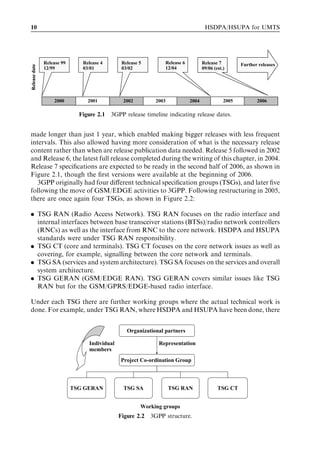
Figure 2.1, though the first versions were available at the beginning of 2006.
   3GPP originally had four different technical specification groups (TSGs), and later five
following the move of GSM/EDGE activities to 3GPP. Following restructuring in 2005,
there are once again four TSGs, as shown in Figure 2.2:

. TSG RAN (Radio Access Network). TSG RAN focuses on the radio interface and
  internal interfaces between base transceiver stations (BTSs)/radio network controllers
  (RNCs) as well as the interface from RNC to the core network. HSDPA and HSUPA
  standards were under TSG RAN responsibility.
. TSG CT (core and terminals). TSG CT focuses on the core network issues as well as
  covering, for example, signalling between the core network and terminals.
. TSG SA (services and system architecture). TSG SA focuses on the services and overall
  system architecture.
. TSG GERAN (GSM/EDGE RAN). TSG GERAN covers similar issues like TSG
  RAN but for the GSM/GPRS/EDGE-based radio interface.

Under each TSG there are further working groups where the actual technical work is
done. For example, under TSG RAN, where HSDPA and HSUPA have been done, there


                                                 Organizational partners

                                 Individual                  Representation
                                 members
                                              Project Co-ordination Group


                            TSG GERAN          TSG SA              TSG RAN                 TSG CT


                                                       Working groups
                                              Figure 2.2 3GPP structure.
HSPA standardization and background                                                   11


are five working groups (WGs) as follows:

. TSG RAN WG1: responsible for physical layer aspects;
. TSG RAN WG2: responsible for layer 2 and 3 aspects;
. TSG RAN WG3: responsible for RAN internal interfaces;
. TSG RAN WG4: responsible for performance and radio frequency (RF) require-
  ments;
. TSG RAN WG5: responsible for terminal testing.

The 3GPP membership is organized through organizational partners. Individual
companies need to be members of one of the organizational partners, and based on
this membership there is the right to participate in 3GPP activity. The following are the
current organizational partners:

.   Alliance for Telecommunications Industry Solutions (ATIS) from the US.
.   European Telecommunications Standards Institute (ETSI) from Europe.
.   China Communications Standards Association (CCSA) from China.
.   Association of Radio Industries and Businesses (ARIB) from Japan.
.   Telecommunication Technology Committee (TTC) from Japan.
.   Telecommunications Technology Association (TTA) from South Korea.

3GPP creates the technical content of the specifications, but it is the organizational
partners that actually publish the work. This enables having identical sets of specifi-
cations in all regions, thus ensuring roaming across continents. In addition to the
organizational partners, there are also so-called market representation partners, such
as the UMTS Forum, part of 3GPP.
   The work in 3GPP is based around work items, though small changes can be intro-
duced directly as ‘change requests’ against specification. With bigger items a feasibility
study is done usually before rushing in to making actual changes to the specifications.


2.1.1    HSDPA standardization in 3GPP
When Release 99 was completed, HSDPA or HSUPA were not yet on the agenda.
During 2000, while also making corrections to WCDMA Release 99 and working on
Release 4 to include, for example, TD-SCDMA, it became obvious that some improve-
ments for packet access would be needed. To enable such an evolution, a feasibility study
(study item) for HSDPA was started in March 2000. As shown in the study item proposal
[2], the work was initiated in line with 3GPP principles, having at least four supporting
companies. The companies supporting the start of work on HSDPA were Motorola and
Nokia from the vendor side and BT/Cellnet, T-Mobile and NTT DoCoMo from the
operator side, as indicated in [2].
   The feasibility study was finalized for the TSG RAN plenary for March 2001 and the
conclusions reported in [3] were such that there was clear benefit to be seen with the
solutions studied. In the HSDPA study item there were issues studied to improve
the downlink packet data transmission over Release 99 specifications. Topics such as
physical layer retransmissions and BTS-based scheduling were studied as well as adaptive
12                                                              HSDPA/HSUPA for UMTS


coding and modulation. The study also included some investigations for multi-antenna
transmission and reception technology, titled ‘multiple input multiple output’ (MIMO),
as well as on fast cell selection (FCS).
   As the feasibility study clearly demonstrated that significant improvement was possible
to achieve and with reasonable complexity, it was clear to proceed for an actual work
item to develop specifications. When the work item was set up [4] the scope of the work
was in line with the study item, but MIMO was taken as a separate work item and a
separate feasibility study on FCS was started. For the HSDPA work item there was
wider vendor support and the actual work item was supported from the vendor side by
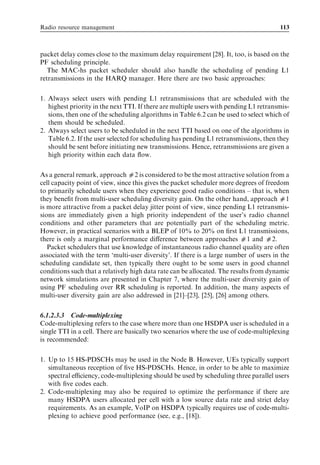
Motorola, Nokia and Ericsson. During the course of work, obviously much larger
numbers of companies contributed technically to the progress.
   When Release 5 specifications with HSDPA were released 1 year later – in March
2002 – there were clearly still corrections to do in HSDPA, but the core functionality
was already in the physical layer specifications. The work was partly slowed down by the
parallel corrections activity needed for the Release 99 terminals and networks being
rolled out. Especially with protocol aspects, intensive testing tends to reveal details that
need corrections and clarifications in the specifications and this was the case with
Release 99 devices preceding the start of commercial operations in Europe in the
second half of 2002. The longest time was taken for HSDPA protocol parts, on
which backward compatibility was started in March 2004.
   From the other topics that relate to HSDPA, the MIMO work item did not complete in
the Release 5 or Release 6 time frame, and it is still under discussion whether there is
sufficient merit for the introduction of it – as covered in the Release 7 topic listing. The
feasibility study on FCS concluded that the benefits were limited to the extent that
additional complexity would not be justified, thus no work item was created around FCS
after the study was closed. While focus was on the frequency division duplex (FDD) side,
time division duplex (TDD) was also covered in the HSDPA work item to include similar
solutions in both TDD modes (narrowband and wideband TDD).


2.1.2     HSUPA standardization in 3GPP
Although HSUPA is a term used broadly in the market, in 3GPP the standardization for
HSUPA was done under the name ‘enhanced uplink dedicated channel’ (E-DCH) work
item. Work started during the corrections phase for HSDPA, beginning with the study
item on ‘uplink enhancements for dedicated transport channels’ in September 2002. From
the vendor side, Motorola, Nokia and Ericsson were the supporting companies to initiate
the study in 3GPP.
   The techniques investigated in the study for HSUPA (E-DCH) were, as shown in
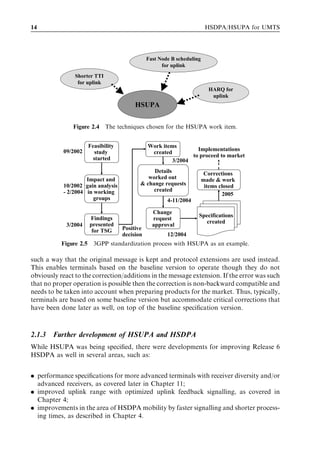
Figure 2.3:

.    fast physical layer Hybrid-ARQ (HARQ) for the uplink;
.    fast Node B based uplink scheduling;
.    shorter uplink transmission time interval (TTI) length;
.    higher order modulation;
.    fast DCH setup.
HSPA standardization and background                                                     13


                                          Fast Node B scheduling
                                                for uplink
                Shorter TTI
                 for uplink
                                                                   HARQ for
                                                                    uplink
                                      HSUPA?

                Higher order
                modulation

                                                  Fast dedicated
                                                  channel setup


                      Figure 2.3 Techniques investigated for HSUPA.


After long and detailed study work that produced the study item report [5], clear benefits
were shown with the techniques investigated. The report showed no potential gains from
using higher order modulation in the uplink direction, which resulted that adaptive
modulation was not included in the actual work item.
   As a conclusion, the study item, finalized in March 2004, recommended commence-
ment of a work item in the 3GPP for specifying a fast physical layer HARQ and a Node B
based scheduling mechanism for the uplink as well as a shorter uplink TTI length. Also,
the faster setup mechanisms for DCHs were left outside the recommendation for a 3GPP
work, but those issues were (partly) covered under different work items for 3GPP Release
6 specification, based on the findings during the study item phase.
   3GPP started a work item titled ‘FDD enhanced uplink’ to specify the HSUPA features
according to the recommendations of the study report. The TDD part was not pro-
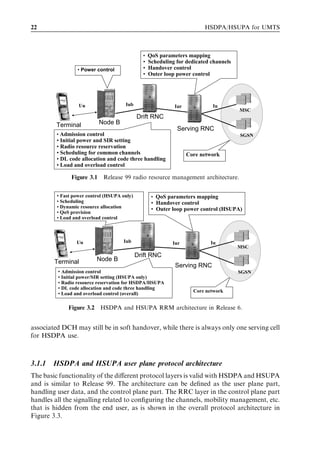
gressed with the same timing, but is being worked on for the Release 7 schedule.
   Due to good and detailed background work that was carried out during the 18-month
study phase, as well as not having major burden from the correction work with earlier
releases, the work towards specifications was fast and the first version of the feature was
introduced to the core specifications in December 2004. This version was not yet a final
and complete one, but it did contain all the key functionality around which the more
detailed finalization and correction work continued.
   In March 2005 the work item was officially completed for the functional specifications,
which meant that the feature was moved to correction and maintenance. During the
rest of 2005 the open issues as well as performance requirements were finalized. The
3GPP standardization process with HSUPA as an example is shown in Figure 2.5. The
final step with HSUPA is completion of protocol backward compatibility, which will
enable establishment of a release baseline for devices to be introduced in the market. This
is scheduled to take place in March 2006 when the ASN.1 review is scheduled to be
finalized (ASN.1 is the signalling protocol message-encoding language used in 3GPP in
several protocols).
   Completion of backward compatibility impacts how corrections are made. When such
a functionality is not totally broken, the correction to the protocol message is done in
14                                                                       HSDPA/HSUPA for UMTS


                                               Fast Node B scheduling
                                                     for uplink
                Shorter TTI
                 for uplink
                                                                          HARQ for
                                                                           uplink
                                         HSUPA

               Figure 2.4     The techniques chosen for the HSUPA work item.


                      Feasibility              Work items
           09/2002                                               Implementations
                         study                  created
                                                               to proceed to market
                        started                         3/2004
                                                Details                  Corrections
                    Impact and                worked out                made & work
           10/2002 gain analysis           & change requests             items closed
           - 2/2004 in working                  created
                                                                                2005
                       groups                          4-11/2004

                                                 Change
                      Findings                                      Specifications
                                                 request
                      presented                                        created
             3/2004                              approval
                       for TSG      Positive
                                    decision           12/2004
           Figure 2.5 3GPP standardization process with HSUPA as an example.

such a way that the original message is kept and protocol extensions are used instead.
This enables terminals based on the baseline version to operate though they do not
obviously react to the correction/additions in the message extension. If the error was such
that no proper operation is possible then the correction is non-backward compatible and
needs to be taken into account when preparing products for the market. Thus, typically,
terminals are based on some baseline version but accommodate critical corrections that
have been done later as well, on top of the baseline specification version.


2.1.3   Further development of HSUPA and HSDPA
While HSUPA was being specified, there were developments for improving Release 6
HSDPA as well in several areas, such as:


. performance specifications for more advanced terminals with receiver diversity and/or
  advanced receivers, as covered later in Chapter 11;
. improved uplink range with optimized uplink feedback signalling, as covered in
  Chapter 4;
. improvements in the area of HSDPA mobility by faster signalling and shorter process-
  ing times, as described in Chapter 4.
HSPA standardization and background                                                      15


                 PA


                                                                        Despreading
                                                                           and
                                                                        space/time
                PA                                                       decoding

                                                                   Terminal with 2 RX
                         BTS transmitter with
                                                                   antennas and MIMO
                         2 TX capability per sector
                                                                   decoding capability
          RF filters
            and
          baseband


            Figure 2.6   MIMO principle with 2 transmit and 2 receive antennas.


For Release 7 a work item has been defined, titled ‘continuous connectivity for packet data
users’, aiming for reduced overhead during services that require maintaining the link but
do not have the necessary continuous data flow. An example of such a service would be
the packet-based voice service, often known as ‘Voice over IP’ (VoIP). What is being
worked with currently can be found in [6], but conclusions are yet to be drawn as to what
actually will be included in Release 7 specifications.
   The MIMO work item is on-going as discussed previously, with current proposals
captured in [7]. The key principle is to have two (or more) transmit antennas with at least
partly different information streams and then to use two or more antennas and advanced
signal processing in the terminal to separate the different sub-streams, with the principle
illustrated in Figure 2.6.
   The key challenge is to demonstrate whether there is a sufficient incremental gain still
available when taking into account the receiver performance improvements done for
Release 6 or other existing alternatives to improve capacity by adding more transmitters –
such as going from a three-sector to a six-sector configuration. The conclusions so far in
3GPP indicate that in the macro-cell environment HSDPA with MIMO does not seem to
bring any capacity benefit over the case with receiver diversity and an advanced receiver
at the terminal end. Thus, it remains to be seen whether there will be anything on MIMO
in Release 7 or later releases. The study will look towards smaller (micro-cells), and it is
then to be discussed further in 3GPP whether adding MIMO to the specifications is
reasonable or not, with conclusions expected by mid-2006.
   Additional on-going items relevant for HSDPA or HSUPA operation include a work
item on reduced circuit-switched (CS) and packet-switched (PS) call setup delay, which is
aiming to shorten the time it takes to move from the idle state to the active (Cell_DCH)
state. As most of the steps in WCDMA will remain the same, regardless of whether one is
setting up a CS or PS call, the improvements will benefit both HSDPA/HSUPA use as
well as the normal speech call setup. The work has first focused on identifying how to
improve setting up a Release 99 speech call and coming up as well with methods that
could be applied even for existing devices. Now the focus has shifted to bigger adjust-
ments that do not work with existing devices, but have more potential for improvements
16                                                          HSDPA/HSUPA for UMTS


because changes to the terminals can also be done. This means that further improvements
would be obtained with Release 7 capable devices in most cases. Further details of the
solutions identified so far and those being studied can be found in [8].


2.1.4   Beyond HSDPA and HSUPA
While WCDMA-based evolution will continue in 3GPP with further releases, something
totally new has been started as well. 3GPP has started a feasibility study on the UMTS
Terrestrial Radio Access Network (UTRAN) long-term evolution (LTE), to ensure the
competitiveness of the 3GPP technology family for the long term as well. The work has
been started with the following targets defined [9]:
. Radio network user plane latency below 5 ms with 5-MHz or higher spectrum
  allocation. With smaller spectrum allocation below, latency below 10 ms should be
  facilitated.
. Reduced control plane latency.
. Scalable bandwidth up to 20 MHz, with smaller bandwidths covering 1.25 MHz,
  2.5 MHz, 5 MHz, 10 MHz and 15 MHz for narrow allocations.
. Downlink peak data rates up to 100 Mbps.
. Uplink peak data rates up to 50 Mbps.
. Two to three times the capacity of existing Release 6 reference scenarios with HSDPA
  or HSUPA.
. Improved end user data rates at the cell edge.
. Support for the PS domain only.

There are additional targets for the reduced operator system cost which are being
taken into account in the system architecture discussion. Naturally, inter-working
with WCDMA/HSDPA/HSUPA and GSM/GPRS/EDGE is part of the system design,
to prevent degradation of end user experience when moving between the system and
ensuring moving to WCDMA or GSM when meeting the end of coverage area.
   The work in 3GPP has already progressed, especially in the area of multiple access
selection. The decision was reached about how to achieve multiple access. Further work
for long-term evolution is based on pursuing single-carrier frequency division multiple
access (SC-FDMA) for the uplink transmission and orthogonal frequency division
multiplexing (OFDM) in the downlink direction.
   SC-FDMA means having frequency resource allocated to one user at a time (sharing
is also possible) which achieves similar orthogonal uplink as in the OFDM principle.
The reason for not taking OFDM in the uplink as well was the resulting poor signal
waveform properties for high-performance terminal amplifiers. With SC-FDMA there is
a cyclic prefix added to the transmission to enable low-complexity frequency domain
equalization in the base station receiver. The example transmitter/receiver chain in
Figure 2.7 is just one possible way of generating an SC-FDMA signal, with the exact
details still to be decided in 3GPP by 2007.
   The OFDM is known on local area technologies as the ‘wireless local area network’
WLAN and on the broadcast systems as ‘digital audio broadcasting’ (DAB) or as a
different version of the digital video broadcasting (DVB) system, with one of them
HSPA standardization and background                                                            17


                                 Transmitter
                   Bits                     Cyclic
                          Modulator
                                          extension
                                                                          Frequency

                                                         Total radio BW (eg. 20 MHz)
                                      Receiver
                                                                        Remove
                                    MMSE                FFT             cyclic
                                   equaliser
                                                                       extension


                                     IFFT              Demodulator         Bits


                                   Figure 2.7 SC-FDMA principle.


                    Transmitter
      Bits                      IFFT and
             Modulator           CP and GI
                                 addition

                                                                       Frequency

                                                                     Up to 20 MHz

                                   Receiver
                                  Bits                           FFT and
                                                                 Remove
                                         Demodulator           Bits and GI
                                                                CPCyclic
                                                                Extension
                                                                 removal

    Figure 2.8 Classical OFDM principle with cyclic prefix (CP) and guard interval (GI).


(DVB-H) intended for mobile use [10]. Each user is allocated a set of sub-carriers, with
the OFDM principle as shown in Figure 2.8. Unlike with SC-FDMA, the Inverse Fast
Fourier Transform (IFFT) is now based at the transmitter end. With this structure there
is the resulting situation that parallel sub-carriers carry different information, thus the
envelope characteristics of the signal suffer from that. This is bad for terminal power
amplifiers and was the key motivation not to adopt OFDM for the uplink direction.
   The motivation for new radio access is, on the other hand, the long-term capacity
needs and, on the other hand, the resulting complexity of implementing high data rates
up to 100 Mbps. Of the proposals considered, multi-carrier WCDMA was seen as too
complicated especially from the terminal point of view. On the other hand, frequency
flexibility, as shown in Figure 2.9, enabled with the new access technology, is attaining a


1.25MHz 2.5MHz           5MHz                  10MHz             15MHz                 20MHz

                    Figure 2.9 Spectrum flexibility with evolved UTRAN.
18                                                              HSDPA/HSUPA for UMTS


lot of interest when considering the possibility of re-farming lower frequency bands in the
future. While this chapter was being written, the work in 3GPP entailed the feasibility
study phase, but the work item phase is planned to start in mid-2006 and the first set of
specifications, expected to be part of Release 8, should be available during 2007.
   The other interesting area of the evolution is the network architecture. The trend seems
to be to go towards such an architecture where there are fewer nodes involved for user
plane processing compared with the current functionality. To achieve low latency it has
been agreed to go for a two-node approach, where one is naturally equivalent to the
base station and the other, upper, node handles core network functionalities and
possibly some radio aspects as well. As radio does not support uplink or downlink
macro-diversity (soft handover) there are some additional degrees of freedom in the
architecture for the control plane, though macro-diversity has been applied in some
systems with very flat architecture as well. Also, more control is being suggested to be
moved to the base station, to make the base station even more intelligent than with
HSDPA and HSUPA, adding more radio-related signalling responsibilities for the base
station, even radio resource control (RRC) signalling. Until actual specifications start to
become available some time in 2007 more details about the physical layer aspects can be
obtained from [11] and on the protocol issues from [12].


2.2   References
 [1] www.3gpp.org
 [2] RP-000032, Work Item, Description Sheet for High Speed Downlink Packet Access, 13–15
     March 2000, 3GPP TSG RAN7, Madrid, Spain. Available at www.3gpp.org
 [3] 3GPP Technical Report, TR 25.848, Technical Specification Group RAN: Physical Layer
     Aspects of UTRA High Speed Downlink Packet Access (Release 4) 3GPP TR 25.848,
     Version 4.0.0, March 2001. Available at www.3gpp.org
 [4] RP-010262, Proposal for Rel-5 Work Item on HSDPA, 13–16 March 2001, 3GPP TSG
     RAN11, Palm Springs, California, USA. Available at www.3gpp.org
 [5] 3GPP Technical Report, TR 25.896, Technical Specification Group RAN: Feasibility Study
     for Enhanced Uplink for UTRA FDD, Release 6, Version 6.0.0, March 2004. Available at
     www.3gpp.org
 [6] 3GPP Technical Report, TR 25.903, Technical Specification Group RAN: Continuous
     Connectivity for Packet Data Users, Release 7, Version 0.2.0, November, 2005. Available
     at www.3gpp.org
 [7] 3GPP Technical Report, TR 25.876, Technical Specification Group RAN: Multiple-Input
     Multiple-Output in UTRA, Version 1.7.1, October 2005. Available at www.3gpp.org
 [8] 3GPP Technical Report, TR 25.815, 3GPP Technical Specification Group RAN: Signaling
     enhancements for Circuit-Switched (CS) and Packet-Switched (PS) Connections; Analyses
     and Recommendations, Release 7, Version 0.4.2, November 2005. Available at
     www.3gpp.org
 [9] 3GPP Technical Report, TR 25.913, Technical Specification Group RAN: Requirements for
     Evolved UTRA (E-UTRA) and Evolved UTRAN (E-UTRAN), Release 7, Version 2.1.0,
     September 2005. Available at www.3gpp.org
[10] www.dvb-h-online.org
HSPA standardization and background                                                    19


[11] 3GPP Technical Report, TR 25.814, Technical Specification Group RAN: Physical Layer
     Aspects for Evolved UTRA (Release 7). Available at www.3gpp.org
[12] 3GPP Technical Report, TR 25.813, Technical Specification Group RAN: Evolved Uni-
     versal Terrestrial Radio Access (UTRA) and Universal Terrestrial Radio Access Network
     (UTRAN); Radio interface protocol aspects. Available at www.3gpp.org
3
HSPA architecture and protocols

Antti Toskala and Juho Pirskanen


This chapter covers the high-speed downlink packet access (HSDPA) and high-speed
uplink packet access (HSUPA) impacts on the radio network and protocol architecture
as well as on network element functionalities and interfaces. At the end of the chapter the
radio resource control (RRC) states are covered.


3.1   Radio resource management architecture
The radio resource management (RRM) functionality with HSDPA and HSUPA has
experienced changes compared with Release 99. In Release 99 the scheduling control was
purely based in the radio network controller (RNC) while in the base station (BTS or
Node B in 3GPP terminology) there was mainly a power control related functionality
(fast closed loop power control). In Release 99 if there were two RNCs involved for
connection, the scheduling was distributed. The serving RNC (SRNC) – the one being
connected to the core network for that connection – would handle the scheduling for
dedicated channels (DCHs) and the one actually being connected to the base transceiver
station (BTS) would handle the common channel (like FACH). Release 99’s RRM
distribution is shown in Figure 3.1, and is covered in more detail in [1].
   As scheduling has been moved to the BTS, there is now a change in the overall RRM
architecture. The SRNC will still retain control of handovers and is the one which will
decide the suitable mapping for quality of service (QoS) parameters. With HSDPA the
situation is simplified in the sense that as there are no soft handovers for HSDPA data,
then there is no need to run user data over multiple Iub and Iur interfaces and, even
though HSDPA is supported over Iur in the specifications, the utilization of the Iur
interface can be completely avoided by performing SRNC relocation, when the serving
high-speed downlink shared channel (HS-DSCH) cell is under a different controlling
RNC (CRNC). With Release 99 this cannot be avoided at RNC area boundaries when
soft handover is used between two base stations under different RNCs. Thus, the typical
HSDPA scenario could be presented by just showing a single RNC. Please note that the

HSDPA/HSUPA for UMTS: High Speed Radio Access for Mobile Communications Edited by Harri Holma
and Antti Toskala © 2006 John Wiley & Sons, Ltd. ISBN: 0-470-01884-4
22                                                                     HSDPA/HSUPA for UMTS


                                               • QoS parameters mapping
                                               • Scheduling for dedicated channels
                 • Power control               • Handover control
                                               • Outer loop power control


                  Uu                  Iub                  Iur            Iu
                                                                                     MSC
                                             Drift RNC
         Terminal          Node B
                                                            Serving RNC
         • Admission control                                                         SGSN
         • Initial power and SIR setting
         • Radio resource reservation
         • Scheduling for common channels                        Core network
         • DL code allocation and code three handling
         • Load and overload control

               Figure 3.1 Release 99 radio resource management architecture.


         • Fast power control (HSUPA only)        • QoS parameters mapping
         • Scheduling                             • Handover control
         • Dynamic resource allocation            • Outer loop power control (HSUPA)
         • QoS provision
         • Load and overload control


                 Uu                  Iub                  Iur             Iu
                                                                                     MSC
                                             Drift RNC
        Terminal          Node B
                                                           Serving RNC
         • Admission control                                                         SGSN
         • Initial power/SIR setting (HSUPA only)
         • Radio resource reservation for HSDPA/HSUPA
         • DL code allocation and code three handling
                                                                   Core network
         • Load and overload control (overall)

              Figure 3.2 HSDPA and HSUPA RRM architecture in Release 6.


associated DCH may still be in soft handover, while there is always only one serving cell
for HSDPA use.


3.1.1   HSDPA and HSUPA user plane protocol architecture
The basic functionality of the different protocol layers is valid with HSDPA and HSUPA
and is similar to Release 99. The architecture can be defined as the user plane part,
handling user data, and the control plane part. The RRC layer in the control plane part
handles all the signalling related to configuring the channels, mobility management, etc.
that is hidden from the end user, as is shown in the overall protocol architecture in
Figure 3.3.
HSPA architecture and protocols                                                        23


                      Control plane                         User plane


                          RRC                     PDCP                         BMC


                Signalling radio bearers            User plane radio bearers


                                               RLC

                    Logical channels

                                               MAC

                   Transport channels
                                           Physical layer

                Figure 3.3 Release 99 radio interface protocol architecture.


  The Packet Data Convergence Protocol (PDCP) has as its main functionality header
compression which is not relevant for circuit-switched services. The importance of header
compression, as discussed in connection with Chapter 10, is easy to understand since a
non-compressed Internet Protocol (IP) header can be two to three times the size of the
actual voice packet payload itself.
  Radio link control (RLC) handles the segmentation and retransmission for both the
user and control data. RLC may be operated on three different modes:

. Transparent mode, when no overhead is added due to the RLC layer, such as with
  AMR speech, and is not applicable when the transport channels of HSDPA and
  HSUPA are used.
. Unacknowledged mode, when no RLC layer retransmission will take place. This is
  used with applications that can tolerate some packet loss, as is the case with VoIP, and
  cannot allow delay variation due to RLC level retransmission.
. Acknowledged mode operation, when data delivery is ensured with RLC layer
  retransmissions with applications that require all packets to be delivered.

The medium access control (MAC) layer in Release 99 focuses on mapping between the
logical channels and handling the priorities, as well as selection of the data rates being
used – i.e., selection of the transport format (TF) being applied. Transport channel
switching is also a MAC layer functionality.
   Both HSDPA and HSUPA introduce new elements in the architecture. The MAC
layer functionalities for HSDPA and HSUPA can operate independently of Release
99’s DCH operation, but takes into account the overall resource limitations of the air
interface. Figure 3.4 illustrates the overall radio interface architecture for HSDPA and
HSUPA user data, highlighting the new protocol entities dealing with user data. Control
plane signalling – omitted in Figure 3.4 – would simply connect to the RLC and then have
24                                                                  HSDPA/HSUPA for UMTS


                                               IP header compression
                                                      (PDCP)


       CS services like AMR
      speech call or video call             Segmentation and repetition
                                               data link layer (RLC)


                                               Multiplexing (MAC-d)


                                                                                Reordering
                                                                                (MAC-es)

                                             Fast HARQ             Fast HARQ
        Dedicated channel (DCH)                                     repetition
                                              repetition
                                              (MAC-hs)              (MAC-e)


                  Physical layer and RF transmission and reception

       Figure 3.4 HSDPA and HSUPA radio interface architecture for the user data.


the signalling carried either over the DCH or over the HSDPA/HSUPA. For user data,
PDCP handles IP header compression. There are several PDCP and RLC entities shown
in the figure to indicate the possibility of running parallel services.
   The BTS-based (fast) scheduling functionality is a MAC layer functionality, and thus
there is now a new protocol entity, MAC-hs (hs for high speed), in the BTS. This is shown
as part of the user plane protocol architecture in Figure 3.5, which covers HSDPA-
specific additions and their location in the network elements. The RNC retains the
MAC-d (d for dedicated), but the only remaining functionality is transport channel
switching as all other functionalities, such as scheduling and priority handling, are moved
to MAC-hs. It is worth noting that the layer above the MAC layer – namely, the RLC
layer – stays mainly unchanged, but some optimizations for RT services such as VoIP


        Terminal                             Node B                       Serving RNC

                                                                          RLC
          RLC                                                            MAC-d               Iu
          MAC                      MAC-hs       FRAME                  FRAME
                                                PROTOCOL               PROTOCOL
      WCDMA L1                    WCDMA L1
                                               TRANSPORT               TRANSPORT


                         Uu                             Iub/Iur
                      Figure 3.5 HSDPA user plane protocol architecture.
HSPA architecture and protocols                                                         25


             Terminal                        Node B               Serving RNC
                                                                    RLC
              RLC                                                   MAC-d
              MAC                                                   MAC-es       Iu
             MAC-es/e              MAC-e       FRAME              FRAME
                                               PROTOCOL           PROTOCOL
            WCDMA L1              WCDMA L1
                                              TRANSPORT           TRANSPORT

                                                        Iub/Iur
                         Uu
                   Figure 3.6 HSUPA user plane protocol architecture.

were introduced for unacknowledged mode (UM) RLC in Release 6. As covered in the
introduction, even if HSDPA introduced physical layer retransmissions, there is still
the RLC layer handling the retransmissions should physical layer operation fail or,
especially, in connection with the different mobility events like serving HS-DSCH cell
change. This is assuming acknowledged mode (AM) RLC operation. In the case of
UM-RLC, physical year retransmissions are the only ones available. An example would
be a VoIP call where the RLC layer retransmissions from the RNC would be too slow.
   With HSUPA there is in like manner a new MAC entity added to the BTS, as shown
in Figure 3.6. This is, however, not the only place where additions were made to the
protocol architecture. The terminal has a new MAC entity as well (MAC-es/s), to cover
the fact that part of the scheduling functionality is now moved to Node B, though it is
based on control information from the RNC and a direct capacity request from the user
equipment (UE) to the Node B. There is a new protocol entity for the RNC as well. This
is due to HSUPA soft handover and the fact that the physical layer retransmission
introduced in HSUPA has the effect of placing packets out of order. When data are
received in several BTS sites, there is a possibility when operating in the soft handover
region that packets from different BTSs arrive such that the order of packets is not
retained, and to allow reordering to be done for single packet streams the reordering
functionality needs to be combined with macro-diversity combining in MAC-es. Thus,
the new MAC-es ‘in-sequence delivery’ functionality has as its main task to ensure that
for the layers above the packets are provided in the order they were transmitted from the
terminal. Should such ordering be handled at the BTS, then an unnecessary delay would
be introduced as the BTS would have to wait for missing packets until they could be
determined to have been correctly received by another BTS in the active set. Further
details of the MAC layer architecture can be found in [2].
   In like manner to HSDPA, the RLC layer in HSUPA is involved with the retransmis-
sion of packets if the physical layer fails to correctly deliver them after the maximum
number of retransmissions is exceeded or in connection with mobility events.


3.1.2   Impact of HSDPA and HSUPA on UTRAN interfaces
While the impacts of HSDPA and HSUPA in terms of data rates over the air interface are
well known and often the focus of discussion, the impact on the operation of the other
interfaces requires attention as well. For the interface between the base station and RNC,
the Iub interface, there are now larger data rates expected than with Release 99 terminals.
26                                                                    HSDPA/HSUPA for UMTS


         Release 99 DCH

                                                           Iu-ps
                       Uu                   Iub                                    Data from
                                                                                   GGSN

                                Node B                              SGSN
               Terminal                             RNC

               DCH peak rate:       Iub bit rate:         QoS parameter: maximum
               384 kbps             0 - 384 kbps          bit rate: 384 kbps

          Release 5 HSDPA

                                                            Iu-ps
                          Uu                Iub                                    Data from
                                                                                   GGSN

                                Node B                               SGSN
               Terminal                             RNC

            HS-DSCH peak rate:           Iub bit rate:    QoS parameter: maximum
            7.2 Mbps over 2 ms           0 - 1 Mbps       Bit Rate: 1 Mbps

      Figure 3.7 Example of HSDPA and Release 99 data rates on different interfaces.


While Release 99 terminals are at most 384 kbps, the data rate on different interfaces,
including the Iu-ps interface to the packet core network Serving GPRS Support Node
(SGSN), is equal to the one used for radio. With HSDPA the situation has changed,
however. Over the air interface, denoted as Uu in Third Generation Partnership Project
(3GPP) terminology, there can be data rates up to 14.4 Mbps over short (2-ms) periods.
This, however, does not mean the same data rate being used on the Iub and Iu-ps
interface for that particular user. From a single user point of view, the radio resource is
time and code shared with other users in the cell. Thus, the average bit rate for a user in a
loaded cell is clearly lower. Further, the peak rates of 10 Mbps require extremely
favourable radio conditions and it is unlikely that all the users in the cell would be
able to get such a high data rate. Thus, the average traffic on the Iub interface is also less
than the peak rate for radio. An example is illustrated in Figure 3.7, which shows as a
comparison the Release 99 384-kbps downlink and HSDPA for the 7.2-Mbps case. The
384-kbps downlink will have equal data rate booking on all interfaces and will not exceed
the 384-kbps limit. With HSDPA the radio interface peak rate supported by the terminal
in the example is 7.2 Mbps. The service data rate over the Iu-ps and Iub interface could be
limited, for example, to 1 Mbps. The use of buffering in the BTS makes it possible to have
the peak rate for the connection as high as terminal and BTS capabilities allow, while
keeping the maximum bit rate over the Iub and Iu-ps in line with the QoS parameters
received from the packet core.
   The buffer in the BTS – together with a scheduler that time-shares the resources –
enables having a higher peak rate (over a short period of time) for radio than the average
rate on Iub/Iu-ps. Having the transmission buffer in the BTS also requires flow control to
be applied to avoid buffer overflow. In this way the user under better radio conditions
may get more of the Iub resources, as the situation exists to get a lot of data through. The
principle of flow control operation is shown in Figure 3.8. The user under good radio
HSPA architecture and protocols                                                        27


                                                      Maximise Iub
                                                         capacity
                                                       utilization in
                            RNC
                                                    response to credits


                                  Data              Increase credits to
                                                       UE1, reduce
                                                      credits to UE2


                          BTS                            Scheduler buffer level
                                                         for UE1

                                                         Scheduler buffer level
                                                         for UE2


                                            UE2 with low CQI
             UE1 with high CQI
                   Figure 3.8 HSDPA flow control on the Iub interface.


conditions will get more Iub allocation (credits) as the data move fast from the radio
point of view. On the other hand, when the buffer starts to get filled due to poor radio
conditions (and resulting low data rate) the flow control will slow the data stream down
for that kind of user, as shown in Figure 3.8.
   For the network elements and the terminal itself the use of HSDPA and HSUPA will
cause a lot of changes, especially on the physical layer as well as on the MAC and RLC
layers. From the RNC point of view there is an impact which is due not only to the
already mentioned flow control but also, on the other hand, to the changes in RRM.
Mobility events cause some changes in addition to the opportunity to share Iub resources
dynamically between all users. Further, the data rates increase from the practical
maximum of 384 kbps for Release 99 devices up to 10 Mbps and, theoretically, even
up to 14 Mbps.
   For the BTS and the terminal, the key changes with HSDPA are related to the
addition of scheduling and retransmission functionalities at the BTS and, respectively,
the needed packet combining functionality at the terminal. Additional channels are then
needed for actual data transmission itself, including new modulation, as well as for
signalling purposes to facilitate the new functionality. The key new functionalites due to
HSDPA are illustrated in Figure 3.9. Further details of the new functionalities are
covered in Chapter 4.
   Similarly, with HSUPA new functionalities are needed as shown in Figure 3.10. Here,
scheduling is controlled from the BTS and there are needs for data flow handling in the
other (uplink direction) as well as new signalling channels for HSUPA. The combining
functionality is now at the base station and the new re-ordering functionality is added to
the RNC. Uplink scheduling is required in addition to downlink scheduling for HSDPA.
28                                                      HSDPA/HSUPA for UMTS


                                        HSDPA radio resource and
                                          mobility management
                                      HSDPA Iub traffic management
      RNC                                 Larger data volume


                                               Data buffering
                                               ARQ handling
                                             Feedback decoding
                                                Flow control
       BTS                                  Downlink scheduling
                                            16QAM modulation


                                            ARQ handling with
                                              soft value buffer
                                          Feedback generation and
     Terminal                                   transmission
                                           16QAM demodulation


       Figure 3.9 New functionality on different elements due to HSDPA.


                                        HSUPA radio resource and
                                          mobility management
                                       HSUPA Iub capacity allocation
      RNC                               Larger uplink data volume
                                           Packet re-ordering


                                             ARQ handling with
                                               soft value buffer
                                             Feedback encoding
                                          Uplink scheduling against
       BTS                           interference/baseband/Iub capacity


                                              ARQ handling
                                    TX power and buffer status feedback
                                       generation and transmission
     Terminal                            Multicode transmission
                                            Uplink scheduling


       Figure 3.10 New functionality on different elements due to HSUPA.
HSPA architecture and protocols                                                         29


The terminal will now be able to accept multi-code transmission, which was the case in
Release 99 as well, but not implemented in the actual market place. Further details of
HSUPA-related new functionalities are covered in Chapter 5.


3.1.3   Protocol states with HSDPA and HSUPA
RRC states [1], [3] are the same with HSDPA and HSUPA as in Release 99. The
Cell_DCH is the state which is used when active data transmission to and from the
terminal on the DCH or HSDPA/HSUPA is possible. From Cell_DCH state the terminal
will be moved to Cell_FACH or further states, either directly from Cell_DCH state or via
Cell_FACH state if there are no data in the buffers. This happens depending on the
network timer settings after some seconds. There needs to be an obvious trade-off with
network response time for the first packet transmission instant after idle period and the
timer valve applied. The transitions take time due to the reconfiguration/setup processes
needed. Keeping a user booking HSDPA/HSUPA resource when there are no data to
transfer is not efficient from the system capacity or from the BTS resource use point of
view. Terminal battery life would also suffer, as keeping a terminal active with no data
passing through it will cause the battery to run out quickly.
   Data can be transmitted in Cell_FACH state as well, but only using the forward access
channel (FACH) for the downlink and the random access channel (RACH) in the uplink,
which means limited data rates as these channels do not offer any of the performance
enhancement features of HSDPA and HSUPA. A terminal in Cell_FACH state con-
tinuously decodes FACH channels and then initiates the response downlink data (or
initiates transmission of data due in the uplink buffer) on the RACH. Depending on the
data volume (based on the reporting), the terminal may be moved back to Cell_DCH
state. As estimated in Chapter 10, the terminal battery power consumption ratio between
Cell_FACH state and Cell_DCH state is approximately 1 to 2, thus Cell_FACH state
should be avoided for lengthy time periods as well.
   If the idle period in data transmission continues for lengthy periods, it makes sense to
move the terminal onwards to Cell_PCH or URA_PCH state. These states are the most
efficient ones from the terminal battery consumption point of view. Naturally, the use
of the discontinuous reception (DRX) cycle with the paging operation will cause some
additional delay to resume actual data transmission as the terminal needs to be paged
first. This happens in either one cell (location known at cell level in Cell_PCH state) or
in the registration area level (URA_PCH state). This is the benefit of the URA_PCH
state for terminals with high mobility. Terminals moving fast in a dense network would
necessitate a lot of cell updates, increasing the RACH load, but would then need to be
paged in multiple cells in case of downlink-originated activity. RRC states are illustrated
in Figure 3.11.
   In idle mode there are no HSDPA/HSUPA-specific issues, the operation again uses the
DCH. Release 6 specifications indicate the position in the broadcast information at
which the network will inform whether there is HSUPA/HSDPA available, but this is
only for user information and not to influence the existing network and cell selection
behaviour. This has been defined in such a way in the specifications that early imple-
mentation (on top of Release 5) is possible as well. Obviously, the RRM reason will
dictate whether a user gets allocated HSDPA/HSUPA or not. Similarly to GPRS, it is
30                                                             HSDPA/HSUPA for UMTS


                        DCH and/or                            Paging needed
                       HS-DSCH/E-                              for activity
                       DCH allocated
                                          Connected mode

                                       Cell DCH
                Idle                               Cell PCH
                mode

                                   Cell FACH
                                                   URA PCH

                              FACH decoded
                              FACH decoded
                               continuosly
                               continuously
                     Figure 3.11 RRC states with HSDPA/HSUPA.


unknown before actual connection establishment how many slots – i.e., what practical
data rates – are available.


3.2   References
[1] H. Holma and A. Toskala (eds) (2004). WCDMA for UMTS (3rd edn). John Wiley & Sons.
[2] 3GPP, Technical Specification Group RAN: Medium Access Control (MAC) Protocol
    Specification, 3GPP, TS 25.321, Version 6.7.0, Release 6. Available at www.3gpp.org
[3] 3GPP, Technical Specification Group RAN: Radio Resource Control (RRC) Protocol
    Specification, 3GPP, TS 25.331, Version 6.8.0, Release 6. Available at www.3gpp.org
4
HSDPA principles

Juho Pirskanen and Antti Toskala


This chapter covers high-speed downlink packet access (HSDPA) principles for wide-
band code division multiple access (WCDMA) – the key new feature included in Release
5 specifications and enhanced further in Release 6 specifications. This chapter focuses on
describing how HSDPA works and what features are included in Release 5 and Release 6
specifications. HSDPA has been designed to increase downlink packet data throughput
by means of fast physical layer (L1) retransmission and transmission combining as well
as fast link adaptation controlled by the Node B – i.e., base transceiver station (BTS).
The specification work has resulted in quite different structures and solutions when
compared with Release 99 based WCDMA. This chapter is organized as follows. First,
HSDPA key aspects are presented and a comparison with Release 99 dedicated channel
(DCH)-based downlink packet access is made. Second, the different transport and
physical channels needed to actually implement HSDPA functionality are covered.
Third, the functionalities that are the basis of HSDPA operation, retransmission and
link adaptation are covered in detail. The chapter then continues with the mobility
principles and moves on to the terminal capability classes. Toward the end, the chapter
addresses the theoretical data rates achievable with HSDPA on different layers and the
HSDPA-specific parameters on the interface between the radio network controller
(RNC) and BTS – Iub – are covered. The chapter concludes with the HSDPA
medium access control (MAC) layer description.


4.1   HSDPA vs Release 99 DCH
In Release 99 there basically exists in the specifications three different methods for
downlink packet data operation: DCH, forward access channel (FACH) and downlink
shared channel (DSCH). Since the DSCH has been de facto replaced with the high-speed
DSCH of HSDPA, it is not covered in more depth here. This has been recognized in the
Third Generation Partnership Project (3GPP) as well and the DSCH has been removed
from the specifications from Release 5 onwards, simply due to the lack of interest for

HSDPA/HSUPA for UMTS: High Speed Radio Access for Mobile Communications Edited by Harri Holma
and Antti Toskala © 2006 John Wiley & Sons, Ltd. ISBN: 0-470-01884-4
32                                                                  HSDPA/HSUPA for UMTS


actual implementation. For those interested in the historical reasons for DSCH use
please refer to [1] and the references therein for further details.
   The FACH is used either for small data volumes or when setting up the connection and
during state transfers. In connection with HSDPA, the FACH is used to carry the
signalling when the terminal has moved, due to inactivity from Cell_DCH state to
Cell_FACH, Cell_PCH or URA_PCH state. The FACH is operated on its own and,
depending on the state the terminal is in, FACH is decoded either continuously
(Cell_FACH) or based on the paging message. For the FACH there is neither fast
power control nor soft handover. For the specific case of the Multimedia Broadcast
Multicast Service (MBMS), selection combining or soft combining may be used on the
FACH, but in any case there is no physical layer feedback for any activity on the FACH
and thus power control is not feasible. The FACH is carried on the secondary common
control physical channel (S-CCPCH) with fixed spreading factor. If there is a need for
service mix, like speech and data, then FACH cannot be used.
   The Release 99 based DCH is the key part of the system – despite the introduction of
HSDPA – and Release 5 HSDPA is always operated with the DCH running in parallel
(as shown in Figure 4.1). If the service is only for packet data, then at least the signalling
radio bearer (SRB) is carried on the DCH. In case the service is circuit-switched – like
AMR speech call or video call parallel to PS data – then the service always runs on the
DCH. With Release 6 signalling can also be carried without the DCH, as explained in
connection with the fractional DCH (F-DCH). In Release 5, uplink user data always go
on the DCH (when HSDPA is active), whereas in Release 6 an alternative is provided by
the Enhanced DCH (E-DCH) with the introduction of high-speed uplink packet access
(HSUPA), as covered in Chapter 5.
   The DCH can be used for any kind of service and it has fixed a spreading factor in the
downlink with fixed allocation during the connection. Thus, it reserves the code resources
corresponding to the peak data rate of the connection. Of course, higher layer signalling
could be used to reconfigure the code used for the DCH, but that is too slow to react to
changes in the traffic. In the case of multiple services, the reserved capacity is equal to the
sum of the peak data rate of the services. The theoretical peak rate is 2 Mbps but it seems
that 384 kbps is the highest implemented DCH data rate on the market so far. Any


                                            HS
                                               -S   CC
                                                      H
                                          HS
                                             -DS
                                                 CH
                                          HS
                                             -DP
                                       DC        CC
                                         H(         H
                                            DP
                                               CC
                                                  H/D
                                                          PD
                                                            CH
                      Node B                                   )
                                                                   Terminal
              Figure 4.1 Channels needed for HSDPA operation in Release 5.
HSDPA principles                                                                       33


          Table 4.1   Comparison of fundamental properties of the DCH and HS-DSCH.

Feature                                                   DCH                HS-DSCH

Variable spreading factor                                 No                 No
Fast power control                                        Yes                No
Adaptive modulation and coding                            No                 Yes
Multi-code operation                                      Yes                Yes, extended
Physical layer retransmissions                            No                 Yes
BTS-based scheduling and link adaptation                  No                 Yes


scheduling and retransmission handling is done in the RNC. At the base station end, fast
power control is the key functionality for the DCH in addition to encoding the data
packet provided by the RNC. Soft handover (macro-diversity) is supported for the DCH,
and in such a case all base stations need to transmit exactly the same content (except for
power control commands) with identical timing to facilitate combining in the Rake
receiver.
  HSDPA’s fundamental operation is based on the use of link adaptation, fast schedul-
ing and physical layer retransmission. All these methods have the aim of improving
downlink packet data performance both in terms of capacity and practical bit rates.
HSDPA does not support DCH features like fast power control or soft handover (as
summarized in Table 4.1).


4.2   Key technologies with HSDPA
Several new channels have been introduced for HSDPA operation. For user data there
is the high-speed downlink shared channel (HS-DSCH) and the corresponding
physical channel. For the associated signalling needs there are two channels: high-
speed shared control channel (HS-SCCH) in the downlink and high-speed dedicated
physical control channel (HS-DPCCH) in the uplink direction. In addition to the basic
HSDPA channel covered in Release 5 specifications, there is now a new channel in
Release 6 specifications – the fractional dedicated physical channel (F-DPCH) – to cover
for operation when all downlink traffic is carried on the HS-DSCH. The channels needed
for HSDPA operation are shown in Figure 4.1. The channels missing from Figure 4.1 are
the broadcast channels from Release 99 for channel estimation, system information
broadcast, cell search, paging message transmission, etc., as covered in [1] in detail.
   The general HSDPA operation principle is shown in Figure 4.2, where the Node B
estimates the channel quality of each active HSDPA user on the basis of the physical
layer feedback received in the uplink. Scheduling and link adaptation are then conducted
at a fast pace depending on the scheduling algorithm and the user prioritization scheme.
   The other key new technology is physical layer retransmission. Whereas in Release 99
once data are not received correctly, there is a need for retransmission to be sent again
from the RNC. In Release 99 there is no difference in physical layer operation, regardless
of whether the packet is a retransmission or a new packet. With HSDPA the packet is
first received in the buffer in the BTS (as illustrated in Figure 4.3). The BTS keeps the
34                                                                 HSDPA/HSUPA for UMTS


                L1 feedback
                                                             Fast Node B
                                                             scheduling based on:
                                   Data
                                                             •Quality feedback
                                                             •UE capability
                              L1 feedback                    •Resource availability
           Terminal 1                                        •Buffer status
                                                             •QoS and priority
                                            Data


                           Terminal 2
                     Figure 4.2 HSDPA Node B scheduling principle.


packet in the buffer even if has sent it to the user and, in case of packet decoding failure,
retransmission automatically takes places from the base station without RNC involve-
ment. So, the terminal has respectively combined the transmissions, capturing the energy
of both. Should physical layer operation fail due to, say, signalling error, then RNC-
based retransmission may still be applied on top. As shown in the example in Figure 4.3,
using a radio link control (RLC)-acknowledged mode of operation, RLC layer acknowl-
edgement is provided in the RLC layer as would be done for Release 99 based operation.
Now, the use of RLC retransmissions is not a very frequent event as, for example, with


                                                              6. RLC ACK
                                  RNC

                  1. Packet to
                  BTS buffer


                                 BTS
                                                   4. Retransmission
                     2. First
                  transmission

                                                   5. Retransmission
                      3. NACK                          combining


                            Terminal


                          Figure 4.3 BTS retransmission handling.
HSDPA principles                                                                         35


four retransmissions and an initial block error rate (BLER) of 10%, the probability for
retransmissions should be less than 0.1%. RLC layer retransmissions are more likely in
connection with mobility operations, as is discussed in the HSDPA mobility section.


4.2.1   High-speed downlink shared channel
The HS-DSCH is the transport channel that carries the actual user data with HSDPA. In
the physical layer the HS-DSCH is mapped on the high-speed physical downlink shared
channel (HS-PDSCH). The key differences from the Release 99 DCH-based packet data
operation are as follows:

. Lack of fast power control. Instead, link adaptation selects the suitable combination of
  codes, coding rates and modulation to be used.
. Support of higher order modulation than the DCH. With 16-quadrature amplitude
  modulation (16QAM) the number of bits carried per symbol is doubled in favourable
  conditions compared with the quadrature phase shift keying (QPSK) in Release 99.
. User allocation with base station based scheduling every 2 ms, with fast physical layer
  signalling. With DCH the higher layer signalling from the RNC allocates semi-
  permanent code (and a spreading factor) to be used. The transmission time interval
  (TTI) is also longer with the DCH, allowing values such as 10, 20, 40 or 80 ms. (The
  longest is limited in the specific case of small data rates that have a spreading factor of
  512).
. Use of physical layer retransmissions and retransmission combining, while with the
  DCH – if retransmissions are used – they are based on RLC level retransmissions.
. Lack of soft handover. Data are sent from one serving HS-DSCH cell only.
. Lack of physical layer control information on the HS-PDSCH. This is carried instead
  on the HS-SCCH for HSDPA use and on the associated DCH (uplink power control,
  etc.)
. Multicode operation with a fixed spreading factor. Only spreading factor 16 is used,
  while with the DCH the spreading factor could be a static parameter between 4 and
  512.
. With HSDPA only turbo-coding is used, while with the DCH convolutional coding
  may also be used.
. No discontinuous transmission (DTX) on the slot level. The HS-PDSCH is either fully
  transmitted or not transmitted at all during the 2-ms TTI.

An important property of the HS-DSCH is the dynamic nature of resource sharing
enabled by the short 2-ms allocation period. When there are data for a user allocated on
the HS-PDSCH, they are sent continuously during the 2-ms TTI. There is no discon-
tinuous transmission (DTX) on the slot level as with the DCH, while code resource (recall
allocation of a downlink code with a fixed spreading factor) with the DCH is partially
filled with lower data rates. In line with Figure 4.4, the DTX positions in the slots (and
divided over the TTI) do reduce the downlink interference generated but keep the code
resource occupied according to the highest data rate possible on the DCH. For example,
with 384 kbps downlink, the code resource reservation is not changed when moving to a
lower data rate. Thus, if enabling a peak rate of 384 kbps, then as the application goes
36                                                              HSDPA/HSUPA for UMTS


     Maximum rate

             Data       TPC   TFCI                 Data                    Pilot

           DPDCH          DPCCH                     DPDCH                 DPCCH
                                  Slot 0.667 ms = 2/3 ms

     Reduced rate

             Data       TPC   TFCI     Data               DTX              Pilot

           DPDCH          DPCCH                     DPDCH                 DPCCH
                                  Slot 0.667 ms = 2/3 ms
           Figure 4.4 Discontinuous downlink transmission with Release 99 DCH.


down to, say, 16 kbps, the only way to reduce resource consumption would be to
reconfigure the radio link. This again takes time both when reconfiguring and ‘locking’
the data rate to a new smaller value until another reconfiguration would take place to
upgrade the data rate again. With the HS-PDSCH, once there are no data to be
transmitted, there is no transmission at all on the the HS-DSCH for the user in
question but the resource for the 2 ms is allocated to another user instead.
   The HS-PDSCH is always transmitted on connection with the HS-SCCH and,
additionally, the terminal also always receives the DCH which carries services like
circuit-switched AMR speech or video as well as the SRB. Release 6 enhancements
enable operating with the SRB mapped on the HS-DSCH as well, as covered later
in connection with the section on the fractional dedicated physical channel (DPCH).
HS-PDSCH details are specified in [2].


4.2.1.1   HS-DSCH coding
As covered in the introduction on the HS-DSCH, only turbo-coding is used for the
HS-DSCH. This was motivated by the fact that turbo-coding outperforms convolutional
coding otherwise expected with the very small data rates. The channel coding chain is
simplified from the corresponding DCH one, as there is no need to handle issues like
DTX or compressed mode with the HS-DSCH. Also, there is only one transport channel
active at a time, thus fewer steps in multiplexing/de-multiplexing are needed. An addi-
tional new issue is the handling of 16QAM and the resulting varying number of bits
carried by the physical channel even when the number of codes used remains fixed.
Another new functionality is bit scrambling on the physical layer for the HS-DSCH.
The HS-DSCH channel coding chain is illustrated in Figure 4.5.
   For the 16QAM there is the specific function of constellation rearrangement, which
maps the bits to different symbols depending on the transmission numbers. This is
beneficial as with 16QAM all the symbols do not have equal error probability in the
constellation. This is due to different symbols having different numbers of ‘neighbouring’
symbols which places the symbols closer to the axis, with a greater number of neighbour-
HSDPA principles                                                                             37


                       CRC attachment               Physical channel
                                                     segmentation


                        Bit scrambling
                                              Interleaving     Interleaving


                          Code block
                         segmentation             16QAM constellation
                                                    rearrangement


                        Channel coding              Physical channel
                                                       mapping


                              HARQ
                            functionality           HS-PDSCHs


                       Figure 4.5 HS-DSCH channel coding chain.


ing symbols (as in Figure 4.9) more likely to be decoded incorrectly than the other
symbols further away from the axis.
   The bit scrambling functionality in Figure 4.5 was introduced to avoid having
sequences which end up repeating the same symbol (long sequences of ‘1s’ or ‘0s’).
These could occur with some type of content, and especially when not using ciphering at
higher layers. In such a case the terminal would have difficulties with HS-DSCH power
level estimation (see the 16QAM description given later) and, thus, the reason that the
physical layer scrambling operation was introduced. Operation is the same for all users
and is thus purely for ensuring good signal properties for demodulation.
   The Hybrid-ARQ (HARQ) functionality shown as a single block in the coding chain in
Figure 4.5 can be further split into different elements (as shown in Figure 4.6). The
HARQ functionality consists of a two-stage rate matching functionality which allows

From channel
                               Systematic
coding
                                  bits
                  Bit                        First rate
                                                                       IR buffer
               separation      Parity bits   matching

                                                                                   To physical
                                                                                   channel
                                                                                   segmentation
                                                                       Second
                                                                        rate
                                                                       matching

                                 Figure 4.6 HARQ functionality.
38                                                                     HSDPA/HSUPA for UMTS


                                                Turbo encoder

                          Systematic
                           Parity 1
                           Parity 2


                                          Rate matching (puncturing)
                      Original transmission                              Retransmission
        Systematic
         Parity 1
         Parity 2


                                       Chase combining (at receiver side)

                          Systematic
                            Parity 1
                            Parity 2

         Figure 4.7    Chase (soft) combining principle with identical retransmissions.


tuning the redundancy version of different retransmissions when using non-identical
retransmissions. The buffer shown should be considered as a virtual buffer only, as actual
implementation can consist of a single rate matching block as well. HARQ can be
operated in two different ways, with identical or with non-identical retransmissions.
   The use of identical retransmissions is often referred in the literature as Chase or soft
combining. In this case the rate matching functionality is identical between transmissions
and always the same bits remain after rate matching operation are sent. This principle is
illustrated in Figure 4.7. Regardless of the number of retransmissions, the rate matching
operation is always unchanged for every transmission of the same packet.
   The terminal receiver has to store received samples as soft values. This needs more
memory than buffering just the output of the turbo-decoder. As this is also fast memory
there are limits to how much of such memory is reasonable to have in a terminal. The fact
that retransmissions are handled by the base station makes the whole solution feasible
from the terminal point of view. With retransmission handling from the RNC there
would be too much delay and soft combining with large data rates would simply have
required too much memory.
   Non-identical retransmissions or so-called ‘incremental redundancy’ uses a different
rate matching between retransmissions. The relative number of parity bits to systematic
bits varies between retransmissions. This solution requires more memory in the receiver
and has been accommodated in user equipment (UE) capabilities. The terminal – with
identical parameters but larger soft memory capability – can otherwise manage with
incremental redundancy even at the maximum data rate. The principle is illustrated in
Figure 4.8. The rate matching function is varied between different retransmissions and in
the actual implementation channel encoding can be done for each transmission or the
data can then be kept in the virtual buffer (as shown in Figure 4.6).
HSDPA principles                                                                          39


                                                   Turbo encoder

                              Systematic
                               Parity 1
                               Parity 2

                                           Rate matching (puncturing)
                       Original transmission                            Retransmission
          Systematic
           Parity 1
           Parity 2

                            Incremental redundancy combining (at receiver side)


                          Systematic
                           Parity 1
                           Parity 2

                Figure 4.8 HARQ principle with non-identical retransmissions.


   If physical layer retransmissions fail or exceed the maximum number of retransmis-
sions then the radio link layer (RLC) will handle further retransmissions. This typically
happens with serving HS-DSCH cell change or sometimes due to poor coverage or due to
a signalling error that could fill the buffer with undesired data. The latter rare event is due
to the error checks in the signalling, as covered in connection with the HS-SCCH details.
   The physical channel segmentation in Figure 4.5 maps the data to physical channel
interleavers. The two interleavers are identical to Release 99 interleavers in the QPSK
case and in the 16QAM case when two interleavers are used. Note that as part of turbo-
coding there is a separate turbo-code internal interleaver in use. Details of the one-third
rate turbo-coder in use are unchanged from Release 99, based on the use of two parallel
concatenated convolutional code (PCCC) with two eight-state constituent encoders and
one turbo-code internal interleaver.
   HS-DSCH channel coding is specified in Release 5 and in newer versions of [3].


4.2.1.2    HS-DSCH modulation
While the DCH only uses QPSK modulation, the HS-DSCH may additionally use the
higher order modulation: 16QAM. During the original HSDPA feasibility study other
alternatives – such as 8-PSK or 64QAM – were also discussed but not considered worth
adding to the system in addition to the link adaptation range already available with
QPSK and 16QAM and the different repetition/puncturing rates for turbo-coding. The
16QAM and QPSK constellations are shown in Figure 4.9. By having more constellation
points – 16 instead of 4 – now 4 bits can be carried per symbol instead of 2 bits per symbol
with QPSK.
40                                                            HSDPA/HSUPA for UMTS


                                    Minimum
                                    constellation
                                    point distance


                     QPSK                                   16QAM
                      Figure 4.9 QPSK and 16QAM constellations.


   As shown in Figure 4.9, the use of higher order modulation introduces additional
decision boundaries. With 16QAM, it is no longer sufficient to not only have phase
figured out correctly but also amplitude needs to be estimated for more accurate phase
estimate. This explains why signal quality needs to be better when using 16QAM instead
of QPSK. In the downlink, a good-quality common pilot channel (CPICH) allows
estimation of the optimum channel without excessive user-specific pilot overhead.
The CPICH offers the phase information directly, but there is the need to estimate
the power difference between the CPICH and HS-DSCH power level to estimate the
amplitude information accurately as well. This suggests that at the base station end there
are also power changes that – during the 2-ms transmission – should be avoided.
   The HS-DSCH can use a number of multicodes, with a spreading factor of 16. The
theoretical maximum number of codes available in a code tree with such a spreading
factor is 16, but as the common channels and associated DCHs need some room, the
maximum feasible number is 15. Whether a single terminal can receive up to 15 codes
during the 2-ms TTI depends on the terminal’s capabilities, as described in Section 4.5.
In the system there can be other traffic that are consuming code space as well – such as
CS speech or video calls – which cannot be mapped on HSDPA. Thus, radio resource
management will then determine the available code space for the scheduler at the BTS.
   In principle, one could create more code space with secondary scrambling codes, but as
they are not orthogonal to the codes under the primary scrambling codes, the resulting
total capacity is not expected to increase. Thus, the use of other scrambling codes has
been restricted to compressed mode. HS-DSCH spreading and modulation is specified
in [4].


4.2.2   High-speed shared control channel
The HS-SCCH has two slots offset compared with the HS-DSCH (as shown in
Figure 4.10). This enables the HS-SCCH to carry time-critical signalling information
which allows the terminal to demodulate the correct codes. A spreading factor of 128
allows 40 bits per slot to be carried (with QPSK modulation). There are no pilots or
power control bits on the HS-SCCH and, thus, the phase reference is always the same as
HSDPA principles                                                                         41


                             Downlink DCH (DPCCH/DPDCH)
                                                                       …
                                HS-SCCH                      1 slot


                    Part 1                                   HS-DSCH
                                           Part 2

                                Codes
                              to receive

                                                    1 slot
              Figure 4.10    Relative timing between HS-SCCH and HS-DSCH.


for the HS-DSCH. As part of the information – like which codes to de-spread in the
HS-DSCH – needs to be available before beginning to use the HS-DSCH, the HS-SCCH
is divided into two parts:

. The first part carries the information needed to be available to enable de-spreading of
  correct codes and contains the modulation information as well (as indicated in
  Figure 4.10). This enables having terminals supporting just 5 or 10 codes, even
  with a code space allocation up to 15 codes. Thus, with a terminal supporting a
  smaller number of codes, the codes in use are decoded from the HS-SCCH and
  the need for de-spreading is limited to just those codes intended for the terminal.
  The scheduler will not exceed the limits set by the terminal’s capability.
. The second part contains less urgent information – such as which ARQ process is being
  transmitted. An indication whether the transmission is new or related to an earlier
  transmitted packet is also included. Even if the previous transmissions for a packet
  have not been received correctly, the new data indicator tells the terminal that the older
  transmissions can be flushed from the buffer. This means – depending on the service –
  that either there will be an RLC level retransmission (acknowledged mode RLC) later,
  or that the data are simply to be discarded and the application is expected to have error
  tolerance (RLC unacknowledged mode). Information on the redundancy version and
  constellation is also carried in the second part, as is transport block size.

The timing between the HS-SCCH and the HS-DSCH allows the terminal to have one
slot time to figure out which codes to de-spread and ascertain the modulation. For the
remaining parameters, slot processing time has to be considered before the transmission
is over and a new 2-ms TTI may start.
   When HSDPA is operated using the time multiplexing principle, then only one HS-
SCCH can be configured. In this case only one user receives data at a time. Figure 4.11
illustrates the case with a single HS-SCCH.
   When there is a need to have code multiplexing, then more than one HS-SCCH needs
to be included, as shown in Figure 4.12. A single terminal may consider at most four HS-
SCCHs; the system itself could configure even more. In practical scenarios it is not likely
that more than four would be needed. One of the motivations for code multiplexing is the
case when more than five codes can be devoted to HSDPA use. Then, especially when
considering the expected first-phase devices, there are going to be terminals that can
42                                                              HSDPA/HSUPA for UMTS


          HS-SCCH
                                                                              …
                                                                              …
               HS-DSCH                         Demodulation information


                        2 ms
        Figure 4.11   Operation in the case of single HS-SCCH and time multiplexing.


                          HS-SCCHs
       Control data
       Control data                                                               …
                                                                                  …
                               HS-DSCH                 Demodulation information


        User data
        User data

                                     2 ms

          Figure 4.12   Operation in case of two HS-SCCHs and code multiplexing


receive only five (or ten) codes of the maximum – i.e., 15. The higher the data rates and
terminal capabilities the smaller the need for code multiplexing. The use of code multi-
plexing is not necessarily needed either when the carrier is shared with DCH traffic, or
when there is a desire to have HSDPA data users operating with reasonable data rates –
in the order of 384 kbps or more. In general, the data rate available for each user in
different cases will depend both on power allocation and the environment and the type of
terminal being used, as discussed in Chapter 7
   The channel coding is one-third convolutional coding (as turbo-coding does not make
sense with such a small amount of information). In the second part there is a cyclic
redundancy check (CRC) to make sure that there is no corruption of the information.
A signalling error with, say, an HARQ process number would cause problems as it would
cause buffer corruption; thus, a 16-bit CRC is used to ensure sufficient reliability. For the
first part there is no CRC and the additional challenge is to isolate from the multiple
different HS-SCCHs which one was intended for the UE in question. This is enabled by a
terminal-specific masking operation which allows detecting the HS-SCCH that was
intended for the terminal in question while still keeping the time-critical information
in compact form in one slot.


4.3   High-speed dedicated physical control channel
HSDPA operation needs uplink physical layer feedback information from the terminal
to the base station to enable the link adaptation and physical layer retransmissions. The
HSDPA principles                                                                        43


                                                           Transport block size
                                                           HARQ process
                          Channelization codes             Redundancy and
                          Modulation                       constellation version
                                                           New data indicator

                        Channel coding                 UE specific
                       and rate matching             CRC attachment


                          UE specific                Channel coding
                           masking                  and rate matching


                                        Physical channel
                                           mapping


                                           HS-SCCH
               Figure 4.13 HS-SCCH channel coding and multiplexing chain.


signalling is provided on a parallel code channel, leaving the DCH operation unchanged;
this enables operation in soft handover as well in cases when all BTSs in the active set
have not been upgraded to support HSDPA. This is feasible, as only the the serving
HS-DSCH cell will send the HS-SCCH and HS-DSCH channels and, respectively, only
the serving HS-DSCH cell needs to decode the uplink feedback. By keeping the existing
uplink DPCCH and DPDCH unchanged the active set can also accommodate Release
99 based base stations. Obviously, when such a BTS becomes dominant one must switch
to the DCH instead. The resulting penalty for adding a parallel code channel is the
increased peak-to-average ratio (PAR) of the uplink signal waveform, which results in
lower total transmission power in certain cases, as discussed in greater depth in
Chapter 11.
   The uplink feedback information is carried on the HS-DPCCH. The HARQ feedback
informs the base station whether the packet was decoded correctly or not. Channel
quality information (CQI), respectively, tells the base station scheduler the data rate the
terminal expects to be able to receive at a given point in time.
   The HS-DPCCH uses a fixed spreading factor of 256 and has a 2-ms/three-slot
structure. The first slot is used for the HARQ information (as shown in Figure 4.14).
The two remaining slots are for CQI use. The HARQ information is always sent when
there has been a correctly decoded HS-SCCH received in the downlink direction while
the QCI transmission frequency is controlled by the system parameter k. For both slots
there is also a separate parameter to control repetition. Repetition over multiple 2-ms
periods is needed in some cases – for example, for cell edge operation when the available
power would not ensure sufficient quality for feedback reception. The power control
from non-serving HSDPA cells may also reduce the received HS-DPCCH power level in
the soft handover region as the terminal has to reduce the uplink transmission power
level if any of the cells in the active set sends a power-down command.
44                                                                              HSDPA/HSUPA for UMTS


         HS-DPCCH     2560 chips                                   5120 chips


                ACK/NACK                                     CQI feedback


     DPDCH
                 2560 chips                     2560 chips                         2560 chips


               DATA                            DATA                               DATA                …
     DPCCH
      PILOT   TFCI   FBI      TPC      PILOT   TFCI   FBI    TPC      PILOT      TFCI    FBI    TPC   …

                                    Figure 4.14 HS-DPCCH structure.


   The HS-DPCCH is only symbol aligned with DPCCH/DPDCH. This was considered
necessary in order to avoid too large variations in the timing as both terminal and Node
B processing is dimensioned for the most demanding case. The relative timing is
illustrated in Figure 4.14. The downlink HS-SCCH/HS-DSCH timing will determine
the HS-DPCCH transmission instant, as covered in Section 4.3.2.1.
   HS-DPCCH operation has been enhanced in Release 6 to improve cell edge operation.
Improvement is effected by introducing pre-/post-ambles for the DPCCH channel. When
the HS-SCCH has been received, the terminal will send a sequence in place of the ACK/
NACK signalling in the previous 2-ms HS-PDCCH frame, unless there has been a packet
in the previous TTI. Doing this will cause the terminal not only to transmit more often,
but it also allows the BTS receiver to have prior knowledge as to whether ACK or NACK
will be transmitted. Thus, by avoiding detection of ‘no transmission’ – often denoted as
‘DTX’ – there is no need to choose between the three values – but only between ACK and
NACK. The benefit is biggest when there is a continuous flow of packets, but even in the
case of infrequent packets there is a reduced peak power requirement. Thus, the gain
factor settings for the HS-DPCCH does not need to use such high values, and the
transmission power consumed for DPCCH/DPDCH operation is reduced.
   The coding for the HARQ is simple. In Release 5 there is either a sequence of ‘1s’ sent
for the ACK and ‘0s’ for the NACK. In Release 6 different sequences are added to the
pre-amble and post-amble, but ACK/NACK remain unchanged.
   For CQI, (20.5) coding is applied – similar to TFCI coding – which carries CQI
information from the terminal to the base station. The CQI value that the terminal
reports does not just correspond to the Ec =N0 or the signal to interference ratio (SIR) the
terminal is experiencing. Instead, the value reported is the function of the multipath
environment, terminal receiver type, ratio of the interference of the own base station
compared with others and expected BTS HSDPA power availability.
   The clear benefit of the approach is that the solution defined will automatically
accommodate the various possible receiver implementations and environment variations
and, thus, gives an indication of the best data rates needed by the terminal to cope with
the environment in question. This removes the need from the network end to have to
consider, say, the delay profile characteristics of the cell/sector in question. The only
input value from the network is the HS-DSCH power allocation value the terminal may
HSDPA principles                                                                                                         45


        Low CQI                                                                    High CQI

   High Estimated data rate


  Low                         -14       -12        -10              -8             -6           -4              -2   0
                                                                         Tx Ec/Ior (dB)
                                                   Geometry = 0dB          Geometry = 5dB     Geometry = 10dB


                                    Figure 4.15 Example CQI curves for different geometry values.


assume to be used in the network. Should this change, then the network can easily
compensate for this as the terminal’s assumption is known to the base station. CQI
reporting is illustrated in Figure 4.15, showing that when the terminal is close to the
base station and assumes high HS-DSCH power allocation (based on the value given by
the network), a high CQI value is reported. Respectively, when the terminal is closer to
the cell edge (the lowest curve) then the reported CQI is much lower, especially if the
expected HSDPA Node B power allocation is low as well. When at or close to the cell
edge, most of the interference comes from other cells and, thus, the representative
geometry value is low – around 0 dB – or in some cases the value is negative.


4.3.1              Fractional DPCH
For Release 6, further optimization took place for the situation where only packet
services are active in the downlink other than the SRB. In such a case, especially with
lower data rates, it was felt that the downlink DCH introduces too much overhead and
can also consume too much code space if looking for a large number of users using a low
data rate service – like VoIP. The solution was to use in such cases an F-DPCH, which is
basically a stripped-down version of DPCH that handles the power control. When
comparing the F-DPCH with the Release 99 DPCH, only the transmission power
control (TPC) field is kept (as shown in Figure 4.16). In addition, the original timing
is retained which avoids the need to adjust timings based on Release 99 power control
loop implementation.
   The code resource is time-shared, thus several users can share the same code space for
power control information. Each user sees only the channel which has one symbol per
slot for transmission power control (TPC) information and assumes there is no transmis-
sion in the rest of the symbols. With several users, the network configures each user
having the same code but different frame timing and, thus, users can be transmitted on
the single code source. Up to ten users can share one SF 256 code, thus reducing
46                                                                                    HSDPA/HSUPA for UMTS


              DPCH slot

                   Data        TPC           TFCI                     Data                       Pilot

               DPDCH                 DPCCH                           DPDCH                      DPCCH

              F-DPCH slot

                 TX OFF                                            TX OFF
                               TPC

                              DPCCH
                                                  Slot 0.667 ms = 2/3 ms

                   Figure 4.16 F-DPCH slot structure compared with DPCH structure.


code space utilization for the associated DCH for users with all services mapped to the
HS-DSCH. The principle is as illustrated in Figure 4.17, where two users share the same
code space in the downlink direction. The uplink DCH is not impacted. In this case the
SRB must be on the HS-DSCH as there is no room for data bits (no DPDCH) on the
F-DPCH.
   The F-DPCH has some restrictions for use. Obviously it is not usable with services
requiring data to be mapped to the DCH, such as AMR speech calls and CS video.
Further, the lack of pilot information means that a method like feedback-based transmit
diversity (closed loop mode) is not usable. The use of closed loop diversity is based on
user-specific phase modification, wherein pilot symbols would be needed for verification
of the phase rotation applied. On the other hand, when utilizing the F-DPCH, SRBs can
benefit from high data rates of HSDPA and reduce service setup times remarkably (as
discussed in Chapter 9).


     Slot 1
     Slot 0      Slot 2
                 Slot 1                                                             Slot 16
                                                                                     Slot 14

                                                                                               Terminal 2
T1

       TX OFF        TPC                                TX OFF

       256 chips

                               T1 + 256 chips                        10ms frame


                                   Slot 1
                                   Slot 0     Slot 2
                                              Slot 1                                                        Slot 16
                                                                                                             Slot 14

               Terminal 1


                                     TX OFF       TPC                             TX OFF

                                     256 chips


  Node B TX          TX OFF   TPC           TPC                  TX OFF


                     Figure 4.17     Fractional DPCH principle for Node B transmission.
HSDPA principles                                                                                                      47


   As the SRBs are mapped to the HS-DSCH using the F-DPCH, the link quality from
the serving HS-DSCH cell is most critical. To ensure that there are appropriate criteria to
detect radio link failure, the terminal behaviour for setting the downlink power control
commands in the uplink DPCCH was modified so that the F-DPCH can be reliably
detected from the serving HS-DSCH cell. Thus, radio link failure is detected in the
terminal only from the F-DPCH of the serving HS-DSCH cell, and not from the soft
combined DPCCH as in Release 99.


4.3.2   HS-DSCH link adaptation
Link adaptation is very dynamic as it operates with 2-ms granularity with the HS-DSCH.
In addition to the scheduling decision, the MAC-hs in the BTS will also decide every 2 ms
which coding and modulation combination to transmit. Link adaptation is based on
physical layer CQI being provided by the terminal.
   Using link adaptation, the network will also gain from the limitation of power control
dynamics in the downlink. As signals in the downlink cannot use too large a dynamic
range to avoid the near–far problem between signals from the same source, the downlink
power control dynamics is much more limited. While in the uplink a 71-dB or more
dynamic range is used, in the downlink only around 10 to 15 dBs can be utilized.
   The exact number depends on the implementation, channel environment and spread-
ing factors applied. This means that for users close to the base station the power level
transmitted is higher than necessary for reliable signal detection. Link adaptation takes
this extra margin into use by selecting transmission parameters in such a way that the
required symbol energy corresponds more accurately to the available symbol power. This
is illustrated in Figure 4.18, where link adaptation as a function of the carrier-to-
interference ratio (C/I) is illustrated. As discussed previously, link adaptation itself is
based on CQI information that also takes other aspects into account besides just the


                                      16 C/I received by
           Instantaneous EsNo [dB]


                                                                              C/I varies
           Instantaneous Es/No [dB]


                                      14       UE                             with fading
                                      12
                                      10
                                       8
                                       6
                                       4
                                       2
                                       0
                                      -2
                                        0       20         40       60       80         100     120      140    160
                                                                Time [number of TTIs]
        16QAM3/4                              Link                                BTS adjusts link adaptation
                                            adaptation                            mode with a few ms delay
        16QAM2/4                              mode                                 based on channel quality
          QPSK3/4                                                                    reports from the UE

          QPSK2/4
          QPSK1/4
                                                         Figure 4.18 Link adaptation.
48                                                                       HSDPA/HSUPA for UMTS


     16QAM terminals with 10 codes                             QPSK-only terminals with 5 codes
                     Number                                                    Number
                                            Reference                             of                  Reference
                        of
 CQI    Transport             Modulation      power        CQI    Transport      HS-    Modulation      power
                       HS-
value   block size                         adjustment ∆   value   block size   PDSCH                 adjustment ∆
                     PDSCH
                      codes                                                     codes
 0         N/A                     N/A                     0        N/A                       N/A

 1         137         1        QPSK            0          1        137          1        QPSK            0

 2         173         1        QPSK            0          2        173          1        QPSK            0
…


                                                           3        233          1        QPSK            0


                                                          …
 14       2583         4        QPSK            0
 15       3319         5        QPSK            0         14       2583          4        QPSK            0

 16       3565         5       16QAM            0         15       3319          5        QPSK            0
…


                                                          16       3319          5        QPSK           -
                                                                                                         -1

 24       11418        8       16QAM            0         17       3319          5        QPSK           -
                                                                                                         -2

 25       14411        10      16QAM            0         18       3319          5        QPSK           -
                                                                                                         -3

 26       14411        10      16QAM            -1
                                                          …
 27       14411        10      16QAM            -2        29       3319          5        QPSK           -
                                                                                                         -14
 28       14411        10      16QAM            -3        30       3319          5        QPSK           -
                                                                                                         -15
 29       14411        10      16QAM            -4
 30       14411        10     16QAM             -5


                     Figure 4.19 Example CQI tables for categories 7/8 and 11/12.


  signal strength or C/I. By just changing from QPSK to 16QAM there is a difference of a
  few decibels – depending on the environment – and by playing with the coding rates and
  the number of codes the total dynamic range can reach 30 dB.
     The terminal capability impacts the reporting as all devices, especially in the early
  phase, will not necessarily support, say, 16QAM modulation or more than five parallel
  codes. When exceeding the range of data rates the terminal can support, the terminal will
  report only an offset rather than the highest code/modulation point it can support. The
  CQI table has a more or less evenly spaced combination of modulation, number of
  codes, coding and transport block sizes. The slightly simplified CQI example tables in
  Figure 4.19 represent different terminal capabilities. The rightmost table in
  Figure 4.19 is for terminal categories 11 and 12 (QPSK only) and, thus, after five
  codes only a 1.8-Mbps data rate offset for the situation is signalled. Respectively, the
  CQI table for category 7 (7.2 Mbps) goes all the way to ten codes (with 16QAM) before
  using the offset on top of that. For all other categories the offset is used after some point,
  except category 10 which goes all the way to 14.4 Mbps and thus does not need offsets on
  top of that. The inter-TTI interval parameter in the terminal’s capabilities does not have
  an impact on which QCI table to use, only the number of codes and supported modula-
  tion makes the difference. The exception is the 14.4-Mbps class where the only difference
  is the maximum transport block size supported when compared with a terminal
  capability of 10 Mbps. As can be seen from Chapter 7, the CQI values corresponding
  to a case when 14.4 Mbps can be received are not expected to occur very frequently in real
  networks.
HSDPA principles                                                                      49


4.3.2.1   HSDPA physical layer operation procedure
HSDPA physical layer operation goes through the following steps once one or more
users have been configured as using the HS-DSCH and data start to reach the buffer in
the Node B.

. The scheduler in the Node B evaluates – every 2 ms – for each user with data in the
  buffer: the channel condition, buffer status, time from last transmission, retransmis-
  sions pending and so forth. The exact criteria in the scheduler are naturally a vendor-
  specific implementation issue and not part of 3GPP specifications. Parameters to
  control scheduler behaviour have been specified and are covered in Section 4.5.2.
. Once a terminal has been determined as serving in a particular TTI, the Node B
  identifies the necessary HS-DSCH parameters, including number of codes, 16QAM
  usability and terminal capability limitations.
. The Node B starts to transmit the HS-SCCH two slots before the corresponding HS-
  DSCH TTI. HS-SCCH selection is free (from a set of at most four channels) assuming
  there were no data for the terminal in the previous HS-DSCH frame. Had there been
  data in the previous frame, then the same HS-SCCH needs to be used.
. The terminal monitors the terminal-specific set of at most four HS-SCCHs given by the
  network. Once the terminal has decoded Part 1 from an HS-SCCH intended for that
  terminal, it will start to decode the remaining parts of that HS-SCCH and will buffer
  the necessary codes from the HS-DSCH.
. After decoding the HS-SCCH parameters from Part 2, the terminal can determine to
  which ARQ process the data belong and whether they need to be combined with data
  already in the soft buffer.
. In the Release 6 version, a pre-amble is sent in the ACK/NACK field if the feature is
  configured to be used by the network (and if there was no packet in the previous TTI).
  Sending of the pre-amble is based on HS-SCCH decoding, not on the HS-DSCH itself.
. Upon decoding the potentially combined data, the terminal sends in the uplink
  direction an ACK/NACK indicator, depending on the outcome of the CRC conducted
  on the HS-DSCH data (an ACK follows the correct CRC outcome).
. If the network continues to transmit data for the same terminal in consecutive TTIs,
  the terminal will stay on the same HS-SCCH that was used during the previous TTI.
. In Release 6, when the data flows end, the terminal sends a post-amble in the ACK/
  NACK field, assuming the feature was activated, of course.

HSDPA operation is synchronous in terms of the terminal response for a packet
transmitted in the downlink. The network side, however, is asynchronous in terms of
when a packet or a retransmission for an earlier transmission is sent. This allows the
necessary freedom for BTS scheduler implementation and is enabled by ARQ process
information on the HS-SCCH. The physical layer operation procedure for HSDPA is
covered in [5].
   The terminal operation times between different events are specified accurately from the
HS-SCCH reception, followed by HS-DSCH decoding and ending with the uplink ACK/
NACK transmission. As indicated in Figure 4.20, there is a 7.5-slot reaction time from
the end of the HS-DSCH TTI to the start of ACK/NACK transmission in the
50                                                                HSDPA/HSUPA for UMTS


      Uplink transmission
                                           HS-DPCCH (ACK/NACK + feedback)


                                                                    …
      Downlink transmission

                                        CRC result
     HS-SCCH                                                                   HS-SCCH

              HS-DSCH                                                N slots
                                7.5 slots (approx.)

               Figure 4.20 Terminal timing with respect to one HARQ process.

                                                      HS-DPCCH
     Uplink                           Pre-amble        ACK/NACK + CQI)
     transmission
                         HS-SCCH
                         decoded                                    …
     Downlink
     transmission

     HS-SCCH                                                                   HS-SCCH
                                     CRC result

              HS-DSCH                                               N slots
                                7.5 slots (approx.)

                    Figure 4.21 Operation with pre/post scheme of Release 6.


HS-DPCCH in the uplink. The value of 7.5 slots is accurate – any variation is due to the
need for symbol alignment between the uplink HS-DPCCH and the uplink DPCCH/
DPDCH, thus the timing value is within the 256-chip window.
  In Release 6, with the pre-/post-amble in use the timing is otherwise unchanged, but for
the first packet the previous ACK/NACK slot is used for the pre-amble, as shown in
Figure 4.21. Respectively, when the transmission ends (or at least the terminal does not
detect the HS-SCCH), the post-amble is transmitted in the position where an ACK/
NACK would normally occur.


4.3.3    Mobility
When compared wth the DCH the big difference in mobility handling is the lack of
soft handover for the HS-DSCH. While there is only one serving HS-DSCH cell, the
associated DCH itself can be in soft handover and maintain the active set as in Release
99. The requirement for the terminal is to be able to cope with up to six cells in the DCH
active set. When operating in soft handover with HSDPA in use, there was a need to
HSDPA principles                                                                        51


                                                        Node B part of DCH active set
                                           HS
                                              -S
                                              CC          Comparison of
                                      DC         H    relative CPICH levels
                                         H/
                                            HS         inside the active set
     HSDPA serving cell                        DP
                                     DC          A
                                        H
                                                                     H
                                                                  DC

                                DCH
                                                                              H
                                                                         DC
                                DCH
                                                     Terminal
     Node B part of DCH active set
                 Figure 4.22 HSDPA operation with DCH active set of 3.


modify measurement events to get information about changes in the relative strengths of
the cells in the active set (as illustrated in Figure 4.22). This information (when held
within the active set window) does not trigger actions for the DCH but may trigger a
change in the serving HS-DSCH cell with HSDPA operation. To enable this information
to be available for the RNC, the measurement event 1D was modified to enable event-
based reporting when the relative strength of the cells in the active set changes, or more
exactly when the cell with the optimum CPICH strength in the active set changes. When
the criteria for reporting are fulfilled, the terminal will send – as part of uplink radio
resource control (RRC) signalling – a measurement report to the RNC.
   In Release 5 the serving HS-DSCH cell can only be changed inside the terminal’s active
set by using a physical channel reconfiguration procedure. Therefore, when the terminal
detects that a neighbouring cell fulfills the criteria for adding the cell to the active set
(measurement event 1A), the cell first needs to be added to the active set before the
serving HS-DSCH operation can be changed to that cell. In Release 6 the situation was
changed so that the active set update procedure could also carry out a serving HS-DSCH
cell change (as illustrated in Figure 4.23).
   When a change of serving HS-DSCH cell happens, the terminal will flush all the buffers
at the handover time and move on to listen to the new base station as instructed in the
downlink RRC signalling. Respectively, at the moment the handover takes place the
Node B also flushes packets still in its buffers, including possibly unfinished HARQ
processes. The network will have to sort out the unsent packets (when using RLC
acknowledged mode). In unacknowledged mode the packets are not to be transmitted
if some of them are lost during the cell change operation, but packet loss can be
minimized by the RNC calculating carefully when the handover will take place and
not sending – at the very last moment – packets to the serving HS-DSCH cell being
replaced. During synchronized serving HS-DSCH cell change, any interruption to packet
transmission can be minimized as both the terminal and network elements know exactly
when the handover takes place. To minimize possible data loss further, the support of
out-of-sequence payload data units (PDUs) was introduced in unacknowledged mode
52                                                             HSDPA/HSUPA for UMTS


      Figure 4.23 Serving HS-DSCH cell change by using active set update procedure.


RLC in Release 6, allowing the UMTS Terrestrial Radio Access Network (UTRAN) to
use bi-casting during serving HS-DSCH cell change, which ensures that packets poten-
tially lost at the source Node B are available at the target Node B.
   The HS-DSCH supports the use of compressed mode for terminal inter-system and
inter-frequency measurements. Although the HS-DSCH itself will not implement any
compressed mode, actual data transmission and control signalling are suspended (as
shown in Figure 4.24) when there is a gap in the downlink that overlaps any part of
HS-SCCH or HS-DSCH transmission. In such a case the terminal will ignore the whole
transmission. Respectively, uplink signalling will obviously not take place when there is a
gap scheduled in the uplink. As both compressed mode pattern information and the
scheduler are located in the Node B, it is possible to combine the information. An
alternative is to use DCH transmission for the data while having compressed mode
active. When parameterized correctly, compressed mode is not expected to be used in any
case close to the base station, but does so when WCDMA coverage is getting poor or
when the HSDPA cell layer – for example, in the micro-cell layer – needs to change when
entering the area of macro-cell only coverage. Changing to the Global System for Mobile
HSDPA principles                                                                       53


      DL DCH for Terminal 1


      HS-SCCH                           Compressed frame

                                                                              …
      HS-DSCH


                                                                                   …


                2 ms           Not permitted HS-DSCH TTI for Terminal 1
                       Figure 4.24 HSDPA operation with compressed mode.


Communications (GSM) obviously causes a drop in the user data rate, the actual
difference depending on GSM network capabilities. The available data rate varies theo-
retically up to 384 kbps depending whether there is only a basic (GPRS) service available
or whether the enhanced data rate for global evolution (EDGE) is also supported. The
channel conditions and number of slots supported in the multimode terminal limit the
practical data rates to around 200 to 300 kbps (as discussed in Chapter 10).
   For the handover to/from GSM networks, the Release 6 specifications contain support
for packet handover. This allows reducing the handover interruption time to similar level
achieved by Release 99 based voice call handovers, where the end user in a properly
parameterized network does not detect the change of system. In Release 5 there is
network-assisted cell change when changing to GSM to speed up the process, while
in Release 99 based networks only cell reselection from WCDMA is available to GSM.


4.4     BTS measurements for HSDPA operation
There are three new BTS measurements specified in Release 5 that facilitate receipt of the
necessary information about HSDPA operation in the RNC. In the physical layer there is
the following measurement (defined in [6]):

. Non-HSPDA power, which basically reveals the power being used for all channels
  other than HSDPA (HS-DSCH and HS-SCCH). In the Release 6 version this meas-
  urement covers all downlink channels not used for HSDPA or HSUPA purposes.
  There is no point in measuring actual HSDPA power as that is either the difference
  between non-HSDPA power and the maximum BTS transmission power, or HSDPA
  power allocation has been provided by the RNC.

It is in the scheduler – this part of the MAC layer is covered in [7] – that the HS-DSCH
provides a bit rate measurement. This measurement gives information on the average
data rate per each priority class over the measurement period.
54                                                              HSDPA/HSUPA for UMTS


  Further, a common measurement in Iub [8] is definition of the required power for the
HS-DSCH. This gives information about the estimated power per priority class required
to meet the guaranteed bit rate value. Additionally, the Node B could list the terminals
which require very high power for meeting their guaranteed bit rate for connection.


4.5   Terminal capabilities
Support of the HSDPA feature itself is optional for terminals. When supporting HSDPA
operation, the terminal will indicate one of the 12 different categories specified. Depend-
ing on the category supported, the resulting maximum downlink data rates vary between
0.9 and 14.4 Mbps. HSDPA capability is otherwise independent of Release 99 based
capabilities, but if the HS-DSCH has been configured for the terminal, then DCH
capability in the downlink is limited to the value given by the terminal. A terminal
can indicate a 32, 64, 128 or 384-kbps DCH capability; thus, a terminal normally capable
of running at 384 kbps on the DCH may indicate that – once HSDPA is configured – the
DCH should be reconfigured down to 64 kbps.
   The first ten HSDPA terminal capability categories in Table 4.2 need to support
16QAM, but the last two, categories 11 and 12, only support QPSK modulation. The
other key difference between the classes is the maximum number of parallel codes that
must be supported. Another value indicating the capability to sustain the peak rate over
multiple continuous TTIs is the inter-TTI parameter. Categories with a value of 1
correspond to devices that can also sustain the peak rate during 2 ms over multiple
TTIs, while terminals with an inter-TTI value greater than 1 must ‘rest’ for 2 or 4 ms after
each received TTI. Additionally, there is a soft buffer capability which uses two principles
for determining its value.

                     Table 4.2   HSDPA terminal capability categories.

Category     Maximum             Minimum       Transport        ARQ type at      Achievable
             number of           inter-TTI     channel bits     maximum          maximum
             parallel codes      interval      per TTI          data rate        data rate
             per HS-DSCH                                                         (Mbps)

 1            5                  3              7 298           Soft              1.2
 2            5                  3              7 298           IR                1.2
 3            5                  2              7 298           Soft              1.8
 4            5                  2              7 298           IR                1.8
 5            5                  1              7 298           Soft              3.6
 6            5                  1              7 298           IR                3.6
 7           10                  1             14 411           Soft              7.2
 8           10                  1             14 411           IR                7.2
 9           15                  1             20 251           Soft             10.2
10           15                  1             27 952           IR               14.4
11            5                  2              3 630           Soft              0.9
12            5                  1              3 630           Soft              1.8
HSDPA principles                                                                       55


                   Table 4.3   RLC parameters for different UE categories.

        UE category             Maximum number             Minimum total RLC AM
                                AM RLC entities            and MAC-hs memory

        1–6, 11 and 12          6                           50 kbytes
        7–8                     8                          100 kbytes
        9–10                    8                          150 kbytes

        AM ¼ acknowledged mode.


   Terminals with a smaller soft buffer value – for example, category 5 – cannot deal with
incremental redundancy at the higher data rates (closer to the 3.6-Mbps peak rate), so the
network has to use soft/chase combining instead. Whether this is the case depends also on
the total number of ARQ processes configured and on relative memory partitioning.
   The highest capability is provided with category 10, which allows the theoretical
maximum data rate of 14.4 Mbps. This rate is achievable with one-third rate turbo-
coding and significant puncturing resulting in a code rate close to 1 – that is, hardly any
coding. For category 9, the maximum turbo-encoding block size (from Release 99) has
been taken into account when calculating the values, and thus results in the 10.2-Mbps
maximum user data rate value with four turbo-encoding blocks.
   Besides the physical category to be reported to the network there are other parameters
important for HSDPA operation. The size of the RLC reordering buffer determines the
window length of the packets that can be ‘in the pipeline’ to ensure in-sequence delivery
of data to higher layers in the terminal. The minimum values range from 50 to 150 kB
depending on the UE category (as can be seen from Table 4.3). The buffer size has been
derived so that there should be no limitations to the data rate due to this, assuming
UTRAN end delays (including RLC retransmission handling) are reasonable and, thus,
the memory needed for the RLC buffer does not get too large.
   There is a link in the terminal capability with Release 6 HSUPA. The support of
HSDPA is mandatory for a terminal that supports high-speed uplink packet access
(HSUPA) in Release 6, but the HSDPA category can be chosen freely. Release 6 HSDPA
additions – like F-DPCH or the pre/post scheme – are mandatory for Release 6 HSDPA
capable terminals, while support for features like advanced receivers or receiver antenna
diversity depends on a particular implementation and is not part of terminal capability
signalling. The terminal capabilities for HSDPA operation are specified in [9].


4.5.1   L1 and RLC throughputs
The physical layer data rate is constructed from the following parameters:


. number of codes in use;
. modulation;
. effective coding rate – that is, the amount of repetition or puncturing on top of the
  turbo-encoder output.
56                                                                  HSDPA/HSUPA for UMTS


              Table 4.4   Theoretical bit rates with 15 multicodes for different TFRCs.

          TFRC            Modulation         Effective code rate        Max. throughput
                                                                       (Mbps)
                                             1
          1               QPSK               4                          1.8
                                             2
          2               QPSK               4                          3.6
                                             3
          3               QPSK               4                          5.3
                                             2
          4               16QAM              4                          7.2
                                             3
          5               16QAM              4                         10.7


        Table 4.5    RLC level data rates for different UE categories and 320-bit PDU size.

UE category         No. of codes     Modulation      RLC blocks        Transport     Max. RLC
                                                     per 2 ms TTI      block         data rate

12                   5               QPSK            10 Â 320           3 440         1.6 Mbps
5/6                  5               16QAM           21 Â 320           7 168         3.36 Mbps
7/8                 10               16QAM           42 Â 320          14 155         6.72 Mbps
9                   15               16QAM           60 Â 320          20 251         9.6 Mbps
10                  15               16QAM           83 Â 320          27 952        13.3 Mbps


The example bit rates for different parameter combinations without overhead considera-
tions for different transport format and resource combinations (TFRCs) is shown in
Table 4.4.
   The BTS scheduler can allocate the data rates for a single user to obtain a continuous
high bit rate connection or to multiple users when the average user data rate is divided
between the number of users sharing the resources. Obviously, at cell edge the data rates
are more restricted than locations close to the base station site.
   It is also important to understand that these data rates are not typically end-to-end
data rates. The core network may ask for, say, a 1-Mbps peak rate which then momen-
tarily over a 2-ms TTI may be, say, 3.6 Mbps. This is hidden from the core network by
resulting data rate averaging when sharing HS-DSCH resources among several users (as
was discussed in Chapter 3).
   When we take into account RLC/MAC headers and fix the PDU size to be 320 bits,
then we get the RLC layer data rates for different terminal categories (see Table 4.5). For
the application level the difference is then less than 5% due to the Internet Protocol (IP)
header overhead.


4.5.2     Iub parameters
HSDPA operation needs a large number of parameters that have to be aligned between
the terminal and the Node B. These are provided (as shown in Figure 4.25) to the Node B
from the RNC based on vendor-specific algorithms and on the terminal capability
signalled by the terminal to the RNC using RRC signalling during connection setup.
HSDPA principles                                                                         57


                                     Data + UE capability,             Data + QoS
                                      scheduling priority,             parameters
                                         discard timer,                (larger data
                                        resources, CQI                  rates than
                                         parameters…                   Release 99)

                                                                                  PS
                                                                                  core
                                                 Iub                      Iu-ps
      Terminal            Node B                             RNC
                   Figure 4.25 HSDPA parameters over the Iub interface.


These parameters can be divided into the following categories:

. Parameters for Node B resource allocation – to indicate, for example, which
  HS-SCCH to use and which codes are available for the HS-DSCH as well as how
  much power to use for HSDPA.
. Scheduler parameters – to control scheduler behaviour like scheduling priority indi-
  cator or guaranteed bit rate.
. Terminal specific parameters – such as terminal capability and terminal-specific
  HSDPA parameters (like the set of HS-SCCH codes the terminal is monitoring).

The Node B needs to be aware of the terminal’s capability. This means taking into
account the limitations in terms of number of supported codes and modulation as well as
the potential inter-TTI restriction. Were there a need for the use of a larger set of
HS-SCCH codes than four, then the different terminals would monitor partly different
set of HS-SCCHs.
   Scheduler control allows quality of service (QoS) management in the Node B
scheduler. Different scheduling priority indications can be used per user and per service.
For example, the Voice-over-IP (VoIP) service can have a higher scheduling priority than
the background-type data service regardless of whether these services are for the same
user or not. Further, scheduler buffer management can be controlled by a discard timer
which indicates the maximum time packets should be kept in the buffer and – upon
expiration of the timer – how many are to be discarded.
   Terminal-specific parameters become part of the Iur interface as well were there a need
to run HSDPA over the Iur. Normally, that is not needed since there is no soft handover
and, thus, relocation can always be made to the RNC directly connected to the serving
HS-DSCH cell.


4.6    HSDPA MAC layer operation
The HSDPA MAC layer has as key functionalities the scheduling in the BTS and the
handling of the HARQ process between the terminal and the BTS. The specifications do
not contain details for scheduler operation as the scheduler is left for individual network
vendor implementation (different scheduler types are covered in Chapter 7). As was
58                                                               HSDPA/HSUPA for UMTS


             VF    Queue ID      …

                      Header fields


                        Header           SDU       …       SDU       Padding
                                                    MAC-hs payload

                                 Figure 4.26   MAC-hs PDU.


discussed in Section 4.5.2, the specifications do contain parameters to control scheduler
behaviour; but, to reiterate, with most parameters the exact reaction to them will depend
on the actual scheduler implemented.
   The terminal is also given some MAC layer parameters. As the packets are not arriving
in sequence after HSDPA HARQ operation, the terminal MAC layer has to cope with
packet reordering as part of MAC layer operation. For this purpose, the terminal is
given a parameter that reorders packet release. If the timer expires, the terminal gives the
packets to the upper layer (meaning RLC in this case) even if there are packets missing in
the sequence. This is needed to avoid stalling the process if one packet ends not being
successfully delivered by the physical layer operation. Depending on the RLC con-
figuration, further retransmission may occur on the RLC layer.
   The data sent on the HS-DSCH also have a MAC layer header (as shown in Figure
4.26). The MAC-hs PDU consists of the MAC-hs header and MAC-hs payload. The
payload consists of one or more MAC-hs service data units (SDUs) and potential
padding if they do not fit the sizes available.
   The MAC header has the following fields:

. A version flag (VF) to enable future protocol extension – this has not been utilized so
  far in 3GPP.
. Queue ID to allow different reordering queues at the terminal end – this is used, for
  example, when mapping both the SRB (in Release 6) and user data to the HS-DSCH.
  Note that only one transport channel may exist in a single TTI and, thus, in a single
  MAC-hs PDU.
. A transmission sequence number (TSN) which allows the reordering operation at the
  terminal end.
. A size index identifier (SID) reveals the MAC-d PDU size, while the parameter N
  reveals the number of MAC PDUs of the size indicated in the SID.
. The F field indicates whether there are additional SID and N fields in the MAC-hs
  header or not.

In the MAC layer one can multiplex different services together into a single transport
channel. This requires that both services have similar QoS characteristics, as it is not
possible then for the BTS scheduler to separate them for different handling. In this case
the multiplexing takes place in the RNC in MAC-d (as shown in Figure 4.27) – this is
done by multiplexing several logical channels into a single MAC-d flow. In this case a
HSDPA principles                                                                    59


                                                          DTCHs


                               Multiplexing (MAC-d in RNC)

                                                      MAC-d flow


                                     MAC-hs in BTS


                                                     HS-DSCH

                                Physical layer HS-DSCH

                                                     HS-PDSCH

      Figure 4.27 MAC-d multiplexing of logical channels into a single MAC-d flow.


separate MAC-d header is added; otherwise, there is no need to have a MAC-d header
with HSDPA and, thus, no actual operation takes place in MAC-d.
   There are two logical channels relevant for HSDPA operation. These channels are
mapped in the MAC layer to transport channels and then further in the physical layer to
physical channels. The dedicated traffic channel (DTCH) carries user data, while the
dedicated control channel (DCCH) carries the control information – like RRC signal-
ling. The DCCH cannot be mapped to the MAC-d flow in Release 5, but in Release 6 the
additional functionality is defined to ensure proper terminal behaviour just in case the
connection to the serving HS-DSCH cell is lost. HSPDA MAC layer operation is
specified in [7].


                             DTCH with PS
                             domain service


                                          HS
                                               -DS
                                                     CH

                                       DC
                                          H


                    Node B
                                                                Terminal

                   DCCH & DTCH with CS
                   or PS domain service

              Figure 4.28 Logical channel mapping with Release 5 HSDPA.
60                                                               HSDPA/HSUPA for UMTS


  Also, the earlier described F-DPCH enables benefiting from reduced code resource
needs if there are no services requiring a Release 99 type DCH to be allocated. For the
DTCH, allocation depends on the type of service in question. For the circuit-switched
(CS) domain service, obviously the DCH is always to be used (as shown in Figure 4.28),
while for packet-switched (PS) domain allocation the choice is influenced by several
service parameters as well as the radio resource situation.
  The properties of the scheduler have an impact on what kind of service should be
carried on HS-DSCH. Also if the delay requirements are very tight, there is less gain in
having those allocated on HSDPA as there is not much the scheduler can do. The
HSDPA radio resource management issues are covered in Chapter 6.


4.7   References
 [1] H. Holma and A. Toskala (eds) (2004), WCDMA for UMTS (3rd edn), John Wiley & Sons,
     Chichester, UK.
 [2] 3GPP, Technical Specification Group RAN, Physical channels and mapping of transport
     channels onto physical channels (FDD), 3GPP TS 25.211 version 6.7.0, Release 6, available
     at www.3gpp.org
 [3] 3GPP, Technical Specification Group RAN, Multiplexing and channel coding (FDD),
     3GPP TS 25.212 version 6.7.0, Release 6, available at www.3gpp.org
 [4] 3GPP, Technical Specification Group RAN, Spreading and modulation (FDD), 3GPP TS
     25.213 version 6.4.0, Release 6, available at www.3gpp.org
 [5] 3GPP, Technical Specification Group RAN, Physical layer procedures (FDD), 3GPP TS
     25.214 version 6.7.1, Release 6, available at www.3gpp.org
 [6] 3GPP, Technical Specification Group RAN, Physical layer – measurements (FDD), 3GPP
     TS 25.215 version 6.4.0, Release 6, available at www.3gpp.org
 [7] 3GPP, Technical Specification Group RAN, Medium Access Control (MAC) protocol
     specification, 3GPP TS 25.321 version 6.7.0, Release 6, available at www.3gpp.org
 [8] 3GPP, Technical Specification Group RAN, Iub, 3GPP TS 25.433 version 6.8.0, Release 6,
     available at www.3gpp.org
 [9] 3GPP, Technical Specification Group RAN, UE radio access capabilities definition, 3GPP
     TS 25.306 version 6.7.0, Release 6, available at www.3gpp.org
5
HSUPA principles

Karri Ranta-Aho and Antti Toskala


This chapter covers the high-speed uplink packet access (HSUPA) principles for
wideband code division multiple access (WCDMA) for Release 6 specifications. As
discussed in Chapter 2, the Third Generation Partnership Project (3GPP) term was
not HSUPA, but enhanced dedicated channel (E-DCH). Usage of the term ‘HSUPA’
instead of E-DCH follows the trend that began with employment of the term ‘HSDPA’;
and using the term ‘HSUPA’ synonymously for corresponding ‘uplink improvement’ has
been widely adopted in the wireless industry, though not officially covered in 3GPP
specifications.
  This chapter introduces the key technologies as well as the channels and key proce-
dures needed to implement HSUPA functionality. Towards the end of the chapter the
medium access control (MAC) layer and mobility management as aspects are also
covered. This chapter concludes with discussions on terminal capabilities and resulting
data rates for the application layer.


5.1   HSUPA vs Release 99 DCH
HSUPA specification work started after the successful finalization of the first release of
the high-speed downlink packet access (HSDPA) specifications for 3GPP Release 5 in
mid-2002. HSDPA had enhanced downlink capabilities but the uplink capabilities did
not match the HSDPA downlink. Thus, work on improving uplink performance started
in 3GPP. The obvious choices were to investigate the techniques used for HSDPA and,
if possible, adopt them for the uplink as well. The concept of HSUPA was born and in the
course of 3 years the concept materialized into specifications.
   HSUPA is not a standalone feature, but uses most of the basic features of the
WCDMA Release 99 in order to work. Cell selection and synchronization, random
access, basic mobility procedures, etc., are needed and remain unchanged with HSUPA
operation. The only change is a new way of delivering user data from the user equipment
(UE) to the Node B, all other parts of the specifications remain untouched. For example,

HSDPA/HSUPA for UMTS: High Speed Radio Access for Mobile Communications Edited by Harri Holma
and Antti Toskala © 2006 John Wiley & Sons, Ltd. ISBN: 0-470-01884-4
62                                                                   HSDPA/HSUPA for UMTS


              Data + Feedback (L1/MAC)

                                                                  Fast Node B uplink
                                                                  scheduling control
                                                                  based on:
                          Scheduler control                       •Resource feedback
                                                                  •UE capability
                          Data + Feedback
            Terminal 1                                            •Resource availability
                                                                  •Terminal buffer status
                                                                  •QoS and Priority

                                              Scheduler control


                               Terminal 2
                  Figure 5.1   HSUPA Node B (BTS) scheduling principle.


the basic power control loop functions in Release 99 are just as essential for HSUPA
operation.
   HSUPA provides a flexible path beyond the 384-kbps uplink which can be seen as the
realistic maximum for WCDMA before HSUPA. A similar technology to that of
HSDPA is being used by introducing fast uplink hybrid-ARQ (HARQ), Node B
based uplink scheduling (as shown in Figure 5.1) and easier multicode transmission
than with Release 99.
   The focus in this chapter is on the additions to the Release 6 specifications that the
HSUPA feature entails, and the functionality of the Release 99 uplink is described as a
reference in the most relevant cases. Anyway, it is worth keeping in mind that none of the
old features were replaced by HSUPA and that it was more of an add-on than a
replacement. The complete description of all the features needed for, say, synchroniza-
tion and cell search can be found in [1].


5.2     Key technologies with HSUPA
5.2.1    Introduction
The HSUPA feature of the 3GPP WCDMA system is in fact a new uplink transport
channel – E-DCH – that brought some of the same features to the uplink as the HSDPA
with its new transport channel – high-speed downlink shared channel (HS-DSCH) –
provided for the downlink. The E-DCH transport channel supports fast Node B based
scheduling, fast physical layer HARQ with incremental redundancy and, optionally, a
shorter 2-ms transmission time interval (TTI). Though – unlike HSDPA – HSUPA is not
a shared channel, but a dedicated one, by structure the E-DCH is more like the DCH of
Release 99 but with fast scheduling and HARQ than an uplink HSDPA: that is, each UE
has its own dedicated E-DCH data path to the Node B that is continuous and inde-
pendent from the DCHs and E-DCHs of other UEs. Table 5.1 lists the applicability of
the key features for DCH, HSDPA and HSUPA.
HSUPA principles                                                                           63


                  Table 5.1   HSDPA, HSUPA and DCH comparison table.

Feature                       DCH                      HSDPA (HS-DSCH)          HSUPA (E-DCH)

Variable spreading factor     Yes                      No                       Yes
Fast power control            Yes                      No                       Yes
Adaptive modulation           No                       Yes                      No
BTS based scheduling          No                       Yes                      Yes
Fast L1 HARQ                  No                       Yes                      Yes
Soft handover                 Yes                      No                       Yes
TTI length [ms]               80, 40, 20, 10           2                        10, 2


   Respectively, new signalling channels are needed (as shown in Figure 5.2); all the
channels (excluding broadcast ones) shown in the figure are necessary for HSUPA
operation. In Figure 5.2 it is assumed that downlink is on the DCH while in most
cases it is foreseen that HSDPA could be used, but for clarity only the downlink DCH is
shown in addition to HSUPA-related channels.
   The channels for scheduling control – E-DCH absolute grant channel (E-AGCH) and
E-DCH relative grant channel (E-RGCH) – as well as retransmission support on the
E-DCH HARQ indicator channel (E-HICH) are covered in detail in later sections. The
user data is carried on the enhanced dedicated physical data channel (E-DPDCH) while
new control information is on the E-DPCCH, as will be covered in later sections. From
the Release 99 DCH, the dedicated physical control channel (DPCCH) is unchanged and
the need for the DPDCH depends on possible uplink services mapped to the DCH.
   Unlike HSDPA, HSUPA does not support adaptive modulation because it does not
support any higher order modulation schemes. This is due to the fact that more complex
modulation schemes require more energy per bit to be transmitted than simply going for
transmission with multiple parallel code channels using simple binary phase shift keying
(BPSK) modulation.
   In the downlink – due to the smaller dynamic range of transmitted channel power –
there are cases where the downlink signal is transmitted in any case with more energy


                                         E -H
                                                IC
                                                     H/E
                                                           -R G
                                                               CH
                                             E-A
                                                     GC
                                                        H
                                             E-D
                                                P    CC
                                                        H
                                          E-D
                                                 PD
                                                   CH
                                      DC
                                         H   (D P
                                                 CC
                      Node B                        H      /DP
                                                              DC
                                                                H)   Terminal

Figure 5.2 Channels needed for HSUPA operation when downlink is on the Release 99 DCH.
64                                                              HSDPA/HSUPA for UMTS


than is necessary for good quality reception. Thus, the usage of higher order modulation
can sometimes provide higher data rates with no extra transmitted power for HSDPA. In
the uplink the situation is different and data rates high enough to require all the UE
transmitted power even relatively close to the Node B are available with BPSK modula-
tion and multicode transmission.


5.2.2   Fast L1 HARQ for HSUPA
The basic principle behind HARQ for HSUPA is the same as that for HSDPA. After
each transmitted TTI the Node B indicates to the transmitting UE whether the packet
was received correctly or not. In the event of incorrect reception the UE will retransmit
the packet. The Node B tries to recover the packet by combining the energy of the
retransmission with previous transmissions until the packet is received correctly or the
maximum number of retransmissions is reached. The HSUPA HARQ may either use
Chase combining where each retransmission is an exact copy of the initial transmission,
or incremental redundancy where retransmissions contain additional redundancy bits for
the initially transmitted bits.
   The main differences between HARQ with HSUPA and HARQ with HSDPA are that
HSUPA HARQ is fully synchronous and, with incremental redundancy, even trans-
mitted redundancy versions can be predetermined; it also operates in soft handover.
HARQ for HSUPA is discussed in more detail later in this chapter.


5.2.3   Scheduling for HSUPA
In Release 5, HSDPA moved downlink scheduling from the RNC to the Node B in order
to be able to make scheduling decisions with minimum latency as close to the radio
interface as possible. HSUPA scheduling does the same thing for the uplink and moves
the scheduling to the Node B, but the similarities between HSDPA and HSUPA
scheduling end there. With HSDPA all the cell power can be directed to a single user
for a short period of time, and in this way can reach very high peak data rates for that
particular UE, but simultaneously leaving all the others with a zero data rate. In the
next time instant the Node B resources are used to serve some other UE and so on.
Obviously, with HSUPA this is not possible, because when HSDPA is a one-to-many
type of scheduling HSUPA is a many-to-one scheduling. The uplink transmission power
resources of a cell are distributed evenly to the users or, to put it simply, each UE has its
own transmitter and can only transmit data from that particular UE. So, obviously, in
the uplink the cell’s transmission power resources just cannot be given to a single UE at
one time and to another UE at some other time, but users have their own transmitter
power resource which clearly cannot be shared. This fact alone leads to a need to have a
great level of parallelism in uplink scheduling and, thus, the dedicated channel approach
was seen as the only feasible one with HSUPA, contrary to the shared channel approach
of HSDPA.
   As stated above, when considering HSUPA scheduling one should forget about
HSDPA scheduling and, instead, think of very fast DCH scheduling. The shared
resource of the uplink is the uplink noise rise, or the total received power seen in the
Node B receiver. Typically, one UE – even when transmitting with full power – is unable
HSUPA principles                                                                            65


     Received uplink
     interference power
                                              Overload area
           Maximum load

                                             Marginal load area
           Target load


                                             Planned load area


                                                                      Max planned load


                                                                      Cell throughput

                                Figure 5.3 Uplink load curve.


to consume that resource alone completely, but it is very beneficial for the scheduler to
know at each time instant how much of that resource each UE will consume and to try to
maintain the interference level experienced close to the maximum.
   If we assume that all the active UEs want to transmit all the time with as high a data
rate as possible, then the scheduler has very little to do in the uplink. Its task is simply to
admit new users and while doing so downgrade the allocations of old users. This is, of
course, very different from the HSDPA scheduler, but actually very much what the
scheduler of a Release 99 system does. As it is not really possible for the RNC to schedule
dynamically according to UEs’ needs and chances to transmit, it simply provisions all the
users with a certain maximum data rate that they are allowed to use whenever they can. If
utilization of the maximum is very low or completely non-existent, if uplink loading is
rising too high, or if new users are admitted to the cell, then the allocation is lowered.
   Figure 5.3 shows the well-known load curve of the uplink where the relationship of cell
throughput to uplink interference power is shown. Above a certain point the cell becomes
unstable as all the users experience so much interference from the other users that they
must increase their transmission power to be heard and start generating higher inter-
ference to the cell, affecting again other users and so on. This is known as a party effect,
where in the end it does not matter how loud you shout, you still will not be heard.
Obviously, this situation is highly undesirable in the WCDMA system and the uplink
scheduler’s primary task is to ensure that overload does not occur. The secondary, but for
the end user just as important, task is to try and use as much of the uplink capacity as
possible without running the risk of the cell becoming overloaded.
   With HSUPA the scheduler is much closer to the radio interface, has more instanta-
neous information about the uplink interference situation, and can control uplink data
rates in a rapid manner.
66                                                            HSDPA/HSUPA for UMTS


5.3     E-DCH transport channel and physical channels
5.3.1    Introduction
As said in previous chapters, HSUPA is a new uplink transport channel, E-DCH, which
supports enhanced features to those of the uplink transport channels of Release 99.
Uplink transport channel processing for E-DCH is similar to the processing of the uplink
DCH with two exceptions. There can be only one E-DCH transport channel in the UE as
there may be multiple parallel DCHs that are multiplexed together to a single coded
composite transport channel (CCTrCH) of DCH type. Nevertheless, the MAC layer can
multiplex multiple parallel services to the single E-DCH. The other significant difference
is HARQ support for the E-DCH which is provided in the transport channel processing
chain and is, of course, something totally new.
   After transport channel processing, the E-DCH maps to one or multiple parallel new
dedicated physical data channels – E-DPDCHs – for physical layer transmission. This
is completely parallel to uplink DCH processing chain and physical channels, so both
E-DCH and DCH can coexist in the same UE with the restriction that the maximum
DCH data rate is 64 kbps when the E-DCH is configured.
   Using E-DPDCH transmissions a simultaneous and parallel control channel is sent a
separate code channel – E-DPCCH. This E-DPCCH transmits all the necessary informa-
tion about the E-DPDCH that is needed in order to know how to receive the data
channel.
   In the downlink three new physical channels were introduced to provide HARQ
feedback and facilitate uplink scheduling. The E-DCH HARQ indicator channel (E-
HICH) sends the HARQ acknowledgement information back to the UE. The E-RGCH
provides relative step-up/down scheduling commands and the E-AGCH provides an
absolute scheduling value for the UE. All the new physical channels are described in
detail in [2] and covered in the following sections.


5.3.2    E-DCH transport channel processing
Transport channel processing is the functionality that transforms the transport blocks
delivered by the MAC layer to bits transmitted on physical channels. Figure 5.4 shows
the overview of DCH and E-DCH transport channel processing from the MAC layer to
the physical channels. Transport channel processing for both the DCH and E-DCH are
described in detail in [3].
   A single E-DCH transport channel processing chain always gets one transport block
to process for transmission in one TTI, because – for the DCH – a set of transport blocks
for each configured DCH will be delivered to the processing chain. In Figure 5.5 the
differences between the elements of transport channel processing chains for the E-DCH
and DCH are illustrated:


. CRC attachment for the E-DCH always attaches a 24-bit CRC to the transport block
  received from the MAC layer. In comparison, the CRC length for the DCH is
  configurable and can be 0, 8, 12, 16, or 24 bits.
HSUPA principles                                                                          67


                                                                                  MAC
              E-DCH transport block            DCH #1 transport block set         Layer

                         TrCH                       TrCH#1 - TrCH#n


                                                         DCH
                        E-DCH                           TrCH
                         TrCH                         processing
                       processing
                                                   CCTrCH processing

              CCTrCH of E-DCH type                 CCTrCH of DCH type

                     Mapping of CCTrCHs to dedicated physical channels

                       E-DPDCH                           DPDCH

                          Figure 5.4   Transport channel processing.


                    Transport block                       Transport block set
                        E-DCH                                      DCH

                   CRC attachment                          CRC attachment

                                                     Transport block concatenation/
              Code block segmentation
                                                       Code block segmentation

                    Channel coding                          Channel coding

                                                         Radio frame equalization
                Physical layer                       First interleaving (20, 40, 80 ms)
              HARQ functionality/
                rate matching                           Radio frame segmentation
                                                              Rate matching

                                                    Transport channel multiplexing

          Physical channel segmentation              Physical channel segmentation


                 Interleaving and                    Second interleaving (10 ms) and
             physical channel mapping                   physical channel mapping

            E-DPDCH#1           E-DPDCH#n               DPDCH#1             DPDCH#n


                       Figure 5.5 Transport channel processing details.
68                                                             HSDPA/HSUPA for UMTS


. Code block segmentation for the E-DCH splits its input into equal size code blocks so
  that the length of the block does not exceed 5114 bits. For the DCH the same block first
  concatenates the transport block set to a single block of data before splitting. Also the
  size of the maximum code block with the DCH depends on the coding in use (5114 for
  turbo-coding and 504 for convolutional coding).
. Channel coding for the E-DCH is always turbo-coding with a code rate of 1/3. DCH
  channel coding may be either convolutional coding with code rates 1/2 or 1/3 or turbo-
  coding with a code rate of 1/3.
. Physical layer HARQ funtionality/rate matching for the E-DCH matches the channel
  codes output bits to the available physical channel bits and produces the different
  redundancy versions needed for incremental redundancy HARQ.
. Physical channel segmentation for the E-DCH distributes the channel bits among the
  multiple E-DPDCHs if more than one E-DPDCH is needed. The functionality is also
  the same in the corresponding block in the DCH processing chain.
. Interleaving and physical channel mapping for the E-DCH, as well as for the DCH,
  interleaves the bits in the radio frame and maps the bits to be transmitted to their final
  positions in the physical channel.


5.3.3   E-DCH dedicated physical data channel
The E-DPDCH is a new uplink physical channel used for transmitting bits – as a result of
E-DCH transport channel processing – from the mobile to the base station. It is a new
channel that exists parallel to all the uplink dedicated channels of the 3GPP Release 5
(DPDCH and DPCCH used for uplink data transmission and HS-DPCCH used for
HSDPA feedback delivery). Thus, with the introduction of HSUPA there may be up to
five different types of dedicated channels transmitted simultaneously in the uplink.
   The E-DPDCH has a very similar structure to the DPDCH of Release 99 with a few
exceptions. They both support orthogonal variable spreading factors (OVSFs) to adjust
the number of channel bits to the amount of data actually being transmitted. They both
could go beyond the data rate that one physical data channel can support by transmitting
multiple channels in parallel [4]. They both use BPSK modulation and follow the same
fast power control loop.
   The most notable properties of the E-DPDCH that the DPDCH does not have are the
ones that make HSUPA what it is: the E-DPDCH supports fast physical layer level
HARQ and fast Node B based scheduling. However, these are not really properties of the
physical data channel as such, but the HARQ is visible in the transport channel
processing chain and the scheduling is visible in the MAC layer. The differences in
the actual physical data channels are a bit more subtle.
   The biggest difference for E-DPDCH is the support of a spreading factor (SF) of 2,
which allows delivering twice as many channel bits per code than the minimum spreading
factor of 4 that the DPDCH supports. However, this is not the whole truth as the
DPDCH could support six parallel SF4 codes as the E-DPDCH supports simultaneous
transmission of two SF2 and two SF4 codes which both lead to the maximum physical
layer bit rate of 5.76 Mbps.
   The steps for supporting the data rates is different. Both DPDCH and E-DPDCH
support spreading factors 256, 128, 64, 32, 16, 8, and 4 and respective physical channel
HSUPA principles                                                                          69


              Table 5.2 Physical channel bit rate steps for DPDCH and E-DPDCH.

              Channel bit rates               DPDCH                   E-DPDCH

              15–960 kbps                     SF256–SF4               SF256–SF4
              1.92 Mbps                       2 Â SF4 1               2 Â SF4
              2880 Mbps                       3 Â SF4 1               —
              3840 Mbps                       4 Â SF4 1               2 Â SF2
              4800 Mbps                       5 Â SF4 1               —
              5760 Mbps                       6 Â SF4 1               2 Â SF4 þ 2 Â SF2
              1
                  Multicode not supported in practice with DPDCH.


bit rates of 15, 20, 60, 120, 240, 480, and 960 kpbs with a single OVSF code transmission.
If the 960-kbps channel bit rate provided by spreading factor 4 is insufficient to transmit
all the data from transport channel processing, then both move to using two SF4 codes in
parallel and achieve a 1920-kpbs physical channel bit rate. Things only go differently for
the two types of dedicated data channels beyond this point. After two parallel SF4 codes
the DPDCH has steps for three, four, five, and six parallel SF4 codes up to a 5.76-Mbps
channel bit rate. The E-DPDCH has fewer steps and uses a spreading factor of 2. After
two SF4 codes, the E-DPDCH goes directly to two SF2 codes. These steps are shown
in Table 5.2. Usage of two SF2 codes provides some gains over using three or four
parallel SF4 codes for the transmitter’s peak to average power ratio and enables
implementing a more power-efficient amplifier for UEs supporting very high data
rate transmission.
   The most notable physical layer difference between the two data channels is the new
TTI length of 2 ms supported by the E-DPDCH. This is achieved by maintaining the
10-ms radio frame structure already familiar with the DPDCH, but when a 2-ms TTI is in
use the 10-ms radio frame is divided into five independent sub-frames. The differences
between the DPDCH and E-DPDCH are listed in Table 5.3. Table 5.4 shows the physical
channel data rates for different spreading factors for both the DPDCH and E-DPDCH.


                        Table 5.3   DPDCH and E-DPDCH comparison table.

          Feature                                    DPDCH            E-DPDCH

          Maximum SF                                 256              256
          Minimum channel data rate                  15 kbps          15 kbps
          Minimum SF                                 4                2
          Maximum channel data rate                  960 kbps         1920 kbps
          Fast power control                         Yes              Yes
          Modulation                                 BPSK             BPSK
          Soft handover                              Yes              Yes
          TTI length [ms]                            80, 40, 20, 10   10, 2
          Maximum no. of parallel codes              6 Â SF4 1        2 Â SF2 þ 2 Â SF4
          1
              Practical maximum for DPDCH is 1 Â SF4.
70                                                                                  HSDPA/HSUPA for UMTS


                  Table 5.4      Data rates of a single DPDCH and E-DPDCH code.

Spreading factor              Bit rate             Bits/slot          Bits/radio frame          Bits/sub-frame 2
                              (kbps)

256                             15                   10                  150                      30
128                             30                   20                  300                      60
 64                             60                   40                  600                     120
 32                            120                   80                1 200                     240
 16                            240                  160                2 400                     480
  8                            480                  320                4 800                     960
  4                            960                  640                9 600                    1920
  21                          1920                 1280               19 200                    3840
1
    SF2 only supported by E-DPDCH.
2
    Concept of three-slot sub-frame applies to E-DPDCH only.


                     E-DPDCH                                   Data: 2560/SF bits

                                                          1 slot, 2560 chips, 2560/SF bits


                Slot#0       Slot#1       Slot#2
                                                                          Slot#i             Slot#14

                         2 ms sub-frame

                                                           10ms radio frame

                                  Figure 5.6       E-DPDCH frame structure.


   When a 10-ms TTI is in use all the 15 slots of the E-DPDCH radio frame are used to
deliver the transport block processed by the E-DCH transport channel processing chain.
In the case of a 2-ms TTI, each 2-ms sub-frame delivers one E-DCH transport block.
Figure 5.6 depicts the E-DPDCH frame structure.
   The E-DPDCH is not a standalone channel, but requires simultaneous transmission of
the DPCCH. The DPCCH pilot bits are needed for channel estimation and signal to
interference ratio (SIR) estimation purposes in the receiver, and the power control bit
delivered by the DPCCH is needed for downlink power control. In addition to this,
another control channel is needed in parallel with the E-DPDCH to deliver the informa-
tion the receiver needs in order to know what format of E-DPDCH transmission to
expect. This new control channel is named the E-DPCCH; the E-DPDCH cannot exist
without a simultaneous E-DPCCH transmission.


5.3.4      E-DCH dedicated physical control channel
The E-DPCCH is a new uplink physical channel used for transmitting out-of-band
information about E-DPDCH transmission from the mobile to the base station.
The E-DPCCH – like the E-DPDCH – is a new channel that exists parallel to all
HSUPA principles                                                                            71


                               Table 5.5       Slot format of E-DPCCH.

Spreading factor        Bit rate               Bits/slot    Bits/radio frame    Bits/sub-frame
                        (kbps)

256                     15                     10           150                 30


uplink dedicated channels of 3GPP Release 5, and always accompanies E-DPDCH
transmission.
    To some extent the E-DPCCH does the same for E-DPDCH transmission as the
DPCCH does for DPDCH transmission – that is, the control channel delivers the
information needed to decode the corresponding data channel transmission. The
principal difference between the two is that – in addition to information about the
DPDCH – the DPCCH also provides common information related to, for example,
channel estimation and power control, while the E-DPDCH only contains information
about the E-DPDCH.
    The E-DPCCH has only one possible slot format (as shown in Table 5.5), which uses
a spreading factor of 256 and is capable of delivering 30 channel bits in a 2-ms sub-frame.
It is designed to deliver 10 bits of information for each E-DPDCH TTI transmitted. The
E-DPCCH uses the same (30, 10) second-order Reed–Muller coding as used for transport
format combination indicator (TFCI) coding in the DPCCH. This means that the 10
information bits result in 30 bits to be transmitted in the physical channel. This number
of bits can be carried by the E-DPCCH in 2 ms. If the TTI length of the E-DPDCH is
10 ms, then the 30-bit E-DPCCH sub-frame is repeated five times allowing reduced
power level. With this procedure the same E-DPCCH structure can be employed
regardless of the TTI used for E-DPDCH transmission. The E-DPCCH frame structure
is illustrated in Figure 5.7 and the coding and mapping of E-DPCCH bits are described in
detail in [3].
    The 10 information bits on the E-DPCCH consist of three different segments:

. E-TFCI, the E-DCH transport format combination indicator of 7 bits indicating
  the transport format being transmitted simultaneously on E-DPDCHs. In essence,
  the E-TFCI tells the receiver the transport block size coded on the E-DPDCH. From
  this information the receiver can derive how many E-DPDCHs are transmitted in
  parallel and what spreading factor is used.

             Data: 10 info bits coded to 30 channel bits       E-DPCCH

                      3 slots, 7680 chips


                     Slot#0       Slot#1        Slot#2
                                                                       Slot#i    Slot#14

                              2 ms sub-frame

                                                           10ms radio frame

                              Figure 5.7 E-DPCCH frame structure.
72                                                               HSDPA/HSUPA for UMTS


. RSN, the retransmission sequence number of 2 bits informing the HARQ sequence
  number of the transport block currently being sent on E-DPDCHs. The initial
  transmission of a transport block is sent with RSN ¼ 0, the first with RSN ¼ 1, the
  second with RSN ¼ 2, and all subsequent transmissions with RSN ¼ 3.
. Happy bit – as inferred from the name – is 1 bit only. It indicates whether the UE
  is content with the current data rate (or relative power allowed to be used for
  E-DPDCHs) or whether it could use higher power allocation.


5.3.5   E-DCH HARQ indicator channel
The E-HICH is a new downlink physical channel used for transmitting positive and
negative acknowledgements for uplink packet transmission. If the Node B received the
transmitted E-DPDCH TTI correctly it will respond with a positive acknowledgement
(ACK) and if it received the TTI incorrectly it will respond with a negative acknowl-
edgement (NACK).
   E-HICH information is BPSK-modulated with on/off keying and the modulation
depends on which cell is transmitting the E-HICH. If the E-HICH is coming from the
radio link set contained in the serving E-DCH radio link (transmitted from the base
station that has the serving E-DCH cell), then both ACKs and NACKs are transmitted.
The E-HICHs transmitted by Node Bs that do not contain the serving E-DCH cell only
transmit ACKs. If such a cell does not receive the E-DPDCH TTI correctly, then it does
nothing. The UE will continue retransmitting until at least one cell responds with an
ACK.
   The purpose of this arrangement is to save downlink transmission power. The
assumption behind the different modulations is that those Node Bs that do not have
the serving E-DCH cell are typically the ones that do not have the best connection to the
UE and are more likely not to receive the E-DPDCH TTI correctly and have a
significantly larger portion of NACKs than ACKs to be transmitted. In this way
only the ACKs actually consume downlink capacity. As for the serving E-DCH
radio link set the assumption is that typically more ACKs than NACKs are transmitted.
When both ACK and NACK actually result in BPSK bit transmission (þ1 and À1,
respectively) the peak power required to transmit a reliable ACK is smaller when the
receiver needs to separate +1 from À1 than would be the case if it needed to separate þ1
from 0 (as no transmission). ACK/NACK mappings to actual E-HICH transmissions
from different types of cells are listed in Table 5.6.

                           Table 5.6   ACK/NACK mapping to E-HICH.

E-DCH TTI reception            Logical response            Transmission on E-HICH

                                                   Cells in the same RLS with   Other cells
                                                   the serving HSUPA cell

TTI received correctly         ACK                 þ1                           þ1
TTI received incorrectly       NACK                À1                           DTX
TTI not detected               —                   DTX                          DTX
HSUPA principles                                                                                        73


               1-bit of information                                       E-HICH/E-RGCH

                3 slot, 7680 chips, 120 channel bits


                                                               40-bit long signature sequence

                                                                1 slot, 2560 chips, 40 bits


                Slot#0        Slot#1        Slot#2
                                                                    Slot#i                    Slot#14

                         2 ms sub-frame

                                                       10ms radio frame

                         Figure 5.8 E-HICH/E-RGCH frame structure.

   All the cells in the same Node B are assumed to receive uplink E-DPDCH transmission
in cooperation and, thus, even if there are multiple cells in the Node B participating in a
softer handover the TTI reception either succeeds or fails only once, not separately in
all the cells. Due to this all E-HICHs transmitted from the Node B containing the serving
E-DCH cell transmit both ACKs and NACKs, effectively enabling the UE to combine
the radio links for more reliable ACK/NACK detection.
   E-HICH and E-RGCH channel structures are exactly the same, and they are illus-
trated in Figure 5.8. Each delivers 1 bit of information in three slots. In the case of a
10-ms TTI the three slots are repeated four times resulting in an 8-ms-long message.
The exception is the E-RGCH transmitted from cells not belonging to the serving
E-DCH radio link set. That channel always – regardless of the E-DCH TTI – transmits
a 10-ms-long message (i.e., the three slots are always repeated five times).
   The E-HICH/E-RGCH basic building block is a 40-bit-long orthogonal sequence
which allows the orthogonal multiplexing of 40 bits in one slot on a single spreading
factor 128-code channel. The same E-HICH/E-RGCH bit is repeated three times over
three slots, but uses a different signature in each of the three slots following a deter-
ministic code hopping pattern. This is because different signature pairs have different
isolations in a real radio environment and, thus, the effect is averaged this way. Signature
sequences and hopping patterns are defined in [2].
   E-HICHs and E-RGCHs utilize 40-bit-long orthogonal sequences for multiplexing
multiple E-HICHs and E-RGCHs (40 in total) to a single downlink code channel of
spreading factor 128.
   One cell can use multiple channelization codes to exceed the limit of 40 signatures
(e.g., 20 E-HICHs and 20 E-RGCHs in a code) with the constraint that the E-HICH and
E-RGCH intended for the same UE must be transmitted with the same channelization
code. Figure 5.9 illustrates the Node B operation for combining up to 40 signatures on a
single downlink channelization code.


5.3.6   E-DCH relative grant channel
The E-RGCH is a new downlink physical channel used for transmitting single step-up/
down scheduling commands that affect the relative transmission power the UE is allowed
74                                                                        HSDPA/HSUPA for UMTS


                                   40-bit long      Channelization with
                              orthogonal sequence      SF128 code

                      E-HICH
                                     X
                     (+1, 0, -1)


                                                ∑
                      E-RGCH                                        To summing with other
                                         X
                     (+1, 0, -1)                            X         downlink channels


                      E-HICH
                                         X
                     (+1, 0, -1)

      Figure 5.9 Multiplexing up to 40 E-HICHs/E-RGCHs on a single code channel.


to use for data channel transmission (E-DPDCH), thus effectively adjusting the uplink
data rate up/down.
   Exactly like the E-HICH, E-RGCH information is BPSK-modulated with on/off
keying and the allowed transmission depends on which cell is transmitting the
E-RGCH. The cells belonging to the serving E-DCH radio link set of a UE by definition
transmit the same E-RGCH content and, thus, enable the UE to soft-combine these
channels. The cells not belonging to the E-DCH serving radio link set may only transmit
down (otherwise there is no transmission) and thus only the serving cell and the other
cells belonging to the same E-DCH radio link set can increase the UE’s allowed
maximum relative transmission power of the data channel. The up/down/hold
mapping to E-RGCH is listed in Table 5.7.
   The one difference between the E-RGCH and E-HICH is in soft-combining. All
E-HICHs transmitted by the same radio link set (i.e., radio links transmitted from
the same Node B and containing the same power control command) must carry the
same content and thus are soft-combinable. E-RGCHs that are transmitted from the
serving E-DCH radio link set must carry the same content and are soft-combinable. The
purpose of the serving E-DCH radio link set is solely to reveal whether the E-RGCHs can
be soft-combined or not. The purpose of this arrangement is to leave the network the
freedom to either get a soft-combining gain for the E-RGCHs transmitted from which-
ever Node B also has a serving E-DCH radio link, or to have only a UE-specific E-
RGCH from the serving E-DCH cell and use a common E-RGCH for all other UEs.


                             Table 5.7    Message mapping to E-RGCH.

Scheduler decision                  Transmitted message               Transmission on E-RGCH

                                                                Cells in the serving        Other cells
                                                                E-DCH RLS

Increase UE’s allocation            UP                          þ1                          Not allowed
Decrease UE’s allocation            DOWN                        À1                          À1
Keep the current allocation         HOLD                        DTX                         DTX
HSUPA principles                                                                       75


   As mentioned above, E-RGCH frame structure and signature generation is exactly
the same as for the E-HICH (Figures 5.8 and 5.9). Differentiation is in the higher layers –
that is, the network informs the UE by means of RRC signalling that signature x on
channelization code k is the E-HICH and signature y on the same channelization code
is the E-RGCH.


5.3.7   E-DCH absolute grant channel
The E-AGCH is a new downlink physical channel used for transmitting an absolute
value of the Node B scheduler’s decision that lets the UE know the relative transmission
power it is allowed to use for data channel transmission (E-DPDCH), thus effectively
telling the UE the maximum transmission data rate it may use.
   The E-AGCH delivers 5 bits to the UE for the absolute grant value, indicating the
exact power level the E-DPDCH may use in relation to the DPCCH. In addition, the E-
AGCH carries a 1-bit indication for the absolute grant scope. With this bit the Node B
scheduler can allow/disallow UE transmission in a particular HARQ process. This bit is
only applicable for 2-ms TTI E-DCH operation. In addition to this the E-AGCH uses a
primary and a secondary UE-id for identifying the intended receiver and delivering one
additional bit of information. The E-AGCH coding chain is illustrated in Figure 5.10 and
the detailed specification for each step can be found in [3]:

. Absolute grant value is a 5-bit integer number ranging from 0 to 31 that has a specific
  mapping [3] to the E-DPDCH/DPCCH power ratio the UE may use.
. Absolute grant scope can be used to activate/de-activate a particular HARQ process
  (identified by the E-AGCH timing) or all HARQ processes. The absolute grant scope
  can only be used with a 2-ms E-DCH TTI.

                                AG value and scope (5+1 bits)


                                  UE-id 16-bit CRC addition
                                   (primary/secondary id)

                                               22 bits
                                  1/3 convolutional coding
                                              90 bits
                                     Rate matching
                                   (puncturing 30 bits)

                                              60 bits
                                  Physical channel mapping


                                         E-AGCH

                           Figure 5.10 E-AGCH coding chain.
76                                                                   HSDPA/HSUPA for UMTS


        6 info bits + 16-bit CRC masked with a
        16-bit UE-id and coded to 60 channel bits        E-AGCH

                    3 slots, 7680 chips


                  Slot#0        Slot#1      Slot#2
                                                                  Slot#i      Slot#14

                           2-ms sub-frame

                                                     10-ms radio frame

                               Figure 5.11 E-AGCH frame structure.


. Primary/Secondary UE-id or primary/secondary E-DCH radio network temporary
  identity (E-RNTI) is used to mask the CRC of the E-AGCH. Each UE may have up to
  two UE-ids which it checks from each E-AGCH and if it detects one or the other as
  matching the transmission it knows that the E-AGCH transmission was destined for it.


The structure of an E-AGCH is very similar to an HS-SCCH for HSDPA. A 16-bit CRC
is calculated over the 6 information bits and masked with either a primary or a secondary
UE-id. With these ids the UE knows whether the E-AGCH transmission was meant for it
or not. The package is then coded and rate-matched to fit the three-slot-long (2-ms)
SF 256 channel. If a 10-ms E-DCH TTI is used the three slots are repeated five times to
fill the whole radio frame. Figure 5.11 depicts the E-AGCH frame structure.


5.3.8   Motivation and impact of two TTI lengths
While HSDPA only supports a single TTI (2 ms), with HSUPA there are two TTI
lengths – 2 and 10 ms – that can be chosen. The motivation for the 2-ms length was
the potential delay benefit while 10 ms was needed for range purposes to ensure cell edge
operation.
   A potential delay benefit could be obtained if there are not too many retransmissions
using a 2-ms TTI, as the delay between retransmissions is shorter compared with the 10-
ms case. A problem occurs when approaching an area of low geometry (closer to the cell
edge) where signalling using a 2-ms period starts to consume a lot of transmission power,
especially at the BTS end. This is illustrated in Figure 5.12. The difference from HSDPA
is that now potentially a much larger number of users are expected to be active simul-
taneously and, thus, aiming to also provide downlink signalling to such a large number of
users using a 2-ms period would become impossible.
   As can be seen from Chapter 8, with data rates below 2 Mbps there are no major
differences from the capacity point of view regardless of the TTI used. When going above
2 Mbps per user, then the block size using 10 ms would get too big and, thus, data rates
above 2 Mbps are only provided using a 2-ms TTI. As with macro-cells, practical data
rates in the uplink have limitations due to transmission power limitations. This means
HSUPA principles                                                                               77


         Area where only a 10ms                          E-DCH/HSDPA serving cell
             TTI is feasible

                                                 o   l
                                             ntr
                                        co
                                     H
                                   DC         PA
                                 E-       SD
                                      H /H
                                    DC          CH
                                             /D
                                        D CH
                                      E-


                                                                   Area where both a 2ms and
                                                                    a 10 ms TTI are feasible
                   Terminal
                   Figure 5.12    2-ms and 10-ms TTI applicability in a cell.


the 10-ms TTI is expected as the starting value for system deployment; this has also been
reflected in terminal capabilities (where a 2-ms TTI is optional for most categories).


5.4     Physical layer procedures
The physical layer operation procedure of HSUPA has fewer elements specified in the
physical layer specifications compared with HSDPA. One of the key reasons is that more
of the functionality regarding terminal transmission control is located in the MAC
specifications [9]. Physical layer procedures cover the handling of physical layer signal-
ling from the Node B and HSUPA operation in compressed mode. Further, the HARQ
operation procedure is covered in different parts of the specification in different channel
descriptions as well as different timing sections.


5.4.1    HARQ
The fundamental principle underlying HSUPA HARQ operation has a lot of similarities
to HSDPA in terms of retransmission combining. Now, as the link direction is different,
the soft buffer is maintained by the Node B instead of the terminal. The terminal will keep
unacknowledged data in memory, and the MAC layers trigger retransmission if the
physical layer provides a NACK as received from the Node Bs in the E-DCH active set.
Both soft (Chase) combining and incremental redundancy are available with HSUPA as
well (using the principles behind the combining methods covered in Chapter 4). The
fundamental difference in operation procedure is the synchronous nature of the HSUPA
HARQ process. As a function of the TTI being used – 2 ms or 10 ms – all the remaining
timing events are defined, including the number of HARQ processes. With a 10-ms TTI,
there are four HARQ processes, and the processing times are fixed within a 2-ms window.
The window results from the timing rule set for downlink signalling channel association
with uplink data transmissions. Depending on the uplink timing, downlink signalling
channels are set with the 2-ms resolution for the possible starting point. HARQ process
78                                                             HSDPA/HSUPA for UMTS


                                                E-HICH
                                14–16 ms                    5.5–7.5 ms
     DL
                                                   8 ms
                           ACK/NACK
                 E-DPCCH                                                 E-DPCCH

                 E-DCH                                                   E-DCH
     UL


                   10 ms                   30 ms (3 TTIs)
                                                                  First retransmission
              Figure 5.13 HSUPA HARQ process timing with a 10-ms TTI.


timing with a 10-ms TTI is shown in Figure 5.13, where the resulting four HARQ
processes are described.
   There is no need to configure the number of HARQ processes, which gives clear
implementation guidance to Node B implementation in terms of which processing time
needs to be met in all cases. The Node B processing time requirement is thus approxi-
mately 14 ms, using the exact definition given in [2] and in [5]. The range up to 16 ms
cannot be easily utilized as the resulting time available depends on terminal uplink
timing, which is difficult to control in a network with mobility included. The extra
delay for a single retransmission is 40 ms (including the waiting/processing/signalling
time þ the additional TTI for retransmission). With a 2-ms TTI there are respectively
eight HARQ processes in use (as shown in Figure 5.14).
   The use of a synchronous HARQ process removes the need to know as part of the data
stream which HARQ process is being used – as is the case for HSDPA to enable downlink
scheduling flexibility. With HSUPA the timing tells exactly which HARQ process is in
question, and the only indication needed is whether the data are new or a retransmission.
This is needed to avoid buffer corruption – either due to a signalling error (terminal
missing the ACK) or, especially in the case of soft handover, due to a Node B not being
aware of the possible ACK sent by another Node B in the active set.


                                              E-HICH        3.5–5.5 ms
                              6.1–8.1 ms
     DL
                                                   2 ms
                           ACK/NACK

                 E-DPCCH                                                 E-DPCCH
                                               …
                 E-DCH                                                   E-DCH
     UL
                                               …

                    2 ms                   14 ms (7 TTIs)        First retransmission
               Figure 5.14 HSUPA HARQ process timing with a 2-ms TTI.
HSUPA principles                                                                             79


                                                                         HARQ control and
                     Packet                                               soft combining
                   reordering                             AC
                                                               K/
                                                                    NA
                                                      E-D                CK
                                                         CH
                                                              d at
                                                                     a
                                                   E-DCH data

                                                    ACK/NACK
        RNC        Correctly       Node B                                         Terminal
                received packet
                    Figure 5.15 HSUPA ARQ operation in soft handover.


5.4.2    HARQ and soft handover
Operation with an active set larger than 1 causes additional implications for HARQ
operation. While with HSDPA only one Node B was involved in HARQ handling, with
HSUPA all the Node Bs in the active set are involved. HARQ operation is done using
similar rules to those for uplink power control. If the single Node B part of the active set
sends an ACK, then the information given to the MAC layer is that an ACK has been
received and the MAC layer will consider the transmission successful and move on to the
next packet. The principle underlying HARQ operation in soft handover is shown in
Figure 5.15. As the different Node Bs handle the process independently, packet ordering
cannot be preserved by them and, thus, has to be adjusted in the RNC. This is also
reflected in the protocol architecture – in the form of an additional MAC entity in the
RNC.
   For NACKs from the non-serving cells mapping is defined as a zero-sequence and,
thus, NACKs are not really transmitted from cells other than serving cells. If the serving
cell is in softer handover with other cells defined as belonging to the same E-DCH radio
link set, then NACKs are transmitted from all of these cells in order to enable combining
in the receiver similar to that of the power control commands received in the softer
handover case. ACK/NACK mapping is described in detail in Section 5.3.5.


5.4.3    Measurements with HSUPA
While HSDPA does not directly introduce new terminal physical layer measurements
that need to be reported to the network, unless you count channel quality information
(CQI) as one, with HSUPA a new physical layer measurement is added that relates to
terminal power headroom. UE transmission power headroom (UPH) is defined in [6] as
being the ratio of the maximum UE transmission power and the corresponding DPCCH
code power. The maximum power is either according to the power level of the terminal
power class or a lower level if the maximum power is restricted by the UMTS Terrestrial
Radio Access Network (UTRAN). UPH reporting is illustrated in Figure 5.16.
   UPH indicates the available power resources – that is, whether or not and by how
much the terminal could increase the data rate from the current situation. If the reported
80                                                                    HSDPA/HSUPA for UMTS


                                         High UPH
                                                                               Low UPH
        High
            Reported UPH


      Low                  12 dB        9 dB        6 dB       3 dB     0 dB
                                                    Geometry

                                   Figure 5.16 HSUPA UPH measurement.


UPH value is low then the terminal is in a power-limited situation, and if the reported
UPH is high then there is room to increase the data rate. The resulting UPH is a
combination of the consequent path loss situation to the Node B with the best uplink
and a varying uplink channel condition. The measurement does not try to cover
HS-DPCCH activity (which is not continuous) or DPCH activity as those would
only add inaccuracy in the measurement. Due to the inherent delays and measurement
accuracy, UPH measurement cannot be used in the same way as CQI is with HSDPA.
   At the Node B end, HSDPA measurements for non-HSDPA power are also extended
to cover HSUPA downlink channels, making it ‘non-HSDPA/HSUPA’ power – this
gives an idea of how much of the Node B power resource is used for purposes other than
HSDPA/HSUPA. HSDPA/HSUPA Node B transmission power use can be based either
on the principle of using all power, or of using power according to RNC allocation. In the
latter case the reporting of HSDPA/HSUPA power would only add little value, and in
the former case the maximum power is known in any event. Information about non-
HSDPA/HSUPA power allows derivation of the other side’s transmission power.
   At the uplink end, existing Node B measurements can be used for HSUPA purposes.
Received total wideband power (RTWP) includes the impact of all transmissions in the
network on the particular Node B receiver. Another new feature is the provision of bit
rate measurement. This is not a physical layer measurement but is rather determined in
the MAC layer (MAC-e). This gives an indication of terminal-specific throughput in the
uplink direction.


5.5     MAC layer
5.5.1     User plane
The HSUPA MAC layer has more functionality in the specifications than HSDPA. This
is due to the fact that scheduling control is carried out by the base station, but the
scheduling itself actually controls the uplink data transmission of the E-DCH. The
detailed algorithm on how the base station should define what kind of control infor-
HSUPA principles                                                                     81


                                                  DCCH/DTCHs


                                    MAC-d in RNC

                                                     MAC-d flows

                               Reordering (MAC-es in RNC)

                                              MAC-d flows


                                    MAC-e in BTS


                                             E-DCH

                              Physical layer E-DCH in BTS

                                             E-DPDCHs


              Figure 5.17 User data flow through MAC layer with HSUPA.

mation to send to the mobile station is not specified, but MAC layer operation for
controlling the terminal as well as additional feedback on top of physical layer
feedback (the happy bit) has been defined for the UE. HARQ operation – described
in Section 5.4.1 – including the soft handover behaviour typical of HARQ also belongs to
MAC layer specifications.
   As was shown in Chapter 3, the HSUPA MAC layer was divided between the RNC
and BTS. MAC-e handles the other tasks, and MAC-es in the RNC guarantees in-
sequence delivery to the RLC layer inside the RNC. The flow of user data through the
MAC layer with HSUPA is illustrated in Figure 5.17. The logical channels (DCCH and
DTCH) are then provided to the RLC layer.
   When the logical channel is being mapped to use HSUPA (E-DCH) there is no need for
the MAC-d header, thus MAC-d takes no part in the data flow. The MAC-es header has
the necessary transmission sequence number (TSN) to enable reordering in the RNC.
The MAC-e header has a data description indicator (DDI) which identifies the logical
channel as well as information about the MAC-d flow and the MAC-d PDU size. The N
parameter in the header reveals the number of consecutive MAC-d PDUs belonging to
the same DDI. The MAC-e PDU structure is illustrated in Figure 5.18, indicating how
one or multiple MAC-es PDUs are constructed.


5.5.2   MAC-e control message – scheduling information
The scheduling information (SI) in the MAC-e PDU in Figure 5.18 stands for the MAC
level SI message the UE provides to the serving HSUPA Node B. The SI consists of four
information elements totalling 18 bits:

1. Total E-DCH buffer status (TEBS, 5 bits) reveals the total amount of data in the UE’s
   transmission buffer. This information can be used by the scheduler for deciding the
   data rate the UE could actually use.
82                                                              HSDPA/HSUPA for UMTS


                                     MAC-d PDU … MAC-d PDU


     DDI       N              TSN        SDU      …      SDU


                                           MAC-es payload

                                      MAC-es PDU 1
                                                                  Header + MAC-es PDU N
     DDI 1   N1        … DDI N      NN

                Header fields


                   Header       MAC-es PDU 1 … MAC-es PDU N        SI       Padding
                                               MAC-e payload


                            Figure 5.18 HSUPA MAC-e PDU structure.


2. Highest priority logical channel ID (HLID, 4 bits) indicates the highest priority logical
   channel that has data in the UE’s transmission buffer.
3. Highest priority logical channel buffer status (HLBS, 4 bits) reveals the amount of
   data in the buffer for the logical channel indicated by the HLID. The HLID and HLBS
   can be used by the Node B scheduler for deciding which UEs should be served first or
   served with higher data rates.
4. UPH (5 bits) indicates the Node B of the power ratio of maximum allowed UE
   transmit power to DPCCH pilot bit transmit power. In essence, the ratio tells the
   Node B scheduler how much relative power the UE can use for its data transmission.
   This information can be used by the Node B not to schedule any given UE a higher
   power allocation than it is actually capable of transmitting due to transmit power
   limitation.

SI is either transmitted periodically or triggered by data arriving at an empty buffer with
the condition that the UE had no permission to transmit at any data rate. The Node B
scheduler may use SI in addition to the happy bit in the E-DPCCH and the observed
allocation utilization seen for a specific UE.


5.5.3      Selection of a transport format for E-DCH
Scheduler commands take effect in the UE’s selection of transport format (number of
bits to be transmitted in a TTI) for the E-DCH transport channel. This E-DCH transport
format combination (E-TFC) selection process is a part of the MAC layer. As described
earlier, the relative grant and absolute grant commands on the E-RGCH and E-AGCH
adjust the maximum allowed E-DPDCH to DPCCH power ratio the UE may transmit.
This takes effect in the E-TFC selection process in the following way.
HSUPA principles                                                                                                                   83


   Initially, the UE has a list of transport block sizes and the relative powers that a
transmission of a specific transport block requires. It also has a MAC-d flow-specific
power offset for each assigned MAC-d flow (service). With this the UE can have
different retransmission probabilities for same-sized transport blocks depending on
which MAC-d flow it is transmitting: for example, a highly delay-critical service
could have a higher MAC-d flow-specific power offset and, thus, a higher probability
of getting through without requiring a retransmission.
   The UE starts preparing to transmit an E-DCH transport block in a TTI by evaluating
how much power it can at most use in the transmission of E-DPDCHs. At this stage the
DPCCH, E-DPCCH and, potentially, the DPDCH transmission power levels of the TTI
to be transmitted are already known. Then, it checks the power offset of the highest
priority MAC-d flow that has data in the buffer, as this will be the power offset to be used
on top of the transport block size specific power offset when actually transmitting
E-DPDCHs. A transport block size with a MAC-d flow-specific power offset selected
is called, as already mentioned, an ‘E-DCH transport format combination’ (E-TFC).
   Then, the UE checks the current maximum power offset it may use for E-DPDCH
transmission. This is the parameter controlled by the relative grant and absolute
grant transmissions. The UE selects the largest transport block that it can fill with
data and that fulfills the condition that the power offset of the transport block þ the
selected MAC-d flow-specific power offset is lower than or equal to the maximum
allowed power offset – that is, it selects the highest E-TFC that scheduling has
allowed it to use. If transmission of this E-TFC is not blocked due to the maximum
transmit power of the UE, the UE processes the transport block and transmits it on the
E-DPDCHs with the gain factor selected. If the transmission of that E-TFC is not
possible due to UE power limitation, then the UE selects the largest E-TFC it has
sufficient power to transmit and goes forward with that. The E-TFC selection procedure
is illustrated in Figure 5.19.


        At the start of the connection:
                                                           Select the largest TrBlk that fulfills
       Reference power offset calculated                PO(TrBlk) + PO(MAC-d) PO(scheduled)
        for each E-DCH transport block;
  Power offset signalled for each MAC-d flow.


     Estimate the DPCCH power level                                                                Select the largest TrBlk that
                                                              Enough power                            can be transmitted with
                                                                                          NO
                                                        available to transmit with               PO(TrBlk) + PO(MAC-d) without
                                                        PO(TrBlk) + PO(MAC-d)?                       exceeding the maximum
   Select the TFC for DCH if DCH exists                                                                 transmission power


                                                                     YES
   Select the power offset of the highest
      priority MAC-d flow with data
                                                                                     Selected E-TFC:
                                                                  Transmit the # of bits indicated by the TrBlk size,
                                                              Transmit E-DPDCH with offset PO(TrBlk) + PO(MAC-d)


                                            Figure 5.19 HSUPA E-TFC selection.
84                                                                      HSDPA/HSUPA for UMTS


5.5.4      E-DCH coexistence with DCH
As described earlier, transport block processing for the E-DCH and DCH is completely
different and is carried over the air interface by completely separate physical channels,
too. Apart from one very important fact – that is, the shared power amplifier of the UE –
simultaneous transmission of the E-DCH and DCH could be considered to be coming
from two different UEs. There is only so much power the UE is capable of transmitting
and if the DCH is using some of it there is less for the E-DCH.
   The interaction between the DCH and the E-DCH in simultaneous transmission from
the same UE is simply so that TFC selection is first done for the DCH and the power used
by doing this is, of course, no longer available for the E-TFC selection process. This
means that the DCH has an absolute first take right to the UE power resource, or the
DCH has absolute priority over the E-DCH. The reason for this is that the E-DCH is
designed for uplink packet access and, thus, if there are any circuit-switched services they
must be mapped to the DCH. As circuit-switched services are not very tolerant of sudden
and frequent data rate changes it makes sense to let, say, a normal AMR voice call to take
the power it needs and send it with that on DCH and use whatever is left for packet data
transmission on the E-DCH. The power allocation of the TFC and E-TFC selection
processes of the UE is illustrated in Figure 5.20. The TFC and E-TFC selection processes
are defined in [9]. It should be noted though that the maximum DCH data rate allowed by
the specification is 64 kbps when configured parallel to the E-DCH.
   All of this has one notable impact on radio bearer mapping. If a DCH is configured
parallel to an E-DCH for a single UE, then the signalling radio bearer must also be
mapped to the DCH. This is due to the fact that the signalling radio bearer is the most
important bearer, and it would not be acceptable to let the power required to transmit a
voice frame prevent the transmission of a signalling message – that is, the SRB may only
be mapped to the E-DCH if there are no DCHs configured for the UE.


     E-TFC selection can use the   UE TX power
        power left after TFC
        selection, limited by
        available power and                                  Max UE TX power
        scheduled maximum

                                               Power available            Node B scheduler controls the
            Power available for                     for                     maximum relative power
        DCH+E-DCH transmission               E-DPCCH/E-DPDCH                E-TFC selection may use

                                                 DPCCH + DPDCH
     TFC selection allocates all                     power
        the power it needs to                                       Estimated DPCCH
     transmit the DPDCH at a                                        TX power
          selected data rate


                         Figure 5.20 E-DCH and DCH power resource sharing.
HSUPA principles                                                                          85


5.5.5   MAC-d flow-specific HARQ parameters
One fundamental difference between uplink DCHs and the transport channel of
HSUPA, E-DCH, is that there can be multiple DCHs but there can only be one
E-DCH configured for the UE. The possibility of configuring multiple DCHs simul-
taneously allows for quality of service (QoS) differentiation of the different transport
channels in the Release 99 uplink. As there is only one E-DCH, QoS differentiation has to
be done in a different way.
  Different services can be mapped to different MAC-d flows and each MAC-d flow can
have specific attributes:


. A maximum number of HARQ retransmissions before the UE drops the packet.
. A MAC-d flow-specific power offset that is added on top of the transport block specific
  power offset. A larger power offset means a lower probability of needing a retransmis-
  sion and, thus, lower latency.


Thus, the two parameters impact on HARQ operation and, for example, delay-tolerant
background services can have a lower power offset and higher retransmission probability
while streaming services can have a lower maximum retransmission count as they tolerate
a few lost packets before there is an impact on the service.
   The network can configure which MAC-d flows can be multiplexed together and the
highest priority MAC-d flow being transmitted dictates the QoS parametrization of a
transmission.


5.5.6   HSUPA scheduling
HSUPA scheduling works by adjusting the limitations of the UE’s E-TFC selection
process. This process and its interaction with the TFC selection of Release 99 DCH
channels is described in more detail in Section 5.5.3. The basic parameter that Node B
scheduling adjusts is the maximum gain factor the UE may use for E-DPDCH transmis-
sion. The gain factor means the transmitted E-DPDCH power level in relation to the
DPCCH power level. As fast power control keeps the received DPCCH power level fairly
constant, the scheduling actually adjusts the maximum allowed received E-DPDCH
power level of a given UE, or the share of the uplink noise rise a given UE may use.
   HSUPA scheduling is facilitated using three physical channels, E-AGCH and
E-RGCH in the downlink and a happy bit carrying E-DPCCH in the uplink. In
addition to this the E-DPDCH delivers an SI message in the MAC-e header for
additional details for the Node B scheduler. SI can be used in the Node B scheduler
in addition to the happy bit received on the E-DPCCH and the observed power allo-
cation usage a given UE is using. It should be noted, though, that SI is only available
when it is actually triggered for transmission either as a result of increased data levels in
the buffer or as a result of timer elapse, and when the scheduling HSUPA cell receives the
transmitted packet correctly. The channels used for HSUPA scheduling as well as the
information carried by them are shown in Figure 5.21.
86                                                                   HSDPA/HSUPA for UMTS


                       E-DPCCH: E-DPDCH data rate in use,
                       indication whether the UE is happy with used data rate

                       E-DPDCH MAC header:
                       Available power, buffer occupancy, priority

                       E-RGCH: RG; change the maximum allowed E-DCH
                       power one step up/down relative to the current transmission
                       E-AGCH: AG; set the maximum allowed
                       E-DPDCH power to a specific level


     Node B                                                                          UE
        Figure 5.21 HSUPA – scheduling-related information exchanged over the air.


   The MAC layer defines the rules for setting the happy bit transmitted on the
E-DPCCH. The basic information the happy bit delivers is whether or not the UE
can empty its buffers with the current allocation in N TTIs, where N is a parameter
signalled by the network. If the UE estimates that all the data in its E-DCH transmission
buffer can be transmitted in N TTIs without increasing its current maximum, then the
UE indicates that it is happy. Otherwise, it informs the Node B that it is unhappy.
   Simply based on the single bit on the E-DPCCH and knowledge of whether the UE is
actually transmitting with the maximum allocation or below it ,the Node B scheduler can
make decisions on upgrading, downgrading or keeping a given UE’s allocation
unchanged. If, say, the UE is transmitting below its current maximum for multiple
TTIs in a row, it makes sense to downgrade its allocation and perhaps upgrade some
other UE indicating that it is unhappy.
   Thus, the Node B receives information in the uplink of the UE’s current situation
(happy bit, SI, currently used data rate) and adjusts the maximum allowed relative
transmit power of a UE’s E-DPDCHs in the uplink by issuing relative grant (up/
down/hold) and absolute grant messages (use relative power X) in the downlink.
E-TFC selection translates the maximum allowed relative power to a transport
format (i.e., the number of bits to be transmitted in a TTI). Figure 5.22 illustrates
the change in maximum E-DPDCH/DPCCH power ratio and the UE utilizing the
higher allowed relative power by transmitting with a higher data rate.


5.5.7   HSUPA scheduling in soft handover
With HSUPA, uplink soft handover impacts the scheduling operation. While HSDPA
sends data from one base station only, with HSUPA all the base stations in the E-DCH
active set receive the transmission from the terminal. Thus, all the base stations are
impacted by the transmission in terms of noise rise, as seen by the base station receiver.
Even if there are multiple base stations receiving the data (as also discussed in
Section 5.7), there is only one base station that acts as the serving E-DCH cell. The
serving E-DCH cell uses all the available scheduling methods – that is, both relative and
HSUPA principles                                                                                 87


          Node B has granted a larger
        E-DPDCH/DPCCH power ratio
        and the UE starts using a larger
         portion of power for E-DCH

                                                                           E-DPDCH power level
  TX power


                                                                           DPCCH power level


                                                      The maximum allowed
                                                     E-DPDCH/DPCCH power
             Closed loop power control adjusts       ratio is under the Node B
                the DPCCH power in every                 scheduler’s control
             slot.E-DPDCH power relative to
               DPCCH remains unchanged

Figure 5.22 Node B scheduler controls the maximum allowed E-DPDCH-to-DPCCH power
ratio.


absolute grants. Other base stations that are part of the active set use only the relative
grant and only send either ‘hold’ or ‘down’ commands (as shown in Figure 5.23).
  The scheduling operation of a cell that is not part of the E-DCH active set should be
seen as part of the overload control mechanism for the system. As sending individual
down commands could be resource-consuming, the system may configure several


                            E-DCH serving cell


                                                               Ab
                                                                    so l
                                                          Up      ute
                Scheduling control                                    gra
                                                           / Do           nt
                                                                wn
                                                     E-D           /H
                                                        CH           old
                                                            da
                                                               ta
                                                   E-DCH data

                                                    Hold/Down
      RNC               Node B part of E-DCH active set                            Terminal
                     Figure 5.23 HSUPA scheduling in soft handover.
88                                                            HSDPA/HSUPA for UMTS


terminals to listen for the same sequence from the non-serving HSUPA cells. This enables
a smaller signalling overhead and rapid reaction for the overload condition. The terminal
may only increase the data rate when there is an up command from the serving HSUPA
cell and no down commands from any of the other cells in the E-DCH active set.


5.5.8   Advanced HSUPA scheduling
The standard allows some advanced mechanisms for the network to control the UE’s
E-TFC selection process in cooperation with uplink HARQ.
   Both the radio network controller (RNC) with radio resource control (RRC) signal-
ling and the Node B with E-AGCH signalling can turn off specific HARQ processes.
This feature is only applicable for a 2-ms TTI as the basic reason behind process control
is to allow a reduction in the minimum data rate of a 2-ms TTI from the relatively
high minimum peak rate and to have better granularity for the UE’s transmitted rates.
A 10-ms TTI does not suffer from this problem as the minimum data rate and, thus, the
minimum data rate step is 1/5 that of a 2-ms TTI. At least one radio link control (RLC)
payload data unit (PDU) must be transmitted in a TTI and, thus – with a typical RLC
PDU size of 320 bits – the minimum RLC layer data rate is 160 kbps with a 2-ms TTI and
32 kbps with a 10-ms TTI. By allowing, say, only one HARQ process to transmit in a
2-ms TTI the nominal average RLC layer data rate is reduced to 20 kbps even though the
instantaneous data rate remains the same.
   An UE can be allocated two different UE-ids (E-RNTIs) that it needs to listen to on
the E-AGCH. The UE always follows the absolute grants transmitted using the
primary UE-id and can be commanded to follow the absolute grants transmitted
using the secondary UE-id as well. The motivation behind this mechanism is to use
the primary UE-id as a common UE-id for multiple UEs and schedule a group of UEs
with a data rate they can start using whenever data arrive at the UE buffer – that is, the
common UE-id could be used to control the data rate used for initial access when the UE
moves from no transmission to transmission and the dedicated UE-id can be used to
control the active UEs.


5.5.9   Non-scheduled transmissions
In addition to scheduled data, HSUPA also supports something called ‘non-scheduled
transmission’. This allows the RNC to configure a specific MAC-d flow (a specific
service) to have a guaranteed physical layer data rate effectively disabling Node B
scheduler control of this particular service. A non-scheduled HSUPA MAC-d flow is
best characterized as a Release 99 DCH with a physical layer HARQ.
   If a 2-ms TTI is used, the non-scheduled MAC-d flow can be restricted to specific
HARQ processes only. In this way the minimum data rate allocation for such a MAC-d
flow can be reduced from the relatively high minimum data rate applicable with a 2-ms
TTI.
HSUPA principles                                                                           89


5.6   Iub parameters
Similar to HSDPA operation, HSUPA also needs a large number of parameters to be
aligned between the terminal and the Node B. These are provided (as shown in Figure
5.24) to the Node B from the RNC, based on vendor-specific algorithms in the RNC and
on the terminal’s capability. These parameters can be broken down into the following
categories:

. Parameters for Node B resource allocation, to indicate, say, which codes are available
  for the E-HICH/E-AGCH/E-RGCH.
. Scheduler parameters, to control scheduler behaviour, such as scheduling priority
  indicator, maximum data rate, maximum RTWP value, or guaranteed bit rate.
. Terminal-specific parameters, such as the terminal’s capability, maximum bit rate,
  puncturing limit, which code word on the HICH/E-AGCH/E-RGCH terminal is
  listening to, or the TTI to be used. A 10-ms TTI could be used for all terminals,
  but with a 2-ms TTI there will be a need to check the terminal’s capability and return
  the reconfiguration to a 10-ms TTI when closer to the cell edge.

Respectively, terminal-specific parameters are then communicated by the RRC signal-
ling the terminal to have them aligned between the terminal and the Node B [9, 10]. From
the core network point of view, nothing else has changed from Release 99, except that
higher data rates are also enabled in the uplink direction compared with the theoretical 2-
Mbps or the practical 384-kbps uplink being used by HSDPA terminals.
   There are a few parameters which are sent from the Node B towards the RNC that
relate to Node B HSUPA capability. The Node B can respond to an audit message,
say, from the RNC about HSUPA resource availability status. This is useful if Node B
resources depend on the other features being used or to see when the Node B might be
overloaded from the HSUPA resource point of view.
   For the DCH case, there are some key differences with Iub interface usage. First of all,
only the so-called ‘silent mode’ is used – that is, the Node B will send a received data
packet to the RNC only after successfully decoding the packet. Empty frames indicating
failed decoding or a zero data rate will not be transmitted as is done with the DCH, with
the exception of the serving E-DCH cell when the maximum number of HARQ retrans-
missions is exceeded. The E-DCH serving cell will indicate a failed HARQ process when


                                      UE capability,
                                      scheduling
                                      priority, resources,                   QoS
                                      data rates …                        parameters
              Control
                                                                                    PS
                                                                                    core
                                                  Iub                      Iu-ps
                Data
   Terminal               Node B                               RNC
                   Figure 5.24 HSUPA parameters over the Iub interface.
90                                                                                 HSDPA/HSUPA for UMTS


the maximum number of retransmissions is reached without success and, thus, the UE
will progress to a new packet. If the maximum number of HARQ retransmissions is not
exceeded, then the serving Node B assumes that some other BTS has picked up the
packet.
   In order to allow minimum end-to-end delay as well, the concept behind the TTI was
slightly changed in the Iub. With a 2-ms TTI it is possible either to send data every 2 ms or
to use a 10-ms TTI and bundle several 2-ms TTIs together. Each MAC-d flow has a
separate transport connection on the Iub interface. In case of Iub overload, there are
tools the RNC can use to control Node B maximum data rates.


5.7     Mobility
5.7.1    Soft handover
HSUPA can be operated in soft handover (as was discussed previously). For HSUPA
there can however be different active sets in use – as is the case for the Release 99 DCH.
In Release 99 the key motivation was to ensure that uplink power control was handled
in such a way that the near–far problem could not occur, thus the active set size was
defined to be up to 6. With HSUPA there is no similar motivation for uplink data, thus
scheduling and HARQ functionalities do not need to operate with as many base stations –
as is the case for the Release 99 DCH. 3GPP specifications require the terminal to handle
fewer cells – a maximum of four – for HSUPA operation. An example of a mixed
deployment is shown in Figure 5.25.
   The possibility of different active sets may typically arise in the following cases. If the
active set contains base stations that do not have HSUPA capability, then at least the
DPCCH is received by all the base stations in the DCH active set and only HSUPA-
capable base stations run the scheduling and HARQ operation (using separate rules, as
covered earlier), handling the scheduling commands and HARQ feedback from multiple
cells. Also, if the active set – as a result of network conditions – needs to be larger than 4
for power control purposes, then the additional cells act like Release 99 cells and do not

                                                                           Node B part of DCH active set


                                             E-
                                               DC
                                                    H
                                        DC              con
                                             H/               tro
                                                HS                  l
        E-DCH/HSDPA serving cell     E-D           D   PA
                                        CH                                           H
                                          /DC                                      DC
                                                H
                                                                                              H
                                   E-DCH/DCH                                             DC

                                    E-DCH control
                                     DCH                                Terminal
        Node B part of E-DCH active set
                         Figure 5.25 DCH and E-DCH active sets.
HSUPA principles                                                                              91


take part in HARQ and scheduling operation. This allows the total number of additional
signalling channels the terminal has to listen to in soft handover to be limited. Obviously,
all the cells in the E-DCH active set must be in the DCH active set as well, but the DCH
active set may also contain cells that do not belong to the E-DCH active set if this is seen
useful by the network.
   The change in serving E-DCH cell can be based on the same criteria as the change in
serving HSDPA cell. For this the measurement event – 1D – has already been modified in
Release 5 to allow reporting when the best serving cell changes. There is no obvious
reason why the serving E-DCH cell would not be the same as the serving HSDPA cell,
and this is also required to be the case in the specifications. The network may configure
the UE uplink/downlink operation so that HSDPA would not be used in the downlink
even if HSUPA is being used in the uplink. From the terminal capability point of view all
HSUPA-capable devices are required to support HSDPA as well [8]. A new measurement
event 1J can be used for active set management.

5.7.2    Compressed mode
Compressed mode handling using HSUPA depends on the TTI length. With a 2-ms TTI
the solution is simple, as the uplink E-DPDCH is not transmitted at all if compressed
mode overlaps partly or fully with the TTI, the solution being the same as with HSDPA.
Sub-channel timing is maintained and the retransmission is then postponed to the next
available TTI of the same HARQ sub-channel, preventing any sliding of HARQ process
timing. With a 10-ms TTI the solution has to be different, as otherwise a frequent
compressed mode patter could have suspended the data flow too critically, even fully
on some HARQ processes. In the 10-ms TTI case, terminal behaviour depends on such
cases as follows:
. If the initial transmission experiences a compressed mode transmit gap (TX GAP), the
  retransmission will transmit the same number of slots in the TTI as shown in case A in
  Figure 5.26. Only the same number of slots as the initial transmission will be utilized
  and the terminal will use discontinuous transmission (DTX) for the E-DPDCH for the
  extra slots (during which control channels are still transmitted).


         0 1 2Slot 2Slot 2 TX GAP 11 121314
         Slot 2 3 4 5 6               Slot 2      30 ms   0 1 2Slot 2Slot 2 7 8 9
                                                          Slot 2 3 4 5 6            DTX

                                                   A             First retransmission
               10 ms first transmission

        Case B) Only retransmission is compressed


         0 1 2Slot 2Slot 2 7 8 9 1011 12 1314
         Slot 2 3 4 5 6      Slot 2Slot 2Slot 2   30 ms   0 1 2Slot 2Slot 2 7 8 TX GAP 1314
                                                          Slot 2 3 4 5 6

                                                                 First retransmission
               10 ms first transmission
                                                   B
Figure 5.26 HSUPA operation with compressed mode: in case A only the first TX is
compressed; in case B just the retransmission is compressed.
92                                                                    HSDPA/HSUPA for UMTS


. If a TX GAP occurs for the retransmission, then – as shown in case B in Figure 5.26 –
  only as many slots as available will be used. The rate matching functionality will
  assume for spreading factor selection and rate matching the same number of slots as
  in the initial transmission, but will only transmit as many slots as actually available in
  the frame [3].

The operation is simplified with the definition that the retransmission will always assume
the same number of slots for rate matching and spreading factor selection. From a
practical operation point of view, sending slots with reasonable energy per bit is also
preferable to sending at very high data rates (which would be subject to terminal
capabilities as well) for just a few slots. With downlink HSUPA signalling channels
(E-RGCH/E-AGCH/E-HICH), despite the terminal trying to grab most of the energy it
is allowed to ignore those slots that overlap with a downlink TX GAP.
   Similarly to HSDPA, the use of compressed mode on E-DPDCH can be avoided.
There is a possibility to reconfigure to the DCH when performing inter-system or inter-
frequency measurements. From the network point of view, configuring from a 10-ms to a
2-ms TTI – to avoid dealing with compressed mode – is not typically a sensible thing to do
as inter-system and inter-frequency measurements are often needed at the point when the
terminal is closer to the coverage limit and, thus, is having its transmission power limited.
As discussed in Section 5.3.8, the link budget with signalling using a 2-ms TTI is worse
and, thus, does not suggest using 2 ms for typical cases of compressed mode.


5.8       UE capabilities and data rates
The same approach was chosen for HSUPA terminal capabilities as with HSDPA. The
terminal informs the network of one from six possible terminal categories instead of
signalling individual capabilities. The key differences between different categories are
related to the terminal’s multicode capability and to the support of a 2-ms TTI. All
terminal categories support the 10-ms TTI. The categories are shown in Table 5.8.

                                 Table 5.8   HSUPA terminal categories.

Category        Maximum number         Supported TTIs    Maximum data rate    Maximum data rate
                of E-DPDCHs and                          with a 10-ms TTI 1   with a 2-ms TTI 2
                smallest spreading
                factor

1               1 Â SF4                10 ms             0.72 Mbps            N/A
2               2 Â SF4                2 and 10 ms       1.45 Mbps            1.45 Mbps
3               2 Â SF4                10 ms             1.45 Mbps            N/A
4               2 Â SF2                2 and 10 ms       2 Mbps               2.91 Mbps
5               2 Â SF2                10 ms             2 Mbps               N/A
6               2 Â SF2 þ 2 Â SF4      2 and 10 ms       2 Mbps               5.76 Mbps
1
    Physical layer data rates.
HSUPA principles                                                                               93


                       Table 5.9   RLC layer data rates with 320-bit PDU size.

Category         Maximum data rate with a 10-ms TTI 1         Maximum data rate with a 2-ms TTI 1

1                0.672 Mbps                                   N/A
2                1.376 Mbps                                   1.280 Mbps
3                1.376 Mbps                                   N/A
4                1.888 Mbps                                   2.720 Mbps
5                1.888 Mbps                                   N/A
6                1.888 Mbps                                   5.440 Mbps
1
    Data rates offered by the RLC layer assuming 320-bit PDU size and typical MAC header.


   As shown in Table 5.9, all categories except category 1 can carry out multicode
transmission. With category 6 the notation in Table 5.8 means that two E-DPDCHs
are transmitted with a spreading factor of 4 and two with a spreading factor of 2.
Additionally, [7] defines the minimum total terminal RLC/MAC buffer size for combined
HSDPA and HSUPA operation. The values range from 50 kbytes (HSPDA category 12
and HSUPA category 1) to 400 kbytes (HSDPA category 10 and HSUPA category 6).
   The maximum uplink DCH capability when configured simultaneously with HSUPA
is 64 kbps for all the UE categories.
   There is a similar impact on bit rates above the physical layer due to the overhead on
the MAC and RLC layers, as is the case with HSDPA. Thus, data rates above the RLC
layer are reduced compared with maximum physical layer data rates. The resulting RLC
layers for different categories are shown in Table 5.9. In a few cases, a 2-ms TTI suffers a
bit more as individual TTI has smaller payload and relative overhead is slightly higher.


5.9      References and list of related 3GPP specifications
    [1] H. Holma and A. Toskala (eds) (2004), WCDMA for UMTS (3rd edn), John Wiley &
        Sons.
    [2] 3GPP, Technical Specification Group RAN, Physical channels and mapping of transport
        channels onto physical channels (FDD), 3GPP TS 25.211 version 6.7.0, Release 6, available
        at www.3gpp.org
    [3] 3GPP, Technical Specification Group RAN, Multiplexing and channel coding (FDD),
        3GPP TS 25.212 version 6.7.0, Release 6, available at www.3gpp.org
    [4] 3GPP, Technical Specification Group RAN, Spreading and modulation (FDD), 3GPP TS
        25.213 version 6.4.0, Release 6, available at www.3gpp.org
    [5] 3GPP, Technical Specification Group RAN, Physical layer procedures (FDD), 3GPP TS
        25.214 version 6.7.1, Release 6, available at www.3gpp.org
    [6] 3GPP, Technical Specification Group RAN, Physical layer – measurements (FDD), 3GPP
        TS 25.215 version 6.4.0, Release 6, available at www.3gpp.org
    [7] 3GPP, Technical Specification Group RAN, UE radio access capabilities definition, 3GPP
        TS 25.306 version 6.7.0, Release 6, available at www.3gpp.org
    [8] 3GPP, Technical Specification Group RAN, FDD enhanced uplink; Overall description;
        Stage 2, 3GPP TS 25.309 version 6.4.0, Release 6, available at www.3gpp.org
94                                                            HSDPA/HSUPA for UMTS


 [9] 3GPP, Technical Specification Group RAN, Medium Access Control (MAC) protocol
     specification, 3GPP TS 25.321 version 6.7.0, Release 6, available at www.3gpp.org
[10] 3GPP, Technical Specification Group RAN, Radio Resource Control (RRC) protocol
     specification, 3GPP TS 25.331 version 6.8.0, Release 6, available at www.3gpp.org
[11] 3GPP, Technical Specification Group RAN, Iub, 3GPP TS 25.433 version 6.8.0, Release 6,
     available at www.3gpp.org
6
Radio resource management

Harri Holma, Troels Kolding, Klaus Pedersen, and Jeroen Wigard


The radio resource management (RRM) algorithms are responsible for mapping
physical layer enhancements introduced by both high-speed downlink packet access
(HSDPA) and high-speed uplink packet access (HSUPA) to a capacity gain while
providing attractive end user performance and system stability. This chapter presents
the RRM algorithms for HSDPA in Section 6.1 and for HSUPA in Section 6.2. Both
radio network controller (RNC) based algorithms and Node B based algorithms are
described. The resulting performance of the algorithms is presented in Chapters 7 and 8.


6.1   HSDPA radio resource management
Figure 6.1 shows a schematic overview of the most essential HSDPA RRM algorithms
at the RNC and the Node B. At the RNC, the new HSDPA algorithms include HSDPA
resource allocation, admission control, and mobility management. In this context,
HSDPA resource allocation refers to the functionality that allocates power and channel-
ization codes to the Node-B for HSDPA transmission in each cell. HSDPA admission
control is different from the Release 99 dedicated channel (DCH) admission control
algorithms, since HSDPA relies on a shared channel concept. Mobility management for
HSDPA is also a new functionality, since data are only transmitted from one cell to the
user equipment (UE) at a time, and effective Node B buffer management is needed during
handovers due to the distributed architecture. The new HSDPA RRM algorithms at the
RNC are further described in Section 6.1.1. At the Node B, a new high-speed downlink
shared channel (HS-DSCH) link adaptation functionality is needed to adjust the
HS-DSCH bit rate every transmission time interval (TTI), depending on the user’s
reception quality. High-speed shared control channel (HS-SCCH) power control is
needed to minimize the power overhead while guaranteeing reliable reception. Finally,
the high-speed medium access control (MAC-hs) packet scheduler in the Node B
controls how often admitted HSDPA users are served on the HS-DSCH. A well-
designed MAC-hs packet scheduler is able to maximize cell capacity while ensuring

HSDPA/HSUPA for UMTS: High Speed Radio Access for Mobile Communications Edited by Harri Holma
and Antti Toskala © 2006 John Wiley & Sons, Ltd. ISBN: 0-470-01884-4
96                                                              HSDPA/HSUPA for UMTS


                   RNC                               Node-B

                       Resource                        HS-DSCH link
                       allocation                       adaptation

                      Admission            Iub             Packet
                       control                           scheduling

                      Mobility                          HS-SCCH
                     management                        power control


            Figure 6.1 Overview of the most relevant HSDPA RRM algorithms.


an attractive end user experience. The new HSDPA RRM algorithms at the Node B are
discussed in Section 6.1.2. Note that the Third Generation Partnership Project (3GPP)
only defines the interfaces and minimum UE performance requirements. Hence, network
equipment manufacturers can individually design their Node B and RNC RRM algo-
rithms according to market demands.


6.1.1     RNC algorithms
6.1.1.1   Resource allocation
Before the Node B can start transmitting data on the HS-DSCH, the controlling RNC
needs to allocate channelization codes and power for the transmission of HSDPA. As a
minimum, one HS-SCCH code with a spreading factor (SF) of 128 and one HS-PDSCH
code with SF16 should be allocated to the Node B. The RNC and Node B signal to one
another using the Node B Application Part (NBAP) protocol specified by 3GPP in [1].
The resources are allocated by sending an ‘NBAP: Physical shared channel reconfigura-
tion request’ message from the controlling RNC to the Node B (as shown in Figure 6.2).
Hence, the allocation of channelization codes for HSDPA transmission only requires
signalling between the RNC and the Node B. In general, it is advantageous to allocate as
many high-speed physical downlink shared channel (HS-PDSCH) codes to the Node B
as possible, since the spectral efficiency of the HS-DSCH is thereby improved. On the
other hand, channelization codes reserved for HS-PDSCH transmission cannot be
simultaneously used for transmission of Release 99 channels, so allocation of many
HS-PDSCH codes might eventually result in call blocking of Release 99 users. For-
tunately, if channelization code congestion is detected, the controlling RNC can quickly

             Controlling        NBAP: Physical shared channel
                                                                       Node B
               RNC                 reconfiguration request
                   Figure 6.2 Signalling for HSDPA resource allocation.
Radio resource management                                                           97


                            Carrier transmission power
                                                         Maximum power


                   Total carrier
                     power                HSDPA


                                                          PtxTarget


                                     Non-real time R99
                Non-HSDPA
                  power
                                       Real time R99
                                     Common channels

                    Figure 6.3 Illustration of downlink power budget.


release some of the allocated HS-PDSCH codes to prevent blocking of Release 99 voice
or video connections.
   HS-DSCH transmission to multiple users in parallel during a single TTI requires
multiple HS-SCCH codes and multiple HS-PDSCH codes. Code multiplexing is typically
found useful for scenarios where a Node B has more HS-PDSCH codes allocated than
what is supported by HSDPA mobiles; the Node B may support 10–15 HS-PDSCH
codes while the HSDPA terminal supports only 5 HS-PDSCH codes. The algorithm for
allocation of HS-SCCH codes to the Node B can therefore be derived as a function of
allocated HS-PDSCH codes and HSDPA UE categories in the cell. The performance
results are presented in Chapter 7 as a function of the number of channelization codes
reserved for HSDPA.
   In most cases, the most scarce downlink transmission resource is power. Figure 6.3
shows the downlink power budget for a cell with transmission on both HSDPA and
Release 99 channels. The power budget consists of the power needed for common
channels such as the P-CPICH, power for Release 99 DCH transmissions, and power
for HSDPA transmission. As discussed in [2], the power for real time DCHs is managed
by RNC admission control, while non-real time DCHs are controlled by the RNC packet
scheduler. The power for non-real time DCH is characterized as controllable power since
it can be adjusted via bit rate modifications, while the power for common channels and
real time DCH is considered to be non-controllable. An example power allocation case is
illustrated in Figure 6.3. Assuming a power-based RRM paradigm, the RNC RRM
algorithm aims at keeping the total power for all Release 99 channels below PtxTarget
[2]. In order to allow implementation of such schemes with HSDPA as well, the Node B
can be configured to report average measurements of non-HSDPA power per carrier (as
illustrated in Figure 6.3). Based on these measurements, the RNC is able to conduct
admission control and packet scheduling for Release 99 channels in cells with simul-
taneous HSDPA transmission (see, e.g., the studies in [6] and [8]).
98                                                            HSDPA/HSUPA for UMTS


        Power                                      Power
                    Max Node B power                          Max Node B power
                                *
                *
                                                           HSDPA power
                HSDPA power


                Non-HSDPA power                            Non-HSDPA power
           d1                                         d2
                                  Time                                      Time

Figure 6.4 HSDPA power allocation principles. Carrier transmission: Option d1 is explicit
HSDPA power allocation from the RNC, while Option d2 is fast Node B based HSDPA
power allocation. * Power adjustment by the RNC.


  There are two main options for allocating HSDPA transmission power to each Node B
cell:

. Option 01 – the controlling RNC allocates a fixed amount of HSDPA transmission
  power per cell. The Node B can afterwards use this power for transmission of
  HS-SCCH(s) and HS-PDSCH(s). The controlling RNC may update HSDPA trans-
  mission power allocation any time later.
. Option 02 – if the controlling RNC does not explicitly allocate HSDPA transmission
  power to the Node B, the Node B is allowed to use any unused power in the cell for
  HSDPA transmission. This means that the Node B can adjust HSDPA transmission
  power, so it equals the maximum transmit power minus the power used for transmis-
  sion of non-HSDPA channels.

The behaviour of Option 01 and Option 02 is illustrated in Figure 6.4. Note that non-
HSDPA power is time-variant due to (i) the fast power control of DCHs, (ii) new
incoming real time DCH calls in the cell, (iii) termination of DCH calls, and (iv) bit
rate modifications of packet calls on the DCH. Using Option 02, the total available
carrier transmission power can be better utilized, since the Node B can quickly adjust
HSDPA transmission power based on short-term measurements of the current power
used by all non-HSDPA channels. Option 02 is therefore considered to be more
attractive than Option 01. This is especially true in coverage-limited scenarios where
an increase in total carrier transmission power maps directly to increased cell capacity.
However, in capacity-limited scenarios there is no cell capacity gain from further
increasing Node B transmit power for all cells in the network.
   Regardless of whether Option 01 or Option 02 is used for HSDPA power allocation,
the RNC is still in control of overall power sharing between HSDPA and other channels.
If the RNC allows a power increase in the non-HSDPA channels by, for instance,
increasing PtxTarget, then less power will become available for HSDPA transmission.
The state-of-the-art solution does therefore call for a dynamic algorithm at the RNC
that can adjust power sharing between HSDPA and non-HSDPA channels based on the
quality of service (QoS) attributes for ongoing calls on these two channel types. Cell
Radio resource management                                                                                   99


capacity performance results for HSDPA and the DCH are presented in Chapter 7 for
different power allocations between those two channel types.


6.1.1.2   QoS parametrization
QoS for Release 99 DCHs is conducted as a function of the user’s traffic class (TC), traffic
handling priority (THP), allocation retention priority (ARP), and potentially also other
Universal Mobile Telecommunications System (UMTS) bearer attributes (as discussed
in [2], [3]). These QoS parameters from the Iu interface are not available in the Node B for
MAC-hs packet scheduling. New QoS parameters have been defined for the Iub interface
between the RNC and the Node B. HSDPA QoS parameters in the Iub are:

. guaranteed bit rate (GBR);
. scheduling priority indicator (SPI); and
. discard timer (DT).

Figure 6.5 illustrates 3GPP QoS parameters and their interfaces. 3GPP neither defines
how parameter mapping is designed in the RNC, nor how the QoS parameters are used
by the MAC-hs packet scheduler.
   Scheduling priority indicator (SPI) takes values in the range [0; 1; . . . ; 15], where a high
number indicates high priority and vice versa. The DT specifies the maximum time that a
packet is allowed to be buffered in the Node B’s MAC-hs before it should be discarded.
For the conversational and streaming traffic class, the HSDPA GBR parameter can be
set according to the bit rate requirement specified in the UMTS bearer attribute for this
traffic class. A high SPI could be allocated to video streaming or other real time services,
while general Internet access applications could be assigned a low SPI value. 3GPP
specifications also allow implementation of advanced options where the SPI is adjusted
dynamically during a packet call. As will be discussed next, the value of the GBR and SPI
for new HSDPA users who are requesting access can also be used in the HSDPA
admission control decision.


6.1.1.3   Admission control
HSDPA admission control is the functionality that determines whether new users with
HSDPA terminals can be granted access to the cell and whether they will be served
using HSDPA or the DCH. The admission control decision is taken by the RNC. In case


           •   Traffic class TC                                Scheduling priority indicator SPI   Node B
   SGSN                                              RNC   •
           •   Traffic handling priority THP               •   Guaranteed bit rate GBR
           •   Allocation and retention priority ARP       •   Discard timer DT
           •   Guaranteed bit rate GBRIu
                          Iu-PS                                              Iub


                Figure 6.5 3GPP QoS parameters in the Iu-PS and Iub interfaces.
100                                                             HSDPA/HSUPA for UMTS


        Admission
      control in RNC                               Node B                     UE

                         Total carrier power
                         Non-HSDPA power
                       HS-DSCH required power


                       Pilot power measurements

Figure 6.6 Sketch of measurements and parameters applicable for HSPDA admission control [5].


of circuit-switched services, like AMR speech or video, it is obvious to stick with the
DCH. For packet-switched services the algorithm in the RNC needs to consider the
QoS parameters provided by the core network as well as the general resource situation
in the network. If only best effort traffic with no strict QoS requirements are transmitted
on HSDPA, then the admission control algorithm can be made fairly simple by only
checking the availability of RNC and Node B hardware resources to serve a new HSDPA
user. If more demanding services with stricter QoS requirements are considered for
HSDPA, then a more advanced admission control algorithm is needed to ensure that
the QoS requirements for existing HSDPA users in the cell as well as the requirements of
the new user can be fulfilled after the potential admission. Examples of quality-based
HSDPA access control algorithms are studied in [5]–[7], where the QoS attributes of new
HSDPA users are taken into account in admission control decisions. Hence, using this
type of algorithm, high-priority users tend to experience a lower blocking probability
than low-priority users.
   Figure 6.6 shows an example of the measurements and parameters that are available
for HSDPA admission control in the RNC: the Node B reports the total average carrier
transmit power and the non-HSDPA transmit power. Given these two measurements,
the RNC can compute the amount of available HSDPA transmit power in the cell. The
Node B also reports the HS-DSCH power needed to serve all the existing HSDPA users
in the cell with their guaranteed bit rates. Finally, the new user requesting HSDPA access
sends a pilot common pilot channel (CPICH) Ec =N0 measurement report to the RNC.
The latter measurement can be used by the RNC to estimate the HS-DSCH signal quality
of the user. Given these measurements – together with the user’s QoS attributes – the
RNC can estimate whether there is HSDPA capacity available to grant the new user
access without violating the QoS requirements for the existing users in the cell [5]. As
discussed in [4]–[5], such an HSDPA admission control algorithm efficiently supports
high-quality streaming and VoIP services on HSDPA. Finally, note that the non-
HSDPA power measurement from the Node B can also be used for conventional
power-based admission control of the Release 99 channels that coexists on the same
carrier [8].


6.1.1.4   Mobility management
HSDPA does not use soft handover, since HS-DSCH and HS-SCCH transmission take
place only from a single cell, called the ‘serving HS-DSCH cell’. The RNC determines the
Radio resource management                                                              101


serving HS-DSCH cell for the active HSDPA UE. The serving HS-DSCH cell is one of
the cells in the UE’s active set. A synchronized change in the serving HS-DSCH cell is
supported between the UTRAN and the UE. This feature allows benefitting from the
HSDPA service with full coverage and with full mobility [7]. The serving HS-DSCH cell
may be changed without updating the user’s active set for Release 99 dedicated channels
or in combination with establishment, release, or reconfiguration of the DCHs. An
HS-DSCH serving cell change is typically based on measurement reports from the
UE. 3GPP Release 5 includes a new measurement procedure to inform the RNC of
the best serving HS-DSCH cell.
   In the following subsections, we briefly discuss the new UE measurement event for
supporting mobility for HSDPA users, as well as outline the procedures for intra and
inter Node B HS-DSCH to HS-DSCH handover. Finally, we address handover from
HS-DSCH to the Release 99 DCH. Inter-frequency handovers with compressed mode
measurements are also supported for HSDPA users but are not considered in this
section [2].


6.1.1.4.1 Measurement event for best serving HS-DSCH cell
The serving RNC determines what cells are in the active set for transmission of DCHs.
The serving RNC makes the handover decisions directly based on the CPICH meas-
urement reports from the UE. A measurement event ‘1d’ has been defined for HSDPA –
that is, a change in best serving HS-DSCH cell [9]. This measurement reports the
CPICH Ec =N0 of the best cell, and is triggered when the best cell changes (as illustrated
in Figure 6.7). It is possible to configure this measurement event so that all cells in the
user’s candidate set are taken into account, or to restrict the measurement event so that
only the current cells in the user’s active set for DCHs are considered. Usage of a
hysteresis margin to avoid fast change in the serving HS-DSCH cell is also possible
for this measurement event, as well as specification of a cell-individual offset to favour
certain cells – for instance, to extend their HSDPA coverage area.

             CPICH Ec/I0                 ∆T    = time to trigger
                                         ∆D    = handover delay
                                         H     = hysteresis
                     Ec/I0 of cell 1
                                                              Ec/I0 of cell 2


                                               H


                                                   ∆T   ∆D
                                                                                Time

                             HS-DSCH from cell 1             HS-DSCH from cell 2
 Figure 6.7 Graphical illustration of best serving HS-DSCH cell measurement from the user.
102                                                              HSDPA/HSUPA for UMTS


   Although serving HS-DSCH cell changes are typically triggered by downlink UE
measurements, they may also be triggered by specific uplink Node B measurements.
Uplink Node B measurements can be used to ensure that the data connection is not lost
due to poor uplink coverage to the serving cell. The high-speed dedicated physical
control channel (HS-DPCCH) must be received by the serving cell since it carries
channel quality information (CQI) and ACK/NACK messages. The HS-DPCCH cannot
use macro-diversity and, therefore, higher power level and repetition is typically used on
HS-DPCCH in soft handover to improve signalling reliability. If the quality of the uplink
connection to the serving cell becomes poor, an HS-DSCH cell change may be necessary
to maintain reliable uplink signalling. The standardized Node B measurement of
SIRerror is an example of an uplink measurement that potentially can be used for
triggering serving HS-DSCH cell changes. The SIRerror is a measurement of the
difference between the actual uplink signal to interference ratio (SIR) on the dedicated
physical channel (DPCH) and the SIR target used by closed loop power control. Hence,
if the SIRerror gets too high, then it indicates relatively poor uplink signalling quality in
that particular cell.

6.1.1.4.2 Inter Node B HS-DSCH to HS-DSCH handover
HSDPA supports mobility both between sectors of the same Node B, and between two
different Node Bs. Inter Node B handover is illustrated in Figure 6.8, where the UE is
about to change serving HS-DSCH cell from the source cell to the target cell.
   The handover procedure and the delay for the inter Node B case is illustrated in
Figure 6.9. The delay analysis assumes that the signalling radio bearer (SRB) is mapped
to the HS-DSCH and to the enhanced uplink dedicated channel (E-DCH) for the uplink
with a 10-ms TTI. First, the UE sends a measurement report on the SRB when the trigger


                 Node B #1                                     Node B #2

                                          Serving RNC


               Source cell at                                  Target cell at
                Node B #1                                       Node B #2


                                                        UE is moving from
                                                        Node B #1 to Node B #2


                Figure 6.8 Inter Node B HS-DSCH to HS-DSCH handover.
Radio resource management                                                                                  103


        UE                              Node B #1       Node B #2                                   RNC


         t1         “Measurement report”
                                                                                                          t2
                                                                   Radio link reconfiguration and
                                                                    AAL2 setup to Node-B #2
  A           “Radio bearer reconfiguration”
                                                                                                          t3
                                 “RLC ACK”
                  HS-DSCH from Node B #1
                                                                  Reroute data from Node B #1 to
      B t         HS-DSCH from Node B #2                                    Node B #2
          4
               “Radio bearer reconfiguration
                        complete”

       Figure 6.9 Inter Node B HS-DSCH to HS-DSCH handover procedure and timing.
                              A ¼ procedural delay; B ¼ break in data reception.


for measurement event 1d is fulfilled. The transmission starts at time t1 and the RNC
receives the message at t2 . The serving RNC next reserves the base station resources and
Iub resources for the target Node B. Resource reservation can be made faster using pre-
configurations if the resources have been booked beforehand. Once the resources are
ready at time t3 , the RNC sends a radio bearer reconfiguration message to the UE, which
is still receiving data from the source Node B. When the UE has decoded the reconfigura-
tion message and the activation time has expired at time t4 , the UE will move reception
from the source cell to the target cell. The UE starts to listen to the HS-SCCH from the
new target cell. It also measures the channel quality of the new cell and sends CQI reports
accordingly to the new cell. The MAC-hs for the user in the source cell is reset at the time
of the cell change and the buffered payload data units (PDUs) are deleted. At the same
time, the flow control unit in the MAC-hs in the target cell starts to request PDUs from
the serving RNC, so that it can begin transmitting data on the HS-DSCH to the user. It is
also possible for the RNC to send duplicate transmissions of the packet to both Node Bs
during the cell change. When the RNC receives the ‘Reconfiguration Complete’ message
from the UE, it can release the resources from the source cell.
   The transmission gap, denoted as time B in Figure 6.9, is negligible since the UE is
making the cell change synchronously with the network switching the transmission from
the source cell to the target cell. That allows seamless mobility for a low-delay real time
service like Voice over IP (VoIP) as well.
   The procedural delay A is defined from time t1 – when the UE sends a measurement
report – until time t4 – when the UE receives data from the new cell. This delay is relevant
in the event that channel conditions and fading change very rapidly. Assuming a low
RLC retransmission probability, the delay is 200–250 ms. The delay t3 –t2 for network
resource reservation depends on the usage of pre-configuration and on radio network
104                                                           HSDPA/HSUPA for UMTS


configuration. The approximate delay budget equals:
.   t2 –t1 ¼ 50 ms;
.   t3 –t2 ¼ 50–100 ms;
.   t4 –t3 ¼ 100 ms;
.   total ¼ 200–250 ms.
Prior to the serving HS-DSCH cell change, there might be several PDUs buffered in the
source cell’s MAC-hs for the user – that is, both PDUs that have never been transmitted
to the user and pending PDUs in the hybrid-ARQ (HARQ) manager that are either
awaiting ACK/NACK on the uplink HS-DPCCH or PDUs that are waiting to be
retransmitted to the user. Those buffered PDUs in the source cell are deleted and can
be recovered by radio link control (RLC) retransmissions if acknowledged mode RLC is
used. When the RLC protocol realizes that the original PDUs to the source cell are not
acknowledged, it will initiate retransmissions, which implies forwarding the same PDUs
to the new target cell. In order to reduce potential PDU transmission delays during this
recovery phase, the RLC protocol at the UE can be configured to send an RLC status
report to the RNC immediately after the serving HS-DSCH cell has been changed. This
implies that the RLC protocol in the RNC can immediately start to forward the PDUs
that were deleted in the source cell prior to the HS-DSCH cell change.
   There are applications that do not include any higher layer retransmission mechan-
isms – such as applications running over the User Datagram Protocol (UDP) and using
RLC transparent or unacknowledged mode. Such applications running on RLC trans-
parent or unacknowledged mode are typically low-delay applications, like VoIP, and
they only use very short buffering in the Node B. Therefore, the number of PDUs deleted
can be small or even 0. 3GPP specifications also allow duplicating the PDUs from the
RNC to both Node Bs during the cell change to make sure there are no packet losses.

6.1.1.4.3 Intra Node B HS-DSCH to HS-DSCH handover
Intra Node B HS-DSCH to HS-DSCH handover between two sectors of the same Node
B is also supported (as illustrated in Figure 6.10). The handover procedure is similar to
that of inter Node B, except for the forwarding of buffered packets and for uplink
reception of the HS-DPCCH.
  Assuming that the Node B supports MAC-hs preservation, all the PDUs for the user
are moved from the MAC-hs in the source cell to the MAC-hs in the target cell during
the HS-DSCH handover. This means that the status of the HARQ manager is also
preserved without triggering any RLC retransmission during intra Node B HS-DSCH to
HS-DSCH handover.
  The uplink DPCH uses softer handover during intra Node B HS-DSCH to HS-DSCH
handover. Under such conditions the uplink HS-DPCCH may also be regarded as
being in a two-way softer handover, so Rake fingers for demodulation of the
HS-DPCCH are allocated to both cells in the user’s active set. This implies that
uplink coverage of the HS-DPCCH is improved for users in softer handover.

6.1.1.4.4 HS-DSCH to DCH handover
Handover from an HS-DSCH to a DCH may potentially be needed for HSDPA users
that are moving from a cell with HSDPA to a cell without HSDPA (as illustrated in
Radio resource management                                                               105


                                     Node B            Serving RNC


                         Source
                        sector #1     Target
                                     sector #2


                                              UE is moving from sector #1 to
                                              sector #2 within a single Node B


       Figure 6.10 Intra Node B HS-DSCH to HS-DSCH handover between sectors.


Figure 6.11). Once the serving RNC decides to inititiate such a handover, a synchronized
radio link Reconfiguration Prepare message is sent to the Node Bs involved, as well as an
RRC physical channel reconfiguration message to the user. Similarly, for inter Node B
HS-DSCH to HS-DSCH handover, the HS-DSCH to DCH handover results in a reset of
the PDUs in the MAC-hs in the source cell, which subsequently requires recovery via
higher layer retransmissions – such as RLC retransmissions.


               Node B #1                                              Node B #2
             HSDPA capable                                        Non-HSDPA capable

                                              Serving RNC
                              HS


                                                            H
                                                          DC
                                -D
                                  SC


                                                           9
                                                        R9
                                     H


                                                               UE is moving from
                                                               Node B #1 to Node B #2


                  Figure 6.11 Example of HS-DSCH to DCH handover.
106                                                              HSDPA/HSUPA for UMTS


           Table 6.1   Summary of HSDPA handover types and their characteristics.

                 Intra Node B                Inter Node B              HS-DSCH to DCH
                 HS-DSCH to HS-DSCH          HS-DSCH to HS-DSCH

Handover
                                Typically by UE, but possibly also by Node-B
measurement

Handover
                                              By serving RNC
decision

Packet          Packets forwarded            Packets not forwarded.    RLC retransmissions
retransmissions from source MAC-hs to        RLC retransmissions       used from SRNC
                target MAC-hs                used from SRNC

Packet losses    No                          No, when RLC              No, when RLC
                                             acknowledged mode is      acknowledged mode
                                             used, or when duplicate   is used
                                             packets are sent on
                                             RLC unacknowledged
                                             mode

Uplink           HS-DPCCH can use            HS-DPCCH received by
HS-DPCCH         softer handover             one cell


  Release 5 specifications also support implementation of handover from the DCH to
the HS-DSCH. This handover type may, for instance, be used if a user is moving from a
non-HSDPA capable cell to an HSDPA-capable cell.

6.1.1.4.5 Summary of intra-frequency HSDPA handover characteristics
Table 6.1 presents a summary of the different handover modes and their characteristics.
Various performance results for HSDPA over the Release 99 DCH are presented in [7]
for users with different active set sizes, and for different HSDPA handover strategies.


6.1.2     Node B algorithms
6.1.2.1   HS-DSCH link adaptation techniques
The HS-DSCH link adaptation algorithm at the Node B adjusts the transmit bit rate
on the HS-DSCH every TTI when a user is scheduled for transmission. Ideally, the
HS-DSCH transmit bit rate should be adjusted as a function of the per-TTI HS-DSCH
signal-to-interference plus noise ratio (SINR) experienced at the user end. The general
principle underlying HS-DSCH link adaptation is illustrated in Figure 6.12.
   Various sources contribute to variance of HS-DSCH SINR even though the
HS-DSCH transmit power is assumed to be constant. The different factors are illustrated
in Figure 6.13. The total transmit power from the serving HS-DSCH cell is time-variant
due to the transmission of power-controlled DCHs, the downlink radio channel is time-
variant if the user is moving, and, finally, the other-cell interference experienced at the
Radio resource management                                                                        107


                              Channel quality information (CQI)
                                 transmitted on HS-DPCCH


                                   HS-DSCH link
                                    adaptation


                                                                  Fading channel
                                            2


                                       1                                                  Time

Figure 6.12 HS-DSCH link adaptation principle: 1 ¼ the UE reports low-quality channel
information and the Node B allocates a low bit rate; 2 ¼ the UE reports high-quality channel
information and the Node B allocates a high bit rate.


             Time-varying                   Time-varying
             total transmit                   other-cell
                 power                       interference


             Serving HS-                    Time-varying
              DSCH cell                     radio channel             Σ            HSDPA user


                                            Thermal noise


                                             HS-DPCCH
                                           signalling delay
                                              and errors

Figure 6.13 Block diagram showing the received signal at the HSDPA user end and reporting of
the CQI to the serving HS-DSCH cell.


user end is also time-variant. For the purpose of HS-DSCH link adaptation, the UE
periodically sends a CQI to the serving HS-DSCH cell on the uplink HS-DPCCH (as
described in Chapter 4). The CQI indicates the maximum transport block size that can be
received correctly with at least 90% probability. This information is signalled via a CQI
index in the range from 0 to 31, where each step corresponds appoximately to a 1-dB step
in HS-DSCH SINR [10].
108                                                                HSDPA/HSUPA for UMTS


          RNC                                             Node B                      UE
                       NBAP message: P-CPICH power + Γ
                            BLER target

                          Outer loop HS-    Inner loop HS-         HS-DSCH
                           DSCH link          DSCH link                       HSDPA user
                            adaptation        adaptation


                                 ACK/NACK/DTX       CQI            HS-DPCCH

                                   RRC message: Γ

   Figure 6.14 Block diagram for the HS-DSCH link adaptation algorithm at the Node B.


   A simple link adaptation algorithm would directly follow the CQI values reported by
the UE. However, there may be a need to adjust the UE-reported CQI by adding an offset
for the following reasons. The HS-DSCH transmit power from the Node B to the user
might be different from the assumed HS-DSCH transmit power by the UE at the time
it derived the CQI report. The UE assumes that HSDPA power equals the power of the
primary common pilot channel (P-CPICH) plus G, where G is a power offset parameter
signalled to the UE via RRC signalling from the RNC.
   The effect of feedback delays on link adaptation performance has previously been
addressed in [11], [12]. The conclusion from those studies indicate a need for an outer
loop HS-DSCH link adaptation algorithm to further adjust the CQI index received from
a user before applying it for adjustment of the HS-DSCH transmission format.
   The outer loop algorithm can be based on ACKs/NACKs from past transmissions.
The algorithm adjusts the offset values to ascertain the average targetted retransmission
probability. Too many retransmissions add an unnecessary delay while too few indicate
that the transport block sizes used are not large enough, unnecessarily lowering through-
put. Outer loop HS-DSCH link adaptation can be based on the same principle as
the Release 99 outer loop power control algorithms that were first published in [13].
Examples of outer loop HS-DSCH link adaptation algorithms are studied in [14], [15].
The HS-DSCH link adaptation algorithm is summarized in the simplified block diagram
in Figure 6.14.


6.1.2.2   HS-SCCH power control
Reliable reception quality of the HS-SCCH is important since the transport block on the
HS-DSCH can only be decoded if the HS-SCCH has first been correctly received.
Therefore, sufficient power should be allocated to transmission of the HS-SCCH to
ensure reliable reception. On the other hand, it is also desirable to reduce HS-SCCH
transmission power to lessen interference levels in the network. Hence, it is generally
recommended to have HS-SCCH power controlled every TTI, in which HS-SCCH
transmit power is adjusted such that the desired user has a high probability of correctly
decoding the channel (see Figure 6.15). A large amount of HS-SCCH power is used for
Radio resource management                                                             109


                                                   UE3         Node B
                                  UE2
              UE1

                       UE1         UE2       UE3         UE1            UE2   UE3
 HS-SCCH with
 power control


HS-DSCH with link
adaptation and fixed
power

                       Figure 6.15 Principle behind HS-SCCH power control.


UE1 at the cell edge while a smaller amount can be used for UE3 close to the base station.
The HD-DSCH uses link adaptation rather than fast power control.
  The 3GPP specifications do not explicitly specify any power control mechanism for the
HS-SCCH. HS-SCCH power control can be based on the following inputs:

1. Associated DPCCH power control commands – HS-SCCH transmit power is adjusted
   relative to the transmit power of the associated downlink DPCCH. This is possible
   because the DPCCH is subject to closed loop power control, and the power offset
   between the HS-SCCH and the DPCCH can be set assuming a priori knowledge of the
   relative SINR performance between the two channels.
2. CQI reports – HS-SCCH transmit power is adjusted as a function of the CQI report
   received from the user. This is possible if there is an internal table at the Node B
   expressing a power offset between each CQI index and the required HS-SCCH power.

Thus, in both cases it is possible to implement a pseudo closed loop power control scheme
for the HS-SCCH, relying on either feedback information from the user about the
reception quality of the associated DPCH or the HS-DSCH (CQI). Common to both
approaches is the Node B need for a priori knowledge of a power offset parameter before
it can adjust HS-SCCH transmit power as a function of either DPCCH power or CQI.
The magnitude of this power offset determines the residual block error probability
(BLEP) on the HS-SCCH. It is therefore recommended to also use an outer loop
power control algorithm at the Node B which fine-tunes the aforementioned power
offset to meet a target BLEP on the HS-SCCH. Once again, we can apply here a similar
outer loop algorithm to that for link HS-DSCH adaptation.
   The Node B knows whether the UE received the HS-SCCH successfully if it sub-
sequently receives a corresponding ACK or NACK. If the Node B receives neither – that
is, the UE had sent a discontinuous transmission (DTX) on the HS-DPCCH – this
110                                                                  HSDPA/HSUPA for UMTS


                                                Node B                          UE


                   BLER target

                 Outer loop HS-    Inner loop HS-        HS-SCCH
                  SCCH power        SCCH power                        HSDPA user
                    control            control


                        ACK/NACK/DTX      CQI            HS-DPCCH


             Figure 6.16 Block diagram for HS-SCCH power control algorithm.


implies that the UE did not detect the HS-SCCH transmission. This information can be
used for HS-SCCH power control. ACK/NACK reporting is further enhanced in 3GPP
Release 6 where the UE first sends a specific pre-amble message for an ACK/NACK to
help the Node B distinguish it from a DTX.
  Figure 6.16 shows a simplified block diagram that summarizes the HS-SCCH
power control algorithm at the Node B. The HS-SCCH power control algorithm is
connection-specific. The design, performance, and power control of the HS-SCCH has
been further studied in [16], [17]. HS-SCCH performance results are furthermore pre-
sented in Chapter 7.


6.1.2.3   Packet scheduler
This section presents the functionality of the packet scheduler and introduces the
different types of scheduling algorithms and explains the trade-offs in terms of user
bit rate and cell capacity.

6.1.2.3.1 Basic theory
The basic problem a packet scheduler has is how to share the available resources to the
pool of users eligible to receive data. A commonly used formulation to describe this
challenge is the one proposed by Kelly [19]. Kelly uses the concept of a utility function,
Un ðrn Þ, where n denotes a particular HSDPA user and rn is the average throughput for
the nth user. Simply put, the utility function is a measure of the ‘happiness or satisfaction’
gained from being scheduled. The best scheduling solution is the one that maximizes the
sum of utility functions for all the users at any given time. The sum of the utility functions
is called the ‘objective function’.
   Assuming that a proper utility function, Un ðrn Þ, has been defined, another challenge
lies in the time-variant behaviour of the cellular system. Each user’s channel capacity, as
well as the total cell capacity, varies over time. It was shown in [20] that the best that one
can do is to use a gradient search algorithm, which aims at further maximizing the
objective function for each scheduling decision. Hence, the system should schedule the
HSDPA user in the next TTI that fulfills [20]:
                                                                    @Un ðrn Þ
                     n à ¼ arg maxn fMn g;      where Mn ¼ dn Á                         ð6:1Þ
                                                                      @rn
Radio resource management                                                                                  111


Here, Mn denotes the so-called scheduling metric, dn is the instantaneous data rate that
HSDPA user number n can support in the next TTI. Note that dn is obtained by
consulting the HS-DSCH link adaptation algorithm (as discussed in Section 6.1.2.1).
The throughput delivered to HSDPA users in the past can be updated every TTI for all
users with a recursive expression (exponential smoothing); that is:
                          
                            ð1 À aÞrn;old þ adn if user n is served
                     rn ¼
                            ð1 À aÞrn;old       otherwise

where rn;old is the old value of rn and a is the forgetting factor. Hence, a À1 equals the
equivalent averaging period in a number of TTIs for the exponential smoothing filter.
Throughput calculation for a user is only done for periods of time when the user has data
in the Node B buffer. This is important for stability of QoS-aware packet scheduling
methods which would otherwise try to compensate for inactive users with no data to
transmit.


6.1.2.3.2 Packet scheduler algorithms
Different classical packet schedulers from the literature are listed in Table 6.2 according
to their utility and scheduling policy function. The round robin (RR) scheduler is a

                               Table 6.2    Packet scheduling principles.

Scheduler                        Utility function, Un ðrn Þ              Scheduling metric, Mn

Round robin (RR)                 1                                       0

Maximum C/I or                   rn                                      dn
throughput (max-C/I)

                                                                         dn
Proportional fair (PF)           logðrn Þ
                                                                         rn
[19], [21], [23], [24], [27]

Minimum bit rate                 rn þ ð1 À exp½À
ðrn À rmin ÞŠÞ          dn ½1 þ
expðÀ
ðrn À rmin ÞÞŠ
scheduling (min-GBR) [20]
                                                                                                              
                                                                                  1
Minimum bit rate                 logðrn Þ þ ð1 À exp½À
ðrn À rmin ÞŠÞ    dn          þ
expðÀ
ðrn À rmin ÞÞ
                                                                                  rn
scheduling with
proportional fairness
(min-GBR þ PF)
                                                                                                      
                                                      dHOL;n                      Àlogðn Þ Á dHOL;n
Maximum delay scheduling         Àlogðn Þ logðrn Þ                      dn
                                                       dreq;n                        rn Á dreq;n
(max-Del) [28]

  rmin ¼ Minimum bit rate target – for example, the guaranteed bit rate (GBR);
¼ Constant controlling the aggressiveness of the scheduler (recommended value is
¼ 0:5 [20]);
dHOL;n ¼ Head-of-line packet delay;
 dreq;n ¼ Maximum packet delay requirement;
    n ¼ Violation probability (or aggressive factor) for the algorithm [28].
112                                                                    HSDPA/HSUPA for UMTS


popular reference scheduler where HSDPA users are scheduled with an equal prob-
ability, independent of radio channel conditions.
   The maximum carrier-to-interference ratio (max-C/I) scheduler or, more stringently,
the maximum throughput scheduler is designed to maximize HSDPA cell throughput.
The max-C/I scheduler monopolizes the cell resources for a small subset of users, and
there may be a number of users at the cell edge that will never be scheduled. In order to
provide a fairer split of resources between users, the so-called ‘proportional fair’ (PF)
packet scheduler is often considered. The PF scheduler provides a trade-off between
fairness and achievable HSDPA cell throughput and provides a significant coverage
extension. The popular interpretation of this relation is that users are scheduled ‘on top
of their fades’ – for example, when their instantaneous data rate exceeds the average
(see Figure 6.17). The denominator in the scheduling metric provides robustness since a
user who is getting little scheduling resources will increase its priority over time. The
scheduler has been analysed and studied extensively in the literature (see, e.g., [19], [21],
[24]). In [27] it is shown that the PF scheduler can be modified to provide the same
average throughput to all HSDPA users by a simple modification of the scheduling
policy. The admission and load control entities can then adjust the number of allocated
users as well as the available HSDPA resources such that the average throughput is
achieved at the target service level.
   To address the need for more advanced QoS differentiation, [20] introduces a
minimum guaranteed bit rate (min-GBR) scheduler where the utility function returns
a relatively low value for cases where the user’s experienced throughput is below the
GBR, while the utility function only increases moderately for throughputs experienced
higher than the GBR. By adjusting the value of
(see Table 6.2), it is possible to control
how aggressive the MAC-hs packet scheduler should be if the bit rate offered to the
HSDPA user drops below the GBR. In Table 6.2, a second variant is also included which
adds the basic PF scheduling principle. Other possibilities for defined utility functions are
presented in, for example, [20]. The last scheduler presented in Table 6.2 aims at fulfilling
packet delay requirements by increasing the scheduling priority when the head-of-line


                                                    Scheduled user

                                     TTIs [2 ms]


                       UE 1 fading


                       UE 2 fading


                                        UE 1       UE 2   UE 1       UE 2

      Figure 6.17 Principle underlying proportional fair scheduling with a 3-TTI delay.
Radio resource management                                                               113


packet delay comes close to the maximum delay requirement [28]. It, too, is based on the
PF scheduling principle.
   The MAC-hs packet scheduler should also handle the scheduling of pending L1
retransmissions in the HARQ manager. Here there are two basic approaches:

1. Always select users with pending L1 retransmissions that are scheduled with the
   highest priority in the next TTI. If there are multiple users with pending L1 retransmis-
   sions, then one of the scheduling algorithms in Table 6.2 can be used to select which of
   them should be scheduled.
2. Always select users to be scheduled in the next TTI based on one of the algorithms in
   Table 6.2. If the user selected for scheduling has pending L1 retransmissions, then they
   should be sent before initiating new transmissions. Hence, retransmissions are given a
   high priority within each data flow.

As a general remark, approach 02 is considered to be the most attractive solution from a
cell capacity point of view, since this gives the packet scheduler more degrees of freedom
to primarily schedule users when they experience good radio conditions – that is, when
they benefit from multi-user scheduling diversity gain. On the other hand, approach 01
is more attractive from a packet delay jitter point of view, since pending L1 retransmis-
sions are immediately given a high priority independent of the user’s radio channel
conditions and other parameters that are potentially part of the scheduling metric.
However, in practical scenarios with a BLEP of 10% to 20% on first L1 transmissions,
there is only a marginal performance difference between approaches 01 and 02.
   Packet schedulers that use knowledge of instantaneous radio channel quality are often
associated with the term ‘multi-user diversity’. If there is a large number of users in the
scheduling candidate set, then typically there ought to be some users in good channel
conditions such that a relatively high data rate can be allocated. The results from dynamic
network simulations are presented in Chapter 7, where the multi-user diversity gain of
using PF scheduling over RR scheduling is reported. In addition, the many aspects of
multi-user diversity gain are also addressed in [21]–[23], [25], [26] among others.


6.1.2.3.3 Code-multiplexing
Code-multiplexing refers to the case where more than one HSDPA user is scheduled in a
single TTI in a cell. There are basically two scenarios where the use of code-multiplexing
is recommended:

1. Up to 15 HS-PDSCHs may be used in the Node B. However, UEs typically support
   simultaneous reception of five HS-PDSCHs. Hence, in order to be able to maximize
   spectral efficiency, code-multiplexing should be used by scheduling three parallel users
   with five codes each.
2. Code-multiplexing may also be required to optimize the performance if there are
   many HSDPA users allocated per cell with a low source data rate and strict delay
   requirements. As an example, VoIP on HSDPA typically requires use of code-multi-
   plexing to achieve good performance (see, e.g., [18]).
114                                                              HSDPA/HSUPA for UMTS


However, there are some additional costs associated with the use of code-multiplexing:
(i) the overhead from HS-SCCH transmission is increased, since one HS-SCCH is
required per code-multiplexed user; and (ii) the effective multi-user diversity order
decreases as more than one user is scheduled in every TTI. Hence, code-multiplexing
should only be used if one of the above conditions is fulfilled. If code-multiplexing for N
users is used, then the packet scheduler first selects those N users with the highest priority.
The simplest way of dividing the power and code resources between simultaneous users is
by applying an equal code and equal power strategy where all parallel users get the same
amount of HS-DSCH power and number of codes.


6.1.2.3.4 Scheduling of control-plane signalling on HS-DSCH
For the fractional DPCH (F-DPCH) introduced in 3GPP Release 6, the signalling
radio bearer for layer 3 signalling from the RNC to the UE will be transmitted on
the HS-DSCH. This means that the MAC-hs scheduler in the Node B should be designed
to handle joint scheduling of user-plane and control-plane data on the shared HS-DSCH
(as illustrated in Figure 6.18). Control-plane signalling consists of RRC messaging
and core network signalling. One of the benefits of transmitting those messages on
the HS-DSCH, instead of using a standard associated DCH, is the potential reduction
in signalling delays due to the higher data rate on the HS-DSCH. As some RRC messages
are considered to be delay-sensitive, it is important that the MAC-hs packet scheduler
transmits RRC messages shortly after they arrive at the Node-B. This is especially
important for RRC messages during serving HS-DSCH cell changes. This can be
implemented by assigning a high SPI value to control-plane data flows on HSDPA,
so the Node B knows that these flows should be given high scheduling priority. Hence,
whenever a new PDU arrives at the Node B with an SPI indicating that it is an RRC
message, it will be scheduled in the next TTI. As the RRC message size is typically limited
to a few hundred bits, such messages can be transmitted using a single HS-PDSCH code.
The MAC-hs scheduler should therefore first consult the link adaptation function and
compute the power needed for transmission on the RRC message, whereafter the
remaining power and HS-PDSCH codes are used for normal scheduling of user-
plane traffic according to the algorithms described in the previous sections. Using
this approach, it is possible to facilitate joint efficient scheduling of control-plane and
user-plane traffic on the HS-DSCH by using QoS differentiation according to priority
settings, as well as Node-B code-multiplexing.


                    RNC                            Node B                           UE
                                             MAC-hs
           User plane
        Control plane


 Figure 6.18   MAC-hs scheduling of both control plane and user plane traffic on HS-DSCH.
Radio resource management                                                               115


                                                     Scheduling principle
      Cell-specific parameters
      - Allocated HS-SCCH codes
      - Allocated HS-PDSCH codes
      - Allocated HSDPA power

                                                   Packet scheduler             Scheduling
                                                   metric calculations          decision
      User-specific parameters
      - Scheduling priority indicator (SPI)
      - Guaranteed bit rate (GBR)
      - Discard timer (DT)
      - UE capability/category
      - Amount of data buffered in Node B           Operator service strategy


Figure 6.19 Scheduling principle with input parameters and influences on the overall chosen
scheduling strategy.


6.1.2.3.5 Practical scheduling with 3GPP parameters
The previous section listed the different scheduling algorithms and some conditions for
their successful operation. Here, some of the practical aspects of scheduling are briefly
addressed. The aforementioned scheduling metrics implicitly indicate that all users have
the same utility function and, thus, the same scheduling metric formulation. However, in
a network the operator may wish to distinguish between different users and services – for
example, reprioritizing the scheduling according to priorities. As mentioned in Section
6.1.1.2, 3GPP provides various parameters to control the QoS more accurately.
Figure 6.19 gives an indication of the possible inputs provided within the 3GPP frame-
work. It is by no means complete, but does indicate some of the key parameters. The final
scheduling metric is thus based on the basic principles presented earlier modified in a way
that suits the operator’s service and subscription strategy.


6.2     HSUPA radio resource management
RRM for HSUPA consists of functions located in the RNC, Node B, and UE.
Figure 6.20 shows the different RRM functions. The RNC is responsible for allocating
resources to HSUPA, for admission control and for handover control. The RNC is also
in control of the Release 99 DCH channels and can thus control the balance between the
Release 99 DCH and HSUPA. The Node B shares the resources among the different
HSUPA UEs. The UE is responsible for selecting the transport block based on the
available transmit power and on the available data in the buffer.
   In the following subsections, the different functional blocks in the RNC and Node B
are explained. The naming convention relates to the block diagram in Figure 6.20.
116                                                              HSDPA/HSUPA for UMTS


                                                       Node B
                                                       Node B
                          RNC                           Node B                            UE
                                                                           MAC-e/es
                                                                  E-HICH
      Admission    Handover            Resource       Packet                    Packet
       control      control           management    scheduling    E-AGCH      scheduling

                                                                  E-RGCH
       Resource      Packet
                                Iub    Inner loop   Congestion                  Power
      management   reordering            power       control                    control
                                         control
                                                                 E-DPDCH
      Outer loop                      MAC-e                      E-DPCCH
       power       Congestion                        HARQ                       HARQ
       control      control                                       DPCCH


Figure 6.20 Overview of the different functional RRM blocks for HSUPA in the RNC, Node B,
and UE. Physical layer channels are described in Chapter 5.


6.2.1     RNC algorithms
This section considers resource allocation, QoS parameterization, admission control,
and mobility management. The other RNC functionalities – that is, reordering in the
MAC-es layer and outer loop power control – are described in Chapter 5.


6.2.1.1     Resource allocation
The RNC sets the target value for the maximum received wideband power (noise rise)
for the Node B. The received power consists of thermal noise, inter-cell interference,
intra-cell interference from DCH connections and intra-cell interference from E-DCH
(HSUPA) connections. The DCH connections are controlled by the RNC either in
admission control or in packet scheduling. E-DCH connections are controlled by the
HSUPA packet scheduler in Node B. The HSUPA scheduler can allocate the power
for E-DCH users that is not used by DCH connections and is still below the maximum
wideband power level. Resource allocation control in the uplink is illustrated in
Figure 6.21.
   The HSUPA scheduler has instantaneous information about the uplink interference
situation because the scheduler is located in the Node B. The scheduler also has a faster
means of controlling interference from active UEs than an RNC-based scheduler.
Figure 6.22 shows uplink interference as a function of cell throughput. The RNC can
set a higher target value for interference levels when HSUPA is used since the interference
variations are smaller than in WCDMA. Higher interference levels enable higher cell
throughput.
   The serving RNC can also send a congestion indication to the Node B. This is a UE-
specific parameter indicating congestion in the transport network and can take one of
Radio resource management                                                                   117


                                  Received wideband
                                  power at Node B

                     Target
                                                      Fast scheduled connections on E-DCH
                                                      (Node B HSUPA packet scheduling)
                                                      Scheduled connections on DCH
                                                      (RNC packet scheduling)
                                                      Non-scheduled connections on DCH
                                                      (RNC admission control)

                                                      Inter-cell interference
              Thermal noise +
          receiver noise figure

                      Figure 6.21 Resource allocation control with HSUPA.

                        Uplink
                        interference

                                                      HSUPA


                                       WCDMA


                                                                     Cell throughput
                Figure 6.22 Uplink load curve and the impact of fast scheduling.

three values:
1. No congestion.
2. Delay build-up: meaning the delay of packets in the transport network is increasing.
3. Lost packets: meaning that a certain number of packets in the transport network are
   lost.
Upon reception of a congestion indicator for a certain UE, the Node B can lower the bit
rate of at least this particular user, such that the congestion situation is solved.


6.2.1.2    QoS parameterization
The RNC gives a number of QoS parameters to the Node B, which can use the param-
eters in packet scheduling:

. The scheduling priority indicator indicates the relative priority of different MAC-d
  flows by allocating 16 different values. The value 15 indicates the highest priority and 0
  the lowest.
118                                                            HSDPA/HSUPA for UMTS


. The MAC-es guaranteed bit rate indicates the guaranteed number of bits per second to
  be delivered over the air interface under normal operating conditions for which the
  Node B shall provide sufficient uplink resources.
. The maximum number of transmissions for HARQ defines the maximum number of
  L1 HARQ transmissions for each MAC-d flow.

The mapping of QoS parameters from the Iu interface to the Iub interface has been
discussed together with HSDPA QoS parameterization in Section 6.1.1.2.

6.2.1.3   Admission control
Admission control decides whether or not to admit a new user to HSUPA. The following
information is available for this decision:

. Number of active HSUPA users – the RNC may want to limit the maximum number of
  active HSUPA users. Network hardware dimensioning may also limit the number of
  active users.
. Uplink interference levels – the interference level can be obtained from the measured
  received total wideband power (RTWP). If the interference level is too high compared
  with the pre-defined target value and if the data rates of the existing users cannot be
  downgraded, the new user may need to be blocked.
. Scheduling priority indicator – this indicates the priority of a new call, which can be
  compared with the SPI of existing calls. If the new call has a high priority and existing
  calls have a low priority, admission control can choose to admit the new call, leading
  potentially to a degradation in quality for existing calls.
. Guaranteed bit rate – admission control needs to take the GBR into account by
  estimating whether there are enough resources for a new GBR call, while it also needs
  to ensure the GBR of existing users in the network.
. Provided bit rate on the E-DCH – the Node B reports the provided bit rate on the E-
  DCH for each priority class. This can be compared with target bit rates for the different
  SPI classes, when making the admission control decision for a certain user.
. Provided bit rate on the DCH – the RNC is aware of the provided bit rates on the
  DCH. This can be compared with a target bit rate for DCH users, when making the
  decision whether or not to admit a new E-DCH user.
. Downlink limitations – when a new HSUPA user is admitted, it also requires HSDPA
  in the downlink direction. If there are no resources for HSDPA, then the user needs to
  be blocked even if there are resources in the uplink.


6.2.1.4   Mobility management
Handover control in the RNC decides, first, which cells are in the active set and, second,
which cell is the serving HSUPA cell. The first is very similar to wideband code division
multiple access (WCDMA) Release 99 handover control, except for the fact that the
maximum active set size equals 4 for HSUPA while Release 99 UEs must support up to
6 cells in the active set. More information on this can be found in [2]. The serving cell
algorithm decides which cell is in control of the HSUPA user. The serving cell for
Radio resource management                                                              119


HSUPA can be different from the serving cell in HSDPA [29], but typically the serving
cell for HSDPA and for HSUPA are the same and the serving cell change would take
place at the same time.


6.2.2     Node B algorithms
In the Node B the main functions related to HSUPA are packet scheduling and HARQ.
HARQ is described in detail in Chapter 6, whereas packet scheduling is dealt with in the
next subsection.


6.2.2.1   Packet scheduling
Two different scheduling modes are defined for HSUPA: Node B scheduling mode with
L1/MAC control signalling in the uplink and downlink, and RNC-controlled non-
scheduled mode. The RNC-controlled approach can be used for GBR bearers – such
as for VoIP. RNC-controlled non-scheduled mode is similar to WCDMA DCH allo-
cation, but uses fast L1 retransmissions. This section considers Node B based packet
scheduling.
   HSUPA has two main advantages over WCDMA Release 99: L1 HARQ and Node B
based packet scheduling. The first gives a benefit in terms of spectral efficiency, since one
is able to operate at a higher BLEP without increasing the delay. This is analysed in
Chapter 8. The second gain comes from faster packet scheduling, which enables opera-
tion at higher load factors and higher cell throughputs.
   The Node B scheduling environment can be seen in Figure 6.23. The figure shows that
the packet scheduler is connected to several MAC-e’s. Each HSUPA UE has its own
MAC-e entity in the Node B. The most important function of the MAC-e is to take care
of the reception and acknowledgement side of the HARQ process.

          RNC                                           Node B

                                        Cell-specific
                 Resources                 packet
                QoS information          scheduler                                    UE

                 Congestion info                                  Capacity grants
                                       UE 1    MAC-e             Data rate requests

                    Data
                                                                  Capacity grants     UE
                                       UE n    MAC-e             Data rate requests


             Figure 6.23   Node B based HSUPA packet scheduling environment.
120                                                              HSDPA/HSUPA for UMTS


   The Node B can upgrade UE capacity allocation based on happy bit or on UE buffer
status information. The UE also reports the available transmission power to indicate
whether it can still support higher uplink data from the power point of view. The Node B
can downgrade UE capacity allocation if allocated capacity grants are not fully utilized
and channel utilization is low.
   The Node B can give two different types of capacity grants to the UE when it wants to
change its allocation: absolute grants, which give an absolute power ratio between the E-
DPDCH and DPCCH to the UE, and relative grants, which can be either up, down or
keep. When the UE receives an up or a down command it will adjust the allocation to one
step above or below the selected allocation during the last TTI of the relevant HARQ
process. Relative grants are sent in the E-RGCH channel, whereas absolute grants are
sent on the E-AGCH channel. Absolute grants can only sent by the serving cell while
relative grants in the down direction can also be sent by non-serving cells in order to solve
overload.


6.3   References
 [1] 3GPP Technical Specification, TS 25.433, UTRAN Iub Interface Node-B Application Part
     (NBAP) Signalling.
 [2] H. Holma and A. Toskala (eds) (2004), WCDMA for UMTS (3rd edn), John Wiley  Sons,
     Chichester, UK.
 [3] S. Dixit, Y. Guo, and Z. Antoniou (2001), Resource management and quality of service in
     third-generation wireless networks, IEEE Communications Magazine, 125–133, February.
 [4] P. Hosein (2003), A class-based admission control algorithm for shared wireless channels
     supporting QoS services, in Proceedings of the Fifth IFIP TC6 International Conference on
     Mobile and Wireless Communications Networks, Singapore, October.
 [5] K. I. Pedersen (2005), Quality based HSDPA access algorithms, in IEEE Proc. Vehicular
     Technology Conference, Fall, September.
 [6] A. Furuskar, S. Parkvall, M. Persson, and M. Samuelsson (2002), Radio resource manage-
     ment principles and performance for WCDMA release five, Proc. Radio Vetenskab och
     Kommunikation (RVK02), Stockholm, June 10–13.
 [7] K. I. Pedersen, A. Toskala, and P. E. Mogensen (2004), Mobility management and capacity
     analysis for high speed downlink packet access in WCDMA, IEEE Proc. Vehicular
     Technology Conference, September.
 [8] K. Hiltunen, M. Lundevall, and S. Magnusson (2004), Performance of link admission
     control in a WCDMA system with HS-DSCH and mixed services, in Proc. Personal
     Indoor and Mobile Radio Communications.
 [9] 3GPP Technical Specification, TS 25.133, Requirements for Support of Radio Resource
     Management, v. 6.7.0.
[10] 3GPP Technical Specification, TS 25.214, Physical Layer Procedures (FDD), version 6.4.0.
[11] H. Vishwanathan (1999), Capacity of Markov channels with receiver CSI and delayed
     feedback, IEEE Trans. on Information Theory, 45(2), 761–771, March.
[12] A. Boariu (2003), Effect of delay commands on adaptive modulation scheme in fading
     channels’, IEEE Proc. Vehicular Technology Conference (VTC), October.
[13] A. Sampath, P. S. Kumar, and J. M. Holtzman (1997), On setting reverse link target SIR in
     a CDMA system, in IEEE Proc. VTC-97, May, pp. 929–933.
Radio resource management                                                                   121


[14] M. Nakamura, Y. Awad, and S. Vadgama (2002), Adaptive control of link adaptation for
     high speed downlink packet access (HSDPA) in W-CDMA, in Proc. Wireless Personal
     Multimedia Communications, pp. 382–386.
[15] D. W. Paranchych and M. Yavuz (2002), A method for outer loop rate control in high data
     rate wireless networks, IEEE Proc. VTC, pp. 1701–1705.
[16] A. Das, F. Khan, A. Sampath, and H. Su (2002), Design and performance of downlink
     shared control channel for HSDPA, Proc. Personal Indoor and Mobile Radio Communica-
     tions, September, pp. 1088–1091.
[17] A. Ghosh, R. Ratasuk, C. Frank, R. Love, K. Stewart, and E. Buckley (2003), Control
     channel design for HSDPA for 3GPP WCDMA Rel-5, IEEE Proc. Vehicular Technology
     Conference-2003 Spring, May.
[18] W. Bang, K. I. Pedersen, T. E. Kolding, and P. E. Mogensen (2005), Performance of VoIP
     on HSDPA, IEEE Proc. VTC, Stockholm, June.
[19] F. Kelly (1997), Charging and rate control for elastic traffic, European Trans. on
     Telecommunications, 8, 33–37.
[20] P. A. Hosein (2002), QoS control for WCDMA high speed packet data, IEEE Proc.
     Vehicular Technology Conference.
[21] J. M. Holtzman (2000), CDMA forward link water filling power control, IEEE Proc.
     Vehicular Technology Conference, May, pp. 1663–1667.
[22] T. E. Kolding, F. Frederiksen, and P. E. Mogensen (2002), Performance aspects of
     WCDMA systems with high speed downlink packet access (HSDPA), IEEE Proc. Vehicular
     Technology Conference, Fall.
[23] T. E. Kolding (2003), Link and system performance aspects of proportional fair packet
     scheduling in WCDMA/HSDPA, IEEE Proc. Vehicular Technology Conference, September,
     pp. 1717–1722.
[24] J. M. Holtzman (2000), Asymptotic analysis of proportional fair algorithm, IEEE Proc.
     Personal Indoor and Mobile Radio Communications, September, pp. F33–F37.
[25] A. Jalali, R. Padovani, and R. Pankaj (2000), Data throughput of CDMA-HDR a high
     efficiency–high data rate personal communication wireless system, IEEE Proc. Vehicular
     Technology Conference, May, pp. 1854–1858.
[26] R. C. Elliott and W. A. Krzymieh (2002), Scheduling algorithms for the cdma2000 packet
     data evolution, IEEE Proc. Vehicular Technology Conference, September.
[27] G. Barriac and J. Holtzman (2002), Introducing delay sensitivity into the proportional fair
     algorithm for CDMA downlink scheduling, IEEE Proc. International Symposium on Spread
     Spectrum Techniques and Applications, September, pp. 652–656.
[28] M. Andrews, K. Kumaran, K. Ramanan, A. Stolyar, and P. Whiting (2001), Providing
     quality of service over a shared wireless link, IEEE Communications Magazine, 39(2),
     150–154, February.
[29] 3GPP, Technical Specification Group RAN, FDD Enhanced Uplink; Overall Description;
     Stage 2, 3GPP TR 25.309 version 6.4.0, Release 6, October 2005, available at www.3gpp.org
7
HSDPA bit rates, capacity
and coverage

Frank Frederiksen, Harri Holma, Troels Kolding, and Klaus Pedersen


This chapter presents high-speed downlink packet access (HSDPA) performance results
from the end user perspective and from the system capacity point of view. First, the link
performance of the high-speed downlink shared channel (HS-DSCH) transport channel
and the high-speed shared control channel (HS-SCCH) and high-speed dedicated
physical control channel (HS-DPCCH) control channels are analysed. Link level results
are used as an input to system level studies. System simulations provide the cell capacity
results for dedicated HSDPA carriers and for the cases where wideband code division
multiple access (WCDMA) and HSDPA coexist on the same carrier. The chapter also
presents results for HSDPA Iub transmission efficiency. As the end user performance is
affected by both data rate and network latency, these two factors are addressed in the
chapter. We furthermore provide real life HSDPA measurement results. First, HSDPA
throughput estimates based on field measurements in the existing WCDMA networks are
presented. Second, HSDPA laboratory and field measurements are presented and
compared with the simulation results. Finally, a number of solutions are presented to
boost baseline HSDPA performance further using advanced antenna concepts and
receiver algorithms.


7.1   General performance factors
It is important to recognize the complexity of the system and the importance of system
assumptions in the performance assessment of advanced wireless systems. The per-
formance of a concept like HSDPA depends significantly on deployment and service
parameters and absolute performance varies significantly from scenario to scenario.
Some of the most essential conditions for HSDPA performance relate to:

HSDPA/HSUPA for UMTS: High Speed Radio Access for Mobile Communications Edited by Harri Holma
and Antti Toskala © 2006 John Wiley  Sons, Ltd. ISBN: 0-470-01884-4
124                                                             HSDPA/HSUPA for UMTS


. Network algorithms – HSDPA-specific algorithms such as the MAC-hs packet
  scheduler, HS-DSCH link adaptation, HS-SCCH power control and HSDPA trans-
  mission resource allocation.
. Deployment scenario – the interference levels in the cell defined by factors such as
  propagation loss, RF dominance areas, mobility patterns, and multipath propagation.
. UE receiver performance and capability – peak data rate, number of high-speed physical
  downlink shared channel (HS-PDSCH) codes, number of transmit and receive
  antennas, and baseband receiver algorithms.
. Traffic and quality of service (QoS) – mixture of Release 99 dedicated channel (DCH)
  and HSDPA suitable traffic, number of active users, and their corresponding QoS
  requirements.


We will attempt to adhere closely to the basic assumptions agreed in the Third
Generation Partnership Project (3GPP). During the discussion of results, it will be
indicated which factors in the above play the most important role.


7.1.1   Essential performance metrics
The fundamental features of HSDPA link adaptation functionality is adaptive modula-
tion and coding (AMC), multicode transmission (multiple HS-PDSCHs), and fast L1
hybrid automatic repeat request (HARQ). With these different domains for adaptation,
the notation for HSDPA performance evaluation is slightly different from that tradi-
tionally used for Release 99 DCHs. WCDMA Release 99 typically uses Eb =N0 to denote
the received-energy-per-user-bit-to-noise ratio. The Eb =N0 corresponds uniquely to a
certain block error rate (BLER) for a given data rate where the only adaptation param-
eter is the spreading gain. However, the Eb =N0 metric is not an attractive measure for
HSDPA because the bit rate on the HS-DSCH is varied every transmission time interval
(TTI) using different modulation schemes, effective code rates, and a number of HS-
PDSCH codes. We therefore define the average HS-DSCH signal-to-interference-plus-
noise ratio (SINR) as the narrowband SINR ratio after de-spreading the HS-PDSCH.
Referring to the notation in Figure 7.1, we can express the average HS-DSCH SINR for a
single-antenna Rake receiver as:
                                                PHS-DSCH
                      SINR ¼ SF16                                                    ð7:1Þ
                                     ð1 À Þ Á Pown þ Pother þ Pnoise

where SF16 is the HS-PDSCH spreading factor of 16, PHS-DSCH is the received power of
the HS-DSCH summing over all active HS-PDSCH codes, Pown is the received own-cell
interference,  is the downlink orthogonality factor [2]–[4], Pother is the received other-
cell interference, and Pnoise is the received noise power. In some 3GPP documents, own-
cell interference is denoted Ior while other-cell interference is expressed as Ioc . Note
from (7.1) that the HS-DSCH SINR is independent of the number of HS-PDSCH
codes used, the modulation scheme, and the effective code rate. The HS-DSCH
SINR metric is an essential measure for HSDPA link budget planning and network
dimensioning. Another commonly used and related parameter is the wideband ratio of
HSDPA bit rates, capacity and coverage                                                          125


             Non HS-DSCH
      Pown
              HS-DSCH             PHSDPA


                                                           Other-cell
             Node B #1                                     interference             Node B #2
                                      Pown        Pother
              α = orthogonality


                                                  Pnoise = receiver thermal noise


                                   UE connected to Node B #1
                         Figure 7.1    HSDPA performance factors.


own-cell to other-cell plus noise interference at the user, geometry factor, defined as:
                                                  Pown
                                      G¼                                                    ð7:2Þ
                                             Pother þ Pnoise
When discussing details about performance, the following measures are also considered:

. Instantaneous required HS-DSCH SINR – this measure is the per-TTI required SINR
  on the HS-DSCH to obtain a certain BLER target for a given number of HS-PDSCH
  codes and for the modulation and coding scheme.
. Average HS-DSCH SINR – this is the HS-DSCH SINR experienced by a user
  averaged over fast fading.


7.2     Single-user performance
In this section, the single-user performance aspects are discussed. HS-DSCH link per-
formance is first analysed and results from link adaptation are presented. The perform-
ance of the control channels, HS-SCCH and HS-DPCCH, is illustrated. Next, single-user
throughput results are presented and data rate coverage is analysed. The section con-
cludes with simulations for 3GPP performance test cases.
126                                                            HSDPA/HSUPA for UMTS


7.2.1    Basic modulation and coding performance
HSDPA provides adaptive modulation and coding to adjust the data rate to the available
channel quality. To maximize coverage and robustness, quadrature phase shift keying
(QPSK) is used together with relatively low-rate turbo-coding and a single HS-PDSCH
code. The effective code rate (ECR) can be lowered to 1/7 ¼ 137/960 meaning that 137
bits are carried using 960 channel bits per TTI per HS-PDSCH code. ECR values less
than 1/3 are achieved using repetition coding [1]. When channel conditions are better,
power can be divided among several HS-PDSCHs to ensure the most effective SINR
operating point for each code. For very high SINR conditions, 16-quadrature amplitude
modulation (16QAM) with only a little channel coding is employed. To illustrate the
dynamic range of the system, consider the example modulation and coding sets in
Table 7.1 that are called ‘transmission format and resource combinations’ (TFRCs).
The values used for TFRCs denote the signalling values of the transport block size that is
sent over the HS-SCCH. For the exact definition see [4].
   The performance of the above-mentioned TFRCs has been simulated using the
following assumptions:

.   A standard single antenna Rake receiver at the UE.
.   The user equipment (UE) supports 5, 10, 15 HS-PDSCH codes and 16QAM.
.   A Max-Log-MAP turbo-decoder using eight iterations.
.   Primary common pilot channel (P-CPICH) based channel estimation is used.
.   Other-cell interference is modelled using additive white Gaussian noise (AWGN).
.   The default UE velocity is 3 km/h.

The link between the first transmission block error probability (BLEP) and the available
HS-DSCH SINR is shown in Figure 7.2 for a flat Rayleigh fading channel at a slow
mobile speed. Each curve relates to the TFRCs of Table 7.1 with curves to the right

        Table 7.1   Example transmission format and resource combinations (TFRCs).

        TFRC        Modulation       Effective code rate    Instantaneous data rate
                                     (ECR)                 with 1 HS-PDSCH code
                                                           [kbps]

        000         QPSK             0.14                   68.5
        010         QPSK             0.27                  128.5
        020         QPSK             0.39                  188.5
        030         QPSK             0.52                  248.5
        040         QPSK             0.64                  308.0
        050         QPSK             0.77                  368.5
        000         16QAM            0.32                  302.5
        010         16QAM            0.38                  362.0
        020         16QAM            0.45                  433.0
        030         16QAM            0.54                  518.0
        040         16QAM            0.65                  619.5
        050         16QAM            0.77                  741.5
HSDPA bit rates, capacity and coverage                                                                                                 127


                              1.00


             BLEP


                              0.10


                                                                       QPSK
                                                                       16QAM
                                                                                                          #20
                                                                                                    #00 #50      #40
                                                                                                      #10              #50
                                                                                     #20        #40
                                                                          #00 #10         #30               #30
                              0.01
                                  -8                            -6      -4    -2      0     2       4    6     8    10    12      14
                                                                           Instantaneous required HS-DSCH SINR [dB]

Figure 7.2 Plot of block error probability (BLEP) as a function of the instantaneous HS-DSCH
SINR. The BLEP is shown for the parameters given in Table 7.1. This simulation setup is for a
1 Â 1 RAKE receiver using an AWGN channel.


generally indicating a higher transmission data rate. There is a crossover point around
ECR ¼ 3/4 when it is beneficial to employ 16QAM with strong coding rather than using
QPSK with reduced coding.
   The results presented in Figure 7.2 are for the single HS-PDSCH case showing the
basic modulation and coding performance without link adaptation. Link adaptation
selects the modulation and coding scheme so that throughput and delay are optimized for
the instantaneous SINR. Figure 7.3 shows the required SINR as a function of the data
rate for the first transmission when link adaptation is included.

                                                                                                               AWGN, 1x1 RAKE
                                                        25
                    Req. HS-DSCH SINR @ 10% BLEP [dB]


                                                                                                                10 codes
                                                        20

                                                                                                     5 codes               15 codes
                                                        15
                                                                      Dynamic
                                                                     range (DR)
                                                        10

                                                        5
                                                                                                               QPSK region
                                                        0                                                      16QAM region


                                                        -5
                                                          0.1                              1                               10
                                                                                  Per-TTI data rate [Mbps]
Figure 7.3 Illustration of the required HS-DSCH SINR to achieve a certain first transmission
data rate with the above-mentioned TFRCs.
128                                                            HSDPA/HSUPA for UMTS


   Note the steps down at certain points in the required SINR in Figure 7.3 when
increasing the data rates, especially those between SINR 0 and 5 dB. These steps indicate
the points when the number of HS-PDSCH codes is increased from one to two, two to
three, etc.
   The curves with 5, 10, and 15 codes follow each other up to approx 1 Mbps. At higher
data rates 10 and 15 codes require lower SINR than 5 codes. The reason is that 5-code
transmission has to reduce the amount of channel coding, which leads to lower spectral
efficiency than is the case when employing more HS-PDSCHs. The same is true when
comparing the curves for 10 and 15 codes for data rates above 2–3 Mbps.
   Figure 7.3 also shows when QPSK or 16QAM modulation is preferred. For a low
SINR, QPSK is preferred, while for high SINR conditions, 16QAM is required to
provide the higher data rates. For 5-code transmission, 16QAM is preferred when
the instantaneous SINR is higher than approximately 10 dB.
   The curves indicate that with 5 HS-PDSCH codes and 16QAM, the HS-DSCH
dynamic range equals 20 dB – that is, from À3 dB to 17 dB. Increasing the number of
HS-PDSCH codes to 15, the total dynamic range is increased to 24 dB. During HSDPA
network dimensioning it is important to set the Node B HS-DSCH transmit power such
that the HS-DSCH SINR experienced by the different users in the cell is within the HS-
DSCH dynamic range. Setting the HS-DSCH transmit power too high will result in
excessive interference in the network without achieving higher HSDPA cell throughput
if many of the users operate at the high end of the dynamic range. Similarly, if the
HS-DSCH transmit power is too low, the highest data rates cannot be achieved in the
network.


7.2.2   HS-DSCH performance
The previous section considered the performance of different modulation and coding
schemes without retransmission and without link adaptation. This section presents
HS-DSCH performance when link adaptation and retransmission schemes are included.
   Figure 7.4 illustrates the HS-DSCH link level performance with 15 codes as a function
of the HS-DSCH wideband carrier-to-interference ratio (C/I). The wideband C/I is the
received power of HS-DSCH divided by noise and interference without de-spreading.
The HS-DSCH data rate is compared with the theoretical Shannon capacity for a
3.84-MHz bandwidth. The Shannon formula gives the maximum error-free data rate
that can be transmitted with a specified bandwidth in the presence of noise and inter-
ference [5]. There is only an approximate 2-dB difference between the Shannon limit
and the simulated HS-DSCH performance, mainly due to decoder limitations and
receiver estimation inaccuracies. Simulation results show that HSDPA link performance
approaches theoretical limits.
   The following assumptions are used in the detailed link adaptation studies later in this
chapter:


. The HS-DSCH link adaptation algorithm in Chapter 6 is used, with both an inner
  loop and an outer loop algorithm.
HSDPA bit rates, capacity and coverage                                                                                          129


          Supported effective data rate [Mbps]
                                                 10.0     Shannon limit:
                                                          3.84MHz*log2(1+C/I)


                                                                                          QPSK     16QAM
                                                  1.0
                                                                                HSDPA link
                                                                                adaptation curve

                                                  0.1

                                                                                             15 HS-PDSCH allocation
                                                                                             (Rake, Pedestrian-A, 3km/h)
                                                 0.01
                                                        -15       -10      -5       0        5       10       15           20
                                                              Instantaneous HS-DSCH C/I before processing gain [dB]
Figure 7.4 HSDPA data rate compared with the Shannon limit as a function of an average
HS-DSCH C/I.


. Incremental redundancy with a maximum of four transmissions. A constellation
  rearrangement for 16QAM is modelled for retransmissions (the constellation re-
  arrangement is discussed in Chapter 4).
. A log-normally distributed channel quality information (CQI) measurement error at
  the UE with a standard deviation of 1 dB.
. The delay from CQI measurement until it is reported to the Node B and used for
  adaptation is assumed to be 6 ms.

The possible inaccuracies in link adaptation are partly compensated by the use of HARQ
with soft combining, since the energy from erroneous transmissions helps to improve the
probability of correctly decoding retransmissions. The performance aspects of HARQ
have been studied in [6]. HSDPA supports both incremental redundancy as well as simple
chase combining. Incremental redundancy provides additional gain over chase combin-
ing when the effective code rate of the first transmission exceeds 1/3 [1], [6]. The typical
link adaptation target level is 10% BLER after the first transmission.
   Figure 7.5 shows the single-user average throughput including link adaptation and
HARQ as a function of the average HS-DSCH SINR experienced. The results are shown
for 5, 10 and 15 codes. An average HS-DSCH SINR of 23 dB is required to achieve the
maximum data rate of 3.6 Mbps with 5 HS-PDSCH codes, and over 30 dB for 10 Mbps
with 15 codes.
   The curves are very similar for different multipath profiles. Note that with a given
other-cell-to-own-cell-interference ratio, the SINR is not constant but depends on a
number of factors including orthogonality and UE receiver capabilities. These factors
must be considered when calculating the value for SINR. The benefit of SINR modelling
is that the mapping from SINR to the data rate is fairly constant for the different
environments and different UE receiver capabilities.
130                                                                                                  HSDPA/HSUPA for UMTS


                                                         12


                                                                    5 codes, PedA

               Average single-user throughput [Mbit/s]
                                                         10         5 codes VehA
                                                                    5 codes fit
                                                                    10 codes PedA
                                                                    10 codes VehA
                                                         8
                                                                    10 codes fit
                                                                    15 codes PedA
                                                                    15 codes VehA
                                                         6          15 codes fit


                                                         4


                                                         2


                                                         0
                                                         -10   -5   0     5     10   15   20   25    30   35    40
                                                                         Average HS-DSCH SINR [dB]

Figure 7.5 HSDPA data rate as a function of average HS-DSCH SINR. Note that the effect of
link adaptation and HARQ is included in these results.


   The results in Figure 7.5 can be used for HSDPA link budget planning and HSDPA
network dimensioning, since the required HS-DSCH SINR is given for different max-
imum numbers of HS-PDSCH codes and HS-DSCH throughputs. As an example, the
HSDPA single-user throughput is evaluated as a function of the path loss towards the
serving HS-DSCH cell by using the results in Figure 7.5 and the expression in Eq. (7.1).
Let’s first assume that the HSDPA user is subject only to own-cell interference and
thermal receiver noise – that is, there is no other-cell interference. Other basic assump-
tions are summarized in Table 7.2.
   Given these assumptions, the HS-DSCH single-user throughput is plotted in
Figure 7.6 vs the path loss. At a path loss of 160 dB the throughput is approximately
200–400 kbps depending on HSDPA power allocation. For smaller path loss values,


                                      Table 7.2 Basic simulation parameters used for the results
                                      presented in Figure 7.6.

                                      Parameter                                                      Settings

                                      Total Node-B Tx power                                          12 W
                                      Node-B cable loss                                              4 dB
                                      Node-B antenna gain                                            18 dBi
                                      UE antenna gain                                                0 dBi
                                      UE thermal noise power                                         À101 dBm
                                      Allocated HS-PDSCH codes                                       5
                                      Allocated HS-PDSCH power                                       3 or 7 W
                                      P-CPICH Tx power                                               2W
HSDPA bit rates, capacity and coverage                                                                                          131


                                                           10.00


                 Average single-user throughput [Mbit/s]
                                                                                                                 Ped-A
                                                                                                                 Veh-A

                                                            1.00                                            7W
                                                                                                            HS-DSCH
                                                                                                            power
                                                                                                            allocation


                                                            0.10
                                                                                         3W HS-DSCH
                                                                                       power allocation


                                                            0.01
                                                               110     120   130     140     150      160     170        180
                                                                                     Path loss [dB]
    Figure 7.6 Plot of the average single user throughput as a function of the path loss.


throughput increases. For a path loss smaller than 140 dB, HSDPA throughput is
limited by inter-path interference and is, therefore, much lower for the Vehicular A
than the Pedestrian A channel. For a 140-dB path loss in the Pedestrian A channel
profile, HSDPA throughput equals 3 Mbps, and it can be seen that, even for lower path
loss values, throughput does not increase.
   Next, we consider HSDPA coverage including the effect of other-cell interference.
Assuming that the G-factor at the cell edge is known, the results in Figure 7.5 can be used
as input to dimension the required Node B HS-DSCH transmit power to guarantee a
minimum HS-DSCH throughput at the cell edge. Rearranging (7.1), we can express the
average HS-DSCH SNIR as:
                                                                                   PHS-DSCH    1
                                                                   SINR ¼ SF16                                                 ð7:3Þ
                                                                                     Pown 1 À  þ G À1

and, hence, we can write:
                                                                                                          Pown
                                                                   PHS-DSCH ! SINR½1 À  þ G À1 Š                              ð7:4Þ
                                                                                                          SF16

where PHS-DSCH and Pown are the Node B HS-DSCH transmit power and the total
carrier transmit power, respectively. Thus, for a typical macro-cell edge with G ¼ À3 dB,
 ¼ 0.5, and Pown ¼ 12 W, we can calculate the minimum required HS-DSCH transmit
power to achieve a certain minimum single-user HS-DSCH data rate at the cell edge. As
an example, the HS-DSCH transmit power should equal 5.6 W if the required HS-DSCH
throughput at the cell edge needs to be 200 kbps – that is, corresponding to a required
HS-DSCH SINR of 5 dB according to Figure 7.5.
   In the following we calculate the percentage of the cell area in which an HSDPA single-
user can be served with a given minimum data rate on the HS-DSCH. For these
calculations, we assume a typical macro-cellular scenario with the following parameter
settings:
132                                                                                                      HSDPA/HSUPA for UMTS


                                                        4.0


              Average single-user throughput [Mbit/s]
                                                                                                              Ped-A
                                                        3.5
                                                                                                              Veh-A
                                                        3.0

                                                        2.5                          3W HS-DSCH
                                                                                   power allocation
                                                        2.0
                                                                                                        7W HS-DSCH
                                                        1.5                                           power allocation

                                                        1.0

                                                        0.5

                                                         0
                                                              0   20          40          60             80           100
                                                                       Minium cell coverage area [%]
  Figure 7.7 Average single-user throughput as a function of minimum cell coverage area.


. A standard homogeneous three-sector macro-cellular topology with 65 Node B
  antennas and a site-to-site distance of 2.8 km.
. The COST 231 Hata Okumura path loss model is applied, plus a log-normal dis-
  tributed shadow-fading component with 8-dB standard deviation.
. All cells in the network are assumed to transmit at 12 W, corresponding to a fairly high
  air–interface load in all cells.


The results are plotted in Figure 7.7. Using 7 W and five HS-PDSCH codes for HSDPA,
an HSDPA single-user can be served with 1.1 Mbps in 50% of the cell area in Vehicular A
and with 1.6 Mbps in Pedestrian A. Note here that these results are obtained under the
assumption that the remaining power up to 12 W is used by Release 99 channels on the
same carrier.
   Finally, a commonly used measure for network dimensioning is the pilot Ec =Io . Based
on the wideband average P-CPICH Ec =Io it is possible to estimate the achievable HSDPA
single-user throughput. It can be shown that the average HS-DSCH SINR can be
expressed as a function of the P-CPICH single Ec =Io as:

                                                                                       PHSDPA
                                                                  SINR ¼ SF16                                               ð7:5Þ
                                                                                   Ppilot
                                                                                          À Pown
                                                                                   pilot

where PHSDPA , Pown , and Ppilot are the HSDPA transmit power, the total Node B transmit
power, and the P-CPICH transmit power, respectively. The parameter pilot denotes the
P-CPICH Ec =Io when HSDPA power is on. HSDPA single-user throughput as a function
of the average HS-DSCH SINR can be seen in Figure 7.5 for cases where 5, 10, and 15
HS-PDSCHs are available.
HSDPA bit rates, capacity and coverage                                                                  133


                  Table 7.3 The additional parameters used to illustrate
                  the impact of disabling 16QAM.

                  UE category                                          Multicodes and modulation

                  Category 6                                           5-code 16QAM max 3.6 Mbps
                  Category 12                                          5-code QPSK max 1.8 Mbps


7.2.3   Impact of QPSK-only UEs in early roll-out
HSDPA UE Categories 6 and 12 both support five HS-PDSCH codes. The difference is
in the support of 16QAM modulation: Category 12 only supports QPSK modulation,
while Category 6 also supports 16QAM. The UE capabilities for Categories 6 and 12 are
summarized in Table 7.3. Single-user link performance is shown in Figure 7.8 for these
UE categories. 16QAM can clearly provide higher data rates with high SINR values
especially in the Pedestrian A channel. On the other hand, at low SINR values there is no
difference in throughput between 16QAM/QPSK and QPSK-only. For data rates lower
than 1 Mbps, performance is practically identical for the two UE categories considered.
The reason can be seen from Figure 7.3, where 16QAM is used only for higher SINR
values.


7.2.4   HS-SCCH performance
The error probability of HS-SCCH should be low since the HS-DSCH can only be
decoded by the UE if the HS-SCCH is first correctly received. Link simulation results
illustrating the HS-SCCH BLEP vs the SINR per TTI are shown in Figure 7.9. The

                                             6        RLC PDU size=656, 5 code UE, 3 km/h
                                          x 10
                                    3.5
                                                      With 16QAM
                                                      QPSK-only
                                     3


                                    2.5
                 Throughput [bps]


                                                                                    Pedestrian A
                                     2

                                                         Vehicular A
                                    1.5


                                     1


                                    0.5


                                      0
                                     -10         -5      0       5     10    15    20       25     30
                                                             Average HSDPA SINR [dB]

  Figure 7.8 Single-user five-code performance with 16QAM/QPSK and with QPSK-only.
134                                                                                                                      HSDPA/HSUPA for UMTS


                                                                 1.000
                                                                                                                 AWGN
                                                                                                                 ITU Ped A, 3 km/h
                                                                                                                 ITU Ped A, 50 km/h
                                                                                                                 ITU Ped A, 120 km/h
                                                                                                                 ITU Veh A, 3 km/h
                                                                 0.100                                           ITU Veh A, 50 km/h
                                                                                                                 ITU Veh A, 120 km/h
                                                      BLEP [-]


                                                                                 Target
                                                                                 region
                                                                 0.010


                                                                 0.001
                                                                      -6   -4     -2      0     2    4       6     8     10     12     14
                                                                                          Avg. SINR over block [dB]
      Figure 7.9 HS-SCCH decoding performance vs average received HS-SCCH SINR.


HS-SCCH SINR is the effective SINR after de-spreading the HS-SCCH including the
effect of the orthogonality factor and the processing gain of 128. For UE velocities up to
50 km/h, the required SINR to achieve a BLEP of 1% varies between 1 and 3 dB.
  Assuming a target SINR for the HS-SCCH of 1.5 dB, the HS-SCCH overhead is
measured in terms of the required Node B HS-SCCH transmit power, assuming
HS-SCCH power control every TTI depending on the scheduled user and HS-SCCH
SINR it experiences [8]. For details see the HS-SCCH power control discussion in
Chapter 6. The results of the simulation are given in Figure 7.10. In the 3GPP
macro-cell environment the required HS-SCCH power at the cell edge is approximately
              Avg. req. HS-SCCH power @ 1% BLEP [W]


                                                         4.0

                                                         3.5                                                                  Ped-A
                                                                                                                              Veh-A
                                                         3.0

                                                         2.5

                                                         2.0
                                                                                                         Typical macro-cellular
                                                         1.5                                             environment (3GPP)

                                                         1.0

                                                         0.5

                                                                 0
                                                                  -15      -10            -5         0            5           10            15
                                   Average G-factor [dB]
Figure 7.10 Required HS-SCCH transmission power to achieve good detection performance vs
the user’s G-factor.
HSDPA bit rates, capacity and coverage                                                135


0.5 W and on average is 0.2–0.3 W over the cell area, which is 2% of average Node B
transmission power. These simulations assume round robin scheduling, which does not
take the current radio channel conditions into account. The impact of more advanced
scheduling on the HS-SCCH overhead has been studied in [7]. When scheduling the
data – primarily when the user’s channel is favourable – a side-benefit is that the
HS-SCCH overhead is reduced.
   Each code-multiplexed user requires an HS-SCCH. If we code-multiplex three users,
three parallel HS-SCCHs are required. Therefore, the optimization of HS-SCCH power
control becomes more relevant when code-multiplexing is used.
   More detailed design considerations and performance figures for the HS-SCCH can
be found in [10].


7.2.5   Uplink HS-DPCCH performance
The uplink HS-DPCCH is power-controlled relative to the uplink DPCCH in every slot
interval. The power relation between the DPCCH and the HS-DPCCH is given by the
parameters [DACK ; DNACK ; DCQI ], which are set by the radio network controller (RNC)
via radio resource control (RRC) signalling to the UE. The power offset can be up to 6 dB
within nine possible quantization steps [14]. The power offsets [DACK ; DNACK ; DCQI ] must
be selected to fulfill the required uplink HS-DPCCH detection probabilities. The normal
target values for these offsets are defined in terms of the probability of mis-detecting.
Typical values for these are PACK ! NACK  10 À2 and PNACK ! ACK  10 À3 . The prob-
ability of decoding a NACK as an ACK has to be very low since that causes missing L1
retransmission and the data must be retransmitted by the RLC layer.
   In a previous study [13], the default values for HS-DPCCH power offsets have been
extracted that fulfill the HS-DPCCH detection probabilities as specified by 3GPP. It
should be noted that the recommended default HS-DPCCH power offsets depend on
the service on the uplink-associated DCH. The DPCCH/DPDCH power offset is set to
À2.69 dB for the 12-kbps service [32]. The recommended values are [13]: DACK ¼ 4 dB,
DNACK ¼ 4 dB, and DCQI ¼ 2 dB. With an increasing data rate on the DCH, the above
offsets generally decrease.
   These numbers are valid for HSDPA users with an active set size of 1. The uplink
power control in soft handover is based on the best uplink connection – that is, if one
of the cells receives a high enough signal level, mobile power can be decreased. The
HS-DPCCH, however, is received only by the serving HS-DSCH cell and the received
power level of the HS-DPCCH may be too low if that cell instantaneously does not have
the best uplink connection. Therefore, a larger HS-DPCCH power offset is required
in soft handover. If the maximum power offset of 6 dB is not enough to maintain
HS-DPCCH quality, 3GPP specifications allow the use of ACK/NACK repetition as
well. For HSDPA users in soft handover, it is recommended to use an HS-DPCCH
power offset of 6 dB and an ACK/NACK repetition of 2 resulting in an additional gain
of approximately 3 dB. For further information on HS-DPCCH uplink coverage for
users in soft handover, the reader is referred to [13].
136                                                                 HSDPA/HSUPA for UMTS


7.2.6     3GPP test methodology
HSDPA performance requirements are defined in [11]. In this text, the focus is on the
single link performance of the HS-DSCH with a constant modulation and coding
scheme. For the simulations shown here, it has been assumed that the return channel
for HSDPA (HS-DPCCH) is error-free when transmitting ACKs/NACKs in response
to a HARQ.
   In [11], various test channels are defined – denoted as H-Set1 to H-Set6 – each
describing different UE capabilities. These channels are called ‘fixed reference channels’
(FRCs). Here, we will only consider the first test channel (H-Set1). The test channel
definitions are shown in Table 7.4. The minimum performance requirements for QPSK
and 16QAM are listed in Tables 7.5 and 7.6, respectively. QPSK modulation is tested
with own-to-other-cell-interference ratio Ior =Ioc values of 0 dB and 10 dB. The value of
0 dB corresponds to a location close to the cell edge while 10 dB is located in a clear
dominance area of a single cell. 16QAM modulation is tested only with an own-to-other-
cell-interference ratio of 10 dB since 16QAM would not be used at a low Ior =Ioc value.
Two HS-DSCH power allocations are considered: 25% of Node B power for HS-DSCH
(Ec =Ior ¼ À6 dB) and 50% power for HS-DSCH (Ec =Ior ¼ À3 dB).
   We compare the link simulations with the 3GPP minimum performance requirements
given in Figure 7.11 as a function of HS-DSCH power allocation. ITU Vehicular A
multipath profile at 30 km/h is assumed in Figure 7.11. The simulated results are


        Table 7.4 Parameter settings for simulation of the fixed reference channel H-Set1.

        Parameter                                 Unit                       Value

        Modulation                                                  QPSK             16QAM
        Inter-TTI distance                        TTI’s             3 TTI            3 TTI
        Effective code rate                                          0.67             0.61
        Number of physical channel codes          Codes             5                4


         Table 7.5   Minimum requirement QPSK, fixed reference channel (FRC) H-Set1.

Test          Propagation                                 Reference value
number        conditions
                                 HS-PDSCH Ec =Ior          Data rate at          Data rate at
                                                           Ior =Ioc ¼ 0 dB       Ior =Ioc ¼ 10 dB
                                 [dB]                      [kbps]                [kbps]

1             Pedestrian A       À6                         65                   309
              3 km/h             À3                        N/A                   423
2             Pedestrian B       À6                         23                   181
              3 km/h             À3                        138                   287
3             Vehicular A        À6                         22                   190
              30 km/h            À3                        142                   295
4             Vehicular A        À6                         13                   181
              120 km/h           À3                        140                   275
HSDPA bit rates, capacity and coverage                                                                                      137


      Table 7.6                   Minimum requirement 16QAM, fixed reference channel (FRC) H-Set1.

      Test number                             Propagation                                    Reference value
                                              conditions
                                                                               HS-PDSCH                  Data rate at
                                                                               Ec =Ior                   Ior =Ioc ¼ 10 dB
                                                                               [dB]                      [kbps]

      1                                       Pedestrian A                     À6                        198
                                              3 km/h                           À3                        368
      2                                       Pedestrian B                     À6                         34
                                              3 km/h                           À3                        219
      3                                       Vehicular A                      À6                         47
                                              30 km/h                          À3                        214
      4                                       Vehicular A                      À6                         28
                                              120 km/h                         À3                        167

                                                     Channel profile: Vehicular A, 30 km/h, Set1
                                500
                                             G factor=10 dB, simulations
                                450          G factor=10 dB, requirement
                                             G factor=10 dB, 16QAM, simulations
                                400          G factor=10 dB, 16QAM, requirement
                                             G factor=0 dB, simulations
                                350          G factor=0 dB, requirement
            Throughput [kbps]


                                300

                                250

                                200

                                150

                                100

                                50

                                  0
                                 -12   -11     -10      -9         -8     -7    -6      -5         -4   -3     -2
                                                             Allocated HS-DSCH power [dB]

Figure 7.11 Throughput performance of H-Set1 as a function of allocated HS-DSCH power for
the Vehicular A 30 km/h channel profile.


approximately 1–2 dB better than 3GPP performance requirements. The results pre-
sented in Figure 7.11 can be viewed as either a margin in terms of throughput or as an
implementation margin.


7.3   Multiuser system performance
The following subsections contain multiuser simulation results. We provide both cell
capacity and end user performance results. Most of the results are obtained for best
138                                                                 HSDPA/HSUPA for UMTS


effort web browsing applications without any strict QoS requirements. Some results for
constant bit rate streaming applications are also presented.


7.3.1   Simulation methodology
The performance of HSDPA in a multiuser scenario is quantified by conducting
advanced dynamic network level simulations with multiple cells and users [8]. The
simulator supports scenarios with a mixture of WCDMA Release 99 DCH and
HSDPA Release 5 users being served by the same carrier. For each Release
5 HSDPA user, we explicitly simulate reception of HS-DSCH, HS-SCCH, and one
associated DCH at 3.4 kbps. The associated DCH is only assumed to carry the signalling
radio bearer for Layer 3 signalling. Release 99 DCHs are simulated with inner loop and
outer loop power control, soft handover functionality, and power-based admission
control. The primary default simulation parameters are summarized in Table 7.7 [8].


7.3.2   Multiuser diversity gain
We first study the gain of proportional fair scheduling over round robin, also called
‘multiuser diversity gain’. Multiuser diversity gain is reported in Figure 7.12 for the case
where 7 W and five HS-PDSCH codes are allocated for HSDPA transmission, while the
remaining available resources are used for transmission of Release 99 channels [8]. The
average number of HSDPA users per cell equals six for these results. Multiuser diversity
gain comes from scheduling users when they experience relatively good SINR, while
avoiding scheduling users that experience deep fades. Multiuser diversity gain is only
available at moderate UE speeds where the packet scheduler is able to track fast fading
radio channel variations. At high UE speeds where the packet scheduler can no longer
track radio channel variations by monitoring received CQI reports from UEs, multiuser
diversity gain is marginal. The same observation is true for stationary users where the
channel is constant. The proportional fair scheduler can provide a minor gain at 0 km/h

         Table 7.7   Summary of default parameter settings for network simulations.

Network topology           Macro-cellular, three-sector sites, 2.8-km site-to-site distance

Radio propagation          COST231 Okumura–Hata, log-normal shadowing (8 dB std), ITU
                           Vehicular A with 3 km/h.
MAC-hs functionalities     Proportional fair packet scheduling, HARQ with chase combining.
Traffic model                Closed loop TCP web browsing model, 1500 bytes TCP packet size,
                           100 kbytes average packet call size, RLC acknowledged mode.
Handovers                  Synchronized HS-DSCH cell change for HSDPA, standard soft
                           handover for Release 99 with an add window of 2 dB.
UE receiver type           Single antenna Rake.
Node B power settings      Maximum transmit power per cell 20 W, P-CPICH power 2 W.
HSDPA bit rates, capacity and coverage                                                                                                             139


                                                                             40

                                                                             35


                                             Multi-user diversity gain [%]
                                                                             30

                                                                             25

                                                                             20

                                                                             15

                                                                             10

                                                                                 5

                                                                                 0
                                                                                     0   5   10   15   20   25    30   35   40       45   50
                                                                                                       UE Speed [kmph]

            Figure 7.12 Multiuser diversity gain as a function of the UE speed.


as well due to variations in the interference. The results in Figure 7.12 are obtained for a
Vehicular A radio channel.
   Multiuser diversity gain also depends on the number of simultaneous active HSDPA
users in the cell. The gain of proportional fair over round robin is reported in Figure 7.13
vs the number of HSDPA users, assuming that all users are moving with a velocity of
3 km/h. A clear gain can already be achieved with two parallel users. Multiuser diversity
gain only increases marginally as the number of users goes beyond five. It is also observed

                                             60


                                             50
                                                                                                       Pedestrian A
             Multi-user diversity gain [%]


                                             40


                                             30
                                                                                                        Vehicular A

                                             20


                                             10


                                                        0
                                                                             1               2        3          4               5             6
                                                                                                   Number of HSDPA users

  Figure 7.13 Multiuser diversity gain as a function of number of HSDPA users at 3 km/h.
140                                                                                                          HSDPA/HSUPA for UMTS


that multiuser diversity gain is larger in International Telecommunication Union (ITU)
Pedestrian A than in ITU Vehicular A. This behaviour is due to the larger fading
dynamic range in ITU Pedestrian A. Recall that multiuser diversity gain increases
when the fading dynamic range of the radio channel increases. Additional simulation
results for ITU Pedestrian A are shown in Section 7.7.3.6.1.


7.3.3   HSDPA-only carrier capacity
Cell throughput results are reported in Figure 7.14 for different allocations of
HS-PDSCH codes per cell in an ITU Vehicular A multipath. For five HS-PDSCH
codes and no DCH traffic in the cell, achievable cell throughput is found to equal
1.2 Mbps, while it increases to 1.3 Mbps if some of the power is also used for transmission
of traffic on the DCH. Hence, with five HS-PDSCH codes per cell, it is better to split the
traffic between HSDPA and the DCH rather than allocating all the traffic and power to
HSDPA. The practical split between HSDPA and the DCH obviously depends on the
available traffic from HSDPA and non-HSDPA UEs. Increasing the number of
HS-PDSCH codes from five to ten results in a capacity gain of approximately 50%.
The capacity increase is achieved because it is more spectrally efficient to first increase the
number of HS-PDSCH codes before starting to increase the effective coding rate and/or
modulation order. The results for ten HS-PDSCH codes in an HSDPA-only cell are
reported for the case without code-multiplexing assuming that all HSDPA mobiles are
able to receive up to ten HS-PDSCH codes and with code-multiplexing of two users per
TTI, each capable of receiving five HS-PDSCH codes. It is observed that achievable

                                             2.5
                                                                Code-mux with 5 code UEs
                                                                No code-mux (no UE code limitations)

                                             2.0
            Average cell throughput [Mbps]


                                             1.5


                                             1.0
                                                                  DCH+HSDPA


                                                                                                HSDPA only


                                                                                                              HSDPA only

                                                                                                                           HSDPA only
                                                   HSDPA only


                                                                                   HSDPA only


                                             0.5


                                             0.0
                                                      5 codes               10 codes            15 codes
                                                         Available number of HS-PDSCH codes per cell

Figure 7.14 Average cell throughput as a function of allocated number of HS-PDSCH codes and
whether code-multiplexing used.
HSDPA bit rates, capacity and coverage                                                                           141


cell throughput is slightly lower in the case of code-multiplexing. This is caused by the
higher overhead from having two HS-SCCHs per cell as well as the additional scheduling
constraints from having to schedule two users per TTI. The cell capacity with all 15 codes
is approximately 2.0 Mbps when code-multiplexing is used.


7.3.4   HSDPA capacity with Release 99
We consider the case where five HS-PDSCH codes and one HS-SCCH code are allocated
for HSDPA transmission per cell. This can be considered a typical initial roll-out
scenario for HSDPA. The remaining channelization codes are used for the transmission
of Release 99 channels. Figure 7.15 shows the average cell throughput on HSDPA and
the DCH vs the allocated HSDPA power, as well as the total cell throughput that
is the sum of the throughput on HSDPA and the DCH. As expected, HSDPA cell
throughput increases the more HSDPA power that is being allocated, while DCH
throughput simultaneously decreases. The maximum cell throughput is observed to
equal 1.3 Mbps for 7-W HSDPA power allocation. Hence, the introduction of
HSDPA with five HS-PDSCH codes brings a capacity gain of 70% over Release 99,
which typically offers a capacity of 780 kbps. The capacity gain comes from fast link
adaptation and HARQ, and multiuser diversity comes from using proportional fair
scheduling. Hence, it is evident that the performance of HSDPA vs DCH depends on
how the common transmission resources are shared between these two channel types.
However, total cell throughput does not vary significantly with HSDPA transmit power
allocated.


                                     1400

                                                                        Total throughput
                                     1200
            Cell throughput [kbps]


                                     1000

                                                                        HSDPA throughput
                                     800


                                     600

                                                                        DCH throughput
                                     400


                                     200
                                           3      4          5        6        7           8        9
                                                          Allocated HSDPA Power [W]
   Figure 7.15                        Average cell throughput as a function of allocated HSDPA power per cell.
142                                                                                      HSDPA/HSUPA for UMTS


                                      1.0
                                                        3 HSDPA users
                                      0.9                 on average

                                      0.8

                                      0.7
            Cumulative distribution


                                      0.6
                                             5 HSDPA users
                                      0.5      on average
                                                                        1 HSDPA user
                                                                         on average
                                      0.4

                                      0.3

                                      0.2

                                      0.1

                                      0.0
                                         0      100    200   300 400 500 600 700 800            900   1000
                                                             Per HSDPA user throughput [kbps]
Figure 7.16 Cumulative distribution function of HSDPA throughput experienced per user for
different numbers of HSDPA users per cell. The HSDPA power allocated equals 7 W.


7.3.5   User data rates
HSDPA throughput experienced per user depends on the number of allocated HSDPA
users per cell that are sharing the common HS-DSCH. The cumulative distribution
function of the HSDPA throughput experienced per user is reported in Figure 7.16,
assuming 7-W HSDPA power allocation and five HS-PDSCH codes, while the remaining
power is used for transmission of Release 99 channels. As expected, HSDPA throughput
decreases as more users are allocated per cell. The decrease in average HSDPA through-
put per user is not inversely proportional to the number of allocated HSDPA users. As an
example, HSDPA user throughput at the 50% quantile equals 400 kbps and 270 kbps for
one and three HSDPA users per cell, respectively. The reason for this is that multiuser
diversity gain increases with more users. Users experiencing high data rates are typically
close to the serving HS-DSCH cell, while users served with lower data rates are typically
at the cell edge. Although not shown here, HSDPA throughput experienced per user is
also observed to depend significantly on the amount of allocated HSDPA transmission
power, as was also observed in Figure 7.15 for average HSDPA cell throughput.


7.3.6   Impact of deployment environment
Recall that the network performance results presented have been obtained from a large
macro-cellular scenario with an ITU Vehicular A power delay profile. In the following,
we give a brief discussion on how performance results will change if some of the essential
simulation parameters are altered.
HSDPA bit rates, capacity and coverage                                                                             143


7.3.6.1                                 Multipath profile
It is known from the numerous radio channel measurement campaigns reported in
[25] that the ITU Vehicular A power delay profile is representative for macro-cells
where Node B antennas are mounted above the rooftop level. However, users located
in close vicinity of the Node B might experience a power delay profile with less temporal
dispersion – such as the ITU Pedestrian A channel profile (see, e.g., Greenstein’s
distance-dependent models for delay spread [24]). The ITU Pedestrian A power delay
profile is typically used for micro-cells where the Node B antenna is mounted below
rooftop level. ITU Pedestrian A has less temporal dispersion, and therefore also a better
downlink orthogonality factor [2], which results in less own-cell interference at the UE
after de-spreading. The ITU Pedestrian A channel profile also has a larger fading
dynamic range which results in larger multiuser diversity scheduling gain (see [7]).
Figure 7.17 compares both Vehicular A and Pedestrian A in a three-sector macro-
cell environment. Hence, for the macro-cellular setup under consideration, average
HSDPA cell throughput is increased by 30–50% in ITU Pedestrian A compared with
Vehicular A. Note that the use of performance enhancement methods – like the advanced
receivers in Section 7.8 – offer further improved cell throughputs over the numbers
shown in Figure 7.17.


                                  3.5
                                                      ITU Vehicular A                ITU Pedestrian A

                                  3.0


                                  2.5
   HSDPA cell throughput [Mbps]


                                  2.0


                                  1.5


                                  1.0


                                  0.5


                                  0.0
                                            5 codes     10 codes    15 codes   5 codes    10 codes      15 codes

Figure 7.17 Summary of average cell throughput for HSDPA in a macro-cellular environment
depending on the assumed power delay profile and number of HS-PDSCH codes allocated.
144                                                             HSDPA/HSUPA for UMTS


7.3.6.2   Cell topology
Cell topology does impact HSDPA performance. As an example, the results for micro-
cells have been presented [1]. The micro-cellular setup is characterized by the higher
isolation between neighbouring cells which results in less other-cell interference as well as
less multipath propagation. The average HSDPA cell throughput is therefore found to
increase from 2.2 Mbps for macro-cells to 4.8 Mbps for micro-cells. The larger HSDPA
cell throughput in micro-cells is achievable because the HS-DSCH SINR at many of the
users is sufficiently high to allow frequent transmission using 16QAM modulation.


7.3.6.3   Indoor coverage
The other simulation results in this chapter have been obtained using an urban macro-
cellular propagation model assuming users located outdoors at street level. Since quite a
few users are located indoors in practice, the earlier simulations have been repeated with
an additional indoor penetration loss of 20 dB. However, note that this additional path
loss might be too pessimistic for users located on higher floors in high-rise buildings, since
the path loss is typically observed to be less for elevated users [25], [26]. The added
penetration loss of 20 dB tends to make thermal noise at users at the cell edge dominant
over other-cell interference and, therefore, results in capacity loss when compared with
the results for the outdoor-to-outdoor situation. For the scenario under consideration –
with a 2.8-km site-to-site distance – the 20-dB penetration loss results in a 15%
throughput decrease for HSDPA. However, the throughput decrease for Release 99 is
observed to equal 40%. This clearly demonstrates that HSDPA provides an additional
coverage gain over Release 99. Using HARQ with soft combining of retransmissions and
fast scheduling mainly facilitates this coverage gain.
  A dedicated indoor in-building system can also be used to significantly improve indoor
coverage – that is, using distributed antenna systems or an indoor pico-cell. As studied in
[16], HSDPA is very attractive for such scenarios since HS-DSCH SINR values are high
and 16QAM modulation can frequently be used to offer high user data rates and cell
capacities.


7.3.6.4   Estimation of HSDPA bit rates based on a WCDMA drive test
This section illustrates a method of estimating HSDPA bit rates based on WCDMA
drive test measurements. Drive tests typically provide at least CPICH Ec =N0 and CPICH
received signal code power (RSCP) measurements. Once we combine those measure-
ments with the expected power allocations for HSDPA, we can predict the HS-DSCH
SINR. Using the results of link level simulations, SINR values can be mapped to an
HSDPA bit rate. The method is illustrated in Figure 7.18. We present an example case
study from a commercial European WCDMA network.
   We consider two cases for HSDPA deployment: an HSDPA-only carrier and a shared
carrier with WCDMA. Assumed power allocations are shown in Figure 7.19. The shared
carrier assumes HS-DSCH power of 7 W and the dedicated carrier 15 W. The network
load was low during the measurements and average Node B transmission power was
HSDPA bit rates, capacity and coverage                                                             145


                   Drive test data                      Assumptions for HSDPA deployment

                   1.   Ec/N0 samples                   1.    HS-DSCH power
                   2.   RSCP samples                    2.    WCDMA power
                   3.   BTS powers                      3.    Orthogonality


                                           HS-DSCH SINR


                                           HS-DSCH bit rate


Figure 7.18 Method of estimating HS-DSCH bit rate from WCDMA drive test measurements.
         WCDMA during the             Shared WCDMA R99 +                      HSDPA only carrier
          measurements                   HSDPA carrier                           20 W total


                                           15 W total


                                                                                 HS-DSCH
                                     7W      HS-DSCH                  15 W


               5 W total
                                     6 W CCH + DCH
        3W    CCH + DCH                                               3W        CCH + DCH

        2W       CPICH               2W       CPICH                   2W           CPICH

                                     = HS-DSCH
                                     = Other common channels CCH + R99 channel + associated DCHs
                                     = CPICH

             Figure 7.19 Assumed power allocations for HSDPA deployment.


typically 5 W where most of the power was caused by the CPICH – that is, 2 W – and by
the other common channels.
   The interference and signal values from the drive tests are converted to corresponding
values when HSDPA is deployed using the assumption from Figure 7.19. Total received
interference with HSDPA is scaled according to the increase in total BTS power:
                                                                              
                                             Ec                  Ptot;HSDPA
            Total interference Io ¼ RSCP À þ 10 log10                                ð7:6Þ
                                              I0              Ptot;beforeHSDPA
where RSCP is received CPICH signal code power, Ec =I0 is CPICH Ec =N0 , Ptot;HSDPA is
the base station power using HSDPA, and Ptot;beforeHSDPA that before HSDPA. This
146                                                                                                             HSDPA/HSUPA for UMTS


calculation assumes that the HS-DSCH is continuously transmitted from all cells, which
is pessimistic for low-traffic scenarios. Own-cell interference is estimated from received
CPICH power and BTS power using HSDPA:
                                                                        
                                                              Ptot;HSDPA
                Own-cell interference Ior ¼ RSCP þ 10 log10                        ð7:7Þ
                                                                PCPICH

Other-cell interference can be obtained when the other interference components are
known:
                       Other-cell interference Ioc ¼ I0 À Ior À N0           ð7:8Þ

where N0 is the terminal receiver thermal noise level. The received energy per chip for the
HS-DSCH can be obtained as follows:
                                                                    
                                                          PHS-DSCH
                    HS-DSCH Ec ¼ RSCP þ 10 log10                                      ð7:9Þ
                                                            PCPICH

Finally, we calculate the HS-DSCH SINR using the signal and interference values above:
                                                                     
                                                    HS-DSCH Ec
              HS-DSCH SINR ½dBŠ ¼ 10 log10 16                                    ð7:10Þ
                                                ð1 À ÞIor þ Ioc þ N0

where  is the orthogonality of own-cell interference. Average orthogonality was
assumed to be 0.6 in this case study, which corresponds to a typical urban macro-
cellular environment. If advanced terminal receivers with equalizers are deployed (see
Section 7.8.1), orthogonality would be higher.
  The distribution of the measured CPICH Ec =N0 from the drive tests is shown in
Figure 7.20. The median Ec =N0 is À6.1 dB and the 90% value is À9.6 dB.

                                           25 %                                                                                 100 %
                                                        pdf
                                                        cdf                                                                     90 %
                                                                                                                                        Cumulative density function (cdf)
      Probability density function (pdf)


                                           20 %                                                                                 80 %

                                                                                                                                70 %

                                           15 %                                                                                 60 %

                                                                                                                                50 %

                                           10 %                                                                                 40 %

                                                                                                                                30 %

                                           5%                                                                                   20 %

                                                                                                                                10 %

                                           0%                                                                                   0%
                                                  -16   -15   -14   -13   -12   -11   -10   -9   -8   -7   -6    -5   -4   -3
                                                                          CPICH E c /N 0 before HSDPA
                                                              Figure 7.20 Drive test data before HSDPA.
HSDPA bit rates, capacity and coverage                                                                                                                             147


                                        12 %                                                                               100 %

                                                                                                                           90 %


                                                                                                                                   Cumulative density function (cdf)
   Probability density function (pdf)


                                        10 %
                                                                                                                           80 %
                                                                                                              pdf
                                                                                                              cdf          70 %
                                        8%
                                                                                                                           60 %

                                        6%                                                                                 50 %

                                                                                                                           40 %
                                        4%
                                                                                                                           30 %

                                                                                                                           20 %
                                        2%
                                                                                                                           10 %

                                        0%                                                                                 0%
                                                0          1000       2000          3000    4000      5000          6000
                                                                                    kbps
 Figure 7.21                                        Cumulative distribution of 15-code HSDPA bit rate (plot truncated at 6 Mbps).


   We apply the calculation method to the measurement samples and obtain an HSDPA
bit rate distribution for the 15-code HSDPA shown in Figure 7.21. The median bit rate
expected is 1460 kbps and the 10% and 90% values are 600 kbps and 4200 kbps.
   The bit rates for 5, 10, and 15 codes using a dedicated HSDPA carrier are shown in
Figure 7.22. The estimated HSDPA data rates are similar to the simulation results
given earlier in this chapter. The average data rates are 1200 kbps for 5-code HSDPA,


                                        5000
                                                     5-code
                                        4500         10-code
                                                     15-code
                                        4000

                                        3500

                                        3000
        kbps


                                        2500

                                        2000

                                        1500

                                        1000

                                         500

                                           0
                                                       Average               10 %             50 %                  90 %

                                               Figure 7.22 Estimated HSDPA bit rates for dedicated HSDPA carrier.
148                                                                 HSDPA/HSUPA for UMTS


                2500


                2000


                1500
         kbps


                1000


                500


                  0
                       HSDPA-only 15-code   Shared (7 W) 10-code   Shared (7 W) 5-code

Figure 7.23 Average HSDPA bit rates with dedicated HSDPA carrier and with shared carrier.


1740 kbps for 10-code, and 2040 kbps for 15-code HSDPA. A total of 90% of the drive
test locations would provide at least 500–600 kbps.
   Figure 7.23 illustrates the average bit rates achievable using dedicated and shared
carriers. A dedicated 15-code HSDPA carrier can increase throughput by 50% compared
with a 10-code HSDPA shared carrier and over 100% compared with a 5-code HSDPA
shared carrier.
   This section has shown that simple measurements from an operator’s WCDMA
network can be used to obtain quick estimates of the HSDPA data rates expected in
that network.


7.3.7   HSDPA capacity for real time streaming
In the previous sections, we presented performance results for best-effort traffic without
any strict QoS constraints. In this section, we present results for constant bit rate
streaming with a play-out buffer of 5 sec. These results are obtained using the simulation
methodology and scenario described in Section 7.7.3.1, assuming that all traffic in the cell
is transmitted on the HS-DSCH with up to ten HS-PDSCH codes. For additional details
see [18].
   Constant bit rate streaming services at 128 kbps are simulated using radio link control
(RLC) acknowledged mode. New streaming calls are generated according to a homo-
geneous Poisson process with a call length of 40 sec. The play-out buffer functionality at
the user is explicitly simulated. Once the amount of buffered data reaches 640 kilobits in
the play-out buffer, play-out at 128 kbps is started. Hence, with a source bit rate of
128 kbps the minimum initial buffering time equals 5 sec. If it happens that the play-out
buffer runs empty during a streaming call, then a re-buffering event occurs, where the
play-out is stopped until the buffer reaches 640 kilobits. A satisfied user is defined as a
user with an initial buffering time of less than 8 sec without experiencing any re-buffering
events. An unhappy user is a user with either an initial buffering time longer than 8 sec, or
HSDPA bit rates, capacity and coverage                                                                               149


                                               14
                                                    Constant bit rate streaming @ 128 kbps

                                               12
            Unsatisfied user probability [%]

                                               10


                                               8


                                               6


                                               4


                                                2


                                               0
                                               0.9          1.0          1.1      1.2         1.3        1.4   1.5
                                                                  Average HS-DSCH cell throughput [Mbps]

Figure 7.24 Unsatisfied user probability for streaming at 128 kbps as a function of carried
HS-DSCH throughput.


a user who experiences re-buffering events. Finally, users subject to initial buffering times
or re-buffering times longer than 10 sec are dropped. Unsatisfied users are the sum of
dropped and unhappy users. These QoS definitions for streaming services are similar to
the ones used in [17]. Given these requirements for constant bit rate streaming, quality-
based HSDPA admission control may be needed if there are too many streaming users
entering the cell. Such algorithms are studied in [18] and [19]. The quality-based HSDPA
access algorithm proposed in [18] is used for the results presented in Figure 7.24, where
unsatisfied user probability is plotted vs carried HS-DSCH cell throughput. These
results are obtained by running a series of simulations with different QoS targets for
the quality-based HSDPA access algorithm. Assuming a maximum allowed unsatisfied
user probability of 5%, HSDPA cell capacity at 128-kbps streaming equals approxi-
mately 1.3 Mbps, or equivalently ten users per cell.
   Advanced streaming clients and servers are able to adapt their data rate to the
available radio bit rate. Those adaptive streaming codecs are considered in Chapter 9.


7.4   Iub transmission efficiency
One of the significant operational expenses for many WCDMA operators is Iub trans-
mission between the RNC and Node Bs, especially if leased E1/T1 lines are used. This
section shows how HSDPA technology can improve Iub transmission efficiency and help
reduce the cost per transmitted bit on HSDPA compared with that on WCDMA. Today,
the majority of operators use asynchronous transfer mode (ATM) transmission on the
150                                                                               HSDPA/HSUPA for UMTS


Iub, so this will be our working assumption for the subsequent analysis, even though
Internet Protocol (IP) based transmission is also supported by 3GPP specifications. The
improved Iub efficiency for HSDPA comes from the following factors [37]:

. Fast dynamic sharing of the HSDPA Iub bandwidth allocated between active HSDPA
  users. This is achieved by using fast MAC-hs flow control. With Release 99 the Iub
  bandwidth is typically allocated separately per user, which makes it difficult to
  dynamically share excess capacity during periods with low activity – for example,
  during short reading times for web browsing applications.
. Buffering of data in the Node B means that transmission with high peak data rates at
  the air interface can be supported with HSDPA without requiring a similar higher Iub
  bandwidth. It also implies that short temporary periods with Iub congestion do not
  necessarily result in unused HSDPA air interface capacity.
. HSDPA does not need soft handover, so the data transmitted to one HSDPA user is
  only sent once over a single Iub. WCDMA Release 99 relies on soft handover, where
  multiple Iub links are required for users in soft handover. As an example, results from
  [13] show that the soft handover overhead equals approximately 40% for WCDMA
  users, meaning that on average a Release 99 UE receives data from 1.4 cells.

Assuming a standard closed loop Transmission Control Protocol (TCP) web browsing
traffic model and a three-sector macro-cell environment, it is reported in [37] that Iub
efficiency is improved by a factor of 2 for HSDPA compared with that for WCDMA.
This is a significant improvement, which basically means that twice as many user bits can
be transmitted through the same Iub with HSDPA compared with using Release 99
WCDMA. In order to further address Iub dimensioning for HSDPA, the simulations
from Section 7.7.3.4 are repeated using Iub bandwidth restrictions and high-speed fast
medium access control (MAC-hs) flow control as illustrated in Figure 7.25. Recall from

                                    Iub interface
             RNC                       limited                   Node-B
                                     bandwidth
       MAC-d entity, User #1                              MAC-hs buffer, User #1

       MAC-d entity, User #2   MUX                        MAC-hs buffer, User #2
                                               DEMUX                                           MAC-hs
       MAC-d entity, User #3    RNC                       MAC-hs buffer, User #3               packet
                               control                                                        scheduler
                                point
                ............


                                                                   ............


       MAC-d entity, User #
                          N                               MAC-hs buffer, User N
                                                                              #
                                                                   ............        Buffer information

                                                           MAC-hs flow control
                                 6LJQDO how much data
                                    Tell KRZ PXFK GDWD
                                   HDFK 0$G IORZ LV
                                    each MAC-d flow is
                                  DOORZHG WR VHQG RYHU
                                   allowed to send over
                                          WKH ,XE
                                           the Iub

Figure 7.25 Block diagram for simulation setup with limited Iub bandwidth and MAC-hs flow
control.
HSDPA bit rates, capacity and coverage                                                               151


       100 %
        95 %
        90 %
                                                                               RF utilization [%]
        85 %
                                                                               Iub utilization [%]
        80 %
        75 %
        70 %
        65 %
        60 %
                2.0    2.2    2.4     2.6     2.8       3.0      3.2     3.4         3.6       3.8
                                    Iub capacity for 1+1+1 site [Mbps]

                Figure 7.26 Trade-off between HSDPA RF vs Iub efficiency.


Chapter 3 that MAC-hs flow control is operated by sending so-called credits to the RNC
for each MAC-d flow, depending on the amount of buffered data in the Node B. The
number of credits expresses the maximum number of payload data units (PDUs) that the
RNC is allowed to send over the Iub during the next HS-DSCH interval of 10 ms. Note
that the frame-length for the HS-DSCH frame protocol equals 10 ms. If Iub congestion
occurs so the RNC cannot transmit all the PDUs according to the received credits, a
simple congestion control scheme is applied, where the PDU flow is reduced equally for
all active HSDPA MAC-d flows.
   The trade-off between air interface RF vs Iub efficiency is reported in Figure 7.26. Note
from Section 7.7.3.4 that without any Iub bandwidth limitations the average HSDPA
cell capacity equals approximately 900 kbps, which is 2.7 Mbps per three-sector Node B
assuming five HS-PDSCH codes and 7 W for HSDPA transmission. The remaining
power and some channelization codes are used for simultaneous Release 99 transmission.
The results in Figure 7.26 show that in order to achieve the full 100% HSDPA radio
frequency (RF) capacity the HSDPA Iub bandwidth required equals 3.8 Mbps. An
HSDPA Iub bandwidth of 3.2 Mbps is sufficient to achieve 95% of the maximum
available HSDPA RF capacity. Such Iub dimensioning corresponds to 20% over-
dimensioning of the Iub. This 20% over-dimensioning is needed to account for
temporal variations in the available HSDPA RF capacity caused by, for example,
HSDPA users being close to the serving cell and variations in the traffic model. Note
that the resulting 20% margin will be reduced when the number of active HSDPA users
per site is increased in high-capacity sites. In that case the peak site capacity will be closer
to the average site capacity due to the smaller dominance of a few users in extreme
conditions.


7.5    Capacity and cost of data delivery
The previous sections presented total cell throughput in Mbps, but this section estimates
the achievable data capacity in total downloaded gigabytes per subscriber per month.
152                                                                                HSDPA/HSUPA for UMTS


Data capacity depends on a number of assumptions in addition to the traffic models:
What is the ‘burstiness’ of the data transmission and how is the traffic distributed over the
day. Voice traffic tends to be relatively constant over the day and the busy hour may carry
even less than 10% of the total daily traffic. The data part depends clearly on the
applications used, but it could be more bursty, especially if HSDPA is used for fixed
wireless access from homes. We assume in the following calculations that the busy hour
carries 20% of the daily traffic. The following additional assumptions have been used in
HSDPA capacity calculation:

. A 2 þ 2 þ 2 HSDPA configuration.
. Spectral efficiency of 2 Mbps/cell using an HSDPA terminal with single antenna and
  Rake receiver (see Figure 7.14).
. Spectral efficiency of 4 Mbps/cell using an HSDPA terminal with antenna diversity
  and equalizer receiver (see Figure 7.38).
. Busy hour utilization 80%.
. Busy hour share of the daily traffic is 20%.

These assumptions are applied to calculate the total traffic in GB per month as follows:
                                                             2 Mbps 3600 s
                                                 ð2 þ 2 þ 2Þ       Á       Á 80% Á 30 days
             Capacity [GB/month] ¼                              8    hour                              ð7:11Þ
                                                            20% busy hour share
Total carried traffic is 650 GB with a single-Rake HSDPA terminal and 1170 GB with
a two-equalizer HSDPA terminal per month per site. Figure 7.27 illustrates the
maximum HSDPA capacity per subscriber per month. These results show that a
2–4-GB/subscriber/month capacity is feasible with 300 broadband subscribers per site.

                     14.0
                                                                                      2-Equalizer
                     12.0
                                                                                      1-Rake

                     10.0
      GB/sub/month


                      8.0

                      6.0

                      4.0

                      2.0

                      0.0
                            100     150    200     250   300   350   400   450      500    550   600
                                                  Broadband subscribers per site
                                  Figure 7.27    Data capacity per subscriber per month.
HSDPA bit rates, capacity and coverage                                                                      153


                        4.0
                        3.5
                        3.0
      Cost per GB [€]


                        2.5
                        2.0
                        1.5
                        1.0
                        0.5
                        0.0
                              10     12        14      16     18      20     22      24    26   28   30
                                                       Price per sector per carrier [k€]
                                      Figure 7.28 Delivery cost of downloaded GB.


   Another challenge – besides radio capacity – is the cost of data delivery for high-
volume data. We give below a simplified view of the cost in which only depreciation of the
network equipment capital expenditure is considered over 6 years. The cost of GB
delivery is shown as a function of network equipment price. The price in Figure 7.28
is shown per sector per carrier including base station, RNC, and core network elements.
The following formula is used to calculate the cost:
                                          c
                                          ¼                  TRX price  10 9
                                   Cost        ¼                                                          ð7:12Þ
                                          GB        2Mbps          80%
                                                          Â 3600 Â     Â 365 Â 6 years
                                                      8            20%
                                c
If network pricing is below ¼ 16 000 per sector per carrier, the data delivery cost with
                  c
HSDPA is below ¼ 2/GB. That number can be considered as the lower bound of delivery
cost when new capacity is added to the system. The busy hour utilization of 80% cannot
be achieved in practice in all cells since the network must be designed to provide coverage
also in those areas where the traffic density is not as high. If the average busy hour
network utilization is 40% instead of 80%, the delivery cost is double that shown in
Figure 7.28.
   This calculation excludes such cost factors as Iub transmission cost or other network
operation costs, marketing, and customer acquisition.


7.6   Round trip time
While the maximum data rate is typically used to benchmark radio systems, it is not a
sufficient measure alone to describe radio performance from the application point of
view. The pure data rate is relevant if we consider the download time of a large file,
but there are a number of applications that are happy with a relatively low data rate –
154                                                               HSDPA/HSUPA for UMTS


              Delay from mobile to server and back for small IP packet


      UE          Uu         BTS         Iub       RNC        SGSN/GGSN         Server

                       Figure 7.29   Definition of round trip time (RTT).


say, 10–30 kbps – but require very low latency. Such applications include Voice-over-IP,
push-to-talk and real time gaming. Also, interactive applications like web browsing
benefit from low latency. This section presents typical WCDMA/HSDPA network
latency. Application performance is considered in more detail in Chapter 9.
   Latency can be measured as round trip time (RTT), which is defined as the time an IP
packet takes to travel from the terminal through all network elements to the application
server, and back. If the IP packet size is small, the data rate does not affect the delay, but
the delay is then only defined by system frame structures and by element processing and
interface delays. RTT is defined pictorially in Figure 7.29.
   For RTT estimation, we use the following assumptions:


. A UE delay of 10–25 ms.
. A Node B delay of 10–15 ms.
. An air interface delay, including uplink buffering, of 43–53 ms for Release 99, 20 ms for
  HSDPA, and 10 ms for HSUPA. The WCDMA Release 99 data rate 64/64 kbps
  uplink/downlink assumes a 20-ms TTI while 128/384 kbps assumes a 10-ms TTI.
  High-speed uplink packet access (HSUPA) uplink assumes a 2-ms TTI.
. An Iub delay of 20–40 ms for Release 99, 10 ms for HSDPA, and 5 ms for HSUPA.
. An RNC delay of 20 ms for Release 99 and 10 ms for HSDPA/HSUPA.
. An Iu plus core network delay of 3 ms.


RTT evolution is illustrated in Figure 7.30. RTT for Release 99 is expected to be
110–150 ms, for HSDPA 70 ms, and for HSUPA 50 ms. The delay is mainly caused
by the radio network elements and interfaces while the core network delay is very
short. The MAC layer RTT with HSDPA þ HSUPA is very short, approximately
10 ms, and total RTT mainly depends on processing delays in the network elements
and in the UE.
   Example ping measurements using both WCDMA Release 99 and HSDPA are shown
in Figure 7.31. HSDPA RTT is between 70 and 85 ms in this particular radio network
while WCDMA RTT is on average 130 ms, but there are a few large values caused by
RLC retransmissions.
HSDPA bit rates, capacity and coverage                                                                    155


                          200
                                                                                   Iu + core
                          180
                                                                                   RNC
                          160                                                      Iub
                          140                                                      Node B
                          120                                                      Air interface
                   [ms]


                          100                                                      UE
                          80
                          60
                          40
                          20
                            0
                                  R99 (64/64)   R99 (128/384)         HSDPA      HSUPA (2-ms)

                                Figure 7.30 Estimated round trip time (RTT) evolution.

             200
             180
             160
             140
             120
      [ms]


             100
              80
              60
              40
                                                                              WCDMA (128/384 kbps)
              20                                                              HSDPA (384 kbps/1.8 Mbps)
               0
                   1                                            101
                                                           Samples

                           Figure 7.31    Example measured WCDMA and HSDPA RTTs.


7.7          HSDPA measurements
This section first presents a few example measurement results from laboratory and
further outdoor drive test results. The measurements were done using a Category 12
terminal with a maximum L1 bit rate of 1.8 Mbps and a maximum RLC L2 bit rate of
1.6 Mbps.
   Figure 7.32 illustrates the functioning of HS-DSCH link adaptation. The distribution
of the selected transport block size with different common pilot channel (CPICH) Ec =N0
levels is shown. These Ec =N0 levels are recorded when HSDPA power was off. With
Ec =N0 between À3 and À6 dB the largest possible transport block size of 3440 bits is used
94–99% of the time. When the Ec =I0 value reduces to À9 dB the most typical transport
block size is decreased from the maximum 3440 to 2404 to provide more channel coding.
156                                                                                  HSDPA/HSUPA for UMTS


       Figure 7.32 Selected transport block sizes with different CPICH Ec =I0 levels.


When the Ec =N0 value further reduces to À12 dB, the most typical transport block size
decreases to 699 bits.
   Figure 7.33 illustrates the performance of HS-SCCH power control. The radio
network was configured so that the total combined power for the HS-SCCH and
HS-DSCH was targeted at 10 W. The quality-based power control from Chapter 6
was applied for the HS-SCCH. At a good Ec =N0 of À3 dB, the required power for
the HS-SCCH was very low (only 80 mW), thus causing minimal overhead in inter-
ference. When the Ec =N0 level becomes low, the HS-SCCH power control increases the

                               11.0
                               10.0
                                9.0
                                8.0
             Total power [W]


                                7.0
                                6.0
                                5.0
                                4.0                                HS-SCCH Power
                                3.0                                HS-DSCH Power
                                2.0
                                1.0
                                0.0
                                      Ec/No = - 3 dB   Ec/No = - 6 dB    Ec/No = - 9 dB   Ec/No = - 12 dB
            HS-SCCH Power                  0.08             0.14              0.53             1.13
            HS-DSCH Power                  9.79             9.44              9.55             8.75

      Figure 7.33 Power control for the HS-SCCH with different CPICH Ec =I0 levels.
HSDPA bit rates, capacity and coverage                                                 157


             1600

             1400

             1200
                                                               Total cell throughput
             1000                                              User throughput
      kbps


              800

              600

              400

              200

                0
                      1                  2                     3                  4
                                             Number of users
                          Figure 7.34 Multiuser measurements.


power level to maintain reliable signalling quality. With an Ec =N0 of À6, À9, and À12 dB
the HS-SCCH power was 140 mW, 530 mW, and 1130 mW. A typical cell edge Ec =N0 is
approximately À9 dB corresponding to 0.5 W of required power for the HS-SCCH. This
measurement result is comfortably in line with the HS-SCCH simulations shown earlier
in the chapter.
   The HS-SCCH power control measurements illustrate, first, that there is a need for
HS-SCCH power control and, second, that the HS-SCCH power control needs to be
optimized to minimize the interference from HS-SCCH transmission, especially for the
case when multiple HS-SCCHs are used with code-multiplexing.
   Figure 7.34 presents measurement results for one to four active HSDPA users. The
results are obtained in good channel conditions using a round robin scheduler. There-
fore, each user gets the same data rate. The total cell throughput for FTP file download
was constant – 1.55 Mbps – regardless of the number of users. User throughput was total
cell throughput divided by number of users – for example, each user gets 380 kbps with
four parallel HSDPA users.
   The following figures present the performance obtained from outdoor drive test
measurements. The measurement environment was a large urban macro-cell with a
maximum path loss of 160 dB and the lowest RSCP values below À115 dBm. The
distribution of RSCP is shown in Figure 7.35. The median RSCP value was À87 dBm.
   HSDPA power allocation was 6 W and the total base station power was 10 W during
the measurements. The tested application was an FTP file download. Throughput was
recorded for each download together with the RSCP and Ec =N0 values. The distribution
of the bit rate is shown in Figure 7.36. The maximum bit rates are 1.5–1.6 Mbps, which is
limited by the maximum RLC bit rate of 1.6 Mbps with this terminal category.
   The measured bit rates are compared with the simulation results in two different ways.
The first way is to use the recorded RSCP and Ec =N0 values to calculate the HS-DSCH
SINR. The bit rate can be estimated from the SINR based on link level simulation
158                                                                    HSDPA/HSUPA for UMTS


      14 %                                                                                  100 %
                                                                                            90 %
      12 %
                                                                                            80 %
      10 %                                                                                  70 %
      8%                                                                                    60 %
                                                                                            50 %
      6%                                                                                    40 %
      4%                                                                                    30 %
                                                                                            20 %
      2%
                                                                                            10 %
      0%                                                                                    0%
             -120 -115 -110 -105 -100 -95 -90 -85 -80 -75 -70 -65 -60 -55 -50
                                             RSCP [dBm]

               Figure 7.35     Distribution of pilot power RSCP received in drive tests.


        25 %

        20 %

        15 %

        10 %

         5%

         0%
                 0       200       400      600     800      1000    1200     1400     1600
                                                    kbps

               Figure 7.36 Distribution of the application level bit rate in drive tests.


results. The other comparison is done using a standard macro-cell environment in the
system simulator. The maximum path loss was assumed to 160 dB in the simulation. The
bit rates from those two simulation methods are compared with the measurement results
in Figure 7.37.
   The median bit rates are fairly similar at 1.0–1.1 Mbps both in the field measurements
and in the simulations. There are more samples in the low-throughput area in the
measurements than in the simulations. That difference can be explained by the fact
that there were a few samples with a very low signal level – that is, an RSCP of
À120 dBm – in the measurements. Still, more than 90% of the measurement samples
have at least 500 kbps, which is better than the highest WCDMA Release 99 bit rate of
384 kbps.
HSDPA bit rates, capacity and coverage                                                   159


  100 %
   90 %
   80 %
   70 %
   60 %
   50 %
   40 %
   30 %
                  Measured throughput
   20 %
                  Simulated (based on measured Ec/No and RSCP)
   10 %           Simulated (standard macro cell)
      0%
            0      200      400      600      800      1000      1200   1400   1600   1800
                                            Throughput [kbps]
Figure 7.37 Cumulative distribution of the application level bit rate in HSDPA drive tests –
results comparison.


7.8     HSDPA performance evolution
The last few sections have considered the performance of HSDPA for a baseline setup.
To accommodate an expected growth in traffic demand and to provide higher end user
data rates, there are various enhancements readily available within the 3GPP framework
to further increase capacity and service performance. The most significant enhancement
techniques are discussed in the following.


7.8.1      Advanced UE receivers
Advanced UE receivers are able to obtain a higher SINR, which results in higher user bit
rates and cell capacities. No new algorithms are required in the network to take benefit
of advanced UEs since these UEs will automatically report higher CQI values, so the
Node B scheduler will automatically allocate higher bit rates. The following three types
of advanced UEs are considered:

. A Rake receiver with receiver diversity (Enhanced Type I in 3GPP Release 6).
. A single-equalizer receiver (Enhanced Type II in 3GPP Release 6).
. An equalizer receiver with receiver diversity (Enhanced Type III in 3GPP Release 7).

The type prefix used here follows 3GPP terminology. 3GPP Release 6 includes per-
formance requirements for a number of different enhanced UEs. The gain from using
linear minimum mean-squared error (LMMSE) receivers predominantly comes from
equalizing time-dispersive radio towards the serving HS-DSCH cell. Equalizing the radio
channel results in a better equivalent downlink orthogonality factor and, therefore, less
own-cell interference. The gain from using LMMSE is, therefore, primarily available to
users that are dominated by own-cell interference while experiencing relatively high
160                                                                                       HSDPA/HSUPA for UMTS


                                           120

                                                       ITU Pedestrian A              ITU Vehicular A

                                           100
       Relative cell throughput gain [%]


                                            80


                                            60


                                            40


                                            20


                                            0
                                                 1xLMMSE   2xRake    2xLMMSE   1xLMMSE   2xRake    2xLMMSE

Figure 7.38 Cell capacity gain of advanced UE receivers over single-antenna Rake receiver in
macro-cellular environments with PF scheduling and best effort traffic.

temporal dispersion – that is, users in clear dominance areas that have a Vehicular A
multipath profile. The gain from using two-antenna Rake receivers consists of two
factors: (i) a coherent combining gain of ideally 3.0 dB, and (ii) an antenna diversity
gain. Mapping from the gain in the experienced HS-DSCH SINR to a throughput gain
depends strongly on the link adaptation operating point. As an example, if most users are
already using all the HS-PDSCH codes and 16QAM modulation, then there is just a
minor gain to be had from advanced UEs. On the other hand, if most users are operating
at the lower part of the link adaptation range with only a few HS-PDSCH codes and
QPSK modulation, then a 3-dB increase in the SINR maps to nearly a 100% gain in
throughput.
   The average cell capacity of using advanced terminal receivers is reported in Figure
7.38 for a macro-cellular environment with similar simulation settings to those in Section
7.7.3.1. These results are reproduced from [33]–[34]. As expected, the gain from using
LMMSE is larger for the Vehicular A than for the Pedestrian A channel. An average
capacity gain of approximately 100% is achieved in Vehicular A if all terminals are using
two antennas and an LMMSE receiver compared with having single-antenna Rake
receivers. This is equivalent to an average cell throughput of 4.4 Mbps. It is furthermore
observed from Figure 7.38 that the gain from using two antennas and a Rake receiver –
2 Â Rake – is larger for the Vehicular A than for the Pedestrian A channel. The latter
is observed because most users are already operating in the higher end of the link
adaptation range in Pedestrian A. In Vehicular A, users are operating lower in the
link adaptation dynamic range due to inter-path interference, which results in larger
throughput gain from increasing the HS-DSCH SINR experienced.
HSDPA bit rates, capacity and coverage                                                 161


  The results presented in Figure 7.38 are obtained from dynamic network simulations
using proportional fair scheduling. If a blind scheduler – such as round robin – is used,
then the gain from using advanced terminals increases significantly. As an example, for
round robin scheduling and Vehicular A, the average gain in cell capacity is reported to
equal 178% for a 2 Â LMMSE [33]. This is observed because, first, users typically operate
lower in the link adaptation dynamic range when round robin scheduling is used, and,
second, because the dual-antenna diversity gain is larger when no multiuser scheduling
diversity gain is present. Additional simulation results and considerations for advanced
HSDPA user terminals can be found in [29], [33], [34].


7.8.2   Node B antenna transmit diversity
As described in Chapter 4, both open loop and closed loop dual-branch antenna transmit
diversity schemes are supported for HSDPA. However, the open loop scheme – space
time transmit diversity (STTD) – is typically found to provide no additional gain for
HSDPA at low to moderate UE speeds if combined with proportional fair scheduling
[29], [31]. However, STTD does provide a capacity gain of 10% to 20% when a blind
round robin scheduler is applied, and when users are moving too fast for the proportional
fair scheduler to track radio channel fast fading [29].
   Closed loop transmit diversity provides higher gain than open loop diversity. The
closed loop, however, cannot be applied with fractional DPCH, but requires an asso-
ciated DCH to be used. Therefore, closed loop diversity is not seen as attractive for long-
term HSDPA performance improvement.
   If we have an associated DCH available, the transmit diversity scheme that provides
the largest gain is closed loop mode-2 (CLTD2), where both amplitude and phase
weighting is used. CLTD2 provides both a coherent combining gain and a diversity
gain. However, in many cases the diversity gain is found to be marginal if a multiuser
diversity scheduling gain is already available in the system. For typical scenarios where
all HSDPA users apply ideal CLTD2s, the cell capacity gain is reported to be 20% to
30% [29], [33] for UE speeds lower than 30 km/h. However, note that CLTD2 only works
optimally for HSDPA users with an active set size equal to 1, since the user would
otherwise derive the feedback weight to the Node B from the combined link quality in all
the soft handover legs, while HSDPA-only is being transmitted to the user from one cell.


7.8.3   Node B beamforming
As discussed in [27], for Release 99 WCDMA, conventional Node B beamforming
techniques can bring higher capacity in macro-cellular environments, assuming low
azimuthal dispersion at the Node B antenna array. A capacity gain around 150% is
achievable by forming a grid of fixed beams with an antenna array consisting of four
elements [27]. One of the advantages of using beamforming techniques is that multiple
scrambling codes can be introduced at the Node B by assigning different codes to
different beams. The latter is attractive since the resulting code space can be increased
without jeopardizing downlink orthogonality as narrow directional beams separate
different scrambling codes. This kind of technique is particularly attractive for
HSDPA (as described in [28]), since it allows parallel transmission on more than 15
162                                                            HSDPA/HSUPA for UMTS


HS-PDSCH codes per cell to multiple users. The beamforming capacity gain over single-
antenna transmission for HSDPA is reported to equal a factor of 2.5 to 4.7 for an
antenna array of four and eight elements, respectively [28]. As a final remark, note that
beamforming also helps to improve uplink performance.


7.8.4    Multiple input multiple output
The use of multiple transmit and receive antennas form a so-called ‘multiple input
multiple output’ (MIMO) scenario, which can be used to create parallel virtual orthog-
onal information channels from the Node B to the UE so that the data rate can be
further increased. This concept is typically referred to as ‘information MIMO’. The
parallel virtual information channels are obtained by using signal processing algorithms
to adaptively adjust the used antenna weights at the transmitter and receiver as a function
of radio channel impulse response between the different antenna ports. The maximum
number of parallel virtual channels equals L ¼ MinfR; N; Mg, where N is the number of
transmit antennas, M is the number of receive antennas, and R is the rank of the N Â M
radio channel matrix [35], [36]. In principle, the peak data rates from using information
MIMO can be increased by a factor of L compared with the case with one transmit and
one receive antenna. However, the creation of L parallel virtual channels requires first a
relatively high SINR since the N Â M radio channel matrix should be accurately
estimated to determine the antenna weights that form the L parallel virtual channels.
Second, the SINR in the L parallel virtual channels should be higher than or equal to the
SINR in the reference 1 Â 1 radio channel to experience an L-fold increase in the data
rate. Many candidate information MIMO schemes have been investigated in 3GPP for
HSDPA, with the emphasis on configurations with two antennas at the Node B and at
the UE [38]. Simulation results show rather small gains for highly loaded macro-cellular
environments. This is mainly because realistic 2 Â 2 MIMO macro-cell scenarios typic-
ally only offer one dominant virtual channel with a high SINR, while the second virtual
channel offers a poor SINR with little potential for further increase of the HSDPA data
rate. However, HSDPA MIMO schemes for smaller micro- and pico-cells with higher
experienced SINR are expected to show more promising gains. HSDPA MIMO is,
therefore, a work item for 3GPP Release 7 as discussed in Chapter 2.


7.9     Conclusions
WCDMA Release 99 provides, in practice, 384 kbps as the maximum data rate in the
downlink while HSDPA pushes the peak data rate initially to 1.8 and 3.6 Mbps, and
later up to 10 Mbps. Simulations and measurements show that the HSDPA link per-
formance is robust due to fast L1 retransmissions, incremental redundancy, and link
adaptation. Field measurements show median data rates of 1 Mbps with a terminal
maximum capability of 1.8 Mbps. Practical data rates will improve when higher bit rate
UE categories are available.
   HSDPA reduces network latency compared with WCDMA Release 99 DCH. The
calculations and measurements show that average RTTs can be clearly below 100 ms
HSDPA bit rates, capacity and coverage                                                      163


with HSDPA downlink and Release 99 DCH in the uplink. With HSUPA uplink the
RTT is expected to be below 50 ms.
   HSDPA improves cell throughput by up to 1 Mbps/MHz/sector in three-sector macro-
cells due to advanced link level techniques, enhanced terminal receivers, and multiuser
diversity with fast scheduling. Fast proportional fair scheduling is shown to improve
cell throughput by over 30% with low mobile speeds. HSDPA was shown to improve the
capacity of best effort packet and guaranteed bit rate streaming.
   Simulations show that HSDPA can coexist with WCDMA on the same carrier. The
shared carrier provides an attractive performance, especially when the amount of
WCDMA traffic is low and the HSDPA terminal has a limited bit rate of 1.8 Mbps.
For a high-capacity and high bit rate solution a dedicated HSDPA carrier can be used
later.
   HSDPA itself may require additional investments in Iub transport to facilitate the high
peak bit rates, but HSDPA also improves the efficiency of Iub compared with WCDMA
Release 99: clearly, more user bits can be carried with the same Iub capacity with HSDPA
than with Release 99. The reason is, first, that HSDPA is transmitted only from one cell
without soft handover and, second, that HSDPA users have a shared Iub resource
instead of dedicated resources like in Release 99.
   HSDPA bit rates and capacity can be further boosted by more than 100% by advanced
terminal receivers and by more than 150% by base station beamforming with four-
element antennas.


7.10 Bibliography
 [1] T. E. Kolding, K. I. Pedersen, J. Wigard, F. Frederiksen, and P. E. Mogensen (2003), High
     speed downlink packet access: WCDMA evolution, IEEE Vehicular Technology Society
     (VTS) News, 50(1), 4–10, February.
 [2] K. I. Pedersen and P. E. Mogensen (2002), The downlink orthogonality factors’ influence on
     WCDMA system performance, IEEE Proc. Vehicular Technology Conference, September,
     pp. 2061–2065.
 [3] N. B. Mehta, L. J. Greenstein, T. M. Willis, and Z. Kostic (2002), Analysis and results for
     the orthogonality factor in WCDMA downlinks, IEEE Proc. of Vehicular Technology
     Conference, May, pp. 100–104.
 [4] 3GPP, Technical Specification Group RAN, Medium Access Control (MAC) Protocol
     Specification, 3GPP TS 25.321 version 6.6.0.
 [5] C. E. Shannon (1949), Communication in the presence of noise, Proc. Institute of Radio
     Engineers, 37(1), 10–21, January.
 [6] F. Frederiksen and T. E. Kolding (2002), Performance and modeling of WCDMA/HSDPA
     transmission/H-ARQ schemes, IEEE Proc. Vehicular Technology Conference, September,
     pp. 472–476.
 [7] T. E. Kolding (2003), Link and system performance aspects of proportional fair packet
     scheduling in WCDMA/HSDPA, IEEE Proc. Vehicular Technology Conference, September,
     pp. 1717–1722.
 [8] K. I. Pedersen, T. F. Lootsma, M. Støttrup, F. Frederiksen, T. E. Kolding, and P. E.
     Mogensen (2004), Network performance of mixed traffic on high speed downlink packet
164                                                                    HSDPA/HSUPA for UMTS


       access and dedicated channels in WCDMA, IEEE Proc. Vehicular Technology Conference,
       September.
 [9]   H. Holma and A. Toskala (eds) (2002), WCDMA for UMTS: Radio Access for Third
       Generation Mobile Communications (2nd edn), John Wiley  Sons, Chichester, UK.
[10]   A. Das, F. Khan, A. Sampath, and H. Su (2002), Design and performance of downlink
       shared control channel for HSDPA, Proc. PIMRC, September, pp. 1088–1091.
[11]   3GPP, Technical Specification Group RAN, User Equipment (UE) Transmission and
       Reception (FDD), 3GPP TS 25.101 version 6.7.0.
[12]   3GPP, Technical Specification Group RAN, Multiplexing and Channel Coding (FDD),
       3GPP TS 25.212 version 5.3.0 (R1-01-0430).
[13]   K. I. Pedersen, A. Toskala, and P. E. Mogensen (2004), Mobility management and capacity
       analysis for high speed downlink packet access in WCDMA, IEEE Proc. Vehicular Tech-
       nology Conference, September.
[14]   3GPP, Technical Specification Group RAN, Spreading and Modulation (FDD), 3GPP TS
       25.213 version 6.3.0, June, 2005.
[15]   T. E. Kolding, F. Frederiksen, and P. E. Mogensen (2002), Performance aspects of
       WCDMA systems with high speed downlink packet access (HSDPA), IEEE Proc. Vehicular
       Technology Conference, Fall.
[16]   K. Hiltunen, B. Olin, and M. Lundevall (2005), Using dedicated in-building systems to
       improve the HSDPA indoor coverage and capacity, IEEE Proc. Vehicular Technology
       Conference, Spring, June, 2005.
[17]   M. Lundevall, B. Olin, J. Olsson, J. Eriksson, and F. Eng (2004), Streaming applications
       over HSDPA in mixed service scenarios, IEEE Proc. Vehicular Technology Conference, Fall,
       Los Angeles, September, 2005.
[18]   K. I. Pedersen (2005), Quality based HSDPA access algorithms, IEEE Proc. Vehicular
       Technology Conference, Fall, September, 2005.
[19]   P. Hosein (2003), A class-based admission control algorithm for shared wireless channels
       supporting QoS services, Proceedings of the Fifth IFIP TC6 International Conference on
       Mobile and Wireless Communications Networks, Singapore, October.
[20]   W. Bang, K. I. Pedersen, T. E. Kolding, and P. E. Mogensen (2005), Performance of VoIP
       on HSDPA, IEEE Proc. Vehicular Technology Conference, Stockholm, June.
[21]   F. Poppe, D. de Vleeschauwer and G. H. Petit (2000),Guaranteeing quality of service to
       packetized voice over the UMTS air interface, Eighth International Workshop on Quality of
       Service, June, pp. 85–91.
[22]   F. Poppe, D. de Vleeschauwer, and G. H. Petit (2001), Choosing the UMTS air interface
       parameters, the voice packet size and the dejittering delay for a voice-over-ip call between a
       umts and a pstn party, IEEE INFOCOM, 2, 805–814, April.
[23]   R. Cuny and A. Lakaniemi (2003), VoIP in 3G Networks: An end-to-end quality of service
       analysis, IEEE Proc. Vehicular Technology Conference, Spring, April, Vol. 2, pp. 930–934.
[24]   L. J. Greenstein, V. Erceg, Y. S. Yeh, and M. V. Clark (1997), A new path-gain/delay-
       spread propagation model for digital cellular channels, IEEE Trans. on Veh. Technol., 46(2),
       477–485, May.
[25]   L. Correia (ed.) (2001), Wireless Flexible Personalised Communications: COST 259 Final
       Report, John Wiley  Sons, Chichester, UK, May.
[26]   F. Frederiksen, P. E. Mogensen, and J.-E. Berg (2000), Prediction of path loss in environ-
       ments with high-raised buildings, IEEE Proc. Vehicular Technology Conference, September,
       pp. 898–903.
[27]   K. I. Pedersen, P. E. Mogensen, and J. Ramiro-Moreno (2003), Application and perform-
       ance of downlink beamforming techniques in UMTS, IEEE Communications Magazine,
       134–143, October.
HSDPA bit rates, capacity and coverage                                                    165


[28] K. I. Pedersen and P. E. Mogensen (2003), Performance of WCDMA HSDPA in a
     beamforming environment under code constraints, IEEE Proc. Vehicular Technology Con-
     ference, Fall, October.
[29] J. Ramiro-Moreno, K. I. Pedersen, and P. E. Mogensen (2003), Network performance
     of transmit and receive antenna diversity in HSDPA under different packet scheduling
     strategies, IEEE Proc. Vehicular Technology Conference, April.
[30] A. G. Kogiantis, N. Joshi, and O. Sunay (2001), On transmit diversity and scheduling in
     wireless packet data, IEEE Proc. International Conference on Communications, Vol. 8,
     pp. 2433–2437.
[31] L. T. Berger, T. E. Kolding, J. Ramiro Moreno, P. Ameigeiras, L. Schumacher, and P. E.
     Mogensen (2003), Interaction of transmit diversity and proportional fair scheduling, IEEE
     Vehicular Technology Conference, Jeju, Korea, April, Vol. 4, pp. 2423–2427.
[32] 3GPP, Technical Specification Group RAN, Base Station Conformance Testing (FDD),
     3GPP TS 25.141 version 6.9.0, March 2005.
[33] T. Nihtila, J. Kurjenniemi, M. Lampinen, and T. Ristaniemi (2005), WCDMA HSDPA
                ¨
     network performance with receiver diversity and LMMSE chip equalization, IEEE Proc.
     Symposium on Personal, Indoor and Mobile Radio Communications (PIMRC), Berlin,
     September 11–14.
[34] J. Kurjenniemi, T. Nihtila, M. Lampinen, and T. Ristaniemi (2005), Performance of
                                ¨
     WCDMA HSDPA network with different advanced receiver penetrations, Proc. Wireless
     Personal Multimedia Communications (WPMC), Aalborg, Denmark, September 17–22.
[35] J. Bach Andersen (2000), Array gain and capacity of known random channels with multiple
     element arrays at both ends, IEEE Journal on Selected Areas in Communications, 18(11),
     2171–2178, November.
[36] D. Gesbert, M. Shafi, D. Shiu, P. J. Smith, and A. Naguib (2003), From theory to practice:
     An overview of MIMO space-time coded wireless systems, IEEE Journal on Selected Areas
     in Communications, 21(3), 281–302, April.
[37] A. Toskala, H. Holma, E. Metsala, K. I. Pedersen, and D. Steele (2005), Iub efficiency
     analysis for high speed downlink packet access in WCDMA, Proc. WPMC, Aalborg,
     Denmark, September.
[38] 3GPP, Technical Specification Group RAN, Technical Report on Multiple Input Multiple
     Output in UTRA, 3GPP TS 25.876 version 1.7.1.
8
HSUPA bit rates, capacity
and coverage

Jussi Jaatinen, Harri Holma, Claudio Rosa, and Jeroen Wigard


This chapter presents the performance of high-speed uplink packet access (HSUPA),
including bit rates, capacity, and coverage. The outline is as follows: Section 8.1 contains
a short summary of the main performance factors. This is followed by a study of link
layer performance aspects in Section 8.2. Section 8.3 looks at the cell capacity gains from
Node B based scheduling and L1 hybrid automatic repeat request (HARQ). Section 8.4
introduces further uplink enhancements with antenna and baseband solutions.


8.1   General performance factors
The performance of HSUPA depends highly on the selected scenario and on deployment
and service parameters, in the same way as high-speed downlink packet access (HSDPA).
Many of the essential parameters are similar to those explained for HSDPA. Here, the
most significant are briefly mentioned:


. Network algorithms – HSUPA-specific algorithms like the Node B based packet
  scheduler, HSUPA resource allocation, and the serving cell change algorithm.
. Deployment scenario – the available interference levels in the cell defined by factors
  such as propagation loss, other-cell interference, and multipath propagation.
. User equipment (UE) transmitter capability – maximum supported bit rates and
  maximum transmit power.
. Node B receiver performance and capability – number of receive antennas, receiver
  type, and implementation margins.
. Traffic – mixture of dedicated channel (DCH) and HSUPA suitable traffic, traffic type
  like streaming vs messaging, and number of active users.

HSDPA/HSUPA for UMTS: High Speed Radio Access for Mobile Communications Edited by Harri Holma
and Antti Toskala © 2006 John Wiley  Sons, Ltd. ISBN: 0-470-01884-4
168                                                                HSDPA/HSUPA for UMTS


In this chapter, we will attempt to adhere closely to the basic assumptions agreed in the
Third Generation Partnership Project (3GPP). During the discussion of results, it will be
indicated which factors in the above play the most important roles.
  The following performance metrics are used in this chapter:

. Average cell throughput – the average amount of data from all users in a cell that can
  be received during a certain amount of time.
. 10% packet call throughput – representing the end user experience. It indicates the 10%
  outage of user throughput (i.e., 90% of end users will experience a better packet call
  throughput than this value).
. Eb =N0 – the required power per information bit over noise in order to receive a certain
  bit rate with a certain block error probability. This has a direct impact on the load of
  the system [16].
. Ec =N0 – the required power per chip bit over noise in order to receive a certain bit rate
  with a certain block error probability.

Other less general measures will be introduced in addition to the presented results.


8.2   Single-user performance
The link performance of an enhanced uplink dedicated channel (E-DCH) link is studied
in this section. We use so-called ‘fixed reference channels’ (FRCs) in link level studies.
FRCs are a set of E-DCH channel configurations defined in 3GPP for performance
testing purposes. They are defined in [21] and shown in Table 8.1.
   FRC1 to FRC3 use a 2-ms transmission time interval (TTI), whereas the other FRCs
are specified for a TTI of 10 ms. The maximum bit rate varies with the number of codes
with FRC3 providing a peak bit rate of more than 4 Mbps. The 3GPP performance
requirements using these FRCs are specified in [19]. The requirements specify a minimum
performance under certain conditions.
   For each FRC, there exists one pair of suggested power ratios between the enhanced
dedicated physical data channel (E-DPDCH), the enhanced dedicated physical control

                Table 8.1   Fixed reference channels (FRCs) defined for E-DCH.

FRC    TTI            Transport    Codes             Coding rate    Maximum     UE category
       length         block size                                    bit rate
       (ms)           (bits)                                        (kbps)

1       2              2 688       2*SF4             0.71           1353        2
2       2              5 376       2*SF2             0.71           2706        4
3       2              8 064       2*SF4 þ 2*SF2     0.71           4059        6
4      10              4 800       1*SF4             0.53            508        1
5      10              9 600       2*SF4             0.51            980        2 and 3
6      10             19 200       2*SF2             0.51           1960        4 and 5
7      10                640       1*SF16            0.29             69        1
HSUPA bit rates, capacity and coverage                                                        169


                 Table 8.2    Beta factors defined for fixed reference channels.

                               E-DPDCH/DPCCH                 E-DPCCH/DPCCH
                               (dB)                          (dB)

               FRC1             9                             2.05
               FRC2            10                             4.08
               FRC3             6                             0
               FRC4             9                            À1.94
               FRC5             9                            À1.94
               FRC6            10                            À5.46
               FRC7             6                             0


channel (E-DPCCH), and the DPCCH. The power ratios are called ‘beta factors’. The
suggested beta factor is defined as an average over multipath channels. Beta factors are
summarized in Table 8.2. Here the values have been rounded to the signalling values
available, and for FRC3 the value givenffifficorresponds to SF4 codes. SF2 code powers are
                                        pffi
derived from this by multiplying by 2. These beta factors are designed for antenna
diversity reception while 3 dB should be added for single-antenna reception.
  In the following the single-link performance of FRC2, 5, and 6 are presented under the
assumptions listed in Table 8.3. FRC5 represents a first-phase HSUPA UE, whereas
FRC2 and FRC6 represent future release UEs. Note that power control is off in these
simulations. The performance requirements are defined for all FRCs with diversity
reception, and all FRCs except 2 and 3 for single-antenna reception.
  Figure 8.1 shows the data rate without power control as a function of received Ec =N0
per base station antenna. The performance of FRC2 with a 2-ms TTI and FRC6 with a
10-ms TTI are fairly similar. FRC2 can provide higher peak data rates when Ec =N0 is


                             Table 8.3   Link simulation assumptions.

HARQ combining                             Incremental redundancy

Maximum number of transmissions            Four

Number of HARQ processes                   Four for a 10-ms TTI, eight for a 2-ms TTI

Base station receiver                      Two-antenna Rake

Turbo-codec                                R ¼ 1=3, K ¼ 4; 8 iterations, Max-Log MAP

For E-DPDCH simulation:
  Demodulation of E-DPCCH                  Off
  Simulated parameters                     Throughput as a function of total Ec =N0

For E-DPCCH simulation:
  Demodulation of E-DPDCH                  Off
  Simulated parameters                     Missed detection and false alarm as a function of total
                                           Ec =N0 . False alarm margin to be used is 2.0 dB.
170                                                               HSDPA/HSUPA for UMTS


Figure 8.1 HSUPA throughput in Vehicular A at 30 km/h, no power control used (similar to
3GPP test case).


high enough. In order to achieve data rates beyond 2 Mbps, the received Ec =N0 needs to
be higher than approximately 0 dB in this case.
   The reliability of the control channel E-DPCCH must be reasonably high for the
proper decoding performance of E-DPDCH. If the E-DPCCH is missed or the codeword
received is incorrect, the HARQ buffers are easily corrupted by inappropriate soft-
combining. The probability of missed detection should be low, preferably 0.2%.
That refers to the case where the UE has transmitted data but the Node B fails to
receive the E-DPCCH correctly. Figure 8.2 illustrates the missed detection probability in
different multipath profiles. Since the E-DPCCH carries no CRC encoding, a threshold-
based approach to channel power detection is necessary. The threshold is defined as the
‘false alarm rate’, which refers to the case where no data are transmitted by the UE but an
E-DPCCH codeword is erroneously detected at the Node B receiver.
   Link simulations indicate that the received Ec =N0 needs to be relatively high to achieve
high data rates. Figure 8.3 shows the uplink noise rise that is caused by a single user as a
function of received Ec =N0 . If the received Ec =N0 is 0 dB, the signal and noise powers are
equal causing a 3-dB noise rise in total. If the required Ec =N0 is 5 dB, the single user alone
would cause a 6-dB noise rise. When the noise rise increases, the cell coverage area
shrinks for other simultaneous users on the same carrier. In order to limit noise rise and
to guarantee the coverage area, the highest Ec =N0 values may not be practical in large
macro-cells.
   The rest of this section presents link level performance results without packet schedul-
ing. The assumptions are listed in Table 8.4.
HSUPA bit rates, capacity and coverage                                                                   171


                                      Figure 8.2 E-DPCCH DTX detection performance for a 2-ms TTI.


                                          7

                                          6
           Noise rise over thermal [dB]


                                          5

                                          4

                                          3

                                          2

                                          1

                                          0
                                          -20      -15         -10                -5     0           5
                                                                     Ec/N0 [dB]

     Figure 8.3 Uplink noise rise caused by single user as a function of required Ec =N0 .


   Figure 8.4 shows single-user uplink throughput on the radio link control (RLC) level
in kbps vs the received signal code power (RSCP) of the common pilot channel (CPICH)
in the UE. A lower RSCP means a larger path loss and, thus, a lower uplink throughput.
The throughput is assumed to be limited by the maximum UE power level – capacity
and packet scheduling aspects are not considered. The peak bit rate of 1.4 Mbps that is
172                                                                                 HSDPA/HSUPA for UMTS


                                        Table 8.4   Assumptions for user bit rate analysis.

       Maximum UE bit rate                                          Category 3 with maximum 1.45 Mbps
       Maximum UE transmission power                                Class 3 with maximum 24 dBm
       Base station noise level                                     À105 dBm
       CPICH power level                                            33 dBm
       RLC overhead                                                 5%
       Slow fading standard deviation                               8 dB


                               2000
                                                                                   HSUPA 1.45 Mbps
                               1800                                                WCDMA 384 kbps
                               1600

                               1400
        RLC data rate [kbps]


                               1200

                               1000

                               800

                               600

                               400

                               200

                                  0
                                 -115    -110       -105      -100     -95        -90         -85    -80
                                                               RSCP [dBm]

                     Figure 8.4 Instantaneous single-user uplink throughput vs CPICH RSCP.


characteristic of a HSUPA Category 3 UE can be achieved with an RSCP of À92 dBm.
HSUPA provides a clearly higher data rate than a wideband code division multiple
access (WCDMA) 384-kbps UE when the RSCP level is higher than approximately
À100 dBm. HSUPA also provides some gain in throughput with lower RSCP levels due
to faster L1 HARQs.
   Figure 8.5 shows the cumulative distribution of the uplink single-user data rate over
the area of a large macro-cell including shadow fading and soft handover. The cell size is
defined so that 64 kbps can be provided with a 95% coverage probability. An uplink rate
of 384 kbps can be offered with 70% probability and 1.4-Mbps HSDPA with approxi-
mately a 40% probability from the UE power point of view.
   The average bit rate and the 95% bit rate from Figure 8.5 are illustrated in Table 8.5.
HSUPA can take benefit of the higher peak bit rate than that of WCDMA and can
provide a 2.7Â higher average bit rate than WCDMA. There is some gain from HSUPA
at the 95% probability point, but that gain is clearly less than the gain in terms of the
average data rate.
HSUPA bit rates, capacity and coverage                                                                                     173


                                    1

                                   0.9                                HSUPA 1.45 Mbps
                                                                      WCDMA 384 kbps
                                   0.8
         Cumulative distribution


                                   0.7

                                   0.6

                                   0.5

                                   0.4

                                   0.3

                                   0.2

                                   0.1

                                    0
                                         0       200     400   600     800   1000   1200    1400    1600   1800   2000
                                                                             kbps

                                                         Figure 8.5   User bit rate distribution.


                                             Table 8.5   Average and 95% outage user bit rates in the cell.

                                                                      WCDMA 384 kbps         HSUPA 1.4 Mbps         Gain from
                                                                      (kbps)                 (kbps)                 HSUPA

Average user bit rate in the cell                                     324                    881                    2.7Â
95% outage user bit rate in the cell                                   64                     82                    1.3Â


8.3     Cell capacity
While the previous section considered single-link performance, this section considers
interference-limited cell capacity. The capacity gain from HSUPA is mainly obtained
using L1 HARQ and Node B based scheduling. Those two aspects are considered in the
following two subsections.


8.3.1    HARQ
The advanced physical layer retransmission schemes employing soft combining gain,
incremental redundancy, and low retransmission delay are some of the central features of
HSUPA. The introduction of L1 HARQ schemes has two main advantages:

1. Retransmissions are faster at L1 in HSUPA than L2 RLC-based retransmissions in
   Release 99.
2. Soft combining of retransmissions is used in HSUPA.
174                                                                HSDPA/HSUPA for UMTS


In other words, the retransmissions cause less delay and delay variations with
L1-controlled retransmission schemes (located in the Node B) than with L2-based
retransmission schemes (located in the RNC). Faster retransmissions allow us to
have a higher retransmission probability while maintaining the same user delay
performance. This leads to a decrease in required Eb =N0 and, hence, an increase in
spectral efficiency. Combining techniques – such as chase combining (CC) and incre-
mental redundancy (IR) – can further improve the performance of Node B controlled L1
retransmission schemes.
   In order to investigate the impact of L1 retransmission schemes and combining
techniques on user and cell throughput performance, the following definitions are
introduced:

1. The block error probability (BLEP) is the probability of failed detection of a data
   frame at first transmission. It is a function of the target Eb =N0 used in the power
   control algorithm, as well as of the propagation and mobility environment.
2. The frame erasure rate (FER) is calculated over a sufficiently long time period and is
   defined as follows:
                                     Correctly received data frames
                        FER ¼ 1 À                                                          ð8:1Þ
                                     Total transmitted data frames
3. Finally, the effective Eb =N0 is defined as the ratio of required Eb =N0 to corresponding
   frame erasure rate.
                                                       Eb =N0
                                Effective Eb =N0 ¼                                         ð8:2Þ
                                                      1 À FER
Figure 8.6 illustrates the impact of HARQ techniques on user-experienced data rate.


Figure 8.6 User data rate as a function of received Eb =N0 for FRC5, Vehicular A at 30 km/h, with
and without HARQ.
HSUPA bit rates, capacity and coverage                                                    175


Figure 8.7 Effective Eb =N0 vs BLEP at first transmission for FRC5, Vehicular A at 30 km/h, with
and without HARQ.


For a given received energy per bit-to-noise ratio, incremental redundancy provides a
lower frame erasure rate than is the case with no HARQ, thus leading to higher user
throughput. The gain from incremental redundancy (HARQ) clearly depends on the
system operation point: the higher the required Eb =N0 , the lower the target BLEP at first
transmission and the lower the gain from HARQ.
   Following the definition of cell throughput in [16], uplink spectral efficiency is inversely
proportional to the effective Eb =N0 . The optimal operation point typically depends on
the propagation and mobility scenario, as well as on whether or not combining tech-
niques are used. The results reported in Figure 8.7 show how uplink spectral efficiency
can be improved by increasing the BLEP at first transmission, which leads to a lower
Eb =N0 requirement. This is possible since the low round trip delay with L1 retransmission
schemes allows fast recovery from transmission errors. For instance, spectral efficiency
gain from increasing the BLEP at first transmission from 1% to 10% is between 0.6 and
0.7 dB, corresponding to a cell throughput increase of approximately 15–20%.
   Incremental redundancy can be successfully deployed to further increase uplink
spectral efficiency, although the gain from HARQ is really appreciable only for FER
values above 50%. In Figure 8.8, the effective Eb =N0 with incremental redundancy is
minimized at 300 kbps, which corresponds to an FER of approximately 70%, and to a
BLEP at first transmission higher than 90% in Figure 8.7. Assuming that with RLC
retransmissions the physical channel is operated at an error probability of 1%, the
maximum spectral efficiency gain from L1 HARQ is approximately 2 dB, corresponding
to a cell throughput increase of 60%. However, the price to pay is significantly increased
transmission delay, reduced user data rate, as well as more processing power at the base
station due to multiple retransmissions. Assuming a more realistic operation region for
the BLEP at first transmission between 20% and 30%, the cell throughput gain from L1
HARQ is approximately 15% to 20%.
176                                                                HSDPA/HSUPA for UMTS


Figure 8.8 Effective Eb =N0 as a function of the user data rate for FRC5, Vehicular A at 30 km/h,
with and without HARQ.


8.3.2   Node B scheduling
Node B based scheduling with L1 control signalling can operate much faster than RNC-
based scheduling with L3 control signalling. It can provide the system with two main
advantages:

1. Tighter control of total received uplink power is possible with fast Node B packet
   scheduling, which allows faster adaptation to interference variations. The required
   power headroom can be reduced and the system can be operated with higher average
   interference levels leading to higher cell throughput.
2. Node B scheduling allows faster reallocation of radio resources between users. The
   long scheduling delays associated with the transmission of capacity requests from the
   UE to the radio network controller (RNC) and the transmission of capacity grants
   from the RNC to the UE represent the main disadvantage of RNC packet scheduler
   implementation. To reduce such delays, the Node B scheduling algorithm considered
   in this section is based on utilization of allocated radio resources, and does not require
   explicit signalling of a capacity request from the UE to the Node B. Conceptually, the
   scope of the proposed scheduling algorithm is to dynamically take resources from
   users with low utilization of allocated radio resources and to redistribute them
   between users with high utilization. More details on the packet scheduling algorithm
   can be found in [1] and [2]. The packet scheduling parameters set up for both RNC and
   Node B scheduling are reported in Table 8.6. The scheduling and modification period
   define the frequency of packet scheduling on both a cell and a user basis, respectively.

With both RNC and Node B scheduling, the Node B is assumed to deploy a two-branch
antenna diversity with Rake processing of the received signals. Both inner loop and outer
loop power control algorithms are implemented in the system level simulator. The model
HSUPA bit rates, capacity and coverage                                                          177


Table 8.6 Packet scheduling parameter setup for simulation of RNC and Node B scheduling.

                                                            Node B scheduling     RNC scheduling
                                                            (ms)

Packet scheduling period                                    100                   200 ms
User data rate modification period                           100                   600 ms
Allocation delay                                             40                   100 ms
Inactivity timer
After having been inactive for this time period a UE        100                      2s
  is downgraded to the minimum allowed data rate


also includes soft and softer handover, with selection diversity performed at the RNC for
soft handover, and maximal ratio combining at the Node B for softer handover.
   The model used to simulate packet data traffic is the modified gaming model described
in [5]. As illustrated in Figure 8.9, the state of a simulated user with respect to the
generation and transmission of data packets can be divided into three main phases:

1. In the first phase of the packet call, source data are generated in the user RLC buffer.
   During this first phase, data are transmitted based on both buffer occupancy and the
   data rate allocated by the packet scheduler.
2. During the second phase, the generation of source data in the user RLC buffer is
   terminated. At the same time, the terminal continues transmitting the data it has
   accumulated during the packet call period. This second phase is ended whenever all
   the buffered data have been successfully transmitted.
3. Finally, during the third phase no data are generated in the user RLC buffer. This
   phase is considered ‘reading time’. Since the buffer is empty when the third phase
   starts, during reading time no data are transmitted.

                                           End of packet          Start of new
                                               call                packet call


              Packet call: packets are               Reading time
           generated into the RLC buffer


         Packet inter-arrival
                time            Transmission of data packets         RLC buffer is empty: the
                                accumulated during the active         reading time is started
                                 period. No new packets are
                                          generated
                  Figure 8.9 Source traffic model and its closed loop feature.
178                                                             HSDPA/HSUPA for UMTS


Figure 8.10 Noise rise distribution for RNC and Node B scheduling, Vehicular A at 3 km/h, an
average of 20 users per cell, and a 5% noise rise outage of 6 dB.


The average source data rate during packet calls is 250 kbps. The detailed information on
the system level simulator can be found in [2].
   The performance of the proposed Node B scheduling algorithm is compared with that
of a Release 99 compliant RNC packet scheduler implementation. In order to focus on
packet scheduling performance, L1 retransmission without soft combining is assumed.
Therefore, the system is assumed to operate with the BLEP at first transmission equal to
10%. The idea is to compare the two scheduling scenarios when operating the physical
channel at the same error probability, thus focusing on the efficiency of the resource
allocation algorithm.
   The impact of fast Node B scheduling on system performance can be seen in the noise
rise distributions for RNC and Node B scheduling in Figure 8.10. Both distributions
have a 5% noise rise outage equal to 6 dB – that is, the probability of exceeding a noise
rise of 6 dB is 5%. Fast Node B packet scheduling allows the system to more efficiently
control the total received uplink power than is the case with RNC scheduling, and the
required power headroom to prevent the system from entering an unwanted load region
is consequently reduced. Hence, the average uplink load to meet the specified noise rise
outage constraint can be increased, and cell throughput consequently improved. The
improvement in the average cell throughput performance with Node B scheduling is
illustrated in Figure 8.11. The gain compared with RNC-based scheduling is between 6%
and 9%, and is almost independent of the average number of users per cell.
   In order to also give an indication on the improved level of service in the system with
Node B scheduling, Figure 8.11 reports average cell throughput as a function of 10%
packet call throughput outage. Packet call throughput is a measure of the average air
interface throughput experienced by a user during a packet data session. Only 10% of
packet data sessions experience a packet call throughput lower than the 10% packet call
throughput outage. Figure 8.12 shows how Node B scheduling can be deployed to either
increase cell throughout performance or to improve the overall quality of service in the
HSUPA bit rates, capacity and coverage                                                                                                  179


                                                                              RNC scheduling           Node B scheduling
                                                            1500

             Average cell throughput [kbps]                                                  6% - 9%
                                                            1400


                                                            1300

                                                            1200

                                                            1100


                                                            1000
                                                                   10        12           14          16           18            20
                                                                                  Average number of users per cell
Figure 8.11 Average cell throughput as a function of average number of users per cell for both
RNC and Node B based scheduling and a 5% noise rise outage of 6 dB.


                                                                              RNC scheduling               Node B scheduling
                                                            1500
                           Average cell throughput [kbps]


                                                            1400

                                                                         100% user
                                                            1300
                                                                         performance gain
                                                                                                   20% cell
                                                            1200
                                                                                                   throughput gain

                                                            1100
                                                                   50   60    70       80     90     100      110    120   130    140
                                                                                   10% throughput outage [kbps]

Figure 8.12 Average cell throughput as a function of 10% throughput outage for both RNC and
Node B scheduling.

system. As an example, for a 10% packet call throughput outage of 90 kbps the cell
throughput gain from Node B scheduling over RNC scheduling is about 20%. For a cell
load of 1.3 Mbps, the 10% outage point increases from approximately 100% from
50 kbps with RNC scheduling to more than 100 kbps with Node B scheduling.
   Finally, the combined gain of jointly deploying fast L1 retransmission schemes and
fast Node B scheduling is estimated. Different scenarios are simulated: first, WCDMA
Release 99 with a BLER target of 1% and RNC-based slow scheduling and retransmis-
sions and, second, HSUPA with a BLER target of 10% and 20%, Node B based fast
scheduling, and fast retransmissions, both scenarios with soft combining (L1 HARQ)
and without soft combining (L1 ARQ). The capacity results are shown in Figures 8.13
and 8.14 for a Vehicular A channel profile at 3 and 50 km/h, respectively.
180                                                                                   HSDPA/HSUPA for UMTS


                                                              L2 ARQ    L1 ARQ     L1 HARQ
            Average cell throughput [kbps]           1600
                                                                         26% 27%
                                                                                             21% 25%
                                                     1400
                                                     1200
                                                     1000
                                                      800
                                                      600
                                                      400
                                                      200
                                                        0
                           RNC - 1%          Node B - 10%         Node B - 20%
Figure 8.13 Average cell throughput with Vehicular A at 3 km/h, 5% noise rise outage of 6 dB,
and 10% throughput outage of 64 kbps.


                                                            L2 ARQ   HARQ type-I    HARQ type-II
                                                     1600
                    Average cell throughput [kbps]


                                                     1400                                          59%
                                                                                             53%
                                                                          50% 52%
                                                     1200
                                                     1000
                                                      800
                                                      600
                                                      400
                                                      200
                                                        0
                            RNC - 1%          Node B - 10%         Node B - 20%
Figure 8.14 Average cell throughput with Vehicular A at 50 km/h, 5% noise rise outage of 6 dB,
and 10% throughput outage of 64 kbps.


   Under the assumptions considered, the cell throughput gain of HSUPA compared
with WCDMA Release 99 is 25% to 60%, depending on the mobility scenario. The
reason for a higher cell throughput gain with a UE speed of 50 km/h can be explained
by the higher spectral efficiency gain when increasing the BLEP target at first trans-
mission from 1% to 10%. The reason is that a low BLEP is more difficult to achieve
at high mobile speed since power control accuracy is not as good as at low mobile
speed.
   Most of the gain from L1 retransmission schemes is obtained from operating the
physical channel at a higher error probability, rather than from deploying soft combining
techniques. Node B based scheduling provides a cell throughput increase of approxi-
mately 15% to 20% on top of the gain from L1 HARQ.
HSUPA bit rates, capacity and coverage                                                181


8.4   HSUPA performance enhancements
Uplink spectral efficiency and data rates can be improved with antenna and baseband
solutions. This section briefly introduces antenna diversity, beamforming, interference
rejection combining, and multiuser detection (MUD).

Multibranch antenna diversity and beamforming – antenna arrays can be operated in two
distinct modes: (i) diversity mode or (ii) beamforming mode. Diversity techniques rely on
the statistical independence between antenna elements to reduce the likelihood of deep
fades, and are additionally able to provide an average signal-to-interference-plus-noise
ratio (SINR) gain by coherently combining the signals received at each antenna element
[9]. Beamforming techniques direct narrow beams towards each user in such a way that
multiple access interference is reduced by means of spatial filtering and potential
suppression of interfering signals [11]. The basic choice is whether to maximize diversity
or antenna gain. In [13] performance evaluation of different antenna array approaches
for the WCDMA uplink is presented. It is shown how diversity and beamforming
concepts perform similarly with a small number of antennas per sector, while the
conventional beamforming approach starts to overcome diversity techniques with a
large number of antennas and low azimuth spread. However, diversity techniques are
shown to perform better in low-mobility environments since longer averaging periods
can be applied for better channel estimates. Also, in [15] it is shown that for channel
environments with a large angular spread, space diversity schemes with interference
cancellation represent an attractive solution compared with beamforming in terms of
complexity and robustness, against calibration errors of the antenna array.
   The choice of antenna solution must consider both uplink and downlink requirements.
See the downlink HSDPA performance discussion in Chapter 7. Beamforming mode
looks attractive for enhancing downlink performance.

Interference rejection combining – traditional antenna diversity combining uses maximal
ratio combining (MRC) where interference is assumed to be spatially white. Interference
rejection combining (IRC) exploits the spatial properties of interference [28]. MRC aims
to maximize the received signal power while IRC aims to maximize the received signal-to-
interference ratio. IRC can improve performance substantially in the case of dominant
interferers. Since HSUPA enables high peak data rates, thus possibly leading to
interference scenarios characterized by dominant interferers, IRC has the potential to
provide significant capacity and coverage gains. In case of low data rate users in
WCDMA, there are no dominant interferers, and the IRC receiver cannot provide
any gains. Implementation of an IRC receiver is relatively simple compared with employ-
ing the MUD algorithm. IRC algorithms are used in Global System for Mobile
Communications (GSM) base station receivers to improve performance since dominant
interferers are typical in the GSM system.

Multiuser detection – although multiple access interference (MAI) is often approximated
as additive white Gaussian noise (AWGN) [11], in reality it consists of the distinct
received signals of code division multiple access (CDMA) users. As a consequence,
182                                                                         HSDPA/HSUPA for UMTS


             MRC and detection Tentative        +       MRC and detection de-inter-                 Final
             for user #1                            S                                    Decoding
                               decisions        -       for user #1       leaving                   decisions

                  Channel          MAI                       Channel
                  estimates #1     estimation                estimates #1

Received
signal

                  Channel          MAI                       Channel
                  estimates #2     estimation                estimates #2

                                                -       MRC and detection    de-inter-              Final
             MRC and detection Tentative            S                                    Decoding
             for user #2       decisions        +       for user #2          leaving                decisions


             Figure 8.15 Parallel interference cancellation receiver for two users [16].


multiple access interference possesses some structure and can be taken into consideration
in the receiver. Verdu was able to demonstrate that CDMA systems are not inherently
                        ´
interference-limited, but rather limited by conventional matched filter receivers [13].
However, the optimal multiuser detector in [12] presents a major drawback: its im-
plementation complexity is an exponential function of the number of users, and as a
consequence it is not feasible for most practical CDMA receivers. A survey of different
MUD techniques for DS-CDMA systems is presented in [14] and [15], where the trade-off
between performance and complexity of multiuser detectors is also discussed. One way to
perform MUD is through interference cancellation: the basic principle is re-creation of
CDMA interference in order to subtract some or all of the multiple access interference
seen by each user. Figure 8.15 depicts the simplified structure of a single-stage parallel
interference cancellation receiver for two users.
   Advanced base station receivers have the potential for significantly boosting end user
bit rates. In this perspective, four-branch antenna diversity and interference cancellation
can provide HSUPA with a higher gain than is the case with Release 99, since HSUPA
enables much higher data rates than Release 99. This is clearly illustrated in Table 8.7,
which reports user data rates in a scenario with five users. It is assumed that interference
cancellation is able to remove 70% of intra-cell interference. Due to the high peak data
rates available with HSUPA, interference cancellation can improve HSUPA user data


                    Table 8.7 User data rates for a scenario with five users/cell.

                                                                 User data rates             Gain from IC
                                                                 (kbps)                      (%)

Release 99        No interference cancellation                   375                         —
                  70% interference cancellation efficiency         384                          2
HSUPA             No interference cancellation                   414                         —
                  70% interference cancellation efficiency         583                         41
HSUPA bit rates, capacity and coverage                                                    183


Figure 8.16 Average user data rate as a function of CPICH RSCP with four-branch antenna
diversity, with and without interference cancellation (the CPICH RSCP is calculated assuming a
downlink cable loss of 4 dB and a CPICH transmission power of 33 dBm).


rates by 40%, while the gain is almost negligible with Release 99 data rates. Release 99
user data rates are limited by the peak bit rate of 384 kbps.
   Interference cancellation techniques can also be successfully deployed to improve
uplink coverage. Cell coverage is illustrated in Figure 8.16; the link budget is improved
by 2 dB which means the same data rate can be provided at a 2-dB lower signal level with
an interference cancellation base station receiver than with a Rake receiver.
   Cell throughput gain from interference cancellation is presented in [3]. It is shown that
starting from the well-known uplink load equation in [16], cell throughput gain from
interference cancellation can be approximated as follows:
                                              1þi
                                    Gffi                                                  ð8:3Þ
                                         1 þ i À
Á UL
In (8.3) i is the other-to-own-cell-interference ratio, UL is the uplink fractional load, and
is the interference cancellation efficiency [17], [18]. Cell throughput gain from inter-
ference cancellation increases with MUD efficiency
and decreases with i, since inter-
ference cancellation is only effective for intra-cell interference. Also, the impact of MUD
efficiency on cell throughput gain is scaled by the uplink fractional load UL . The reason
for this is that the gain from multiuser detection clearly increases with the amount of
interference to be cancelled.
   Figures 8.17 and 8.18 plot the theoretical cell throughput gain from interference
cancellation for
equal to 0.3 and 0.7, respectively, as a function of the uplink fractional
load UL , and for different values of the other-to-own-cell-interference ratio i. In a fully
loaded isolated cell (UL ¼ 1; i ¼ 0) the theoretical capacity gain is 40% for a cancellation
efficiency of 30%, and approximately 230% for an efficiency of 70%. However, assuming
a cell load around 75% and an other-to-own-cell-interference ratio in the range from 0.4
to 0.6, cell throughput gain from interference cancellation significantly reduces to
approximately 20% and 50% for
equal to 0.3 and 0.7, respectively.
184                                                             HSDPA/HSUPA for UMTS


 Figure 8.17 Theoretical cell throughput gain from IC as a function of UL and for
¼ 0:3.


 Figure 8.18 Theoretical cell throughput gain from IC as a function of UL and for
¼ 0:7.


   The combined performance gain from HSUPA with four-branch antenna diversity
and interference cancellation compared with the basic WCDMA Release 99 are illus-
trated in Figure 8.19. Gain amounts are given relative to a reference Release 99 scenario
with two-branch antenna diversity, matched filter receiver, 1% BLER target, and L2
ARQ retransmissions. Overall cell throughput enhancement is between 200% and 300%,
depending on the efficiency of the interference cancellation receiver deployed.


8.5   Conclusions
WCDMA Release 99 provides, in practice, 384 kbps as the maximum data rate in the
uplink while HSUPA pushes the peak data rate initially to 1–2 Mbps and later up to
3–5 Mbps. The higher data rates in HSUPA are achieved without higher order modula-
HSUPA bit rates, capacity and coverage                                                                                      185


                                                              Vehicular A 3 km/h - 5% NR outage = 6 dB
                                               10% PCT outage = 64 kbps                10% PCT outage = 128 kbps
                                           5
                                                  RNC PS                                                           295%
          Average cell throughput [Mbps]

                                                  Node B PS
                                           4
                                                                                                    208%
                                                                                     159%
                                           3

                                           2
                                                                      29%

                                           1


                                           0
                                               2 Rx - no IC     2 Rx - no IC   4 Rx - no IC   4 Rx - 30% IC 4 Rx - 70% IC
Figure 8.19 Average cell throughput for different antenna diversity and IC scenarios with Node B
PS and L1 HARQ, and compared with the performance of a reference Release 99 scenario (RNC
PS and L2 ARQ).


tion which enables efficient mobile power amplifier operation and facilitates good
coverage for high data rates. From the coverage point of view, high HSUPA bit
rates above 1 Mbps are even available in a large macro-cell at a 50% probability.
   HSUPA uses advanced techniques to also improve cell capacity and spectral efficiency
in loaded cells. The techniques include fast L1 retransmissions with HARQ and fast
Node B based scheduling. Fast retransmissions allow a higher error rate in HSUPA than
in the Release 99 DCH while still maintaining the same end-to-end delay. If the block
error rate is increased from 1% to 10%, cell capacity gain is 15–20%, and with higher
block error rate levels even beyond 50%. Fast Node B scheduling allows using higher
average interference levels in HSUPA than in the Release 99 DCH since fast scheduling
makes signal-to-interference distribution narrow and reduces the interference outage
probability. The capacity gain from fast scheduling is 10–20% depending on the required
outage probability. In total, the expected capacity gain from HSUPA is 25–60%.
   HSUPA cell capacity can be further improved by using base station antenna beam-
forming, four-branch reception, interference rejection combining, and interference
cancellation. All solutions are supported by the current 3GPP HSUPA standard.
These techniques can reduce the amount of interference and, thus, provide higher
data rates and higher cell capacity.


8.6   Bibliography
 [1] C. Rosa, J. Outes, K. Dimou, T. B. Sørensen, J. Wigard, F. Frederiksen, and P. E.
     Mogensen (2004), Performance of fast Node B scheduling and L1 HARQ schemes in
     WCDMA uplink packet access, IEEE Proceedings of the 59th Vehicular Technology Con-
     ference, May.
186                                                                HSDPA/HSUPA for UMTS


 [2] C. Rosa (2004), Enhanced uplink packet access in WCDMA, Ph.D. thesis, Aalborg Uni-
     versity (Denmark), December.
 [3] C. Rosa, T. B. Sørensen, J. Wigard, and P. E. Mogensen (2005), Interference cancellation
     and 4-branch antenna diversity for WCDMA uplink packet access, IEEE Proceedings of the
     61st Vehicular Technology Conference, May/June.
 [4] 3GPP, Technical Specification Group RAN, Feasibility Study for Enhanced Uplink for
     UTRA FDD, 3GPP TR 25.896 version 6.0.0, Release 6, March 2004, available at
     www.3gpp.org
 [5] T. Hytonen (2001), Optimal Wrap-Around Network Simulation, Helsinki University of
              ¨
     Technology Report, A432.
 [6] R. H. Clarke (1968), A statistical theory of mobile-radio reception, Bell Systems Technical
     Journal, 47, 957–1000.
 [7] W. C. Jakes (1974), Microwave Mobile Communications, IEEE Press, Los Alametos, CA.
 [8] J. Ramiro-Moreno (2003), System level performance analysis of advanced antenna concepts
     in WCDMA, Ph.D. thesis, Aalborg University (Denmark), July.
 [9] J. Ylitalo and E. Tiirola (2000), Performance evaluation of different antenna array
     approaches for 3G CDMA uplink, IEEE Proceedings of the 51st Vehicular Technology
     Conference, May, Vol. 2, pp. 883–887.
[10] D. Dahlhaus and Zhenlan Cheng (2000), Smart antenna concepts with interference cancella-
     tion for joint demodulation in the WCDMA UTRA uplink, IEEE Proceedings of the 6th
     International Symposium on Spread Spectrum Techniques and Applications, September, Vol. 1,
     pp. 244–248.
[11] J. G. Prakis (1995), Digital Communications, McGraw-Hill, London.
[12] S. Verdu (1986), Minimum probability of error for asynchronous Gaussian multiple-access
                ´
     channels, IEEE Transactions on Information Theory, 32(1), 85–96, January.
[13] S. Verdu (1998), Multi-user Detection, Cambridge University Press, New York.
                  ´
[14] A. Duel-Hallen, J. Holtzman, and Z. Zvonar (1995), Multiuser detection for CDMA
     systems, IEEE Personal Communications, 2(2), 46–58, April.
[15] S. Moshavi (1996), Multi-user detection for DS-CDMA communications, IEEE Commun-
     ications Magazine, 34(10), 124–136, October.
[16] H. Holma and A. Toskala (2004), WCDMA for UMTS: Radio Access for Third Generation
     Mobile Communications (3rd edn), John Wiley  Sons, Chichester, UK.
[17] B. Hagerman, F. Gunnarsson, H. Murai, M. Tadenuma, and J. Karlsson (2004), WCDMA
     uplink interference cancellation performance: Field measurements and system simulations,
     Nordic Radio Symposium, Session 10 – WCDMA Enhancements, August.
[18] S. Hamalainen, H. Holma, and A. Toskala (1996), Capacity evaluation of a cellular CDMA
           ¨ ¨ ¨
     uplink with multiuser detection, IEEE Proceedings of the 4th International Symposium on
     Spread Spectrum Techniques and Applications, September, Vol. 1, pp. 339–343.
[19] 3GPP, Technical Specification Group RAN, Base Station Radio Transmission and Recep-
     tion, 3GPP TR 25.104 version 6.9.0, Release 6, June 2005, available at www.3gpp.org
[20] 3GPP, Technical Specification Group RAN, Physical Layer – Measurements (FDD), 3GPP
     TS 25.215 version 6.3.0, Release 6, June 2005, available at www.3gpp.org
[21] 3GPP, R4-050315, EUL UL Simulation Assumptions, May 2005, available at www.3gpp.org
[22] D. Astely and A. Artamo (2001), Uplink spatio-temporal interference rejection combining
     for WCDMA, IEEE Third Workshop on Signal Processing Advances in Wireless Commun-
     ications (SPAWC ’01), 20–23 March, pp. 326–329.
9
Application and end-to-end
performance

Chris Johnson, Sandro Grech, Harri Holma, and Martin Kristensson


This chapter analyses high-speed packet access (HSPA) radio access from an end user
service perspective. The introduction in Section 9.1 contains a representative list of
packet services that illustrates the spectrum of characteristics that a system based on
HSPA radio access needs to be capable to accommodate. Section 9.2 covers always-on
connectivity using HSPA radio access and associated signalling and typical end-to-end
delays. The expected performance of the applications over an HSPA network is esti-
mated in Section 9.3. Section 9.4 presents how network loading affects application
performance and provides guidelines for network dimensioning.


9.1   Packet application introduction
This section briefly introduces a few packet-based applications. The list concentrates on
mobile applications that have already been launched either in the fixed or in the mobile
domain. The list is not intended to be exhaustive, but it illustrates some key applications
that can be run over HSPA networks.

. Browsing – users on the move want to have access to information and entertainment
  including news headlines, weather reports and sports results. The service may also
  be location-specific. Browsing includes both mobile-specific Wireless Application
  Protocol (WAP) browsing as well as public Internet browsing either via a mobile
  phone (or, more generally, a handheld device) or using a laptop computer. The
  browsing service is interactive and service response times should be fast to make
  the user experience attractive.
. Music and game download – in addition to providing basic mobile telephony, today’s
  mobile terminals are capable of also serving as music players and gaming devices as
  well as mobile phones. The user can download songs or games over cellular networks.

HSDPA/HSUPA for UMTS: High Speed Radio Access for Mobile Communications Edited by Harri Holma
and Antti Toskala © 2006 John Wiley  Sons, Ltd. ISBN: 0-470-01884-4
188                                                                 HSDPA/HSUPA for UMTS


                                            Voice call
                                            Voice call


                                         Video sharing
                                         Video sharing
                                                     PS-Video


                              Figure 9.1 Real time video sharing.


    Download time should preferably be below 1minute in order to keep the user satisfied.
    When the file sizes increase, the required data rates must increase correspondingly.
    Data rates higher than 500 kbps are required in order to download a digitally encoded
    record track, with typical coding rates, in less than 1 minute.
.   Mobile-TV streaming – mobile streaming can include TV news, movie trailers, music
    videos, etc. A few tens of kbps can offer basic news while good-quality streaming
    requires clearly higher data rates, typically slightly over 100 kbps on an average-sized
    mobile terminal screen. The data rate needs to be maintained with reasonable stability
    during the streaming session in order to avoid re-buffering events. In today’s mobile
    networks mobile-TV is delivered via point-to-point streaming connections, while in
    the future it will also be possible to provide them via broadcast solutions like the Third
    Generation Partnership Project (3GPP) Release 6 Multimedia Broadcast and Multi-
    cast Service (MBMS).
.   Real time video sharing – streaming video can also be shared from mobile to mobile in
    addition to the content-to-person distribution format outlined above. A one-way real
    time video sharing service can be initiated during a normal voice call for instantaneous
    person-to-person video sharing (as illustrated in Figure 9.1). The service can be further
    enhanced with a two-way packet-based video connection (i.e., a packet-switched video
    call).
.   Push-to-talk – this application allows users to call a pre-defined group of people by
    pressing just one button, similar to a walkie-talkie service. Push-to-talk calls can be
    made to individuals or to groups and one-way call connection establishment should
    preferably be very fast. The push-to-talk service can be extended by means of one-way
    video sharing to create a push-to-show service.
.   Push e-mail – traditional e-mail services operate in pull mode where incoming mails are
    fetched interactively by the end user, or in an automated fashion by the mail client at
    regular pre-defined polling intervals. In the case of push e-mail the server sends the
    e-mail subject field and part of the e-mail to the terminal as soon as the e-mail arrives at
    the server. Push-to-talk and push e-mail are the first always-on services where the
    terminal must have an IP connection open all the time. An example mail application is
    shown in Figure 9.2.
.   On-line gaming – mobile gaming has been around for years, but on-line network
    gaming can enhance the service: real time games can be played between users over
Application and end-to-end performance                                                  189


              Figure 9.2 E-mail application on a Symbian Series 60 terminal.


                           Figure 9.3    Example real time games.


  mobile networks. The gaming experience can be boosted with a simultaneous voice call
  or a push-to-talk connection. Example real time games are shown in Figure 9.3.
. Mobile weblog – this is a mixture between a multimedia diary and a weblog. The user
  can upload the pictures and videos taken by the camera phone to his weblog to be
  shared with his friends. Uplink data rates need to be sufficient to allow fast upload of
  multimedia content from the mobile.
. Wireless broadband access – Internet access from a laptop is a service where the
  operator provides a ‘bit pipe’ to the end user, preferably with high bit rate and
  low latency. Broadband access could be a fully mobile solution (e.g., when the
  user is sitting in a train or a bus travelling fast through the cells). Another use case
  is portable access where the user is typically stationary when using a laptop, but he/she
  still wants to take the laptop to a hotel, coffee shop, home, office, and access the
  Internet. This latter use case could be compared with wireless local area network
  (WLAN) hot spot access. Fixed broadband access is yet another use case where the
  laptop is located in the same place all the time, but instead of using a fixed line digital
  subscriber line (DSL) connection the user may opt to use wireless data. HSPA radio
190                                                               HSDPA/HSUPA for UMTS


                                  (a)


                                  (b)


                                  (c)

Figure 9.4 Use cases for broadband data access: (a) fixed broadband access (wireless DSL);
(b) portable broadband access (similar to hot spots); and (c) mobile broadband access (cellular
data access).


  networks can provide data rates that are similar to fixed line broadband access. The
  use cases are illustrated in Figure 9.4.


9.2     Always-on connectivity
9.2.1    Packet core and radio connectivity
Always-on connectivity is required to provide push services, like push e-mail and push-
to-talk, from the server to the terminal. The always-on capability also improves the end
user performance of interactive services by avoiding setup delays. It is not practical to
maintain the physical radio connection all of the time, but the network must be able to
maintain a logical connection without physical resource allocation.
  An always-on application can preserve its transport layer connections if it can keep the
same Internet Protocol (IP) address despite its mobility. The IP address in a Universal
Mobile Telecommunications System (UMTS) network is allocated as part of the Packet
Data Protocol (PDP) context during GPRS session management [3]. Mobility manage-
ment must be maintained in the Serving GPRS Support Node (SGSN) which knows the
location of the mobile with routing area accuracy. Mobility information can also be
maintained in the radio network controller (RNC) which may know the location of the
mobile with cell or with UTRAN registration area (URA) accuracy. The mobility
management connection between the user equipment (UE) and the SGSN is created
by means of General Packet Radio Service (GPRS) attach signalling [3]. The radio
resource management connection to the RNC is obtained by radio resource control
(RRC) connection setup signalling. The different levels of connectivity are illustrated in
Figure 9.5.
Application and end-to-end performance                                               191


                    GPRS session management (PDP context/IP address)


                    GPRS mobility management (Routing area)

                   RRC connection


            UE                 RNC                3G-SGSN               GGSN
                            Figure 9.5 Always-on connectivity.


  When a UE is RRC-connected to an RNC, it can utilize four different RRC states:

. Cell_DCH state – where the UE can make use of high-speed downlink/uplink packet
  access (HSDPA/HSUPA) data rates. When there is no activity or very little activity,
  the UE is moved to Cell_FACH state.
. Cell_FACH state – where the UE can access the random/forward access (RACH/
  FACH) common channels and can transmit small amounts of data (up to a few
  hundred bytes). If there are more data to be transmitted, the UE is moved to
  Cell_DCH state. If there is no activity, the UE is moved to Cell_PCH state or to
  URA_PCH state.
. Cell_PCH state – where the UE only receives paging messages, but cannot transmit
  any data before moving to Cell_FACH state.
. URA_PCH state is similar to Cell_PCH state but the location of the UE is known only
  at the URA level while in Cell_PCH state the location is known at the cell level. State
  transition from Cell_PCH to URA_PCH state can be triggered based on UE mobility.

RRC state transitions are illustrated in Figure 9.6.
   When a UE is RRC idle, the Iu connection between the RNC and SGSN is released
and the RNC is unaware of the UE. If data arrive for the UE, the SGSN pages the UE
and an RRC connection is created.
   RRC states CELL_FACH, CELL_PCH, and URA_PCH are only applicable to
packet-switched services. Circuit-switched services are limited to using RRC idle and
the CELL_DCH state.
   PCH states are useful in terms of saving network resources and UE power consump-
tion compared with Cell_DCH state. An indicative power consumption in different RRC
states is illustrated in Figure 9.7.
   Cell_DCH state requires the largest amount of power since both the UE receiver and
UE transmitter are running continuously. With a typical power consumption in the order
of 200–300 mA and battery capacity of 1000 mAh, talk-times can be 3–5 hours.
   In Cell_FACH state the UE transmitter runs only when it has data to be sent. The UE
can consume less power at the transmitter than in Cell_DCH state but the receiver chain
192                                                                                                             HSDPA/HSUPA for UMTS


                       RRC connected                                                   Activity          Buffer threshold
                                                                                       detection          128-1024 B


                                       URA_PCH                             Cell_PCH                Cell_FACH            Cell_DCH
       GPRS attached


                                                          Mobility = frequent           Inactivity          Inactivity/low
                                                            cell changes              timer 2-10 s       activity timer 2-10 s

                       RRC idle
                                                        Inactivity timer        Activity
                                                         or RNC load            detection

                                                   Idle


                                                        Figure 9.6 RRC states for packet-switched services.


                                                  300
                                                                                                               200-300 mA
                                                  250
                         Power consumption [mA]


                                                  200

                                                  150
                                                                                       100-150 mA
                                                  100

                                                  50
                                                                5 mA
                                                   0
                                                             URA_PCH /                 Cell_FACH                Cell_DCH
                                                            Cell_PCH / Idle
                   Figure 9.7                           Indicative terminal power consumption in different RRC states.


must be on in order to decode any FACH messages. Therefore, power consumption in
Cell_FACH state is still relatively higher than in paging channel (PCH) states where the
UE only receives paging messages and can utilize sleep mode. The UE should be moved
relatively quickly to PCH state when the data transmission is over in order to minimize
UE power consumption.
   RRC state changes are controlled by the operator using RNC parameters. A UE
cannot decide to make state changes itself.
   When a UE goes beyond the wideband code division multiple access (WCDMA)/
HSPA coverage area during packet data transmission, the RNC will command the UE to
make an inter-system cell change to a GPRS cell. The IP address is preserved despite the
cell change, and any active packet applications remain connected since the same Gateway
GPRS Support Node (GGSN) is used both for HSPA and for GPRS. The inter-system
Application and end-to-end performance                                                193


                     Idle mode

                         Camping on aa
                         Camping on                   UTRAN RRC
                                                       UTRAN RRC
                         UTRAN cell
                          UTRAN cell                 connected mode
                                                      connected mode

                                                    Inter-system cell change

                      Camping on aaGPRS
                      Camping on GPRS                 GPRS Packet
                                                       GPRS Packet
                             cell
                              cell                    transfer mode
                                                       transfer mode


                 Figure 9.8 Inter-system cell change from HSPA to GPRS.


cell change from UTRAN RRC connected mode to a GPRS cell is illustrated in
Figure 9.8.
  A detailed description of signalling related to the packet session setup, RRC state
change, inter-system cell change, and analysis of the associated delays are given in the
following sections.


9.2.2    Packet session setup
This section, first, presents the signalling required for packet session setup and, second,
shows measurement results from a commercial WCDMA network illustrating typical
setup delays.
   The packet session establishment procedure can be divided into the following phases:

1.   Radio resource connection (RRC) setup.
2.   GPRS mobility management ¼ GPRS attach.
3.   GPRS session management ¼ PDP context activation.
4.   Radio resource allocation.

The following figures describe the signalling required for each step. The RNC and UE
signal one another using the RRC protocol specified by 3GPP in [4]. The RNC and Node
B signal one another using the Node B Application Part (NBAP) protocol specified
by 3GPP in [5]. The RNC and core network signal one another using the Radio Access
Network Application Part (RANAP), which is specified by 3GPP in [6].
   The first phase of a mobile-originated packet-switched data session is to establish an
RRC connection with the RNC. From the UE perspective, RRC connection establish-
ment involves three RRC messages and air–interface synchronization. From the network
perspective, RRC establishment involves RRC, NBAP, and Access Link Control Appli-
cation Part (ALCAP) signalling as well as air–interface synchronization. The signalling
used to establish an RRC connection is presented in Figure 9.9.
   The UE sends an RRC Connection Request message to the RNC using the RACH
transport channel which is encapsulated by the physical random access channel
194                                                                  HSDPA/HSUPA for UMTS


           UE                   Node B                         RNC          PS core
             RRC connection request
             (RACH)
                                      NBAP: Radio link setup
                                      request
                                      NBAP: Radio link setup
                                      response
                                      ALCAP: Establish request
                                      ALCAP: Establish confirm
             RRC connection setup
             (FACH)

                L1 synchronization    NBAP: Synchronization
                                      indication
             RRC connection setup
             complete (DCH)


                 Figure 9.9   Radio resource control (RRC) connection setup.


(PRACH). Transmission on the PRACH physical channel must be preceded by the
transmission of uplink PRACH power control pre-ambles and their subsequent
acknowledgement by the Node B. Once the PRACH power control pre-ambles
have been acknowledged, the RRC Connection Request message can be sent. The
RRC Connection Request message is relatively small and requires only a single transport
block which is typically transmitted using a 20-ms transmission time interval (TTI) and
transparent mode radio link control (RLC). The RRC Connection Request message can
be retransmitted if necessary based upon 3GPP parameters N300 and T300 [5]. These
parameters are broadcast to the UE in system information block 1.
   Once the RNC has received the RRC Connection Request message it uses NBAP
signalling to request a radio link at the relevant Node B. The Node B starts to transmit a
dedicated physical control channel (DPCCH) for the new radio link. The transmit power
is based upon a downlink open loop power control calculation. The RNC then reserves
an associated set of Iub transmission resources using the ALCAP Establish Request and
Establish Confirm messages. The RNC responds to the UE’s RRC Connection Request
message using an RRC Connection Setup message. This message is transmitted using the
FACH transport channel. The RRC Connection Setup message is relatively large and
typically requires seven transport blocks. These transport blocks have a size of 168 bits
and are transmitted using a 10-ms TTI and unacknowledged mode RLC. The transport
block set size is typically defined such that a maximum of two transport blocks can be
sent per 10-ms TTI. If the UE is in an area of poor downlink coverage, then it is possible
that it does not receive one or more of the RRC Connection Setup message transport
blocks. In this case the RNC is required to retransmit the complete set of transport blocks
from layer 3. The parameters defining retransmission of the RRC Connection Setup
message are not specified by 3GPP. The RNC databuild may include implementation-
dependent parameters defining the period between retransmissions and the maximum
allowed number of retransmissions.
   Once the UE has received the RRC Connection Setup message, it attempts to achieve
air–interface synchronization using the DPCCH transmitted by the Node B. The rate at
Application and end-to-end performance                                               195


which a UE achieves air–interface synchronization depends on the initial DPCCH power
level and on the 3GPP specified parameters T312 and N312 [4]. Layer 1 of the UE must
generate N312 in-sync primitives within a time period defined by T312. A typical value
for N312 is 4 and a typical value for T312 is 6 sec. Once the UE achieves air–interface
synchronization, it starts to transmit the uplink DPCCH. This allows the Node B to
achieve air–interface synchronization.
   Once the Node B has achieved air–interface synchronization, it informs the RNC using
an NBAP Synchronization Indication message. Meanwhile, the UE responds to the
RRC Connection Setup message using an RRC Connection Setup Complete message.
This message typically requires two 148-bit transport blocks. There are two possible
signalling radio bearer bit rates: 3.4 kbps with a 40-ms TTI and 13.6 kbps with a 10-ms
TTI. The RNC databuild typically includes a parameter to define the choice of bit rate.
The 13.6-kbps bit rate allows faster call setup but also has a greater Iub transmission
resource requirement. If the 13.6-kbps signalling bit rate is used, then the bit rate is
reduced to 3.4 kbps once call setup has been completed in order to save network
resources.
   The RRC Connection Setup Complete message and all subsequent RRC signalling are
transmitted using acknowledged mode RLC and any necessary retransmissions can be
completed relatively rapidly at layer 2. At this stage the UE has established an RRC
connection.
   In the above example, the RRC connection setup used a dedicated channel (DCH).
Another option is to run the RRC connection setup (including the RRC Connection
Setup Complete message) on the RACH/FACH. In that case the subsequent GPRS
mobility and session management signalling would take place on the RACH/FACH as
well. DCH allocation including base station and Iub resource reservation would then
take place during the radio bearer reconfiguration phase.
   The second phase of a mobile-originated packet-switched data session involves GPRS
mobility management signalling with the core network. This signalling is illustrated in
Figure 9.10.
   The UE sends a GPRS Attach Request message to the packet-switched core network
via the RNC. The RNC relays the contents of the message to the core network using
a RANAP Initial UE Message. The RANAP message is combined with a Signalling
Connection Control Part (SCCP) Connection Request message which is used to request
Iu signalling resources. The core network replies with a Connection Confirm message to

           UE                      Node B          RNC                     PS core

             GPRS attach request
                                                      SCCP: Connection request
                                                      SCCP: Connection confirm
             Security mode command
             Security mode complete

             GPRS attach accept


                          Figure 9.10 GPRS mobility management.
196                                                             HSDPA/HSUPA for UMTS


             UE                       Node B         RNC                    PS core
               Activate PDP context
               request
                                                        RAB assignment request
               Radio bearer (RB) setup
               Radio bearer (RB) setup
               complete
                                                        RAB assignment response
               Activate PDP context
               accept


                            Figure 9.11 GPRS session management.


acknowledge that a signalling connection has been established across the Iu. The core
network then completes the security mode procedure. There may also be a requirement to
complete the authentication and ciphering procedure. It is usually possible to configure
whether the authentication and ciphering procedure is required for all connections or
only a specific percentage of connections. Once the security mode procedure is complete,
the core network is able to accept the GPRS Attach Request and the UE becomes
registered for packet-switched services.
   The third phase of a mobile-originated packet-switched data session involves GPRS
session management signalling and radio access bearer (RAB) assignment. The signalling
is illustrated in Figure 9.11.
   The UE starts by sending the core network a PDP Context Request message. This
message may include a specification of the quality of service requirements. Alternatively,
the message may specify that the subscribed quality of service requirements defined for
that UE within the HLR should be applied. The message also requests an IP address
and specifies the access point name (APN) to which the UE wishes to connect. The core
network then sends a RAB Assignment Request to the RNC. The RNC runs its
admission control algorithm and sends a Radio Bearer Setup message to the UE
which defines a set of physical, transport, and logical channel configurations. Some
RNC implementations may assign a finite user plane bit rate at this stage (i.e., before
the RNC has any knowledge of the quantity of traffic to be transmitted). Alternatively,
the RNC assigns a zero bit rate to the user plane at this stage. The RNC then waits for a
Capacity Request prior to assigning an appropriate bit rate. This approach helps to
avoid assigning high bit rates when transferring relatively small quantities of data. The
UE responds with the Radio Bearer Setup Complete message and the RNC informs the
core network using the RAB Assignment Response message. At this stage the UE has
established a radio link to the Node B, a radio bearer to the RNC and a RAB to the core
network. The core network is then able to complete this phase by sending the Activate
PDP Context Accept message. This message includes the quality of service attributes as
well as the IP address that has been assigned to the UE.
   The fourth phase of a mobile-originated packet-switched data session involves radio
bearer and radio link reconfiguration. The signalling is illustrated in Figure 9.12.
   The RNC starts the procedure by sending an RRC Measurement Control message to
the UE. This message defines a traffic volume threshold which can be used to trigger an
uplink Capacity Request according to 3GPP measurement reporting event 4a. The RNC
Application and end-to-end performance                                                 197


           UE                       Node B                     RNC       PS core
              Measurement control
              Measurement report
                                         NBAP: Radio link
                                         reconfigure prepare
                                         NBAP: Radio link
                                         reconfigure ready
                                         ALCAP: Establish request
                                         ALCAP: Establish confirm
                                         NBAP: Radio link
              Radio bearer               reconfigure commit
              reconfiguration
              Radio bearer
              reconfiguration complete


             Figure 9.12 Radio bearer reconfiguration for resource allocation.

has a similar threshold for the downlink allowing it to generate a downlink capacity
request. Figure 9.12 illustrates the case of an uplink data transfer where the capacity
request is triggered by the UE sending a measurement report. The measurement report
includes information regarding the quantity of data waiting to be transmitted. This
information helps the RNC to assign an appropriate bit rate. The RNC generates a
capacity request from the measurement report and, assuming the capacity request is
accepted, the RNC sends an NBAP Radio Link Reconfiguration Prepare message to the
Node B. This message tells the Node B how its existing radio link will need to be
reconfigured to be capable of supporting the packet-switched data session. If the
13.6-kbps signalling bit rate has been used, the Radio Link Reconfiguration Prepare
message also lets the Node B know how this bit rate will have to be reduced when the
packet-switched bearer becomes active. The Node B responds with the NBAP Radio
Link Reconfiguration Ready message, but does so before applying the reconfiguration. A
second set of Iub resources are reserved by the RNC using the same approach as during
the first phase of signalling (i.e., using ALCAP Establish Request and Establish Confirm
messages). Once the Iub resources have been successfully reserved, the RNC sends
the NBAP Radio Link Reconfiguration Commit message to the Node B. This
message informs the Node B of the connection frame number (CFN) to use so that
it can start to apply the radio link configuration which includes the packet-switched radio
bearer. The CFN must be defined such that the UE is able to apply the new configuration
at the same time as the Node B. The UE is informed of the CFN within the subsequent
Radio Bearer Reconfiguration message. This means that the CFN must be defined such
that it occurs after the UE has received the Radio Bearer Reconfiguration message. The
value of the CFN should thus be a function of the signalling bearer bit rate: a shorter
activation time can be used with the 13.6-kbps than with the 3.4-kbps signalling bit rate.
Some margin should also be allowed for layer 2 retransmissions and processing time. It is
common for the RNC databuild to include a parameter that defines a configurable time
offset for the CFN.
   Once the CFN occurs and the new configuration has become active, the UE responds
with the Radio Bearer Reconfiguration Complete message. This message and all sub-
sequent signalling messages are transmitted across the air–interface using the 3.4-kbps bit
198                                                                    HSDPA/HSUPA for UMTS


rate even if the 13.6-kbps bit rate had been applied previously. The UE is now configured
with a finite user plane bit rate towards the packet-switched core network and is ready to
transfer data.
   A set of packet session setup times as measured from a commercial WCDMA network
are illustrated in Figure 9.13 [7]. Three case are shown: Case 1 when the mobile is not
GPRS-attached, Case 2 when the mobile is already GPRS-attached, and Case 3 when the
mobile has a PDP context already available, but no RRC connection. The required
signalling procedures are as follows:


. Case 1 ¼ RRC connection þ GPRS attach þ PDP context activation þ Radio bearer
  setup.
. Case 2 ¼ RRC connection þ PDP context activation þ Radio bearer setup.
. Case 3 ¼ RRC connection þ Radio bearer setup.


The total setup time including radio bearer reconfiguration is 3.5–4.0 sec for Case 1.
When the UE is already GPRS-attached in Case 2, the setup delay is less than 2 sec with
a 13.6-kbps signalling rate, and less than 2.5 sec if radio resource allocation is included.
A detailed signalling delay break-down for Case 2 is shown in Table 9.1. If the PDP
context is already active, the setup time is approximately 1 sec with 13.6 kbps plus the
radio bearer reconfiguration delay.
   If the UE already has an RRC connection, only the RRC state change to CELL_DCH
may be required. The UE may already have an RRC connection due to an existing
circuit-switched call or due to another packet-switched connection. If there is an ongoing


                                            Packet call setup time
                                                    Radio bearer reconfiguration
                4.5                                 GPRS mobility and session management
                                                    RRC connection setup
                4.0
                3.5
                3.0
      Seconds


                2.5
                2.0
                1.5
                1.0
                0.5
                0.0
                      Case 1 -   Case 1 -   Case 2 -    Case 2 -      Case 3 -   Case 3 -
                      SRB13.6    SRB3.4     SRB13.6     SRB3.4       SRB 13.6    SRB3.4
                       kbps       kbps       kbps        kbps          kbps       kbps
                  Figure 9.13 Average packet session setup time measured from a UE.
Application and end-to-end performance                                                      199


Table 9.1 Example packet session setup time recorded by a UE that is already GPRS-attached.

                                                                  Signalling radio bearer

                                                             3.4 kbps              13.6 kbps
                                                             (ms)                  (ms)

RRC Connection Request (uplink)                                 0                     0
RRC Connection Setup (downlink)                               410                   420
RRC Connection Setup Complete (uplink)                        610                   600
Service Request (uplink)                                      650                   640
Security Mode Command (downlink)                             1130                   860
Security Mode Complete (uplink)                              1140                   860
Activate PDP Context Request (uplink)                        1150                   870
Radio Bearer Setup (downlink)                                2060                  1320
Radio Bearer Setup Complete (uplink)                         2100                  1360
Activate PDP Context Accept (downlink)                       2690                  1580
Radio Bearer Reconfiguration (downlink)                       2940                  1860
Radio Bearer Reconfiguration Complete (uplink)                3130                  2280


circuit-switched call then the UE will be in CELL_DCH and will not require an RRC
state change. RRC state changes are analysed in Section 9.2.3.
   The RAN under investigation was configured for these measurements so that radio
resources were allocated based only upon measurement reports indicating whether there
were data in either the uplink or downlink buffers. Radio bearer reconfiguration takes
place based upon the measurement report. Alternatively, the RAN can be configured so
that radio resources are allocated directly after PDP context activation.
   Packet session setup time can be optimised by refining the values assigned to specific
parameters and by refining the way in which resources are allocated. The RACH pro-
cedure requires the Node B to acknowledge PRACH pre-ambles. An acknowledgement
is sent once the Node B has successfully received a pre-amble. PRACH power control
parameters are controlled by the RNC. If pre-ambles are transmitted with greater power
then the Node B is more likely to receive them. However, if pre-ambles are transmitted
with too much power then the Node B receiver will experience increased uplink inter-
ference. The time spent ramping up the transmit power of the pre-ambles can be reduced
if the pre-amble step size is increased and if the initial pre-amble transmit power is
configured to be relatively large.
   The rate at which uplink and downlink synchronization is achieved across the air–
interface depends upon the 3GPP parameters N312 and T312. If N312 is configured with
a low value then it becomes easier for the UE to move into synchronized state (i.e., fewer
in-sync primitives are required). This means that synchronization can be achieved more
rapidly. The drawback is that the synchronization decision may be less reliable. The same
argument can be applied to the equivalent uplink parameters at the Node B.
   The rate at which the NBAP and AAL2 signalling procedures are completed is affected
by the Iub bandwidth allocated to NBAP and AAL2. Separate virtual channel connec-
tions (VCCs) are typically assigned for common NBAP signalling, dedicated NBAP
signalling, and AAL2 signalling. If the bandwidth assigned to each of these VCCs is
200                                                             HSDPA/HSUPA for UMTS


increased then the rate at which each set of procedures can be completed increases. The
drawback of assigning larger bandwidths is an increased Iub capacity requirement.
   The activation time offset which is used to define the CFN at which the synchronized
reconfigurations become active – for example, the radio link reconfiguration procedure
during radio bearer reconfiguration – also has some room for optimization. This offset
should be made as small as possible to reduce call setup delay. Making it too small means
that the Node B may start to apply the new configuration before the UE has received the
corresponding instruction. The offset should account for the time consumed by sending
the RRC message to the UE and should also account for the possible necessity of
completing RLC retransmissions. The time consumed by sending the RRC message is
a function of the message size and also the signalling radio bearer bit rate. The activation
time offset should thus be a function of these two variables. The time required for RLC
retransmissions depends upon the bit rate and also the RLC polling time – that is, how
long it takes the UE to inform the RNC that a retransmission is required. If the RLC
polling time can be reduced, then the activation time offset can also be reduced. It is
typical to allow for two RLC retransmissions when evaluating an appropriate offset.
   3GPP Release 6 allows use of HSDPA and HSUPA for carrying the signalling radio
bearer, which allows a faster call setup time. The faster setup time is achieved, first,
because the signalling speed over HSDPA/HSUPA is fast and, second, because no
activation time is required. 3GPP Release 6 can use an asynchronous procedure for
setup and avoid the activation time since the physical channel configuration is not
changed in the radio bearer setup. This is the case since both signalling and the user
plane are carried over the same HSDPA/HSUPA channel. 3GPP Release 6 allows the
packet session setup time to be reduced to below 1 sec. 3GPP Release 7 includes a work
item to further reduce setup times.


9.2.3   RRC state change
After a period of inactivity a UE is typically moved from Cell_DCH to Cell_PCH or
URA_PCH state to save UE battery life and to save radio network resources. When data
are present in the UE buffer ready to be sent, the UE is moved to Cell_FACH or to
Cell_DCH state depending on the amount of data in the buffer. This section presents the
signalling flow when a UE is first moved from Cell_PCH to Cell_FACH, and then from
Cell_FACH to Cell_DCH state.
   When a UE initiates, for example, a file download, it first has to establish a TCP
connection with the server. TCP connection establishment involves small packets that
can be carried by the RACH/FACH. The state transition from Cell_PCH to Cell_FACH
is illustrated in Figure 9.14. Before the UE is allowed to send the RACH message, it has
to obtain the necessary information from the system information block that is trans-
mitted on the downlink common channel (i.e., the BCCH). Next, the UE starts with
RACH pre-ambles followed by a Cell Update in the RACH message part. The RNC
responds with a Cell Update Confirm to move the UE to CELL_FACH state. Cell
Update Confirm also includes UTRAN mobility information, which allocates a new
radio network temporary identifier (RNTI). Cell-RNTI is used as a UE identifier in
Cell_FACH state. The UE acknowledges reception of that message with a UTRAN
Application and end-to-end performance                                                                201


                                         UE                         Node B                      RNC
      UE has small amount
      of data to be sent
                                          UE reads System
                                          information block (SIB)
                                          Cell update (RACH)
           RRC state change time          Cell update confirm
                                          (FACH)
                                          UTRAN mobility
                                          information confirm
                                          (RACH)
      First packet transmission           First user plane packet
                                          (RACH)

                      Figure 9.14 RRC state change from PCH to FACH.

                                         UE                         Node B                      RNC

   UE has large amount                     Traffic volume
   of data to be sent                      measurement (RACH)
                                     1
                                                                       NBAP: Radio link setup
                                                                       request
                                                                       NBAP: Radio link setup
                                                                       response

       RRC state change time                                           ALCAP: Establish request
                                                                       ALCAP: Establish confirm
                                           Radio bearer
                                     2     reconfiguration (FACH)

                                              L1 synchronization       NBAP: Synchronization
                                                                       indication
   First packet transmission              First user plane packet
                                     3    (DCH)
                                          Radio bearer
                                          reconfiguration complete
                                          (DCH)

Figure 9.15 RRC state change from FACH to DCH: 1 ¼ traffic volume measurement indicates
the amount of data the UE has in its buffer; 2 ¼ radio bearer reconfiguration commands the UE to
Cell_DCH state; and 3 ¼ first user plane packet transmission.


Mobility Information Confirm. The UE is now ready to send user data on the RACH
channel.
   Once the UE is in Cell_FACH state and there is a large amount of data to be
transmitted – such as large TCP packets – the UE is moved to Cell_DCH state. The
state transition from Cell_FACH to Cell_DCH is illustrated in Figure 9.15. The UE
starts with RACH pre-ambles followed by a RACH message part carrying a traffic
volume measurement. The measurement report informs the RNC about the amount of
data the UE has in its transmission buffer. If the state transition is caused by downlink
data, the traffic volume report is generated internally within the RNC. Once the RNC has
decided to allocate a DCH or the HS-DSCH for the UE, it has to reserve Node B and Iub
transport resources with the Radio Link Setup Request and Establish Request messages.
When the reservations are acknowledged, the RNC sends a Radio Bearer Reconfigura-
tion message on the FACH informing the UE about the DCH parameters. The Node
B starts downlink DPCCH transmission when it has received the Radio Link Setup
202                                                           HSDPA/HSUPA for UMTS


         Table 9.2 Example state transition from FACH to DCH recorded by UE.

                                                                        Message
                                                                        (ms)

         Traffic volume measurement (RACH uplink)                           0
         Radio bearer reconfiguration (FACH downlink)                    340
         Radio bearer reconfiguration complete (DCH uplink)              540


Request. The UE starts the L1 synchronization procedure when it has received the Radio
Bearer Reconfiguration message. Once the UE is synchronized to the downlink signal, it
starts uplink transmission of the DPCCH. The UE is allowed to start the transmission of
uplink user data on the DCH after a pre-defined period during which the Node B has
acquired uplink synchronization.
   An example measured RRC state transition from Cell_FACH to Cell_DCH is shown
in Table 9.2. When the amount of data in the UE buffer exceeds the DCH allocation
threshold, the UE sends a Traffic Volume Measurement, which is defined as the starting
point in this UE log. The UE receives the Radio Bearer Reconfiguration from the RNC
340 ms later. The delay is explained by message transmission times and by radio network
delay for the reservation of base station, transmission, and RNC resources for the new
DCH. When the UE has received the reconfiguration message and has obtained downlink
synchronization, it can start uplink transmission as soon as the pre-defined uplink timers
have elapsed. In this case the Radio Bearer Reconfiguration Complete message was sent
200 ms after reception of the downlink reconfiguration message. The total delay in the
transition from Cell_FACH to Cell_DCH was approximately 0.5 sec in this example.
   The transition from Cell_PCH to Cell_DCH takes more time than from Cell_FACH
to Cell_DCH in 3GPP Release 5 since the cell update procedure is required in addition.
3GPP Release 6 allows combination of the traffic volume measurement and the cell
update in a single message, thus reducing the delay.


9.2.4   Inter-system cell change from HSPA to GPRS/EGPRS
This section analyses the signalling procedures and the delay in cell change from HSPA
to GPRS during data transmission. The procedure is shown in Figure 9.16. Once the
RNC observes that HSPA coverage becomes weak, it requests the UE to make measure-
ments of potential second-generation (2G) target cells. Once the best 2G target cell is
identified, the RNC instructs the UE to move onto a specific 2G cell using the Cell
Change Order message. This message also specifies the CFN at which the UE should
make the transition. Once the UE has moved onto the 2G cell, it must read the 2G system
information messages including routing and location area codes and the network mode
of operation. The network mode of operation defines whether or not combined location
area and routing area updates are possible. The combined location and routing area
update mode of operation requires a Gs interface between the Mobile Switching Centre
(MSC) and the 2G SGSN. The signalling presented in Figure 9.8 assumes network mode
of operation II – that is, separate location area and routing area updates. The UE sends a
Application and end-to-end performance                                                  203


       Table 9.3 Example inter-system cell change recorded by a UE for a UDP-based
       service.

       Message                                        Delay
                                                      (relative to cell change order)
                                                      (ms)

       Last UDP packet sent on 3G                      À20
       3G Cell Change Order from UTRAN                    0
       2G Channel Request                             1 720
       2G Immediate Assignment                        1 840
       2G Location Updating Request                   1 940
       2G Classmark Change                            2 180
       2G Authentication Request                      2 440
       2G UTRAN Classmark Change                      2 890
       2G Authentication Response                     3 120
       2G Ciphering Mode Command                      3 320
       2G Ciphering Mode Complete                     3 590
       2G TMSI Reallocation Command                   3 840
       2G TMSI Reallocation Complete                  4 060
       2G Identity Request                            4 260
       2G Identity Response                           4 530
       2G Location Updating Accept                    5 210
       2G Channel Release                             5 440
       2G Routing Area Update Request                 7 590
       2G Channel Request                             8 050
       2G Immediate Assignment                        8 150
       2G Authorization and Ciphering Request         9 770
       2G Authorization and Ciphering Response       10 010
       First UDP Packet sent on 2G                   10 720
       2G Routing Area Update Accept                 12 330
       2G Routing Area Update Complete               12 340


Routing Area Update Request to the 2G SGSN. This triggers the Serving Radio
Network Subsystem (SRNS) context transfer procedure. The SRNS Context Request
message informs the RNC to start buffering and not to send any further downlink data to
the Node B. The procedure is completed by the 2G SGSN sending the SGSN Context
Acknowledge message. This message indicates that the 2G SGSN is now ready to start
receiving data belonging to the UE’s packet-switched connection. The 3G SGSN then
sends the SRNS Data Forwarding Command to the RNC. This message instructs the
RNC to start tunnelling data towards the 2G SGSN. The 2G SGSN forwards the data to
the UE via a 2G radio network. The UE location is then updated so that data are sent
directly from the GGSN to the 2G SGSN. The 2G SGSN sends a Routing Area Update
Accept message and the UE confirms this with an associated Routing Area Update
Complete message.
  Example inter-system cell change signalling is shown in Table 9.3 [8]. Once the UE was
moved to GPRS it took 1.7 sec to read the 2G system information and initiate the
location area update procedure. The location area update procedure takes about 3.5 sec.
204                                                                                          HSDPA/HSUPA for UMTS


                    UE                               RNC                         2G SGSN                         3G SGSN
                                 Compressed mode
                              measurements of 2G cells
                               Last packet sent via 3G

                          Cell change order from
                          UTRAN
                                              Location area update
                       Routing area update request
                                                                                      SGSN context request
                                                                                              SRNS context request
  Break in inter-                                        SRNS context response
  system cell                                                                         SGSN context response
  change
                                                                                      SGSN context acknowledge
                                                                                      SRNS data forwarding command

                                                 Data is forwarded from RNC via 3G-SGSN
                                                  to 2G SGSN until UE location is updated

                              First packet sent via 2G

                                                         Routing area update accept
                          Routing area update
                          complete

               Figure 9.16 Inter-system cell change procedure from HSPA to GPRS.

The UE then releases its channel and initiates a routing area update. The routing area
update together with UE-related delays take 7 sec. The first User Datagram Protocol
(UDP) packet is received on the 2G system before the routing area update procedure is
complete. User plane data are sent as soon as the UE’s location is updated within the
packet-switched core network. The overall inter-system handover delay is 12.3 sec in this
example when measured the Layer 3 signalling and 10.7 sec when measured from the end-
to-end transport layer in the case of UDP.
   Figure 9.17 illustrates these delays graphically.
   The inter-system handover delay presented above is for a UDP-based service, such as
streaming. The delay between the last item of user plane data sent on the 3G system and
the first item of user plane data sent on the 2G system can be greater for a TCP-based
service due to Transmission Control Protocol (TCP) retransmission timeout (RTO). The
RTO defines the time interval for unacknowledged TCP segment retransmissions. It is
                              12.0

                              10.0                                    Routing area update (RAU)
                                                                      Location area update (LAU)
                               8.0
                                                                      Channel allocation
                    Seconds


                               6.0                                    Acquisition of 2G system info

                               4.0

                               2.0

                               0.0
           Figure 9.17 Delay split for inter-system cell change from HSPA to GPRS.
Application and end-to-end performance                                                 205


                Radio connection 3G           5s         2G


                 TCP connection 3G       3s             2x3s=6s         2G


                                          TCP timeout
                 Figure 9.18 TCP timeout during inter-system cell change.

updated dynamically based upon the estimated TCP round trip time (RTT). If the RTO
expires, then the earliest unacknowledged TCP packet is retransmitted and the value of
the RTO is doubled. The RTO is likely to expire during an inter-system cell change when
the break is as long as in Table 9.3. If the RTO expires just before the data connection is
re-established, the receiver will have to wait for the RTO to expire again before the TCP
sender re-transmits any data. Figure 9.18 shows an example with a 5-sec break in the
radio connection. The example assumes that the RTO value is 3 sec before the cell
change. The RTO timer depends on the TCP parameters and on the buffering in the
3G network. TCP timeout takes place after 3 sec and the TCP data transfer continues
after a further 9 sec even if the 2G radio connection is already available after 5 sec.
   If the inter-system cell change delay is large, the RTO is likely to expire more often,
causing more significant delays at the TCP layer. Reducing inter-system handover
delays helps to minimize the impact of the TCP timeout. TCP performance can also
be improved by forwarding any remaining packets from the RNC to the 2G SGSN to
avoid any packet losses and to help the TCP layer to recover from the break in data
transfer.
   There are a number of ways to minimize an inter-system break. Introducing the Gs
interface between the MSC and the 2G SGSN allows the use of combined location
area and routing area updates. Measurements have shown that this reduces inter-system
handover delay by approximately 5 sec. This represents a significant percentage of the
overall inter-system handover delay.
   The time consumed by the UE in reading 2G system information also represents a
considerable part of inter-system handover delay. The delay can be minimized by broad-
casting the relevant system information more often in a 2G system. 3GPP Releases 5 and
6 introduce inter-system network-assisted cell change (NACC). In this case the UE is able
to acquire 2G system information while connected to the 3G system. Inter-system NACC
together with combined RAU/LAU can push an inter-system cell change break to below
3 sec.
   3GPP Release 6 also defines a packet-switched inter-system handover that allows the
connection break to be reduced to less than 0.5 sec, thus making the transition from
HSPA to enhanced data rate for global evolution (EDGE) practically seamless for
packet applications.

9.3   Application performance over HSPA
This section presents the performance of a few applications over HSPA radio networks.
The following are considered here: web browsing, TCP performance in general, push-to-
talk and Voice-over-IP (VoIP), real time gaming, mobile TV streaming and push e-mail.
206                                                                                                                                      HSDPA/HSUPA for UMTS


9.3.1                     Web browsing
End users are increasingly accustomed to broadband web browsing performance
through fixed Internet connections. In comparison, the browsing performance over early
deployments of cellular systems supporting packet-switched services has suffered from
limited throughput and rather significant latencies. Due to the interactive nature of web
browsing, latency plays a particularly important role in determining perceived end user
performance. This is particularly true for user-to-network interface link speeds above a
few hundred kilobits per second, above which the effective end-to-end throughput seen
by the end user will be limited by other network links along the path. In comparison, the
effect of link RTT is cumulative over an end-to-end path. Thus, it is clearly the case that it
is link RTT, rather than link speed, that becomes a performance limiting factor.
   The role of RTT on perceived link performance can be verified using the network setup
illustrated in Figure 9.19, where a network emulator is used to induce extrinsic delay on
the end-to-end communication link. This setup can be used as a platform for carrying out
subjective degradation category rating tests as defined in [2]. These tests are used for
judgements of pairs of links, where one of the links does not bear any extrinsic delay and
the other has been degraded by inducing some extrinsic delay. The links are compared
and the degradation of the manipulated link is rated on a scale from 1 to 5, where 1
corresponds to very annoying and 5 corresponds to unnoticeable degradation.
   Figure 9.20 shows the results obtained from a degradation category rating test carried
out over a 1-Mbps/384-kbps link, emulating the typical throughput that can be expected


                                                            http://w w w .w iley.com


                                                                                              Network emulator
                                                      Laptop with                            (bit rate limiter and          Public    Public server
                                                       browser                                 delay generator)            Internet
                                      Figure 9.19 Measurement setup for subjective web browsing measurements.

                                                Subjective web browsing quality for 1 Mbps / 384 kbps (DL/UL)
                                      5.0                                                                                                5 = Not noticeable
        Degradation category rating


                                      4.5
                                      4.0                                                                                                4 = Noticeable but not annoying
                                      3.5
                                      3.0                                                                                                3 = Slightly annoying

                                      2.5
                                      2.0                                                                                                2 = Annoying

                                      1.5
                                      1.0                                                                                                1 = Very annoying
                                            0          50                              100      150       200        250        300   350
                                                                                             Round trip time [ms]
  Figure 9.20 Subjective web browsing quality with 1 Mbps downlink and 384 kbps uplink.
Application and end-to-end performance                                                                                                                207


                                                 Subjective web browsing quality for 128 kbps / 64 kbps (DL/UL)
                                       5.0                                                                          5 = Not noticeable
        Degradation category rating

                                       4.5
                                       4.0                                                                          4 = Noticeable but not annoying

                                       3.5
                                       3.0                                                                          3 = Slightly annoying

                                       2.5
                                       2.0                                                                          2 = Annoying

                                       1.5
                                       1.0                                                                          1 = Very annoying

                                             0           100         200        300         400        500        600
                                                                        Round trip time [ms]

  Figure 9.21 Subjective web browsing quality with 128 kbps downlink and 64 kbps uplink.


from an HSPA link. The results show that – while there is an almost linear improvement
in the performance rating as the link RTT is reduced and that at least some users still
notice an improvement with RTTs lower than 100 ms – on average, users are not annoyed
with RTTs up to 100 ms. In contrast, the degradation caused by RTTs approaching
300 ms tends to be graded as slightly annoying. A well-engineered HSPA access system
should contribute fewer than 100 ms to overall end-to-end RTT. The effect of this
contribution to end user browsing performance perception can be evaluated from the
plot in Figure 9.20.
   Figure 9.21 shows the results of the same test carried out on a 128-kbps/64-kbps link,
emulating the typical throughput on an EGPRS link or WCDMA in a weak signal area.
The results show once again an almost linear performance improvement with an upward
offset of about 0.5–1 compared with the results in Figure 9.20. This suggests that low
RTT is more important with high link speed than with low speed. Whereas with a 128-
kbps/64-kbps link the noticeable, but not annoying, threshold was reached at an RTT of
about 240 ms – the same threshold for a 1-Mbps/384-kbps link required approximately
half of that value.


9.3.2                                 TCP performance
TCP is the transport protocol that accounts for the vast majority of services over the
Internet. It continuously controls the transmission rate when exchanging data between a
sender and a receiver. The target is to fully utilize the available bandwidth but not to
congest the network when multiple users share the resources: TCP should not send data
faster than the bandwidth of the narrowest link in the transmission path. To cope with
this, TCP typically goes through the adaptation states illustrated in Figure 9.22 and
described below:

. Synchronization – in this phase the sender and receiver negotiate, for example, the sizes
  of the sender and receiver buffers.
208                                                                    HSDPA/HSUPA for UMTS


             Bit rate
                                    TCP slow start

                                    2-5 RTTs            Steady state with
                                                        maximum bit rate

                                                        The maximum bit rate
                 Synchronization                        provided by TCP is limited
                                                        by the transmitter/receiver
                 1.5 to 2 RTTs                          buffer size divided by the
                                                        RTT

                                                                                      Time
             Bit rate                Browsing in case of HTTP 1.0


                         Object 1       Object 2                    Object N          Time

   Figure 9.22   Three different states of TCP/IP connection and the corresponding bit rate.


. Slow start – the sender gradually increases the transmission rate when it receives
  acknowledgements from the receiver.
. Steady state – the sender transmits new packets as soon as it has received acknowl-
  edgements from the receiver that the receiver is ready to accept more packets.


A short RTT speeds up both synchronization and the slow start because of faster
information exchange. This improves end user experience because the shorter the
synchronization and slow start phases, the faster the maximum bit rate of the connection
can be used. During the steady state the RTT does not affect performance as long as the
transmitter buffer size is large enough to keep all the unacknowledged packets ‘travelling
in the network’ in its memory. It takes a couple of RTTs before the steady state bit rate
(maximum bit rate) is reached. With RTTs typically less than 100 ms in fixed networks,
the end user does not, in general, notice any effects of the TCP slow start. For example, if
the RTT is around 100 ms – as is the case in HSDPA – then the slow start takes only
around 200 to 500 ms, and thereafter the maximum bit rate is used. Decreasing the RTT
further from the HSDPA level is obviously good, but the impact on end user experience is
limited for the vast majority of TCP/IP applications. However, in 2G cellular radio
networks, where RTTs are around 200–700 ms – and even longer – end user experience
may be affected because then the slow start can take a number of seconds. The slow start
process is particularly visible to the end user when browsing a web page consisting of
multiple objects, each requiring a separate slow start in HTTP1.0 (illustrated in the lower
part of Figure 9.22). To cope with this it is possible to use HTTP1.1 instead, where
multiple objects may be transferred within the same TCP session.
   One additional property of TCP is that it may time out in the event of a break in end-
to-end connectivity. In the event of TCP timeout, the TCP sender stops transmitting and
attempts to restart the connection from scratch going through the slow start phase one
more time. If this happens frequently, it will have adverse effects on end user service
perception. A common rule of thumb is that TCP timeout happens when RTT exceeds
the average RTT of the connection þ twice the variance of the RTT of the connection
Application and end-to-end performance                                                   209


[11]. Based on the formula it is unlikely that a TCP timeout would happen during
ordinary operation of HSPA because the RTT variations are typically not large, even
if the network load varies. TCP timeout, however, may happen during the inter-system
cell change from HSDPA to GPRS due to the long break (see the discussion in Section
9.2.4).


9.3.3   Full duplex VoIP and Push-to-Talk
In comparison with many other applications running over IP, the throughput required
for full duplex VoIP is low, up to a few tens of kbps, but the latency requirements are,
on the other hand, more demanding. Thus, once again, the RTT – and not the link
throughput – is the factor that limits end user service performance and network capacity.
The ITU recommendation [1] for one-way transmission time for full duplex voice
indicates that users are satisfied with a mouth-to-ear delay of up to around 280 ms.
For delays longer than 280 ms the interactivity of the voice connection decreases rapidly,
and when the mouth-to-ear delay approaches 400 ms many voice users are dissatisfied
with the interactivity. Note that the delays mentioned here are mouth-to-ear delays and,
hence, include not only the transmission delays but also processing (coding/decoding)
delays in the transmitter and in the receiver. The International Telecommunication
Union (ITU) recommendation [1] also includes guidelines for coding/decoding delays.
For most codecs relevant to the mobile domain these delays are from just below 50 ms up
to 100 ms. Leaving room for these processing delays – both at the transmitter and the
receiver end – results in end-to-end transmission delay for radio links and a backbone
transmission network of well below 200 ms in total. When we compare this delay
requirement with RTTs of below 200 ms in WCDMA Release 99 and below 100 ms
in HSPA, it is clear that VoIP works well in both technologies. With the shorter RTT in
HSPA radio links, the delay allowed in backbone transmission (and Internet) is larger in
HSPA than in WCDMA Release 99. However, note that when the radio load increases
in HSPA the RTT increases. There is in HSPA, hence, an inherent quality/capacity trade-
off when carrying VoIP (this has been studied by simulation investigations in Chapter 10).
With the DCHs in WCDMA Release 99 the RTT is, on the other hand, very stable and
close to being independent of radio interface load.
   For push-to-talk applications the mouth-to-ear delay requirements are less demanding
than for full duplex VoIP. On the other hand, these applications set tight requirements on
the setup times for radio connection. This is because each time the user requests to talk,
the system must set up a radio connection and the time for doing this directly impacts the
end user experience for the push-to-talk connection. The Open Mobile Alliance (OMA)
push-to-talk requirement [9] specification has defined three quality of end user criteria for
delays:

. The ‘right-to-speak’ response time during push-to-talk session establishment – this is
  the time it takes from the instant that the user initiates a push-to-talk session until he/
  she receives feedback (in the form of a beep or similar sound) from the terminal that
  he/she can start talking. The right-to-speak time should be less than 1.6 to 2 sec
  depending on the push-to-talk use case.
210                                                                                        HSDPA/HSUPA for UMTS


                                                    Voice-through-delay for the first speech burst
                                             5000


                  Voice-through-delay [ms]
                                                    Voice-through-delay during an ongoing session
                                             4000

                                             3000

                                             2000

                                             1000

                                                0
                                                        VoIP                     Push-to-Talk
          Figure 9.23 Voice-through-delay requirement for VoIP and push-to-talk.


. The ‘start-to-speak’ response time after push-to-talk session establishment – this is the
  time it takes from the instant that the user requests to speak during an ongoing session
  to when the user receives feedback from the terminal that he/she can start talking.
  The start-to-speak time should be less than 1.6 s.
. ‘End-to-end channel delay’ – this is the time from when a user, who has received a
  right-to-speak indication from the terminal, starts talking until the receiving user
  hears the speech. End-to-end channel delay should be less than 1.6 sec, but for the
  first speech burst in a session it may be up to 4 sec.

The voice-through-delay requirements for push-to-talk and for VoIP are illustrated
in Figure 9.23. Push-to-talk can be implemented on Release 99 GPRS/EDGE, which
provide typical RTTs of 200–700 ms while full duplex VoIP requires a low-latency radio
network like WCDMA Release 99 or HSPA.


9.3.4   Real time gaming
There are various categories of network gaming applications, and these categories
impose different requirements on the mobile network. The requirements are in terms
of radio connection setup times, latency, and battery lifetime. The following are examples
of gaming categories [10]:

. real time action games;
. real time strategy games;
. turn-based strategy games.

The tightest performance requirements in terms of RTT come from real time action
games. While the peak bit rate of such action games rarely exceeds 100–200 kbps and the
average bit rate is often around 10–30 kbps, RTT requirements are typically in the region
of 125–250 ms – or even below – for the most demanding games [10]. Hence, HSPA will
be able to support action-based gaming with good end user performance as long as
network load is controlled. Note, however, that to deliver these short RTTs the mobile
station must constantly be in DCH or in FACH state, which is challenging for battery
consumption.
Application and end-to-end performance                                                   211


   The required data rate in action games varies rapidly. HSPA has the advantage over
Release 99 that the data rate can be instantly adapted. This leads to efficient radio
resource usage.
   For strategy games, RTT is not the most challenging property. However, it is
important to keep the radio connection setup time short in order to maximize the
interactive gaming experience for the end user. With efficient use of radio resource
states (Cell_PCH, URA_PCH) it should be straightforward to provide good strategy
gaming experience over both HSPA and WCDMA Release 99.
   Turn-based games, like chess, require always-on connectivity but they can sustain
relatively longer delays than real time games or strategy games.


9.3.5   Mobile-TV streaming
Providing good-quality streaming video to a mobile screen using the latest video codecs
requires on the order of 32 to 128 kbps depending on the content. For most types of
content 64 kbps is enough to yield good quality with the H.264 codec. WCDMA
networks can provide 64–128 kbps with a very good coverage probability. From the
end user point of view no significant improvement is expected from HSDPA at first
glance. However, what HSPA brings is more capacity, which in turn enables mass-
market delivery of high bit rate clips to end users.
   Radio networks may contain areas without third-generation (3G) coverage where
EDGE data rates of 50–200 kbps are available, while 3G networks with HSDPA
capability can provide data rates beyond 1 Mbps. Hence, the streaming application
must adapt the media rate not only to network load but also network technology.
   Adaptation of the streaming media rate is already partially supported in some
terminals, while the full support of a 3GPP standardized media rate adaptation
scheme is included in 3GPP Release 6. To select the appropriate media rate the streaming
server should know:

1. What kind of mobile station it is streaming towards – in case it is a terminal with
   limited bit rate capabilities then the media rate should take those limitations into
   account.
2. What initial media rate should be used when starting the streaming session –
   sometimes the mobile may roam in a 2G network, and sometimes it may roam in
   a 3G network.
3. When to increase or decrease the media rate.

In practice, the mobile station and the streaming server exchange information about their
capabilities before the streaming session starts – this is how Step 1 is solved. Selection of
the initial media rate is more challenging. In today’s networks it is, in practice, based on
the phone model. When guaranteed bit rate quality of service solutions are in place in
terminals and networks for WCDMA and HSPA then the agreed bit rate may be used to
guide selection of the initial media rate. From the streaming application point of view,
media rate selection based on guaranteed bit rate is supported in 3GPP Release 6
streaming specifications. Once the server has started playing a clip, it needs to constantly
monitor the connection. It is already possible for the streaming server to adapt the media
212                                                                HSDPA/HSUPA for UMTS


rate based on feedback information from the terminal. However, in 3GPP Release 6
streaming specification improved feedback information is introduced which will simplify
continuous media rate adaptation. With all the improvements in place, streaming should
work well in EDGE, WCDMA and HSPA networks.
   In case streaming becomes a mass-market service, the capacity in the cellular network
may not be enough to provide point-to-point connections for all users that would like to
watch a streaming clip. In that case it is possible to introduce the point-to-multipoint
streaming service called the ‘Multimedia Broadcast and Multicast System’ (MBMS).
With MBMS many users can receive the same video clip concurrently and the number of
radio resources consumed is reduced compared with point-to-point streaming.


9.3.6   Push e-mail
The delay values in HSPA networks are generally low enough for push e-mail applica-
tions. Another performance aspect – mobile power consumption – is considered in this
section. Even if the user does not actively download attachments or send e-mails, the
push e-mail application generates the following messages to the mobile:


. The mail header and the first few kilobytes of each received e-mail are pushed to the
  terminal.
. Keep alive messages are exchanged between the server and the terminal with a
  frequency of a few minutes. The size of keep alive messages is very small.


Figure 9.24 gives an estimate of mobile power consumption on the basis of a keep alive
message every 4 min and receipt of between 0 and 50 e-mail messages per hour. The keep

        Terminal
        power
        consumption

                 Receive mail                        Receive mail
        I DCH                                                          DCH/HS-DSCH


                   tmail+t1                            tmail+t1
                                    Keep alive
        I FACH                                                         FACH
                              t2        talive+t2                 t2


        I PCH                                                          PCH

Figure 9.24 Estimated mobile power consumption with push e-mail: tmail ¼ mail notification
time ¼ 2 sec; talive ¼ keep alive message reception time ¼ 2 sec; t1 ¼ DCH release timer ¼
2–10 sec; t2 ¼ FACH timer ¼ 2–10 sec; IDCH ¼ mobile current consumption in DCH state ¼
250 mA; IFACH ¼ mobile current consumption in FACH state ¼ 125 mA; IPCH ¼ mobile current
consumption in PCH state ¼ 3 mA.
Application and end-to-end performance                                                       213


              200
              180
                                                                            t1 = t2 = 2 s
              160                                                           t1 = t2 = 5 s
              140                                                           t1 = t2 = 10 s
              120
      Hours


              100
              80
              60
              40
              20
               0
                    0      5    10     15    20     25    30     35    40     45       50
                                            Messages per hour
                Figure 9.25 Push e-mail mobile standby time with a 1000-mAh battery.


alive messages are carried on RACH/FACH channels while the message parts – of a few
kilobytes – are carried on the HS-DSCH.
   Mobile power consumption is illustrated in Figure 9.25. Power consumption depends
on the number of messages received and on the channel release timers defined in the radio
network parameter settings. If we assume 5-sec DCH and FACH timers and 20 messages
per hour, the mobile standby time is 53 h using a 1000-mAh battery. If the release timers
are 2-sec, the standby time is over 100 h while longer 10-sec release timers decrease the
standby time to below 40 h. These calculations demonstrate that parameters in the push
e-mail application (keep alive frequency) as well as in the radio network (release timers)
need to be carefully considered to maintain satisfactory standby times.
   If PCH state is not used by the network, the UE is moved from FACH to idle state,
and the RRC connection is released. When data arrive in the downlink from the 3G
core network, the RRC connection needs to be established. The RRC connection setup
procedure can increase terminal power consumption considerably and decrease standby
time. The use of PCH state is highly beneficial to achieving long standby times.


9.4      Application performance vs network load
The aim of this section is to illustrate how network load and cell throughput impact end
user experience in the case of laptop-based Internet browsing. For non-real time data
services, performance degradation is typically gradual with load increase. In most cases a
high network load means that the end user needs to wait a little longer because of the low
bit rate. This section shows – by using a simple Internet browsing scenario – that large
bandwidth and high cell capacity are beneficial by providing better trunking gains and
leading to faster download times and higher network hardware utilization. The scenario
also shows that the download time for one Internet page may be two to four times longer
in a loaded network than in a lightly loaded network.
214                                                              HSDPA/HSUPA for UMTS


  For plain voice services the number of blocked calls is an important indicator of how
the end user experiences network quality. The number of blocked calls may be computed
analytically by means of the well-known Erlang formulas. For data services, where
blocking does not occur, an analytical approach to quantify network quality is more
challenging. Instead, simulations are typically used to evaluate the performance of
cellular data services. To keep it simple the simulation approach taken here does not
consider radio interface properties in detail. Instead, the users in one cell are assumed to
share a bit pipe characterized by the following two properties:

. The throughput of the bit pipe is constant and independent of the number of users.
. The throughput of the bit pipe is shared equally between all users.

Note that with this simple model some well-known cellular effects – like lower bit rates at
the cell border than at the cell centre – are not considered. However, if we take the
average cell throughputs of Release 99 DCH and HSDPA from Chapter 7, then this
simple model already provides us with good insights into the load vs performance trade-
off for WCDMA/HSPA networks. Active browsing users are assumed to have the
following simplified usage pattern:

. Each active user downloads a 300-kB-large Internet page every second minute.
. Internet browsing is the only service used in the cell.

The page size of 300 kB is chosen to represent a medium-sized Internet page. The
download time of the Internet page is – in the simulations – computed by dividing
the page size by the instantaneous bit rate offered by the shared bit pipe. This approach
excludes effects like bearer setup times and rendering times and the download times from
the simulations are hence to be interpreted as best-case examples. In addition to the
active browsing users considered in the simulations, there may be a large number of
inactive users within the coverage area of one cell. These inactive users are not considered
in the simulations.
   The simulation results are shown in Figure 9.26. Internet page download times are
given as functions of the number of active browsing users in the cell, and results for 1-, 2-,
and 4-Mbps-large bit pipes are shown. The average downlink cell throughput of a
Release 99 DCH cell can be close to 1 Mbps, while HSDPA improves the capacity to
2 Mbps with single-antenna terminals and up to 4 Mbps with advanced terminals.
   Figure 9.26 shows that capacity is 50, 150, and 360 active browsing users per carrier
whenever end users are happy to wait the average 5 sec for a 300-kB Internet page. How
many browsing users may be supported per carrier depends heavily on the usage pattern.
When users download an Internet page every minute instead of every second minute,
then the number of supported users is 50% lower. Calculations show that HSDPA can
support a large number of browsing users. The number of users is higher than is the case
with WCDMA voice capacity, which is typically 60–130 users per cell [12].
   It can also be observed from Figure 9.26 that the cell capacity in terms of the number of
browsing users triples when the maximum total cell throughput doubles from 1 to
2 Mbps. This shows that there is a 50% trunking gain available when increasing the
cell throughput from 1 to 2 Mbps. For the operator this means that three times as many
Application and end-to-end performance                                                   215


     10
       9                                             Maximum cell throughput: 1 Mbps
                                                     Maximum cell throughput: 2 Mbps
       8
                                                     Maximum cell throughput: 4 Mbps
       7
       6
    s 5
       4
       3
       2
       1
       0
           20 40 60 80 100 120 140 160 180 200 220 240 260 280 300 320 340 360 380 400
                               Number of active browsing users in the cell

Figure 9.26 Page download time for a 300-kB Internet page as a function of number of active
users.


users can be supported by doubling the cell capacity while maintaining the same
download times. From an economical point of view it is hence important to continue
developing radio technologies that increase the total cell throughput for high bit rate data
services.
   As can be seen from Figure 9.26 the network can support more users per cell when the
operator allows the time it takes to download the Internet page to be increased. Next, we
try to find an approximate formula describing the load vs download time trade-off. Let’s
assume that we measure the load level by comparing the actual amount of data
transmitted during the busy hour with the maximum amount of data the network
would be able to transmit during the busy hour if it was full of users all the time:
                                 Processed data during busy hour
            Load level ¼                                                               ð9:1Þ
                           Maximum possible data production during 1 hour
Figure 9.27 again shows the download time for the 2-Mbps throughput case, but now as
a function of load level introduced. In the figure the following intuitive formula is also
shown:
                                        Empty network download time
                   Download time ¼                                                     ð9:2Þ
                                               1 À Load level
where empty network download time is given by the time it takes to download 300 kB
using a 2-Mbps data rate – that is, 1.2 sec. From the figure it is clear that the intuitive
formula predicts the time to download the 300-kB WWW page well. If it is assumed that
the load level is around 50% to 75%, then download times during the busy hour are
around two to four times larger than the download time in an empty network.
  Assume now, finally, that we view a HSPA cell as an entity that maximally can transmit
X megabytes to the users in the cell during the busy hour. From the Internet page
example, we now know that – when we load the cell so that it produces 0:75 Â X
megabytes during the busy hour – the end users need to wait some four times longer
for the page during the busy hour than during hours with very low network load. With
216                                                                   HSDPA/HSUPA for UMTS


            10
             9            Maximum cell throughput: 2 Mbps
             8            Theoretical download time
             7
             6
           s 5
             4
             3
             2
             1
             0
                   10 %   20 %    30 %   40 %     50 %       60 %   70 %   80 %   90 %
                                                Load level

 Figure 9.27   Average download time for a 300-kB Internet page as a function of load level.


this approach and by knowing the number of megabytes that each data user consumes on
average per month, it is straightforward to obtain a first understanding for how many
data users a HSDPA cell can support while still maintaining adequate service levels. This
calculation method is demonstrated in Section 7.5.


9.5   References
 [1] ITU-T Recommendation G.114 (2003), One-way transmission time.
 [2] ITU-T Recommendation P.800 (1996), Methods for subjective determination of transmis-
     sion quality.
 [3] 3GPP Technical Specification, TS 24.008, Mobile Radio Interface Layer 3 Specification,
     Core Network Protocols, available at www.3gpp.org
 [4] 3GPP Technical Specification, TS 25.331, Radio Resource Control (RRC), Protocol Spe-
     cification, available at www.3gpp.org
 [5] 3GPP Technical Specification, TS 25.433, UTRAN Iub interface Node B Application Part
     (NBAP) Signalling, available at www.3gpp.org
 [6] 3GPP Technical Specifications, TS 25.413, UTRAN Iu Interface Radio Access Network
     Application Part (RANAP) Signalling, available at www.3gpp.org
 [7] C. Johnson, H. Holma, and I. Sharp (2005), Connection setup delay for packet switched
     services, IEE International Conference on 3G and Beyond (3G 2005), London, November.
 [8] C. Johnson, R. Cuny, G. Davies, and N. Wimolpitayarat (2005), Inter-system handover for
     packet switched services, IEE International Conference on 3G and Beyond (3G 2005),
     London, November.
 [9] OMA (Open Mobile Alliance), Push to Talk over Cellular Requirements, Version 1.0,
     29 March 2005.
[10] Forum Nokia, Multiplayer Game Performance over Cellular Networks, Version 1.0,
     20 January 2004.
[11] IETF RFC 2988, Computing TCP’s Retransmission Timer, November 2000.
[12] H. Holma and A. Toskala (2004) WCDMA for UMTS (3rd edn.). Wiley, Chichester, UK.
10
Voice-over-IP

Harri Holma, Esa Malkamaki, and Klaus Pedersen
                        ¨


Voice over IP (VoIP) has turned out to be an attractive solution for carrying voice over
the packet-switched domain in the fixed network. A number of computer-based VoIP
clients are emerging (e.g., Skype [1]) which allow packet-based voice calls between
computers and handheld devices to be made over the public Internet. VoIP is also
emerging as an add-on feature to Internet Protocol (IP) applications like messaging
or netmeeting.
   Wideband code division multiple access (WCDMA) and high-speed packet access
(HSPA) make it possible to carry good quality VoIP over wide area cellular networks as
well. The implementation of VoIP requires a proper understanding of VoIP radio
performance, but other aspects of VoIP also need to be considered including multi-
operator service level agreements, international roaming, termination fees, and regula-
tory aspects. This chapter focuses on the radio performance of VoIP. The main
motivations for running VoIP over cellular networks are discussed, IP header compres-
sion is introduced, and system capacity results are presented. The radio performance of
VoIP on Release 99 dedicated channels has previously been studied ([2]–[4]).


10.1 VoIP motivation
Circuit-switched voice has been the main source of revenue for cellular operators and still
constitutes 70% of their revenue. So far, cellular networks have not been able to
support good-quality voice over packet-switched channels, but with WCDMA/HSPA
radio performance will be good enough for VoIP. VoIP can be implemented either to
support rich call services or just because it will provide the same plain vanilla voice service
but with lower cost than traditional circuit-switched voice. This section briefly introduces
the different drivers necessary to run VoIP over WCDMA/HSPA and we differentiate
between the following three cases:

HSDPA/HSUPA for UMTS: High Speed Radio Access for Mobile Communications Edited by Harri Holma
and Antti Toskala © 2006 John Wiley  Sons, Ltd. ISBN: 0-470-01884-4
218                                                                  HSDPA/HSUPA for UMTS


1. Consumer-rich calls, in which voice is one component of a multimedia session
   containing, for example, video or peer-to-peer gaming.
2. Corporate-rich calls, in which the corporation’s own private multiservice data
   network is expanded to cover wireless access networks as well.
3. Plain vanilla voice.

The current advanced second-generation (2G) enhanced data rate for global evolution
(EDGE) and third-generation (3G) WCDMA networks allow simultaneous circuit-
switched voice and packet-switched data connection. This configuration is well suited
for content-to-person services, like WAP browsing and e-mail download, where the
destination of the voice call and the packet-switched connection are different. It is also
possible to run person-to-person packet services, like real time video sharing, together
with circuit-switched voice calls. VoIP, however, could make the implementation of rich
call services simpler since both voice and the data service would be carried via packet-
switched networks to the same destination. This aspect is considered to be important,
especially in cases where the other end of the rich call connection is not a mobile terminal
but an ADSL/WiFi-connected computer with a similar VoIP client.
  A VoIP scenario with rich call services is illustrated in Figure 10.1.
  Business users can access their corporate intranet using virtual private networks
(VPNs). Intranet services, including netmeeting, may also carry voice. In order to use
those VoIP-based intranet services outside the office, the wide area mobile solution must
be able to support VoIP. In this case cellular VoIP is required to extend corporate
services to wide area coverage.
  Plain vanilla mass-market VoIP puts a lot of pressure on radio efficiency since it can be
justified only if it is more efficient than the circuit-switched alternative. VoIP can also be


Mobile with VoIP client +
  rich call capability
                             BTS           RNC          SGSN/GGSN
                                                                                    IMS


                             BTS           RNC          SGSN/GGSN


                                                                     WLAN


                            PC with VoIP client
                               and rich call
                                capability


                            Figure 10.1 VoIP with rich call capabilities.
Voice-over-IP                                                                                   219


                                        100        37.6 kbps
                                                                     RLC header
                                        90
                                                                     RTP/UDP/IPv6 header
                                        80
                                                                     RTP payload AMR12.2 kbps
                Bytes per 20-ms frame   70
                                        60
                                        50
                                                                             15.2 kbps
                                        40
                                        30
                                        20
                                        10
                                         0
                                              Uncompressed headers             ROHC
    Figure 10.2 Benefit from robust IP header compression (ROHC) in 12.2-kbps VoIP.


justified for plain voice services if circuit-switched voice is not supported. A number of
other packet-based radio systems, including WLAN or Wimax, are not able to carry
circuit-switched voice. If the voice service is required over those radio systems, VoIP is
the only option – even for a simple voice service.


10.2 IP header compression
The size of a full IPv6 header together with a Real Time Protocol/User Datagram
Protocol (RTP/UDP) header is 60 bytes, while the size of a typical voice packet is
30 bytes. Without header compression two-thirds of the transmission would be just
headers. IP header compression can be applied to considerably improve the efficiency
of VoIP traffic in HSPA. We assume usage of robust header compression (ROHC),
which is able to push the size of the headers down to a few bytes [7]. ROHC in the Third
Generation Partnership Project (3GPP) is part of Release 4. Figure 10.2 illustrates the
required data rate with full headers and with compressed headers. The required data rate
is reduced from close to 40 kbps down to below 16 kbps.
   Header compression with HSPA is done on the Layer 2 Packet Data Convergence
Protocol (PDCP) in the user equipment (UE) and in the radio network controller (RNC);
therefore, it saves not only air interface capacity but also Iub transmission capacity. The
header compression location is illustrated in Figure 10.3.


10.3 VoIP over HSPA
High-speed downlink/uplink packet access (HSDPA/HSUPA) was originally designed
for high bit rate non-real time services while VoIP is a low bit rate service with strict or
220                                                            HSDPA/HSUPA for UMTS


                     Compressed IP headers                       Full IP headers


                                  BTS                  RNC        SGSN/GGSN
                                             Iub


                   Header compression on PDCP layer
                      Figure 10.3 IP header compression with VoIP.


tough requirements. The simulation results in this section show, however, that 3GPP
HSPA can still provide an attractive performance for VoIP.


10.3.1 HSDPA VoIP
10.3.1.1   Packet scheduling and delay budget
HSDPA VoIP simulations assume proportional fair packet scheduling (for details see
Chapter 6). Code-multiplexing of users (Musers ) is assumed. The scheduler selects those
Musers with highest priority from the scheduling candidate set for transmission in the next
2-ms transmission time interval (TTI). The scheduling candidate set includes users that
fulfill the following criteria [6]:

1. Users that have at least Mpkts of VoIP packets buffered in the Node B. The value for
   Mpkts depends on the maximum allowed VoIP delay and was between 3 and 4 in the
   following simulations.
2. Users whose head-of-line packet delay is equal to or larger than ðMpkts À 1Þ Â 20 ms.
3. Users with pending retransmissions in their hybrid automatic repeat request (HARQ)
   manager.

Using these criteria, we try to avoid scheduling users with low amounts of buffered data
in the Node B, which might cause a loss of system capacity. Note that a single VoIP
packet with ROHC is typically only 38 bytes or 304 bits while the HSDPA transport
block size with, say, three high-speed downlink shared channel (HS-DSCH) codes can be
clearly beyond 1500 bits. Therefore, a single transport block can carry multiple VoIP
packets.
   According to the International Telecommunication Union (ITU) model [7], one-way
mouth-to-ear delay should be less than 250 ms to achieve a good to acceptable voice
quality rating. We estimate that the available VoIP packet delay budget for Node B
scheduling, air–interface transmission, and UE reception roughly equals 80–150 ms,
depending on whether the VoIP call is between two mobiles or between a land-line
and a mobile user.
Voice-over-IP                                                                                        221


10.3.1.2   Channelization codes and power allocation
The simulations assume a 3GPP Release 5 solution where an associated dedicated
physical channel (DPCH) is used to carry signalling. The spreading factor (SF) for
the associated DPCH is assumed to be SF512. The associated DPCH can be in soft
handover mode. Assuming an average soft handover overhead of 30%, each user
occupies on average 1.3 DPCH channelization codes. Furthermore, the channelization
codes for transmission of common channels are reserved. Assuming code-multiplexing of
Musers per TTI, Musers high-speed shared control channel (HS-SCCH) channelization
codes with SF128 should also be allocated. The remaining channelization codes can be
used for high-speed physical downlink shared channel (HS-PDSCH) transmission with
SF16. Figure 10.4 shows the number of available HS-PDSCH codes per cell as a function
of number of users, assuming Musers ¼ 4 for cases with more than 60 VoIP users per cell.
For less than 60 VoIP users, it is assumed that one HS-SCCH code is allocated per group
of 15 VoIP users. The number of available HS-PDSCH codes decreases as a function of
the number of users due to the channelization code overhead from having an associated
DPCH for each user. As an example, for a 30% soft handover overhead, an associated
dedicated channel (DCH) SF of 512 and 100 users, there are 10 HS-PDSCH codes
available out of a total of 15 for VoIP transmission to users.
  3GPP Release 6 allows usage of a fractional DPCH (F-DPCH) where multiple users –
up to ten – can share an associated DPCH allowing more codes to be allocated for the
HS-DSCH. Figure 10.4 also shows the available HS-PDSCH codes using a fractional
DPCH. Those users with a DPCH in soft handover still require a dedicated DPCH for
the other branch. With 100 users we can still allocate 14 HS-PDSCH codes for data


                                           16

                                                                                  F-DPCH
                                           14
                Number of HS-PDSCH codes


                                           12
                                                                                  A-DPCH @ SF512

                                           10


                                           8

                                                                      A-DPCH @ SF256
                                            6


                                            4
                                                0   20     40       60        80         100   120
                                                         Number of VoIP users per cell
Figure 10.4 Available number of HS-PDSCH channelization codes as a function of number of
users per cell.
222                                                                                    HSDPA/HSUPA for UMTS


transmission, a clear improvement over only 10 codes with a 3GPP Release 5 associated
DCH. When more HS-PDSCH codes are available, stronger channel coding and more
robust modulation can be applied, thus improving spectral efficiency.
   In terms of power allocations the simulations assume that common channels take 3 W,
associated DCHs 1 W, the HS-SCCHs 2 W and the HS-DSCH 10 W, leading to
an average Node B power of 16 W, which leaves some room for fluctuations in associated
DCH power levels.


10.3.1.3   Capacity results
The downlink network simulator described in [6] has been used to investigate the
performance of VoIP on HSDPA. Each newly arrived VoIP packet in the Node B is
associated with a discard timer. Whenever a buffered packet has been transmitted, it is
moved to the HARQ manager and its discard timer is de-activated. Hence, whenever a
packet has been transmitted, it can be dropped only if it has not been successfully
received after the maximum number of allowed transmissions. For more details of
the simulator, see [6].
   Figure 10.5 shows the macro-cell simulation results with different delay values for
transmission from the RNC to the UE’s play-out buffer. The maximum capacity with
80-ms, 100-ms, and 150-ms maximum delays is 73, 87, and 105 users with 5% cell outage.
There is clearly a trade-off between delay and capacity with VoIP: if more delay can be
tolerated, voice capacity increases.
   These VoIP capacity figures can be compared with the estimated Release 99 voice
capacity of 64 users [8]. HSDPA can improve voice capacity as a result of advanced L1

                                      0.08


                                      0.07
                                                     80 ms
                                                      delay
                                                     budget               100 ms              150 ms
            Cell outage probability


                                      0.06                                 delay               delay
                                                                          budget              budget

                                      0.05


                                      0.04


                                      0.03


                                      0.02
                                          65   70   75     80    85      90     95      100   105      110
                                                     Average number of VoIP users per cell

           Figure 10.5 Cell outage probability for VoIP for different delay budgets.
Voice-over-IP                                                                                                                    223


features – including fast HARQ retransmissions, link adaptation, and turbo-coding –
compared with the Release 99 DCH that uses convolutional channel coding without any
link adaptation or HARQ.


10.3.2 HSUPA VoIP
10.3.2.1       Algorithms
VoIP over HSUPA can be implemented in several different ways. The HSUPA specifica-
tion defines two TTI lengths for the enhanced uplink dedicated channel (E-DCH): 10 ms
and 2 ms. A 10-ms TTI is mandatory for all UEs and support of a 2-ms TTI depends on
the UE capability. Furthermore, two different scheduling modes are defined for HSUPA:
Node B scheduling mode with L1 medium access control (MAC) signalling in the uplink
and downlink, and RNC controlled non-scheduled mode.
   For a 10-ms TTI, four HARQ processes are specified, which implies a round trip time
of 40-ms for fast HARQ. Thus, only one retransmission is possible in order to keep
transmission delay below 80 ms. Figure 10.6 illustrates the transmission of VoIP packets
over the E-DCH. A new VoIP packet is received from the speech codec every 20 ms.
Thus, every second TTI is occupied by a new VoIP transmission. If retransmission is
needed, then transmission of the next VoIP packet is delayed by 10 ms and worst-case
transmission delay increases to 60 ms.
   For a 2-ms TTI, eight HARQ processes are specified and the HARQ round trip time
is 16 ms. The 80-ms transmission delay limit allows using up to four retransmissions.
Figure 10.7 illustrates VoIP transmission with a maximum of three retransmissions
resulting in a worst-case delay of 50 ms. For a 2-ms TTI, it is possible to limit the

VoIP packets from application every 20 ms


  0     1      2     3     0      1      2     3       0        1       2    3        0        1       2        3    HARQ process id
  #1           #2          #1    #3     #4             #5   #3          #4   #6       #7               #8

        #1 delay 50 ms
                                      #3 delay 60 ms
 10
 ms
Figure 10.6 VoIP on the E-DCH with a 10-ms TTI – here, one VoIP packet is transmitted every
20 ms.


  VoIP packets from application every 20 ms


   0 1 2 3 4 5 6 7 0 1 2 3 4 5 6 7 0 1 2 3 4 5 6 7 0 1 2 3 4 5 6 7                                                  HARQ process id
   1                       1     2                     1    2       3             1        2       3        4

                                 #1 delay 50 ms

       10 ms

Figure 10.7 VoIP on the E-DCH with a 2-ms TTI – here, one VoIP packet is transmitted every
20 ms.
224                                                           HSDPA/HSUPA for UMTS


number of HARQ processes used by one VoIP user. This can be used for time-
multiplexing of different users into separate HARQ processes. However, if three retrans-
missions per packet and no extra delay due to HARQ process allocation are allowed,
then four HARQ processes out of eight need to be allocated for each user.
   The advantage of a 10-ms TTI is that all UEs support it, it requires lower peak rates
and performs better at the cell edge and in soft handover than is the case for a 2-ms TTI.
With a 2-ms TTI, higher cell capacity is achieved since more HARQ retransmissions can
be allowed. Also, time-multiplexing of different users is possible.
   Non-scheduled transmission of the E-DCH is specified for guaranteed bit rate services
and is therefore suitable for VoIP. The maximum number of bits per MAC-e payload
data unit (PDU) per MAC-d flow is configured by the serving RNC (SRNC) through
radio resource control (RRC) signalling. The allowed bit rate should take into account
speech codec rate, header compression efficiency and variations, and the existence of
Real Time Control Protocol (RTCP) packets. The non-scheduled data rate can be
changed via RRC signalling.
   Node B scheduling with uplink rate requests and downlink rate grants is also possible
for VoIP. The Node B can send an absolute grant to the UE and activate only some
HARQ processes (for a 2-ms TTI). This enables time-multiplexing of users. The advan-
tage of scheduled transmission is that the UE can request a higher grant if needed – for
instance, due to RTCP packets. The scheduled grant is, however, a power allocation that
does not guarantee a minimum bit rate and in soft handover other non-serving Node Bs
can lower the serving grant of the UE. Therefore, RNC controlled non-scheduled
transmission is more attractive for the VoIP service.


10.3.2.2   Capacity results
HSUPA is expected to provide some capacity gain over the DCH for a variety of services
as a result of fast L1 HARQ and faster scheduling than in Release 99. On the other hand,
the overhead from the enhanced dedicated physical control channel (E-DPCCH) ‘eats’
part of the capacity gain, especially for low data rate services like VoIP. This section
provides example HSUPA VoIP capacity results based on link level simulations and
system level load equations.
   Link level throughput for both a 10-ms and a 2-ms TTI are shown in Figure 10.8.
For the 10-ms TTI, the peak data rate is 32 kbps and for the 2-ms TTI it is 160 kbps.
Both curves assume a maximum of four transmissions. Due to delay limitations and
channel usage, only two transmissions are allowed for VoIP with the 10-ms TTI, which
implies a maximum block error rate of 50–70% for the first transmission and single-link
throughput of approximately 60% of the maximum value. For the 2-ms TTI, more
transmissions can be allowed and capacity is calculated for 50% and 33% single-user
throughput, which correspond to an average of two and three transmissions per VoIP
packet, respectively.
   Uplink capacity can be estimated by using the following load formula:
                                                                  
                                                
                        NRdB ¼ À10 log 10 1 À       N Á v Á ð1 þ iÞ               ð10:1Þ
                                               W=R
Voice-over-IP                                                                                        225


                                                               VA3
                           1

                          0.9
                                       10 ms TTI, 32 kbps
                          0.8          2 ms TTI, 160 kbps

                          0.7

                          0.6
             Throughput


                          0.5

                          0.4

                          0.3

                          0.2

                          0.1

                           0
                           -30   -28   -26    -24    -22       -20     -18   -16   -14   -12   -10
                                                            Ec/No (dB)

Figure 10.8 Single-link throughput of 32 kbps with 10-ms TTI transmission and 160 kbps with
2-ms TTI transmission as a function of total Ec =N0 in the Vehicular A channel.


where  is the Eb =N0 target, W is the chip rate, R is the enhanced dedicated physical data
channel (E-DPDCH) bit rate, N is the number of users, v is the equivalent activity factor,
i is the other-cell-to-own-cell-interference ratio, and NRdB is the noise rise in decibels.
When the uplink load formula is used, the overhead from the DPCCH, E-DPCCH,
HS-DPCCH and retransmissions on the E-DPDCH are included in the equivalent
activity factor v.
   Uplink capacity calculations assume i ¼ 0:65 and voice activity of 50%. The channel
quality indication (CQI) for the downlink is assumed to be sent on the HS-DPCCH once
every 10 ms. The E-DPCCH is only transmitted with E-DPDCH. The DPCCH is sent
continuously as it carries mandatory pilot bits and power control bits.
   Uplink noise rise is shown in Figure 10.9 as a function of the number of VoIP users.
For both TTI lengths two curves are shown. The curves clearly show the power of
HARQ: the number of VoIP users can be increased by allowing more retransmissions –
that is, by transmitting initially at a lower power level. For a 10-ms TTI, the restriction of
only two transmissions per VoIP packet has the effect of limiting capacity. Higher
capacity is achievable with a 2-ms TTI since more retransmissions can be allowed.
The results are shown for 50% single-user throughput (on average, two transmissions
per VoIP packet) and for 33% throughput (on average, three transmissions per VoIP
packet).
   Due to faster Node B scheduling and HARQ, higher noise rise can be tolerated with
HSUPA than with Release 99. We assume a maximum 6-dB noise rise with HSUPA.
   Continuous DPCCH transmission causes a quite significant overhead for VoIP traffic
where a new packet arrives every 20 ms, although transmission can be as fast as that in a
2-ms TTI. The DPCCH carries pilot bits for channel estimation and power control bits
226                                                                              HSDPA/HSUPA for UMTS


                                                     VA3, with HS-DPCCH
                                8


                                7


                                6


                                5
              Noise rise (dB)


                                4


                                3

                                                                     10 ms TTI, 80% throughput
                                2                                    2 ms TTI, 50% throughput
                                                                     10 ms TTI, 60% throughput
                                1                                    2 ms TTI, 33% throughput


                                0
                                 30   40   50   60       70      80      90    100     110       120
                                                     Number of VoIP users

Figure 10.9 Uplink noise rise as a function of number of VoIP users for different TTI lengths and
single-user throughputs in the Vehicular A channel using a 3-km/h channel.


for downlink power control. When no data are transmitted between VoIP packets, no
channel estimation is needed either. Possibilities for gating DPCCH transmission when
there is no other uplink transmission are being studied in 3GPP for Release 7. The target
is to reduce interference and improve capacity. HSUPA uplink capacity is addressed in
3GPP [9].
   The spectral efficiency gain from HSUPA can be achieved with several retransmis-
sions. Each retransmission needs to be decoded by the Node B receiver, and the Node B
baseband needs to be dimensioned with twice to three times as much processing power
than is the case where the number of retransmissions is kept small.


10.3.3 Capacity summary
HSDPA and HSUPA VoIP simulation results are summarized in Figure 10.10. HSDPA
results are based on 3GPP Release 5 with an associated DCH, single-antenna Rake
receiver, and a maximum 80-ms transmission delay. HSUPA results are based on 3GPP
Release 6 with a maximum 60-ms transmission delay. Achieved capacity in the downlink
and uplink is similar to WCDMA circuit-switched voice capacity.
   HSDPA capacity can be increased by using a fractional DPCH and the advanced
terminal receivers that are part of 3GPP Release 6. HSUPA capacity can be increased
with 3GPP Release 7 based gating. When all these enhancements are included, VoIP
capacity is expected to exceed 120 users with an adaptive multi-rate (AMR) 12.2-kbps
codec.
Voice-over-IP                                                                                     227


                         160
                                Advanced UE and          Uplink gating          Uplink gating
                                fractional DPCH          (expected for          (expected for
                         140
                                   (3GPP R6)               3GPP R7)               3GPP R7)
                         120
      Users per sector


                         100

                         80

                         60

                         40

                         20

                          0
                               Downlink 1-Rake        Uplink 10-ms TTI       Uplink 2-ms TTI
                                  (3GPP R5)               (3GPP R6)              (3GPP R6)
                         Figure 10.10 Summary of VoIP capacity results for an AMR of 12.2 kbps.


10.4 References
[1] www.skype.com
[2] F. Poppe, D. de Vleeschauwer, and G. H. Petit (2000), Guaranteeing quality of service to
    packetized voice over the UMTS air interface, Eighth International Workshop on Quality of
    Service, June, pp. 85–91.
[3] F. Poppe, D. de Vleeschauwer, and G. H. Petit (2001), Choosing the UMTS air interface
    parameters, the voice packet size and the dejittering delay for a voice-over-ip call between a
    umts and a pstn party, IEEE INFOCOM, 2, 805–814, April.
[4] R. Cuny and A. Lakaniemi (2003), VoIP in 3G networks: An end-to-end quality of service
    analysis, IEEE Proc. Vehicular Technology Conference, Spring, Vol. 2, pp. 930–934.
[5] IETF RFC 3095, Robust Header Compression (ROHC), Framework and four profiles:
    RTP, UDP, ESP, and uncompressed, July 2001.
[6] W. Bang, K. I. Pedersen, T. E. Kolding, and P. E. Mogensen (2005), Performance of VoIP
    on HSDPA, IEEE Proc. Vehicular Technology Conference, Stockholm, June.
[7] ITU, One Way Transmission Time, ITU-T Recommendation G.114.
[8] H. Holma and A. Toskala (eds) (2004), WCDMA for UMTS (3rd edn), John Wiley  Sons,
    Chichester, UK.
[9] 3GPP Technical Report, TR 25.903, Continuous Connectivity for Packet Data Users,
    Release 7.
11
RF requirements of an
HSPA terminal

Harri Holma, Jussi Numminen, Markus Pettersson, and Antti Toskala


This chapter presents the principal parts of a Third Generation Partnership Project
(3GPP) terminal’s radio frequency (RF) performance requirements with an emphasis on
the new aspects introduced using high-speed downlink/uplink packet access (HSDPA/
HSUPA). Section 11.1 presents the transmitter requirements and Section 11.2 the
receiver requirements. The different frequency bands are introduced in Section 11.3.
For detailed requirements, the reader is referred to [1].


11.1 Transmitter requirements
11.1.1 Output power
Commercial wideband code division multiple access (WCDMA) and HSDPA terminals
are Power Class 3 with 24 dBm maximum output power or Power Class 4 with 21 dBm
power. Power Class 4 has a tolerance of þ1/À3 dB – that is, terminal output power must
be in the range of 21–25 dBm. Tolerance in Power Class 3 is þ2/À2 dB. If terminal output
power is 22 dBm, the terminal could be classified either as a Class 3 or a Class 4 terminal
due to the overlap in class definition. The power classes are summarized in Table 11.1.
Higher terminal output power can improve uplink data rates in the weak coverage area.
  HSDPA introduces a new uplink channel for L1 feedback called the ‘high-speed
dedicated physical control channel’ (HS-DPCCH). The transmission of HS-DPCCH

                               Table 11.1     UE power classes.

                                            Power Class 3         Power Class 4

                 Maximum power              þ24 dBm               þ21 dBm
                 Tolerance                  þ1/À3 dB              þ2/À2 dB


HSDPA/HSUPA for UMTS: High Speed Radio Access for Mobile Communications Edited by Harri Holma
and Antti Toskala © 2006 John Wiley  Sons, Ltd. ISBN: 0-470-01884-4

Hsdpa.Hsupa.For.Umts

  • 2.
    HSDPA/HSUPA for UMTS HSDPA/HSUPAfor UMTS: High Speed Radio Access for Mobile Communications Edited by Harri Holma and Antti Toskala © 2006 John Wiley & Sons, Ltd. ISBN: 0-470-01884-4
  • 3.
    HSDPA/HSUPA for UMTS High SpeedRadio Access for Mobile Communications Edited by Harri Holma and Antti Toskala Both of Nokia Networks, Finland
  • 4.
    Copyright # 2006John Wiley & Sons Ltd, The Atrium, Southern Gate, Chichester, West Sussex PO19 8SQ, England Telephone (þ44) 1243 779777 Email (for orders and customer service enquiries): cs-books@wiley.co.uk Visit our Home Page on www.wiley.com All Rights Reserved. No part of this publication may be reproduced, stored in a retrieval system or transmitted in any form or by any means, electronic, mechanical, photocopying, recording, scanning or otherwise, except under the terms of the Copyright, Designs and Patents Act 1988 or under the terms of a licence issued by the Copyright Licensing Agency Ltd, 90 Tottenham Court Road, London W1T 4LP, UK, without the permission in writing of the Publisher. Requests to the Publisher should be addressed to the Permissions Department, John Wiley & Sons Ltd, The Atrium, Southern Gate, Chichester, West Sussex PO19 8SQ, England, or emailed to permreq@wiley.co.uk, or faxed to (þ44) 1243 770620. Designations used by companies to distinguish their products are often claimed as trademarks. All brand names and product names used in this book are trade names, trademarks or registered trademarks of their respective owners. The Publisher is not associated with any product or vendor mentioned in this book. This publication is designed to provide accurate and authoritative information in regard to the subject matter covered. It is sold on the understanding that the Publisher is not engaged in rendering professional services. If professional advice or other expert assistance is required, the services of a competent professional should be sought. Other Wiley Editorial Offices John Wiley & Sons, Inc., 111 River Street, Hoboken, NJ 07030, USA Jossey-Bass, 989 Market Street, San Francisco, CA 94103-1741, USA Wiley-VCH Verlag GmbH, Boschstr. 12, D-69469 Weinheim, Germany John Wiley & Sons Australia Ltd, 42 McDougall Street, Milton, Queensland 4064, Australia John Wiley & Sons (Asia) Pte Ltd, 2 Clementi Loop #02-01, Jin Xing Distripark, Singapore 129809 John Wiley & Sons Canada Ltd, 22 Worcester Road, Etobicoke, Ontario, Canada M9W 1L1 Wiley also publishes its books in a variety of electronic formats. Some content that appears in print may not be available in electronic books. British Library Cataloguing in Publication Data A catalogue record for this book is available from the British Library ISBN-13 978-0-470-01884-2 (HB) ISBN-10 0-470-01884-4 (HB) Project management by Originator, Gt Yarmouth, Norfolk (typeset in 10/12pt Times). Printed and bound in Great Britain by Antony Rowe Ltd, Chippenham, Wiltshire. This book is printed on acid-free paper responsibly manufactured from sustainable forestry in which at least two trees are planted for each one used for paper production.
  • 5.
    Contents Preface xi Acknowledgements xiii Abbreviations xv 1 Introduction 1 Harri Holma and Antti Toskala 1.1 WCDMA technology and deployment status 1 1.2 HSPA standardization and deployment schedule 4 1.3 Radio capability evolution with HSPA 6 2 HSPA standardization and background 9 Antti Toskala and Karri Ranta-Aho 2.1 3GPP 9 2.1.1 HSDPA standardization in 3GPP 11 2.1.2 HSUPA standardization in 3GPP 12 2.1.3 Further development of HSUPA and HSDPA 14 2.1.4 Beyond HSDPA and HSUPA 16 2.2 References 18 3 HSPA architecture and protocols 21 Antti Toskala and Juho Pirskanen 3.1 Radio resource management architecture 21 3.1.1 HSDPA and HSUPA user plane protocol architecture 22 3.1.2 Impact of HSDPA and HSUPA on UTRAN interfaces 25 3.1.3 Protocol states with HSDPA and HSUPA 29 3.2 References 30 4 HSDPA principles 31 Juho Pirskanen and Antti Toskala 4.1 HSDPA vs Release 99 DCH 31 4.2 Key technologies with HSDPA 33
  • 6.
    vi Contents 4.2.1 High-speed downlink shared channel 35 4.2.2 High-speed shared control channel 40 4.3 High-speed dedicated physical control channel 42 4.3.1 Fractional DPCH 45 4.3.2 HS-DSCH link adaptation 47 4.3.3 Mobility 50 4.4 BTS measurements for HSDPA operation 53 4.5 Terminal capabilities 54 4.5.1 L1 and RLC throughputs 55 4.5.2 Iub parameters 56 4.6 HSDPA MAC layer operation 57 4.7 References 60 5 HSUPA principles 61 Karri Ranta-Aho and Antti Toskala 5.1 HSUPA vs Release 99 DCH 61 5.2 Key technologies with HSUPA 62 5.2.1 Introduction 62 5.2.2 Fast L1 HARQ for HSUPA 64 5.2.3 Scheduling for HSUPA 64 5.3 E-DCH transport channel and physical channels 66 5.3.1 Introduction 66 5.3.2 E-DCH transport channel processing 66 5.3.3 E-DCH dedicated physical data channel 68 5.3.4 E-DCH dedicated physical control channel 70 5.3.5 E-DCH HARQ indicator channel 72 5.3.6 E-DCH relative grant channel 73 5.3.7 E-DCH absolute grant channel 75 5.3.8 Motivation and impact of two TTI lengths 76 5.4 Physical layer procedures 77 5.4.1 HARQ 77 5.4.2 HARQ and soft handover 79 5.4.3 Measurements with HSUPA 79 5.5 MAC layer 80 5.5.1 User plane 80 5.5.2 MAC-e control message – scheduling information 81 5.5.3 Selection of a transport format for E-DCH 82 5.5.4 E-DCH coexistence with DCH 84 5.5.5 MAC-d flow-specific HARQ parameters 85 5.5.6 HSUPA scheduling 85 5.5.7 HSUPA scheduling in soft handover 86 5.5.8 Advanced HSUPA scheduling 88 5.5.9 Non-scheduled transmissions 88 5.6 Iub parameters 89 5.7 Mobility 90
  • 7.
    Contents vii 5.7.1 Soft handover 90 5.7.2 Compressed mode 91 5.8 UE capabilities and data rates 92 5.9 References and list of related 3GPP specifications 93 6 Radio resource management 95 Harri Holma, Troels Kolding, Klaus Pedersen, and Jeroen Wigard 6.1 HSDPA radio resource management 95 6.1.1 RNC algorithms 96 6.1.2 Node B algorithms 106 6.2 HSUPA radio resource management 115 6.2.1 RNC algorithms 116 6.2.2 Node B algorithms 119 6.3 References 120 7 HSDPA bit rates, capacity and coverage 123 Frank Frederiksen, Harri Holma, Troels Kolding, and Klaus Pedersen 7.1 General performance factors 123 7.1.1 Essential performance metrics 124 7.2 Single-user performance 125 7.2.1 Basic modulation and coding performance 126 7.2.2 HS-DSCH performance 128 7.2.3 Impact of QPSK-only UEs in early roll-out 133 7.2.4 HS-SCCH performance 133 7.2.5 Uplink HS-DPCCH performance 135 7.2.6 3GPP test methodology 136 7.3 Multiuser system performance 137 7.3.1 Simulation methodology 138 7.3.2 Multiuser diversity gain 138 7.3.3 HSDPA-only carrier capacity 140 7.3.4 HSDPA capacity with Release 99 141 7.3.5 User data rates 142 7.3.6 Impact of deployment environment 142 7.3.7 HSDPA capacity for real time streaming 148 7.4 Iub transmission efficiency 149 7.5 Capacity and cost of data delivery 151 7.6 Round trip time 153 7.7 HSDPA measurements 155 7.8 HSDPA performance evolution 159 7.8.1 Advanced UE receivers 159 7.8.2 Node B antenna transmit diversity 161 7.8.3 Node B beamforming 161 7.8.4 Multiple input multiple output 162 7.9 Conclusions 162 7.10 Bibliography 163
  • 8.
    viii Contents 8 HSUPA bit rates, capacity and coverage 167 Jussi Jaatinen, Harri Holma, Claudio Rosa, and Jeroen Wigard 8.1 General performance factors 167 8.2 Single-user performance 168 8.3 Cell capacity 173 8.3.1 HARQ 173 8.3.2 Node B scheduling 176 8.4 HSUPA performance enhancements 181 8.5 Conclusions 184 8.6 Bibliography 185 9 Application and end-to-end performance 187 Chris Johnson, Sandro Grech, Harri Holma, and Martin Kristensson 9.1 Packet application introduction 187 9.2 Always-on connectivity 190 9.2.1 Packet core and radio connectivity 190 9.2.2 Packet session setup 193 9.2.3 RRC state change 200 9.2.4 Inter-system cell change from HSPA to GPRS/EGPRS 202 9.3 Application performance over HSPA 205 9.3.1 Web browsing 206 9.3.2 TCP performance 207 9.3.3 Full duplex VoIP and Push-to-Talk 209 9.3.4 Real time gaming 210 9.3.5 Mobile-TV streaming 211 9.3.6 Push e-mail 212 9.4 Application performance vs network load 213 9.5 References 216 10 Voice-over-IP 217 Harri Holma, Esa Malkama¨ki, and Klaus Pedersen 10.1 VoIP motivation 217 10.2 IP header compression 219 10.3 VoIP over HSPA 219 10.3.1 HSDPA VoIP 220 10.3.2 HSUPA VoIP 223 10.3.3 Capacity summary 226 10.4 References 227 11 RF requirements of an HSPA terminal 229 Harri Holma, Jussi Numminen, Markus Pettersson, and Antti Toskala 11.1 Transmitter requirements 229 11.1.1 Output power 229 11.1.2 Adjacent channel leakage ratio 231 11.1.3 Transmit modulation 231
  • 9.
    Contents ix 11.2 Receiver requirements 232 11.2.1 Sensitivity 232 11.2.2 Adjacent channel selectivity 233 11.2.3 Blocking 234 11.2.4 Inter-modulation 236 11.2.5 Receiver diversity and receiver type 236 11.2.6 Maximum input level 237 11.3 Frequency bands and multiband terminals 239 11.4 References 240 Index 241
  • 10.
    Preface When the firstedition of WCDMA for UMTS was published by John Wiley & Sons, Ltd 6 years ago (in April 2000), 3GPP had just completed the first set of wideband CDMA (WCDMA) specifications, called ‘Release 99’. At the same time, the Universal Mobile Telecommunication Services (UMTS) spectrum auction was taking place in Europe. UMTS was ready to go. The following years were spent on optimizing UMTS system specifications, handset and network implementations, and mobile applications. As a result, WCDMA has been able to bring tangible benefits to operators in terms of network quality, voice capacity, and new data service capabilities. WCDMA has turned out to be the most global mobile access technology with deployments covering Europe, Asia including Korea and Japan, and the USA, and it is expected to be deployed soon in large markets like China, India, and Latin America. WCDMA radio access has evolved strongly alongside high-speed downlink packet access (HSDPA) and high-speed uplink packet access (HSUPA), together called ‘high- speed packet access’ (HSPA). When the International Telegraphic Union (ITU) defined the targets for IMT-2000 systems in the 1990s, the required bit rate was 2 Mbps. 3rd Generation Partnership Project (3GPP) Release 99 does support up to 2 Mbps in the specifications, but the practical peak data rate chosen for implementations is limited to 384 kbps. HSPA is now able to push practical bit rates beyond 2 Mbps and is expected to exceed 10 Mbps in the near future. In addition to the higher peak data rate, HSPA also reduces latency and improves network capacity. The new radio capabilities enable a new set of packet-based applications to go wireless in an efficient way. For operators the network upgrade from WCDMA to HSPA is straightforward as the HSPA solution builds on top of the WCDMA radio network, reusing all network elements. The first commercial HSDPA networks were launched during the last quarter of 2005. This book was motivated by the fact that HSDPA and HSUPA are the next big steps in upgrading WCDMA networks. While the WCDMA operation has experienced some enhancements on top of dedicated channel operation, there was a clear need – it was felt – to focus just on HSDPA and HSUPA issues without having to repeat what was already presented in the different editions of WCDMA for UMTS for Release 99 based systems. Also, valuable feedback obtained from different lecturing events on HSDPA and HSUPA training sessions had clearly indicated a shift in the learning focus from basic WCDMA to the HSPA area. Thus, this book’s principal task is to focus on HSPA specifications, optimization, and performance. The presentation con- centrates on the differences that HSPA has brought to WCDMA radio access. Detailed information about WCDMA radio can be obtained from WCDMA for UMTS.
  • 11.
    xii Preface Chapter 11 : Terminal RF requirements Chapters 9 and 10 Application performance including VoIP Chapters 7 Chapters 8 HSDPA performance HSUPA performance Chapter 6 Radio resource management Chapter 3 Architecture and protocols Chapter 4 Chapter 5 Chapter 2 : HSPA HSDPA specifications HSUPA specifications standardization Summary of the book’s contents. The contents of this book are summarized in the above diagram. Chapter 1 gives an introduction to the status of WCDMA and HSPA capabilities. Chapter 2 provides an overview of HSPA standardization. Chapter 3 presents the HSPA network architecture and radio protocols. Chapters 4 and 5 explain the 3GPP physical layer HSDPA and HSUPA standards and the background of the selected solutions. Radio resource man- agement algorithms are discussed in Chapter 6. Chapters 7 and 8 present HSDPA and HSUPA performance including data rates, capacity, and their coexistence with WCDMA. Application performance is presented in Chapter 9, and Voice over Internet Protocol (VoIP) performance aspects in Chapter 10. A terminal’s radio frequency (RF) requirements are introduced in Chapter 11. This book is aimed at R&D engineers, network planners, researchers, technical managers, regulators, and mobile application developers who wish to broaden their technical understanding to cover HSDPA and HSUPA as well. The views in the book are based on the authors’ opinions and do not necessarily represent their employer’s views. Harri Holma and Antti Toskala Nokia, Finland
  • 12.
    Acknowledgements The editors wouldlike to acknowledge the effort from their colleagues to contribute to this book. Besides the editors themselves, the other contributors to this book were: Frank Frederiksen, Sandro Grech, Jussi Jaatinen, Chris Johnson, Troels Kolding, Martin Kristensson, Esa Malkamaki, Jussi Numminen, Karri Ranta-Aho, Claudio ¨ Rosa, Klaus Pedersen, Markus Pettersson, Juho Pirskanen, and Jeroen Wigard. In addition to their direct contribution, we would also like to acknowledge the constructive suggestions, illustrations, and comments received from Erkka Ala- Tauriala, Jorma Kaikkonen, Sami Kekki, Markku Kuusela, Svend Lauszus, Juhani Onkalo, Jussi Reunanen, Kai Sahala, Sasi Sasitharan, and Tuomas Tormanen. Further, ¨ ¨ we are grateful for the good suggestions received from the people participating in HSDPA/HSUPA training events in different locations who came up with suggestions as to what constitutes the key topics of interest and what issues deserve attention. The team at John Wiley & Sons, Ltd deserve to be acknowledged as well for their patience and support during the production process. We are grateful to our families, as well as the families of all contributors, for the personal time needed in the evening and weekends for writing and editing work. Special thanks are due to our employer, Nokia Networks, for supporting and en- couraging such an effort and for providing some of the illustrations in this book. We would like to acknowledge Sierra Wireless for permission to use their product picture in the book. Finally, it is good to remember that this book would not have been possible without the huge effort invested by our colleagues in the wireless industry within the 3rd Generation Partnership Project (3GPP) to produce the different specification releases of the global WCDMA/HSDPA/HSUPA standard and, thereby, making the writing of this book possible. The editors and authors welcome any comments and suggestions for improvements or changes that could be implemented in forthcoming editions of this book. Harri Holma and Antti Toskala Espoo, Finland harri.holma@nokia.com and antti.toskala@nokia.com
  • 13.
    Abbreviations 16QAM 16 Quadrature Amplitude Modulation 2G Second Generation 3G Third Generation 3GPP 3rd Generation Partnership Project 64QAM 64 Quadrature Amplitude Modulation 8PSK 8 Phase Shift Keying A-DPCH Associated DPCH AAL ATM Adaptation Layer AC Admission Control ACIR Adjacent Channel Interference Ratio ACK ACKnowledgement ACLR Adjacent Channel Leakage Ratio ACS Adjacent Channel Selectivity AG Absolute Grant AGC Automatic Gain Control ALCAP Access Link Control Application Part AM Acknowledged Mode AMC Adaptive Modulation and Coding AMR Adaptive Multi-Rate APN Access Point Name ARIB Association of Radio Industries and Businesses (Japan) ARP Allocation and Retention Priority ARQ Automatic Repeat reQuest ASN.1 Abstract Syntax Notation 1 ATIS Alliance for Telecommunications Industry Solutions (US) ATM Asynchronous Transfer Mode AWGN Additive White Gaussian Noise BCCH BroadCast Control CHannel (logical channel) BCFE Broadcast Control Functional Entity BCH Broadcast CHannel (transport channel) BER Bit Error Rate BLEP BLock Error Probability BLER BLock Error Rate BMC Broadcast/Multicast Control protocol BPSK Binary Phase Shift Keying
  • 14.
    xvi Abbreviations BS Base Station BSC Base Station Controller BSS Base Station Subsystem BTS Base Transceiver Station C/I Carrier-to-Interference ratio CC Congestion Control CC Chase Combining CCSA China Communications Standards Association CCTrCH Coded Composite Transport CHannel CDMA Code Division Multiple Access CFN Connection Frame Number CLTD Closed Loop Transmit Diversity CLTD2 Closed Loop Transmit Diversity mode-2 CM Cubic Metric CN Core Network COST ´ COoperation Europeenne dans le domaine de la recherche Scientifique et Technique CP Cyclic Prefix CPICH Common PIlot CHannel CQI Channel Quality Information CRC Cyclic Redundancy Check CRNC Controlling RNC CS Circuit Switched CT Core and Terminals DAB Digital Audio Broadcasting DCCH Dedicated Control CHannel (logical channel) DCH Dedicated CHannel (transport channel) DDI Data Description Indicator DL DownLink DPCCH Dedicated Physical Control CHannel DPCH Dedicated Physical CHannel DPDCH Dedicated Physical Data CHannel DRNC Drift RNC DRX Discontinuous Reception DS-CDMA Direct Spread Code Division Multiple Access DSCH Downlink Shared CHannel DSL Digital Subscriber Line DT Discard Timer DTCH Dedicated Traffic CHannel DTX Discontinuous Transmission DVB Digital Video Broadcasting E-AGCH E-DCH Absolute Grant CHannel E-DCH Enhanced uplink Dedicated CHannel E-DPCCH E-DCH Dedicated Physical Control CHannel E-DPDCH E-DCH Dedicated Physical Data CHannel E-HICH E-DCH Hybrid ARQ Indicator CHannel
  • 15.
    Abbreviations xvii E-RGCH E-DCH Relative Grant CHannel E-RNTI E-DCH Radio Network Temporary Identifier E-TFC E-DCH Transport Format Combination E-TFCI E-DCH Transport Format Combination Indicator ECR Effective Code Rate EDGE Enhanced Data rates for GSM Evolution EDGE Enhanced Data Rate for Global Evolution EGPRS Enhanced GPRS EGPRS Extended GPRS ETSI European Telecommunications Standards Institute EVM Error Vector Magnitude F-DCH Fractional Dedicated CHannel F-DPCH Fractional Dedicated Physical CHannel FACH Forward Access CHannel FBI FeedBack Information FCC Federal Communications Commission FCS Fast Cell Selection FDD Frequency Division Duplex FDMA Frequency Division Multiple Access FER Frame Error Ratio FER Frame Erasure Rate FFT Fast Fourier Transform FP Frame Protocol FRC Fixed Reference Channel FTP File Transfer Protocol G-factor Geometry factor GB GigaByte GBR Guaranteed Bit Rate GERAN GSM/EDGE RAN GGSN Gateway GPRS Support Node GI Guard Interval GP Processing gain GPRS General Packet Radio Service GSM Global System for Mobile Communications HARQ Hybrid Automatic Repeat reQuest HC Handover Control HLBS Highest priority Logical channel Buffer Status HLID Highest priority Logical channel ID HLR Home Location Register HS-DPCCH Uplink High-Speed Dedicated Physical Control CHannel HS-DSCH High-Speed Downlink Shared CHannel HS-PDSCH High-Speed Physical Downlink Shared CHannel HS-SCCH High-Speed Shared Control CHannel HSDPA High-Speed Downlink Packet Access HSPA High-Speed Packet Access HSUPA High-Speed Uplink Packet Access
  • 16.
    xviii Abbreviations HTTP Hypertext markup language IFFT Inverse Fast Fourier Transform IP Internet Protocol IR Incremental Redundancy IRC Interference Rejection Combining IS-95 Interim Standard 95 ITU International Telecommunication Union ITU International Telegraphic Union LAU Location Area Update LMMSE Linear Minimum Mean Square Error LTE Long-Term Evolution MAC Medium Access Control MAC-d dedicated MAC MAC-es/s E-DCH MAC MAC-hs high-speed MAC MAI Multiple Access Interference MAP Maximum A Posteriori max-C/I maximum Carrier-to-Interference ratio MB MegaByte MBMS Multimedia Broadcast and Multicast Service MIMO Multiple Input Multiple Output min-GBR minimum Guaranteed Bit Rate MRC Maximal Ratio Combining MS Mobile Station MSC Mobile Switching Centre MSC/VLR Mobile services Switching Centre/Visitor Location Register MUD MultiUser Detection MUX Multiplexing NACC Network Assisted Cell Change NBAP Node B Application Part NF Noise Figure Node B Base station O&M Operation & Maintenance OFDM Orthogonal Frequency Division Multiplexing OFDMA Orthogonal Frequency Division Multiple Access OLPC Outer Loop Power Control OMA Open Mobile Alliance OSS Operations Support System OTDOA Observed Time Difference Of Arrival OVSF Orthogonal Variable Spreading Factor P-CPICH Primary CPICH PA Power Amplifier PAD PADding PAR Peak-to-Average Ratio PAS Power Azimuth Spectrum PC Power Control
  • 17.
    Abbreviations xix PCCC Parallel Concatenated Convolutional Code PCH Paging CHannel PCMCIA Personal Computer Memory Card Industry Association PCS Personal Communication Services PCS Personal Communication System PDCP Packet Data Convergence Protocol PDP Packet Data Protocol PDU Protocol Data Unit PDU Payload Data Unit PF Proportional Fair POC Push-to-talk Over Cellular PRACH Physical RACH PS Packet Switched PU Payload Unit QAM Quadrature Amplitude Modulation QoS Quality of Service QPSK Quadrature Phase Shift Keying RAB Radio Access Bearer RACH Random Access CHannel RAN Radio Access Network RANAP Radio Access Network Application Part RAU Routing Area Update RB Radio Bearer RF Radio Frequency RG Relative Grant RLC Radio Link Control RLL Radio Link Layer RLS Radio Link Set RM Resource Manager RNC Radio Network Controller RNTI Radio Network Temporary Identifier ROHC RObust Header Compression RR Round Robin RRC Radio Resource Control RRM Radio Resource Management RSCP Received Signal Code Power RSN Retransmission Sequence Number RSSI Received Signal Strength Indicator RTCP Real Time Control Protocol RTO Retransmission TimeOut RTP Real Time Protocol RTT Round Trip Time RTWP Received Total Wideband Power S-CCPCH Secondary CCPCH SA Services and system Architecture SC-FDMA Single Carrier FDMA
  • 18.
    xx Abbreviations SCCP Signalling Connection Control Part SCCPCH Secondary Common Control Physical CHannel SDU Service Data Unit SF Spreading Factor SGSN Serving GPRS Support Node SI Scheduling Information SIB System Information Block SID Size index IDentifier SINR Signal-to-Interference-plus-Noise Ratio SIR Signal to Interference Ratio SNR Signal to Noise Ratio SPI Scheduling Priority Indicator SRB Signalling Radio Bearer SRNC Serving RNC SRNS Serving Radio Network System STTD Space Time Transmit Diversity TC Traffic Class TCP Transmission Control Protocol TD-SCDMA Time division synchronous CDMA TDD Time Division Duplex TEBS Total E-DCH Buffer Status TF Transport Format TFCI Transport Format Combination Indicator TFRC Transport Format and Resource Combination THP Traffic Handling Priority TMSI Temporary Mobile Subscriber Identity TPC Transmission Power Control TR Technical Report TS Technical Specification TSG Technical Specification Group TSN Transmission Sequence Number TTA Telecommunications Technology Association (Korea) TTC Telecommunication Technology Committee (Japan) TTI Transmission Time Interval TX GAP Transmit GAP TxAA Transmit Adaptive Antennas UDP User Datagram Protocol UE User Equipment UL UpLink UM Unacknowledged Mode UM-RLC Unacknowledged Mode RLC UMTS Universal Mobile Telecommunications System UPH UE Power Headroom UPH UE transmission Power Headroom URA UTRAN Registration Area UTRA UMTS Terrestrial Radio Access (ETSI)
  • 19.
    Abbreviations xxi UTRA Universal Terrestrial Radio Access (3GPP) UTRAN UMTS Terrestrial Radio Access Network VCC Virtual Channel Connection VF Version Flag VoIP Voice over IP VPN Virtual Private Network WAP Wireless Application Protocol WCDMA Wideband CDMA WG Working Group Wimax Worldwide Interoperability for microwave access WLAN Wireless Local Area Network WWW World Wide Web 9
  • 20.
    1 Introduction Harri Holma andAntti Toskala 1.1 WCDMA technology and deployment status The first Third Generation Partnership Project (3GPP) Wideband Code Division Multiple Access (WCDMA) networks were launched during 2002. By the end of 2005 there were 100 open WCDMA networks and a total of over 150 operators having frequency licenses for WCDMA operation. Currently, the WCDMA networks are deployed in Universal Mobile Telecommunications System (UMTS) band around 2 GHz in Europe and Asia including Japan and Korea. WCDMA in America is deployed in the existing 850 and 1900 spectrum allocations while the new 3G band at 1700/2100 is expected to be available in the near future. 3GPP has defined the WCDMA operation also for several additional bands, which are expected to be taken into use during the coming years. The number of WCDMA subscribers globally was 17 million at the end of 2004 and over 50 million by February 2006. The subscriber growth rate is illustrated in Figure 1.1. WCDMA subscribers represent currently 2% of all global mobile subscribers, while in Western Europe WCDMA’s share is 5%, in the UK 8%, in Italy 14% and in Japan over 25%. The reason for the relatively high WCDMA penetrations in the UK and Italy is Three, the greenfield 3G operator, and in Japan NTT Docomo, who are pushing the technology forward. These two operators were also the ones behind the first large-scale commercial WCDMA operation that took place between 2001 and 2003. The mobile business is driven by the availability of attractive terminals. In order to reach a major market share, terminal offering for all market segments is required. There are currently available over 200 different WCDMA terminal models from more than 30 suppliers launched by 2005. As an example, Nokia WCDMA terminal portfolio evolution is illustrated in Figure 1.2. In 2003, Nokia launched one new WCDMA handset, in 2004 two, and during 2005 more than 10 new WCDMA handsets were launched. It is expected that soon all new medium-price and high-end terminals will support WCDMA. As WCDMA mobile penetration increases, it allows WCDMA networks to carry a larger share of voice and data traffic. WCDMA technology provides a few advantages for HSDPA/HSUPA for UMTS: High Speed Radio Access for Mobile Communications Edited by Harri Holma and Antti Toskala © 2006 John Wiley & Sons, Ltd. ISBN: 0-470-01884-4
  • 21.
    2 HSDPA/HSUPA for UMTS WCDMA subscribers globally February 2006 60 50 40 Million 30 20 10 0 b 04 y 4 b 05 y 5 ay 4 ay 5 S e Jul 0 4 S e Jul 0 5 ch 4 ov ber 4 ch 5 ov er 5 06 n u 00 n u 00 0 0 0 b 0 0 0 em 20 em 20 20 20 em 0 em 0 20 20 M 20 M 20 20 Ja er 2 Ja er 2 pt y 2 pt y 2 ry ar ar ua ar ar M M n Ja N N Figure 1.1 3G WCDMA subscriber growth monthly. USA 2003 2004 2005 Figure 1.2 Evolution of Nokia 3G terminal offering. [www.nokia.com] the operator in that it enables data but also improves basic voice. The offered voice capacity is very high because of interference control mechanisms including frequency reuse of 1, fast power control and soft handover. Figure 1.3 shows the estimated number of voice minutes per subscriber per month that can be supported with a two-carrier, three-sector, 2 þ 2 þ 2 WCDMA site depending on the number of subscribers in the site coverage area. Adaptive multi-rate (AMR) 5.9-kbps voice codec is assumed in the calculation. With 2000 subscribers in each base station coverage area, 4300 minutes per month can be offered to each subscriber, while with 4000 subscribers even more than 2100 minutes can be used. These capacities include both incoming and outgoing minutes. Global average usage today is below 300 minutes per month. This calculation shows that
  • 22.
    Introduction 3 10000 9000 8000 7000 Minutes 6000 5000 4000 3000 2000 1000 300 min 0 1000 2000 3000 4000 Subscribers per site Figure 1.3 Voice minutes per subscriber per month (minutes of usage, mou). WCDMA makes it possible to offer substantially more voice minutes to customers. At the same time WCDMA can also enhance the voice service with wideband AMR codec, which provides clearly better voice quality than the fixed land line telephone. In short, WCDMA can offer more voice minutes with better quality. In addition to the high spectral efficiency, third-generation (3G) WCDMA provides even more dramatic evolution in terms of base station capacity and hardware efficiency. Figure 1.4 illustrates the required base station hardware for equivalent voice capacity with the best second-generation (2G) technology from the early 2000s and with the latest 3G WCDMA base station technology. The high integration level in WCDMA is achieved because of the wideband carrier: a large number of users are supported per carrier, and fewer radio frequency (RF) carriers are required to provide the same capacity. With fewer RF parts and more digital baseband processing, WCDMA can take benefit of the fast evolution in digital signal processing capacity. The high base 2G base station 2G base station 2G base station >500 kg <50 kg New generation 3G base station Equal voice capacity = Figure 1.4 Base station capacity evolution with 3G WCDMA.
  • 23.
    4 HSDPA/HSUPA for UMTS station integration level allows efficient building of high-capacity sites since the complexity of RF combiners, extra antennas or feeder cables can be avoided. WCDMA operators are able to provide interesting data services including browsing, person-to-person video calls, sports and news video clips and mobile-TV. WCDMA enables simultaneous voice and data which allows, for example, browsing or emailing during voice conferencing, or real time video sharing during voice calls. The operators also offer laptop connectivity to the Internet and corporate intranet with the maximum bit rate of 384 kbps both in downlink and in uplink. The initial terminals and networks were limited to 64–128 kbps in uplink while the latest products provide 384-kbps uplink. 1.2 HSPA standardization and deployment schedule High-speed downlink packet access (HSDPA) was standardized as part of 3GPP Release 5 with the first specification version in March 2002. High-speed uplink packet access (HSUPA) was part of 3GPP Release 6 with the first specification version in December 2004. HSDPA and HSUPA together are called ‘high-speed packet access’ (HSPA). The first commercial HSDPA networks were available at the end of 2005 and the commercial HSUPA networks are expected to be available by 2007. The estimated HSPA schedule is illustrated in Figure 1.5. The HSDPA peak data rate available in the terminals is initially 1.8 Mbps and will increase to 3.6 and 7.2 Mbps during 2006 and 2007, and potentially beyond 10 Mbps. The HSUPA peak data rate in the initial phase is expected to be 1–2 Mbps with the second phase pushing the data rate to 3–4 Mbps. The expected data rate evolution is illustrated in Figure 1.6. HSPA is deployed on top of the WCDMA network either on the same carrier or – for a high-capacity and high bit rate solution – using another carrier, see Figure 1.7. In both cases, HSPA and WCDMA can share all the network elements in the core network and 3GPP 1st specification R5 HSDPA R6 HSUPA version 2002 2003 2004 2005 2006 2007 2008 Commercial HSDPA HSUPA network Figure 1.5 HSPA standardization and deployment schedule. 3.6 7.2 10.1 Downlink peak 384 1.8 data rates kbps Mbps 2002 2003 2004 2005 2006 2007 2008 Uplink peak 64 128 384 1-2 3-4 data rates kbps kbps kbps Mbps Mbps Figure 1.6 Data rate evolution in WCDMA and HSPA.
  • 24.
    Introduction 5 f2 f2 f1 f1 Base RNC 3G-SGSN GGSN station Figure 1.7 HSPA deployment with (f2) new carrier deployed with HSPA and (f1) carrier shared between WCDMA and HSPA. in the radio network including base stations, Radio Network Controller (RNC), Serving GPRS Support Node (SGSN) and Gateway GPRS Support Node (GGSN). WCDMA and HSPA are also sharing the base station sites, antennas and antenna lines. The upgrade from WCDMA to HSPA requires new software package and, potentially, some new pieces of hardware in the base station and in RNC to support the higher data rates and capacity. Because of the shared infrastructure between WCDMA and HSPA, the cost of upgrading from WCDMA to HSPA is very low compared with building a new standalone data network. The first HSDPA terminals are data cards providing fast connectivity for laptops. An example terminal – Sierra Wireless AirCard 850 – is shown in Figure 1.8 providing 1.8- Mbps downlink and 384-kbps uplink peak data rates. HSDPA terminal selection will expand beyond PCMCIA cards when integrated HSDPA mobile terminals are available during 2006. It is expected that HSPA will be a standard feature of most 3G terminals after some years in the same way as Enhanced Data Rates for GSM Evolution (EDGE) capability is included in most GSM/GPRS terminals. HSDPA will also be integrated to laptop computers in the future, as is indicated already by some of the laptop manufacturers. Figure 1.8 Example of first-phase HSDPA terminal. [Courtesy of Sierra Wireless]
  • 25.
    6 HSDPA/HSUPA for UMTS 1.3 Radio capability evolution with HSPA The performance of the radio system defines how smoothly applications can be used over the radio network. The key parameters defining application performance include data rate and network latency. There are applications that are happy with low bit rates of a few tens of kbps but require very low delay, like voice-over-IP (VoIP) and real time action games. On the other hand, the download time of a large file is only defined by the maximum data rate, and latency does not play any role. GPRS Release 99 typically provides 30–40 kbps with latency of 600 ms. EGPRS Release 4 pushes the bit rates 3–4 times higher and also reduces latency below 300 ms. The EGPRS data rate and latency allow smooth application performance for several mobile-based applications including Wireless Application Protocol (WAP) browsing and push-to-talk. WCDMA enables peak data rates of 384 kbps with latency 100–200 ms, which makes Internet access close to low-end digital subscriber line (DSL) connections and provides good performance for most low-delay Internet Protocol (IP) applications as well. HSPA pushes the data rates up to 1–2 Mbps in practice and even beyond 3 Mbps in good conditions. Since HSPA also reduces network latency to below 100 ms, the end user experienced performance is similar to the fixed line DSL connections. No or only little effort is required to adapt Internet applications to the mobile environment. Essentially, HSPA is a broadband access with seamless mobility and extensive coverage. Radio capability evolution from GPRS to HSPA is illustrated in Figure 1.9. HSPA was initially designed to support high bit rate non-real time services. The simulation results show, however, that HSPA can provide attractive capacity also for low bit rate low-latency applications like VoIP. 3GPP Releases 6 and 7 further improve the efficiency of HSPA for VoIP and other similar applications. Typical end user bit rates in macro cells [kbps] 3 Mbps HSPA 1 Mbps WCDMA 300 kbps EGPRS 100 kbps GPRS 30 kbps 600 300 0 Round trip time [ms] Figure 1.9 Radio capability evolution.
  • 26.
    Introduction 7 Cell capacity [per sector per 5 MHz] 5000 4500 Downlink Uplink 4000 3500 3000 kbps 2500 2000 1500 1000 500 0 WCDMA HSPA Basic HSPA Enhanced Figure 1.10 Capacity evolution with HSPA. Higher cell capacity and higher spectral efficiency are required to provide higher data rates and new services with the current base station sites. Figure 1.10 illustrates the estimated cell capacity per sector per 5 MHz with WCDMA, with basic HSPA and with enhanced HSPA in the macro-cell environment. Basic HSPA includes a one-antenna Rake receiver in the terminals and two-branch antenna diversity in the base stations. Enhanced HSPA includes two-antenna equalizer mobiles and interference cancellation in the base station. The simulation results show that HSPA can provide substantial capacity benefit. Basic HSDPA offers up to three times WCDMA downlink capacity, and enhanced HSDPA up to six times WCDMA. The spectral efficiency of enhanced HSDPA is close to 1 bit/s/Hz/cell. The uplink capacity improvement with HSUPA is estimated between 30% and 70%. HSPA capacity is naturally suited for supporting not only symmetric services but also asymmetric services with higher data rates and volumes in downlink.
  • 27.
    2 HSPA standardization and background AnttiToskala and Karri Ranta-Aho This chapter introduces the standardization framework around high-speed downlink packet access (HSDPA) and high-speed uplink packet access (HSUPA) and presents the standardization schedule and future development for HSDPA and HSUPA currently on-going. Also the developments beyond HSDPA and HSUPA are introduced at the end of this chapter. 2.1 3GPP The 3rd Generation Partnership Project (3GPP) is the forum [1] where standardization is handled for HSDPA and HSUPA, as well as has been handled from the first wideband code division multiple access (WCDMA) specification release. Further, 3GPP also has responsibility for Global System for Mobile Communications (GSM)/Enhanced Data Rates for Global Evolution (EDGE) standardization. The background of 3GPP is in the days when WCDMA technology was being standardized following technology selections in different regions during 1997. Following that, WCDMA was chosen in several places as the basis for third-generation mobile communication systems and there was regional activity in several places around the same technological principles. It became evident, however, that this would not lead to a single global standard aligned down to bit level details. Thus, at the end of 1998 the US, Europe, Korea and Japan joined forces and created 3GPP. China followed a bit later. Note also that the related standardization organization, although marked as regional, usually had members from other countries/ regions as well. The first major milestone was reached at the end of 1999 when Release 99 specifications were published, containing the first full series of WCDMA specifications. Release 4 specifications followed in early 2001. The working method had been moved between Release 99 and Release 4 away from the yearly ‘release’ principle. The release cycle was HSDPA/HSUPA for UMTS: High Speed Radio Access for Mobile Communications Edited by Harri Holma and Antti Toskala © 2006 John Wiley & Sons, Ltd. ISBN: 0-470-01884-4
  • 28.
    10 HSDPA/HSUPA for UMTS Release 99 Release 4 Release 5 Release 6 Release 7 Further releases Release date 12/99 03/01 03/02 12/04 09/06 (est.) 2000 2001 2002 2003 2004 2005 2006 Figure 2.1 3GPP release timeline indicating release dates. made longer than just 1 year, which enabled making bigger releases with less frequent intervals. This also allowed having more consideration of what is the necessary release content rather than when are release publication data needed. Release 5 followed in 2002 and Release 6, the latest full release completed during the writing of this chapter, in 2004. Release 7 specifications are expected to be ready in the second half of 2006, as shown in Figure 2.1, though the first versions were available at the beginning of 2006. 3GPP originally had four different technical specification groups (TSGs), and later five following the move of GSM/EDGE activities to 3GPP. Following restructuring in 2005, there are once again four TSGs, as shown in Figure 2.2: . TSG RAN (Radio Access Network). TSG RAN focuses on the radio interface and internal interfaces between base transceiver stations (BTSs)/radio network controllers (RNCs) as well as the interface from RNC to the core network. HSDPA and HSUPA standards were under TSG RAN responsibility. . TSG CT (core and terminals). TSG CT focuses on the core network issues as well as covering, for example, signalling between the core network and terminals. . TSG SA (services and system architecture). TSG SA focuses on the services and overall system architecture. . TSG GERAN (GSM/EDGE RAN). TSG GERAN covers similar issues like TSG RAN but for the GSM/GPRS/EDGE-based radio interface. Under each TSG there are further working groups where the actual technical work is done. For example, under TSG RAN, where HSDPA and HSUPA have been done, there Organizational partners Individual Representation members Project Co-ordination Group TSG GERAN TSG SA TSG RAN TSG CT Working groups Figure 2.2 3GPP structure.
  • 29.
    HSPA standardization andbackground 11 are five working groups (WGs) as follows: . TSG RAN WG1: responsible for physical layer aspects; . TSG RAN WG2: responsible for layer 2 and 3 aspects; . TSG RAN WG3: responsible for RAN internal interfaces; . TSG RAN WG4: responsible for performance and radio frequency (RF) require- ments; . TSG RAN WG5: responsible for terminal testing. The 3GPP membership is organized through organizational partners. Individual companies need to be members of one of the organizational partners, and based on this membership there is the right to participate in 3GPP activity. The following are the current organizational partners: . Alliance for Telecommunications Industry Solutions (ATIS) from the US. . European Telecommunications Standards Institute (ETSI) from Europe. . China Communications Standards Association (CCSA) from China. . Association of Radio Industries and Businesses (ARIB) from Japan. . Telecommunication Technology Committee (TTC) from Japan. . Telecommunications Technology Association (TTA) from South Korea. 3GPP creates the technical content of the specifications, but it is the organizational partners that actually publish the work. This enables having identical sets of specifi- cations in all regions, thus ensuring roaming across continents. In addition to the organizational partners, there are also so-called market representation partners, such as the UMTS Forum, part of 3GPP. The work in 3GPP is based around work items, though small changes can be intro- duced directly as ‘change requests’ against specification. With bigger items a feasibility study is done usually before rushing in to making actual changes to the specifications. 2.1.1 HSDPA standardization in 3GPP When Release 99 was completed, HSDPA or HSUPA were not yet on the agenda. During 2000, while also making corrections to WCDMA Release 99 and working on Release 4 to include, for example, TD-SCDMA, it became obvious that some improve- ments for packet access would be needed. To enable such an evolution, a feasibility study (study item) for HSDPA was started in March 2000. As shown in the study item proposal [2], the work was initiated in line with 3GPP principles, having at least four supporting companies. The companies supporting the start of work on HSDPA were Motorola and Nokia from the vendor side and BT/Cellnet, T-Mobile and NTT DoCoMo from the operator side, as indicated in [2]. The feasibility study was finalized for the TSG RAN plenary for March 2001 and the conclusions reported in [3] were such that there was clear benefit to be seen with the solutions studied. In the HSDPA study item there were issues studied to improve the downlink packet data transmission over Release 99 specifications. Topics such as physical layer retransmissions and BTS-based scheduling were studied as well as adaptive
  • 30.
    12 HSDPA/HSUPA for UMTS coding and modulation. The study also included some investigations for multi-antenna transmission and reception technology, titled ‘multiple input multiple output’ (MIMO), as well as on fast cell selection (FCS). As the feasibility study clearly demonstrated that significant improvement was possible to achieve and with reasonable complexity, it was clear to proceed for an actual work item to develop specifications. When the work item was set up [4] the scope of the work was in line with the study item, but MIMO was taken as a separate work item and a separate feasibility study on FCS was started. For the HSDPA work item there was wider vendor support and the actual work item was supported from the vendor side by Motorola, Nokia and Ericsson. During the course of work, obviously much larger numbers of companies contributed technically to the progress. When Release 5 specifications with HSDPA were released 1 year later – in March 2002 – there were clearly still corrections to do in HSDPA, but the core functionality was already in the physical layer specifications. The work was partly slowed down by the parallel corrections activity needed for the Release 99 terminals and networks being rolled out. Especially with protocol aspects, intensive testing tends to reveal details that need corrections and clarifications in the specifications and this was the case with Release 99 devices preceding the start of commercial operations in Europe in the second half of 2002. The longest time was taken for HSDPA protocol parts, on which backward compatibility was started in March 2004. From the other topics that relate to HSDPA, the MIMO work item did not complete in the Release 5 or Release 6 time frame, and it is still under discussion whether there is sufficient merit for the introduction of it – as covered in the Release 7 topic listing. The feasibility study on FCS concluded that the benefits were limited to the extent that additional complexity would not be justified, thus no work item was created around FCS after the study was closed. While focus was on the frequency division duplex (FDD) side, time division duplex (TDD) was also covered in the HSDPA work item to include similar solutions in both TDD modes (narrowband and wideband TDD). 2.1.2 HSUPA standardization in 3GPP Although HSUPA is a term used broadly in the market, in 3GPP the standardization for HSUPA was done under the name ‘enhanced uplink dedicated channel’ (E-DCH) work item. Work started during the corrections phase for HSDPA, beginning with the study item on ‘uplink enhancements for dedicated transport channels’ in September 2002. From the vendor side, Motorola, Nokia and Ericsson were the supporting companies to initiate the study in 3GPP. The techniques investigated in the study for HSUPA (E-DCH) were, as shown in Figure 2.3: . fast physical layer Hybrid-ARQ (HARQ) for the uplink; . fast Node B based uplink scheduling; . shorter uplink transmission time interval (TTI) length; . higher order modulation; . fast DCH setup.
  • 31.
    HSPA standardization andbackground 13 Fast Node B scheduling for uplink Shorter TTI for uplink HARQ for uplink HSUPA? Higher order modulation Fast dedicated channel setup Figure 2.3 Techniques investigated for HSUPA. After long and detailed study work that produced the study item report [5], clear benefits were shown with the techniques investigated. The report showed no potential gains from using higher order modulation in the uplink direction, which resulted that adaptive modulation was not included in the actual work item. As a conclusion, the study item, finalized in March 2004, recommended commence- ment of a work item in the 3GPP for specifying a fast physical layer HARQ and a Node B based scheduling mechanism for the uplink as well as a shorter uplink TTI length. Also, the faster setup mechanisms for DCHs were left outside the recommendation for a 3GPP work, but those issues were (partly) covered under different work items for 3GPP Release 6 specification, based on the findings during the study item phase. 3GPP started a work item titled ‘FDD enhanced uplink’ to specify the HSUPA features according to the recommendations of the study report. The TDD part was not pro- gressed with the same timing, but is being worked on for the Release 7 schedule. Due to good and detailed background work that was carried out during the 18-month study phase, as well as not having major burden from the correction work with earlier releases, the work towards specifications was fast and the first version of the feature was introduced to the core specifications in December 2004. This version was not yet a final and complete one, but it did contain all the key functionality around which the more detailed finalization and correction work continued. In March 2005 the work item was officially completed for the functional specifications, which meant that the feature was moved to correction and maintenance. During the rest of 2005 the open issues as well as performance requirements were finalized. The 3GPP standardization process with HSUPA as an example is shown in Figure 2.5. The final step with HSUPA is completion of protocol backward compatibility, which will enable establishment of a release baseline for devices to be introduced in the market. This is scheduled to take place in March 2006 when the ASN.1 review is scheduled to be finalized (ASN.1 is the signalling protocol message-encoding language used in 3GPP in several protocols). Completion of backward compatibility impacts how corrections are made. When such a functionality is not totally broken, the correction to the protocol message is done in
  • 32.
    14 HSDPA/HSUPA for UMTS Fast Node B scheduling for uplink Shorter TTI for uplink HARQ for uplink HSUPA Figure 2.4 The techniques chosen for the HSUPA work item. Feasibility Work items 09/2002 Implementations study created to proceed to market started 3/2004 Details Corrections Impact and worked out made & work 10/2002 gain analysis & change requests items closed - 2/2004 in working created 2005 groups 4-11/2004 Change Findings Specifications request presented created 3/2004 approval for TSG Positive decision 12/2004 Figure 2.5 3GPP standardization process with HSUPA as an example. such a way that the original message is kept and protocol extensions are used instead. This enables terminals based on the baseline version to operate though they do not obviously react to the correction/additions in the message extension. If the error was such that no proper operation is possible then the correction is non-backward compatible and needs to be taken into account when preparing products for the market. Thus, typically, terminals are based on some baseline version but accommodate critical corrections that have been done later as well, on top of the baseline specification version. 2.1.3 Further development of HSUPA and HSDPA While HSUPA was being specified, there were developments for improving Release 6 HSDPA as well in several areas, such as: . performance specifications for more advanced terminals with receiver diversity and/or advanced receivers, as covered later in Chapter 11; . improved uplink range with optimized uplink feedback signalling, as covered in Chapter 4; . improvements in the area of HSDPA mobility by faster signalling and shorter process- ing times, as described in Chapter 4.
  • 33.
    HSPA standardization andbackground 15 PA Despreading and space/time PA decoding Terminal with 2 RX BTS transmitter with antennas and MIMO 2 TX capability per sector decoding capability RF filters and baseband Figure 2.6 MIMO principle with 2 transmit and 2 receive antennas. For Release 7 a work item has been defined, titled ‘continuous connectivity for packet data users’, aiming for reduced overhead during services that require maintaining the link but do not have the necessary continuous data flow. An example of such a service would be the packet-based voice service, often known as ‘Voice over IP’ (VoIP). What is being worked with currently can be found in [6], but conclusions are yet to be drawn as to what actually will be included in Release 7 specifications. The MIMO work item is on-going as discussed previously, with current proposals captured in [7]. The key principle is to have two (or more) transmit antennas with at least partly different information streams and then to use two or more antennas and advanced signal processing in the terminal to separate the different sub-streams, with the principle illustrated in Figure 2.6. The key challenge is to demonstrate whether there is a sufficient incremental gain still available when taking into account the receiver performance improvements done for Release 6 or other existing alternatives to improve capacity by adding more transmitters – such as going from a three-sector to a six-sector configuration. The conclusions so far in 3GPP indicate that in the macro-cell environment HSDPA with MIMO does not seem to bring any capacity benefit over the case with receiver diversity and an advanced receiver at the terminal end. Thus, it remains to be seen whether there will be anything on MIMO in Release 7 or later releases. The study will look towards smaller (micro-cells), and it is then to be discussed further in 3GPP whether adding MIMO to the specifications is reasonable or not, with conclusions expected by mid-2006. Additional on-going items relevant for HSDPA or HSUPA operation include a work item on reduced circuit-switched (CS) and packet-switched (PS) call setup delay, which is aiming to shorten the time it takes to move from the idle state to the active (Cell_DCH) state. As most of the steps in WCDMA will remain the same, regardless of whether one is setting up a CS or PS call, the improvements will benefit both HSDPA/HSUPA use as well as the normal speech call setup. The work has first focused on identifying how to improve setting up a Release 99 speech call and coming up as well with methods that could be applied even for existing devices. Now the focus has shifted to bigger adjust- ments that do not work with existing devices, but have more potential for improvements
  • 34.
    16 HSDPA/HSUPA for UMTS because changes to the terminals can also be done. This means that further improvements would be obtained with Release 7 capable devices in most cases. Further details of the solutions identified so far and those being studied can be found in [8]. 2.1.4 Beyond HSDPA and HSUPA While WCDMA-based evolution will continue in 3GPP with further releases, something totally new has been started as well. 3GPP has started a feasibility study on the UMTS Terrestrial Radio Access Network (UTRAN) long-term evolution (LTE), to ensure the competitiveness of the 3GPP technology family for the long term as well. The work has been started with the following targets defined [9]: . Radio network user plane latency below 5 ms with 5-MHz or higher spectrum allocation. With smaller spectrum allocation below, latency below 10 ms should be facilitated. . Reduced control plane latency. . Scalable bandwidth up to 20 MHz, with smaller bandwidths covering 1.25 MHz, 2.5 MHz, 5 MHz, 10 MHz and 15 MHz for narrow allocations. . Downlink peak data rates up to 100 Mbps. . Uplink peak data rates up to 50 Mbps. . Two to three times the capacity of existing Release 6 reference scenarios with HSDPA or HSUPA. . Improved end user data rates at the cell edge. . Support for the PS domain only. There are additional targets for the reduced operator system cost which are being taken into account in the system architecture discussion. Naturally, inter-working with WCDMA/HSDPA/HSUPA and GSM/GPRS/EDGE is part of the system design, to prevent degradation of end user experience when moving between the system and ensuring moving to WCDMA or GSM when meeting the end of coverage area. The work in 3GPP has already progressed, especially in the area of multiple access selection. The decision was reached about how to achieve multiple access. Further work for long-term evolution is based on pursuing single-carrier frequency division multiple access (SC-FDMA) for the uplink transmission and orthogonal frequency division multiplexing (OFDM) in the downlink direction. SC-FDMA means having frequency resource allocated to one user at a time (sharing is also possible) which achieves similar orthogonal uplink as in the OFDM principle. The reason for not taking OFDM in the uplink as well was the resulting poor signal waveform properties for high-performance terminal amplifiers. With SC-FDMA there is a cyclic prefix added to the transmission to enable low-complexity frequency domain equalization in the base station receiver. The example transmitter/receiver chain in Figure 2.7 is just one possible way of generating an SC-FDMA signal, with the exact details still to be decided in 3GPP by 2007. The OFDM is known on local area technologies as the ‘wireless local area network’ WLAN and on the broadcast systems as ‘digital audio broadcasting’ (DAB) or as a different version of the digital video broadcasting (DVB) system, with one of them
  • 35.
    HSPA standardization andbackground 17 Transmitter Bits Cyclic Modulator extension Frequency Total radio BW (eg. 20 MHz) Receiver Remove MMSE FFT cyclic equaliser extension IFFT Demodulator Bits Figure 2.7 SC-FDMA principle. Transmitter Bits IFFT and Modulator CP and GI addition Frequency Up to 20 MHz Receiver Bits FFT and Remove Demodulator Bits and GI CPCyclic Extension removal Figure 2.8 Classical OFDM principle with cyclic prefix (CP) and guard interval (GI). (DVB-H) intended for mobile use [10]. Each user is allocated a set of sub-carriers, with the OFDM principle as shown in Figure 2.8. Unlike with SC-FDMA, the Inverse Fast Fourier Transform (IFFT) is now based at the transmitter end. With this structure there is the resulting situation that parallel sub-carriers carry different information, thus the envelope characteristics of the signal suffer from that. This is bad for terminal power amplifiers and was the key motivation not to adopt OFDM for the uplink direction. The motivation for new radio access is, on the other hand, the long-term capacity needs and, on the other hand, the resulting complexity of implementing high data rates up to 100 Mbps. Of the proposals considered, multi-carrier WCDMA was seen as too complicated especially from the terminal point of view. On the other hand, frequency flexibility, as shown in Figure 2.9, enabled with the new access technology, is attaining a 1.25MHz 2.5MHz 5MHz 10MHz 15MHz 20MHz Figure 2.9 Spectrum flexibility with evolved UTRAN.
  • 36.
    18 HSDPA/HSUPA for UMTS lot of interest when considering the possibility of re-farming lower frequency bands in the future. While this chapter was being written, the work in 3GPP entailed the feasibility study phase, but the work item phase is planned to start in mid-2006 and the first set of specifications, expected to be part of Release 8, should be available during 2007. The other interesting area of the evolution is the network architecture. The trend seems to be to go towards such an architecture where there are fewer nodes involved for user plane processing compared with the current functionality. To achieve low latency it has been agreed to go for a two-node approach, where one is naturally equivalent to the base station and the other, upper, node handles core network functionalities and possibly some radio aspects as well. As radio does not support uplink or downlink macro-diversity (soft handover) there are some additional degrees of freedom in the architecture for the control plane, though macro-diversity has been applied in some systems with very flat architecture as well. Also, more control is being suggested to be moved to the base station, to make the base station even more intelligent than with HSDPA and HSUPA, adding more radio-related signalling responsibilities for the base station, even radio resource control (RRC) signalling. Until actual specifications start to become available some time in 2007 more details about the physical layer aspects can be obtained from [11] and on the protocol issues from [12]. 2.2 References [1] www.3gpp.org [2] RP-000032, Work Item, Description Sheet for High Speed Downlink Packet Access, 13–15 March 2000, 3GPP TSG RAN7, Madrid, Spain. Available at www.3gpp.org [3] 3GPP Technical Report, TR 25.848, Technical Specification Group RAN: Physical Layer Aspects of UTRA High Speed Downlink Packet Access (Release 4) 3GPP TR 25.848, Version 4.0.0, March 2001. Available at www.3gpp.org [4] RP-010262, Proposal for Rel-5 Work Item on HSDPA, 13–16 March 2001, 3GPP TSG RAN11, Palm Springs, California, USA. Available at www.3gpp.org [5] 3GPP Technical Report, TR 25.896, Technical Specification Group RAN: Feasibility Study for Enhanced Uplink for UTRA FDD, Release 6, Version 6.0.0, March 2004. Available at www.3gpp.org [6] 3GPP Technical Report, TR 25.903, Technical Specification Group RAN: Continuous Connectivity for Packet Data Users, Release 7, Version 0.2.0, November, 2005. Available at www.3gpp.org [7] 3GPP Technical Report, TR 25.876, Technical Specification Group RAN: Multiple-Input Multiple-Output in UTRA, Version 1.7.1, October 2005. Available at www.3gpp.org [8] 3GPP Technical Report, TR 25.815, 3GPP Technical Specification Group RAN: Signaling enhancements for Circuit-Switched (CS) and Packet-Switched (PS) Connections; Analyses and Recommendations, Release 7, Version 0.4.2, November 2005. Available at www.3gpp.org [9] 3GPP Technical Report, TR 25.913, Technical Specification Group RAN: Requirements for Evolved UTRA (E-UTRA) and Evolved UTRAN (E-UTRAN), Release 7, Version 2.1.0, September 2005. Available at www.3gpp.org [10] www.dvb-h-online.org
  • 37.
    HSPA standardization andbackground 19 [11] 3GPP Technical Report, TR 25.814, Technical Specification Group RAN: Physical Layer Aspects for Evolved UTRA (Release 7). Available at www.3gpp.org [12] 3GPP Technical Report, TR 25.813, Technical Specification Group RAN: Evolved Uni- versal Terrestrial Radio Access (UTRA) and Universal Terrestrial Radio Access Network (UTRAN); Radio interface protocol aspects. Available at www.3gpp.org
  • 38.
    3 HSPA architecture andprotocols Antti Toskala and Juho Pirskanen This chapter covers the high-speed downlink packet access (HSDPA) and high-speed uplink packet access (HSUPA) impacts on the radio network and protocol architecture as well as on network element functionalities and interfaces. At the end of the chapter the radio resource control (RRC) states are covered. 3.1 Radio resource management architecture The radio resource management (RRM) functionality with HSDPA and HSUPA has experienced changes compared with Release 99. In Release 99 the scheduling control was purely based in the radio network controller (RNC) while in the base station (BTS or Node B in 3GPP terminology) there was mainly a power control related functionality (fast closed loop power control). In Release 99 if there were two RNCs involved for connection, the scheduling was distributed. The serving RNC (SRNC) – the one being connected to the core network for that connection – would handle the scheduling for dedicated channels (DCHs) and the one actually being connected to the base transceiver station (BTS) would handle the common channel (like FACH). Release 99’s RRM distribution is shown in Figure 3.1, and is covered in more detail in [1]. As scheduling has been moved to the BTS, there is now a change in the overall RRM architecture. The SRNC will still retain control of handovers and is the one which will decide the suitable mapping for quality of service (QoS) parameters. With HSDPA the situation is simplified in the sense that as there are no soft handovers for HSDPA data, then there is no need to run user data over multiple Iub and Iur interfaces and, even though HSDPA is supported over Iur in the specifications, the utilization of the Iur interface can be completely avoided by performing SRNC relocation, when the serving high-speed downlink shared channel (HS-DSCH) cell is under a different controlling RNC (CRNC). With Release 99 this cannot be avoided at RNC area boundaries when soft handover is used between two base stations under different RNCs. Thus, the typical HSDPA scenario could be presented by just showing a single RNC. Please note that the HSDPA/HSUPA for UMTS: High Speed Radio Access for Mobile Communications Edited by Harri Holma and Antti Toskala © 2006 John Wiley & Sons, Ltd. ISBN: 0-470-01884-4
  • 39.
    22 HSDPA/HSUPA for UMTS • QoS parameters mapping • Scheduling for dedicated channels • Power control • Handover control • Outer loop power control Uu Iub Iur Iu MSC Drift RNC Terminal Node B Serving RNC • Admission control SGSN • Initial power and SIR setting • Radio resource reservation • Scheduling for common channels Core network • DL code allocation and code three handling • Load and overload control Figure 3.1 Release 99 radio resource management architecture. • Fast power control (HSUPA only) • QoS parameters mapping • Scheduling • Handover control • Dynamic resource allocation • Outer loop power control (HSUPA) • QoS provision • Load and overload control Uu Iub Iur Iu MSC Drift RNC Terminal Node B Serving RNC • Admission control SGSN • Initial power/SIR setting (HSUPA only) • Radio resource reservation for HSDPA/HSUPA • DL code allocation and code three handling Core network • Load and overload control (overall) Figure 3.2 HSDPA and HSUPA RRM architecture in Release 6. associated DCH may still be in soft handover, while there is always only one serving cell for HSDPA use. 3.1.1 HSDPA and HSUPA user plane protocol architecture The basic functionality of the different protocol layers is valid with HSDPA and HSUPA and is similar to Release 99. The architecture can be defined as the user plane part, handling user data, and the control plane part. The RRC layer in the control plane part handles all the signalling related to configuring the channels, mobility management, etc. that is hidden from the end user, as is shown in the overall protocol architecture in Figure 3.3.
  • 40.
    HSPA architecture andprotocols 23 Control plane User plane RRC PDCP BMC Signalling radio bearers User plane radio bearers RLC Logical channels MAC Transport channels Physical layer Figure 3.3 Release 99 radio interface protocol architecture. The Packet Data Convergence Protocol (PDCP) has as its main functionality header compression which is not relevant for circuit-switched services. The importance of header compression, as discussed in connection with Chapter 10, is easy to understand since a non-compressed Internet Protocol (IP) header can be two to three times the size of the actual voice packet payload itself. Radio link control (RLC) handles the segmentation and retransmission for both the user and control data. RLC may be operated on three different modes: . Transparent mode, when no overhead is added due to the RLC layer, such as with AMR speech, and is not applicable when the transport channels of HSDPA and HSUPA are used. . Unacknowledged mode, when no RLC layer retransmission will take place. This is used with applications that can tolerate some packet loss, as is the case with VoIP, and cannot allow delay variation due to RLC level retransmission. . Acknowledged mode operation, when data delivery is ensured with RLC layer retransmissions with applications that require all packets to be delivered. The medium access control (MAC) layer in Release 99 focuses on mapping between the logical channels and handling the priorities, as well as selection of the data rates being used – i.e., selection of the transport format (TF) being applied. Transport channel switching is also a MAC layer functionality. Both HSDPA and HSUPA introduce new elements in the architecture. The MAC layer functionalities for HSDPA and HSUPA can operate independently of Release 99’s DCH operation, but takes into account the overall resource limitations of the air interface. Figure 3.4 illustrates the overall radio interface architecture for HSDPA and HSUPA user data, highlighting the new protocol entities dealing with user data. Control plane signalling – omitted in Figure 3.4 – would simply connect to the RLC and then have
  • 41.
    24 HSDPA/HSUPA for UMTS IP header compression (PDCP) CS services like AMR speech call or video call Segmentation and repetition data link layer (RLC) Multiplexing (MAC-d) Reordering (MAC-es) Fast HARQ Fast HARQ Dedicated channel (DCH) repetition repetition (MAC-hs) (MAC-e) Physical layer and RF transmission and reception Figure 3.4 HSDPA and HSUPA radio interface architecture for the user data. the signalling carried either over the DCH or over the HSDPA/HSUPA. For user data, PDCP handles IP header compression. There are several PDCP and RLC entities shown in the figure to indicate the possibility of running parallel services. The BTS-based (fast) scheduling functionality is a MAC layer functionality, and thus there is now a new protocol entity, MAC-hs (hs for high speed), in the BTS. This is shown as part of the user plane protocol architecture in Figure 3.5, which covers HSDPA- specific additions and their location in the network elements. The RNC retains the MAC-d (d for dedicated), but the only remaining functionality is transport channel switching as all other functionalities, such as scheduling and priority handling, are moved to MAC-hs. It is worth noting that the layer above the MAC layer – namely, the RLC layer – stays mainly unchanged, but some optimizations for RT services such as VoIP Terminal Node B Serving RNC RLC RLC MAC-d Iu MAC MAC-hs FRAME FRAME PROTOCOL PROTOCOL WCDMA L1 WCDMA L1 TRANSPORT TRANSPORT Uu Iub/Iur Figure 3.5 HSDPA user plane protocol architecture.
  • 42.
    HSPA architecture andprotocols 25 Terminal Node B Serving RNC RLC RLC MAC-d MAC MAC-es Iu MAC-es/e MAC-e FRAME FRAME PROTOCOL PROTOCOL WCDMA L1 WCDMA L1 TRANSPORT TRANSPORT Iub/Iur Uu Figure 3.6 HSUPA user plane protocol architecture. were introduced for unacknowledged mode (UM) RLC in Release 6. As covered in the introduction, even if HSDPA introduced physical layer retransmissions, there is still the RLC layer handling the retransmissions should physical layer operation fail or, especially, in connection with the different mobility events like serving HS-DSCH cell change. This is assuming acknowledged mode (AM) RLC operation. In the case of UM-RLC, physical year retransmissions are the only ones available. An example would be a VoIP call where the RLC layer retransmissions from the RNC would be too slow. With HSUPA there is in like manner a new MAC entity added to the BTS, as shown in Figure 3.6. This is, however, not the only place where additions were made to the protocol architecture. The terminal has a new MAC entity as well (MAC-es/s), to cover the fact that part of the scheduling functionality is now moved to Node B, though it is based on control information from the RNC and a direct capacity request from the user equipment (UE) to the Node B. There is a new protocol entity for the RNC as well. This is due to HSUPA soft handover and the fact that the physical layer retransmission introduced in HSUPA has the effect of placing packets out of order. When data are received in several BTS sites, there is a possibility when operating in the soft handover region that packets from different BTSs arrive such that the order of packets is not retained, and to allow reordering to be done for single packet streams the reordering functionality needs to be combined with macro-diversity combining in MAC-es. Thus, the new MAC-es ‘in-sequence delivery’ functionality has as its main task to ensure that for the layers above the packets are provided in the order they were transmitted from the terminal. Should such ordering be handled at the BTS, then an unnecessary delay would be introduced as the BTS would have to wait for missing packets until they could be determined to have been correctly received by another BTS in the active set. Further details of the MAC layer architecture can be found in [2]. In like manner to HSDPA, the RLC layer in HSUPA is involved with the retransmis- sion of packets if the physical layer fails to correctly deliver them after the maximum number of retransmissions is exceeded or in connection with mobility events. 3.1.2 Impact of HSDPA and HSUPA on UTRAN interfaces While the impacts of HSDPA and HSUPA in terms of data rates over the air interface are well known and often the focus of discussion, the impact on the operation of the other interfaces requires attention as well. For the interface between the base station and RNC, the Iub interface, there are now larger data rates expected than with Release 99 terminals.
  • 43.
    26 HSDPA/HSUPA for UMTS Release 99 DCH Iu-ps Uu Iub Data from GGSN Node B SGSN Terminal RNC DCH peak rate: Iub bit rate: QoS parameter: maximum 384 kbps 0 - 384 kbps bit rate: 384 kbps Release 5 HSDPA Iu-ps Uu Iub Data from GGSN Node B SGSN Terminal RNC HS-DSCH peak rate: Iub bit rate: QoS parameter: maximum 7.2 Mbps over 2 ms 0 - 1 Mbps Bit Rate: 1 Mbps Figure 3.7 Example of HSDPA and Release 99 data rates on different interfaces. While Release 99 terminals are at most 384 kbps, the data rate on different interfaces, including the Iu-ps interface to the packet core network Serving GPRS Support Node (SGSN), is equal to the one used for radio. With HSDPA the situation has changed, however. Over the air interface, denoted as Uu in Third Generation Partnership Project (3GPP) terminology, there can be data rates up to 14.4 Mbps over short (2-ms) periods. This, however, does not mean the same data rate being used on the Iub and Iu-ps interface for that particular user. From a single user point of view, the radio resource is time and code shared with other users in the cell. Thus, the average bit rate for a user in a loaded cell is clearly lower. Further, the peak rates of 10 Mbps require extremely favourable radio conditions and it is unlikely that all the users in the cell would be able to get such a high data rate. Thus, the average traffic on the Iub interface is also less than the peak rate for radio. An example is illustrated in Figure 3.7, which shows as a comparison the Release 99 384-kbps downlink and HSDPA for the 7.2-Mbps case. The 384-kbps downlink will have equal data rate booking on all interfaces and will not exceed the 384-kbps limit. With HSDPA the radio interface peak rate supported by the terminal in the example is 7.2 Mbps. The service data rate over the Iu-ps and Iub interface could be limited, for example, to 1 Mbps. The use of buffering in the BTS makes it possible to have the peak rate for the connection as high as terminal and BTS capabilities allow, while keeping the maximum bit rate over the Iub and Iu-ps in line with the QoS parameters received from the packet core. The buffer in the BTS – together with a scheduler that time-shares the resources – enables having a higher peak rate (over a short period of time) for radio than the average rate on Iub/Iu-ps. Having the transmission buffer in the BTS also requires flow control to be applied to avoid buffer overflow. In this way the user under better radio conditions may get more of the Iub resources, as the situation exists to get a lot of data through. The principle of flow control operation is shown in Figure 3.8. The user under good radio
  • 44.
    HSPA architecture andprotocols 27 Maximise Iub capacity utilization in RNC response to credits Data Increase credits to UE1, reduce credits to UE2 BTS Scheduler buffer level for UE1 Scheduler buffer level for UE2 UE2 with low CQI UE1 with high CQI Figure 3.8 HSDPA flow control on the Iub interface. conditions will get more Iub allocation (credits) as the data move fast from the radio point of view. On the other hand, when the buffer starts to get filled due to poor radio conditions (and resulting low data rate) the flow control will slow the data stream down for that kind of user, as shown in Figure 3.8. For the network elements and the terminal itself the use of HSDPA and HSUPA will cause a lot of changes, especially on the physical layer as well as on the MAC and RLC layers. From the RNC point of view there is an impact which is due not only to the already mentioned flow control but also, on the other hand, to the changes in RRM. Mobility events cause some changes in addition to the opportunity to share Iub resources dynamically between all users. Further, the data rates increase from the practical maximum of 384 kbps for Release 99 devices up to 10 Mbps and, theoretically, even up to 14 Mbps. For the BTS and the terminal, the key changes with HSDPA are related to the addition of scheduling and retransmission functionalities at the BTS and, respectively, the needed packet combining functionality at the terminal. Additional channels are then needed for actual data transmission itself, including new modulation, as well as for signalling purposes to facilitate the new functionality. The key new functionalites due to HSDPA are illustrated in Figure 3.9. Further details of the new functionalities are covered in Chapter 4. Similarly, with HSUPA new functionalities are needed as shown in Figure 3.10. Here, scheduling is controlled from the BTS and there are needs for data flow handling in the other (uplink direction) as well as new signalling channels for HSUPA. The combining functionality is now at the base station and the new re-ordering functionality is added to the RNC. Uplink scheduling is required in addition to downlink scheduling for HSDPA.
  • 45.
    28 HSDPA/HSUPA for UMTS HSDPA radio resource and mobility management HSDPA Iub traffic management RNC Larger data volume Data buffering ARQ handling Feedback decoding Flow control BTS Downlink scheduling 16QAM modulation ARQ handling with soft value buffer Feedback generation and Terminal transmission 16QAM demodulation Figure 3.9 New functionality on different elements due to HSDPA. HSUPA radio resource and mobility management HSUPA Iub capacity allocation RNC Larger uplink data volume Packet re-ordering ARQ handling with soft value buffer Feedback encoding Uplink scheduling against BTS interference/baseband/Iub capacity ARQ handling TX power and buffer status feedback generation and transmission Terminal Multicode transmission Uplink scheduling Figure 3.10 New functionality on different elements due to HSUPA.
  • 46.
    HSPA architecture andprotocols 29 The terminal will now be able to accept multi-code transmission, which was the case in Release 99 as well, but not implemented in the actual market place. Further details of HSUPA-related new functionalities are covered in Chapter 5. 3.1.3 Protocol states with HSDPA and HSUPA RRC states [1], [3] are the same with HSDPA and HSUPA as in Release 99. The Cell_DCH is the state which is used when active data transmission to and from the terminal on the DCH or HSDPA/HSUPA is possible. From Cell_DCH state the terminal will be moved to Cell_FACH or further states, either directly from Cell_DCH state or via Cell_FACH state if there are no data in the buffers. This happens depending on the network timer settings after some seconds. There needs to be an obvious trade-off with network response time for the first packet transmission instant after idle period and the timer valve applied. The transitions take time due to the reconfiguration/setup processes needed. Keeping a user booking HSDPA/HSUPA resource when there are no data to transfer is not efficient from the system capacity or from the BTS resource use point of view. Terminal battery life would also suffer, as keeping a terminal active with no data passing through it will cause the battery to run out quickly. Data can be transmitted in Cell_FACH state as well, but only using the forward access channel (FACH) for the downlink and the random access channel (RACH) in the uplink, which means limited data rates as these channels do not offer any of the performance enhancement features of HSDPA and HSUPA. A terminal in Cell_FACH state con- tinuously decodes FACH channels and then initiates the response downlink data (or initiates transmission of data due in the uplink buffer) on the RACH. Depending on the data volume (based on the reporting), the terminal may be moved back to Cell_DCH state. As estimated in Chapter 10, the terminal battery power consumption ratio between Cell_FACH state and Cell_DCH state is approximately 1 to 2, thus Cell_FACH state should be avoided for lengthy time periods as well. If the idle period in data transmission continues for lengthy periods, it makes sense to move the terminal onwards to Cell_PCH or URA_PCH state. These states are the most efficient ones from the terminal battery consumption point of view. Naturally, the use of the discontinuous reception (DRX) cycle with the paging operation will cause some additional delay to resume actual data transmission as the terminal needs to be paged first. This happens in either one cell (location known at cell level in Cell_PCH state) or in the registration area level (URA_PCH state). This is the benefit of the URA_PCH state for terminals with high mobility. Terminals moving fast in a dense network would necessitate a lot of cell updates, increasing the RACH load, but would then need to be paged in multiple cells in case of downlink-originated activity. RRC states are illustrated in Figure 3.11. In idle mode there are no HSDPA/HSUPA-specific issues, the operation again uses the DCH. Release 6 specifications indicate the position in the broadcast information at which the network will inform whether there is HSUPA/HSDPA available, but this is only for user information and not to influence the existing network and cell selection behaviour. This has been defined in such a way in the specifications that early imple- mentation (on top of Release 5) is possible as well. Obviously, the RRM reason will dictate whether a user gets allocated HSDPA/HSUPA or not. Similarly to GPRS, it is
  • 47.
    30 HSDPA/HSUPA for UMTS DCH and/or Paging needed HS-DSCH/E- for activity DCH allocated Connected mode Cell DCH Idle Cell PCH mode Cell FACH URA PCH FACH decoded FACH decoded continuosly continuously Figure 3.11 RRC states with HSDPA/HSUPA. unknown before actual connection establishment how many slots – i.e., what practical data rates – are available. 3.2 References [1] H. Holma and A. Toskala (eds) (2004). WCDMA for UMTS (3rd edn). John Wiley & Sons. [2] 3GPP, Technical Specification Group RAN: Medium Access Control (MAC) Protocol Specification, 3GPP, TS 25.321, Version 6.7.0, Release 6. Available at www.3gpp.org [3] 3GPP, Technical Specification Group RAN: Radio Resource Control (RRC) Protocol Specification, 3GPP, TS 25.331, Version 6.8.0, Release 6. Available at www.3gpp.org
  • 48.
    4 HSDPA principles Juho Pirskanenand Antti Toskala This chapter covers high-speed downlink packet access (HSDPA) principles for wide- band code division multiple access (WCDMA) – the key new feature included in Release 5 specifications and enhanced further in Release 6 specifications. This chapter focuses on describing how HSDPA works and what features are included in Release 5 and Release 6 specifications. HSDPA has been designed to increase downlink packet data throughput by means of fast physical layer (L1) retransmission and transmission combining as well as fast link adaptation controlled by the Node B – i.e., base transceiver station (BTS). The specification work has resulted in quite different structures and solutions when compared with Release 99 based WCDMA. This chapter is organized as follows. First, HSDPA key aspects are presented and a comparison with Release 99 dedicated channel (DCH)-based downlink packet access is made. Second, the different transport and physical channels needed to actually implement HSDPA functionality are covered. Third, the functionalities that are the basis of HSDPA operation, retransmission and link adaptation are covered in detail. The chapter then continues with the mobility principles and moves on to the terminal capability classes. Toward the end, the chapter addresses the theoretical data rates achievable with HSDPA on different layers and the HSDPA-specific parameters on the interface between the radio network controller (RNC) and BTS – Iub – are covered. The chapter concludes with the HSDPA medium access control (MAC) layer description. 4.1 HSDPA vs Release 99 DCH In Release 99 there basically exists in the specifications three different methods for downlink packet data operation: DCH, forward access channel (FACH) and downlink shared channel (DSCH). Since the DSCH has been de facto replaced with the high-speed DSCH of HSDPA, it is not covered in more depth here. This has been recognized in the Third Generation Partnership Project (3GPP) as well and the DSCH has been removed from the specifications from Release 5 onwards, simply due to the lack of interest for HSDPA/HSUPA for UMTS: High Speed Radio Access for Mobile Communications Edited by Harri Holma and Antti Toskala © 2006 John Wiley & Sons, Ltd. ISBN: 0-470-01884-4
  • 49.
    32 HSDPA/HSUPA for UMTS actual implementation. For those interested in the historical reasons for DSCH use please refer to [1] and the references therein for further details. The FACH is used either for small data volumes or when setting up the connection and during state transfers. In connection with HSDPA, the FACH is used to carry the signalling when the terminal has moved, due to inactivity from Cell_DCH state to Cell_FACH, Cell_PCH or URA_PCH state. The FACH is operated on its own and, depending on the state the terminal is in, FACH is decoded either continuously (Cell_FACH) or based on the paging message. For the FACH there is neither fast power control nor soft handover. For the specific case of the Multimedia Broadcast Multicast Service (MBMS), selection combining or soft combining may be used on the FACH, but in any case there is no physical layer feedback for any activity on the FACH and thus power control is not feasible. The FACH is carried on the secondary common control physical channel (S-CCPCH) with fixed spreading factor. If there is a need for service mix, like speech and data, then FACH cannot be used. The Release 99 based DCH is the key part of the system – despite the introduction of HSDPA – and Release 5 HSDPA is always operated with the DCH running in parallel (as shown in Figure 4.1). If the service is only for packet data, then at least the signalling radio bearer (SRB) is carried on the DCH. In case the service is circuit-switched – like AMR speech call or video call parallel to PS data – then the service always runs on the DCH. With Release 6 signalling can also be carried without the DCH, as explained in connection with the fractional DCH (F-DCH). In Release 5, uplink user data always go on the DCH (when HSDPA is active), whereas in Release 6 an alternative is provided by the Enhanced DCH (E-DCH) with the introduction of high-speed uplink packet access (HSUPA), as covered in Chapter 5. The DCH can be used for any kind of service and it has fixed a spreading factor in the downlink with fixed allocation during the connection. Thus, it reserves the code resources corresponding to the peak data rate of the connection. Of course, higher layer signalling could be used to reconfigure the code used for the DCH, but that is too slow to react to changes in the traffic. In the case of multiple services, the reserved capacity is equal to the sum of the peak data rate of the services. The theoretical peak rate is 2 Mbps but it seems that 384 kbps is the highest implemented DCH data rate on the market so far. Any HS -S CC H HS -DS CH HS -DP DC CC H( H DP CC H/D PD CH Node B ) Terminal Figure 4.1 Channels needed for HSDPA operation in Release 5.
  • 50.
    HSDPA principles 33 Table 4.1 Comparison of fundamental properties of the DCH and HS-DSCH. Feature DCH HS-DSCH Variable spreading factor No No Fast power control Yes No Adaptive modulation and coding No Yes Multi-code operation Yes Yes, extended Physical layer retransmissions No Yes BTS-based scheduling and link adaptation No Yes scheduling and retransmission handling is done in the RNC. At the base station end, fast power control is the key functionality for the DCH in addition to encoding the data packet provided by the RNC. Soft handover (macro-diversity) is supported for the DCH, and in such a case all base stations need to transmit exactly the same content (except for power control commands) with identical timing to facilitate combining in the Rake receiver. HSDPA’s fundamental operation is based on the use of link adaptation, fast schedul- ing and physical layer retransmission. All these methods have the aim of improving downlink packet data performance both in terms of capacity and practical bit rates. HSDPA does not support DCH features like fast power control or soft handover (as summarized in Table 4.1). 4.2 Key technologies with HSDPA Several new channels have been introduced for HSDPA operation. For user data there is the high-speed downlink shared channel (HS-DSCH) and the corresponding physical channel. For the associated signalling needs there are two channels: high- speed shared control channel (HS-SCCH) in the downlink and high-speed dedicated physical control channel (HS-DPCCH) in the uplink direction. In addition to the basic HSDPA channel covered in Release 5 specifications, there is now a new channel in Release 6 specifications – the fractional dedicated physical channel (F-DPCH) – to cover for operation when all downlink traffic is carried on the HS-DSCH. The channels needed for HSDPA operation are shown in Figure 4.1. The channels missing from Figure 4.1 are the broadcast channels from Release 99 for channel estimation, system information broadcast, cell search, paging message transmission, etc., as covered in [1] in detail. The general HSDPA operation principle is shown in Figure 4.2, where the Node B estimates the channel quality of each active HSDPA user on the basis of the physical layer feedback received in the uplink. Scheduling and link adaptation are then conducted at a fast pace depending on the scheduling algorithm and the user prioritization scheme. The other key new technology is physical layer retransmission. Whereas in Release 99 once data are not received correctly, there is a need for retransmission to be sent again from the RNC. In Release 99 there is no difference in physical layer operation, regardless of whether the packet is a retransmission or a new packet. With HSDPA the packet is first received in the buffer in the BTS (as illustrated in Figure 4.3). The BTS keeps the
  • 51.
    34 HSDPA/HSUPA for UMTS L1 feedback Fast Node B scheduling based on: Data •Quality feedback •UE capability L1 feedback •Resource availability Terminal 1 •Buffer status •QoS and priority Data Terminal 2 Figure 4.2 HSDPA Node B scheduling principle. packet in the buffer even if has sent it to the user and, in case of packet decoding failure, retransmission automatically takes places from the base station without RNC involve- ment. So, the terminal has respectively combined the transmissions, capturing the energy of both. Should physical layer operation fail due to, say, signalling error, then RNC- based retransmission may still be applied on top. As shown in the example in Figure 4.3, using a radio link control (RLC)-acknowledged mode of operation, RLC layer acknowl- edgement is provided in the RLC layer as would be done for Release 99 based operation. Now, the use of RLC retransmissions is not a very frequent event as, for example, with 6. RLC ACK RNC 1. Packet to BTS buffer BTS 4. Retransmission 2. First transmission 5. Retransmission 3. NACK combining Terminal Figure 4.3 BTS retransmission handling.
  • 52.
    HSDPA principles 35 four retransmissions and an initial block error rate (BLER) of 10%, the probability for retransmissions should be less than 0.1%. RLC layer retransmissions are more likely in connection with mobility operations, as is discussed in the HSDPA mobility section. 4.2.1 High-speed downlink shared channel The HS-DSCH is the transport channel that carries the actual user data with HSDPA. In the physical layer the HS-DSCH is mapped on the high-speed physical downlink shared channel (HS-PDSCH). The key differences from the Release 99 DCH-based packet data operation are as follows: . Lack of fast power control. Instead, link adaptation selects the suitable combination of codes, coding rates and modulation to be used. . Support of higher order modulation than the DCH. With 16-quadrature amplitude modulation (16QAM) the number of bits carried per symbol is doubled in favourable conditions compared with the quadrature phase shift keying (QPSK) in Release 99. . User allocation with base station based scheduling every 2 ms, with fast physical layer signalling. With DCH the higher layer signalling from the RNC allocates semi- permanent code (and a spreading factor) to be used. The transmission time interval (TTI) is also longer with the DCH, allowing values such as 10, 20, 40 or 80 ms. (The longest is limited in the specific case of small data rates that have a spreading factor of 512). . Use of physical layer retransmissions and retransmission combining, while with the DCH – if retransmissions are used – they are based on RLC level retransmissions. . Lack of soft handover. Data are sent from one serving HS-DSCH cell only. . Lack of physical layer control information on the HS-PDSCH. This is carried instead on the HS-SCCH for HSDPA use and on the associated DCH (uplink power control, etc.) . Multicode operation with a fixed spreading factor. Only spreading factor 16 is used, while with the DCH the spreading factor could be a static parameter between 4 and 512. . With HSDPA only turbo-coding is used, while with the DCH convolutional coding may also be used. . No discontinuous transmission (DTX) on the slot level. The HS-PDSCH is either fully transmitted or not transmitted at all during the 2-ms TTI. An important property of the HS-DSCH is the dynamic nature of resource sharing enabled by the short 2-ms allocation period. When there are data for a user allocated on the HS-PDSCH, they are sent continuously during the 2-ms TTI. There is no discon- tinuous transmission (DTX) on the slot level as with the DCH, while code resource (recall allocation of a downlink code with a fixed spreading factor) with the DCH is partially filled with lower data rates. In line with Figure 4.4, the DTX positions in the slots (and divided over the TTI) do reduce the downlink interference generated but keep the code resource occupied according to the highest data rate possible on the DCH. For example, with 384 kbps downlink, the code resource reservation is not changed when moving to a lower data rate. Thus, if enabling a peak rate of 384 kbps, then as the application goes
  • 53.
    36 HSDPA/HSUPA for UMTS Maximum rate Data TPC TFCI Data Pilot DPDCH DPCCH DPDCH DPCCH Slot 0.667 ms = 2/3 ms Reduced rate Data TPC TFCI Data DTX Pilot DPDCH DPCCH DPDCH DPCCH Slot 0.667 ms = 2/3 ms Figure 4.4 Discontinuous downlink transmission with Release 99 DCH. down to, say, 16 kbps, the only way to reduce resource consumption would be to reconfigure the radio link. This again takes time both when reconfiguring and ‘locking’ the data rate to a new smaller value until another reconfiguration would take place to upgrade the data rate again. With the HS-PDSCH, once there are no data to be transmitted, there is no transmission at all on the the HS-DSCH for the user in question but the resource for the 2 ms is allocated to another user instead. The HS-PDSCH is always transmitted on connection with the HS-SCCH and, additionally, the terminal also always receives the DCH which carries services like circuit-switched AMR speech or video as well as the SRB. Release 6 enhancements enable operating with the SRB mapped on the HS-DSCH as well, as covered later in connection with the section on the fractional dedicated physical channel (DPCH). HS-PDSCH details are specified in [2]. 4.2.1.1 HS-DSCH coding As covered in the introduction on the HS-DSCH, only turbo-coding is used for the HS-DSCH. This was motivated by the fact that turbo-coding outperforms convolutional coding otherwise expected with the very small data rates. The channel coding chain is simplified from the corresponding DCH one, as there is no need to handle issues like DTX or compressed mode with the HS-DSCH. Also, there is only one transport channel active at a time, thus fewer steps in multiplexing/de-multiplexing are needed. An addi- tional new issue is the handling of 16QAM and the resulting varying number of bits carried by the physical channel even when the number of codes used remains fixed. Another new functionality is bit scrambling on the physical layer for the HS-DSCH. The HS-DSCH channel coding chain is illustrated in Figure 4.5. For the 16QAM there is the specific function of constellation rearrangement, which maps the bits to different symbols depending on the transmission numbers. This is beneficial as with 16QAM all the symbols do not have equal error probability in the constellation. This is due to different symbols having different numbers of ‘neighbouring’ symbols which places the symbols closer to the axis, with a greater number of neighbour-
  • 54.
    HSDPA principles 37 CRC attachment Physical channel segmentation Bit scrambling Interleaving Interleaving Code block segmentation 16QAM constellation rearrangement Channel coding Physical channel mapping HARQ functionality HS-PDSCHs Figure 4.5 HS-DSCH channel coding chain. ing symbols (as in Figure 4.9) more likely to be decoded incorrectly than the other symbols further away from the axis. The bit scrambling functionality in Figure 4.5 was introduced to avoid having sequences which end up repeating the same symbol (long sequences of ‘1s’ or ‘0s’). These could occur with some type of content, and especially when not using ciphering at higher layers. In such a case the terminal would have difficulties with HS-DSCH power level estimation (see the 16QAM description given later) and, thus, the reason that the physical layer scrambling operation was introduced. Operation is the same for all users and is thus purely for ensuring good signal properties for demodulation. The Hybrid-ARQ (HARQ) functionality shown as a single block in the coding chain in Figure 4.5 can be further split into different elements (as shown in Figure 4.6). The HARQ functionality consists of a two-stage rate matching functionality which allows From channel Systematic coding bits Bit First rate IR buffer separation Parity bits matching To physical channel segmentation Second rate matching Figure 4.6 HARQ functionality.
  • 55.
    38 HSDPA/HSUPA for UMTS Turbo encoder Systematic Parity 1 Parity 2 Rate matching (puncturing) Original transmission Retransmission Systematic Parity 1 Parity 2 Chase combining (at receiver side) Systematic Parity 1 Parity 2 Figure 4.7 Chase (soft) combining principle with identical retransmissions. tuning the redundancy version of different retransmissions when using non-identical retransmissions. The buffer shown should be considered as a virtual buffer only, as actual implementation can consist of a single rate matching block as well. HARQ can be operated in two different ways, with identical or with non-identical retransmissions. The use of identical retransmissions is often referred in the literature as Chase or soft combining. In this case the rate matching functionality is identical between transmissions and always the same bits remain after rate matching operation are sent. This principle is illustrated in Figure 4.7. Regardless of the number of retransmissions, the rate matching operation is always unchanged for every transmission of the same packet. The terminal receiver has to store received samples as soft values. This needs more memory than buffering just the output of the turbo-decoder. As this is also fast memory there are limits to how much of such memory is reasonable to have in a terminal. The fact that retransmissions are handled by the base station makes the whole solution feasible from the terminal point of view. With retransmission handling from the RNC there would be too much delay and soft combining with large data rates would simply have required too much memory. Non-identical retransmissions or so-called ‘incremental redundancy’ uses a different rate matching between retransmissions. The relative number of parity bits to systematic bits varies between retransmissions. This solution requires more memory in the receiver and has been accommodated in user equipment (UE) capabilities. The terminal – with identical parameters but larger soft memory capability – can otherwise manage with incremental redundancy even at the maximum data rate. The principle is illustrated in Figure 4.8. The rate matching function is varied between different retransmissions and in the actual implementation channel encoding can be done for each transmission or the data can then be kept in the virtual buffer (as shown in Figure 4.6).
  • 56.
    HSDPA principles 39 Turbo encoder Systematic Parity 1 Parity 2 Rate matching (puncturing) Original transmission Retransmission Systematic Parity 1 Parity 2 Incremental redundancy combining (at receiver side) Systematic Parity 1 Parity 2 Figure 4.8 HARQ principle with non-identical retransmissions. If physical layer retransmissions fail or exceed the maximum number of retransmis- sions then the radio link layer (RLC) will handle further retransmissions. This typically happens with serving HS-DSCH cell change or sometimes due to poor coverage or due to a signalling error that could fill the buffer with undesired data. The latter rare event is due to the error checks in the signalling, as covered in connection with the HS-SCCH details. The physical channel segmentation in Figure 4.5 maps the data to physical channel interleavers. The two interleavers are identical to Release 99 interleavers in the QPSK case and in the 16QAM case when two interleavers are used. Note that as part of turbo- coding there is a separate turbo-code internal interleaver in use. Details of the one-third rate turbo-coder in use are unchanged from Release 99, based on the use of two parallel concatenated convolutional code (PCCC) with two eight-state constituent encoders and one turbo-code internal interleaver. HS-DSCH channel coding is specified in Release 5 and in newer versions of [3]. 4.2.1.2 HS-DSCH modulation While the DCH only uses QPSK modulation, the HS-DSCH may additionally use the higher order modulation: 16QAM. During the original HSDPA feasibility study other alternatives – such as 8-PSK or 64QAM – were also discussed but not considered worth adding to the system in addition to the link adaptation range already available with QPSK and 16QAM and the different repetition/puncturing rates for turbo-coding. The 16QAM and QPSK constellations are shown in Figure 4.9. By having more constellation points – 16 instead of 4 – now 4 bits can be carried per symbol instead of 2 bits per symbol with QPSK.
  • 57.
    40 HSDPA/HSUPA for UMTS Minimum constellation point distance QPSK 16QAM Figure 4.9 QPSK and 16QAM constellations. As shown in Figure 4.9, the use of higher order modulation introduces additional decision boundaries. With 16QAM, it is no longer sufficient to not only have phase figured out correctly but also amplitude needs to be estimated for more accurate phase estimate. This explains why signal quality needs to be better when using 16QAM instead of QPSK. In the downlink, a good-quality common pilot channel (CPICH) allows estimation of the optimum channel without excessive user-specific pilot overhead. The CPICH offers the phase information directly, but there is the need to estimate the power difference between the CPICH and HS-DSCH power level to estimate the amplitude information accurately as well. This suggests that at the base station end there are also power changes that – during the 2-ms transmission – should be avoided. The HS-DSCH can use a number of multicodes, with a spreading factor of 16. The theoretical maximum number of codes available in a code tree with such a spreading factor is 16, but as the common channels and associated DCHs need some room, the maximum feasible number is 15. Whether a single terminal can receive up to 15 codes during the 2-ms TTI depends on the terminal’s capabilities, as described in Section 4.5. In the system there can be other traffic that are consuming code space as well – such as CS speech or video calls – which cannot be mapped on HSDPA. Thus, radio resource management will then determine the available code space for the scheduler at the BTS. In principle, one could create more code space with secondary scrambling codes, but as they are not orthogonal to the codes under the primary scrambling codes, the resulting total capacity is not expected to increase. Thus, the use of other scrambling codes has been restricted to compressed mode. HS-DSCH spreading and modulation is specified in [4]. 4.2.2 High-speed shared control channel The HS-SCCH has two slots offset compared with the HS-DSCH (as shown in Figure 4.10). This enables the HS-SCCH to carry time-critical signalling information which allows the terminal to demodulate the correct codes. A spreading factor of 128 allows 40 bits per slot to be carried (with QPSK modulation). There are no pilots or power control bits on the HS-SCCH and, thus, the phase reference is always the same as
  • 58.
    HSDPA principles 41 Downlink DCH (DPCCH/DPDCH) … HS-SCCH 1 slot Part 1 HS-DSCH Part 2 Codes to receive 1 slot Figure 4.10 Relative timing between HS-SCCH and HS-DSCH. for the HS-DSCH. As part of the information – like which codes to de-spread in the HS-DSCH – needs to be available before beginning to use the HS-DSCH, the HS-SCCH is divided into two parts: . The first part carries the information needed to be available to enable de-spreading of correct codes and contains the modulation information as well (as indicated in Figure 4.10). This enables having terminals supporting just 5 or 10 codes, even with a code space allocation up to 15 codes. Thus, with a terminal supporting a smaller number of codes, the codes in use are decoded from the HS-SCCH and the need for de-spreading is limited to just those codes intended for the terminal. The scheduler will not exceed the limits set by the terminal’s capability. . The second part contains less urgent information – such as which ARQ process is being transmitted. An indication whether the transmission is new or related to an earlier transmitted packet is also included. Even if the previous transmissions for a packet have not been received correctly, the new data indicator tells the terminal that the older transmissions can be flushed from the buffer. This means – depending on the service – that either there will be an RLC level retransmission (acknowledged mode RLC) later, or that the data are simply to be discarded and the application is expected to have error tolerance (RLC unacknowledged mode). Information on the redundancy version and constellation is also carried in the second part, as is transport block size. The timing between the HS-SCCH and the HS-DSCH allows the terminal to have one slot time to figure out which codes to de-spread and ascertain the modulation. For the remaining parameters, slot processing time has to be considered before the transmission is over and a new 2-ms TTI may start. When HSDPA is operated using the time multiplexing principle, then only one HS- SCCH can be configured. In this case only one user receives data at a time. Figure 4.11 illustrates the case with a single HS-SCCH. When there is a need to have code multiplexing, then more than one HS-SCCH needs to be included, as shown in Figure 4.12. A single terminal may consider at most four HS- SCCHs; the system itself could configure even more. In practical scenarios it is not likely that more than four would be needed. One of the motivations for code multiplexing is the case when more than five codes can be devoted to HSDPA use. Then, especially when considering the expected first-phase devices, there are going to be terminals that can
  • 59.
    42 HSDPA/HSUPA for UMTS HS-SCCH … … HS-DSCH Demodulation information 2 ms Figure 4.11 Operation in the case of single HS-SCCH and time multiplexing. HS-SCCHs Control data Control data … … HS-DSCH Demodulation information User data User data 2 ms Figure 4.12 Operation in case of two HS-SCCHs and code multiplexing receive only five (or ten) codes of the maximum – i.e., 15. The higher the data rates and terminal capabilities the smaller the need for code multiplexing. The use of code multi- plexing is not necessarily needed either when the carrier is shared with DCH traffic, or when there is a desire to have HSDPA data users operating with reasonable data rates – in the order of 384 kbps or more. In general, the data rate available for each user in different cases will depend both on power allocation and the environment and the type of terminal being used, as discussed in Chapter 7 The channel coding is one-third convolutional coding (as turbo-coding does not make sense with such a small amount of information). In the second part there is a cyclic redundancy check (CRC) to make sure that there is no corruption of the information. A signalling error with, say, an HARQ process number would cause problems as it would cause buffer corruption; thus, a 16-bit CRC is used to ensure sufficient reliability. For the first part there is no CRC and the additional challenge is to isolate from the multiple different HS-SCCHs which one was intended for the UE in question. This is enabled by a terminal-specific masking operation which allows detecting the HS-SCCH that was intended for the terminal in question while still keeping the time-critical information in compact form in one slot. 4.3 High-speed dedicated physical control channel HSDPA operation needs uplink physical layer feedback information from the terminal to the base station to enable the link adaptation and physical layer retransmissions. The
  • 60.
    HSDPA principles 43 Transport block size HARQ process Channelization codes Redundancy and Modulation constellation version New data indicator Channel coding UE specific and rate matching CRC attachment UE specific Channel coding masking and rate matching Physical channel mapping HS-SCCH Figure 4.13 HS-SCCH channel coding and multiplexing chain. signalling is provided on a parallel code channel, leaving the DCH operation unchanged; this enables operation in soft handover as well in cases when all BTSs in the active set have not been upgraded to support HSDPA. This is feasible, as only the the serving HS-DSCH cell will send the HS-SCCH and HS-DSCH channels and, respectively, only the serving HS-DSCH cell needs to decode the uplink feedback. By keeping the existing uplink DPCCH and DPDCH unchanged the active set can also accommodate Release 99 based base stations. Obviously, when such a BTS becomes dominant one must switch to the DCH instead. The resulting penalty for adding a parallel code channel is the increased peak-to-average ratio (PAR) of the uplink signal waveform, which results in lower total transmission power in certain cases, as discussed in greater depth in Chapter 11. The uplink feedback information is carried on the HS-DPCCH. The HARQ feedback informs the base station whether the packet was decoded correctly or not. Channel quality information (CQI), respectively, tells the base station scheduler the data rate the terminal expects to be able to receive at a given point in time. The HS-DPCCH uses a fixed spreading factor of 256 and has a 2-ms/three-slot structure. The first slot is used for the HARQ information (as shown in Figure 4.14). The two remaining slots are for CQI use. The HARQ information is always sent when there has been a correctly decoded HS-SCCH received in the downlink direction while the QCI transmission frequency is controlled by the system parameter k. For both slots there is also a separate parameter to control repetition. Repetition over multiple 2-ms periods is needed in some cases – for example, for cell edge operation when the available power would not ensure sufficient quality for feedback reception. The power control from non-serving HSDPA cells may also reduce the received HS-DPCCH power level in the soft handover region as the terminal has to reduce the uplink transmission power level if any of the cells in the active set sends a power-down command.
  • 61.
    44 HSDPA/HSUPA for UMTS HS-DPCCH 2560 chips 5120 chips ACK/NACK CQI feedback DPDCH 2560 chips 2560 chips 2560 chips DATA DATA DATA … DPCCH PILOT TFCI FBI TPC PILOT TFCI FBI TPC PILOT TFCI FBI TPC … Figure 4.14 HS-DPCCH structure. The HS-DPCCH is only symbol aligned with DPCCH/DPDCH. This was considered necessary in order to avoid too large variations in the timing as both terminal and Node B processing is dimensioned for the most demanding case. The relative timing is illustrated in Figure 4.14. The downlink HS-SCCH/HS-DSCH timing will determine the HS-DPCCH transmission instant, as covered in Section 4.3.2.1. HS-DPCCH operation has been enhanced in Release 6 to improve cell edge operation. Improvement is effected by introducing pre-/post-ambles for the DPCCH channel. When the HS-SCCH has been received, the terminal will send a sequence in place of the ACK/ NACK signalling in the previous 2-ms HS-PDCCH frame, unless there has been a packet in the previous TTI. Doing this will cause the terminal not only to transmit more often, but it also allows the BTS receiver to have prior knowledge as to whether ACK or NACK will be transmitted. Thus, by avoiding detection of ‘no transmission’ – often denoted as ‘DTX’ – there is no need to choose between the three values – but only between ACK and NACK. The benefit is biggest when there is a continuous flow of packets, but even in the case of infrequent packets there is a reduced peak power requirement. Thus, the gain factor settings for the HS-DPCCH does not need to use such high values, and the transmission power consumed for DPCCH/DPDCH operation is reduced. The coding for the HARQ is simple. In Release 5 there is either a sequence of ‘1s’ sent for the ACK and ‘0s’ for the NACK. In Release 6 different sequences are added to the pre-amble and post-amble, but ACK/NACK remain unchanged. For CQI, (20.5) coding is applied – similar to TFCI coding – which carries CQI information from the terminal to the base station. The CQI value that the terminal reports does not just correspond to the Ec =N0 or the signal to interference ratio (SIR) the terminal is experiencing. Instead, the value reported is the function of the multipath environment, terminal receiver type, ratio of the interference of the own base station compared with others and expected BTS HSDPA power availability. The clear benefit of the approach is that the solution defined will automatically accommodate the various possible receiver implementations and environment variations and, thus, gives an indication of the best data rates needed by the terminal to cope with the environment in question. This removes the need from the network end to have to consider, say, the delay profile characteristics of the cell/sector in question. The only input value from the network is the HS-DSCH power allocation value the terminal may
  • 62.
    HSDPA principles 45 Low CQI High CQI High Estimated data rate Low -14 -12 -10 -8 -6 -4 -2 0 Tx Ec/Ior (dB) Geometry = 0dB Geometry = 5dB Geometry = 10dB Figure 4.15 Example CQI curves for different geometry values. assume to be used in the network. Should this change, then the network can easily compensate for this as the terminal’s assumption is known to the base station. CQI reporting is illustrated in Figure 4.15, showing that when the terminal is close to the base station and assumes high HS-DSCH power allocation (based on the value given by the network), a high CQI value is reported. Respectively, when the terminal is closer to the cell edge (the lowest curve) then the reported CQI is much lower, especially if the expected HSDPA Node B power allocation is low as well. When at or close to the cell edge, most of the interference comes from other cells and, thus, the representative geometry value is low – around 0 dB – or in some cases the value is negative. 4.3.1 Fractional DPCH For Release 6, further optimization took place for the situation where only packet services are active in the downlink other than the SRB. In such a case, especially with lower data rates, it was felt that the downlink DCH introduces too much overhead and can also consume too much code space if looking for a large number of users using a low data rate service – like VoIP. The solution was to use in such cases an F-DPCH, which is basically a stripped-down version of DPCH that handles the power control. When comparing the F-DPCH with the Release 99 DPCH, only the transmission power control (TPC) field is kept (as shown in Figure 4.16). In addition, the original timing is retained which avoids the need to adjust timings based on Release 99 power control loop implementation. The code resource is time-shared, thus several users can share the same code space for power control information. Each user sees only the channel which has one symbol per slot for transmission power control (TPC) information and assumes there is no transmis- sion in the rest of the symbols. With several users, the network configures each user having the same code but different frame timing and, thus, users can be transmitted on the single code source. Up to ten users can share one SF 256 code, thus reducing
  • 63.
    46 HSDPA/HSUPA for UMTS DPCH slot Data TPC TFCI Data Pilot DPDCH DPCCH DPDCH DPCCH F-DPCH slot TX OFF TX OFF TPC DPCCH Slot 0.667 ms = 2/3 ms Figure 4.16 F-DPCH slot structure compared with DPCH structure. code space utilization for the associated DCH for users with all services mapped to the HS-DSCH. The principle is as illustrated in Figure 4.17, where two users share the same code space in the downlink direction. The uplink DCH is not impacted. In this case the SRB must be on the HS-DSCH as there is no room for data bits (no DPDCH) on the F-DPCH. The F-DPCH has some restrictions for use. Obviously it is not usable with services requiring data to be mapped to the DCH, such as AMR speech calls and CS video. Further, the lack of pilot information means that a method like feedback-based transmit diversity (closed loop mode) is not usable. The use of closed loop diversity is based on user-specific phase modification, wherein pilot symbols would be needed for verification of the phase rotation applied. On the other hand, when utilizing the F-DPCH, SRBs can benefit from high data rates of HSDPA and reduce service setup times remarkably (as discussed in Chapter 9). Slot 1 Slot 0 Slot 2 Slot 1 Slot 16 Slot 14 Terminal 2 T1 TX OFF TPC TX OFF 256 chips T1 + 256 chips 10ms frame Slot 1 Slot 0 Slot 2 Slot 1 Slot 16 Slot 14 Terminal 1 TX OFF TPC TX OFF 256 chips Node B TX TX OFF TPC TPC TX OFF Figure 4.17 Fractional DPCH principle for Node B transmission.
  • 64.
    HSDPA principles 47 As the SRBs are mapped to the HS-DSCH using the F-DPCH, the link quality from the serving HS-DSCH cell is most critical. To ensure that there are appropriate criteria to detect radio link failure, the terminal behaviour for setting the downlink power control commands in the uplink DPCCH was modified so that the F-DPCH can be reliably detected from the serving HS-DSCH cell. Thus, radio link failure is detected in the terminal only from the F-DPCH of the serving HS-DSCH cell, and not from the soft combined DPCCH as in Release 99. 4.3.2 HS-DSCH link adaptation Link adaptation is very dynamic as it operates with 2-ms granularity with the HS-DSCH. In addition to the scheduling decision, the MAC-hs in the BTS will also decide every 2 ms which coding and modulation combination to transmit. Link adaptation is based on physical layer CQI being provided by the terminal. Using link adaptation, the network will also gain from the limitation of power control dynamics in the downlink. As signals in the downlink cannot use too large a dynamic range to avoid the near–far problem between signals from the same source, the downlink power control dynamics is much more limited. While in the uplink a 71-dB or more dynamic range is used, in the downlink only around 10 to 15 dBs can be utilized. The exact number depends on the implementation, channel environment and spread- ing factors applied. This means that for users close to the base station the power level transmitted is higher than necessary for reliable signal detection. Link adaptation takes this extra margin into use by selecting transmission parameters in such a way that the required symbol energy corresponds more accurately to the available symbol power. This is illustrated in Figure 4.18, where link adaptation as a function of the carrier-to- interference ratio (C/I) is illustrated. As discussed previously, link adaptation itself is based on CQI information that also takes other aspects into account besides just the 16 C/I received by Instantaneous EsNo [dB] C/I varies Instantaneous Es/No [dB] 14 UE with fading 12 10 8 6 4 2 0 -2 0 20 40 60 80 100 120 140 160 Time [number of TTIs] 16QAM3/4 Link BTS adjusts link adaptation adaptation mode with a few ms delay 16QAM2/4 mode based on channel quality QPSK3/4 reports from the UE QPSK2/4 QPSK1/4 Figure 4.18 Link adaptation.
  • 65.
    48 HSDPA/HSUPA for UMTS 16QAM terminals with 10 codes QPSK-only terminals with 5 codes Number Number Reference of Reference of CQI Transport Modulation power CQI Transport HS- Modulation power HS- value block size adjustment ∆ value block size PDSCH adjustment ∆ PDSCH codes codes 0 N/A N/A 0 N/A N/A 1 137 1 QPSK 0 1 137 1 QPSK 0 2 173 1 QPSK 0 2 173 1 QPSK 0 … 3 233 1 QPSK 0 … 14 2583 4 QPSK 0 15 3319 5 QPSK 0 14 2583 4 QPSK 0 16 3565 5 16QAM 0 15 3319 5 QPSK 0 … 16 3319 5 QPSK - -1 24 11418 8 16QAM 0 17 3319 5 QPSK - -2 25 14411 10 16QAM 0 18 3319 5 QPSK - -3 26 14411 10 16QAM -1 … 27 14411 10 16QAM -2 29 3319 5 QPSK - -14 28 14411 10 16QAM -3 30 3319 5 QPSK - -15 29 14411 10 16QAM -4 30 14411 10 16QAM -5 Figure 4.19 Example CQI tables for categories 7/8 and 11/12. signal strength or C/I. By just changing from QPSK to 16QAM there is a difference of a few decibels – depending on the environment – and by playing with the coding rates and the number of codes the total dynamic range can reach 30 dB. The terminal capability impacts the reporting as all devices, especially in the early phase, will not necessarily support, say, 16QAM modulation or more than five parallel codes. When exceeding the range of data rates the terminal can support, the terminal will report only an offset rather than the highest code/modulation point it can support. The CQI table has a more or less evenly spaced combination of modulation, number of codes, coding and transport block sizes. The slightly simplified CQI example tables in Figure 4.19 represent different terminal capabilities. The rightmost table in Figure 4.19 is for terminal categories 11 and 12 (QPSK only) and, thus, after five codes only a 1.8-Mbps data rate offset for the situation is signalled. Respectively, the CQI table for category 7 (7.2 Mbps) goes all the way to ten codes (with 16QAM) before using the offset on top of that. For all other categories the offset is used after some point, except category 10 which goes all the way to 14.4 Mbps and thus does not need offsets on top of that. The inter-TTI interval parameter in the terminal’s capabilities does not have an impact on which QCI table to use, only the number of codes and supported modula- tion makes the difference. The exception is the 14.4-Mbps class where the only difference is the maximum transport block size supported when compared with a terminal capability of 10 Mbps. As can be seen from Chapter 7, the CQI values corresponding to a case when 14.4 Mbps can be received are not expected to occur very frequently in real networks.
  • 66.
    HSDPA principles 49 4.3.2.1 HSDPA physical layer operation procedure HSDPA physical layer operation goes through the following steps once one or more users have been configured as using the HS-DSCH and data start to reach the buffer in the Node B. . The scheduler in the Node B evaluates – every 2 ms – for each user with data in the buffer: the channel condition, buffer status, time from last transmission, retransmis- sions pending and so forth. The exact criteria in the scheduler are naturally a vendor- specific implementation issue and not part of 3GPP specifications. Parameters to control scheduler behaviour have been specified and are covered in Section 4.5.2. . Once a terminal has been determined as serving in a particular TTI, the Node B identifies the necessary HS-DSCH parameters, including number of codes, 16QAM usability and terminal capability limitations. . The Node B starts to transmit the HS-SCCH two slots before the corresponding HS- DSCH TTI. HS-SCCH selection is free (from a set of at most four channels) assuming there were no data for the terminal in the previous HS-DSCH frame. Had there been data in the previous frame, then the same HS-SCCH needs to be used. . The terminal monitors the terminal-specific set of at most four HS-SCCHs given by the network. Once the terminal has decoded Part 1 from an HS-SCCH intended for that terminal, it will start to decode the remaining parts of that HS-SCCH and will buffer the necessary codes from the HS-DSCH. . After decoding the HS-SCCH parameters from Part 2, the terminal can determine to which ARQ process the data belong and whether they need to be combined with data already in the soft buffer. . In the Release 6 version, a pre-amble is sent in the ACK/NACK field if the feature is configured to be used by the network (and if there was no packet in the previous TTI). Sending of the pre-amble is based on HS-SCCH decoding, not on the HS-DSCH itself. . Upon decoding the potentially combined data, the terminal sends in the uplink direction an ACK/NACK indicator, depending on the outcome of the CRC conducted on the HS-DSCH data (an ACK follows the correct CRC outcome). . If the network continues to transmit data for the same terminal in consecutive TTIs, the terminal will stay on the same HS-SCCH that was used during the previous TTI. . In Release 6, when the data flows end, the terminal sends a post-amble in the ACK/ NACK field, assuming the feature was activated, of course. HSDPA operation is synchronous in terms of the terminal response for a packet transmitted in the downlink. The network side, however, is asynchronous in terms of when a packet or a retransmission for an earlier transmission is sent. This allows the necessary freedom for BTS scheduler implementation and is enabled by ARQ process information on the HS-SCCH. The physical layer operation procedure for HSDPA is covered in [5]. The terminal operation times between different events are specified accurately from the HS-SCCH reception, followed by HS-DSCH decoding and ending with the uplink ACK/ NACK transmission. As indicated in Figure 4.20, there is a 7.5-slot reaction time from the end of the HS-DSCH TTI to the start of ACK/NACK transmission in the
  • 67.
    50 HSDPA/HSUPA for UMTS Uplink transmission HS-DPCCH (ACK/NACK + feedback) … Downlink transmission CRC result HS-SCCH HS-SCCH HS-DSCH N slots 7.5 slots (approx.) Figure 4.20 Terminal timing with respect to one HARQ process. HS-DPCCH Uplink Pre-amble ACK/NACK + CQI) transmission HS-SCCH decoded … Downlink transmission HS-SCCH HS-SCCH CRC result HS-DSCH N slots 7.5 slots (approx.) Figure 4.21 Operation with pre/post scheme of Release 6. HS-DPCCH in the uplink. The value of 7.5 slots is accurate – any variation is due to the need for symbol alignment between the uplink HS-DPCCH and the uplink DPCCH/ DPDCH, thus the timing value is within the 256-chip window. In Release 6, with the pre-/post-amble in use the timing is otherwise unchanged, but for the first packet the previous ACK/NACK slot is used for the pre-amble, as shown in Figure 4.21. Respectively, when the transmission ends (or at least the terminal does not detect the HS-SCCH), the post-amble is transmitted in the position where an ACK/ NACK would normally occur. 4.3.3 Mobility When compared wth the DCH the big difference in mobility handling is the lack of soft handover for the HS-DSCH. While there is only one serving HS-DSCH cell, the associated DCH itself can be in soft handover and maintain the active set as in Release 99. The requirement for the terminal is to be able to cope with up to six cells in the DCH active set. When operating in soft handover with HSDPA in use, there was a need to
  • 68.
    HSDPA principles 51 Node B part of DCH active set HS -S CC Comparison of DC H relative CPICH levels H/ HS inside the active set HSDPA serving cell DP DC A H H DC DCH H DC DCH Terminal Node B part of DCH active set Figure 4.22 HSDPA operation with DCH active set of 3. modify measurement events to get information about changes in the relative strengths of the cells in the active set (as illustrated in Figure 4.22). This information (when held within the active set window) does not trigger actions for the DCH but may trigger a change in the serving HS-DSCH cell with HSDPA operation. To enable this information to be available for the RNC, the measurement event 1D was modified to enable event- based reporting when the relative strength of the cells in the active set changes, or more exactly when the cell with the optimum CPICH strength in the active set changes. When the criteria for reporting are fulfilled, the terminal will send – as part of uplink radio resource control (RRC) signalling – a measurement report to the RNC. In Release 5 the serving HS-DSCH cell can only be changed inside the terminal’s active set by using a physical channel reconfiguration procedure. Therefore, when the terminal detects that a neighbouring cell fulfills the criteria for adding the cell to the active set (measurement event 1A), the cell first needs to be added to the active set before the serving HS-DSCH operation can be changed to that cell. In Release 6 the situation was changed so that the active set update procedure could also carry out a serving HS-DSCH cell change (as illustrated in Figure 4.23). When a change of serving HS-DSCH cell happens, the terminal will flush all the buffers at the handover time and move on to listen to the new base station as instructed in the downlink RRC signalling. Respectively, at the moment the handover takes place the Node B also flushes packets still in its buffers, including possibly unfinished HARQ processes. The network will have to sort out the unsent packets (when using RLC acknowledged mode). In unacknowledged mode the packets are not to be transmitted if some of them are lost during the cell change operation, but packet loss can be minimized by the RNC calculating carefully when the handover will take place and not sending – at the very last moment – packets to the serving HS-DSCH cell being replaced. During synchronized serving HS-DSCH cell change, any interruption to packet transmission can be minimized as both the terminal and network elements know exactly when the handover takes place. To minimize possible data loss further, the support of out-of-sequence payload data units (PDUs) was introduced in unacknowledged mode
  • 69.
    52 HSDPA/HSUPA for UMTS Figure 4.23 Serving HS-DSCH cell change by using active set update procedure. RLC in Release 6, allowing the UMTS Terrestrial Radio Access Network (UTRAN) to use bi-casting during serving HS-DSCH cell change, which ensures that packets poten- tially lost at the source Node B are available at the target Node B. The HS-DSCH supports the use of compressed mode for terminal inter-system and inter-frequency measurements. Although the HS-DSCH itself will not implement any compressed mode, actual data transmission and control signalling are suspended (as shown in Figure 4.24) when there is a gap in the downlink that overlaps any part of HS-SCCH or HS-DSCH transmission. In such a case the terminal will ignore the whole transmission. Respectively, uplink signalling will obviously not take place when there is a gap scheduled in the uplink. As both compressed mode pattern information and the scheduler are located in the Node B, it is possible to combine the information. An alternative is to use DCH transmission for the data while having compressed mode active. When parameterized correctly, compressed mode is not expected to be used in any case close to the base station, but does so when WCDMA coverage is getting poor or when the HSDPA cell layer – for example, in the micro-cell layer – needs to change when entering the area of macro-cell only coverage. Changing to the Global System for Mobile
  • 70.
    HSDPA principles 53 DL DCH for Terminal 1 HS-SCCH Compressed frame … HS-DSCH … 2 ms Not permitted HS-DSCH TTI for Terminal 1 Figure 4.24 HSDPA operation with compressed mode. Communications (GSM) obviously causes a drop in the user data rate, the actual difference depending on GSM network capabilities. The available data rate varies theo- retically up to 384 kbps depending whether there is only a basic (GPRS) service available or whether the enhanced data rate for global evolution (EDGE) is also supported. The channel conditions and number of slots supported in the multimode terminal limit the practical data rates to around 200 to 300 kbps (as discussed in Chapter 10). For the handover to/from GSM networks, the Release 6 specifications contain support for packet handover. This allows reducing the handover interruption time to similar level achieved by Release 99 based voice call handovers, where the end user in a properly parameterized network does not detect the change of system. In Release 5 there is network-assisted cell change when changing to GSM to speed up the process, while in Release 99 based networks only cell reselection from WCDMA is available to GSM. 4.4 BTS measurements for HSDPA operation There are three new BTS measurements specified in Release 5 that facilitate receipt of the necessary information about HSDPA operation in the RNC. In the physical layer there is the following measurement (defined in [6]): . Non-HSPDA power, which basically reveals the power being used for all channels other than HSDPA (HS-DSCH and HS-SCCH). In the Release 6 version this meas- urement covers all downlink channels not used for HSDPA or HSUPA purposes. There is no point in measuring actual HSDPA power as that is either the difference between non-HSDPA power and the maximum BTS transmission power, or HSDPA power allocation has been provided by the RNC. It is in the scheduler – this part of the MAC layer is covered in [7] – that the HS-DSCH provides a bit rate measurement. This measurement gives information on the average data rate per each priority class over the measurement period.
  • 71.
    54 HSDPA/HSUPA for UMTS Further, a common measurement in Iub [8] is definition of the required power for the HS-DSCH. This gives information about the estimated power per priority class required to meet the guaranteed bit rate value. Additionally, the Node B could list the terminals which require very high power for meeting their guaranteed bit rate for connection. 4.5 Terminal capabilities Support of the HSDPA feature itself is optional for terminals. When supporting HSDPA operation, the terminal will indicate one of the 12 different categories specified. Depend- ing on the category supported, the resulting maximum downlink data rates vary between 0.9 and 14.4 Mbps. HSDPA capability is otherwise independent of Release 99 based capabilities, but if the HS-DSCH has been configured for the terminal, then DCH capability in the downlink is limited to the value given by the terminal. A terminal can indicate a 32, 64, 128 or 384-kbps DCH capability; thus, a terminal normally capable of running at 384 kbps on the DCH may indicate that – once HSDPA is configured – the DCH should be reconfigured down to 64 kbps. The first ten HSDPA terminal capability categories in Table 4.2 need to support 16QAM, but the last two, categories 11 and 12, only support QPSK modulation. The other key difference between the classes is the maximum number of parallel codes that must be supported. Another value indicating the capability to sustain the peak rate over multiple continuous TTIs is the inter-TTI parameter. Categories with a value of 1 correspond to devices that can also sustain the peak rate during 2 ms over multiple TTIs, while terminals with an inter-TTI value greater than 1 must ‘rest’ for 2 or 4 ms after each received TTI. Additionally, there is a soft buffer capability which uses two principles for determining its value. Table 4.2 HSDPA terminal capability categories. Category Maximum Minimum Transport ARQ type at Achievable number of inter-TTI channel bits maximum maximum parallel codes interval per TTI data rate data rate per HS-DSCH (Mbps) 1 5 3 7 298 Soft 1.2 2 5 3 7 298 IR 1.2 3 5 2 7 298 Soft 1.8 4 5 2 7 298 IR 1.8 5 5 1 7 298 Soft 3.6 6 5 1 7 298 IR 3.6 7 10 1 14 411 Soft 7.2 8 10 1 14 411 IR 7.2 9 15 1 20 251 Soft 10.2 10 15 1 27 952 IR 14.4 11 5 2 3 630 Soft 0.9 12 5 1 3 630 Soft 1.8
  • 72.
    HSDPA principles 55 Table 4.3 RLC parameters for different UE categories. UE category Maximum number Minimum total RLC AM AM RLC entities and MAC-hs memory 1–6, 11 and 12 6 50 kbytes 7–8 8 100 kbytes 9–10 8 150 kbytes AM ¼ acknowledged mode. Terminals with a smaller soft buffer value – for example, category 5 – cannot deal with incremental redundancy at the higher data rates (closer to the 3.6-Mbps peak rate), so the network has to use soft/chase combining instead. Whether this is the case depends also on the total number of ARQ processes configured and on relative memory partitioning. The highest capability is provided with category 10, which allows the theoretical maximum data rate of 14.4 Mbps. This rate is achievable with one-third rate turbo- coding and significant puncturing resulting in a code rate close to 1 – that is, hardly any coding. For category 9, the maximum turbo-encoding block size (from Release 99) has been taken into account when calculating the values, and thus results in the 10.2-Mbps maximum user data rate value with four turbo-encoding blocks. Besides the physical category to be reported to the network there are other parameters important for HSDPA operation. The size of the RLC reordering buffer determines the window length of the packets that can be ‘in the pipeline’ to ensure in-sequence delivery of data to higher layers in the terminal. The minimum values range from 50 to 150 kB depending on the UE category (as can be seen from Table 4.3). The buffer size has been derived so that there should be no limitations to the data rate due to this, assuming UTRAN end delays (including RLC retransmission handling) are reasonable and, thus, the memory needed for the RLC buffer does not get too large. There is a link in the terminal capability with Release 6 HSUPA. The support of HSDPA is mandatory for a terminal that supports high-speed uplink packet access (HSUPA) in Release 6, but the HSDPA category can be chosen freely. Release 6 HSDPA additions – like F-DPCH or the pre/post scheme – are mandatory for Release 6 HSDPA capable terminals, while support for features like advanced receivers or receiver antenna diversity depends on a particular implementation and is not part of terminal capability signalling. The terminal capabilities for HSDPA operation are specified in [9]. 4.5.1 L1 and RLC throughputs The physical layer data rate is constructed from the following parameters: . number of codes in use; . modulation; . effective coding rate – that is, the amount of repetition or puncturing on top of the turbo-encoder output.
  • 73.
    56 HSDPA/HSUPA for UMTS Table 4.4 Theoretical bit rates with 15 multicodes for different TFRCs. TFRC Modulation Effective code rate Max. throughput (Mbps) 1 1 QPSK 4 1.8 2 2 QPSK 4 3.6 3 3 QPSK 4 5.3 2 4 16QAM 4 7.2 3 5 16QAM 4 10.7 Table 4.5 RLC level data rates for different UE categories and 320-bit PDU size. UE category No. of codes Modulation RLC blocks Transport Max. RLC per 2 ms TTI block data rate 12 5 QPSK 10 Â 320 3 440 1.6 Mbps 5/6 5 16QAM 21 Â 320 7 168 3.36 Mbps 7/8 10 16QAM 42 Â 320 14 155 6.72 Mbps 9 15 16QAM 60 Â 320 20 251 9.6 Mbps 10 15 16QAM 83 Â 320 27 952 13.3 Mbps The example bit rates for different parameter combinations without overhead considera- tions for different transport format and resource combinations (TFRCs) is shown in Table 4.4. The BTS scheduler can allocate the data rates for a single user to obtain a continuous high bit rate connection or to multiple users when the average user data rate is divided between the number of users sharing the resources. Obviously, at cell edge the data rates are more restricted than locations close to the base station site. It is also important to understand that these data rates are not typically end-to-end data rates. The core network may ask for, say, a 1-Mbps peak rate which then momen- tarily over a 2-ms TTI may be, say, 3.6 Mbps. This is hidden from the core network by resulting data rate averaging when sharing HS-DSCH resources among several users (as was discussed in Chapter 3). When we take into account RLC/MAC headers and fix the PDU size to be 320 bits, then we get the RLC layer data rates for different terminal categories (see Table 4.5). For the application level the difference is then less than 5% due to the Internet Protocol (IP) header overhead. 4.5.2 Iub parameters HSDPA operation needs a large number of parameters that have to be aligned between the terminal and the Node B. These are provided (as shown in Figure 4.25) to the Node B from the RNC based on vendor-specific algorithms and on the terminal capability signalled by the terminal to the RNC using RRC signalling during connection setup.
  • 74.
    HSDPA principles 57 Data + UE capability, Data + QoS scheduling priority, parameters discard timer, (larger data resources, CQI rates than parameters… Release 99) PS core Iub Iu-ps Terminal Node B RNC Figure 4.25 HSDPA parameters over the Iub interface. These parameters can be divided into the following categories: . Parameters for Node B resource allocation – to indicate, for example, which HS-SCCH to use and which codes are available for the HS-DSCH as well as how much power to use for HSDPA. . Scheduler parameters – to control scheduler behaviour like scheduling priority indi- cator or guaranteed bit rate. . Terminal specific parameters – such as terminal capability and terminal-specific HSDPA parameters (like the set of HS-SCCH codes the terminal is monitoring). The Node B needs to be aware of the terminal’s capability. This means taking into account the limitations in terms of number of supported codes and modulation as well as the potential inter-TTI restriction. Were there a need for the use of a larger set of HS-SCCH codes than four, then the different terminals would monitor partly different set of HS-SCCHs. Scheduler control allows quality of service (QoS) management in the Node B scheduler. Different scheduling priority indications can be used per user and per service. For example, the Voice-over-IP (VoIP) service can have a higher scheduling priority than the background-type data service regardless of whether these services are for the same user or not. Further, scheduler buffer management can be controlled by a discard timer which indicates the maximum time packets should be kept in the buffer and – upon expiration of the timer – how many are to be discarded. Terminal-specific parameters become part of the Iur interface as well were there a need to run HSDPA over the Iur. Normally, that is not needed since there is no soft handover and, thus, relocation can always be made to the RNC directly connected to the serving HS-DSCH cell. 4.6 HSDPA MAC layer operation The HSDPA MAC layer has as key functionalities the scheduling in the BTS and the handling of the HARQ process between the terminal and the BTS. The specifications do not contain details for scheduler operation as the scheduler is left for individual network vendor implementation (different scheduler types are covered in Chapter 7). As was
  • 75.
    58 HSDPA/HSUPA for UMTS VF Queue ID … Header fields Header SDU … SDU Padding MAC-hs payload Figure 4.26 MAC-hs PDU. discussed in Section 4.5.2, the specifications do contain parameters to control scheduler behaviour; but, to reiterate, with most parameters the exact reaction to them will depend on the actual scheduler implemented. The terminal is also given some MAC layer parameters. As the packets are not arriving in sequence after HSDPA HARQ operation, the terminal MAC layer has to cope with packet reordering as part of MAC layer operation. For this purpose, the terminal is given a parameter that reorders packet release. If the timer expires, the terminal gives the packets to the upper layer (meaning RLC in this case) even if there are packets missing in the sequence. This is needed to avoid stalling the process if one packet ends not being successfully delivered by the physical layer operation. Depending on the RLC con- figuration, further retransmission may occur on the RLC layer. The data sent on the HS-DSCH also have a MAC layer header (as shown in Figure 4.26). The MAC-hs PDU consists of the MAC-hs header and MAC-hs payload. The payload consists of one or more MAC-hs service data units (SDUs) and potential padding if they do not fit the sizes available. The MAC header has the following fields: . A version flag (VF) to enable future protocol extension – this has not been utilized so far in 3GPP. . Queue ID to allow different reordering queues at the terminal end – this is used, for example, when mapping both the SRB (in Release 6) and user data to the HS-DSCH. Note that only one transport channel may exist in a single TTI and, thus, in a single MAC-hs PDU. . A transmission sequence number (TSN) which allows the reordering operation at the terminal end. . A size index identifier (SID) reveals the MAC-d PDU size, while the parameter N reveals the number of MAC PDUs of the size indicated in the SID. . The F field indicates whether there are additional SID and N fields in the MAC-hs header or not. In the MAC layer one can multiplex different services together into a single transport channel. This requires that both services have similar QoS characteristics, as it is not possible then for the BTS scheduler to separate them for different handling. In this case the multiplexing takes place in the RNC in MAC-d (as shown in Figure 4.27) – this is done by multiplexing several logical channels into a single MAC-d flow. In this case a
  • 76.
    HSDPA principles 59 DTCHs Multiplexing (MAC-d in RNC) MAC-d flow MAC-hs in BTS HS-DSCH Physical layer HS-DSCH HS-PDSCH Figure 4.27 MAC-d multiplexing of logical channels into a single MAC-d flow. separate MAC-d header is added; otherwise, there is no need to have a MAC-d header with HSDPA and, thus, no actual operation takes place in MAC-d. There are two logical channels relevant for HSDPA operation. These channels are mapped in the MAC layer to transport channels and then further in the physical layer to physical channels. The dedicated traffic channel (DTCH) carries user data, while the dedicated control channel (DCCH) carries the control information – like RRC signal- ling. The DCCH cannot be mapped to the MAC-d flow in Release 5, but in Release 6 the additional functionality is defined to ensure proper terminal behaviour just in case the connection to the serving HS-DSCH cell is lost. HSPDA MAC layer operation is specified in [7]. DTCH with PS domain service HS -DS CH DC H Node B Terminal DCCH & DTCH with CS or PS domain service Figure 4.28 Logical channel mapping with Release 5 HSDPA.
  • 77.
    60 HSDPA/HSUPA for UMTS Also, the earlier described F-DPCH enables benefiting from reduced code resource needs if there are no services requiring a Release 99 type DCH to be allocated. For the DTCH, allocation depends on the type of service in question. For the circuit-switched (CS) domain service, obviously the DCH is always to be used (as shown in Figure 4.28), while for packet-switched (PS) domain allocation the choice is influenced by several service parameters as well as the radio resource situation. The properties of the scheduler have an impact on what kind of service should be carried on HS-DSCH. Also if the delay requirements are very tight, there is less gain in having those allocated on HSDPA as there is not much the scheduler can do. The HSDPA radio resource management issues are covered in Chapter 6. 4.7 References [1] H. Holma and A. Toskala (eds) (2004), WCDMA for UMTS (3rd edn), John Wiley & Sons, Chichester, UK. [2] 3GPP, Technical Specification Group RAN, Physical channels and mapping of transport channels onto physical channels (FDD), 3GPP TS 25.211 version 6.7.0, Release 6, available at www.3gpp.org [3] 3GPP, Technical Specification Group RAN, Multiplexing and channel coding (FDD), 3GPP TS 25.212 version 6.7.0, Release 6, available at www.3gpp.org [4] 3GPP, Technical Specification Group RAN, Spreading and modulation (FDD), 3GPP TS 25.213 version 6.4.0, Release 6, available at www.3gpp.org [5] 3GPP, Technical Specification Group RAN, Physical layer procedures (FDD), 3GPP TS 25.214 version 6.7.1, Release 6, available at www.3gpp.org [6] 3GPP, Technical Specification Group RAN, Physical layer – measurements (FDD), 3GPP TS 25.215 version 6.4.0, Release 6, available at www.3gpp.org [7] 3GPP, Technical Specification Group RAN, Medium Access Control (MAC) protocol specification, 3GPP TS 25.321 version 6.7.0, Release 6, available at www.3gpp.org [8] 3GPP, Technical Specification Group RAN, Iub, 3GPP TS 25.433 version 6.8.0, Release 6, available at www.3gpp.org [9] 3GPP, Technical Specification Group RAN, UE radio access capabilities definition, 3GPP TS 25.306 version 6.7.0, Release 6, available at www.3gpp.org
  • 78.
    5 HSUPA principles Karri Ranta-Ahoand Antti Toskala This chapter covers the high-speed uplink packet access (HSUPA) principles for wideband code division multiple access (WCDMA) for Release 6 specifications. As discussed in Chapter 2, the Third Generation Partnership Project (3GPP) term was not HSUPA, but enhanced dedicated channel (E-DCH). Usage of the term ‘HSUPA’ instead of E-DCH follows the trend that began with employment of the term ‘HSDPA’; and using the term ‘HSUPA’ synonymously for corresponding ‘uplink improvement’ has been widely adopted in the wireless industry, though not officially covered in 3GPP specifications. This chapter introduces the key technologies as well as the channels and key proce- dures needed to implement HSUPA functionality. Towards the end of the chapter the medium access control (MAC) layer and mobility management as aspects are also covered. This chapter concludes with discussions on terminal capabilities and resulting data rates for the application layer. 5.1 HSUPA vs Release 99 DCH HSUPA specification work started after the successful finalization of the first release of the high-speed downlink packet access (HSDPA) specifications for 3GPP Release 5 in mid-2002. HSDPA had enhanced downlink capabilities but the uplink capabilities did not match the HSDPA downlink. Thus, work on improving uplink performance started in 3GPP. The obvious choices were to investigate the techniques used for HSDPA and, if possible, adopt them for the uplink as well. The concept of HSUPA was born and in the course of 3 years the concept materialized into specifications. HSUPA is not a standalone feature, but uses most of the basic features of the WCDMA Release 99 in order to work. Cell selection and synchronization, random access, basic mobility procedures, etc., are needed and remain unchanged with HSUPA operation. The only change is a new way of delivering user data from the user equipment (UE) to the Node B, all other parts of the specifications remain untouched. For example, HSDPA/HSUPA for UMTS: High Speed Radio Access for Mobile Communications Edited by Harri Holma and Antti Toskala © 2006 John Wiley & Sons, Ltd. ISBN: 0-470-01884-4
  • 79.
    62 HSDPA/HSUPA for UMTS Data + Feedback (L1/MAC) Fast Node B uplink scheduling control based on: Scheduler control •Resource feedback •UE capability Data + Feedback Terminal 1 •Resource availability •Terminal buffer status •QoS and Priority Scheduler control Terminal 2 Figure 5.1 HSUPA Node B (BTS) scheduling principle. the basic power control loop functions in Release 99 are just as essential for HSUPA operation. HSUPA provides a flexible path beyond the 384-kbps uplink which can be seen as the realistic maximum for WCDMA before HSUPA. A similar technology to that of HSDPA is being used by introducing fast uplink hybrid-ARQ (HARQ), Node B based uplink scheduling (as shown in Figure 5.1) and easier multicode transmission than with Release 99. The focus in this chapter is on the additions to the Release 6 specifications that the HSUPA feature entails, and the functionality of the Release 99 uplink is described as a reference in the most relevant cases. Anyway, it is worth keeping in mind that none of the old features were replaced by HSUPA and that it was more of an add-on than a replacement. The complete description of all the features needed for, say, synchroniza- tion and cell search can be found in [1]. 5.2 Key technologies with HSUPA 5.2.1 Introduction The HSUPA feature of the 3GPP WCDMA system is in fact a new uplink transport channel – E-DCH – that brought some of the same features to the uplink as the HSDPA with its new transport channel – high-speed downlink shared channel (HS-DSCH) – provided for the downlink. The E-DCH transport channel supports fast Node B based scheduling, fast physical layer HARQ with incremental redundancy and, optionally, a shorter 2-ms transmission time interval (TTI). Though – unlike HSDPA – HSUPA is not a shared channel, but a dedicated one, by structure the E-DCH is more like the DCH of Release 99 but with fast scheduling and HARQ than an uplink HSDPA: that is, each UE has its own dedicated E-DCH data path to the Node B that is continuous and inde- pendent from the DCHs and E-DCHs of other UEs. Table 5.1 lists the applicability of the key features for DCH, HSDPA and HSUPA.
  • 80.
    HSUPA principles 63 Table 5.1 HSDPA, HSUPA and DCH comparison table. Feature DCH HSDPA (HS-DSCH) HSUPA (E-DCH) Variable spreading factor Yes No Yes Fast power control Yes No Yes Adaptive modulation No Yes No BTS based scheduling No Yes Yes Fast L1 HARQ No Yes Yes Soft handover Yes No Yes TTI length [ms] 80, 40, 20, 10 2 10, 2 Respectively, new signalling channels are needed (as shown in Figure 5.2); all the channels (excluding broadcast ones) shown in the figure are necessary for HSUPA operation. In Figure 5.2 it is assumed that downlink is on the DCH while in most cases it is foreseen that HSDPA could be used, but for clarity only the downlink DCH is shown in addition to HSUPA-related channels. The channels for scheduling control – E-DCH absolute grant channel (E-AGCH) and E-DCH relative grant channel (E-RGCH) – as well as retransmission support on the E-DCH HARQ indicator channel (E-HICH) are covered in detail in later sections. The user data is carried on the enhanced dedicated physical data channel (E-DPDCH) while new control information is on the E-DPCCH, as will be covered in later sections. From the Release 99 DCH, the dedicated physical control channel (DPCCH) is unchanged and the need for the DPDCH depends on possible uplink services mapped to the DCH. Unlike HSDPA, HSUPA does not support adaptive modulation because it does not support any higher order modulation schemes. This is due to the fact that more complex modulation schemes require more energy per bit to be transmitted than simply going for transmission with multiple parallel code channels using simple binary phase shift keying (BPSK) modulation. In the downlink – due to the smaller dynamic range of transmitted channel power – there are cases where the downlink signal is transmitted in any case with more energy E -H IC H/E -R G CH E-A GC H E-D P CC H E-D PD CH DC H (D P CC Node B H /DP DC H) Terminal Figure 5.2 Channels needed for HSUPA operation when downlink is on the Release 99 DCH.
  • 81.
    64 HSDPA/HSUPA for UMTS than is necessary for good quality reception. Thus, the usage of higher order modulation can sometimes provide higher data rates with no extra transmitted power for HSDPA. In the uplink the situation is different and data rates high enough to require all the UE transmitted power even relatively close to the Node B are available with BPSK modula- tion and multicode transmission. 5.2.2 Fast L1 HARQ for HSUPA The basic principle behind HARQ for HSUPA is the same as that for HSDPA. After each transmitted TTI the Node B indicates to the transmitting UE whether the packet was received correctly or not. In the event of incorrect reception the UE will retransmit the packet. The Node B tries to recover the packet by combining the energy of the retransmission with previous transmissions until the packet is received correctly or the maximum number of retransmissions is reached. The HSUPA HARQ may either use Chase combining where each retransmission is an exact copy of the initial transmission, or incremental redundancy where retransmissions contain additional redundancy bits for the initially transmitted bits. The main differences between HARQ with HSUPA and HARQ with HSDPA are that HSUPA HARQ is fully synchronous and, with incremental redundancy, even trans- mitted redundancy versions can be predetermined; it also operates in soft handover. HARQ for HSUPA is discussed in more detail later in this chapter. 5.2.3 Scheduling for HSUPA In Release 5, HSDPA moved downlink scheduling from the RNC to the Node B in order to be able to make scheduling decisions with minimum latency as close to the radio interface as possible. HSUPA scheduling does the same thing for the uplink and moves the scheduling to the Node B, but the similarities between HSDPA and HSUPA scheduling end there. With HSDPA all the cell power can be directed to a single user for a short period of time, and in this way can reach very high peak data rates for that particular UE, but simultaneously leaving all the others with a zero data rate. In the next time instant the Node B resources are used to serve some other UE and so on. Obviously, with HSUPA this is not possible, because when HSDPA is a one-to-many type of scheduling HSUPA is a many-to-one scheduling. The uplink transmission power resources of a cell are distributed evenly to the users or, to put it simply, each UE has its own transmitter and can only transmit data from that particular UE. So, obviously, in the uplink the cell’s transmission power resources just cannot be given to a single UE at one time and to another UE at some other time, but users have their own transmitter power resource which clearly cannot be shared. This fact alone leads to a need to have a great level of parallelism in uplink scheduling and, thus, the dedicated channel approach was seen as the only feasible one with HSUPA, contrary to the shared channel approach of HSDPA. As stated above, when considering HSUPA scheduling one should forget about HSDPA scheduling and, instead, think of very fast DCH scheduling. The shared resource of the uplink is the uplink noise rise, or the total received power seen in the Node B receiver. Typically, one UE – even when transmitting with full power – is unable
  • 82.
    HSUPA principles 65 Received uplink interference power Overload area Maximum load Marginal load area Target load Planned load area Max planned load Cell throughput Figure 5.3 Uplink load curve. to consume that resource alone completely, but it is very beneficial for the scheduler to know at each time instant how much of that resource each UE will consume and to try to maintain the interference level experienced close to the maximum. If we assume that all the active UEs want to transmit all the time with as high a data rate as possible, then the scheduler has very little to do in the uplink. Its task is simply to admit new users and while doing so downgrade the allocations of old users. This is, of course, very different from the HSDPA scheduler, but actually very much what the scheduler of a Release 99 system does. As it is not really possible for the RNC to schedule dynamically according to UEs’ needs and chances to transmit, it simply provisions all the users with a certain maximum data rate that they are allowed to use whenever they can. If utilization of the maximum is very low or completely non-existent, if uplink loading is rising too high, or if new users are admitted to the cell, then the allocation is lowered. Figure 5.3 shows the well-known load curve of the uplink where the relationship of cell throughput to uplink interference power is shown. Above a certain point the cell becomes unstable as all the users experience so much interference from the other users that they must increase their transmission power to be heard and start generating higher inter- ference to the cell, affecting again other users and so on. This is known as a party effect, where in the end it does not matter how loud you shout, you still will not be heard. Obviously, this situation is highly undesirable in the WCDMA system and the uplink scheduler’s primary task is to ensure that overload does not occur. The secondary, but for the end user just as important, task is to try and use as much of the uplink capacity as possible without running the risk of the cell becoming overloaded. With HSUPA the scheduler is much closer to the radio interface, has more instanta- neous information about the uplink interference situation, and can control uplink data rates in a rapid manner.
  • 83.
    66 HSDPA/HSUPA for UMTS 5.3 E-DCH transport channel and physical channels 5.3.1 Introduction As said in previous chapters, HSUPA is a new uplink transport channel, E-DCH, which supports enhanced features to those of the uplink transport channels of Release 99. Uplink transport channel processing for E-DCH is similar to the processing of the uplink DCH with two exceptions. There can be only one E-DCH transport channel in the UE as there may be multiple parallel DCHs that are multiplexed together to a single coded composite transport channel (CCTrCH) of DCH type. Nevertheless, the MAC layer can multiplex multiple parallel services to the single E-DCH. The other significant difference is HARQ support for the E-DCH which is provided in the transport channel processing chain and is, of course, something totally new. After transport channel processing, the E-DCH maps to one or multiple parallel new dedicated physical data channels – E-DPDCHs – for physical layer transmission. This is completely parallel to uplink DCH processing chain and physical channels, so both E-DCH and DCH can coexist in the same UE with the restriction that the maximum DCH data rate is 64 kbps when the E-DCH is configured. Using E-DPDCH transmissions a simultaneous and parallel control channel is sent a separate code channel – E-DPCCH. This E-DPCCH transmits all the necessary informa- tion about the E-DPDCH that is needed in order to know how to receive the data channel. In the downlink three new physical channels were introduced to provide HARQ feedback and facilitate uplink scheduling. The E-DCH HARQ indicator channel (E- HICH) sends the HARQ acknowledgement information back to the UE. The E-RGCH provides relative step-up/down scheduling commands and the E-AGCH provides an absolute scheduling value for the UE. All the new physical channels are described in detail in [2] and covered in the following sections. 5.3.2 E-DCH transport channel processing Transport channel processing is the functionality that transforms the transport blocks delivered by the MAC layer to bits transmitted on physical channels. Figure 5.4 shows the overview of DCH and E-DCH transport channel processing from the MAC layer to the physical channels. Transport channel processing for both the DCH and E-DCH are described in detail in [3]. A single E-DCH transport channel processing chain always gets one transport block to process for transmission in one TTI, because – for the DCH – a set of transport blocks for each configured DCH will be delivered to the processing chain. In Figure 5.5 the differences between the elements of transport channel processing chains for the E-DCH and DCH are illustrated: . CRC attachment for the E-DCH always attaches a 24-bit CRC to the transport block received from the MAC layer. In comparison, the CRC length for the DCH is configurable and can be 0, 8, 12, 16, or 24 bits.
  • 84.
    HSUPA principles 67 MAC E-DCH transport block DCH #1 transport block set Layer TrCH TrCH#1 - TrCH#n DCH E-DCH TrCH TrCH processing processing CCTrCH processing CCTrCH of E-DCH type CCTrCH of DCH type Mapping of CCTrCHs to dedicated physical channels E-DPDCH DPDCH Figure 5.4 Transport channel processing. Transport block Transport block set E-DCH DCH CRC attachment CRC attachment Transport block concatenation/ Code block segmentation Code block segmentation Channel coding Channel coding Radio frame equalization Physical layer First interleaving (20, 40, 80 ms) HARQ functionality/ rate matching Radio frame segmentation Rate matching Transport channel multiplexing Physical channel segmentation Physical channel segmentation Interleaving and Second interleaving (10 ms) and physical channel mapping physical channel mapping E-DPDCH#1 E-DPDCH#n DPDCH#1 DPDCH#n Figure 5.5 Transport channel processing details.
  • 85.
    68 HSDPA/HSUPA for UMTS . Code block segmentation for the E-DCH splits its input into equal size code blocks so that the length of the block does not exceed 5114 bits. For the DCH the same block first concatenates the transport block set to a single block of data before splitting. Also the size of the maximum code block with the DCH depends on the coding in use (5114 for turbo-coding and 504 for convolutional coding). . Channel coding for the E-DCH is always turbo-coding with a code rate of 1/3. DCH channel coding may be either convolutional coding with code rates 1/2 or 1/3 or turbo- coding with a code rate of 1/3. . Physical layer HARQ funtionality/rate matching for the E-DCH matches the channel codes output bits to the available physical channel bits and produces the different redundancy versions needed for incremental redundancy HARQ. . Physical channel segmentation for the E-DCH distributes the channel bits among the multiple E-DPDCHs if more than one E-DPDCH is needed. The functionality is also the same in the corresponding block in the DCH processing chain. . Interleaving and physical channel mapping for the E-DCH, as well as for the DCH, interleaves the bits in the radio frame and maps the bits to be transmitted to their final positions in the physical channel. 5.3.3 E-DCH dedicated physical data channel The E-DPDCH is a new uplink physical channel used for transmitting bits – as a result of E-DCH transport channel processing – from the mobile to the base station. It is a new channel that exists parallel to all the uplink dedicated channels of the 3GPP Release 5 (DPDCH and DPCCH used for uplink data transmission and HS-DPCCH used for HSDPA feedback delivery). Thus, with the introduction of HSUPA there may be up to five different types of dedicated channels transmitted simultaneously in the uplink. The E-DPDCH has a very similar structure to the DPDCH of Release 99 with a few exceptions. They both support orthogonal variable spreading factors (OVSFs) to adjust the number of channel bits to the amount of data actually being transmitted. They both could go beyond the data rate that one physical data channel can support by transmitting multiple channels in parallel [4]. They both use BPSK modulation and follow the same fast power control loop. The most notable properties of the E-DPDCH that the DPDCH does not have are the ones that make HSUPA what it is: the E-DPDCH supports fast physical layer level HARQ and fast Node B based scheduling. However, these are not really properties of the physical data channel as such, but the HARQ is visible in the transport channel processing chain and the scheduling is visible in the MAC layer. The differences in the actual physical data channels are a bit more subtle. The biggest difference for E-DPDCH is the support of a spreading factor (SF) of 2, which allows delivering twice as many channel bits per code than the minimum spreading factor of 4 that the DPDCH supports. However, this is not the whole truth as the DPDCH could support six parallel SF4 codes as the E-DPDCH supports simultaneous transmission of two SF2 and two SF4 codes which both lead to the maximum physical layer bit rate of 5.76 Mbps. The steps for supporting the data rates is different. Both DPDCH and E-DPDCH support spreading factors 256, 128, 64, 32, 16, 8, and 4 and respective physical channel
  • 86.
    HSUPA principles 69 Table 5.2 Physical channel bit rate steps for DPDCH and E-DPDCH. Channel bit rates DPDCH E-DPDCH 15–960 kbps SF256–SF4 SF256–SF4 1.92 Mbps 2 Â SF4 1 2 Â SF4 2880 Mbps 3 Â SF4 1 — 3840 Mbps 4 Â SF4 1 2 Â SF2 4800 Mbps 5 Â SF4 1 — 5760 Mbps 6 Â SF4 1 2 Â SF4 þ 2 Â SF2 1 Multicode not supported in practice with DPDCH. bit rates of 15, 20, 60, 120, 240, 480, and 960 kpbs with a single OVSF code transmission. If the 960-kbps channel bit rate provided by spreading factor 4 is insufficient to transmit all the data from transport channel processing, then both move to using two SF4 codes in parallel and achieve a 1920-kpbs physical channel bit rate. Things only go differently for the two types of dedicated data channels beyond this point. After two parallel SF4 codes the DPDCH has steps for three, four, five, and six parallel SF4 codes up to a 5.76-Mbps channel bit rate. The E-DPDCH has fewer steps and uses a spreading factor of 2. After two SF4 codes, the E-DPDCH goes directly to two SF2 codes. These steps are shown in Table 5.2. Usage of two SF2 codes provides some gains over using three or four parallel SF4 codes for the transmitter’s peak to average power ratio and enables implementing a more power-efficient amplifier for UEs supporting very high data rate transmission. The most notable physical layer difference between the two data channels is the new TTI length of 2 ms supported by the E-DPDCH. This is achieved by maintaining the 10-ms radio frame structure already familiar with the DPDCH, but when a 2-ms TTI is in use the 10-ms radio frame is divided into five independent sub-frames. The differences between the DPDCH and E-DPDCH are listed in Table 5.3. Table 5.4 shows the physical channel data rates for different spreading factors for both the DPDCH and E-DPDCH. Table 5.3 DPDCH and E-DPDCH comparison table. Feature DPDCH E-DPDCH Maximum SF 256 256 Minimum channel data rate 15 kbps 15 kbps Minimum SF 4 2 Maximum channel data rate 960 kbps 1920 kbps Fast power control Yes Yes Modulation BPSK BPSK Soft handover Yes Yes TTI length [ms] 80, 40, 20, 10 10, 2 Maximum no. of parallel codes 6 Â SF4 1 2 Â SF2 þ 2 Â SF4 1 Practical maximum for DPDCH is 1 Â SF4.
  • 87.
    70 HSDPA/HSUPA for UMTS Table 5.4 Data rates of a single DPDCH and E-DPDCH code. Spreading factor Bit rate Bits/slot Bits/radio frame Bits/sub-frame 2 (kbps) 256 15 10 150 30 128 30 20 300 60 64 60 40 600 120 32 120 80 1 200 240 16 240 160 2 400 480 8 480 320 4 800 960 4 960 640 9 600 1920 21 1920 1280 19 200 3840 1 SF2 only supported by E-DPDCH. 2 Concept of three-slot sub-frame applies to E-DPDCH only. E-DPDCH Data: 2560/SF bits 1 slot, 2560 chips, 2560/SF bits Slot#0 Slot#1 Slot#2 Slot#i Slot#14 2 ms sub-frame 10ms radio frame Figure 5.6 E-DPDCH frame structure. When a 10-ms TTI is in use all the 15 slots of the E-DPDCH radio frame are used to deliver the transport block processed by the E-DCH transport channel processing chain. In the case of a 2-ms TTI, each 2-ms sub-frame delivers one E-DCH transport block. Figure 5.6 depicts the E-DPDCH frame structure. The E-DPDCH is not a standalone channel, but requires simultaneous transmission of the DPCCH. The DPCCH pilot bits are needed for channel estimation and signal to interference ratio (SIR) estimation purposes in the receiver, and the power control bit delivered by the DPCCH is needed for downlink power control. In addition to this, another control channel is needed in parallel with the E-DPDCH to deliver the informa- tion the receiver needs in order to know what format of E-DPDCH transmission to expect. This new control channel is named the E-DPCCH; the E-DPDCH cannot exist without a simultaneous E-DPCCH transmission. 5.3.4 E-DCH dedicated physical control channel The E-DPCCH is a new uplink physical channel used for transmitting out-of-band information about E-DPDCH transmission from the mobile to the base station. The E-DPCCH – like the E-DPDCH – is a new channel that exists parallel to all
  • 88.
    HSUPA principles 71 Table 5.5 Slot format of E-DPCCH. Spreading factor Bit rate Bits/slot Bits/radio frame Bits/sub-frame (kbps) 256 15 10 150 30 uplink dedicated channels of 3GPP Release 5, and always accompanies E-DPDCH transmission. To some extent the E-DPCCH does the same for E-DPDCH transmission as the DPCCH does for DPDCH transmission – that is, the control channel delivers the information needed to decode the corresponding data channel transmission. The principal difference between the two is that – in addition to information about the DPDCH – the DPCCH also provides common information related to, for example, channel estimation and power control, while the E-DPDCH only contains information about the E-DPDCH. The E-DPCCH has only one possible slot format (as shown in Table 5.5), which uses a spreading factor of 256 and is capable of delivering 30 channel bits in a 2-ms sub-frame. It is designed to deliver 10 bits of information for each E-DPDCH TTI transmitted. The E-DPCCH uses the same (30, 10) second-order Reed–Muller coding as used for transport format combination indicator (TFCI) coding in the DPCCH. This means that the 10 information bits result in 30 bits to be transmitted in the physical channel. This number of bits can be carried by the E-DPCCH in 2 ms. If the TTI length of the E-DPDCH is 10 ms, then the 30-bit E-DPCCH sub-frame is repeated five times allowing reduced power level. With this procedure the same E-DPCCH structure can be employed regardless of the TTI used for E-DPDCH transmission. The E-DPCCH frame structure is illustrated in Figure 5.7 and the coding and mapping of E-DPCCH bits are described in detail in [3]. The 10 information bits on the E-DPCCH consist of three different segments: . E-TFCI, the E-DCH transport format combination indicator of 7 bits indicating the transport format being transmitted simultaneously on E-DPDCHs. In essence, the E-TFCI tells the receiver the transport block size coded on the E-DPDCH. From this information the receiver can derive how many E-DPDCHs are transmitted in parallel and what spreading factor is used. Data: 10 info bits coded to 30 channel bits E-DPCCH 3 slots, 7680 chips Slot#0 Slot#1 Slot#2 Slot#i Slot#14 2 ms sub-frame 10ms radio frame Figure 5.7 E-DPCCH frame structure.
  • 89.
    72 HSDPA/HSUPA for UMTS . RSN, the retransmission sequence number of 2 bits informing the HARQ sequence number of the transport block currently being sent on E-DPDCHs. The initial transmission of a transport block is sent with RSN ¼ 0, the first with RSN ¼ 1, the second with RSN ¼ 2, and all subsequent transmissions with RSN ¼ 3. . Happy bit – as inferred from the name – is 1 bit only. It indicates whether the UE is content with the current data rate (or relative power allowed to be used for E-DPDCHs) or whether it could use higher power allocation. 5.3.5 E-DCH HARQ indicator channel The E-HICH is a new downlink physical channel used for transmitting positive and negative acknowledgements for uplink packet transmission. If the Node B received the transmitted E-DPDCH TTI correctly it will respond with a positive acknowledgement (ACK) and if it received the TTI incorrectly it will respond with a negative acknowl- edgement (NACK). E-HICH information is BPSK-modulated with on/off keying and the modulation depends on which cell is transmitting the E-HICH. If the E-HICH is coming from the radio link set contained in the serving E-DCH radio link (transmitted from the base station that has the serving E-DCH cell), then both ACKs and NACKs are transmitted. The E-HICHs transmitted by Node Bs that do not contain the serving E-DCH cell only transmit ACKs. If such a cell does not receive the E-DPDCH TTI correctly, then it does nothing. The UE will continue retransmitting until at least one cell responds with an ACK. The purpose of this arrangement is to save downlink transmission power. The assumption behind the different modulations is that those Node Bs that do not have the serving E-DCH cell are typically the ones that do not have the best connection to the UE and are more likely not to receive the E-DPDCH TTI correctly and have a significantly larger portion of NACKs than ACKs to be transmitted. In this way only the ACKs actually consume downlink capacity. As for the serving E-DCH radio link set the assumption is that typically more ACKs than NACKs are transmitted. When both ACK and NACK actually result in BPSK bit transmission (þ1 and À1, respectively) the peak power required to transmit a reliable ACK is smaller when the receiver needs to separate +1 from À1 than would be the case if it needed to separate þ1 from 0 (as no transmission). ACK/NACK mappings to actual E-HICH transmissions from different types of cells are listed in Table 5.6. Table 5.6 ACK/NACK mapping to E-HICH. E-DCH TTI reception Logical response Transmission on E-HICH Cells in the same RLS with Other cells the serving HSUPA cell TTI received correctly ACK þ1 þ1 TTI received incorrectly NACK À1 DTX TTI not detected — DTX DTX
  • 90.
    HSUPA principles 73 1-bit of information E-HICH/E-RGCH 3 slot, 7680 chips, 120 channel bits 40-bit long signature sequence 1 slot, 2560 chips, 40 bits Slot#0 Slot#1 Slot#2 Slot#i Slot#14 2 ms sub-frame 10ms radio frame Figure 5.8 E-HICH/E-RGCH frame structure. All the cells in the same Node B are assumed to receive uplink E-DPDCH transmission in cooperation and, thus, even if there are multiple cells in the Node B participating in a softer handover the TTI reception either succeeds or fails only once, not separately in all the cells. Due to this all E-HICHs transmitted from the Node B containing the serving E-DCH cell transmit both ACKs and NACKs, effectively enabling the UE to combine the radio links for more reliable ACK/NACK detection. E-HICH and E-RGCH channel structures are exactly the same, and they are illus- trated in Figure 5.8. Each delivers 1 bit of information in three slots. In the case of a 10-ms TTI the three slots are repeated four times resulting in an 8-ms-long message. The exception is the E-RGCH transmitted from cells not belonging to the serving E-DCH radio link set. That channel always – regardless of the E-DCH TTI – transmits a 10-ms-long message (i.e., the three slots are always repeated five times). The E-HICH/E-RGCH basic building block is a 40-bit-long orthogonal sequence which allows the orthogonal multiplexing of 40 bits in one slot on a single spreading factor 128-code channel. The same E-HICH/E-RGCH bit is repeated three times over three slots, but uses a different signature in each of the three slots following a deter- ministic code hopping pattern. This is because different signature pairs have different isolations in a real radio environment and, thus, the effect is averaged this way. Signature sequences and hopping patterns are defined in [2]. E-HICHs and E-RGCHs utilize 40-bit-long orthogonal sequences for multiplexing multiple E-HICHs and E-RGCHs (40 in total) to a single downlink code channel of spreading factor 128. One cell can use multiple channelization codes to exceed the limit of 40 signatures (e.g., 20 E-HICHs and 20 E-RGCHs in a code) with the constraint that the E-HICH and E-RGCH intended for the same UE must be transmitted with the same channelization code. Figure 5.9 illustrates the Node B operation for combining up to 40 signatures on a single downlink channelization code. 5.3.6 E-DCH relative grant channel The E-RGCH is a new downlink physical channel used for transmitting single step-up/ down scheduling commands that affect the relative transmission power the UE is allowed
  • 91.
    74 HSDPA/HSUPA for UMTS 40-bit long Channelization with orthogonal sequence SF128 code E-HICH X (+1, 0, -1) ∑ E-RGCH To summing with other X (+1, 0, -1) X downlink channels E-HICH X (+1, 0, -1) Figure 5.9 Multiplexing up to 40 E-HICHs/E-RGCHs on a single code channel. to use for data channel transmission (E-DPDCH), thus effectively adjusting the uplink data rate up/down. Exactly like the E-HICH, E-RGCH information is BPSK-modulated with on/off keying and the allowed transmission depends on which cell is transmitting the E-RGCH. The cells belonging to the serving E-DCH radio link set of a UE by definition transmit the same E-RGCH content and, thus, enable the UE to soft-combine these channels. The cells not belonging to the E-DCH serving radio link set may only transmit down (otherwise there is no transmission) and thus only the serving cell and the other cells belonging to the same E-DCH radio link set can increase the UE’s allowed maximum relative transmission power of the data channel. The up/down/hold mapping to E-RGCH is listed in Table 5.7. The one difference between the E-RGCH and E-HICH is in soft-combining. All E-HICHs transmitted by the same radio link set (i.e., radio links transmitted from the same Node B and containing the same power control command) must carry the same content and thus are soft-combinable. E-RGCHs that are transmitted from the serving E-DCH radio link set must carry the same content and are soft-combinable. The purpose of the serving E-DCH radio link set is solely to reveal whether the E-RGCHs can be soft-combined or not. The purpose of this arrangement is to leave the network the freedom to either get a soft-combining gain for the E-RGCHs transmitted from which- ever Node B also has a serving E-DCH radio link, or to have only a UE-specific E- RGCH from the serving E-DCH cell and use a common E-RGCH for all other UEs. Table 5.7 Message mapping to E-RGCH. Scheduler decision Transmitted message Transmission on E-RGCH Cells in the serving Other cells E-DCH RLS Increase UE’s allocation UP þ1 Not allowed Decrease UE’s allocation DOWN À1 À1 Keep the current allocation HOLD DTX DTX
  • 92.
    HSUPA principles 75 As mentioned above, E-RGCH frame structure and signature generation is exactly the same as for the E-HICH (Figures 5.8 and 5.9). Differentiation is in the higher layers – that is, the network informs the UE by means of RRC signalling that signature x on channelization code k is the E-HICH and signature y on the same channelization code is the E-RGCH. 5.3.7 E-DCH absolute grant channel The E-AGCH is a new downlink physical channel used for transmitting an absolute value of the Node B scheduler’s decision that lets the UE know the relative transmission power it is allowed to use for data channel transmission (E-DPDCH), thus effectively telling the UE the maximum transmission data rate it may use. The E-AGCH delivers 5 bits to the UE for the absolute grant value, indicating the exact power level the E-DPDCH may use in relation to the DPCCH. In addition, the E- AGCH carries a 1-bit indication for the absolute grant scope. With this bit the Node B scheduler can allow/disallow UE transmission in a particular HARQ process. This bit is only applicable for 2-ms TTI E-DCH operation. In addition to this the E-AGCH uses a primary and a secondary UE-id for identifying the intended receiver and delivering one additional bit of information. The E-AGCH coding chain is illustrated in Figure 5.10 and the detailed specification for each step can be found in [3]: . Absolute grant value is a 5-bit integer number ranging from 0 to 31 that has a specific mapping [3] to the E-DPDCH/DPCCH power ratio the UE may use. . Absolute grant scope can be used to activate/de-activate a particular HARQ process (identified by the E-AGCH timing) or all HARQ processes. The absolute grant scope can only be used with a 2-ms E-DCH TTI. AG value and scope (5+1 bits) UE-id 16-bit CRC addition (primary/secondary id) 22 bits 1/3 convolutional coding 90 bits Rate matching (puncturing 30 bits) 60 bits Physical channel mapping E-AGCH Figure 5.10 E-AGCH coding chain.
  • 93.
    76 HSDPA/HSUPA for UMTS 6 info bits + 16-bit CRC masked with a 16-bit UE-id and coded to 60 channel bits E-AGCH 3 slots, 7680 chips Slot#0 Slot#1 Slot#2 Slot#i Slot#14 2-ms sub-frame 10-ms radio frame Figure 5.11 E-AGCH frame structure. . Primary/Secondary UE-id or primary/secondary E-DCH radio network temporary identity (E-RNTI) is used to mask the CRC of the E-AGCH. Each UE may have up to two UE-ids which it checks from each E-AGCH and if it detects one or the other as matching the transmission it knows that the E-AGCH transmission was destined for it. The structure of an E-AGCH is very similar to an HS-SCCH for HSDPA. A 16-bit CRC is calculated over the 6 information bits and masked with either a primary or a secondary UE-id. With these ids the UE knows whether the E-AGCH transmission was meant for it or not. The package is then coded and rate-matched to fit the three-slot-long (2-ms) SF 256 channel. If a 10-ms E-DCH TTI is used the three slots are repeated five times to fill the whole radio frame. Figure 5.11 depicts the E-AGCH frame structure. 5.3.8 Motivation and impact of two TTI lengths While HSDPA only supports a single TTI (2 ms), with HSUPA there are two TTI lengths – 2 and 10 ms – that can be chosen. The motivation for the 2-ms length was the potential delay benefit while 10 ms was needed for range purposes to ensure cell edge operation. A potential delay benefit could be obtained if there are not too many retransmissions using a 2-ms TTI, as the delay between retransmissions is shorter compared with the 10- ms case. A problem occurs when approaching an area of low geometry (closer to the cell edge) where signalling using a 2-ms period starts to consume a lot of transmission power, especially at the BTS end. This is illustrated in Figure 5.12. The difference from HSDPA is that now potentially a much larger number of users are expected to be active simul- taneously and, thus, aiming to also provide downlink signalling to such a large number of users using a 2-ms period would become impossible. As can be seen from Chapter 8, with data rates below 2 Mbps there are no major differences from the capacity point of view regardless of the TTI used. When going above 2 Mbps per user, then the block size using 10 ms would get too big and, thus, data rates above 2 Mbps are only provided using a 2-ms TTI. As with macro-cells, practical data rates in the uplink have limitations due to transmission power limitations. This means
  • 94.
    HSUPA principles 77 Area where only a 10ms E-DCH/HSDPA serving cell TTI is feasible o l ntr co H DC PA E- SD H /H DC CH /D D CH E- Area where both a 2ms and a 10 ms TTI are feasible Terminal Figure 5.12 2-ms and 10-ms TTI applicability in a cell. the 10-ms TTI is expected as the starting value for system deployment; this has also been reflected in terminal capabilities (where a 2-ms TTI is optional for most categories). 5.4 Physical layer procedures The physical layer operation procedure of HSUPA has fewer elements specified in the physical layer specifications compared with HSDPA. One of the key reasons is that more of the functionality regarding terminal transmission control is located in the MAC specifications [9]. Physical layer procedures cover the handling of physical layer signal- ling from the Node B and HSUPA operation in compressed mode. Further, the HARQ operation procedure is covered in different parts of the specification in different channel descriptions as well as different timing sections. 5.4.1 HARQ The fundamental principle underlying HSUPA HARQ operation has a lot of similarities to HSDPA in terms of retransmission combining. Now, as the link direction is different, the soft buffer is maintained by the Node B instead of the terminal. The terminal will keep unacknowledged data in memory, and the MAC layers trigger retransmission if the physical layer provides a NACK as received from the Node Bs in the E-DCH active set. Both soft (Chase) combining and incremental redundancy are available with HSUPA as well (using the principles behind the combining methods covered in Chapter 4). The fundamental difference in operation procedure is the synchronous nature of the HSUPA HARQ process. As a function of the TTI being used – 2 ms or 10 ms – all the remaining timing events are defined, including the number of HARQ processes. With a 10-ms TTI, there are four HARQ processes, and the processing times are fixed within a 2-ms window. The window results from the timing rule set for downlink signalling channel association with uplink data transmissions. Depending on the uplink timing, downlink signalling channels are set with the 2-ms resolution for the possible starting point. HARQ process
  • 95.
    78 HSDPA/HSUPA for UMTS E-HICH 14–16 ms 5.5–7.5 ms DL 8 ms ACK/NACK E-DPCCH E-DPCCH E-DCH E-DCH UL 10 ms 30 ms (3 TTIs) First retransmission Figure 5.13 HSUPA HARQ process timing with a 10-ms TTI. timing with a 10-ms TTI is shown in Figure 5.13, where the resulting four HARQ processes are described. There is no need to configure the number of HARQ processes, which gives clear implementation guidance to Node B implementation in terms of which processing time needs to be met in all cases. The Node B processing time requirement is thus approxi- mately 14 ms, using the exact definition given in [2] and in [5]. The range up to 16 ms cannot be easily utilized as the resulting time available depends on terminal uplink timing, which is difficult to control in a network with mobility included. The extra delay for a single retransmission is 40 ms (including the waiting/processing/signalling time þ the additional TTI for retransmission). With a 2-ms TTI there are respectively eight HARQ processes in use (as shown in Figure 5.14). The use of a synchronous HARQ process removes the need to know as part of the data stream which HARQ process is being used – as is the case for HSDPA to enable downlink scheduling flexibility. With HSUPA the timing tells exactly which HARQ process is in question, and the only indication needed is whether the data are new or a retransmission. This is needed to avoid buffer corruption – either due to a signalling error (terminal missing the ACK) or, especially in the case of soft handover, due to a Node B not being aware of the possible ACK sent by another Node B in the active set. E-HICH 3.5–5.5 ms 6.1–8.1 ms DL 2 ms ACK/NACK E-DPCCH E-DPCCH … E-DCH E-DCH UL … 2 ms 14 ms (7 TTIs) First retransmission Figure 5.14 HSUPA HARQ process timing with a 2-ms TTI.
  • 96.
    HSUPA principles 79 HARQ control and Packet soft combining reordering AC K/ NA E-D CK CH d at a E-DCH data ACK/NACK RNC Correctly Node B Terminal received packet Figure 5.15 HSUPA ARQ operation in soft handover. 5.4.2 HARQ and soft handover Operation with an active set larger than 1 causes additional implications for HARQ operation. While with HSDPA only one Node B was involved in HARQ handling, with HSUPA all the Node Bs in the active set are involved. HARQ operation is done using similar rules to those for uplink power control. If the single Node B part of the active set sends an ACK, then the information given to the MAC layer is that an ACK has been received and the MAC layer will consider the transmission successful and move on to the next packet. The principle underlying HARQ operation in soft handover is shown in Figure 5.15. As the different Node Bs handle the process independently, packet ordering cannot be preserved by them and, thus, has to be adjusted in the RNC. This is also reflected in the protocol architecture – in the form of an additional MAC entity in the RNC. For NACKs from the non-serving cells mapping is defined as a zero-sequence and, thus, NACKs are not really transmitted from cells other than serving cells. If the serving cell is in softer handover with other cells defined as belonging to the same E-DCH radio link set, then NACKs are transmitted from all of these cells in order to enable combining in the receiver similar to that of the power control commands received in the softer handover case. ACK/NACK mapping is described in detail in Section 5.3.5. 5.4.3 Measurements with HSUPA While HSDPA does not directly introduce new terminal physical layer measurements that need to be reported to the network, unless you count channel quality information (CQI) as one, with HSUPA a new physical layer measurement is added that relates to terminal power headroom. UE transmission power headroom (UPH) is defined in [6] as being the ratio of the maximum UE transmission power and the corresponding DPCCH code power. The maximum power is either according to the power level of the terminal power class or a lower level if the maximum power is restricted by the UMTS Terrestrial Radio Access Network (UTRAN). UPH reporting is illustrated in Figure 5.16. UPH indicates the available power resources – that is, whether or not and by how much the terminal could increase the data rate from the current situation. If the reported
  • 97.
    80 HSDPA/HSUPA for UMTS High UPH Low UPH High Reported UPH Low 12 dB 9 dB 6 dB 3 dB 0 dB Geometry Figure 5.16 HSUPA UPH measurement. UPH value is low then the terminal is in a power-limited situation, and if the reported UPH is high then there is room to increase the data rate. The resulting UPH is a combination of the consequent path loss situation to the Node B with the best uplink and a varying uplink channel condition. The measurement does not try to cover HS-DPCCH activity (which is not continuous) or DPCH activity as those would only add inaccuracy in the measurement. Due to the inherent delays and measurement accuracy, UPH measurement cannot be used in the same way as CQI is with HSDPA. At the Node B end, HSDPA measurements for non-HSDPA power are also extended to cover HSUPA downlink channels, making it ‘non-HSDPA/HSUPA’ power – this gives an idea of how much of the Node B power resource is used for purposes other than HSDPA/HSUPA. HSDPA/HSUPA Node B transmission power use can be based either on the principle of using all power, or of using power according to RNC allocation. In the latter case the reporting of HSDPA/HSUPA power would only add little value, and in the former case the maximum power is known in any event. Information about non- HSDPA/HSUPA power allows derivation of the other side’s transmission power. At the uplink end, existing Node B measurements can be used for HSUPA purposes. Received total wideband power (RTWP) includes the impact of all transmissions in the network on the particular Node B receiver. Another new feature is the provision of bit rate measurement. This is not a physical layer measurement but is rather determined in the MAC layer (MAC-e). This gives an indication of terminal-specific throughput in the uplink direction. 5.5 MAC layer 5.5.1 User plane The HSUPA MAC layer has more functionality in the specifications than HSDPA. This is due to the fact that scheduling control is carried out by the base station, but the scheduling itself actually controls the uplink data transmission of the E-DCH. The detailed algorithm on how the base station should define what kind of control infor-
  • 98.
    HSUPA principles 81 DCCH/DTCHs MAC-d in RNC MAC-d flows Reordering (MAC-es in RNC) MAC-d flows MAC-e in BTS E-DCH Physical layer E-DCH in BTS E-DPDCHs Figure 5.17 User data flow through MAC layer with HSUPA. mation to send to the mobile station is not specified, but MAC layer operation for controlling the terminal as well as additional feedback on top of physical layer feedback (the happy bit) has been defined for the UE. HARQ operation – described in Section 5.4.1 – including the soft handover behaviour typical of HARQ also belongs to MAC layer specifications. As was shown in Chapter 3, the HSUPA MAC layer was divided between the RNC and BTS. MAC-e handles the other tasks, and MAC-es in the RNC guarantees in- sequence delivery to the RLC layer inside the RNC. The flow of user data through the MAC layer with HSUPA is illustrated in Figure 5.17. The logical channels (DCCH and DTCH) are then provided to the RLC layer. When the logical channel is being mapped to use HSUPA (E-DCH) there is no need for the MAC-d header, thus MAC-d takes no part in the data flow. The MAC-es header has the necessary transmission sequence number (TSN) to enable reordering in the RNC. The MAC-e header has a data description indicator (DDI) which identifies the logical channel as well as information about the MAC-d flow and the MAC-d PDU size. The N parameter in the header reveals the number of consecutive MAC-d PDUs belonging to the same DDI. The MAC-e PDU structure is illustrated in Figure 5.18, indicating how one or multiple MAC-es PDUs are constructed. 5.5.2 MAC-e control message – scheduling information The scheduling information (SI) in the MAC-e PDU in Figure 5.18 stands for the MAC level SI message the UE provides to the serving HSUPA Node B. The SI consists of four information elements totalling 18 bits: 1. Total E-DCH buffer status (TEBS, 5 bits) reveals the total amount of data in the UE’s transmission buffer. This information can be used by the scheduler for deciding the data rate the UE could actually use.
  • 99.
    82 HSDPA/HSUPA for UMTS MAC-d PDU … MAC-d PDU DDI N TSN SDU … SDU MAC-es payload MAC-es PDU 1 Header + MAC-es PDU N DDI 1 N1 … DDI N NN Header fields Header MAC-es PDU 1 … MAC-es PDU N SI Padding MAC-e payload Figure 5.18 HSUPA MAC-e PDU structure. 2. Highest priority logical channel ID (HLID, 4 bits) indicates the highest priority logical channel that has data in the UE’s transmission buffer. 3. Highest priority logical channel buffer status (HLBS, 4 bits) reveals the amount of data in the buffer for the logical channel indicated by the HLID. The HLID and HLBS can be used by the Node B scheduler for deciding which UEs should be served first or served with higher data rates. 4. UPH (5 bits) indicates the Node B of the power ratio of maximum allowed UE transmit power to DPCCH pilot bit transmit power. In essence, the ratio tells the Node B scheduler how much relative power the UE can use for its data transmission. This information can be used by the Node B not to schedule any given UE a higher power allocation than it is actually capable of transmitting due to transmit power limitation. SI is either transmitted periodically or triggered by data arriving at an empty buffer with the condition that the UE had no permission to transmit at any data rate. The Node B scheduler may use SI in addition to the happy bit in the E-DPCCH and the observed allocation utilization seen for a specific UE. 5.5.3 Selection of a transport format for E-DCH Scheduler commands take effect in the UE’s selection of transport format (number of bits to be transmitted in a TTI) for the E-DCH transport channel. This E-DCH transport format combination (E-TFC) selection process is a part of the MAC layer. As described earlier, the relative grant and absolute grant commands on the E-RGCH and E-AGCH adjust the maximum allowed E-DPDCH to DPCCH power ratio the UE may transmit. This takes effect in the E-TFC selection process in the following way.
  • 100.
    HSUPA principles 83 Initially, the UE has a list of transport block sizes and the relative powers that a transmission of a specific transport block requires. It also has a MAC-d flow-specific power offset for each assigned MAC-d flow (service). With this the UE can have different retransmission probabilities for same-sized transport blocks depending on which MAC-d flow it is transmitting: for example, a highly delay-critical service could have a higher MAC-d flow-specific power offset and, thus, a higher probability of getting through without requiring a retransmission. The UE starts preparing to transmit an E-DCH transport block in a TTI by evaluating how much power it can at most use in the transmission of E-DPDCHs. At this stage the DPCCH, E-DPCCH and, potentially, the DPDCH transmission power levels of the TTI to be transmitted are already known. Then, it checks the power offset of the highest priority MAC-d flow that has data in the buffer, as this will be the power offset to be used on top of the transport block size specific power offset when actually transmitting E-DPDCHs. A transport block size with a MAC-d flow-specific power offset selected is called, as already mentioned, an ‘E-DCH transport format combination’ (E-TFC). Then, the UE checks the current maximum power offset it may use for E-DPDCH transmission. This is the parameter controlled by the relative grant and absolute grant transmissions. The UE selects the largest transport block that it can fill with data and that fulfills the condition that the power offset of the transport block þ the selected MAC-d flow-specific power offset is lower than or equal to the maximum allowed power offset – that is, it selects the highest E-TFC that scheduling has allowed it to use. If transmission of this E-TFC is not blocked due to the maximum transmit power of the UE, the UE processes the transport block and transmits it on the E-DPDCHs with the gain factor selected. If the transmission of that E-TFC is not possible due to UE power limitation, then the UE selects the largest E-TFC it has sufficient power to transmit and goes forward with that. The E-TFC selection procedure is illustrated in Figure 5.19. At the start of the connection: Select the largest TrBlk that fulfills Reference power offset calculated PO(TrBlk) + PO(MAC-d) PO(scheduled) for each E-DCH transport block; Power offset signalled for each MAC-d flow. Estimate the DPCCH power level Select the largest TrBlk that Enough power can be transmitted with NO available to transmit with PO(TrBlk) + PO(MAC-d) without PO(TrBlk) + PO(MAC-d)? exceeding the maximum Select the TFC for DCH if DCH exists transmission power YES Select the power offset of the highest priority MAC-d flow with data Selected E-TFC: Transmit the # of bits indicated by the TrBlk size, Transmit E-DPDCH with offset PO(TrBlk) + PO(MAC-d) Figure 5.19 HSUPA E-TFC selection.
  • 101.
    84 HSDPA/HSUPA for UMTS 5.5.4 E-DCH coexistence with DCH As described earlier, transport block processing for the E-DCH and DCH is completely different and is carried over the air interface by completely separate physical channels, too. Apart from one very important fact – that is, the shared power amplifier of the UE – simultaneous transmission of the E-DCH and DCH could be considered to be coming from two different UEs. There is only so much power the UE is capable of transmitting and if the DCH is using some of it there is less for the E-DCH. The interaction between the DCH and the E-DCH in simultaneous transmission from the same UE is simply so that TFC selection is first done for the DCH and the power used by doing this is, of course, no longer available for the E-TFC selection process. This means that the DCH has an absolute first take right to the UE power resource, or the DCH has absolute priority over the E-DCH. The reason for this is that the E-DCH is designed for uplink packet access and, thus, if there are any circuit-switched services they must be mapped to the DCH. As circuit-switched services are not very tolerant of sudden and frequent data rate changes it makes sense to let, say, a normal AMR voice call to take the power it needs and send it with that on DCH and use whatever is left for packet data transmission on the E-DCH. The power allocation of the TFC and E-TFC selection processes of the UE is illustrated in Figure 5.20. The TFC and E-TFC selection processes are defined in [9]. It should be noted though that the maximum DCH data rate allowed by the specification is 64 kbps when configured parallel to the E-DCH. All of this has one notable impact on radio bearer mapping. If a DCH is configured parallel to an E-DCH for a single UE, then the signalling radio bearer must also be mapped to the DCH. This is due to the fact that the signalling radio bearer is the most important bearer, and it would not be acceptable to let the power required to transmit a voice frame prevent the transmission of a signalling message – that is, the SRB may only be mapped to the E-DCH if there are no DCHs configured for the UE. E-TFC selection can use the UE TX power power left after TFC selection, limited by available power and Max UE TX power scheduled maximum Power available Node B scheduler controls the Power available for for maximum relative power DCH+E-DCH transmission E-DPCCH/E-DPDCH E-TFC selection may use DPCCH + DPDCH TFC selection allocates all power the power it needs to Estimated DPCCH transmit the DPDCH at a TX power selected data rate Figure 5.20 E-DCH and DCH power resource sharing.
  • 102.
    HSUPA principles 85 5.5.5 MAC-d flow-specific HARQ parameters One fundamental difference between uplink DCHs and the transport channel of HSUPA, E-DCH, is that there can be multiple DCHs but there can only be one E-DCH configured for the UE. The possibility of configuring multiple DCHs simul- taneously allows for quality of service (QoS) differentiation of the different transport channels in the Release 99 uplink. As there is only one E-DCH, QoS differentiation has to be done in a different way. Different services can be mapped to different MAC-d flows and each MAC-d flow can have specific attributes: . A maximum number of HARQ retransmissions before the UE drops the packet. . A MAC-d flow-specific power offset that is added on top of the transport block specific power offset. A larger power offset means a lower probability of needing a retransmis- sion and, thus, lower latency. Thus, the two parameters impact on HARQ operation and, for example, delay-tolerant background services can have a lower power offset and higher retransmission probability while streaming services can have a lower maximum retransmission count as they tolerate a few lost packets before there is an impact on the service. The network can configure which MAC-d flows can be multiplexed together and the highest priority MAC-d flow being transmitted dictates the QoS parametrization of a transmission. 5.5.6 HSUPA scheduling HSUPA scheduling works by adjusting the limitations of the UE’s E-TFC selection process. This process and its interaction with the TFC selection of Release 99 DCH channels is described in more detail in Section 5.5.3. The basic parameter that Node B scheduling adjusts is the maximum gain factor the UE may use for E-DPDCH transmis- sion. The gain factor means the transmitted E-DPDCH power level in relation to the DPCCH power level. As fast power control keeps the received DPCCH power level fairly constant, the scheduling actually adjusts the maximum allowed received E-DPDCH power level of a given UE, or the share of the uplink noise rise a given UE may use. HSUPA scheduling is facilitated using three physical channels, E-AGCH and E-RGCH in the downlink and a happy bit carrying E-DPCCH in the uplink. In addition to this the E-DPDCH delivers an SI message in the MAC-e header for additional details for the Node B scheduler. SI can be used in the Node B scheduler in addition to the happy bit received on the E-DPCCH and the observed power allo- cation usage a given UE is using. It should be noted, though, that SI is only available when it is actually triggered for transmission either as a result of increased data levels in the buffer or as a result of timer elapse, and when the scheduling HSUPA cell receives the transmitted packet correctly. The channels used for HSUPA scheduling as well as the information carried by them are shown in Figure 5.21.
  • 103.
    86 HSDPA/HSUPA for UMTS E-DPCCH: E-DPDCH data rate in use, indication whether the UE is happy with used data rate E-DPDCH MAC header: Available power, buffer occupancy, priority E-RGCH: RG; change the maximum allowed E-DCH power one step up/down relative to the current transmission E-AGCH: AG; set the maximum allowed E-DPDCH power to a specific level Node B UE Figure 5.21 HSUPA – scheduling-related information exchanged over the air. The MAC layer defines the rules for setting the happy bit transmitted on the E-DPCCH. The basic information the happy bit delivers is whether or not the UE can empty its buffers with the current allocation in N TTIs, where N is a parameter signalled by the network. If the UE estimates that all the data in its E-DCH transmission buffer can be transmitted in N TTIs without increasing its current maximum, then the UE indicates that it is happy. Otherwise, it informs the Node B that it is unhappy. Simply based on the single bit on the E-DPCCH and knowledge of whether the UE is actually transmitting with the maximum allocation or below it ,the Node B scheduler can make decisions on upgrading, downgrading or keeping a given UE’s allocation unchanged. If, say, the UE is transmitting below its current maximum for multiple TTIs in a row, it makes sense to downgrade its allocation and perhaps upgrade some other UE indicating that it is unhappy. Thus, the Node B receives information in the uplink of the UE’s current situation (happy bit, SI, currently used data rate) and adjusts the maximum allowed relative transmit power of a UE’s E-DPDCHs in the uplink by issuing relative grant (up/ down/hold) and absolute grant messages (use relative power X) in the downlink. E-TFC selection translates the maximum allowed relative power to a transport format (i.e., the number of bits to be transmitted in a TTI). Figure 5.22 illustrates the change in maximum E-DPDCH/DPCCH power ratio and the UE utilizing the higher allowed relative power by transmitting with a higher data rate. 5.5.7 HSUPA scheduling in soft handover With HSUPA, uplink soft handover impacts the scheduling operation. While HSDPA sends data from one base station only, with HSUPA all the base stations in the E-DCH active set receive the transmission from the terminal. Thus, all the base stations are impacted by the transmission in terms of noise rise, as seen by the base station receiver. Even if there are multiple base stations receiving the data (as also discussed in Section 5.7), there is only one base station that acts as the serving E-DCH cell. The serving E-DCH cell uses all the available scheduling methods – that is, both relative and
  • 104.
    HSUPA principles 87 Node B has granted a larger E-DPDCH/DPCCH power ratio and the UE starts using a larger portion of power for E-DCH E-DPDCH power level TX power DPCCH power level The maximum allowed E-DPDCH/DPCCH power Closed loop power control adjusts ratio is under the Node B the DPCCH power in every scheduler’s control slot.E-DPDCH power relative to DPCCH remains unchanged Figure 5.22 Node B scheduler controls the maximum allowed E-DPDCH-to-DPCCH power ratio. absolute grants. Other base stations that are part of the active set use only the relative grant and only send either ‘hold’ or ‘down’ commands (as shown in Figure 5.23). The scheduling operation of a cell that is not part of the E-DCH active set should be seen as part of the overload control mechanism for the system. As sending individual down commands could be resource-consuming, the system may configure several E-DCH serving cell Ab so l Up ute Scheduling control gra / Do nt wn E-D /H CH old da ta E-DCH data Hold/Down RNC Node B part of E-DCH active set Terminal Figure 5.23 HSUPA scheduling in soft handover.
  • 105.
    88 HSDPA/HSUPA for UMTS terminals to listen for the same sequence from the non-serving HSUPA cells. This enables a smaller signalling overhead and rapid reaction for the overload condition. The terminal may only increase the data rate when there is an up command from the serving HSUPA cell and no down commands from any of the other cells in the E-DCH active set. 5.5.8 Advanced HSUPA scheduling The standard allows some advanced mechanisms for the network to control the UE’s E-TFC selection process in cooperation with uplink HARQ. Both the radio network controller (RNC) with radio resource control (RRC) signal- ling and the Node B with E-AGCH signalling can turn off specific HARQ processes. This feature is only applicable for a 2-ms TTI as the basic reason behind process control is to allow a reduction in the minimum data rate of a 2-ms TTI from the relatively high minimum peak rate and to have better granularity for the UE’s transmitted rates. A 10-ms TTI does not suffer from this problem as the minimum data rate and, thus, the minimum data rate step is 1/5 that of a 2-ms TTI. At least one radio link control (RLC) payload data unit (PDU) must be transmitted in a TTI and, thus – with a typical RLC PDU size of 320 bits – the minimum RLC layer data rate is 160 kbps with a 2-ms TTI and 32 kbps with a 10-ms TTI. By allowing, say, only one HARQ process to transmit in a 2-ms TTI the nominal average RLC layer data rate is reduced to 20 kbps even though the instantaneous data rate remains the same. An UE can be allocated two different UE-ids (E-RNTIs) that it needs to listen to on the E-AGCH. The UE always follows the absolute grants transmitted using the primary UE-id and can be commanded to follow the absolute grants transmitted using the secondary UE-id as well. The motivation behind this mechanism is to use the primary UE-id as a common UE-id for multiple UEs and schedule a group of UEs with a data rate they can start using whenever data arrive at the UE buffer – that is, the common UE-id could be used to control the data rate used for initial access when the UE moves from no transmission to transmission and the dedicated UE-id can be used to control the active UEs. 5.5.9 Non-scheduled transmissions In addition to scheduled data, HSUPA also supports something called ‘non-scheduled transmission’. This allows the RNC to configure a specific MAC-d flow (a specific service) to have a guaranteed physical layer data rate effectively disabling Node B scheduler control of this particular service. A non-scheduled HSUPA MAC-d flow is best characterized as a Release 99 DCH with a physical layer HARQ. If a 2-ms TTI is used, the non-scheduled MAC-d flow can be restricted to specific HARQ processes only. In this way the minimum data rate allocation for such a MAC-d flow can be reduced from the relatively high minimum data rate applicable with a 2-ms TTI.
  • 106.
    HSUPA principles 89 5.6 Iub parameters Similar to HSDPA operation, HSUPA also needs a large number of parameters to be aligned between the terminal and the Node B. These are provided (as shown in Figure 5.24) to the Node B from the RNC, based on vendor-specific algorithms in the RNC and on the terminal’s capability. These parameters can be broken down into the following categories: . Parameters for Node B resource allocation, to indicate, say, which codes are available for the E-HICH/E-AGCH/E-RGCH. . Scheduler parameters, to control scheduler behaviour, such as scheduling priority indicator, maximum data rate, maximum RTWP value, or guaranteed bit rate. . Terminal-specific parameters, such as the terminal’s capability, maximum bit rate, puncturing limit, which code word on the HICH/E-AGCH/E-RGCH terminal is listening to, or the TTI to be used. A 10-ms TTI could be used for all terminals, but with a 2-ms TTI there will be a need to check the terminal’s capability and return the reconfiguration to a 10-ms TTI when closer to the cell edge. Respectively, terminal-specific parameters are then communicated by the RRC signal- ling the terminal to have them aligned between the terminal and the Node B [9, 10]. From the core network point of view, nothing else has changed from Release 99, except that higher data rates are also enabled in the uplink direction compared with the theoretical 2- Mbps or the practical 384-kbps uplink being used by HSDPA terminals. There are a few parameters which are sent from the Node B towards the RNC that relate to Node B HSUPA capability. The Node B can respond to an audit message, say, from the RNC about HSUPA resource availability status. This is useful if Node B resources depend on the other features being used or to see when the Node B might be overloaded from the HSUPA resource point of view. For the DCH case, there are some key differences with Iub interface usage. First of all, only the so-called ‘silent mode’ is used – that is, the Node B will send a received data packet to the RNC only after successfully decoding the packet. Empty frames indicating failed decoding or a zero data rate will not be transmitted as is done with the DCH, with the exception of the serving E-DCH cell when the maximum number of HARQ retrans- missions is exceeded. The E-DCH serving cell will indicate a failed HARQ process when UE capability, scheduling priority, resources, QoS data rates … parameters Control PS core Iub Iu-ps Data Terminal Node B RNC Figure 5.24 HSUPA parameters over the Iub interface.
  • 107.
    90 HSDPA/HSUPA for UMTS the maximum number of retransmissions is reached without success and, thus, the UE will progress to a new packet. If the maximum number of HARQ retransmissions is not exceeded, then the serving Node B assumes that some other BTS has picked up the packet. In order to allow minimum end-to-end delay as well, the concept behind the TTI was slightly changed in the Iub. With a 2-ms TTI it is possible either to send data every 2 ms or to use a 10-ms TTI and bundle several 2-ms TTIs together. Each MAC-d flow has a separate transport connection on the Iub interface. In case of Iub overload, there are tools the RNC can use to control Node B maximum data rates. 5.7 Mobility 5.7.1 Soft handover HSUPA can be operated in soft handover (as was discussed previously). For HSUPA there can however be different active sets in use – as is the case for the Release 99 DCH. In Release 99 the key motivation was to ensure that uplink power control was handled in such a way that the near–far problem could not occur, thus the active set size was defined to be up to 6. With HSUPA there is no similar motivation for uplink data, thus scheduling and HARQ functionalities do not need to operate with as many base stations – as is the case for the Release 99 DCH. 3GPP specifications require the terminal to handle fewer cells – a maximum of four – for HSUPA operation. An example of a mixed deployment is shown in Figure 5.25. The possibility of different active sets may typically arise in the following cases. If the active set contains base stations that do not have HSUPA capability, then at least the DPCCH is received by all the base stations in the DCH active set and only HSUPA- capable base stations run the scheduling and HARQ operation (using separate rules, as covered earlier), handling the scheduling commands and HARQ feedback from multiple cells. Also, if the active set – as a result of network conditions – needs to be larger than 4 for power control purposes, then the additional cells act like Release 99 cells and do not Node B part of DCH active set E- DC H DC con H/ tro HS l E-DCH/HSDPA serving cell E-D D PA CH H /DC DC H H E-DCH/DCH DC E-DCH control DCH Terminal Node B part of E-DCH active set Figure 5.25 DCH and E-DCH active sets.
  • 108.
    HSUPA principles 91 take part in HARQ and scheduling operation. This allows the total number of additional signalling channels the terminal has to listen to in soft handover to be limited. Obviously, all the cells in the E-DCH active set must be in the DCH active set as well, but the DCH active set may also contain cells that do not belong to the E-DCH active set if this is seen useful by the network. The change in serving E-DCH cell can be based on the same criteria as the change in serving HSDPA cell. For this the measurement event – 1D – has already been modified in Release 5 to allow reporting when the best serving cell changes. There is no obvious reason why the serving E-DCH cell would not be the same as the serving HSDPA cell, and this is also required to be the case in the specifications. The network may configure the UE uplink/downlink operation so that HSDPA would not be used in the downlink even if HSUPA is being used in the uplink. From the terminal capability point of view all HSUPA-capable devices are required to support HSDPA as well [8]. A new measurement event 1J can be used for active set management. 5.7.2 Compressed mode Compressed mode handling using HSUPA depends on the TTI length. With a 2-ms TTI the solution is simple, as the uplink E-DPDCH is not transmitted at all if compressed mode overlaps partly or fully with the TTI, the solution being the same as with HSDPA. Sub-channel timing is maintained and the retransmission is then postponed to the next available TTI of the same HARQ sub-channel, preventing any sliding of HARQ process timing. With a 10-ms TTI the solution has to be different, as otherwise a frequent compressed mode patter could have suspended the data flow too critically, even fully on some HARQ processes. In the 10-ms TTI case, terminal behaviour depends on such cases as follows: . If the initial transmission experiences a compressed mode transmit gap (TX GAP), the retransmission will transmit the same number of slots in the TTI as shown in case A in Figure 5.26. Only the same number of slots as the initial transmission will be utilized and the terminal will use discontinuous transmission (DTX) for the E-DPDCH for the extra slots (during which control channels are still transmitted). 0 1 2Slot 2Slot 2 TX GAP 11 121314 Slot 2 3 4 5 6 Slot 2 30 ms 0 1 2Slot 2Slot 2 7 8 9 Slot 2 3 4 5 6 DTX A First retransmission 10 ms first transmission Case B) Only retransmission is compressed 0 1 2Slot 2Slot 2 7 8 9 1011 12 1314 Slot 2 3 4 5 6 Slot 2Slot 2Slot 2 30 ms 0 1 2Slot 2Slot 2 7 8 TX GAP 1314 Slot 2 3 4 5 6 First retransmission 10 ms first transmission B Figure 5.26 HSUPA operation with compressed mode: in case A only the first TX is compressed; in case B just the retransmission is compressed.
  • 109.
    92 HSDPA/HSUPA for UMTS . If a TX GAP occurs for the retransmission, then – as shown in case B in Figure 5.26 – only as many slots as available will be used. The rate matching functionality will assume for spreading factor selection and rate matching the same number of slots as in the initial transmission, but will only transmit as many slots as actually available in the frame [3]. The operation is simplified with the definition that the retransmission will always assume the same number of slots for rate matching and spreading factor selection. From a practical operation point of view, sending slots with reasonable energy per bit is also preferable to sending at very high data rates (which would be subject to terminal capabilities as well) for just a few slots. With downlink HSUPA signalling channels (E-RGCH/E-AGCH/E-HICH), despite the terminal trying to grab most of the energy it is allowed to ignore those slots that overlap with a downlink TX GAP. Similarly to HSDPA, the use of compressed mode on E-DPDCH can be avoided. There is a possibility to reconfigure to the DCH when performing inter-system or inter- frequency measurements. From the network point of view, configuring from a 10-ms to a 2-ms TTI – to avoid dealing with compressed mode – is not typically a sensible thing to do as inter-system and inter-frequency measurements are often needed at the point when the terminal is closer to the coverage limit and, thus, is having its transmission power limited. As discussed in Section 5.3.8, the link budget with signalling using a 2-ms TTI is worse and, thus, does not suggest using 2 ms for typical cases of compressed mode. 5.8 UE capabilities and data rates The same approach was chosen for HSUPA terminal capabilities as with HSDPA. The terminal informs the network of one from six possible terminal categories instead of signalling individual capabilities. The key differences between different categories are related to the terminal’s multicode capability and to the support of a 2-ms TTI. All terminal categories support the 10-ms TTI. The categories are shown in Table 5.8. Table 5.8 HSUPA terminal categories. Category Maximum number Supported TTIs Maximum data rate Maximum data rate of E-DPDCHs and with a 10-ms TTI 1 with a 2-ms TTI 2 smallest spreading factor 1 1 Â SF4 10 ms 0.72 Mbps N/A 2 2 Â SF4 2 and 10 ms 1.45 Mbps 1.45 Mbps 3 2 Â SF4 10 ms 1.45 Mbps N/A 4 2 Â SF2 2 and 10 ms 2 Mbps 2.91 Mbps 5 2 Â SF2 10 ms 2 Mbps N/A 6 2 Â SF2 þ 2 Â SF4 2 and 10 ms 2 Mbps 5.76 Mbps 1 Physical layer data rates.
  • 110.
    HSUPA principles 93 Table 5.9 RLC layer data rates with 320-bit PDU size. Category Maximum data rate with a 10-ms TTI 1 Maximum data rate with a 2-ms TTI 1 1 0.672 Mbps N/A 2 1.376 Mbps 1.280 Mbps 3 1.376 Mbps N/A 4 1.888 Mbps 2.720 Mbps 5 1.888 Mbps N/A 6 1.888 Mbps 5.440 Mbps 1 Data rates offered by the RLC layer assuming 320-bit PDU size and typical MAC header. As shown in Table 5.9, all categories except category 1 can carry out multicode transmission. With category 6 the notation in Table 5.8 means that two E-DPDCHs are transmitted with a spreading factor of 4 and two with a spreading factor of 2. Additionally, [7] defines the minimum total terminal RLC/MAC buffer size for combined HSDPA and HSUPA operation. The values range from 50 kbytes (HSPDA category 12 and HSUPA category 1) to 400 kbytes (HSDPA category 10 and HSUPA category 6). The maximum uplink DCH capability when configured simultaneously with HSUPA is 64 kbps for all the UE categories. There is a similar impact on bit rates above the physical layer due to the overhead on the MAC and RLC layers, as is the case with HSDPA. Thus, data rates above the RLC layer are reduced compared with maximum physical layer data rates. The resulting RLC layers for different categories are shown in Table 5.9. In a few cases, a 2-ms TTI suffers a bit more as individual TTI has smaller payload and relative overhead is slightly higher. 5.9 References and list of related 3GPP specifications [1] H. Holma and A. Toskala (eds) (2004), WCDMA for UMTS (3rd edn), John Wiley & Sons. [2] 3GPP, Technical Specification Group RAN, Physical channels and mapping of transport channels onto physical channels (FDD), 3GPP TS 25.211 version 6.7.0, Release 6, available at www.3gpp.org [3] 3GPP, Technical Specification Group RAN, Multiplexing and channel coding (FDD), 3GPP TS 25.212 version 6.7.0, Release 6, available at www.3gpp.org [4] 3GPP, Technical Specification Group RAN, Spreading and modulation (FDD), 3GPP TS 25.213 version 6.4.0, Release 6, available at www.3gpp.org [5] 3GPP, Technical Specification Group RAN, Physical layer procedures (FDD), 3GPP TS 25.214 version 6.7.1, Release 6, available at www.3gpp.org [6] 3GPP, Technical Specification Group RAN, Physical layer – measurements (FDD), 3GPP TS 25.215 version 6.4.0, Release 6, available at www.3gpp.org [7] 3GPP, Technical Specification Group RAN, UE radio access capabilities definition, 3GPP TS 25.306 version 6.7.0, Release 6, available at www.3gpp.org [8] 3GPP, Technical Specification Group RAN, FDD enhanced uplink; Overall description; Stage 2, 3GPP TS 25.309 version 6.4.0, Release 6, available at www.3gpp.org
  • 111.
    94 HSDPA/HSUPA for UMTS [9] 3GPP, Technical Specification Group RAN, Medium Access Control (MAC) protocol specification, 3GPP TS 25.321 version 6.7.0, Release 6, available at www.3gpp.org [10] 3GPP, Technical Specification Group RAN, Radio Resource Control (RRC) protocol specification, 3GPP TS 25.331 version 6.8.0, Release 6, available at www.3gpp.org [11] 3GPP, Technical Specification Group RAN, Iub, 3GPP TS 25.433 version 6.8.0, Release 6, available at www.3gpp.org
  • 112.
    6 Radio resource management HarriHolma, Troels Kolding, Klaus Pedersen, and Jeroen Wigard The radio resource management (RRM) algorithms are responsible for mapping physical layer enhancements introduced by both high-speed downlink packet access (HSDPA) and high-speed uplink packet access (HSUPA) to a capacity gain while providing attractive end user performance and system stability. This chapter presents the RRM algorithms for HSDPA in Section 6.1 and for HSUPA in Section 6.2. Both radio network controller (RNC) based algorithms and Node B based algorithms are described. The resulting performance of the algorithms is presented in Chapters 7 and 8. 6.1 HSDPA radio resource management Figure 6.1 shows a schematic overview of the most essential HSDPA RRM algorithms at the RNC and the Node B. At the RNC, the new HSDPA algorithms include HSDPA resource allocation, admission control, and mobility management. In this context, HSDPA resource allocation refers to the functionality that allocates power and channel- ization codes to the Node-B for HSDPA transmission in each cell. HSDPA admission control is different from the Release 99 dedicated channel (DCH) admission control algorithms, since HSDPA relies on a shared channel concept. Mobility management for HSDPA is also a new functionality, since data are only transmitted from one cell to the user equipment (UE) at a time, and effective Node B buffer management is needed during handovers due to the distributed architecture. The new HSDPA RRM algorithms at the RNC are further described in Section 6.1.1. At the Node B, a new high-speed downlink shared channel (HS-DSCH) link adaptation functionality is needed to adjust the HS-DSCH bit rate every transmission time interval (TTI), depending on the user’s reception quality. High-speed shared control channel (HS-SCCH) power control is needed to minimize the power overhead while guaranteeing reliable reception. Finally, the high-speed medium access control (MAC-hs) packet scheduler in the Node B controls how often admitted HSDPA users are served on the HS-DSCH. A well- designed MAC-hs packet scheduler is able to maximize cell capacity while ensuring HSDPA/HSUPA for UMTS: High Speed Radio Access for Mobile Communications Edited by Harri Holma and Antti Toskala © 2006 John Wiley & Sons, Ltd. ISBN: 0-470-01884-4
  • 113.
    96 HSDPA/HSUPA for UMTS RNC Node-B Resource HS-DSCH link allocation adaptation Admission Iub Packet control scheduling Mobility HS-SCCH management power control Figure 6.1 Overview of the most relevant HSDPA RRM algorithms. an attractive end user experience. The new HSDPA RRM algorithms at the Node B are discussed in Section 6.1.2. Note that the Third Generation Partnership Project (3GPP) only defines the interfaces and minimum UE performance requirements. Hence, network equipment manufacturers can individually design their Node B and RNC RRM algo- rithms according to market demands. 6.1.1 RNC algorithms 6.1.1.1 Resource allocation Before the Node B can start transmitting data on the HS-DSCH, the controlling RNC needs to allocate channelization codes and power for the transmission of HSDPA. As a minimum, one HS-SCCH code with a spreading factor (SF) of 128 and one HS-PDSCH code with SF16 should be allocated to the Node B. The RNC and Node B signal to one another using the Node B Application Part (NBAP) protocol specified by 3GPP in [1]. The resources are allocated by sending an ‘NBAP: Physical shared channel reconfigura- tion request’ message from the controlling RNC to the Node B (as shown in Figure 6.2). Hence, the allocation of channelization codes for HSDPA transmission only requires signalling between the RNC and the Node B. In general, it is advantageous to allocate as many high-speed physical downlink shared channel (HS-PDSCH) codes to the Node B as possible, since the spectral efficiency of the HS-DSCH is thereby improved. On the other hand, channelization codes reserved for HS-PDSCH transmission cannot be simultaneously used for transmission of Release 99 channels, so allocation of many HS-PDSCH codes might eventually result in call blocking of Release 99 users. For- tunately, if channelization code congestion is detected, the controlling RNC can quickly Controlling NBAP: Physical shared channel Node B RNC reconfiguration request Figure 6.2 Signalling for HSDPA resource allocation.
  • 114.
    Radio resource management 97 Carrier transmission power Maximum power Total carrier power HSDPA PtxTarget Non-real time R99 Non-HSDPA power Real time R99 Common channels Figure 6.3 Illustration of downlink power budget. release some of the allocated HS-PDSCH codes to prevent blocking of Release 99 voice or video connections. HS-DSCH transmission to multiple users in parallel during a single TTI requires multiple HS-SCCH codes and multiple HS-PDSCH codes. Code multiplexing is typically found useful for scenarios where a Node B has more HS-PDSCH codes allocated than what is supported by HSDPA mobiles; the Node B may support 10–15 HS-PDSCH codes while the HSDPA terminal supports only 5 HS-PDSCH codes. The algorithm for allocation of HS-SCCH codes to the Node B can therefore be derived as a function of allocated HS-PDSCH codes and HSDPA UE categories in the cell. The performance results are presented in Chapter 7 as a function of the number of channelization codes reserved for HSDPA. In most cases, the most scarce downlink transmission resource is power. Figure 6.3 shows the downlink power budget for a cell with transmission on both HSDPA and Release 99 channels. The power budget consists of the power needed for common channels such as the P-CPICH, power for Release 99 DCH transmissions, and power for HSDPA transmission. As discussed in [2], the power for real time DCHs is managed by RNC admission control, while non-real time DCHs are controlled by the RNC packet scheduler. The power for non-real time DCH is characterized as controllable power since it can be adjusted via bit rate modifications, while the power for common channels and real time DCH is considered to be non-controllable. An example power allocation case is illustrated in Figure 6.3. Assuming a power-based RRM paradigm, the RNC RRM algorithm aims at keeping the total power for all Release 99 channels below PtxTarget [2]. In order to allow implementation of such schemes with HSDPA as well, the Node B can be configured to report average measurements of non-HSDPA power per carrier (as illustrated in Figure 6.3). Based on these measurements, the RNC is able to conduct admission control and packet scheduling for Release 99 channels in cells with simul- taneous HSDPA transmission (see, e.g., the studies in [6] and [8]).
  • 115.
    98 HSDPA/HSUPA for UMTS Power Power Max Node B power Max Node B power * * HSDPA power HSDPA power Non-HSDPA power Non-HSDPA power d1 d2 Time Time Figure 6.4 HSDPA power allocation principles. Carrier transmission: Option d1 is explicit HSDPA power allocation from the RNC, while Option d2 is fast Node B based HSDPA power allocation. * Power adjustment by the RNC. There are two main options for allocating HSDPA transmission power to each Node B cell: . Option 01 – the controlling RNC allocates a fixed amount of HSDPA transmission power per cell. The Node B can afterwards use this power for transmission of HS-SCCH(s) and HS-PDSCH(s). The controlling RNC may update HSDPA trans- mission power allocation any time later. . Option 02 – if the controlling RNC does not explicitly allocate HSDPA transmission power to the Node B, the Node B is allowed to use any unused power in the cell for HSDPA transmission. This means that the Node B can adjust HSDPA transmission power, so it equals the maximum transmit power minus the power used for transmis- sion of non-HSDPA channels. The behaviour of Option 01 and Option 02 is illustrated in Figure 6.4. Note that non- HSDPA power is time-variant due to (i) the fast power control of DCHs, (ii) new incoming real time DCH calls in the cell, (iii) termination of DCH calls, and (iv) bit rate modifications of packet calls on the DCH. Using Option 02, the total available carrier transmission power can be better utilized, since the Node B can quickly adjust HSDPA transmission power based on short-term measurements of the current power used by all non-HSDPA channels. Option 02 is therefore considered to be more attractive than Option 01. This is especially true in coverage-limited scenarios where an increase in total carrier transmission power maps directly to increased cell capacity. However, in capacity-limited scenarios there is no cell capacity gain from further increasing Node B transmit power for all cells in the network. Regardless of whether Option 01 or Option 02 is used for HSDPA power allocation, the RNC is still in control of overall power sharing between HSDPA and other channels. If the RNC allows a power increase in the non-HSDPA channels by, for instance, increasing PtxTarget, then less power will become available for HSDPA transmission. The state-of-the-art solution does therefore call for a dynamic algorithm at the RNC that can adjust power sharing between HSDPA and non-HSDPA channels based on the quality of service (QoS) attributes for ongoing calls on these two channel types. Cell
  • 116.
    Radio resource management 99 capacity performance results for HSDPA and the DCH are presented in Chapter 7 for different power allocations between those two channel types. 6.1.1.2 QoS parametrization QoS for Release 99 DCHs is conducted as a function of the user’s traffic class (TC), traffic handling priority (THP), allocation retention priority (ARP), and potentially also other Universal Mobile Telecommunications System (UMTS) bearer attributes (as discussed in [2], [3]). These QoS parameters from the Iu interface are not available in the Node B for MAC-hs packet scheduling. New QoS parameters have been defined for the Iub interface between the RNC and the Node B. HSDPA QoS parameters in the Iub are: . guaranteed bit rate (GBR); . scheduling priority indicator (SPI); and . discard timer (DT). Figure 6.5 illustrates 3GPP QoS parameters and their interfaces. 3GPP neither defines how parameter mapping is designed in the RNC, nor how the QoS parameters are used by the MAC-hs packet scheduler. Scheduling priority indicator (SPI) takes values in the range [0; 1; . . . ; 15], where a high number indicates high priority and vice versa. The DT specifies the maximum time that a packet is allowed to be buffered in the Node B’s MAC-hs before it should be discarded. For the conversational and streaming traffic class, the HSDPA GBR parameter can be set according to the bit rate requirement specified in the UMTS bearer attribute for this traffic class. A high SPI could be allocated to video streaming or other real time services, while general Internet access applications could be assigned a low SPI value. 3GPP specifications also allow implementation of advanced options where the SPI is adjusted dynamically during a packet call. As will be discussed next, the value of the GBR and SPI for new HSDPA users who are requesting access can also be used in the HSDPA admission control decision. 6.1.1.3 Admission control HSDPA admission control is the functionality that determines whether new users with HSDPA terminals can be granted access to the cell and whether they will be served using HSDPA or the DCH. The admission control decision is taken by the RNC. In case • Traffic class TC Scheduling priority indicator SPI Node B SGSN RNC • • Traffic handling priority THP • Guaranteed bit rate GBR • Allocation and retention priority ARP • Discard timer DT • Guaranteed bit rate GBRIu Iu-PS Iub Figure 6.5 3GPP QoS parameters in the Iu-PS and Iub interfaces.
  • 117.
    100 HSDPA/HSUPA for UMTS Admission control in RNC Node B UE Total carrier power Non-HSDPA power HS-DSCH required power Pilot power measurements Figure 6.6 Sketch of measurements and parameters applicable for HSPDA admission control [5]. of circuit-switched services, like AMR speech or video, it is obvious to stick with the DCH. For packet-switched services the algorithm in the RNC needs to consider the QoS parameters provided by the core network as well as the general resource situation in the network. If only best effort traffic with no strict QoS requirements are transmitted on HSDPA, then the admission control algorithm can be made fairly simple by only checking the availability of RNC and Node B hardware resources to serve a new HSDPA user. If more demanding services with stricter QoS requirements are considered for HSDPA, then a more advanced admission control algorithm is needed to ensure that the QoS requirements for existing HSDPA users in the cell as well as the requirements of the new user can be fulfilled after the potential admission. Examples of quality-based HSDPA access control algorithms are studied in [5]–[7], where the QoS attributes of new HSDPA users are taken into account in admission control decisions. Hence, using this type of algorithm, high-priority users tend to experience a lower blocking probability than low-priority users. Figure 6.6 shows an example of the measurements and parameters that are available for HSDPA admission control in the RNC: the Node B reports the total average carrier transmit power and the non-HSDPA transmit power. Given these two measurements, the RNC can compute the amount of available HSDPA transmit power in the cell. The Node B also reports the HS-DSCH power needed to serve all the existing HSDPA users in the cell with their guaranteed bit rates. Finally, the new user requesting HSDPA access sends a pilot common pilot channel (CPICH) Ec =N0 measurement report to the RNC. The latter measurement can be used by the RNC to estimate the HS-DSCH signal quality of the user. Given these measurements – together with the user’s QoS attributes – the RNC can estimate whether there is HSDPA capacity available to grant the new user access without violating the QoS requirements for the existing users in the cell [5]. As discussed in [4]–[5], such an HSDPA admission control algorithm efficiently supports high-quality streaming and VoIP services on HSDPA. Finally, note that the non- HSDPA power measurement from the Node B can also be used for conventional power-based admission control of the Release 99 channels that coexists on the same carrier [8]. 6.1.1.4 Mobility management HSDPA does not use soft handover, since HS-DSCH and HS-SCCH transmission take place only from a single cell, called the ‘serving HS-DSCH cell’. The RNC determines the
  • 118.
    Radio resource management 101 serving HS-DSCH cell for the active HSDPA UE. The serving HS-DSCH cell is one of the cells in the UE’s active set. A synchronized change in the serving HS-DSCH cell is supported between the UTRAN and the UE. This feature allows benefitting from the HSDPA service with full coverage and with full mobility [7]. The serving HS-DSCH cell may be changed without updating the user’s active set for Release 99 dedicated channels or in combination with establishment, release, or reconfiguration of the DCHs. An HS-DSCH serving cell change is typically based on measurement reports from the UE. 3GPP Release 5 includes a new measurement procedure to inform the RNC of the best serving HS-DSCH cell. In the following subsections, we briefly discuss the new UE measurement event for supporting mobility for HSDPA users, as well as outline the procedures for intra and inter Node B HS-DSCH to HS-DSCH handover. Finally, we address handover from HS-DSCH to the Release 99 DCH. Inter-frequency handovers with compressed mode measurements are also supported for HSDPA users but are not considered in this section [2]. 6.1.1.4.1 Measurement event for best serving HS-DSCH cell The serving RNC determines what cells are in the active set for transmission of DCHs. The serving RNC makes the handover decisions directly based on the CPICH meas- urement reports from the UE. A measurement event ‘1d’ has been defined for HSDPA – that is, a change in best serving HS-DSCH cell [9]. This measurement reports the CPICH Ec =N0 of the best cell, and is triggered when the best cell changes (as illustrated in Figure 6.7). It is possible to configure this measurement event so that all cells in the user’s candidate set are taken into account, or to restrict the measurement event so that only the current cells in the user’s active set for DCHs are considered. Usage of a hysteresis margin to avoid fast change in the serving HS-DSCH cell is also possible for this measurement event, as well as specification of a cell-individual offset to favour certain cells – for instance, to extend their HSDPA coverage area. CPICH Ec/I0 ∆T = time to trigger ∆D = handover delay H = hysteresis Ec/I0 of cell 1 Ec/I0 of cell 2 H ∆T ∆D Time HS-DSCH from cell 1 HS-DSCH from cell 2 Figure 6.7 Graphical illustration of best serving HS-DSCH cell measurement from the user.
  • 119.
    102 HSDPA/HSUPA for UMTS Although serving HS-DSCH cell changes are typically triggered by downlink UE measurements, they may also be triggered by specific uplink Node B measurements. Uplink Node B measurements can be used to ensure that the data connection is not lost due to poor uplink coverage to the serving cell. The high-speed dedicated physical control channel (HS-DPCCH) must be received by the serving cell since it carries channel quality information (CQI) and ACK/NACK messages. The HS-DPCCH cannot use macro-diversity and, therefore, higher power level and repetition is typically used on HS-DPCCH in soft handover to improve signalling reliability. If the quality of the uplink connection to the serving cell becomes poor, an HS-DSCH cell change may be necessary to maintain reliable uplink signalling. The standardized Node B measurement of SIRerror is an example of an uplink measurement that potentially can be used for triggering serving HS-DSCH cell changes. The SIRerror is a measurement of the difference between the actual uplink signal to interference ratio (SIR) on the dedicated physical channel (DPCH) and the SIR target used by closed loop power control. Hence, if the SIRerror gets too high, then it indicates relatively poor uplink signalling quality in that particular cell. 6.1.1.4.2 Inter Node B HS-DSCH to HS-DSCH handover HSDPA supports mobility both between sectors of the same Node B, and between two different Node Bs. Inter Node B handover is illustrated in Figure 6.8, where the UE is about to change serving HS-DSCH cell from the source cell to the target cell. The handover procedure and the delay for the inter Node B case is illustrated in Figure 6.9. The delay analysis assumes that the signalling radio bearer (SRB) is mapped to the HS-DSCH and to the enhanced uplink dedicated channel (E-DCH) for the uplink with a 10-ms TTI. First, the UE sends a measurement report on the SRB when the trigger Node B #1 Node B #2 Serving RNC Source cell at Target cell at Node B #1 Node B #2 UE is moving from Node B #1 to Node B #2 Figure 6.8 Inter Node B HS-DSCH to HS-DSCH handover.
  • 120.
    Radio resource management 103 UE Node B #1 Node B #2 RNC t1 “Measurement report” t2 Radio link reconfiguration and AAL2 setup to Node-B #2 A “Radio bearer reconfiguration” t3 “RLC ACK” HS-DSCH from Node B #1 Reroute data from Node B #1 to B t HS-DSCH from Node B #2 Node B #2 4 “Radio bearer reconfiguration complete” Figure 6.9 Inter Node B HS-DSCH to HS-DSCH handover procedure and timing. A ¼ procedural delay; B ¼ break in data reception. for measurement event 1d is fulfilled. The transmission starts at time t1 and the RNC receives the message at t2 . The serving RNC next reserves the base station resources and Iub resources for the target Node B. Resource reservation can be made faster using pre- configurations if the resources have been booked beforehand. Once the resources are ready at time t3 , the RNC sends a radio bearer reconfiguration message to the UE, which is still receiving data from the source Node B. When the UE has decoded the reconfigura- tion message and the activation time has expired at time t4 , the UE will move reception from the source cell to the target cell. The UE starts to listen to the HS-SCCH from the new target cell. It also measures the channel quality of the new cell and sends CQI reports accordingly to the new cell. The MAC-hs for the user in the source cell is reset at the time of the cell change and the buffered payload data units (PDUs) are deleted. At the same time, the flow control unit in the MAC-hs in the target cell starts to request PDUs from the serving RNC, so that it can begin transmitting data on the HS-DSCH to the user. It is also possible for the RNC to send duplicate transmissions of the packet to both Node Bs during the cell change. When the RNC receives the ‘Reconfiguration Complete’ message from the UE, it can release the resources from the source cell. The transmission gap, denoted as time B in Figure 6.9, is negligible since the UE is making the cell change synchronously with the network switching the transmission from the source cell to the target cell. That allows seamless mobility for a low-delay real time service like Voice over IP (VoIP) as well. The procedural delay A is defined from time t1 – when the UE sends a measurement report – until time t4 – when the UE receives data from the new cell. This delay is relevant in the event that channel conditions and fading change very rapidly. Assuming a low RLC retransmission probability, the delay is 200–250 ms. The delay t3 –t2 for network resource reservation depends on the usage of pre-configuration and on radio network
  • 121.
    104 HSDPA/HSUPA for UMTS configuration. The approximate delay budget equals: . t2 –t1 ¼ 50 ms; . t3 –t2 ¼ 50–100 ms; . t4 –t3 ¼ 100 ms; . total ¼ 200–250 ms. Prior to the serving HS-DSCH cell change, there might be several PDUs buffered in the source cell’s MAC-hs for the user – that is, both PDUs that have never been transmitted to the user and pending PDUs in the hybrid-ARQ (HARQ) manager that are either awaiting ACK/NACK on the uplink HS-DPCCH or PDUs that are waiting to be retransmitted to the user. Those buffered PDUs in the source cell are deleted and can be recovered by radio link control (RLC) retransmissions if acknowledged mode RLC is used. When the RLC protocol realizes that the original PDUs to the source cell are not acknowledged, it will initiate retransmissions, which implies forwarding the same PDUs to the new target cell. In order to reduce potential PDU transmission delays during this recovery phase, the RLC protocol at the UE can be configured to send an RLC status report to the RNC immediately after the serving HS-DSCH cell has been changed. This implies that the RLC protocol in the RNC can immediately start to forward the PDUs that were deleted in the source cell prior to the HS-DSCH cell change. There are applications that do not include any higher layer retransmission mechan- isms – such as applications running over the User Datagram Protocol (UDP) and using RLC transparent or unacknowledged mode. Such applications running on RLC trans- parent or unacknowledged mode are typically low-delay applications, like VoIP, and they only use very short buffering in the Node B. Therefore, the number of PDUs deleted can be small or even 0. 3GPP specifications also allow duplicating the PDUs from the RNC to both Node Bs during the cell change to make sure there are no packet losses. 6.1.1.4.3 Intra Node B HS-DSCH to HS-DSCH handover Intra Node B HS-DSCH to HS-DSCH handover between two sectors of the same Node B is also supported (as illustrated in Figure 6.10). The handover procedure is similar to that of inter Node B, except for the forwarding of buffered packets and for uplink reception of the HS-DPCCH. Assuming that the Node B supports MAC-hs preservation, all the PDUs for the user are moved from the MAC-hs in the source cell to the MAC-hs in the target cell during the HS-DSCH handover. This means that the status of the HARQ manager is also preserved without triggering any RLC retransmission during intra Node B HS-DSCH to HS-DSCH handover. The uplink DPCH uses softer handover during intra Node B HS-DSCH to HS-DSCH handover. Under such conditions the uplink HS-DPCCH may also be regarded as being in a two-way softer handover, so Rake fingers for demodulation of the HS-DPCCH are allocated to both cells in the user’s active set. This implies that uplink coverage of the HS-DPCCH is improved for users in softer handover. 6.1.1.4.4 HS-DSCH to DCH handover Handover from an HS-DSCH to a DCH may potentially be needed for HSDPA users that are moving from a cell with HSDPA to a cell without HSDPA (as illustrated in
  • 122.
    Radio resource management 105 Node B Serving RNC Source sector #1 Target sector #2 UE is moving from sector #1 to sector #2 within a single Node B Figure 6.10 Intra Node B HS-DSCH to HS-DSCH handover between sectors. Figure 6.11). Once the serving RNC decides to inititiate such a handover, a synchronized radio link Reconfiguration Prepare message is sent to the Node Bs involved, as well as an RRC physical channel reconfiguration message to the user. Similarly, for inter Node B HS-DSCH to HS-DSCH handover, the HS-DSCH to DCH handover results in a reset of the PDUs in the MAC-hs in the source cell, which subsequently requires recovery via higher layer retransmissions – such as RLC retransmissions. Node B #1 Node B #2 HSDPA capable Non-HSDPA capable Serving RNC HS H DC -D SC 9 R9 H UE is moving from Node B #1 to Node B #2 Figure 6.11 Example of HS-DSCH to DCH handover.
  • 123.
    106 HSDPA/HSUPA for UMTS Table 6.1 Summary of HSDPA handover types and their characteristics. Intra Node B Inter Node B HS-DSCH to DCH HS-DSCH to HS-DSCH HS-DSCH to HS-DSCH Handover Typically by UE, but possibly also by Node-B measurement Handover By serving RNC decision Packet Packets forwarded Packets not forwarded. RLC retransmissions retransmissions from source MAC-hs to RLC retransmissions used from SRNC target MAC-hs used from SRNC Packet losses No No, when RLC No, when RLC acknowledged mode is acknowledged mode used, or when duplicate is used packets are sent on RLC unacknowledged mode Uplink HS-DPCCH can use HS-DPCCH received by HS-DPCCH softer handover one cell Release 5 specifications also support implementation of handover from the DCH to the HS-DSCH. This handover type may, for instance, be used if a user is moving from a non-HSDPA capable cell to an HSDPA-capable cell. 6.1.1.4.5 Summary of intra-frequency HSDPA handover characteristics Table 6.1 presents a summary of the different handover modes and their characteristics. Various performance results for HSDPA over the Release 99 DCH are presented in [7] for users with different active set sizes, and for different HSDPA handover strategies. 6.1.2 Node B algorithms 6.1.2.1 HS-DSCH link adaptation techniques The HS-DSCH link adaptation algorithm at the Node B adjusts the transmit bit rate on the HS-DSCH every TTI when a user is scheduled for transmission. Ideally, the HS-DSCH transmit bit rate should be adjusted as a function of the per-TTI HS-DSCH signal-to-interference plus noise ratio (SINR) experienced at the user end. The general principle underlying HS-DSCH link adaptation is illustrated in Figure 6.12. Various sources contribute to variance of HS-DSCH SINR even though the HS-DSCH transmit power is assumed to be constant. The different factors are illustrated in Figure 6.13. The total transmit power from the serving HS-DSCH cell is time-variant due to the transmission of power-controlled DCHs, the downlink radio channel is time- variant if the user is moving, and, finally, the other-cell interference experienced at the
  • 124.
    Radio resource management 107 Channel quality information (CQI) transmitted on HS-DPCCH HS-DSCH link adaptation Fading channel 2 1 Time Figure 6.12 HS-DSCH link adaptation principle: 1 ¼ the UE reports low-quality channel information and the Node B allocates a low bit rate; 2 ¼ the UE reports high-quality channel information and the Node B allocates a high bit rate. Time-varying Time-varying total transmit other-cell power interference Serving HS- Time-varying DSCH cell radio channel Σ HSDPA user Thermal noise HS-DPCCH signalling delay and errors Figure 6.13 Block diagram showing the received signal at the HSDPA user end and reporting of the CQI to the serving HS-DSCH cell. user end is also time-variant. For the purpose of HS-DSCH link adaptation, the UE periodically sends a CQI to the serving HS-DSCH cell on the uplink HS-DPCCH (as described in Chapter 4). The CQI indicates the maximum transport block size that can be received correctly with at least 90% probability. This information is signalled via a CQI index in the range from 0 to 31, where each step corresponds appoximately to a 1-dB step in HS-DSCH SINR [10].
  • 125.
    108 HSDPA/HSUPA for UMTS RNC Node B UE NBAP message: P-CPICH power + Γ BLER target Outer loop HS- Inner loop HS- HS-DSCH DSCH link DSCH link HSDPA user adaptation adaptation ACK/NACK/DTX CQI HS-DPCCH RRC message: Γ Figure 6.14 Block diagram for the HS-DSCH link adaptation algorithm at the Node B. A simple link adaptation algorithm would directly follow the CQI values reported by the UE. However, there may be a need to adjust the UE-reported CQI by adding an offset for the following reasons. The HS-DSCH transmit power from the Node B to the user might be different from the assumed HS-DSCH transmit power by the UE at the time it derived the CQI report. The UE assumes that HSDPA power equals the power of the primary common pilot channel (P-CPICH) plus G, where G is a power offset parameter signalled to the UE via RRC signalling from the RNC. The effect of feedback delays on link adaptation performance has previously been addressed in [11], [12]. The conclusion from those studies indicate a need for an outer loop HS-DSCH link adaptation algorithm to further adjust the CQI index received from a user before applying it for adjustment of the HS-DSCH transmission format. The outer loop algorithm can be based on ACKs/NACKs from past transmissions. The algorithm adjusts the offset values to ascertain the average targetted retransmission probability. Too many retransmissions add an unnecessary delay while too few indicate that the transport block sizes used are not large enough, unnecessarily lowering through- put. Outer loop HS-DSCH link adaptation can be based on the same principle as the Release 99 outer loop power control algorithms that were first published in [13]. Examples of outer loop HS-DSCH link adaptation algorithms are studied in [14], [15]. The HS-DSCH link adaptation algorithm is summarized in the simplified block diagram in Figure 6.14. 6.1.2.2 HS-SCCH power control Reliable reception quality of the HS-SCCH is important since the transport block on the HS-DSCH can only be decoded if the HS-SCCH has first been correctly received. Therefore, sufficient power should be allocated to transmission of the HS-SCCH to ensure reliable reception. On the other hand, it is also desirable to reduce HS-SCCH transmission power to lessen interference levels in the network. Hence, it is generally recommended to have HS-SCCH power controlled every TTI, in which HS-SCCH transmit power is adjusted such that the desired user has a high probability of correctly decoding the channel (see Figure 6.15). A large amount of HS-SCCH power is used for
  • 126.
    Radio resource management 109 UE3 Node B UE2 UE1 UE1 UE2 UE3 UE1 UE2 UE3 HS-SCCH with power control HS-DSCH with link adaptation and fixed power Figure 6.15 Principle behind HS-SCCH power control. UE1 at the cell edge while a smaller amount can be used for UE3 close to the base station. The HD-DSCH uses link adaptation rather than fast power control. The 3GPP specifications do not explicitly specify any power control mechanism for the HS-SCCH. HS-SCCH power control can be based on the following inputs: 1. Associated DPCCH power control commands – HS-SCCH transmit power is adjusted relative to the transmit power of the associated downlink DPCCH. This is possible because the DPCCH is subject to closed loop power control, and the power offset between the HS-SCCH and the DPCCH can be set assuming a priori knowledge of the relative SINR performance between the two channels. 2. CQI reports – HS-SCCH transmit power is adjusted as a function of the CQI report received from the user. This is possible if there is an internal table at the Node B expressing a power offset between each CQI index and the required HS-SCCH power. Thus, in both cases it is possible to implement a pseudo closed loop power control scheme for the HS-SCCH, relying on either feedback information from the user about the reception quality of the associated DPCH or the HS-DSCH (CQI). Common to both approaches is the Node B need for a priori knowledge of a power offset parameter before it can adjust HS-SCCH transmit power as a function of either DPCCH power or CQI. The magnitude of this power offset determines the residual block error probability (BLEP) on the HS-SCCH. It is therefore recommended to also use an outer loop power control algorithm at the Node B which fine-tunes the aforementioned power offset to meet a target BLEP on the HS-SCCH. Once again, we can apply here a similar outer loop algorithm to that for link HS-DSCH adaptation. The Node B knows whether the UE received the HS-SCCH successfully if it sub- sequently receives a corresponding ACK or NACK. If the Node B receives neither – that is, the UE had sent a discontinuous transmission (DTX) on the HS-DPCCH – this
  • 127.
    110 HSDPA/HSUPA for UMTS Node B UE BLER target Outer loop HS- Inner loop HS- HS-SCCH SCCH power SCCH power HSDPA user control control ACK/NACK/DTX CQI HS-DPCCH Figure 6.16 Block diagram for HS-SCCH power control algorithm. implies that the UE did not detect the HS-SCCH transmission. This information can be used for HS-SCCH power control. ACK/NACK reporting is further enhanced in 3GPP Release 6 where the UE first sends a specific pre-amble message for an ACK/NACK to help the Node B distinguish it from a DTX. Figure 6.16 shows a simplified block diagram that summarizes the HS-SCCH power control algorithm at the Node B. The HS-SCCH power control algorithm is connection-specific. The design, performance, and power control of the HS-SCCH has been further studied in [16], [17]. HS-SCCH performance results are furthermore pre- sented in Chapter 7. 6.1.2.3 Packet scheduler This section presents the functionality of the packet scheduler and introduces the different types of scheduling algorithms and explains the trade-offs in terms of user bit rate and cell capacity. 6.1.2.3.1 Basic theory The basic problem a packet scheduler has is how to share the available resources to the pool of users eligible to receive data. A commonly used formulation to describe this challenge is the one proposed by Kelly [19]. Kelly uses the concept of a utility function, Un ðrn Þ, where n denotes a particular HSDPA user and rn is the average throughput for the nth user. Simply put, the utility function is a measure of the ‘happiness or satisfaction’ gained from being scheduled. The best scheduling solution is the one that maximizes the sum of utility functions for all the users at any given time. The sum of the utility functions is called the ‘objective function’. Assuming that a proper utility function, Un ðrn Þ, has been defined, another challenge lies in the time-variant behaviour of the cellular system. Each user’s channel capacity, as well as the total cell capacity, varies over time. It was shown in [20] that the best that one can do is to use a gradient search algorithm, which aims at further maximizing the objective function for each scheduling decision. Hence, the system should schedule the HSDPA user in the next TTI that fulfills [20]: @Un ðrn Þ n à ¼ arg maxn fMn g; where Mn ¼ dn Á ð6:1Þ @rn
  • 128.
    Radio resource management 111 Here, Mn denotes the so-called scheduling metric, dn is the instantaneous data rate that HSDPA user number n can support in the next TTI. Note that dn is obtained by consulting the HS-DSCH link adaptation algorithm (as discussed in Section 6.1.2.1). The throughput delivered to HSDPA users in the past can be updated every TTI for all users with a recursive expression (exponential smoothing); that is: ð1 À aÞrn;old þ adn if user n is served rn ¼ ð1 À aÞrn;old otherwise where rn;old is the old value of rn and a is the forgetting factor. Hence, a À1 equals the equivalent averaging period in a number of TTIs for the exponential smoothing filter. Throughput calculation for a user is only done for periods of time when the user has data in the Node B buffer. This is important for stability of QoS-aware packet scheduling methods which would otherwise try to compensate for inactive users with no data to transmit. 6.1.2.3.2 Packet scheduler algorithms Different classical packet schedulers from the literature are listed in Table 6.2 according to their utility and scheduling policy function. The round robin (RR) scheduler is a Table 6.2 Packet scheduling principles. Scheduler Utility function, Un ðrn Þ Scheduling metric, Mn Round robin (RR) 1 0 Maximum C/I or rn dn throughput (max-C/I) dn Proportional fair (PF) logðrn Þ rn [19], [21], [23], [24], [27] Minimum bit rate rn þ ð1 À exp½À
  • 129.
    ðrn À rminÞŠÞ dn ½1 þ
  • 130.
  • 131.
    ðrn À rminÞÞŠ scheduling (min-GBR) [20] 1 Minimum bit rate logðrn Þ þ ð1 À exp½À
  • 132.
    ðrn À rminÞŠÞ dn þ
  • 133.
  • 134.
    ðrn À rminÞÞ rn scheduling with proportional fairness (min-GBR þ PF) dHOL;n Àlogðn Þ Á dHOL;n Maximum delay scheduling Àlogðn Þ logðrn Þ dn dreq;n rn Á dreq;n (max-Del) [28] rmin ¼ Minimum bit rate target – for example, the guaranteed bit rate (GBR);
  • 135.
    ¼ Constant controllingthe aggressiveness of the scheduler (recommended value is
  • 136.
    ¼ 0:5 [20]); dHOL;n¼ Head-of-line packet delay; dreq;n ¼ Maximum packet delay requirement; n ¼ Violation probability (or aggressive factor) for the algorithm [28].
  • 137.
    112 HSDPA/HSUPA for UMTS popular reference scheduler where HSDPA users are scheduled with an equal prob- ability, independent of radio channel conditions. The maximum carrier-to-interference ratio (max-C/I) scheduler or, more stringently, the maximum throughput scheduler is designed to maximize HSDPA cell throughput. The max-C/I scheduler monopolizes the cell resources for a small subset of users, and there may be a number of users at the cell edge that will never be scheduled. In order to provide a fairer split of resources between users, the so-called ‘proportional fair’ (PF) packet scheduler is often considered. The PF scheduler provides a trade-off between fairness and achievable HSDPA cell throughput and provides a significant coverage extension. The popular interpretation of this relation is that users are scheduled ‘on top of their fades’ – for example, when their instantaneous data rate exceeds the average (see Figure 6.17). The denominator in the scheduling metric provides robustness since a user who is getting little scheduling resources will increase its priority over time. The scheduler has been analysed and studied extensively in the literature (see, e.g., [19], [21], [24]). In [27] it is shown that the PF scheduler can be modified to provide the same average throughput to all HSDPA users by a simple modification of the scheduling policy. The admission and load control entities can then adjust the number of allocated users as well as the available HSDPA resources such that the average throughput is achieved at the target service level. To address the need for more advanced QoS differentiation, [20] introduces a minimum guaranteed bit rate (min-GBR) scheduler where the utility function returns a relatively low value for cases where the user’s experienced throughput is below the GBR, while the utility function only increases moderately for throughputs experienced higher than the GBR. By adjusting the value of
  • 138.
    (see Table 6.2),it is possible to control how aggressive the MAC-hs packet scheduler should be if the bit rate offered to the HSDPA user drops below the GBR. In Table 6.2, a second variant is also included which adds the basic PF scheduling principle. Other possibilities for defined utility functions are presented in, for example, [20]. The last scheduler presented in Table 6.2 aims at fulfilling packet delay requirements by increasing the scheduling priority when the head-of-line Scheduled user TTIs [2 ms] UE 1 fading UE 2 fading UE 1 UE 2 UE 1 UE 2 Figure 6.17 Principle underlying proportional fair scheduling with a 3-TTI delay.
  • 139.
    Radio resource management 113 packet delay comes close to the maximum delay requirement [28]. It, too, is based on the PF scheduling principle. The MAC-hs packet scheduler should also handle the scheduling of pending L1 retransmissions in the HARQ manager. Here there are two basic approaches: 1. Always select users with pending L1 retransmissions that are scheduled with the highest priority in the next TTI. If there are multiple users with pending L1 retransmis- sions, then one of the scheduling algorithms in Table 6.2 can be used to select which of them should be scheduled. 2. Always select users to be scheduled in the next TTI based on one of the algorithms in Table 6.2. If the user selected for scheduling has pending L1 retransmissions, then they should be sent before initiating new transmissions. Hence, retransmissions are given a high priority within each data flow. As a general remark, approach 02 is considered to be the most attractive solution from a cell capacity point of view, since this gives the packet scheduler more degrees of freedom to primarily schedule users when they experience good radio conditions – that is, when they benefit from multi-user scheduling diversity gain. On the other hand, approach 01 is more attractive from a packet delay jitter point of view, since pending L1 retransmis- sions are immediately given a high priority independent of the user’s radio channel conditions and other parameters that are potentially part of the scheduling metric. However, in practical scenarios with a BLEP of 10% to 20% on first L1 transmissions, there is only a marginal performance difference between approaches 01 and 02. Packet schedulers that use knowledge of instantaneous radio channel quality are often associated with the term ‘multi-user diversity’. If there is a large number of users in the scheduling candidate set, then typically there ought to be some users in good channel conditions such that a relatively high data rate can be allocated. The results from dynamic network simulations are presented in Chapter 7, where the multi-user diversity gain of using PF scheduling over RR scheduling is reported. In addition, the many aspects of multi-user diversity gain are also addressed in [21]–[23], [25], [26] among others. 6.1.2.3.3 Code-multiplexing Code-multiplexing refers to the case where more than one HSDPA user is scheduled in a single TTI in a cell. There are basically two scenarios where the use of code-multiplexing is recommended: 1. Up to 15 HS-PDSCHs may be used in the Node B. However, UEs typically support simultaneous reception of five HS-PDSCHs. Hence, in order to be able to maximize spectral efficiency, code-multiplexing should be used by scheduling three parallel users with five codes each. 2. Code-multiplexing may also be required to optimize the performance if there are many HSDPA users allocated per cell with a low source data rate and strict delay requirements. As an example, VoIP on HSDPA typically requires use of code-multi- plexing to achieve good performance (see, e.g., [18]).
  • 140.
    114 HSDPA/HSUPA for UMTS However, there are some additional costs associated with the use of code-multiplexing: (i) the overhead from HS-SCCH transmission is increased, since one HS-SCCH is required per code-multiplexed user; and (ii) the effective multi-user diversity order decreases as more than one user is scheduled in every TTI. Hence, code-multiplexing should only be used if one of the above conditions is fulfilled. If code-multiplexing for N users is used, then the packet scheduler first selects those N users with the highest priority. The simplest way of dividing the power and code resources between simultaneous users is by applying an equal code and equal power strategy where all parallel users get the same amount of HS-DSCH power and number of codes. 6.1.2.3.4 Scheduling of control-plane signalling on HS-DSCH For the fractional DPCH (F-DPCH) introduced in 3GPP Release 6, the signalling radio bearer for layer 3 signalling from the RNC to the UE will be transmitted on the HS-DSCH. This means that the MAC-hs scheduler in the Node B should be designed to handle joint scheduling of user-plane and control-plane data on the shared HS-DSCH (as illustrated in Figure 6.18). Control-plane signalling consists of RRC messaging and core network signalling. One of the benefits of transmitting those messages on the HS-DSCH, instead of using a standard associated DCH, is the potential reduction in signalling delays due to the higher data rate on the HS-DSCH. As some RRC messages are considered to be delay-sensitive, it is important that the MAC-hs packet scheduler transmits RRC messages shortly after they arrive at the Node-B. This is especially important for RRC messages during serving HS-DSCH cell changes. This can be implemented by assigning a high SPI value to control-plane data flows on HSDPA, so the Node B knows that these flows should be given high scheduling priority. Hence, whenever a new PDU arrives at the Node B with an SPI indicating that it is an RRC message, it will be scheduled in the next TTI. As the RRC message size is typically limited to a few hundred bits, such messages can be transmitted using a single HS-PDSCH code. The MAC-hs scheduler should therefore first consult the link adaptation function and compute the power needed for transmission on the RRC message, whereafter the remaining power and HS-PDSCH codes are used for normal scheduling of user- plane traffic according to the algorithms described in the previous sections. Using this approach, it is possible to facilitate joint efficient scheduling of control-plane and user-plane traffic on the HS-DSCH by using QoS differentiation according to priority settings, as well as Node-B code-multiplexing. RNC Node B UE MAC-hs User plane Control plane Figure 6.18 MAC-hs scheduling of both control plane and user plane traffic on HS-DSCH.
  • 141.
    Radio resource management 115 Scheduling principle Cell-specific parameters - Allocated HS-SCCH codes - Allocated HS-PDSCH codes - Allocated HSDPA power Packet scheduler Scheduling metric calculations decision User-specific parameters - Scheduling priority indicator (SPI) - Guaranteed bit rate (GBR) - Discard timer (DT) - UE capability/category - Amount of data buffered in Node B Operator service strategy Figure 6.19 Scheduling principle with input parameters and influences on the overall chosen scheduling strategy. 6.1.2.3.5 Practical scheduling with 3GPP parameters The previous section listed the different scheduling algorithms and some conditions for their successful operation. Here, some of the practical aspects of scheduling are briefly addressed. The aforementioned scheduling metrics implicitly indicate that all users have the same utility function and, thus, the same scheduling metric formulation. However, in a network the operator may wish to distinguish between different users and services – for example, reprioritizing the scheduling according to priorities. As mentioned in Section 6.1.1.2, 3GPP provides various parameters to control the QoS more accurately. Figure 6.19 gives an indication of the possible inputs provided within the 3GPP frame- work. It is by no means complete, but does indicate some of the key parameters. The final scheduling metric is thus based on the basic principles presented earlier modified in a way that suits the operator’s service and subscription strategy. 6.2 HSUPA radio resource management RRM for HSUPA consists of functions located in the RNC, Node B, and UE. Figure 6.20 shows the different RRM functions. The RNC is responsible for allocating resources to HSUPA, for admission control and for handover control. The RNC is also in control of the Release 99 DCH channels and can thus control the balance between the Release 99 DCH and HSUPA. The Node B shares the resources among the different HSUPA UEs. The UE is responsible for selecting the transport block based on the available transmit power and on the available data in the buffer. In the following subsections, the different functional blocks in the RNC and Node B are explained. The naming convention relates to the block diagram in Figure 6.20.
  • 142.
    116 HSDPA/HSUPA for UMTS Node B Node B RNC Node B UE MAC-e/es E-HICH Admission Handover Resource Packet Packet control control management scheduling E-AGCH scheduling E-RGCH Resource Packet Iub Inner loop Congestion Power management reordering power control control control E-DPDCH Outer loop MAC-e E-DPCCH power Congestion HARQ HARQ control control DPCCH Figure 6.20 Overview of the different functional RRM blocks for HSUPA in the RNC, Node B, and UE. Physical layer channels are described in Chapter 5. 6.2.1 RNC algorithms This section considers resource allocation, QoS parameterization, admission control, and mobility management. The other RNC functionalities – that is, reordering in the MAC-es layer and outer loop power control – are described in Chapter 5. 6.2.1.1 Resource allocation The RNC sets the target value for the maximum received wideband power (noise rise) for the Node B. The received power consists of thermal noise, inter-cell interference, intra-cell interference from DCH connections and intra-cell interference from E-DCH (HSUPA) connections. The DCH connections are controlled by the RNC either in admission control or in packet scheduling. E-DCH connections are controlled by the HSUPA packet scheduler in Node B. The HSUPA scheduler can allocate the power for E-DCH users that is not used by DCH connections and is still below the maximum wideband power level. Resource allocation control in the uplink is illustrated in Figure 6.21. The HSUPA scheduler has instantaneous information about the uplink interference situation because the scheduler is located in the Node B. The scheduler also has a faster means of controlling interference from active UEs than an RNC-based scheduler. Figure 6.22 shows uplink interference as a function of cell throughput. The RNC can set a higher target value for interference levels when HSUPA is used since the interference variations are smaller than in WCDMA. Higher interference levels enable higher cell throughput. The serving RNC can also send a congestion indication to the Node B. This is a UE- specific parameter indicating congestion in the transport network and can take one of
  • 143.
    Radio resource management 117 Received wideband power at Node B Target Fast scheduled connections on E-DCH (Node B HSUPA packet scheduling) Scheduled connections on DCH (RNC packet scheduling) Non-scheduled connections on DCH (RNC admission control) Inter-cell interference Thermal noise + receiver noise figure Figure 6.21 Resource allocation control with HSUPA. Uplink interference HSUPA WCDMA Cell throughput Figure 6.22 Uplink load curve and the impact of fast scheduling. three values: 1. No congestion. 2. Delay build-up: meaning the delay of packets in the transport network is increasing. 3. Lost packets: meaning that a certain number of packets in the transport network are lost. Upon reception of a congestion indicator for a certain UE, the Node B can lower the bit rate of at least this particular user, such that the congestion situation is solved. 6.2.1.2 QoS parameterization The RNC gives a number of QoS parameters to the Node B, which can use the param- eters in packet scheduling: . The scheduling priority indicator indicates the relative priority of different MAC-d flows by allocating 16 different values. The value 15 indicates the highest priority and 0 the lowest.
  • 144.
    118 HSDPA/HSUPA for UMTS . The MAC-es guaranteed bit rate indicates the guaranteed number of bits per second to be delivered over the air interface under normal operating conditions for which the Node B shall provide sufficient uplink resources. . The maximum number of transmissions for HARQ defines the maximum number of L1 HARQ transmissions for each MAC-d flow. The mapping of QoS parameters from the Iu interface to the Iub interface has been discussed together with HSDPA QoS parameterization in Section 6.1.1.2. 6.2.1.3 Admission control Admission control decides whether or not to admit a new user to HSUPA. The following information is available for this decision: . Number of active HSUPA users – the RNC may want to limit the maximum number of active HSUPA users. Network hardware dimensioning may also limit the number of active users. . Uplink interference levels – the interference level can be obtained from the measured received total wideband power (RTWP). If the interference level is too high compared with the pre-defined target value and if the data rates of the existing users cannot be downgraded, the new user may need to be blocked. . Scheduling priority indicator – this indicates the priority of a new call, which can be compared with the SPI of existing calls. If the new call has a high priority and existing calls have a low priority, admission control can choose to admit the new call, leading potentially to a degradation in quality for existing calls. . Guaranteed bit rate – admission control needs to take the GBR into account by estimating whether there are enough resources for a new GBR call, while it also needs to ensure the GBR of existing users in the network. . Provided bit rate on the E-DCH – the Node B reports the provided bit rate on the E- DCH for each priority class. This can be compared with target bit rates for the different SPI classes, when making the admission control decision for a certain user. . Provided bit rate on the DCH – the RNC is aware of the provided bit rates on the DCH. This can be compared with a target bit rate for DCH users, when making the decision whether or not to admit a new E-DCH user. . Downlink limitations – when a new HSUPA user is admitted, it also requires HSDPA in the downlink direction. If there are no resources for HSDPA, then the user needs to be blocked even if there are resources in the uplink. 6.2.1.4 Mobility management Handover control in the RNC decides, first, which cells are in the active set and, second, which cell is the serving HSUPA cell. The first is very similar to wideband code division multiple access (WCDMA) Release 99 handover control, except for the fact that the maximum active set size equals 4 for HSUPA while Release 99 UEs must support up to 6 cells in the active set. More information on this can be found in [2]. The serving cell algorithm decides which cell is in control of the HSUPA user. The serving cell for
  • 145.
    Radio resource management 119 HSUPA can be different from the serving cell in HSDPA [29], but typically the serving cell for HSDPA and for HSUPA are the same and the serving cell change would take place at the same time. 6.2.2 Node B algorithms In the Node B the main functions related to HSUPA are packet scheduling and HARQ. HARQ is described in detail in Chapter 6, whereas packet scheduling is dealt with in the next subsection. 6.2.2.1 Packet scheduling Two different scheduling modes are defined for HSUPA: Node B scheduling mode with L1/MAC control signalling in the uplink and downlink, and RNC-controlled non- scheduled mode. The RNC-controlled approach can be used for GBR bearers – such as for VoIP. RNC-controlled non-scheduled mode is similar to WCDMA DCH allo- cation, but uses fast L1 retransmissions. This section considers Node B based packet scheduling. HSUPA has two main advantages over WCDMA Release 99: L1 HARQ and Node B based packet scheduling. The first gives a benefit in terms of spectral efficiency, since one is able to operate at a higher BLEP without increasing the delay. This is analysed in Chapter 8. The second gain comes from faster packet scheduling, which enables opera- tion at higher load factors and higher cell throughputs. The Node B scheduling environment can be seen in Figure 6.23. The figure shows that the packet scheduler is connected to several MAC-e’s. Each HSUPA UE has its own MAC-e entity in the Node B. The most important function of the MAC-e is to take care of the reception and acknowledgement side of the HARQ process. RNC Node B Cell-specific Resources packet QoS information scheduler UE Congestion info Capacity grants UE 1 MAC-e Data rate requests Data Capacity grants UE UE n MAC-e Data rate requests Figure 6.23 Node B based HSUPA packet scheduling environment.
  • 146.
    120 HSDPA/HSUPA for UMTS The Node B can upgrade UE capacity allocation based on happy bit or on UE buffer status information. The UE also reports the available transmission power to indicate whether it can still support higher uplink data from the power point of view. The Node B can downgrade UE capacity allocation if allocated capacity grants are not fully utilized and channel utilization is low. The Node B can give two different types of capacity grants to the UE when it wants to change its allocation: absolute grants, which give an absolute power ratio between the E- DPDCH and DPCCH to the UE, and relative grants, which can be either up, down or keep. When the UE receives an up or a down command it will adjust the allocation to one step above or below the selected allocation during the last TTI of the relevant HARQ process. Relative grants are sent in the E-RGCH channel, whereas absolute grants are sent on the E-AGCH channel. Absolute grants can only sent by the serving cell while relative grants in the down direction can also be sent by non-serving cells in order to solve overload. 6.3 References [1] 3GPP Technical Specification, TS 25.433, UTRAN Iub Interface Node-B Application Part (NBAP) Signalling. [2] H. Holma and A. Toskala (eds) (2004), WCDMA for UMTS (3rd edn), John Wiley Sons, Chichester, UK. [3] S. Dixit, Y. Guo, and Z. Antoniou (2001), Resource management and quality of service in third-generation wireless networks, IEEE Communications Magazine, 125–133, February. [4] P. Hosein (2003), A class-based admission control algorithm for shared wireless channels supporting QoS services, in Proceedings of the Fifth IFIP TC6 International Conference on Mobile and Wireless Communications Networks, Singapore, October. [5] K. I. Pedersen (2005), Quality based HSDPA access algorithms, in IEEE Proc. Vehicular Technology Conference, Fall, September. [6] A. Furuskar, S. Parkvall, M. Persson, and M. Samuelsson (2002), Radio resource manage- ment principles and performance for WCDMA release five, Proc. Radio Vetenskab och Kommunikation (RVK02), Stockholm, June 10–13. [7] K. I. Pedersen, A. Toskala, and P. E. Mogensen (2004), Mobility management and capacity analysis for high speed downlink packet access in WCDMA, IEEE Proc. Vehicular Technology Conference, September. [8] K. Hiltunen, M. Lundevall, and S. Magnusson (2004), Performance of link admission control in a WCDMA system with HS-DSCH and mixed services, in Proc. Personal Indoor and Mobile Radio Communications. [9] 3GPP Technical Specification, TS 25.133, Requirements for Support of Radio Resource Management, v. 6.7.0. [10] 3GPP Technical Specification, TS 25.214, Physical Layer Procedures (FDD), version 6.4.0. [11] H. Vishwanathan (1999), Capacity of Markov channels with receiver CSI and delayed feedback, IEEE Trans. on Information Theory, 45(2), 761–771, March. [12] A. Boariu (2003), Effect of delay commands on adaptive modulation scheme in fading channels’, IEEE Proc. Vehicular Technology Conference (VTC), October. [13] A. Sampath, P. S. Kumar, and J. M. Holtzman (1997), On setting reverse link target SIR in a CDMA system, in IEEE Proc. VTC-97, May, pp. 929–933.
  • 147.
    Radio resource management 121 [14] M. Nakamura, Y. Awad, and S. Vadgama (2002), Adaptive control of link adaptation for high speed downlink packet access (HSDPA) in W-CDMA, in Proc. Wireless Personal Multimedia Communications, pp. 382–386. [15] D. W. Paranchych and M. Yavuz (2002), A method for outer loop rate control in high data rate wireless networks, IEEE Proc. VTC, pp. 1701–1705. [16] A. Das, F. Khan, A. Sampath, and H. Su (2002), Design and performance of downlink shared control channel for HSDPA, Proc. Personal Indoor and Mobile Radio Communica- tions, September, pp. 1088–1091. [17] A. Ghosh, R. Ratasuk, C. Frank, R. Love, K. Stewart, and E. Buckley (2003), Control channel design for HSDPA for 3GPP WCDMA Rel-5, IEEE Proc. Vehicular Technology Conference-2003 Spring, May. [18] W. Bang, K. I. Pedersen, T. E. Kolding, and P. E. Mogensen (2005), Performance of VoIP on HSDPA, IEEE Proc. VTC, Stockholm, June. [19] F. Kelly (1997), Charging and rate control for elastic traffic, European Trans. on Telecommunications, 8, 33–37. [20] P. A. Hosein (2002), QoS control for WCDMA high speed packet data, IEEE Proc. Vehicular Technology Conference. [21] J. M. Holtzman (2000), CDMA forward link water filling power control, IEEE Proc. Vehicular Technology Conference, May, pp. 1663–1667. [22] T. E. Kolding, F. Frederiksen, and P. E. Mogensen (2002), Performance aspects of WCDMA systems with high speed downlink packet access (HSDPA), IEEE Proc. Vehicular Technology Conference, Fall. [23] T. E. Kolding (2003), Link and system performance aspects of proportional fair packet scheduling in WCDMA/HSDPA, IEEE Proc. Vehicular Technology Conference, September, pp. 1717–1722. [24] J. M. Holtzman (2000), Asymptotic analysis of proportional fair algorithm, IEEE Proc. Personal Indoor and Mobile Radio Communications, September, pp. F33–F37. [25] A. Jalali, R. Padovani, and R. Pankaj (2000), Data throughput of CDMA-HDR a high efficiency–high data rate personal communication wireless system, IEEE Proc. Vehicular Technology Conference, May, pp. 1854–1858. [26] R. C. Elliott and W. A. Krzymieh (2002), Scheduling algorithms for the cdma2000 packet data evolution, IEEE Proc. Vehicular Technology Conference, September. [27] G. Barriac and J. Holtzman (2002), Introducing delay sensitivity into the proportional fair algorithm for CDMA downlink scheduling, IEEE Proc. International Symposium on Spread Spectrum Techniques and Applications, September, pp. 652–656. [28] M. Andrews, K. Kumaran, K. Ramanan, A. Stolyar, and P. Whiting (2001), Providing quality of service over a shared wireless link, IEEE Communications Magazine, 39(2), 150–154, February. [29] 3GPP, Technical Specification Group RAN, FDD Enhanced Uplink; Overall Description; Stage 2, 3GPP TR 25.309 version 6.4.0, Release 6, October 2005, available at www.3gpp.org
  • 148.
    7 HSDPA bit rates,capacity and coverage Frank Frederiksen, Harri Holma, Troels Kolding, and Klaus Pedersen This chapter presents high-speed downlink packet access (HSDPA) performance results from the end user perspective and from the system capacity point of view. First, the link performance of the high-speed downlink shared channel (HS-DSCH) transport channel and the high-speed shared control channel (HS-SCCH) and high-speed dedicated physical control channel (HS-DPCCH) control channels are analysed. Link level results are used as an input to system level studies. System simulations provide the cell capacity results for dedicated HSDPA carriers and for the cases where wideband code division multiple access (WCDMA) and HSDPA coexist on the same carrier. The chapter also presents results for HSDPA Iub transmission efficiency. As the end user performance is affected by both data rate and network latency, these two factors are addressed in the chapter. We furthermore provide real life HSDPA measurement results. First, HSDPA throughput estimates based on field measurements in the existing WCDMA networks are presented. Second, HSDPA laboratory and field measurements are presented and compared with the simulation results. Finally, a number of solutions are presented to boost baseline HSDPA performance further using advanced antenna concepts and receiver algorithms. 7.1 General performance factors It is important to recognize the complexity of the system and the importance of system assumptions in the performance assessment of advanced wireless systems. The per- formance of a concept like HSDPA depends significantly on deployment and service parameters and absolute performance varies significantly from scenario to scenario. Some of the most essential conditions for HSDPA performance relate to: HSDPA/HSUPA for UMTS: High Speed Radio Access for Mobile Communications Edited by Harri Holma and Antti Toskala © 2006 John Wiley Sons, Ltd. ISBN: 0-470-01884-4
  • 149.
    124 HSDPA/HSUPA for UMTS . Network algorithms – HSDPA-specific algorithms such as the MAC-hs packet scheduler, HS-DSCH link adaptation, HS-SCCH power control and HSDPA trans- mission resource allocation. . Deployment scenario – the interference levels in the cell defined by factors such as propagation loss, RF dominance areas, mobility patterns, and multipath propagation. . UE receiver performance and capability – peak data rate, number of high-speed physical downlink shared channel (HS-PDSCH) codes, number of transmit and receive antennas, and baseband receiver algorithms. . Traffic and quality of service (QoS) – mixture of Release 99 dedicated channel (DCH) and HSDPA suitable traffic, number of active users, and their corresponding QoS requirements. We will attempt to adhere closely to the basic assumptions agreed in the Third Generation Partnership Project (3GPP). During the discussion of results, it will be indicated which factors in the above play the most important role. 7.1.1 Essential performance metrics The fundamental features of HSDPA link adaptation functionality is adaptive modula- tion and coding (AMC), multicode transmission (multiple HS-PDSCHs), and fast L1 hybrid automatic repeat request (HARQ). With these different domains for adaptation, the notation for HSDPA performance evaluation is slightly different from that tradi- tionally used for Release 99 DCHs. WCDMA Release 99 typically uses Eb =N0 to denote the received-energy-per-user-bit-to-noise ratio. The Eb =N0 corresponds uniquely to a certain block error rate (BLER) for a given data rate where the only adaptation param- eter is the spreading gain. However, the Eb =N0 metric is not an attractive measure for HSDPA because the bit rate on the HS-DSCH is varied every transmission time interval (TTI) using different modulation schemes, effective code rates, and a number of HS- PDSCH codes. We therefore define the average HS-DSCH signal-to-interference-plus- noise ratio (SINR) as the narrowband SINR ratio after de-spreading the HS-PDSCH. Referring to the notation in Figure 7.1, we can express the average HS-DSCH SINR for a single-antenna Rake receiver as: PHS-DSCH SINR ¼ SF16 ð7:1Þ ð1 À Þ Á Pown þ Pother þ Pnoise where SF16 is the HS-PDSCH spreading factor of 16, PHS-DSCH is the received power of the HS-DSCH summing over all active HS-PDSCH codes, Pown is the received own-cell interference, is the downlink orthogonality factor [2]–[4], Pother is the received other- cell interference, and Pnoise is the received noise power. In some 3GPP documents, own- cell interference is denoted Ior while other-cell interference is expressed as Ioc . Note from (7.1) that the HS-DSCH SINR is independent of the number of HS-PDSCH codes used, the modulation scheme, and the effective code rate. The HS-DSCH SINR metric is an essential measure for HSDPA link budget planning and network dimensioning. Another commonly used and related parameter is the wideband ratio of
  • 150.
    HSDPA bit rates,capacity and coverage 125 Non HS-DSCH Pown HS-DSCH PHSDPA Other-cell Node B #1 interference Node B #2 Pown Pother α = orthogonality Pnoise = receiver thermal noise UE connected to Node B #1 Figure 7.1 HSDPA performance factors. own-cell to other-cell plus noise interference at the user, geometry factor, defined as: Pown G¼ ð7:2Þ Pother þ Pnoise When discussing details about performance, the following measures are also considered: . Instantaneous required HS-DSCH SINR – this measure is the per-TTI required SINR on the HS-DSCH to obtain a certain BLER target for a given number of HS-PDSCH codes and for the modulation and coding scheme. . Average HS-DSCH SINR – this is the HS-DSCH SINR experienced by a user averaged over fast fading. 7.2 Single-user performance In this section, the single-user performance aspects are discussed. HS-DSCH link per- formance is first analysed and results from link adaptation are presented. The perform- ance of the control channels, HS-SCCH and HS-DPCCH, is illustrated. Next, single-user throughput results are presented and data rate coverage is analysed. The section con- cludes with simulations for 3GPP performance test cases.
  • 151.
    126 HSDPA/HSUPA for UMTS 7.2.1 Basic modulation and coding performance HSDPA provides adaptive modulation and coding to adjust the data rate to the available channel quality. To maximize coverage and robustness, quadrature phase shift keying (QPSK) is used together with relatively low-rate turbo-coding and a single HS-PDSCH code. The effective code rate (ECR) can be lowered to 1/7 ¼ 137/960 meaning that 137 bits are carried using 960 channel bits per TTI per HS-PDSCH code. ECR values less than 1/3 are achieved using repetition coding [1]. When channel conditions are better, power can be divided among several HS-PDSCHs to ensure the most effective SINR operating point for each code. For very high SINR conditions, 16-quadrature amplitude modulation (16QAM) with only a little channel coding is employed. To illustrate the dynamic range of the system, consider the example modulation and coding sets in Table 7.1 that are called ‘transmission format and resource combinations’ (TFRCs). The values used for TFRCs denote the signalling values of the transport block size that is sent over the HS-SCCH. For the exact definition see [4]. The performance of the above-mentioned TFRCs has been simulated using the following assumptions: . A standard single antenna Rake receiver at the UE. . The user equipment (UE) supports 5, 10, 15 HS-PDSCH codes and 16QAM. . A Max-Log-MAP turbo-decoder using eight iterations. . Primary common pilot channel (P-CPICH) based channel estimation is used. . Other-cell interference is modelled using additive white Gaussian noise (AWGN). . The default UE velocity is 3 km/h. The link between the first transmission block error probability (BLEP) and the available HS-DSCH SINR is shown in Figure 7.2 for a flat Rayleigh fading channel at a slow mobile speed. Each curve relates to the TFRCs of Table 7.1 with curves to the right Table 7.1 Example transmission format and resource combinations (TFRCs). TFRC Modulation Effective code rate Instantaneous data rate (ECR) with 1 HS-PDSCH code [kbps] 000 QPSK 0.14 68.5 010 QPSK 0.27 128.5 020 QPSK 0.39 188.5 030 QPSK 0.52 248.5 040 QPSK 0.64 308.0 050 QPSK 0.77 368.5 000 16QAM 0.32 302.5 010 16QAM 0.38 362.0 020 16QAM 0.45 433.0 030 16QAM 0.54 518.0 040 16QAM 0.65 619.5 050 16QAM 0.77 741.5
  • 152.
    HSDPA bit rates,capacity and coverage 127 1.00 BLEP 0.10 QPSK 16QAM #20 #00 #50 #40 #10 #50 #20 #40 #00 #10 #30 #30 0.01 -8 -6 -4 -2 0 2 4 6 8 10 12 14 Instantaneous required HS-DSCH SINR [dB] Figure 7.2 Plot of block error probability (BLEP) as a function of the instantaneous HS-DSCH SINR. The BLEP is shown for the parameters given in Table 7.1. This simulation setup is for a 1 Â 1 RAKE receiver using an AWGN channel. generally indicating a higher transmission data rate. There is a crossover point around ECR ¼ 3/4 when it is beneficial to employ 16QAM with strong coding rather than using QPSK with reduced coding. The results presented in Figure 7.2 are for the single HS-PDSCH case showing the basic modulation and coding performance without link adaptation. Link adaptation selects the modulation and coding scheme so that throughput and delay are optimized for the instantaneous SINR. Figure 7.3 shows the required SINR as a function of the data rate for the first transmission when link adaptation is included. AWGN, 1x1 RAKE 25 Req. HS-DSCH SINR @ 10% BLEP [dB] 10 codes 20 5 codes 15 codes 15 Dynamic range (DR) 10 5 QPSK region 0 16QAM region -5 0.1 1 10 Per-TTI data rate [Mbps] Figure 7.3 Illustration of the required HS-DSCH SINR to achieve a certain first transmission data rate with the above-mentioned TFRCs.
  • 153.
    128 HSDPA/HSUPA for UMTS Note the steps down at certain points in the required SINR in Figure 7.3 when increasing the data rates, especially those between SINR 0 and 5 dB. These steps indicate the points when the number of HS-PDSCH codes is increased from one to two, two to three, etc. The curves with 5, 10, and 15 codes follow each other up to approx 1 Mbps. At higher data rates 10 and 15 codes require lower SINR than 5 codes. The reason is that 5-code transmission has to reduce the amount of channel coding, which leads to lower spectral efficiency than is the case when employing more HS-PDSCHs. The same is true when comparing the curves for 10 and 15 codes for data rates above 2–3 Mbps. Figure 7.3 also shows when QPSK or 16QAM modulation is preferred. For a low SINR, QPSK is preferred, while for high SINR conditions, 16QAM is required to provide the higher data rates. For 5-code transmission, 16QAM is preferred when the instantaneous SINR is higher than approximately 10 dB. The curves indicate that with 5 HS-PDSCH codes and 16QAM, the HS-DSCH dynamic range equals 20 dB – that is, from À3 dB to 17 dB. Increasing the number of HS-PDSCH codes to 15, the total dynamic range is increased to 24 dB. During HSDPA network dimensioning it is important to set the Node B HS-DSCH transmit power such that the HS-DSCH SINR experienced by the different users in the cell is within the HS- DSCH dynamic range. Setting the HS-DSCH transmit power too high will result in excessive interference in the network without achieving higher HSDPA cell throughput if many of the users operate at the high end of the dynamic range. Similarly, if the HS-DSCH transmit power is too low, the highest data rates cannot be achieved in the network. 7.2.2 HS-DSCH performance The previous section considered the performance of different modulation and coding schemes without retransmission and without link adaptation. This section presents HS-DSCH performance when link adaptation and retransmission schemes are included. Figure 7.4 illustrates the HS-DSCH link level performance with 15 codes as a function of the HS-DSCH wideband carrier-to-interference ratio (C/I). The wideband C/I is the received power of HS-DSCH divided by noise and interference without de-spreading. The HS-DSCH data rate is compared with the theoretical Shannon capacity for a 3.84-MHz bandwidth. The Shannon formula gives the maximum error-free data rate that can be transmitted with a specified bandwidth in the presence of noise and inter- ference [5]. There is only an approximate 2-dB difference between the Shannon limit and the simulated HS-DSCH performance, mainly due to decoder limitations and receiver estimation inaccuracies. Simulation results show that HSDPA link performance approaches theoretical limits. The following assumptions are used in the detailed link adaptation studies later in this chapter: . The HS-DSCH link adaptation algorithm in Chapter 6 is used, with both an inner loop and an outer loop algorithm.
  • 154.
    HSDPA bit rates,capacity and coverage 129 Supported effective data rate [Mbps] 10.0 Shannon limit: 3.84MHz*log2(1+C/I) QPSK 16QAM 1.0 HSDPA link adaptation curve 0.1 15 HS-PDSCH allocation (Rake, Pedestrian-A, 3km/h) 0.01 -15 -10 -5 0 5 10 15 20 Instantaneous HS-DSCH C/I before processing gain [dB] Figure 7.4 HSDPA data rate compared with the Shannon limit as a function of an average HS-DSCH C/I. . Incremental redundancy with a maximum of four transmissions. A constellation rearrangement for 16QAM is modelled for retransmissions (the constellation re- arrangement is discussed in Chapter 4). . A log-normally distributed channel quality information (CQI) measurement error at the UE with a standard deviation of 1 dB. . The delay from CQI measurement until it is reported to the Node B and used for adaptation is assumed to be 6 ms. The possible inaccuracies in link adaptation are partly compensated by the use of HARQ with soft combining, since the energy from erroneous transmissions helps to improve the probability of correctly decoding retransmissions. The performance aspects of HARQ have been studied in [6]. HSDPA supports both incremental redundancy as well as simple chase combining. Incremental redundancy provides additional gain over chase combin- ing when the effective code rate of the first transmission exceeds 1/3 [1], [6]. The typical link adaptation target level is 10% BLER after the first transmission. Figure 7.5 shows the single-user average throughput including link adaptation and HARQ as a function of the average HS-DSCH SINR experienced. The results are shown for 5, 10 and 15 codes. An average HS-DSCH SINR of 23 dB is required to achieve the maximum data rate of 3.6 Mbps with 5 HS-PDSCH codes, and over 30 dB for 10 Mbps with 15 codes. The curves are very similar for different multipath profiles. Note that with a given other-cell-to-own-cell-interference ratio, the SINR is not constant but depends on a number of factors including orthogonality and UE receiver capabilities. These factors must be considered when calculating the value for SINR. The benefit of SINR modelling is that the mapping from SINR to the data rate is fairly constant for the different environments and different UE receiver capabilities.
  • 155.
    130 HSDPA/HSUPA for UMTS 12 5 codes, PedA Average single-user throughput [Mbit/s] 10 5 codes VehA 5 codes fit 10 codes PedA 10 codes VehA 8 10 codes fit 15 codes PedA 15 codes VehA 6 15 codes fit 4 2 0 -10 -5 0 5 10 15 20 25 30 35 40 Average HS-DSCH SINR [dB] Figure 7.5 HSDPA data rate as a function of average HS-DSCH SINR. Note that the effect of link adaptation and HARQ is included in these results. The results in Figure 7.5 can be used for HSDPA link budget planning and HSDPA network dimensioning, since the required HS-DSCH SINR is given for different max- imum numbers of HS-PDSCH codes and HS-DSCH throughputs. As an example, the HSDPA single-user throughput is evaluated as a function of the path loss towards the serving HS-DSCH cell by using the results in Figure 7.5 and the expression in Eq. (7.1). Let’s first assume that the HSDPA user is subject only to own-cell interference and thermal receiver noise – that is, there is no other-cell interference. Other basic assump- tions are summarized in Table 7.2. Given these assumptions, the HS-DSCH single-user throughput is plotted in Figure 7.6 vs the path loss. At a path loss of 160 dB the throughput is approximately 200–400 kbps depending on HSDPA power allocation. For smaller path loss values, Table 7.2 Basic simulation parameters used for the results presented in Figure 7.6. Parameter Settings Total Node-B Tx power 12 W Node-B cable loss 4 dB Node-B antenna gain 18 dBi UE antenna gain 0 dBi UE thermal noise power À101 dBm Allocated HS-PDSCH codes 5 Allocated HS-PDSCH power 3 or 7 W P-CPICH Tx power 2W
  • 156.
    HSDPA bit rates,capacity and coverage 131 10.00 Average single-user throughput [Mbit/s] Ped-A Veh-A 1.00 7W HS-DSCH power allocation 0.10 3W HS-DSCH power allocation 0.01 110 120 130 140 150 160 170 180 Path loss [dB] Figure 7.6 Plot of the average single user throughput as a function of the path loss. throughput increases. For a path loss smaller than 140 dB, HSDPA throughput is limited by inter-path interference and is, therefore, much lower for the Vehicular A than the Pedestrian A channel. For a 140-dB path loss in the Pedestrian A channel profile, HSDPA throughput equals 3 Mbps, and it can be seen that, even for lower path loss values, throughput does not increase. Next, we consider HSDPA coverage including the effect of other-cell interference. Assuming that the G-factor at the cell edge is known, the results in Figure 7.5 can be used as input to dimension the required Node B HS-DSCH transmit power to guarantee a minimum HS-DSCH throughput at the cell edge. Rearranging (7.1), we can express the average HS-DSCH SNIR as: PHS-DSCH 1 SINR ¼ SF16 ð7:3Þ Pown 1 À þ G À1 and, hence, we can write: Pown PHS-DSCH ! SINR½1 À þ G À1 Š ð7:4Þ SF16 where PHS-DSCH and Pown are the Node B HS-DSCH transmit power and the total carrier transmit power, respectively. Thus, for a typical macro-cell edge with G ¼ À3 dB, ¼ 0.5, and Pown ¼ 12 W, we can calculate the minimum required HS-DSCH transmit power to achieve a certain minimum single-user HS-DSCH data rate at the cell edge. As an example, the HS-DSCH transmit power should equal 5.6 W if the required HS-DSCH throughput at the cell edge needs to be 200 kbps – that is, corresponding to a required HS-DSCH SINR of 5 dB according to Figure 7.5. In the following we calculate the percentage of the cell area in which an HSDPA single- user can be served with a given minimum data rate on the HS-DSCH. For these calculations, we assume a typical macro-cellular scenario with the following parameter settings:
  • 157.
    132 HSDPA/HSUPA for UMTS 4.0 Average single-user throughput [Mbit/s] Ped-A 3.5 Veh-A 3.0 2.5 3W HS-DSCH power allocation 2.0 7W HS-DSCH 1.5 power allocation 1.0 0.5 0 0 20 40 60 80 100 Minium cell coverage area [%] Figure 7.7 Average single-user throughput as a function of minimum cell coverage area. . A standard homogeneous three-sector macro-cellular topology with 65 Node B antennas and a site-to-site distance of 2.8 km. . The COST 231 Hata Okumura path loss model is applied, plus a log-normal dis- tributed shadow-fading component with 8-dB standard deviation. . All cells in the network are assumed to transmit at 12 W, corresponding to a fairly high air–interface load in all cells. The results are plotted in Figure 7.7. Using 7 W and five HS-PDSCH codes for HSDPA, an HSDPA single-user can be served with 1.1 Mbps in 50% of the cell area in Vehicular A and with 1.6 Mbps in Pedestrian A. Note here that these results are obtained under the assumption that the remaining power up to 12 W is used by Release 99 channels on the same carrier. Finally, a commonly used measure for network dimensioning is the pilot Ec =Io . Based on the wideband average P-CPICH Ec =Io it is possible to estimate the achievable HSDPA single-user throughput. It can be shown that the average HS-DSCH SINR can be expressed as a function of the P-CPICH single Ec =Io as: PHSDPA SINR ¼ SF16 ð7:5Þ Ppilot À Pown pilot where PHSDPA , Pown , and Ppilot are the HSDPA transmit power, the total Node B transmit power, and the P-CPICH transmit power, respectively. The parameter pilot denotes the P-CPICH Ec =Io when HSDPA power is on. HSDPA single-user throughput as a function of the average HS-DSCH SINR can be seen in Figure 7.5 for cases where 5, 10, and 15 HS-PDSCHs are available.
  • 158.
    HSDPA bit rates,capacity and coverage 133 Table 7.3 The additional parameters used to illustrate the impact of disabling 16QAM. UE category Multicodes and modulation Category 6 5-code 16QAM max 3.6 Mbps Category 12 5-code QPSK max 1.8 Mbps 7.2.3 Impact of QPSK-only UEs in early roll-out HSDPA UE Categories 6 and 12 both support five HS-PDSCH codes. The difference is in the support of 16QAM modulation: Category 12 only supports QPSK modulation, while Category 6 also supports 16QAM. The UE capabilities for Categories 6 and 12 are summarized in Table 7.3. Single-user link performance is shown in Figure 7.8 for these UE categories. 16QAM can clearly provide higher data rates with high SINR values especially in the Pedestrian A channel. On the other hand, at low SINR values there is no difference in throughput between 16QAM/QPSK and QPSK-only. For data rates lower than 1 Mbps, performance is practically identical for the two UE categories considered. The reason can be seen from Figure 7.3, where 16QAM is used only for higher SINR values. 7.2.4 HS-SCCH performance The error probability of HS-SCCH should be low since the HS-DSCH can only be decoded by the UE if the HS-SCCH is first correctly received. Link simulation results illustrating the HS-SCCH BLEP vs the SINR per TTI are shown in Figure 7.9. The 6 RLC PDU size=656, 5 code UE, 3 km/h x 10 3.5 With 16QAM QPSK-only 3 2.5 Throughput [bps] Pedestrian A 2 Vehicular A 1.5 1 0.5 0 -10 -5 0 5 10 15 20 25 30 Average HSDPA SINR [dB] Figure 7.8 Single-user five-code performance with 16QAM/QPSK and with QPSK-only.
  • 159.
    134 HSDPA/HSUPA for UMTS 1.000 AWGN ITU Ped A, 3 km/h ITU Ped A, 50 km/h ITU Ped A, 120 km/h ITU Veh A, 3 km/h 0.100 ITU Veh A, 50 km/h ITU Veh A, 120 km/h BLEP [-] Target region 0.010 0.001 -6 -4 -2 0 2 4 6 8 10 12 14 Avg. SINR over block [dB] Figure 7.9 HS-SCCH decoding performance vs average received HS-SCCH SINR. HS-SCCH SINR is the effective SINR after de-spreading the HS-SCCH including the effect of the orthogonality factor and the processing gain of 128. For UE velocities up to 50 km/h, the required SINR to achieve a BLEP of 1% varies between 1 and 3 dB. Assuming a target SINR for the HS-SCCH of 1.5 dB, the HS-SCCH overhead is measured in terms of the required Node B HS-SCCH transmit power, assuming HS-SCCH power control every TTI depending on the scheduled user and HS-SCCH SINR it experiences [8]. For details see the HS-SCCH power control discussion in Chapter 6. The results of the simulation are given in Figure 7.10. In the 3GPP macro-cell environment the required HS-SCCH power at the cell edge is approximately Avg. req. HS-SCCH power @ 1% BLEP [W] 4.0 3.5 Ped-A Veh-A 3.0 2.5 2.0 Typical macro-cellular 1.5 environment (3GPP) 1.0 0.5 0 -15 -10 -5 0 5 10 15 Average G-factor [dB] Figure 7.10 Required HS-SCCH transmission power to achieve good detection performance vs the user’s G-factor.
  • 160.
    HSDPA bit rates,capacity and coverage 135 0.5 W and on average is 0.2–0.3 W over the cell area, which is 2% of average Node B transmission power. These simulations assume round robin scheduling, which does not take the current radio channel conditions into account. The impact of more advanced scheduling on the HS-SCCH overhead has been studied in [7]. When scheduling the data – primarily when the user’s channel is favourable – a side-benefit is that the HS-SCCH overhead is reduced. Each code-multiplexed user requires an HS-SCCH. If we code-multiplex three users, three parallel HS-SCCHs are required. Therefore, the optimization of HS-SCCH power control becomes more relevant when code-multiplexing is used. More detailed design considerations and performance figures for the HS-SCCH can be found in [10]. 7.2.5 Uplink HS-DPCCH performance The uplink HS-DPCCH is power-controlled relative to the uplink DPCCH in every slot interval. The power relation between the DPCCH and the HS-DPCCH is given by the parameters [DACK ; DNACK ; DCQI ], which are set by the radio network controller (RNC) via radio resource control (RRC) signalling to the UE. The power offset can be up to 6 dB within nine possible quantization steps [14]. The power offsets [DACK ; DNACK ; DCQI ] must be selected to fulfill the required uplink HS-DPCCH detection probabilities. The normal target values for these offsets are defined in terms of the probability of mis-detecting. Typical values for these are PACK ! NACK 10 À2 and PNACK ! ACK 10 À3 . The prob- ability of decoding a NACK as an ACK has to be very low since that causes missing L1 retransmission and the data must be retransmitted by the RLC layer. In a previous study [13], the default values for HS-DPCCH power offsets have been extracted that fulfill the HS-DPCCH detection probabilities as specified by 3GPP. It should be noted that the recommended default HS-DPCCH power offsets depend on the service on the uplink-associated DCH. The DPCCH/DPDCH power offset is set to À2.69 dB for the 12-kbps service [32]. The recommended values are [13]: DACK ¼ 4 dB, DNACK ¼ 4 dB, and DCQI ¼ 2 dB. With an increasing data rate on the DCH, the above offsets generally decrease. These numbers are valid for HSDPA users with an active set size of 1. The uplink power control in soft handover is based on the best uplink connection – that is, if one of the cells receives a high enough signal level, mobile power can be decreased. The HS-DPCCH, however, is received only by the serving HS-DSCH cell and the received power level of the HS-DPCCH may be too low if that cell instantaneously does not have the best uplink connection. Therefore, a larger HS-DPCCH power offset is required in soft handover. If the maximum power offset of 6 dB is not enough to maintain HS-DPCCH quality, 3GPP specifications allow the use of ACK/NACK repetition as well. For HSDPA users in soft handover, it is recommended to use an HS-DPCCH power offset of 6 dB and an ACK/NACK repetition of 2 resulting in an additional gain of approximately 3 dB. For further information on HS-DPCCH uplink coverage for users in soft handover, the reader is referred to [13].
  • 161.
    136 HSDPA/HSUPA for UMTS 7.2.6 3GPP test methodology HSDPA performance requirements are defined in [11]. In this text, the focus is on the single link performance of the HS-DSCH with a constant modulation and coding scheme. For the simulations shown here, it has been assumed that the return channel for HSDPA (HS-DPCCH) is error-free when transmitting ACKs/NACKs in response to a HARQ. In [11], various test channels are defined – denoted as H-Set1 to H-Set6 – each describing different UE capabilities. These channels are called ‘fixed reference channels’ (FRCs). Here, we will only consider the first test channel (H-Set1). The test channel definitions are shown in Table 7.4. The minimum performance requirements for QPSK and 16QAM are listed in Tables 7.5 and 7.6, respectively. QPSK modulation is tested with own-to-other-cell-interference ratio Ior =Ioc values of 0 dB and 10 dB. The value of 0 dB corresponds to a location close to the cell edge while 10 dB is located in a clear dominance area of a single cell. 16QAM modulation is tested only with an own-to-other- cell-interference ratio of 10 dB since 16QAM would not be used at a low Ior =Ioc value. Two HS-DSCH power allocations are considered: 25% of Node B power for HS-DSCH (Ec =Ior ¼ À6 dB) and 50% power for HS-DSCH (Ec =Ior ¼ À3 dB). We compare the link simulations with the 3GPP minimum performance requirements given in Figure 7.11 as a function of HS-DSCH power allocation. ITU Vehicular A multipath profile at 30 km/h is assumed in Figure 7.11. The simulated results are Table 7.4 Parameter settings for simulation of the fixed reference channel H-Set1. Parameter Unit Value Modulation QPSK 16QAM Inter-TTI distance TTI’s 3 TTI 3 TTI Effective code rate 0.67 0.61 Number of physical channel codes Codes 5 4 Table 7.5 Minimum requirement QPSK, fixed reference channel (FRC) H-Set1. Test Propagation Reference value number conditions HS-PDSCH Ec =Ior Data rate at Data rate at Ior =Ioc ¼ 0 dB Ior =Ioc ¼ 10 dB [dB] [kbps] [kbps] 1 Pedestrian A À6 65 309 3 km/h À3 N/A 423 2 Pedestrian B À6 23 181 3 km/h À3 138 287 3 Vehicular A À6 22 190 30 km/h À3 142 295 4 Vehicular A À6 13 181 120 km/h À3 140 275
  • 162.
    HSDPA bit rates,capacity and coverage 137 Table 7.6 Minimum requirement 16QAM, fixed reference channel (FRC) H-Set1. Test number Propagation Reference value conditions HS-PDSCH Data rate at Ec =Ior Ior =Ioc ¼ 10 dB [dB] [kbps] 1 Pedestrian A À6 198 3 km/h À3 368 2 Pedestrian B À6 34 3 km/h À3 219 3 Vehicular A À6 47 30 km/h À3 214 4 Vehicular A À6 28 120 km/h À3 167 Channel profile: Vehicular A, 30 km/h, Set1 500 G factor=10 dB, simulations 450 G factor=10 dB, requirement G factor=10 dB, 16QAM, simulations 400 G factor=10 dB, 16QAM, requirement G factor=0 dB, simulations 350 G factor=0 dB, requirement Throughput [kbps] 300 250 200 150 100 50 0 -12 -11 -10 -9 -8 -7 -6 -5 -4 -3 -2 Allocated HS-DSCH power [dB] Figure 7.11 Throughput performance of H-Set1 as a function of allocated HS-DSCH power for the Vehicular A 30 km/h channel profile. approximately 1–2 dB better than 3GPP performance requirements. The results pre- sented in Figure 7.11 can be viewed as either a margin in terms of throughput or as an implementation margin. 7.3 Multiuser system performance The following subsections contain multiuser simulation results. We provide both cell capacity and end user performance results. Most of the results are obtained for best
  • 163.
    138 HSDPA/HSUPA for UMTS effort web browsing applications without any strict QoS requirements. Some results for constant bit rate streaming applications are also presented. 7.3.1 Simulation methodology The performance of HSDPA in a multiuser scenario is quantified by conducting advanced dynamic network level simulations with multiple cells and users [8]. The simulator supports scenarios with a mixture of WCDMA Release 99 DCH and HSDPA Release 5 users being served by the same carrier. For each Release 5 HSDPA user, we explicitly simulate reception of HS-DSCH, HS-SCCH, and one associated DCH at 3.4 kbps. The associated DCH is only assumed to carry the signalling radio bearer for Layer 3 signalling. Release 99 DCHs are simulated with inner loop and outer loop power control, soft handover functionality, and power-based admission control. The primary default simulation parameters are summarized in Table 7.7 [8]. 7.3.2 Multiuser diversity gain We first study the gain of proportional fair scheduling over round robin, also called ‘multiuser diversity gain’. Multiuser diversity gain is reported in Figure 7.12 for the case where 7 W and five HS-PDSCH codes are allocated for HSDPA transmission, while the remaining available resources are used for transmission of Release 99 channels [8]. The average number of HSDPA users per cell equals six for these results. Multiuser diversity gain comes from scheduling users when they experience relatively good SINR, while avoiding scheduling users that experience deep fades. Multiuser diversity gain is only available at moderate UE speeds where the packet scheduler is able to track fast fading radio channel variations. At high UE speeds where the packet scheduler can no longer track radio channel variations by monitoring received CQI reports from UEs, multiuser diversity gain is marginal. The same observation is true for stationary users where the channel is constant. The proportional fair scheduler can provide a minor gain at 0 km/h Table 7.7 Summary of default parameter settings for network simulations. Network topology Macro-cellular, three-sector sites, 2.8-km site-to-site distance Radio propagation COST231 Okumura–Hata, log-normal shadowing (8 dB std), ITU Vehicular A with 3 km/h. MAC-hs functionalities Proportional fair packet scheduling, HARQ with chase combining. Traffic model Closed loop TCP web browsing model, 1500 bytes TCP packet size, 100 kbytes average packet call size, RLC acknowledged mode. Handovers Synchronized HS-DSCH cell change for HSDPA, standard soft handover for Release 99 with an add window of 2 dB. UE receiver type Single antenna Rake. Node B power settings Maximum transmit power per cell 20 W, P-CPICH power 2 W.
  • 164.
    HSDPA bit rates,capacity and coverage 139 40 35 Multi-user diversity gain [%] 30 25 20 15 10 5 0 0 5 10 15 20 25 30 35 40 45 50 UE Speed [kmph] Figure 7.12 Multiuser diversity gain as a function of the UE speed. as well due to variations in the interference. The results in Figure 7.12 are obtained for a Vehicular A radio channel. Multiuser diversity gain also depends on the number of simultaneous active HSDPA users in the cell. The gain of proportional fair over round robin is reported in Figure 7.13 vs the number of HSDPA users, assuming that all users are moving with a velocity of 3 km/h. A clear gain can already be achieved with two parallel users. Multiuser diversity gain only increases marginally as the number of users goes beyond five. It is also observed 60 50 Pedestrian A Multi-user diversity gain [%] 40 30 Vehicular A 20 10 0 1 2 3 4 5 6 Number of HSDPA users Figure 7.13 Multiuser diversity gain as a function of number of HSDPA users at 3 km/h.
  • 165.
    140 HSDPA/HSUPA for UMTS that multiuser diversity gain is larger in International Telecommunication Union (ITU) Pedestrian A than in ITU Vehicular A. This behaviour is due to the larger fading dynamic range in ITU Pedestrian A. Recall that multiuser diversity gain increases when the fading dynamic range of the radio channel increases. Additional simulation results for ITU Pedestrian A are shown in Section 7.7.3.6.1. 7.3.3 HSDPA-only carrier capacity Cell throughput results are reported in Figure 7.14 for different allocations of HS-PDSCH codes per cell in an ITU Vehicular A multipath. For five HS-PDSCH codes and no DCH traffic in the cell, achievable cell throughput is found to equal 1.2 Mbps, while it increases to 1.3 Mbps if some of the power is also used for transmission of traffic on the DCH. Hence, with five HS-PDSCH codes per cell, it is better to split the traffic between HSDPA and the DCH rather than allocating all the traffic and power to HSDPA. The practical split between HSDPA and the DCH obviously depends on the available traffic from HSDPA and non-HSDPA UEs. Increasing the number of HS-PDSCH codes from five to ten results in a capacity gain of approximately 50%. The capacity increase is achieved because it is more spectrally efficient to first increase the number of HS-PDSCH codes before starting to increase the effective coding rate and/or modulation order. The results for ten HS-PDSCH codes in an HSDPA-only cell are reported for the case without code-multiplexing assuming that all HSDPA mobiles are able to receive up to ten HS-PDSCH codes and with code-multiplexing of two users per TTI, each capable of receiving five HS-PDSCH codes. It is observed that achievable 2.5 Code-mux with 5 code UEs No code-mux (no UE code limitations) 2.0 Average cell throughput [Mbps] 1.5 1.0 DCH+HSDPA HSDPA only HSDPA only HSDPA only HSDPA only HSDPA only 0.5 0.0 5 codes 10 codes 15 codes Available number of HS-PDSCH codes per cell Figure 7.14 Average cell throughput as a function of allocated number of HS-PDSCH codes and whether code-multiplexing used.
  • 166.
    HSDPA bit rates,capacity and coverage 141 cell throughput is slightly lower in the case of code-multiplexing. This is caused by the higher overhead from having two HS-SCCHs per cell as well as the additional scheduling constraints from having to schedule two users per TTI. The cell capacity with all 15 codes is approximately 2.0 Mbps when code-multiplexing is used. 7.3.4 HSDPA capacity with Release 99 We consider the case where five HS-PDSCH codes and one HS-SCCH code are allocated for HSDPA transmission per cell. This can be considered a typical initial roll-out scenario for HSDPA. The remaining channelization codes are used for the transmission of Release 99 channels. Figure 7.15 shows the average cell throughput on HSDPA and the DCH vs the allocated HSDPA power, as well as the total cell throughput that is the sum of the throughput on HSDPA and the DCH. As expected, HSDPA cell throughput increases the more HSDPA power that is being allocated, while DCH throughput simultaneously decreases. The maximum cell throughput is observed to equal 1.3 Mbps for 7-W HSDPA power allocation. Hence, the introduction of HSDPA with five HS-PDSCH codes brings a capacity gain of 70% over Release 99, which typically offers a capacity of 780 kbps. The capacity gain comes from fast link adaptation and HARQ, and multiuser diversity comes from using proportional fair scheduling. Hence, it is evident that the performance of HSDPA vs DCH depends on how the common transmission resources are shared between these two channel types. However, total cell throughput does not vary significantly with HSDPA transmit power allocated. 1400 Total throughput 1200 Cell throughput [kbps] 1000 HSDPA throughput 800 600 DCH throughput 400 200 3 4 5 6 7 8 9 Allocated HSDPA Power [W] Figure 7.15 Average cell throughput as a function of allocated HSDPA power per cell.
  • 167.
    142 HSDPA/HSUPA for UMTS 1.0 3 HSDPA users 0.9 on average 0.8 0.7 Cumulative distribution 0.6 5 HSDPA users 0.5 on average 1 HSDPA user on average 0.4 0.3 0.2 0.1 0.0 0 100 200 300 400 500 600 700 800 900 1000 Per HSDPA user throughput [kbps] Figure 7.16 Cumulative distribution function of HSDPA throughput experienced per user for different numbers of HSDPA users per cell. The HSDPA power allocated equals 7 W. 7.3.5 User data rates HSDPA throughput experienced per user depends on the number of allocated HSDPA users per cell that are sharing the common HS-DSCH. The cumulative distribution function of the HSDPA throughput experienced per user is reported in Figure 7.16, assuming 7-W HSDPA power allocation and five HS-PDSCH codes, while the remaining power is used for transmission of Release 99 channels. As expected, HSDPA throughput decreases as more users are allocated per cell. The decrease in average HSDPA through- put per user is not inversely proportional to the number of allocated HSDPA users. As an example, HSDPA user throughput at the 50% quantile equals 400 kbps and 270 kbps for one and three HSDPA users per cell, respectively. The reason for this is that multiuser diversity gain increases with more users. Users experiencing high data rates are typically close to the serving HS-DSCH cell, while users served with lower data rates are typically at the cell edge. Although not shown here, HSDPA throughput experienced per user is also observed to depend significantly on the amount of allocated HSDPA transmission power, as was also observed in Figure 7.15 for average HSDPA cell throughput. 7.3.6 Impact of deployment environment Recall that the network performance results presented have been obtained from a large macro-cellular scenario with an ITU Vehicular A power delay profile. In the following, we give a brief discussion on how performance results will change if some of the essential simulation parameters are altered.
  • 168.
    HSDPA bit rates,capacity and coverage 143 7.3.6.1 Multipath profile It is known from the numerous radio channel measurement campaigns reported in [25] that the ITU Vehicular A power delay profile is representative for macro-cells where Node B antennas are mounted above the rooftop level. However, users located in close vicinity of the Node B might experience a power delay profile with less temporal dispersion – such as the ITU Pedestrian A channel profile (see, e.g., Greenstein’s distance-dependent models for delay spread [24]). The ITU Pedestrian A power delay profile is typically used for micro-cells where the Node B antenna is mounted below rooftop level. ITU Pedestrian A has less temporal dispersion, and therefore also a better downlink orthogonality factor [2], which results in less own-cell interference at the UE after de-spreading. The ITU Pedestrian A channel profile also has a larger fading dynamic range which results in larger multiuser diversity scheduling gain (see [7]). Figure 7.17 compares both Vehicular A and Pedestrian A in a three-sector macro- cell environment. Hence, for the macro-cellular setup under consideration, average HSDPA cell throughput is increased by 30–50% in ITU Pedestrian A compared with Vehicular A. Note that the use of performance enhancement methods – like the advanced receivers in Section 7.8 – offer further improved cell throughputs over the numbers shown in Figure 7.17. 3.5 ITU Vehicular A ITU Pedestrian A 3.0 2.5 HSDPA cell throughput [Mbps] 2.0 1.5 1.0 0.5 0.0 5 codes 10 codes 15 codes 5 codes 10 codes 15 codes Figure 7.17 Summary of average cell throughput for HSDPA in a macro-cellular environment depending on the assumed power delay profile and number of HS-PDSCH codes allocated.
  • 169.
    144 HSDPA/HSUPA for UMTS 7.3.6.2 Cell topology Cell topology does impact HSDPA performance. As an example, the results for micro- cells have been presented [1]. The micro-cellular setup is characterized by the higher isolation between neighbouring cells which results in less other-cell interference as well as less multipath propagation. The average HSDPA cell throughput is therefore found to increase from 2.2 Mbps for macro-cells to 4.8 Mbps for micro-cells. The larger HSDPA cell throughput in micro-cells is achievable because the HS-DSCH SINR at many of the users is sufficiently high to allow frequent transmission using 16QAM modulation. 7.3.6.3 Indoor coverage The other simulation results in this chapter have been obtained using an urban macro- cellular propagation model assuming users located outdoors at street level. Since quite a few users are located indoors in practice, the earlier simulations have been repeated with an additional indoor penetration loss of 20 dB. However, note that this additional path loss might be too pessimistic for users located on higher floors in high-rise buildings, since the path loss is typically observed to be less for elevated users [25], [26]. The added penetration loss of 20 dB tends to make thermal noise at users at the cell edge dominant over other-cell interference and, therefore, results in capacity loss when compared with the results for the outdoor-to-outdoor situation. For the scenario under consideration – with a 2.8-km site-to-site distance – the 20-dB penetration loss results in a 15% throughput decrease for HSDPA. However, the throughput decrease for Release 99 is observed to equal 40%. This clearly demonstrates that HSDPA provides an additional coverage gain over Release 99. Using HARQ with soft combining of retransmissions and fast scheduling mainly facilitates this coverage gain. A dedicated indoor in-building system can also be used to significantly improve indoor coverage – that is, using distributed antenna systems or an indoor pico-cell. As studied in [16], HSDPA is very attractive for such scenarios since HS-DSCH SINR values are high and 16QAM modulation can frequently be used to offer high user data rates and cell capacities. 7.3.6.4 Estimation of HSDPA bit rates based on a WCDMA drive test This section illustrates a method of estimating HSDPA bit rates based on WCDMA drive test measurements. Drive tests typically provide at least CPICH Ec =N0 and CPICH received signal code power (RSCP) measurements. Once we combine those measure- ments with the expected power allocations for HSDPA, we can predict the HS-DSCH SINR. Using the results of link level simulations, SINR values can be mapped to an HSDPA bit rate. The method is illustrated in Figure 7.18. We present an example case study from a commercial European WCDMA network. We consider two cases for HSDPA deployment: an HSDPA-only carrier and a shared carrier with WCDMA. Assumed power allocations are shown in Figure 7.19. The shared carrier assumes HS-DSCH power of 7 W and the dedicated carrier 15 W. The network load was low during the measurements and average Node B transmission power was
  • 170.
    HSDPA bit rates,capacity and coverage 145 Drive test data Assumptions for HSDPA deployment 1. Ec/N0 samples 1. HS-DSCH power 2. RSCP samples 2. WCDMA power 3. BTS powers 3. Orthogonality HS-DSCH SINR HS-DSCH bit rate Figure 7.18 Method of estimating HS-DSCH bit rate from WCDMA drive test measurements. WCDMA during the Shared WCDMA R99 + HSDPA only carrier measurements HSDPA carrier 20 W total 15 W total HS-DSCH 7W HS-DSCH 15 W 5 W total 6 W CCH + DCH 3W CCH + DCH 3W CCH + DCH 2W CPICH 2W CPICH 2W CPICH = HS-DSCH = Other common channels CCH + R99 channel + associated DCHs = CPICH Figure 7.19 Assumed power allocations for HSDPA deployment. typically 5 W where most of the power was caused by the CPICH – that is, 2 W – and by the other common channels. The interference and signal values from the drive tests are converted to corresponding values when HSDPA is deployed using the assumption from Figure 7.19. Total received interference with HSDPA is scaled according to the increase in total BTS power: Ec Ptot;HSDPA Total interference Io ¼ RSCP À þ 10 log10 ð7:6Þ I0 Ptot;beforeHSDPA where RSCP is received CPICH signal code power, Ec =I0 is CPICH Ec =N0 , Ptot;HSDPA is the base station power using HSDPA, and Ptot;beforeHSDPA that before HSDPA. This
  • 171.
    146 HSDPA/HSUPA for UMTS calculation assumes that the HS-DSCH is continuously transmitted from all cells, which is pessimistic for low-traffic scenarios. Own-cell interference is estimated from received CPICH power and BTS power using HSDPA: Ptot;HSDPA Own-cell interference Ior ¼ RSCP þ 10 log10 ð7:7Þ PCPICH Other-cell interference can be obtained when the other interference components are known: Other-cell interference Ioc ¼ I0 À Ior À N0 ð7:8Þ where N0 is the terminal receiver thermal noise level. The received energy per chip for the HS-DSCH can be obtained as follows: PHS-DSCH HS-DSCH Ec ¼ RSCP þ 10 log10 ð7:9Þ PCPICH Finally, we calculate the HS-DSCH SINR using the signal and interference values above: HS-DSCH Ec HS-DSCH SINR ½dBŠ ¼ 10 log10 16 ð7:10Þ ð1 À ÞIor þ Ioc þ N0 where is the orthogonality of own-cell interference. Average orthogonality was assumed to be 0.6 in this case study, which corresponds to a typical urban macro- cellular environment. If advanced terminal receivers with equalizers are deployed (see Section 7.8.1), orthogonality would be higher. The distribution of the measured CPICH Ec =N0 from the drive tests is shown in Figure 7.20. The median Ec =N0 is À6.1 dB and the 90% value is À9.6 dB. 25 % 100 % pdf cdf 90 % Cumulative density function (cdf) Probability density function (pdf) 20 % 80 % 70 % 15 % 60 % 50 % 10 % 40 % 30 % 5% 20 % 10 % 0% 0% -16 -15 -14 -13 -12 -11 -10 -9 -8 -7 -6 -5 -4 -3 CPICH E c /N 0 before HSDPA Figure 7.20 Drive test data before HSDPA.
  • 172.
    HSDPA bit rates,capacity and coverage 147 12 % 100 % 90 % Cumulative density function (cdf) Probability density function (pdf) 10 % 80 % pdf cdf 70 % 8% 60 % 6% 50 % 40 % 4% 30 % 20 % 2% 10 % 0% 0% 0 1000 2000 3000 4000 5000 6000 kbps Figure 7.21 Cumulative distribution of 15-code HSDPA bit rate (plot truncated at 6 Mbps). We apply the calculation method to the measurement samples and obtain an HSDPA bit rate distribution for the 15-code HSDPA shown in Figure 7.21. The median bit rate expected is 1460 kbps and the 10% and 90% values are 600 kbps and 4200 kbps. The bit rates for 5, 10, and 15 codes using a dedicated HSDPA carrier are shown in Figure 7.22. The estimated HSDPA data rates are similar to the simulation results given earlier in this chapter. The average data rates are 1200 kbps for 5-code HSDPA, 5000 5-code 4500 10-code 15-code 4000 3500 3000 kbps 2500 2000 1500 1000 500 0 Average 10 % 50 % 90 % Figure 7.22 Estimated HSDPA bit rates for dedicated HSDPA carrier.
  • 173.
    148 HSDPA/HSUPA for UMTS 2500 2000 1500 kbps 1000 500 0 HSDPA-only 15-code Shared (7 W) 10-code Shared (7 W) 5-code Figure 7.23 Average HSDPA bit rates with dedicated HSDPA carrier and with shared carrier. 1740 kbps for 10-code, and 2040 kbps for 15-code HSDPA. A total of 90% of the drive test locations would provide at least 500–600 kbps. Figure 7.23 illustrates the average bit rates achievable using dedicated and shared carriers. A dedicated 15-code HSDPA carrier can increase throughput by 50% compared with a 10-code HSDPA shared carrier and over 100% compared with a 5-code HSDPA shared carrier. This section has shown that simple measurements from an operator’s WCDMA network can be used to obtain quick estimates of the HSDPA data rates expected in that network. 7.3.7 HSDPA capacity for real time streaming In the previous sections, we presented performance results for best-effort traffic without any strict QoS constraints. In this section, we present results for constant bit rate streaming with a play-out buffer of 5 sec. These results are obtained using the simulation methodology and scenario described in Section 7.7.3.1, assuming that all traffic in the cell is transmitted on the HS-DSCH with up to ten HS-PDSCH codes. For additional details see [18]. Constant bit rate streaming services at 128 kbps are simulated using radio link control (RLC) acknowledged mode. New streaming calls are generated according to a homo- geneous Poisson process with a call length of 40 sec. The play-out buffer functionality at the user is explicitly simulated. Once the amount of buffered data reaches 640 kilobits in the play-out buffer, play-out at 128 kbps is started. Hence, with a source bit rate of 128 kbps the minimum initial buffering time equals 5 sec. If it happens that the play-out buffer runs empty during a streaming call, then a re-buffering event occurs, where the play-out is stopped until the buffer reaches 640 kilobits. A satisfied user is defined as a user with an initial buffering time of less than 8 sec without experiencing any re-buffering events. An unhappy user is a user with either an initial buffering time longer than 8 sec, or
  • 174.
    HSDPA bit rates,capacity and coverage 149 14 Constant bit rate streaming @ 128 kbps 12 Unsatisfied user probability [%] 10 8 6 4 2 0 0.9 1.0 1.1 1.2 1.3 1.4 1.5 Average HS-DSCH cell throughput [Mbps] Figure 7.24 Unsatisfied user probability for streaming at 128 kbps as a function of carried HS-DSCH throughput. a user who experiences re-buffering events. Finally, users subject to initial buffering times or re-buffering times longer than 10 sec are dropped. Unsatisfied users are the sum of dropped and unhappy users. These QoS definitions for streaming services are similar to the ones used in [17]. Given these requirements for constant bit rate streaming, quality- based HSDPA admission control may be needed if there are too many streaming users entering the cell. Such algorithms are studied in [18] and [19]. The quality-based HSDPA access algorithm proposed in [18] is used for the results presented in Figure 7.24, where unsatisfied user probability is plotted vs carried HS-DSCH cell throughput. These results are obtained by running a series of simulations with different QoS targets for the quality-based HSDPA access algorithm. Assuming a maximum allowed unsatisfied user probability of 5%, HSDPA cell capacity at 128-kbps streaming equals approxi- mately 1.3 Mbps, or equivalently ten users per cell. Advanced streaming clients and servers are able to adapt their data rate to the available radio bit rate. Those adaptive streaming codecs are considered in Chapter 9. 7.4 Iub transmission efficiency One of the significant operational expenses for many WCDMA operators is Iub trans- mission between the RNC and Node Bs, especially if leased E1/T1 lines are used. This section shows how HSDPA technology can improve Iub transmission efficiency and help reduce the cost per transmitted bit on HSDPA compared with that on WCDMA. Today, the majority of operators use asynchronous transfer mode (ATM) transmission on the
  • 175.
    150 HSDPA/HSUPA for UMTS Iub, so this will be our working assumption for the subsequent analysis, even though Internet Protocol (IP) based transmission is also supported by 3GPP specifications. The improved Iub efficiency for HSDPA comes from the following factors [37]: . Fast dynamic sharing of the HSDPA Iub bandwidth allocated between active HSDPA users. This is achieved by using fast MAC-hs flow control. With Release 99 the Iub bandwidth is typically allocated separately per user, which makes it difficult to dynamically share excess capacity during periods with low activity – for example, during short reading times for web browsing applications. . Buffering of data in the Node B means that transmission with high peak data rates at the air interface can be supported with HSDPA without requiring a similar higher Iub bandwidth. It also implies that short temporary periods with Iub congestion do not necessarily result in unused HSDPA air interface capacity. . HSDPA does not need soft handover, so the data transmitted to one HSDPA user is only sent once over a single Iub. WCDMA Release 99 relies on soft handover, where multiple Iub links are required for users in soft handover. As an example, results from [13] show that the soft handover overhead equals approximately 40% for WCDMA users, meaning that on average a Release 99 UE receives data from 1.4 cells. Assuming a standard closed loop Transmission Control Protocol (TCP) web browsing traffic model and a three-sector macro-cell environment, it is reported in [37] that Iub efficiency is improved by a factor of 2 for HSDPA compared with that for WCDMA. This is a significant improvement, which basically means that twice as many user bits can be transmitted through the same Iub with HSDPA compared with using Release 99 WCDMA. In order to further address Iub dimensioning for HSDPA, the simulations from Section 7.7.3.4 are repeated using Iub bandwidth restrictions and high-speed fast medium access control (MAC-hs) flow control as illustrated in Figure 7.25. Recall from Iub interface RNC limited Node-B bandwidth MAC-d entity, User #1 MAC-hs buffer, User #1 MAC-d entity, User #2 MUX MAC-hs buffer, User #2 DEMUX MAC-hs MAC-d entity, User #3 RNC MAC-hs buffer, User #3 packet control scheduler point ............ ............ MAC-d entity, User # N MAC-hs buffer, User N # ............ Buffer information MAC-hs flow control 6LJQDO how much data Tell KRZ PXFK GDWD HDFK 0$G IORZ LV each MAC-d flow is DOORZHG WR VHQG RYHU allowed to send over WKH ,XE the Iub Figure 7.25 Block diagram for simulation setup with limited Iub bandwidth and MAC-hs flow control.
  • 176.
    HSDPA bit rates,capacity and coverage 151 100 % 95 % 90 % RF utilization [%] 85 % Iub utilization [%] 80 % 75 % 70 % 65 % 60 % 2.0 2.2 2.4 2.6 2.8 3.0 3.2 3.4 3.6 3.8 Iub capacity for 1+1+1 site [Mbps] Figure 7.26 Trade-off between HSDPA RF vs Iub efficiency. Chapter 3 that MAC-hs flow control is operated by sending so-called credits to the RNC for each MAC-d flow, depending on the amount of buffered data in the Node B. The number of credits expresses the maximum number of payload data units (PDUs) that the RNC is allowed to send over the Iub during the next HS-DSCH interval of 10 ms. Note that the frame-length for the HS-DSCH frame protocol equals 10 ms. If Iub congestion occurs so the RNC cannot transmit all the PDUs according to the received credits, a simple congestion control scheme is applied, where the PDU flow is reduced equally for all active HSDPA MAC-d flows. The trade-off between air interface RF vs Iub efficiency is reported in Figure 7.26. Note from Section 7.7.3.4 that without any Iub bandwidth limitations the average HSDPA cell capacity equals approximately 900 kbps, which is 2.7 Mbps per three-sector Node B assuming five HS-PDSCH codes and 7 W for HSDPA transmission. The remaining power and some channelization codes are used for simultaneous Release 99 transmission. The results in Figure 7.26 show that in order to achieve the full 100% HSDPA radio frequency (RF) capacity the HSDPA Iub bandwidth required equals 3.8 Mbps. An HSDPA Iub bandwidth of 3.2 Mbps is sufficient to achieve 95% of the maximum available HSDPA RF capacity. Such Iub dimensioning corresponds to 20% over- dimensioning of the Iub. This 20% over-dimensioning is needed to account for temporal variations in the available HSDPA RF capacity caused by, for example, HSDPA users being close to the serving cell and variations in the traffic model. Note that the resulting 20% margin will be reduced when the number of active HSDPA users per site is increased in high-capacity sites. In that case the peak site capacity will be closer to the average site capacity due to the smaller dominance of a few users in extreme conditions. 7.5 Capacity and cost of data delivery The previous sections presented total cell throughput in Mbps, but this section estimates the achievable data capacity in total downloaded gigabytes per subscriber per month.
  • 177.
    152 HSDPA/HSUPA for UMTS Data capacity depends on a number of assumptions in addition to the traffic models: What is the ‘burstiness’ of the data transmission and how is the traffic distributed over the day. Voice traffic tends to be relatively constant over the day and the busy hour may carry even less than 10% of the total daily traffic. The data part depends clearly on the applications used, but it could be more bursty, especially if HSDPA is used for fixed wireless access from homes. We assume in the following calculations that the busy hour carries 20% of the daily traffic. The following additional assumptions have been used in HSDPA capacity calculation: . A 2 þ 2 þ 2 HSDPA configuration. . Spectral efficiency of 2 Mbps/cell using an HSDPA terminal with single antenna and Rake receiver (see Figure 7.14). . Spectral efficiency of 4 Mbps/cell using an HSDPA terminal with antenna diversity and equalizer receiver (see Figure 7.38). . Busy hour utilization 80%. . Busy hour share of the daily traffic is 20%. These assumptions are applied to calculate the total traffic in GB per month as follows: 2 Mbps 3600 s ð2 þ 2 þ 2Þ Á Á 80% Á 30 days Capacity [GB/month] ¼ 8 hour ð7:11Þ 20% busy hour share Total carried traffic is 650 GB with a single-Rake HSDPA terminal and 1170 GB with a two-equalizer HSDPA terminal per month per site. Figure 7.27 illustrates the maximum HSDPA capacity per subscriber per month. These results show that a 2–4-GB/subscriber/month capacity is feasible with 300 broadband subscribers per site. 14.0 2-Equalizer 12.0 1-Rake 10.0 GB/sub/month 8.0 6.0 4.0 2.0 0.0 100 150 200 250 300 350 400 450 500 550 600 Broadband subscribers per site Figure 7.27 Data capacity per subscriber per month.
  • 178.
    HSDPA bit rates,capacity and coverage 153 4.0 3.5 3.0 Cost per GB [€] 2.5 2.0 1.5 1.0 0.5 0.0 10 12 14 16 18 20 22 24 26 28 30 Price per sector per carrier [k€] Figure 7.28 Delivery cost of downloaded GB. Another challenge – besides radio capacity – is the cost of data delivery for high- volume data. We give below a simplified view of the cost in which only depreciation of the network equipment capital expenditure is considered over 6 years. The cost of GB delivery is shown as a function of network equipment price. The price in Figure 7.28 is shown per sector per carrier including base station, RNC, and core network elements. The following formula is used to calculate the cost: c ¼ TRX price  10 9 Cost ¼ ð7:12Þ GB 2Mbps 80%  3600   365  6 years 8 20% c If network pricing is below ¼ 16 000 per sector per carrier, the data delivery cost with c HSDPA is below ¼ 2/GB. That number can be considered as the lower bound of delivery cost when new capacity is added to the system. The busy hour utilization of 80% cannot be achieved in practice in all cells since the network must be designed to provide coverage also in those areas where the traffic density is not as high. If the average busy hour network utilization is 40% instead of 80%, the delivery cost is double that shown in Figure 7.28. This calculation excludes such cost factors as Iub transmission cost or other network operation costs, marketing, and customer acquisition. 7.6 Round trip time While the maximum data rate is typically used to benchmark radio systems, it is not a sufficient measure alone to describe radio performance from the application point of view. The pure data rate is relevant if we consider the download time of a large file, but there are a number of applications that are happy with a relatively low data rate –
  • 179.
    154 HSDPA/HSUPA for UMTS Delay from mobile to server and back for small IP packet UE Uu BTS Iub RNC SGSN/GGSN Server Figure 7.29 Definition of round trip time (RTT). say, 10–30 kbps – but require very low latency. Such applications include Voice-over-IP, push-to-talk and real time gaming. Also, interactive applications like web browsing benefit from low latency. This section presents typical WCDMA/HSDPA network latency. Application performance is considered in more detail in Chapter 9. Latency can be measured as round trip time (RTT), which is defined as the time an IP packet takes to travel from the terminal through all network elements to the application server, and back. If the IP packet size is small, the data rate does not affect the delay, but the delay is then only defined by system frame structures and by element processing and interface delays. RTT is defined pictorially in Figure 7.29. For RTT estimation, we use the following assumptions: . A UE delay of 10–25 ms. . A Node B delay of 10–15 ms. . An air interface delay, including uplink buffering, of 43–53 ms for Release 99, 20 ms for HSDPA, and 10 ms for HSUPA. The WCDMA Release 99 data rate 64/64 kbps uplink/downlink assumes a 20-ms TTI while 128/384 kbps assumes a 10-ms TTI. High-speed uplink packet access (HSUPA) uplink assumes a 2-ms TTI. . An Iub delay of 20–40 ms for Release 99, 10 ms for HSDPA, and 5 ms for HSUPA. . An RNC delay of 20 ms for Release 99 and 10 ms for HSDPA/HSUPA. . An Iu plus core network delay of 3 ms. RTT evolution is illustrated in Figure 7.30. RTT for Release 99 is expected to be 110–150 ms, for HSDPA 70 ms, and for HSUPA 50 ms. The delay is mainly caused by the radio network elements and interfaces while the core network delay is very short. The MAC layer RTT with HSDPA þ HSUPA is very short, approximately 10 ms, and total RTT mainly depends on processing delays in the network elements and in the UE. Example ping measurements using both WCDMA Release 99 and HSDPA are shown in Figure 7.31. HSDPA RTT is between 70 and 85 ms in this particular radio network while WCDMA RTT is on average 130 ms, but there are a few large values caused by RLC retransmissions.
  • 180.
    HSDPA bit rates,capacity and coverage 155 200 Iu + core 180 RNC 160 Iub 140 Node B 120 Air interface [ms] 100 UE 80 60 40 20 0 R99 (64/64) R99 (128/384) HSDPA HSUPA (2-ms) Figure 7.30 Estimated round trip time (RTT) evolution. 200 180 160 140 120 [ms] 100 80 60 40 WCDMA (128/384 kbps) 20 HSDPA (384 kbps/1.8 Mbps) 0 1 101 Samples Figure 7.31 Example measured WCDMA and HSDPA RTTs. 7.7 HSDPA measurements This section first presents a few example measurement results from laboratory and further outdoor drive test results. The measurements were done using a Category 12 terminal with a maximum L1 bit rate of 1.8 Mbps and a maximum RLC L2 bit rate of 1.6 Mbps. Figure 7.32 illustrates the functioning of HS-DSCH link adaptation. The distribution of the selected transport block size with different common pilot channel (CPICH) Ec =N0 levels is shown. These Ec =N0 levels are recorded when HSDPA power was off. With Ec =N0 between À3 and À6 dB the largest possible transport block size of 3440 bits is used 94–99% of the time. When the Ec =I0 value reduces to À9 dB the most typical transport block size is decreased from the maximum 3440 to 2404 to provide more channel coding.
  • 181.
    156 HSDPA/HSUPA for UMTS Figure 7.32 Selected transport block sizes with different CPICH Ec =I0 levels. When the Ec =N0 value further reduces to À12 dB, the most typical transport block size decreases to 699 bits. Figure 7.33 illustrates the performance of HS-SCCH power control. The radio network was configured so that the total combined power for the HS-SCCH and HS-DSCH was targeted at 10 W. The quality-based power control from Chapter 6 was applied for the HS-SCCH. At a good Ec =N0 of À3 dB, the required power for the HS-SCCH was very low (only 80 mW), thus causing minimal overhead in inter- ference. When the Ec =N0 level becomes low, the HS-SCCH power control increases the 11.0 10.0 9.0 8.0 Total power [W] 7.0 6.0 5.0 4.0 HS-SCCH Power 3.0 HS-DSCH Power 2.0 1.0 0.0 Ec/No = - 3 dB Ec/No = - 6 dB Ec/No = - 9 dB Ec/No = - 12 dB HS-SCCH Power 0.08 0.14 0.53 1.13 HS-DSCH Power 9.79 9.44 9.55 8.75 Figure 7.33 Power control for the HS-SCCH with different CPICH Ec =I0 levels.
  • 182.
    HSDPA bit rates,capacity and coverage 157 1600 1400 1200 Total cell throughput 1000 User throughput kbps 800 600 400 200 0 1 2 3 4 Number of users Figure 7.34 Multiuser measurements. power level to maintain reliable signalling quality. With an Ec =N0 of À6, À9, and À12 dB the HS-SCCH power was 140 mW, 530 mW, and 1130 mW. A typical cell edge Ec =N0 is approximately À9 dB corresponding to 0.5 W of required power for the HS-SCCH. This measurement result is comfortably in line with the HS-SCCH simulations shown earlier in the chapter. The HS-SCCH power control measurements illustrate, first, that there is a need for HS-SCCH power control and, second, that the HS-SCCH power control needs to be optimized to minimize the interference from HS-SCCH transmission, especially for the case when multiple HS-SCCHs are used with code-multiplexing. Figure 7.34 presents measurement results for one to four active HSDPA users. The results are obtained in good channel conditions using a round robin scheduler. There- fore, each user gets the same data rate. The total cell throughput for FTP file download was constant – 1.55 Mbps – regardless of the number of users. User throughput was total cell throughput divided by number of users – for example, each user gets 380 kbps with four parallel HSDPA users. The following figures present the performance obtained from outdoor drive test measurements. The measurement environment was a large urban macro-cell with a maximum path loss of 160 dB and the lowest RSCP values below À115 dBm. The distribution of RSCP is shown in Figure 7.35. The median RSCP value was À87 dBm. HSDPA power allocation was 6 W and the total base station power was 10 W during the measurements. The tested application was an FTP file download. Throughput was recorded for each download together with the RSCP and Ec =N0 values. The distribution of the bit rate is shown in Figure 7.36. The maximum bit rates are 1.5–1.6 Mbps, which is limited by the maximum RLC bit rate of 1.6 Mbps with this terminal category. The measured bit rates are compared with the simulation results in two different ways. The first way is to use the recorded RSCP and Ec =N0 values to calculate the HS-DSCH SINR. The bit rate can be estimated from the SINR based on link level simulation
  • 183.
    158 HSDPA/HSUPA for UMTS 14 % 100 % 90 % 12 % 80 % 10 % 70 % 8% 60 % 50 % 6% 40 % 4% 30 % 20 % 2% 10 % 0% 0% -120 -115 -110 -105 -100 -95 -90 -85 -80 -75 -70 -65 -60 -55 -50 RSCP [dBm] Figure 7.35 Distribution of pilot power RSCP received in drive tests. 25 % 20 % 15 % 10 % 5% 0% 0 200 400 600 800 1000 1200 1400 1600 kbps Figure 7.36 Distribution of the application level bit rate in drive tests. results. The other comparison is done using a standard macro-cell environment in the system simulator. The maximum path loss was assumed to 160 dB in the simulation. The bit rates from those two simulation methods are compared with the measurement results in Figure 7.37. The median bit rates are fairly similar at 1.0–1.1 Mbps both in the field measurements and in the simulations. There are more samples in the low-throughput area in the measurements than in the simulations. That difference can be explained by the fact that there were a few samples with a very low signal level – that is, an RSCP of À120 dBm – in the measurements. Still, more than 90% of the measurement samples have at least 500 kbps, which is better than the highest WCDMA Release 99 bit rate of 384 kbps.
  • 184.
    HSDPA bit rates,capacity and coverage 159 100 % 90 % 80 % 70 % 60 % 50 % 40 % 30 % Measured throughput 20 % Simulated (based on measured Ec/No and RSCP) 10 % Simulated (standard macro cell) 0% 0 200 400 600 800 1000 1200 1400 1600 1800 Throughput [kbps] Figure 7.37 Cumulative distribution of the application level bit rate in HSDPA drive tests – results comparison. 7.8 HSDPA performance evolution The last few sections have considered the performance of HSDPA for a baseline setup. To accommodate an expected growth in traffic demand and to provide higher end user data rates, there are various enhancements readily available within the 3GPP framework to further increase capacity and service performance. The most significant enhancement techniques are discussed in the following. 7.8.1 Advanced UE receivers Advanced UE receivers are able to obtain a higher SINR, which results in higher user bit rates and cell capacities. No new algorithms are required in the network to take benefit of advanced UEs since these UEs will automatically report higher CQI values, so the Node B scheduler will automatically allocate higher bit rates. The following three types of advanced UEs are considered: . A Rake receiver with receiver diversity (Enhanced Type I in 3GPP Release 6). . A single-equalizer receiver (Enhanced Type II in 3GPP Release 6). . An equalizer receiver with receiver diversity (Enhanced Type III in 3GPP Release 7). The type prefix used here follows 3GPP terminology. 3GPP Release 6 includes per- formance requirements for a number of different enhanced UEs. The gain from using linear minimum mean-squared error (LMMSE) receivers predominantly comes from equalizing time-dispersive radio towards the serving HS-DSCH cell. Equalizing the radio channel results in a better equivalent downlink orthogonality factor and, therefore, less own-cell interference. The gain from using LMMSE is, therefore, primarily available to users that are dominated by own-cell interference while experiencing relatively high
  • 185.
    160 HSDPA/HSUPA for UMTS 120 ITU Pedestrian A ITU Vehicular A 100 Relative cell throughput gain [%] 80 60 40 20 0 1xLMMSE 2xRake 2xLMMSE 1xLMMSE 2xRake 2xLMMSE Figure 7.38 Cell capacity gain of advanced UE receivers over single-antenna Rake receiver in macro-cellular environments with PF scheduling and best effort traffic. temporal dispersion – that is, users in clear dominance areas that have a Vehicular A multipath profile. The gain from using two-antenna Rake receivers consists of two factors: (i) a coherent combining gain of ideally 3.0 dB, and (ii) an antenna diversity gain. Mapping from the gain in the experienced HS-DSCH SINR to a throughput gain depends strongly on the link adaptation operating point. As an example, if most users are already using all the HS-PDSCH codes and 16QAM modulation, then there is just a minor gain to be had from advanced UEs. On the other hand, if most users are operating at the lower part of the link adaptation range with only a few HS-PDSCH codes and QPSK modulation, then a 3-dB increase in the SINR maps to nearly a 100% gain in throughput. The average cell capacity of using advanced terminal receivers is reported in Figure 7.38 for a macro-cellular environment with similar simulation settings to those in Section 7.7.3.1. These results are reproduced from [33]–[34]. As expected, the gain from using LMMSE is larger for the Vehicular A than for the Pedestrian A channel. An average capacity gain of approximately 100% is achieved in Vehicular A if all terminals are using two antennas and an LMMSE receiver compared with having single-antenna Rake receivers. This is equivalent to an average cell throughput of 4.4 Mbps. It is furthermore observed from Figure 7.38 that the gain from using two antennas and a Rake receiver – 2 Â Rake – is larger for the Vehicular A than for the Pedestrian A channel. The latter is observed because most users are already operating in the higher end of the link adaptation range in Pedestrian A. In Vehicular A, users are operating lower in the link adaptation dynamic range due to inter-path interference, which results in larger throughput gain from increasing the HS-DSCH SINR experienced.
  • 186.
    HSDPA bit rates,capacity and coverage 161 The results presented in Figure 7.38 are obtained from dynamic network simulations using proportional fair scheduling. If a blind scheduler – such as round robin – is used, then the gain from using advanced terminals increases significantly. As an example, for round robin scheduling and Vehicular A, the average gain in cell capacity is reported to equal 178% for a 2 Â LMMSE [33]. This is observed because, first, users typically operate lower in the link adaptation dynamic range when round robin scheduling is used, and, second, because the dual-antenna diversity gain is larger when no multiuser scheduling diversity gain is present. Additional simulation results and considerations for advanced HSDPA user terminals can be found in [29], [33], [34]. 7.8.2 Node B antenna transmit diversity As described in Chapter 4, both open loop and closed loop dual-branch antenna transmit diversity schemes are supported for HSDPA. However, the open loop scheme – space time transmit diversity (STTD) – is typically found to provide no additional gain for HSDPA at low to moderate UE speeds if combined with proportional fair scheduling [29], [31]. However, STTD does provide a capacity gain of 10% to 20% when a blind round robin scheduler is applied, and when users are moving too fast for the proportional fair scheduler to track radio channel fast fading [29]. Closed loop transmit diversity provides higher gain than open loop diversity. The closed loop, however, cannot be applied with fractional DPCH, but requires an asso- ciated DCH to be used. Therefore, closed loop diversity is not seen as attractive for long- term HSDPA performance improvement. If we have an associated DCH available, the transmit diversity scheme that provides the largest gain is closed loop mode-2 (CLTD2), where both amplitude and phase weighting is used. CLTD2 provides both a coherent combining gain and a diversity gain. However, in many cases the diversity gain is found to be marginal if a multiuser diversity scheduling gain is already available in the system. For typical scenarios where all HSDPA users apply ideal CLTD2s, the cell capacity gain is reported to be 20% to 30% [29], [33] for UE speeds lower than 30 km/h. However, note that CLTD2 only works optimally for HSDPA users with an active set size equal to 1, since the user would otherwise derive the feedback weight to the Node B from the combined link quality in all the soft handover legs, while HSDPA-only is being transmitted to the user from one cell. 7.8.3 Node B beamforming As discussed in [27], for Release 99 WCDMA, conventional Node B beamforming techniques can bring higher capacity in macro-cellular environments, assuming low azimuthal dispersion at the Node B antenna array. A capacity gain around 150% is achievable by forming a grid of fixed beams with an antenna array consisting of four elements [27]. One of the advantages of using beamforming techniques is that multiple scrambling codes can be introduced at the Node B by assigning different codes to different beams. The latter is attractive since the resulting code space can be increased without jeopardizing downlink orthogonality as narrow directional beams separate different scrambling codes. This kind of technique is particularly attractive for HSDPA (as described in [28]), since it allows parallel transmission on more than 15
  • 187.
    162 HSDPA/HSUPA for UMTS HS-PDSCH codes per cell to multiple users. The beamforming capacity gain over single- antenna transmission for HSDPA is reported to equal a factor of 2.5 to 4.7 for an antenna array of four and eight elements, respectively [28]. As a final remark, note that beamforming also helps to improve uplink performance. 7.8.4 Multiple input multiple output The use of multiple transmit and receive antennas form a so-called ‘multiple input multiple output’ (MIMO) scenario, which can be used to create parallel virtual orthog- onal information channels from the Node B to the UE so that the data rate can be further increased. This concept is typically referred to as ‘information MIMO’. The parallel virtual information channels are obtained by using signal processing algorithms to adaptively adjust the used antenna weights at the transmitter and receiver as a function of radio channel impulse response between the different antenna ports. The maximum number of parallel virtual channels equals L ¼ MinfR; N; Mg, where N is the number of transmit antennas, M is the number of receive antennas, and R is the rank of the N Â M radio channel matrix [35], [36]. In principle, the peak data rates from using information MIMO can be increased by a factor of L compared with the case with one transmit and one receive antenna. However, the creation of L parallel virtual channels requires first a relatively high SINR since the N Â M radio channel matrix should be accurately estimated to determine the antenna weights that form the L parallel virtual channels. Second, the SINR in the L parallel virtual channels should be higher than or equal to the SINR in the reference 1 Â 1 radio channel to experience an L-fold increase in the data rate. Many candidate information MIMO schemes have been investigated in 3GPP for HSDPA, with the emphasis on configurations with two antennas at the Node B and at the UE [38]. Simulation results show rather small gains for highly loaded macro-cellular environments. This is mainly because realistic 2 Â 2 MIMO macro-cell scenarios typic- ally only offer one dominant virtual channel with a high SINR, while the second virtual channel offers a poor SINR with little potential for further increase of the HSDPA data rate. However, HSDPA MIMO schemes for smaller micro- and pico-cells with higher experienced SINR are expected to show more promising gains. HSDPA MIMO is, therefore, a work item for 3GPP Release 7 as discussed in Chapter 2. 7.9 Conclusions WCDMA Release 99 provides, in practice, 384 kbps as the maximum data rate in the downlink while HSDPA pushes the peak data rate initially to 1.8 and 3.6 Mbps, and later up to 10 Mbps. Simulations and measurements show that the HSDPA link per- formance is robust due to fast L1 retransmissions, incremental redundancy, and link adaptation. Field measurements show median data rates of 1 Mbps with a terminal maximum capability of 1.8 Mbps. Practical data rates will improve when higher bit rate UE categories are available. HSDPA reduces network latency compared with WCDMA Release 99 DCH. The calculations and measurements show that average RTTs can be clearly below 100 ms
  • 188.
    HSDPA bit rates,capacity and coverage 163 with HSDPA downlink and Release 99 DCH in the uplink. With HSUPA uplink the RTT is expected to be below 50 ms. HSDPA improves cell throughput by up to 1 Mbps/MHz/sector in three-sector macro- cells due to advanced link level techniques, enhanced terminal receivers, and multiuser diversity with fast scheduling. Fast proportional fair scheduling is shown to improve cell throughput by over 30% with low mobile speeds. HSDPA was shown to improve the capacity of best effort packet and guaranteed bit rate streaming. Simulations show that HSDPA can coexist with WCDMA on the same carrier. The shared carrier provides an attractive performance, especially when the amount of WCDMA traffic is low and the HSDPA terminal has a limited bit rate of 1.8 Mbps. For a high-capacity and high bit rate solution a dedicated HSDPA carrier can be used later. HSDPA itself may require additional investments in Iub transport to facilitate the high peak bit rates, but HSDPA also improves the efficiency of Iub compared with WCDMA Release 99: clearly, more user bits can be carried with the same Iub capacity with HSDPA than with Release 99. The reason is, first, that HSDPA is transmitted only from one cell without soft handover and, second, that HSDPA users have a shared Iub resource instead of dedicated resources like in Release 99. HSDPA bit rates and capacity can be further boosted by more than 100% by advanced terminal receivers and by more than 150% by base station beamforming with four- element antennas. 7.10 Bibliography [1] T. E. Kolding, K. I. Pedersen, J. Wigard, F. Frederiksen, and P. E. Mogensen (2003), High speed downlink packet access: WCDMA evolution, IEEE Vehicular Technology Society (VTS) News, 50(1), 4–10, February. [2] K. I. Pedersen and P. E. Mogensen (2002), The downlink orthogonality factors’ influence on WCDMA system performance, IEEE Proc. Vehicular Technology Conference, September, pp. 2061–2065. [3] N. B. Mehta, L. J. Greenstein, T. M. Willis, and Z. Kostic (2002), Analysis and results for the orthogonality factor in WCDMA downlinks, IEEE Proc. of Vehicular Technology Conference, May, pp. 100–104. [4] 3GPP, Technical Specification Group RAN, Medium Access Control (MAC) Protocol Specification, 3GPP TS 25.321 version 6.6.0. [5] C. E. Shannon (1949), Communication in the presence of noise, Proc. Institute of Radio Engineers, 37(1), 10–21, January. [6] F. Frederiksen and T. E. Kolding (2002), Performance and modeling of WCDMA/HSDPA transmission/H-ARQ schemes, IEEE Proc. Vehicular Technology Conference, September, pp. 472–476. [7] T. E. Kolding (2003), Link and system performance aspects of proportional fair packet scheduling in WCDMA/HSDPA, IEEE Proc. Vehicular Technology Conference, September, pp. 1717–1722. [8] K. I. Pedersen, T. F. Lootsma, M. Støttrup, F. Frederiksen, T. E. Kolding, and P. E. Mogensen (2004), Network performance of mixed traffic on high speed downlink packet
  • 189.
    164 HSDPA/HSUPA for UMTS access and dedicated channels in WCDMA, IEEE Proc. Vehicular Technology Conference, September. [9] H. Holma and A. Toskala (eds) (2002), WCDMA for UMTS: Radio Access for Third Generation Mobile Communications (2nd edn), John Wiley Sons, Chichester, UK. [10] A. Das, F. Khan, A. Sampath, and H. Su (2002), Design and performance of downlink shared control channel for HSDPA, Proc. PIMRC, September, pp. 1088–1091. [11] 3GPP, Technical Specification Group RAN, User Equipment (UE) Transmission and Reception (FDD), 3GPP TS 25.101 version 6.7.0. [12] 3GPP, Technical Specification Group RAN, Multiplexing and Channel Coding (FDD), 3GPP TS 25.212 version 5.3.0 (R1-01-0430). [13] K. I. Pedersen, A. Toskala, and P. E. Mogensen (2004), Mobility management and capacity analysis for high speed downlink packet access in WCDMA, IEEE Proc. Vehicular Tech- nology Conference, September. [14] 3GPP, Technical Specification Group RAN, Spreading and Modulation (FDD), 3GPP TS 25.213 version 6.3.0, June, 2005. [15] T. E. Kolding, F. Frederiksen, and P. E. Mogensen (2002), Performance aspects of WCDMA systems with high speed downlink packet access (HSDPA), IEEE Proc. Vehicular Technology Conference, Fall. [16] K. Hiltunen, B. Olin, and M. Lundevall (2005), Using dedicated in-building systems to improve the HSDPA indoor coverage and capacity, IEEE Proc. Vehicular Technology Conference, Spring, June, 2005. [17] M. Lundevall, B. Olin, J. Olsson, J. Eriksson, and F. Eng (2004), Streaming applications over HSDPA in mixed service scenarios, IEEE Proc. Vehicular Technology Conference, Fall, Los Angeles, September, 2005. [18] K. I. Pedersen (2005), Quality based HSDPA access algorithms, IEEE Proc. Vehicular Technology Conference, Fall, September, 2005. [19] P. Hosein (2003), A class-based admission control algorithm for shared wireless channels supporting QoS services, Proceedings of the Fifth IFIP TC6 International Conference on Mobile and Wireless Communications Networks, Singapore, October. [20] W. Bang, K. I. Pedersen, T. E. Kolding, and P. E. Mogensen (2005), Performance of VoIP on HSDPA, IEEE Proc. Vehicular Technology Conference, Stockholm, June. [21] F. Poppe, D. de Vleeschauwer and G. H. Petit (2000),Guaranteeing quality of service to packetized voice over the UMTS air interface, Eighth International Workshop on Quality of Service, June, pp. 85–91. [22] F. Poppe, D. de Vleeschauwer, and G. H. Petit (2001), Choosing the UMTS air interface parameters, the voice packet size and the dejittering delay for a voice-over-ip call between a umts and a pstn party, IEEE INFOCOM, 2, 805–814, April. [23] R. Cuny and A. Lakaniemi (2003), VoIP in 3G Networks: An end-to-end quality of service analysis, IEEE Proc. Vehicular Technology Conference, Spring, April, Vol. 2, pp. 930–934. [24] L. J. Greenstein, V. Erceg, Y. S. Yeh, and M. V. Clark (1997), A new path-gain/delay- spread propagation model for digital cellular channels, IEEE Trans. on Veh. Technol., 46(2), 477–485, May. [25] L. Correia (ed.) (2001), Wireless Flexible Personalised Communications: COST 259 Final Report, John Wiley Sons, Chichester, UK, May. [26] F. Frederiksen, P. E. Mogensen, and J.-E. Berg (2000), Prediction of path loss in environ- ments with high-raised buildings, IEEE Proc. Vehicular Technology Conference, September, pp. 898–903. [27] K. I. Pedersen, P. E. Mogensen, and J. Ramiro-Moreno (2003), Application and perform- ance of downlink beamforming techniques in UMTS, IEEE Communications Magazine, 134–143, October.
  • 190.
    HSDPA bit rates,capacity and coverage 165 [28] K. I. Pedersen and P. E. Mogensen (2003), Performance of WCDMA HSDPA in a beamforming environment under code constraints, IEEE Proc. Vehicular Technology Con- ference, Fall, October. [29] J. Ramiro-Moreno, K. I. Pedersen, and P. E. Mogensen (2003), Network performance of transmit and receive antenna diversity in HSDPA under different packet scheduling strategies, IEEE Proc. Vehicular Technology Conference, April. [30] A. G. Kogiantis, N. Joshi, and O. Sunay (2001), On transmit diversity and scheduling in wireless packet data, IEEE Proc. International Conference on Communications, Vol. 8, pp. 2433–2437. [31] L. T. Berger, T. E. Kolding, J. Ramiro Moreno, P. Ameigeiras, L. Schumacher, and P. E. Mogensen (2003), Interaction of transmit diversity and proportional fair scheduling, IEEE Vehicular Technology Conference, Jeju, Korea, April, Vol. 4, pp. 2423–2427. [32] 3GPP, Technical Specification Group RAN, Base Station Conformance Testing (FDD), 3GPP TS 25.141 version 6.9.0, March 2005. [33] T. Nihtila, J. Kurjenniemi, M. Lampinen, and T. Ristaniemi (2005), WCDMA HSDPA ¨ network performance with receiver diversity and LMMSE chip equalization, IEEE Proc. Symposium on Personal, Indoor and Mobile Radio Communications (PIMRC), Berlin, September 11–14. [34] J. Kurjenniemi, T. Nihtila, M. Lampinen, and T. Ristaniemi (2005), Performance of ¨ WCDMA HSDPA network with different advanced receiver penetrations, Proc. Wireless Personal Multimedia Communications (WPMC), Aalborg, Denmark, September 17–22. [35] J. Bach Andersen (2000), Array gain and capacity of known random channels with multiple element arrays at both ends, IEEE Journal on Selected Areas in Communications, 18(11), 2171–2178, November. [36] D. Gesbert, M. Shafi, D. Shiu, P. J. Smith, and A. Naguib (2003), From theory to practice: An overview of MIMO space-time coded wireless systems, IEEE Journal on Selected Areas in Communications, 21(3), 281–302, April. [37] A. Toskala, H. Holma, E. Metsala, K. I. Pedersen, and D. Steele (2005), Iub efficiency analysis for high speed downlink packet access in WCDMA, Proc. WPMC, Aalborg, Denmark, September. [38] 3GPP, Technical Specification Group RAN, Technical Report on Multiple Input Multiple Output in UTRA, 3GPP TS 25.876 version 1.7.1.
  • 191.
    8 HSUPA bit rates,capacity and coverage Jussi Jaatinen, Harri Holma, Claudio Rosa, and Jeroen Wigard This chapter presents the performance of high-speed uplink packet access (HSUPA), including bit rates, capacity, and coverage. The outline is as follows: Section 8.1 contains a short summary of the main performance factors. This is followed by a study of link layer performance aspects in Section 8.2. Section 8.3 looks at the cell capacity gains from Node B based scheduling and L1 hybrid automatic repeat request (HARQ). Section 8.4 introduces further uplink enhancements with antenna and baseband solutions. 8.1 General performance factors The performance of HSUPA depends highly on the selected scenario and on deployment and service parameters, in the same way as high-speed downlink packet access (HSDPA). Many of the essential parameters are similar to those explained for HSDPA. Here, the most significant are briefly mentioned: . Network algorithms – HSUPA-specific algorithms like the Node B based packet scheduler, HSUPA resource allocation, and the serving cell change algorithm. . Deployment scenario – the available interference levels in the cell defined by factors such as propagation loss, other-cell interference, and multipath propagation. . User equipment (UE) transmitter capability – maximum supported bit rates and maximum transmit power. . Node B receiver performance and capability – number of receive antennas, receiver type, and implementation margins. . Traffic – mixture of dedicated channel (DCH) and HSUPA suitable traffic, traffic type like streaming vs messaging, and number of active users. HSDPA/HSUPA for UMTS: High Speed Radio Access for Mobile Communications Edited by Harri Holma and Antti Toskala © 2006 John Wiley Sons, Ltd. ISBN: 0-470-01884-4
  • 192.
    168 HSDPA/HSUPA for UMTS In this chapter, we will attempt to adhere closely to the basic assumptions agreed in the Third Generation Partnership Project (3GPP). During the discussion of results, it will be indicated which factors in the above play the most important roles. The following performance metrics are used in this chapter: . Average cell throughput – the average amount of data from all users in a cell that can be received during a certain amount of time. . 10% packet call throughput – representing the end user experience. It indicates the 10% outage of user throughput (i.e., 90% of end users will experience a better packet call throughput than this value). . Eb =N0 – the required power per information bit over noise in order to receive a certain bit rate with a certain block error probability. This has a direct impact on the load of the system [16]. . Ec =N0 – the required power per chip bit over noise in order to receive a certain bit rate with a certain block error probability. Other less general measures will be introduced in addition to the presented results. 8.2 Single-user performance The link performance of an enhanced uplink dedicated channel (E-DCH) link is studied in this section. We use so-called ‘fixed reference channels’ (FRCs) in link level studies. FRCs are a set of E-DCH channel configurations defined in 3GPP for performance testing purposes. They are defined in [21] and shown in Table 8.1. FRC1 to FRC3 use a 2-ms transmission time interval (TTI), whereas the other FRCs are specified for a TTI of 10 ms. The maximum bit rate varies with the number of codes with FRC3 providing a peak bit rate of more than 4 Mbps. The 3GPP performance requirements using these FRCs are specified in [19]. The requirements specify a minimum performance under certain conditions. For each FRC, there exists one pair of suggested power ratios between the enhanced dedicated physical data channel (E-DPDCH), the enhanced dedicated physical control Table 8.1 Fixed reference channels (FRCs) defined for E-DCH. FRC TTI Transport Codes Coding rate Maximum UE category length block size bit rate (ms) (bits) (kbps) 1 2 2 688 2*SF4 0.71 1353 2 2 2 5 376 2*SF2 0.71 2706 4 3 2 8 064 2*SF4 þ 2*SF2 0.71 4059 6 4 10 4 800 1*SF4 0.53 508 1 5 10 9 600 2*SF4 0.51 980 2 and 3 6 10 19 200 2*SF2 0.51 1960 4 and 5 7 10 640 1*SF16 0.29 69 1
  • 193.
    HSUPA bit rates,capacity and coverage 169 Table 8.2 Beta factors defined for fixed reference channels. E-DPDCH/DPCCH E-DPCCH/DPCCH (dB) (dB) FRC1 9 2.05 FRC2 10 4.08 FRC3 6 0 FRC4 9 À1.94 FRC5 9 À1.94 FRC6 10 À5.46 FRC7 6 0 channel (E-DPCCH), and the DPCCH. The power ratios are called ‘beta factors’. The suggested beta factor is defined as an average over multipath channels. Beta factors are summarized in Table 8.2. Here the values have been rounded to the signalling values available, and for FRC3 the value givenffifficorresponds to SF4 codes. SF2 code powers are pffi derived from this by multiplying by 2. These beta factors are designed for antenna diversity reception while 3 dB should be added for single-antenna reception. In the following the single-link performance of FRC2, 5, and 6 are presented under the assumptions listed in Table 8.3. FRC5 represents a first-phase HSUPA UE, whereas FRC2 and FRC6 represent future release UEs. Note that power control is off in these simulations. The performance requirements are defined for all FRCs with diversity reception, and all FRCs except 2 and 3 for single-antenna reception. Figure 8.1 shows the data rate without power control as a function of received Ec =N0 per base station antenna. The performance of FRC2 with a 2-ms TTI and FRC6 with a 10-ms TTI are fairly similar. FRC2 can provide higher peak data rates when Ec =N0 is Table 8.3 Link simulation assumptions. HARQ combining Incremental redundancy Maximum number of transmissions Four Number of HARQ processes Four for a 10-ms TTI, eight for a 2-ms TTI Base station receiver Two-antenna Rake Turbo-codec R ¼ 1=3, K ¼ 4; 8 iterations, Max-Log MAP For E-DPDCH simulation: Demodulation of E-DPCCH Off Simulated parameters Throughput as a function of total Ec =N0 For E-DPCCH simulation: Demodulation of E-DPDCH Off Simulated parameters Missed detection and false alarm as a function of total Ec =N0 . False alarm margin to be used is 2.0 dB.
  • 194.
    170 HSDPA/HSUPA for UMTS Figure 8.1 HSUPA throughput in Vehicular A at 30 km/h, no power control used (similar to 3GPP test case). high enough. In order to achieve data rates beyond 2 Mbps, the received Ec =N0 needs to be higher than approximately 0 dB in this case. The reliability of the control channel E-DPCCH must be reasonably high for the proper decoding performance of E-DPDCH. If the E-DPCCH is missed or the codeword received is incorrect, the HARQ buffers are easily corrupted by inappropriate soft- combining. The probability of missed detection should be low, preferably 0.2%. That refers to the case where the UE has transmitted data but the Node B fails to receive the E-DPCCH correctly. Figure 8.2 illustrates the missed detection probability in different multipath profiles. Since the E-DPCCH carries no CRC encoding, a threshold- based approach to channel power detection is necessary. The threshold is defined as the ‘false alarm rate’, which refers to the case where no data are transmitted by the UE but an E-DPCCH codeword is erroneously detected at the Node B receiver. Link simulations indicate that the received Ec =N0 needs to be relatively high to achieve high data rates. Figure 8.3 shows the uplink noise rise that is caused by a single user as a function of received Ec =N0 . If the received Ec =N0 is 0 dB, the signal and noise powers are equal causing a 3-dB noise rise in total. If the required Ec =N0 is 5 dB, the single user alone would cause a 6-dB noise rise. When the noise rise increases, the cell coverage area shrinks for other simultaneous users on the same carrier. In order to limit noise rise and to guarantee the coverage area, the highest Ec =N0 values may not be practical in large macro-cells. The rest of this section presents link level performance results without packet schedul- ing. The assumptions are listed in Table 8.4.
  • 195.
    HSUPA bit rates,capacity and coverage 171 Figure 8.2 E-DPCCH DTX detection performance for a 2-ms TTI. 7 6 Noise rise over thermal [dB] 5 4 3 2 1 0 -20 -15 -10 -5 0 5 Ec/N0 [dB] Figure 8.3 Uplink noise rise caused by single user as a function of required Ec =N0 . Figure 8.4 shows single-user uplink throughput on the radio link control (RLC) level in kbps vs the received signal code power (RSCP) of the common pilot channel (CPICH) in the UE. A lower RSCP means a larger path loss and, thus, a lower uplink throughput. The throughput is assumed to be limited by the maximum UE power level – capacity and packet scheduling aspects are not considered. The peak bit rate of 1.4 Mbps that is
  • 196.
    172 HSDPA/HSUPA for UMTS Table 8.4 Assumptions for user bit rate analysis. Maximum UE bit rate Category 3 with maximum 1.45 Mbps Maximum UE transmission power Class 3 with maximum 24 dBm Base station noise level À105 dBm CPICH power level 33 dBm RLC overhead 5% Slow fading standard deviation 8 dB 2000 HSUPA 1.45 Mbps 1800 WCDMA 384 kbps 1600 1400 RLC data rate [kbps] 1200 1000 800 600 400 200 0 -115 -110 -105 -100 -95 -90 -85 -80 RSCP [dBm] Figure 8.4 Instantaneous single-user uplink throughput vs CPICH RSCP. characteristic of a HSUPA Category 3 UE can be achieved with an RSCP of À92 dBm. HSUPA provides a clearly higher data rate than a wideband code division multiple access (WCDMA) 384-kbps UE when the RSCP level is higher than approximately À100 dBm. HSUPA also provides some gain in throughput with lower RSCP levels due to faster L1 HARQs. Figure 8.5 shows the cumulative distribution of the uplink single-user data rate over the area of a large macro-cell including shadow fading and soft handover. The cell size is defined so that 64 kbps can be provided with a 95% coverage probability. An uplink rate of 384 kbps can be offered with 70% probability and 1.4-Mbps HSDPA with approxi- mately a 40% probability from the UE power point of view. The average bit rate and the 95% bit rate from Figure 8.5 are illustrated in Table 8.5. HSUPA can take benefit of the higher peak bit rate than that of WCDMA and can provide a 2.7Â higher average bit rate than WCDMA. There is some gain from HSUPA at the 95% probability point, but that gain is clearly less than the gain in terms of the average data rate.
  • 197.
    HSUPA bit rates,capacity and coverage 173 1 0.9 HSUPA 1.45 Mbps WCDMA 384 kbps 0.8 Cumulative distribution 0.7 0.6 0.5 0.4 0.3 0.2 0.1 0 0 200 400 600 800 1000 1200 1400 1600 1800 2000 kbps Figure 8.5 User bit rate distribution. Table 8.5 Average and 95% outage user bit rates in the cell. WCDMA 384 kbps HSUPA 1.4 Mbps Gain from (kbps) (kbps) HSUPA Average user bit rate in the cell 324 881 2.7Â 95% outage user bit rate in the cell 64 82 1.3Â 8.3 Cell capacity While the previous section considered single-link performance, this section considers interference-limited cell capacity. The capacity gain from HSUPA is mainly obtained using L1 HARQ and Node B based scheduling. Those two aspects are considered in the following two subsections. 8.3.1 HARQ The advanced physical layer retransmission schemes employing soft combining gain, incremental redundancy, and low retransmission delay are some of the central features of HSUPA. The introduction of L1 HARQ schemes has two main advantages: 1. Retransmissions are faster at L1 in HSUPA than L2 RLC-based retransmissions in Release 99. 2. Soft combining of retransmissions is used in HSUPA.
  • 198.
    174 HSDPA/HSUPA for UMTS In other words, the retransmissions cause less delay and delay variations with L1-controlled retransmission schemes (located in the Node B) than with L2-based retransmission schemes (located in the RNC). Faster retransmissions allow us to have a higher retransmission probability while maintaining the same user delay performance. This leads to a decrease in required Eb =N0 and, hence, an increase in spectral efficiency. Combining techniques – such as chase combining (CC) and incre- mental redundancy (IR) – can further improve the performance of Node B controlled L1 retransmission schemes. In order to investigate the impact of L1 retransmission schemes and combining techniques on user and cell throughput performance, the following definitions are introduced: 1. The block error probability (BLEP) is the probability of failed detection of a data frame at first transmission. It is a function of the target Eb =N0 used in the power control algorithm, as well as of the propagation and mobility environment. 2. The frame erasure rate (FER) is calculated over a sufficiently long time period and is defined as follows: Correctly received data frames FER ¼ 1 À ð8:1Þ Total transmitted data frames 3. Finally, the effective Eb =N0 is defined as the ratio of required Eb =N0 to corresponding frame erasure rate. Eb =N0 Effective Eb =N0 ¼ ð8:2Þ 1 À FER Figure 8.6 illustrates the impact of HARQ techniques on user-experienced data rate. Figure 8.6 User data rate as a function of received Eb =N0 for FRC5, Vehicular A at 30 km/h, with and without HARQ.
  • 199.
    HSUPA bit rates,capacity and coverage 175 Figure 8.7 Effective Eb =N0 vs BLEP at first transmission for FRC5, Vehicular A at 30 km/h, with and without HARQ. For a given received energy per bit-to-noise ratio, incremental redundancy provides a lower frame erasure rate than is the case with no HARQ, thus leading to higher user throughput. The gain from incremental redundancy (HARQ) clearly depends on the system operation point: the higher the required Eb =N0 , the lower the target BLEP at first transmission and the lower the gain from HARQ. Following the definition of cell throughput in [16], uplink spectral efficiency is inversely proportional to the effective Eb =N0 . The optimal operation point typically depends on the propagation and mobility scenario, as well as on whether or not combining tech- niques are used. The results reported in Figure 8.7 show how uplink spectral efficiency can be improved by increasing the BLEP at first transmission, which leads to a lower Eb =N0 requirement. This is possible since the low round trip delay with L1 retransmission schemes allows fast recovery from transmission errors. For instance, spectral efficiency gain from increasing the BLEP at first transmission from 1% to 10% is between 0.6 and 0.7 dB, corresponding to a cell throughput increase of approximately 15–20%. Incremental redundancy can be successfully deployed to further increase uplink spectral efficiency, although the gain from HARQ is really appreciable only for FER values above 50%. In Figure 8.8, the effective Eb =N0 with incremental redundancy is minimized at 300 kbps, which corresponds to an FER of approximately 70%, and to a BLEP at first transmission higher than 90% in Figure 8.7. Assuming that with RLC retransmissions the physical channel is operated at an error probability of 1%, the maximum spectral efficiency gain from L1 HARQ is approximately 2 dB, corresponding to a cell throughput increase of 60%. However, the price to pay is significantly increased transmission delay, reduced user data rate, as well as more processing power at the base station due to multiple retransmissions. Assuming a more realistic operation region for the BLEP at first transmission between 20% and 30%, the cell throughput gain from L1 HARQ is approximately 15% to 20%.
  • 200.
    176 HSDPA/HSUPA for UMTS Figure 8.8 Effective Eb =N0 as a function of the user data rate for FRC5, Vehicular A at 30 km/h, with and without HARQ. 8.3.2 Node B scheduling Node B based scheduling with L1 control signalling can operate much faster than RNC- based scheduling with L3 control signalling. It can provide the system with two main advantages: 1. Tighter control of total received uplink power is possible with fast Node B packet scheduling, which allows faster adaptation to interference variations. The required power headroom can be reduced and the system can be operated with higher average interference levels leading to higher cell throughput. 2. Node B scheduling allows faster reallocation of radio resources between users. The long scheduling delays associated with the transmission of capacity requests from the UE to the radio network controller (RNC) and the transmission of capacity grants from the RNC to the UE represent the main disadvantage of RNC packet scheduler implementation. To reduce such delays, the Node B scheduling algorithm considered in this section is based on utilization of allocated radio resources, and does not require explicit signalling of a capacity request from the UE to the Node B. Conceptually, the scope of the proposed scheduling algorithm is to dynamically take resources from users with low utilization of allocated radio resources and to redistribute them between users with high utilization. More details on the packet scheduling algorithm can be found in [1] and [2]. The packet scheduling parameters set up for both RNC and Node B scheduling are reported in Table 8.6. The scheduling and modification period define the frequency of packet scheduling on both a cell and a user basis, respectively. With both RNC and Node B scheduling, the Node B is assumed to deploy a two-branch antenna diversity with Rake processing of the received signals. Both inner loop and outer loop power control algorithms are implemented in the system level simulator. The model
  • 201.
    HSUPA bit rates,capacity and coverage 177 Table 8.6 Packet scheduling parameter setup for simulation of RNC and Node B scheduling. Node B scheduling RNC scheduling (ms) Packet scheduling period 100 200 ms User data rate modification period 100 600 ms Allocation delay 40 100 ms Inactivity timer After having been inactive for this time period a UE 100 2s is downgraded to the minimum allowed data rate also includes soft and softer handover, with selection diversity performed at the RNC for soft handover, and maximal ratio combining at the Node B for softer handover. The model used to simulate packet data traffic is the modified gaming model described in [5]. As illustrated in Figure 8.9, the state of a simulated user with respect to the generation and transmission of data packets can be divided into three main phases: 1. In the first phase of the packet call, source data are generated in the user RLC buffer. During this first phase, data are transmitted based on both buffer occupancy and the data rate allocated by the packet scheduler. 2. During the second phase, the generation of source data in the user RLC buffer is terminated. At the same time, the terminal continues transmitting the data it has accumulated during the packet call period. This second phase is ended whenever all the buffered data have been successfully transmitted. 3. Finally, during the third phase no data are generated in the user RLC buffer. This phase is considered ‘reading time’. Since the buffer is empty when the third phase starts, during reading time no data are transmitted. End of packet Start of new call packet call Packet call: packets are Reading time generated into the RLC buffer Packet inter-arrival time Transmission of data packets RLC buffer is empty: the accumulated during the active reading time is started period. No new packets are generated Figure 8.9 Source traffic model and its closed loop feature.
  • 202.
    178 HSDPA/HSUPA for UMTS Figure 8.10 Noise rise distribution for RNC and Node B scheduling, Vehicular A at 3 km/h, an average of 20 users per cell, and a 5% noise rise outage of 6 dB. The average source data rate during packet calls is 250 kbps. The detailed information on the system level simulator can be found in [2]. The performance of the proposed Node B scheduling algorithm is compared with that of a Release 99 compliant RNC packet scheduler implementation. In order to focus on packet scheduling performance, L1 retransmission without soft combining is assumed. Therefore, the system is assumed to operate with the BLEP at first transmission equal to 10%. The idea is to compare the two scheduling scenarios when operating the physical channel at the same error probability, thus focusing on the efficiency of the resource allocation algorithm. The impact of fast Node B scheduling on system performance can be seen in the noise rise distributions for RNC and Node B scheduling in Figure 8.10. Both distributions have a 5% noise rise outage equal to 6 dB – that is, the probability of exceeding a noise rise of 6 dB is 5%. Fast Node B packet scheduling allows the system to more efficiently control the total received uplink power than is the case with RNC scheduling, and the required power headroom to prevent the system from entering an unwanted load region is consequently reduced. Hence, the average uplink load to meet the specified noise rise outage constraint can be increased, and cell throughput consequently improved. The improvement in the average cell throughput performance with Node B scheduling is illustrated in Figure 8.11. The gain compared with RNC-based scheduling is between 6% and 9%, and is almost independent of the average number of users per cell. In order to also give an indication on the improved level of service in the system with Node B scheduling, Figure 8.11 reports average cell throughput as a function of 10% packet call throughput outage. Packet call throughput is a measure of the average air interface throughput experienced by a user during a packet data session. Only 10% of packet data sessions experience a packet call throughput lower than the 10% packet call throughput outage. Figure 8.12 shows how Node B scheduling can be deployed to either increase cell throughout performance or to improve the overall quality of service in the
  • 203.
    HSUPA bit rates,capacity and coverage 179 RNC scheduling Node B scheduling 1500 Average cell throughput [kbps] 6% - 9% 1400 1300 1200 1100 1000 10 12 14 16 18 20 Average number of users per cell Figure 8.11 Average cell throughput as a function of average number of users per cell for both RNC and Node B based scheduling and a 5% noise rise outage of 6 dB. RNC scheduling Node B scheduling 1500 Average cell throughput [kbps] 1400 100% user 1300 performance gain 20% cell 1200 throughput gain 1100 50 60 70 80 90 100 110 120 130 140 10% throughput outage [kbps] Figure 8.12 Average cell throughput as a function of 10% throughput outage for both RNC and Node B scheduling. system. As an example, for a 10% packet call throughput outage of 90 kbps the cell throughput gain from Node B scheduling over RNC scheduling is about 20%. For a cell load of 1.3 Mbps, the 10% outage point increases from approximately 100% from 50 kbps with RNC scheduling to more than 100 kbps with Node B scheduling. Finally, the combined gain of jointly deploying fast L1 retransmission schemes and fast Node B scheduling is estimated. Different scenarios are simulated: first, WCDMA Release 99 with a BLER target of 1% and RNC-based slow scheduling and retransmis- sions and, second, HSUPA with a BLER target of 10% and 20%, Node B based fast scheduling, and fast retransmissions, both scenarios with soft combining (L1 HARQ) and without soft combining (L1 ARQ). The capacity results are shown in Figures 8.13 and 8.14 for a Vehicular A channel profile at 3 and 50 km/h, respectively.
  • 204.
    180 HSDPA/HSUPA for UMTS L2 ARQ L1 ARQ L1 HARQ Average cell throughput [kbps] 1600 26% 27% 21% 25% 1400 1200 1000 800 600 400 200 0 RNC - 1% Node B - 10% Node B - 20% Figure 8.13 Average cell throughput with Vehicular A at 3 km/h, 5% noise rise outage of 6 dB, and 10% throughput outage of 64 kbps. L2 ARQ HARQ type-I HARQ type-II 1600 Average cell throughput [kbps] 1400 59% 53% 50% 52% 1200 1000 800 600 400 200 0 RNC - 1% Node B - 10% Node B - 20% Figure 8.14 Average cell throughput with Vehicular A at 50 km/h, 5% noise rise outage of 6 dB, and 10% throughput outage of 64 kbps. Under the assumptions considered, the cell throughput gain of HSUPA compared with WCDMA Release 99 is 25% to 60%, depending on the mobility scenario. The reason for a higher cell throughput gain with a UE speed of 50 km/h can be explained by the higher spectral efficiency gain when increasing the BLEP target at first trans- mission from 1% to 10%. The reason is that a low BLEP is more difficult to achieve at high mobile speed since power control accuracy is not as good as at low mobile speed. Most of the gain from L1 retransmission schemes is obtained from operating the physical channel at a higher error probability, rather than from deploying soft combining techniques. Node B based scheduling provides a cell throughput increase of approxi- mately 15% to 20% on top of the gain from L1 HARQ.
  • 205.
    HSUPA bit rates,capacity and coverage 181 8.4 HSUPA performance enhancements Uplink spectral efficiency and data rates can be improved with antenna and baseband solutions. This section briefly introduces antenna diversity, beamforming, interference rejection combining, and multiuser detection (MUD). Multibranch antenna diversity and beamforming – antenna arrays can be operated in two distinct modes: (i) diversity mode or (ii) beamforming mode. Diversity techniques rely on the statistical independence between antenna elements to reduce the likelihood of deep fades, and are additionally able to provide an average signal-to-interference-plus-noise ratio (SINR) gain by coherently combining the signals received at each antenna element [9]. Beamforming techniques direct narrow beams towards each user in such a way that multiple access interference is reduced by means of spatial filtering and potential suppression of interfering signals [11]. The basic choice is whether to maximize diversity or antenna gain. In [13] performance evaluation of different antenna array approaches for the WCDMA uplink is presented. It is shown how diversity and beamforming concepts perform similarly with a small number of antennas per sector, while the conventional beamforming approach starts to overcome diversity techniques with a large number of antennas and low azimuth spread. However, diversity techniques are shown to perform better in low-mobility environments since longer averaging periods can be applied for better channel estimates. Also, in [15] it is shown that for channel environments with a large angular spread, space diversity schemes with interference cancellation represent an attractive solution compared with beamforming in terms of complexity and robustness, against calibration errors of the antenna array. The choice of antenna solution must consider both uplink and downlink requirements. See the downlink HSDPA performance discussion in Chapter 7. Beamforming mode looks attractive for enhancing downlink performance. Interference rejection combining – traditional antenna diversity combining uses maximal ratio combining (MRC) where interference is assumed to be spatially white. Interference rejection combining (IRC) exploits the spatial properties of interference [28]. MRC aims to maximize the received signal power while IRC aims to maximize the received signal-to- interference ratio. IRC can improve performance substantially in the case of dominant interferers. Since HSUPA enables high peak data rates, thus possibly leading to interference scenarios characterized by dominant interferers, IRC has the potential to provide significant capacity and coverage gains. In case of low data rate users in WCDMA, there are no dominant interferers, and the IRC receiver cannot provide any gains. Implementation of an IRC receiver is relatively simple compared with employ- ing the MUD algorithm. IRC algorithms are used in Global System for Mobile Communications (GSM) base station receivers to improve performance since dominant interferers are typical in the GSM system. Multiuser detection – although multiple access interference (MAI) is often approximated as additive white Gaussian noise (AWGN) [11], in reality it consists of the distinct received signals of code division multiple access (CDMA) users. As a consequence,
  • 206.
    182 HSDPA/HSUPA for UMTS MRC and detection Tentative + MRC and detection de-inter- Final for user #1 S Decoding decisions - for user #1 leaving decisions Channel MAI Channel estimates #1 estimation estimates #1 Received signal Channel MAI Channel estimates #2 estimation estimates #2 - MRC and detection de-inter- Final MRC and detection Tentative S Decoding for user #2 decisions + for user #2 leaving decisions Figure 8.15 Parallel interference cancellation receiver for two users [16]. multiple access interference possesses some structure and can be taken into consideration in the receiver. Verdu was able to demonstrate that CDMA systems are not inherently ´ interference-limited, but rather limited by conventional matched filter receivers [13]. However, the optimal multiuser detector in [12] presents a major drawback: its im- plementation complexity is an exponential function of the number of users, and as a consequence it is not feasible for most practical CDMA receivers. A survey of different MUD techniques for DS-CDMA systems is presented in [14] and [15], where the trade-off between performance and complexity of multiuser detectors is also discussed. One way to perform MUD is through interference cancellation: the basic principle is re-creation of CDMA interference in order to subtract some or all of the multiple access interference seen by each user. Figure 8.15 depicts the simplified structure of a single-stage parallel interference cancellation receiver for two users. Advanced base station receivers have the potential for significantly boosting end user bit rates. In this perspective, four-branch antenna diversity and interference cancellation can provide HSUPA with a higher gain than is the case with Release 99, since HSUPA enables much higher data rates than Release 99. This is clearly illustrated in Table 8.7, which reports user data rates in a scenario with five users. It is assumed that interference cancellation is able to remove 70% of intra-cell interference. Due to the high peak data rates available with HSUPA, interference cancellation can improve HSUPA user data Table 8.7 User data rates for a scenario with five users/cell. User data rates Gain from IC (kbps) (%) Release 99 No interference cancellation 375 — 70% interference cancellation efficiency 384 2 HSUPA No interference cancellation 414 — 70% interference cancellation efficiency 583 41
  • 207.
    HSUPA bit rates,capacity and coverage 183 Figure 8.16 Average user data rate as a function of CPICH RSCP with four-branch antenna diversity, with and without interference cancellation (the CPICH RSCP is calculated assuming a downlink cable loss of 4 dB and a CPICH transmission power of 33 dBm). rates by 40%, while the gain is almost negligible with Release 99 data rates. Release 99 user data rates are limited by the peak bit rate of 384 kbps. Interference cancellation techniques can also be successfully deployed to improve uplink coverage. Cell coverage is illustrated in Figure 8.16; the link budget is improved by 2 dB which means the same data rate can be provided at a 2-dB lower signal level with an interference cancellation base station receiver than with a Rake receiver. Cell throughput gain from interference cancellation is presented in [3]. It is shown that starting from the well-known uplink load equation in [16], cell throughput gain from interference cancellation can be approximated as follows: 1þi Gffi ð8:3Þ 1 þ i À
  • 208.
    Á UL In (8.3)i is the other-to-own-cell-interference ratio, UL is the uplink fractional load, and
  • 209.
    is the interferencecancellation efficiency [17], [18]. Cell throughput gain from inter- ference cancellation increases with MUD efficiency
  • 210.
    and decreases withi, since inter- ference cancellation is only effective for intra-cell interference. Also, the impact of MUD efficiency on cell throughput gain is scaled by the uplink fractional load UL . The reason for this is that the gain from multiuser detection clearly increases with the amount of interference to be cancelled. Figures 8.17 and 8.18 plot the theoretical cell throughput gain from interference cancellation for
  • 211.
    equal to 0.3and 0.7, respectively, as a function of the uplink fractional load UL , and for different values of the other-to-own-cell-interference ratio i. In a fully loaded isolated cell (UL ¼ 1; i ¼ 0) the theoretical capacity gain is 40% for a cancellation efficiency of 30%, and approximately 230% for an efficiency of 70%. However, assuming a cell load around 75% and an other-to-own-cell-interference ratio in the range from 0.4 to 0.6, cell throughput gain from interference cancellation significantly reduces to approximately 20% and 50% for
  • 212.
    equal to 0.3and 0.7, respectively.
  • 213.
    184 HSDPA/HSUPA for UMTS Figure 8.17 Theoretical cell throughput gain from IC as a function of UL and for
  • 214.
    ¼ 0:3. Figure8.18 Theoretical cell throughput gain from IC as a function of UL and for
  • 215.
    ¼ 0:7. The combined performance gain from HSUPA with four-branch antenna diversity and interference cancellation compared with the basic WCDMA Release 99 are illus- trated in Figure 8.19. Gain amounts are given relative to a reference Release 99 scenario with two-branch antenna diversity, matched filter receiver, 1% BLER target, and L2 ARQ retransmissions. Overall cell throughput enhancement is between 200% and 300%, depending on the efficiency of the interference cancellation receiver deployed. 8.5 Conclusions WCDMA Release 99 provides, in practice, 384 kbps as the maximum data rate in the uplink while HSUPA pushes the peak data rate initially to 1–2 Mbps and later up to 3–5 Mbps. The higher data rates in HSUPA are achieved without higher order modula-
  • 216.
    HSUPA bit rates,capacity and coverage 185 Vehicular A 3 km/h - 5% NR outage = 6 dB 10% PCT outage = 64 kbps 10% PCT outage = 128 kbps 5 RNC PS 295% Average cell throughput [Mbps] Node B PS 4 208% 159% 3 2 29% 1 0 2 Rx - no IC 2 Rx - no IC 4 Rx - no IC 4 Rx - 30% IC 4 Rx - 70% IC Figure 8.19 Average cell throughput for different antenna diversity and IC scenarios with Node B PS and L1 HARQ, and compared with the performance of a reference Release 99 scenario (RNC PS and L2 ARQ). tion which enables efficient mobile power amplifier operation and facilitates good coverage for high data rates. From the coverage point of view, high HSUPA bit rates above 1 Mbps are even available in a large macro-cell at a 50% probability. HSUPA uses advanced techniques to also improve cell capacity and spectral efficiency in loaded cells. The techniques include fast L1 retransmissions with HARQ and fast Node B based scheduling. Fast retransmissions allow a higher error rate in HSUPA than in the Release 99 DCH while still maintaining the same end-to-end delay. If the block error rate is increased from 1% to 10%, cell capacity gain is 15–20%, and with higher block error rate levels even beyond 50%. Fast Node B scheduling allows using higher average interference levels in HSUPA than in the Release 99 DCH since fast scheduling makes signal-to-interference distribution narrow and reduces the interference outage probability. The capacity gain from fast scheduling is 10–20% depending on the required outage probability. In total, the expected capacity gain from HSUPA is 25–60%. HSUPA cell capacity can be further improved by using base station antenna beam- forming, four-branch reception, interference rejection combining, and interference cancellation. All solutions are supported by the current 3GPP HSUPA standard. These techniques can reduce the amount of interference and, thus, provide higher data rates and higher cell capacity. 8.6 Bibliography [1] C. Rosa, J. Outes, K. Dimou, T. B. Sørensen, J. Wigard, F. Frederiksen, and P. E. Mogensen (2004), Performance of fast Node B scheduling and L1 HARQ schemes in WCDMA uplink packet access, IEEE Proceedings of the 59th Vehicular Technology Con- ference, May.
  • 217.
    186 HSDPA/HSUPA for UMTS [2] C. Rosa (2004), Enhanced uplink packet access in WCDMA, Ph.D. thesis, Aalborg Uni- versity (Denmark), December. [3] C. Rosa, T. B. Sørensen, J. Wigard, and P. E. Mogensen (2005), Interference cancellation and 4-branch antenna diversity for WCDMA uplink packet access, IEEE Proceedings of the 61st Vehicular Technology Conference, May/June. [4] 3GPP, Technical Specification Group RAN, Feasibility Study for Enhanced Uplink for UTRA FDD, 3GPP TR 25.896 version 6.0.0, Release 6, March 2004, available at www.3gpp.org [5] T. Hytonen (2001), Optimal Wrap-Around Network Simulation, Helsinki University of ¨ Technology Report, A432. [6] R. H. Clarke (1968), A statistical theory of mobile-radio reception, Bell Systems Technical Journal, 47, 957–1000. [7] W. C. Jakes (1974), Microwave Mobile Communications, IEEE Press, Los Alametos, CA. [8] J. Ramiro-Moreno (2003), System level performance analysis of advanced antenna concepts in WCDMA, Ph.D. thesis, Aalborg University (Denmark), July. [9] J. Ylitalo and E. Tiirola (2000), Performance evaluation of different antenna array approaches for 3G CDMA uplink, IEEE Proceedings of the 51st Vehicular Technology Conference, May, Vol. 2, pp. 883–887. [10] D. Dahlhaus and Zhenlan Cheng (2000), Smart antenna concepts with interference cancella- tion for joint demodulation in the WCDMA UTRA uplink, IEEE Proceedings of the 6th International Symposium on Spread Spectrum Techniques and Applications, September, Vol. 1, pp. 244–248. [11] J. G. Prakis (1995), Digital Communications, McGraw-Hill, London. [12] S. Verdu (1986), Minimum probability of error for asynchronous Gaussian multiple-access ´ channels, IEEE Transactions on Information Theory, 32(1), 85–96, January. [13] S. Verdu (1998), Multi-user Detection, Cambridge University Press, New York. ´ [14] A. Duel-Hallen, J. Holtzman, and Z. Zvonar (1995), Multiuser detection for CDMA systems, IEEE Personal Communications, 2(2), 46–58, April. [15] S. Moshavi (1996), Multi-user detection for DS-CDMA communications, IEEE Commun- ications Magazine, 34(10), 124–136, October. [16] H. Holma and A. Toskala (2004), WCDMA for UMTS: Radio Access for Third Generation Mobile Communications (3rd edn), John Wiley Sons, Chichester, UK. [17] B. Hagerman, F. Gunnarsson, H. Murai, M. Tadenuma, and J. Karlsson (2004), WCDMA uplink interference cancellation performance: Field measurements and system simulations, Nordic Radio Symposium, Session 10 – WCDMA Enhancements, August. [18] S. Hamalainen, H. Holma, and A. Toskala (1996), Capacity evaluation of a cellular CDMA ¨ ¨ ¨ uplink with multiuser detection, IEEE Proceedings of the 4th International Symposium on Spread Spectrum Techniques and Applications, September, Vol. 1, pp. 339–343. [19] 3GPP, Technical Specification Group RAN, Base Station Radio Transmission and Recep- tion, 3GPP TR 25.104 version 6.9.0, Release 6, June 2005, available at www.3gpp.org [20] 3GPP, Technical Specification Group RAN, Physical Layer – Measurements (FDD), 3GPP TS 25.215 version 6.3.0, Release 6, June 2005, available at www.3gpp.org [21] 3GPP, R4-050315, EUL UL Simulation Assumptions, May 2005, available at www.3gpp.org [22] D. Astely and A. Artamo (2001), Uplink spatio-temporal interference rejection combining for WCDMA, IEEE Third Workshop on Signal Processing Advances in Wireless Commun- ications (SPAWC ’01), 20–23 March, pp. 326–329.
  • 218.
    9 Application and end-to-end performance ChrisJohnson, Sandro Grech, Harri Holma, and Martin Kristensson This chapter analyses high-speed packet access (HSPA) radio access from an end user service perspective. The introduction in Section 9.1 contains a representative list of packet services that illustrates the spectrum of characteristics that a system based on HSPA radio access needs to be capable to accommodate. Section 9.2 covers always-on connectivity using HSPA radio access and associated signalling and typical end-to-end delays. The expected performance of the applications over an HSPA network is esti- mated in Section 9.3. Section 9.4 presents how network loading affects application performance and provides guidelines for network dimensioning. 9.1 Packet application introduction This section briefly introduces a few packet-based applications. The list concentrates on mobile applications that have already been launched either in the fixed or in the mobile domain. The list is not intended to be exhaustive, but it illustrates some key applications that can be run over HSPA networks. . Browsing – users on the move want to have access to information and entertainment including news headlines, weather reports and sports results. The service may also be location-specific. Browsing includes both mobile-specific Wireless Application Protocol (WAP) browsing as well as public Internet browsing either via a mobile phone (or, more generally, a handheld device) or using a laptop computer. The browsing service is interactive and service response times should be fast to make the user experience attractive. . Music and game download – in addition to providing basic mobile telephony, today’s mobile terminals are capable of also serving as music players and gaming devices as well as mobile phones. The user can download songs or games over cellular networks. HSDPA/HSUPA for UMTS: High Speed Radio Access for Mobile Communications Edited by Harri Holma and Antti Toskala © 2006 John Wiley Sons, Ltd. ISBN: 0-470-01884-4
  • 219.
    188 HSDPA/HSUPA for UMTS Voice call Voice call Video sharing Video sharing PS-Video Figure 9.1 Real time video sharing. Download time should preferably be below 1minute in order to keep the user satisfied. When the file sizes increase, the required data rates must increase correspondingly. Data rates higher than 500 kbps are required in order to download a digitally encoded record track, with typical coding rates, in less than 1 minute. . Mobile-TV streaming – mobile streaming can include TV news, movie trailers, music videos, etc. A few tens of kbps can offer basic news while good-quality streaming requires clearly higher data rates, typically slightly over 100 kbps on an average-sized mobile terminal screen. The data rate needs to be maintained with reasonable stability during the streaming session in order to avoid re-buffering events. In today’s mobile networks mobile-TV is delivered via point-to-point streaming connections, while in the future it will also be possible to provide them via broadcast solutions like the Third Generation Partnership Project (3GPP) Release 6 Multimedia Broadcast and Multi- cast Service (MBMS). . Real time video sharing – streaming video can also be shared from mobile to mobile in addition to the content-to-person distribution format outlined above. A one-way real time video sharing service can be initiated during a normal voice call for instantaneous person-to-person video sharing (as illustrated in Figure 9.1). The service can be further enhanced with a two-way packet-based video connection (i.e., a packet-switched video call). . Push-to-talk – this application allows users to call a pre-defined group of people by pressing just one button, similar to a walkie-talkie service. Push-to-talk calls can be made to individuals or to groups and one-way call connection establishment should preferably be very fast. The push-to-talk service can be extended by means of one-way video sharing to create a push-to-show service. . Push e-mail – traditional e-mail services operate in pull mode where incoming mails are fetched interactively by the end user, or in an automated fashion by the mail client at regular pre-defined polling intervals. In the case of push e-mail the server sends the e-mail subject field and part of the e-mail to the terminal as soon as the e-mail arrives at the server. Push-to-talk and push e-mail are the first always-on services where the terminal must have an IP connection open all the time. An example mail application is shown in Figure 9.2. . On-line gaming – mobile gaming has been around for years, but on-line network gaming can enhance the service: real time games can be played between users over
  • 220.
    Application and end-to-endperformance 189 Figure 9.2 E-mail application on a Symbian Series 60 terminal. Figure 9.3 Example real time games. mobile networks. The gaming experience can be boosted with a simultaneous voice call or a push-to-talk connection. Example real time games are shown in Figure 9.3. . Mobile weblog – this is a mixture between a multimedia diary and a weblog. The user can upload the pictures and videos taken by the camera phone to his weblog to be shared with his friends. Uplink data rates need to be sufficient to allow fast upload of multimedia content from the mobile. . Wireless broadband access – Internet access from a laptop is a service where the operator provides a ‘bit pipe’ to the end user, preferably with high bit rate and low latency. Broadband access could be a fully mobile solution (e.g., when the user is sitting in a train or a bus travelling fast through the cells). Another use case is portable access where the user is typically stationary when using a laptop, but he/she still wants to take the laptop to a hotel, coffee shop, home, office, and access the Internet. This latter use case could be compared with wireless local area network (WLAN) hot spot access. Fixed broadband access is yet another use case where the laptop is located in the same place all the time, but instead of using a fixed line digital subscriber line (DSL) connection the user may opt to use wireless data. HSPA radio
  • 221.
    190 HSDPA/HSUPA for UMTS (a) (b) (c) Figure 9.4 Use cases for broadband data access: (a) fixed broadband access (wireless DSL); (b) portable broadband access (similar to hot spots); and (c) mobile broadband access (cellular data access). networks can provide data rates that are similar to fixed line broadband access. The use cases are illustrated in Figure 9.4. 9.2 Always-on connectivity 9.2.1 Packet core and radio connectivity Always-on connectivity is required to provide push services, like push e-mail and push- to-talk, from the server to the terminal. The always-on capability also improves the end user performance of interactive services by avoiding setup delays. It is not practical to maintain the physical radio connection all of the time, but the network must be able to maintain a logical connection without physical resource allocation. An always-on application can preserve its transport layer connections if it can keep the same Internet Protocol (IP) address despite its mobility. The IP address in a Universal Mobile Telecommunications System (UMTS) network is allocated as part of the Packet Data Protocol (PDP) context during GPRS session management [3]. Mobility manage- ment must be maintained in the Serving GPRS Support Node (SGSN) which knows the location of the mobile with routing area accuracy. Mobility information can also be maintained in the radio network controller (RNC) which may know the location of the mobile with cell or with UTRAN registration area (URA) accuracy. The mobility management connection between the user equipment (UE) and the SGSN is created by means of General Packet Radio Service (GPRS) attach signalling [3]. The radio resource management connection to the RNC is obtained by radio resource control (RRC) connection setup signalling. The different levels of connectivity are illustrated in Figure 9.5.
  • 222.
    Application and end-to-endperformance 191 GPRS session management (PDP context/IP address) GPRS mobility management (Routing area) RRC connection UE RNC 3G-SGSN GGSN Figure 9.5 Always-on connectivity. When a UE is RRC-connected to an RNC, it can utilize four different RRC states: . Cell_DCH state – where the UE can make use of high-speed downlink/uplink packet access (HSDPA/HSUPA) data rates. When there is no activity or very little activity, the UE is moved to Cell_FACH state. . Cell_FACH state – where the UE can access the random/forward access (RACH/ FACH) common channels and can transmit small amounts of data (up to a few hundred bytes). If there are more data to be transmitted, the UE is moved to Cell_DCH state. If there is no activity, the UE is moved to Cell_PCH state or to URA_PCH state. . Cell_PCH state – where the UE only receives paging messages, but cannot transmit any data before moving to Cell_FACH state. . URA_PCH state is similar to Cell_PCH state but the location of the UE is known only at the URA level while in Cell_PCH state the location is known at the cell level. State transition from Cell_PCH to URA_PCH state can be triggered based on UE mobility. RRC state transitions are illustrated in Figure 9.6. When a UE is RRC idle, the Iu connection between the RNC and SGSN is released and the RNC is unaware of the UE. If data arrive for the UE, the SGSN pages the UE and an RRC connection is created. RRC states CELL_FACH, CELL_PCH, and URA_PCH are only applicable to packet-switched services. Circuit-switched services are limited to using RRC idle and the CELL_DCH state. PCH states are useful in terms of saving network resources and UE power consump- tion compared with Cell_DCH state. An indicative power consumption in different RRC states is illustrated in Figure 9.7. Cell_DCH state requires the largest amount of power since both the UE receiver and UE transmitter are running continuously. With a typical power consumption in the order of 200–300 mA and battery capacity of 1000 mAh, talk-times can be 3–5 hours. In Cell_FACH state the UE transmitter runs only when it has data to be sent. The UE can consume less power at the transmitter than in Cell_DCH state but the receiver chain
  • 223.
    192 HSDPA/HSUPA for UMTS RRC connected Activity Buffer threshold detection 128-1024 B URA_PCH Cell_PCH Cell_FACH Cell_DCH GPRS attached Mobility = frequent Inactivity Inactivity/low cell changes timer 2-10 s activity timer 2-10 s RRC idle Inactivity timer Activity or RNC load detection Idle Figure 9.6 RRC states for packet-switched services. 300 200-300 mA 250 Power consumption [mA] 200 150 100-150 mA 100 50 5 mA 0 URA_PCH / Cell_FACH Cell_DCH Cell_PCH / Idle Figure 9.7 Indicative terminal power consumption in different RRC states. must be on in order to decode any FACH messages. Therefore, power consumption in Cell_FACH state is still relatively higher than in paging channel (PCH) states where the UE only receives paging messages and can utilize sleep mode. The UE should be moved relatively quickly to PCH state when the data transmission is over in order to minimize UE power consumption. RRC state changes are controlled by the operator using RNC parameters. A UE cannot decide to make state changes itself. When a UE goes beyond the wideband code division multiple access (WCDMA)/ HSPA coverage area during packet data transmission, the RNC will command the UE to make an inter-system cell change to a GPRS cell. The IP address is preserved despite the cell change, and any active packet applications remain connected since the same Gateway GPRS Support Node (GGSN) is used both for HSPA and for GPRS. The inter-system
  • 224.
    Application and end-to-endperformance 193 Idle mode Camping on aa Camping on UTRAN RRC UTRAN RRC UTRAN cell UTRAN cell connected mode connected mode Inter-system cell change Camping on aaGPRS Camping on GPRS GPRS Packet GPRS Packet cell cell transfer mode transfer mode Figure 9.8 Inter-system cell change from HSPA to GPRS. cell change from UTRAN RRC connected mode to a GPRS cell is illustrated in Figure 9.8. A detailed description of signalling related to the packet session setup, RRC state change, inter-system cell change, and analysis of the associated delays are given in the following sections. 9.2.2 Packet session setup This section, first, presents the signalling required for packet session setup and, second, shows measurement results from a commercial WCDMA network illustrating typical setup delays. The packet session establishment procedure can be divided into the following phases: 1. Radio resource connection (RRC) setup. 2. GPRS mobility management ¼ GPRS attach. 3. GPRS session management ¼ PDP context activation. 4. Radio resource allocation. The following figures describe the signalling required for each step. The RNC and UE signal one another using the RRC protocol specified by 3GPP in [4]. The RNC and Node B signal one another using the Node B Application Part (NBAP) protocol specified by 3GPP in [5]. The RNC and core network signal one another using the Radio Access Network Application Part (RANAP), which is specified by 3GPP in [6]. The first phase of a mobile-originated packet-switched data session is to establish an RRC connection with the RNC. From the UE perspective, RRC connection establish- ment involves three RRC messages and air–interface synchronization. From the network perspective, RRC establishment involves RRC, NBAP, and Access Link Control Appli- cation Part (ALCAP) signalling as well as air–interface synchronization. The signalling used to establish an RRC connection is presented in Figure 9.9. The UE sends an RRC Connection Request message to the RNC using the RACH transport channel which is encapsulated by the physical random access channel
  • 225.
    194 HSDPA/HSUPA for UMTS UE Node B RNC PS core RRC connection request (RACH) NBAP: Radio link setup request NBAP: Radio link setup response ALCAP: Establish request ALCAP: Establish confirm RRC connection setup (FACH) L1 synchronization NBAP: Synchronization indication RRC connection setup complete (DCH) Figure 9.9 Radio resource control (RRC) connection setup. (PRACH). Transmission on the PRACH physical channel must be preceded by the transmission of uplink PRACH power control pre-ambles and their subsequent acknowledgement by the Node B. Once the PRACH power control pre-ambles have been acknowledged, the RRC Connection Request message can be sent. The RRC Connection Request message is relatively small and requires only a single transport block which is typically transmitted using a 20-ms transmission time interval (TTI) and transparent mode radio link control (RLC). The RRC Connection Request message can be retransmitted if necessary based upon 3GPP parameters N300 and T300 [5]. These parameters are broadcast to the UE in system information block 1. Once the RNC has received the RRC Connection Request message it uses NBAP signalling to request a radio link at the relevant Node B. The Node B starts to transmit a dedicated physical control channel (DPCCH) for the new radio link. The transmit power is based upon a downlink open loop power control calculation. The RNC then reserves an associated set of Iub transmission resources using the ALCAP Establish Request and Establish Confirm messages. The RNC responds to the UE’s RRC Connection Request message using an RRC Connection Setup message. This message is transmitted using the FACH transport channel. The RRC Connection Setup message is relatively large and typically requires seven transport blocks. These transport blocks have a size of 168 bits and are transmitted using a 10-ms TTI and unacknowledged mode RLC. The transport block set size is typically defined such that a maximum of two transport blocks can be sent per 10-ms TTI. If the UE is in an area of poor downlink coverage, then it is possible that it does not receive one or more of the RRC Connection Setup message transport blocks. In this case the RNC is required to retransmit the complete set of transport blocks from layer 3. The parameters defining retransmission of the RRC Connection Setup message are not specified by 3GPP. The RNC databuild may include implementation- dependent parameters defining the period between retransmissions and the maximum allowed number of retransmissions. Once the UE has received the RRC Connection Setup message, it attempts to achieve air–interface synchronization using the DPCCH transmitted by the Node B. The rate at
  • 226.
    Application and end-to-endperformance 195 which a UE achieves air–interface synchronization depends on the initial DPCCH power level and on the 3GPP specified parameters T312 and N312 [4]. Layer 1 of the UE must generate N312 in-sync primitives within a time period defined by T312. A typical value for N312 is 4 and a typical value for T312 is 6 sec. Once the UE achieves air–interface synchronization, it starts to transmit the uplink DPCCH. This allows the Node B to achieve air–interface synchronization. Once the Node B has achieved air–interface synchronization, it informs the RNC using an NBAP Synchronization Indication message. Meanwhile, the UE responds to the RRC Connection Setup message using an RRC Connection Setup Complete message. This message typically requires two 148-bit transport blocks. There are two possible signalling radio bearer bit rates: 3.4 kbps with a 40-ms TTI and 13.6 kbps with a 10-ms TTI. The RNC databuild typically includes a parameter to define the choice of bit rate. The 13.6-kbps bit rate allows faster call setup but also has a greater Iub transmission resource requirement. If the 13.6-kbps signalling bit rate is used, then the bit rate is reduced to 3.4 kbps once call setup has been completed in order to save network resources. The RRC Connection Setup Complete message and all subsequent RRC signalling are transmitted using acknowledged mode RLC and any necessary retransmissions can be completed relatively rapidly at layer 2. At this stage the UE has established an RRC connection. In the above example, the RRC connection setup used a dedicated channel (DCH). Another option is to run the RRC connection setup (including the RRC Connection Setup Complete message) on the RACH/FACH. In that case the subsequent GPRS mobility and session management signalling would take place on the RACH/FACH as well. DCH allocation including base station and Iub resource reservation would then take place during the radio bearer reconfiguration phase. The second phase of a mobile-originated packet-switched data session involves GPRS mobility management signalling with the core network. This signalling is illustrated in Figure 9.10. The UE sends a GPRS Attach Request message to the packet-switched core network via the RNC. The RNC relays the contents of the message to the core network using a RANAP Initial UE Message. The RANAP message is combined with a Signalling Connection Control Part (SCCP) Connection Request message which is used to request Iu signalling resources. The core network replies with a Connection Confirm message to UE Node B RNC PS core GPRS attach request SCCP: Connection request SCCP: Connection confirm Security mode command Security mode complete GPRS attach accept Figure 9.10 GPRS mobility management.
  • 227.
    196 HSDPA/HSUPA for UMTS UE Node B RNC PS core Activate PDP context request RAB assignment request Radio bearer (RB) setup Radio bearer (RB) setup complete RAB assignment response Activate PDP context accept Figure 9.11 GPRS session management. acknowledge that a signalling connection has been established across the Iu. The core network then completes the security mode procedure. There may also be a requirement to complete the authentication and ciphering procedure. It is usually possible to configure whether the authentication and ciphering procedure is required for all connections or only a specific percentage of connections. Once the security mode procedure is complete, the core network is able to accept the GPRS Attach Request and the UE becomes registered for packet-switched services. The third phase of a mobile-originated packet-switched data session involves GPRS session management signalling and radio access bearer (RAB) assignment. The signalling is illustrated in Figure 9.11. The UE starts by sending the core network a PDP Context Request message. This message may include a specification of the quality of service requirements. Alternatively, the message may specify that the subscribed quality of service requirements defined for that UE within the HLR should be applied. The message also requests an IP address and specifies the access point name (APN) to which the UE wishes to connect. The core network then sends a RAB Assignment Request to the RNC. The RNC runs its admission control algorithm and sends a Radio Bearer Setup message to the UE which defines a set of physical, transport, and logical channel configurations. Some RNC implementations may assign a finite user plane bit rate at this stage (i.e., before the RNC has any knowledge of the quantity of traffic to be transmitted). Alternatively, the RNC assigns a zero bit rate to the user plane at this stage. The RNC then waits for a Capacity Request prior to assigning an appropriate bit rate. This approach helps to avoid assigning high bit rates when transferring relatively small quantities of data. The UE responds with the Radio Bearer Setup Complete message and the RNC informs the core network using the RAB Assignment Response message. At this stage the UE has established a radio link to the Node B, a radio bearer to the RNC and a RAB to the core network. The core network is then able to complete this phase by sending the Activate PDP Context Accept message. This message includes the quality of service attributes as well as the IP address that has been assigned to the UE. The fourth phase of a mobile-originated packet-switched data session involves radio bearer and radio link reconfiguration. The signalling is illustrated in Figure 9.12. The RNC starts the procedure by sending an RRC Measurement Control message to the UE. This message defines a traffic volume threshold which can be used to trigger an uplink Capacity Request according to 3GPP measurement reporting event 4a. The RNC
  • 228.
    Application and end-to-endperformance 197 UE Node B RNC PS core Measurement control Measurement report NBAP: Radio link reconfigure prepare NBAP: Radio link reconfigure ready ALCAP: Establish request ALCAP: Establish confirm NBAP: Radio link Radio bearer reconfigure commit reconfiguration Radio bearer reconfiguration complete Figure 9.12 Radio bearer reconfiguration for resource allocation. has a similar threshold for the downlink allowing it to generate a downlink capacity request. Figure 9.12 illustrates the case of an uplink data transfer where the capacity request is triggered by the UE sending a measurement report. The measurement report includes information regarding the quantity of data waiting to be transmitted. This information helps the RNC to assign an appropriate bit rate. The RNC generates a capacity request from the measurement report and, assuming the capacity request is accepted, the RNC sends an NBAP Radio Link Reconfiguration Prepare message to the Node B. This message tells the Node B how its existing radio link will need to be reconfigured to be capable of supporting the packet-switched data session. If the 13.6-kbps signalling bit rate has been used, the Radio Link Reconfiguration Prepare message also lets the Node B know how this bit rate will have to be reduced when the packet-switched bearer becomes active. The Node B responds with the NBAP Radio Link Reconfiguration Ready message, but does so before applying the reconfiguration. A second set of Iub resources are reserved by the RNC using the same approach as during the first phase of signalling (i.e., using ALCAP Establish Request and Establish Confirm messages). Once the Iub resources have been successfully reserved, the RNC sends the NBAP Radio Link Reconfiguration Commit message to the Node B. This message informs the Node B of the connection frame number (CFN) to use so that it can start to apply the radio link configuration which includes the packet-switched radio bearer. The CFN must be defined such that the UE is able to apply the new configuration at the same time as the Node B. The UE is informed of the CFN within the subsequent Radio Bearer Reconfiguration message. This means that the CFN must be defined such that it occurs after the UE has received the Radio Bearer Reconfiguration message. The value of the CFN should thus be a function of the signalling bearer bit rate: a shorter activation time can be used with the 13.6-kbps than with the 3.4-kbps signalling bit rate. Some margin should also be allowed for layer 2 retransmissions and processing time. It is common for the RNC databuild to include a parameter that defines a configurable time offset for the CFN. Once the CFN occurs and the new configuration has become active, the UE responds with the Radio Bearer Reconfiguration Complete message. This message and all sub- sequent signalling messages are transmitted across the air–interface using the 3.4-kbps bit
  • 229.
    198 HSDPA/HSUPA for UMTS rate even if the 13.6-kbps bit rate had been applied previously. The UE is now configured with a finite user plane bit rate towards the packet-switched core network and is ready to transfer data. A set of packet session setup times as measured from a commercial WCDMA network are illustrated in Figure 9.13 [7]. Three case are shown: Case 1 when the mobile is not GPRS-attached, Case 2 when the mobile is already GPRS-attached, and Case 3 when the mobile has a PDP context already available, but no RRC connection. The required signalling procedures are as follows: . Case 1 ¼ RRC connection þ GPRS attach þ PDP context activation þ Radio bearer setup. . Case 2 ¼ RRC connection þ PDP context activation þ Radio bearer setup. . Case 3 ¼ RRC connection þ Radio bearer setup. The total setup time including radio bearer reconfiguration is 3.5–4.0 sec for Case 1. When the UE is already GPRS-attached in Case 2, the setup delay is less than 2 sec with a 13.6-kbps signalling rate, and less than 2.5 sec if radio resource allocation is included. A detailed signalling delay break-down for Case 2 is shown in Table 9.1. If the PDP context is already active, the setup time is approximately 1 sec with 13.6 kbps plus the radio bearer reconfiguration delay. If the UE already has an RRC connection, only the RRC state change to CELL_DCH may be required. The UE may already have an RRC connection due to an existing circuit-switched call or due to another packet-switched connection. If there is an ongoing Packet call setup time Radio bearer reconfiguration 4.5 GPRS mobility and session management RRC connection setup 4.0 3.5 3.0 Seconds 2.5 2.0 1.5 1.0 0.5 0.0 Case 1 - Case 1 - Case 2 - Case 2 - Case 3 - Case 3 - SRB13.6 SRB3.4 SRB13.6 SRB3.4 SRB 13.6 SRB3.4 kbps kbps kbps kbps kbps kbps Figure 9.13 Average packet session setup time measured from a UE.
  • 230.
    Application and end-to-endperformance 199 Table 9.1 Example packet session setup time recorded by a UE that is already GPRS-attached. Signalling radio bearer 3.4 kbps 13.6 kbps (ms) (ms) RRC Connection Request (uplink) 0 0 RRC Connection Setup (downlink) 410 420 RRC Connection Setup Complete (uplink) 610 600 Service Request (uplink) 650 640 Security Mode Command (downlink) 1130 860 Security Mode Complete (uplink) 1140 860 Activate PDP Context Request (uplink) 1150 870 Radio Bearer Setup (downlink) 2060 1320 Radio Bearer Setup Complete (uplink) 2100 1360 Activate PDP Context Accept (downlink) 2690 1580 Radio Bearer Reconfiguration (downlink) 2940 1860 Radio Bearer Reconfiguration Complete (uplink) 3130 2280 circuit-switched call then the UE will be in CELL_DCH and will not require an RRC state change. RRC state changes are analysed in Section 9.2.3. The RAN under investigation was configured for these measurements so that radio resources were allocated based only upon measurement reports indicating whether there were data in either the uplink or downlink buffers. Radio bearer reconfiguration takes place based upon the measurement report. Alternatively, the RAN can be configured so that radio resources are allocated directly after PDP context activation. Packet session setup time can be optimised by refining the values assigned to specific parameters and by refining the way in which resources are allocated. The RACH pro- cedure requires the Node B to acknowledge PRACH pre-ambles. An acknowledgement is sent once the Node B has successfully received a pre-amble. PRACH power control parameters are controlled by the RNC. If pre-ambles are transmitted with greater power then the Node B is more likely to receive them. However, if pre-ambles are transmitted with too much power then the Node B receiver will experience increased uplink inter- ference. The time spent ramping up the transmit power of the pre-ambles can be reduced if the pre-amble step size is increased and if the initial pre-amble transmit power is configured to be relatively large. The rate at which uplink and downlink synchronization is achieved across the air– interface depends upon the 3GPP parameters N312 and T312. If N312 is configured with a low value then it becomes easier for the UE to move into synchronized state (i.e., fewer in-sync primitives are required). This means that synchronization can be achieved more rapidly. The drawback is that the synchronization decision may be less reliable. The same argument can be applied to the equivalent uplink parameters at the Node B. The rate at which the NBAP and AAL2 signalling procedures are completed is affected by the Iub bandwidth allocated to NBAP and AAL2. Separate virtual channel connec- tions (VCCs) are typically assigned for common NBAP signalling, dedicated NBAP signalling, and AAL2 signalling. If the bandwidth assigned to each of these VCCs is
  • 231.
    200 HSDPA/HSUPA for UMTS increased then the rate at which each set of procedures can be completed increases. The drawback of assigning larger bandwidths is an increased Iub capacity requirement. The activation time offset which is used to define the CFN at which the synchronized reconfigurations become active – for example, the radio link reconfiguration procedure during radio bearer reconfiguration – also has some room for optimization. This offset should be made as small as possible to reduce call setup delay. Making it too small means that the Node B may start to apply the new configuration before the UE has received the corresponding instruction. The offset should account for the time consumed by sending the RRC message to the UE and should also account for the possible necessity of completing RLC retransmissions. The time consumed by sending the RRC message is a function of the message size and also the signalling radio bearer bit rate. The activation time offset should thus be a function of these two variables. The time required for RLC retransmissions depends upon the bit rate and also the RLC polling time – that is, how long it takes the UE to inform the RNC that a retransmission is required. If the RLC polling time can be reduced, then the activation time offset can also be reduced. It is typical to allow for two RLC retransmissions when evaluating an appropriate offset. 3GPP Release 6 allows use of HSDPA and HSUPA for carrying the signalling radio bearer, which allows a faster call setup time. The faster setup time is achieved, first, because the signalling speed over HSDPA/HSUPA is fast and, second, because no activation time is required. 3GPP Release 6 can use an asynchronous procedure for setup and avoid the activation time since the physical channel configuration is not changed in the radio bearer setup. This is the case since both signalling and the user plane are carried over the same HSDPA/HSUPA channel. 3GPP Release 6 allows the packet session setup time to be reduced to below 1 sec. 3GPP Release 7 includes a work item to further reduce setup times. 9.2.3 RRC state change After a period of inactivity a UE is typically moved from Cell_DCH to Cell_PCH or URA_PCH state to save UE battery life and to save radio network resources. When data are present in the UE buffer ready to be sent, the UE is moved to Cell_FACH or to Cell_DCH state depending on the amount of data in the buffer. This section presents the signalling flow when a UE is first moved from Cell_PCH to Cell_FACH, and then from Cell_FACH to Cell_DCH state. When a UE initiates, for example, a file download, it first has to establish a TCP connection with the server. TCP connection establishment involves small packets that can be carried by the RACH/FACH. The state transition from Cell_PCH to Cell_FACH is illustrated in Figure 9.14. Before the UE is allowed to send the RACH message, it has to obtain the necessary information from the system information block that is trans- mitted on the downlink common channel (i.e., the BCCH). Next, the UE starts with RACH pre-ambles followed by a Cell Update in the RACH message part. The RNC responds with a Cell Update Confirm to move the UE to CELL_FACH state. Cell Update Confirm also includes UTRAN mobility information, which allocates a new radio network temporary identifier (RNTI). Cell-RNTI is used as a UE identifier in Cell_FACH state. The UE acknowledges reception of that message with a UTRAN
  • 232.
    Application and end-to-endperformance 201 UE Node B RNC UE has small amount of data to be sent UE reads System information block (SIB) Cell update (RACH) RRC state change time Cell update confirm (FACH) UTRAN mobility information confirm (RACH) First packet transmission First user plane packet (RACH) Figure 9.14 RRC state change from PCH to FACH. UE Node B RNC UE has large amount Traffic volume of data to be sent measurement (RACH) 1 NBAP: Radio link setup request NBAP: Radio link setup response RRC state change time ALCAP: Establish request ALCAP: Establish confirm Radio bearer 2 reconfiguration (FACH) L1 synchronization NBAP: Synchronization indication First packet transmission First user plane packet 3 (DCH) Radio bearer reconfiguration complete (DCH) Figure 9.15 RRC state change from FACH to DCH: 1 ¼ traffic volume measurement indicates the amount of data the UE has in its buffer; 2 ¼ radio bearer reconfiguration commands the UE to Cell_DCH state; and 3 ¼ first user plane packet transmission. Mobility Information Confirm. The UE is now ready to send user data on the RACH channel. Once the UE is in Cell_FACH state and there is a large amount of data to be transmitted – such as large TCP packets – the UE is moved to Cell_DCH state. The state transition from Cell_FACH to Cell_DCH is illustrated in Figure 9.15. The UE starts with RACH pre-ambles followed by a RACH message part carrying a traffic volume measurement. The measurement report informs the RNC about the amount of data the UE has in its transmission buffer. If the state transition is caused by downlink data, the traffic volume report is generated internally within the RNC. Once the RNC has decided to allocate a DCH or the HS-DSCH for the UE, it has to reserve Node B and Iub transport resources with the Radio Link Setup Request and Establish Request messages. When the reservations are acknowledged, the RNC sends a Radio Bearer Reconfigura- tion message on the FACH informing the UE about the DCH parameters. The Node B starts downlink DPCCH transmission when it has received the Radio Link Setup
  • 233.
    202 HSDPA/HSUPA for UMTS Table 9.2 Example state transition from FACH to DCH recorded by UE. Message (ms) Traffic volume measurement (RACH uplink) 0 Radio bearer reconfiguration (FACH downlink) 340 Radio bearer reconfiguration complete (DCH uplink) 540 Request. The UE starts the L1 synchronization procedure when it has received the Radio Bearer Reconfiguration message. Once the UE is synchronized to the downlink signal, it starts uplink transmission of the DPCCH. The UE is allowed to start the transmission of uplink user data on the DCH after a pre-defined period during which the Node B has acquired uplink synchronization. An example measured RRC state transition from Cell_FACH to Cell_DCH is shown in Table 9.2. When the amount of data in the UE buffer exceeds the DCH allocation threshold, the UE sends a Traffic Volume Measurement, which is defined as the starting point in this UE log. The UE receives the Radio Bearer Reconfiguration from the RNC 340 ms later. The delay is explained by message transmission times and by radio network delay for the reservation of base station, transmission, and RNC resources for the new DCH. When the UE has received the reconfiguration message and has obtained downlink synchronization, it can start uplink transmission as soon as the pre-defined uplink timers have elapsed. In this case the Radio Bearer Reconfiguration Complete message was sent 200 ms after reception of the downlink reconfiguration message. The total delay in the transition from Cell_FACH to Cell_DCH was approximately 0.5 sec in this example. The transition from Cell_PCH to Cell_DCH takes more time than from Cell_FACH to Cell_DCH in 3GPP Release 5 since the cell update procedure is required in addition. 3GPP Release 6 allows combination of the traffic volume measurement and the cell update in a single message, thus reducing the delay. 9.2.4 Inter-system cell change from HSPA to GPRS/EGPRS This section analyses the signalling procedures and the delay in cell change from HSPA to GPRS during data transmission. The procedure is shown in Figure 9.16. Once the RNC observes that HSPA coverage becomes weak, it requests the UE to make measure- ments of potential second-generation (2G) target cells. Once the best 2G target cell is identified, the RNC instructs the UE to move onto a specific 2G cell using the Cell Change Order message. This message also specifies the CFN at which the UE should make the transition. Once the UE has moved onto the 2G cell, it must read the 2G system information messages including routing and location area codes and the network mode of operation. The network mode of operation defines whether or not combined location area and routing area updates are possible. The combined location and routing area update mode of operation requires a Gs interface between the Mobile Switching Centre (MSC) and the 2G SGSN. The signalling presented in Figure 9.8 assumes network mode of operation II – that is, separate location area and routing area updates. The UE sends a
  • 234.
    Application and end-to-endperformance 203 Table 9.3 Example inter-system cell change recorded by a UE for a UDP-based service. Message Delay (relative to cell change order) (ms) Last UDP packet sent on 3G À20 3G Cell Change Order from UTRAN 0 2G Channel Request 1 720 2G Immediate Assignment 1 840 2G Location Updating Request 1 940 2G Classmark Change 2 180 2G Authentication Request 2 440 2G UTRAN Classmark Change 2 890 2G Authentication Response 3 120 2G Ciphering Mode Command 3 320 2G Ciphering Mode Complete 3 590 2G TMSI Reallocation Command 3 840 2G TMSI Reallocation Complete 4 060 2G Identity Request 4 260 2G Identity Response 4 530 2G Location Updating Accept 5 210 2G Channel Release 5 440 2G Routing Area Update Request 7 590 2G Channel Request 8 050 2G Immediate Assignment 8 150 2G Authorization and Ciphering Request 9 770 2G Authorization and Ciphering Response 10 010 First UDP Packet sent on 2G 10 720 2G Routing Area Update Accept 12 330 2G Routing Area Update Complete 12 340 Routing Area Update Request to the 2G SGSN. This triggers the Serving Radio Network Subsystem (SRNS) context transfer procedure. The SRNS Context Request message informs the RNC to start buffering and not to send any further downlink data to the Node B. The procedure is completed by the 2G SGSN sending the SGSN Context Acknowledge message. This message indicates that the 2G SGSN is now ready to start receiving data belonging to the UE’s packet-switched connection. The 3G SGSN then sends the SRNS Data Forwarding Command to the RNC. This message instructs the RNC to start tunnelling data towards the 2G SGSN. The 2G SGSN forwards the data to the UE via a 2G radio network. The UE location is then updated so that data are sent directly from the GGSN to the 2G SGSN. The 2G SGSN sends a Routing Area Update Accept message and the UE confirms this with an associated Routing Area Update Complete message. Example inter-system cell change signalling is shown in Table 9.3 [8]. Once the UE was moved to GPRS it took 1.7 sec to read the 2G system information and initiate the location area update procedure. The location area update procedure takes about 3.5 sec.
  • 235.
    204 HSDPA/HSUPA for UMTS UE RNC 2G SGSN 3G SGSN Compressed mode measurements of 2G cells Last packet sent via 3G Cell change order from UTRAN Location area update Routing area update request SGSN context request SRNS context request Break in inter- SRNS context response system cell SGSN context response change SGSN context acknowledge SRNS data forwarding command Data is forwarded from RNC via 3G-SGSN to 2G SGSN until UE location is updated First packet sent via 2G Routing area update accept Routing area update complete Figure 9.16 Inter-system cell change procedure from HSPA to GPRS. The UE then releases its channel and initiates a routing area update. The routing area update together with UE-related delays take 7 sec. The first User Datagram Protocol (UDP) packet is received on the 2G system before the routing area update procedure is complete. User plane data are sent as soon as the UE’s location is updated within the packet-switched core network. The overall inter-system handover delay is 12.3 sec in this example when measured the Layer 3 signalling and 10.7 sec when measured from the end- to-end transport layer in the case of UDP. Figure 9.17 illustrates these delays graphically. The inter-system handover delay presented above is for a UDP-based service, such as streaming. The delay between the last item of user plane data sent on the 3G system and the first item of user plane data sent on the 2G system can be greater for a TCP-based service due to Transmission Control Protocol (TCP) retransmission timeout (RTO). The RTO defines the time interval for unacknowledged TCP segment retransmissions. It is 12.0 10.0 Routing area update (RAU) Location area update (LAU) 8.0 Channel allocation Seconds 6.0 Acquisition of 2G system info 4.0 2.0 0.0 Figure 9.17 Delay split for inter-system cell change from HSPA to GPRS.
  • 236.
    Application and end-to-endperformance 205 Radio connection 3G 5s 2G TCP connection 3G 3s 2x3s=6s 2G TCP timeout Figure 9.18 TCP timeout during inter-system cell change. updated dynamically based upon the estimated TCP round trip time (RTT). If the RTO expires, then the earliest unacknowledged TCP packet is retransmitted and the value of the RTO is doubled. The RTO is likely to expire during an inter-system cell change when the break is as long as in Table 9.3. If the RTO expires just before the data connection is re-established, the receiver will have to wait for the RTO to expire again before the TCP sender re-transmits any data. Figure 9.18 shows an example with a 5-sec break in the radio connection. The example assumes that the RTO value is 3 sec before the cell change. The RTO timer depends on the TCP parameters and on the buffering in the 3G network. TCP timeout takes place after 3 sec and the TCP data transfer continues after a further 9 sec even if the 2G radio connection is already available after 5 sec. If the inter-system cell change delay is large, the RTO is likely to expire more often, causing more significant delays at the TCP layer. Reducing inter-system handover delays helps to minimize the impact of the TCP timeout. TCP performance can also be improved by forwarding any remaining packets from the RNC to the 2G SGSN to avoid any packet losses and to help the TCP layer to recover from the break in data transfer. There are a number of ways to minimize an inter-system break. Introducing the Gs interface between the MSC and the 2G SGSN allows the use of combined location area and routing area updates. Measurements have shown that this reduces inter-system handover delay by approximately 5 sec. This represents a significant percentage of the overall inter-system handover delay. The time consumed by the UE in reading 2G system information also represents a considerable part of inter-system handover delay. The delay can be minimized by broad- casting the relevant system information more often in a 2G system. 3GPP Releases 5 and 6 introduce inter-system network-assisted cell change (NACC). In this case the UE is able to acquire 2G system information while connected to the 3G system. Inter-system NACC together with combined RAU/LAU can push an inter-system cell change break to below 3 sec. 3GPP Release 6 also defines a packet-switched inter-system handover that allows the connection break to be reduced to less than 0.5 sec, thus making the transition from HSPA to enhanced data rate for global evolution (EDGE) practically seamless for packet applications. 9.3 Application performance over HSPA This section presents the performance of a few applications over HSPA radio networks. The following are considered here: web browsing, TCP performance in general, push-to- talk and Voice-over-IP (VoIP), real time gaming, mobile TV streaming and push e-mail.
  • 237.
    206 HSDPA/HSUPA for UMTS 9.3.1 Web browsing End users are increasingly accustomed to broadband web browsing performance through fixed Internet connections. In comparison, the browsing performance over early deployments of cellular systems supporting packet-switched services has suffered from limited throughput and rather significant latencies. Due to the interactive nature of web browsing, latency plays a particularly important role in determining perceived end user performance. This is particularly true for user-to-network interface link speeds above a few hundred kilobits per second, above which the effective end-to-end throughput seen by the end user will be limited by other network links along the path. In comparison, the effect of link RTT is cumulative over an end-to-end path. Thus, it is clearly the case that it is link RTT, rather than link speed, that becomes a performance limiting factor. The role of RTT on perceived link performance can be verified using the network setup illustrated in Figure 9.19, where a network emulator is used to induce extrinsic delay on the end-to-end communication link. This setup can be used as a platform for carrying out subjective degradation category rating tests as defined in [2]. These tests are used for judgements of pairs of links, where one of the links does not bear any extrinsic delay and the other has been degraded by inducing some extrinsic delay. The links are compared and the degradation of the manipulated link is rated on a scale from 1 to 5, where 1 corresponds to very annoying and 5 corresponds to unnoticeable degradation. Figure 9.20 shows the results obtained from a degradation category rating test carried out over a 1-Mbps/384-kbps link, emulating the typical throughput that can be expected http://w w w .w iley.com Network emulator Laptop with (bit rate limiter and Public Public server browser delay generator) Internet Figure 9.19 Measurement setup for subjective web browsing measurements. Subjective web browsing quality for 1 Mbps / 384 kbps (DL/UL) 5.0 5 = Not noticeable Degradation category rating 4.5 4.0 4 = Noticeable but not annoying 3.5 3.0 3 = Slightly annoying 2.5 2.0 2 = Annoying 1.5 1.0 1 = Very annoying 0 50 100 150 200 250 300 350 Round trip time [ms] Figure 9.20 Subjective web browsing quality with 1 Mbps downlink and 384 kbps uplink.
  • 238.
    Application and end-to-endperformance 207 Subjective web browsing quality for 128 kbps / 64 kbps (DL/UL) 5.0 5 = Not noticeable Degradation category rating 4.5 4.0 4 = Noticeable but not annoying 3.5 3.0 3 = Slightly annoying 2.5 2.0 2 = Annoying 1.5 1.0 1 = Very annoying 0 100 200 300 400 500 600 Round trip time [ms] Figure 9.21 Subjective web browsing quality with 128 kbps downlink and 64 kbps uplink. from an HSPA link. The results show that – while there is an almost linear improvement in the performance rating as the link RTT is reduced and that at least some users still notice an improvement with RTTs lower than 100 ms – on average, users are not annoyed with RTTs up to 100 ms. In contrast, the degradation caused by RTTs approaching 300 ms tends to be graded as slightly annoying. A well-engineered HSPA access system should contribute fewer than 100 ms to overall end-to-end RTT. The effect of this contribution to end user browsing performance perception can be evaluated from the plot in Figure 9.20. Figure 9.21 shows the results of the same test carried out on a 128-kbps/64-kbps link, emulating the typical throughput on an EGPRS link or WCDMA in a weak signal area. The results show once again an almost linear performance improvement with an upward offset of about 0.5–1 compared with the results in Figure 9.20. This suggests that low RTT is more important with high link speed than with low speed. Whereas with a 128- kbps/64-kbps link the noticeable, but not annoying, threshold was reached at an RTT of about 240 ms – the same threshold for a 1-Mbps/384-kbps link required approximately half of that value. 9.3.2 TCP performance TCP is the transport protocol that accounts for the vast majority of services over the Internet. It continuously controls the transmission rate when exchanging data between a sender and a receiver. The target is to fully utilize the available bandwidth but not to congest the network when multiple users share the resources: TCP should not send data faster than the bandwidth of the narrowest link in the transmission path. To cope with this, TCP typically goes through the adaptation states illustrated in Figure 9.22 and described below: . Synchronization – in this phase the sender and receiver negotiate, for example, the sizes of the sender and receiver buffers.
  • 239.
    208 HSDPA/HSUPA for UMTS Bit rate TCP slow start 2-5 RTTs Steady state with maximum bit rate The maximum bit rate Synchronization provided by TCP is limited by the transmitter/receiver 1.5 to 2 RTTs buffer size divided by the RTT Time Bit rate Browsing in case of HTTP 1.0 Object 1 Object 2 Object N Time Figure 9.22 Three different states of TCP/IP connection and the corresponding bit rate. . Slow start – the sender gradually increases the transmission rate when it receives acknowledgements from the receiver. . Steady state – the sender transmits new packets as soon as it has received acknowl- edgements from the receiver that the receiver is ready to accept more packets. A short RTT speeds up both synchronization and the slow start because of faster information exchange. This improves end user experience because the shorter the synchronization and slow start phases, the faster the maximum bit rate of the connection can be used. During the steady state the RTT does not affect performance as long as the transmitter buffer size is large enough to keep all the unacknowledged packets ‘travelling in the network’ in its memory. It takes a couple of RTTs before the steady state bit rate (maximum bit rate) is reached. With RTTs typically less than 100 ms in fixed networks, the end user does not, in general, notice any effects of the TCP slow start. For example, if the RTT is around 100 ms – as is the case in HSDPA – then the slow start takes only around 200 to 500 ms, and thereafter the maximum bit rate is used. Decreasing the RTT further from the HSDPA level is obviously good, but the impact on end user experience is limited for the vast majority of TCP/IP applications. However, in 2G cellular radio networks, where RTTs are around 200–700 ms – and even longer – end user experience may be affected because then the slow start can take a number of seconds. The slow start process is particularly visible to the end user when browsing a web page consisting of multiple objects, each requiring a separate slow start in HTTP1.0 (illustrated in the lower part of Figure 9.22). To cope with this it is possible to use HTTP1.1 instead, where multiple objects may be transferred within the same TCP session. One additional property of TCP is that it may time out in the event of a break in end- to-end connectivity. In the event of TCP timeout, the TCP sender stops transmitting and attempts to restart the connection from scratch going through the slow start phase one more time. If this happens frequently, it will have adverse effects on end user service perception. A common rule of thumb is that TCP timeout happens when RTT exceeds the average RTT of the connection þ twice the variance of the RTT of the connection
  • 240.
    Application and end-to-endperformance 209 [11]. Based on the formula it is unlikely that a TCP timeout would happen during ordinary operation of HSPA because the RTT variations are typically not large, even if the network load varies. TCP timeout, however, may happen during the inter-system cell change from HSDPA to GPRS due to the long break (see the discussion in Section 9.2.4). 9.3.3 Full duplex VoIP and Push-to-Talk In comparison with many other applications running over IP, the throughput required for full duplex VoIP is low, up to a few tens of kbps, but the latency requirements are, on the other hand, more demanding. Thus, once again, the RTT – and not the link throughput – is the factor that limits end user service performance and network capacity. The ITU recommendation [1] for one-way transmission time for full duplex voice indicates that users are satisfied with a mouth-to-ear delay of up to around 280 ms. For delays longer than 280 ms the interactivity of the voice connection decreases rapidly, and when the mouth-to-ear delay approaches 400 ms many voice users are dissatisfied with the interactivity. Note that the delays mentioned here are mouth-to-ear delays and, hence, include not only the transmission delays but also processing (coding/decoding) delays in the transmitter and in the receiver. The International Telecommunication Union (ITU) recommendation [1] also includes guidelines for coding/decoding delays. For most codecs relevant to the mobile domain these delays are from just below 50 ms up to 100 ms. Leaving room for these processing delays – both at the transmitter and the receiver end – results in end-to-end transmission delay for radio links and a backbone transmission network of well below 200 ms in total. When we compare this delay requirement with RTTs of below 200 ms in WCDMA Release 99 and below 100 ms in HSPA, it is clear that VoIP works well in both technologies. With the shorter RTT in HSPA radio links, the delay allowed in backbone transmission (and Internet) is larger in HSPA than in WCDMA Release 99. However, note that when the radio load increases in HSPA the RTT increases. There is in HSPA, hence, an inherent quality/capacity trade- off when carrying VoIP (this has been studied by simulation investigations in Chapter 10). With the DCHs in WCDMA Release 99 the RTT is, on the other hand, very stable and close to being independent of radio interface load. For push-to-talk applications the mouth-to-ear delay requirements are less demanding than for full duplex VoIP. On the other hand, these applications set tight requirements on the setup times for radio connection. This is because each time the user requests to talk, the system must set up a radio connection and the time for doing this directly impacts the end user experience for the push-to-talk connection. The Open Mobile Alliance (OMA) push-to-talk requirement [9] specification has defined three quality of end user criteria for delays: . The ‘right-to-speak’ response time during push-to-talk session establishment – this is the time it takes from the instant that the user initiates a push-to-talk session until he/ she receives feedback (in the form of a beep or similar sound) from the terminal that he/she can start talking. The right-to-speak time should be less than 1.6 to 2 sec depending on the push-to-talk use case.
  • 241.
    210 HSDPA/HSUPA for UMTS Voice-through-delay for the first speech burst 5000 Voice-through-delay [ms] Voice-through-delay during an ongoing session 4000 3000 2000 1000 0 VoIP Push-to-Talk Figure 9.23 Voice-through-delay requirement for VoIP and push-to-talk. . The ‘start-to-speak’ response time after push-to-talk session establishment – this is the time it takes from the instant that the user requests to speak during an ongoing session to when the user receives feedback from the terminal that he/she can start talking. The start-to-speak time should be less than 1.6 s. . ‘End-to-end channel delay’ – this is the time from when a user, who has received a right-to-speak indication from the terminal, starts talking until the receiving user hears the speech. End-to-end channel delay should be less than 1.6 sec, but for the first speech burst in a session it may be up to 4 sec. The voice-through-delay requirements for push-to-talk and for VoIP are illustrated in Figure 9.23. Push-to-talk can be implemented on Release 99 GPRS/EDGE, which provide typical RTTs of 200–700 ms while full duplex VoIP requires a low-latency radio network like WCDMA Release 99 or HSPA. 9.3.4 Real time gaming There are various categories of network gaming applications, and these categories impose different requirements on the mobile network. The requirements are in terms of radio connection setup times, latency, and battery lifetime. The following are examples of gaming categories [10]: . real time action games; . real time strategy games; . turn-based strategy games. The tightest performance requirements in terms of RTT come from real time action games. While the peak bit rate of such action games rarely exceeds 100–200 kbps and the average bit rate is often around 10–30 kbps, RTT requirements are typically in the region of 125–250 ms – or even below – for the most demanding games [10]. Hence, HSPA will be able to support action-based gaming with good end user performance as long as network load is controlled. Note, however, that to deliver these short RTTs the mobile station must constantly be in DCH or in FACH state, which is challenging for battery consumption.
  • 242.
    Application and end-to-endperformance 211 The required data rate in action games varies rapidly. HSPA has the advantage over Release 99 that the data rate can be instantly adapted. This leads to efficient radio resource usage. For strategy games, RTT is not the most challenging property. However, it is important to keep the radio connection setup time short in order to maximize the interactive gaming experience for the end user. With efficient use of radio resource states (Cell_PCH, URA_PCH) it should be straightforward to provide good strategy gaming experience over both HSPA and WCDMA Release 99. Turn-based games, like chess, require always-on connectivity but they can sustain relatively longer delays than real time games or strategy games. 9.3.5 Mobile-TV streaming Providing good-quality streaming video to a mobile screen using the latest video codecs requires on the order of 32 to 128 kbps depending on the content. For most types of content 64 kbps is enough to yield good quality with the H.264 codec. WCDMA networks can provide 64–128 kbps with a very good coverage probability. From the end user point of view no significant improvement is expected from HSDPA at first glance. However, what HSPA brings is more capacity, which in turn enables mass- market delivery of high bit rate clips to end users. Radio networks may contain areas without third-generation (3G) coverage where EDGE data rates of 50–200 kbps are available, while 3G networks with HSDPA capability can provide data rates beyond 1 Mbps. Hence, the streaming application must adapt the media rate not only to network load but also network technology. Adaptation of the streaming media rate is already partially supported in some terminals, while the full support of a 3GPP standardized media rate adaptation scheme is included in 3GPP Release 6. To select the appropriate media rate the streaming server should know: 1. What kind of mobile station it is streaming towards – in case it is a terminal with limited bit rate capabilities then the media rate should take those limitations into account. 2. What initial media rate should be used when starting the streaming session – sometimes the mobile may roam in a 2G network, and sometimes it may roam in a 3G network. 3. When to increase or decrease the media rate. In practice, the mobile station and the streaming server exchange information about their capabilities before the streaming session starts – this is how Step 1 is solved. Selection of the initial media rate is more challenging. In today’s networks it is, in practice, based on the phone model. When guaranteed bit rate quality of service solutions are in place in terminals and networks for WCDMA and HSPA then the agreed bit rate may be used to guide selection of the initial media rate. From the streaming application point of view, media rate selection based on guaranteed bit rate is supported in 3GPP Release 6 streaming specifications. Once the server has started playing a clip, it needs to constantly monitor the connection. It is already possible for the streaming server to adapt the media
  • 243.
    212 HSDPA/HSUPA for UMTS rate based on feedback information from the terminal. However, in 3GPP Release 6 streaming specification improved feedback information is introduced which will simplify continuous media rate adaptation. With all the improvements in place, streaming should work well in EDGE, WCDMA and HSPA networks. In case streaming becomes a mass-market service, the capacity in the cellular network may not be enough to provide point-to-point connections for all users that would like to watch a streaming clip. In that case it is possible to introduce the point-to-multipoint streaming service called the ‘Multimedia Broadcast and Multicast System’ (MBMS). With MBMS many users can receive the same video clip concurrently and the number of radio resources consumed is reduced compared with point-to-point streaming. 9.3.6 Push e-mail The delay values in HSPA networks are generally low enough for push e-mail applica- tions. Another performance aspect – mobile power consumption – is considered in this section. Even if the user does not actively download attachments or send e-mails, the push e-mail application generates the following messages to the mobile: . The mail header and the first few kilobytes of each received e-mail are pushed to the terminal. . Keep alive messages are exchanged between the server and the terminal with a frequency of a few minutes. The size of keep alive messages is very small. Figure 9.24 gives an estimate of mobile power consumption on the basis of a keep alive message every 4 min and receipt of between 0 and 50 e-mail messages per hour. The keep Terminal power consumption Receive mail Receive mail I DCH DCH/HS-DSCH tmail+t1 tmail+t1 Keep alive I FACH FACH t2 talive+t2 t2 I PCH PCH Figure 9.24 Estimated mobile power consumption with push e-mail: tmail ¼ mail notification time ¼ 2 sec; talive ¼ keep alive message reception time ¼ 2 sec; t1 ¼ DCH release timer ¼ 2–10 sec; t2 ¼ FACH timer ¼ 2–10 sec; IDCH ¼ mobile current consumption in DCH state ¼ 250 mA; IFACH ¼ mobile current consumption in FACH state ¼ 125 mA; IPCH ¼ mobile current consumption in PCH state ¼ 3 mA.
  • 244.
    Application and end-to-endperformance 213 200 180 t1 = t2 = 2 s 160 t1 = t2 = 5 s 140 t1 = t2 = 10 s 120 Hours 100 80 60 40 20 0 0 5 10 15 20 25 30 35 40 45 50 Messages per hour Figure 9.25 Push e-mail mobile standby time with a 1000-mAh battery. alive messages are carried on RACH/FACH channels while the message parts – of a few kilobytes – are carried on the HS-DSCH. Mobile power consumption is illustrated in Figure 9.25. Power consumption depends on the number of messages received and on the channel release timers defined in the radio network parameter settings. If we assume 5-sec DCH and FACH timers and 20 messages per hour, the mobile standby time is 53 h using a 1000-mAh battery. If the release timers are 2-sec, the standby time is over 100 h while longer 10-sec release timers decrease the standby time to below 40 h. These calculations demonstrate that parameters in the push e-mail application (keep alive frequency) as well as in the radio network (release timers) need to be carefully considered to maintain satisfactory standby times. If PCH state is not used by the network, the UE is moved from FACH to idle state, and the RRC connection is released. When data arrive in the downlink from the 3G core network, the RRC connection needs to be established. The RRC connection setup procedure can increase terminal power consumption considerably and decrease standby time. The use of PCH state is highly beneficial to achieving long standby times. 9.4 Application performance vs network load The aim of this section is to illustrate how network load and cell throughput impact end user experience in the case of laptop-based Internet browsing. For non-real time data services, performance degradation is typically gradual with load increase. In most cases a high network load means that the end user needs to wait a little longer because of the low bit rate. This section shows – by using a simple Internet browsing scenario – that large bandwidth and high cell capacity are beneficial by providing better trunking gains and leading to faster download times and higher network hardware utilization. The scenario also shows that the download time for one Internet page may be two to four times longer in a loaded network than in a lightly loaded network.
  • 245.
    214 HSDPA/HSUPA for UMTS For plain voice services the number of blocked calls is an important indicator of how the end user experiences network quality. The number of blocked calls may be computed analytically by means of the well-known Erlang formulas. For data services, where blocking does not occur, an analytical approach to quantify network quality is more challenging. Instead, simulations are typically used to evaluate the performance of cellular data services. To keep it simple the simulation approach taken here does not consider radio interface properties in detail. Instead, the users in one cell are assumed to share a bit pipe characterized by the following two properties: . The throughput of the bit pipe is constant and independent of the number of users. . The throughput of the bit pipe is shared equally between all users. Note that with this simple model some well-known cellular effects – like lower bit rates at the cell border than at the cell centre – are not considered. However, if we take the average cell throughputs of Release 99 DCH and HSDPA from Chapter 7, then this simple model already provides us with good insights into the load vs performance trade- off for WCDMA/HSPA networks. Active browsing users are assumed to have the following simplified usage pattern: . Each active user downloads a 300-kB-large Internet page every second minute. . Internet browsing is the only service used in the cell. The page size of 300 kB is chosen to represent a medium-sized Internet page. The download time of the Internet page is – in the simulations – computed by dividing the page size by the instantaneous bit rate offered by the shared bit pipe. This approach excludes effects like bearer setup times and rendering times and the download times from the simulations are hence to be interpreted as best-case examples. In addition to the active browsing users considered in the simulations, there may be a large number of inactive users within the coverage area of one cell. These inactive users are not considered in the simulations. The simulation results are shown in Figure 9.26. Internet page download times are given as functions of the number of active browsing users in the cell, and results for 1-, 2-, and 4-Mbps-large bit pipes are shown. The average downlink cell throughput of a Release 99 DCH cell can be close to 1 Mbps, while HSDPA improves the capacity to 2 Mbps with single-antenna terminals and up to 4 Mbps with advanced terminals. Figure 9.26 shows that capacity is 50, 150, and 360 active browsing users per carrier whenever end users are happy to wait the average 5 sec for a 300-kB Internet page. How many browsing users may be supported per carrier depends heavily on the usage pattern. When users download an Internet page every minute instead of every second minute, then the number of supported users is 50% lower. Calculations show that HSDPA can support a large number of browsing users. The number of users is higher than is the case with WCDMA voice capacity, which is typically 60–130 users per cell [12]. It can also be observed from Figure 9.26 that the cell capacity in terms of the number of browsing users triples when the maximum total cell throughput doubles from 1 to 2 Mbps. This shows that there is a 50% trunking gain available when increasing the cell throughput from 1 to 2 Mbps. For the operator this means that three times as many
  • 246.
    Application and end-to-endperformance 215 10 9 Maximum cell throughput: 1 Mbps Maximum cell throughput: 2 Mbps 8 Maximum cell throughput: 4 Mbps 7 6 s 5 4 3 2 1 0 20 40 60 80 100 120 140 160 180 200 220 240 260 280 300 320 340 360 380 400 Number of active browsing users in the cell Figure 9.26 Page download time for a 300-kB Internet page as a function of number of active users. users can be supported by doubling the cell capacity while maintaining the same download times. From an economical point of view it is hence important to continue developing radio technologies that increase the total cell throughput for high bit rate data services. As can be seen from Figure 9.26 the network can support more users per cell when the operator allows the time it takes to download the Internet page to be increased. Next, we try to find an approximate formula describing the load vs download time trade-off. Let’s assume that we measure the load level by comparing the actual amount of data transmitted during the busy hour with the maximum amount of data the network would be able to transmit during the busy hour if it was full of users all the time: Processed data during busy hour Load level ¼ ð9:1Þ Maximum possible data production during 1 hour Figure 9.27 again shows the download time for the 2-Mbps throughput case, but now as a function of load level introduced. In the figure the following intuitive formula is also shown: Empty network download time Download time ¼ ð9:2Þ 1 À Load level where empty network download time is given by the time it takes to download 300 kB using a 2-Mbps data rate – that is, 1.2 sec. From the figure it is clear that the intuitive formula predicts the time to download the 300-kB WWW page well. If it is assumed that the load level is around 50% to 75%, then download times during the busy hour are around two to four times larger than the download time in an empty network. Assume now, finally, that we view a HSPA cell as an entity that maximally can transmit X megabytes to the users in the cell during the busy hour. From the Internet page example, we now know that – when we load the cell so that it produces 0:75 Â X megabytes during the busy hour – the end users need to wait some four times longer for the page during the busy hour than during hours with very low network load. With
  • 247.
    216 HSDPA/HSUPA for UMTS 10 9 Maximum cell throughput: 2 Mbps 8 Theoretical download time 7 6 s 5 4 3 2 1 0 10 % 20 % 30 % 40 % 50 % 60 % 70 % 80 % 90 % Load level Figure 9.27 Average download time for a 300-kB Internet page as a function of load level. this approach and by knowing the number of megabytes that each data user consumes on average per month, it is straightforward to obtain a first understanding for how many data users a HSDPA cell can support while still maintaining adequate service levels. This calculation method is demonstrated in Section 7.5. 9.5 References [1] ITU-T Recommendation G.114 (2003), One-way transmission time. [2] ITU-T Recommendation P.800 (1996), Methods for subjective determination of transmis- sion quality. [3] 3GPP Technical Specification, TS 24.008, Mobile Radio Interface Layer 3 Specification, Core Network Protocols, available at www.3gpp.org [4] 3GPP Technical Specification, TS 25.331, Radio Resource Control (RRC), Protocol Spe- cification, available at www.3gpp.org [5] 3GPP Technical Specification, TS 25.433, UTRAN Iub interface Node B Application Part (NBAP) Signalling, available at www.3gpp.org [6] 3GPP Technical Specifications, TS 25.413, UTRAN Iu Interface Radio Access Network Application Part (RANAP) Signalling, available at www.3gpp.org [7] C. Johnson, H. Holma, and I. Sharp (2005), Connection setup delay for packet switched services, IEE International Conference on 3G and Beyond (3G 2005), London, November. [8] C. Johnson, R. Cuny, G. Davies, and N. Wimolpitayarat (2005), Inter-system handover for packet switched services, IEE International Conference on 3G and Beyond (3G 2005), London, November. [9] OMA (Open Mobile Alliance), Push to Talk over Cellular Requirements, Version 1.0, 29 March 2005. [10] Forum Nokia, Multiplayer Game Performance over Cellular Networks, Version 1.0, 20 January 2004. [11] IETF RFC 2988, Computing TCP’s Retransmission Timer, November 2000. [12] H. Holma and A. Toskala (2004) WCDMA for UMTS (3rd edn.). Wiley, Chichester, UK.
  • 248.
    10 Voice-over-IP Harri Holma, EsaMalkamaki, and Klaus Pedersen ¨ Voice over IP (VoIP) has turned out to be an attractive solution for carrying voice over the packet-switched domain in the fixed network. A number of computer-based VoIP clients are emerging (e.g., Skype [1]) which allow packet-based voice calls between computers and handheld devices to be made over the public Internet. VoIP is also emerging as an add-on feature to Internet Protocol (IP) applications like messaging or netmeeting. Wideband code division multiple access (WCDMA) and high-speed packet access (HSPA) make it possible to carry good quality VoIP over wide area cellular networks as well. The implementation of VoIP requires a proper understanding of VoIP radio performance, but other aspects of VoIP also need to be considered including multi- operator service level agreements, international roaming, termination fees, and regula- tory aspects. This chapter focuses on the radio performance of VoIP. The main motivations for running VoIP over cellular networks are discussed, IP header compres- sion is introduced, and system capacity results are presented. The radio performance of VoIP on Release 99 dedicated channels has previously been studied ([2]–[4]). 10.1 VoIP motivation Circuit-switched voice has been the main source of revenue for cellular operators and still constitutes 70% of their revenue. So far, cellular networks have not been able to support good-quality voice over packet-switched channels, but with WCDMA/HSPA radio performance will be good enough for VoIP. VoIP can be implemented either to support rich call services or just because it will provide the same plain vanilla voice service but with lower cost than traditional circuit-switched voice. This section briefly introduces the different drivers necessary to run VoIP over WCDMA/HSPA and we differentiate between the following three cases: HSDPA/HSUPA for UMTS: High Speed Radio Access for Mobile Communications Edited by Harri Holma and Antti Toskala © 2006 John Wiley Sons, Ltd. ISBN: 0-470-01884-4
  • 249.
    218 HSDPA/HSUPA for UMTS 1. Consumer-rich calls, in which voice is one component of a multimedia session containing, for example, video or peer-to-peer gaming. 2. Corporate-rich calls, in which the corporation’s own private multiservice data network is expanded to cover wireless access networks as well. 3. Plain vanilla voice. The current advanced second-generation (2G) enhanced data rate for global evolution (EDGE) and third-generation (3G) WCDMA networks allow simultaneous circuit- switched voice and packet-switched data connection. This configuration is well suited for content-to-person services, like WAP browsing and e-mail download, where the destination of the voice call and the packet-switched connection are different. It is also possible to run person-to-person packet services, like real time video sharing, together with circuit-switched voice calls. VoIP, however, could make the implementation of rich call services simpler since both voice and the data service would be carried via packet- switched networks to the same destination. This aspect is considered to be important, especially in cases where the other end of the rich call connection is not a mobile terminal but an ADSL/WiFi-connected computer with a similar VoIP client. A VoIP scenario with rich call services is illustrated in Figure 10.1. Business users can access their corporate intranet using virtual private networks (VPNs). Intranet services, including netmeeting, may also carry voice. In order to use those VoIP-based intranet services outside the office, the wide area mobile solution must be able to support VoIP. In this case cellular VoIP is required to extend corporate services to wide area coverage. Plain vanilla mass-market VoIP puts a lot of pressure on radio efficiency since it can be justified only if it is more efficient than the circuit-switched alternative. VoIP can also be Mobile with VoIP client + rich call capability BTS RNC SGSN/GGSN IMS BTS RNC SGSN/GGSN WLAN PC with VoIP client and rich call capability Figure 10.1 VoIP with rich call capabilities.
  • 250.
    Voice-over-IP 219 100 37.6 kbps RLC header 90 RTP/UDP/IPv6 header 80 RTP payload AMR12.2 kbps Bytes per 20-ms frame 70 60 50 15.2 kbps 40 30 20 10 0 Uncompressed headers ROHC Figure 10.2 Benefit from robust IP header compression (ROHC) in 12.2-kbps VoIP. justified for plain voice services if circuit-switched voice is not supported. A number of other packet-based radio systems, including WLAN or Wimax, are not able to carry circuit-switched voice. If the voice service is required over those radio systems, VoIP is the only option – even for a simple voice service. 10.2 IP header compression The size of a full IPv6 header together with a Real Time Protocol/User Datagram Protocol (RTP/UDP) header is 60 bytes, while the size of a typical voice packet is 30 bytes. Without header compression two-thirds of the transmission would be just headers. IP header compression can be applied to considerably improve the efficiency of VoIP traffic in HSPA. We assume usage of robust header compression (ROHC), which is able to push the size of the headers down to a few bytes [7]. ROHC in the Third Generation Partnership Project (3GPP) is part of Release 4. Figure 10.2 illustrates the required data rate with full headers and with compressed headers. The required data rate is reduced from close to 40 kbps down to below 16 kbps. Header compression with HSPA is done on the Layer 2 Packet Data Convergence Protocol (PDCP) in the user equipment (UE) and in the radio network controller (RNC); therefore, it saves not only air interface capacity but also Iub transmission capacity. The header compression location is illustrated in Figure 10.3. 10.3 VoIP over HSPA High-speed downlink/uplink packet access (HSDPA/HSUPA) was originally designed for high bit rate non-real time services while VoIP is a low bit rate service with strict or
  • 251.
    220 HSDPA/HSUPA for UMTS Compressed IP headers Full IP headers BTS RNC SGSN/GGSN Iub Header compression on PDCP layer Figure 10.3 IP header compression with VoIP. tough requirements. The simulation results in this section show, however, that 3GPP HSPA can still provide an attractive performance for VoIP. 10.3.1 HSDPA VoIP 10.3.1.1 Packet scheduling and delay budget HSDPA VoIP simulations assume proportional fair packet scheduling (for details see Chapter 6). Code-multiplexing of users (Musers ) is assumed. The scheduler selects those Musers with highest priority from the scheduling candidate set for transmission in the next 2-ms transmission time interval (TTI). The scheduling candidate set includes users that fulfill the following criteria [6]: 1. Users that have at least Mpkts of VoIP packets buffered in the Node B. The value for Mpkts depends on the maximum allowed VoIP delay and was between 3 and 4 in the following simulations. 2. Users whose head-of-line packet delay is equal to or larger than ðMpkts À 1Þ Â 20 ms. 3. Users with pending retransmissions in their hybrid automatic repeat request (HARQ) manager. Using these criteria, we try to avoid scheduling users with low amounts of buffered data in the Node B, which might cause a loss of system capacity. Note that a single VoIP packet with ROHC is typically only 38 bytes or 304 bits while the HSDPA transport block size with, say, three high-speed downlink shared channel (HS-DSCH) codes can be clearly beyond 1500 bits. Therefore, a single transport block can carry multiple VoIP packets. According to the International Telecommunication Union (ITU) model [7], one-way mouth-to-ear delay should be less than 250 ms to achieve a good to acceptable voice quality rating. We estimate that the available VoIP packet delay budget for Node B scheduling, air–interface transmission, and UE reception roughly equals 80–150 ms, depending on whether the VoIP call is between two mobiles or between a land-line and a mobile user.
  • 252.
    Voice-over-IP 221 10.3.1.2 Channelization codes and power allocation The simulations assume a 3GPP Release 5 solution where an associated dedicated physical channel (DPCH) is used to carry signalling. The spreading factor (SF) for the associated DPCH is assumed to be SF512. The associated DPCH can be in soft handover mode. Assuming an average soft handover overhead of 30%, each user occupies on average 1.3 DPCH channelization codes. Furthermore, the channelization codes for transmission of common channels are reserved. Assuming code-multiplexing of Musers per TTI, Musers high-speed shared control channel (HS-SCCH) channelization codes with SF128 should also be allocated. The remaining channelization codes can be used for high-speed physical downlink shared channel (HS-PDSCH) transmission with SF16. Figure 10.4 shows the number of available HS-PDSCH codes per cell as a function of number of users, assuming Musers ¼ 4 for cases with more than 60 VoIP users per cell. For less than 60 VoIP users, it is assumed that one HS-SCCH code is allocated per group of 15 VoIP users. The number of available HS-PDSCH codes decreases as a function of the number of users due to the channelization code overhead from having an associated DPCH for each user. As an example, for a 30% soft handover overhead, an associated dedicated channel (DCH) SF of 512 and 100 users, there are 10 HS-PDSCH codes available out of a total of 15 for VoIP transmission to users. 3GPP Release 6 allows usage of a fractional DPCH (F-DPCH) where multiple users – up to ten – can share an associated DPCH allowing more codes to be allocated for the HS-DSCH. Figure 10.4 also shows the available HS-PDSCH codes using a fractional DPCH. Those users with a DPCH in soft handover still require a dedicated DPCH for the other branch. With 100 users we can still allocate 14 HS-PDSCH codes for data 16 F-DPCH 14 Number of HS-PDSCH codes 12 A-DPCH @ SF512 10 8 A-DPCH @ SF256 6 4 0 20 40 60 80 100 120 Number of VoIP users per cell Figure 10.4 Available number of HS-PDSCH channelization codes as a function of number of users per cell.
  • 253.
    222 HSDPA/HSUPA for UMTS transmission, a clear improvement over only 10 codes with a 3GPP Release 5 associated DCH. When more HS-PDSCH codes are available, stronger channel coding and more robust modulation can be applied, thus improving spectral efficiency. In terms of power allocations the simulations assume that common channels take 3 W, associated DCHs 1 W, the HS-SCCHs 2 W and the HS-DSCH 10 W, leading to an average Node B power of 16 W, which leaves some room for fluctuations in associated DCH power levels. 10.3.1.3 Capacity results The downlink network simulator described in [6] has been used to investigate the performance of VoIP on HSDPA. Each newly arrived VoIP packet in the Node B is associated with a discard timer. Whenever a buffered packet has been transmitted, it is moved to the HARQ manager and its discard timer is de-activated. Hence, whenever a packet has been transmitted, it can be dropped only if it has not been successfully received after the maximum number of allowed transmissions. For more details of the simulator, see [6]. Figure 10.5 shows the macro-cell simulation results with different delay values for transmission from the RNC to the UE’s play-out buffer. The maximum capacity with 80-ms, 100-ms, and 150-ms maximum delays is 73, 87, and 105 users with 5% cell outage. There is clearly a trade-off between delay and capacity with VoIP: if more delay can be tolerated, voice capacity increases. These VoIP capacity figures can be compared with the estimated Release 99 voice capacity of 64 users [8]. HSDPA can improve voice capacity as a result of advanced L1 0.08 0.07 80 ms delay budget 100 ms 150 ms Cell outage probability 0.06 delay delay budget budget 0.05 0.04 0.03 0.02 65 70 75 80 85 90 95 100 105 110 Average number of VoIP users per cell Figure 10.5 Cell outage probability for VoIP for different delay budgets.
  • 254.
    Voice-over-IP 223 features – including fast HARQ retransmissions, link adaptation, and turbo-coding – compared with the Release 99 DCH that uses convolutional channel coding without any link adaptation or HARQ. 10.3.2 HSUPA VoIP 10.3.2.1 Algorithms VoIP over HSUPA can be implemented in several different ways. The HSUPA specifica- tion defines two TTI lengths for the enhanced uplink dedicated channel (E-DCH): 10 ms and 2 ms. A 10-ms TTI is mandatory for all UEs and support of a 2-ms TTI depends on the UE capability. Furthermore, two different scheduling modes are defined for HSUPA: Node B scheduling mode with L1 medium access control (MAC) signalling in the uplink and downlink, and RNC controlled non-scheduled mode. For a 10-ms TTI, four HARQ processes are specified, which implies a round trip time of 40-ms for fast HARQ. Thus, only one retransmission is possible in order to keep transmission delay below 80 ms. Figure 10.6 illustrates the transmission of VoIP packets over the E-DCH. A new VoIP packet is received from the speech codec every 20 ms. Thus, every second TTI is occupied by a new VoIP transmission. If retransmission is needed, then transmission of the next VoIP packet is delayed by 10 ms and worst-case transmission delay increases to 60 ms. For a 2-ms TTI, eight HARQ processes are specified and the HARQ round trip time is 16 ms. The 80-ms transmission delay limit allows using up to four retransmissions. Figure 10.7 illustrates VoIP transmission with a maximum of three retransmissions resulting in a worst-case delay of 50 ms. For a 2-ms TTI, it is possible to limit the VoIP packets from application every 20 ms 0 1 2 3 0 1 2 3 0 1 2 3 0 1 2 3 HARQ process id #1 #2 #1 #3 #4 #5 #3 #4 #6 #7 #8 #1 delay 50 ms #3 delay 60 ms 10 ms Figure 10.6 VoIP on the E-DCH with a 10-ms TTI – here, one VoIP packet is transmitted every 20 ms. VoIP packets from application every 20 ms 0 1 2 3 4 5 6 7 0 1 2 3 4 5 6 7 0 1 2 3 4 5 6 7 0 1 2 3 4 5 6 7 HARQ process id 1 1 2 1 2 3 1 2 3 4 #1 delay 50 ms 10 ms Figure 10.7 VoIP on the E-DCH with a 2-ms TTI – here, one VoIP packet is transmitted every 20 ms.
  • 255.
    224 HSDPA/HSUPA for UMTS number of HARQ processes used by one VoIP user. This can be used for time- multiplexing of different users into separate HARQ processes. However, if three retrans- missions per packet and no extra delay due to HARQ process allocation are allowed, then four HARQ processes out of eight need to be allocated for each user. The advantage of a 10-ms TTI is that all UEs support it, it requires lower peak rates and performs better at the cell edge and in soft handover than is the case for a 2-ms TTI. With a 2-ms TTI, higher cell capacity is achieved since more HARQ retransmissions can be allowed. Also, time-multiplexing of different users is possible. Non-scheduled transmission of the E-DCH is specified for guaranteed bit rate services and is therefore suitable for VoIP. The maximum number of bits per MAC-e payload data unit (PDU) per MAC-d flow is configured by the serving RNC (SRNC) through radio resource control (RRC) signalling. The allowed bit rate should take into account speech codec rate, header compression efficiency and variations, and the existence of Real Time Control Protocol (RTCP) packets. The non-scheduled data rate can be changed via RRC signalling. Node B scheduling with uplink rate requests and downlink rate grants is also possible for VoIP. The Node B can send an absolute grant to the UE and activate only some HARQ processes (for a 2-ms TTI). This enables time-multiplexing of users. The advan- tage of scheduled transmission is that the UE can request a higher grant if needed – for instance, due to RTCP packets. The scheduled grant is, however, a power allocation that does not guarantee a minimum bit rate and in soft handover other non-serving Node Bs can lower the serving grant of the UE. Therefore, RNC controlled non-scheduled transmission is more attractive for the VoIP service. 10.3.2.2 Capacity results HSUPA is expected to provide some capacity gain over the DCH for a variety of services as a result of fast L1 HARQ and faster scheduling than in Release 99. On the other hand, the overhead from the enhanced dedicated physical control channel (E-DPCCH) ‘eats’ part of the capacity gain, especially for low data rate services like VoIP. This section provides example HSUPA VoIP capacity results based on link level simulations and system level load equations. Link level throughput for both a 10-ms and a 2-ms TTI are shown in Figure 10.8. For the 10-ms TTI, the peak data rate is 32 kbps and for the 2-ms TTI it is 160 kbps. Both curves assume a maximum of four transmissions. Due to delay limitations and channel usage, only two transmissions are allowed for VoIP with the 10-ms TTI, which implies a maximum block error rate of 50–70% for the first transmission and single-link throughput of approximately 60% of the maximum value. For the 2-ms TTI, more transmissions can be allowed and capacity is calculated for 50% and 33% single-user throughput, which correspond to an average of two and three transmissions per VoIP packet, respectively. Uplink capacity can be estimated by using the following load formula: NRdB ¼ À10 log 10 1 À N Á v Á ð1 þ iÞ ð10:1Þ W=R
  • 256.
    Voice-over-IP 225 VA3 1 0.9 10 ms TTI, 32 kbps 0.8 2 ms TTI, 160 kbps 0.7 0.6 Throughput 0.5 0.4 0.3 0.2 0.1 0 -30 -28 -26 -24 -22 -20 -18 -16 -14 -12 -10 Ec/No (dB) Figure 10.8 Single-link throughput of 32 kbps with 10-ms TTI transmission and 160 kbps with 2-ms TTI transmission as a function of total Ec =N0 in the Vehicular A channel. where is the Eb =N0 target, W is the chip rate, R is the enhanced dedicated physical data channel (E-DPDCH) bit rate, N is the number of users, v is the equivalent activity factor, i is the other-cell-to-own-cell-interference ratio, and NRdB is the noise rise in decibels. When the uplink load formula is used, the overhead from the DPCCH, E-DPCCH, HS-DPCCH and retransmissions on the E-DPDCH are included in the equivalent activity factor v. Uplink capacity calculations assume i ¼ 0:65 and voice activity of 50%. The channel quality indication (CQI) for the downlink is assumed to be sent on the HS-DPCCH once every 10 ms. The E-DPCCH is only transmitted with E-DPDCH. The DPCCH is sent continuously as it carries mandatory pilot bits and power control bits. Uplink noise rise is shown in Figure 10.9 as a function of the number of VoIP users. For both TTI lengths two curves are shown. The curves clearly show the power of HARQ: the number of VoIP users can be increased by allowing more retransmissions – that is, by transmitting initially at a lower power level. For a 10-ms TTI, the restriction of only two transmissions per VoIP packet has the effect of limiting capacity. Higher capacity is achievable with a 2-ms TTI since more retransmissions can be allowed. The results are shown for 50% single-user throughput (on average, two transmissions per VoIP packet) and for 33% throughput (on average, three transmissions per VoIP packet). Due to faster Node B scheduling and HARQ, higher noise rise can be tolerated with HSUPA than with Release 99. We assume a maximum 6-dB noise rise with HSUPA. Continuous DPCCH transmission causes a quite significant overhead for VoIP traffic where a new packet arrives every 20 ms, although transmission can be as fast as that in a 2-ms TTI. The DPCCH carries pilot bits for channel estimation and power control bits
  • 257.
    226 HSDPA/HSUPA for UMTS VA3, with HS-DPCCH 8 7 6 5 Noise rise (dB) 4 3 10 ms TTI, 80% throughput 2 2 ms TTI, 50% throughput 10 ms TTI, 60% throughput 1 2 ms TTI, 33% throughput 0 30 40 50 60 70 80 90 100 110 120 Number of VoIP users Figure 10.9 Uplink noise rise as a function of number of VoIP users for different TTI lengths and single-user throughputs in the Vehicular A channel using a 3-km/h channel. for downlink power control. When no data are transmitted between VoIP packets, no channel estimation is needed either. Possibilities for gating DPCCH transmission when there is no other uplink transmission are being studied in 3GPP for Release 7. The target is to reduce interference and improve capacity. HSUPA uplink capacity is addressed in 3GPP [9]. The spectral efficiency gain from HSUPA can be achieved with several retransmis- sions. Each retransmission needs to be decoded by the Node B receiver, and the Node B baseband needs to be dimensioned with twice to three times as much processing power than is the case where the number of retransmissions is kept small. 10.3.3 Capacity summary HSDPA and HSUPA VoIP simulation results are summarized in Figure 10.10. HSDPA results are based on 3GPP Release 5 with an associated DCH, single-antenna Rake receiver, and a maximum 80-ms transmission delay. HSUPA results are based on 3GPP Release 6 with a maximum 60-ms transmission delay. Achieved capacity in the downlink and uplink is similar to WCDMA circuit-switched voice capacity. HSDPA capacity can be increased by using a fractional DPCH and the advanced terminal receivers that are part of 3GPP Release 6. HSUPA capacity can be increased with 3GPP Release 7 based gating. When all these enhancements are included, VoIP capacity is expected to exceed 120 users with an adaptive multi-rate (AMR) 12.2-kbps codec.
  • 258.
    Voice-over-IP 227 160 Advanced UE and Uplink gating Uplink gating fractional DPCH (expected for (expected for 140 (3GPP R6) 3GPP R7) 3GPP R7) 120 Users per sector 100 80 60 40 20 0 Downlink 1-Rake Uplink 10-ms TTI Uplink 2-ms TTI (3GPP R5) (3GPP R6) (3GPP R6) Figure 10.10 Summary of VoIP capacity results for an AMR of 12.2 kbps. 10.4 References [1] www.skype.com [2] F. Poppe, D. de Vleeschauwer, and G. H. Petit (2000), Guaranteeing quality of service to packetized voice over the UMTS air interface, Eighth International Workshop on Quality of Service, June, pp. 85–91. [3] F. Poppe, D. de Vleeschauwer, and G. H. Petit (2001), Choosing the UMTS air interface parameters, the voice packet size and the dejittering delay for a voice-over-ip call between a umts and a pstn party, IEEE INFOCOM, 2, 805–814, April. [4] R. Cuny and A. Lakaniemi (2003), VoIP in 3G networks: An end-to-end quality of service analysis, IEEE Proc. Vehicular Technology Conference, Spring, Vol. 2, pp. 930–934. [5] IETF RFC 3095, Robust Header Compression (ROHC), Framework and four profiles: RTP, UDP, ESP, and uncompressed, July 2001. [6] W. Bang, K. I. Pedersen, T. E. Kolding, and P. E. Mogensen (2005), Performance of VoIP on HSDPA, IEEE Proc. Vehicular Technology Conference, Stockholm, June. [7] ITU, One Way Transmission Time, ITU-T Recommendation G.114. [8] H. Holma and A. Toskala (eds) (2004), WCDMA for UMTS (3rd edn), John Wiley Sons, Chichester, UK. [9] 3GPP Technical Report, TR 25.903, Continuous Connectivity for Packet Data Users, Release 7.
  • 259.
    11 RF requirements ofan HSPA terminal Harri Holma, Jussi Numminen, Markus Pettersson, and Antti Toskala This chapter presents the principal parts of a Third Generation Partnership Project (3GPP) terminal’s radio frequency (RF) performance requirements with an emphasis on the new aspects introduced using high-speed downlink/uplink packet access (HSDPA/ HSUPA). Section 11.1 presents the transmitter requirements and Section 11.2 the receiver requirements. The different frequency bands are introduced in Section 11.3. For detailed requirements, the reader is referred to [1]. 11.1 Transmitter requirements 11.1.1 Output power Commercial wideband code division multiple access (WCDMA) and HSDPA terminals are Power Class 3 with 24 dBm maximum output power or Power Class 4 with 21 dBm power. Power Class 4 has a tolerance of þ1/À3 dB – that is, terminal output power must be in the range of 21–25 dBm. Tolerance in Power Class 3 is þ2/À2 dB. If terminal output power is 22 dBm, the terminal could be classified either as a Class 3 or a Class 4 terminal due to the overlap in class definition. The power classes are summarized in Table 11.1. Higher terminal output power can improve uplink data rates in the weak coverage area. HSDPA introduces a new uplink channel for L1 feedback called the ‘high-speed dedicated physical control channel’ (HS-DPCCH). The transmission of HS-DPCCH Table 11.1 UE power classes. Power Class 3 Power Class 4 Maximum power þ24 dBm þ21 dBm Tolerance þ1/À3 dB þ2/À2 dB HSDPA/HSUPA for UMTS: High Speed Radio Access for Mobile Communications Edited by Harri Holma and Antti Toskala © 2006 John Wiley Sons, Ltd. ISBN: 0-470-01884-4