HRFunctions
IISWBM
IHRM(H-31).
Name : Suvobroto Banerjee
Roll No : 40
MBA : 2017-2019
Content : Google’s HRM
1. HR Planning, Job Analysis & Design
2. Recruitment, Selection, Retention
3. Training, Performance Management
4. Compensation, Career Development
HR Planning, Job Analysis &
Design
• Human Resource Planning
• Forecasting :
• Trend analysis is a quantitative technique that allows the company
to predict possible HR demand based on current conditions and
changes in the business .
• Scenario analysis is a qualitative technique involves analyzing
different combinations of variables to predict HR demand for each
resulting scenario.
• Surplus & Shortage of Employees: In
developing and providing web-based and software products,
human resource surplus and shortage are not a significant concern.
For production processes, Google’s human resource management
identifies possible surpluses and shortages through forecasting
techniques.
• Balancing Supply and Demand :
• If demand for web-based/software products and online
advertising services increase, Google does not need to
commensurately increase its human resources in these
business areas because of the digital nature of these
products.
• The company needs to address HR supply and demand in
other areas, such as the production and distribution of
consumer electronics like Nexus and Chromecast.
• For these areas, Google uses a flexible strategy where
new employees are hired based on forecasts of human
resource needs.
• Job Analysis and Design :
• Job Analysis : Google uses a combination of worker-
oriented job analysis methods and work-oriented job
analysis methods in research and development, and
jobs in product design and manufacturing.
• Job Description & Specification: The job
descriptions and specifications for positions in product
development, for instance, significantly differ from the
job descriptions and specifications for positions in
human resource management.
Recruitment, Selection,
Retention
• Recruitment : Google’s success is based on its high
quality human resources.
• Sources :
• The company uses promotions, transfers, and
trainees/interns as the main internal recruitment
sources for HR needs – Direct Method
• On the other hand, the external recruitment sources at
Google include educational institutions and respondents
to job advertisements – Indirect Method
Selection Process
• The most significant criteria used in Google’s human
resource management for the selection of applicants are
smartness, creativity, drive for excellence, and
alignment with the organization.
• The company’s selection process involves background
checks, preliminary screening, on-the-job tests, and
interviews.
• Google’s human resource management uses different
procedures and steps for the various positions in the
organization.
Employee Retention Programs
• Google’s compensation packages are the main HRM tool
that the company uses for retaining high-quality human
resources.
• The company’s compensation packages are competitive
and above average.
• Employees get free meals and other incentives and
benefits.
• The typical design of the company’s offices emphasizes
fun and creativity, which attract and retain creative and
innovative workers.
• Coaching and mentoring to retain and develop
employees with leadership potential.
Training, Performance
Management
• Employee Training :
• Needs Analysis: Google’s HR management uses
different types of needs analysis, such as organizational
analysis, work analysis, and cost-benefit analysis.
• Program Design : The relational model focuses on
the relationship of the company with employees to
foster creativity and innovativeness .
• The results-oriented approach focuses on training
outcomes. For example, in implementing a training
program, Google uses this approach to facilitate
employees’ learning.
• Delivery : Delivers training programs in various ways,
such as discussions, simulations and on-the-job training.
• The company’s HRM uses on-the-job training to
maximize the transfer of knowledge to new hires or
interns
• Evaluation: The summative purpose is to determine
the effectiveness of the program in developing human
resources.
• The descriptive purpose of evaluation is to understand
the effects of the training on employees.
• Google uses evaluation variables , like trainees’ learning
and reactions, and the results of training programs in
terms of changes in knowledge, skills, and abilities of
employees.
Performance Management Practices
• Performance Planning : HRM evaluates employees’
performance in internal communications and problem-
solving activities to decide on performance
management approaches.
• Performance planning efforts address customer service,
communication, support for diversity, and problem
solving abilities.
• Link to Corporate Objectives :
• Emphasis on diversity supports diverse ideas, and
problem-solving abilities which lead to higher rates of
innovation. Innovation is part of Google’s corporate
objectives.
• Measurements and Standards : The firm uses
individual measurements of ethical conduct and
contributions to innovation , creativity and quality of
output. It uses team variables like collaboration level.
• Performance Interviews : Google’s HRM uses
unstructured and informal interviews in the fun
meeting places, such as the coffee and snack areas of its
offices.
• Individual performance interviews and team
performance interviews.
• Performance Problems : Google’s HR managers are
concerned about negativism, power struggles, and
delays.
Compensation, Career
Development
• Career Development :
• Individual-Organization Matching: Google approaches
for matching individual and organizational needs address
person-job fit, person-organization fit, and person-
group fit to get maximum human resource performance
at the job level, team level, and organizational level.
• Career Opportunities and Requirements Identification:
• Job analysis enables HR managers to identify possible
career options for individual employees. Google uses
coaching as a way of understanding the dynamics
involving the individual employee and possible career
options within the organization.
• Employee Potential Assessment.
• Google’s human resource management assesses
employee potential through interviews, appraisals, and
coaching
• Instituting Career Development Initiatives :
• During or after appraisals, the company’s human
resource management informs employees of possible
career opportunities.
• In addition, some career development initiatives taken
as the need arises, such as when a new business or
product is developed.
Compensation Strategy
• The company provides high salaries, together with
comprehensive incentives and nonconventional
benefits.
• Provides benefits like medical insurance, retirement
pensions, free meals, and free use of exercise
equipment.
• Compensation strategy is to attract highly qualified
smart and innovative employees.
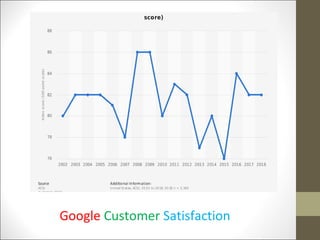
Google Customer Satisfaction
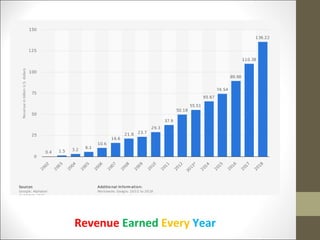
Revenue Earned Every Year
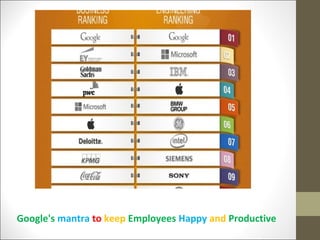
Google's mantra to keep Employees Happy and Productive
Thank You

HRM of Google

  • 1.
    HRFunctions IISWBM IHRM(H-31). Name : SuvobrotoBanerjee Roll No : 40 MBA : 2017-2019
  • 2.
    Content : Google’sHRM 1. HR Planning, Job Analysis & Design 2. Recruitment, Selection, Retention 3. Training, Performance Management 4. Compensation, Career Development
  • 3.
    HR Planning, JobAnalysis & Design • Human Resource Planning • Forecasting : • Trend analysis is a quantitative technique that allows the company to predict possible HR demand based on current conditions and changes in the business . • Scenario analysis is a qualitative technique involves analyzing different combinations of variables to predict HR demand for each resulting scenario. • Surplus & Shortage of Employees: In developing and providing web-based and software products, human resource surplus and shortage are not a significant concern. For production processes, Google’s human resource management identifies possible surpluses and shortages through forecasting techniques.
  • 4.
    • Balancing Supplyand Demand : • If demand for web-based/software products and online advertising services increase, Google does not need to commensurately increase its human resources in these business areas because of the digital nature of these products. • The company needs to address HR supply and demand in other areas, such as the production and distribution of consumer electronics like Nexus and Chromecast. • For these areas, Google uses a flexible strategy where new employees are hired based on forecasts of human resource needs.
  • 5.
    • Job Analysisand Design : • Job Analysis : Google uses a combination of worker- oriented job analysis methods and work-oriented job analysis methods in research and development, and jobs in product design and manufacturing. • Job Description & Specification: The job descriptions and specifications for positions in product development, for instance, significantly differ from the job descriptions and specifications for positions in human resource management.
  • 6.
    Recruitment, Selection, Retention • Recruitment: Google’s success is based on its high quality human resources. • Sources : • The company uses promotions, transfers, and trainees/interns as the main internal recruitment sources for HR needs – Direct Method • On the other hand, the external recruitment sources at Google include educational institutions and respondents to job advertisements – Indirect Method
  • 7.
    Selection Process • Themost significant criteria used in Google’s human resource management for the selection of applicants are smartness, creativity, drive for excellence, and alignment with the organization. • The company’s selection process involves background checks, preliminary screening, on-the-job tests, and interviews. • Google’s human resource management uses different procedures and steps for the various positions in the organization.
  • 8.
    Employee Retention Programs •Google’s compensation packages are the main HRM tool that the company uses for retaining high-quality human resources. • The company’s compensation packages are competitive and above average. • Employees get free meals and other incentives and benefits. • The typical design of the company’s offices emphasizes fun and creativity, which attract and retain creative and innovative workers. • Coaching and mentoring to retain and develop employees with leadership potential.
  • 9.
    Training, Performance Management • EmployeeTraining : • Needs Analysis: Google’s HR management uses different types of needs analysis, such as organizational analysis, work analysis, and cost-benefit analysis. • Program Design : The relational model focuses on the relationship of the company with employees to foster creativity and innovativeness . • The results-oriented approach focuses on training outcomes. For example, in implementing a training program, Google uses this approach to facilitate employees’ learning.
  • 10.
    • Delivery :Delivers training programs in various ways, such as discussions, simulations and on-the-job training. • The company’s HRM uses on-the-job training to maximize the transfer of knowledge to new hires or interns • Evaluation: The summative purpose is to determine the effectiveness of the program in developing human resources. • The descriptive purpose of evaluation is to understand the effects of the training on employees. • Google uses evaluation variables , like trainees’ learning and reactions, and the results of training programs in terms of changes in knowledge, skills, and abilities of employees.
  • 11.
    Performance Management Practices •Performance Planning : HRM evaluates employees’ performance in internal communications and problem- solving activities to decide on performance management approaches. • Performance planning efforts address customer service, communication, support for diversity, and problem solving abilities. • Link to Corporate Objectives : • Emphasis on diversity supports diverse ideas, and problem-solving abilities which lead to higher rates of innovation. Innovation is part of Google’s corporate objectives.
  • 12.
    • Measurements andStandards : The firm uses individual measurements of ethical conduct and contributions to innovation , creativity and quality of output. It uses team variables like collaboration level. • Performance Interviews : Google’s HRM uses unstructured and informal interviews in the fun meeting places, such as the coffee and snack areas of its offices. • Individual performance interviews and team performance interviews. • Performance Problems : Google’s HR managers are concerned about negativism, power struggles, and delays.
  • 13.
    Compensation, Career Development • CareerDevelopment : • Individual-Organization Matching: Google approaches for matching individual and organizational needs address person-job fit, person-organization fit, and person- group fit to get maximum human resource performance at the job level, team level, and organizational level. • Career Opportunities and Requirements Identification: • Job analysis enables HR managers to identify possible career options for individual employees. Google uses coaching as a way of understanding the dynamics involving the individual employee and possible career options within the organization.
  • 14.
    • Employee PotentialAssessment. • Google’s human resource management assesses employee potential through interviews, appraisals, and coaching • Instituting Career Development Initiatives : • During or after appraisals, the company’s human resource management informs employees of possible career opportunities. • In addition, some career development initiatives taken as the need arises, such as when a new business or product is developed.
  • 15.
    Compensation Strategy • Thecompany provides high salaries, together with comprehensive incentives and nonconventional benefits. • Provides benefits like medical insurance, retirement pensions, free meals, and free use of exercise equipment. • Compensation strategy is to attract highly qualified smart and innovative employees.
  • 17.
  • 18.
  • 20.
    Google's mantra tokeep Employees Happy and Productive
  • 21.