HR 101What all employersNeed to Know…© 2011 The Weston Group, LLC.All Rights Reserved.
AgendaThe Evolution of the HR Profession
An Overview of Core HR Leadership Competencies
Effective Recruitment & Selection Techniques
Compensation and Benefit Issues & Answers
The Legal Arena and HR Law
Labor & Employee Relations
Recordkeeping – An outline of What to Keep and Commonly Accepted Record Retention Strategy
Risk Management – ADA / FMLA / Workers’ Compensation
HR Metrics: How to Measure Your Success
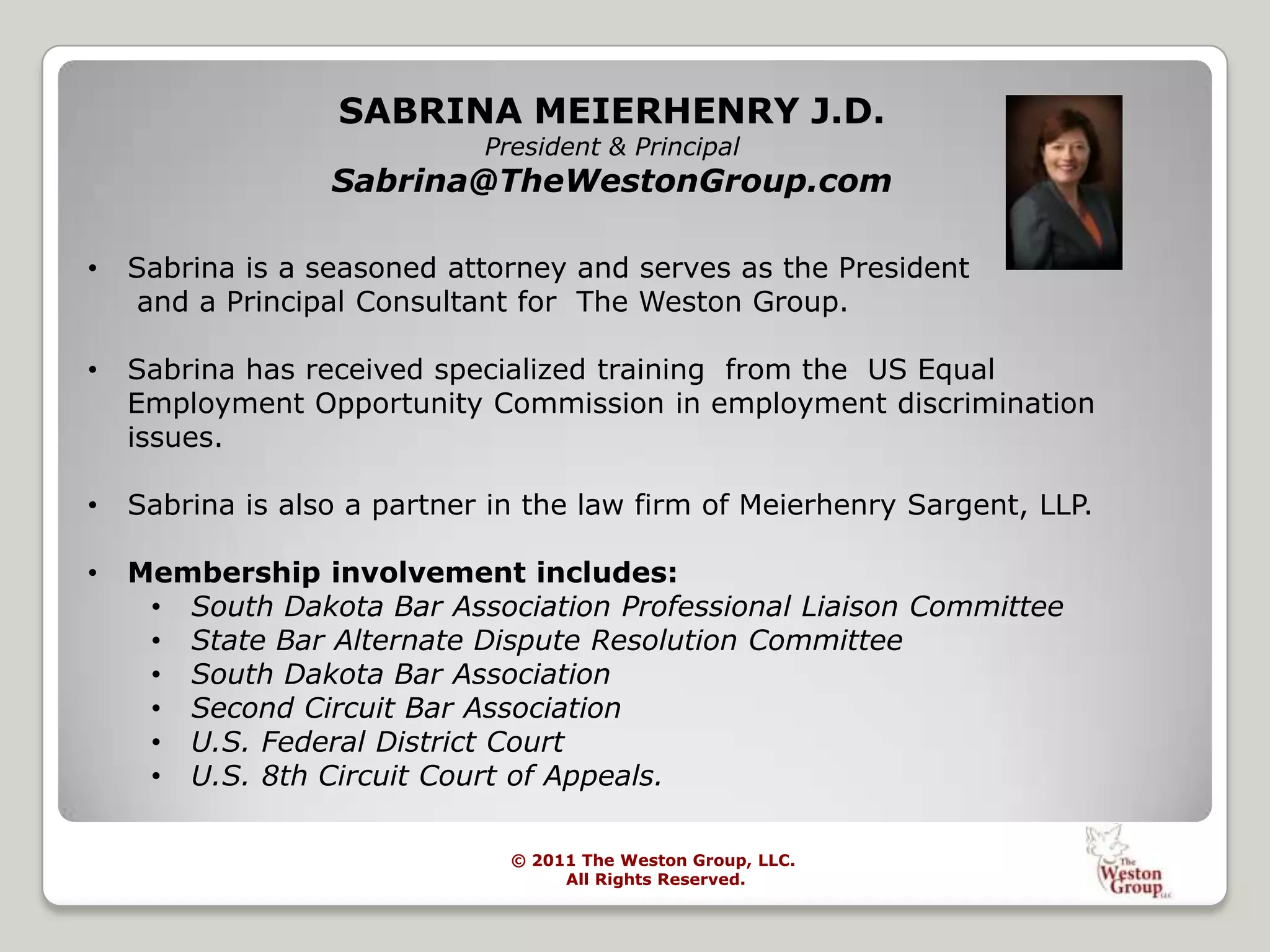
Training & Development for Effective HR ManagementSABRINA MEIERHENRY J.D.President & PrincipalSabrina@TheWestonGroup.comSabrina is a seasoned attorney and serves as the President   and a Principal Consultant for  The Weston Group.   Sabrina has received specialized training  from the  US Equal Employment Opportunity Commission in employment discrimination issues.
Sabrina is also a partner in the law firm of Meierhenry Sargent, LLP.
Membership involvement includes:
South Dakota Bar Association Professional Liaison Committee
State Bar Alternate Dispute Resolution Committee
South Dakota Bar Association
Second Circuit Bar Association
U.S. Federal District Court
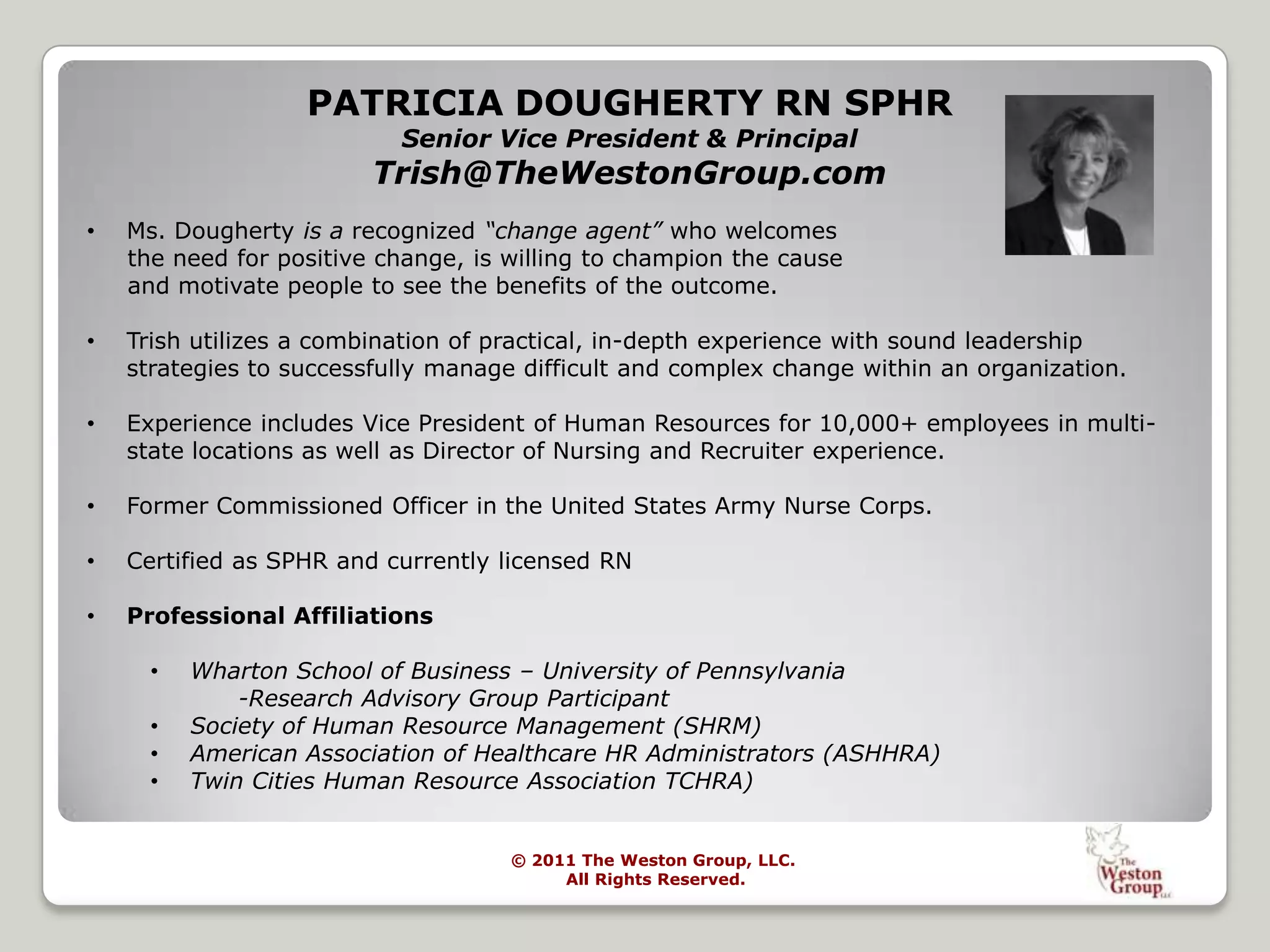
U.S. 8th Circuit Court of Appeals.PATRICIA DOUGHERTY RN SPHRSenior Vice President & PrincipalTrish@TheWestonGroup.comMs. Dougherty is a recognized “change agent” who welcomes     the need for positive change, is willing to champion the cause    and motivate people to see the benefits of the outcome. Trish utilizes a combination of practical, in-depth experience with sound leadership strategies to successfully manage difficult and complex change within an organization.
Experience includes Vice President of Human Resources for 10,000+ employees in multi-state locations as well as Director of Nursing and Recruiter experience.
Former Commissioned Officer in the United States Army Nurse Corps.
Certified as SPHR and currently licensed RN
Professional Affiliations
Wharton School of Business – University of Pennsylvania		   -Research Advisory Group ParticipantSociety of Human Resource Management (SHRM)
American Association of Healthcare HR Administrators (ASHHRA)
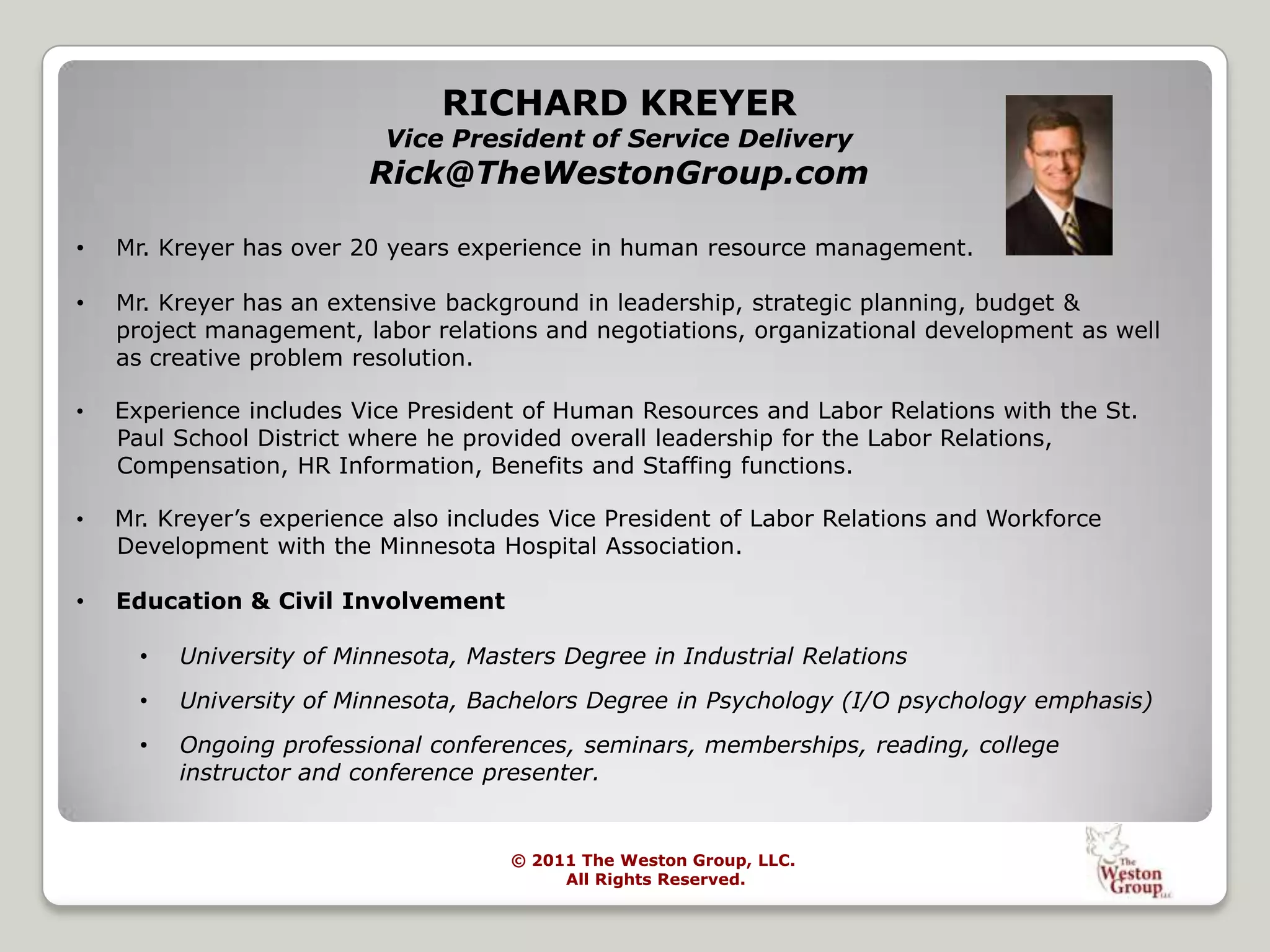
Twin Cities Human Resource Association TCHRA)RICHARD KREYERVice President of Service DeliveryRick@TheWestonGroup.comMr. Kreyer has over 20 years experience in human resource management.
Mr. Kreyer has an extensive background in leadership, strategic planning, budget & project management, labor relations and negotiations, organizational development as well as creative problem resolution.
Experience includes Vice President of Human Resources and Labor Relations with the St.     Paul School District where he provided overall leadership for the Labor Relations,     Compensation, HR Information, Benefits and Staffing functions.Mr. Kreyer’s experience also includes Vice President of Labor Relations and Workforce        Development with the Minnesota Hospital Association.Education & Civil Involvement
University of Minnesota, Masters Degree in Industrial Relations
University of Minnesota, Bachelors Degree in Psychology (I/O psychology emphasis)
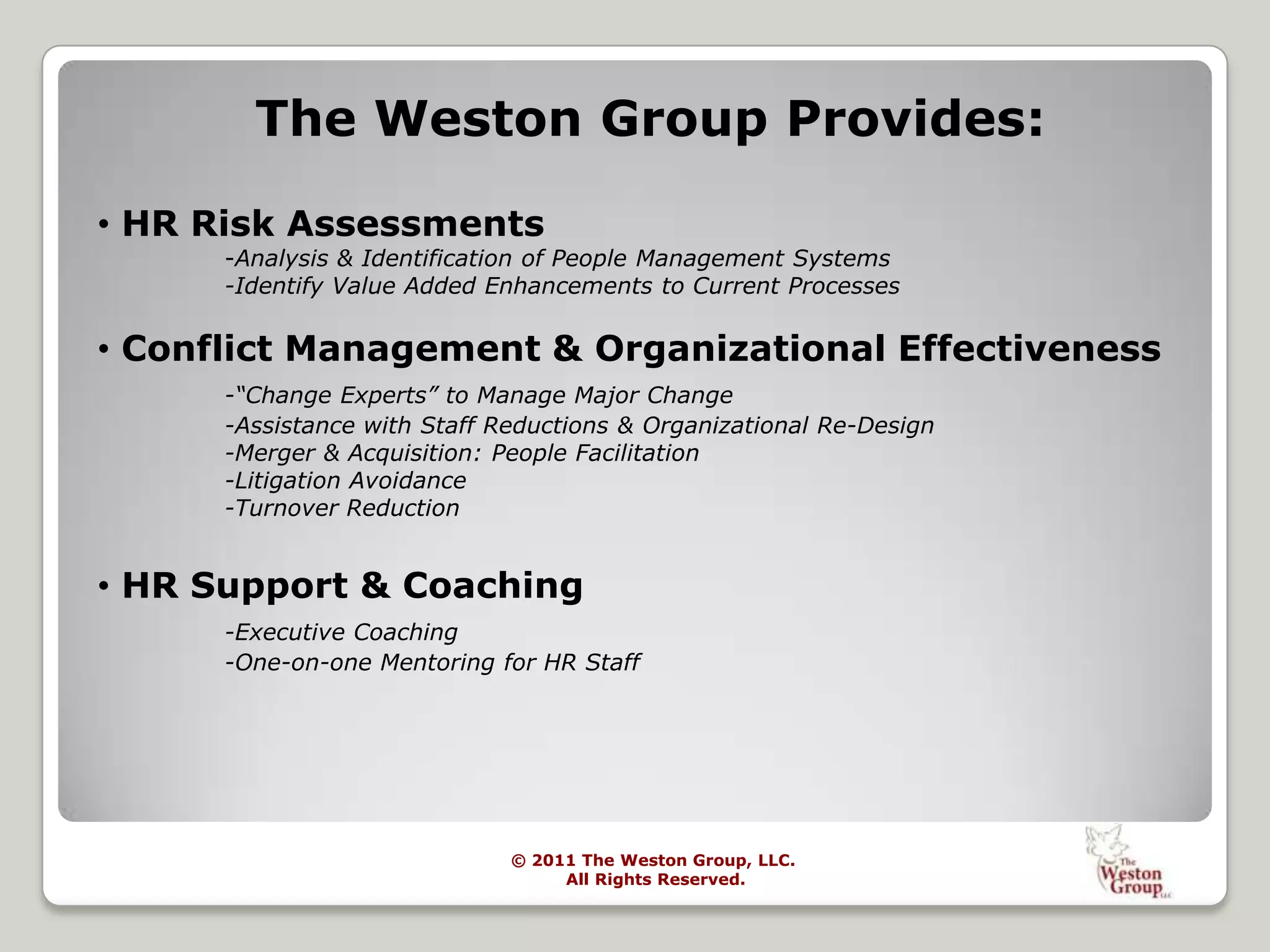
Ongoing professional conferences, seminars, memberships, reading, college instructor and conference presenter.The Weston Group Provides: HR Risk Assessments	-Analysis & Identification of People Management Systems-Identify Value Added Enhancements to Current Processes Conflict Management & Organizational Effectiveness-“Change Experts” to Manage Major Change	-Assistance with Staff Reductions & Organizational Re-Design	-Merger & Acquisition: People Facilitation	-Litigation Avoidance	-Turnover ReductionHR Support & Coaching-Executive Coaching	-One-on-one Mentoring for HR Staff 
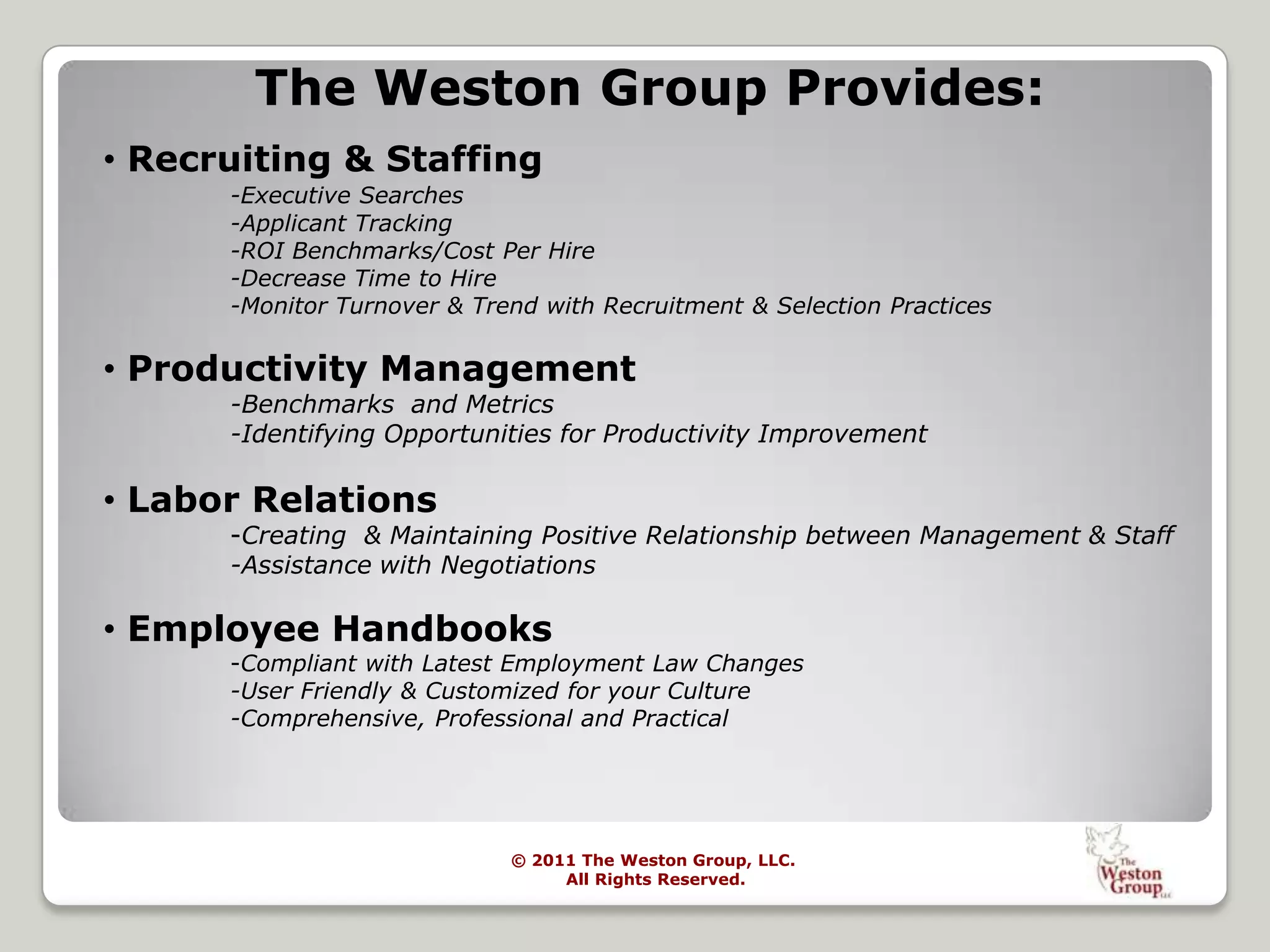
The Weston Group Provides:Recruiting & Staffing-Executive Searches	-Applicant Tracking	-ROI Benchmarks/Cost Per Hire	-Decrease Time to Hire	-Monitor Turnover & Trend with Recruitment & Selection PracticesProductivity Management-Benchmarks  and Metrics	-Identifying Opportunities for Productivity Improvement Labor Relations	-Creating  & Maintaining Positive Relationship between Management & Staff	-Assistance with NegotiationsEmployee Handbooks-Compliant with Latest Employment Law Changes	-User Friendly & Customized for your Culture	-Comprehensive, Professional and Practical  
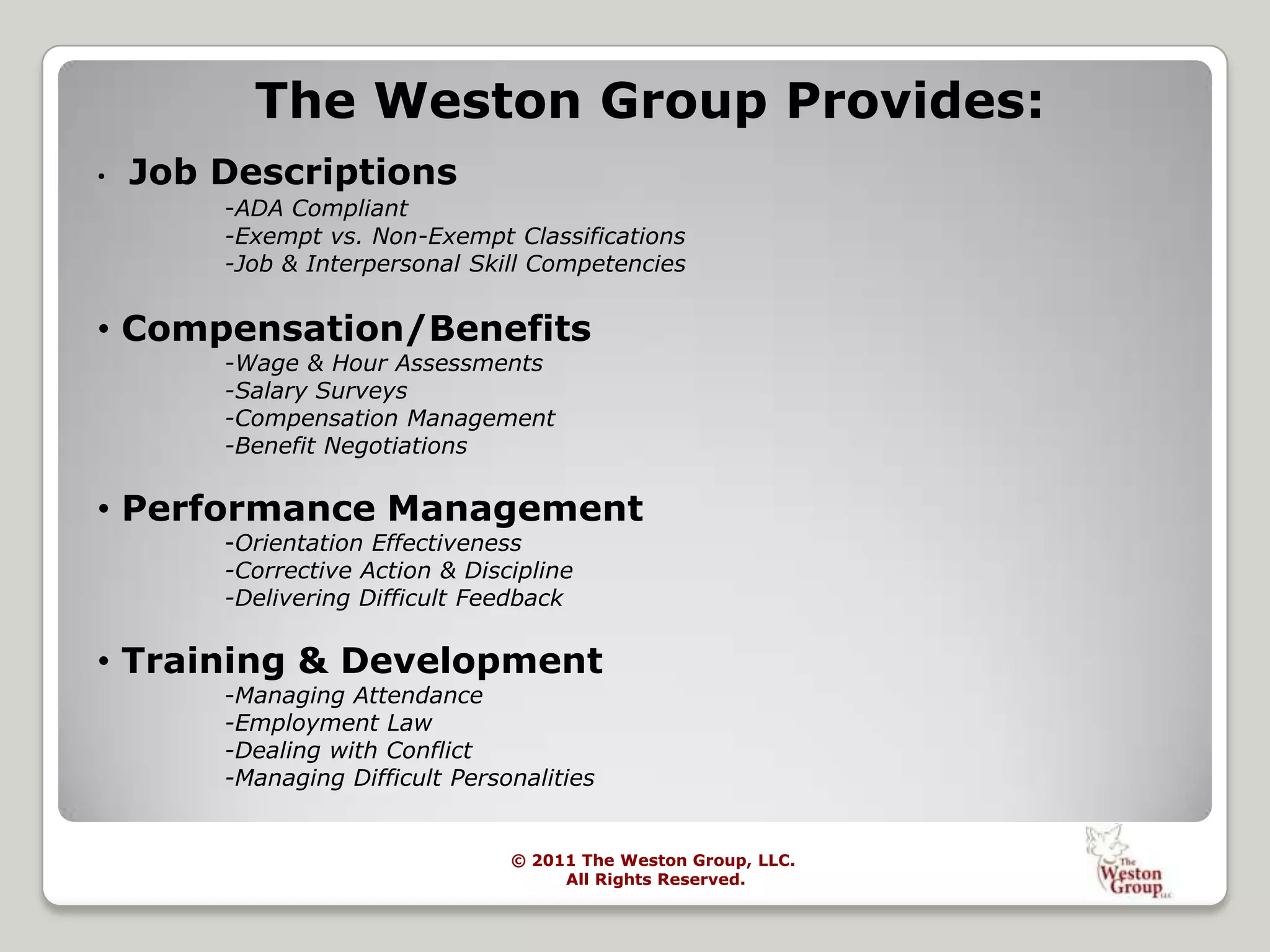
The Weston Group Provides: Job Descriptions-ADA Compliant	-Exempt vs. Non-Exempt Classifications	-Job & Interpersonal Skill CompetenciesCompensation/Benefits-Wage & Hour Assessments	-Salary Surveys	-Compensation Management	-Benefit Negotiations Performance Management	-Orientation Effectiveness	-Corrective Action & Discipline	-Delivering Difficult Feedback Training & Development	-Managing Attendance	-Employment Law	-Dealing with Conflict	-Managing Difficult Personalities           
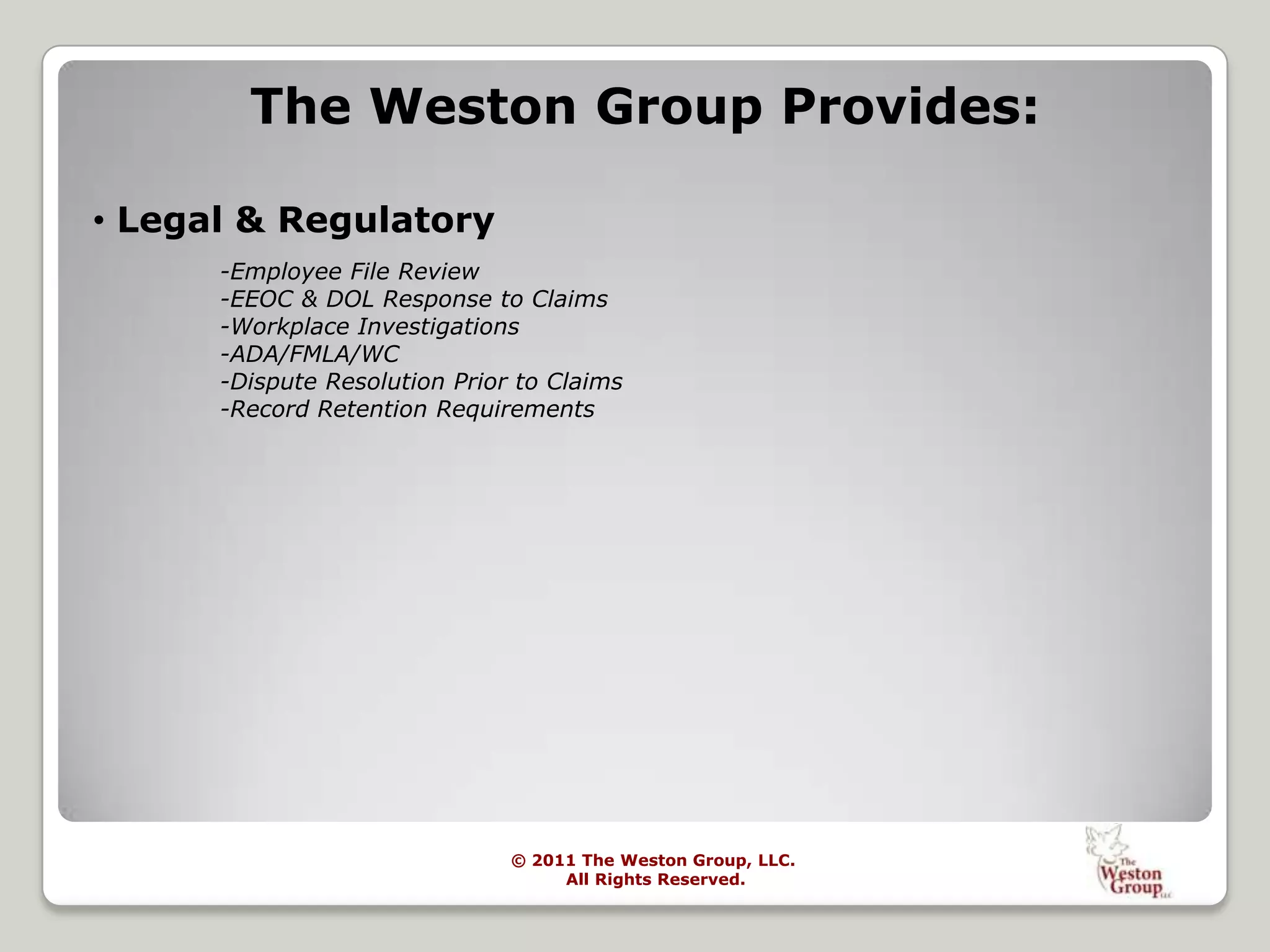
The Weston Group Provides:Legal & Regulatory-Employee File Review	-EEOC & DOL Response to Claims	-Workplace Investigations	-ADA/FMLA/WC	-Dispute Resolution Prior to Claims	-Record Retention Requirements          
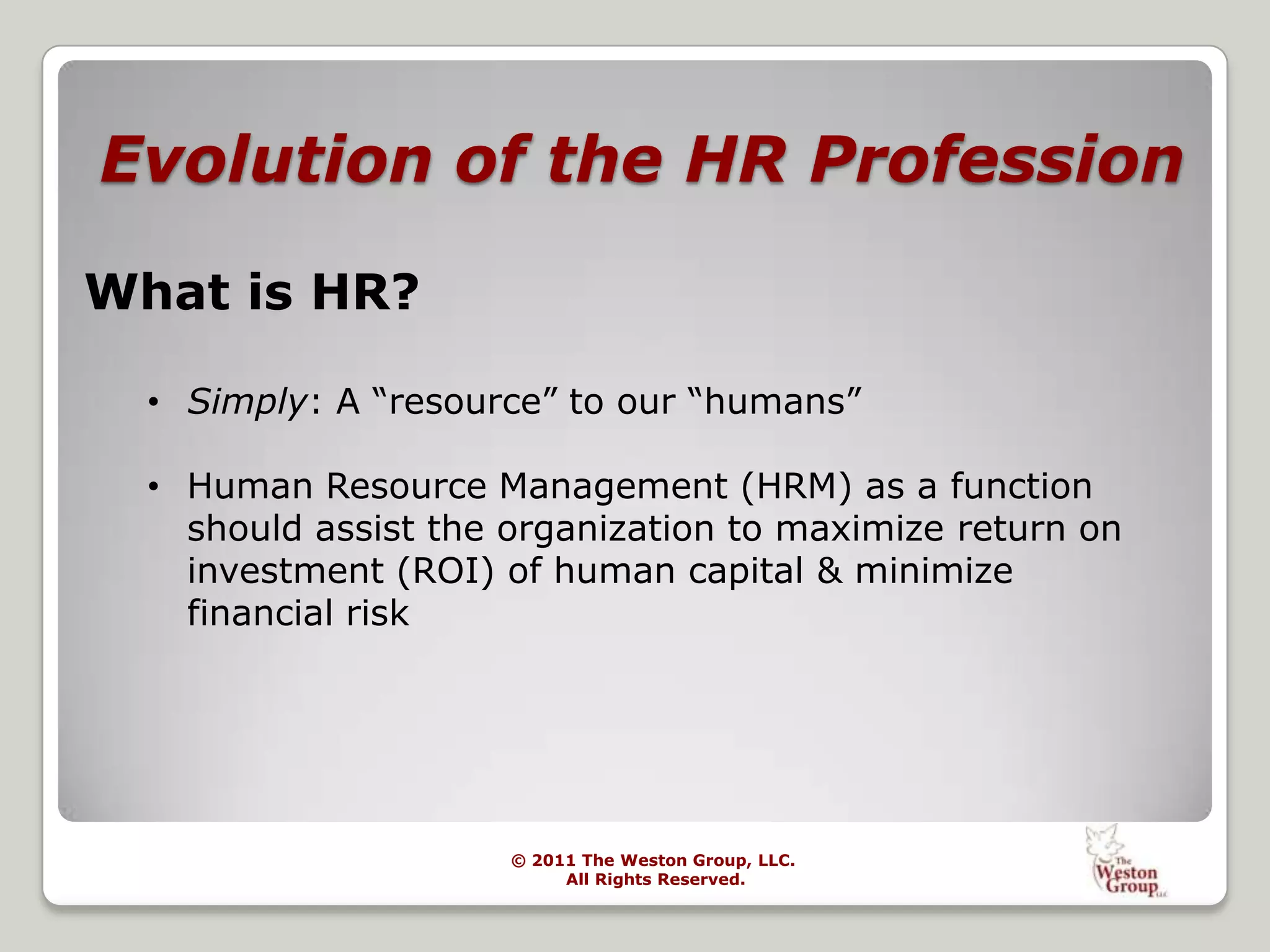
Evolution of the HR ProfessionWhat is HR?Simply: A “resource” to our “humans”
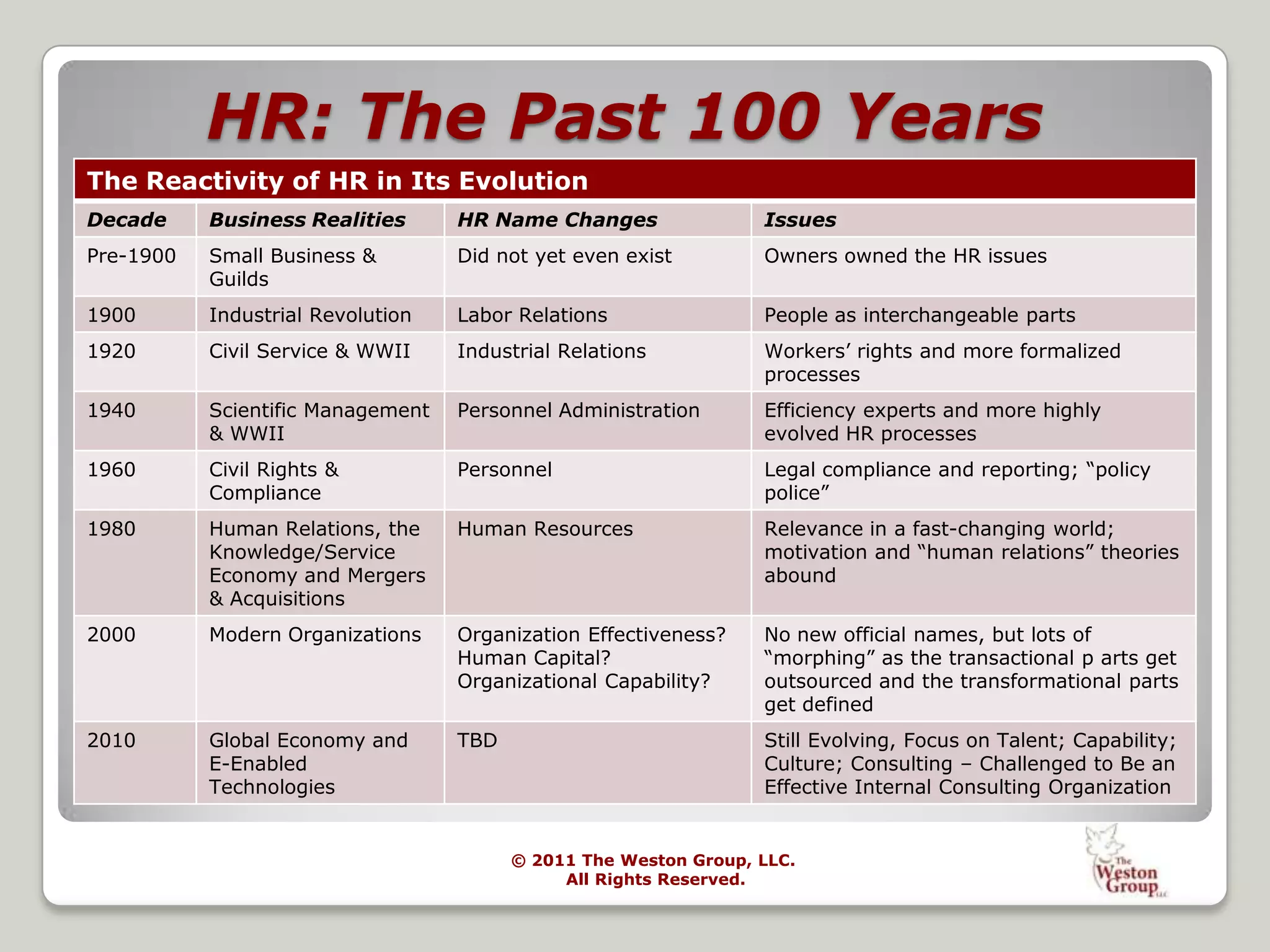
Human Resource Management (HRM) as a function should assist the organization to maximize return on investment (ROI) of human capital & minimize financial riskHR: The Past 100 Years
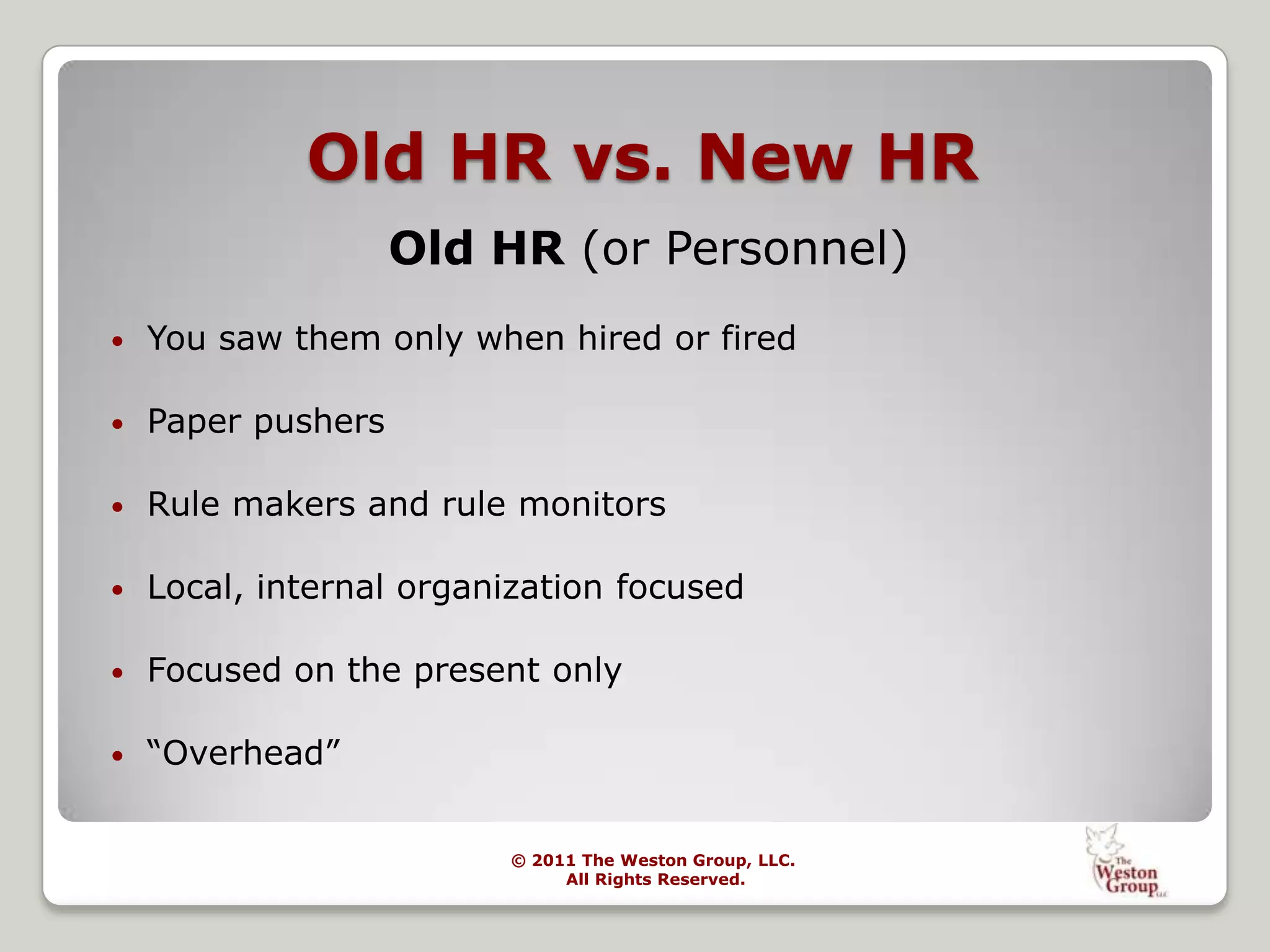
Old HR vs. New HROld HR (or Personnel)You saw them only when hired or fired
Paper pushers
Rule makers and rule monitors
Local, internal organization focused
Focused on the present only
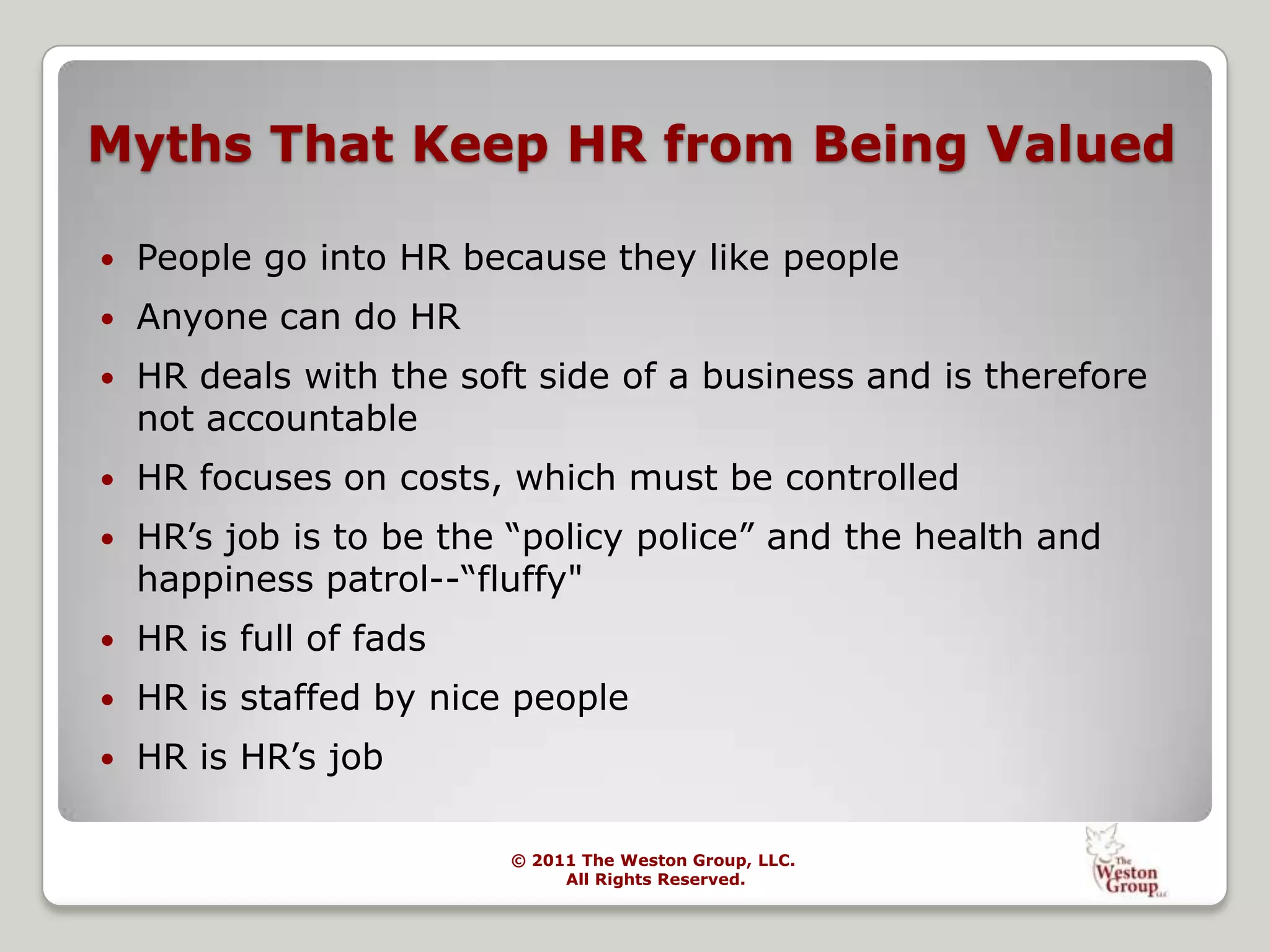
“Overhead”Myths That Keep HR from Being ValuedPeople go into HR because they like peopleAnyone can do HRHR deals with the soft side of a business and is therefore not accountableHR focuses on costs, which must be controlledHR’s job is to be the “policy police” and the health and happiness patrol--“fluffy"HR is full of fadsHR is staffed by nice peopleHR is HR’s job
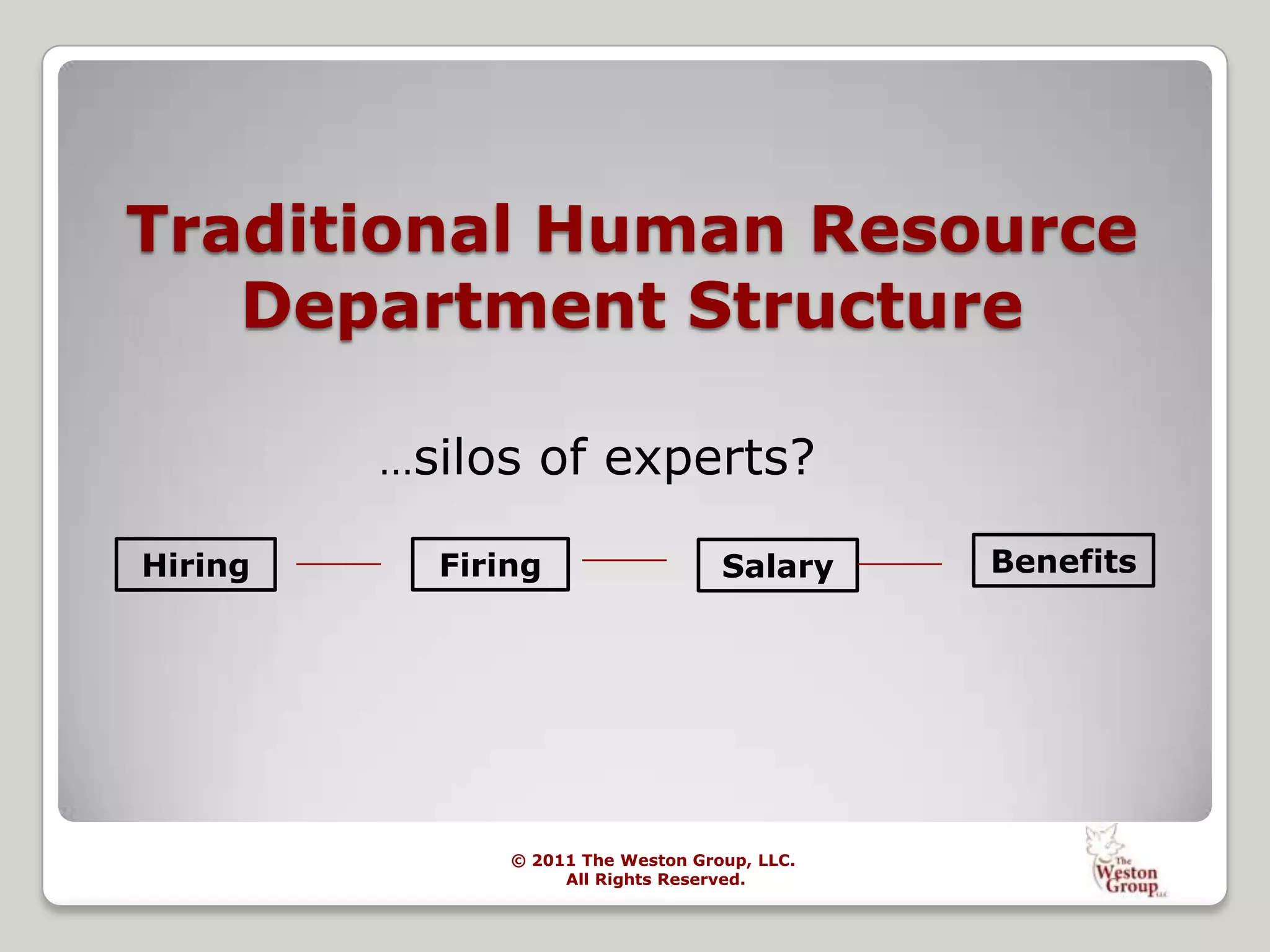
Traditional Human Resource Department Structure…silos of experts?BenefitsFiringHiringSalary
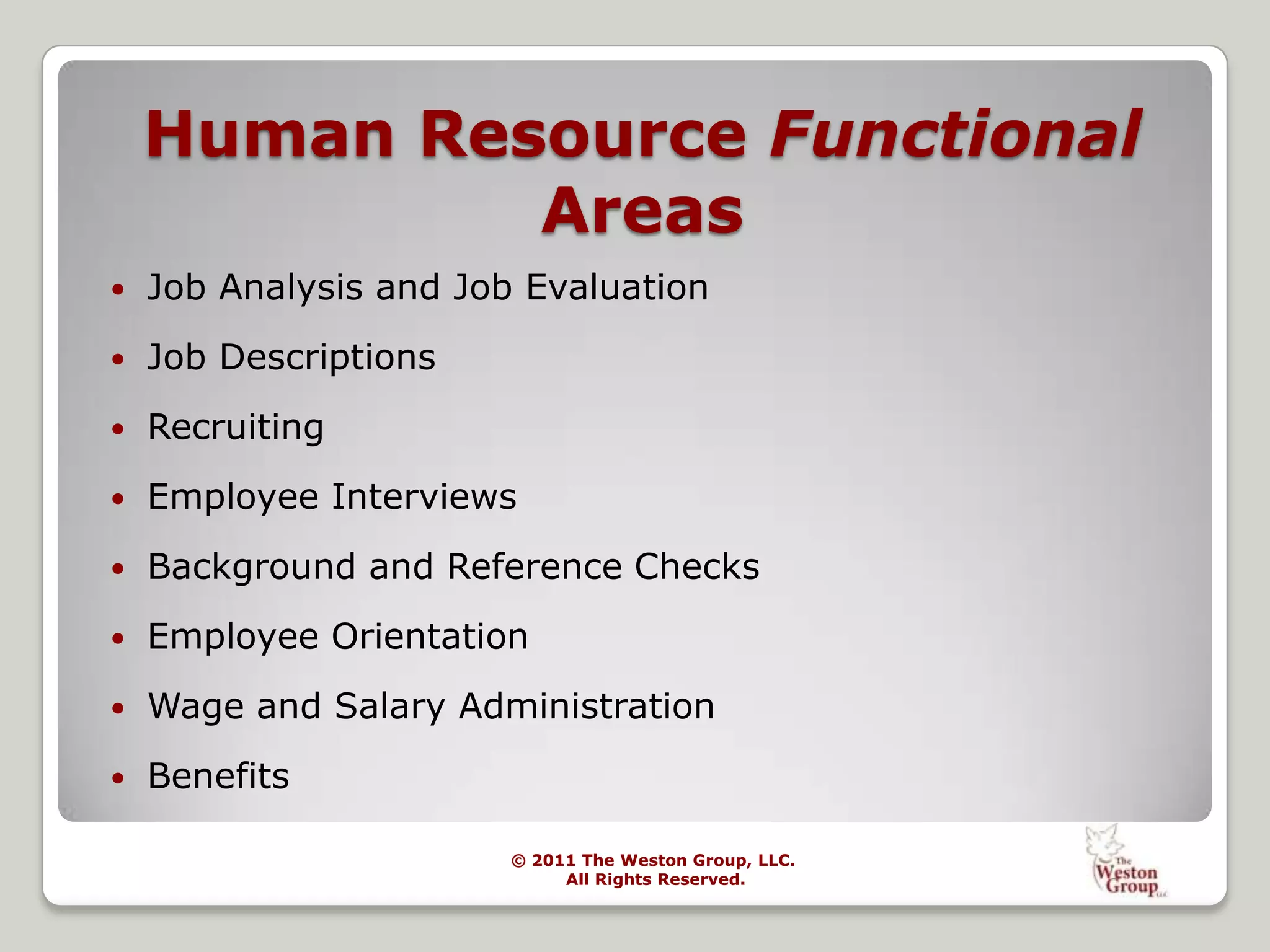
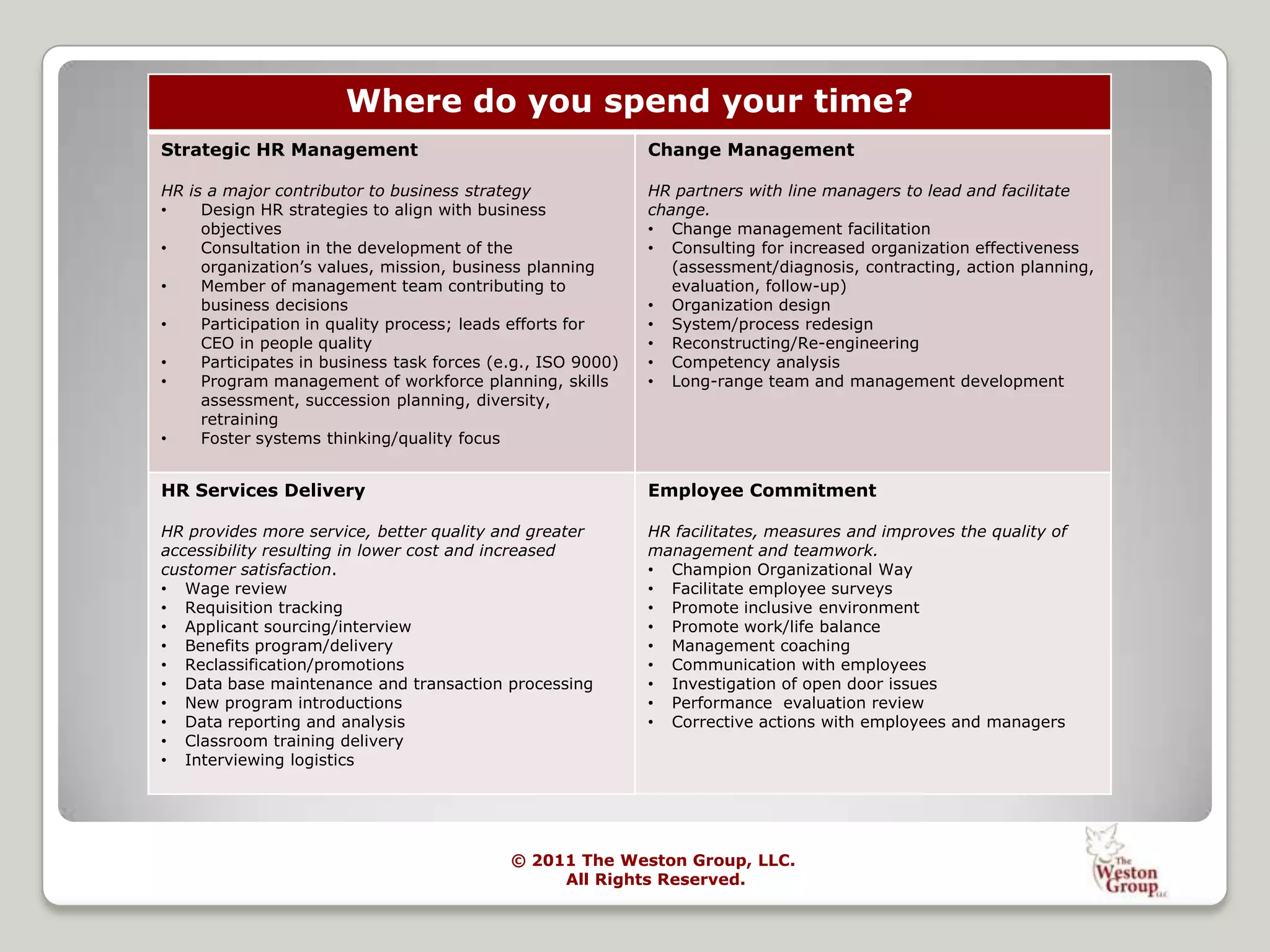
Human Resource Functional AreasJob Analysis and Job EvaluationJob DescriptionsRecruitingEmployee InterviewsBackground and Reference ChecksEmployee OrientationWage and Salary AdministrationBenefits
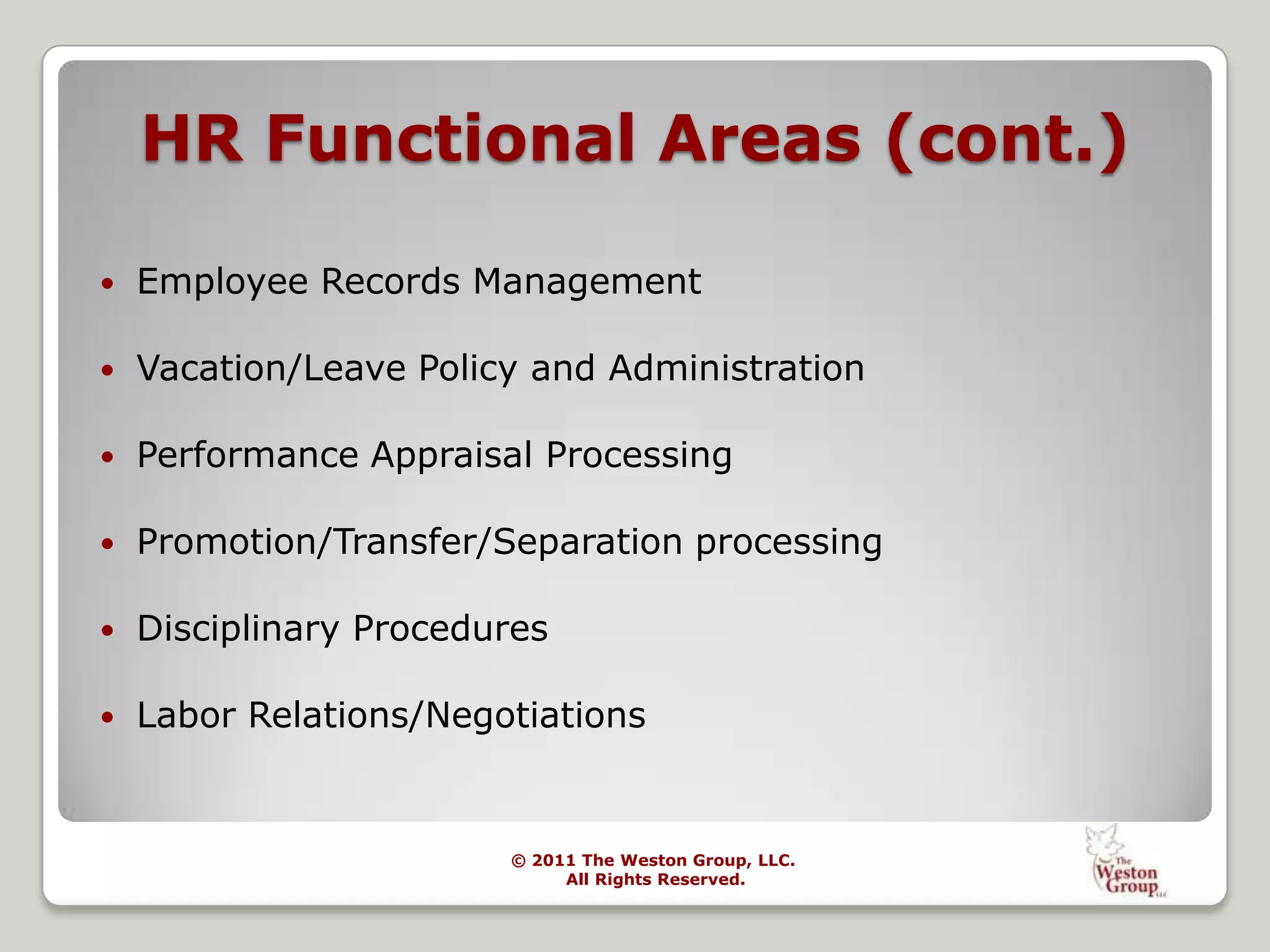
HR Functional Areas (cont.)Employee Records ManagementVacation/Leave Policy and AdministrationPerformance Appraisal ProcessingPromotion/Transfer/Separation processingDisciplinary ProceduresLabor Relations/Negotiations
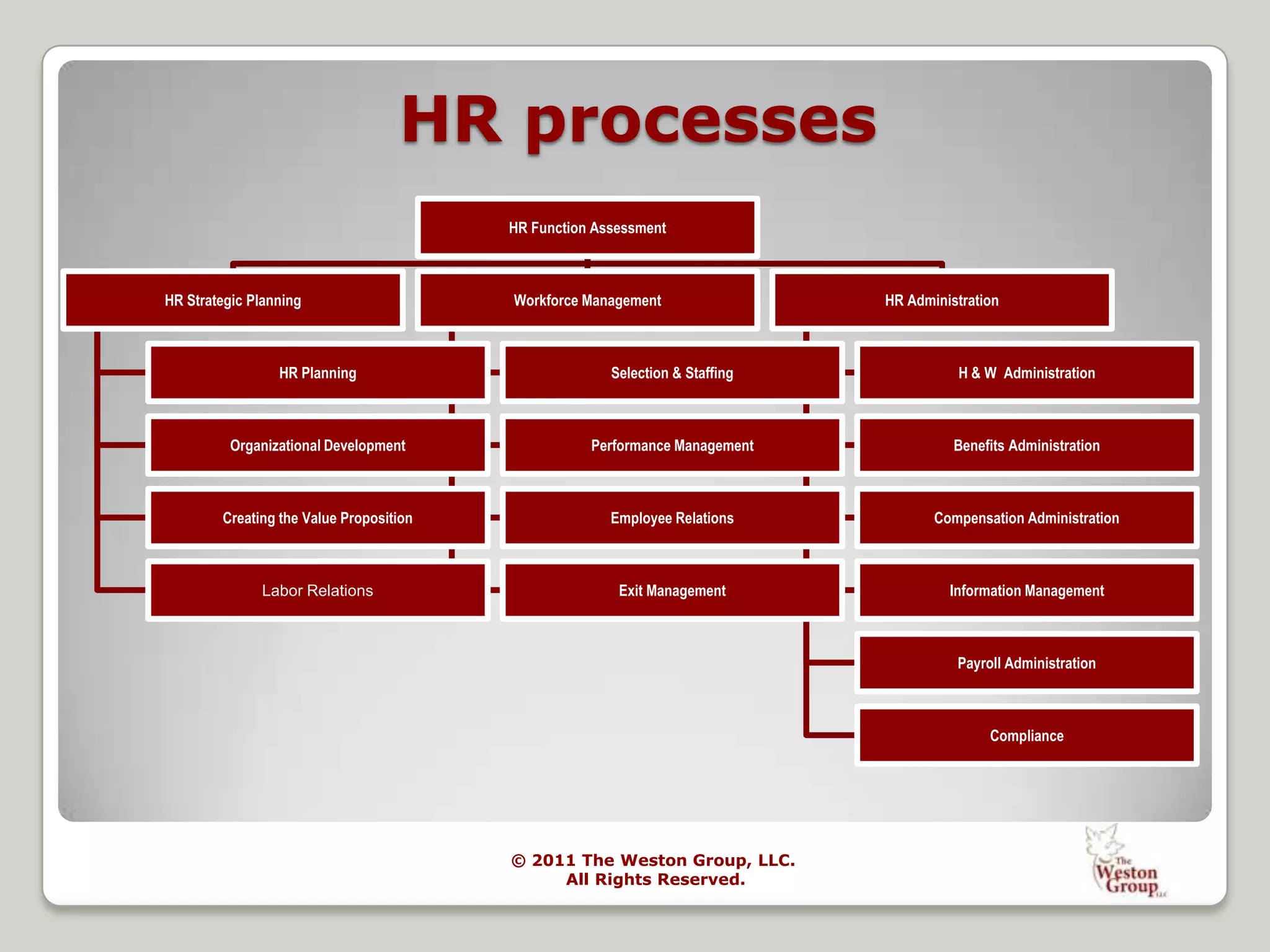
HR processes
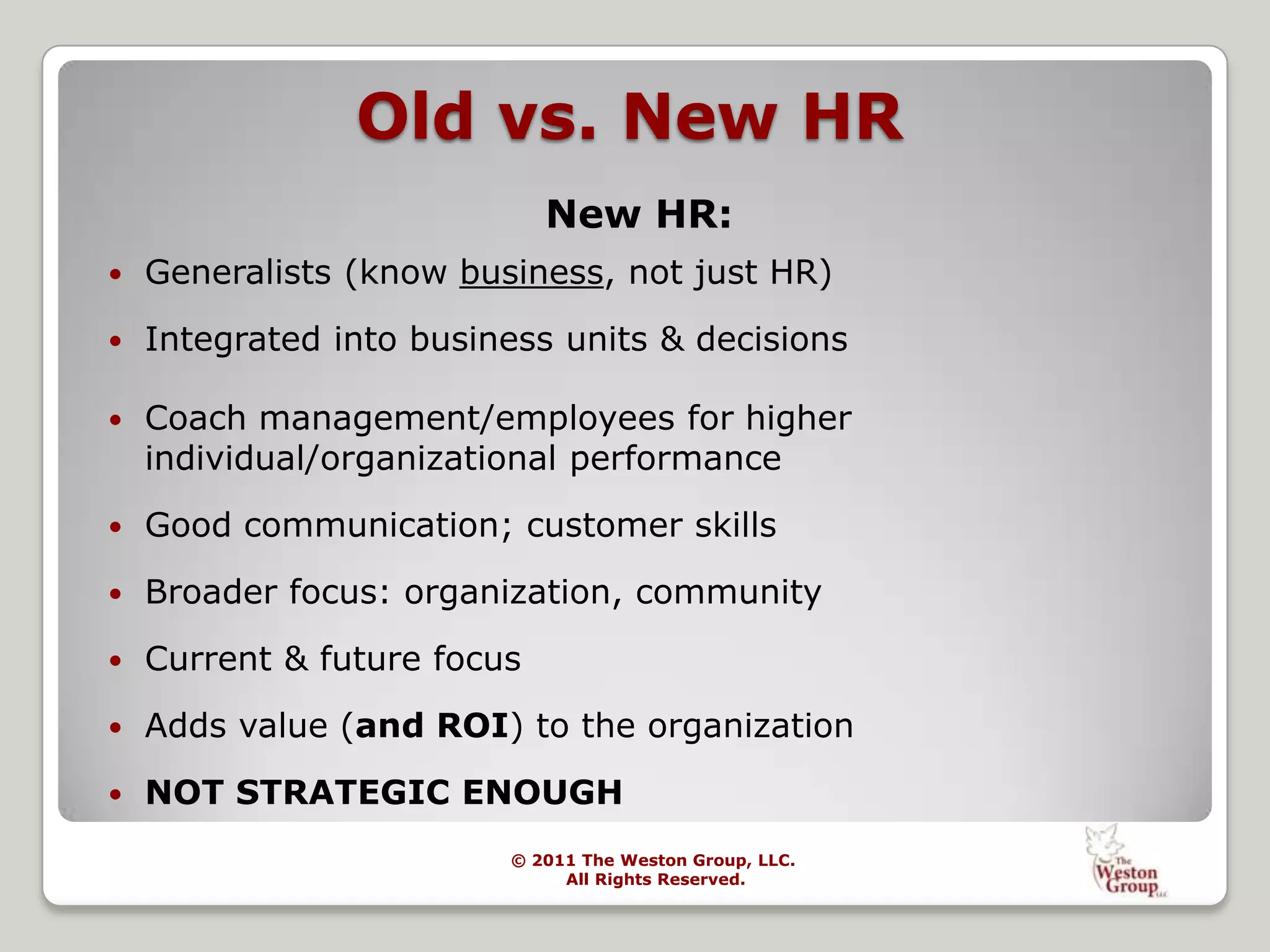
Old vs. New HRNew HR:Generalists (know business, not just HR)Integrated into business units & decisionsCoach management/employees for higher individual/organizational performanceGood communication; customer skillsBroader focus: organization, communityCurrent & future focusAdds value (and ROI) to the organizationNOT STRATEGIC ENOUGH
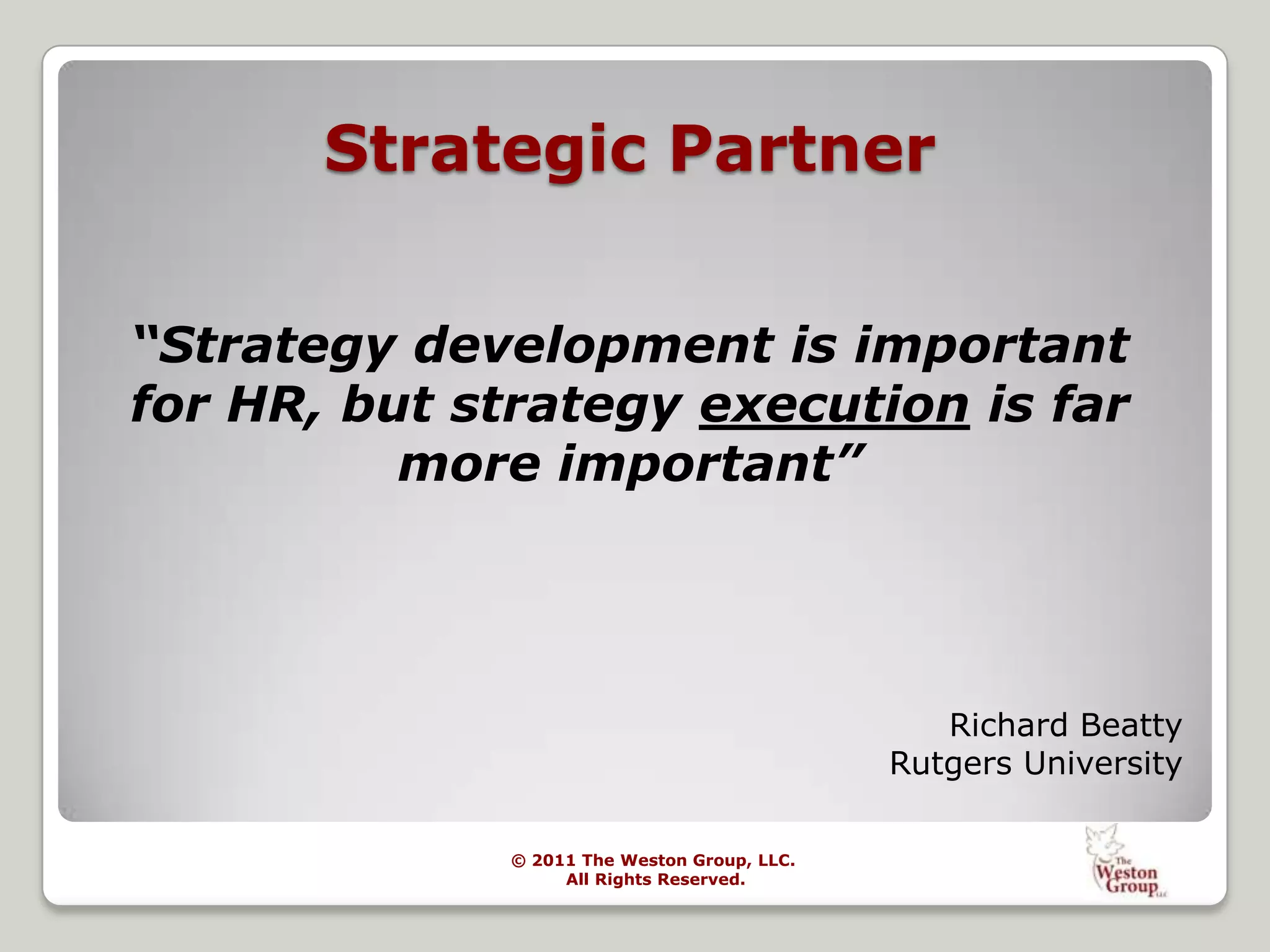
Strategic Partner“Strategy development is important for HR, but strategy execution is far more important”Richard BeattyRutgers University
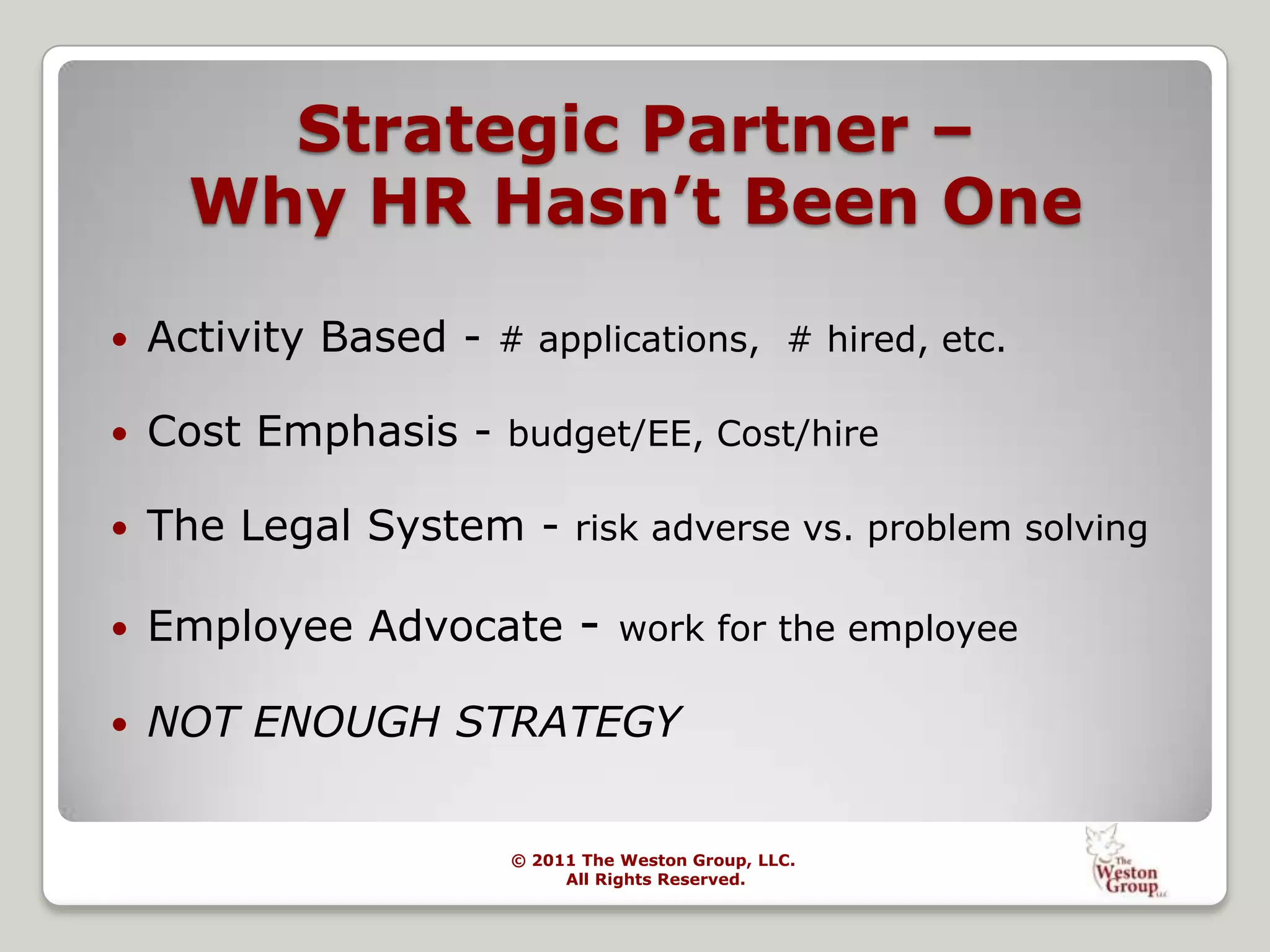
Strategic Partner – Why HR Hasn’t Been OneActivity Based - # applications,  # hired, etc.Cost Emphasis - budget/EE, Cost/hireThe Legal System - risk adverse vs. problem solvingEmployee Advocate - work for the employeeNOT ENOUGH STRATEGY
A seat at the table . . “If HR wants a seat at the table, it better bring something to eat!”Ray Weinberg2000 SHRM Thought Leaders ConferenceProvidence R
What HR Can BeA more strategic view
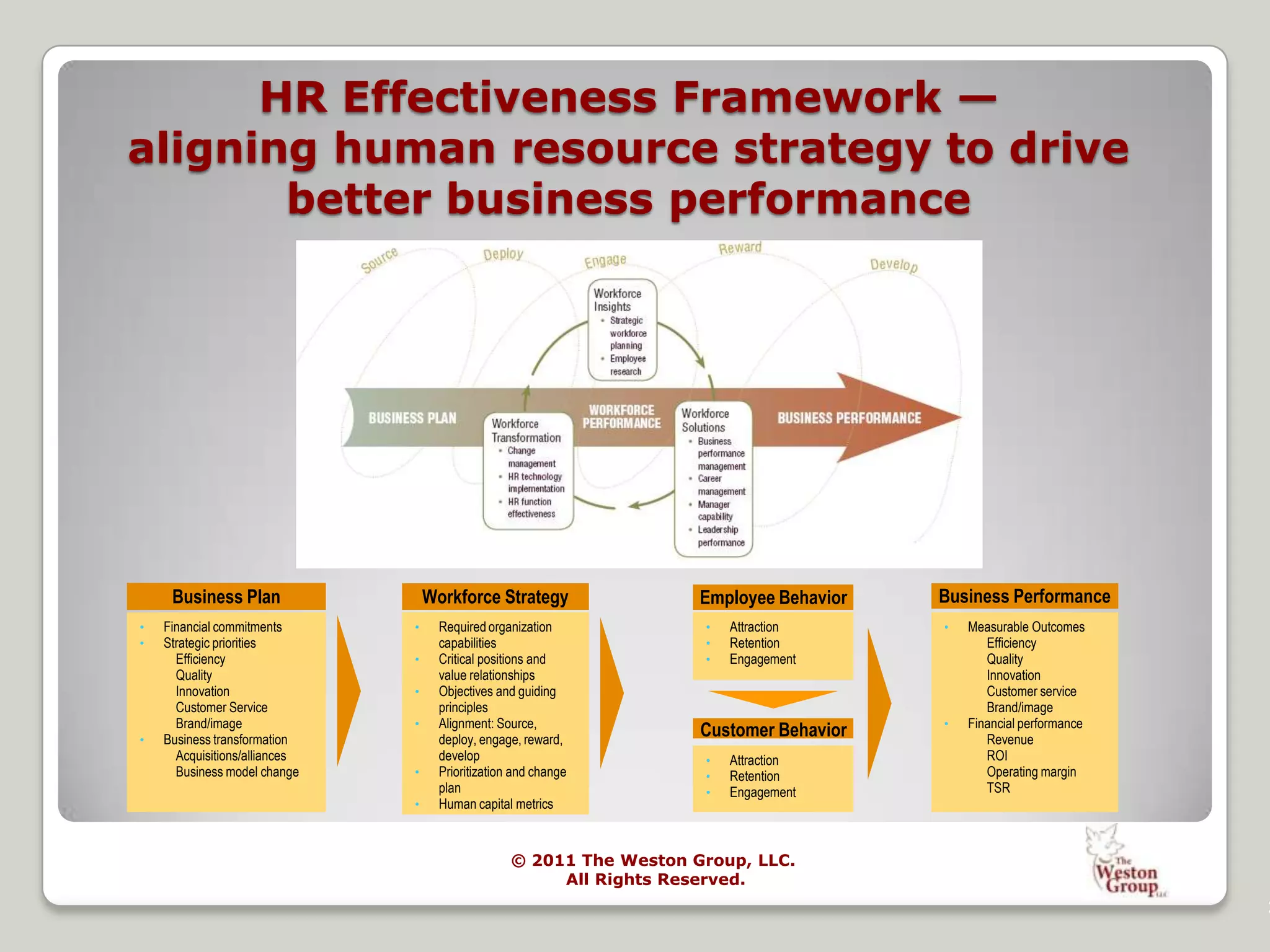
HR Effectiveness Framework — aligning human resource strategy to drive better business performanceBusiness PlanWorkforce StrategyBusiness PerformanceEmployee BehaviorFinancial commitments
Strategic priorities          Efficiency          Quality          Innovation          Customer Service          Brand/imageBusiness transformation           Acquisitions/alliances          Business model changeRequired organization capabilities
Critical positions and value relationships
Objectives and guiding principles
Alignment: Source, deploy, engage, reward, develop
Prioritization and change plan
Human capital metrics
Measurable Outcomes            Efficiency            Quality            Innovation            Customer service            Brand/imageFinancial performance            Revenue            ROI            Operating margin            TSR Attraction
Retention
EngagementCustomer BehaviorAttraction
Retention
Engagement24
SummaryPeople are often the most expensive part of running an organizationHRM linked to the Company’s goals is crucial to attaining organizational performance and improving resultsYour HR Department should be creating a strategy that is aligned with organizational goals and supported by the Administration and BoardSo how do you get there?
An Overview of Core HR  Leadership Competencies
Essential HR Management CompetenciesWhen Interviewing, we use checklists and structure questions to look for competencies.  What competencies should we look for in HR people?For starters, here are nine top contendersAnd one final thought…
HR Key Skill #1: OrganizationOrganized filesStrong time management skills Personal efficiencyAvoid “the black hole” syndrome
HR Key Skill #2: MultitaskingOn any day, an HR professional will deal with an employee’s personal issue one minute, a benefit claim the next and a recruiting strategy for a hard-to-fill job the minute afterPriorities and business needs move fast and change fast, and colleague A who needs something doesn’t much care if you’re already helping colleague BYou need to be able to handle it all, all at once.
HR Key Skill #3: Discretion and Business EthicsHuman Resources professionals are the conscience of the company, as well as the keepers of confidential informationYou need to be able to push back when they aren’t, to keep the firm on the straight and narrowYou must be objective, therefore HR has to juggle “friendships” vs. “profession” (especially difficult in small companies)
HR Skill #4: Dual FocusHR professionals need to consider the needs of both employees and managementThere are times you must make decisions to protect the individual, and other times when you protect the organization, its culture, and valuesBiggest mistake of HR departments – Lack of objectivityHR does not make decisions, we should provide guidance for both employees & management
HR Key Skill #5: Employee TrustEmployees expect Human Resources professionals to advocate for their concernsThe HR professional who can pull off this delicate balancing act wins trust from all concernedRemember, management staff are employees tooYou can make everyone successful or achieve win-win if possible?Give employees “choices”.  Give management “guidance”
HR Key Skill #6: FairnessSuccessful HR professionals demonstrate fairnessVoices are heardLaws and policies are followedPrivacy and respect is maintained Look at entire organization & track precedence to ensure fair & consistent decisions
HR Key Skill #7: Dedication to Continuous ImprovementHR professionals need to help managers coach and develop their employeesThe goal is continued improvement and innovation as well as remediation
HR Key Skill #8: Strategic OrientationForward-thinking HR professionals take a leadership role and influence management’s strategic pathProactive vs. reactive – TRACK & TRENDHave the answer before you have the problem
HR Key Skill #9: Team OrientationOnce, companies were organized into hierarchies of workers headed by supervisorsToday, the team is kingHR managers must consequently understand team dynamics and find ways to bring disparate personalities together and make the team work
Nine Skills, But Also One CaveatThe nine skills are not prioritized here, because no general list of skills can take into account the business strategy at your particular organizationWhich leads to the caveat: “HR should serve the business strategy. It’s important for HR people to know what that strategy is and what makes the business tick so the approach to HR can be tailored accordingly for your countryYou should never think of HR in isolation, because if Human Resources professionals think of themselves as “just HR,” that’s what the rest of the organization will think too.
HR Leadership CompetenciesVisionaryStrategic CommunicatorOrganizerTeam BuilderMentorMediatorEvaluatorProblem Solver
HR Leadership - VisionHR staff needs to have the ability to see where the organization and their people need to go to meet future needs
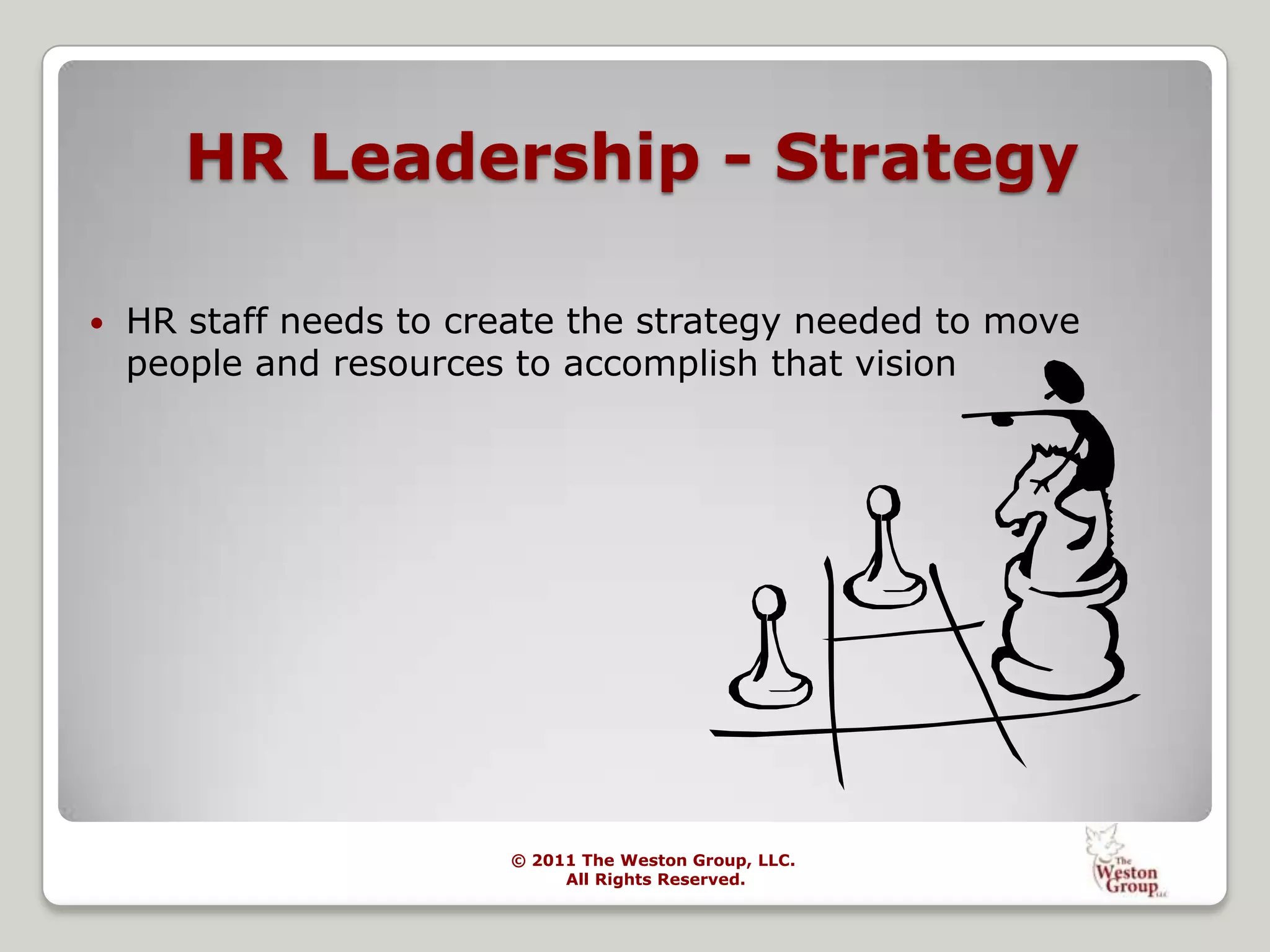
HR Leadership - StrategyHR staff needs to create the strategy needed to move people and resources to accomplish that vision
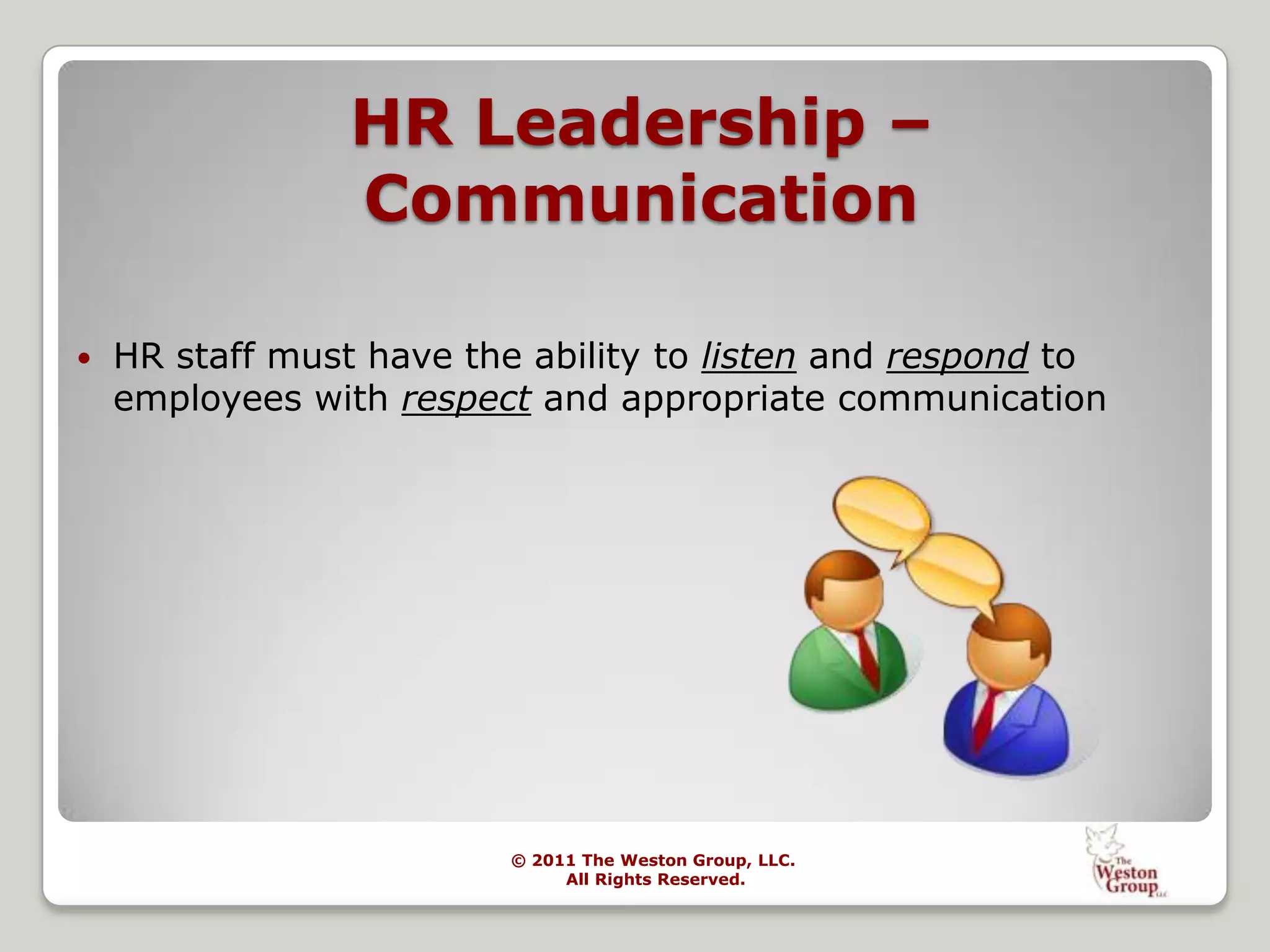
HR Leadership –CommunicationHR staff must have the ability to listenand respond to employees with respect and appropriate communication
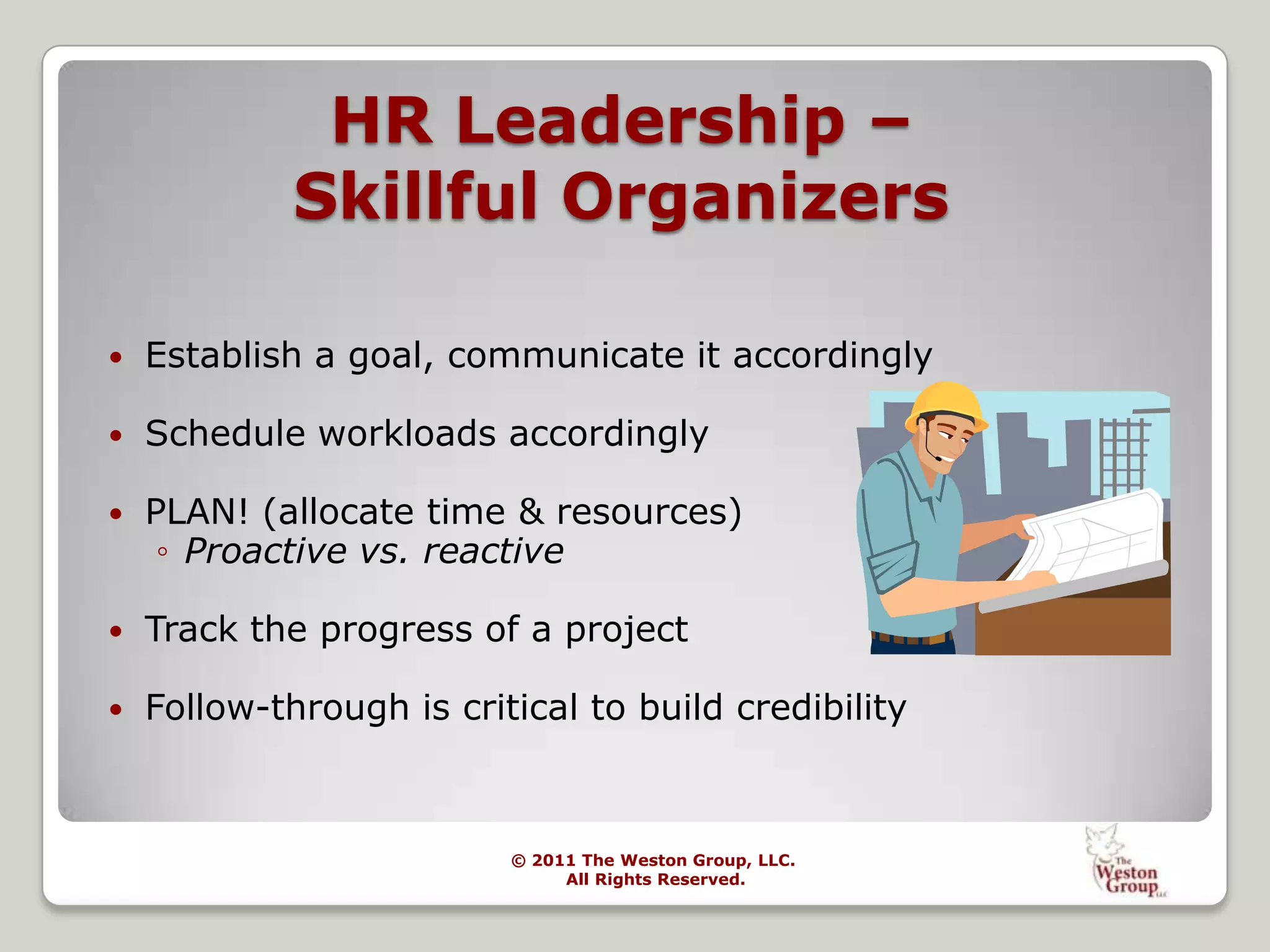
HR Leadership – Skillful OrganizersEstablish a goal, communicate it accordinglySchedule workloads accordinglyPLAN! (allocate time & resources)Proactive vs. reactiveTrack the progress of a projectFollow-through is critical to build credibility
HR Leadership-Team  BuilderGood team builders respect their staff and give them recognition for work well done They are courteous in their dealings, provide support and direction when needed, and offer constructive criticism in privateGood team builders strive to be fair and respectful when resolving conflicts among staff.
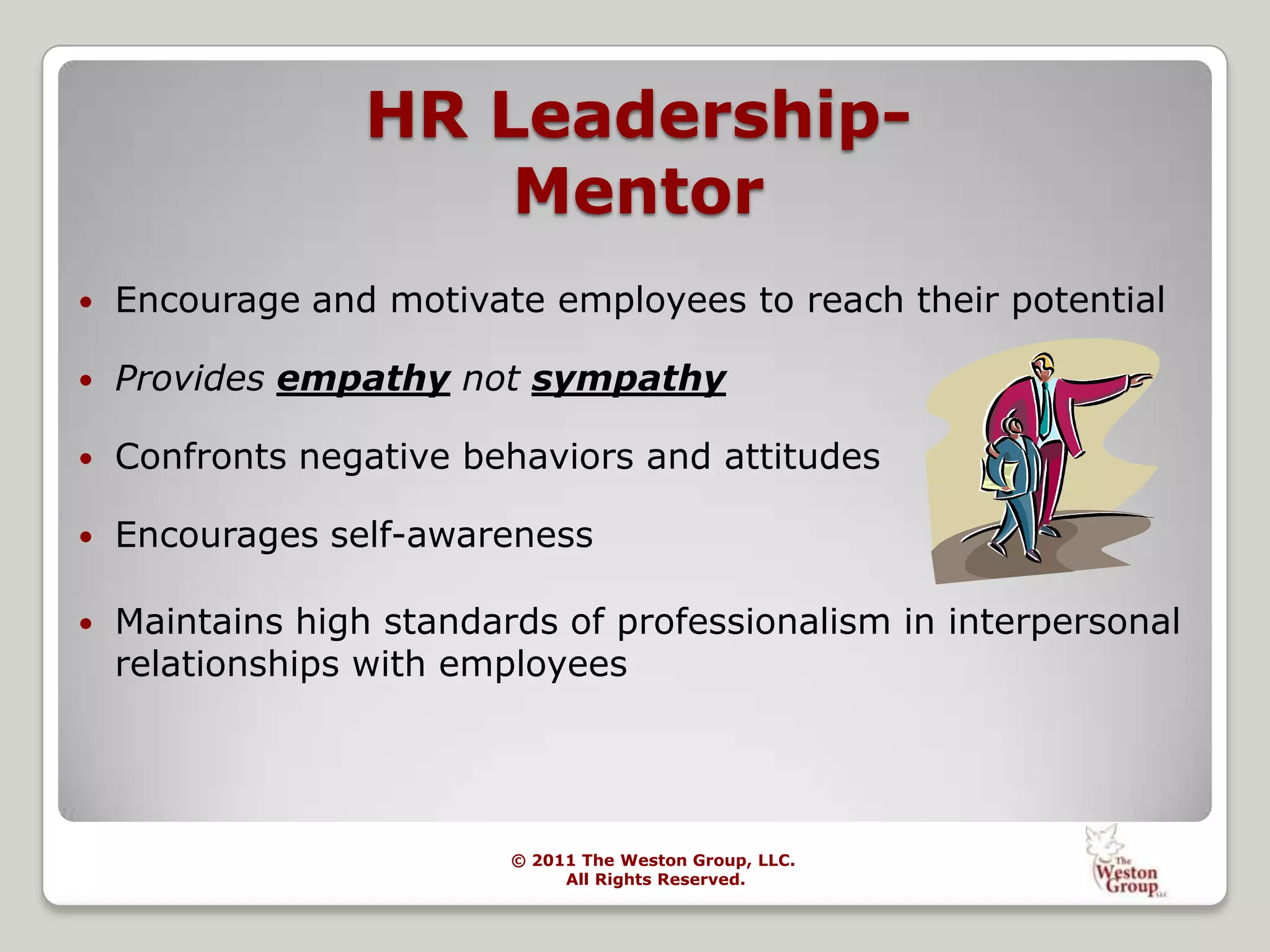
HR Leadership-MentorEncourage and motivate employees to reach their potentialProvides empathy not sympathyConfronts negative behaviors and attitudesEncourages self-awarenessMaintains high standards of professionalism in interpersonal relationships with employees
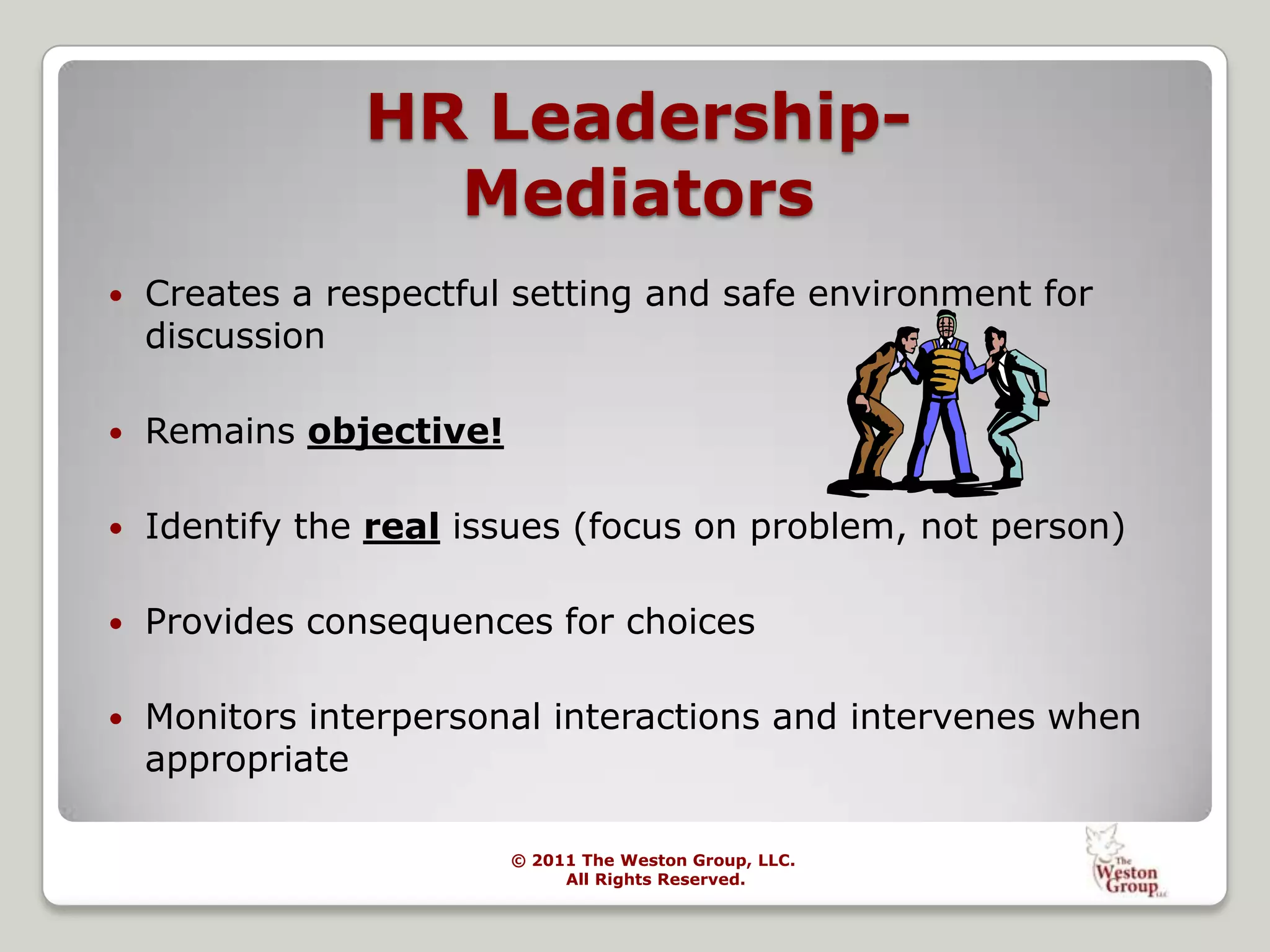
HR Leadership-MediatorsCreates a respectful setting and safe environment for discussionRemains objective!Identify the real issues (focus on problem, not person)Provides consequences for choices Monitors interpersonal interactions and intervenes when appropriate
Effective Interviewing& Employee Selection
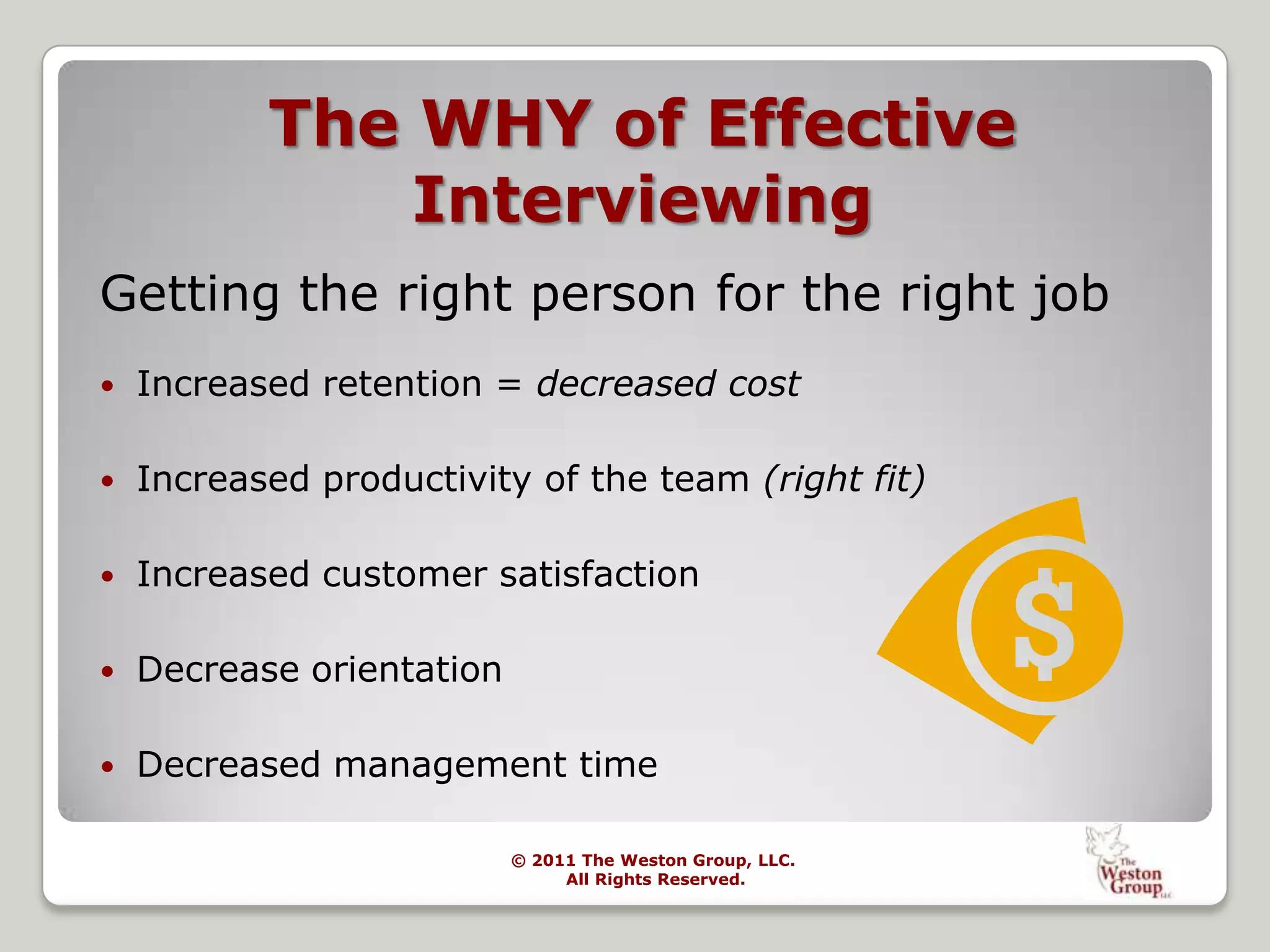
The WHY of Effective InterviewingGetting the right person for the right jobIncreased retention = decreased costIncreased productivity of the team (right fit)Increased customer satisfactionDecrease orientation Decreased management time
Why the RIGHT questions are importantSelect and design questions carefully to get the information needed to make quality hires while avoiding discriminatory intent.
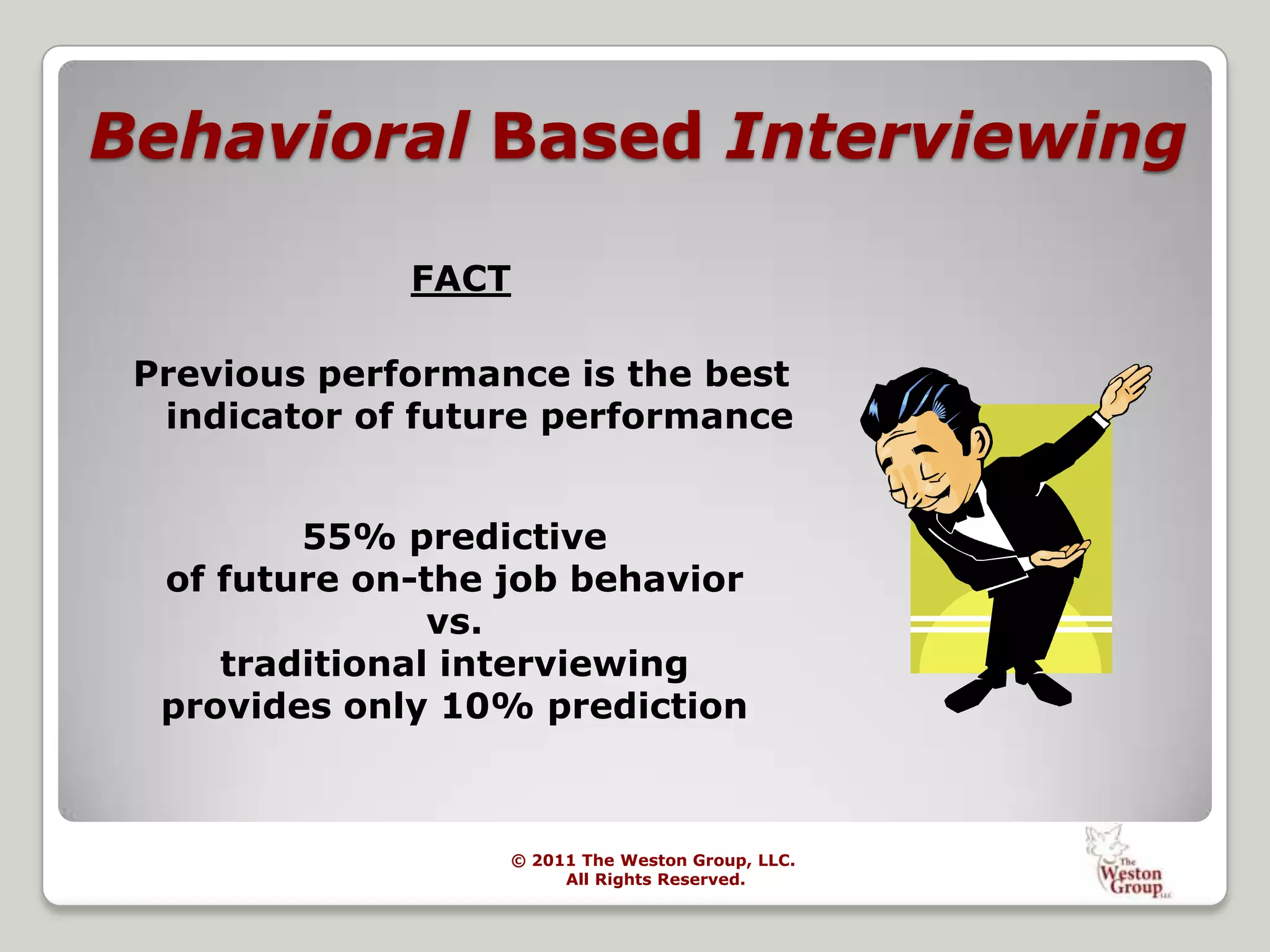
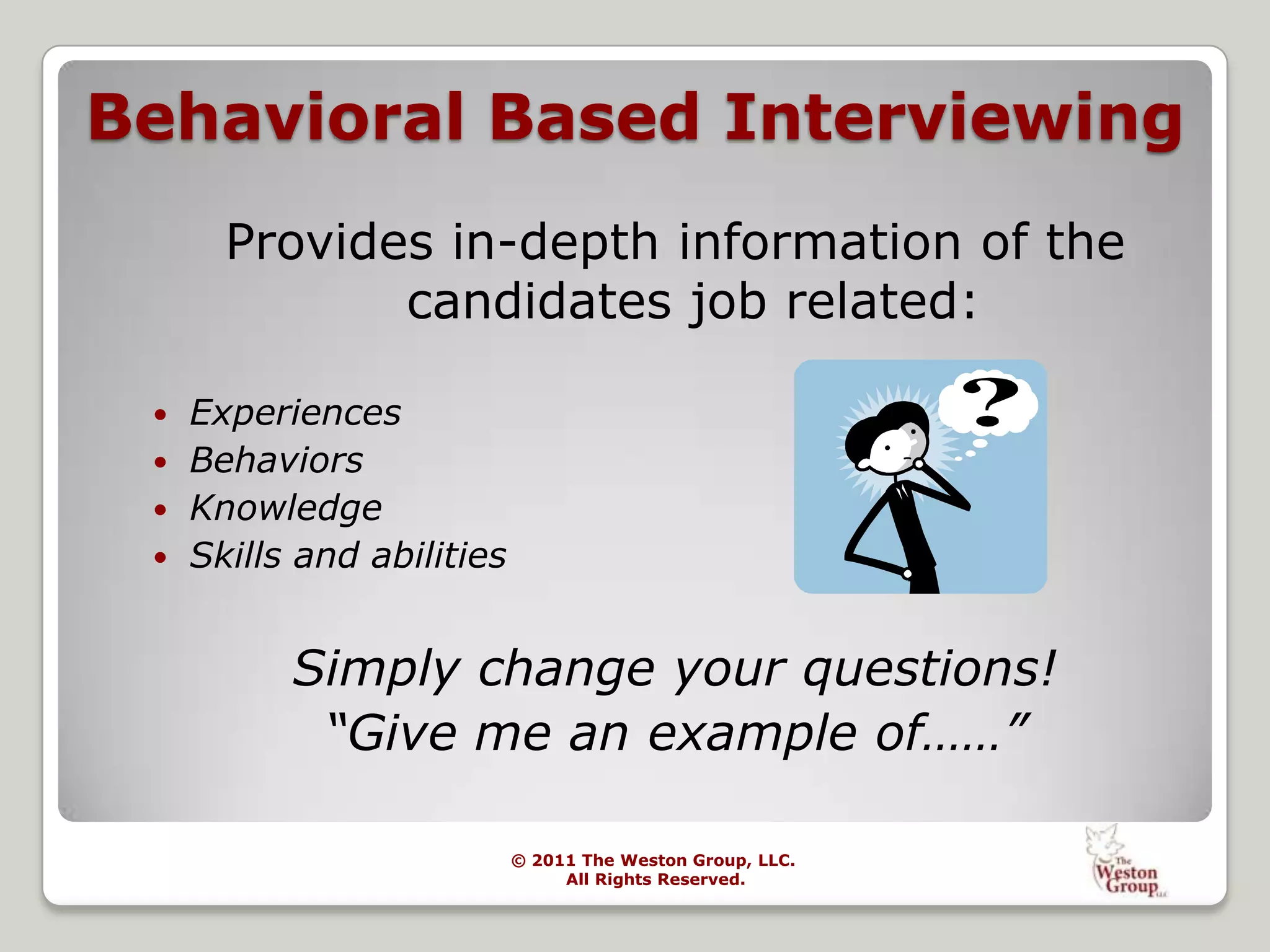
Behavioral Based InterviewingFACTPrevious performance is the best indicator of future performance55% predictive of future on-the job behavior vs. traditional interviewing provides only 10% prediction
Behavioral Based InterviewingProvides in-depth information of the candidates job related:ExperiencesBehaviors Knowledge Skills and abilitiesSimply change your questions!“Give me an example of……”
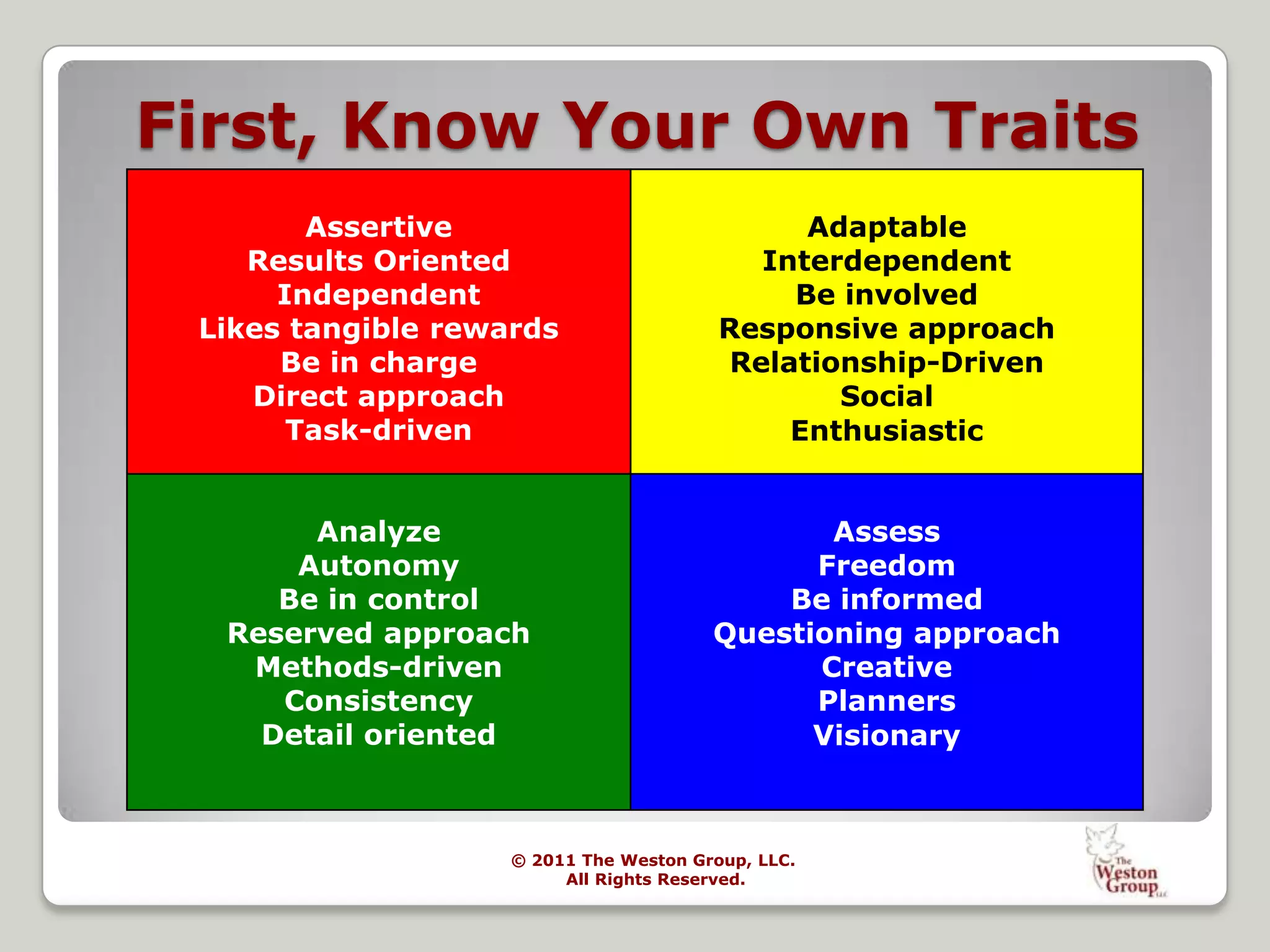
First, Know Your Own Traits
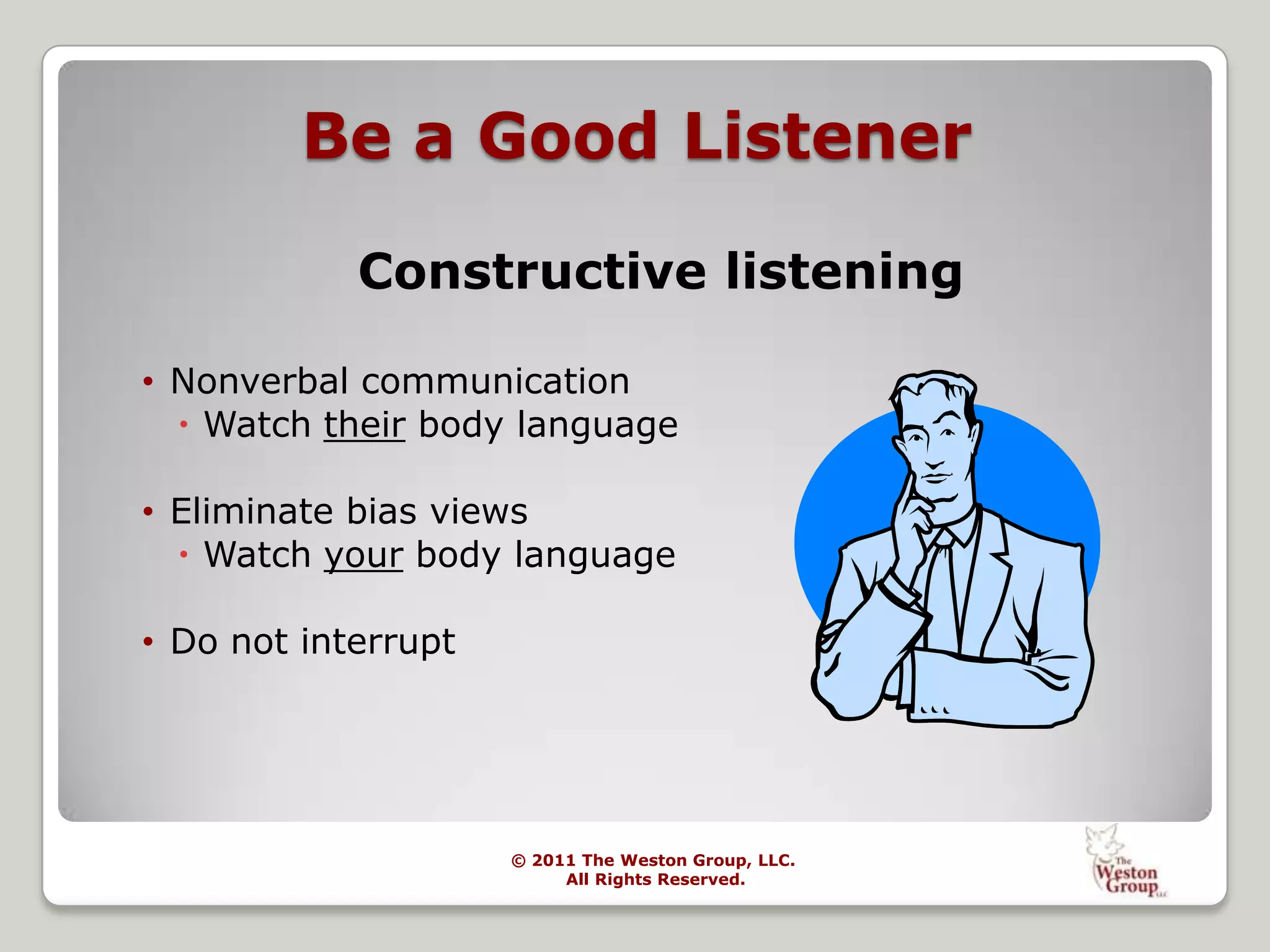
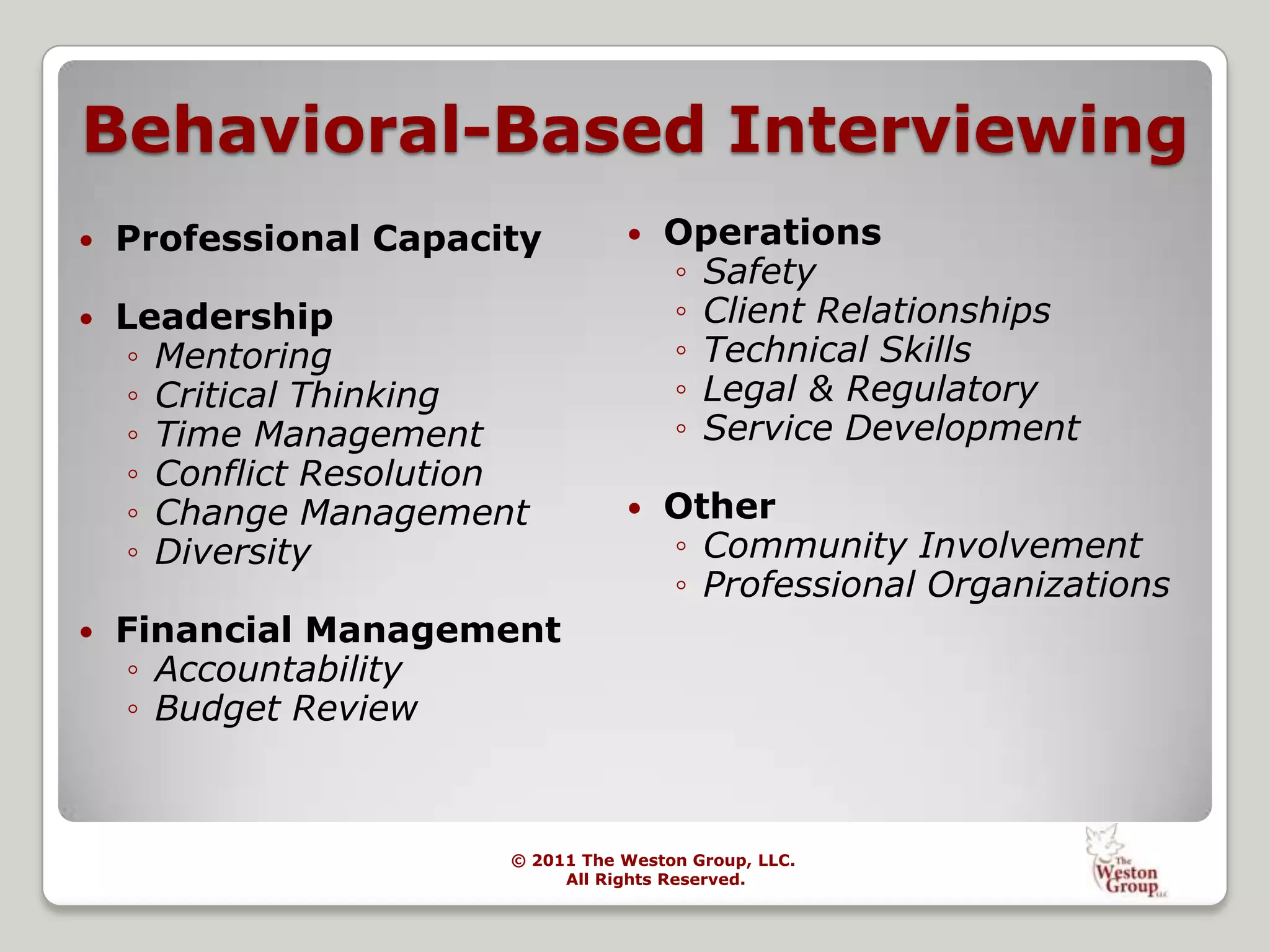
Be a Good ListenerConstructive listeningNonverbal communication Watch their body languageEliminate bias viewsWatch your body languageDo not interruptBehavioral-Based InterviewingProfessional CapacityLeadershipMentoringCritical ThinkingTime ManagementConflict ResolutionChange ManagementDiversityFinancial ManagementAccountabilityBudget ReviewOperationsSafetyClient RelationshipsTechnical SkillsLegal & RegulatoryService DevelopmentOtherCommunity InvolvementProfessional Organizations
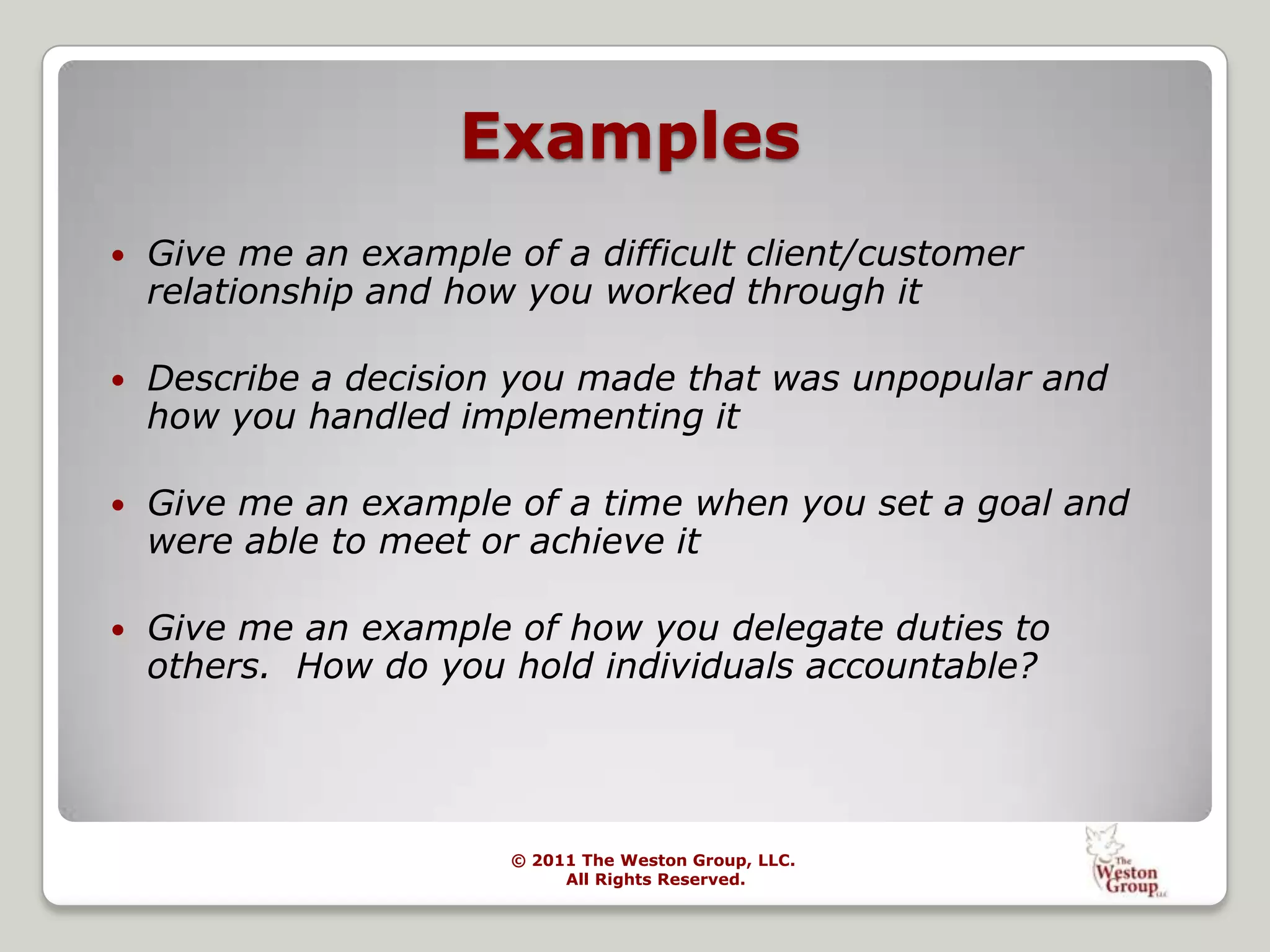
ExamplesGive me an example of a difficult client/customer relationship and how you worked through itDescribe a decision you made that was unpopular and how you handled implementing itGive me an example of a time when you set a goal and were able to meet or achieve itGive me an example of how you delegate duties to others.  How do you hold individuals accountable?
Topics and Questions to AvoidAgeArrest Record (you can ask about convictions)Marital and Family StatusReligionDisabilitiesRaceNational Origin Military status
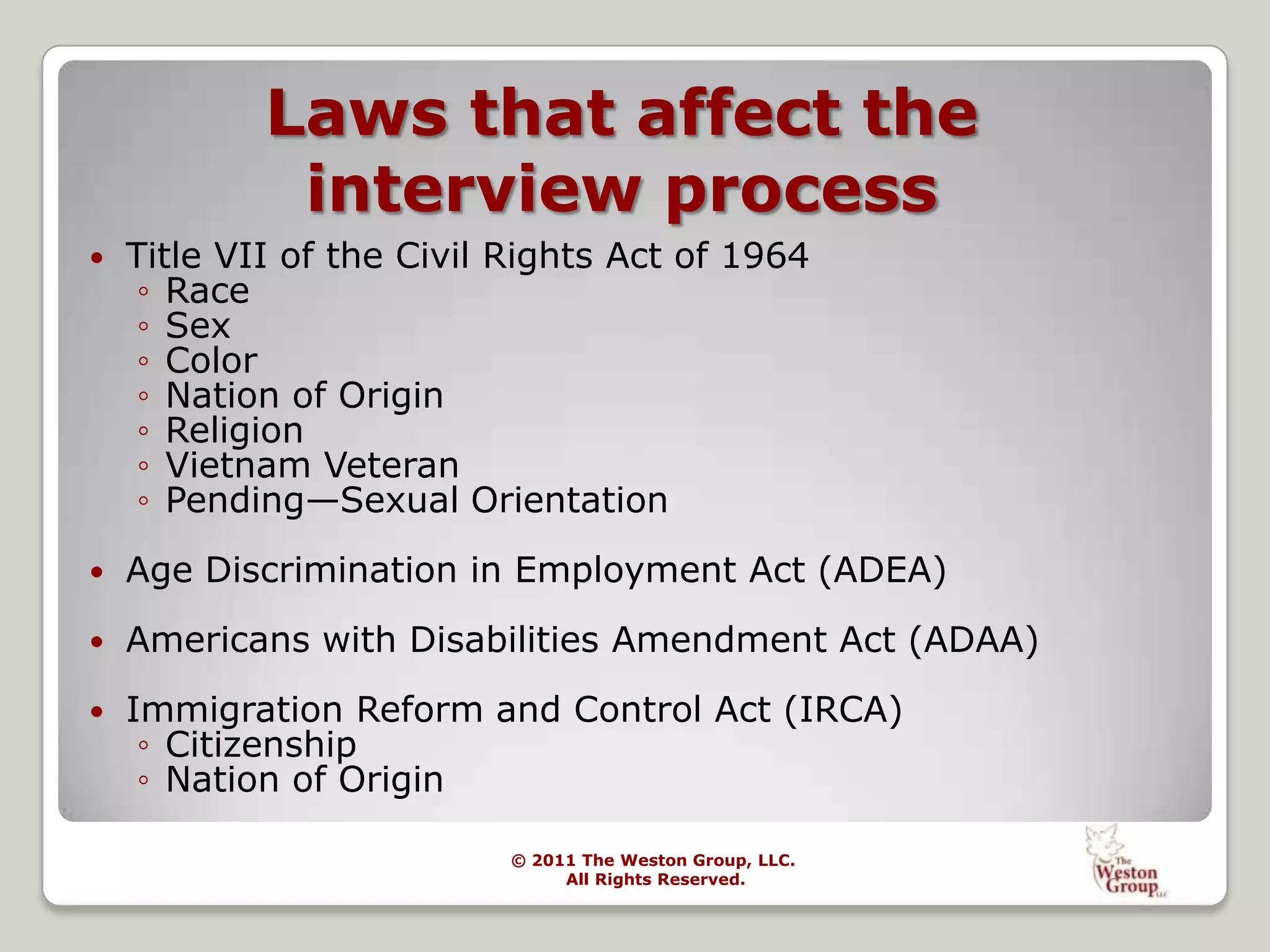
Laws that affect the interview processTitle VII of the Civil Rights Act of 1964 RaceSexColorNation of OriginReligionVietnam Veteran Pending—Sexual OrientationAge Discrimination in Employment Act (ADEA)Americans with Disabilities Amendment Act (ADAA)Immigration Reform and Control Act (IRCA)CitizenshipNation of Origin
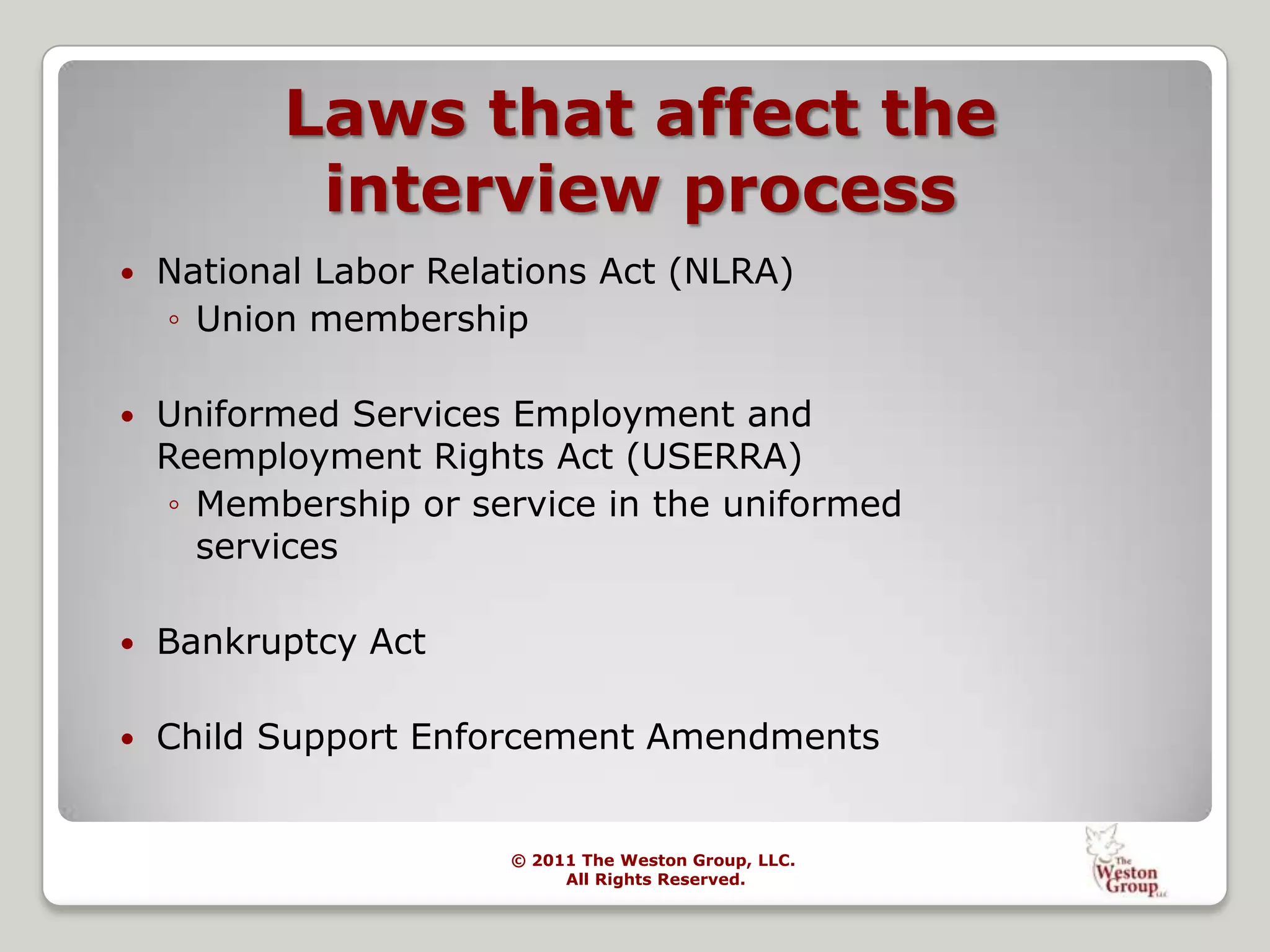
Laws that affect the interview processNational Labor Relations Act (NLRA)Union membershipUniformed Services Employment and Reemployment Rights Act (USERRA) Membership or service in the uniformed servicesBankruptcy ActChild Support Enforcement Amendments
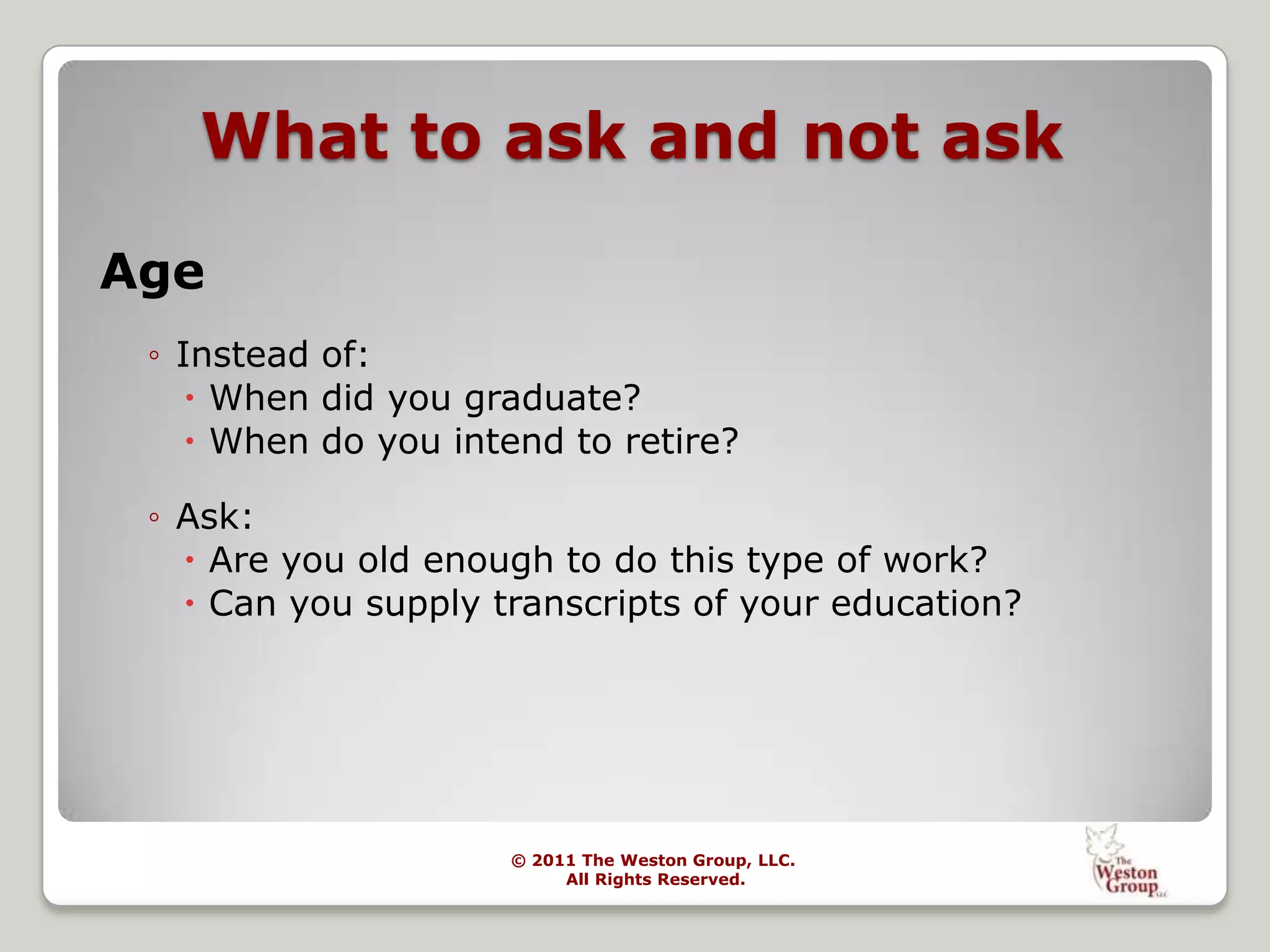
What to ask and not askAgeInstead of:When did you graduate?When do you intend to retire?Ask:Are you old enough to do this type of work?Can you supply transcripts of your education?
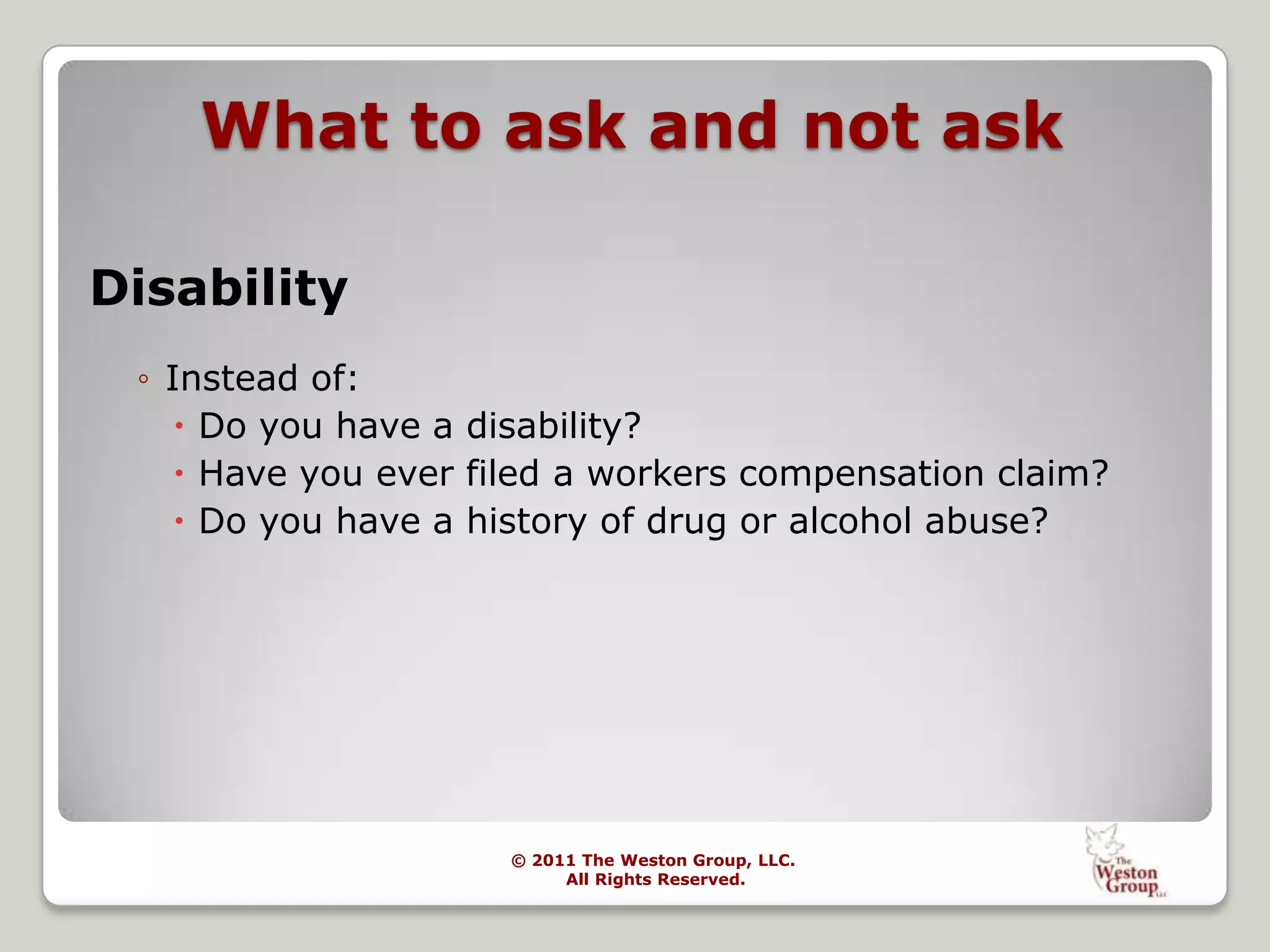
What to ask and not askDisabilityInstead of:Do you have a disability?Have you ever filed a workers compensation claim?Do you have a history of drug or alcohol abuse?
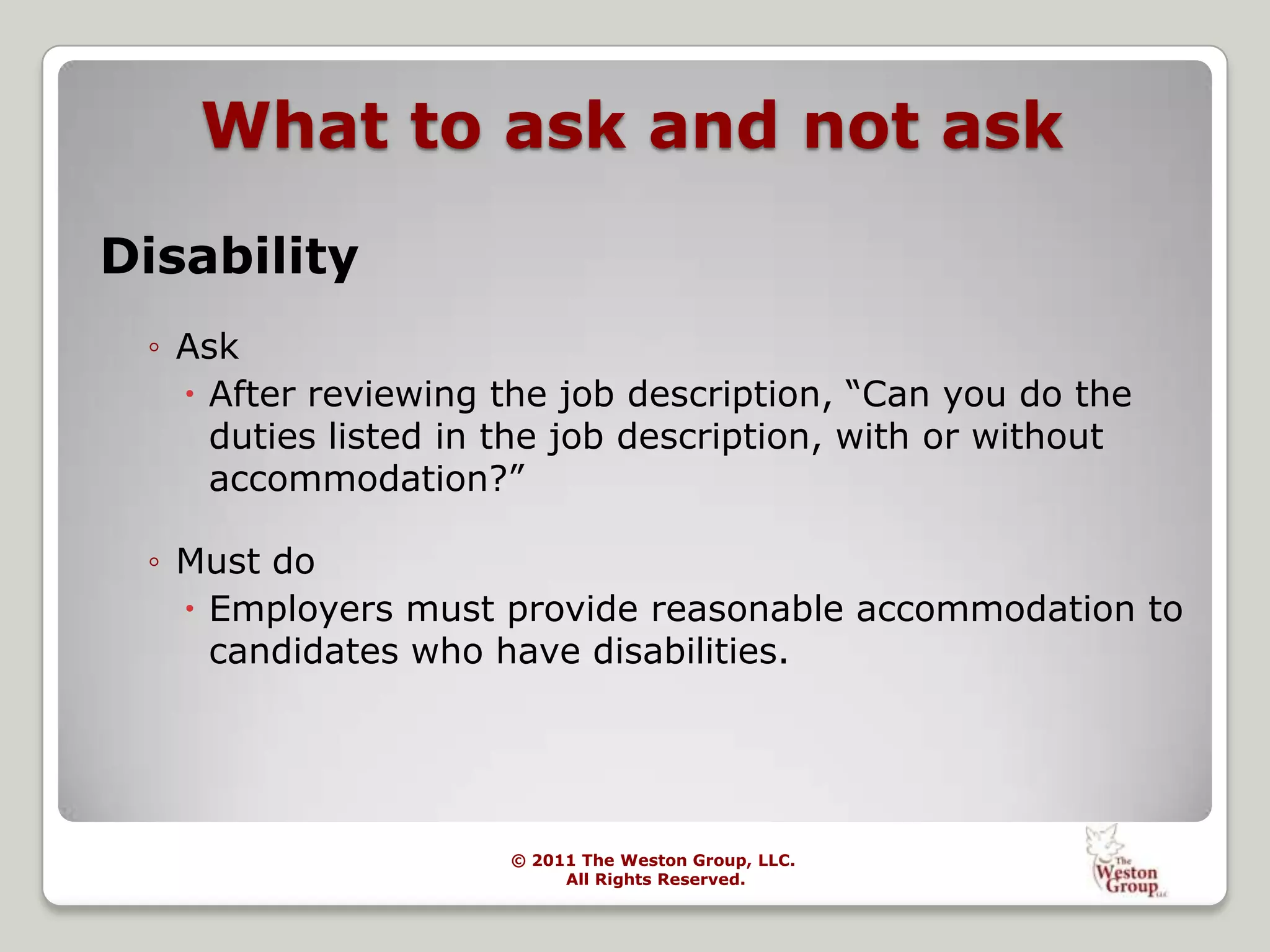
What to ask and not askDisabilityAskAfter reviewing the job description, “Can you do the duties listed in the job description, with or without accommodation?”Must doEmployers must provide reasonable accommodation to candidates who have disabilities.
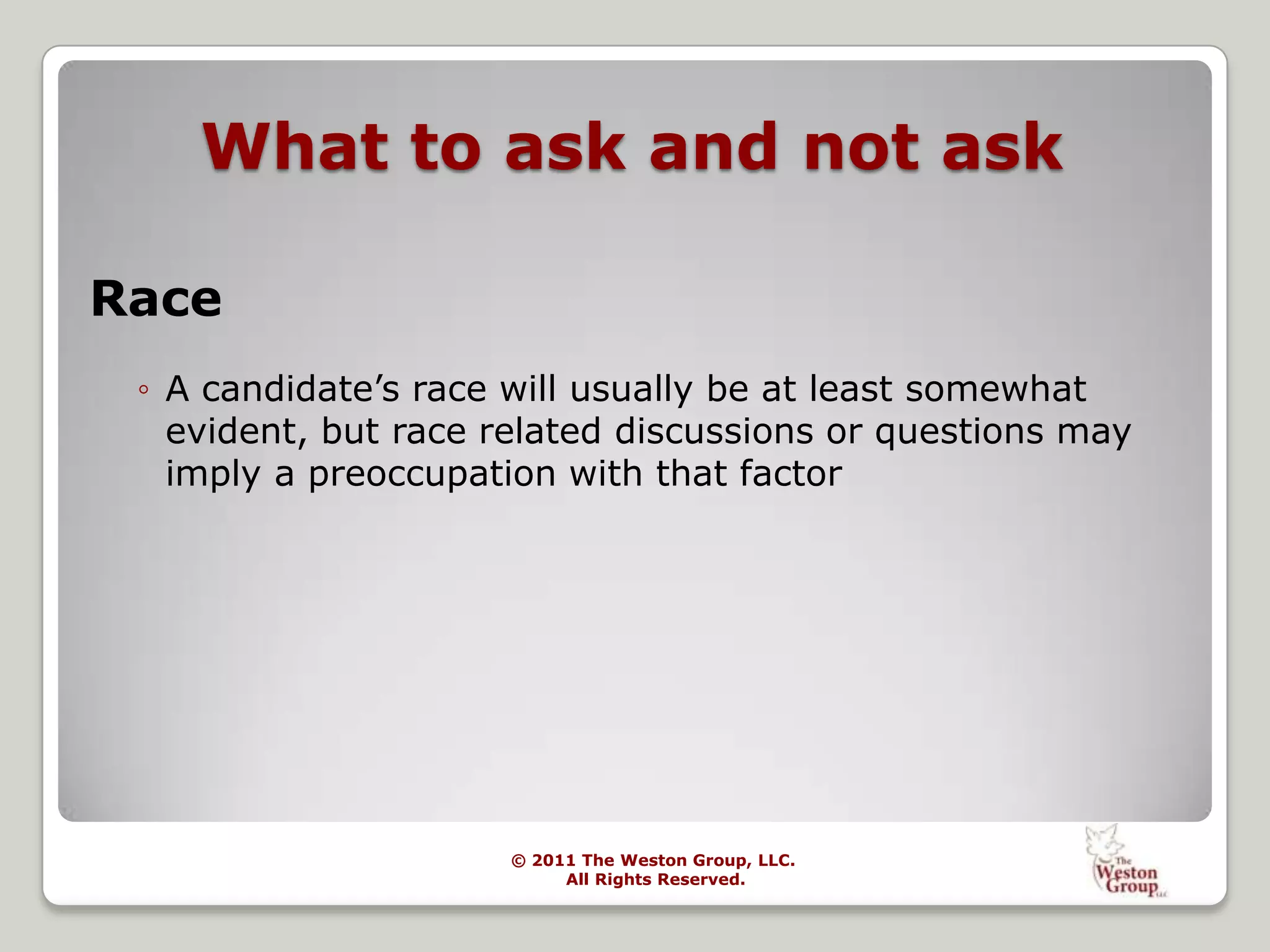
What to ask and not askRaceA candidate’s race will usually be at least somewhat evident, but race related discussions or questions may imply a preoccupation with that factor
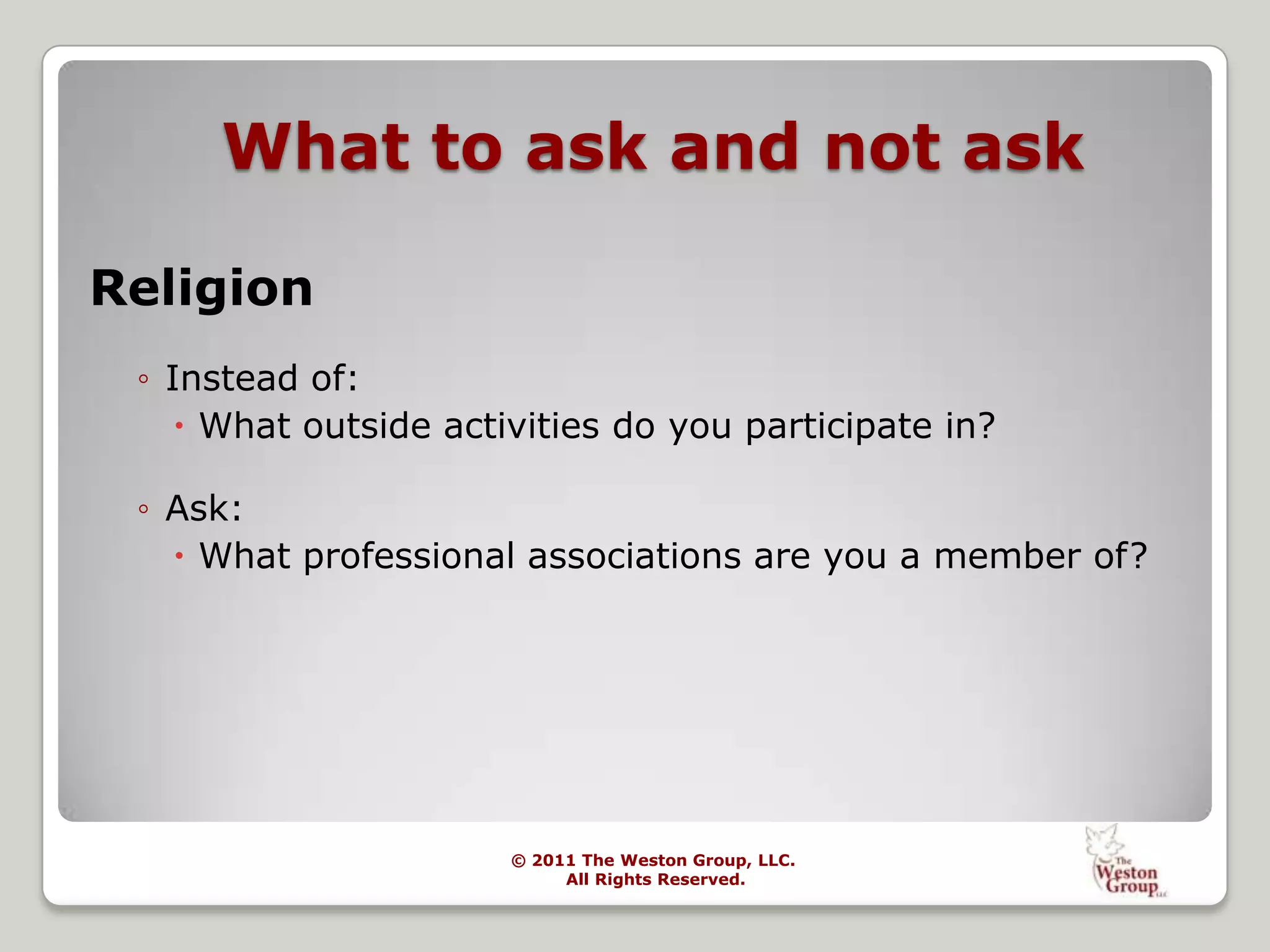
What to ask and not askReligionInstead of:What outside activities do you participate in?Ask:What professional associations are you a member of?
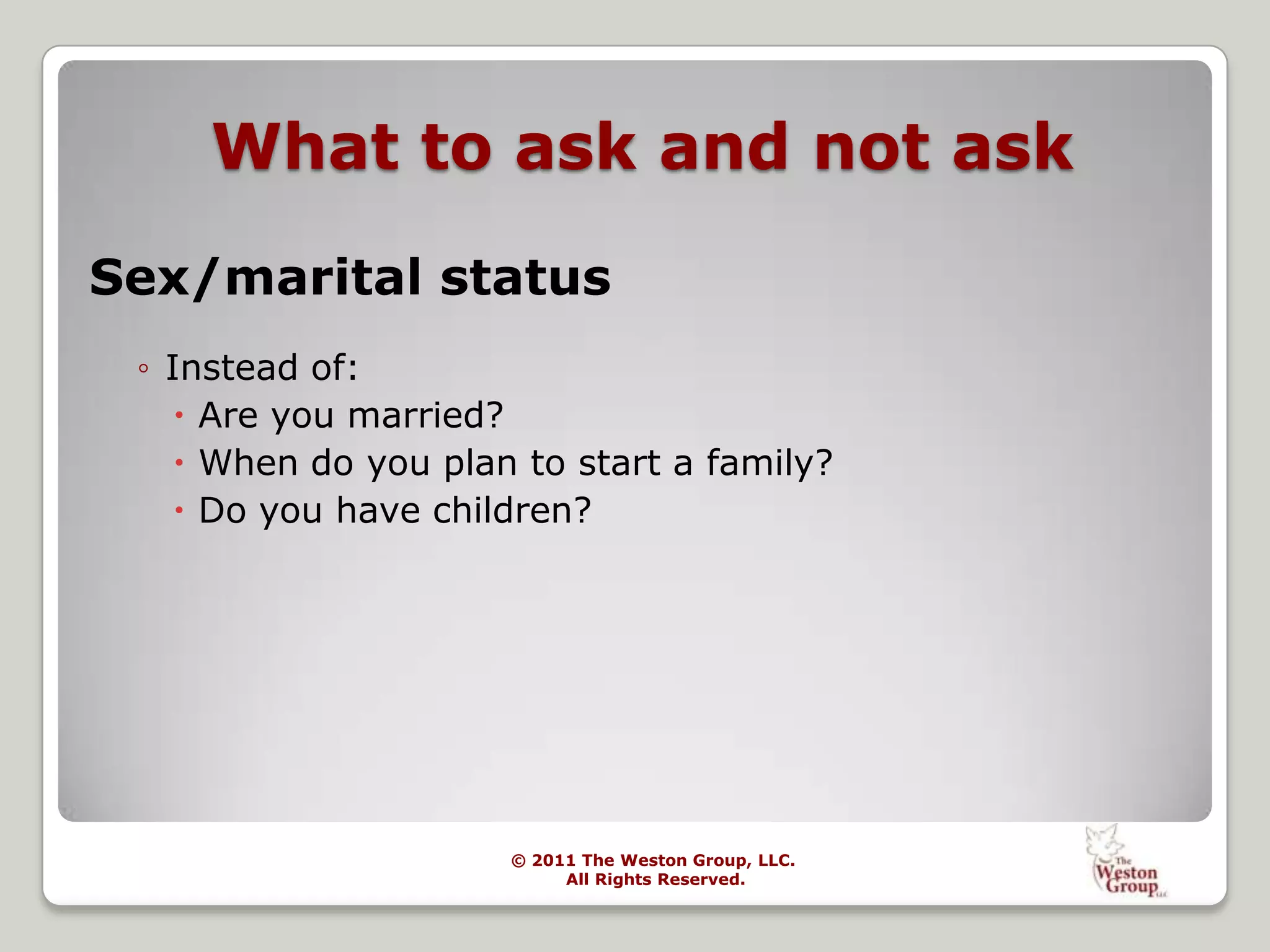
What to ask and not askSex/marital statusInstead of:Are you married?When do you plan to start a family?Do you have children?
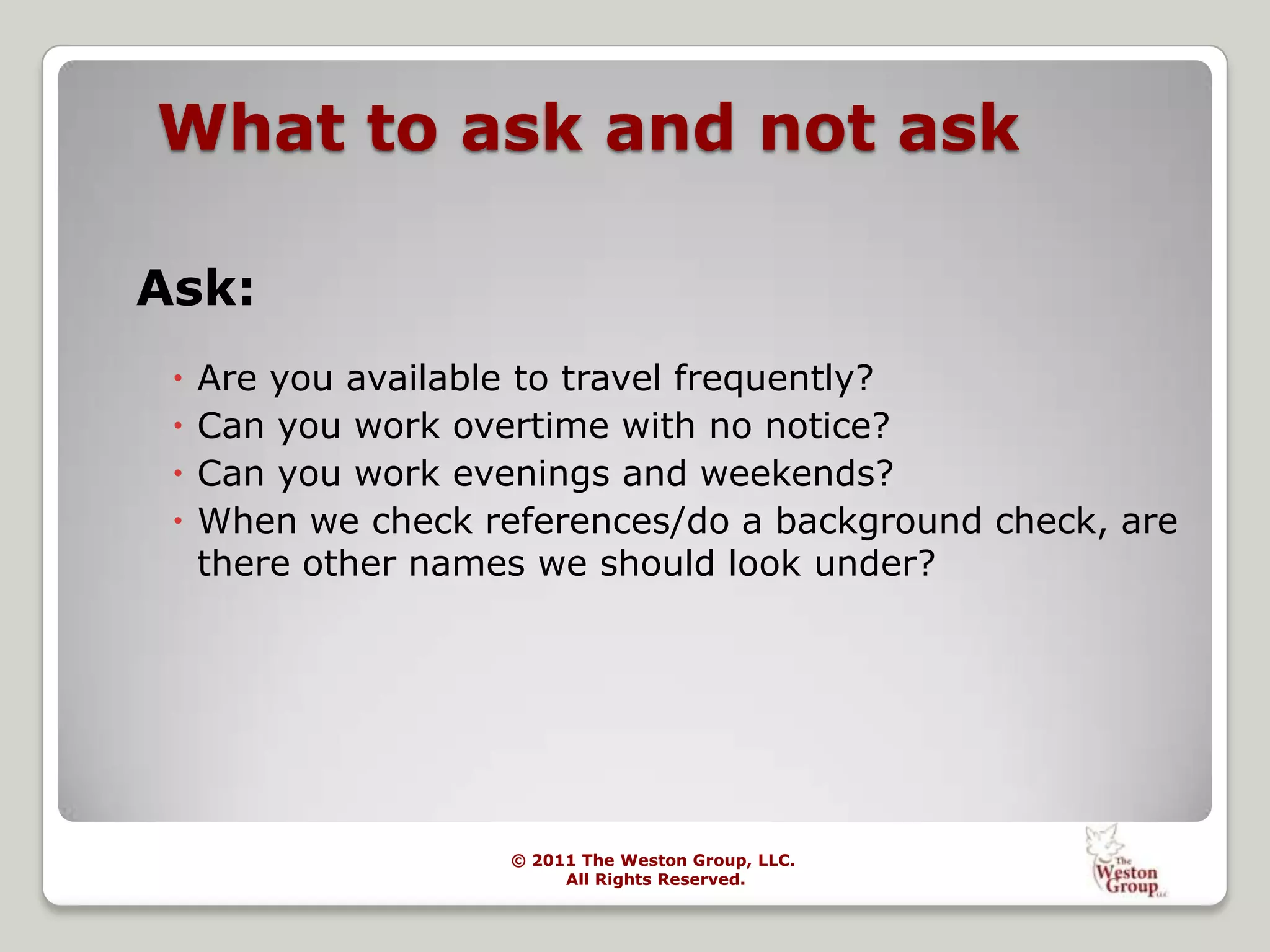
What to ask and not askAsk:Are you available to travel frequently?Can you work overtime with no notice?Can you work evenings and weekends?When we check references/do a background check, are there other names we should look under?
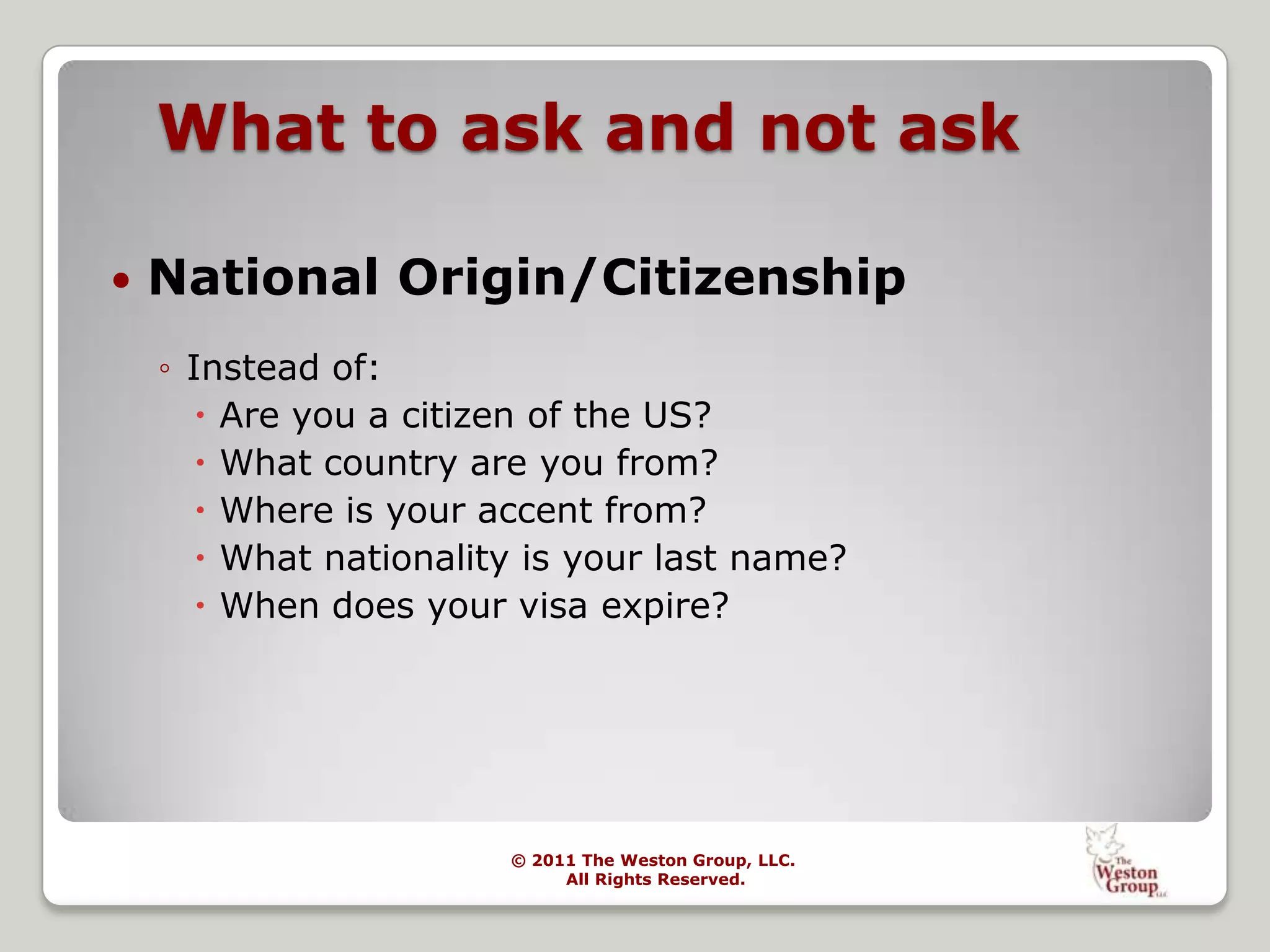
What to ask and not askNational Origin/CitizenshipInstead of:Are you a citizen of the US?What country are you from?Where is your accent from?What nationality is your last name?When does your visa expire?
What to ask and not askAsk:If you are hired, are you able to provide documentation to prove that you are eligible to work in the US?
What to ask and not askFinancial StatusInstead of:Do you own a home/car?Have you ever filed for bankruptcy?Are you subject to any garnishments or child support orders?Ask:Will you sign a form authorizing us to perform a credit check?
What to ask and not askMilitaryInstead of:Please provide the status of your military dischargeWill you miss work to perform military service?Ask:What experience did you gain in the uniformed service that is relevant to the job you would be doing?
What to ask and not askArrests and convictionsInstead of:Have you ever been arrested?Ask:Have you ever been convicted of a crime? You must qualify this question by stating that a conviction will not automatically disqualify a candidate
Closing the InterviewAsk the candidate if he or she has any questionsSummarize the next steps in the processAvoid making any promises or commitments to the candidateThank the candidate for his or her interest in the position
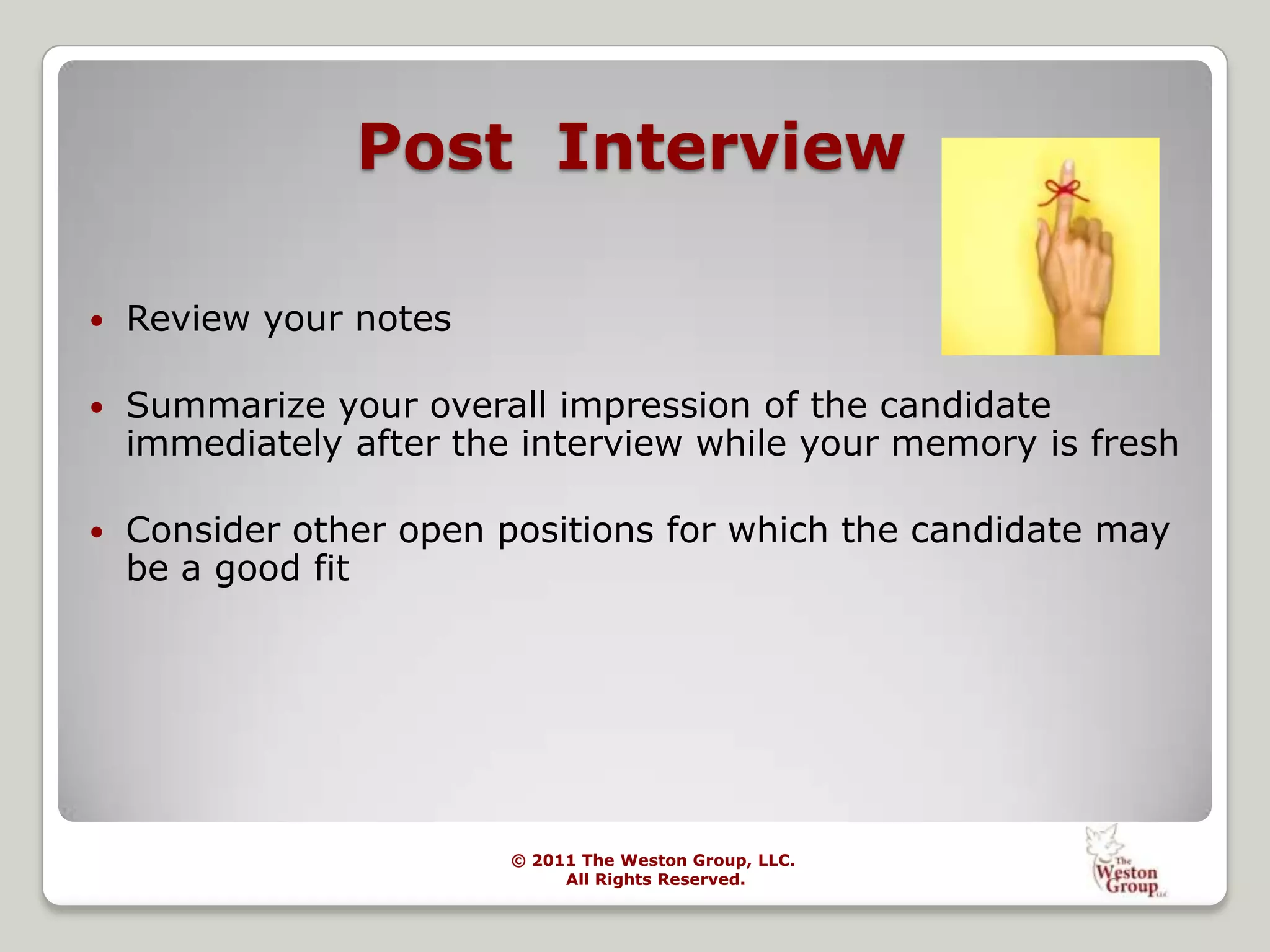
Post  InterviewReview your notesSummarize your overall impression of the candidate immediately after the interview while your memory is freshConsider other open positions for which the candidate may be a good fit
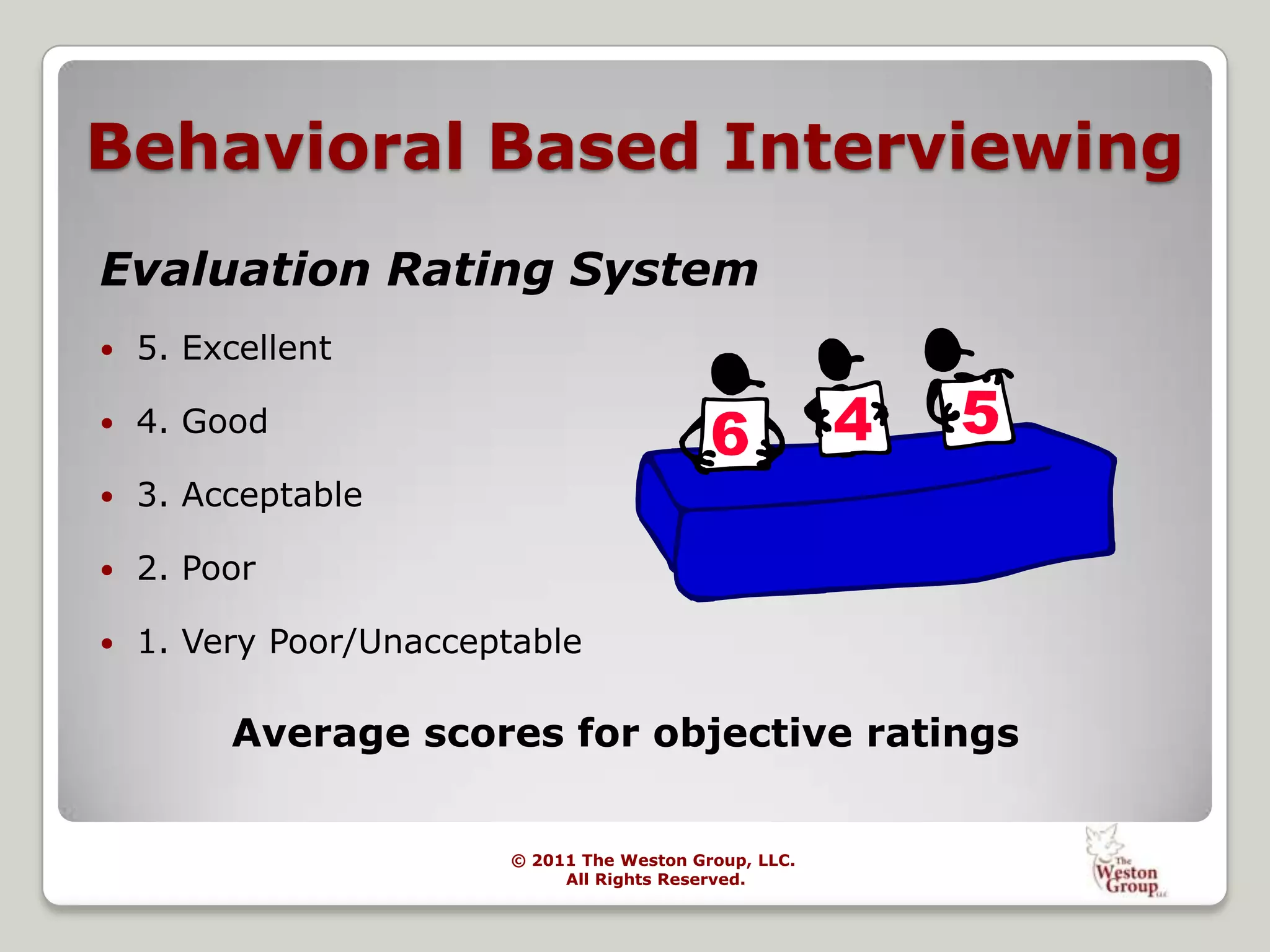
Behavioral Based InterviewingEvaluation Rating System5. Excellent4. Good3. Acceptable 2. Poor1. Very Poor/UnacceptableAverage scores for objective ratings
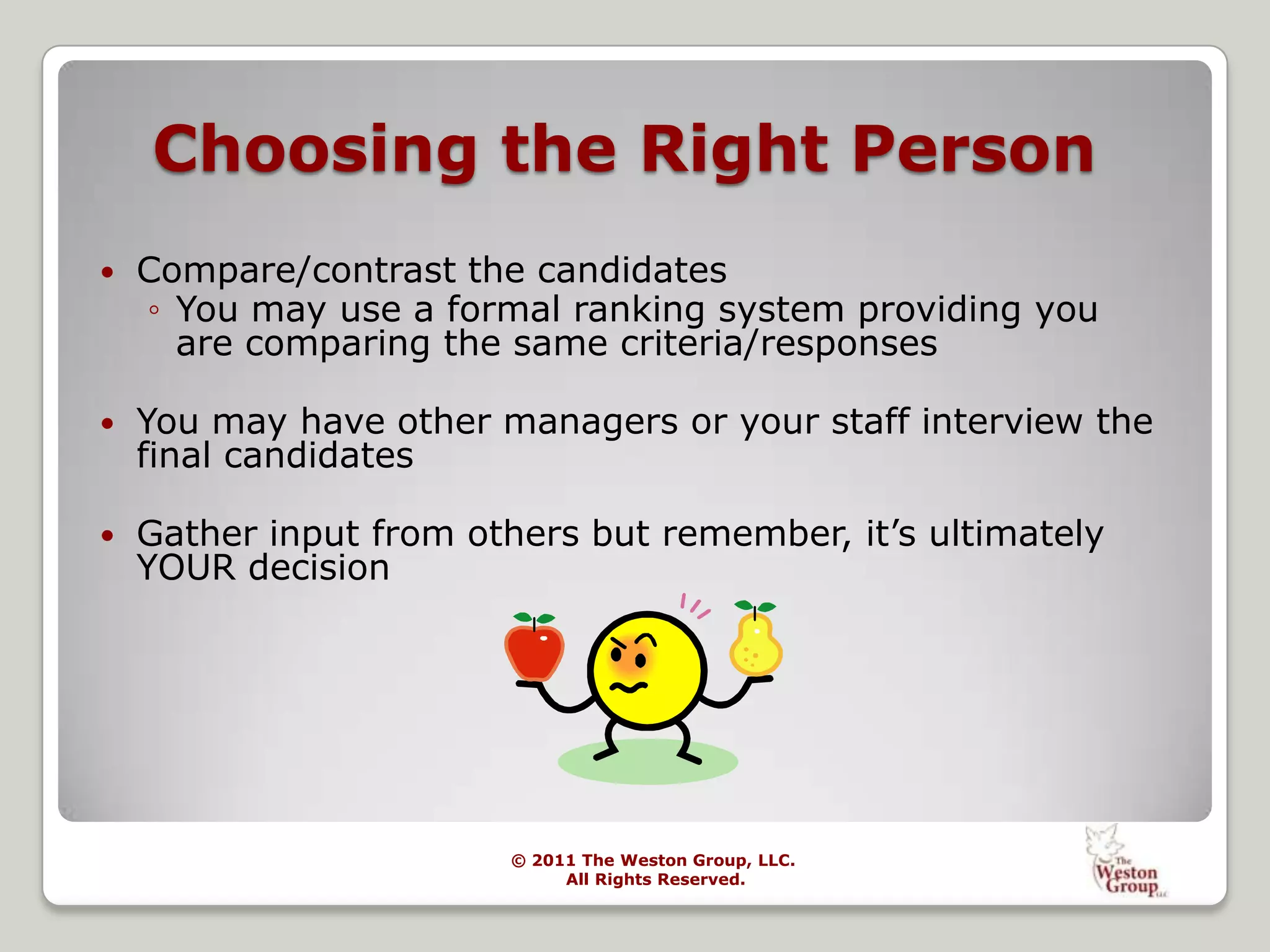
Choosing the Right PersonCompare/contrast the candidatesYou may use a formal ranking system providing you are comparing the same criteria/responsesYou may have other managers or your staff interview the final candidatesGather input from others but remember, it’s ultimately YOUR decision
MAKING THE OFFERDon’t misrepresent opportunitiesOffer letterCondition job offer on tests, references, etc.
REFERENCE AND BACKGROUND CHECKSWhat to check forWhere to checkReferencesNegligent hiringBy the way, The Weston Group offers a cost effective background checking service…
KEEP THEM THE BEST AND MAKE THEM BETTEROrientationTrainingPerformance improvement
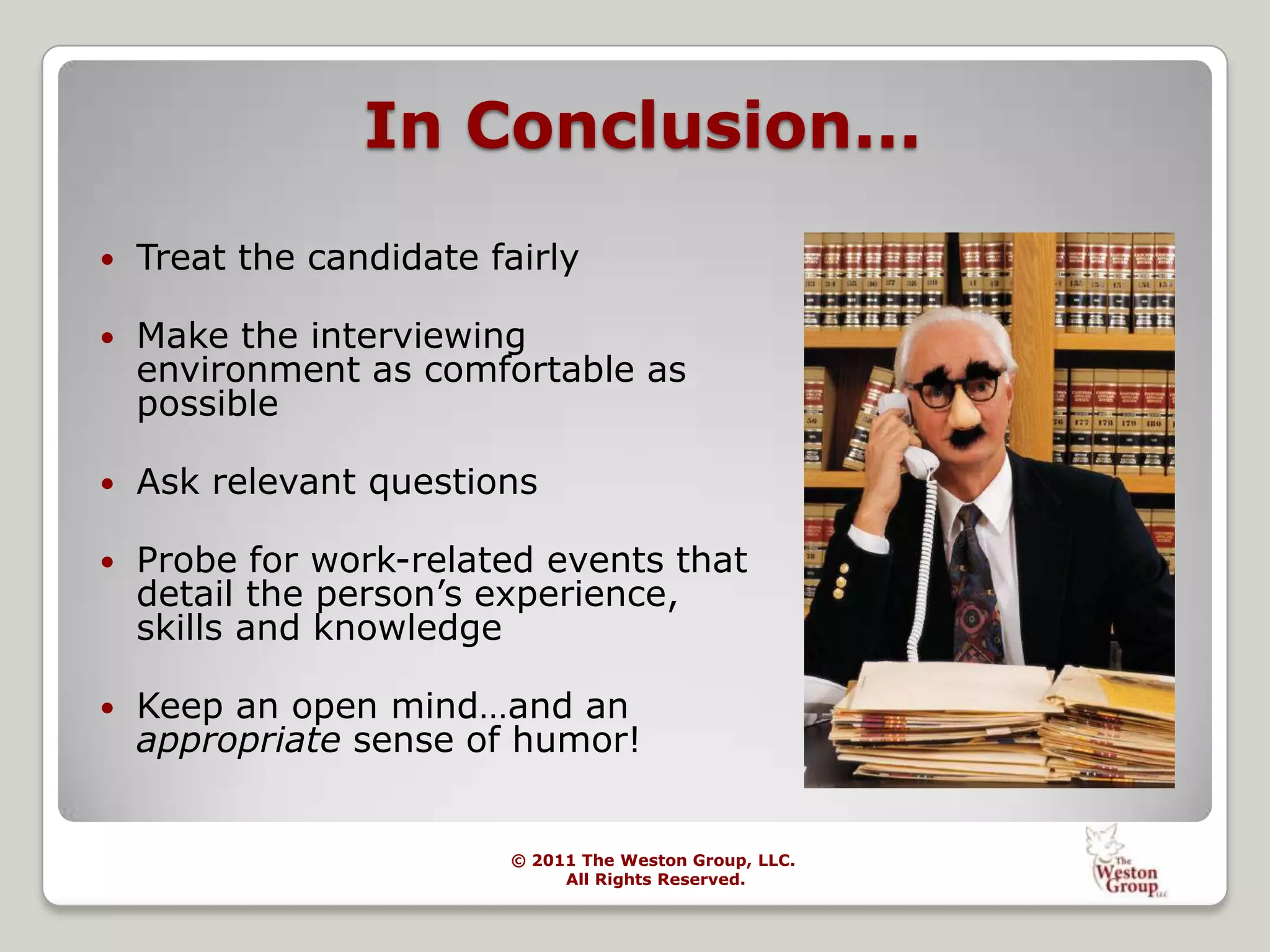
In Conclusion...Treat the candidate fairlyMake the interviewing environment as comfortable as possibleAsk relevant questionsProbe for work-related events that detail the person’s experience, skills and knowledgeKeep an open mind…and an appropriate sense of humor!
Employment Law
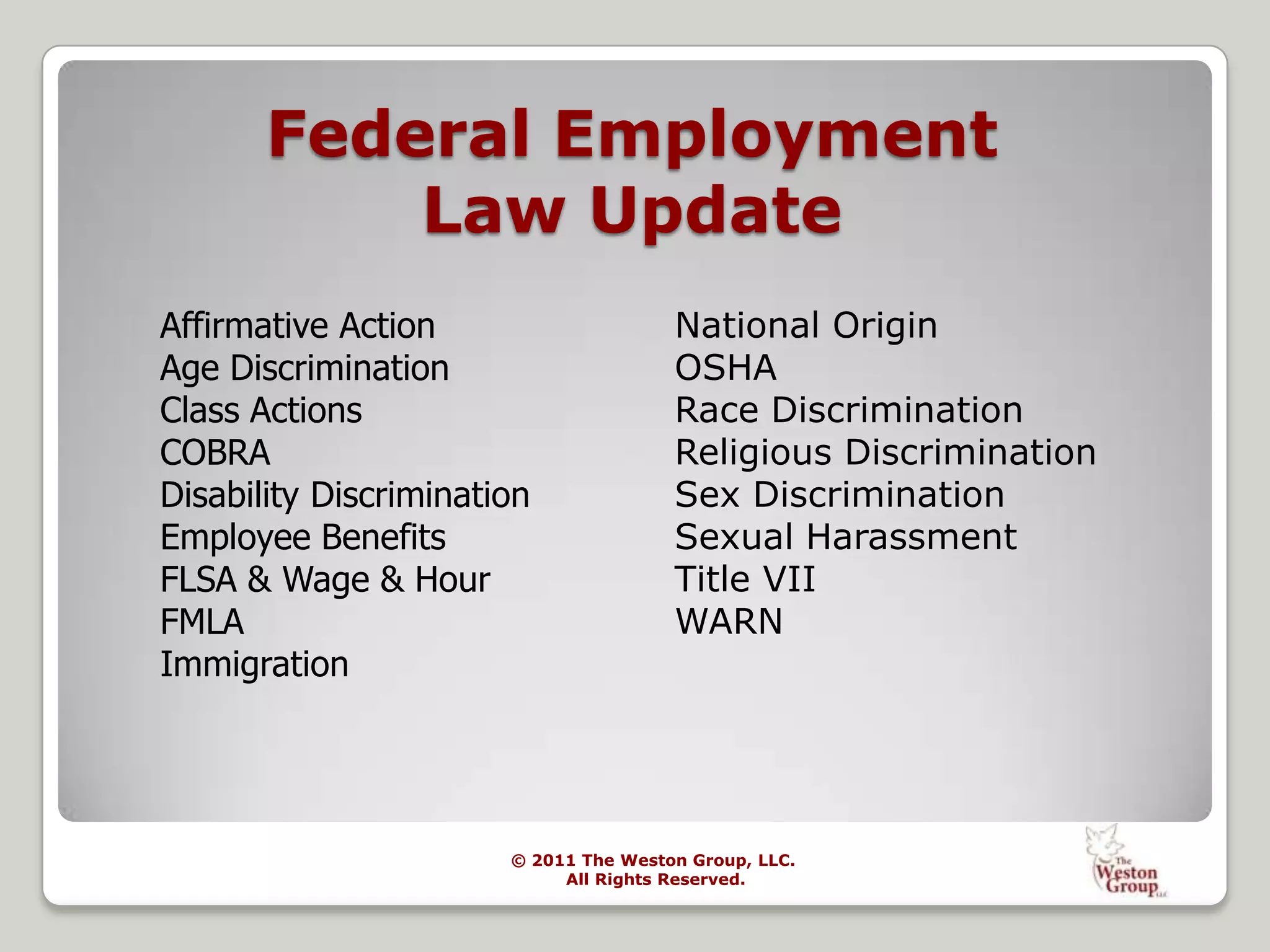
Federal Employment Law UpdateNational OriginOSHARace DiscriminationReligious DiscriminationSex DiscriminationSexual HarassmentTitle VIIWARNAffirmative ActionAge DiscriminationClass ActionsCOBRADisability DiscriminationEmployee BenefitsFLSA & Wage & HourFMLAImmigration
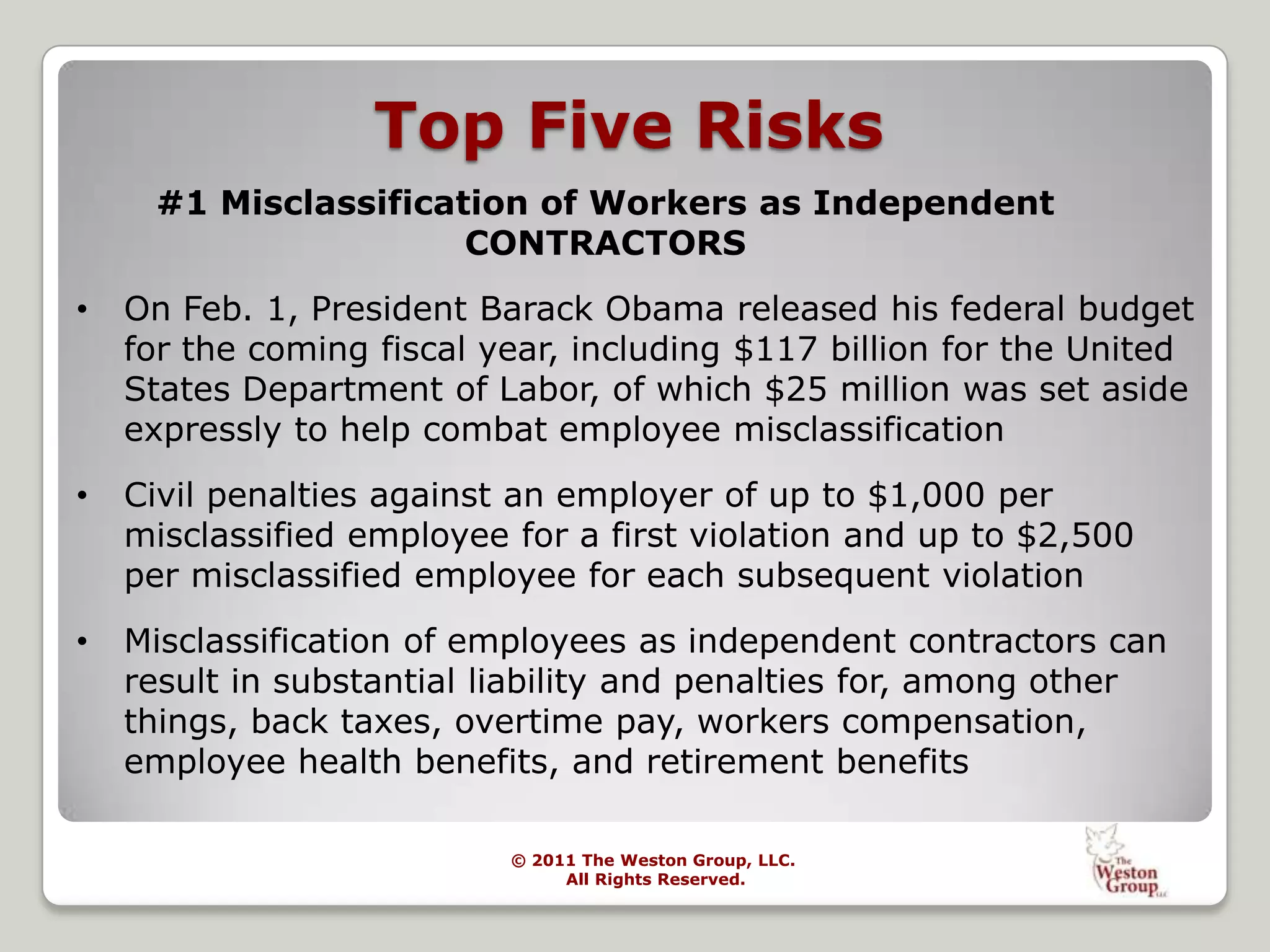
Top Five Risks#1 Misclassification of Workers as Independent CONTRACTORSOn Feb. 1, President Barack Obama released his federal budget for the coming fiscal year, including $117 billion for the United States Department of Labor, of which $25 million was set aside expressly to help combat employee misclassification
Civil penalties against an employer of up to $1,000 per misclassified employee for a first violation and up to $2,500 per misclassified employee for each subsequent violation
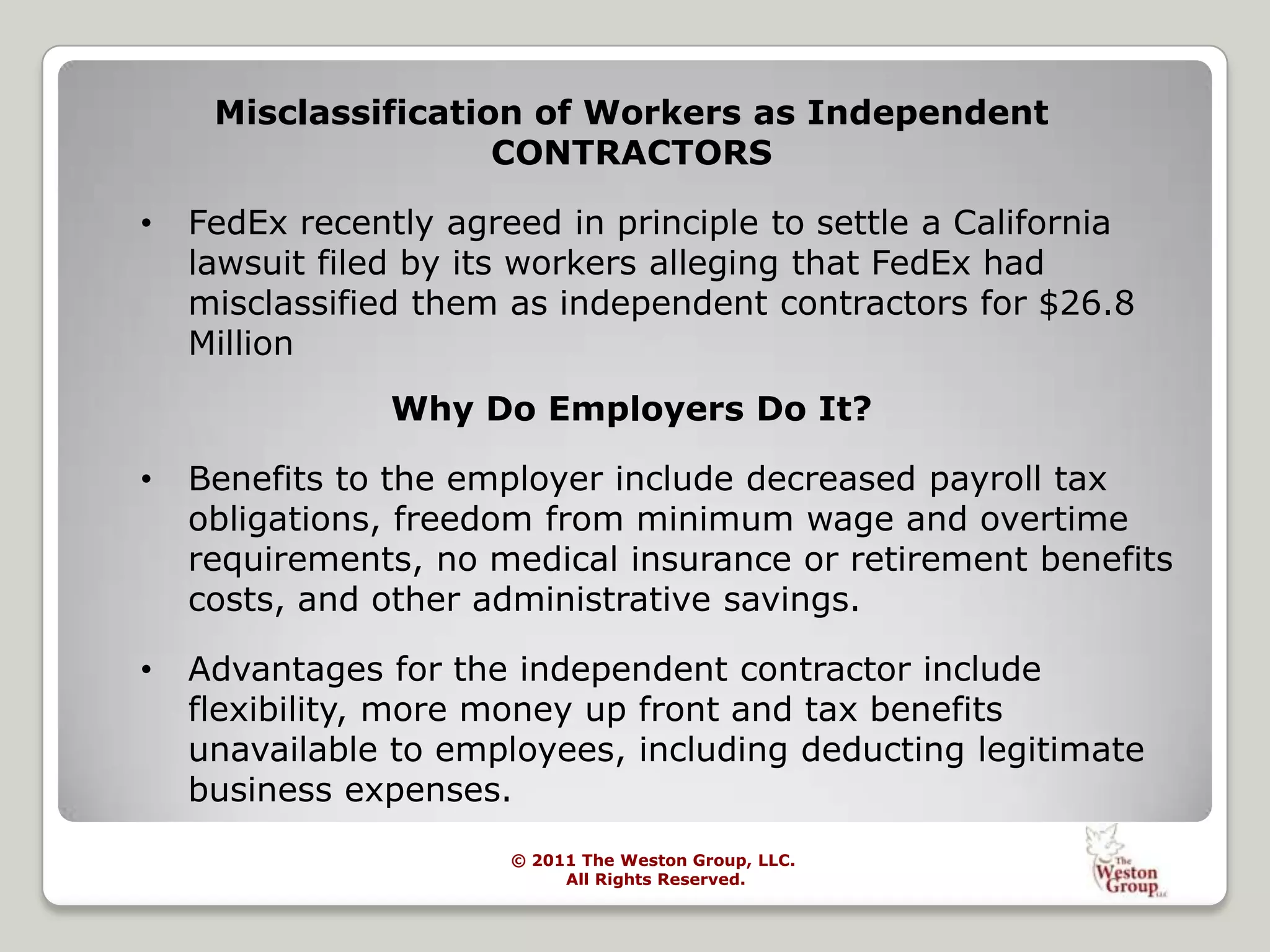
Misclassification of employees as independent contractors can result in substantial liability and penalties for, among other things, back taxes, overtime pay, workers compensation, employee health benefits, and retirement benefitsMisclassification of Workers as Independent  CONTRACTORSFedEx recently agreed in principle to settle a California lawsuit filed by its workers alleging that FedEx had misclassified them as independent contractors for $26.8 MillionWhy Do Employers Do It?Benefits to the employer include decreased payroll tax obligations, freedom from minimum wage and overtime requirements, no medical insurance or retirement benefits costs, and other administrative savings.
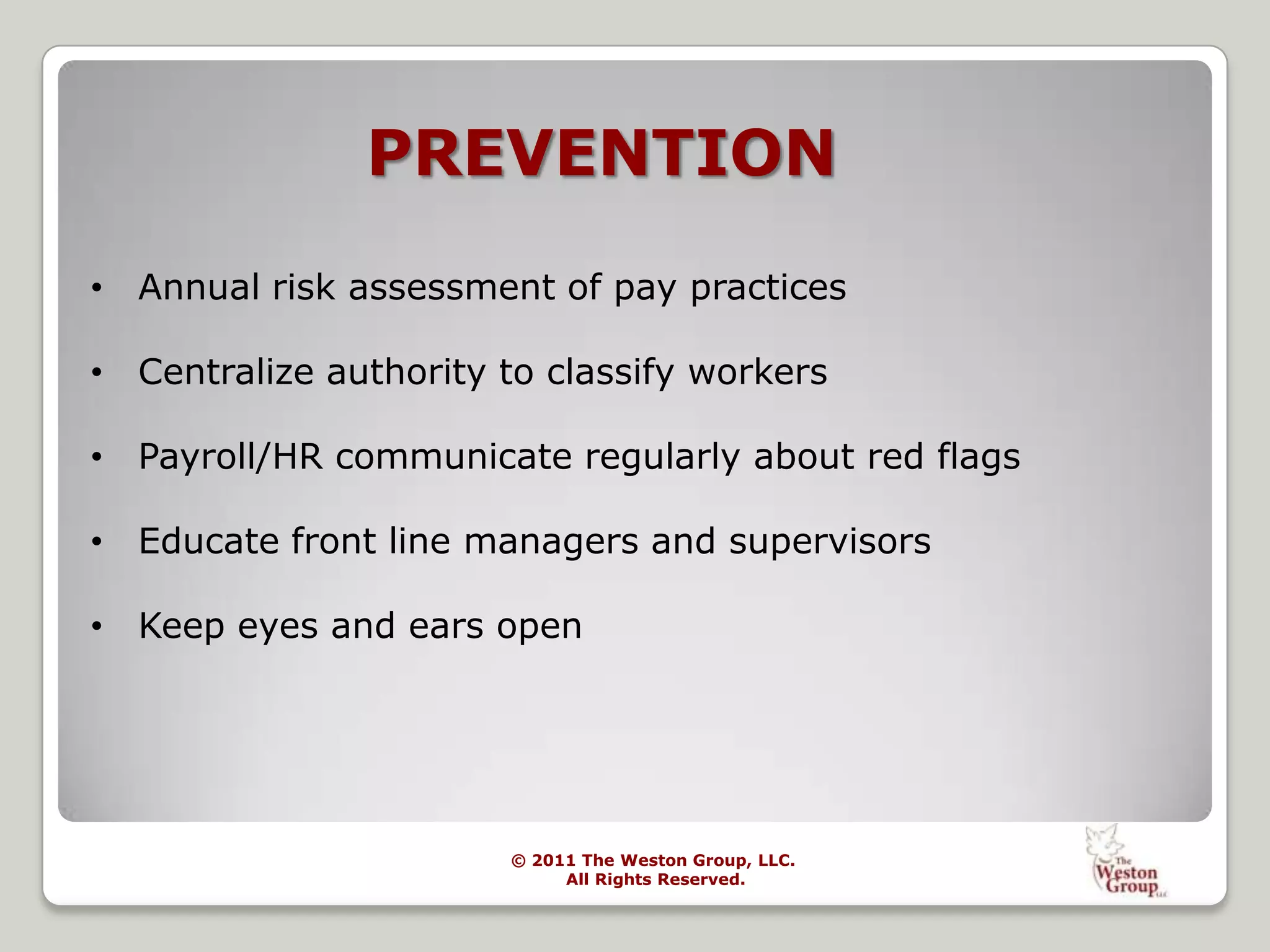
Advantages for the independent contractor include flexibility, more money up front and tax benefits unavailable to employees, including deducting legitimate business expenses.PREVENTIONAnnual risk assessment of pay practices
Centralize authority to classify workers
Payroll/HR communicate regularly about red flags
Educate front line managers and supervisors
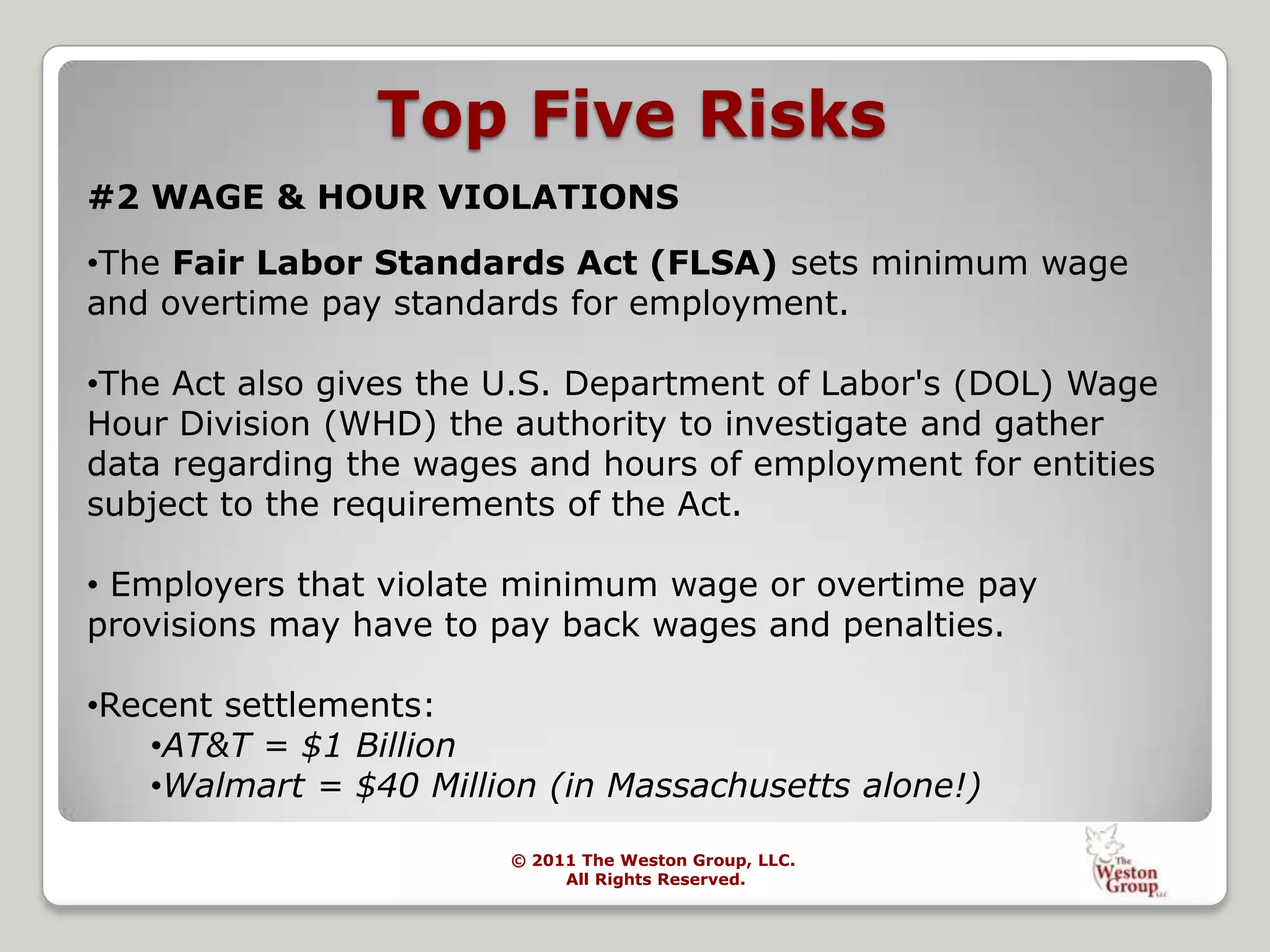
Keep eyes and ears openTop Five Risks#2 WAGE & HOUR VIOLATIONSThe Fair Labor Standards Act (FLSA) sets minimum wage and overtime pay standards for employment.
The Act also gives the U.S. Department of Labor's (DOL) Wage Hour Division (WHD) the authority to investigate and gather data regarding the wages and hours of employment for entities subject to the requirements of the Act.
 Employers that violate minimum wage or overtime pay provisions may have to pay back wages and penalties.
Recent settlements:
AT&T = $1 Billion
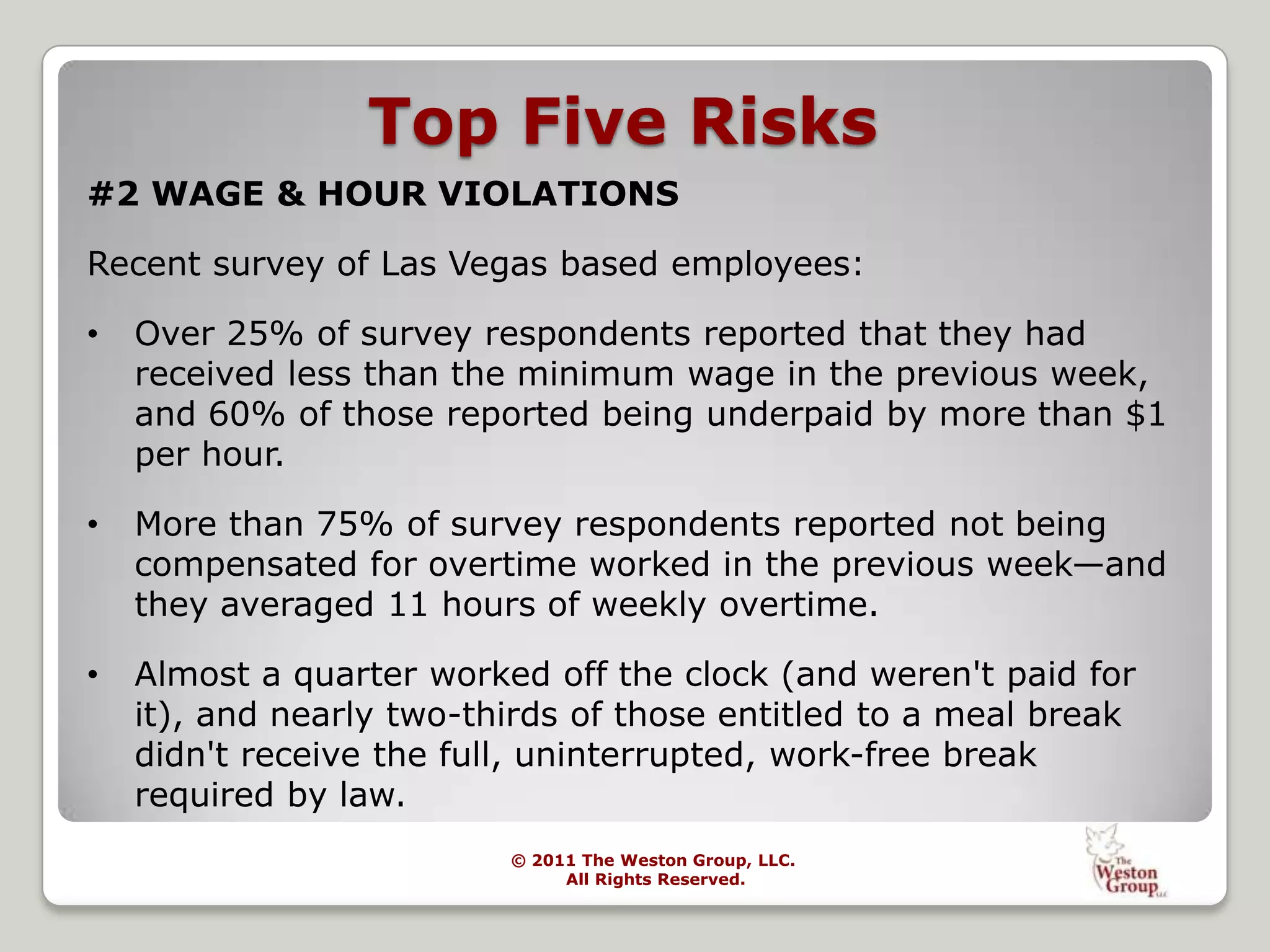
Walmart = $40 Million (in Massachusetts alone!)Top Five Risks#2 WAGE & HOUR VIOLATIONSRecent survey of Las Vegas based employees:Over 25% of survey respondents reported that they had received less than the minimum wage in the previous week, and 60% of those reported being underpaid by more than $1 per hour.
More than 75% of survey respondents reported not being compensated for overtime worked in the previous week—and they averaged 11 hours of weekly overtime.
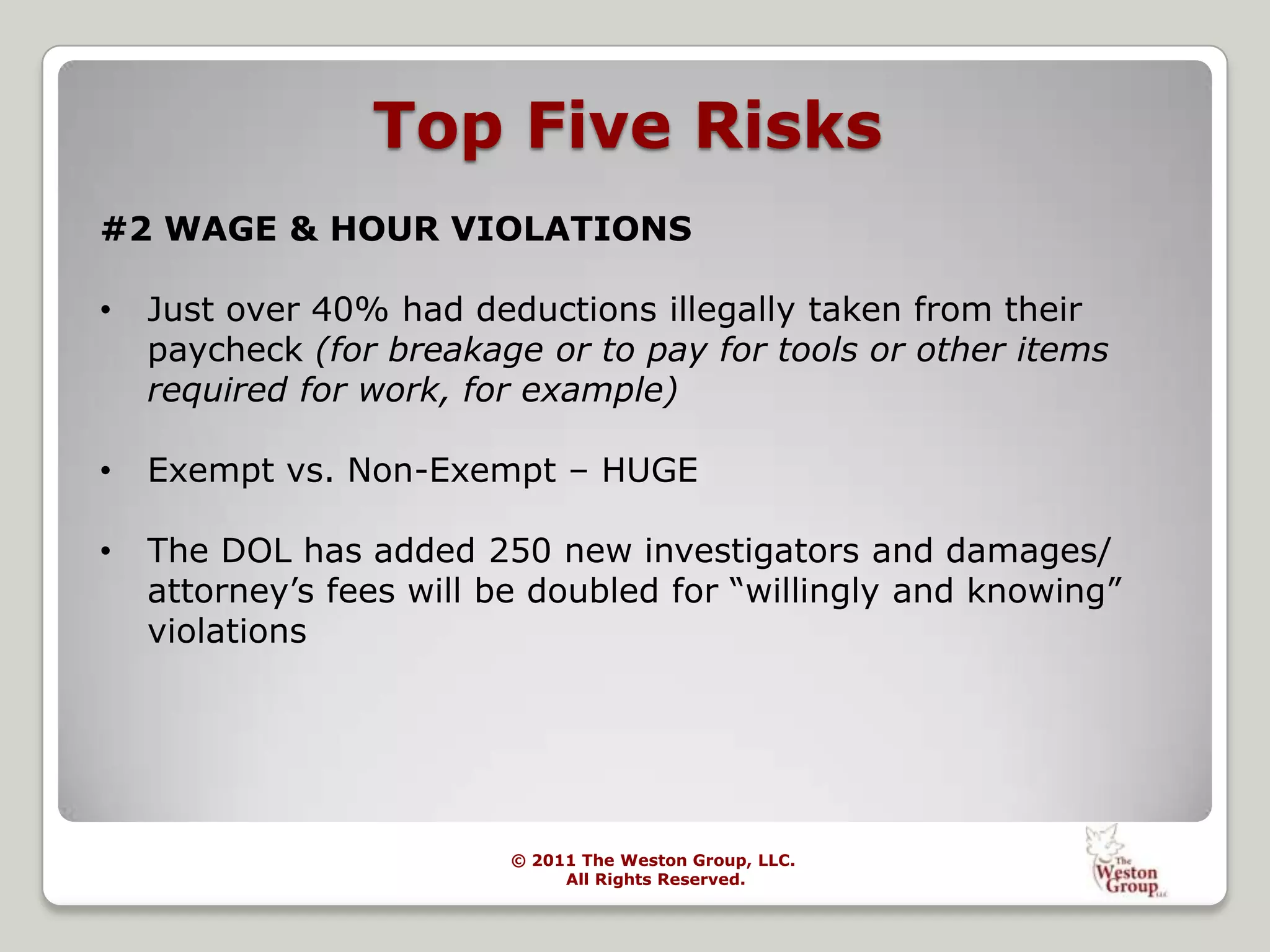
Almost a quarter worked off the clock (and weren't paid for it), and nearly two-thirds of those entitled to a meal break didn't receive the full, uninterrupted, work-free break required by law. Top Five Risks#2 WAGE & HOUR VIOLATIONSJust over 40% had deductions illegally taken from their paycheck (for breakage or to pay for tools or other items required for work, for example)
Exempt vs. Non-Exempt – HUGE
The DOL has added 250 new investigators and damages/ attorney’s fees will be doubled for “willingly and knowing” violationsPREVENTIONAnnual risk assessment of pay practices
Centralize authority to classify workers / make policy
Payroll/HR communicate regularly about red flags
Educate front line managers and supervisors
Keep eyes and ears open#3 GENDER & RACE DISCRIMINATIONSexual Harassment in the Workplace: It's Not Always What You ThinkMale – Female
Female – Male
From 1990 to 2009, the percentage of sexual   harassment claims filed by men has doubled from 8 percent to 16 percent of all claims, according to the Equal Employment Opportunity Commission.
Same sex harassment
Most often settlements
EEOC states these are also on the rise#3 GENDER & RACE DISCRIMINATIONSexual Harassment in the Workplace: It's Not Always What You ThinkThe perpetrator does not have to be part of the same company as the victim.
Any party acting as an agent of the employer such as a real estate agent or consultant can be a perpetrator in a harassment claim.
In addition, a harasser could be a delivery person    from another company. The company who sent the delivery person could be held accountable for the harassment.
Likewise a delivery person could sue for sexual harassment from the actions of one of the companies he delivered to.#3 GENDER & RACE DISCRIMINATIONSexual Harassment in the Workplace: It's Not Always What You ThinkThe victim does not have to suffer economic or job related injury to file a harassment claim.
Hostile work environment harassment is harassment that typically must be intentional, severe, recurring and pervasive, and interfere with an employee's ability to perform his or her job
Work Place Romance…..#3 GENDER & RACE DISCRIMINATIONWorkplace RomanceIn a survey by CareerBuilder.com in 2009, 40% of respondents revealed that they have dated a coworker
When can consensual sex create a hostile workplace environment?
Sexual favoritism
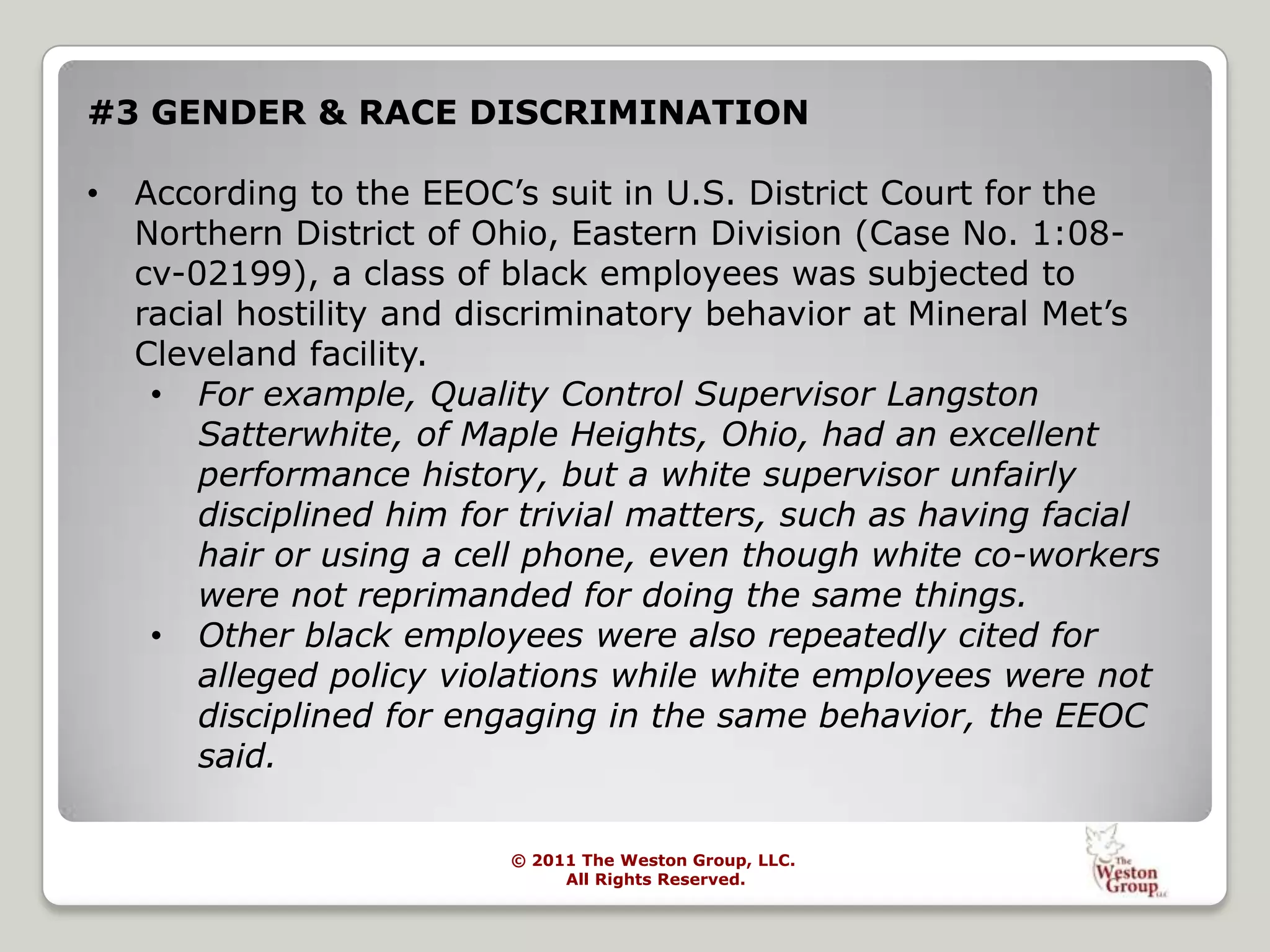
California Supreme Court held that "when such sexual favoritism in a workplace is sufficiently widespread it may create an actionable hostile work environment”#3 GENDER & RACE DISCRIMINATIONAccording to the EEOC’s suit in U.S. District Court for the Northern District of Ohio, Eastern Division (Case No. 1:08-cv-02199), a class of black employees was subjected to racial hostility and discriminatory behavior at Mineral Met’s Cleveland facility.
For example, Quality Control Supervisor Langston Satterwhite, of Maple Heights, Ohio, had an excellent performance history, but a white supervisor unfairly disciplined him for trivial matters, such as having facial hair or using a cell phone, even though white co-workers were not reprimanded for doing the same things.
Other black employees were also repeatedly cited for alleged policy violations while white employees were not disciplined for engaging in the same behavior, the EEOC said.PREVENTIONAnnual training on sexual harassment and respect in the workplace
Managers should be held accountable for following policy

HR - What All Employers Need To Know...

  • 1.
    HR 101What allemployersNeed to Know…© 2011 The Weston Group, LLC.All Rights Reserved.
  • 2.
    AgendaThe Evolution ofthe HR Profession
  • 3.
    An Overview ofCore HR Leadership Competencies
  • 4.
    Effective Recruitment &Selection Techniques
  • 5.
    Compensation and BenefitIssues & Answers
  • 6.
    The Legal Arenaand HR Law
  • 7.
  • 8.
    Recordkeeping – Anoutline of What to Keep and Commonly Accepted Record Retention Strategy
  • 9.
    Risk Management –ADA / FMLA / Workers’ Compensation
  • 10.
    HR Metrics: Howto Measure Your Success
  • 11.
    Training & Developmentfor Effective HR ManagementSABRINA MEIERHENRY J.D.President & PrincipalSabrina@TheWestonGroup.comSabrina is a seasoned attorney and serves as the President and a Principal Consultant for The Weston Group. Sabrina has received specialized training from the US Equal Employment Opportunity Commission in employment discrimination issues.
  • 12.
    Sabrina is alsoa partner in the law firm of Meierhenry Sargent, LLP.
  • 13.
  • 14.
    South Dakota BarAssociation Professional Liaison Committee
  • 15.
    State Bar AlternateDispute Resolution Committee
  • 16.
    South Dakota BarAssociation
  • 17.
  • 18.
  • 19.
    U.S. 8th CircuitCourt of Appeals.PATRICIA DOUGHERTY RN SPHRSenior Vice President & PrincipalTrish@TheWestonGroup.comMs. Dougherty is a recognized “change agent” who welcomes the need for positive change, is willing to champion the cause and motivate people to see the benefits of the outcome. Trish utilizes a combination of practical, in-depth experience with sound leadership strategies to successfully manage difficult and complex change within an organization.
  • 20.
    Experience includes VicePresident of Human Resources for 10,000+ employees in multi-state locations as well as Director of Nursing and Recruiter experience.
  • 21.
    Former Commissioned Officerin the United States Army Nurse Corps.
  • 22.
    Certified as SPHRand currently licensed RN
  • 23.
  • 24.
    Wharton School ofBusiness – University of Pennsylvania -Research Advisory Group ParticipantSociety of Human Resource Management (SHRM)
  • 25.
    American Association ofHealthcare HR Administrators (ASHHRA)
  • 26.
    Twin Cities HumanResource Association TCHRA)RICHARD KREYERVice President of Service DeliveryRick@TheWestonGroup.comMr. Kreyer has over 20 years experience in human resource management.
  • 27.
    Mr. Kreyer hasan extensive background in leadership, strategic planning, budget & project management, labor relations and negotiations, organizational development as well as creative problem resolution.
  • 28.
    Experience includes VicePresident of Human Resources and Labor Relations with the St. Paul School District where he provided overall leadership for the Labor Relations, Compensation, HR Information, Benefits and Staffing functions.Mr. Kreyer’s experience also includes Vice President of Labor Relations and Workforce Development with the Minnesota Hospital Association.Education & Civil Involvement
  • 29.
    University of Minnesota,Masters Degree in Industrial Relations
  • 30.
    University of Minnesota,Bachelors Degree in Psychology (I/O psychology emphasis)
  • 31.
    Ongoing professional conferences,seminars, memberships, reading, college instructor and conference presenter.The Weston Group Provides: HR Risk Assessments -Analysis & Identification of People Management Systems-Identify Value Added Enhancements to Current Processes Conflict Management & Organizational Effectiveness-“Change Experts” to Manage Major Change -Assistance with Staff Reductions & Organizational Re-Design -Merger & Acquisition: People Facilitation -Litigation Avoidance -Turnover ReductionHR Support & Coaching-Executive Coaching -One-on-one Mentoring for HR Staff 
  • 32.
    The Weston GroupProvides:Recruiting & Staffing-Executive Searches -Applicant Tracking -ROI Benchmarks/Cost Per Hire -Decrease Time to Hire -Monitor Turnover & Trend with Recruitment & Selection PracticesProductivity Management-Benchmarks and Metrics -Identifying Opportunities for Productivity Improvement Labor Relations -Creating & Maintaining Positive Relationship between Management & Staff -Assistance with NegotiationsEmployee Handbooks-Compliant with Latest Employment Law Changes -User Friendly & Customized for your Culture -Comprehensive, Professional and Practical  
  • 33.
    The Weston GroupProvides: Job Descriptions-ADA Compliant -Exempt vs. Non-Exempt Classifications -Job & Interpersonal Skill CompetenciesCompensation/Benefits-Wage & Hour Assessments -Salary Surveys -Compensation Management -Benefit Negotiations Performance Management -Orientation Effectiveness -Corrective Action & Discipline -Delivering Difficult Feedback Training & Development -Managing Attendance -Employment Law -Dealing with Conflict -Managing Difficult Personalities           
  • 34.
    The Weston GroupProvides:Legal & Regulatory-Employee File Review -EEOC & DOL Response to Claims -Workplace Investigations -ADA/FMLA/WC -Dispute Resolution Prior to Claims -Record Retention Requirements          
  • 35.
    Evolution of theHR ProfessionWhat is HR?Simply: A “resource” to our “humans”
  • 36.
    Human Resource Management(HRM) as a function should assist the organization to maximize return on investment (ROI) of human capital & minimize financial riskHR: The Past 100 Years
  • 37.
    Old HR vs.New HROld HR (or Personnel)You saw them only when hired or fired
  • 38.
  • 39.
    Rule makers andrule monitors
  • 40.
  • 41.
    Focused on thepresent only
  • 42.
    “Overhead”Myths That KeepHR from Being ValuedPeople go into HR because they like peopleAnyone can do HRHR deals with the soft side of a business and is therefore not accountableHR focuses on costs, which must be controlledHR’s job is to be the “policy police” and the health and happiness patrol--“fluffy"HR is full of fadsHR is staffed by nice peopleHR is HR’s job
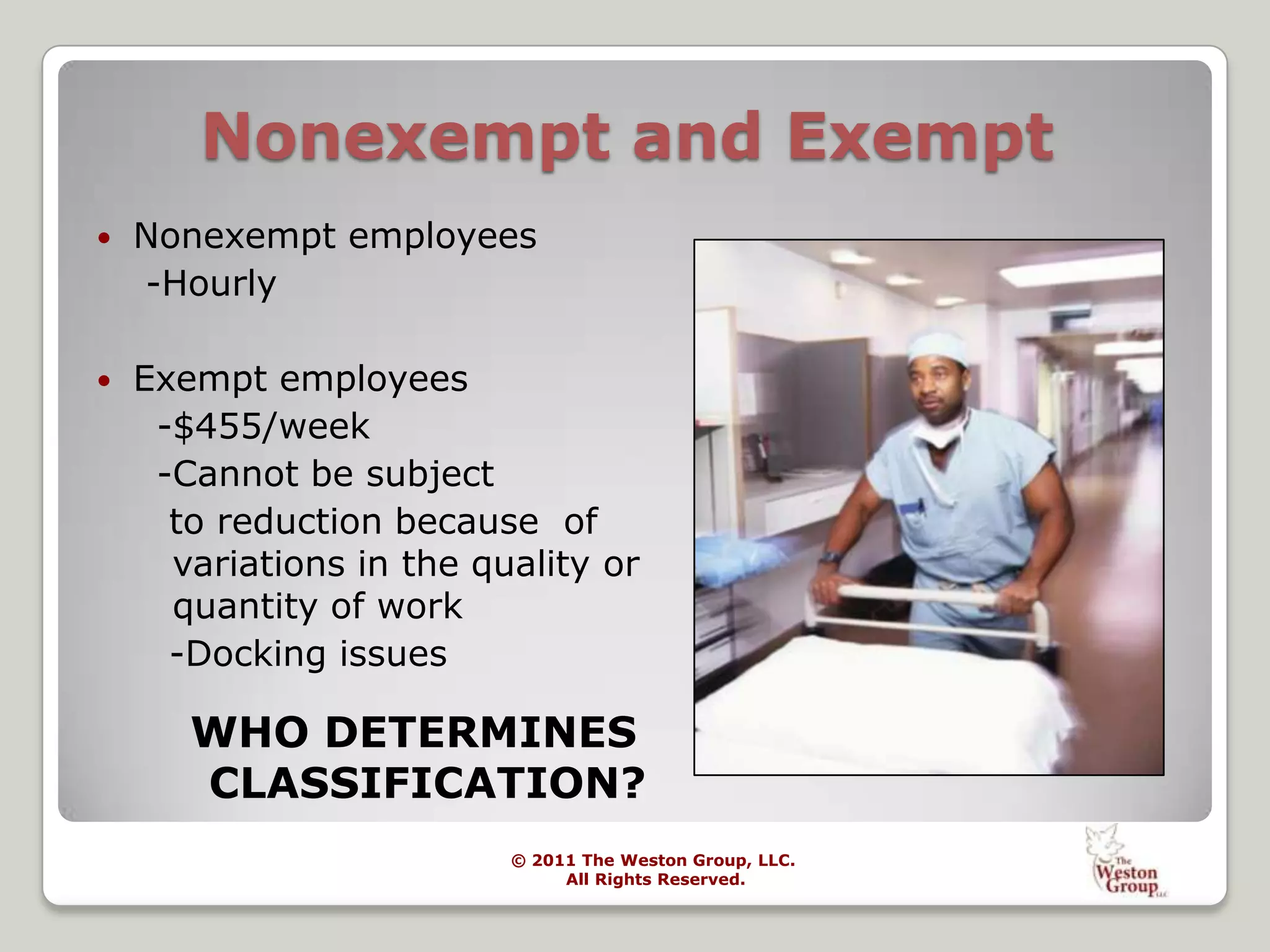
  • 43.
    Traditional Human ResourceDepartment Structure…silos of experts?BenefitsFiringHiringSalary
  • 44.
    Human Resource FunctionalAreasJob Analysis and Job EvaluationJob DescriptionsRecruitingEmployee InterviewsBackground and Reference ChecksEmployee OrientationWage and Salary AdministrationBenefits
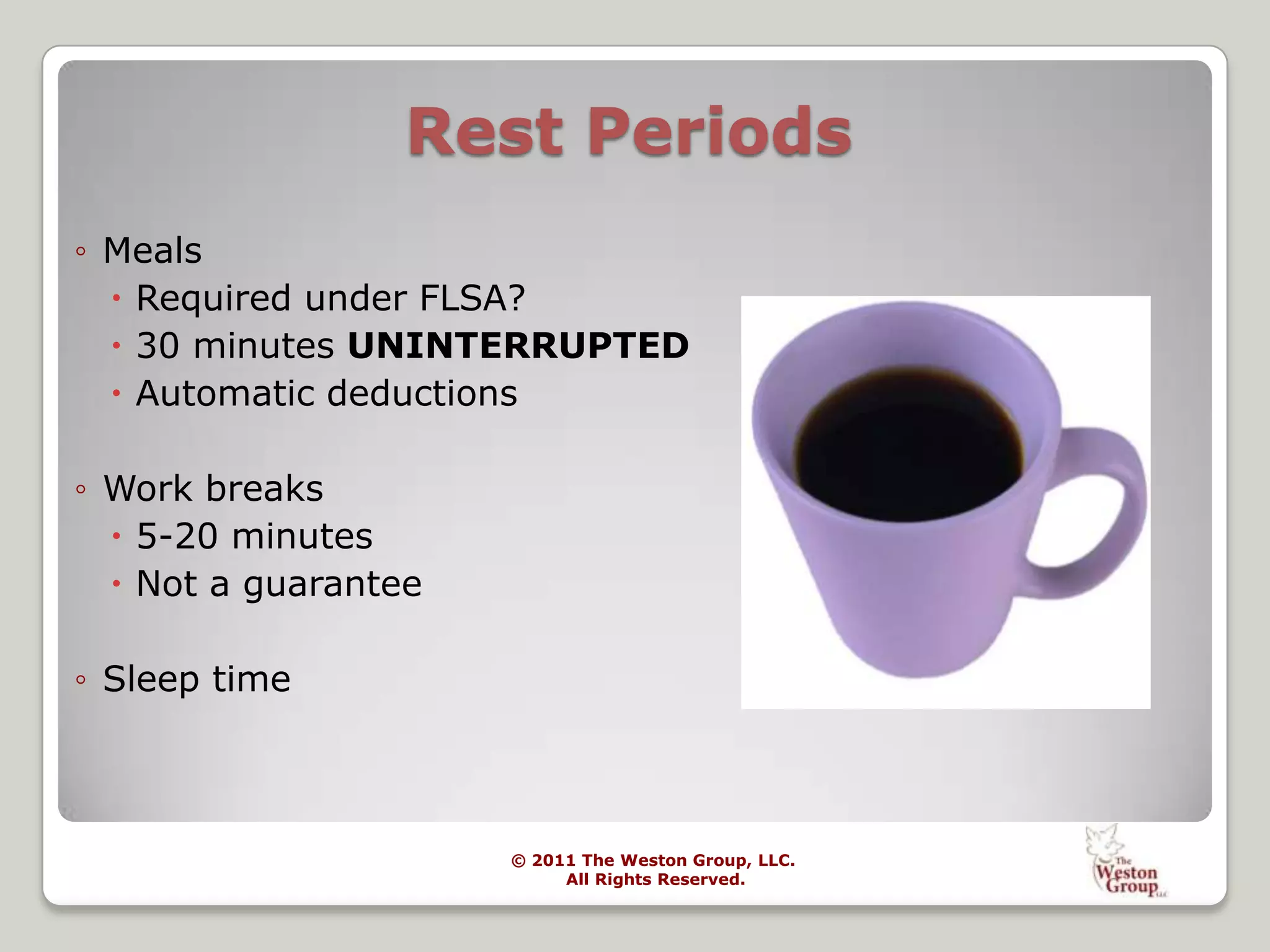
  • 45.
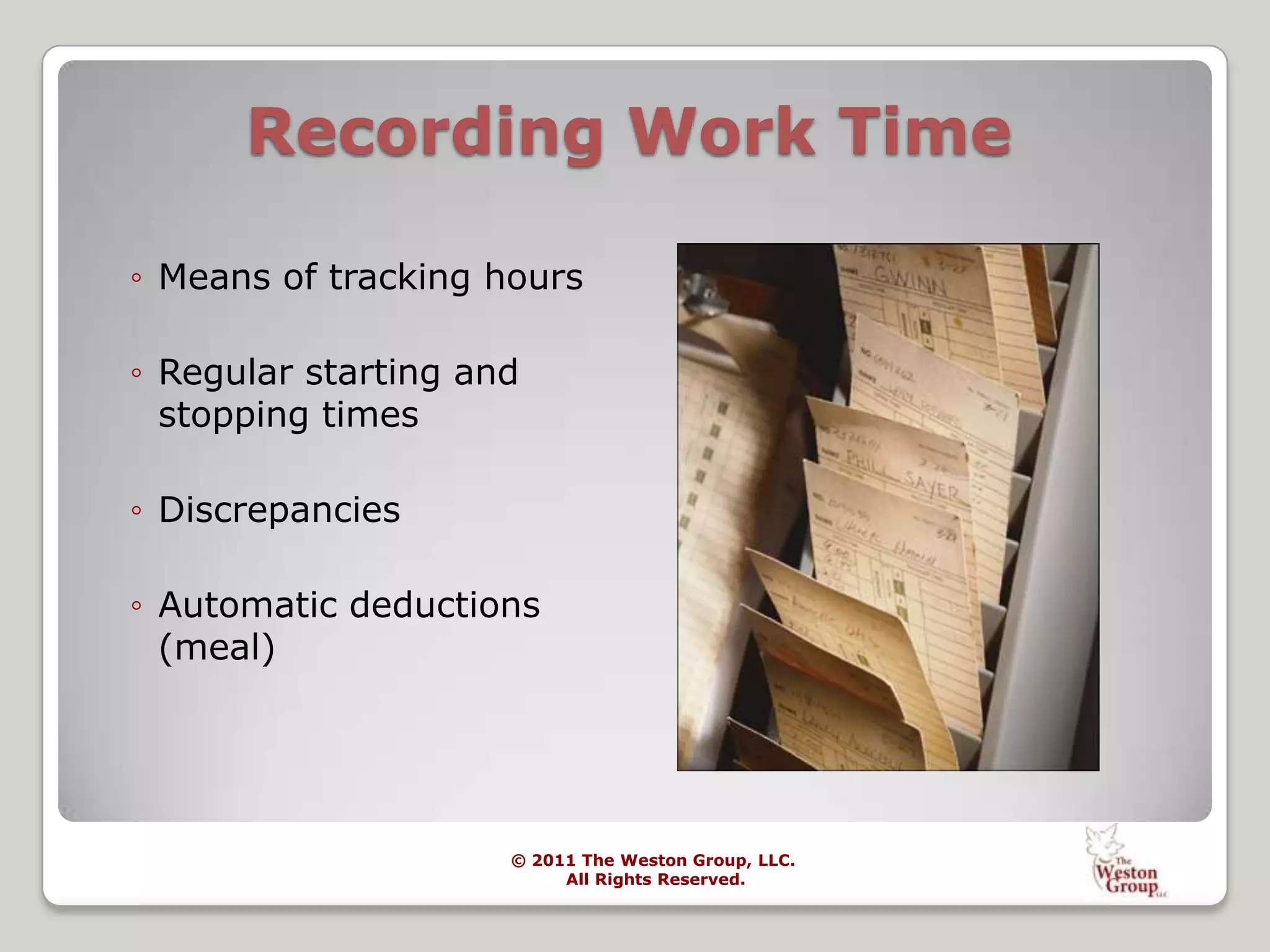
    HR Functional Areas(cont.)Employee Records ManagementVacation/Leave Policy and AdministrationPerformance Appraisal ProcessingPromotion/Transfer/Separation processingDisciplinary ProceduresLabor Relations/Negotiations
  • 46.
  • 47.
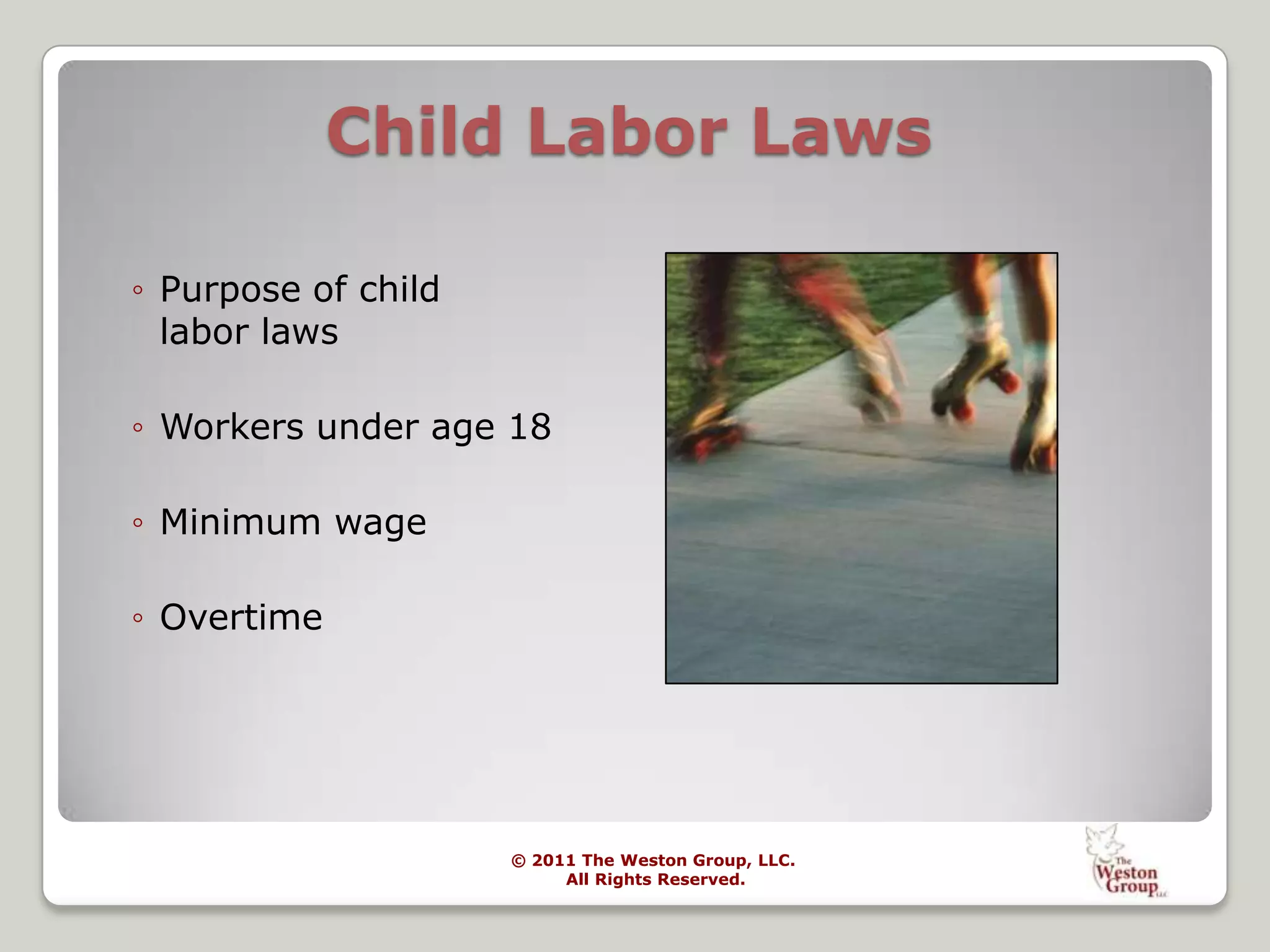
    Old vs. NewHRNew HR:Generalists (know business, not just HR)Integrated into business units & decisionsCoach management/employees for higher individual/organizational performanceGood communication; customer skillsBroader focus: organization, communityCurrent & future focusAdds value (and ROI) to the organizationNOT STRATEGIC ENOUGH
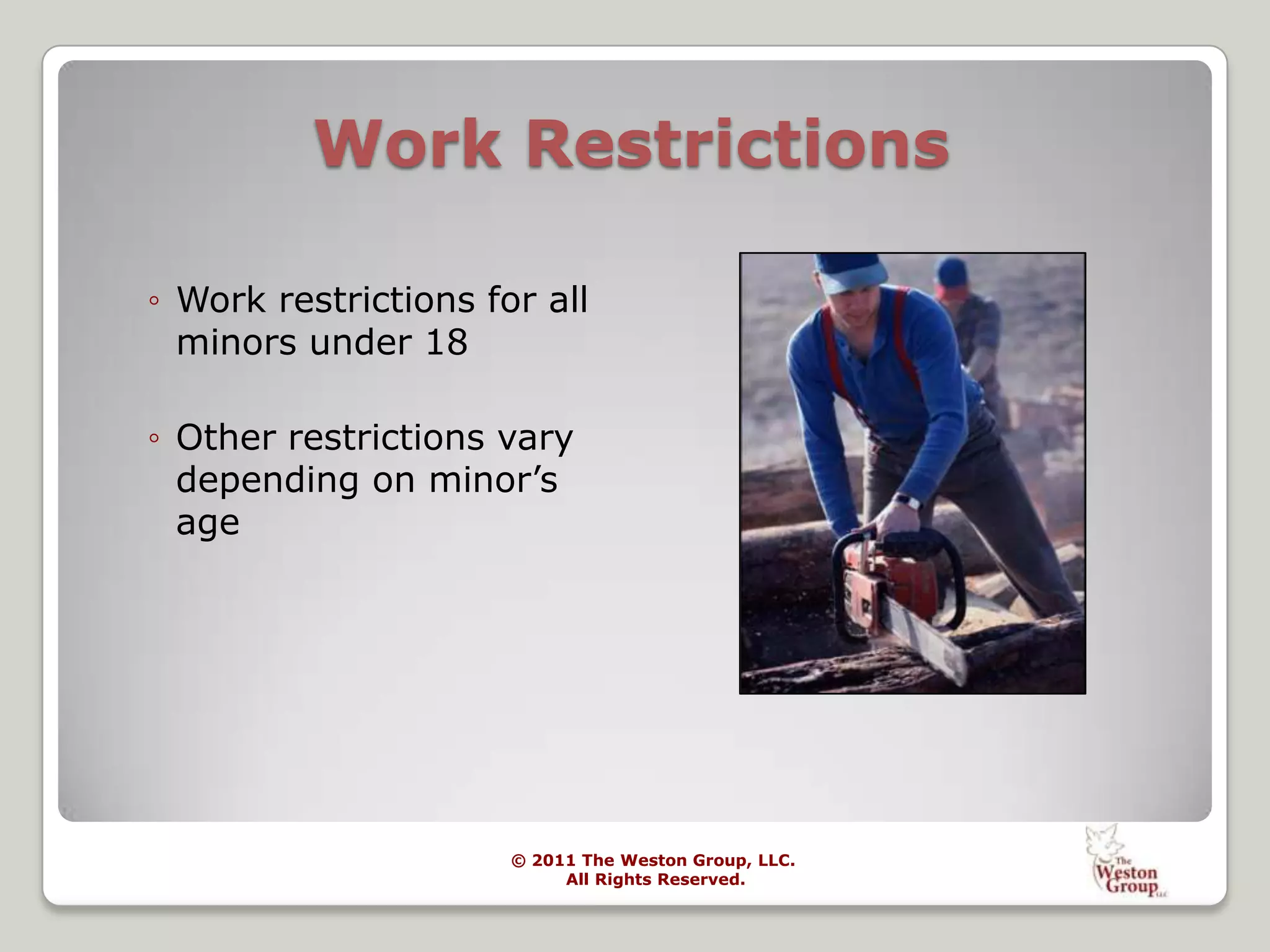
  • 48.
    Strategic Partner“Strategy developmentis important for HR, but strategy execution is far more important”Richard BeattyRutgers University
  • 49.
    Strategic Partner –Why HR Hasn’t Been OneActivity Based - # applications, # hired, etc.Cost Emphasis - budget/EE, Cost/hireThe Legal System - risk adverse vs. problem solvingEmployee Advocate - work for the employeeNOT ENOUGH STRATEGY
  • 50.
    A seat atthe table . . “If HR wants a seat at the table, it better bring something to eat!”Ray Weinberg2000 SHRM Thought Leaders ConferenceProvidence R
  • 52.
    What HR CanBeA more strategic view
  • 53.
    HR Effectiveness Framework— aligning human resource strategy to drive better business performanceBusiness PlanWorkforce StrategyBusiness PerformanceEmployee BehaviorFinancial commitments
  • 54.
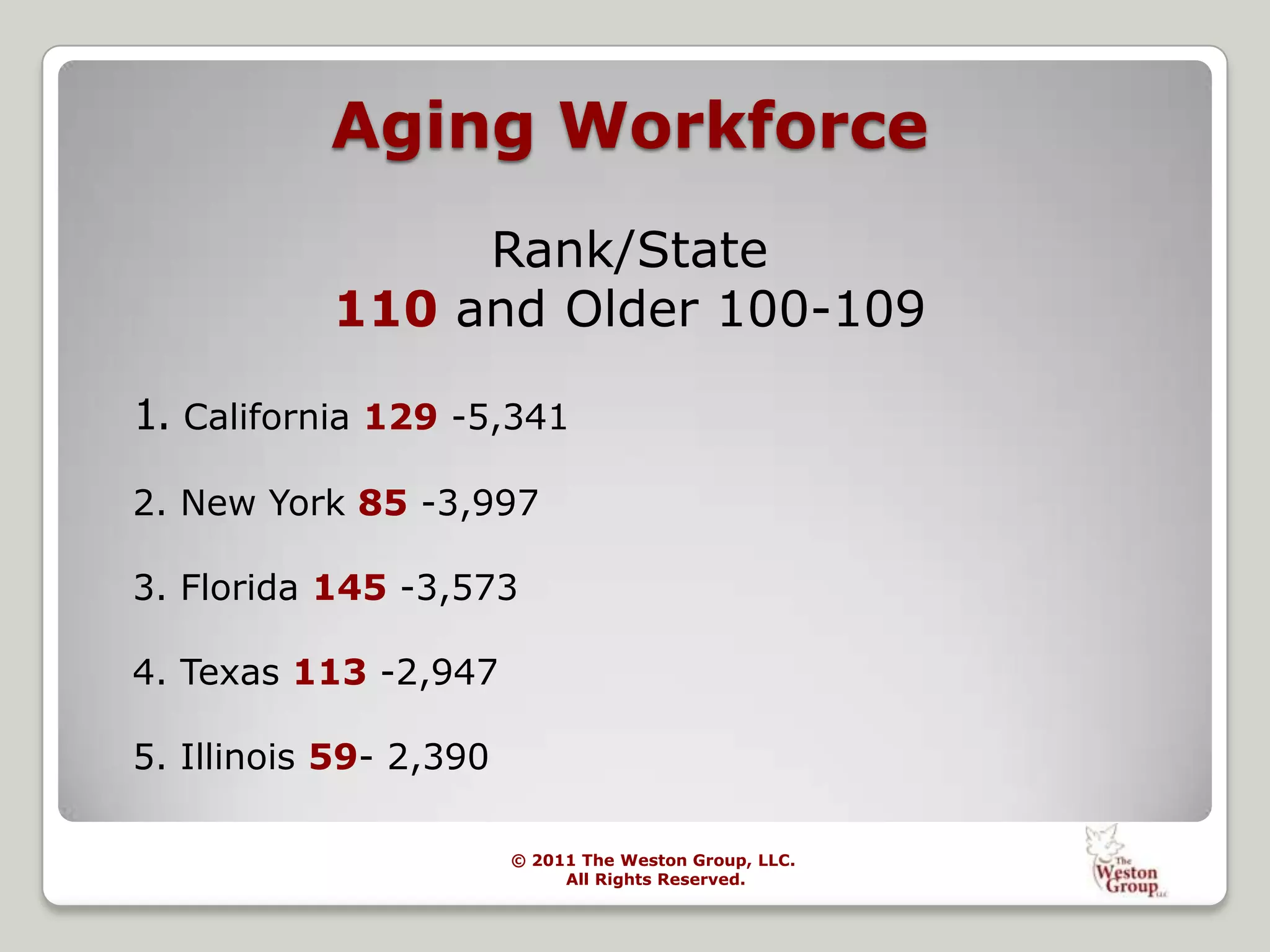
    Strategic priorities Efficiency Quality Innovation Customer Service Brand/imageBusiness transformation Acquisitions/alliances Business model changeRequired organization capabilities
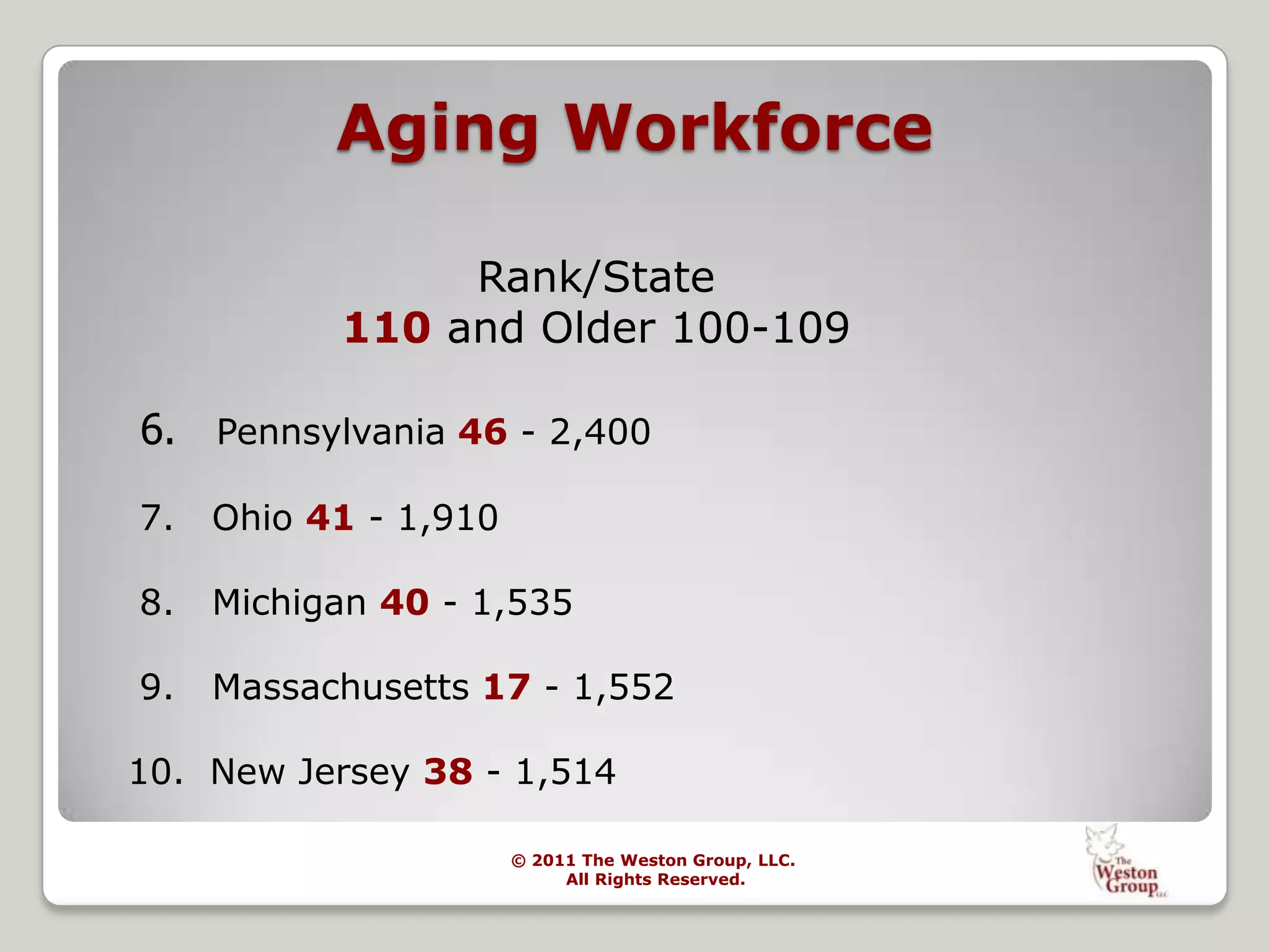
  • 55.
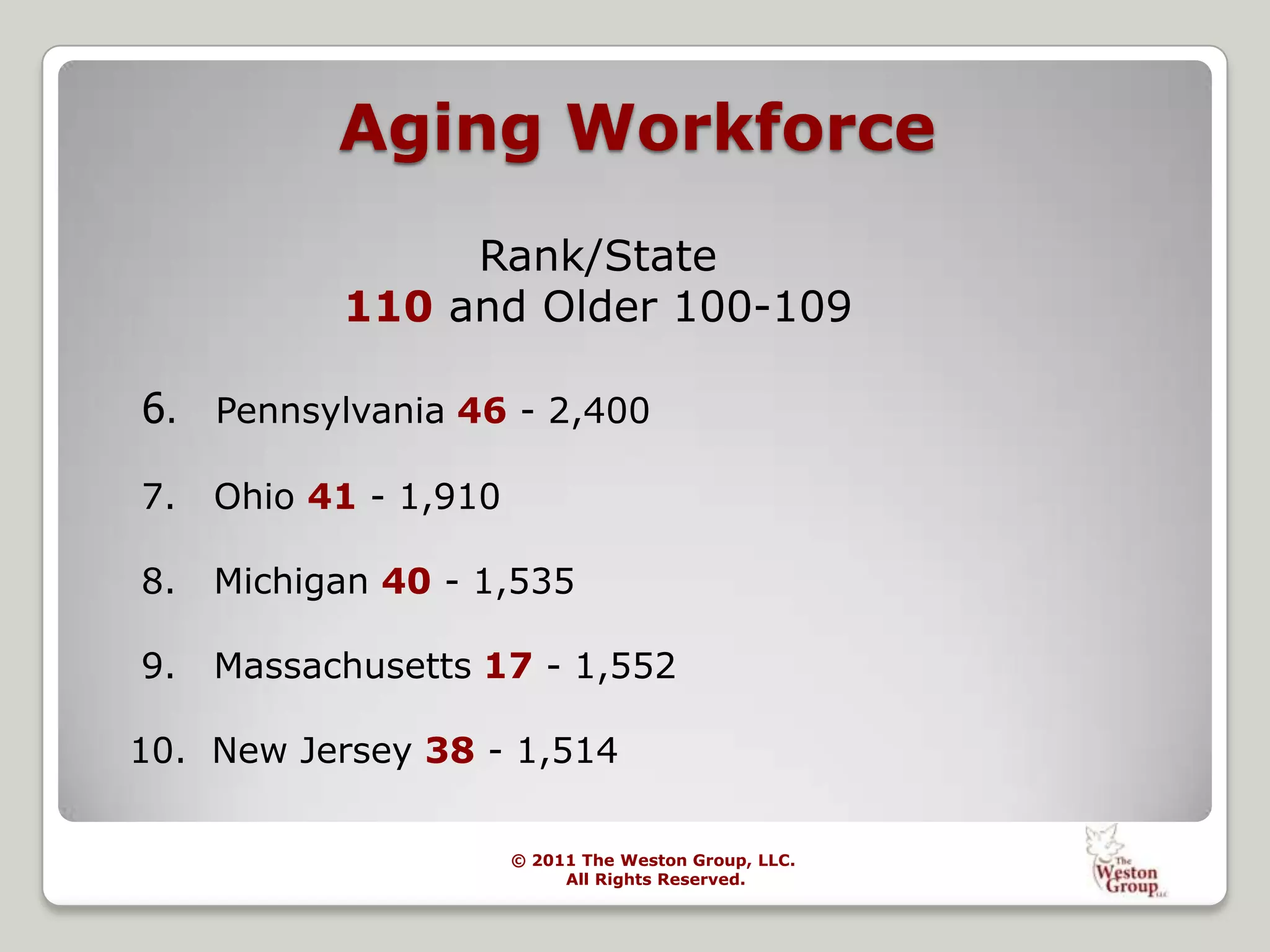
    Critical positions andvalue relationships
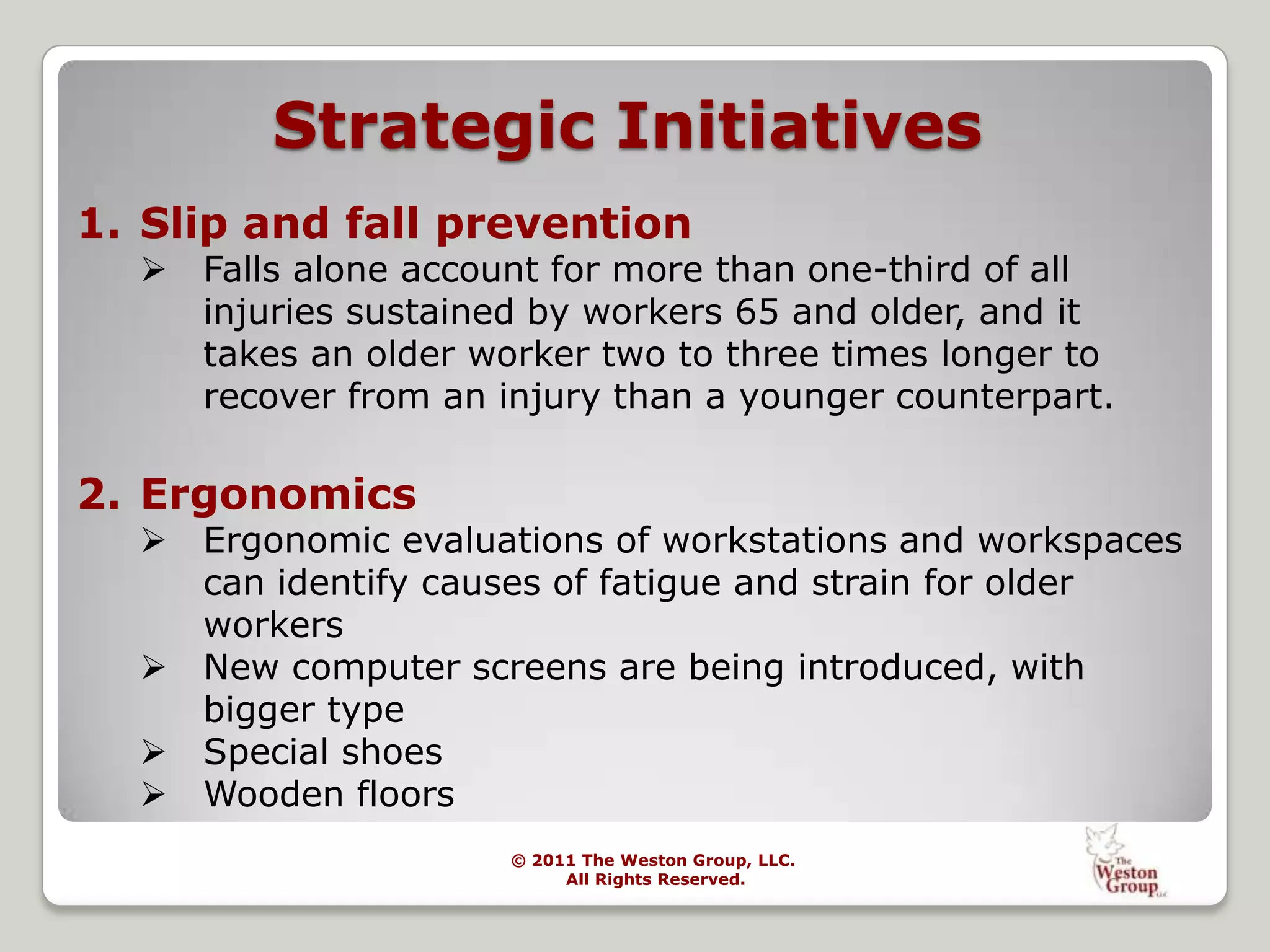
  • 56.
  • 57.
    Alignment: Source, deploy,engage, reward, develop
  • 58.
  • 59.
  • 60.
    Measurable Outcomes Efficiency Quality Innovation Customer service Brand/imageFinancial performance Revenue ROI Operating margin TSR Attraction
  • 61.
  • 62.
  • 63.
  • 64.
  • 65.
    SummaryPeople are oftenthe most expensive part of running an organizationHRM linked to the Company’s goals is crucial to attaining organizational performance and improving resultsYour HR Department should be creating a strategy that is aligned with organizational goals and supported by the Administration and BoardSo how do you get there?
  • 66.
    An Overview ofCore HR Leadership Competencies
  • 67.
    Essential HR ManagementCompetenciesWhen Interviewing, we use checklists and structure questions to look for competencies. What competencies should we look for in HR people?For starters, here are nine top contendersAnd one final thought…
  • 68.
    HR Key Skill#1: OrganizationOrganized filesStrong time management skills Personal efficiencyAvoid “the black hole” syndrome
  • 69.
    HR Key Skill#2: MultitaskingOn any day, an HR professional will deal with an employee’s personal issue one minute, a benefit claim the next and a recruiting strategy for a hard-to-fill job the minute afterPriorities and business needs move fast and change fast, and colleague A who needs something doesn’t much care if you’re already helping colleague BYou need to be able to handle it all, all at once.
  • 70.
    HR Key Skill#3: Discretion and Business EthicsHuman Resources professionals are the conscience of the company, as well as the keepers of confidential informationYou need to be able to push back when they aren’t, to keep the firm on the straight and narrowYou must be objective, therefore HR has to juggle “friendships” vs. “profession” (especially difficult in small companies)
  • 71.
    HR Skill #4:Dual FocusHR professionals need to consider the needs of both employees and managementThere are times you must make decisions to protect the individual, and other times when you protect the organization, its culture, and valuesBiggest mistake of HR departments – Lack of objectivityHR does not make decisions, we should provide guidance for both employees & management
  • 72.
    HR Key Skill#5: Employee TrustEmployees expect Human Resources professionals to advocate for their concernsThe HR professional who can pull off this delicate balancing act wins trust from all concernedRemember, management staff are employees tooYou can make everyone successful or achieve win-win if possible?Give employees “choices”. Give management “guidance”
  • 73.
    HR Key Skill#6: FairnessSuccessful HR professionals demonstrate fairnessVoices are heardLaws and policies are followedPrivacy and respect is maintained Look at entire organization & track precedence to ensure fair & consistent decisions
  • 74.
    HR Key Skill#7: Dedication to Continuous ImprovementHR professionals need to help managers coach and develop their employeesThe goal is continued improvement and innovation as well as remediation
  • 75.
    HR Key Skill#8: Strategic OrientationForward-thinking HR professionals take a leadership role and influence management’s strategic pathProactive vs. reactive – TRACK & TRENDHave the answer before you have the problem
  • 76.
    HR Key Skill#9: Team OrientationOnce, companies were organized into hierarchies of workers headed by supervisorsToday, the team is kingHR managers must consequently understand team dynamics and find ways to bring disparate personalities together and make the team work
  • 77.
    Nine Skills, ButAlso One CaveatThe nine skills are not prioritized here, because no general list of skills can take into account the business strategy at your particular organizationWhich leads to the caveat: “HR should serve the business strategy. It’s important for HR people to know what that strategy is and what makes the business tick so the approach to HR can be tailored accordingly for your countryYou should never think of HR in isolation, because if Human Resources professionals think of themselves as “just HR,” that’s what the rest of the organization will think too.
  • 78.
    HR Leadership CompetenciesVisionaryStrategicCommunicatorOrganizerTeam BuilderMentorMediatorEvaluatorProblem Solver
  • 79.
    HR Leadership -VisionHR staff needs to have the ability to see where the organization and their people need to go to meet future needs
  • 80.
    HR Leadership -StrategyHR staff needs to create the strategy needed to move people and resources to accomplish that vision
  • 81.
    HR Leadership –CommunicationHRstaff must have the ability to listenand respond to employees with respect and appropriate communication
  • 82.
    HR Leadership –Skillful OrganizersEstablish a goal, communicate it accordinglySchedule workloads accordinglyPLAN! (allocate time & resources)Proactive vs. reactiveTrack the progress of a projectFollow-through is critical to build credibility
  • 83.
    HR Leadership-Team BuilderGood team builders respect their staff and give them recognition for work well done They are courteous in their dealings, provide support and direction when needed, and offer constructive criticism in privateGood team builders strive to be fair and respectful when resolving conflicts among staff.
  • 84.
    HR Leadership-MentorEncourage andmotivate employees to reach their potentialProvides empathy not sympathyConfronts negative behaviors and attitudesEncourages self-awarenessMaintains high standards of professionalism in interpersonal relationships with employees
  • 85.
    HR Leadership-MediatorsCreates arespectful setting and safe environment for discussionRemains objective!Identify the real issues (focus on problem, not person)Provides consequences for choices Monitors interpersonal interactions and intervenes when appropriate
  • 86.
  • 87.
    The WHY ofEffective InterviewingGetting the right person for the right jobIncreased retention = decreased costIncreased productivity of the team (right fit)Increased customer satisfactionDecrease orientation Decreased management time
  • 88.
    Why the RIGHTquestions are importantSelect and design questions carefully to get the information needed to make quality hires while avoiding discriminatory intent.
  • 89.
    Behavioral Based InterviewingFACTPreviousperformance is the best indicator of future performance55% predictive of future on-the job behavior vs. traditional interviewing provides only 10% prediction
  • 90.
    Behavioral Based InterviewingProvidesin-depth information of the candidates job related:ExperiencesBehaviors Knowledge Skills and abilitiesSimply change your questions!“Give me an example of……”
  • 91.
  • 92.
    Be a GoodListenerConstructive listeningNonverbal communication Watch their body languageEliminate bias viewsWatch your body languageDo not interruptBehavioral-Based InterviewingProfessional CapacityLeadershipMentoringCritical ThinkingTime ManagementConflict ResolutionChange ManagementDiversityFinancial ManagementAccountabilityBudget ReviewOperationsSafetyClient RelationshipsTechnical SkillsLegal & RegulatoryService DevelopmentOtherCommunity InvolvementProfessional Organizations
  • 93.
    ExamplesGive me anexample of a difficult client/customer relationship and how you worked through itDescribe a decision you made that was unpopular and how you handled implementing itGive me an example of a time when you set a goal and were able to meet or achieve itGive me an example of how you delegate duties to others. How do you hold individuals accountable?
  • 94.
    Topics and Questionsto AvoidAgeArrest Record (you can ask about convictions)Marital and Family StatusReligionDisabilitiesRaceNational Origin Military status
  • 95.
    Laws that affectthe interview processTitle VII of the Civil Rights Act of 1964 RaceSexColorNation of OriginReligionVietnam Veteran Pending—Sexual OrientationAge Discrimination in Employment Act (ADEA)Americans with Disabilities Amendment Act (ADAA)Immigration Reform and Control Act (IRCA)CitizenshipNation of Origin
  • 96.
    Laws that affectthe interview processNational Labor Relations Act (NLRA)Union membershipUniformed Services Employment and Reemployment Rights Act (USERRA) Membership or service in the uniformed servicesBankruptcy ActChild Support Enforcement Amendments
  • 97.
    What to askand not askAgeInstead of:When did you graduate?When do you intend to retire?Ask:Are you old enough to do this type of work?Can you supply transcripts of your education?
  • 98.
    What to askand not askDisabilityInstead of:Do you have a disability?Have you ever filed a workers compensation claim?Do you have a history of drug or alcohol abuse?
  • 99.
    What to askand not askDisabilityAskAfter reviewing the job description, “Can you do the duties listed in the job description, with or without accommodation?”Must doEmployers must provide reasonable accommodation to candidates who have disabilities.
  • 100.
    What to askand not askRaceA candidate’s race will usually be at least somewhat evident, but race related discussions or questions may imply a preoccupation with that factor
  • 101.
    What to askand not askReligionInstead of:What outside activities do you participate in?Ask:What professional associations are you a member of?
  • 102.
    What to askand not askSex/marital statusInstead of:Are you married?When do you plan to start a family?Do you have children?
  • 103.
    What to askand not askAsk:Are you available to travel frequently?Can you work overtime with no notice?Can you work evenings and weekends?When we check references/do a background check, are there other names we should look under?
  • 104.
    What to askand not askNational Origin/CitizenshipInstead of:Are you a citizen of the US?What country are you from?Where is your accent from?What nationality is your last name?When does your visa expire?
  • 105.
    What to askand not askAsk:If you are hired, are you able to provide documentation to prove that you are eligible to work in the US?
  • 106.
    What to askand not askFinancial StatusInstead of:Do you own a home/car?Have you ever filed for bankruptcy?Are you subject to any garnishments or child support orders?Ask:Will you sign a form authorizing us to perform a credit check?
  • 107.
    What to askand not askMilitaryInstead of:Please provide the status of your military dischargeWill you miss work to perform military service?Ask:What experience did you gain in the uniformed service that is relevant to the job you would be doing?
  • 108.
    What to askand not askArrests and convictionsInstead of:Have you ever been arrested?Ask:Have you ever been convicted of a crime? You must qualify this question by stating that a conviction will not automatically disqualify a candidate
  • 109.
    Closing the InterviewAskthe candidate if he or she has any questionsSummarize the next steps in the processAvoid making any promises or commitments to the candidateThank the candidate for his or her interest in the position
  • 110.
    Post InterviewReviewyour notesSummarize your overall impression of the candidate immediately after the interview while your memory is freshConsider other open positions for which the candidate may be a good fit
  • 111.
    Behavioral Based InterviewingEvaluationRating System5. Excellent4. Good3. Acceptable 2. Poor1. Very Poor/UnacceptableAverage scores for objective ratings
  • 112.
    Choosing the RightPersonCompare/contrast the candidatesYou may use a formal ranking system providing you are comparing the same criteria/responsesYou may have other managers or your staff interview the final candidatesGather input from others but remember, it’s ultimately YOUR decision
  • 113.
    MAKING THE OFFERDon’tmisrepresent opportunitiesOffer letterCondition job offer on tests, references, etc.
  • 114.
    REFERENCE AND BACKGROUNDCHECKSWhat to check forWhere to checkReferencesNegligent hiringBy the way, The Weston Group offers a cost effective background checking service…
  • 115.
    KEEP THEM THEBEST AND MAKE THEM BETTEROrientationTrainingPerformance improvement
  • 116.
    In Conclusion...Treat thecandidate fairlyMake the interviewing environment as comfortable as possibleAsk relevant questionsProbe for work-related events that detail the person’s experience, skills and knowledgeKeep an open mind…and an appropriate sense of humor!
  • 117.
  • 118.
    Federal Employment LawUpdateNational OriginOSHARace DiscriminationReligious DiscriminationSex DiscriminationSexual HarassmentTitle VIIWARNAffirmative ActionAge DiscriminationClass ActionsCOBRADisability DiscriminationEmployee BenefitsFLSA & Wage & HourFMLAImmigration
  • 119.
    Top Five Risks#1Misclassification of Workers as Independent CONTRACTORSOn Feb. 1, President Barack Obama released his federal budget for the coming fiscal year, including $117 billion for the United States Department of Labor, of which $25 million was set aside expressly to help combat employee misclassification
  • 120.
    Civil penalties againstan employer of up to $1,000 per misclassified employee for a first violation and up to $2,500 per misclassified employee for each subsequent violation
  • 121.
    Misclassification of employeesas independent contractors can result in substantial liability and penalties for, among other things, back taxes, overtime pay, workers compensation, employee health benefits, and retirement benefitsMisclassification of Workers as Independent CONTRACTORSFedEx recently agreed in principle to settle a California lawsuit filed by its workers alleging that FedEx had misclassified them as independent contractors for $26.8 MillionWhy Do Employers Do It?Benefits to the employer include decreased payroll tax obligations, freedom from minimum wage and overtime requirements, no medical insurance or retirement benefits costs, and other administrative savings.
  • 122.
    Advantages for theindependent contractor include flexibility, more money up front and tax benefits unavailable to employees, including deducting legitimate business expenses.PREVENTIONAnnual risk assessment of pay practices
  • 123.
    Centralize authority toclassify workers
  • 124.
  • 125.
    Educate front linemanagers and supervisors
  • 126.
    Keep eyes andears openTop Five Risks#2 WAGE & HOUR VIOLATIONSThe Fair Labor Standards Act (FLSA) sets minimum wage and overtime pay standards for employment.
  • 127.
    The Act alsogives the U.S. Department of Labor's (DOL) Wage Hour Division (WHD) the authority to investigate and gather data regarding the wages and hours of employment for entities subject to the requirements of the Act.
  • 128.
    Employers thatviolate minimum wage or overtime pay provisions may have to pay back wages and penalties.
  • 129.
  • 130.
    AT&T = $1Billion
  • 131.
    Walmart = $40Million (in Massachusetts alone!)Top Five Risks#2 WAGE & HOUR VIOLATIONSRecent survey of Las Vegas based employees:Over 25% of survey respondents reported that they had received less than the minimum wage in the previous week, and 60% of those reported being underpaid by more than $1 per hour.
  • 132.
    More than 75%of survey respondents reported not being compensated for overtime worked in the previous week—and they averaged 11 hours of weekly overtime.
  • 133.
    Almost a quarterworked off the clock (and weren't paid for it), and nearly two-thirds of those entitled to a meal break didn't receive the full, uninterrupted, work-free break required by law. Top Five Risks#2 WAGE & HOUR VIOLATIONSJust over 40% had deductions illegally taken from their paycheck (for breakage or to pay for tools or other items required for work, for example)
  • 134.
  • 135.
    The DOL hasadded 250 new investigators and damages/ attorney’s fees will be doubled for “willingly and knowing” violationsPREVENTIONAnnual risk assessment of pay practices
  • 136.
    Centralize authority toclassify workers / make policy
  • 137.
  • 138.
    Educate front linemanagers and supervisors
  • 139.
    Keep eyes andears open#3 GENDER & RACE DISCRIMINATIONSexual Harassment in the Workplace: It's Not Always What You ThinkMale – Female
  • 140.
  • 141.
    From 1990 to2009, the percentage of sexual harassment claims filed by men has doubled from 8 percent to 16 percent of all claims, according to the Equal Employment Opportunity Commission.
  • 142.
  • 143.
  • 144.
    EEOC states theseare also on the rise#3 GENDER & RACE DISCRIMINATIONSexual Harassment in the Workplace: It's Not Always What You ThinkThe perpetrator does not have to be part of the same company as the victim.
  • 145.
    Any party actingas an agent of the employer such as a real estate agent or consultant can be a perpetrator in a harassment claim.
  • 146.
    In addition, aharasser could be a delivery person from another company. The company who sent the delivery person could be held accountable for the harassment.
  • 147.
    Likewise a deliveryperson could sue for sexual harassment from the actions of one of the companies he delivered to.#3 GENDER & RACE DISCRIMINATIONSexual Harassment in the Workplace: It's Not Always What You ThinkThe victim does not have to suffer economic or job related injury to file a harassment claim.
  • 148.
    Hostile work environmentharassment is harassment that typically must be intentional, severe, recurring and pervasive, and interfere with an employee's ability to perform his or her job
  • 149.
    Work Place Romance…..#3GENDER & RACE DISCRIMINATIONWorkplace RomanceIn a survey by CareerBuilder.com in 2009, 40% of respondents revealed that they have dated a coworker
  • 150.
    When can consensualsex create a hostile workplace environment?
  • 151.
  • 152.
    California Supreme Courtheld that "when such sexual favoritism in a workplace is sufficiently widespread it may create an actionable hostile work environment”#3 GENDER & RACE DISCRIMINATIONAccording to the EEOC’s suit in U.S. District Court for the Northern District of Ohio, Eastern Division (Case No. 1:08-cv-02199), a class of black employees was subjected to racial hostility and discriminatory behavior at Mineral Met’s Cleveland facility.
  • 153.
    For example, QualityControl Supervisor Langston Satterwhite, of Maple Heights, Ohio, had an excellent performance history, but a white supervisor unfairly disciplined him for trivial matters, such as having facial hair or using a cell phone, even though white co-workers were not reprimanded for doing the same things.
  • 154.
    Other black employeeswere also repeatedly cited for alleged policy violations while white employees were not disciplined for engaging in the same behavior, the EEOC said.PREVENTIONAnnual training on sexual harassment and respect in the workplace
  • 155.
    Managers should beheld accountable for following policy
  • 156.
    Educate front linemanagers and supervisors
  • 157.
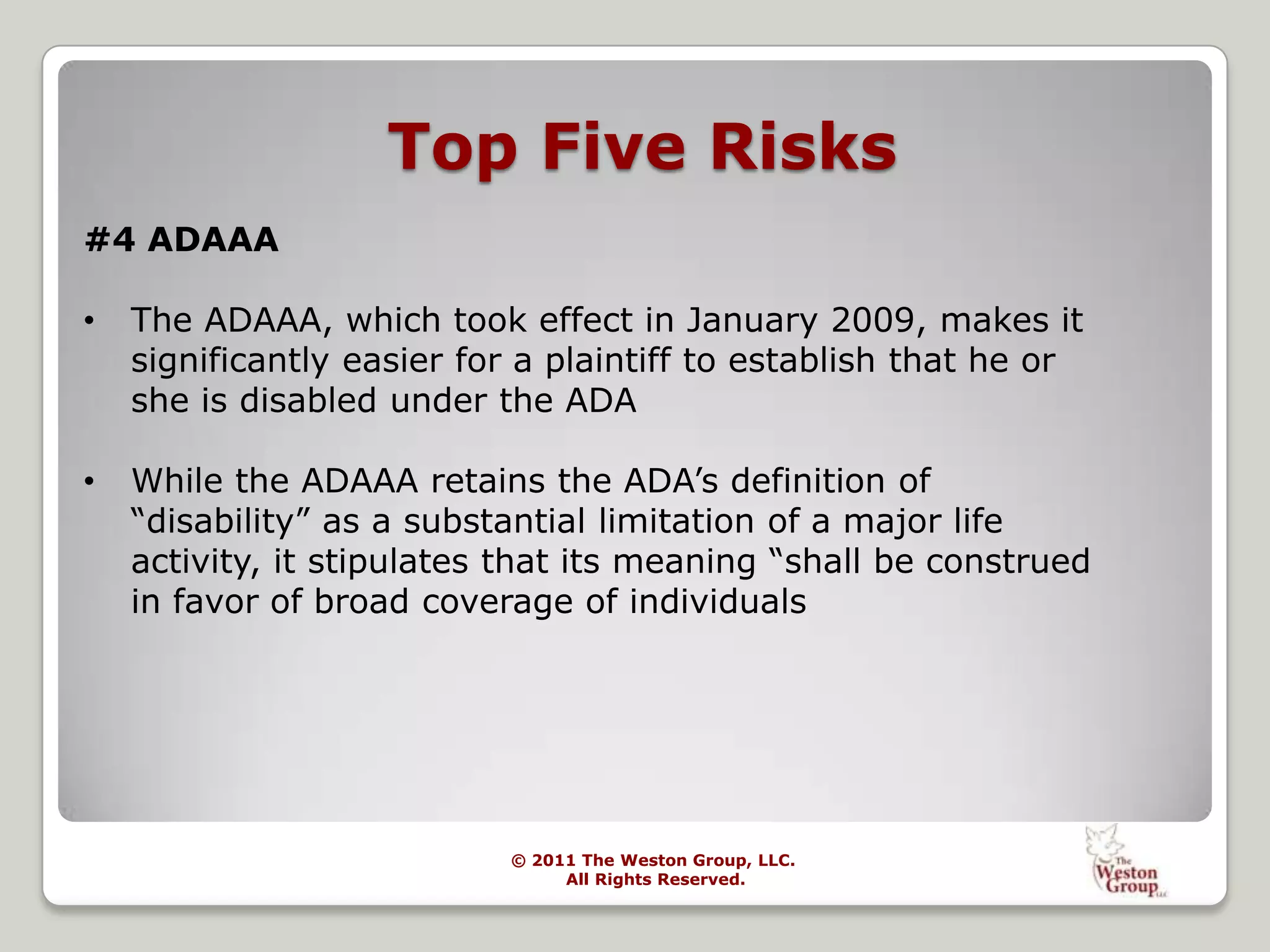
    Keep eyes andears openTop Five Risks#4 ADAAAThe ADAAA, which took effect in January 2009, makes it significantly easier for a plaintiff to establish that he or she is disabled under the ADA
  • 158.
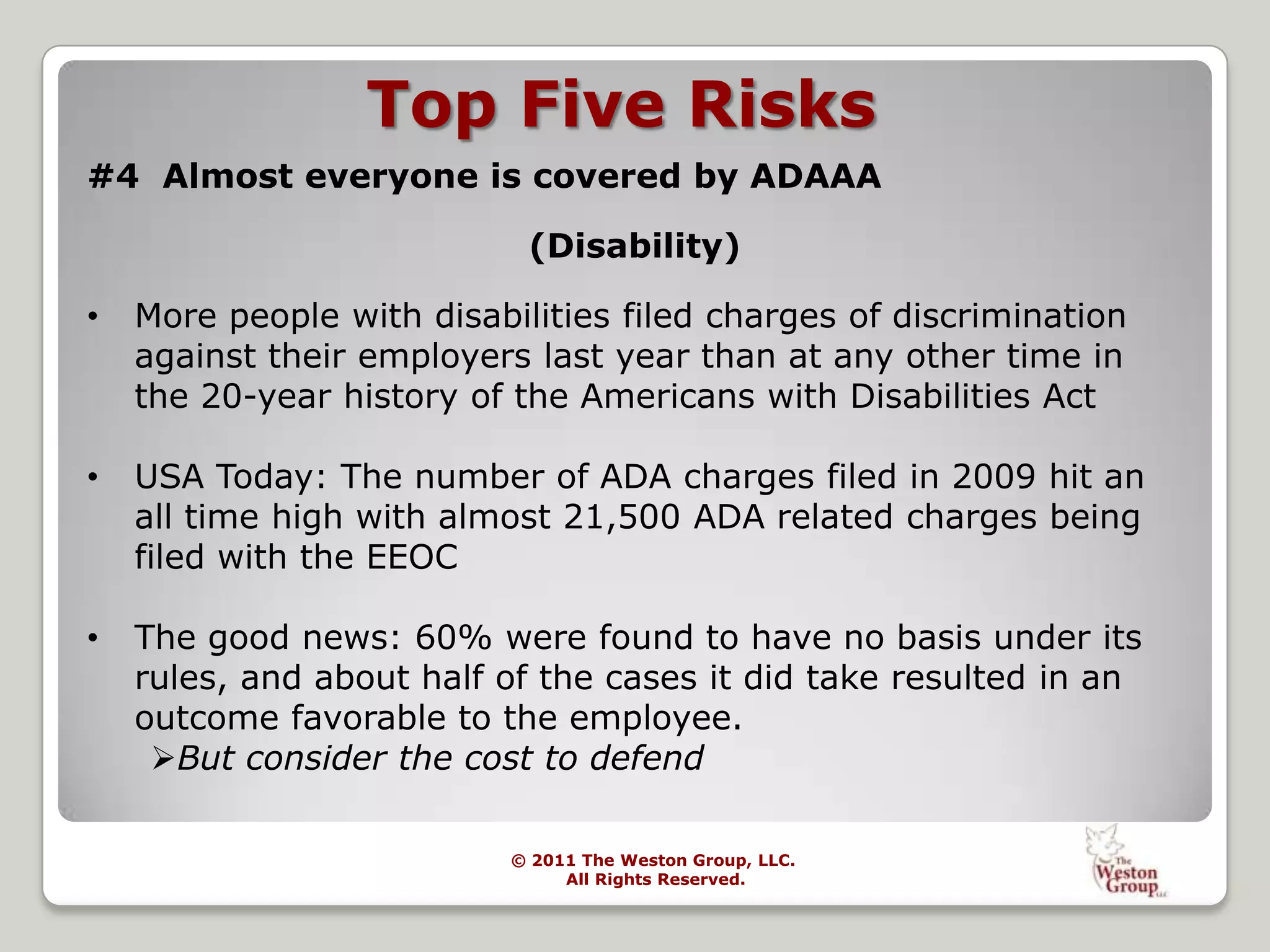
    While the ADAAAretains the ADA’s definition of “disability” as a substantial limitation of a major life activity, it stipulates that its meaning “shall be construed in favor of broad coverage of individualsTop Five Risks#4 Almost everyone is covered by ADAAA (Disability)More people with disabilities filed charges of discrimination against their employers last year than at any other time in the 20-year history of the Americans with Disabilities Act
  • 159.
    USA Today: Thenumber of ADA charges filed in 2009 hit an all time high with almost 21,500 ADA related charges being filed with the EEOC
  • 160.
    The good news:60% were found to have no basis under its rules, and about half of the cases it did take resulted in an outcome favorable to the employee.
  • 161.
    But consider thecost to defend#4 Almost everyone is covered by ADAAA (Disability)The main reasons for the increase:
  • 162.
  • 163.
    Amendment to theADA that broadened the definition of what it means to be disabled.Common issues:
  • 164.
  • 165.
    Complaints include beingoverlooked for promotion
  • 166.
    Not being switchedto a job that matches the person's abilitiesNot getting accommodations such as computer upgrades to be able to do a job#4 Almost everyone is covered by ADAAA (Disabiity)Employer-caused psychological ills can trigger ADA claim
  • 167.
    Recent case: AmeliaRavan claimed that her supervisors at Forest Pharmaceuticals wanted to get rid of her and that she worked in what was essentially a hostile environment.
  • 168.
    When she couldn’ttake the stress anymore, she was diagnosed with anxiety and depression and took FMLA leave.
  • 169.
    When she couldn’treturn, she lost her job.
  • 170.
    Ravan sued underthe ADA, claiming that her employer had triggered a disability and therefore should have accommodated her.
  • 171.
    The court hearingpretrial motions said Ravan’s lawsuit will go forward.PREVENTIONOngoing review of ADA cases – be proactive!
  • 172.
    Managers/HR communicate regularlyabout potential issues –be proactive!
  • 173.
    Have ADA compliantjob descriptions
  • 174.
    Educate front linemanagers and supervisors
  • 175.
    Keep eyes andears open
  • 176.
    Have a resourceready for issues/questionsTop Five Risks#5 FAMILY & MEDICAL LEAVEAccording to WorldAtWork.org, claims related to FMLA have increased by more than 10 percent this year
  • 177.
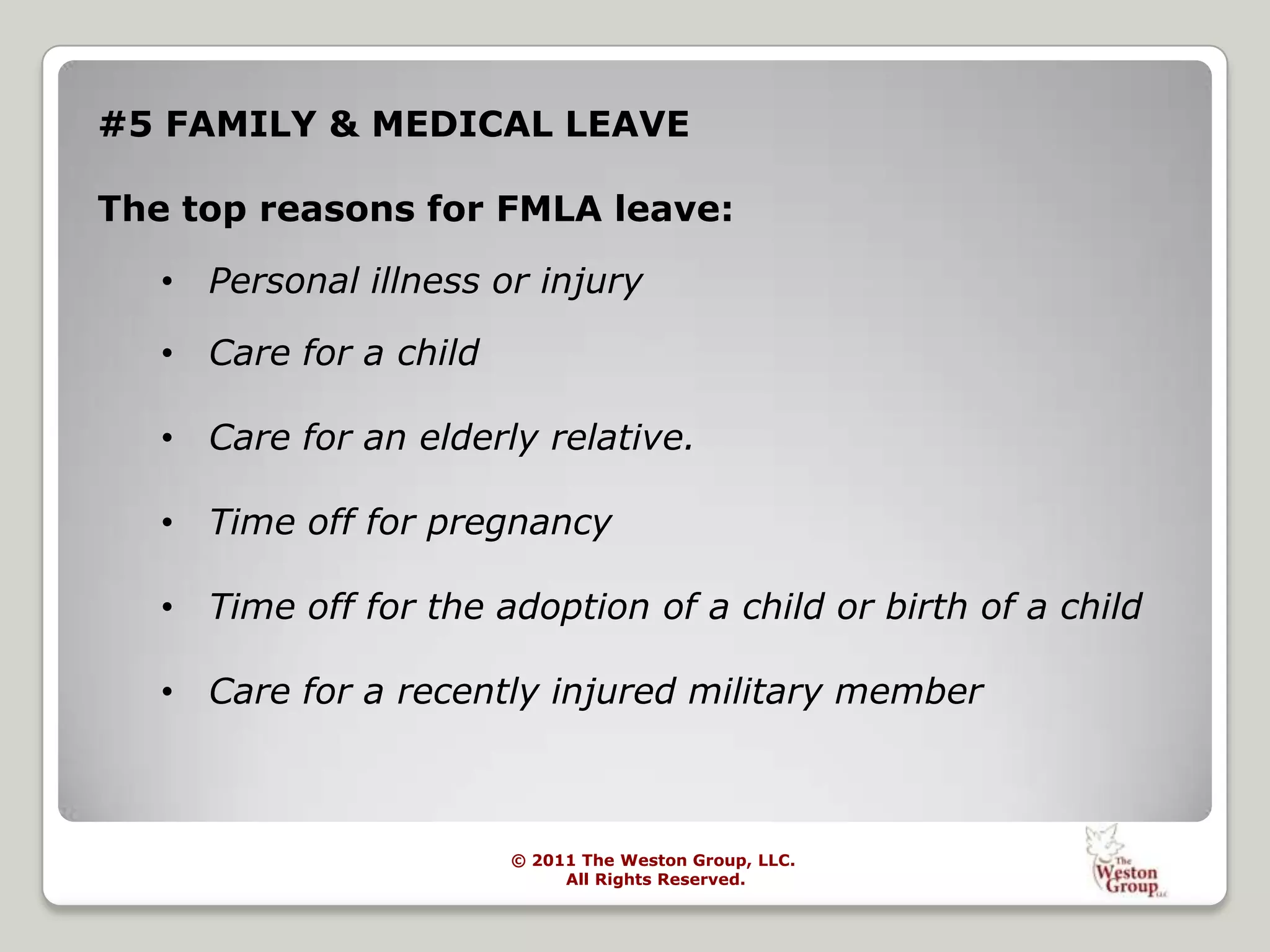
    More people inthe United States are becoming aware of their rights under FMLA or perhaps less companies want to provide family medical leave protection to workers in such tough economic times.#5 FAMILY & MEDICAL LEAVEThe top reasons for FMLA leave:Personal illness or injury
  • 178.
  • 179.
    Care for anelderly relative.
  • 180.
    Time off forpregnancy
  • 181.
    Time off forthe adoption of a child or birth of a child
  • 182.
    Care for arecently injured military member #5 FAMILY & MEDICAL LEAVEMost important to remember:Determine if employee is eligible
  • 183.
    Make employee awareof eligibility
  • 184.
  • 185.
    Be sure youget completed paperwork
  • 186.
    Access resources ifyou don’t understand the condition
  • 187.
  • 188.
  • 189.
  • 190.
    BE CONSISTENT!#5 FAMILY& MEDICAL LEAVEFitness for Duty: HOW you do it is important
  • 191.
    Charlene Wisbey broughtsuit against her employer of twenty-seven years, claiming that her rights under the Americans with Disabilities Act (ADA and the Family Medical Leave Act (FMLA), were violated when she was terminated based on the results of a “fitness for duty exam.” 
  • 192.
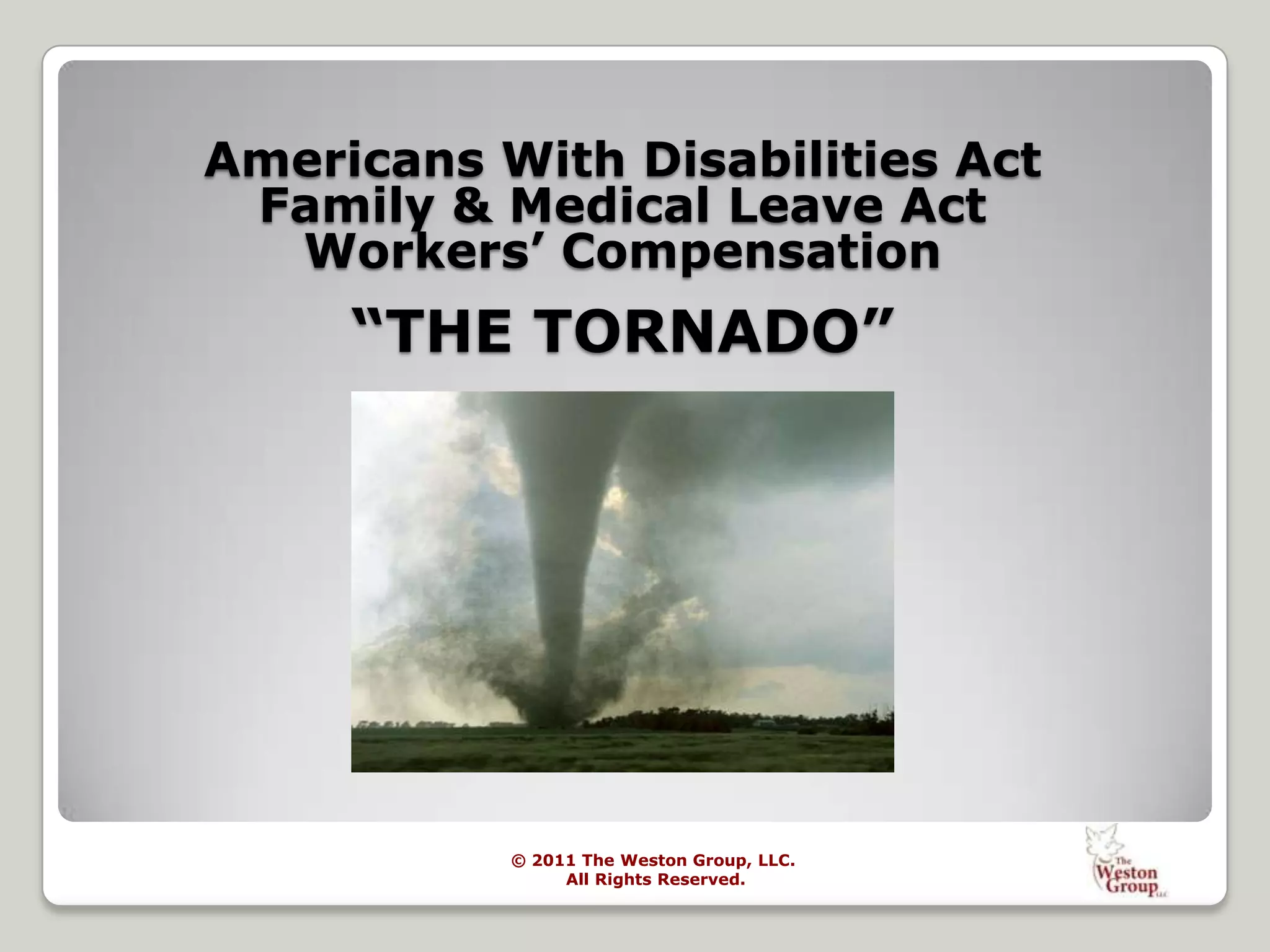
    The court ofappeals ruled that it was reasonable for the City of Lincoln, Nebraska (the City), to perform a fitness for duty exam to ascertain the cause of behavior which was interfering with Wisbey’s ability to perform her job functions, as well as rely on the results of the exam when it came to making their decision to continue or terminate her employment with them.Americans With Disabilities ActFamily & Medical Leave ActWorkers’ Compensation“THE TORNADO”
  • 193.
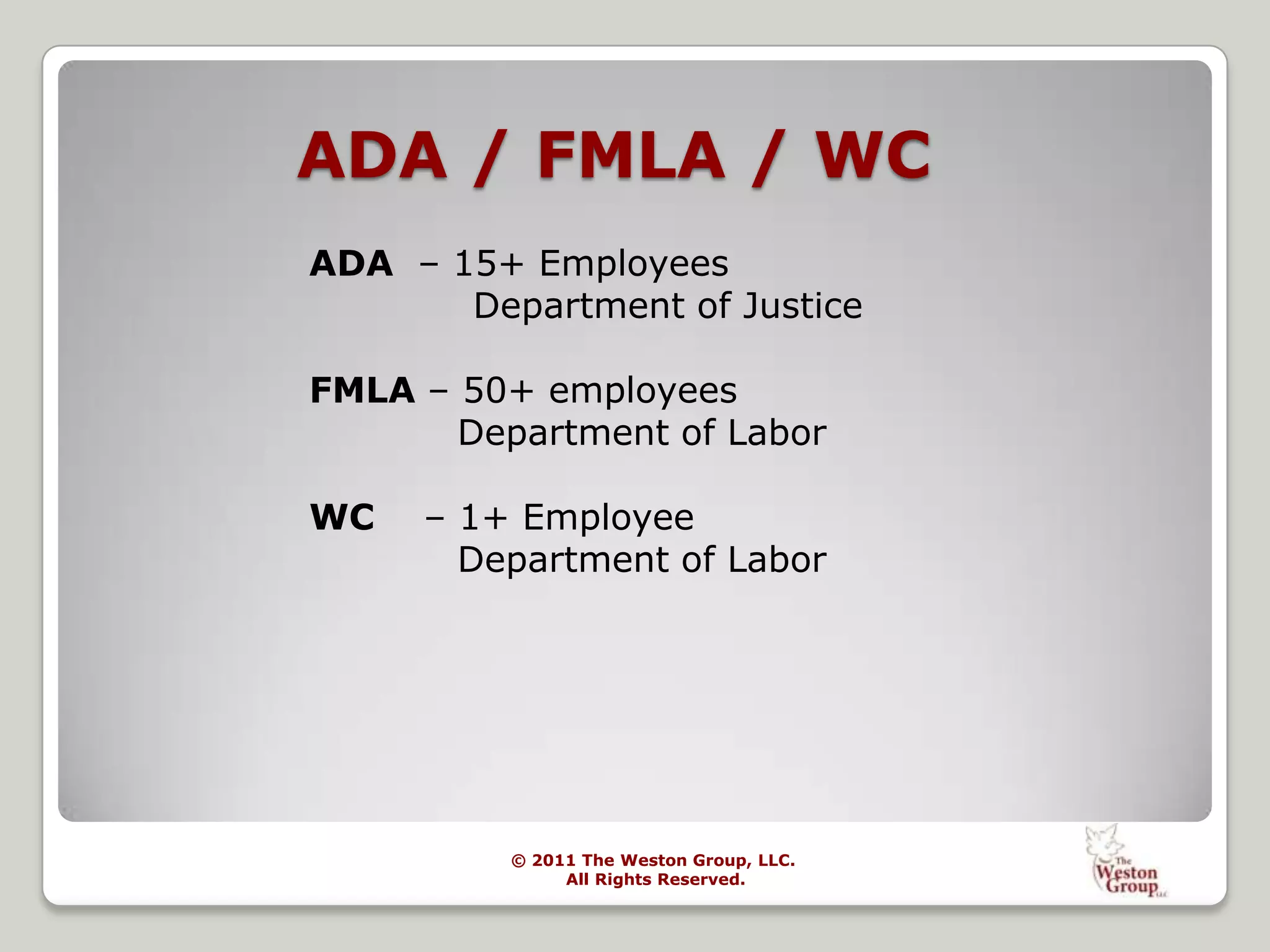
    ADA / FMLA/ WCADA – 15+ Employees Department of JusticeFMLA – 50+ employees Department of LaborWC – 1+ Employee Department of Labor
  • 194.
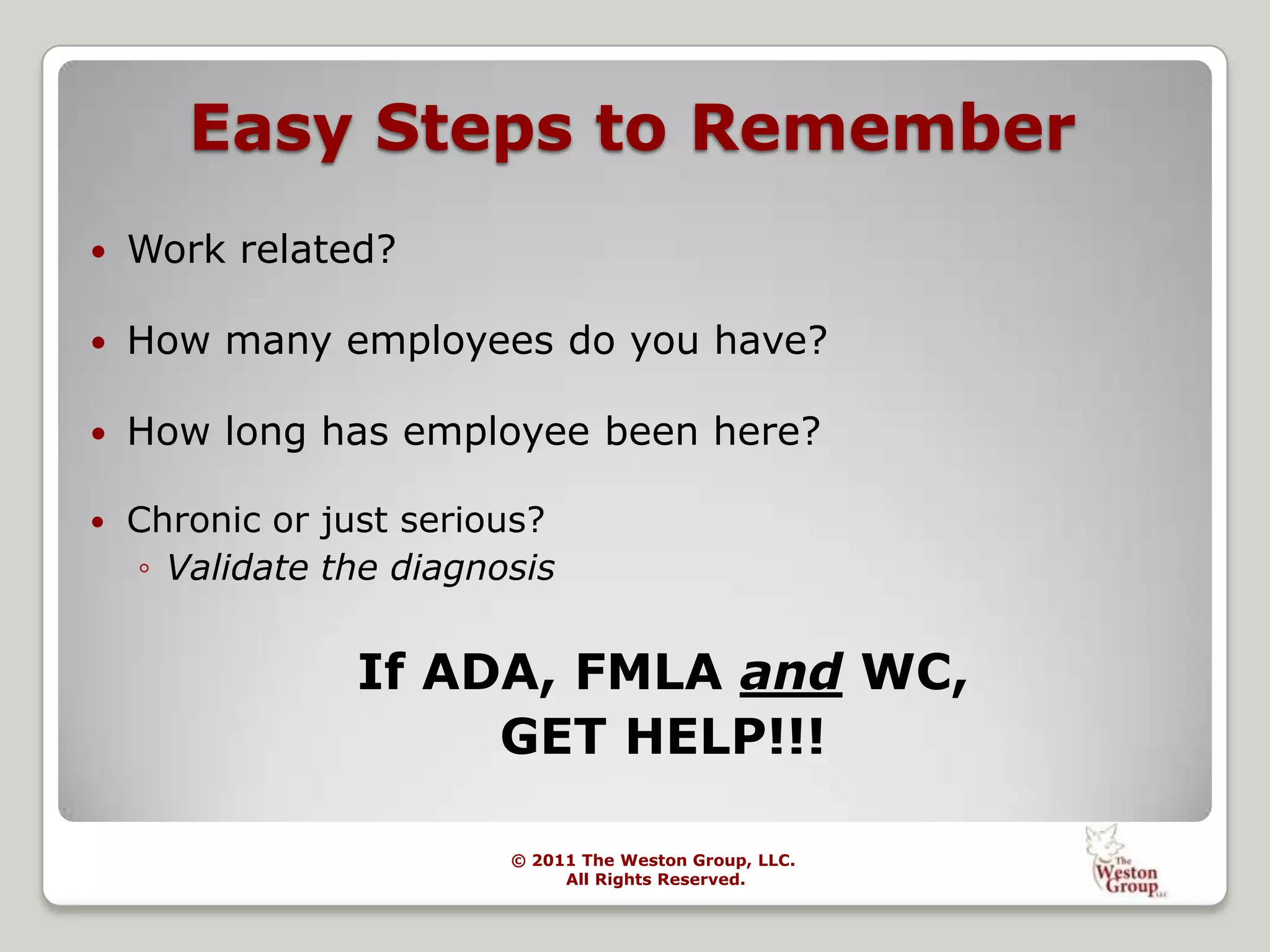
    Easy Steps toRememberWork related?How many employees do you have?How long has employee been here?Chronic or just serious?Validate the diagnosisIf ADA, FMLA and WC,GET HELP!!!
  • 195.
    Common Mistakes EmployersMakeReactive rather than proactive“Training does not produce revenue”Improper terminationBe sure to have a consistent corrective action policyAssuming there is no strong basis for immediate termination, giving at least one warning is important to demonstrate fair treatmentJurors LIKE employees
  • 196.
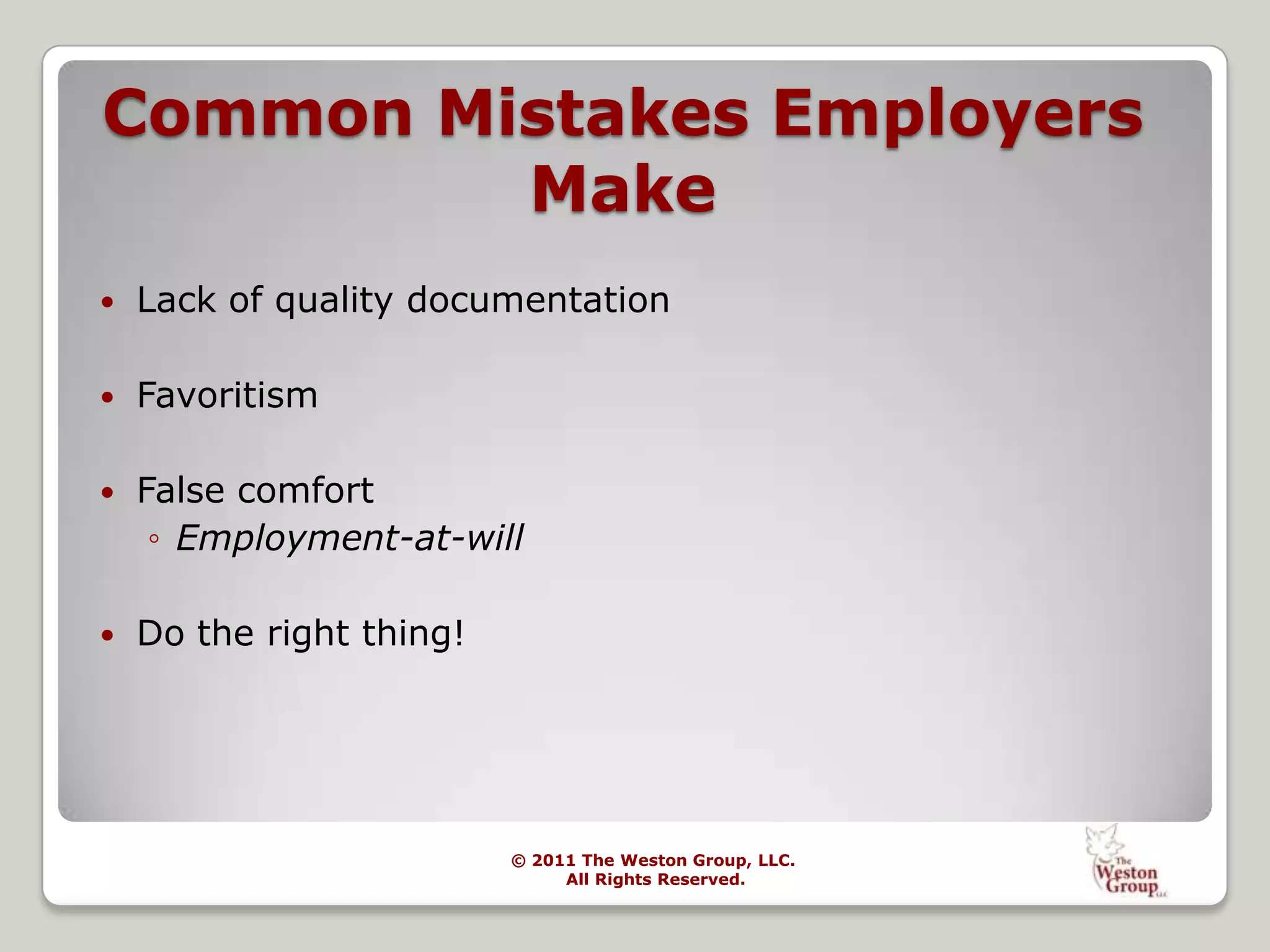
    Common Mistakes EmployersMakeLack of quality documentationFavoritismFalse comfortEmployment-at-willDo the right thing!
  • 197.
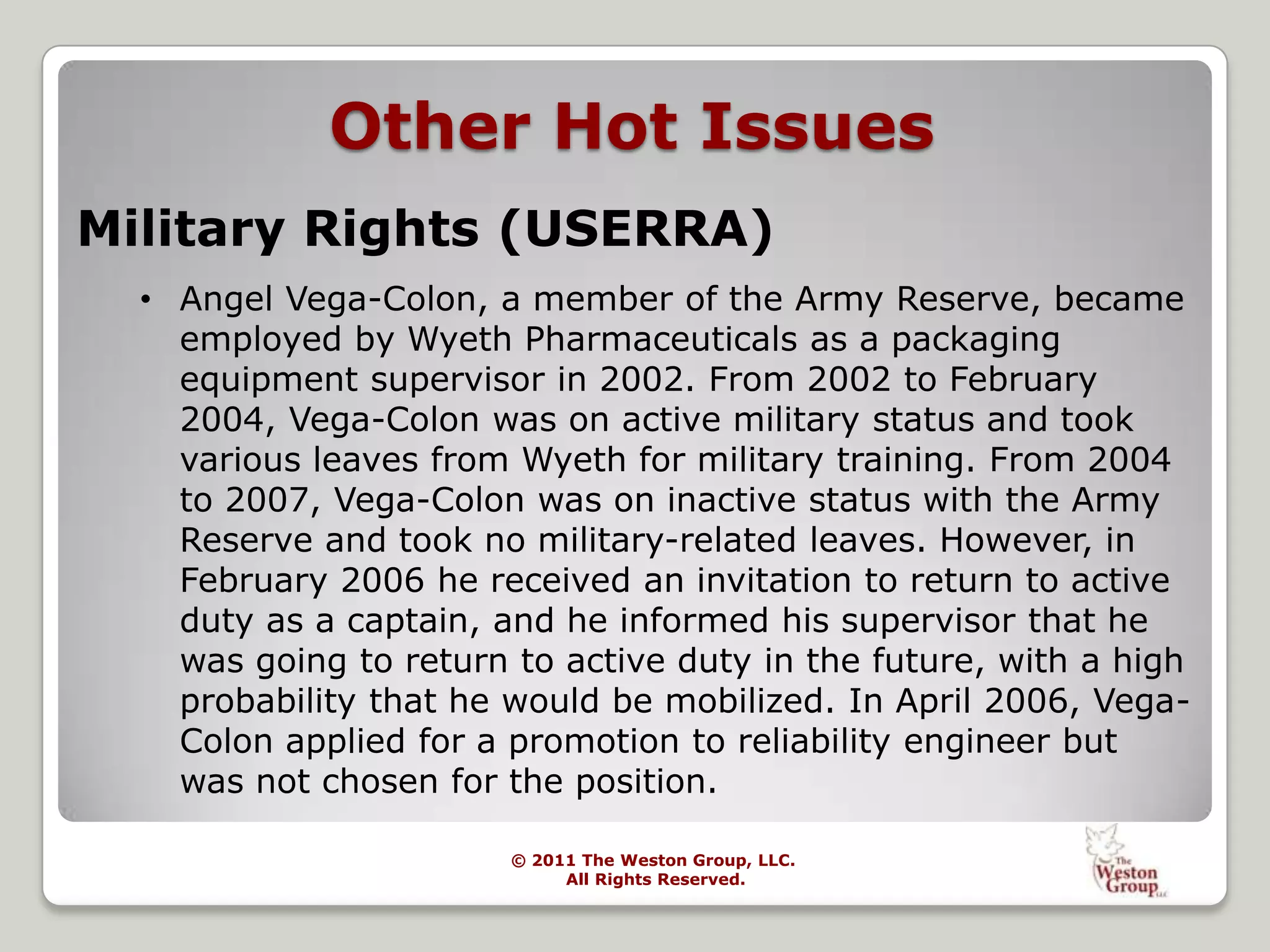
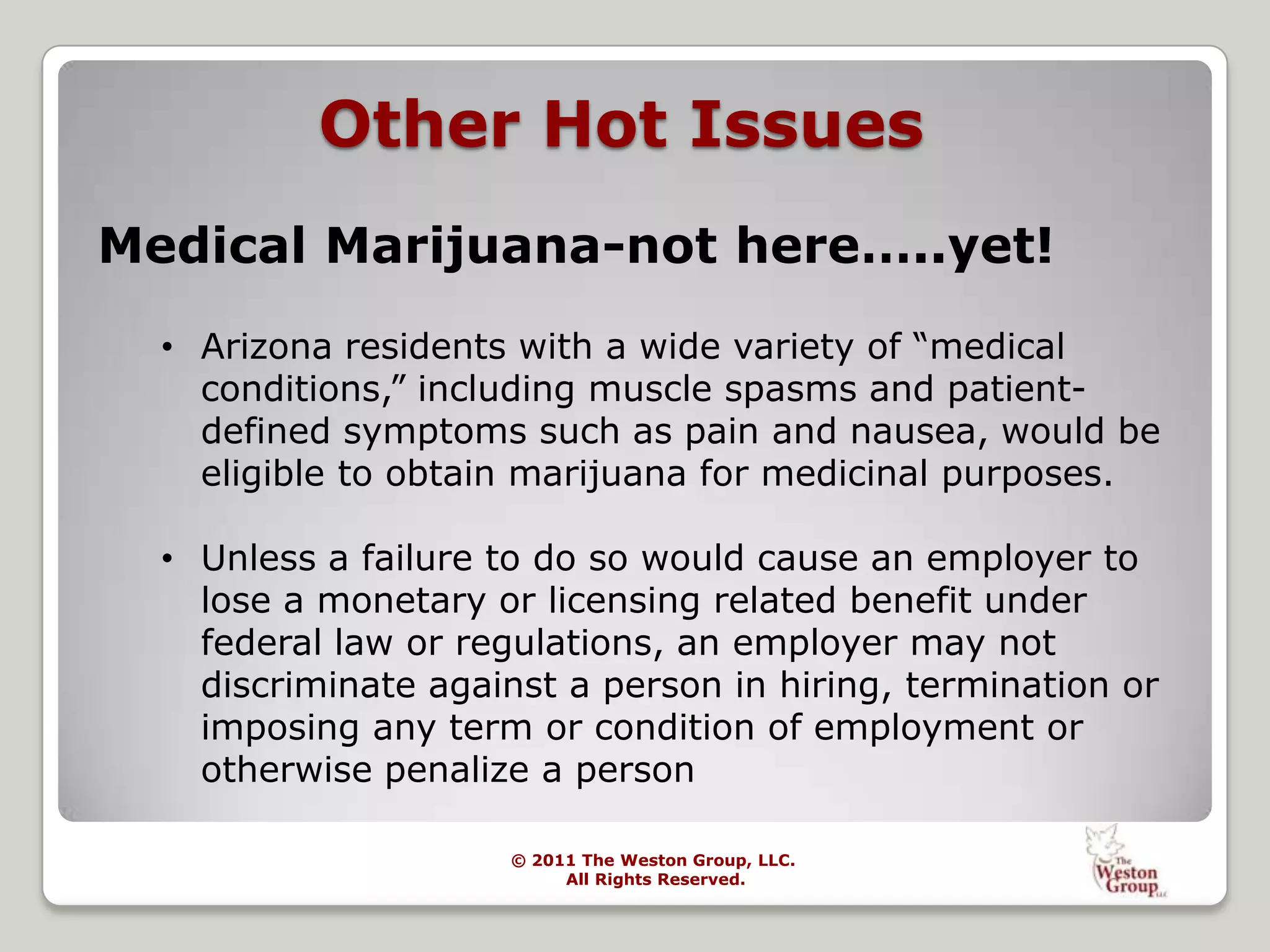
    Other Hot IssuesMilitaryRights (USERRA)Angel Vega-Colon, a member of the Army Reserve, became employed by Wyeth Pharmaceuticals as a packaging equipment supervisor in 2002. From 2002 to February 2004, Vega-Colon was on active military status and took various leaves from Wyeth for military training. From 2004 to 2007, Vega-Colon was on inactive status with the Army Reserve and took no military-related leaves. However, in February 2006 he received an invitation to return to active duty as a captain, and he informed his supervisor that he was going to return to active duty in the future, with a high probability that he would be mobilized. In April 2006, Vega-Colon applied for a promotion to reliability engineer but was not chosen for the position. Other Hot IssuesMedical Marijuana-not here…..yet!Arizona residents with a wide variety of “medical conditions,” including muscle spasms and patient-defined symptoms such as pain and nausea, would be eligible to obtain marijuana for medicinal purposes.
  • 198.
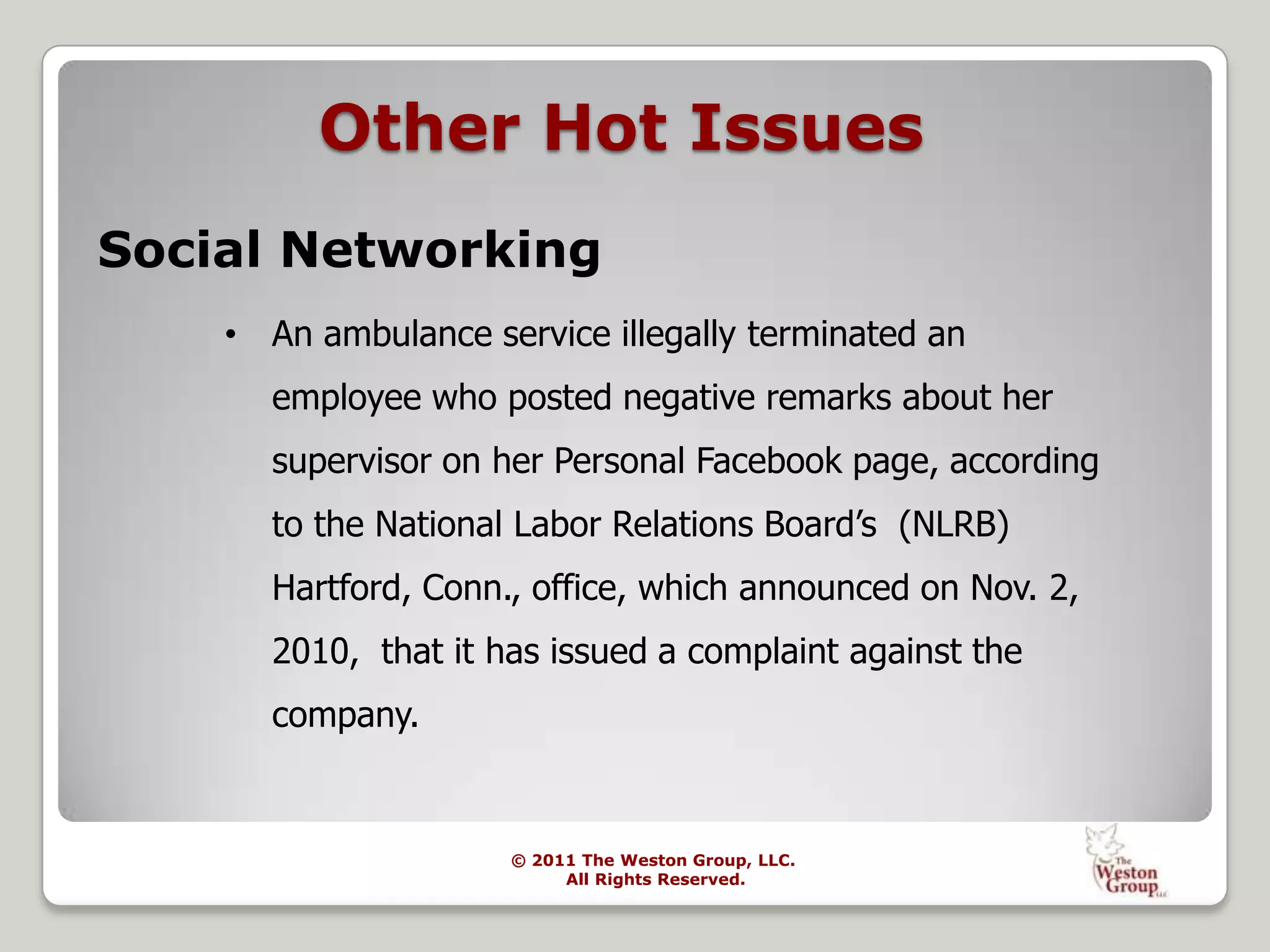
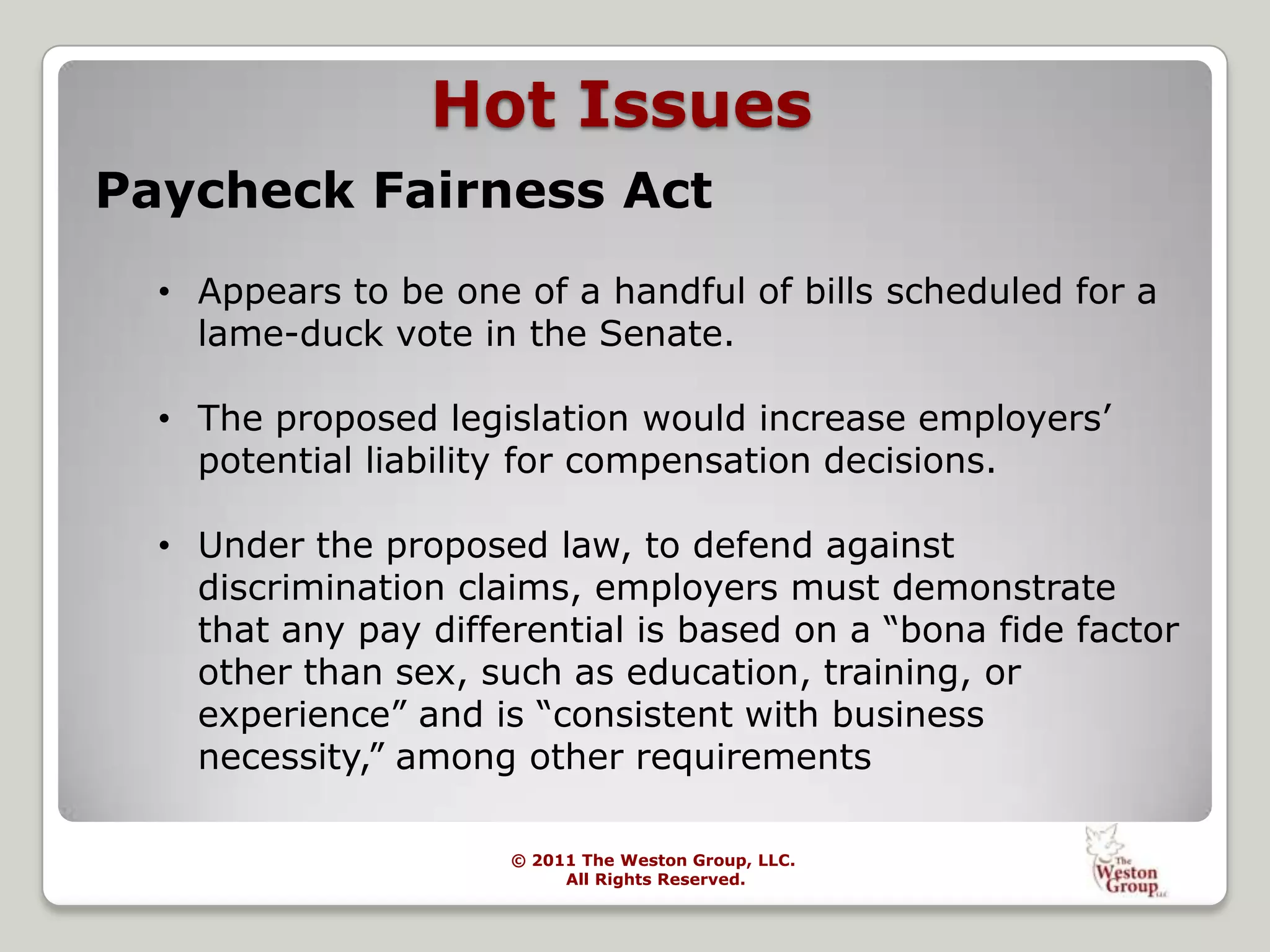
    Unless a failureto do so would cause an employer to lose a monetary or licensing related benefit under federal law or regulations, an employer may not discriminate against a person in hiring, termination or imposing any term or condition of employment or otherwise penalize a personOther Hot IssuesSocial NetworkingAn ambulance service illegally terminated an employee who posted negative remarks about her supervisor on her Personal Facebook page, according to the National Labor Relations Board’s (NLRB) Hartford, Conn., office, which announced on Nov. 2, 2010, that it has issued a complaint against the company. Hot IssuesPaycheck Fairness ActAppears to be one of a handful of bills scheduled for a lame-duck vote in the Senate. 
  • 199.
    The proposed legislationwould increase employers’ potential liability for compensation decisions. 
  • 200.
    Under the proposedlaw, to defend against discrimination claims, employers must demonstrate that any pay differential is based on a “bona fide factor other than sex, such as education, training, or experience” and is “consistent with business necessity,” among other requirementsHot IssuesWhistleblowersCheryl D. Eckard worked as the company’s quality manager.  She claims that she alerted GSK management about the problems associated with the facility in question and the company fired her rather than address the appropriate issues.  Thereafter, Eckard filed a False Claims Act (“FCA”) Qui Tam action in the U.S. District Court of Massachusetts
  • 201.
    GSK agreed topay the United States and the Medicaid Participating States (“MPS”) the sum of $600 million, plus accrued interest ($436,440,000 will be paid to the United States as the federal settlement and $163,560,000 will go to the MPS).  GSK will pay an additional $150 million in criminal fines.Whistleblowers: Implications for EmployersThe False Claims Act is a Major Weapon for Law Enforcement:  The FCA is one of the federal government’s key weapons for addressing corporate fraud.Employees Have Strong Incentives:  Under FCA’s Qui Tam provisions, the settlement agreement provides that Eckard will receive a hefty 22 percent share of the federal settlement amount, which comes to more than $96 millionCompliance and Ethics Programs are Essential but must be Managed
  • 202.
    PREVENTIONAnnual risk assessmentof HR management practices
  • 203.
    Keep HR staffup to date
  • 204.
    Know where youcan find resources to assist with specifics
  • 205.
    Educate front linemanagers and supervisors
  • 206.
    Keep eyes andears open
  • 207.
    Have internal “hotline”or other mechanism in place so employees can be heardCOMPENSATION BASICS
  • 208.
  • 209.
  • 210.
  • 211.
  • 212.
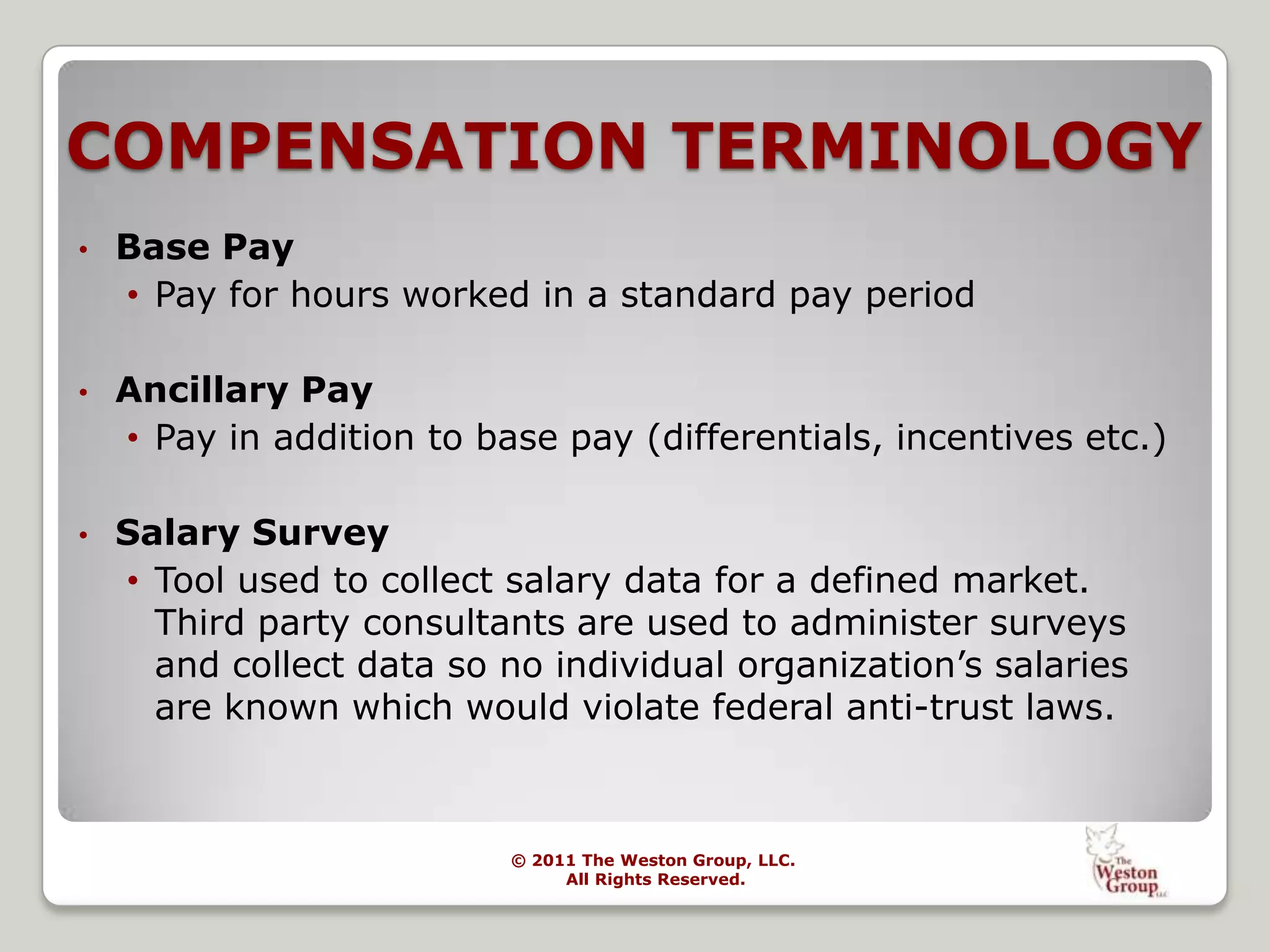
    Pay for hoursworked in a standard pay period
  • 213.
  • 214.
    Pay in additionto base pay (differentials, incentives etc.)
  • 215.
  • 216.
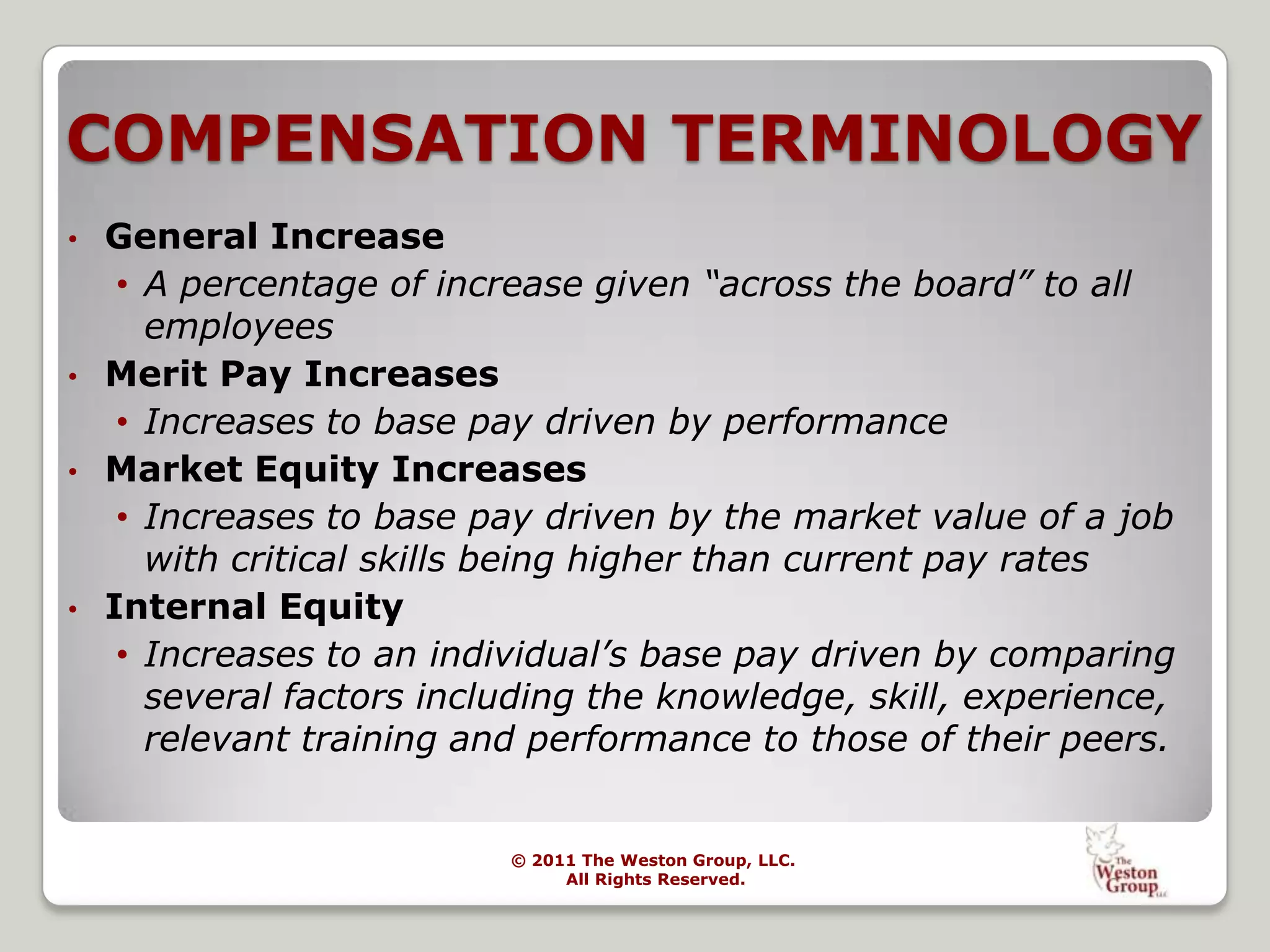
    Tool used tocollect salary data for a defined market. Third party consultants are used to administer surveys and collect data so no individual organization’s salaries are known which would violate federal anti-trust laws. COMPENSATION TERMINOLOGYGeneral Increase
  • 217.
    A percentage ofincrease given “across the board” to all employees
  • 218.
  • 219.
    Increases to basepay driven by performance
  • 220.
  • 221.
    Increases to basepay driven by the market value of a job with critical skills being higher than current pay rates
  • 222.
  • 223.
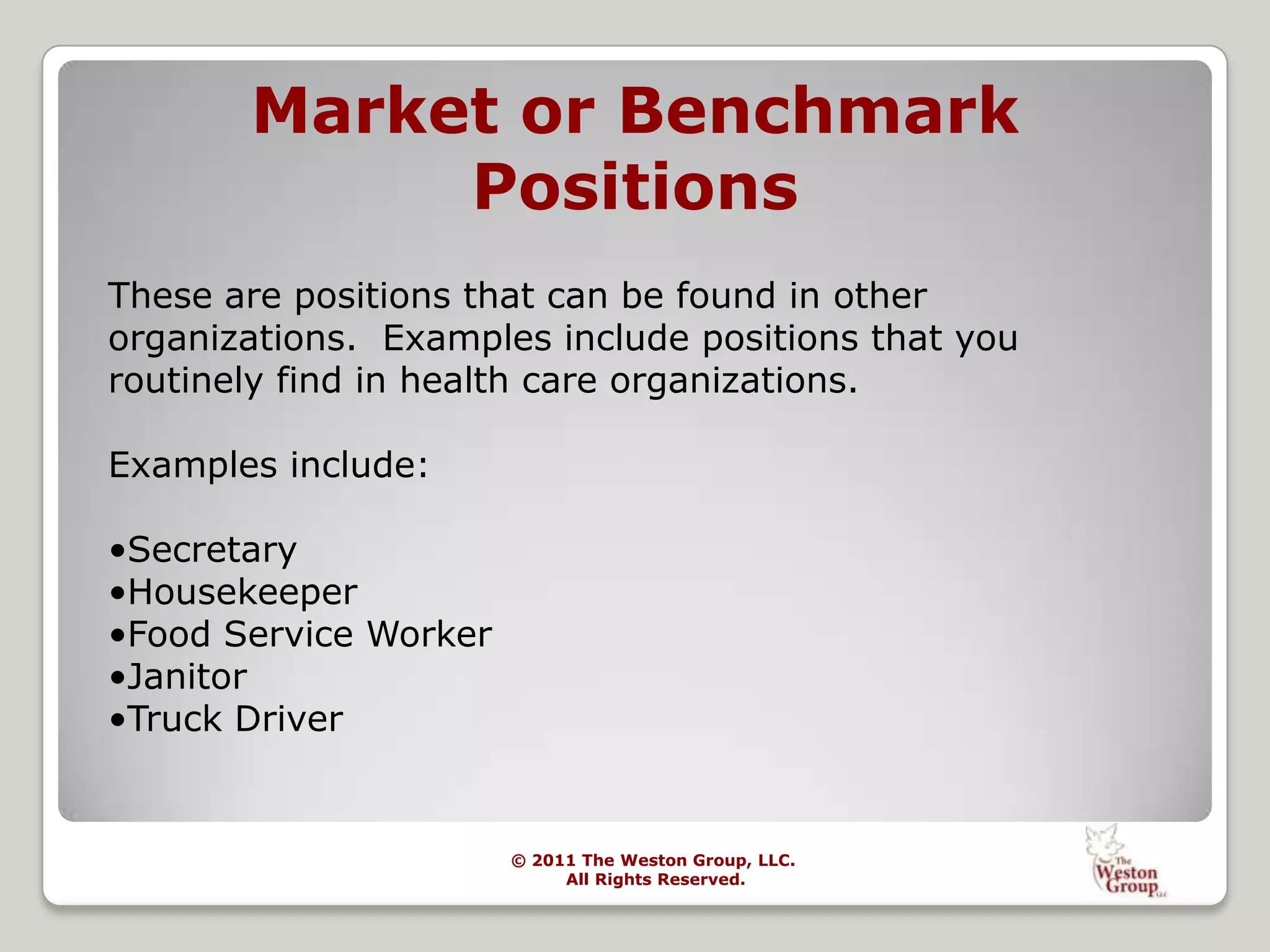
    Increases to anindividual’s base pay driven by comparing several factors including the knowledge, skill, experience, relevant training and performance to those of their peers.Market or Benchmark PositionsThese are positions that can be found in other organizations. Examples include positions that you routinely find in health care organizations.Examples include:Secretary
  • 224.
  • 225.
  • 226.
  • 227.
    Truck DriverPay RangeWidthThe pay range width is the difference between a position’s minimum rate of pay and its maximum rate of pay.All salary ranges are determined by averaging the MINIMUM wage range gathered from salary survey informationEach facility determines the width of the ranges and how employees move through the range with longevity.
  • 228.
    Why Compliance MattersObamaAdministration has promised increased enforcement activity and has substantially increased DOL resourcesThe plaintiff’s bar has launched an aggressive nationwide campaign, using websites to encourage hourly employees to join wage and hour lawsuitsSettlements in private and DOL enforcement actions routinely run in the $2 million to $5 million range, and have exceeded $85 million
  • 229.
    FLSA BasicsMinimum wageand overtime requirementsHours of work and how to calculate overtimeRecordkeeping requirementsExemptions from overtime requirementsChild labor laws
  • 230.
    Why You Needto KnowWage and hour issues are critical to the operation of the organizationFLSA determinations may be difficult The law affects employee compensationYou play an important role in compliance
  • 231.
    FLSA ExemptionsWho isexempt? How do you determine exemptions?
  • 232.
    Nonexempt and ExemptNonexemptemployees -Hourly Exempt employees -$455/week -Cannot be subject to reduction because of variations in the quality or quantity of work -Docking issuesWHO DETERMINES CLASSIFICATION?
  • 233.
    Minimum WageApplication Federal versus state requirements Minimum wage/overtime posters
  • 234.
    What Hours Count?Employeesmust be paid for work “suffered or permitted” by the employer even if the employer does not specifically authorize the work.If the employer “knows or has reason to believe” that work is occurring, the employee must be paid for the hours—even if off-site or off-shift.MANAGE THE ISSUE
  • 235.
    What Hours Count?Waitingtime “engaged to wait” or “waiting to be engaged”On-call timeWho is designated “on call”Travel time“portal to portal”“Changing” time
  • 236.
    Rest PeriodsMeals Required under FLSA?30 minutes UNINTERRUPTEDAutomatic deductions Work breaks 5-20 minutes Not a guaranteeSleep time
  • 237.
    Recording Work TimeMeansof tracking hoursRegular starting and stopping timesDiscrepanciesAutomatic deductions (meal)
  • 238.
    Rounding ErrorsIssue ariseswhen employer tracks time in 15 minute incrementsRULE: 1-7 minutes may be rounded down to 08-14 minutes rounds up to 15
  • 239.
    Deductions from PayAbsencesdue to illness or disabilityAbsences for personal reasons Disciplinary suspensions and penaltiesFirst and last weeks of employmentUnpaid leave
  • 240.
    Child Labor LawsPurposeof child labor lawsWorkers under age 18Minimum wageOvertime
  • 241.
    Work RestrictionsWork restrictionsfor all minors under 18Other restrictions vary depending on minor’s age
  • 242.
    Hours of WorkRestrictionsfor minors who are 14 or 15No restrictions for minors who are 16 or 17
  • 243.
    Key Points toRememberFLSA is a federal law that applies to most organizations This law governs minimum wage, overtime, and child labor issues Most employees are covered Be aware of the impact of this law
  • 244.
    What is nexton the horizon?Wage Theft Prevention Act (H.R. 3303)Family-Friendly Workplace Act (H.R. 933)Living American Wage Act of 2009 (H.R. 3041)Working Families Flexibility Act (H.R. 1274)Not realistic before Healthcare Reform and Employee Free Choice (my opinion)
  • 245.
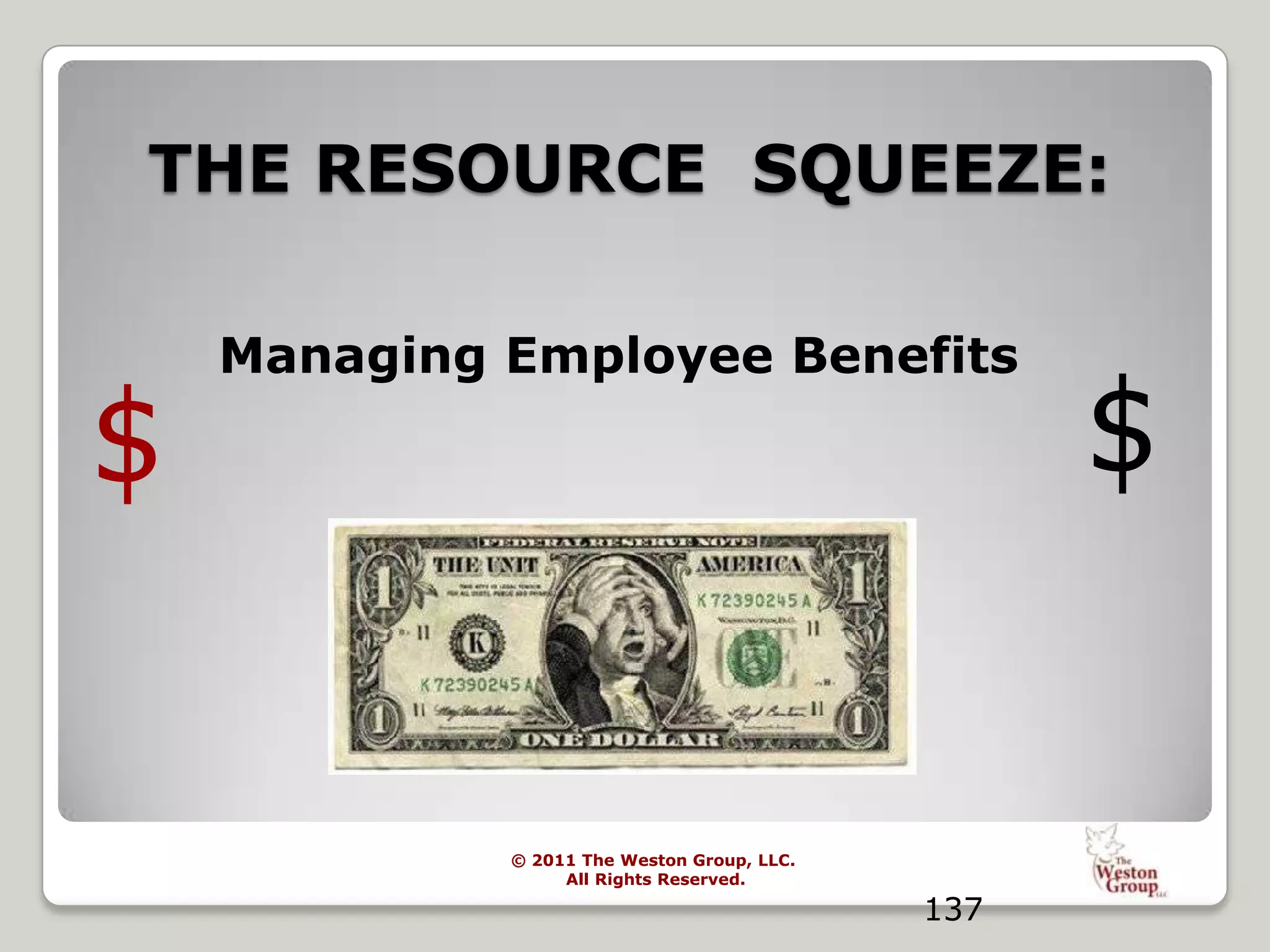
    THE RESOURCE SQUEEZE:Managing Employee Benefits$$137
  • 246.
    Aging WorkforceAmericans over65 will make up more than 16 percent of the population within 10 years.
  • 247.
    Germany is agingeven faster: More than a fifth of the country (21.6%) will be over 65 by the year 2020.
  • 248.
    Birth certificates becamestandard nationwide in 1933, many persons over 100 years of age may not know exactly how old they are, and may have outlived anyone who does. Occupations with highest median ages: # 1 = FarmersOccupations with the next highest median age are:Real estate agents / property administrators
  • 249.
  • 250.
    Bus drivers andother transit operators
  • 251.
    Senior managers inhealth, education, social and community services
  • 252.
    Senior government managersAgingWorkforceRank/State 110 and Older 100-109 1. California 129 -5,341 2. New York 85 -3,997 3. Florida 145 -3,573 4. Texas 113 -2,947 5. Illinois 59- 2,390
  • 253.
    Aging WorkforceRank/State 110and Older 100-109 6. Pennsylvania 46 - 2,400 7. Ohio 41 - 1,910 8. Michigan 40 - 1,535 9. Massachusetts 17 - 1,552 10. New Jersey 38 - 1,514
  • 254.
    Aging WorkforceRank/State 110and Older 100-109 6. Pennsylvania 46 - 2,400 7. Ohio 41 - 1,910 8. Michigan 40 - 1,535 9. Massachusetts 17 - 1,552 10. New Jersey 38 - 1,514
  • 255.
    Strategic InitiativesSlip andfall prevention Falls alone account for more than one-third of all injuries sustained by workers 65 and older, and it takes an older worker two to three times longer to recover from an injury than a younger counterpart. ErgonomicsErgonomic evaluations of workstations and workspaces can identify causes of fatigue and strain for older workers
  • 256.
    New computer screensare being introduced, with bigger type
  • 257.
  • 258.
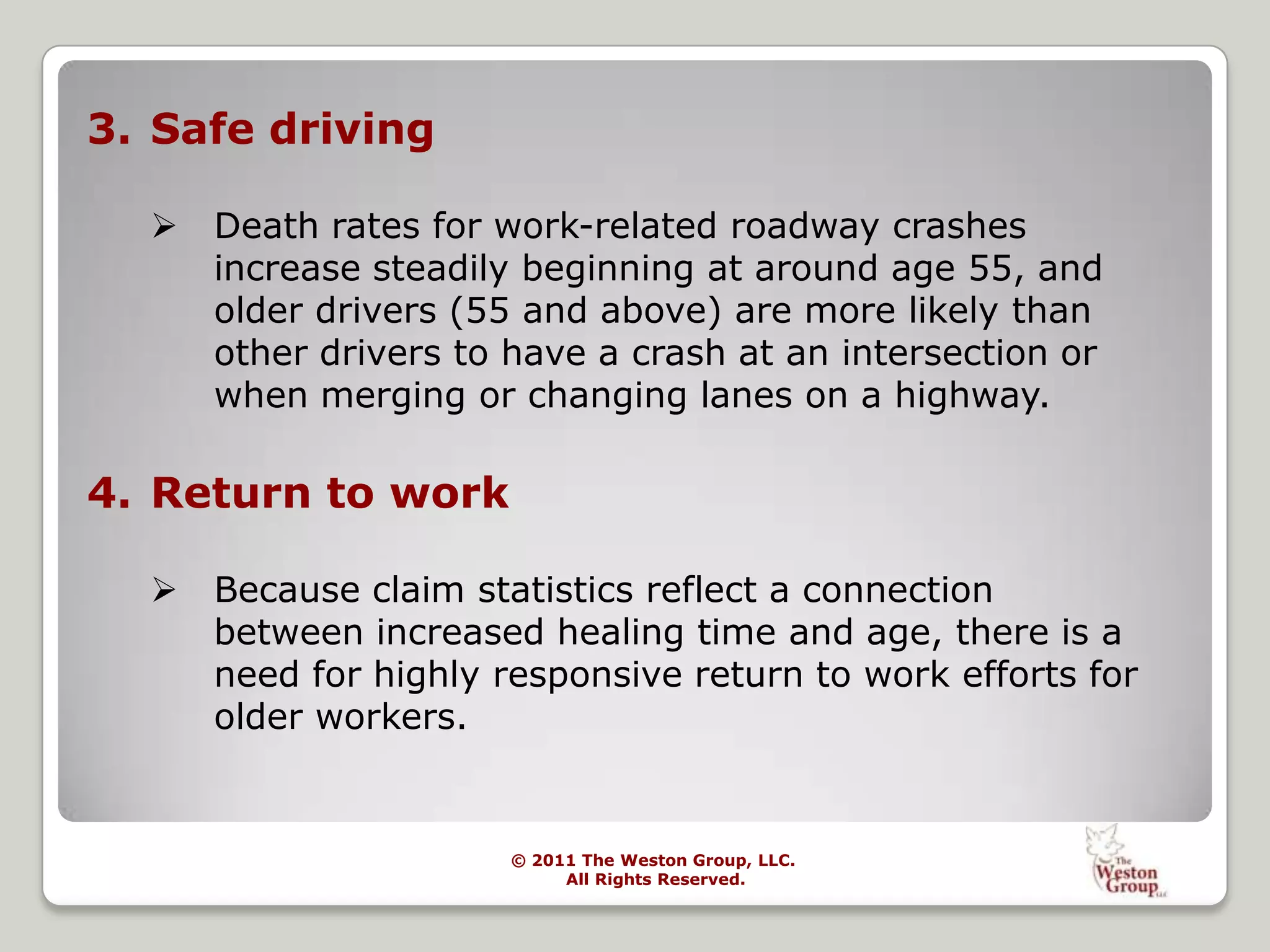
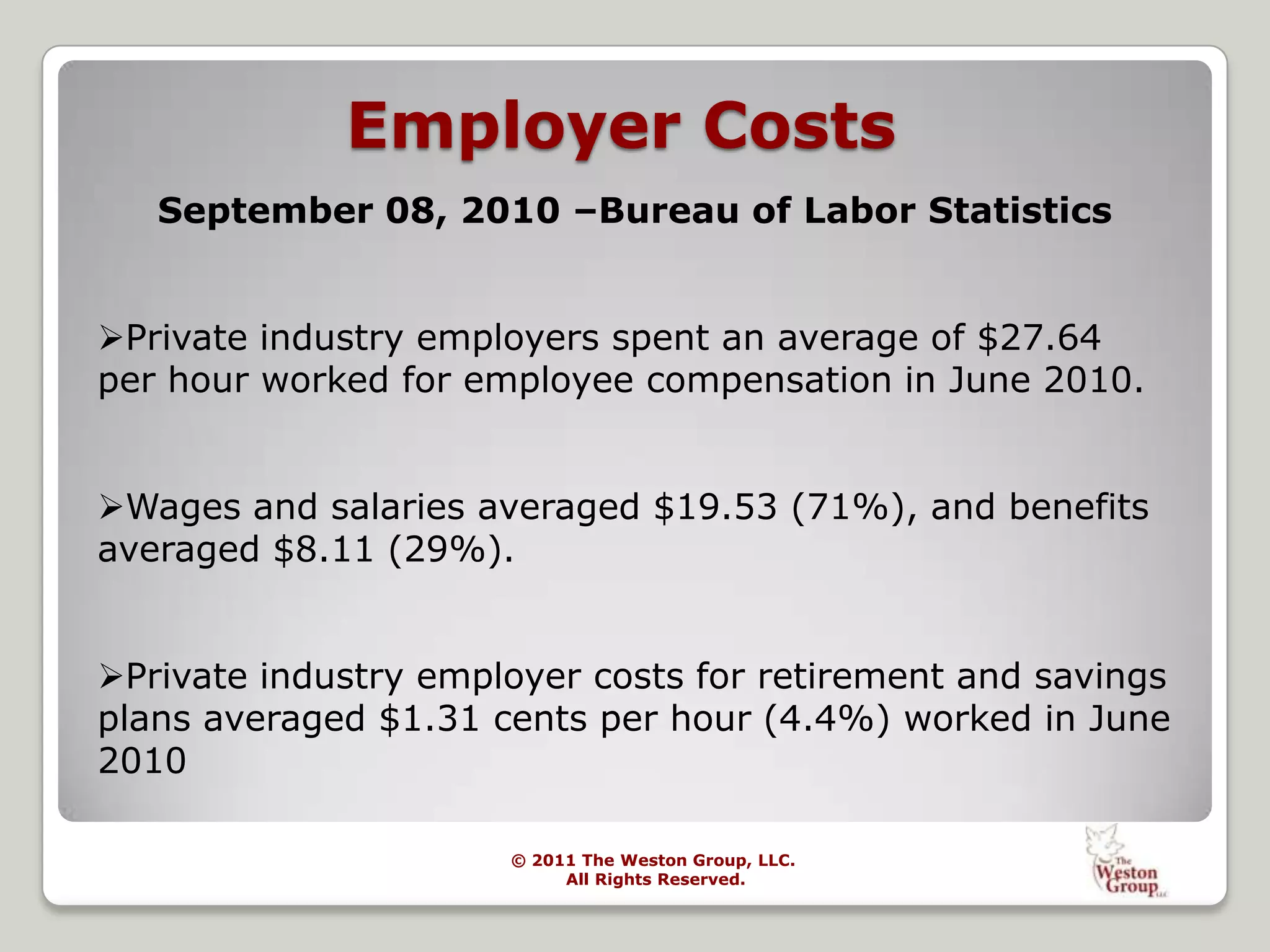
    Wooden floorsSafe drivingDeath rates for work-related roadway crashes increase steadily beginning at around age 55, and older drivers (55 and above) are more likely than other drivers to have a crash at an intersection or when merging or changing lanes on a highway. Return to work Because claim statistics reflect a connection between increased healing time and age, there is a need for highly responsive return to work efforts for older workers. Employer CostsSeptember 08, 2010 –Bureau of Labor StatisticsPrivate industry employers spent an average of $27.64 per hour worked for employee compensation in June 2010.
  • 259.
    Wages and salariesaveraged $19.53 (71%), and benefits averaged $8.11 (29%).
  • 260.
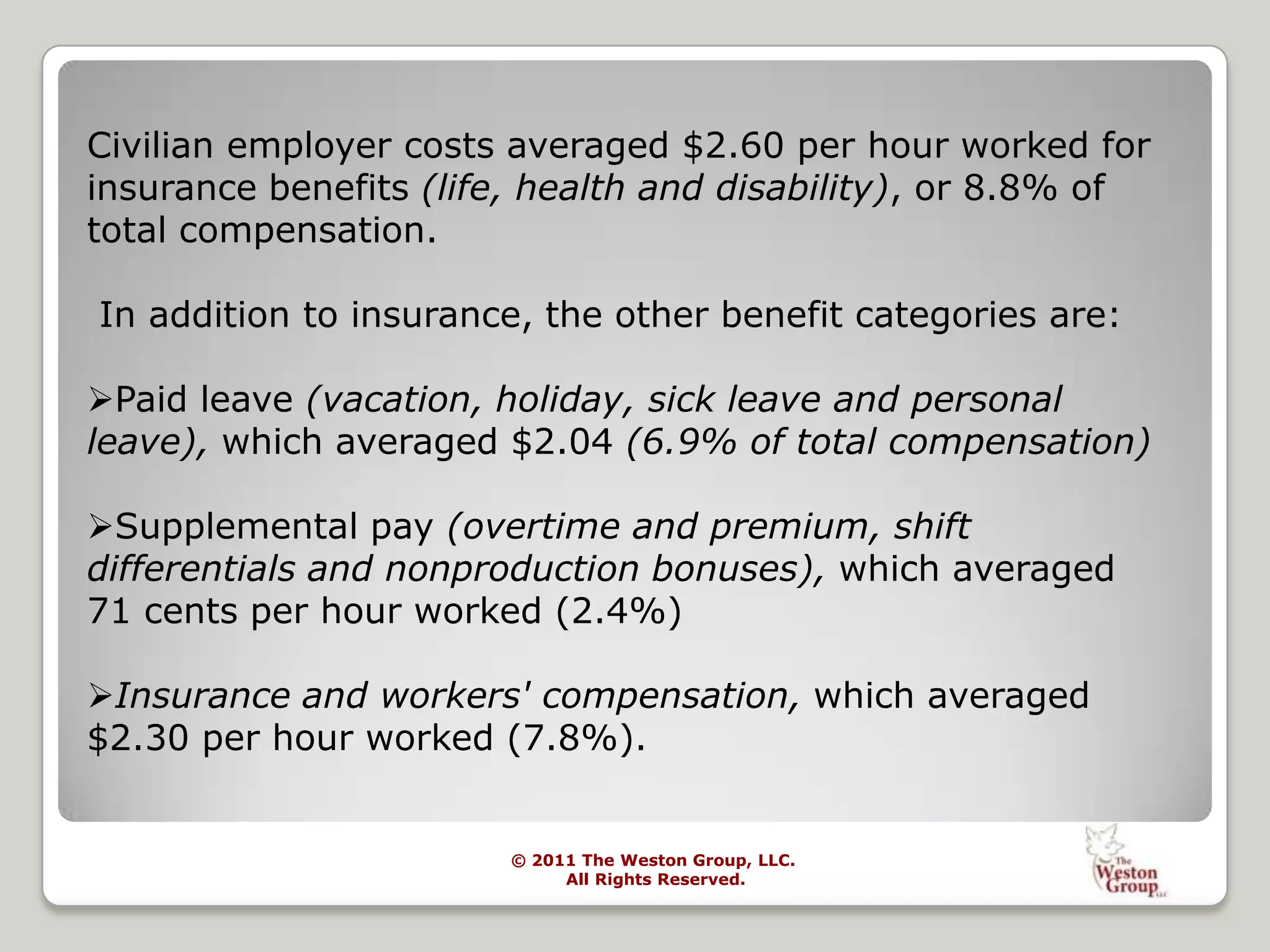
    Private industry employercosts for retirement and savings plans averaged $1.31 cents per hour (4.4%) worked in June 2010Civilian employer costs averaged $2.60 per hour worked for insurance benefits (life, health and disability), or 8.8% of total compensation. In addition to insurance, the other benefit categories are:Paid leave (vacation, holiday, sick leave and personal leave), which averaged $2.04 (6.9% of total compensation)
  • 261.
    Supplemental pay (overtimeand premium, shift differentials and nonproduction bonuses), which averaged 71 cents per hour worked (2.4%)
  • 262.
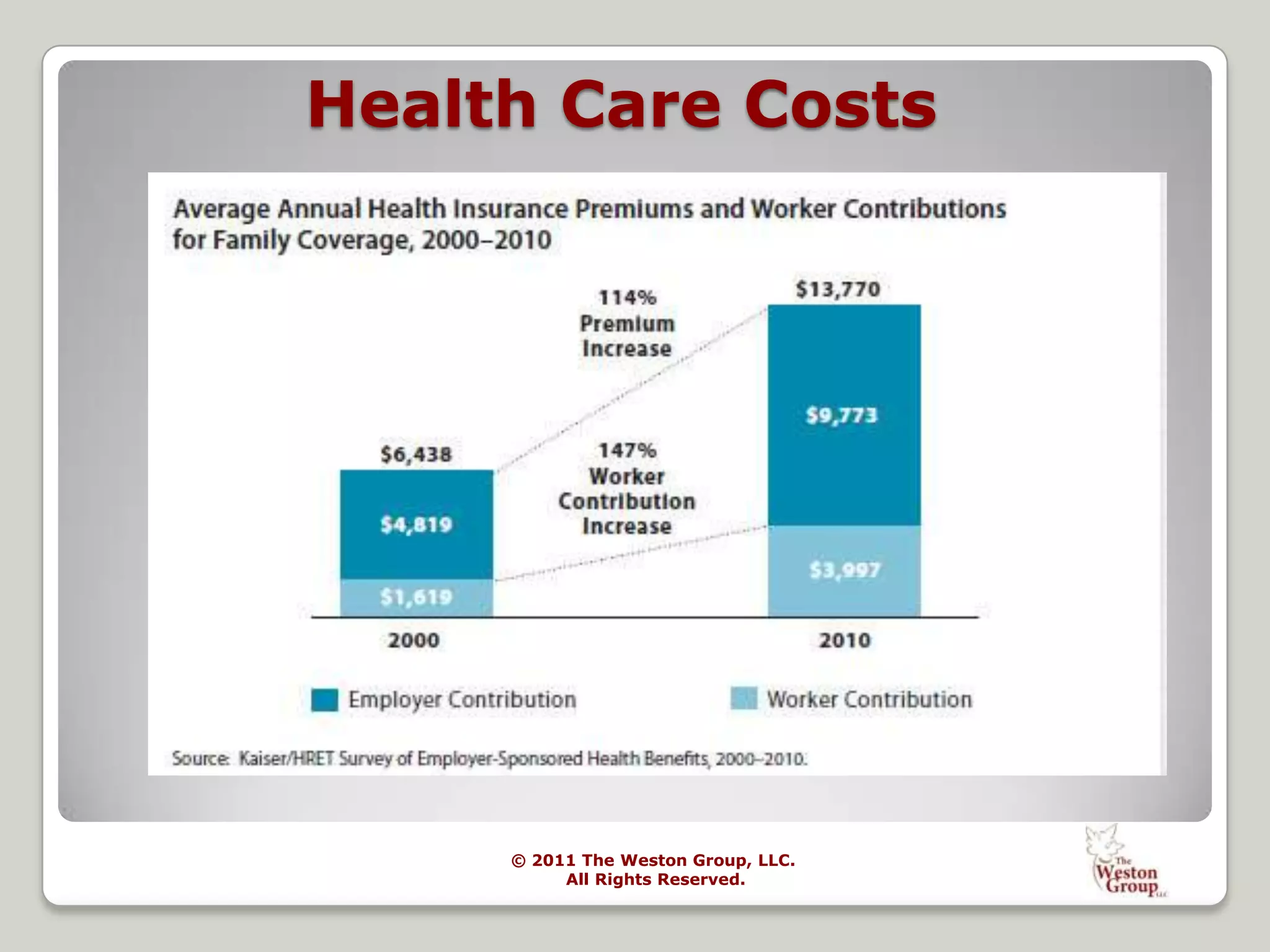
    Insurance and workers'compensation, which averaged $2.30 per hour worked (7.8%).Health Care Costs
  • 263.
  • 264.
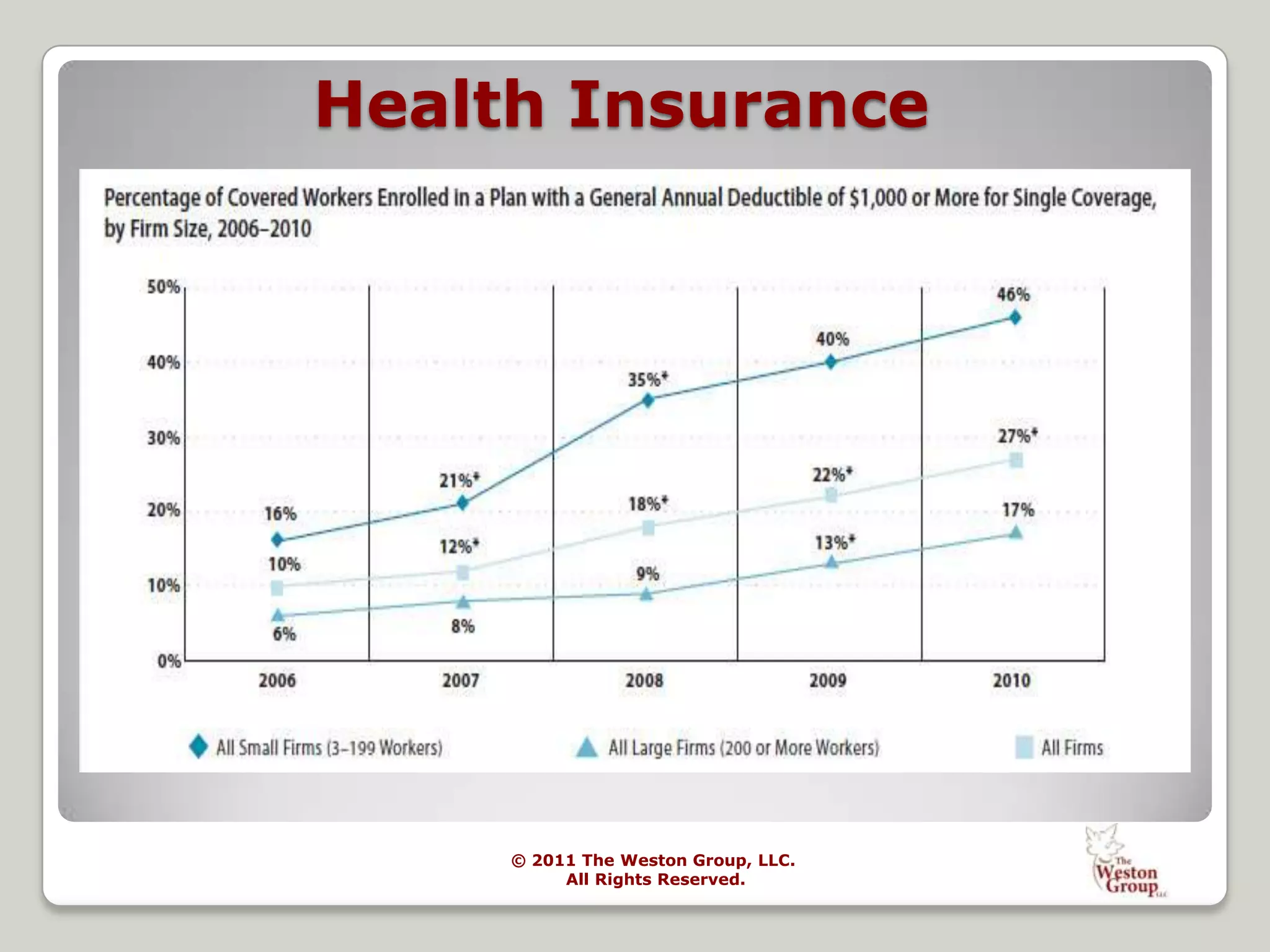
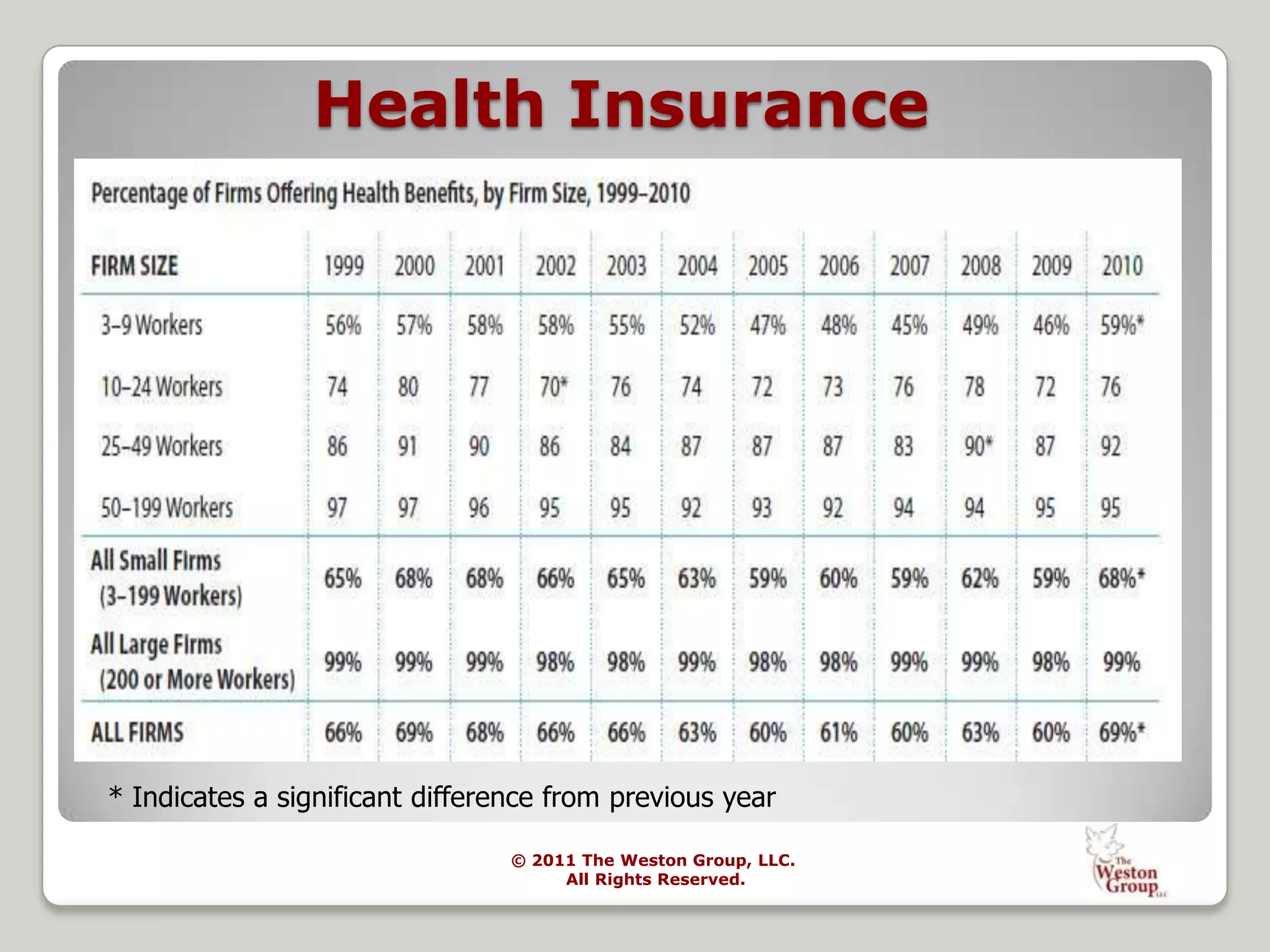
    Health Insurance *Indicates a significant difference from previous year
  • 265.
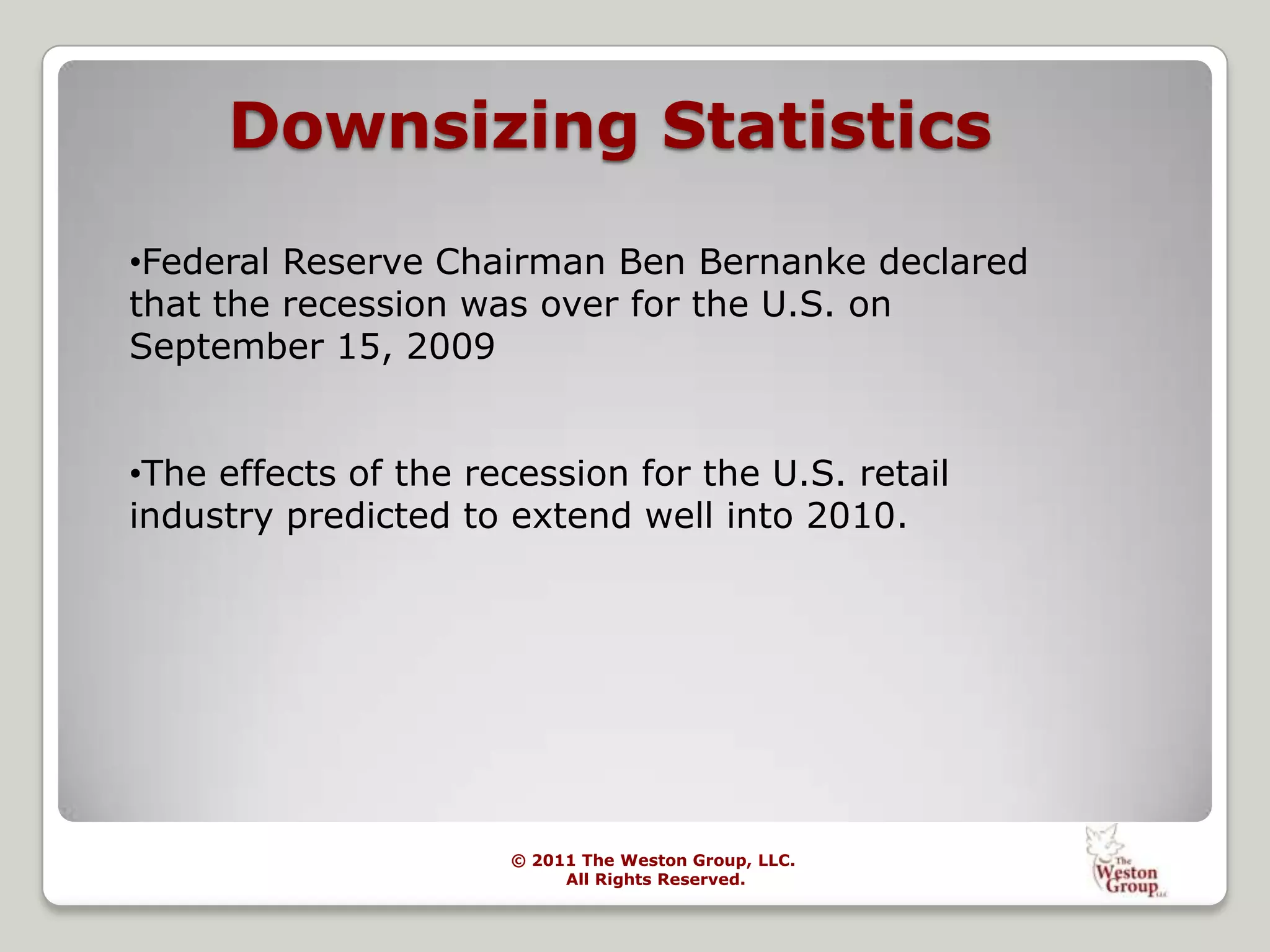
    Downsizing StatisticsFederal ReserveChairman Ben Bernanke declared that the recession was over for the U.S. on September 15, 2009
  • 266.
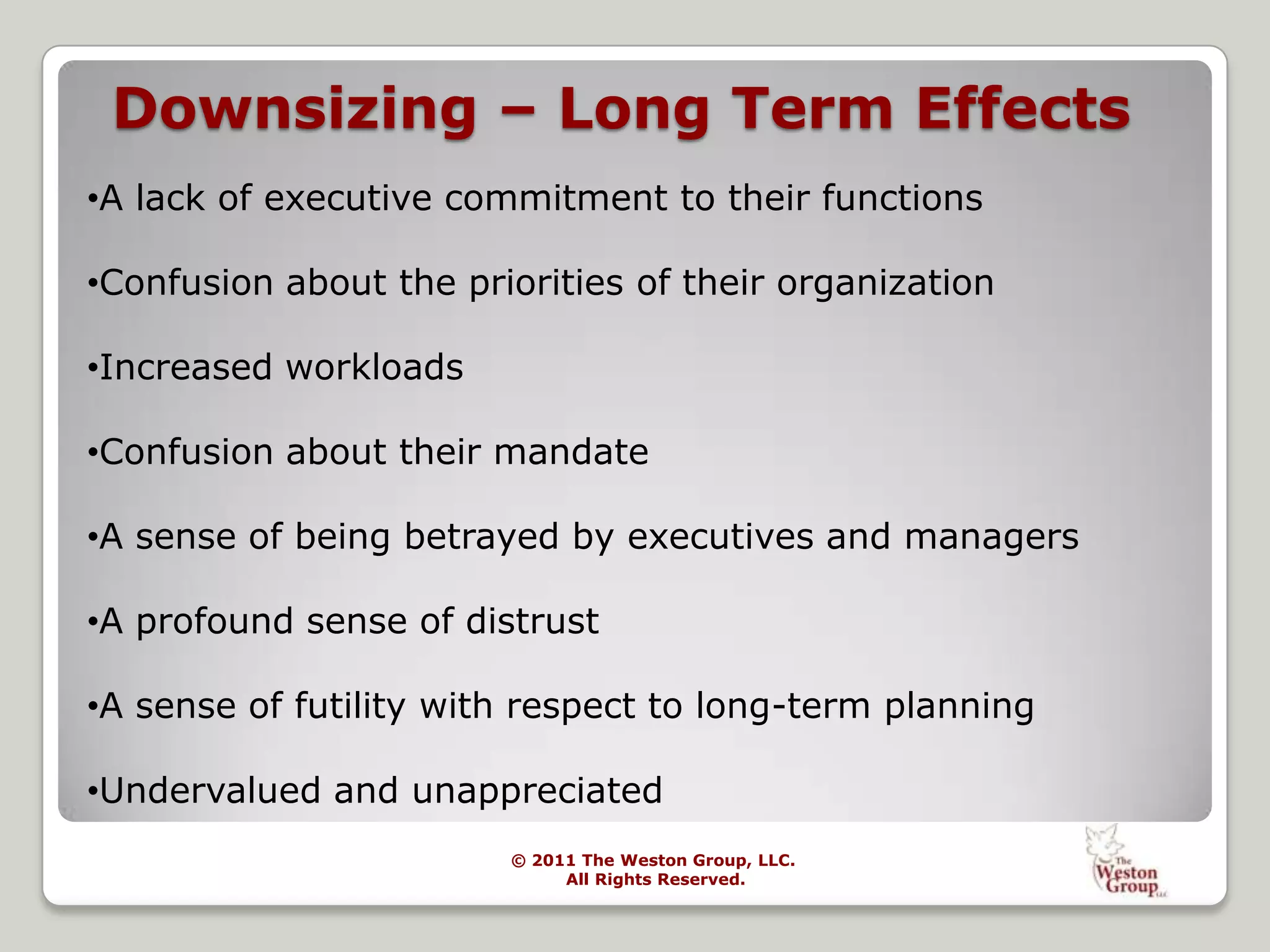
    The effects ofthe recession for the U.S. retail industry predicted to extend well into 2010. Downsizing – Long Term EffectsA lack of executive commitment to their functions
  • 267.
    Confusion about thepriorities of their organization
  • 268.
  • 269.
  • 270.
    A sense ofbeing betrayed by executives and managers
  • 271.
    A profound senseof distrust
  • 272.
    A sense offutility with respect to long-term planning
  • 273.
    Undervalued and unappreciatedDownsizing – Think Before You Cut If you are in the unfortunate position of managing an organization that is "downcycling", you need to be aware of a few things:First, it will get worse if neglected.  
  • 274.
    Second, interventions toturn the cycle around must be considered as long-term projects.   
  • 275.
    Remember that yourorganization may have been moving downward for a year or two, and that it is going to take a substantial period of time to reverse the process. 
  • 276.
    Positive change willrequire a consistent effort on your part, and may require consulting help over a period as long as a year.   Downsizing – Think Before You Cut1. Proactive management activities are always required when downsizing occurs.Managers must realize that they "can pay now or pay later", and that delaying actions designed to revitalize the organization will result in a huge cost down the road.  2. Support should be offered to those that are displaced, but, in the long term, help offered to "survivors" will be much more important in determining organizational health.
  • 277.
  • 278.
    Strategic Human CapitalManagementCorporate Office:315 S. Phillips AvenueSioux Falls, South Dakota 57104Office (605) 275-4747Info@TheWestonGroup.com www.TheWestonGroup.com