HR Transformation
A High-level Introduction
2
Keep an outside-in perspective
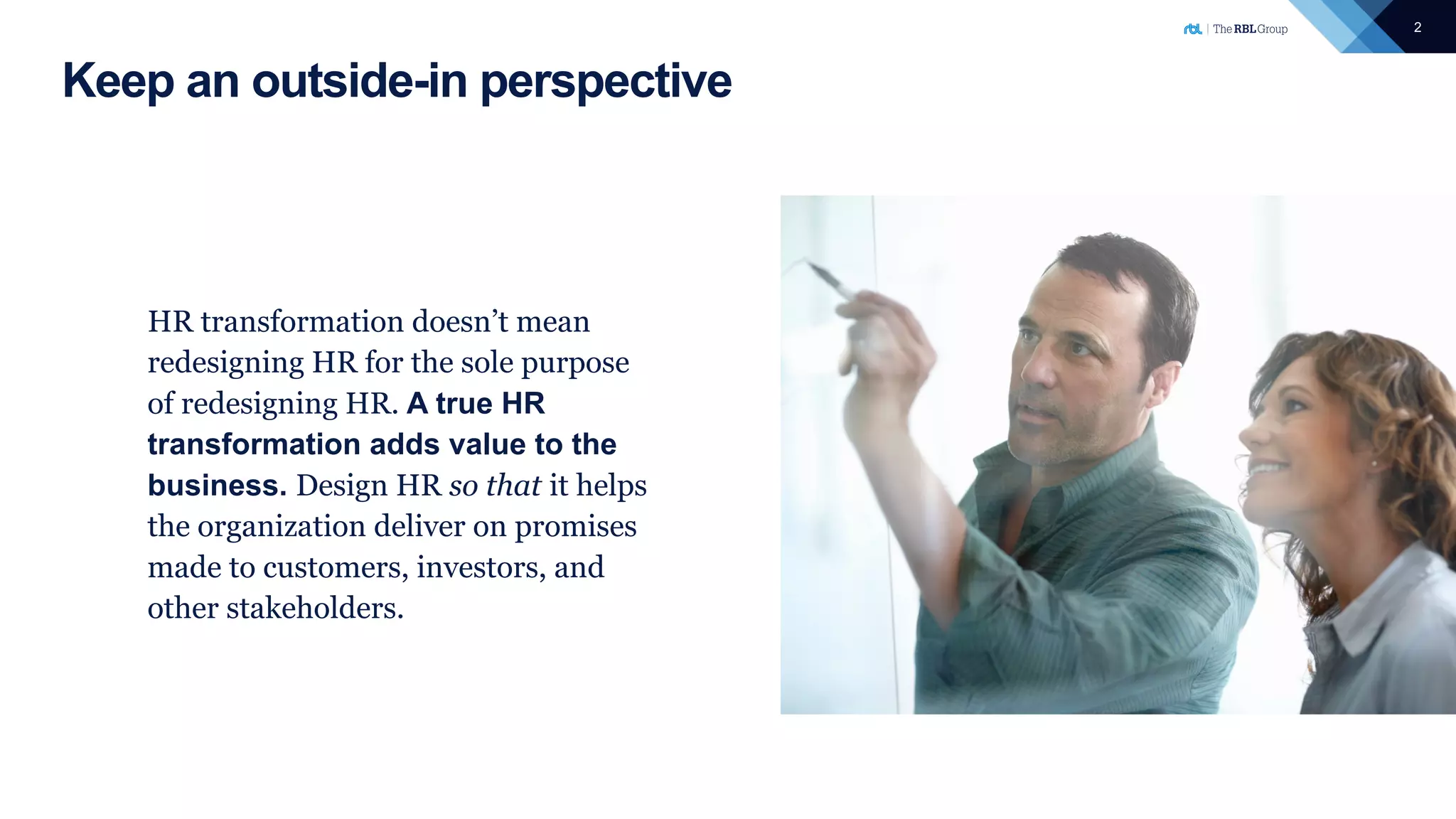
HR transformation doesn’t mean
redesigning HR for the sole purpose
of redesigning HR. A true HR
transformation adds value to the
business. Design HR so that it helps
the organization deliver on promises
made to customers, investors, and
other stakeholders.
3
2. Strategic work should be
designed to increase the impact
of key business capabilities
Create effectiveness by:
• Accessibility
• Customization
• Flexibility
• Simplicity
• Connectivity
• Adaptability
1. Essential work should be
designed to drive cost savings
through operational efficiency
Create efficiency by:
• Continuous improvement
• Rationalization
• Standardization
• Optimization
• Globalization
Design HR for efficiency and effectiveness
4
HR strategy and structure should
match the strategy and structure of
the business. HR strategies and
practices should be customized to fit
the logic of the business and to build
the capabilities your business needs
to succeed. Form follows function.
The decisions of what to standardize
and what to customize are key to an
effective HR organization design.
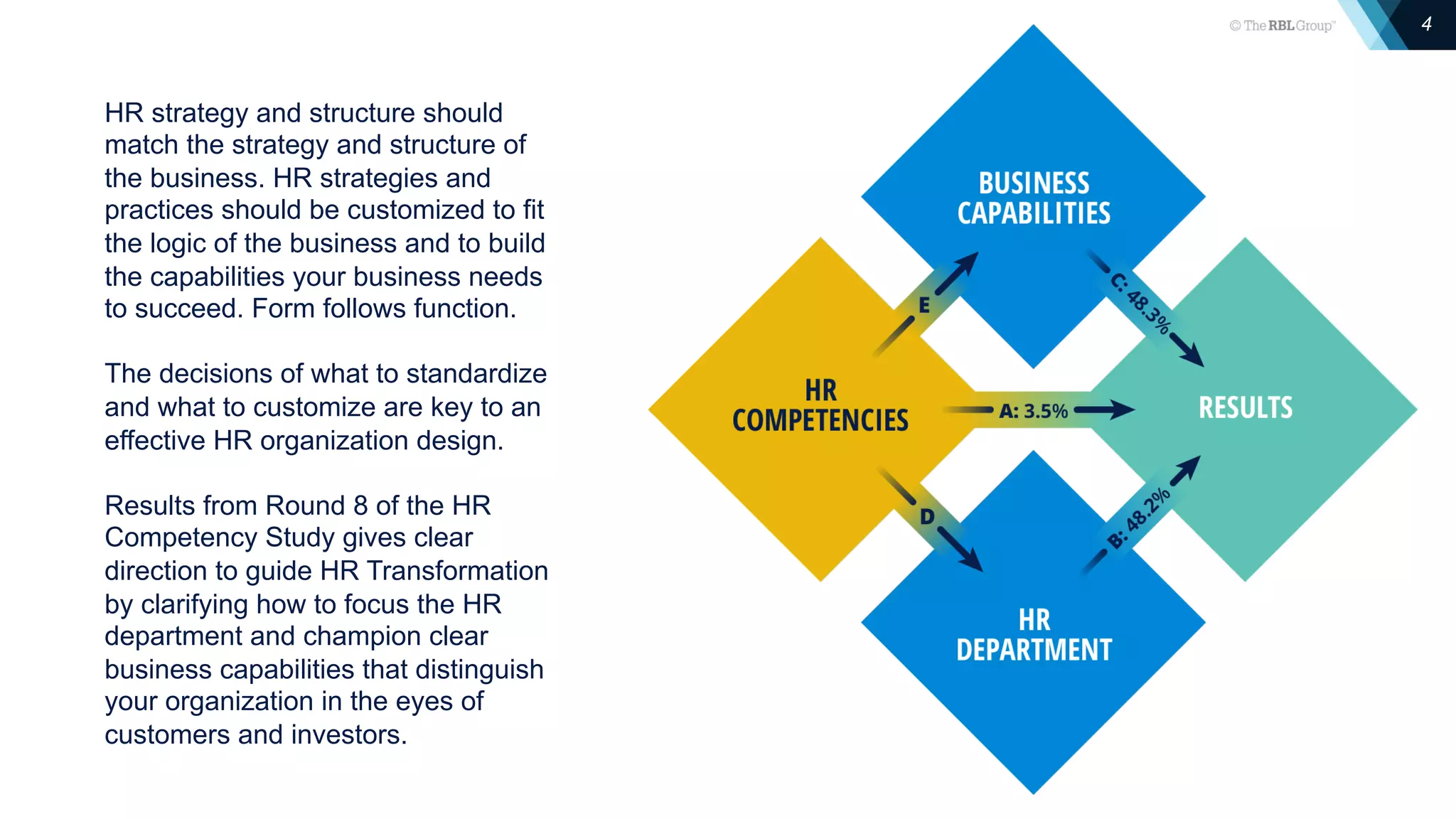
Results from Round 8 of the HR
Competency Study gives clear
direction to guide HR Transformation
by clarifying how to focus the HR
department and champion clear
business capabilities that distinguish
your organization in the eyes of
customers and investors.
5
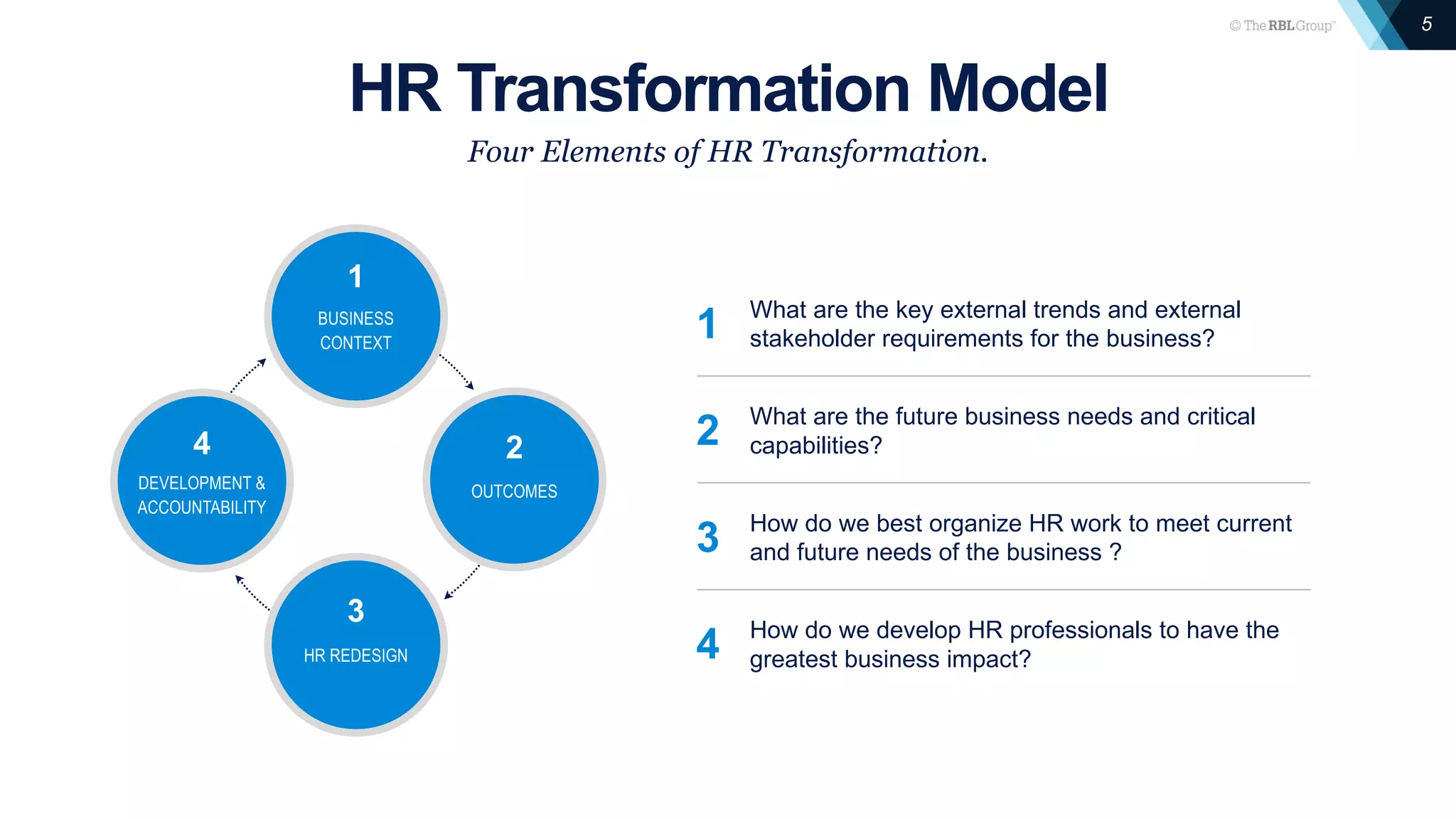
HR Transformation Model
Four Elements of HR Transformation.
1 What are the key external trends and external
stakeholder requirements for the business?
2 What are the future business needs and critical
capabilities?
3 How do we best organize HR work to meet current
and future needs of the business ?
4 How do we develop HR professionals to have the
greatest business impact?
BUSINESS
CONTEXT
1
HR REDESIGN
3
OUTCOMES
2
DEVELOPMENT &
ACCOUNTABILITY
4
6
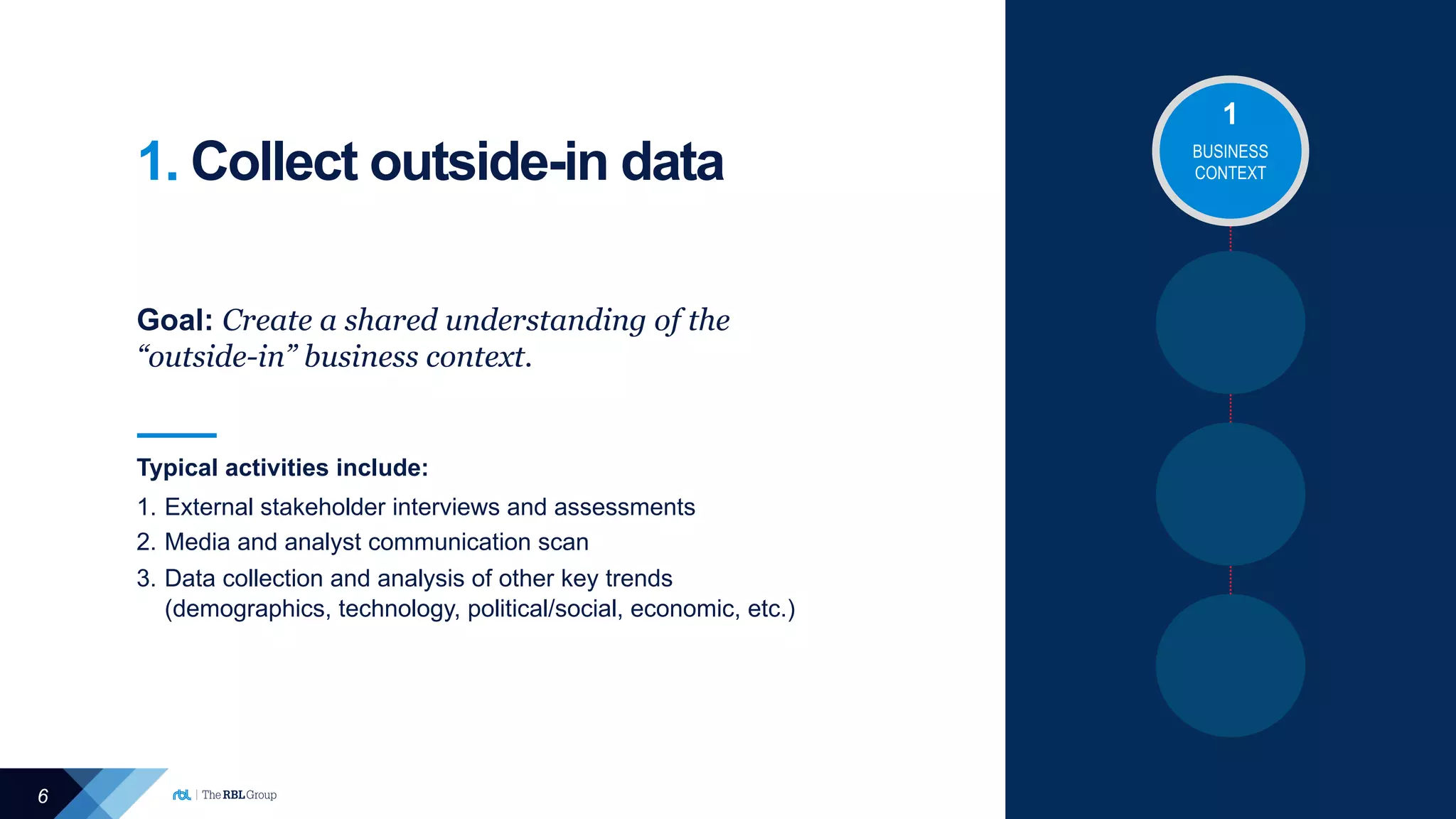
1. Collect outside-in data
Goal: Create a shared understanding of the
“outside-in” business context.
Typical activities include:
1. External stakeholder interviews and assessments
2. Media and analyst communication scan
3. Data collection and analysis of other key trends
(demographics, technology, political/social, economic, etc.)
BUSINESS
CONTEXT
1
7
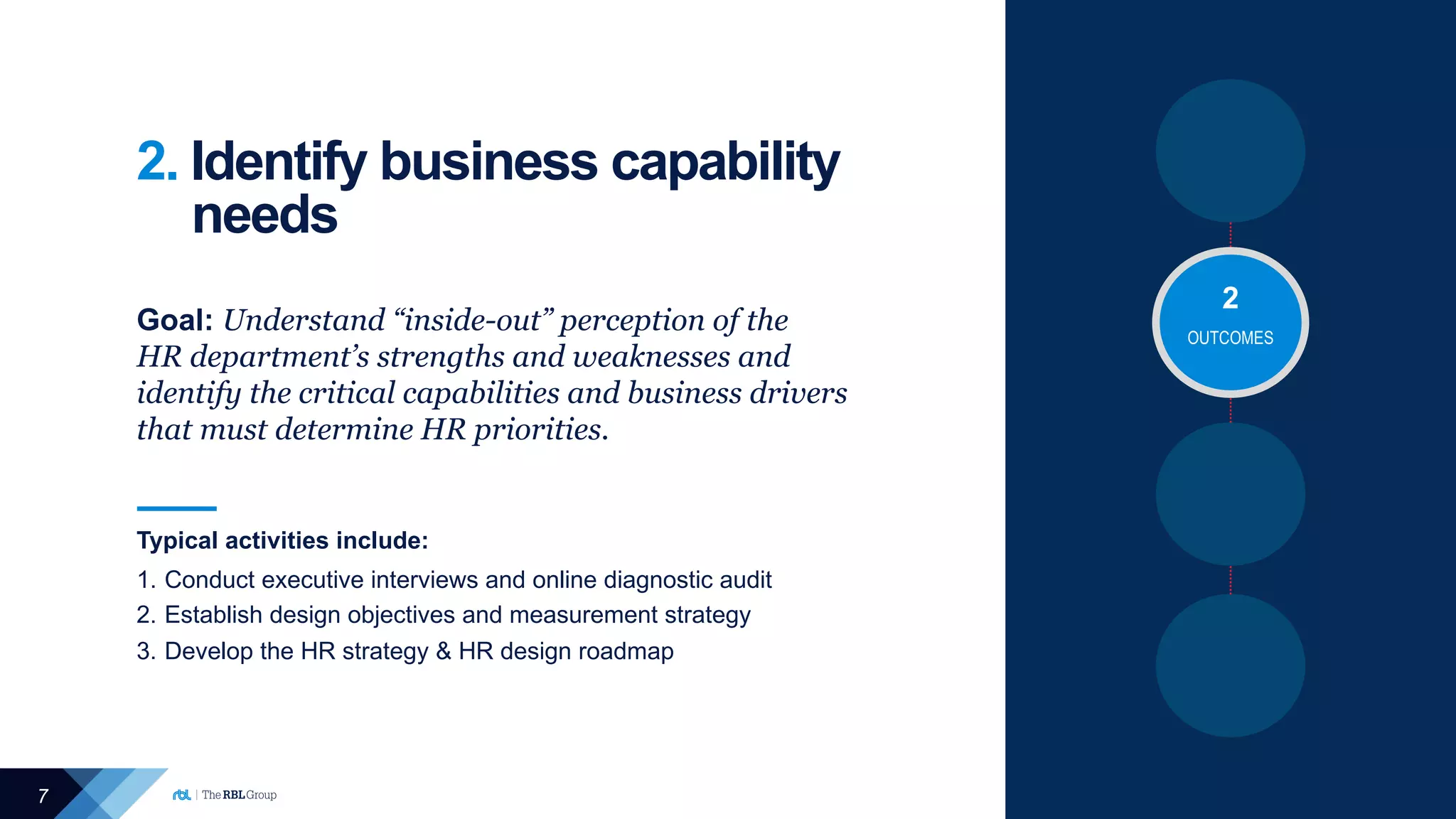
2. Identify business capability
needs
Goal: Understand “inside-out” perception of the
HR department’s strengths and weaknesses and
identify the critical capabilities and business drivers
that must determine HR priorities.
Typical activities include:
1. Conduct executive interviews and online diagnostic audit
2. Establish design objectives and measurement strategy
3. Develop the HR strategy & HR design roadmap
OUTCOMES
2
8
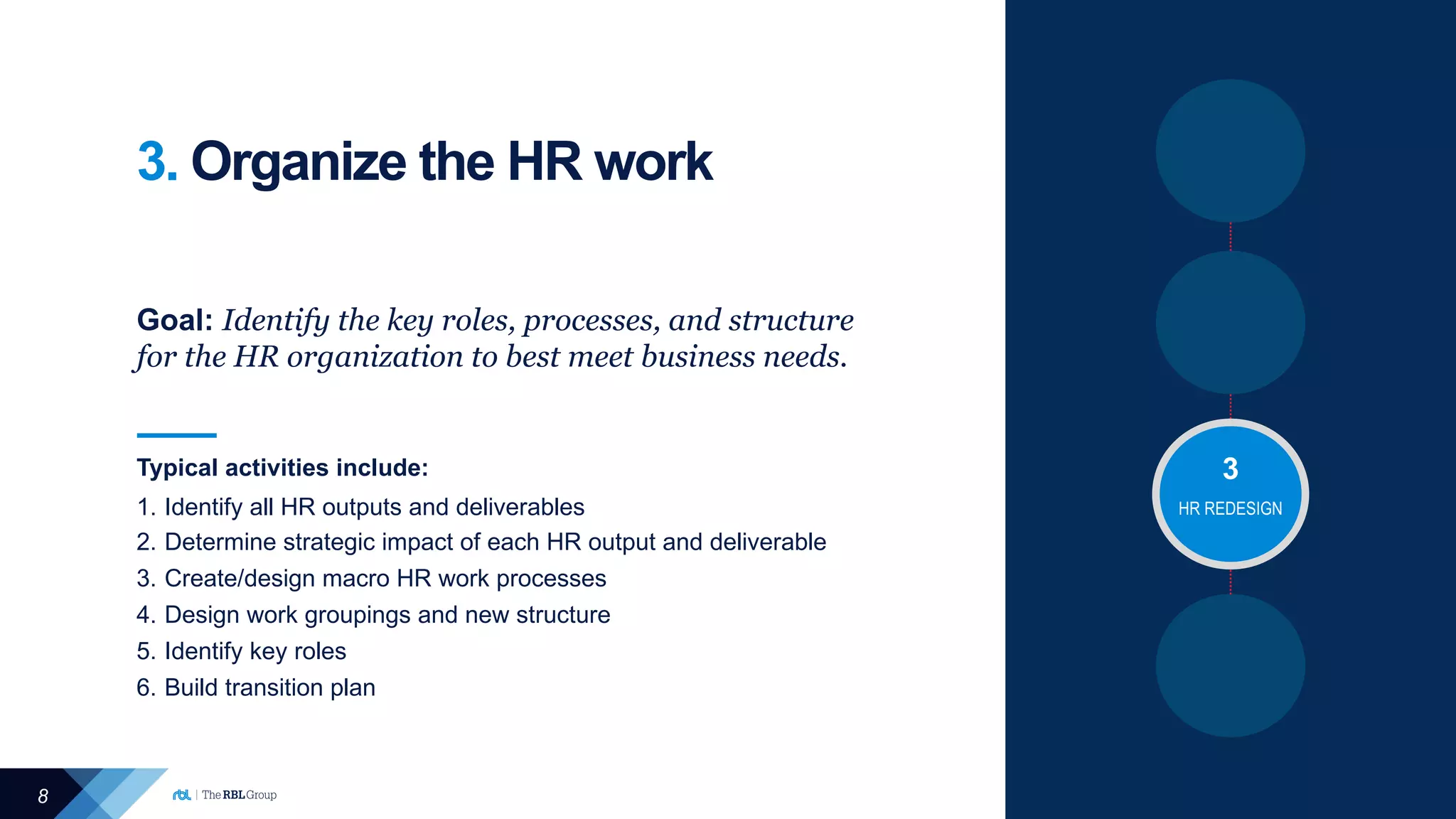
3. Organize the HR work
Goal: Identify the key roles, processes, and structure
for the HR organization to best meet business needs.
Typical activities include:
1. Identify all HR outputs and deliverables
2. Determine strategic impact of each HR output and deliverable
3. Create/design macro HR work processes
4. Design work groupings and new structure
5. Identify key roles
6. Build transition plan
HR REDESIGN
3
9
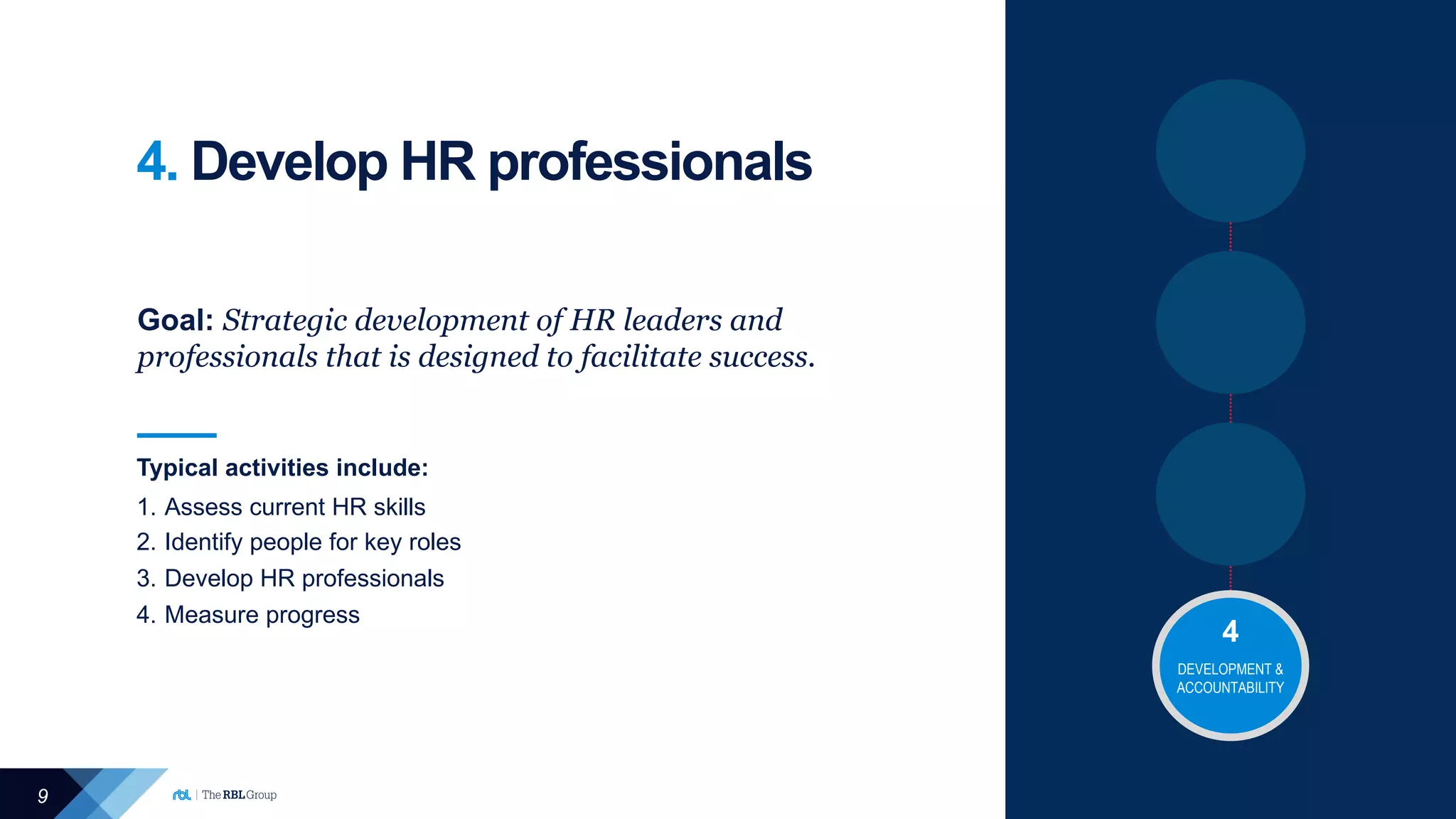
4. Develop HR professionals
Goal: Strategic development of HR leaders and
professionals that is designed to facilitate success.
Typical activities include:
1. Assess current HR skills
2. Identify people for key roles
3. Develop HR professionals
4. Measure progress
DEVELOPMENT &
ACCOUNTABILITY
4
10
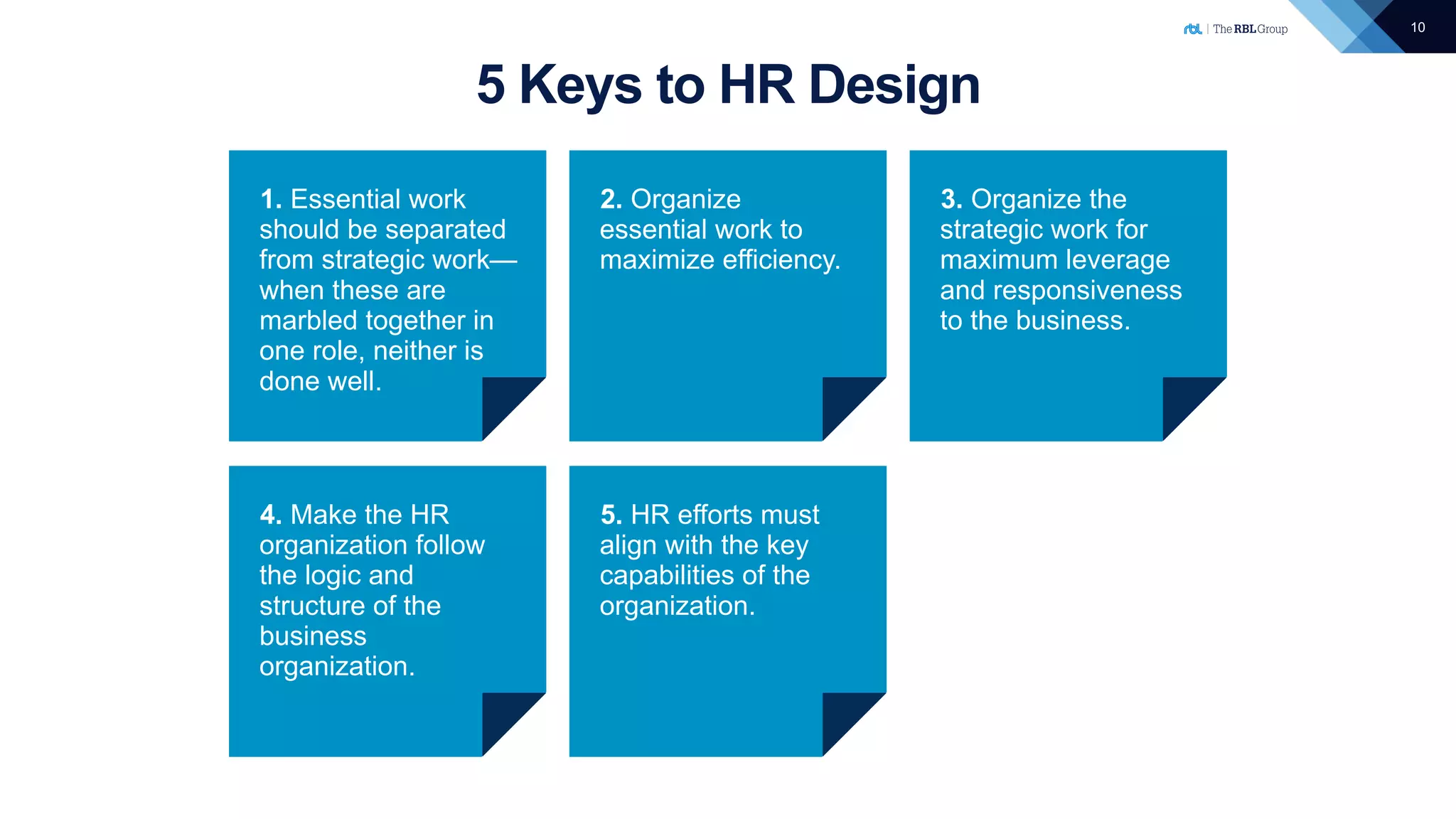
5 Keys to HR Design
5. HR efforts must
align with the key
capabilities of the
organization.
3. Organize the
strategic work for
maximum leverage
and responsiveness
to the business.
2. Organize
essential work to
maximize efficiency.
4. Make the HR
organization follow
the logic and
structure of the
business
organization.
1. Essential work
should be separated
from strategic work—
when these are
marbled together in
one role, neither is
done well.
Contact us to learn more about RBL’s HR transformation services.
Contact Us
We can help.
Contact us at rblmail@rbl.net to learn more.

HR Transformation: A High-Level Introduction

  • 1.
  • 2.
    2 Keep an outside-inperspective HR transformation doesn’t mean redesigning HR for the sole purpose of redesigning HR. A true HR transformation adds value to the business. Design HR so that it helps the organization deliver on promises made to customers, investors, and other stakeholders.
  • 3.
    3 2. Strategic workshould be designed to increase the impact of key business capabilities Create effectiveness by: • Accessibility • Customization • Flexibility • Simplicity • Connectivity • Adaptability 1. Essential work should be designed to drive cost savings through operational efficiency Create efficiency by: • Continuous improvement • Rationalization • Standardization • Optimization • Globalization Design HR for efficiency and effectiveness
  • 4.
    4 HR strategy andstructure should match the strategy and structure of the business. HR strategies and practices should be customized to fit the logic of the business and to build the capabilities your business needs to succeed. Form follows function. The decisions of what to standardize and what to customize are key to an effective HR organization design. Results from Round 8 of the HR Competency Study gives clear direction to guide HR Transformation by clarifying how to focus the HR department and champion clear business capabilities that distinguish your organization in the eyes of customers and investors.
  • 5.
    5 HR Transformation Model FourElements of HR Transformation. 1 What are the key external trends and external stakeholder requirements for the business? 2 What are the future business needs and critical capabilities? 3 How do we best organize HR work to meet current and future needs of the business ? 4 How do we develop HR professionals to have the greatest business impact? BUSINESS CONTEXT 1 HR REDESIGN 3 OUTCOMES 2 DEVELOPMENT & ACCOUNTABILITY 4
  • 6.
    6 1. Collect outside-indata Goal: Create a shared understanding of the “outside-in” business context. Typical activities include: 1. External stakeholder interviews and assessments 2. Media and analyst communication scan 3. Data collection and analysis of other key trends (demographics, technology, political/social, economic, etc.) BUSINESS CONTEXT 1
  • 7.
    7 2. Identify businesscapability needs Goal: Understand “inside-out” perception of the HR department’s strengths and weaknesses and identify the critical capabilities and business drivers that must determine HR priorities. Typical activities include: 1. Conduct executive interviews and online diagnostic audit 2. Establish design objectives and measurement strategy 3. Develop the HR strategy & HR design roadmap OUTCOMES 2
  • 8.
    8 3. Organize theHR work Goal: Identify the key roles, processes, and structure for the HR organization to best meet business needs. Typical activities include: 1. Identify all HR outputs and deliverables 2. Determine strategic impact of each HR output and deliverable 3. Create/design macro HR work processes 4. Design work groupings and new structure 5. Identify key roles 6. Build transition plan HR REDESIGN 3
  • 9.
    9 4. Develop HRprofessionals Goal: Strategic development of HR leaders and professionals that is designed to facilitate success. Typical activities include: 1. Assess current HR skills 2. Identify people for key roles 3. Develop HR professionals 4. Measure progress DEVELOPMENT & ACCOUNTABILITY 4
  • 10.
    10 5 Keys toHR Design 5. HR efforts must align with the key capabilities of the organization. 3. Organize the strategic work for maximum leverage and responsiveness to the business. 2. Organize essential work to maximize efficiency. 4. Make the HR organization follow the logic and structure of the business organization. 1. Essential work should be separated from strategic work— when these are marbled together in one role, neither is done well.
  • 11.
    Contact us tolearn more about RBL’s HR transformation services. Contact Us We can help. Contact us at rblmail@rbl.net to learn more.