
How People Learn
Peter Newbury, Ph.D.
Director, Centre for Teaching and Learning, and
Senior Advisor for Learning Initiatives, UBC Okanagan
peter.newbury@ubc.ca peternewbury.org @polarisdotca
#etug
1
etug.ca
“Fish is Fish” by Leo Lionni (1970)
I started my presentation with a picture from Leo Lionni’s “Fish is Fish”
showing a frog describing a cow to a fish (get all that?). The picture is
copyrighted so I’m not including it here but you can see it at 2:27 of this
great video:
https://vimeo.com/39374062
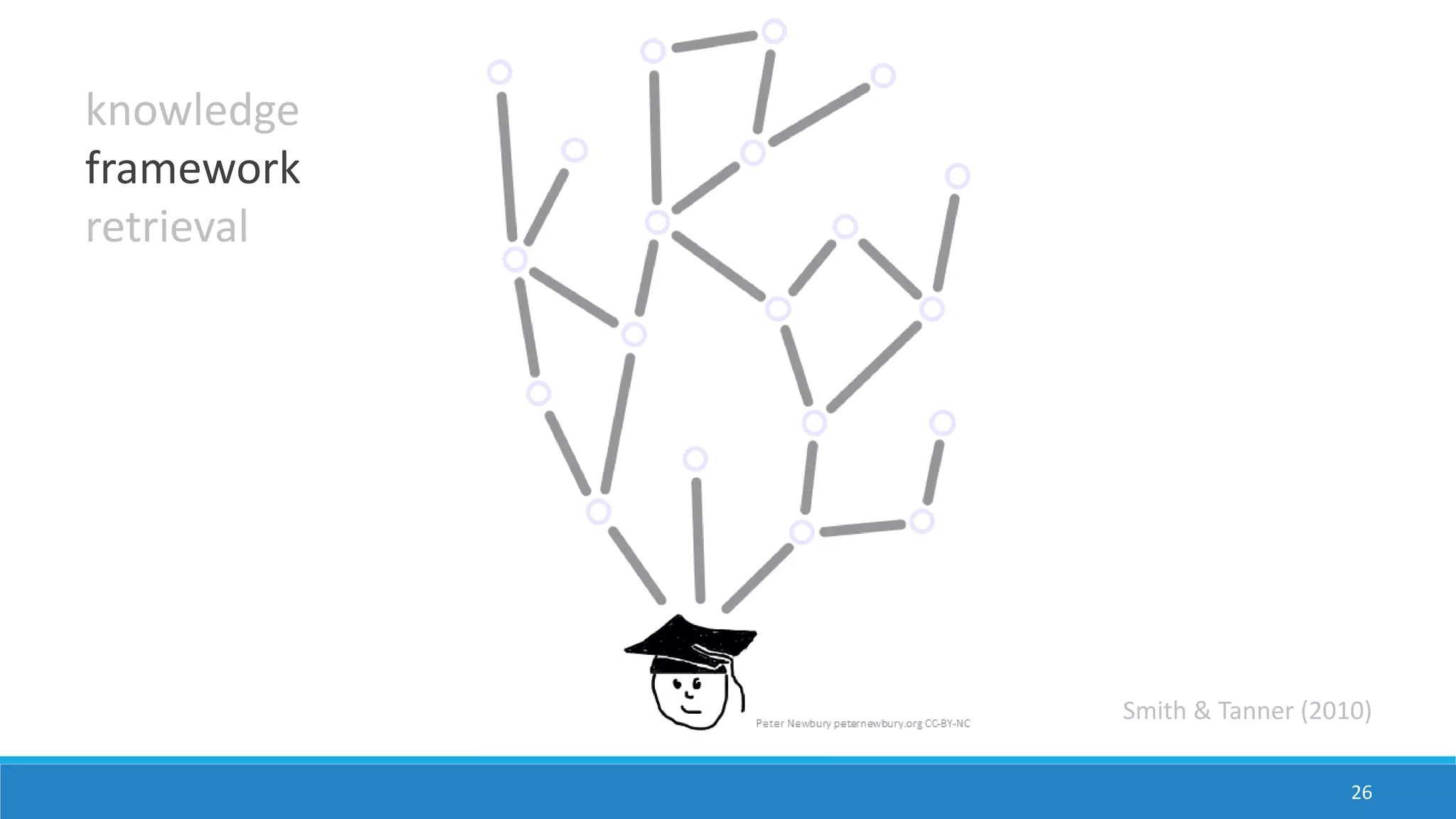
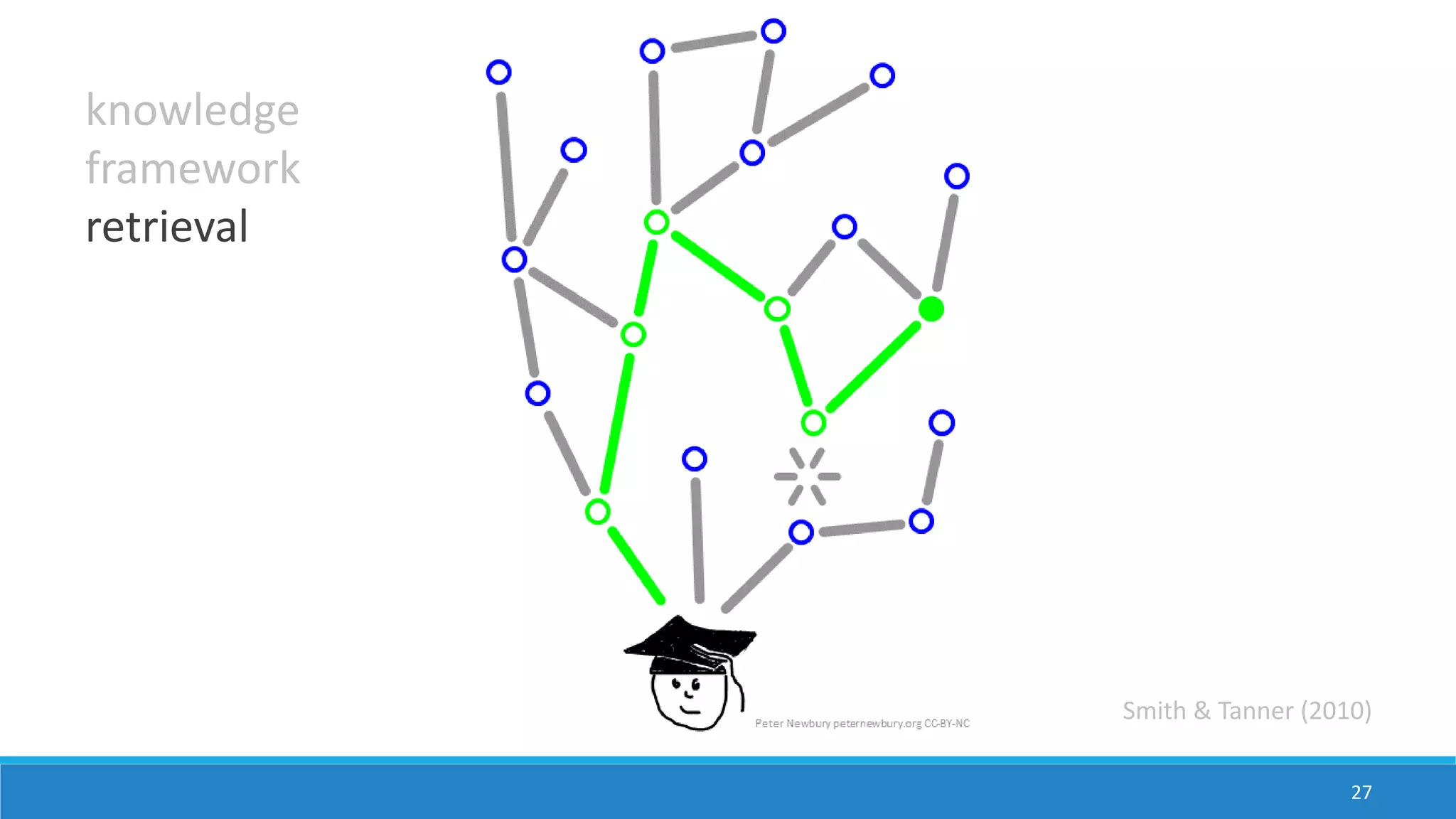
2
Why are we here?
3
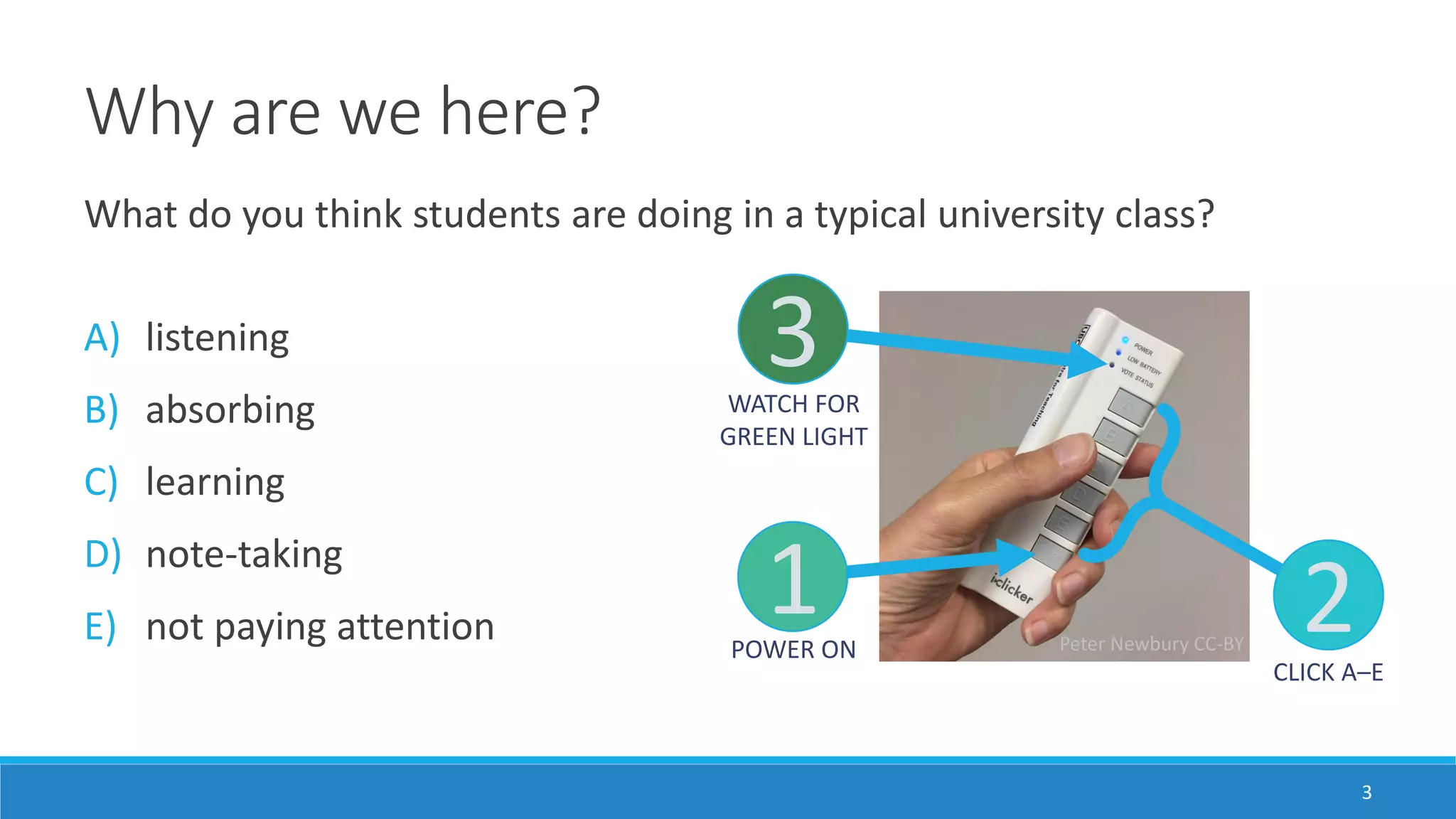
What do you think students are doing in a typical university class?
A) listening
B) absorbing
C) learning
D) note-taking
E) not paying attention Peter Newbury CC-BY
1
3
POWER ON
CLICK A–E
WATCH FOR
GREEN LIGHT
2
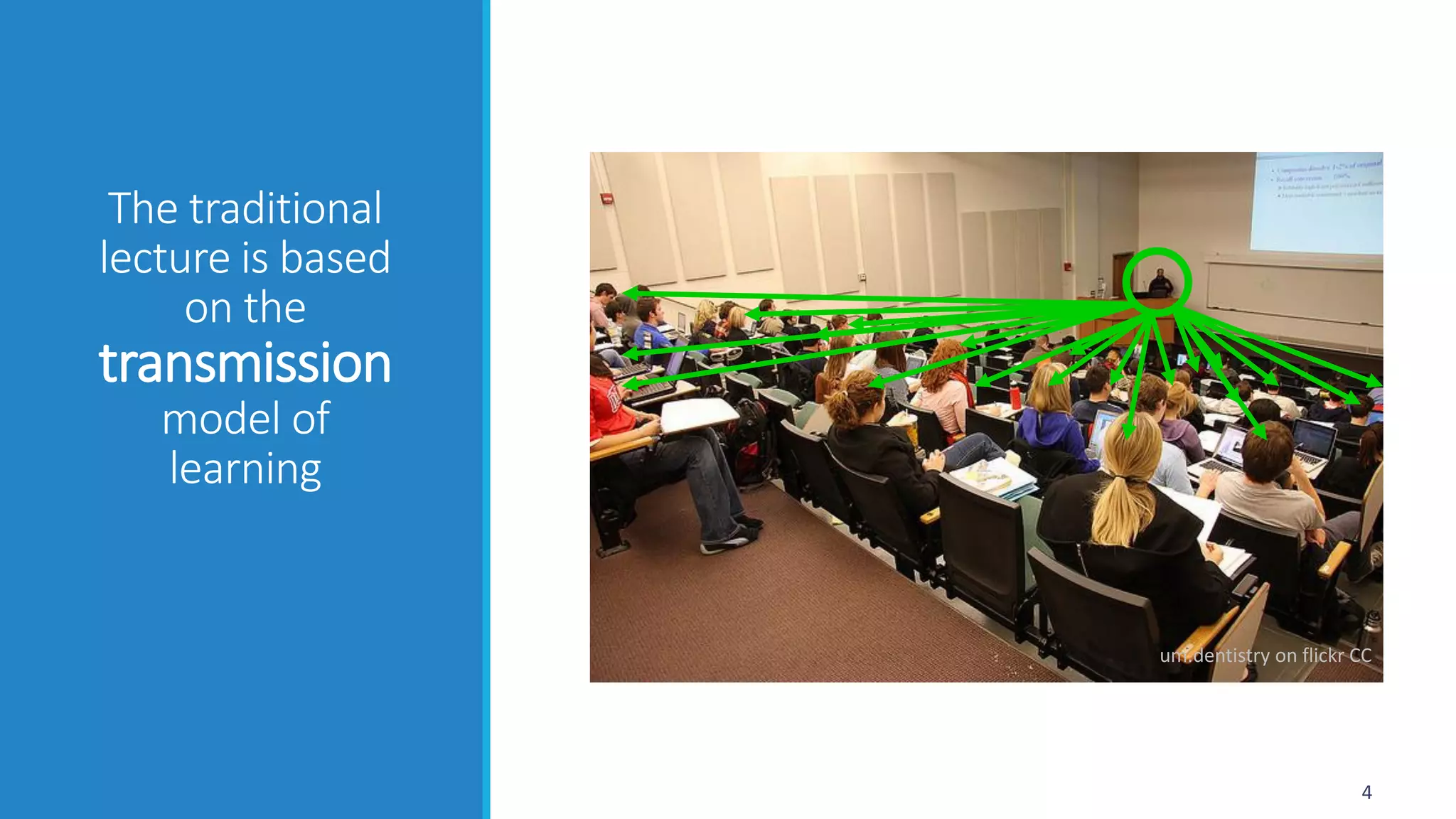
The traditional
lecture is based
on the
transmission
model of
learning
4
um.dentistry on flickr CC
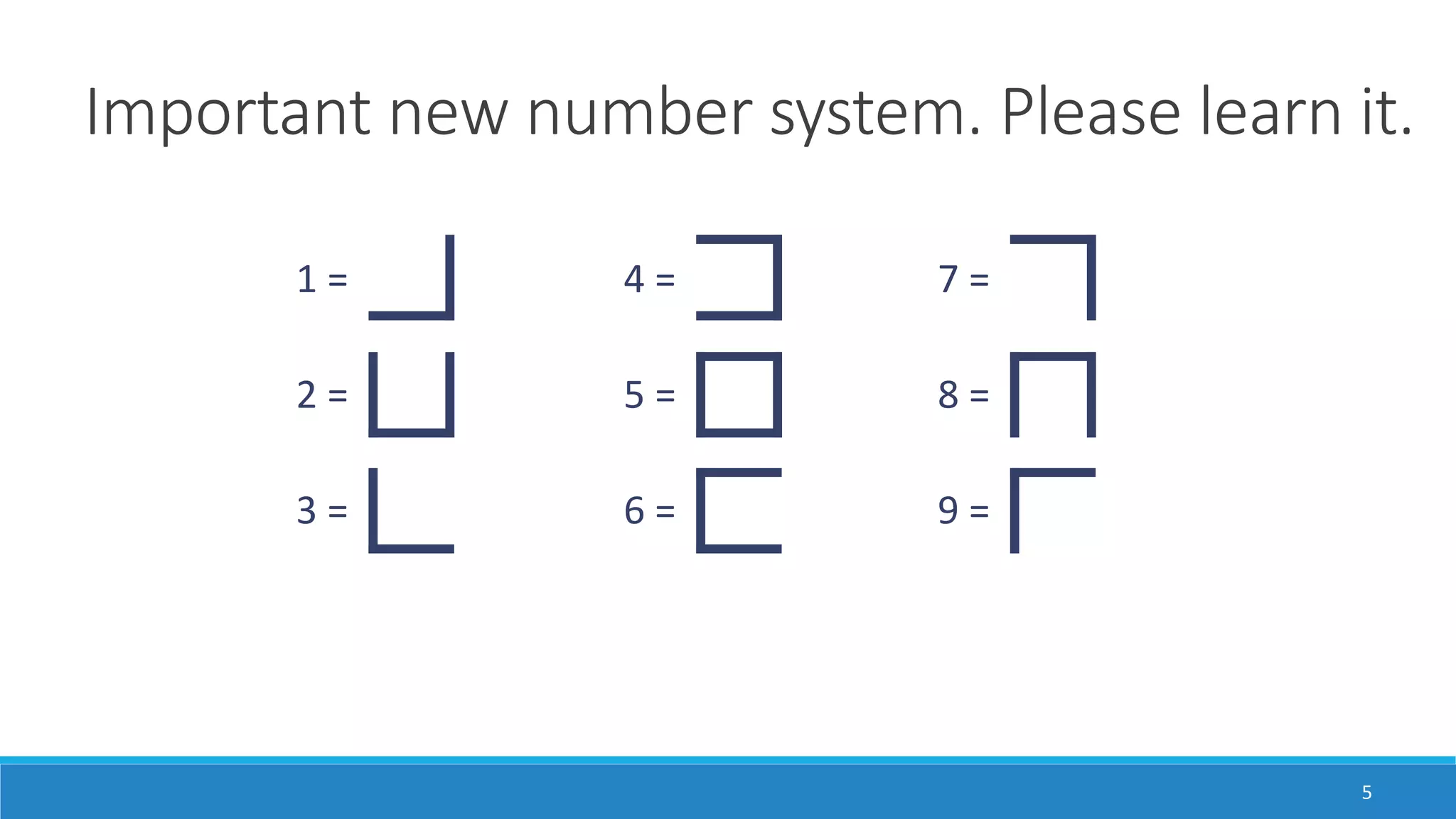
Important new number system. Please learn it.
5
1 = 4 = 7 =
2 = 5 = 8 =
3 = 6 = 9 =
What’s this number?
6
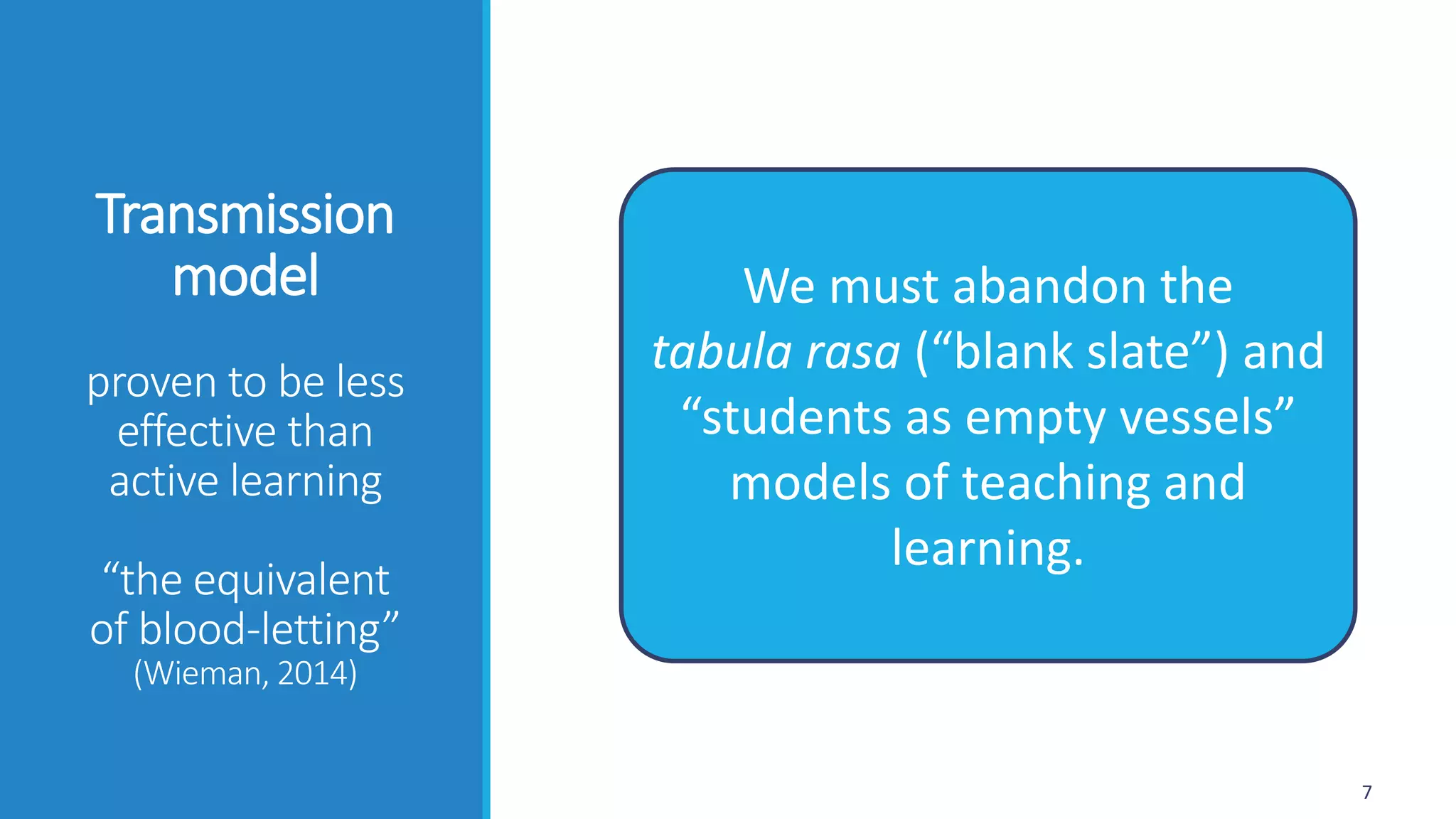
Transmission
model
proven to be less
effective than
active learning
“the equivalent
of blood-letting”
(Wieman, 2014)
7
We must abandon the
tabula rasa (“blank slate”) and
“students as empty vessels”
models of teaching and
learning.
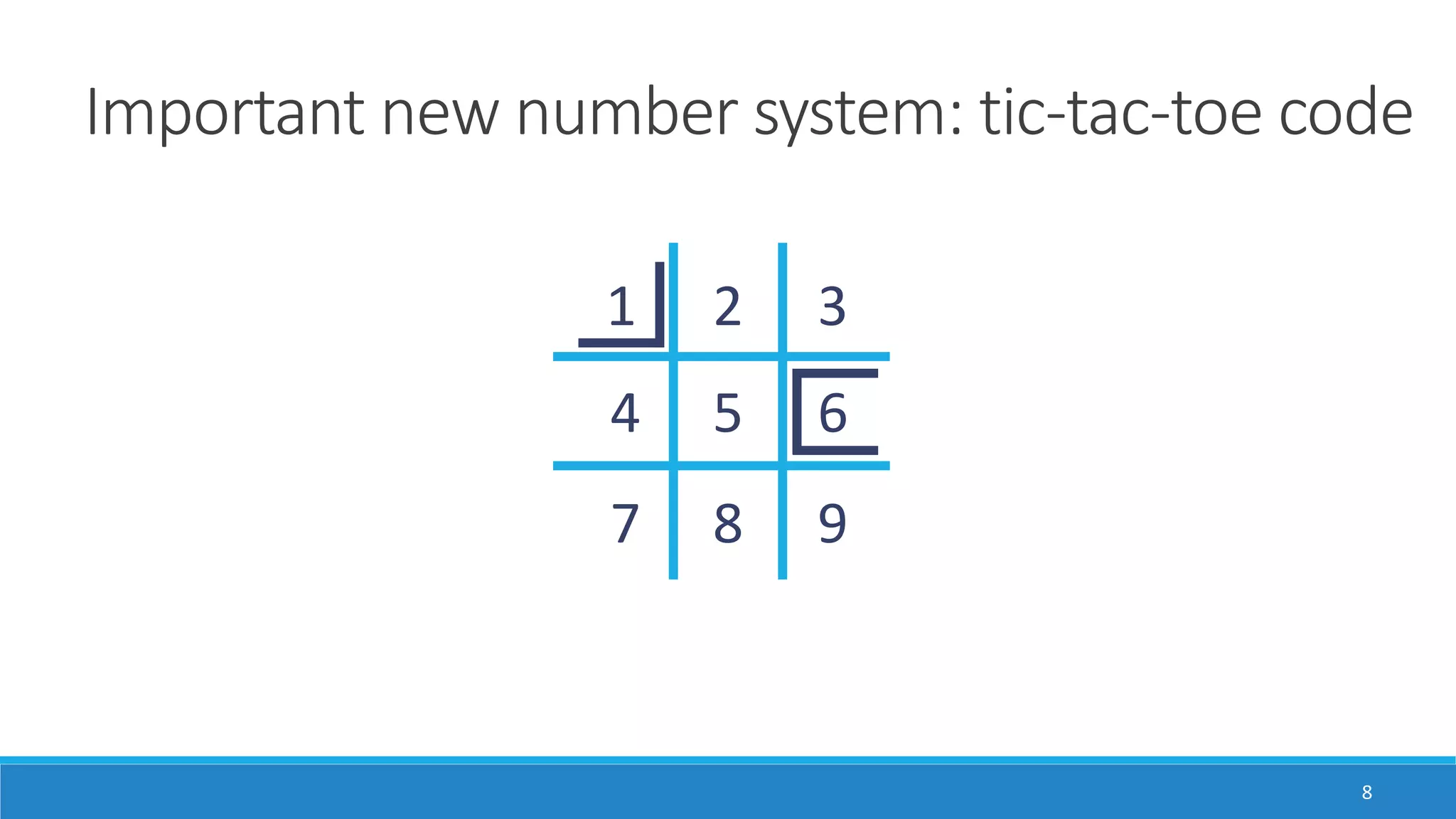
Important new number system: tic-tac-toe code
8
1 2 3
4 5 6
7 8 9
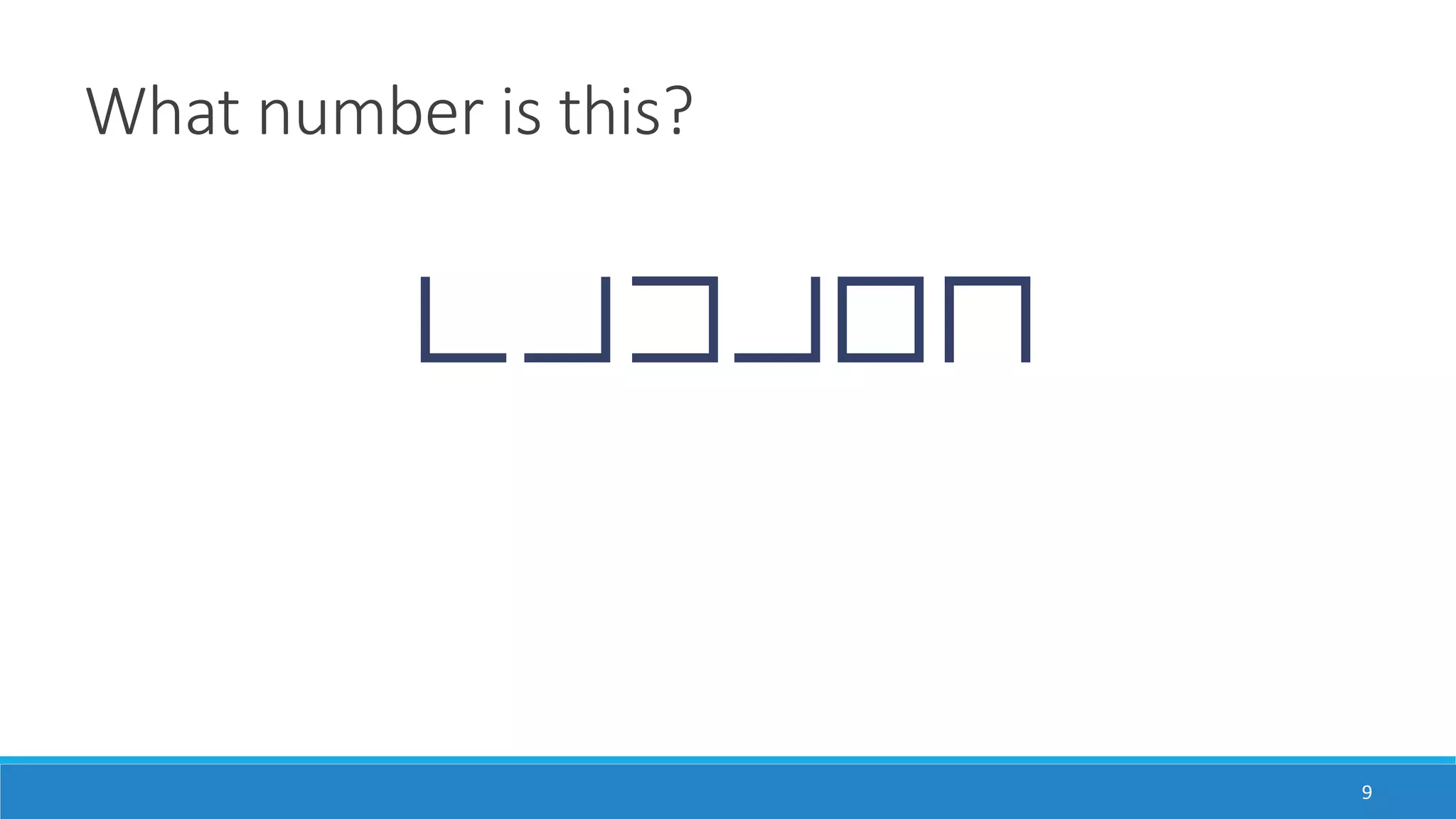
What number is this?
9
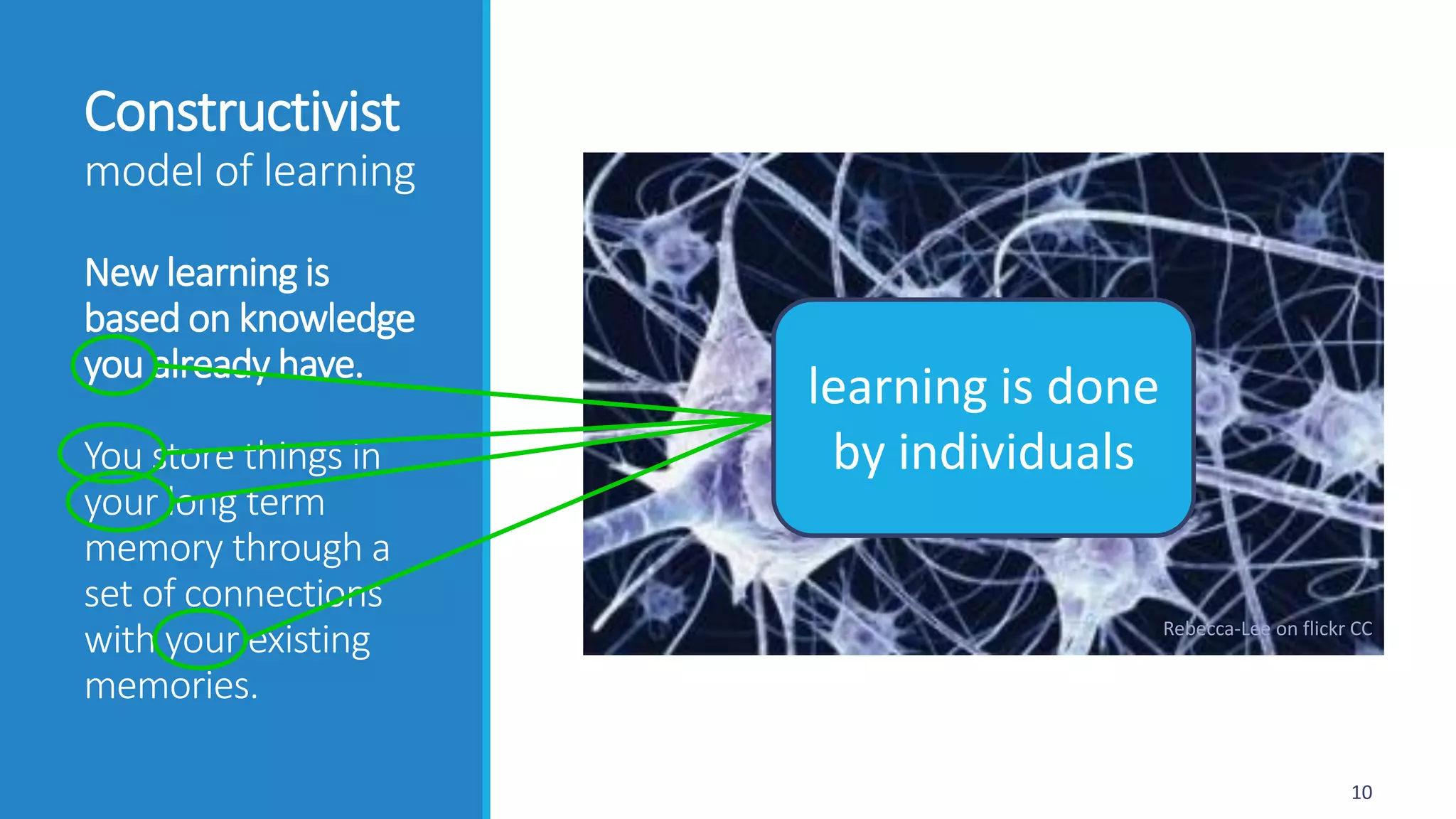
Constructivist
model of learning
New learning is
based on knowledge
you already have.
You store things in
your long term
memory through a
set of connections
with your existing
memories.
10
Rebecca-Lee on flickr CC
learning is done
by individuals
11
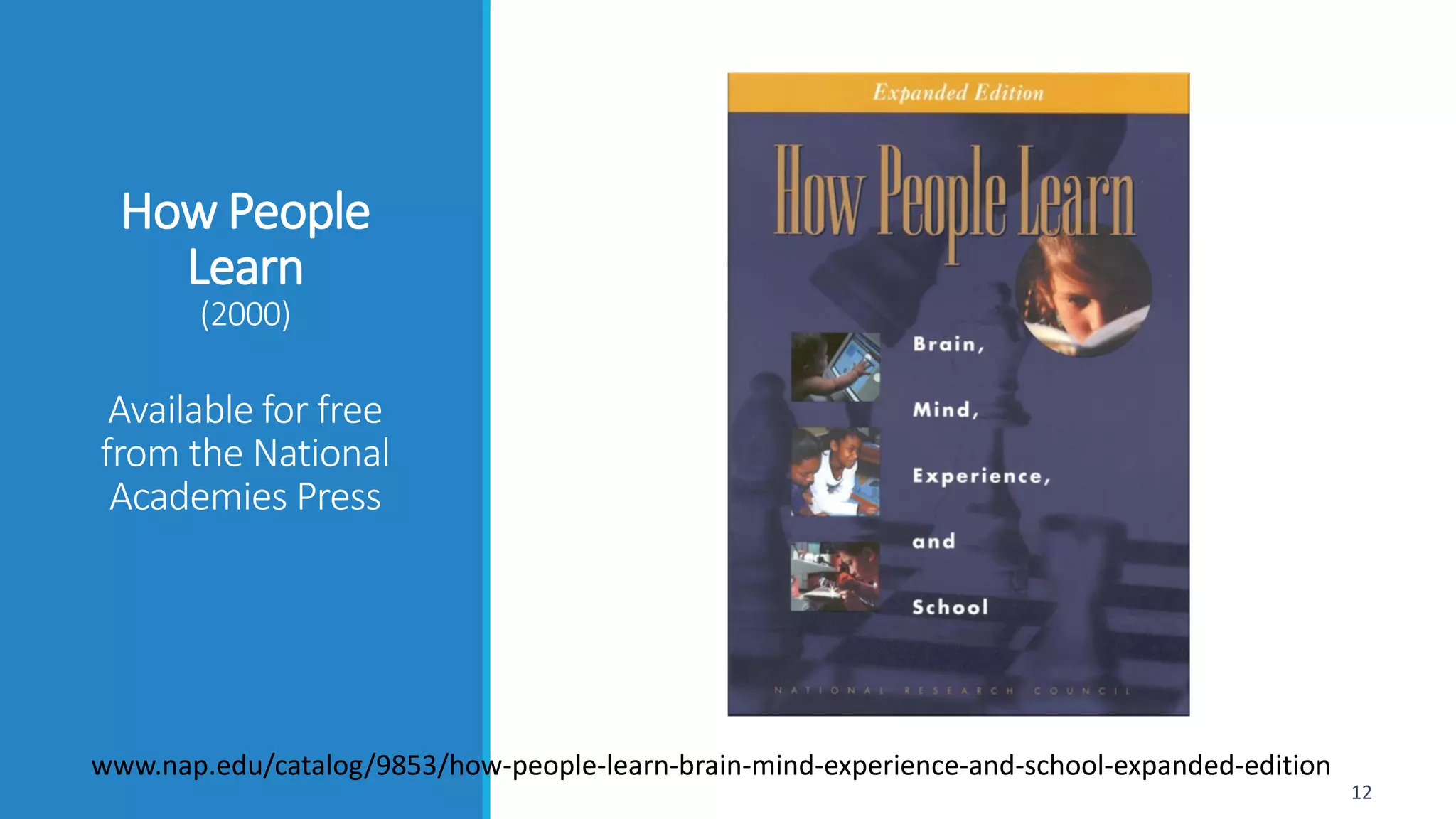
How People
Learn
(2000)
Available for free
from the National
Academies Press
12
www.nap.edu/catalog/9853/how-people-learn-brain-mind-experience-and-school-expanded-edition
Key Finding #1
13
Students come to the classroom with preconceptions about how the world
works. If their initial understanding is not engaged, they may fail to grasp
the new concepts and information that are taught, or they may learn them
for the purposes of a test but revert to their preconceptions outside of the
classroom.
Key Finding #2
14
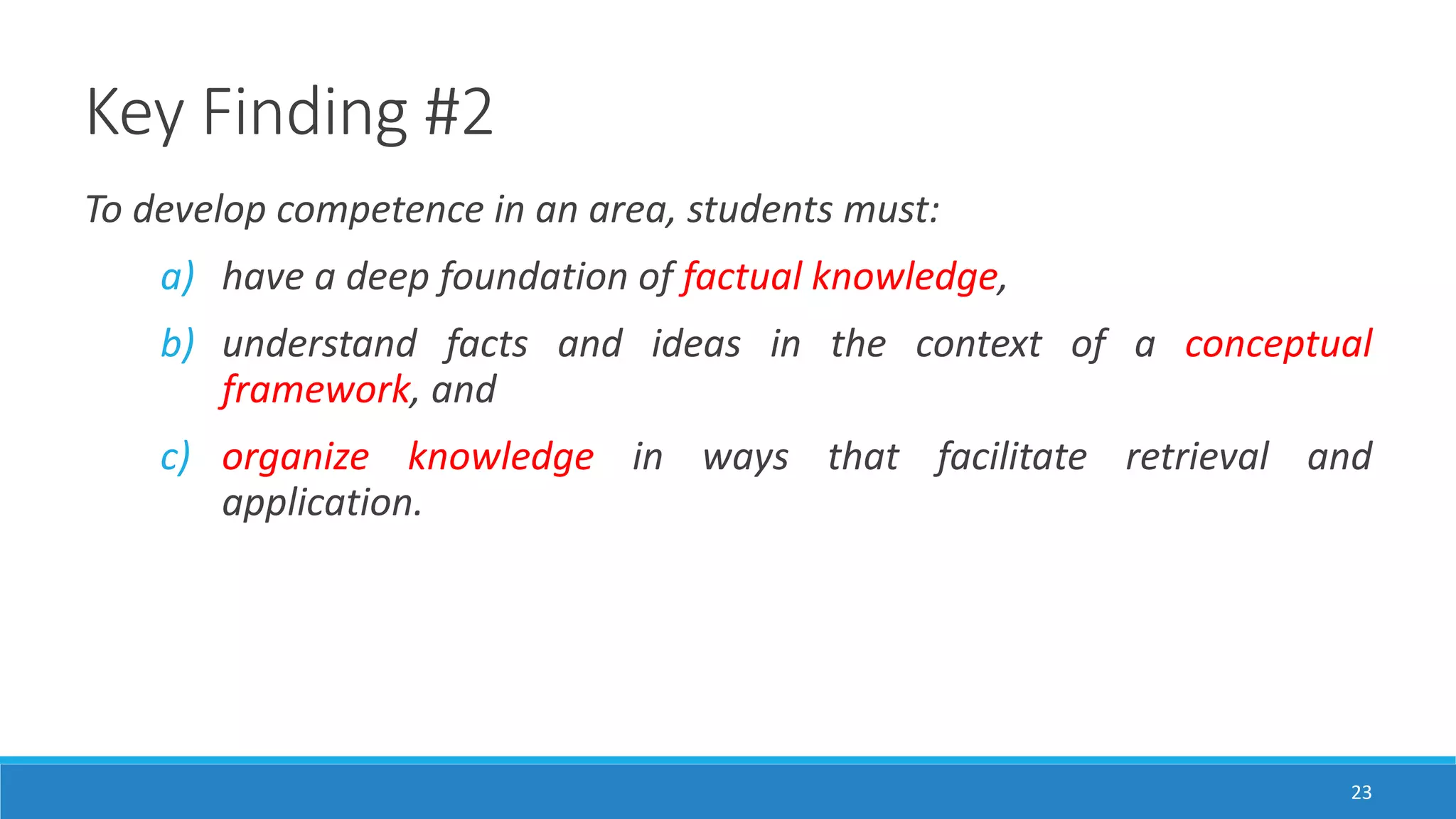
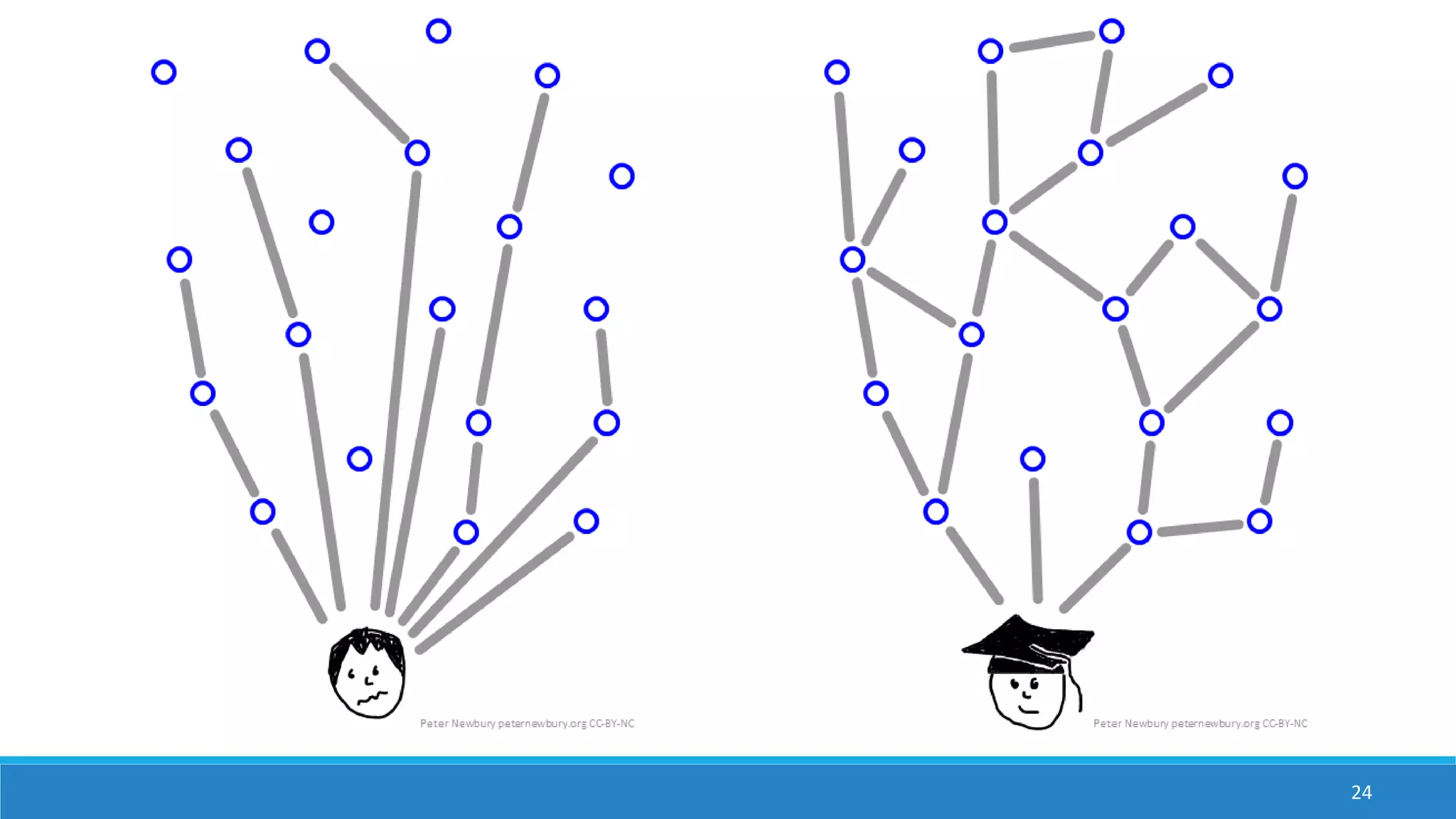
To develop competence in an area, students must:
a) have a deep foundation of factual knowledge,
b) understand facts and ideas in the context of a conceptual
framework, and
c) organize knowledge in ways that facilitate retrieval and
application.
Key Finding #3
15
A “metacognitive” approach to instruction can help students learn to take
control of their own learning by defining learning goals and monitoring
their progress in achieving them.
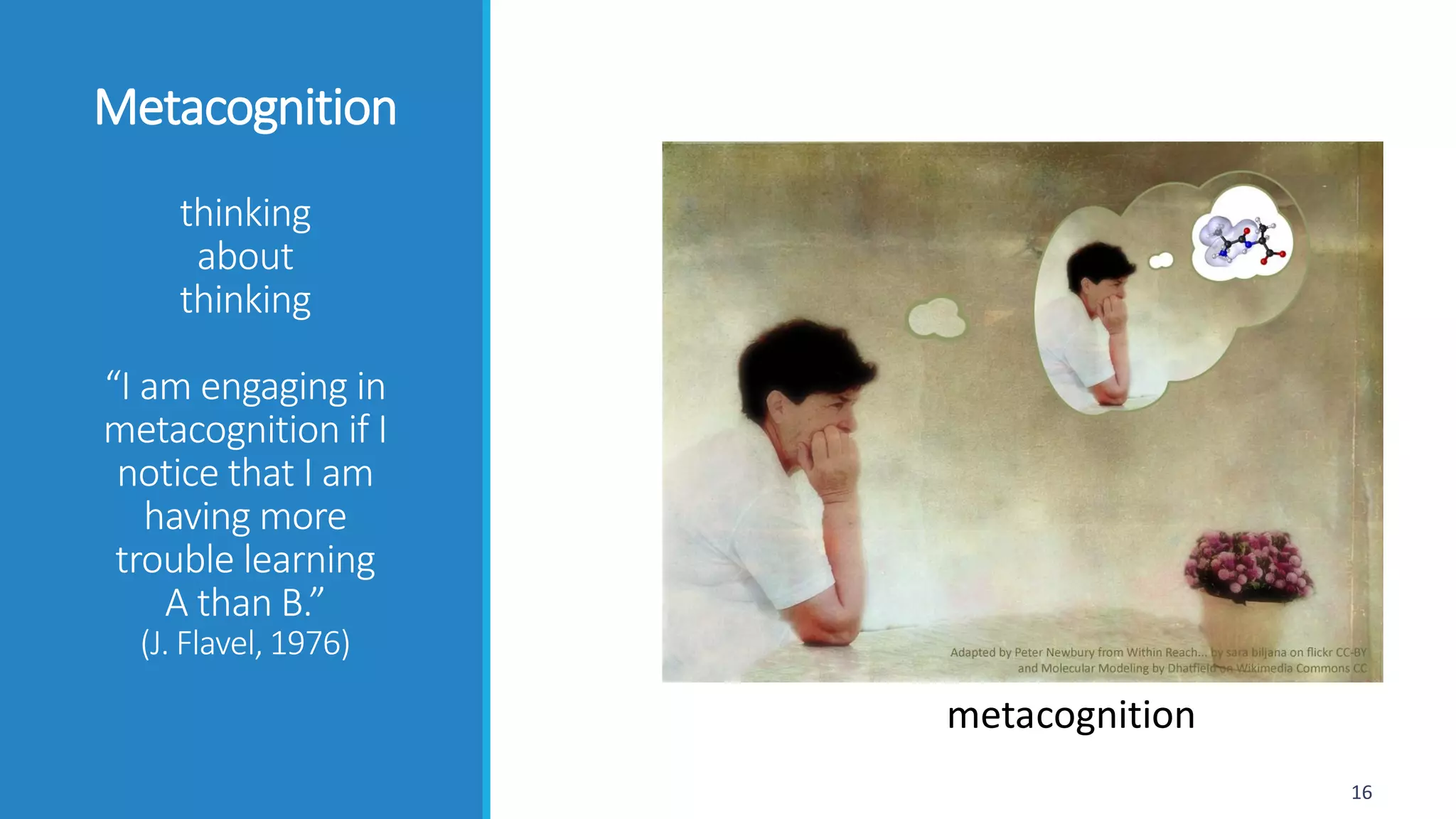
Metacognition
thinking
about
thinking
“I am engaging in
metacognition if I
notice that I am
having more
trouble learning
A than B.”
(J. Flavel, 1976)
16
cognitionmeta
Key Finding #3
17
A “metacognitive” approach to instruction can help students learn to take
control of their own learning by defining learning goals and monitoring
their progress in achieving them.
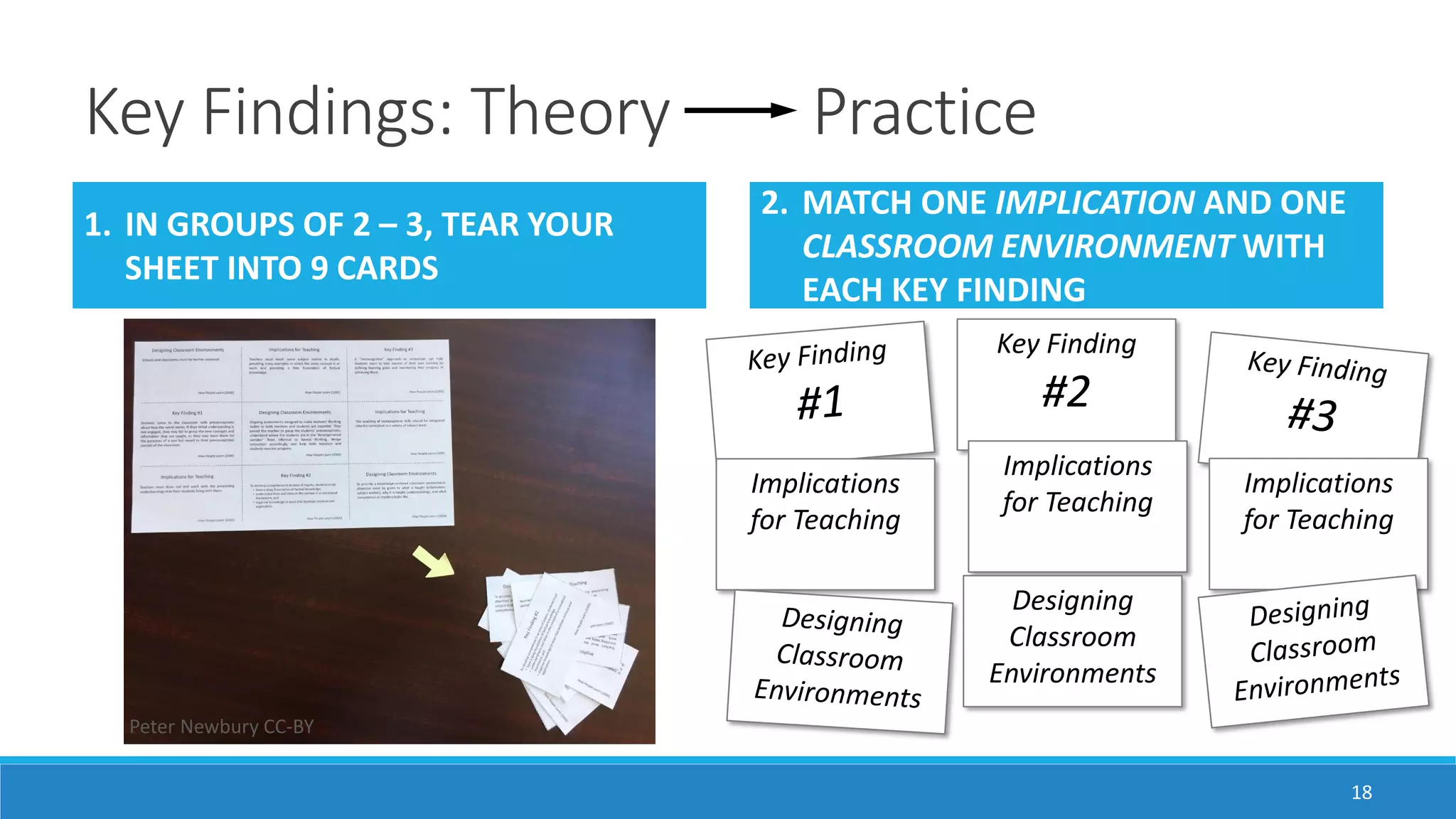
Key Findings: Theory Practice
1. IN GROUPS OF 2 – 3, TEAR YOUR
SHEET INTO 9 CARDS
2. MATCH ONE IMPLICATION AND ONE
CLASSROOM ENVIRONMENT WITH
EACH KEY FINDING
18
Key Finding
#2
Implications
for Teaching
Implications
for Teaching
Implications
for Teaching
Designing
Classroom
Environments
Peter Newbury CC-BY
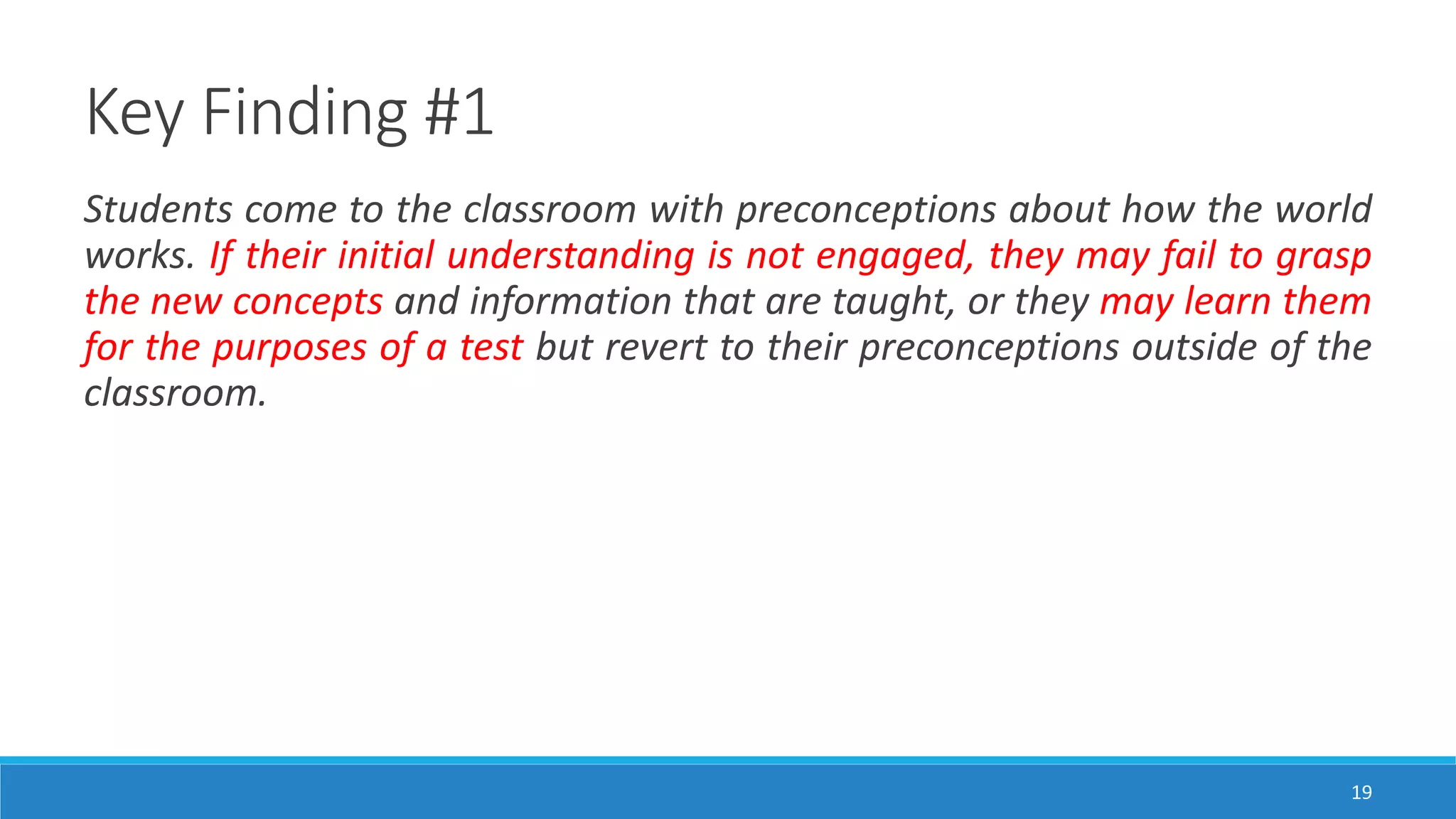
Key Finding #1
19
Students come to the classroom with preconceptions about how the world
works. If their initial understanding is not engaged, they may fail to grasp
the new concepts and information that are taught, or they may learn them
for the purposes of a test but revert to their preconceptions outside of the
classroom.
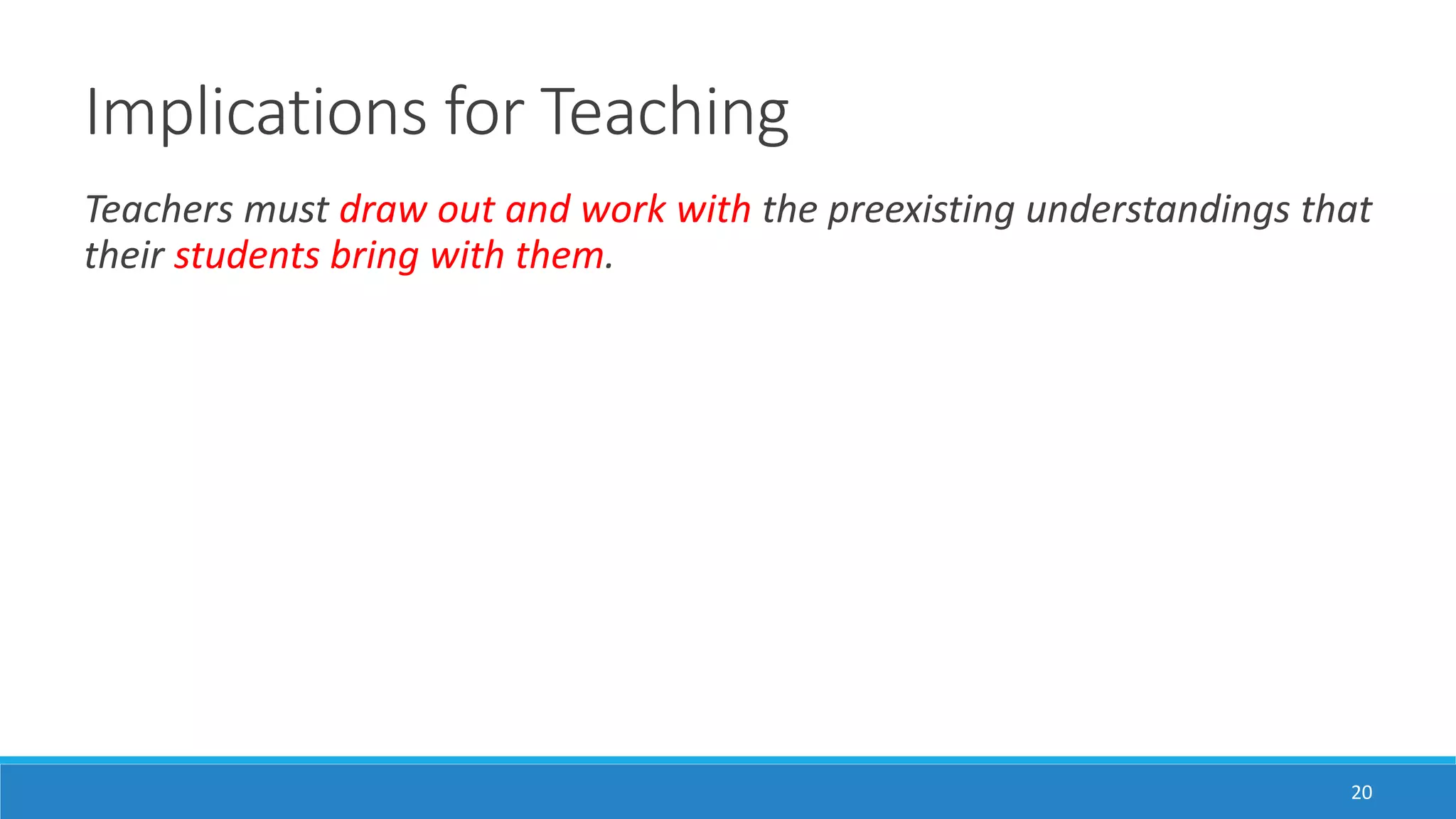
Implications for Teaching
20
Teachers must draw out and work with the preexisting understandings that
their students bring with them.
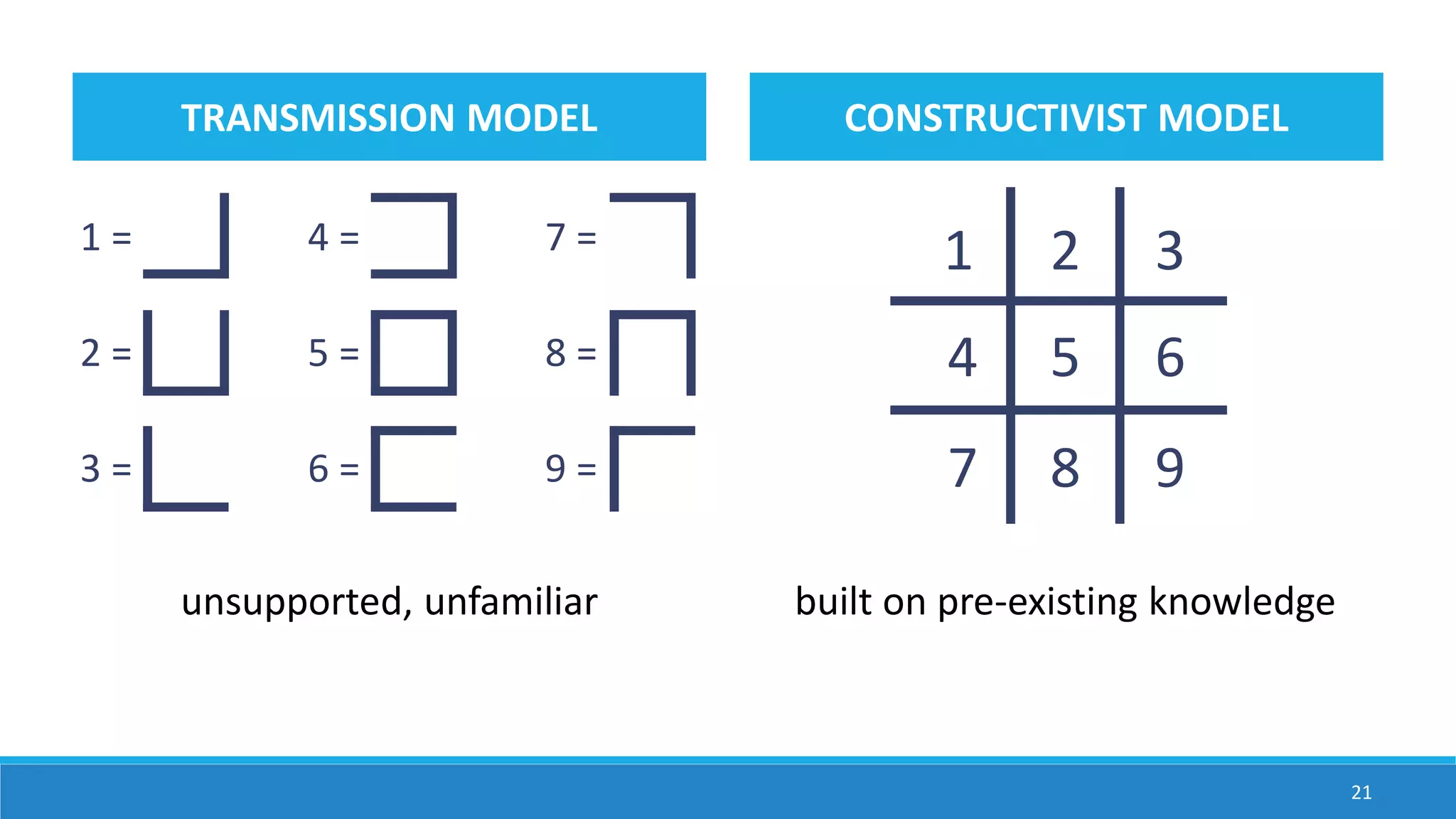
TRANSMISSION MODEL CONSTRUCTIVIST MODEL
21
1 = 4 = 7 =
2 = 5 = 8 =
3 = 6 = 9 =
1 2 3
4 5 6
7 8 9
unsupported, unfamiliar built on pre-existing knowledge
Implications for Teaching
22
Teachers must draw out and work with the preexisting understandings that
their students bring with them.
Designing Classroom Environments
Schools and classrooms must be learner centered.
Key Finding #2
23
To develop competence in an area, students must:
a) have a deep foundation of factual knowledge,
b) understand facts and ideas in the context of a conceptual
framework, and
c) organize knowledge in ways that facilitate retrieval and
application.
24
25
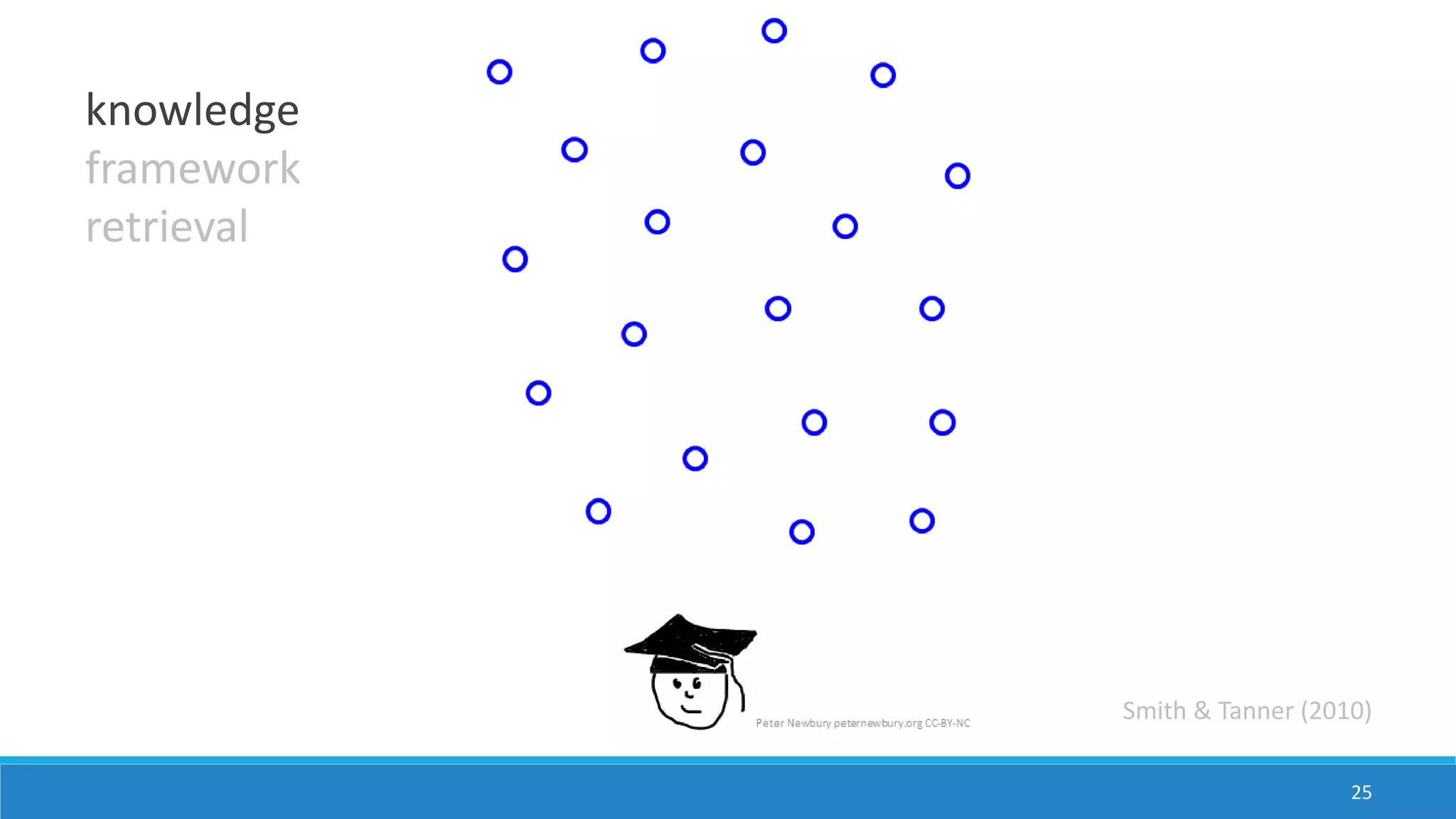
Smith & Tanner (2010)
knowledge
framework
retrieval
26
knowledge
framework
retrieval
Smith & Tanner (2010)
27
knowledge
framework
retrieval
Smith & Tanner (2010)
Implications for Teaching
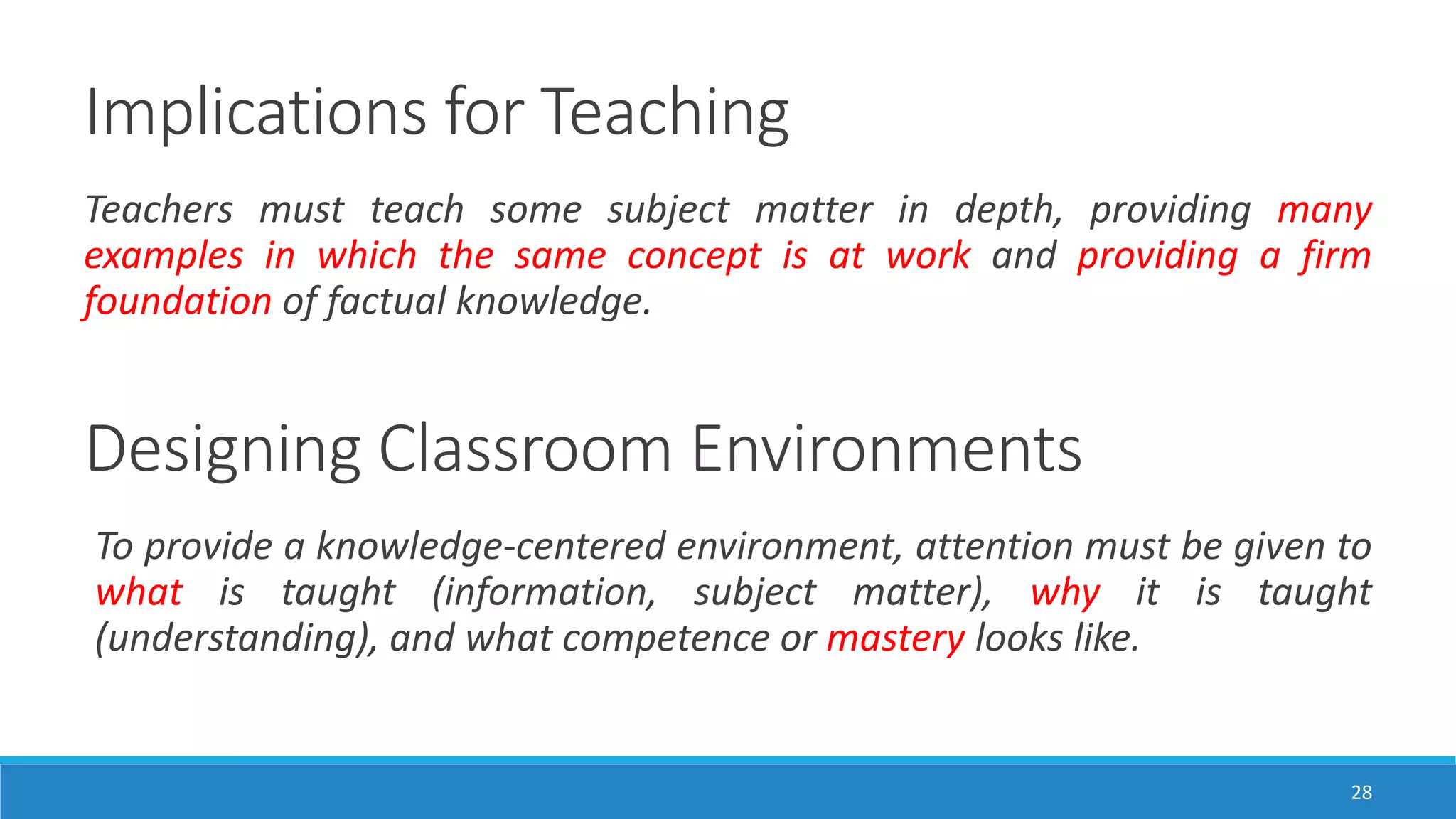
28
Teachers must teach some subject matter in depth, providing many
examples in which the same concept is at work and providing a firm
foundation of factual knowledge.
Designing Classroom Environments
To provide a knowledge-centered environment, attention must be given to
what is taught (information, subject matter), why it is taught
(understanding), and what competence or mastery looks like.
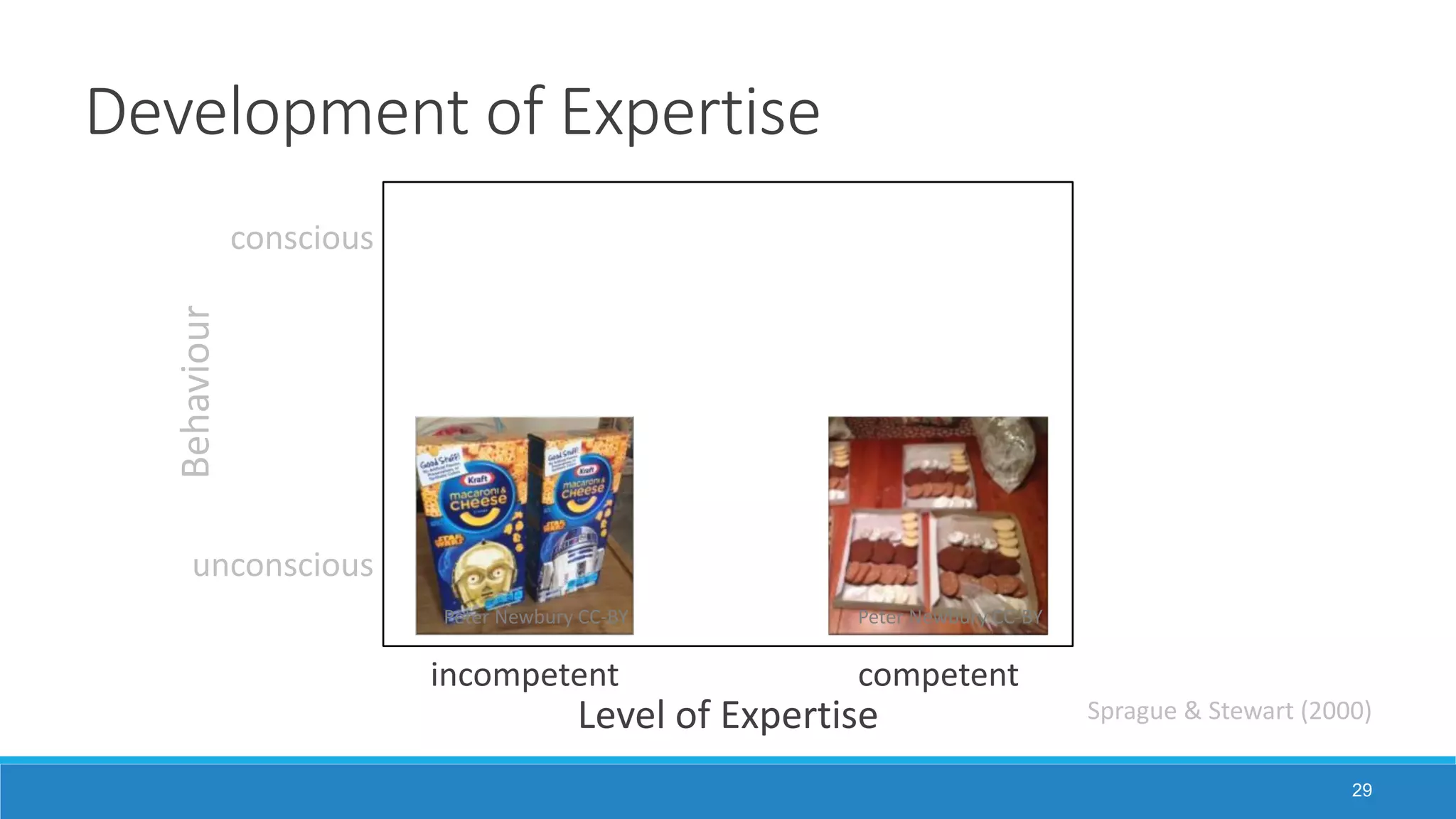
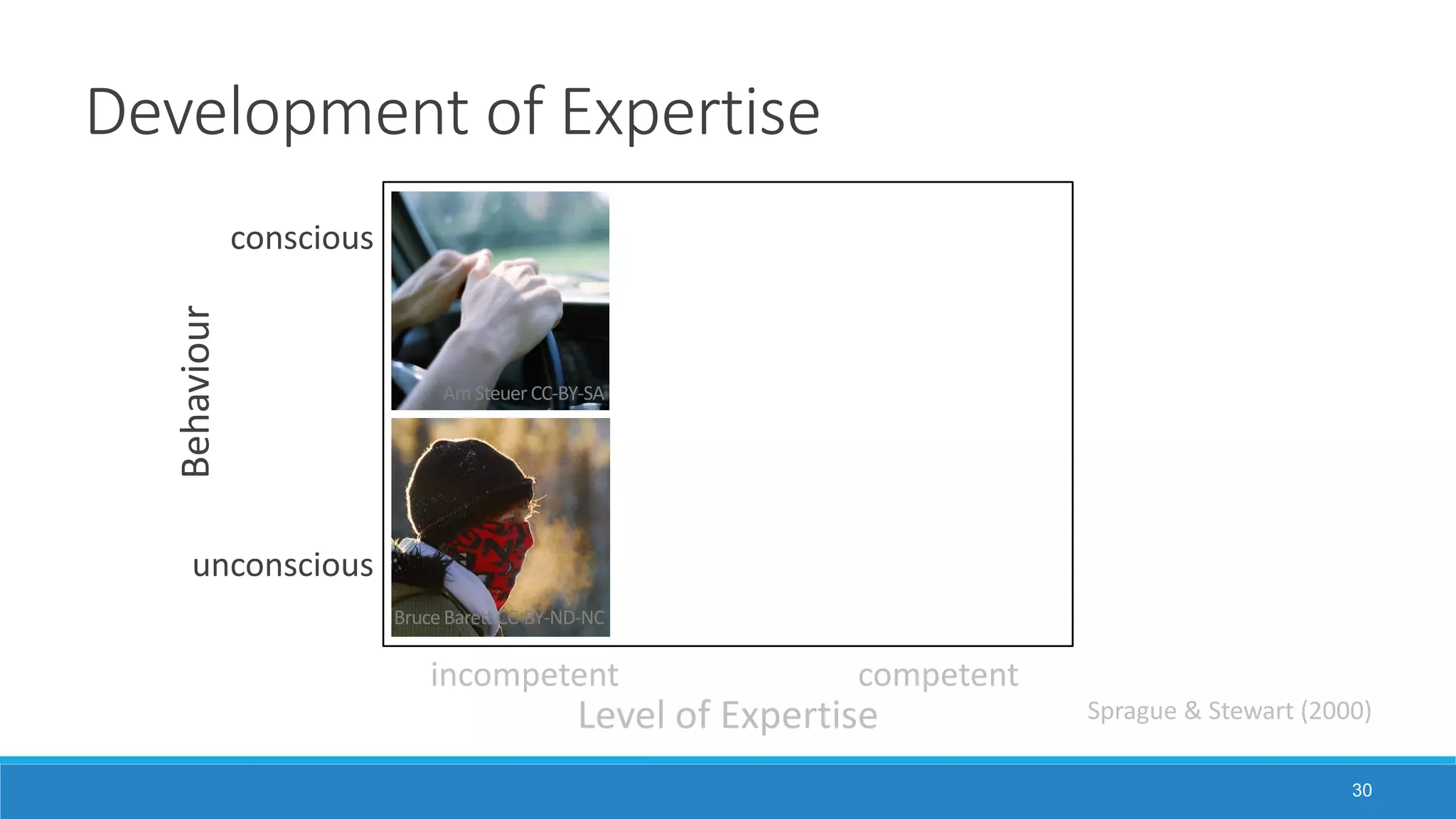
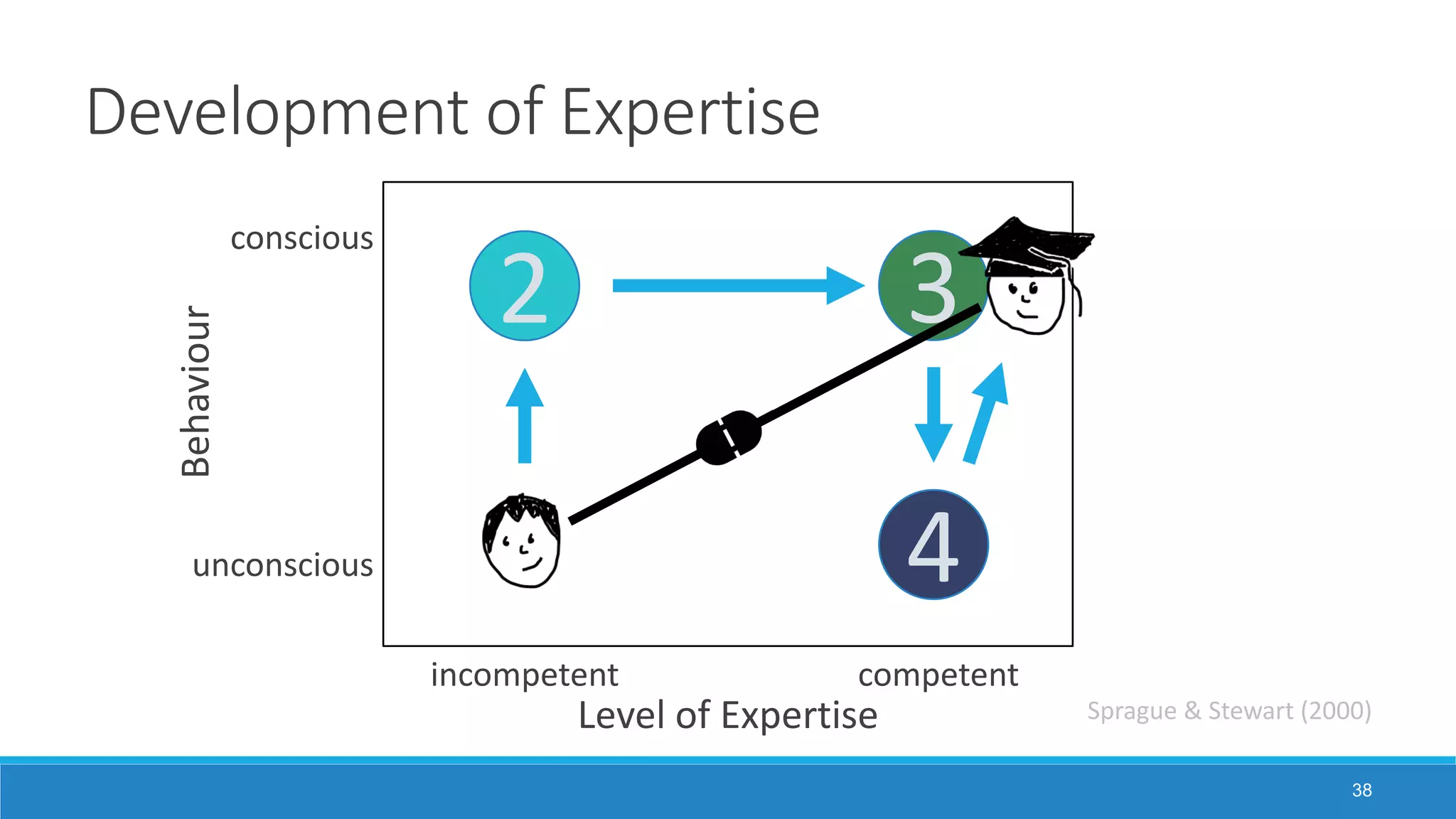
Development of Expertise
29
conscious
unconscious
incompetent competent
Behaviour
Level of Expertise Sprague & Stewart (2000)
Peter Newbury CC-BYPeter Newbury CC-BY
Development of Expertise
30
conscious
unconscious
incompetent competent
Behaviour
Level of Expertise Sprague & Stewart (2000)
BruceBarett CC-BY-ND-NC
AmSteuerCC-BY-SA
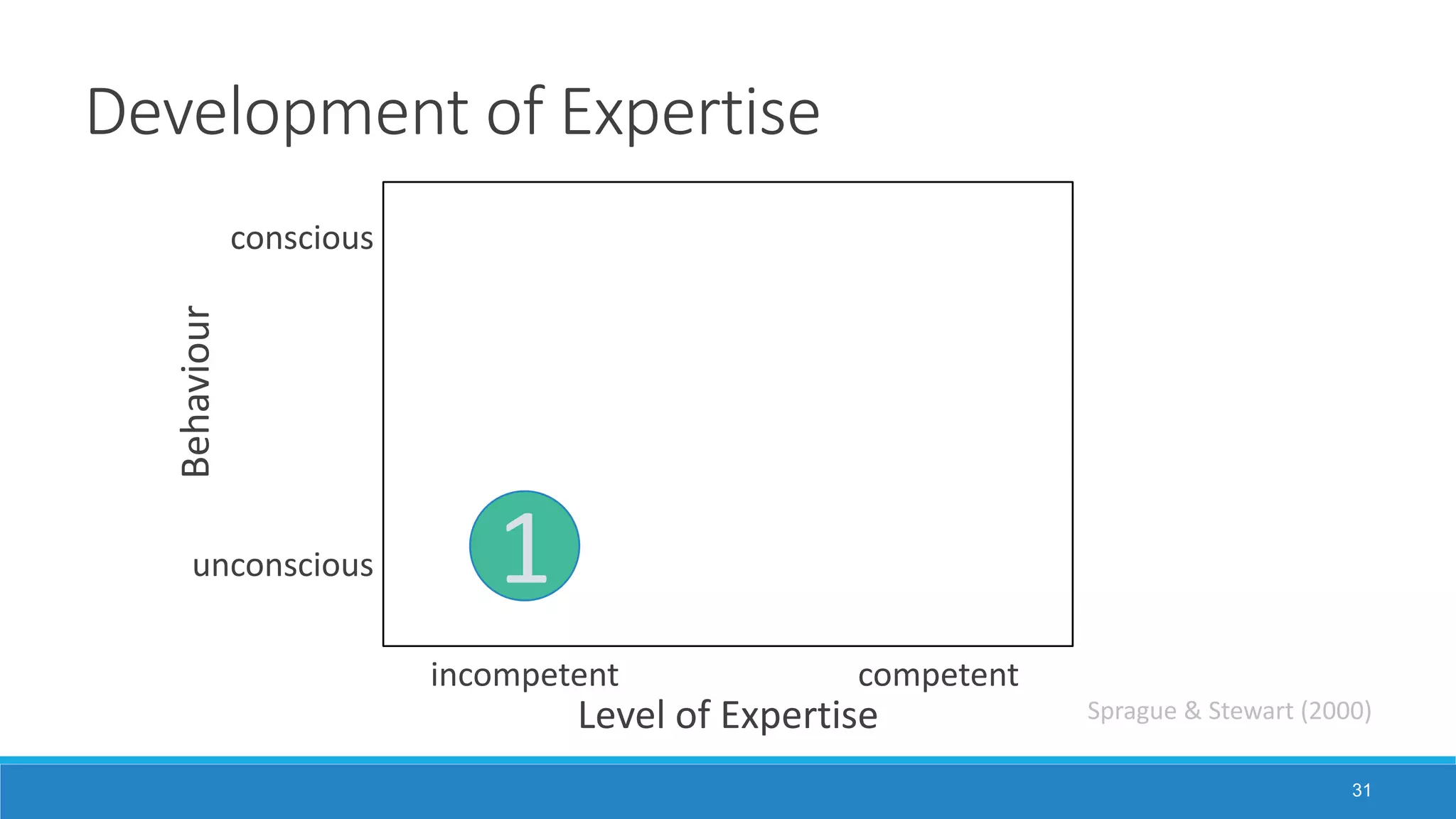
Development of Expertise
31
conscious
unconscious
incompetent competent
Behaviour
Level of Expertise
1
Sprague & Stewart (2000)
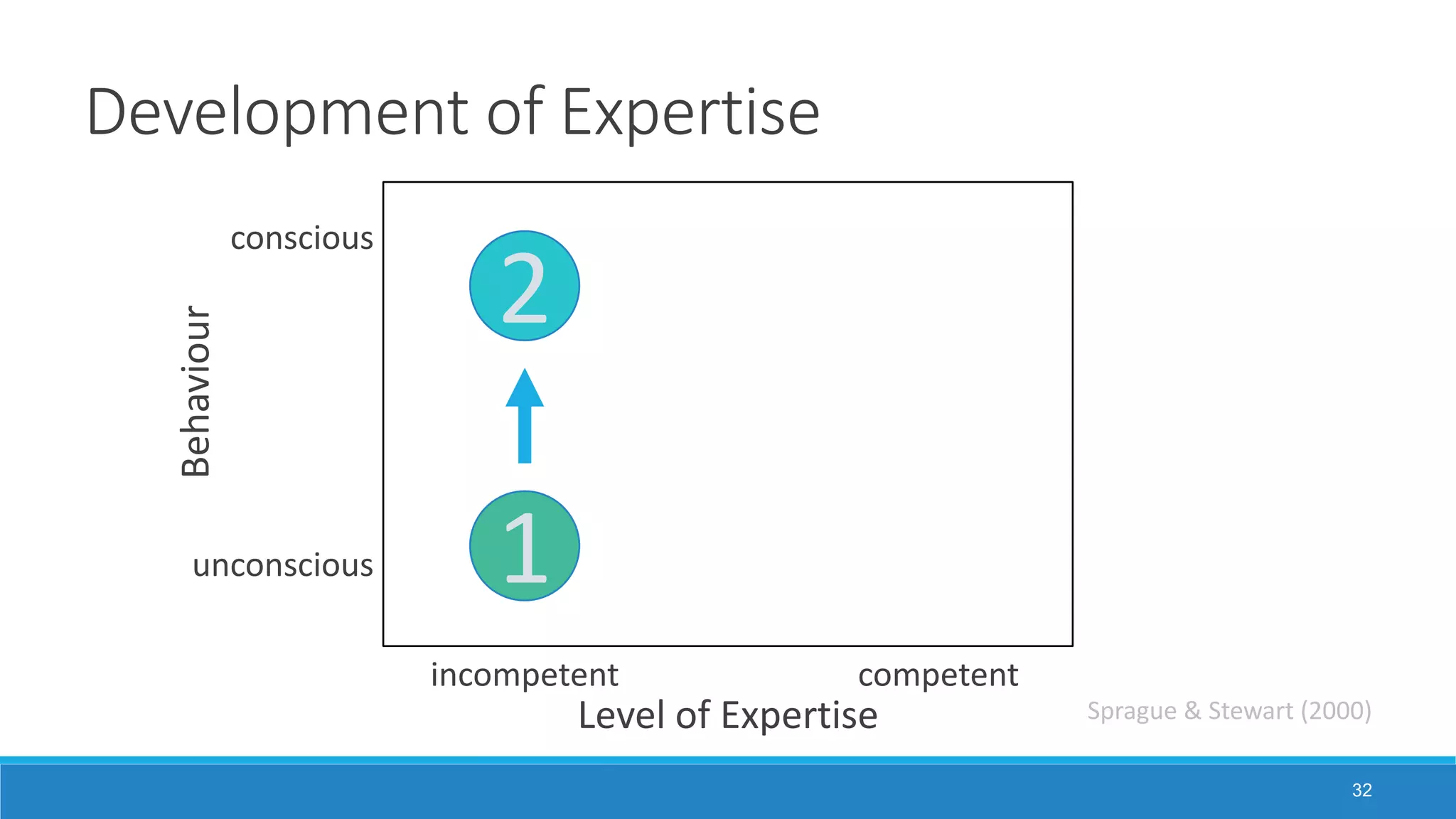
Development of Expertise
32
conscious
unconscious
incompetent competent
Behaviour
Level of Expertise
1
2
Sprague & Stewart (2000)
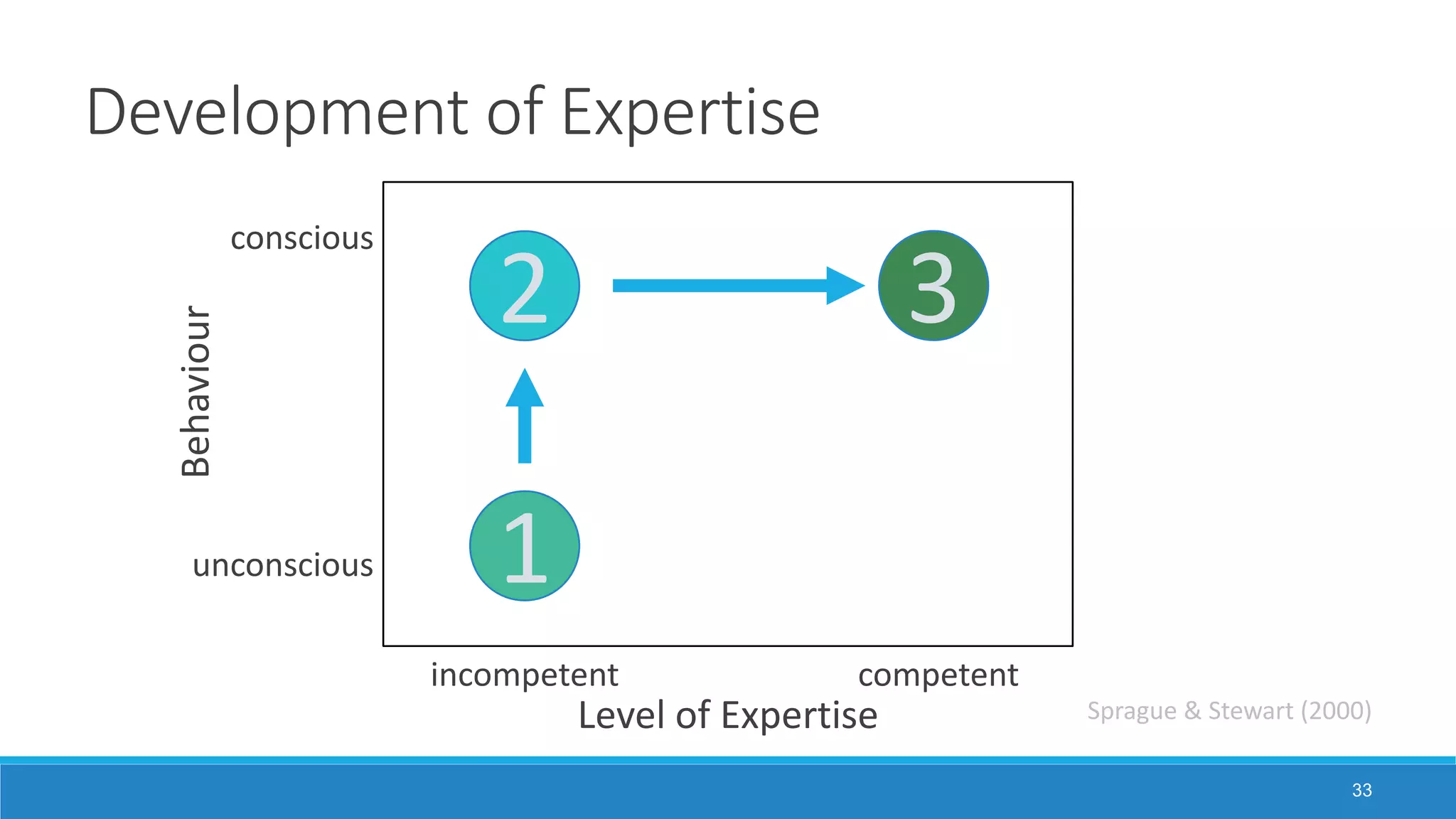
Development of Expertise
33
conscious
unconscious
incompetent competent
Behaviour
Level of Expertise
1
2 3
Sprague & Stewart (2000)
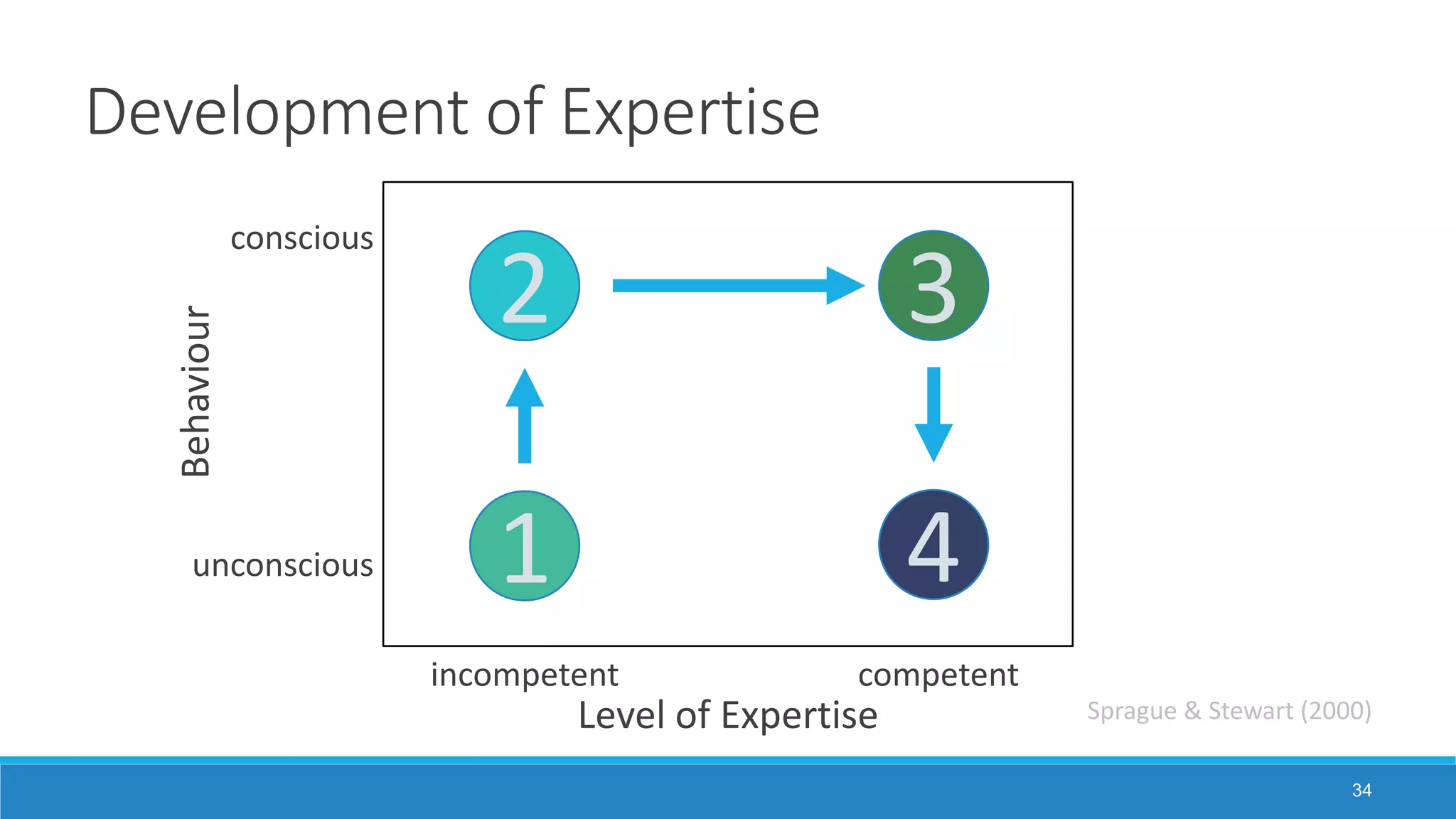
Development of Expertise
34
conscious
unconscious
incompetent competent
Behaviour
Level of Expertise
1
2 3
4
Sprague & Stewart (2000)
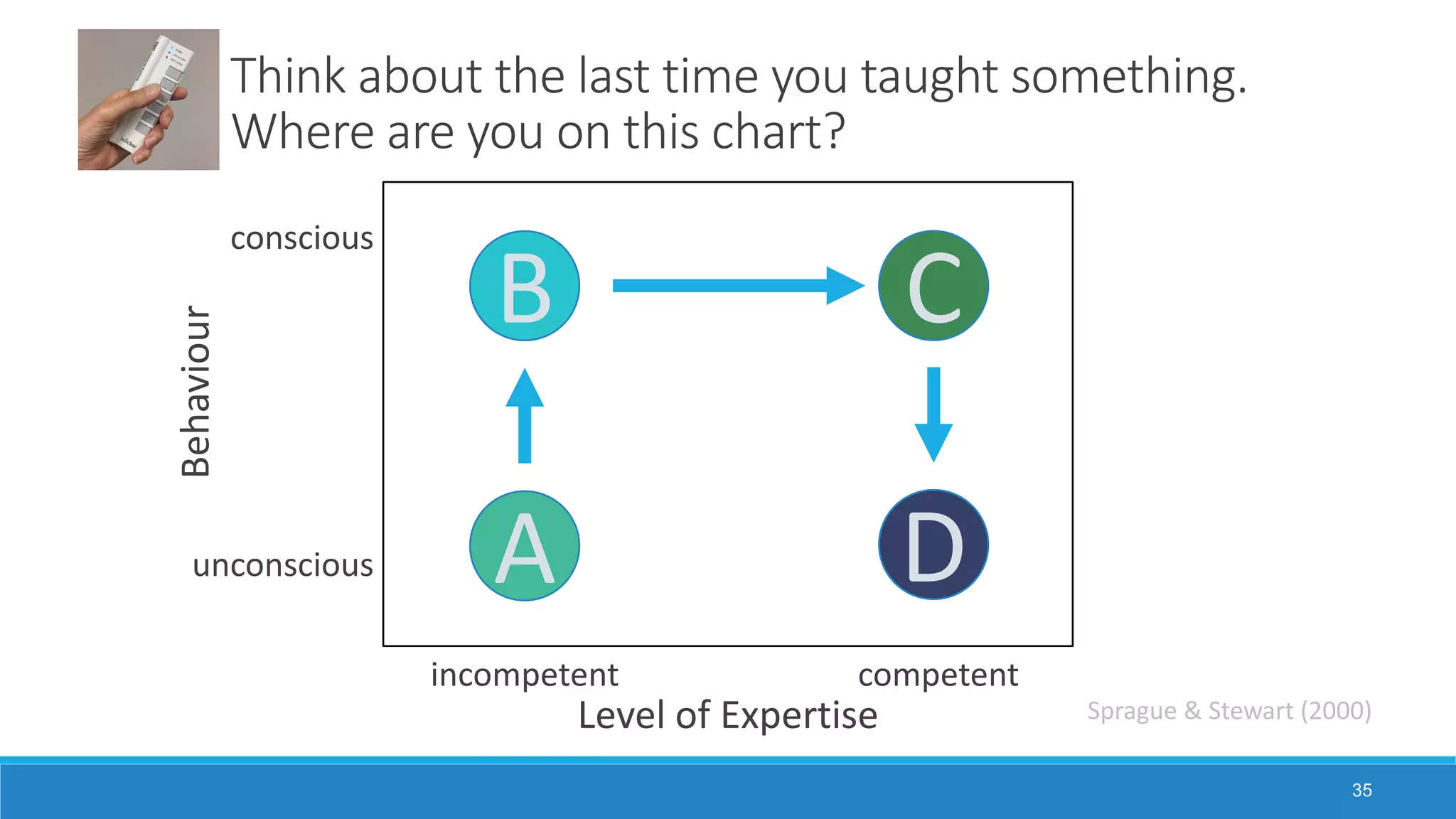
Think about the last time you taught something.
Where are you on this chart?
35
conscious
unconscious
incompetent competent
Behaviour
Level of Expertise
A
B C
D
Sprague & Stewart (2000)
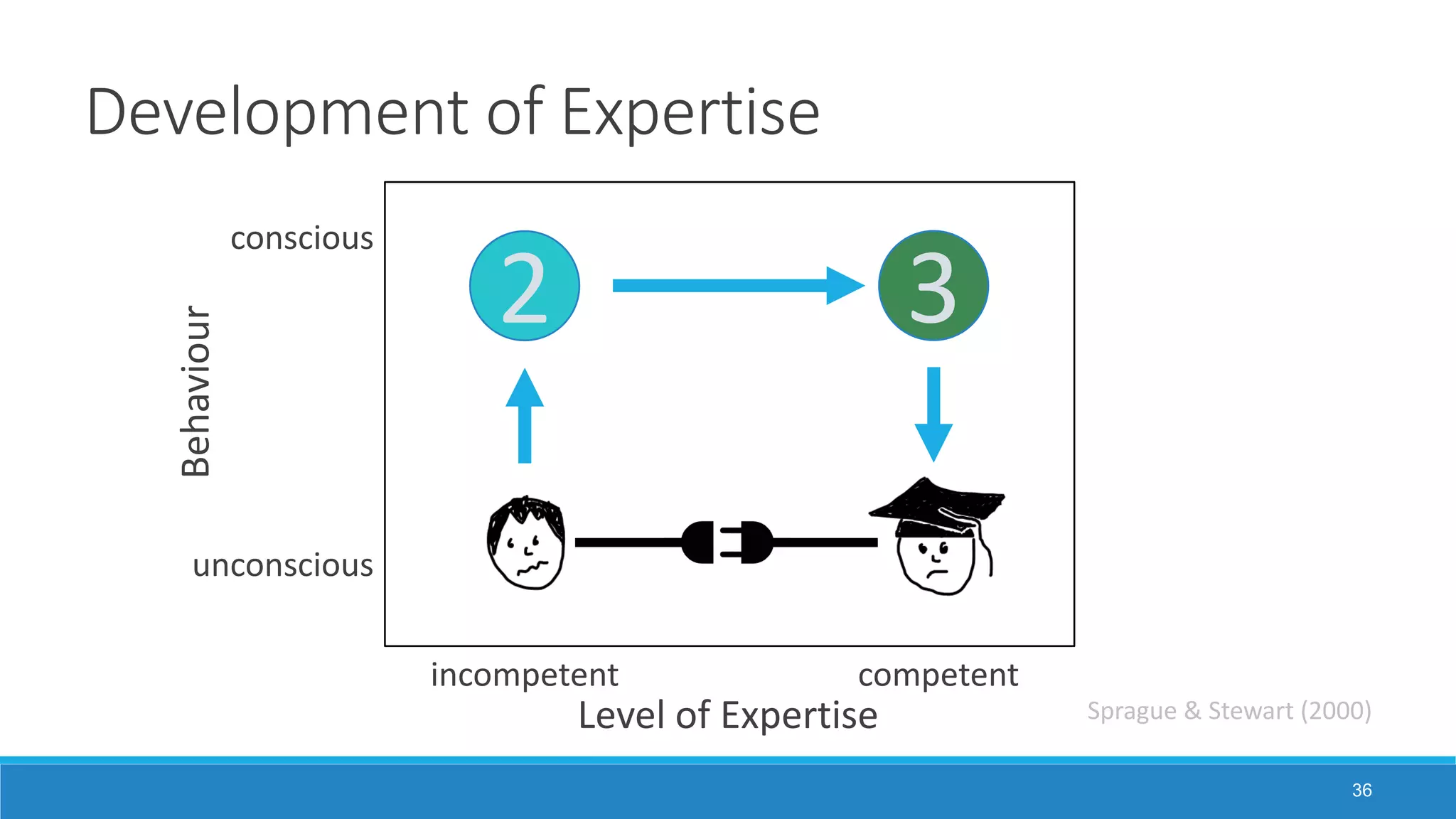
Development of Expertise
36
conscious
unconscious
incompetent competent
Behaviour
Level of Expertise
2 3
Sprague & Stewart (2000)
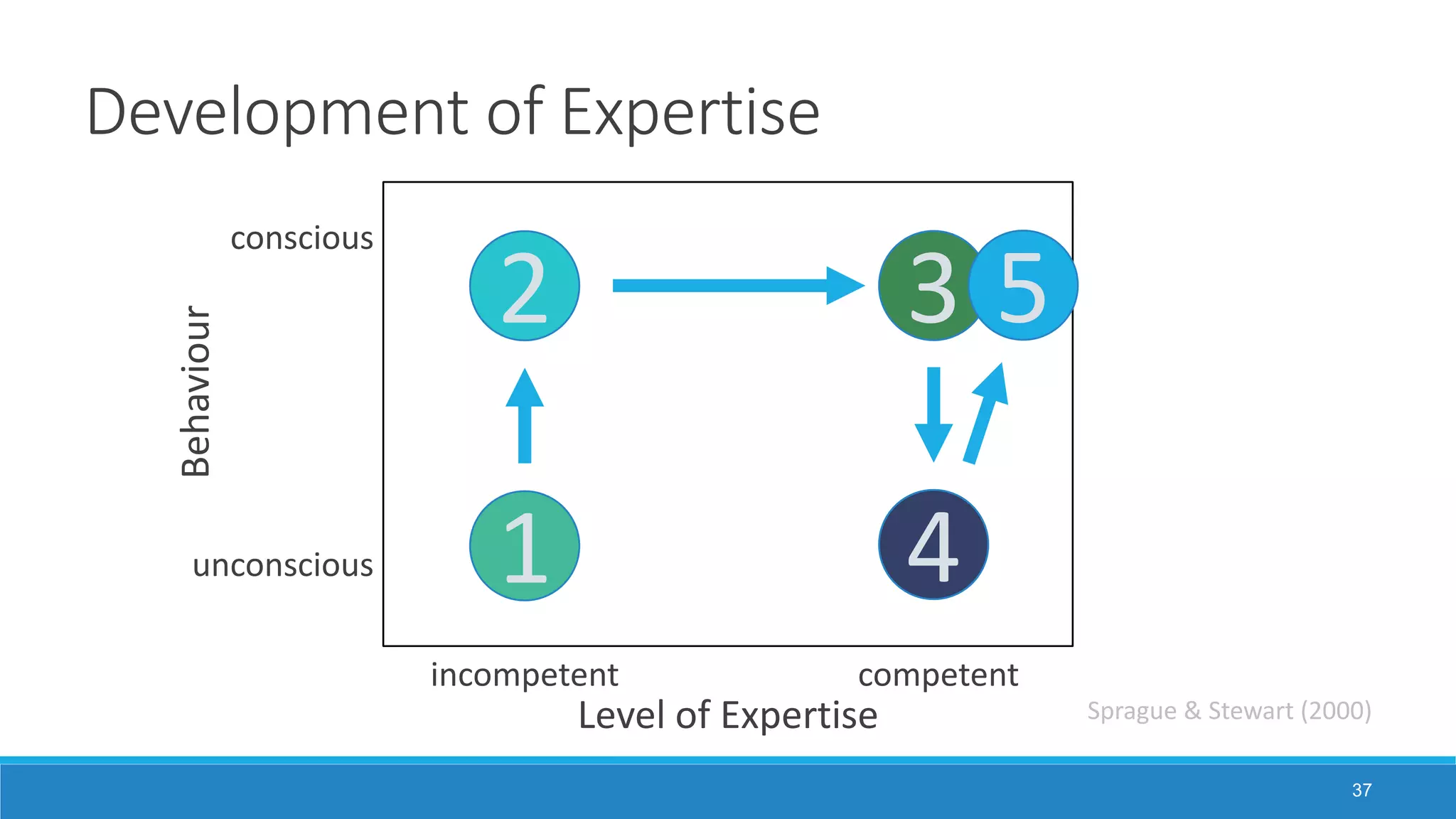
Development of Expertise
37
conscious
unconscious
incompetent competent
Behaviour
Level of Expertise
1
2 3
4
5
Sprague & Stewart (2000)
Development of Expertise
38
conscious
unconscious
incompetent competent
Behaviour
Level of Expertise
2 3
4
Sprague & Stewart (2000)
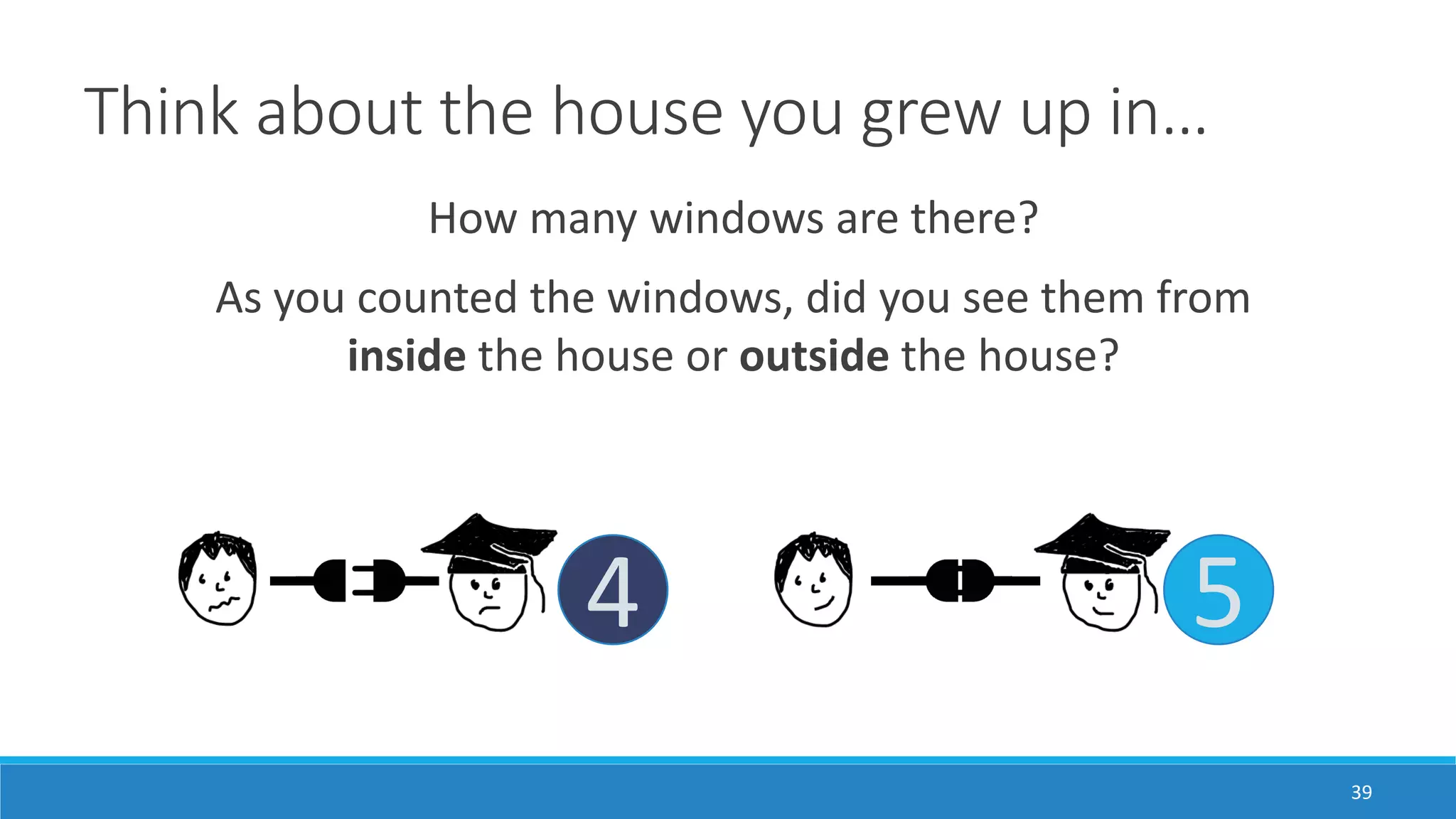
Think about the house you grew up in…
How many windows are there?
As you counted the windows, did you see them from
inside the house or outside the house?
39
4 5
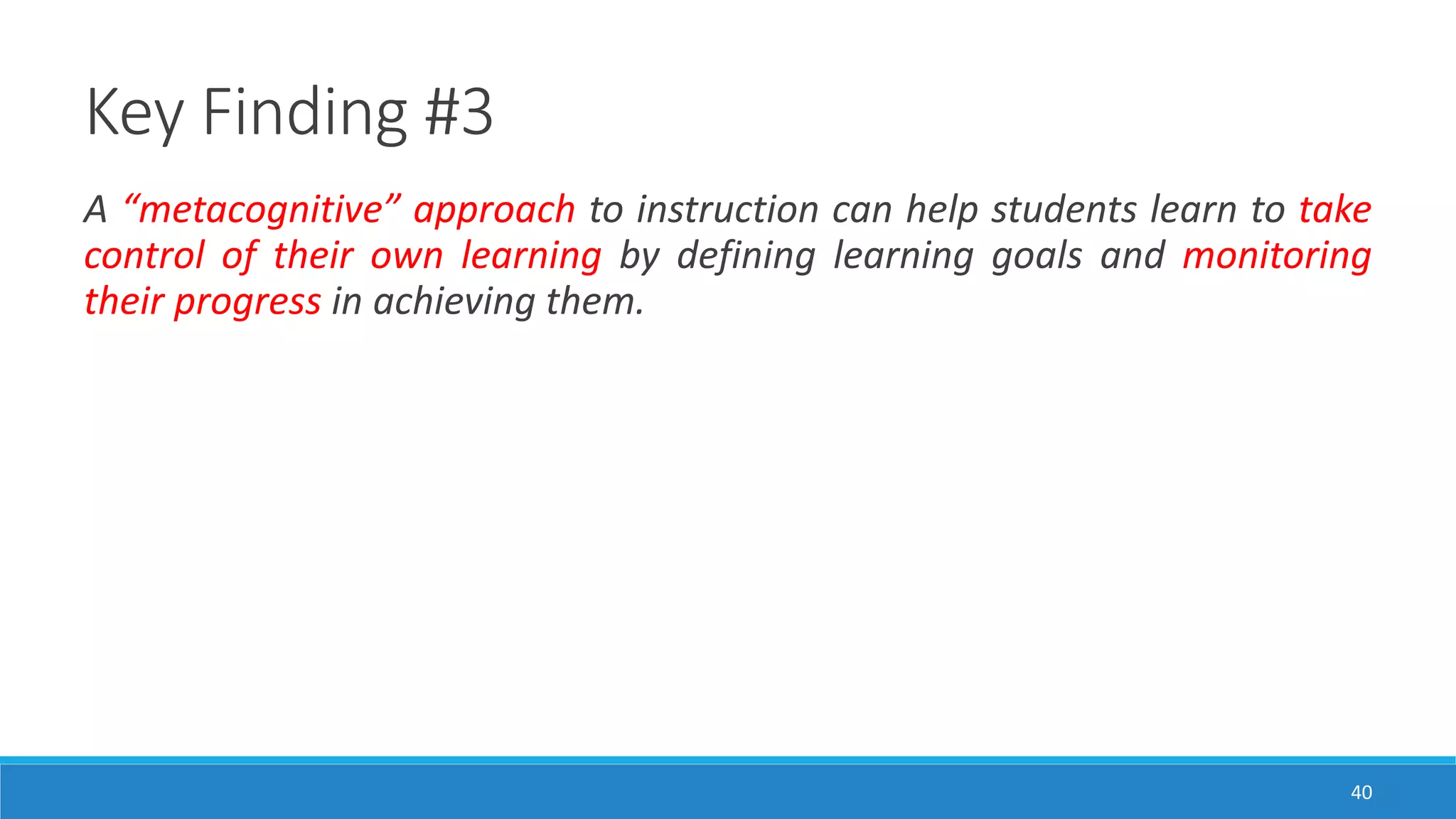
Key Finding #3
40
A “metacognitive” approach to instruction can help students learn to take
control of their own learning by defining learning goals and monitoring
their progress in achieving them.
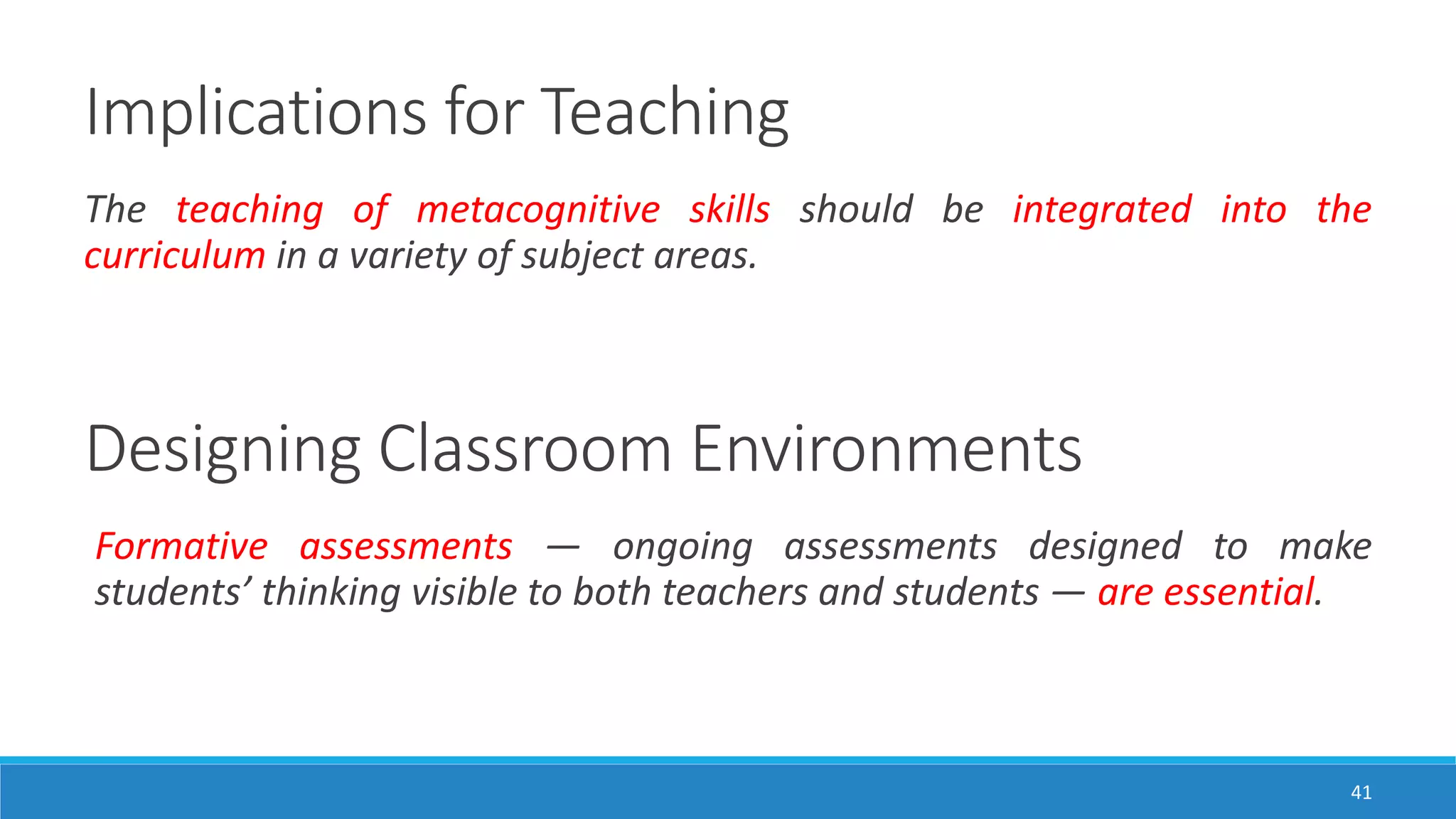
Implications for Teaching
41
The teaching of metacognitive skills should be integrated into the
curriculum in a variety of subject areas.
Designing Classroom Environments
Formative assessments — ongoing assessments designed to make
students’ thinking visible to both teachers and students — are essential.
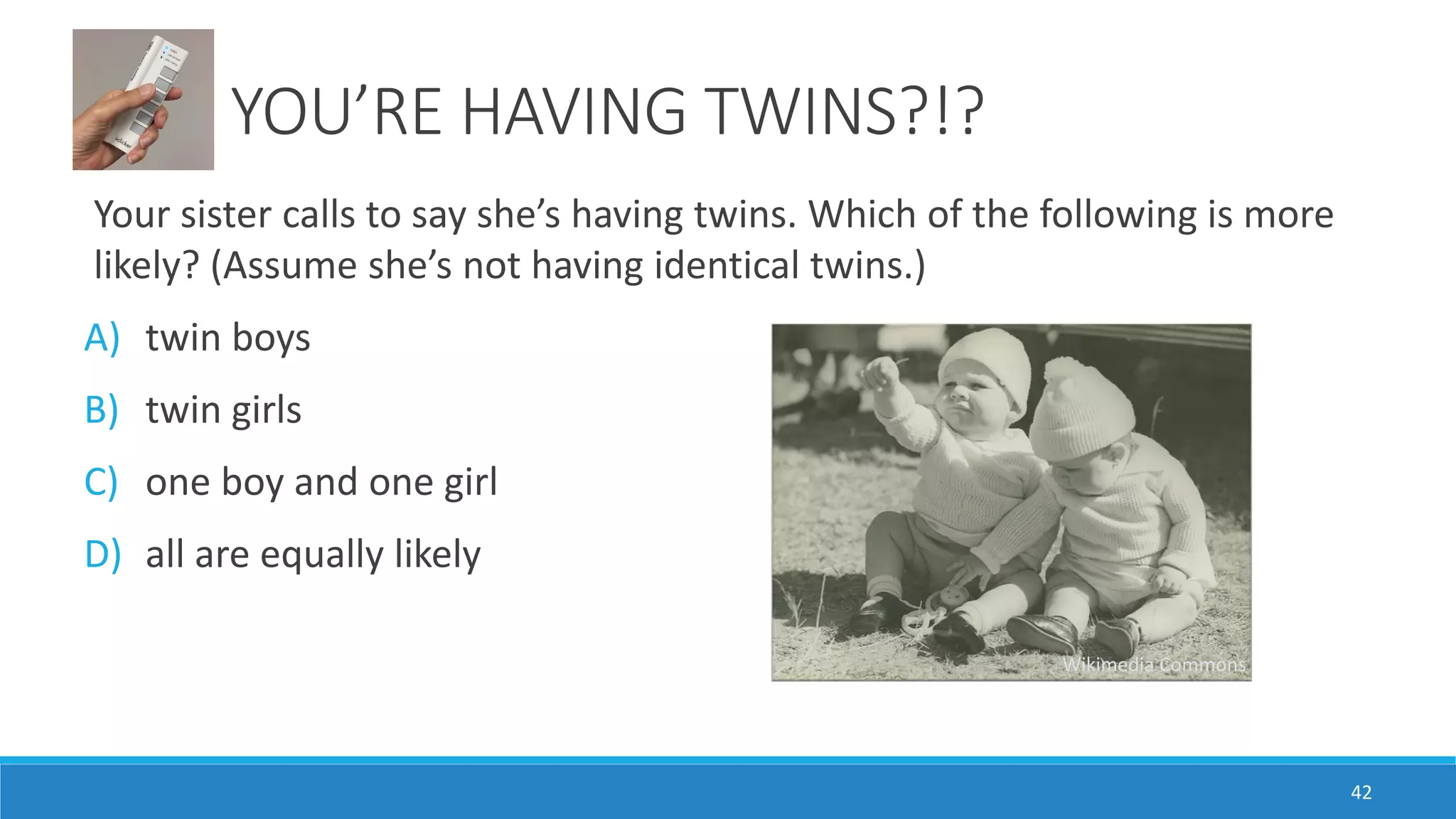
YOU’RE HAVING TWINS?!?
Your sister calls to say she’s having twins. Which of the following is more
likely? (Assume she’s not having identical twins.)
A) twin boys
B) twin girls
C) one boy and one girl
D) all are equally likely
42
Wikimedia Commons
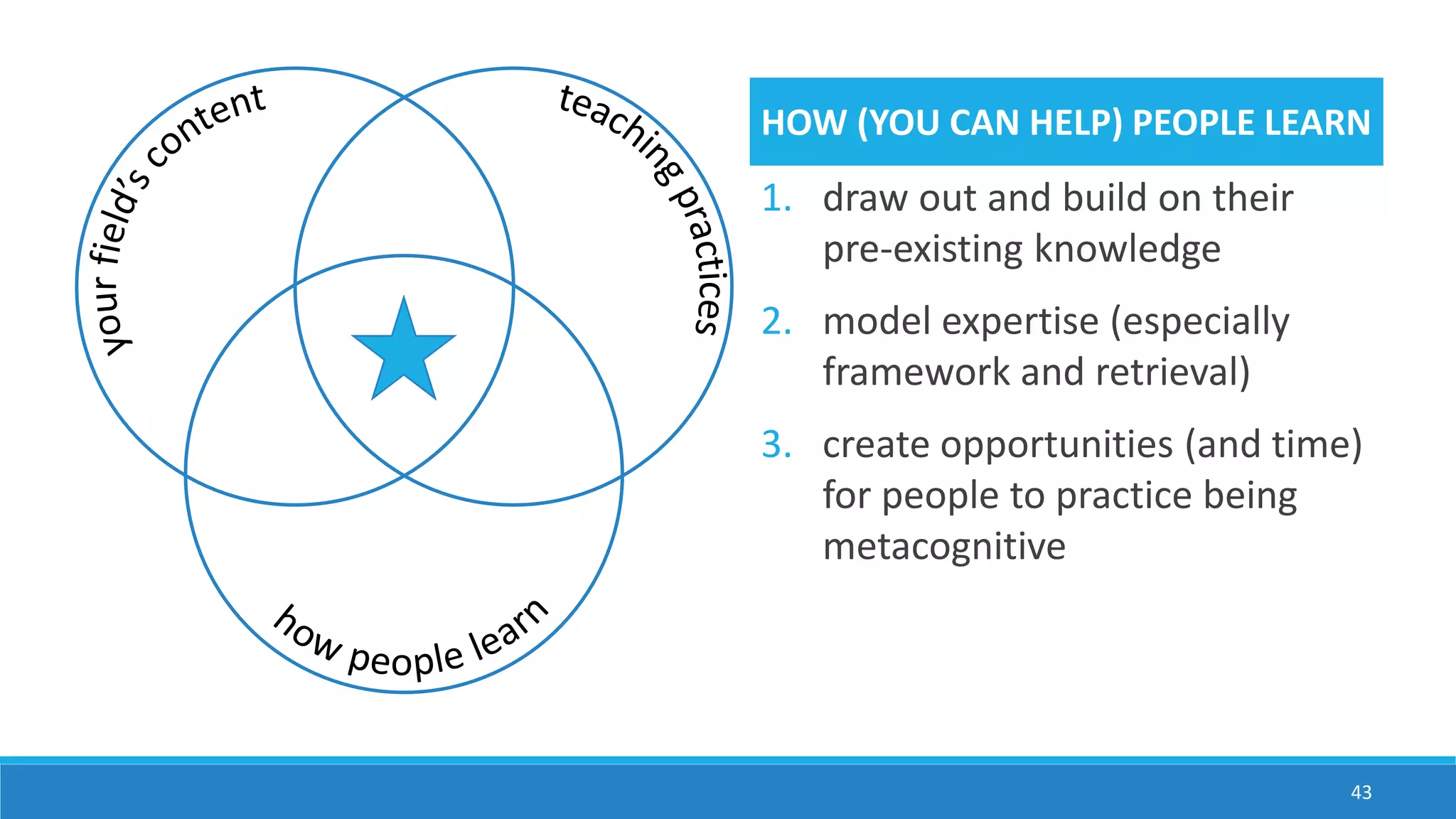
HOW (YOU CAN HELP) PEOPLE LEARN
1. draw out and build on their
pre-existing knowledge
2. model expertise (especially
framework and retrieval)
3. create opportunities (and time)
for people to practice being
metacognitive
43
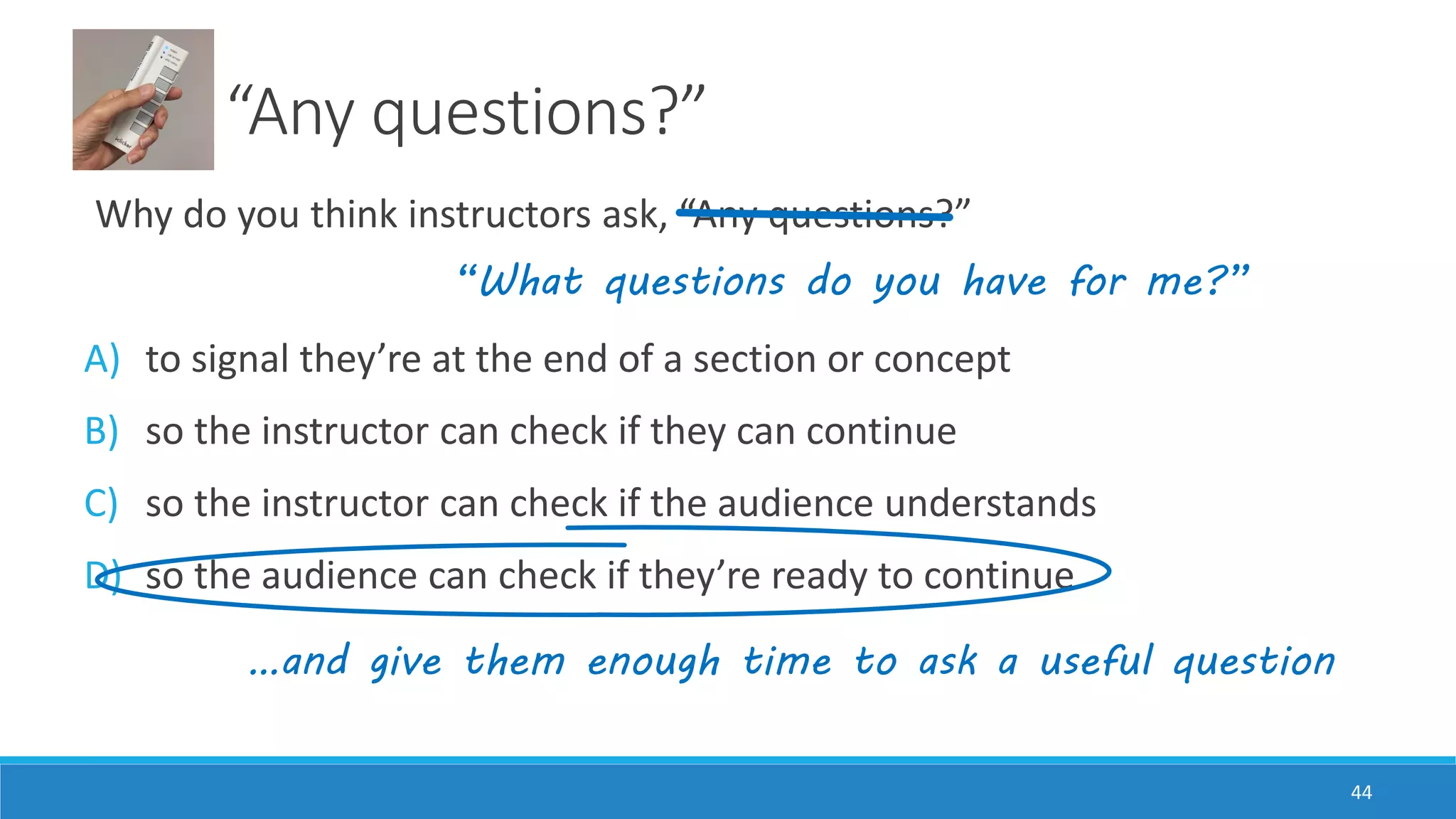
“Any questions?”
Why do you think instructors ask, “Any questions?”
A) to signal they’re at the end of a section or concept
B) so the instructor can check if they can continue
C) so the instructor can check if the audience understands
D) so the audience can check if they’re ready to continue
44
“What questions do you have for me?”
…and give them enough time to ask a useful question
References
Flavell, J. H. (1976). Metacognitive aspects of problem solving. In L. B. Resnick (Ed.), The nature of intelligence (pp.
231-236). Hillsdale, NJ: Erlbaum.
Lionni, L. (1970). Fish is Fish. New York, NY:Pantheon Books.
National Research Council (2000). How People Learn: Brain, Mind, Experience, and School: Expanded Edition. J.D.
Bransford, A.L Brown & R.R. Cocking (Eds.), Washington, DC: The National Academies Press.
www.nap.edu/catalog/9853/how-people-learn-brain-mind-experience-and-school-expanded-edition
Smith, J. & Tanner, K. (2010). The Problem of Revealing How Students Think: Concept Inventories and Beyond. CBE –
Life Sciences Education 9, 1.
Wieman, C.E. (2014). Large-scale comparison of science teaching methods sends clear message. Proceedings of the
National Academy of Sciences, 11 (23), 8319-8320.
Sprague, J., & Stuart, D. (2000). The speaker’s handbook. Fort Worth, TX: Harcourt College Publishers.
45

How (you can help) People Learn

  • 1.
    How People Learn PeterNewbury, Ph.D. Director, Centre for Teaching and Learning, and Senior Advisor for Learning Initiatives, UBC Okanagan peter.newbury@ubc.ca peternewbury.org @polarisdotca #etug 1 etug.ca
  • 2.
    “Fish is Fish”by Leo Lionni (1970) I started my presentation with a picture from Leo Lionni’s “Fish is Fish” showing a frog describing a cow to a fish (get all that?). The picture is copyrighted so I’m not including it here but you can see it at 2:27 of this great video: https://vimeo.com/39374062 2
  • 3.
    Why are wehere? 3 What do you think students are doing in a typical university class? A) listening B) absorbing C) learning D) note-taking E) not paying attention Peter Newbury CC-BY 1 3 POWER ON CLICK A–E WATCH FOR GREEN LIGHT 2
  • 4.
    The traditional lecture isbased on the transmission model of learning 4 um.dentistry on flickr CC
  • 5.
    Important new numbersystem. Please learn it. 5 1 = 4 = 7 = 2 = 5 = 8 = 3 = 6 = 9 =
  • 6.
  • 7.
    Transmission model proven to beless effective than active learning “the equivalent of blood-letting” (Wieman, 2014) 7 We must abandon the tabula rasa (“blank slate”) and “students as empty vessels” models of teaching and learning.
  • 8.
    Important new numbersystem: tic-tac-toe code 8 1 2 3 4 5 6 7 8 9
  • 9.
  • 10.
    Constructivist model of learning Newlearning is based on knowledge you already have. You store things in your long term memory through a set of connections with your existing memories. 10 Rebecca-Lee on flickr CC learning is done by individuals
  • 11.
  • 12.
    How People Learn (2000) Available forfree from the National Academies Press 12 www.nap.edu/catalog/9853/how-people-learn-brain-mind-experience-and-school-expanded-edition
  • 13.
    Key Finding #1 13 Studentscome to the classroom with preconceptions about how the world works. If their initial understanding is not engaged, they may fail to grasp the new concepts and information that are taught, or they may learn them for the purposes of a test but revert to their preconceptions outside of the classroom.
  • 14.
    Key Finding #2 14 Todevelop competence in an area, students must: a) have a deep foundation of factual knowledge, b) understand facts and ideas in the context of a conceptual framework, and c) organize knowledge in ways that facilitate retrieval and application.
  • 15.
    Key Finding #3 15 A“metacognitive” approach to instruction can help students learn to take control of their own learning by defining learning goals and monitoring their progress in achieving them.
  • 16.
    Metacognition thinking about thinking “I am engagingin metacognition if I notice that I am having more trouble learning A than B.” (J. Flavel, 1976) 16 cognitionmeta
  • 17.
    Key Finding #3 17 A“metacognitive” approach to instruction can help students learn to take control of their own learning by defining learning goals and monitoring their progress in achieving them.
  • 18.
    Key Findings: TheoryPractice 1. IN GROUPS OF 2 – 3, TEAR YOUR SHEET INTO 9 CARDS 2. MATCH ONE IMPLICATION AND ONE CLASSROOM ENVIRONMENT WITH EACH KEY FINDING 18 Key Finding #2 Implications for Teaching Implications for Teaching Implications for Teaching Designing Classroom Environments Peter Newbury CC-BY
  • 19.
    Key Finding #1 19 Studentscome to the classroom with preconceptions about how the world works. If their initial understanding is not engaged, they may fail to grasp the new concepts and information that are taught, or they may learn them for the purposes of a test but revert to their preconceptions outside of the classroom.
  • 20.
    Implications for Teaching 20 Teachersmust draw out and work with the preexisting understandings that their students bring with them.
  • 21.
    TRANSMISSION MODEL CONSTRUCTIVISTMODEL 21 1 = 4 = 7 = 2 = 5 = 8 = 3 = 6 = 9 = 1 2 3 4 5 6 7 8 9 unsupported, unfamiliar built on pre-existing knowledge
  • 22.
    Implications for Teaching 22 Teachersmust draw out and work with the preexisting understandings that their students bring with them. Designing Classroom Environments Schools and classrooms must be learner centered.
  • 23.
    Key Finding #2 23 Todevelop competence in an area, students must: a) have a deep foundation of factual knowledge, b) understand facts and ideas in the context of a conceptual framework, and c) organize knowledge in ways that facilitate retrieval and application.
  • 24.
  • 25.
    25 Smith & Tanner(2010) knowledge framework retrieval
  • 26.
  • 27.
  • 28.
    Implications for Teaching 28 Teachersmust teach some subject matter in depth, providing many examples in which the same concept is at work and providing a firm foundation of factual knowledge. Designing Classroom Environments To provide a knowledge-centered environment, attention must be given to what is taught (information, subject matter), why it is taught (understanding), and what competence or mastery looks like.
  • 29.
    Development of Expertise 29 conscious unconscious incompetentcompetent Behaviour Level of Expertise Sprague & Stewart (2000) Peter Newbury CC-BYPeter Newbury CC-BY
  • 30.
    Development of Expertise 30 conscious unconscious incompetentcompetent Behaviour Level of Expertise Sprague & Stewart (2000) BruceBarett CC-BY-ND-NC AmSteuerCC-BY-SA
  • 31.
    Development of Expertise 31 conscious unconscious incompetentcompetent Behaviour Level of Expertise 1 Sprague & Stewart (2000)
  • 32.
    Development of Expertise 32 conscious unconscious incompetentcompetent Behaviour Level of Expertise 1 2 Sprague & Stewart (2000)
  • 33.
    Development of Expertise 33 conscious unconscious incompetentcompetent Behaviour Level of Expertise 1 2 3 Sprague & Stewart (2000)
  • 34.
    Development of Expertise 34 conscious unconscious incompetentcompetent Behaviour Level of Expertise 1 2 3 4 Sprague & Stewart (2000)
  • 35.
    Think about thelast time you taught something. Where are you on this chart? 35 conscious unconscious incompetent competent Behaviour Level of Expertise A B C D Sprague & Stewart (2000)
  • 36.
    Development of Expertise 36 conscious unconscious incompetentcompetent Behaviour Level of Expertise 2 3 Sprague & Stewart (2000)
  • 37.
    Development of Expertise 37 conscious unconscious incompetentcompetent Behaviour Level of Expertise 1 2 3 4 5 Sprague & Stewart (2000)
  • 38.
    Development of Expertise 38 conscious unconscious incompetentcompetent Behaviour Level of Expertise 2 3 4 Sprague & Stewart (2000)
  • 39.
    Think about thehouse you grew up in… How many windows are there? As you counted the windows, did you see them from inside the house or outside the house? 39 4 5
  • 40.
    Key Finding #3 40 A“metacognitive” approach to instruction can help students learn to take control of their own learning by defining learning goals and monitoring their progress in achieving them.
  • 41.
    Implications for Teaching 41 Theteaching of metacognitive skills should be integrated into the curriculum in a variety of subject areas. Designing Classroom Environments Formative assessments — ongoing assessments designed to make students’ thinking visible to both teachers and students — are essential.
  • 42.
    YOU’RE HAVING TWINS?!? Yoursister calls to say she’s having twins. Which of the following is more likely? (Assume she’s not having identical twins.) A) twin boys B) twin girls C) one boy and one girl D) all are equally likely 42 Wikimedia Commons
  • 43.
    HOW (YOU CANHELP) PEOPLE LEARN 1. draw out and build on their pre-existing knowledge 2. model expertise (especially framework and retrieval) 3. create opportunities (and time) for people to practice being metacognitive 43
  • 44.
    “Any questions?” Why doyou think instructors ask, “Any questions?” A) to signal they’re at the end of a section or concept B) so the instructor can check if they can continue C) so the instructor can check if the audience understands D) so the audience can check if they’re ready to continue 44 “What questions do you have for me?” …and give them enough time to ask a useful question
  • 45.
    References Flavell, J. H.(1976). Metacognitive aspects of problem solving. In L. B. Resnick (Ed.), The nature of intelligence (pp. 231-236). Hillsdale, NJ: Erlbaum. Lionni, L. (1970). Fish is Fish. New York, NY:Pantheon Books. National Research Council (2000). How People Learn: Brain, Mind, Experience, and School: Expanded Edition. J.D. Bransford, A.L Brown & R.R. Cocking (Eds.), Washington, DC: The National Academies Press. www.nap.edu/catalog/9853/how-people-learn-brain-mind-experience-and-school-expanded-edition Smith, J. & Tanner, K. (2010). The Problem of Revealing How Students Think: Concept Inventories and Beyond. CBE – Life Sciences Education 9, 1. Wieman, C.E. (2014). Large-scale comparison of science teaching methods sends clear message. Proceedings of the National Academy of Sciences, 11 (23), 8319-8320. Sprague, J., & Stuart, D. (2000). The speaker’s handbook. Fort Worth, TX: Harcourt College Publishers. 45