LETTER WRITING
Letter Writing - Intro
 Part of total job search process
 Communication skills indicator
 No single correct way, but generic
impersonal form letters don’t cut it
Types of ‘Job Search’ Letters
1. Application/cover – to apply for a
specific position
2. Appreciation/thank you – to follow up
3. Prospecting – to inquire about general
availability of positions
4. Networking – to arrange an informational
interview/meeting
5. Acceptance – to accept and confirm a job
offer
6. Withdrawal – to remove your job
application from consideration
7. Rejection – to decline a job offer
Examples of NON Job Search
Letters in Business
 Purposes:
1. To present a sales proposal to a customer.
2. To present a financial proposal to a customer.
3. To set up a committee meeting.
4. To set up a business meeting.
5. To offer a position to a new employee.
6. To communicate to fellow employees a new company policy.
7. To write a letter of recommendation in support of a colleague
for a new job.
8. To request and justify company support of a specific
departmental proposal (e.g. new equipment, additional
funding).
9. To request information or additional information.
10. To respond to an inquiry.
Letter Writing Principles
(apply to all letters)
 Identify purpose, at the beginning
 Organize material into paragraphs
 Be professional
 High quality paper
 Error free
 Address to specific individual
 Be succinct, get to the point
Letter Writing Principles
(apply to all letters)
 Be positive
 (optimistic, productive, reasonable,
responsible)
 Cater to reader’s interests
 Sign and keep copy
Letter-writing principles also apply
to letters:
 Handwritten
 Sent via e-mail
Other Technical Suggestions on
Letters
 Center letter (side to side, top to bottom)
 Capitalization
 Don’t overdo it (e.g. no need to cap job titles,
seasons of the yr, courses taken, senior, agriculture,
etc.)
 Punctuation
 Don’t overuse commas, semicolons; use periods to
avoid run-on sentences; no need to use period after
two-letter abbreviation of state or street
 Spelling
 No mistakes (use spell check); pay attention to
hyphenated words (e.g. in-depth, two word
adjectives preceding noun).
Other Technical Suggestions on
Letters
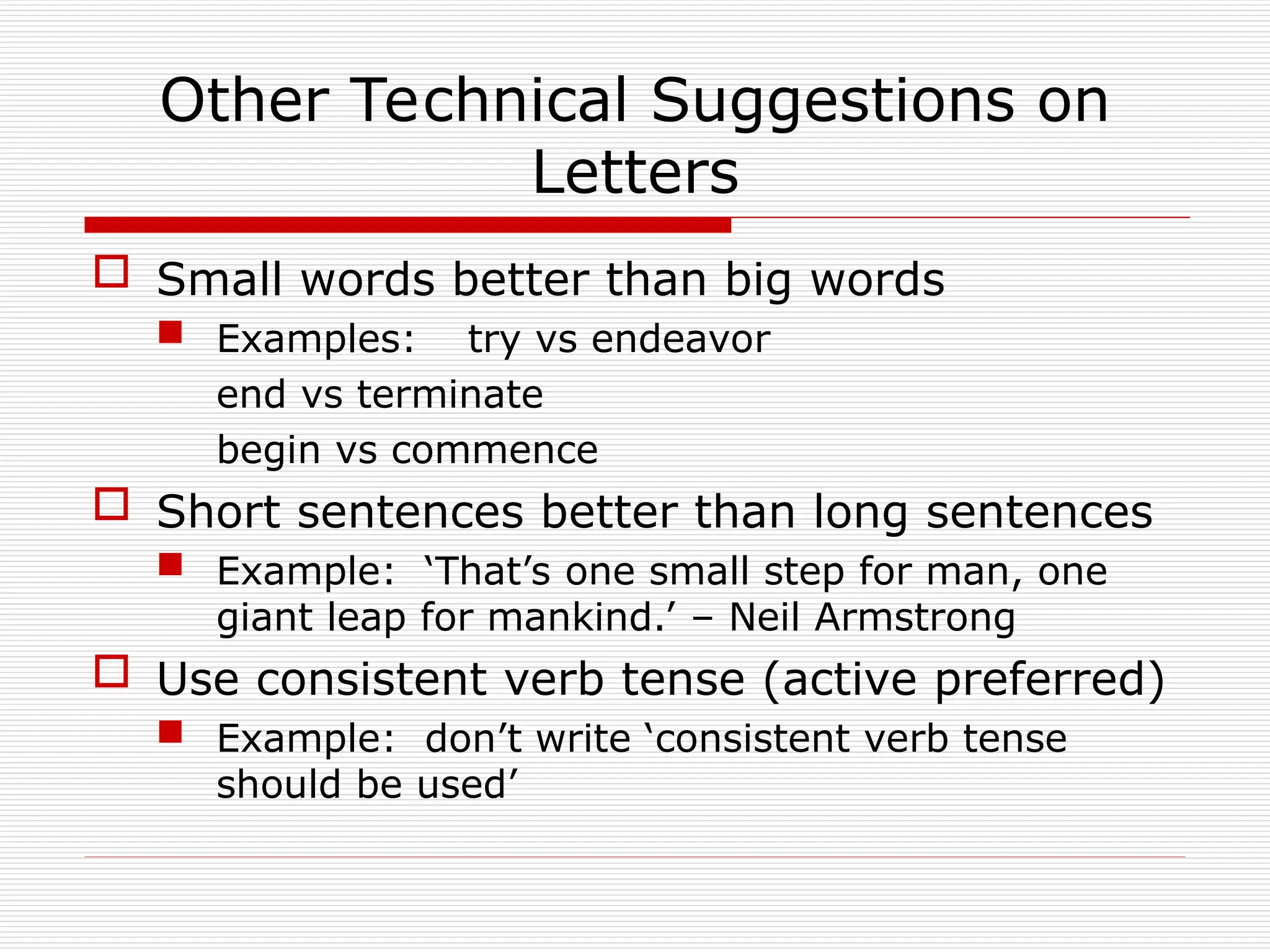
 Small words better than big words
 Examples: try vs endeavor
end vs terminate
begin vs commence
 Short sentences better than long sentences
 Example: ‘That’s one small step for man, one
giant leap for mankind.’ – Neil Armstrong
 Use consistent verb tense (active preferred)
 Example: don’t write ‘consistent verb tense
should be used’
Other Technical Suggestions on
Letters
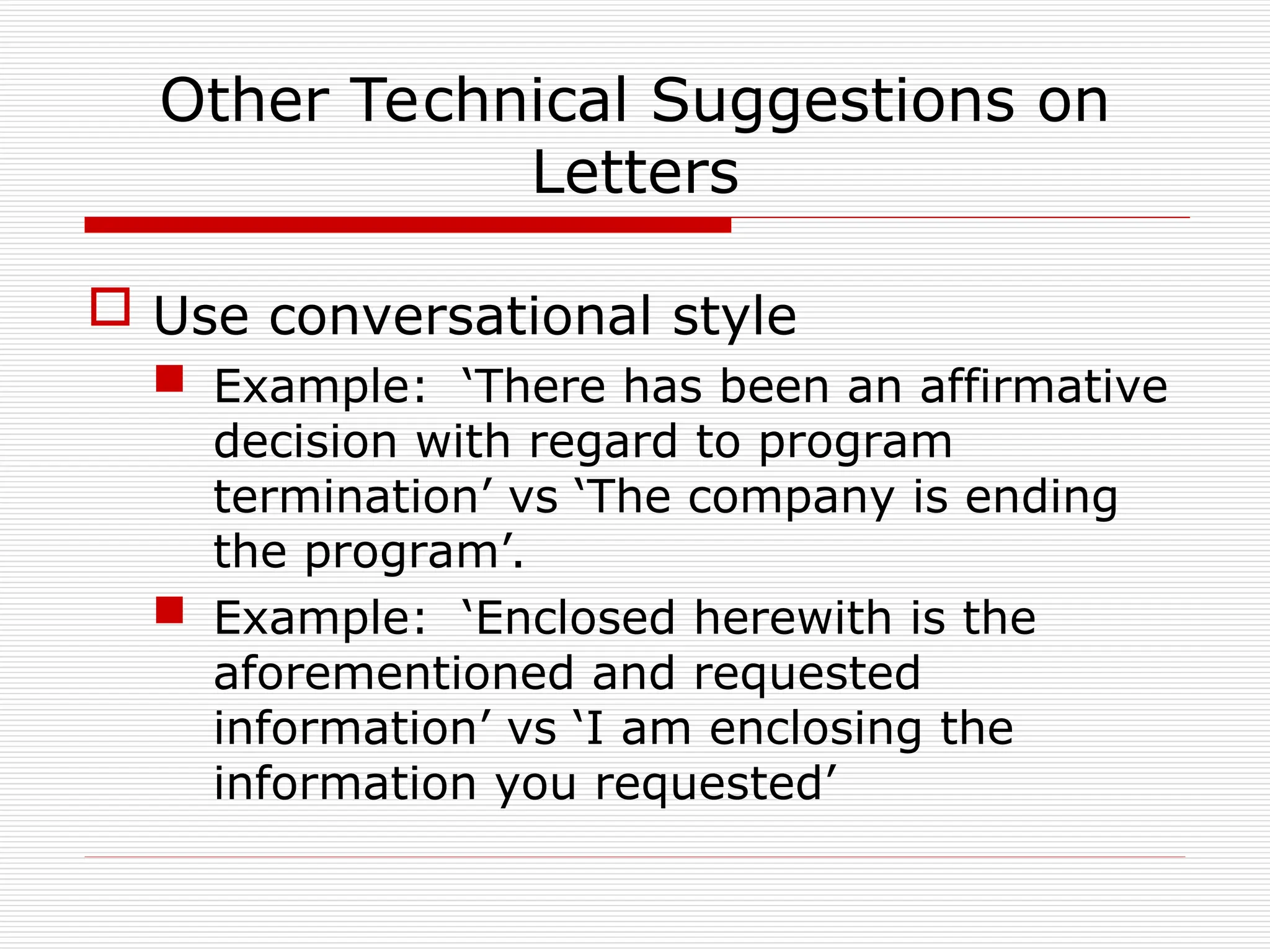
 Use conversational style
 Example: ‘There has been an affirmative
decision with regard to program
termination’ vs ‘The company is ending
the program’.
 Example: ‘Enclosed herewith is the
aforementioned and requested
information’ vs ‘I am enclosing the
information you requested’
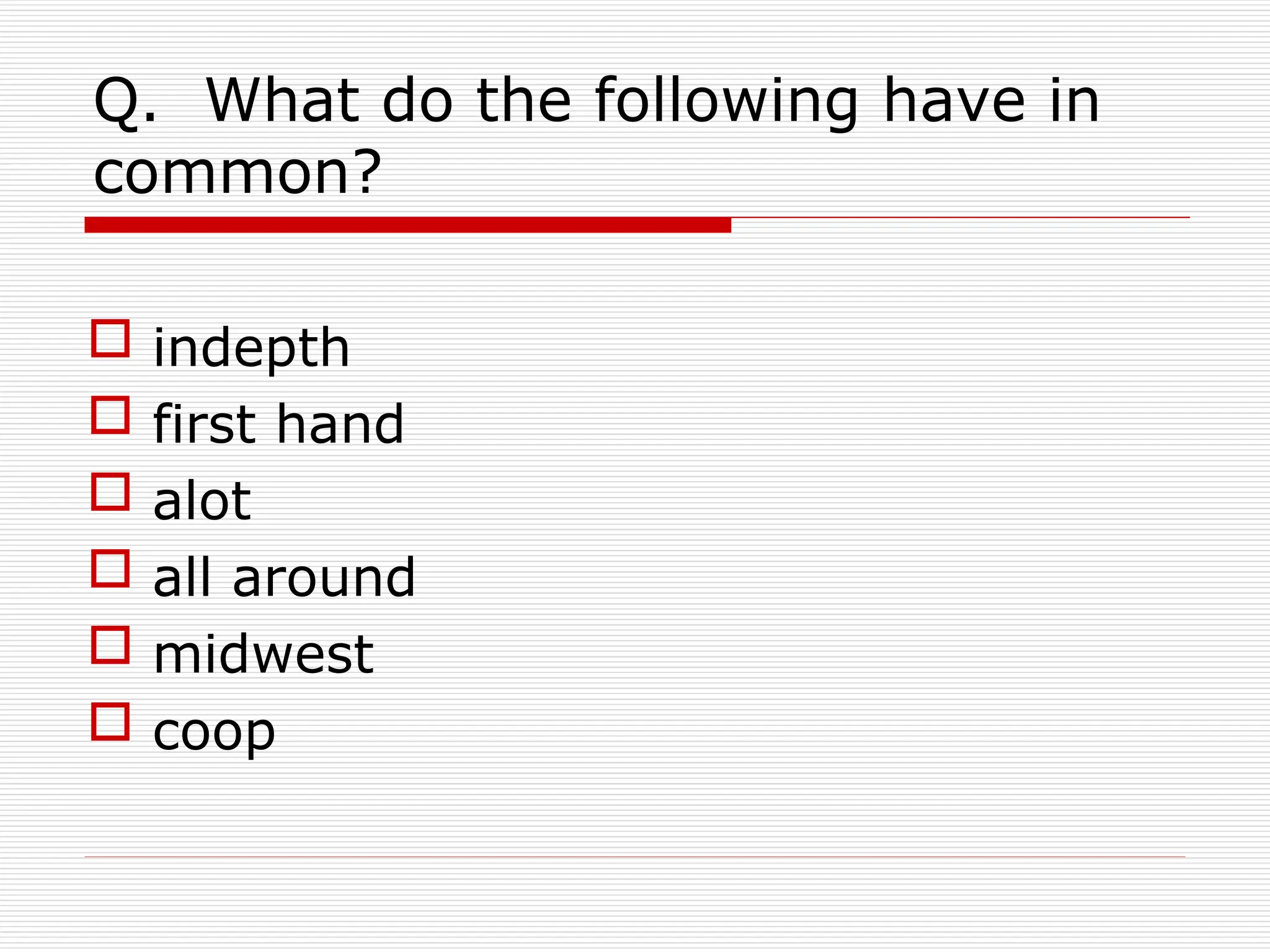
Q. What do the following have in
common?
 indepth
 first hand
 alot
 all around
 midwest
 coop
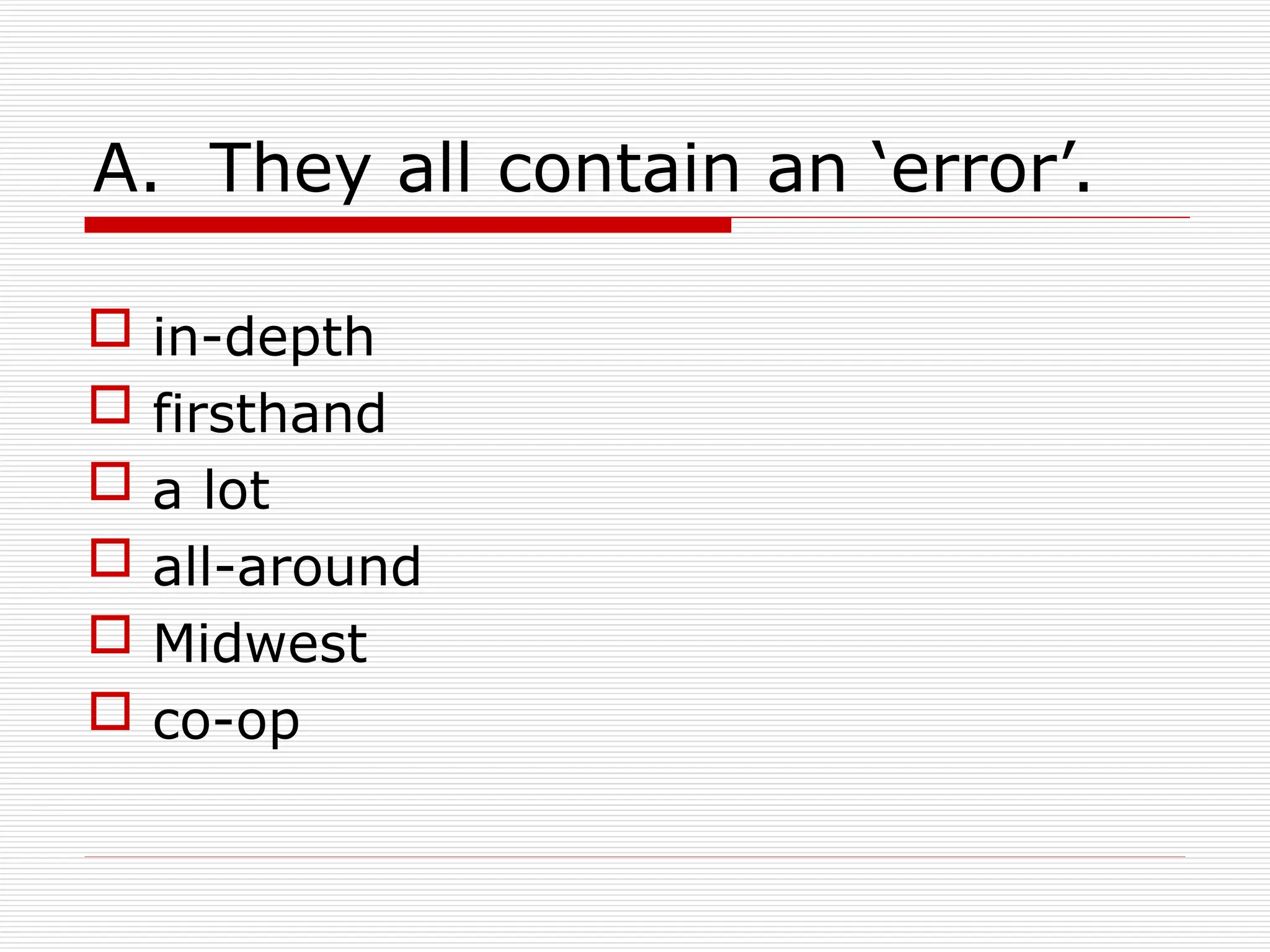
A. They all contain an ‘error’.
 in-depth
 firsthand
 a lot
 all-around
 Midwest
 co-op
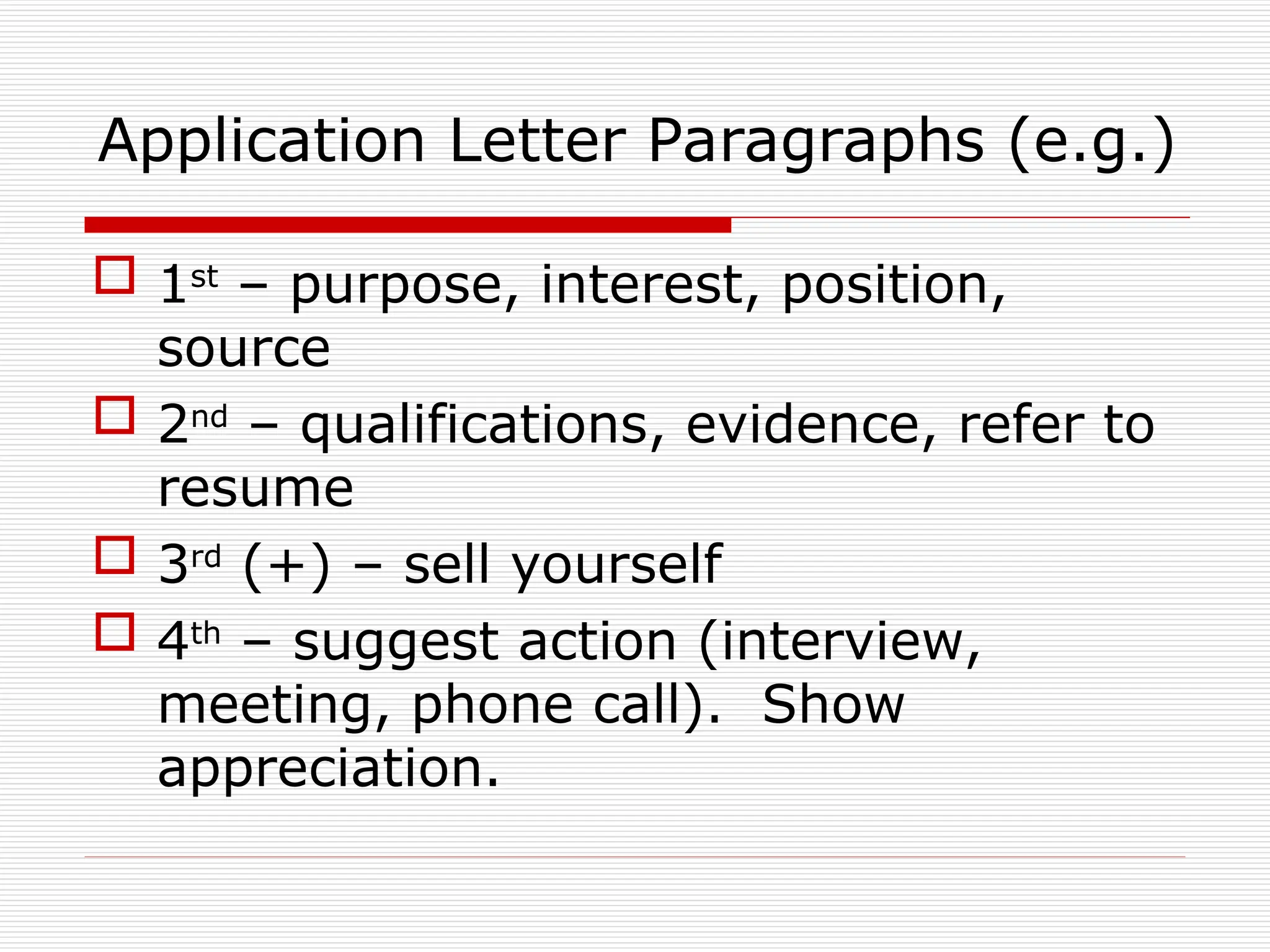
Application Letter Paragraphs (e.g.)
 1st
– purpose, interest, position,
source
 2nd
– qualifications, evidence, refer to
resume
 3rd
(+) – sell yourself
 4th
– suggest action (interview,
meeting, phone call). Show
appreciation.
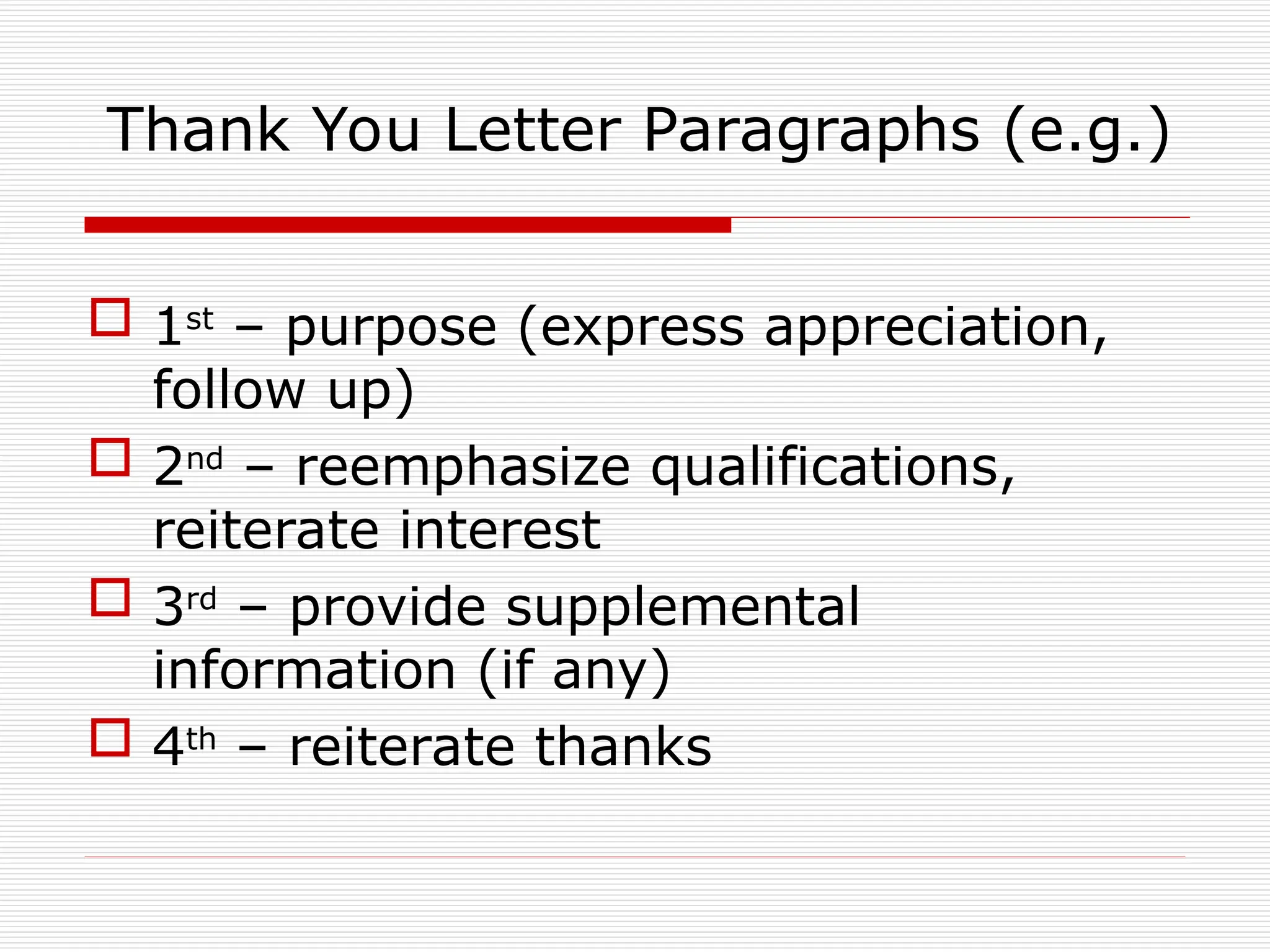
Thank You Letter Paragraphs (e.g.)
 1st
– purpose (express appreciation,
follow up)
 2nd
– reemphasize qualifications,
reiterate interest
 3rd
– provide supplemental
information (if any)
 4th
– reiterate thanks
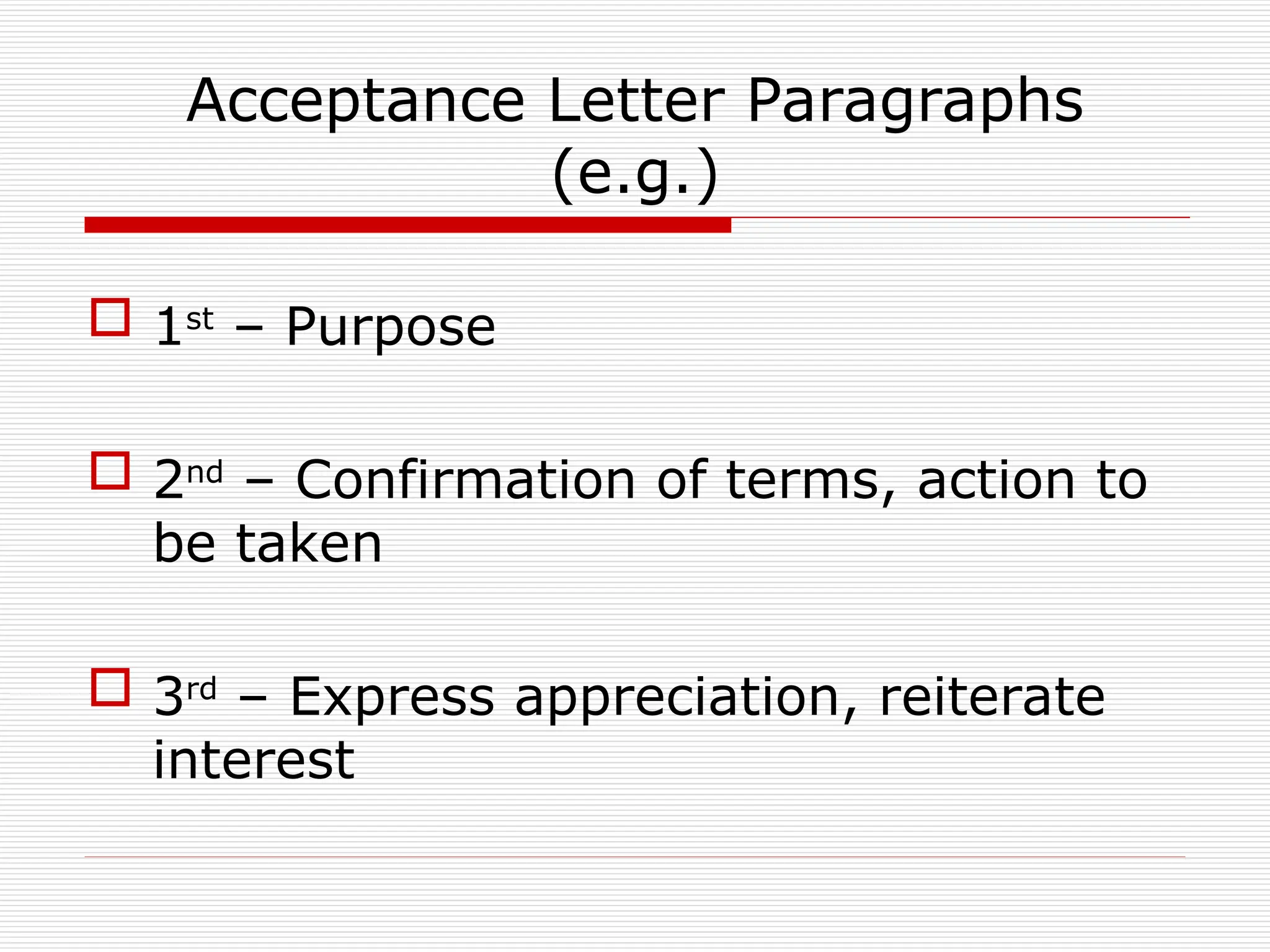
Acceptance Letter Paragraphs
(e.g.)
 1st
– Purpose
 2nd
– Confirmation of terms, action to
be taken
 3rd
– Express appreciation, reiterate
interest
How to write a letter for applying a job

How to write a letter for applying a job

  • 1.
  • 2.
    Letter Writing -Intro  Part of total job search process  Communication skills indicator  No single correct way, but generic impersonal form letters don’t cut it
  • 3.
    Types of ‘JobSearch’ Letters 1. Application/cover – to apply for a specific position 2. Appreciation/thank you – to follow up 3. Prospecting – to inquire about general availability of positions 4. Networking – to arrange an informational interview/meeting 5. Acceptance – to accept and confirm a job offer 6. Withdrawal – to remove your job application from consideration 7. Rejection – to decline a job offer
  • 4.
    Examples of NONJob Search Letters in Business  Purposes: 1. To present a sales proposal to a customer. 2. To present a financial proposal to a customer. 3. To set up a committee meeting. 4. To set up a business meeting. 5. To offer a position to a new employee. 6. To communicate to fellow employees a new company policy. 7. To write a letter of recommendation in support of a colleague for a new job. 8. To request and justify company support of a specific departmental proposal (e.g. new equipment, additional funding). 9. To request information or additional information. 10. To respond to an inquiry.
  • 5.
    Letter Writing Principles (applyto all letters)  Identify purpose, at the beginning  Organize material into paragraphs  Be professional  High quality paper  Error free  Address to specific individual  Be succinct, get to the point
  • 6.
    Letter Writing Principles (applyto all letters)  Be positive  (optimistic, productive, reasonable, responsible)  Cater to reader’s interests  Sign and keep copy
  • 7.
    Letter-writing principles alsoapply to letters:  Handwritten  Sent via e-mail
  • 8.
    Other Technical Suggestionson Letters  Center letter (side to side, top to bottom)  Capitalization  Don’t overdo it (e.g. no need to cap job titles, seasons of the yr, courses taken, senior, agriculture, etc.)  Punctuation  Don’t overuse commas, semicolons; use periods to avoid run-on sentences; no need to use period after two-letter abbreviation of state or street  Spelling  No mistakes (use spell check); pay attention to hyphenated words (e.g. in-depth, two word adjectives preceding noun).
  • 9.
    Other Technical Suggestionson Letters  Small words better than big words  Examples: try vs endeavor end vs terminate begin vs commence  Short sentences better than long sentences  Example: ‘That’s one small step for man, one giant leap for mankind.’ – Neil Armstrong  Use consistent verb tense (active preferred)  Example: don’t write ‘consistent verb tense should be used’
  • 10.
    Other Technical Suggestionson Letters  Use conversational style  Example: ‘There has been an affirmative decision with regard to program termination’ vs ‘The company is ending the program’.  Example: ‘Enclosed herewith is the aforementioned and requested information’ vs ‘I am enclosing the information you requested’
  • 11.
    Q. What dothe following have in common?  indepth  first hand  alot  all around  midwest  coop
  • 12.
    A. They allcontain an ‘error’.  in-depth  firsthand  a lot  all-around  Midwest  co-op
  • 13.
    Application Letter Paragraphs(e.g.)  1st – purpose, interest, position, source  2nd – qualifications, evidence, refer to resume  3rd (+) – sell yourself  4th – suggest action (interview, meeting, phone call). Show appreciation.
  • 14.
    Thank You LetterParagraphs (e.g.)  1st – purpose (express appreciation, follow up)  2nd – reemphasize qualifications, reiterate interest  3rd – provide supplemental information (if any)  4th – reiterate thanks
  • 15.
    Acceptance Letter Paragraphs (e.g.) 1st – Purpose  2nd – Confirmation of terms, action to be taken  3rd – Express appreciation, reiterate interest