COMMON
GRAMMAR
MISTAKES
How to
Convert
Positive
Sentences into
Negative
Sentences?
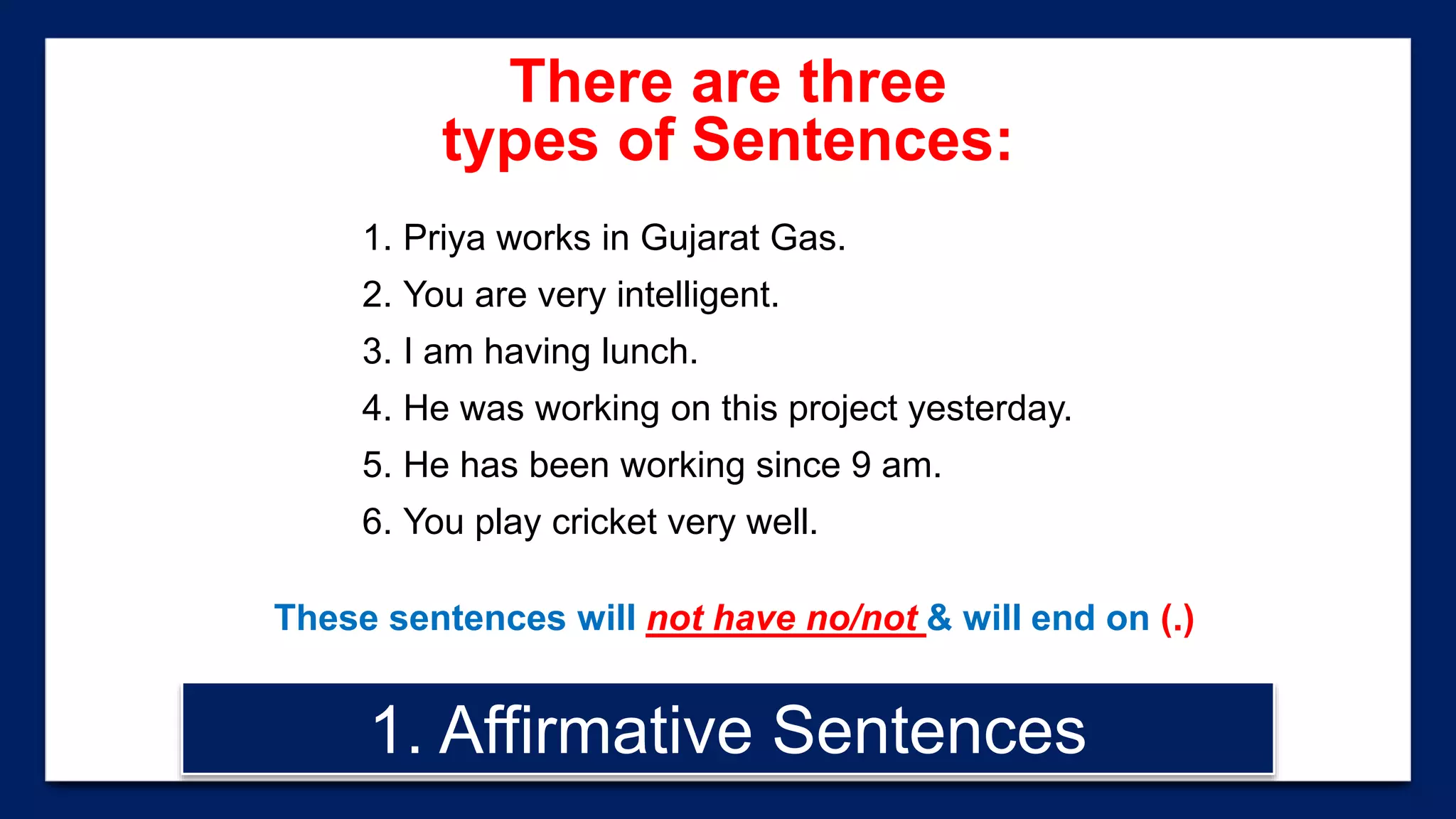
1. Priya works in Gujarat Gas.
2. You are very intelligent.
3. I am having lunch.
4. He was working on this project yesterday.
5. He has been working since 9 am.
6. You play cricket very well.
These sentences will not have no/not & will end on (.)
1. Affirmative Sentences
There are three
types of Sentences:
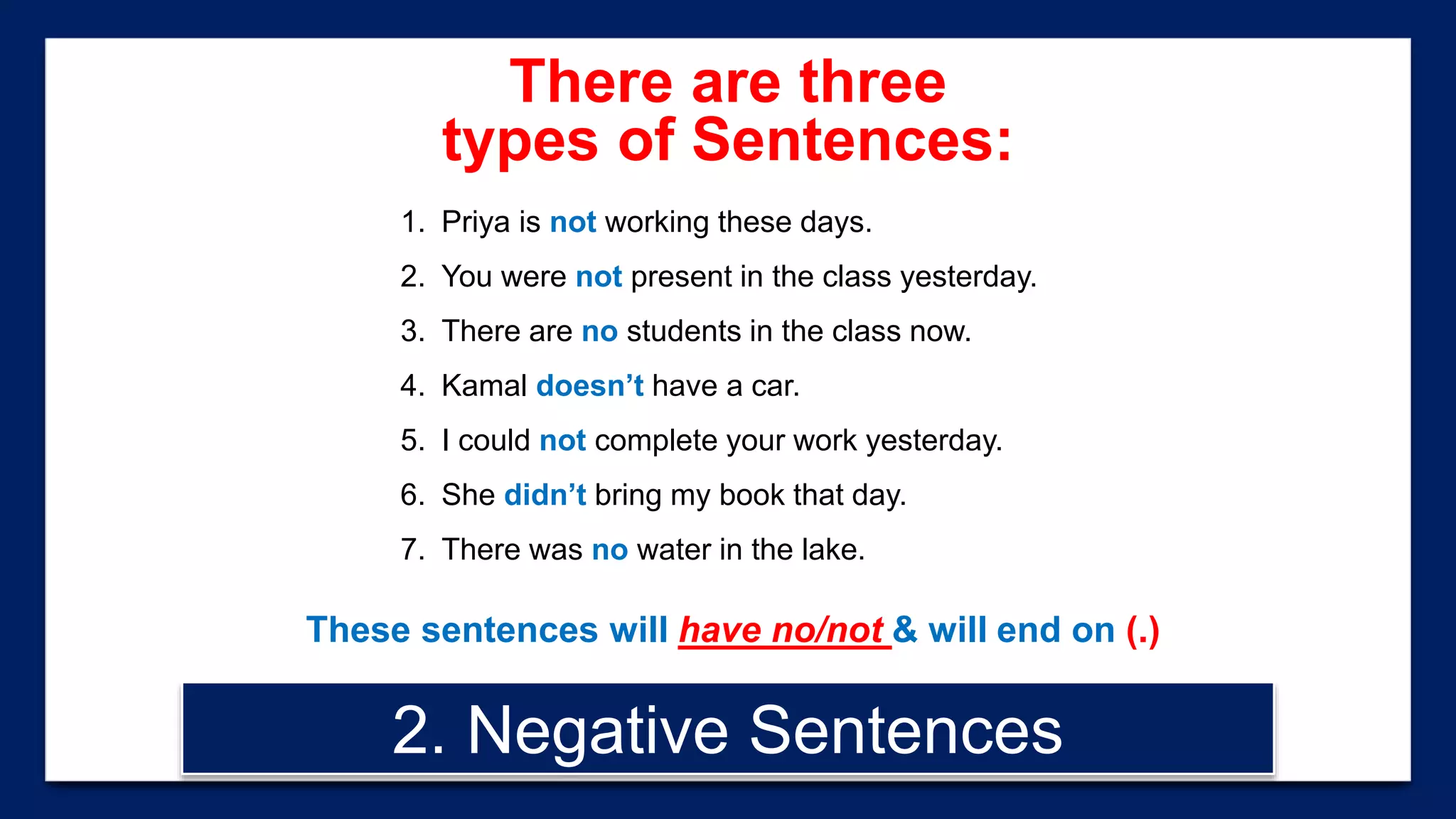
1. Priya is not working these days.
2. You were not present in the class yesterday.
3. There are no students in the class now.
4. Kamal doesn’t have a car.
5. I could not complete your work yesterday.
6. She didn’t bring my book that day.
7. There was no water in the lake.
These sentences will have no/not & will end on (.)
There are three
types of Sentences:
2. Negative Sentences
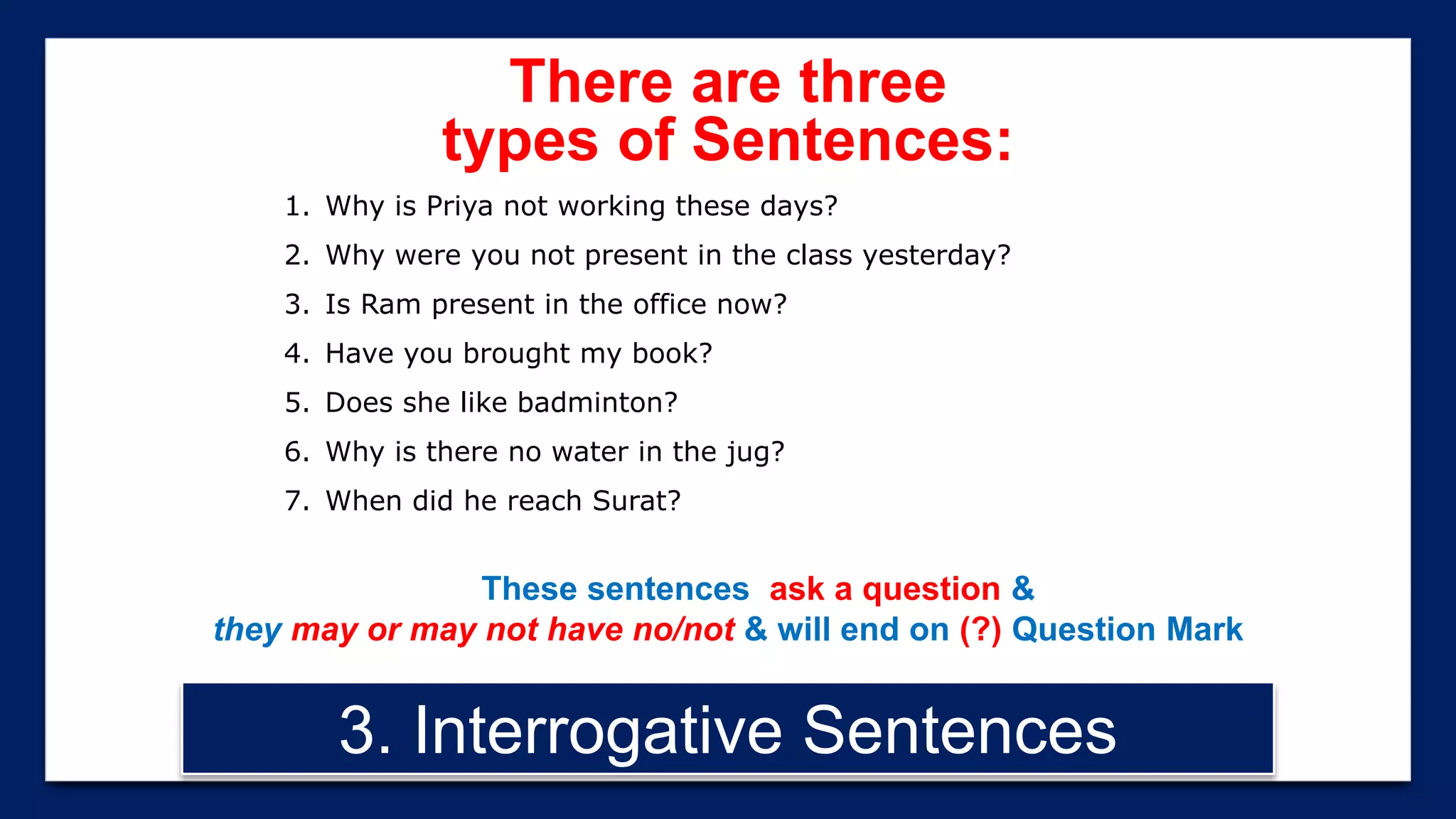
1. Why is Priya not working these days?
2. Why were you not present in the class yesterday?
3. Is Ram present in the office now?
4. Have you brought my book?
5. Does she like badminton?
6. Why is there no water in the jug?
7. When did he reach Surat?
These sentences ask a question &
they may or may not have no/not & will end on (?) Question Mark
3. Interrogative Sentences
There are three
types of Sentences:
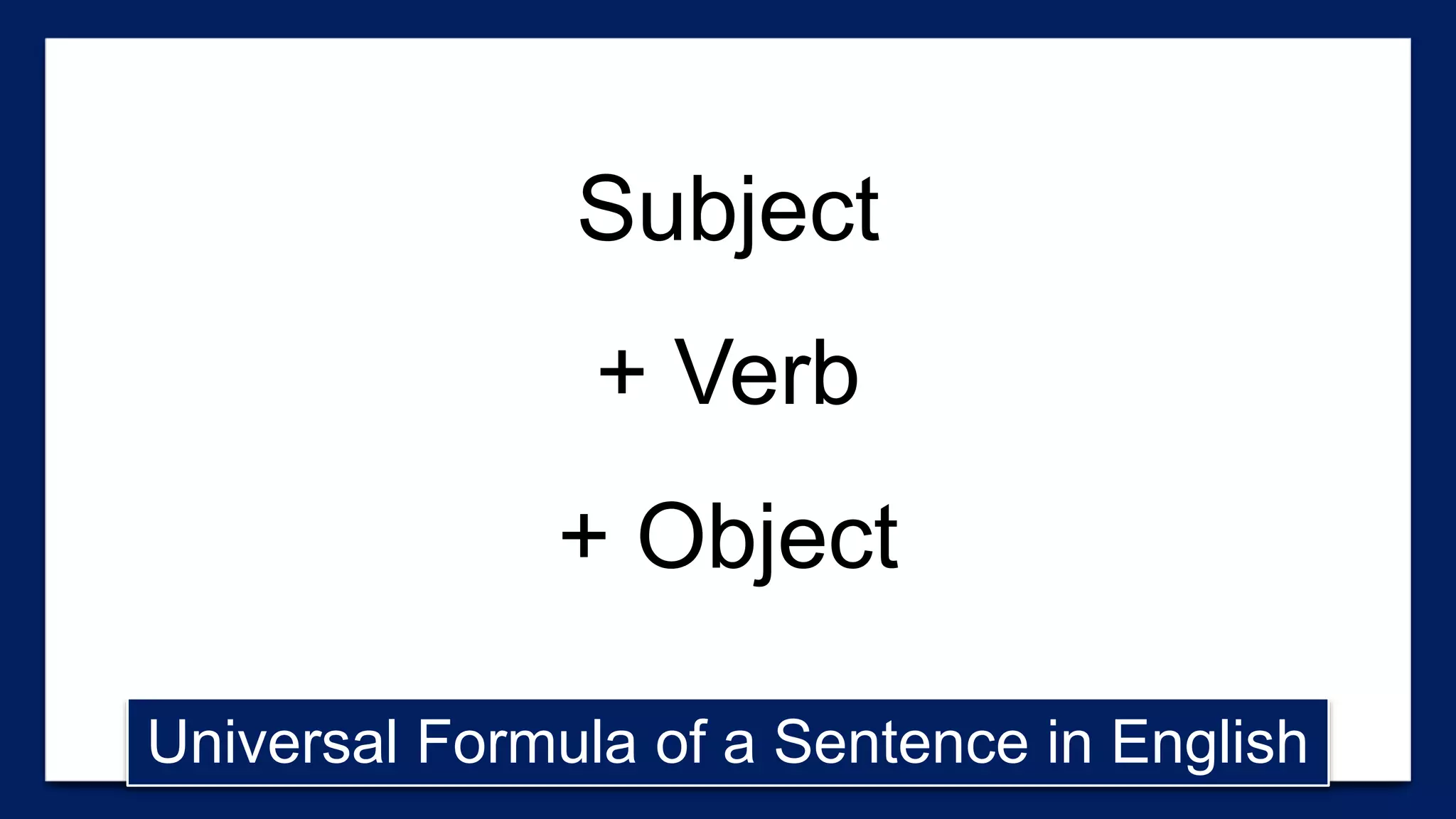
Subject
+ Verb
+ Object
Universal Formula of a Sentence in English
7
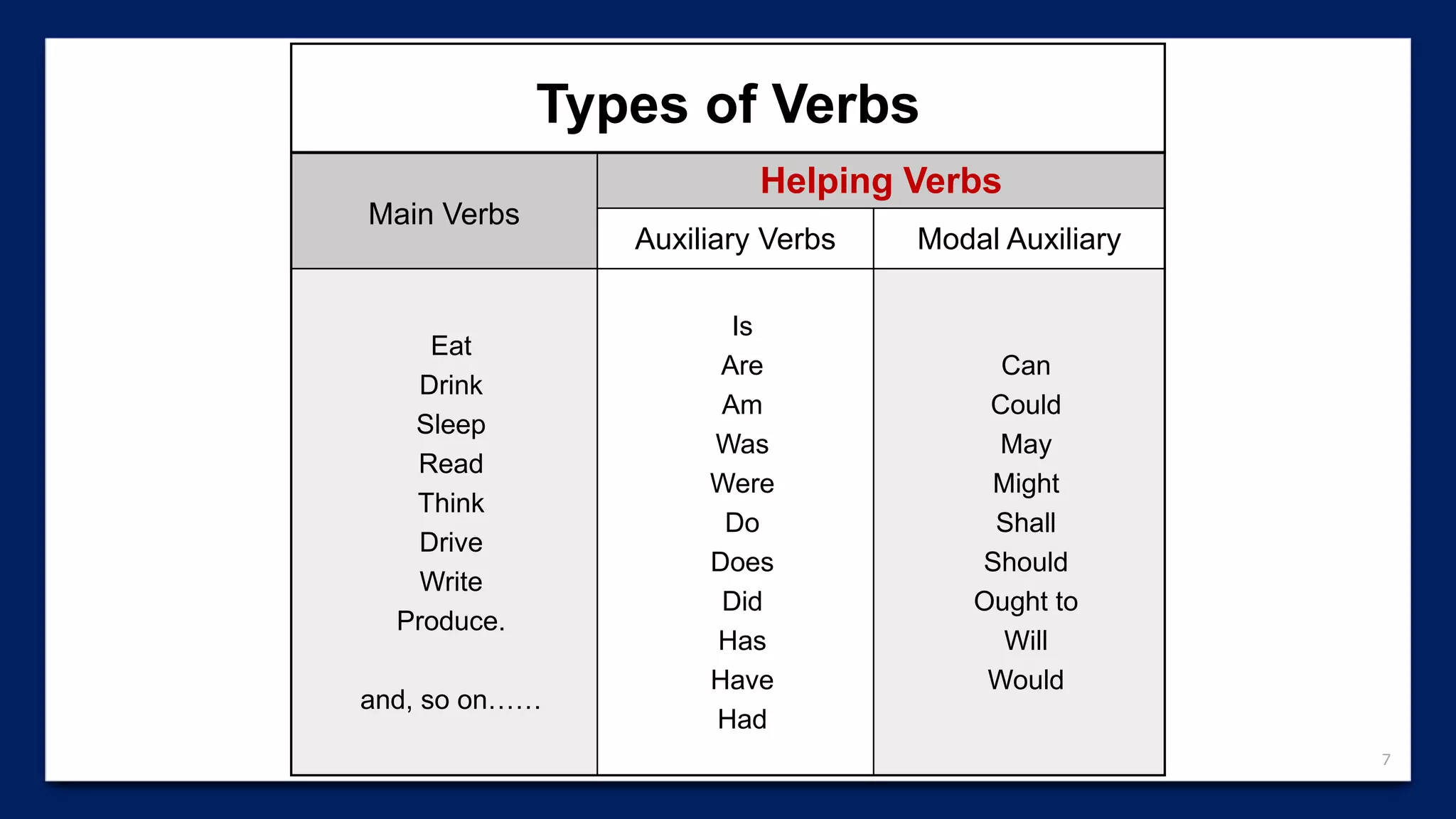
Types of Verbs
Main Verbs
Helping Verbs
Auxiliary Verbs Modal Auxiliary
Eat
Drink
Sleep
Read
Think
Drive
Write
Produce.
and, so on……
Is
Are
Am
Was
Were
Do
Does
Did
Has
Have
Had
Can
Could
May
Might
Shall
Should
Ought to
Will
Would
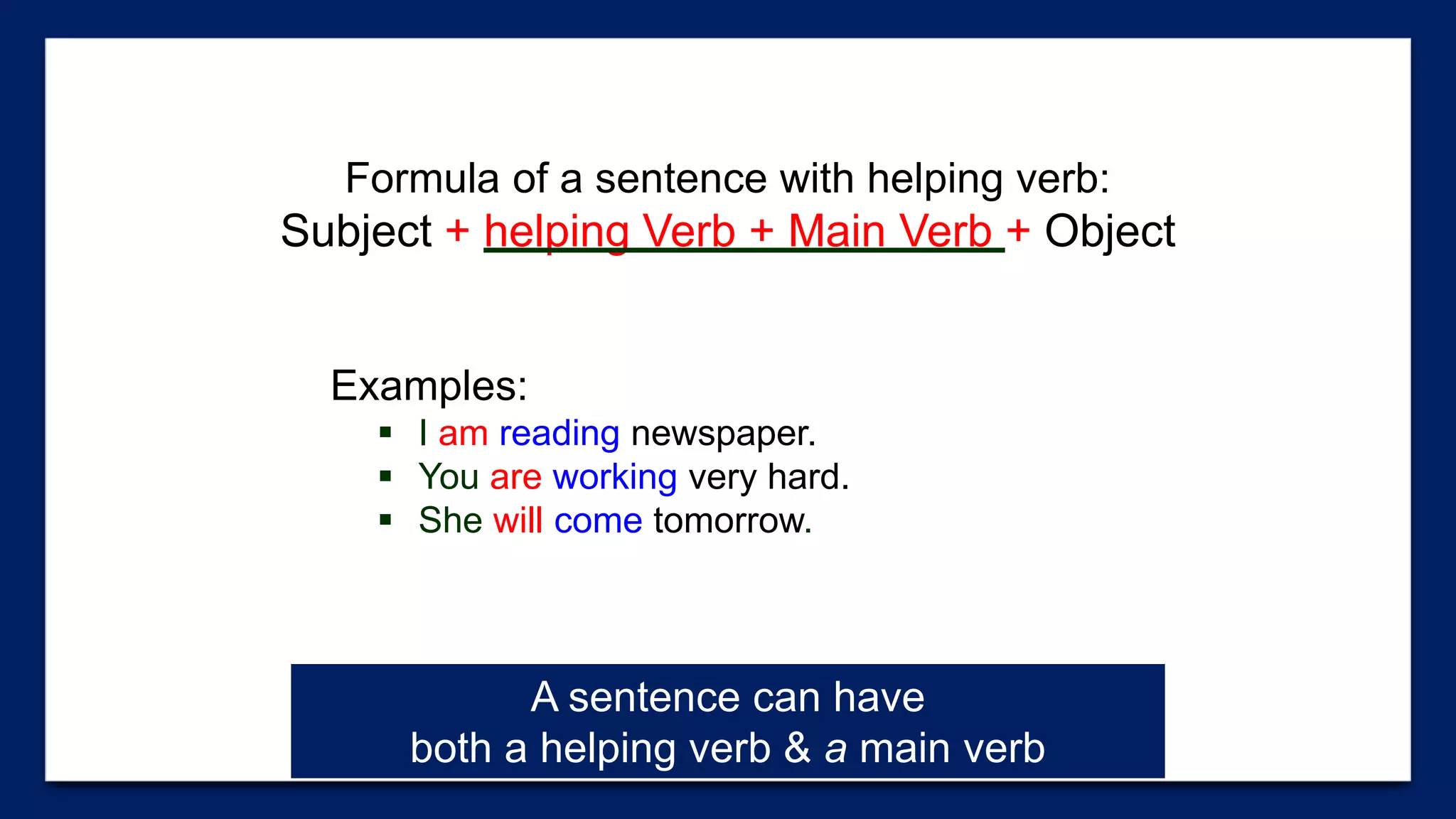
Formula of a sentence with helping verb:
Subject + helping Verb + Main Verb + Object
Examples:
 I am reading newspaper.
 You are working very hard.
 She will come tomorrow.
A sentence can have
both a helping verb & a main verb
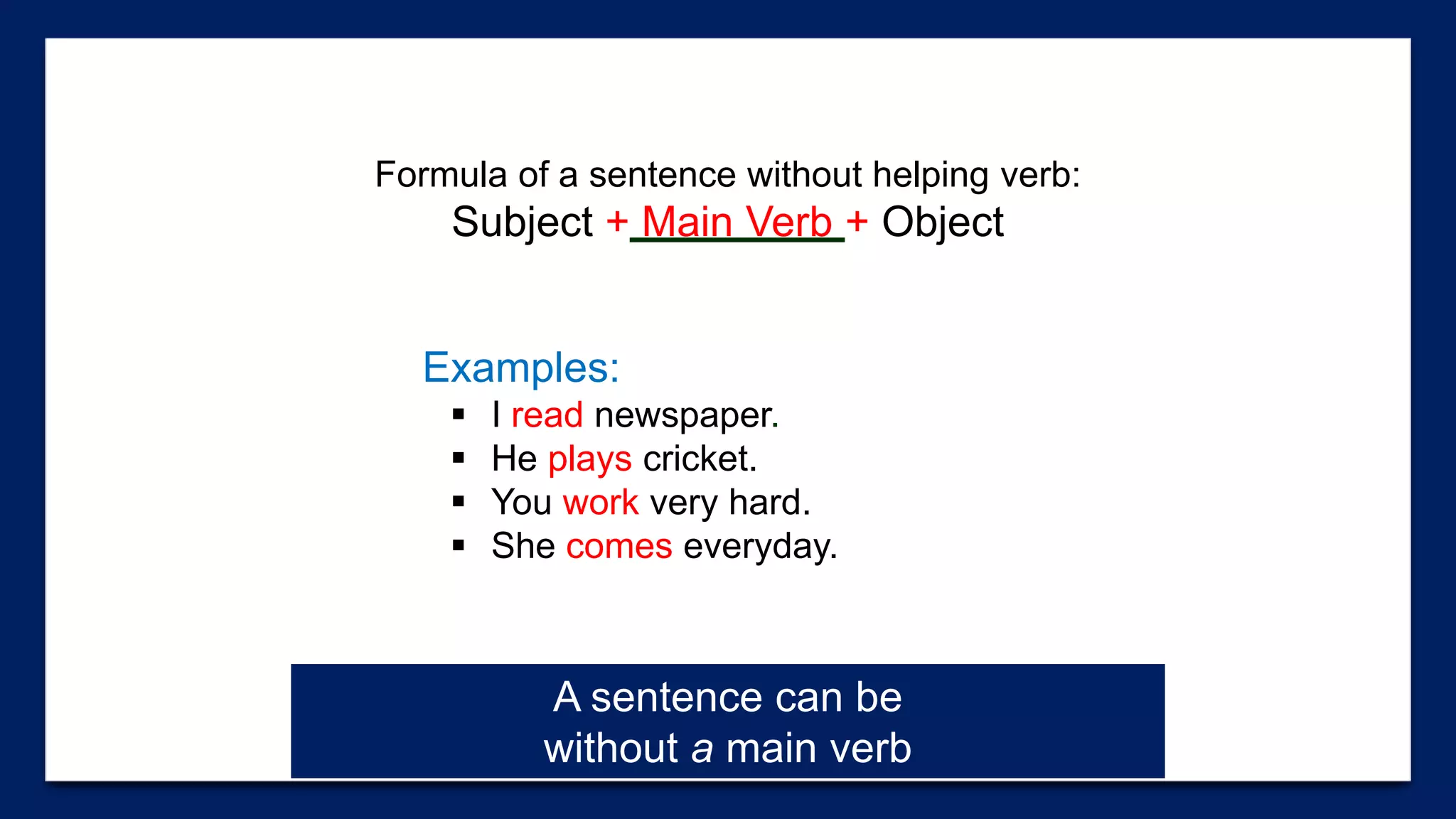
Formula of a sentence without helping verb:
Subject + Main Verb + Object
Examples:
 I read newspaper.
 He plays cricket.
 You work very hard.
 She comes everyday.
A sentence can be
without a main verb
Universal Formula
for transforming
Positive Sentences
into
Negative Sentences…..
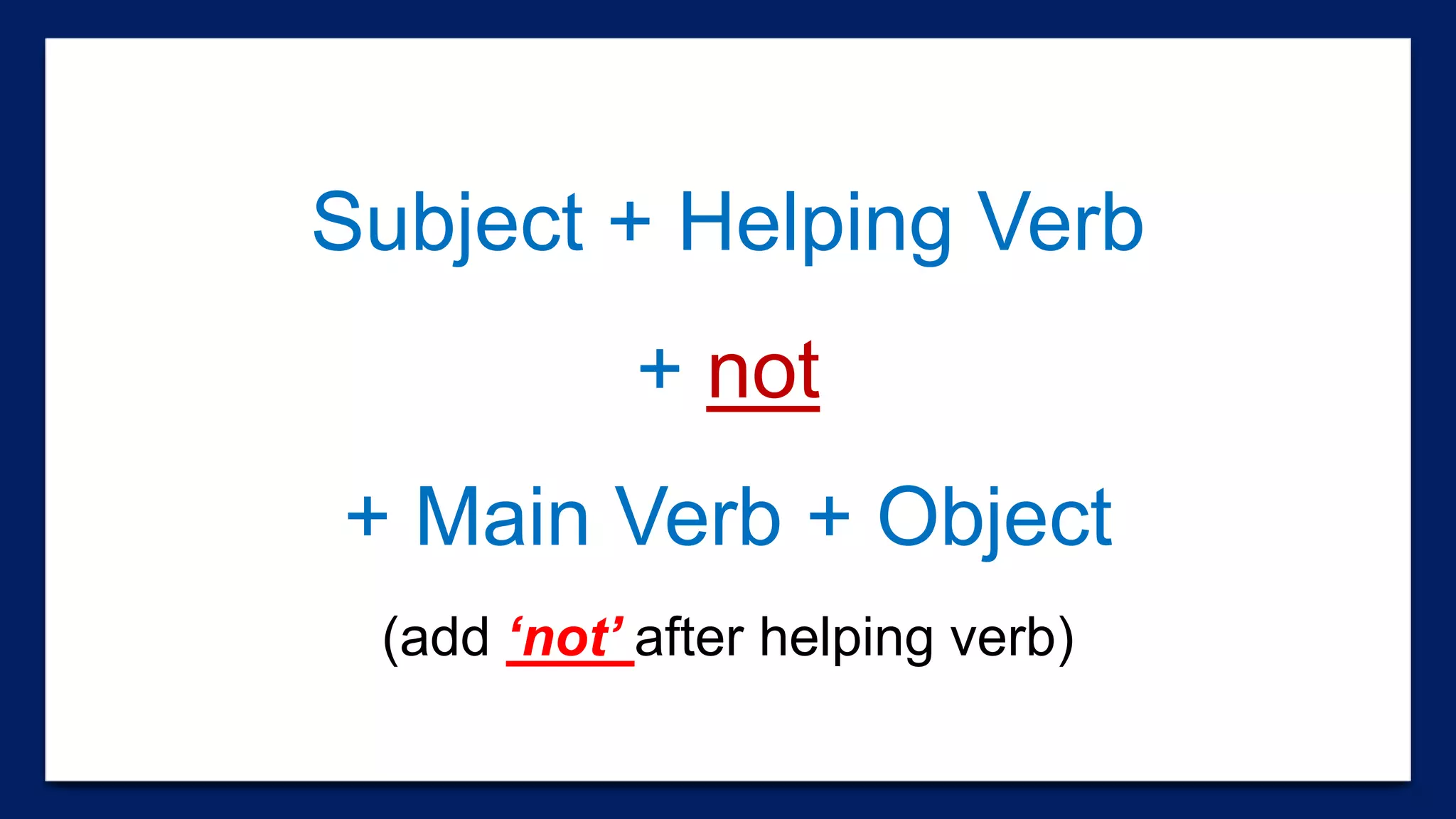
Subject + Helping Verb
+ not
+ Main Verb + Object
(add ‘not’ after helping verb)
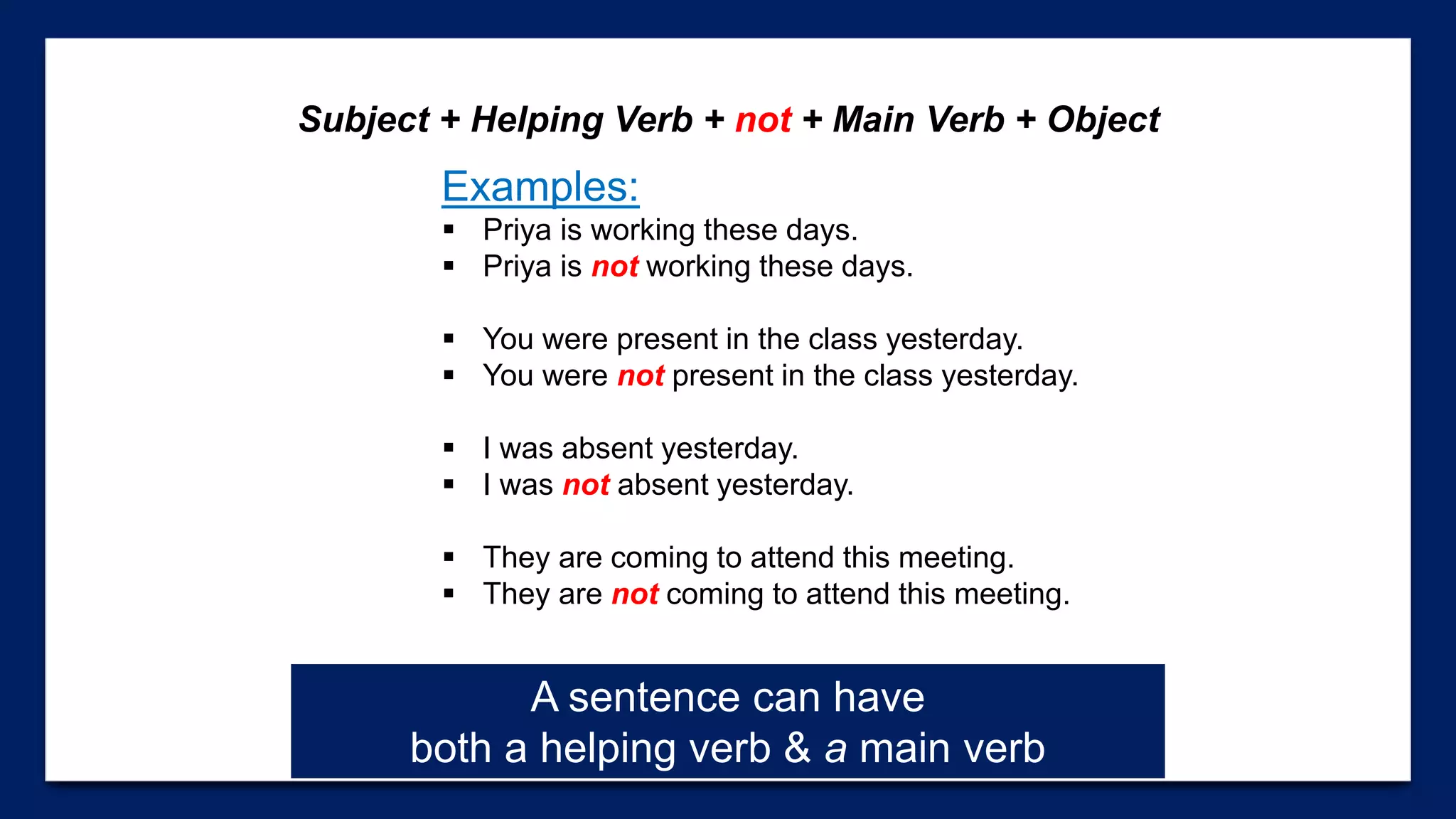
Subject + Helping Verb + not + Main Verb + Object
Examples:
 Priya is working these days.
 Priya is not working these days.
 You were present in the class yesterday.
 You were not present in the class yesterday.
 I was absent yesterday.
 I was not absent yesterday.
 They are coming to attend this meeting.
 They are not coming to attend this meeting.
A sentence can have
both a helping verb & a main verb
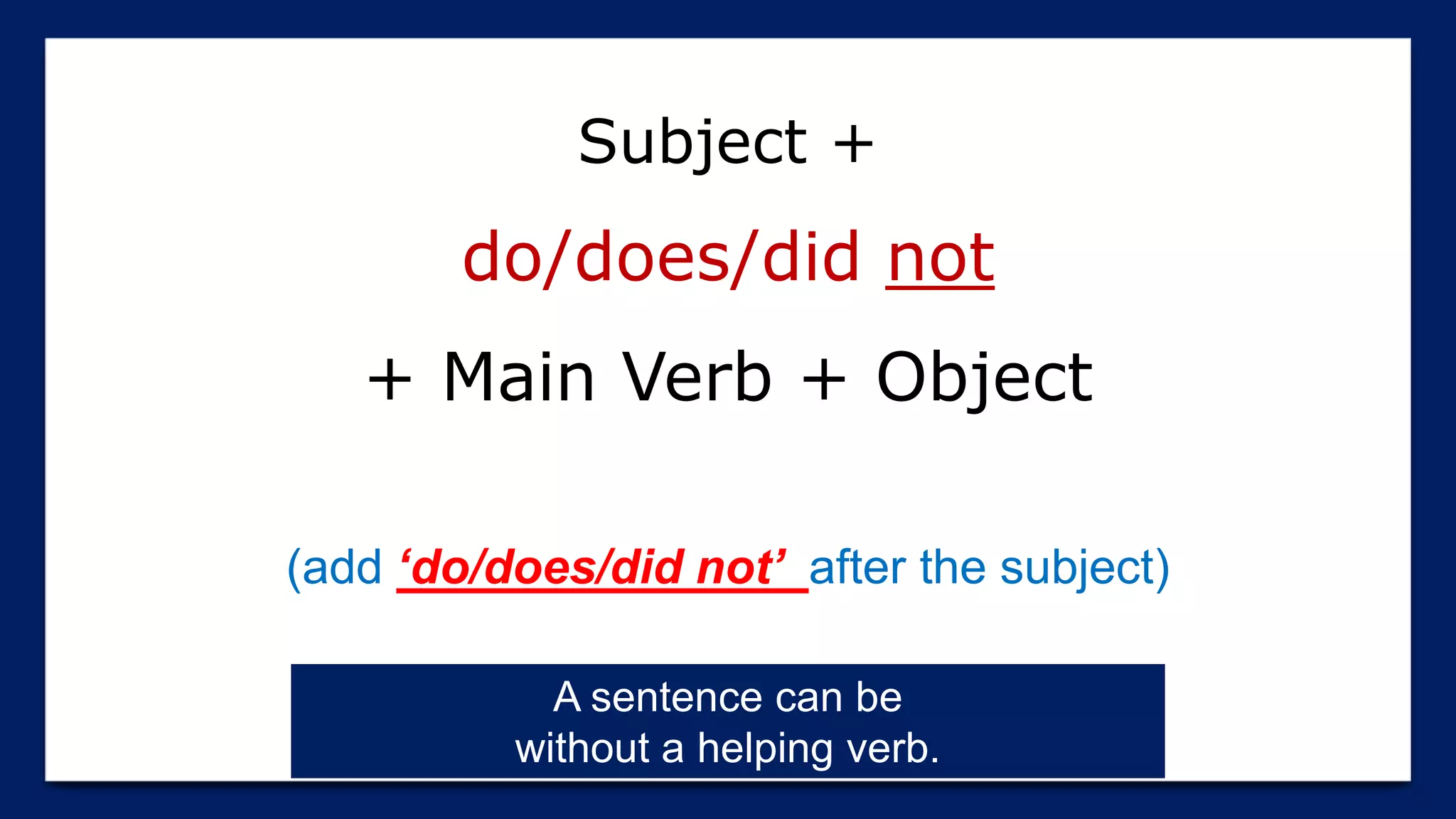
Subject +
do/does/did not
+ Main Verb + Object
(add ‘do/does/did not’ after the subject)
A sentence can be
without a helping verb.
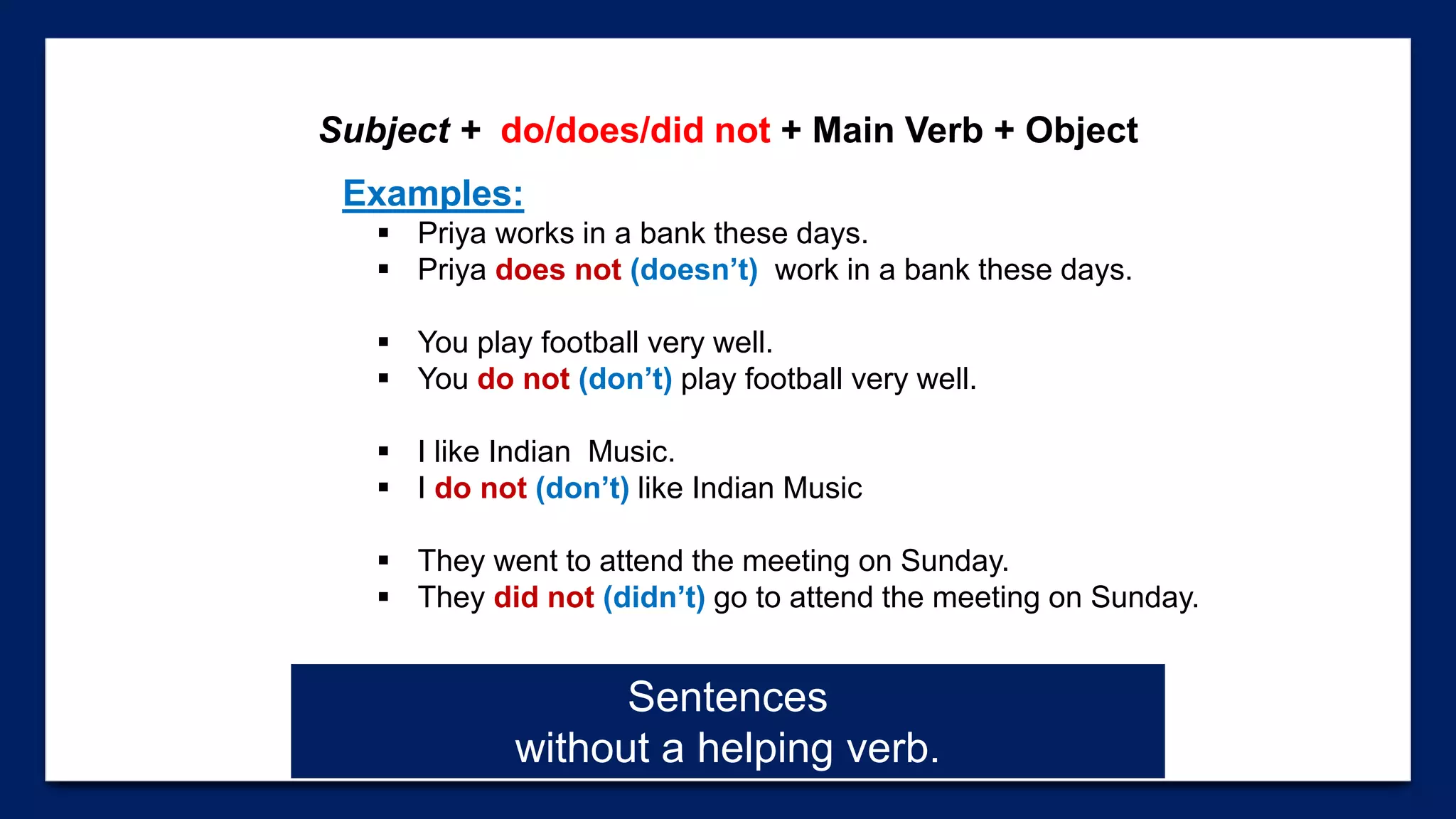
Subject + do/does/did not + Main Verb + Object
Examples:
 Priya works in a bank these days.
 Priya does not (doesn’t) work in a bank these days.
 You play football very well.
 You do not (don’t) play football very well.
 I like Indian Music.
 I do not (don’t) like Indian Music
 They went to attend the meeting on Sunday.
 They did not (didn’t) go to attend the meeting on Sunday.
Sentences
without a helping verb.
How to
Convert
Positive
Sentences into
Negative
Sentences?
COMMON
GRAMMAR
MISTAKES
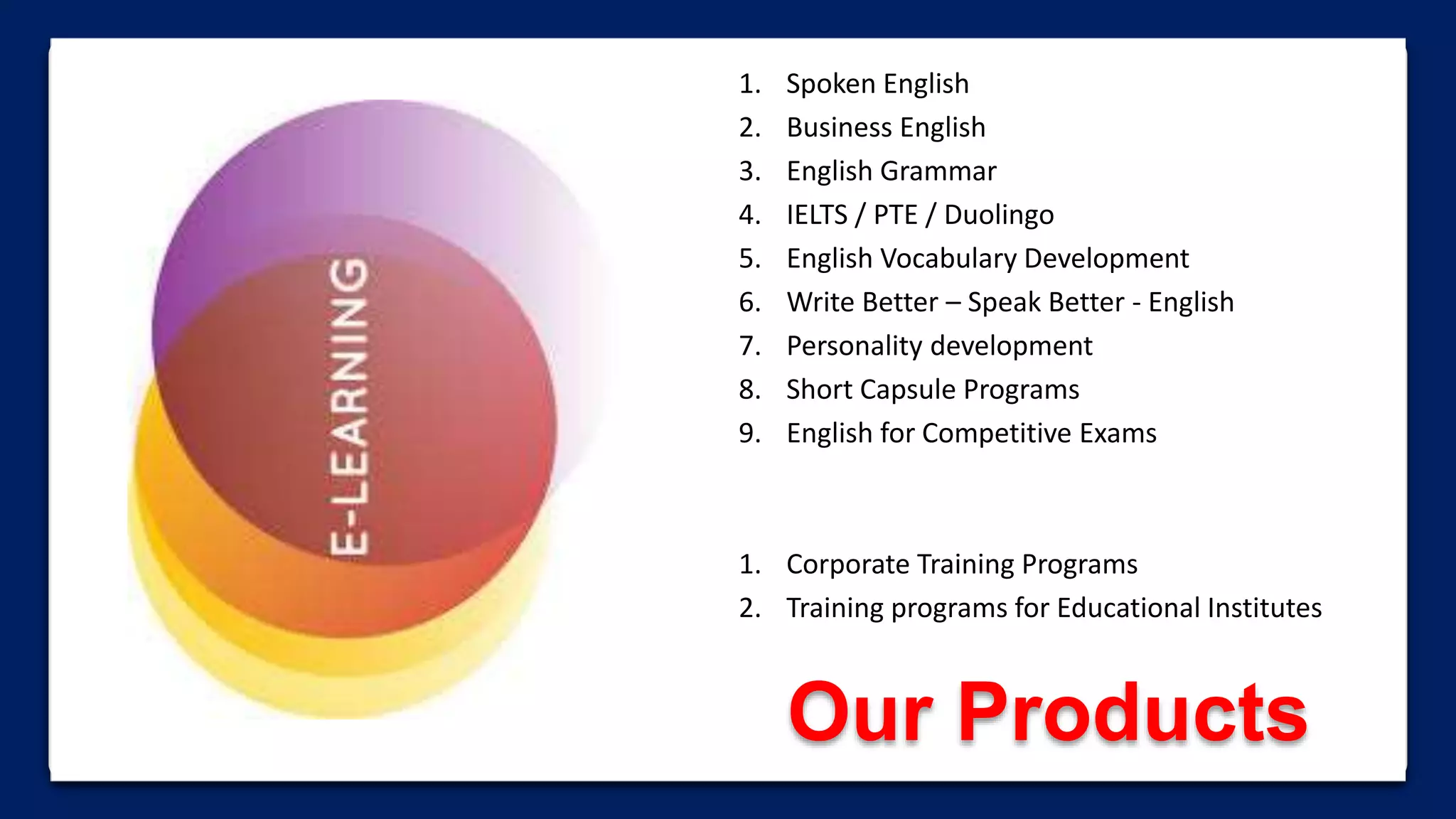
Our Products
1. Spoken English
2. Business English
3. English Grammar
4. IELTS / PTE / Duolingo
5. English Vocabulary Development
6. Write Better – Speak Better - English
7. Personality development
8. Short Capsule Programs
9. English for Competitive Exams
1. Corporate Training Programs
2. Training programs for Educational Institutes
18
(079) 2329 1615, 97279 19756 , 94272 25037
psandpd1@gmail.com
http://www.linkedin.com/pub/sarwan-singh/17/722/313
http://about.me/sarwan.singh
The Institute of Professional Development
Second Floor, Mamta Complex,
Above Sakar Motors,
Near ONGC Institute of Reservoir Studies,
Chandkheda, Ahmedabad-382424
(Gujarat – India)
facebook.com/sarwan.singh.5667
Sarwansingh1954.blogspot.com
http://sarwan1977.wordpress.com
https://bit.ly/32FZq25
You Tube
Twitter
Visitusat
https://bit.ly/our_activities
19
APresentationby:
Er.SarwanSingh

How to transform positive sentence into negative sentence

  • 1.
  • 2.
  • 3.
    1. Priya worksin Gujarat Gas. 2. You are very intelligent. 3. I am having lunch. 4. He was working on this project yesterday. 5. He has been working since 9 am. 6. You play cricket very well. These sentences will not have no/not & will end on (.) 1. Affirmative Sentences There are three types of Sentences:
  • 4.
    1. Priya isnot working these days. 2. You were not present in the class yesterday. 3. There are no students in the class now. 4. Kamal doesn’t have a car. 5. I could not complete your work yesterday. 6. She didn’t bring my book that day. 7. There was no water in the lake. These sentences will have no/not & will end on (.) There are three types of Sentences: 2. Negative Sentences
  • 5.
    1. Why isPriya not working these days? 2. Why were you not present in the class yesterday? 3. Is Ram present in the office now? 4. Have you brought my book? 5. Does she like badminton? 6. Why is there no water in the jug? 7. When did he reach Surat? These sentences ask a question & they may or may not have no/not & will end on (?) Question Mark 3. Interrogative Sentences There are three types of Sentences:
  • 6.
    Subject + Verb + Object UniversalFormula of a Sentence in English
  • 7.
    7 Types of Verbs MainVerbs Helping Verbs Auxiliary Verbs Modal Auxiliary Eat Drink Sleep Read Think Drive Write Produce. and, so on…… Is Are Am Was Were Do Does Did Has Have Had Can Could May Might Shall Should Ought to Will Would
  • 8.
    Formula of asentence with helping verb: Subject + helping Verb + Main Verb + Object Examples:  I am reading newspaper.  You are working very hard.  She will come tomorrow. A sentence can have both a helping verb & a main verb
  • 9.
    Formula of asentence without helping verb: Subject + Main Verb + Object Examples:  I read newspaper.  He plays cricket.  You work very hard.  She comes everyday. A sentence can be without a main verb
  • 10.
    Universal Formula for transforming PositiveSentences into Negative Sentences…..
  • 11.
    Subject + HelpingVerb + not + Main Verb + Object (add ‘not’ after helping verb)
  • 12.
    Subject + HelpingVerb + not + Main Verb + Object Examples:  Priya is working these days.  Priya is not working these days.  You were present in the class yesterday.  You were not present in the class yesterday.  I was absent yesterday.  I was not absent yesterday.  They are coming to attend this meeting.  They are not coming to attend this meeting. A sentence can have both a helping verb & a main verb
  • 13.
    Subject + do/does/did not +Main Verb + Object (add ‘do/does/did not’ after the subject) A sentence can be without a helping verb.
  • 14.
    Subject + do/does/didnot + Main Verb + Object Examples:  Priya works in a bank these days.  Priya does not (doesn’t) work in a bank these days.  You play football very well.  You do not (don’t) play football very well.  I like Indian Music.  I do not (don’t) like Indian Music  They went to attend the meeting on Sunday.  They did not (didn’t) go to attend the meeting on Sunday. Sentences without a helping verb.
  • 15.
  • 16.
  • 17.
    Our Products 1. SpokenEnglish 2. Business English 3. English Grammar 4. IELTS / PTE / Duolingo 5. English Vocabulary Development 6. Write Better – Speak Better - English 7. Personality development 8. Short Capsule Programs 9. English for Competitive Exams 1. Corporate Training Programs 2. Training programs for Educational Institutes
  • 18.
    18 (079) 2329 1615,97279 19756 , 94272 25037 psandpd1@gmail.com http://www.linkedin.com/pub/sarwan-singh/17/722/313 http://about.me/sarwan.singh The Institute of Professional Development Second Floor, Mamta Complex, Above Sakar Motors, Near ONGC Institute of Reservoir Studies, Chandkheda, Ahmedabad-382424 (Gujarat – India) facebook.com/sarwan.singh.5667 Sarwansingh1954.blogspot.com http://sarwan1977.wordpress.com https://bit.ly/32FZq25 You Tube Twitter Visitusat https://bit.ly/our_activities
  • 19.
  • 20.