Summaries in Daily Life 
Unit 1, page 1 
1
Definition 
2
Definition 
• A condensed version of text that only 
includes the main ideas. 
• It may consist of : 
1. A single word 
2. A single phrase 
3. Several sentences or paragraphs 
3
Why Summaries ? 
4
• The best way to understand any text is to 
condense it into its main points. 
• Before you can summarize, you must 
understand the information that you are 
condensing. 
5
• Summarizing is important when you need 
to condense ideas from sources like: 
Books 
Articles 
Websites for a research paper. 
6 
Research Paper
Summary & Analysis 
• Summary and analysis assignments 
require you to express and analyze the 
main ideas of a text. 
7
Points to Be Remembered 
• Summaries should be written in your own 
words 
• Should match the tone of the original text 
• Should make specific reference to the: 
Author 
Title 
Page(s) of the text 
• Should not include any of your opinions 
8
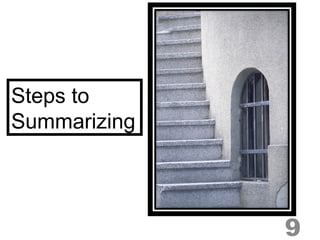
9 
Steps to 
Summarizing
Preview 
• Title: 
A title usually condenses the main idea of the 
article. 
• Subtitle: 
The subtitle, caption, or any other words in 
large print under or next to the title may 
highlight important ideas 
10
Preview 
• Headings and Subheadings: 
 They break down the article into sections that 
relate to the author’s main idea. 
• First and last several paragraphs: 
The first and last several paragraphs often 
introduce and conclude the author’s argument 
or main point 
11
Preview 
• Other Items: 
Bold-faced words, pictures, charts, or 
diagrams can “illustrate” main ideas. 
12
Read 
• Read once through 
without stopping. 
• Do not focus on the 
details during your 
first reading. 
• Just try to understand 
the main idea. 
13
Evaluate 
• Carefully read the text a second time. 
• Use the surrounding context to 
understand words that are unfamiliar. 
Use dictionary! 
14
Evaluate 
1. Look for definitions, 
examples, lists, tables, 
graphs, which indicate 
key terms. 
2. Underline important 
ideas & circle key 
terms. 
3. Note the main idea of 
each paragraph. 
4. Find the author’s 
main point or 
argument of the 
whole entire text. 
15
Organize 
1. Start the summary with the title and author of the work. 
2. Write the author’s main point or argument in your own 
words. 
3. Write the remaining important ideas in your own words. 
• Do not include examples, statistics, specific details, 
and quotations, if possible. 
1. Write the article’s conclusion in your own words. 
2. Organize the summary similar to the original text’s 
organization 
16
Check List 
• Make sure that the summary is no more than 20% of the 
original. 
• Do not use technical words from the original; use your 
own words as much as possible. 
• Do not include too many details from the original. 
• Do not plagiarize. 
 Cite author and page numbers 
• Proofread. 
• Meet with a tutor at the Writing Center to receive 
feedback on your summary. 17

Summary

  • 1.
    Summaries in DailyLife Unit 1, page 1 1
  • 2.
  • 3.
    Definition • Acondensed version of text that only includes the main ideas. • It may consist of : 1. A single word 2. A single phrase 3. Several sentences or paragraphs 3
  • 4.
  • 5.
    • The bestway to understand any text is to condense it into its main points. • Before you can summarize, you must understand the information that you are condensing. 5
  • 6.
    • Summarizing isimportant when you need to condense ideas from sources like: Books Articles Websites for a research paper. 6 Research Paper
  • 7.
    Summary & Analysis • Summary and analysis assignments require you to express and analyze the main ideas of a text. 7
  • 8.
    Points to BeRemembered • Summaries should be written in your own words • Should match the tone of the original text • Should make specific reference to the: Author Title Page(s) of the text • Should not include any of your opinions 8
  • 9.
    9 Steps to Summarizing
  • 10.
    Preview • Title: A title usually condenses the main idea of the article. • Subtitle: The subtitle, caption, or any other words in large print under or next to the title may highlight important ideas 10
  • 11.
    Preview • Headingsand Subheadings:  They break down the article into sections that relate to the author’s main idea. • First and last several paragraphs: The first and last several paragraphs often introduce and conclude the author’s argument or main point 11
  • 12.
    Preview • OtherItems: Bold-faced words, pictures, charts, or diagrams can “illustrate” main ideas. 12
  • 13.
    Read • Readonce through without stopping. • Do not focus on the details during your first reading. • Just try to understand the main idea. 13
  • 14.
    Evaluate • Carefullyread the text a second time. • Use the surrounding context to understand words that are unfamiliar. Use dictionary! 14
  • 15.
    Evaluate 1. Lookfor definitions, examples, lists, tables, graphs, which indicate key terms. 2. Underline important ideas & circle key terms. 3. Note the main idea of each paragraph. 4. Find the author’s main point or argument of the whole entire text. 15
  • 16.
    Organize 1. Startthe summary with the title and author of the work. 2. Write the author’s main point or argument in your own words. 3. Write the remaining important ideas in your own words. • Do not include examples, statistics, specific details, and quotations, if possible. 1. Write the article’s conclusion in your own words. 2. Organize the summary similar to the original text’s organization 16
  • 17.
    Check List •Make sure that the summary is no more than 20% of the original. • Do not use technical words from the original; use your own words as much as possible. • Do not include too many details from the original. • Do not plagiarize.  Cite author and page numbers • Proofread. • Meet with a tutor at the Writing Center to receive feedback on your summary. 17