RECRUITING TIPS AND STRATEGIES
FOR COMMUNITY ORGANIZING
Presented by…
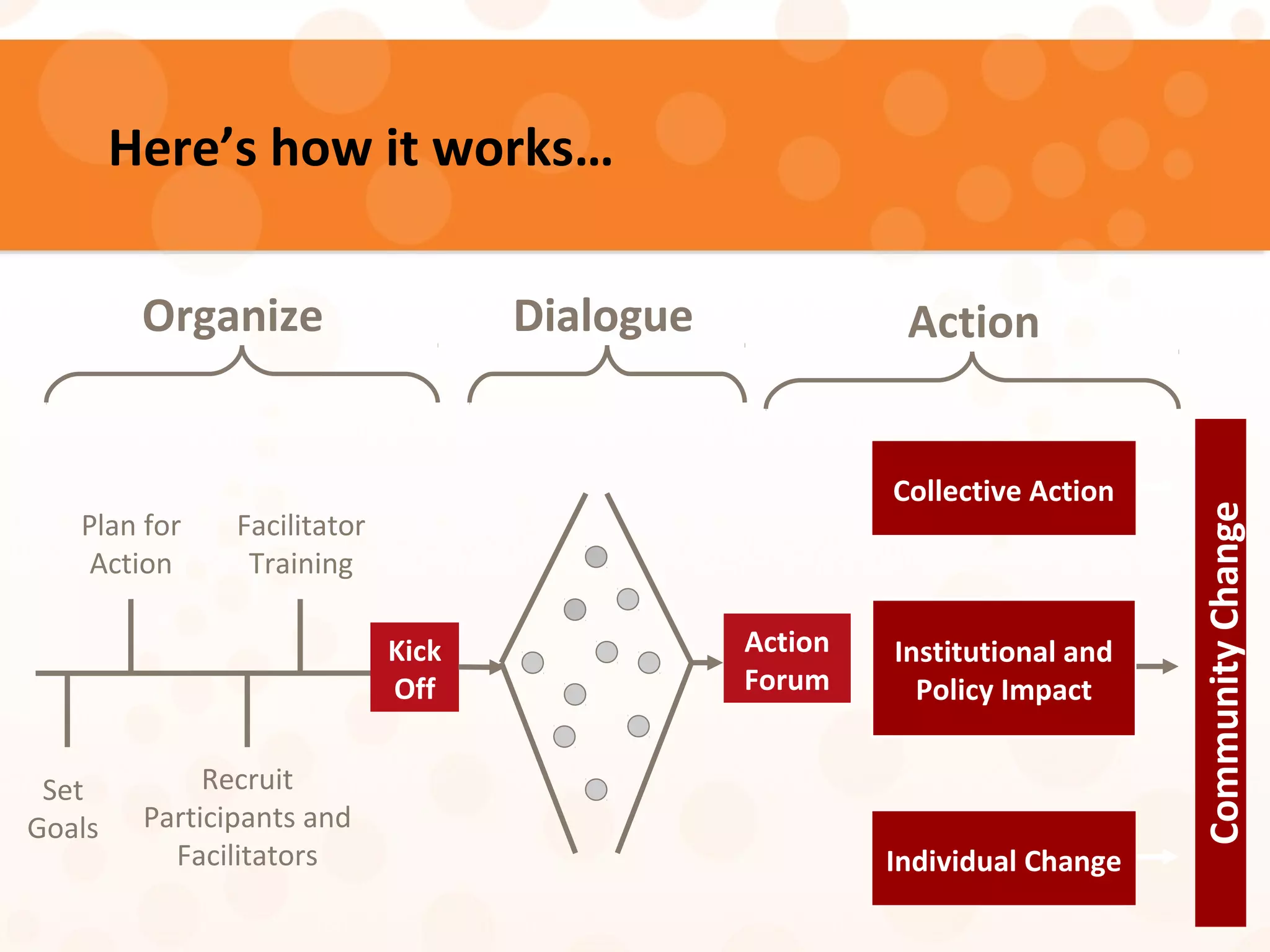
Here’s how it works…
Action
Forum
Individual Change
Institutional and
Policy Impact
Collective Action
Set
Goals
Facilitator
Training
Plan for
Action
Recruit
Participants and
Facilitators
Kick
Off
DialogueOrganize Action
CommunityChange
Dialogue
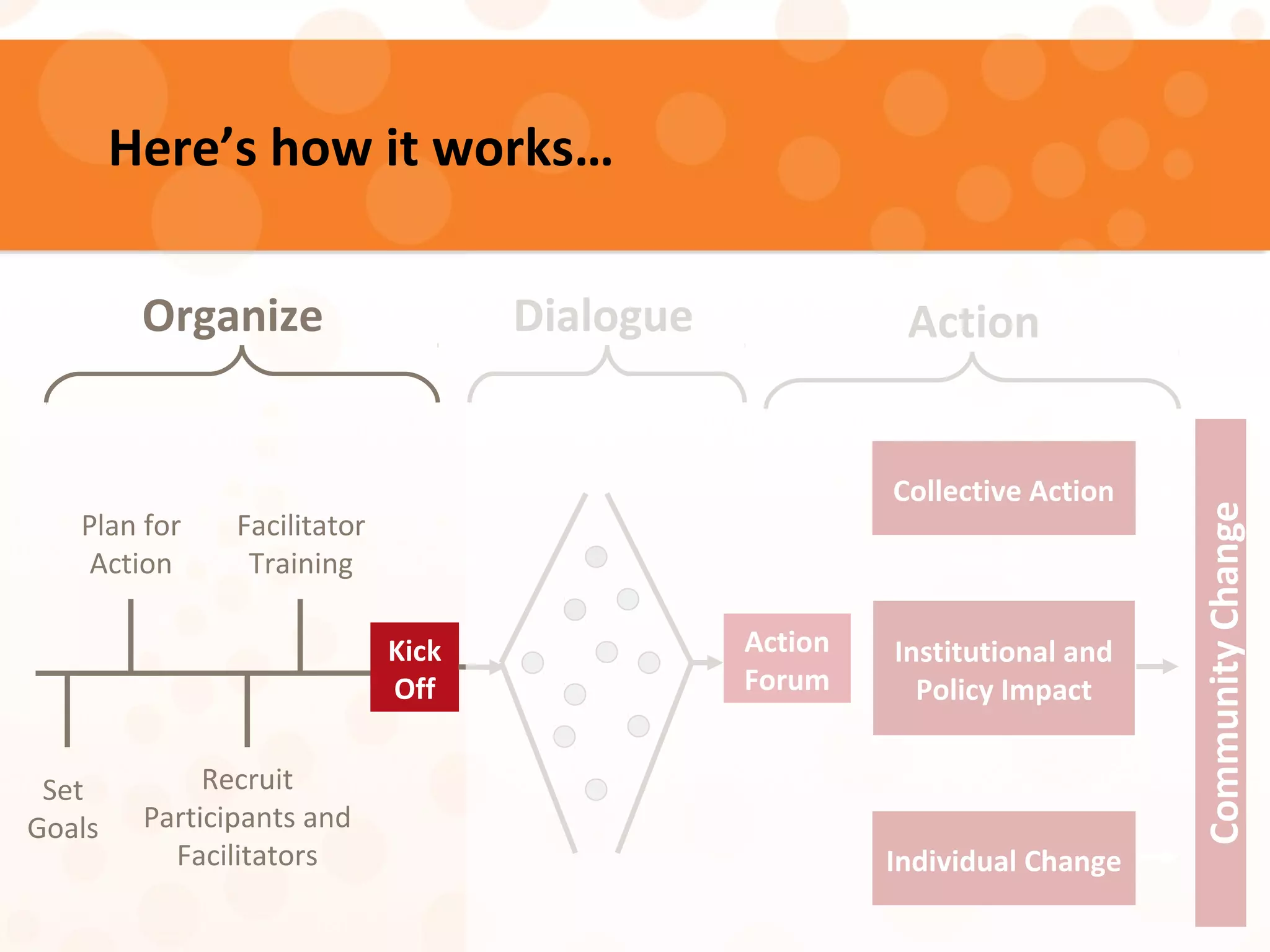
Here’s how it works…
Action
Forum
Individual Change
Institutional and
Policy Impact
Collective Action
Set
Goals
Facilitator
Training
Plan for
Action
Recruit
Participants and
Facilitators
Kick
Off
DialogueOrganize Action
CommunityChange
Dialogue
RECRUITING PARTICIPANTS
AND FACILITATORS
Recruiting goals
When recruiting participants and facilitators for community
conversations, work to:
oReflect the diversity of your community
oWork to include underrepresented groups
oAppeal to people who don’t usually participate
oUse culturally appropriate and socially responsive
recruitment strategies
oAddress potential barriers and obstacles starting now
Deciding who and how many people to
reach out to
o How many participants do we want?
o How many facilitators do we need?
o Which groups of people should we invite?
o How many people from each group should we
invite?
o Have we made sure to include official and
unofficial community leaders?
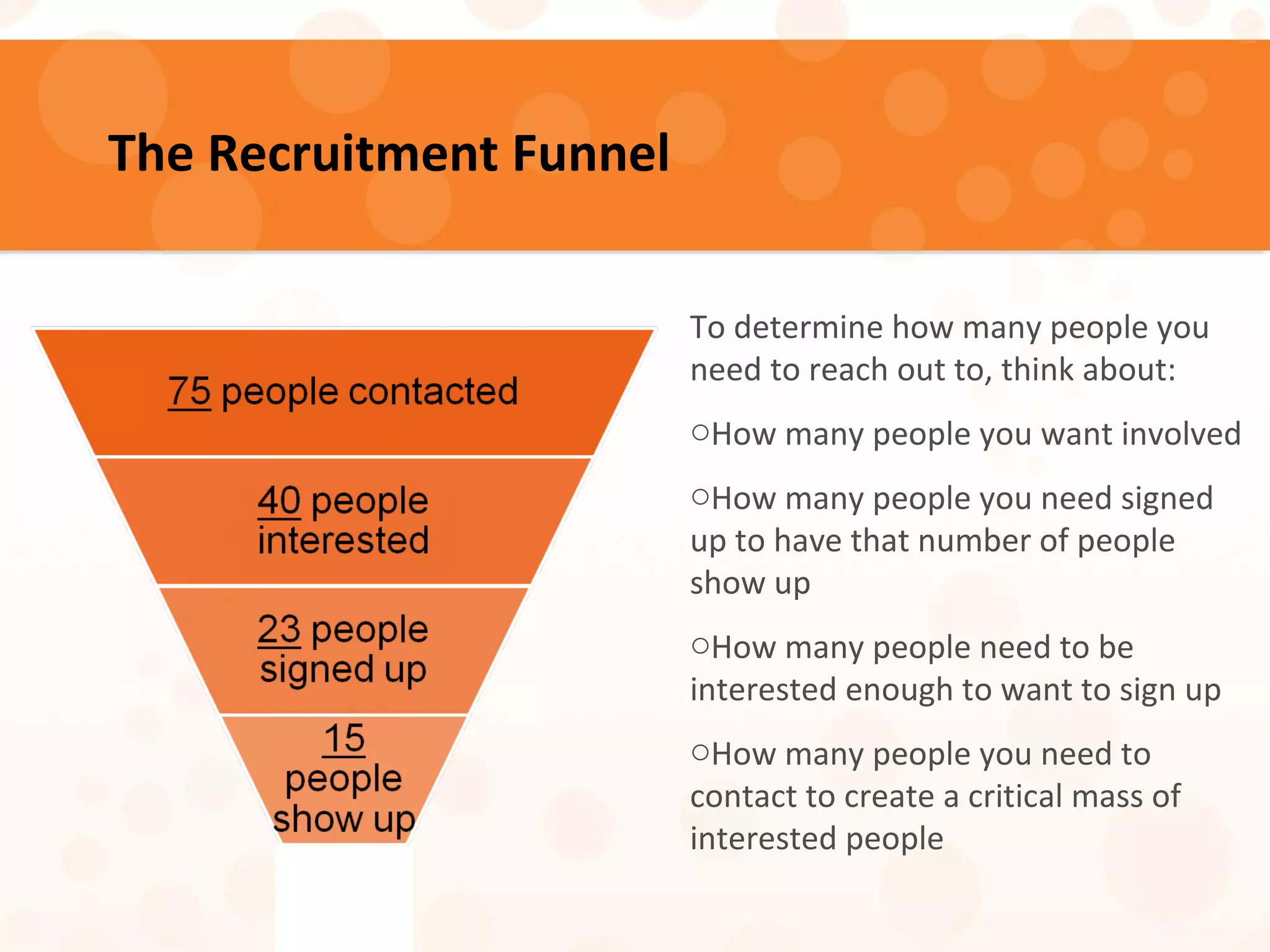
The Recruitment Funnel
To determine how many people you
need to reach out to, think about:
oHow many people you want involved
oHow many people you need signed
up to have that number of people
show up
oHow many people need to be
interested enough to want to sign up
oHow many people you need to
contact to create a critical mass of
interested people
RECRUITING TIPS
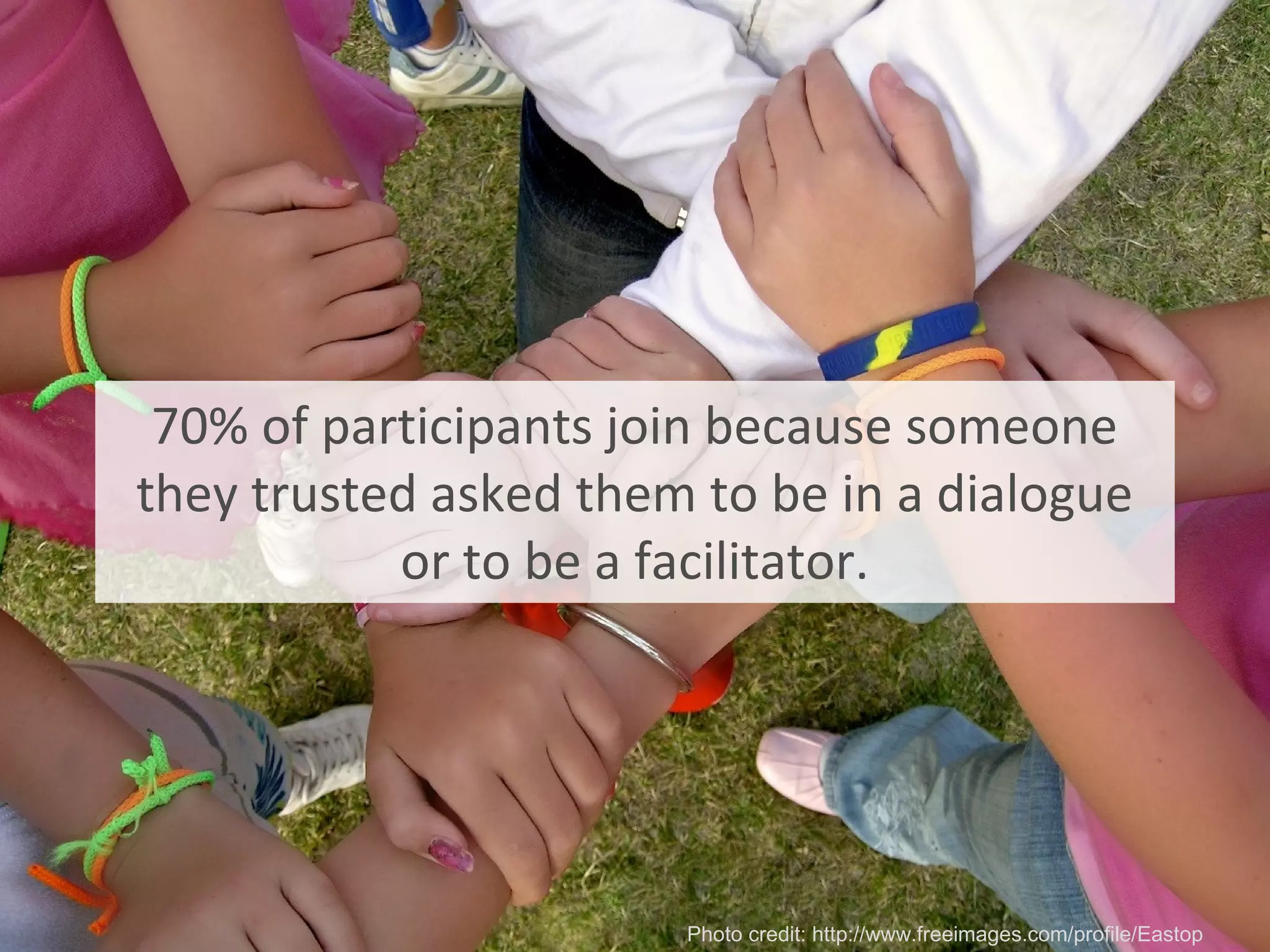
70% of participants join because someone
they trusted asked them to be in a dialogue
or to be a facilitator.
Photo credit: http://www.freeimages.com/profile/Eastop
Recruiting tips
o Most people respond when invited by a friend or
someone they respect. This is why word of mouth is
the best recruiting tool.
o Use your vision statement in your recruitment
materials, i.e.: “Hope for a better future through
strong community and family involvement.”
o People need to hear a message from three to five
times before they act on it. Use multiple ways to get
the word out.
o Work with the communications committee to create
materials.
The first step: Using your contacts
You and your coalition
members may already
have a relationship
with key people and/or
groups.
Tap into these
connections!
Tap into the contacts of your coalition
1. Ask each coalition member to give you a list of
10 people (name, address, phone number,
email) to send to invitations to.
2. Send invitations!
3. Have coalition members make follow up phone
calls to their list.
4. Follow up with coalition members to let them
know who has, and has not replied.
RECRUITING
UNDERREPRESENTED GROUPS
Recruiting underrepresented groups
We want to include residents who don’t often participate. Often
times a newspaper article, radio announcement, or a flyer will
not be enough to get them to attend. What’s your strategy
going to be to reach them?
What do we mean by “hard to reach”?
Exercise
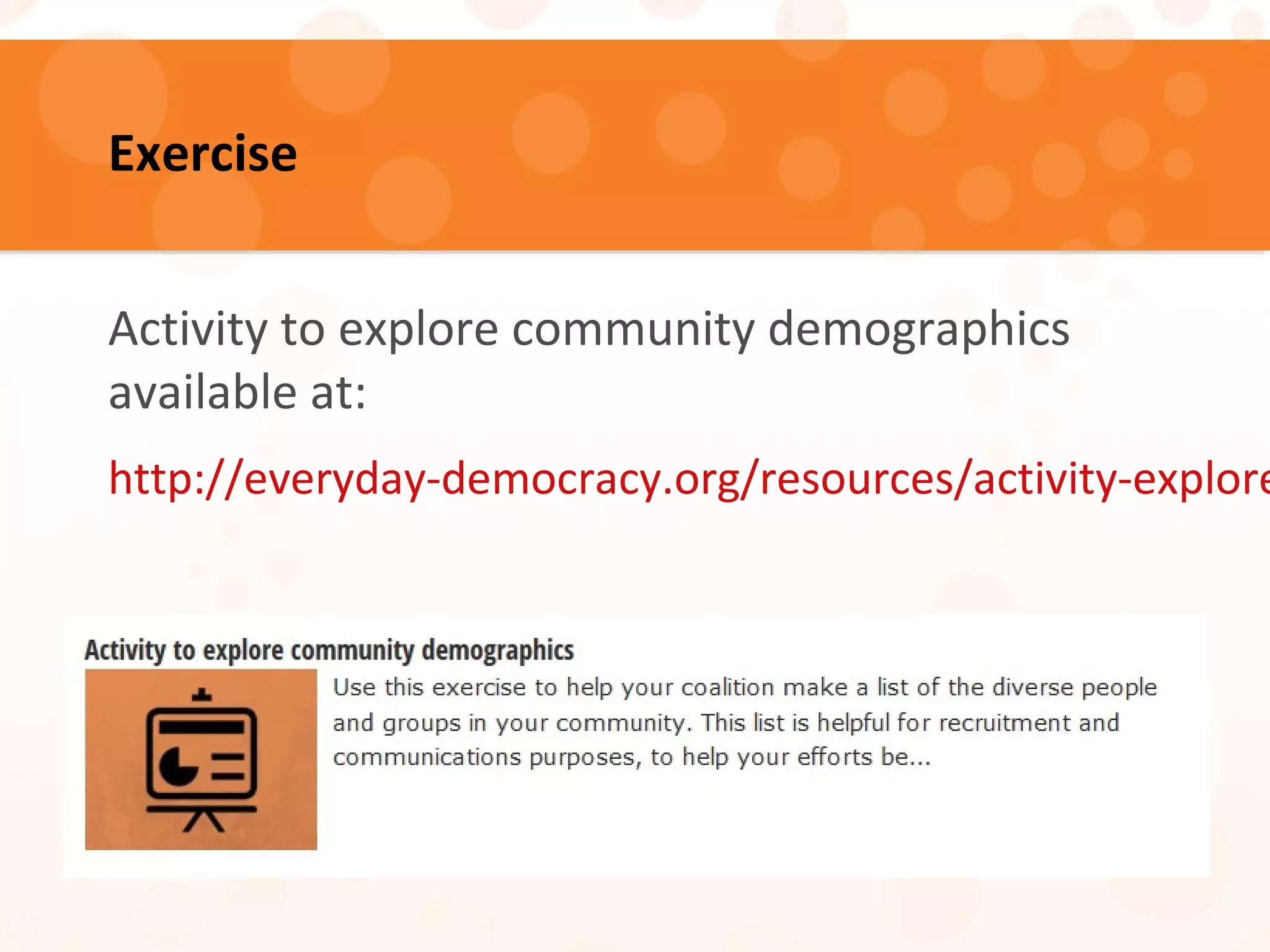
Activity to explore community demographics
available at:
http://everyday-democracy.org/resources/activity-explore
Who, Why, Where, How
At your next meeting, think about:
oWho is hard to reach in our community?
Why?
oWhere can we find them?
oHow can we invite them so that the “why”
and “where” are addressed?
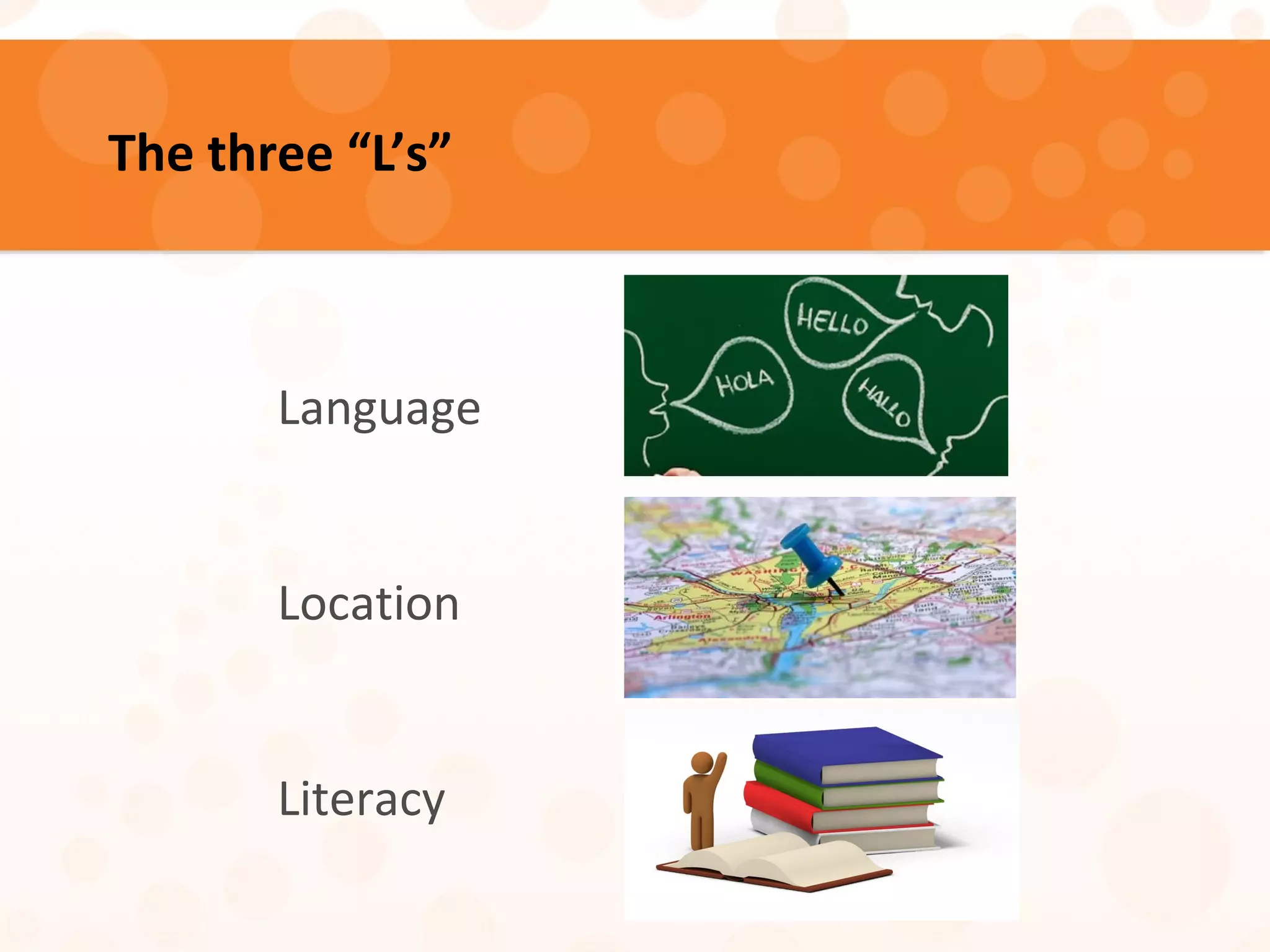
The three “L’s”
Language
Location
Literacy
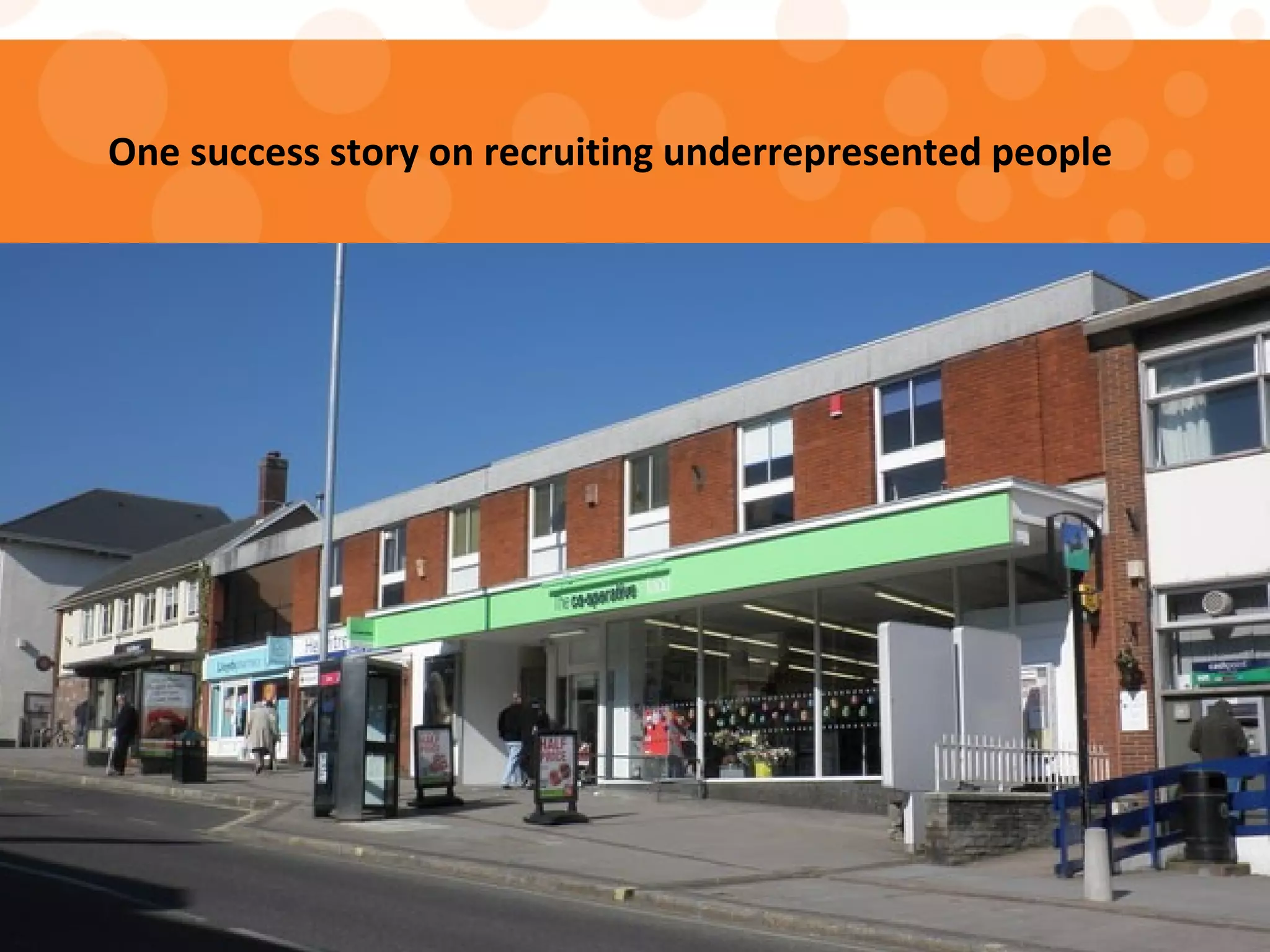
One success story on recruiting underrepresented people
Think outside the [pizza] box
STRATEGIES TO RECRUIT
NEW LEADERS
Recruit beyond…
The. Same. Ten. People.
#1: Ask “Who’s not here?”
Photo credit: Ben Earwicker, garrisonphoto.org
#2: Look for people with specific skills
#3: Ask for a small commitment first
Photo credit: http://www.freeimages.com/profile/BloodlessR
#4: Appeal to self interests
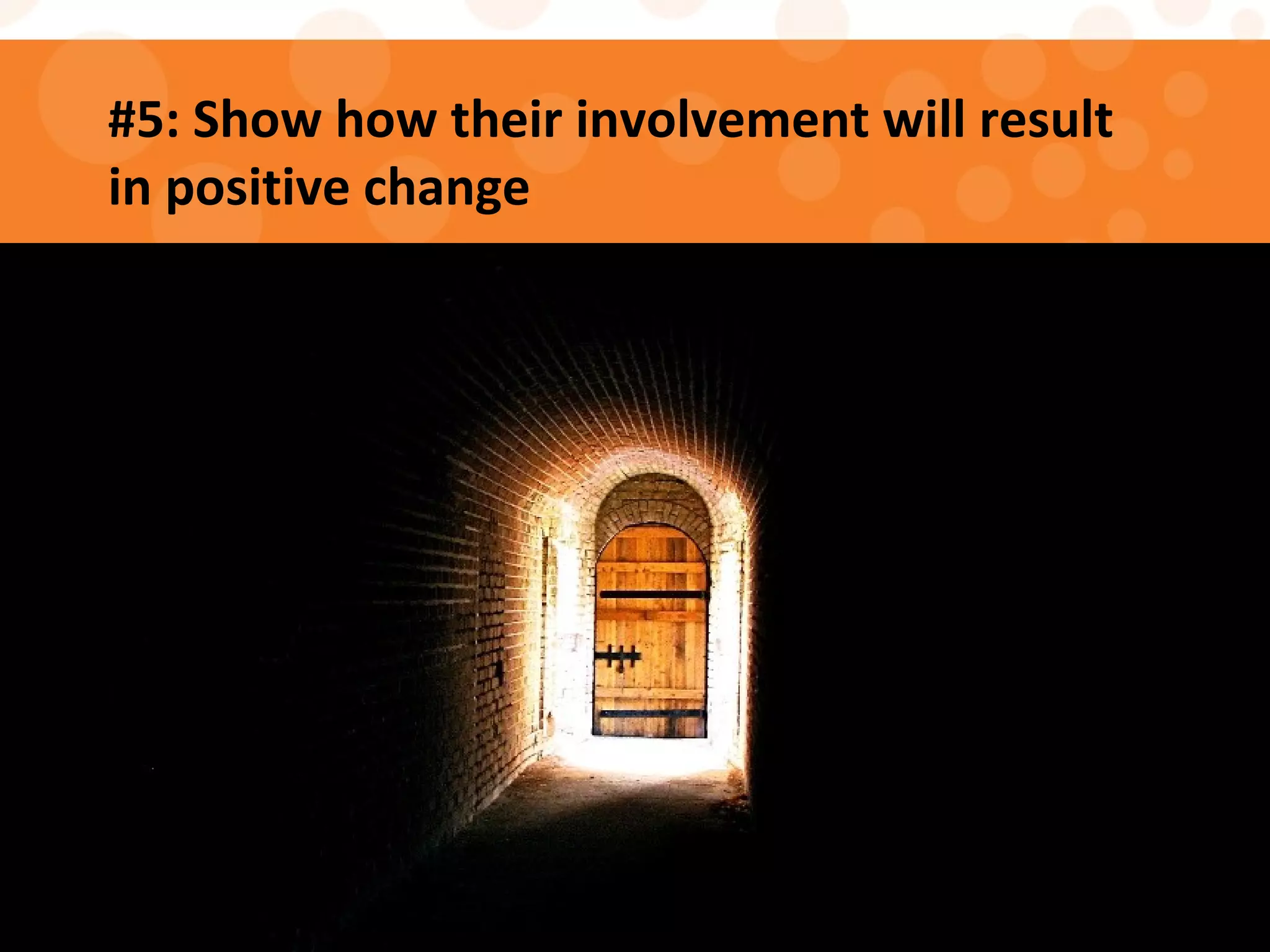
#5: Show how their involvement will result
in positive change
#6: Clearly define the task
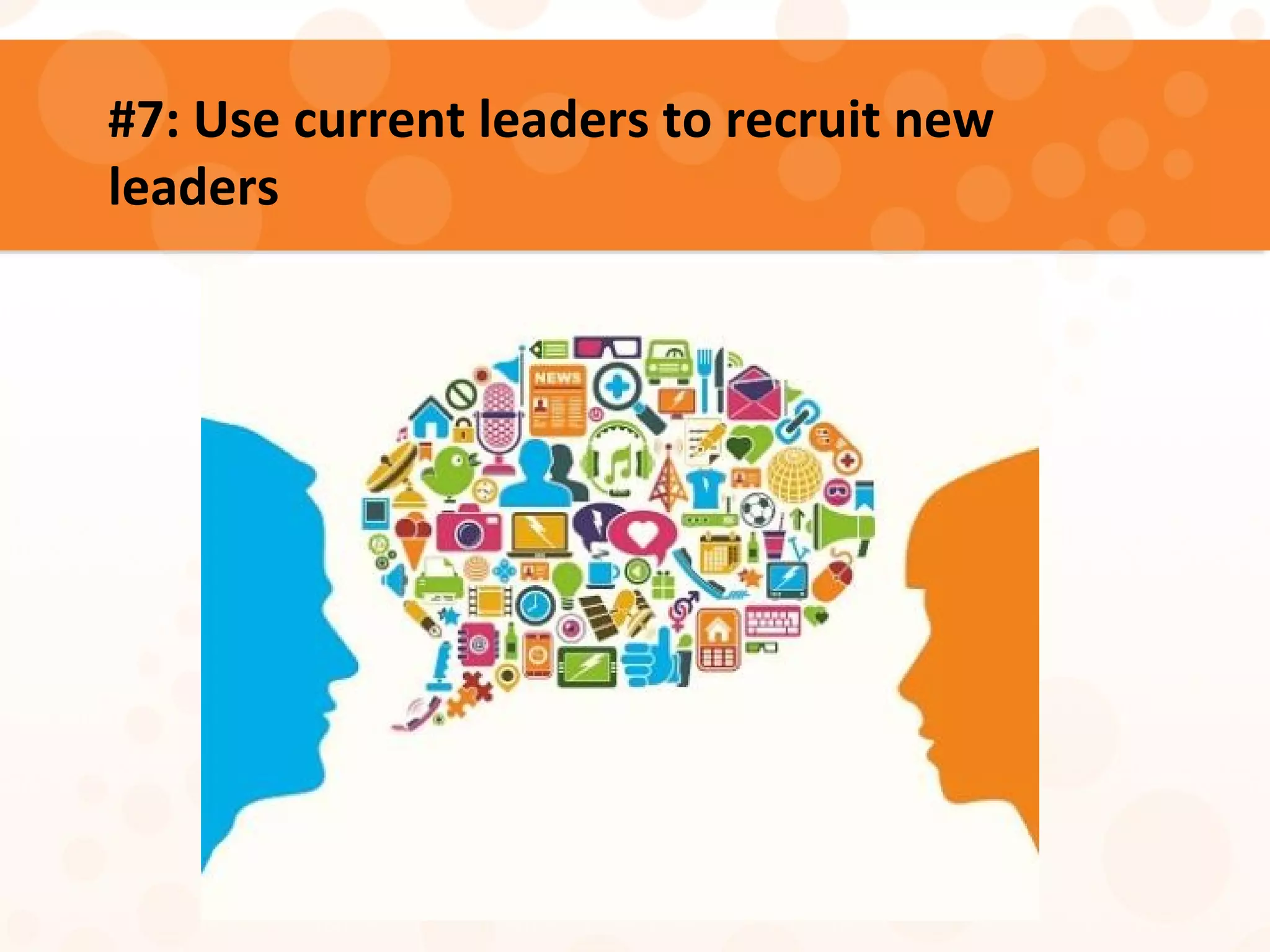
#7: Use current leaders to recruit new
leaders
#8: Show people you value their time
#9: Offer benefits for participating
#10: Publicize your efforts
Communicate that they are important and
that you value them and the contribution they
can make.
Tell them:
“We need you to help shape the future of our
community. You have valuable insights and
abilities, and we need you to make this
initiative and our community very
successful.”
TYPES OF PEOPLE TO RECRUIT
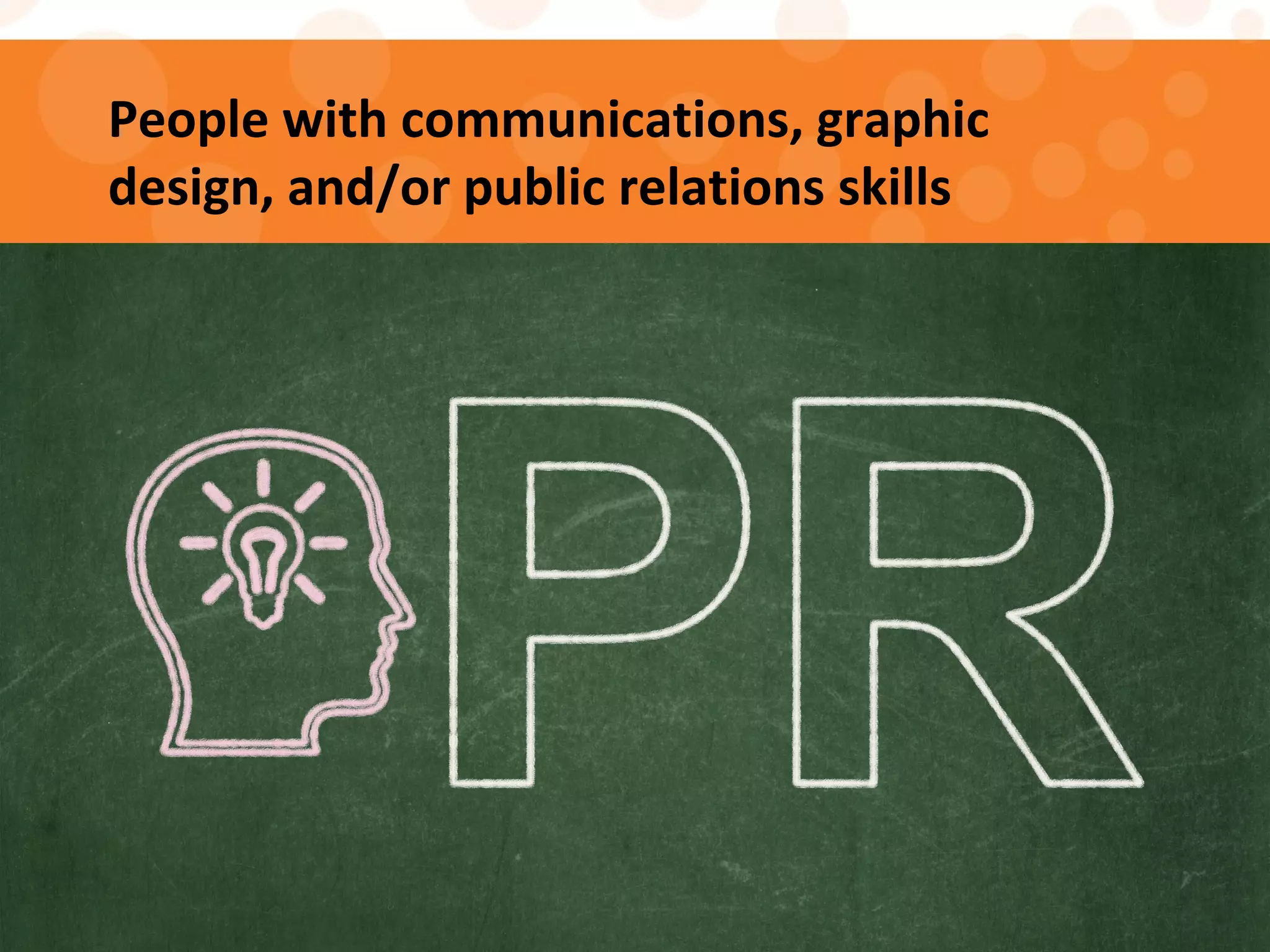
People with communications, graphic
design, and/or public relations skills
Good planners
Good writers
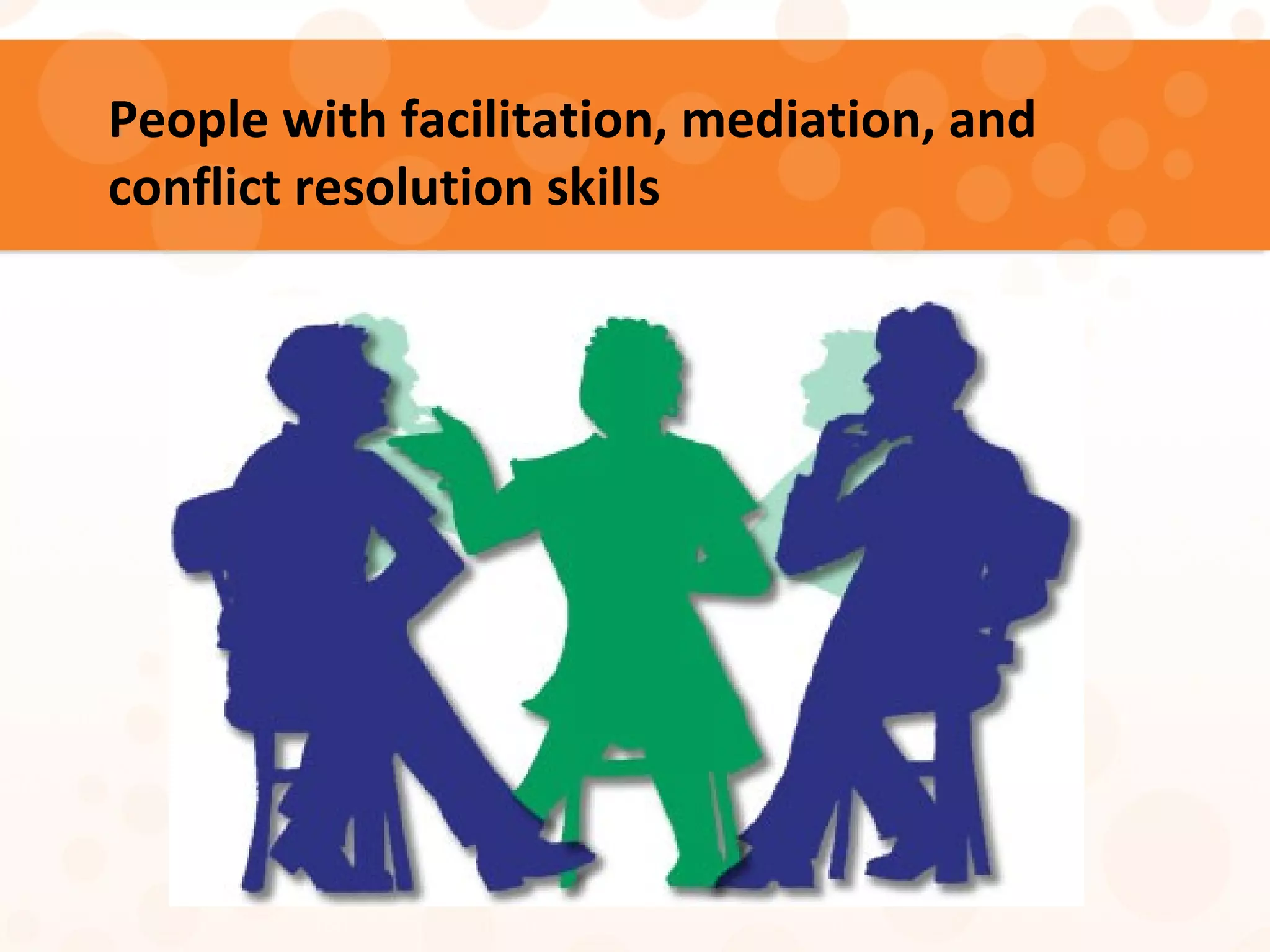
People with facilitation, mediation, and
conflict resolution skills
Participants from every part of the
community
How to Recruit Leaders and Volunteers for Your Cause

How to Recruit Leaders and Volunteers for Your Cause

  • 1.
    RECRUITING TIPS ANDSTRATEGIES FOR COMMUNITY ORGANIZING
  • 2.
  • 3.
    Here’s how itworks… Action Forum Individual Change Institutional and Policy Impact Collective Action Set Goals Facilitator Training Plan for Action Recruit Participants and Facilitators Kick Off DialogueOrganize Action CommunityChange Dialogue
  • 4.
    Here’s how itworks… Action Forum Individual Change Institutional and Policy Impact Collective Action Set Goals Facilitator Training Plan for Action Recruit Participants and Facilitators Kick Off DialogueOrganize Action CommunityChange Dialogue
  • 5.
  • 6.
    Recruiting goals When recruitingparticipants and facilitators for community conversations, work to: oReflect the diversity of your community oWork to include underrepresented groups oAppeal to people who don’t usually participate oUse culturally appropriate and socially responsive recruitment strategies oAddress potential barriers and obstacles starting now
  • 7.
    Deciding who andhow many people to reach out to o How many participants do we want? o How many facilitators do we need? o Which groups of people should we invite? o How many people from each group should we invite? o Have we made sure to include official and unofficial community leaders?
  • 8.
    The Recruitment Funnel Todetermine how many people you need to reach out to, think about: oHow many people you want involved oHow many people you need signed up to have that number of people show up oHow many people need to be interested enough to want to sign up oHow many people you need to contact to create a critical mass of interested people
  • 9.
  • 10.
    70% of participantsjoin because someone they trusted asked them to be in a dialogue or to be a facilitator. Photo credit: http://www.freeimages.com/profile/Eastop
  • 11.
    Recruiting tips o Mostpeople respond when invited by a friend or someone they respect. This is why word of mouth is the best recruiting tool. o Use your vision statement in your recruitment materials, i.e.: “Hope for a better future through strong community and family involvement.” o People need to hear a message from three to five times before they act on it. Use multiple ways to get the word out. o Work with the communications committee to create materials.
  • 12.
    The first step:Using your contacts You and your coalition members may already have a relationship with key people and/or groups. Tap into these connections!
  • 13.
    Tap into thecontacts of your coalition 1. Ask each coalition member to give you a list of 10 people (name, address, phone number, email) to send to invitations to. 2. Send invitations! 3. Have coalition members make follow up phone calls to their list. 4. Follow up with coalition members to let them know who has, and has not replied.
  • 14.
  • 15.
    Recruiting underrepresented groups Wewant to include residents who don’t often participate. Often times a newspaper article, radio announcement, or a flyer will not be enough to get them to attend. What’s your strategy going to be to reach them? What do we mean by “hard to reach”?
  • 16.
    Exercise Activity to explorecommunity demographics available at: http://everyday-democracy.org/resources/activity-explore
  • 17.
    Who, Why, Where,How At your next meeting, think about: oWho is hard to reach in our community? Why? oWhere can we find them? oHow can we invite them so that the “why” and “where” are addressed?
  • 18.
  • 19.
    One success storyon recruiting underrepresented people
  • 20.
    Think outside the[pizza] box
  • 21.
  • 22.
  • 23.
    #1: Ask “Who’snot here?” Photo credit: Ben Earwicker, garrisonphoto.org
  • 24.
    #2: Look forpeople with specific skills
  • 25.
    #3: Ask fora small commitment first Photo credit: http://www.freeimages.com/profile/BloodlessR
  • 26.
    #4: Appeal toself interests
  • 27.
    #5: Show howtheir involvement will result in positive change
  • 28.
  • 29.
    #7: Use currentleaders to recruit new leaders
  • 30.
    #8: Show peopleyou value their time
  • 31.
    #9: Offer benefitsfor participating
  • 32.
  • 33.
    Communicate that theyare important and that you value them and the contribution they can make. Tell them: “We need you to help shape the future of our community. You have valuable insights and abilities, and we need you to make this initiative and our community very successful.”
  • 34.
    TYPES OF PEOPLETO RECRUIT
  • 35.
    People with communications,graphic design, and/or public relations skills
  • 36.
  • 37.
  • 38.
    People with facilitation,mediation, and conflict resolution skills
  • 39.
    Participants from everypart of the community

Editor's Notes

  • #4 Here is a general overview of how the process works. It’s broken up into three sections: organizing, dialogue, and action – all of which lead to community change.
  • #5 Here is a general overview of how the process works. It’s broken up into three sections: organizing, dialogue, and action – all of which lead to community change.
  • #7 Ensure that participants and facilitators reflect the diversity of the community, especially groups that have been disempowered or excluded in the past. Reach out to and invite the “hard to reach” and other people who have not had the opportunity to be part of the decision-making processes or who do not usually come out to participate, whether or not they are invited. Use strategies that make sense for the groups of people we’re trying to recruit. Determine people or groups who could be a barrier to success if they aren’t involved from the start and find ways to invite them.
  • #9 Note that each community should estimate their own expected numbers. Here’s a general recruitment process you can use for any process. For the purposes of dialogue, you need to figure out how many circles you want to have and that will give you a rough number of how many people
  • #16 It isn’t always that communities are hard to reach, it’s that our communications aren’t reaching them.
  • #18 Now that you have those two exercises, think about the who, why, where, and how
  • #19 Literacy – Hmong community traditionally doesn’t have a written language Example: Montgomery County now has flyers in many languages
  • #20 One program collaborated with a mom and pop magazine store in a low-income neighborhood. The store agreed to host an orientation and sample study circle for store customers. The owner put up flyers in the window and handed out flyers to customers buying coffee or newspapers. 50 people attended the orientation. The agenda allowed time to answer questions about the process and coalition; and get suggestions from the participants. Many of the participants signed up for full circles Two full study circles were held at the store. This got attention from even more customers. This process was also used at a local mall, various businesses, and organizations. Often, managers would allow employees to take an extra hour for lunch or break to attend the orientation. Food was usually provided.
  • #21 Local pizza company agreed to staple a flyer to the pizza boxes
  • #23 Does this describe your community?  Does it enable your community to move forward as you might like?  Do you know what else you can do?
  • #27 Show them how they’ll benefit, what their stake in the issue is
  • #28 Share what the desired impacts are; the change you want to see
  • #29 Be specific about what you want them to do. For example, make calls, send emails, create a flyer, find a location for the dialogues, etc. Instead of dumping a bucket of water on people’s heads, give them one drop at a time.
  • #31 Start meetings on time, don’t waste people’s time
  • #32 Little perks like t-shirts, bumper stickers, snacks, coffee, etc. can help show you appreciate their efforts.
  • #36 You’ll need people with communications, design and/or public relations skills to develop messages and promotional materials.
  • #37 You’ll need planners to help with logistics such as checking out locations, ordering food, organizing child care, bring sign-up sheets, etc.
  • #38 You’ll need writers to write, edit, and review your discussion guide.
  • #39 Recruit facilitators from Certified Application Counselor programs, social work schools, mediation centers, and the general public.