Planting Trees With Youth
Tom Henderson
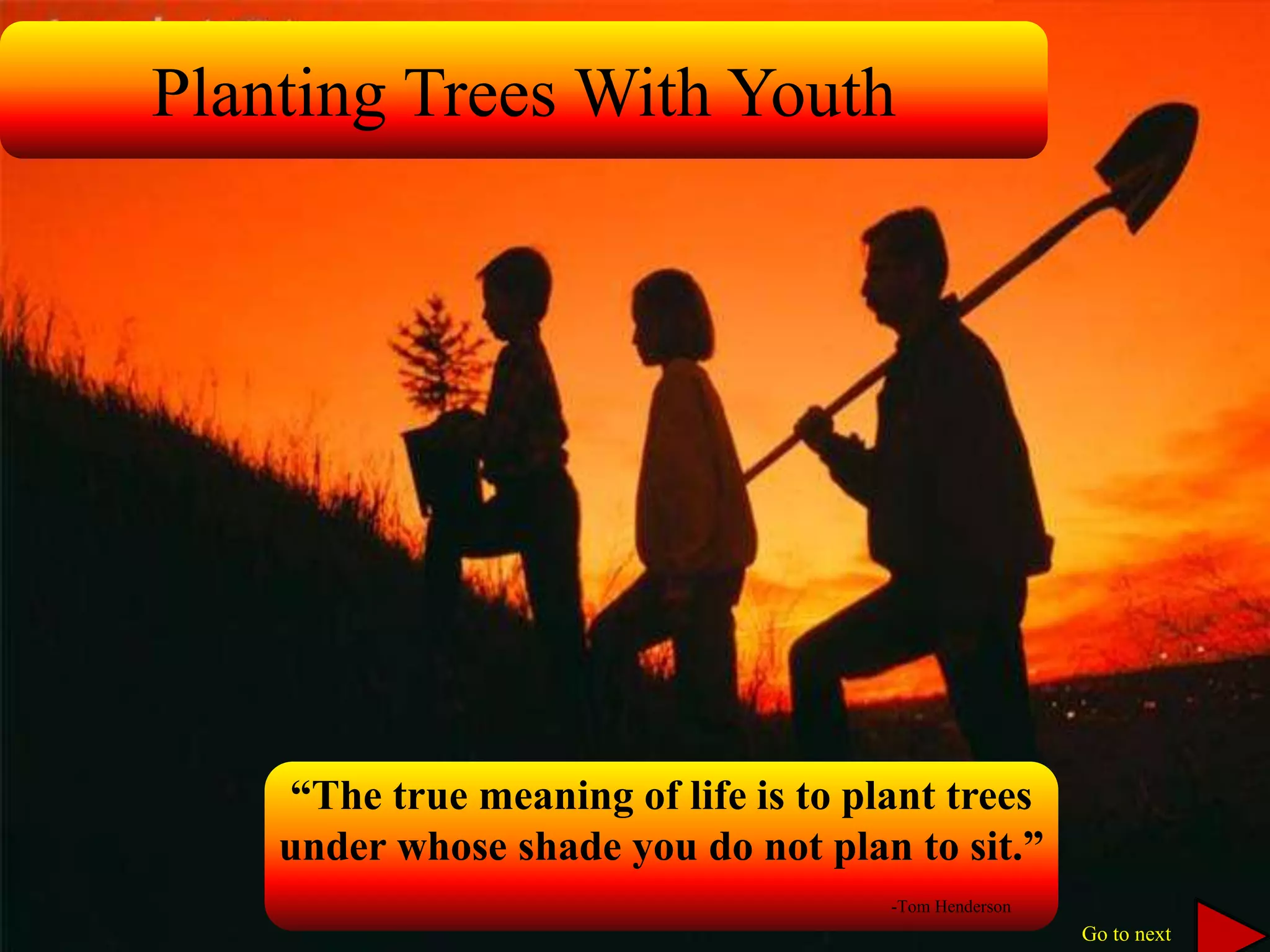
“The true meaning of life is to plant trees
under whose shade you do not plan to sit.”
-Tom Henderson
Go to next
Science Notebook
How To Plant A Tree
TreesLocationDiggingPlantingCare
Location
location
location
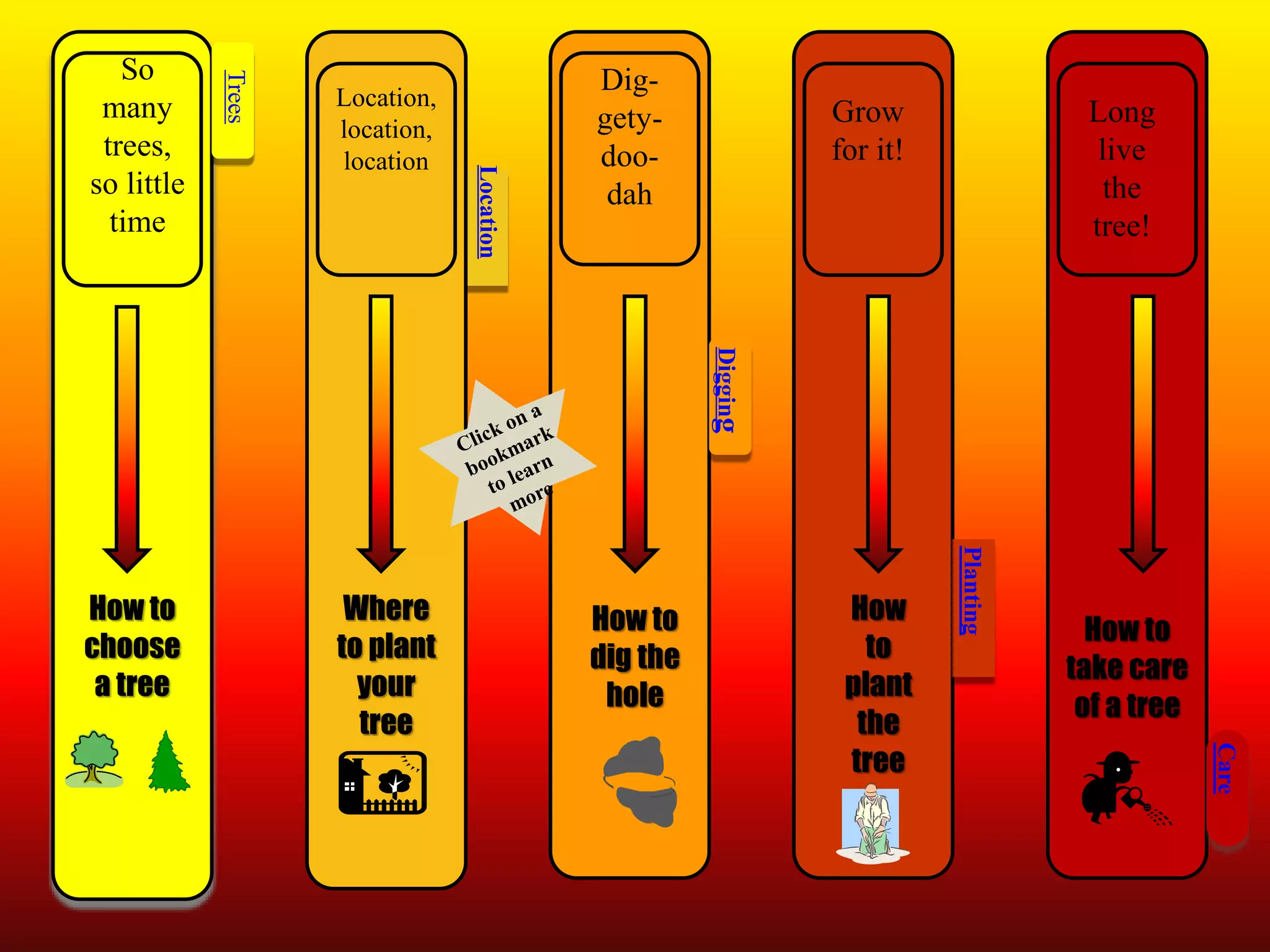
So
many
trees,
so little
time
How to
choose
a tree
Dig-
gety-
doo-
dah
How to
dig the
hole
Long
live
the
tree!
How to
take care
of a tree
Grow
for it!
How
to
plant
the
tree
Where
to plant
your
tree
Location,
location,
location
Trees
Location
Digging
Planting
Care
Science Notebook
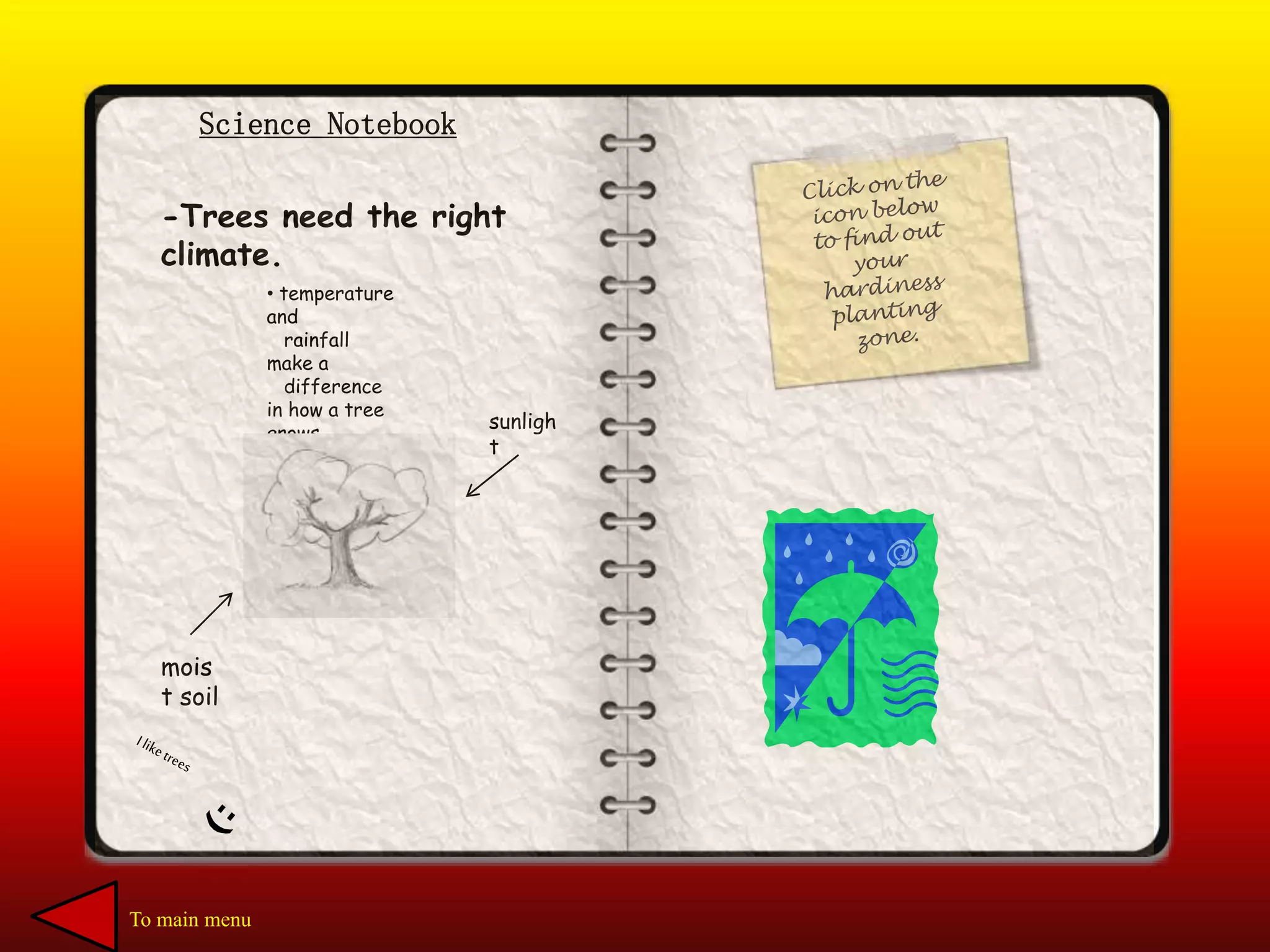
-Trees need the right
climate.
• temperature
and
rainfall
make a
difference
in how a tree
grows.
sunligh
t
mois
t soil
To main menu
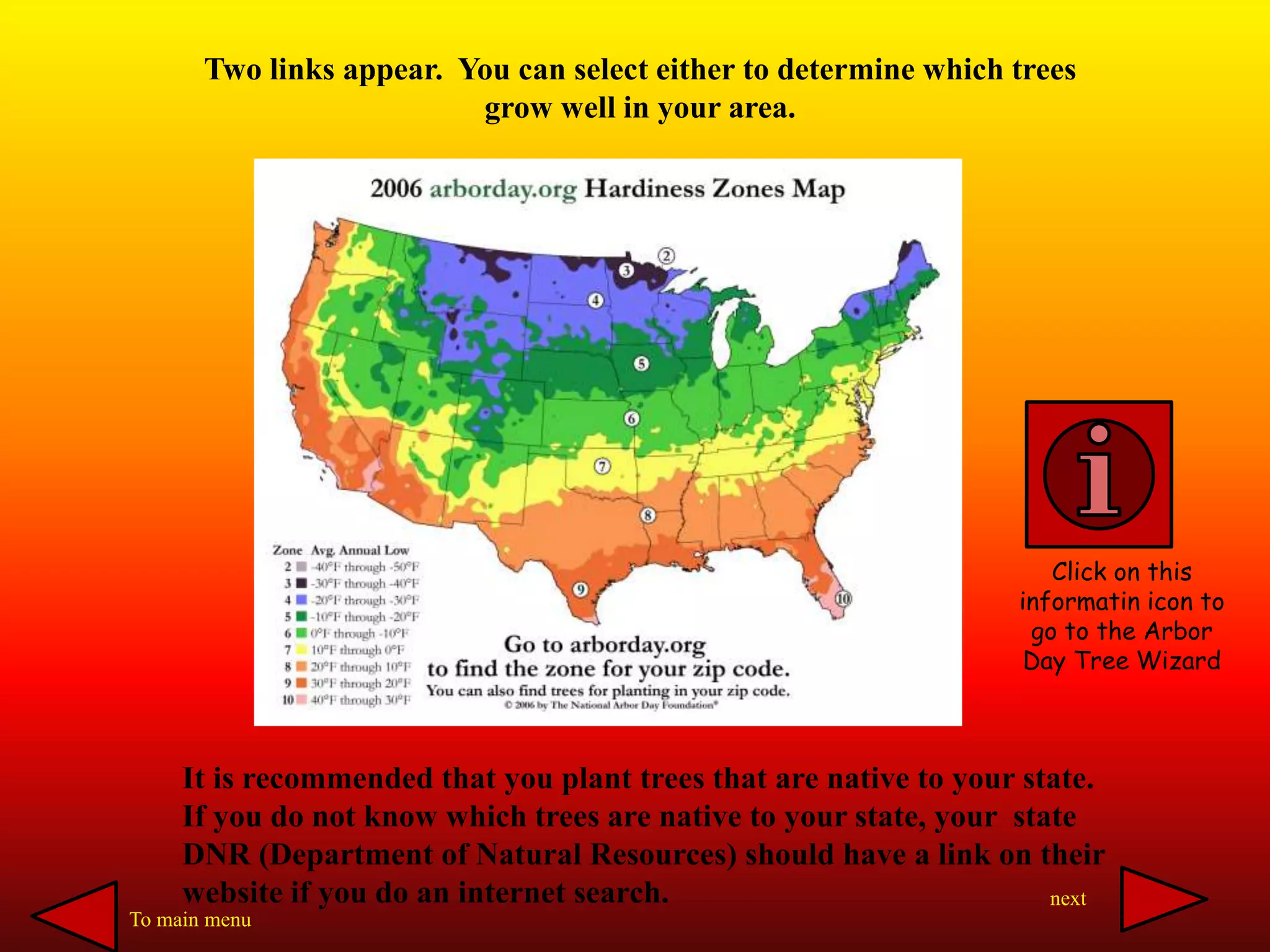
Two links appear. You can select either to determine which trees
grow well in your area.
It is recommended that you plant trees that are native to your state.
If you do not know which trees are native to your state, your state
DNR (Department of Natural Resources) should have a link on their
website if you do an internet search.
Click on this
informatin icon to
go to the Arbor
Day Tree Wizard
To main menu
next
You may decide to plant seedlings instead of a more mature tree.
Many states have programs in which they give away free tree
seedlings, especially to children. Check if your state does this by
doing an internet search.
OR
Get 10 free trees from the Arbor Day
Foundation. Click on the icon below to link to
the 10 free trees program.
HINT: Be sure to check the shipping
schedule for free trees.
To main menu
Figure out where to plant
the tree
Science Notebook
Great! You now have some ideas about what type of tree you can plant. Let’s just check one more thing before you
make a final decision. Soil type can make all the difference.
Field Notes on
Soil Types
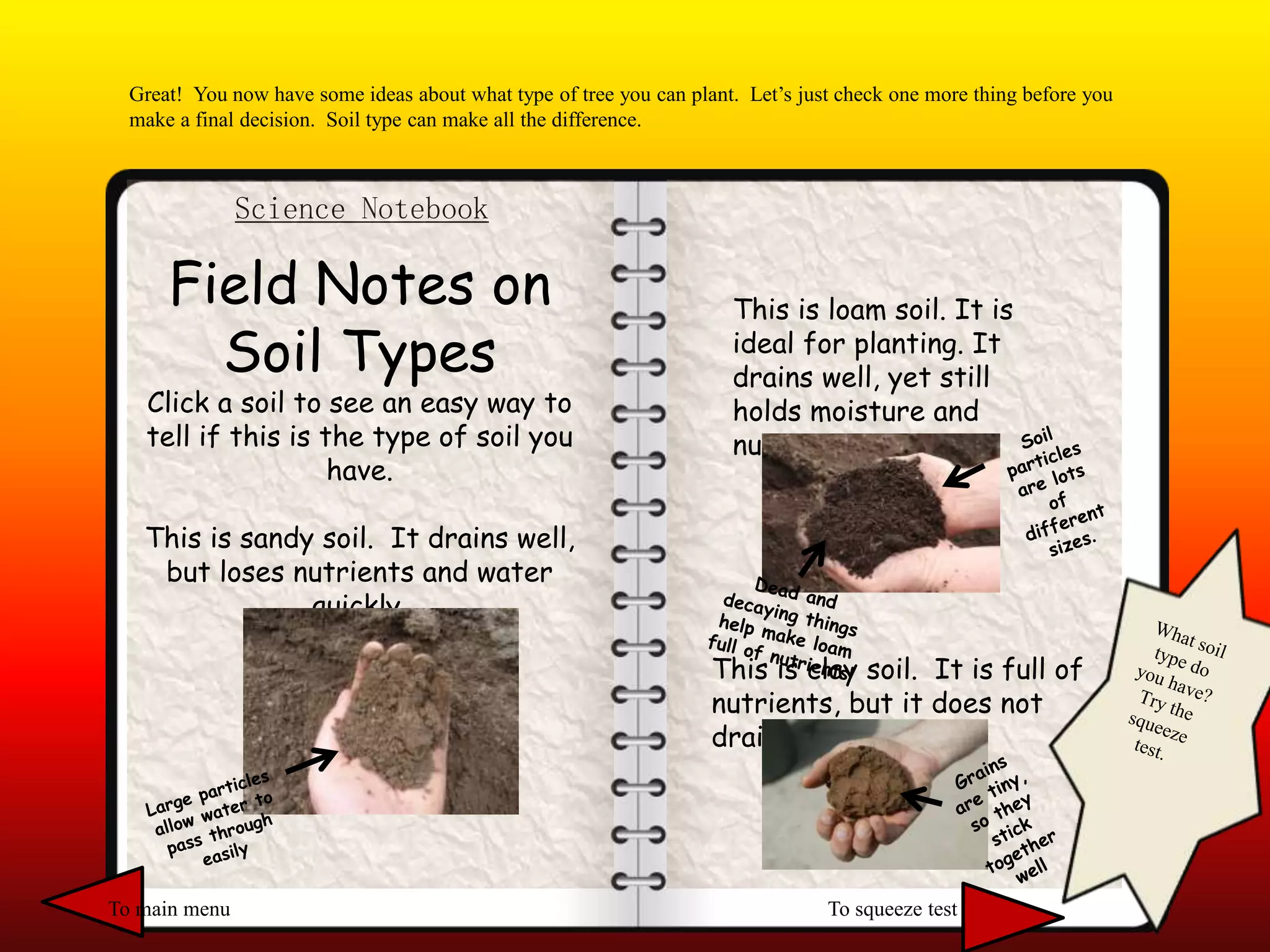
Click a soil to see an easy way to
tell if this is the type of soil you
have.
This is sandy soil. It drains well,
but loses nutrients and water
quickly.
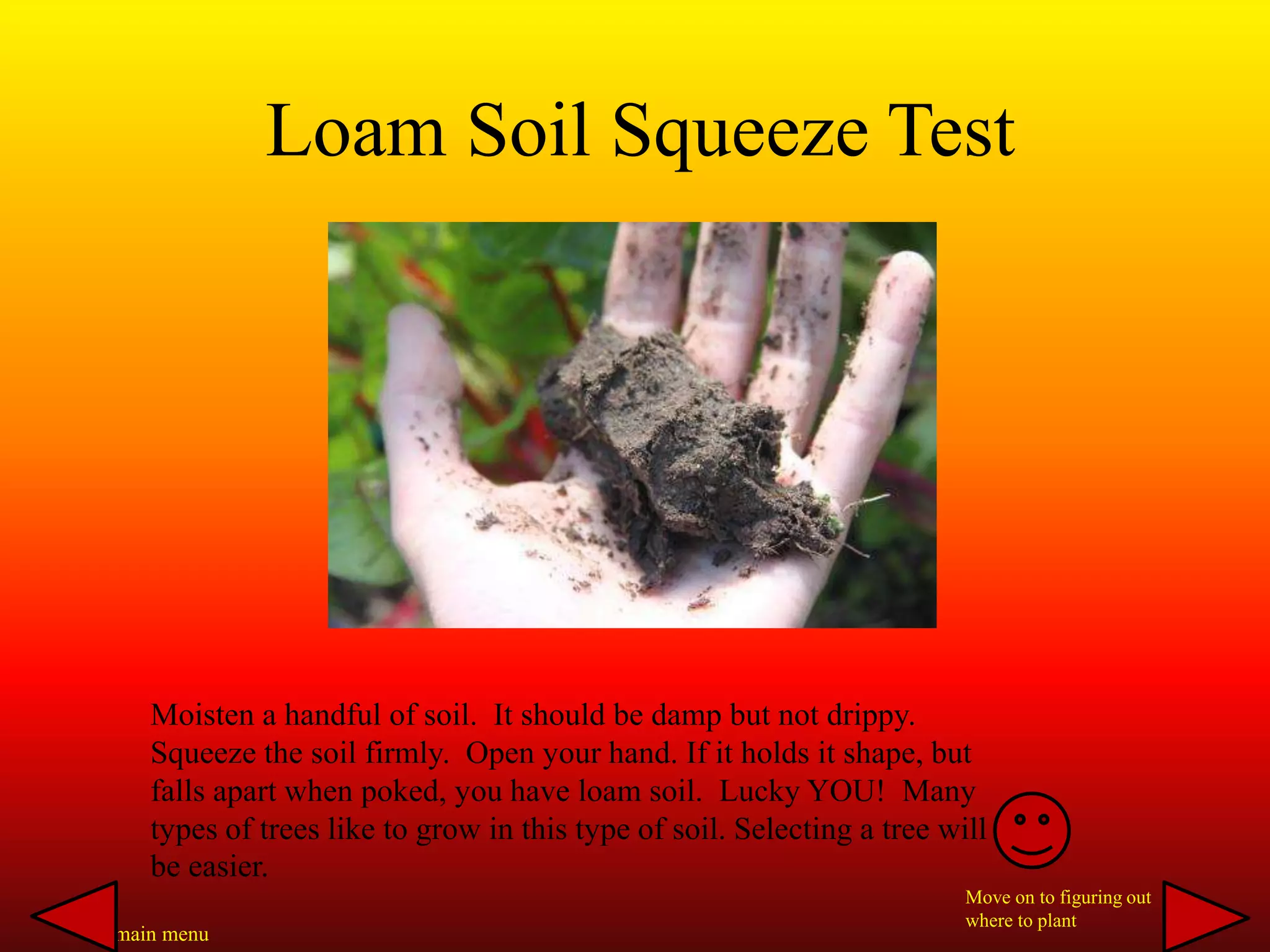
This is loam soil. It is
ideal for planting. It
drains well, yet still
holds moisture and
nutrients.
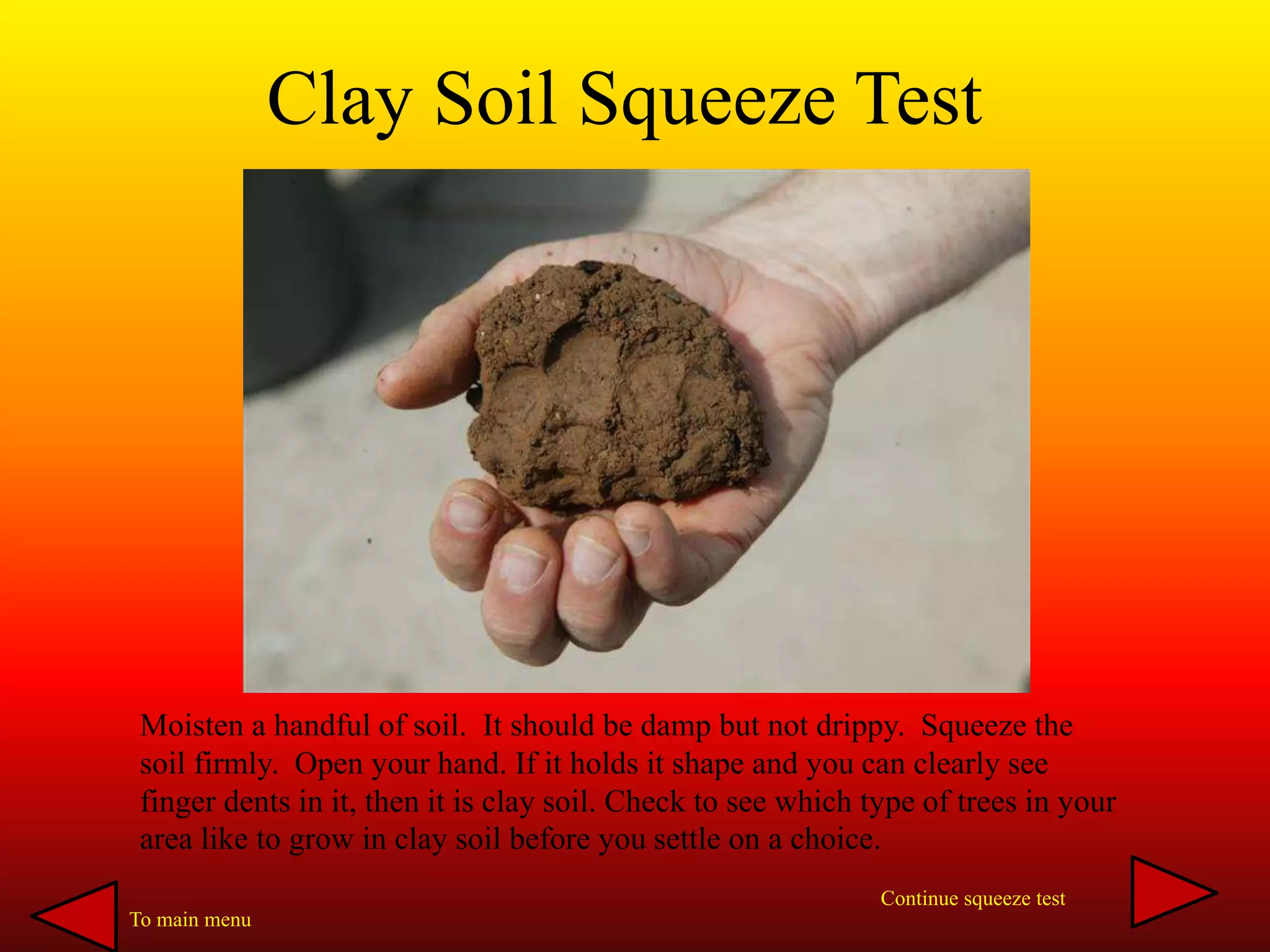
This is clay soil. It is full of
nutrients, but it does not
drain well.
To main menu To squeeze test
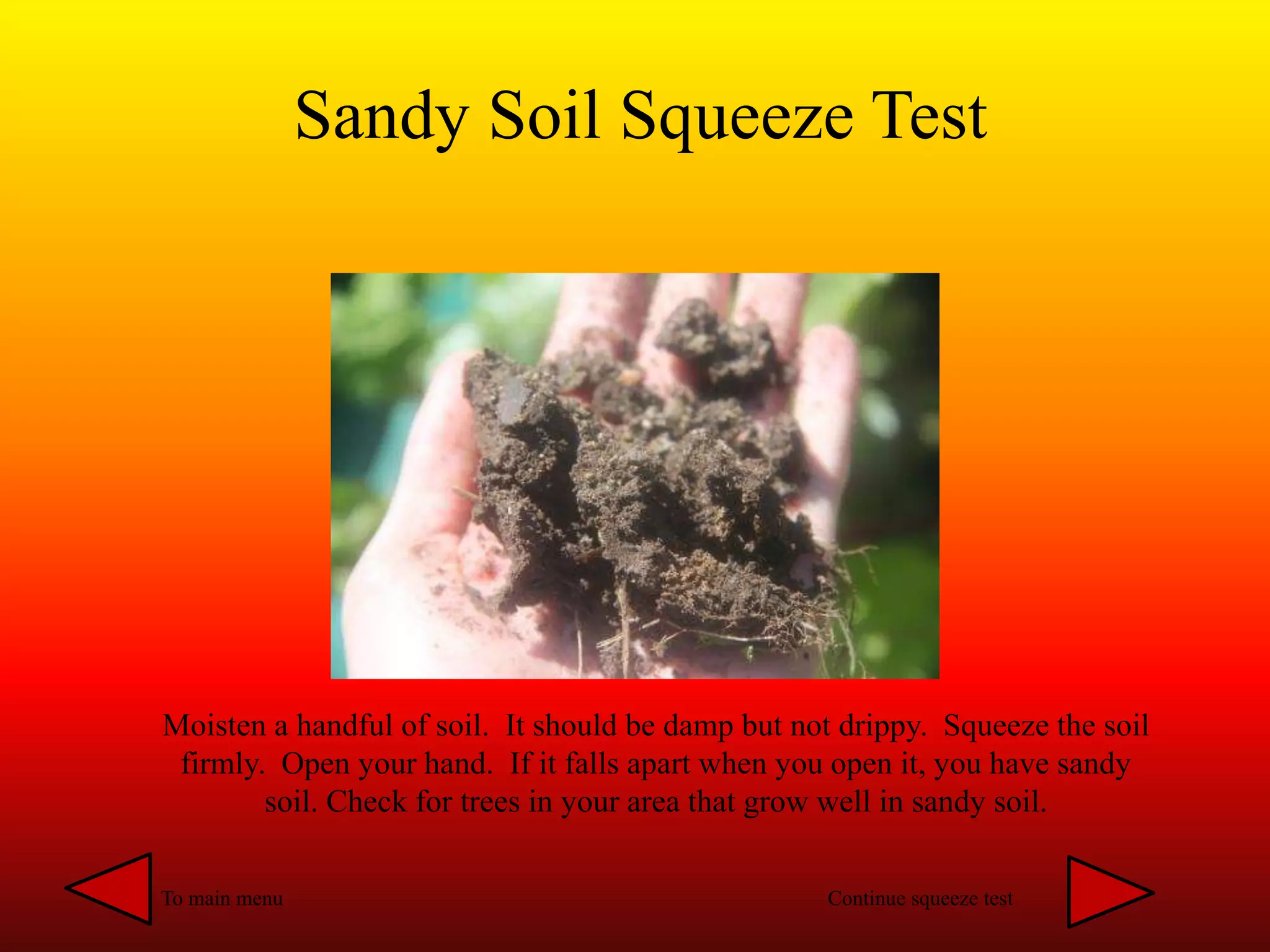
Sandy Soil Squeeze Test
Moisten a handful of soil. It should be damp but not drippy. Squeeze the soil
firmly. Open your hand. If it falls apart when you open it, you have sandy
soil. Check for trees in your area that grow well in sandy soil.
To main menu Continue squeeze test
Clay Soil Squeeze Test
Moisten a handful of soil. It should be damp but not drippy. Squeeze the
soil firmly. Open your hand. If it holds it shape and you can clearly see
finger dents in it, then it is clay soil. Check to see which type of trees in your
area like to grow in clay soil before you settle on a choice.
To main menu
Continue squeeze test
Moisten a handful of soil. It should be damp but not drippy.
Squeeze the soil firmly. Open your hand. If it holds it shape, but
falls apart when poked, you have loam soil. Lucky YOU! Many
types of trees like to grow in this type of soil. Selecting a tree will
be easier.
Loam Soil Squeeze Test
Move on to figuring out
where to plant
To main menu
Click here
for
message
Go back to main
menu
Figure out where
to plant the tree
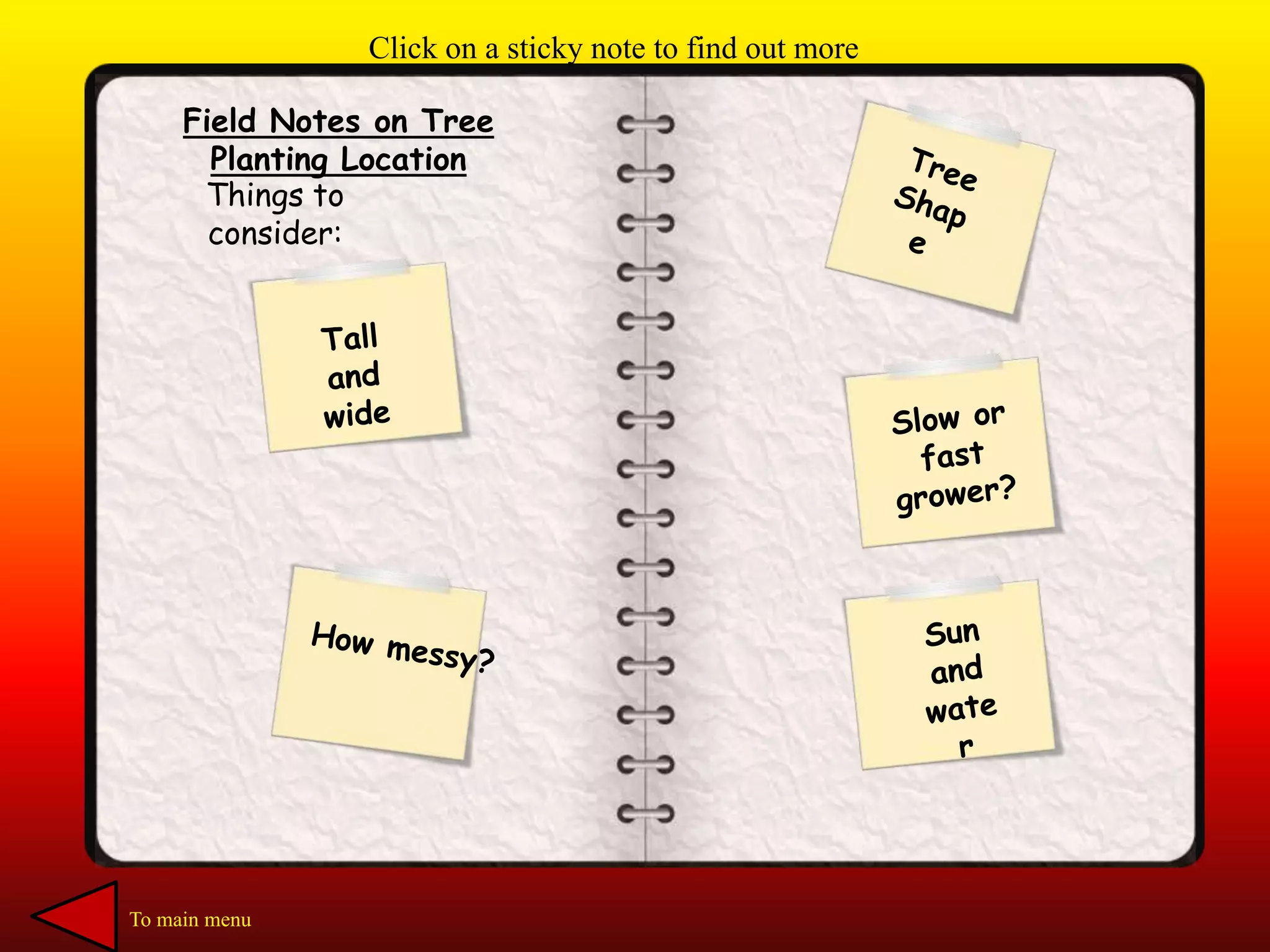
Field Notes on Tree
Planting Location
Things to
consider:
Click on a sticky note to find out more
To main menu
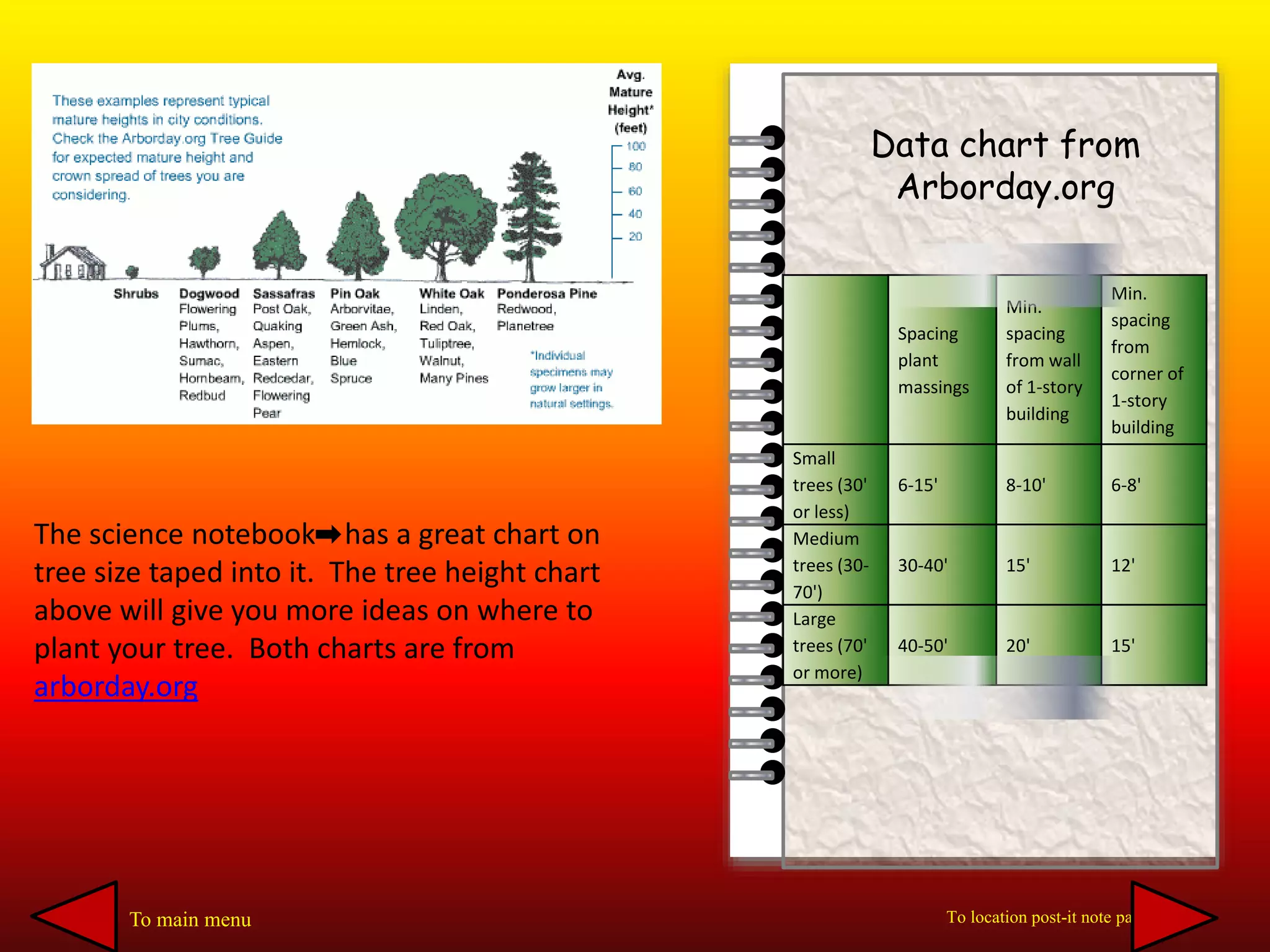
Spacing
plant
massings
Min.
spacing
from wall
of 1-story
building
Min.
spacing
from
corner of
1-story
building
Small
trees (30'
or less)
6-15' 8-10' 6-8'
Medium
trees (30-
70')
30-40' 15' 12'
Large
trees (70'
or more)
40-50' 20' 15'
Data chart from
Arborday.org
The science notebook has a great chart on
tree size taped into it. The tree height chart
above will give you more ideas on where to
plant your tree. Both charts are from
arborday.org
To main menu To location post-it note page
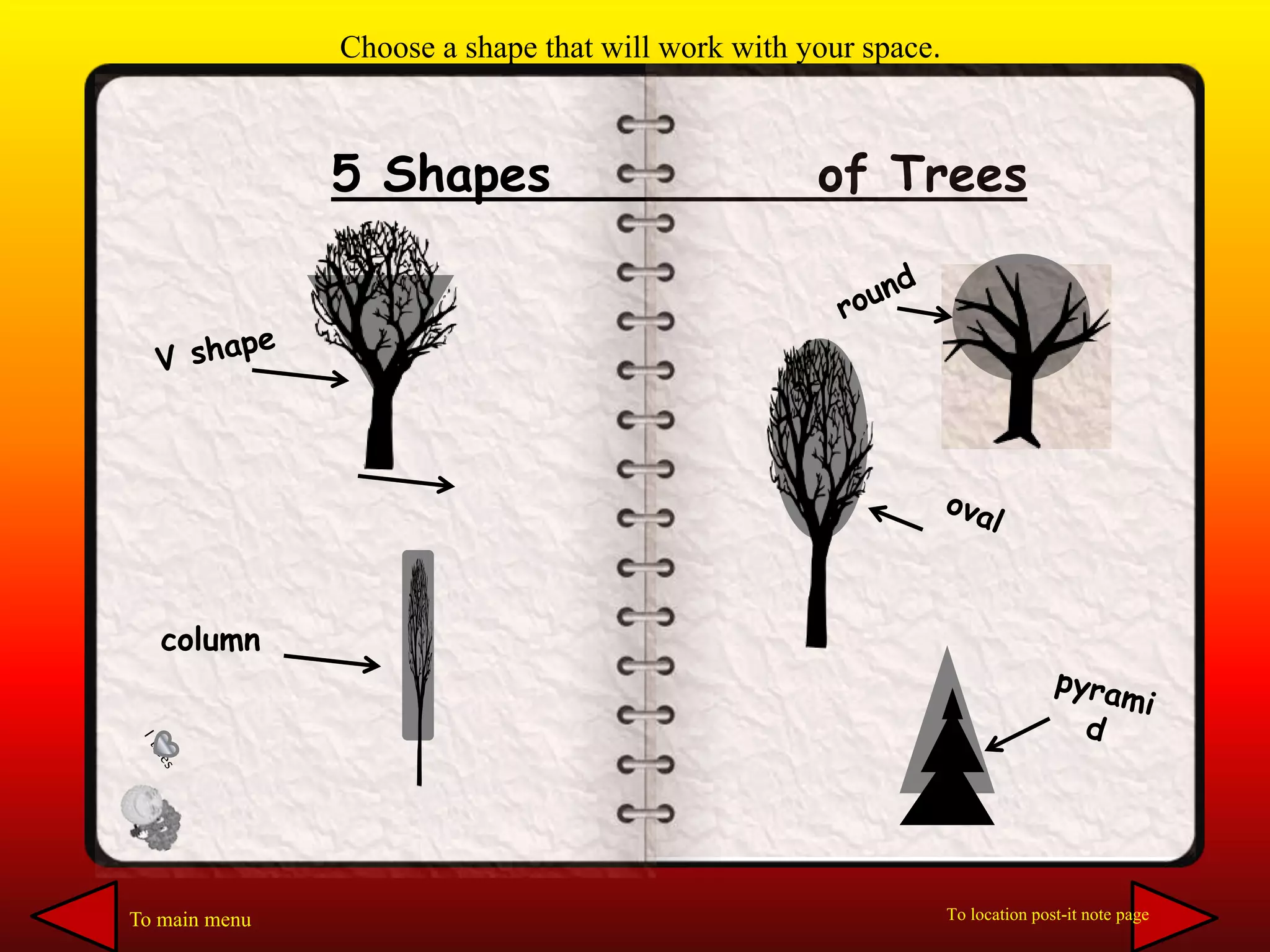
5 Shapes of Trees
Choose a shape that will work with your space.
column
To main menu To location post-it note page
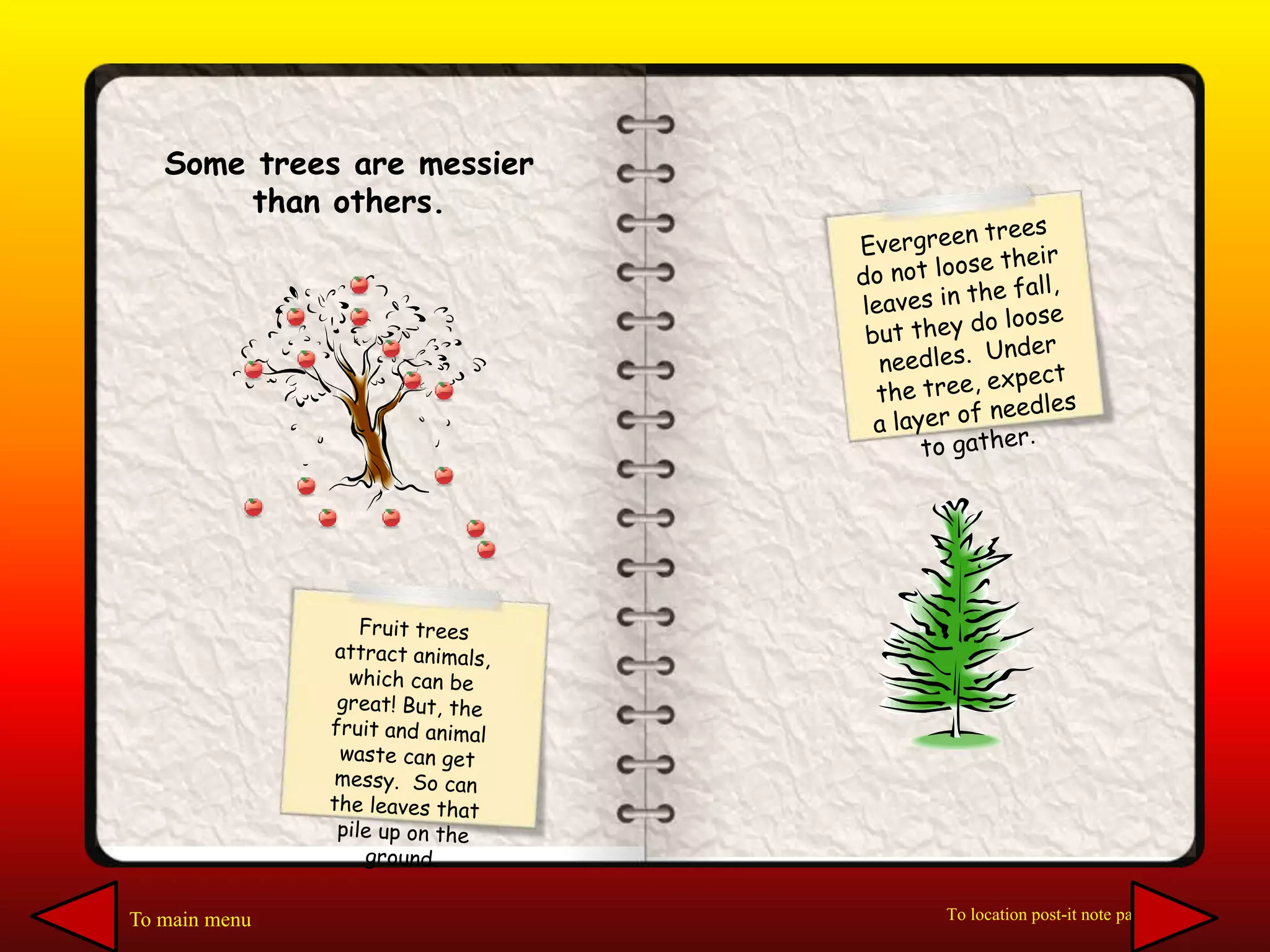
Some trees are messier
than others.
To main menu To location post-it note page
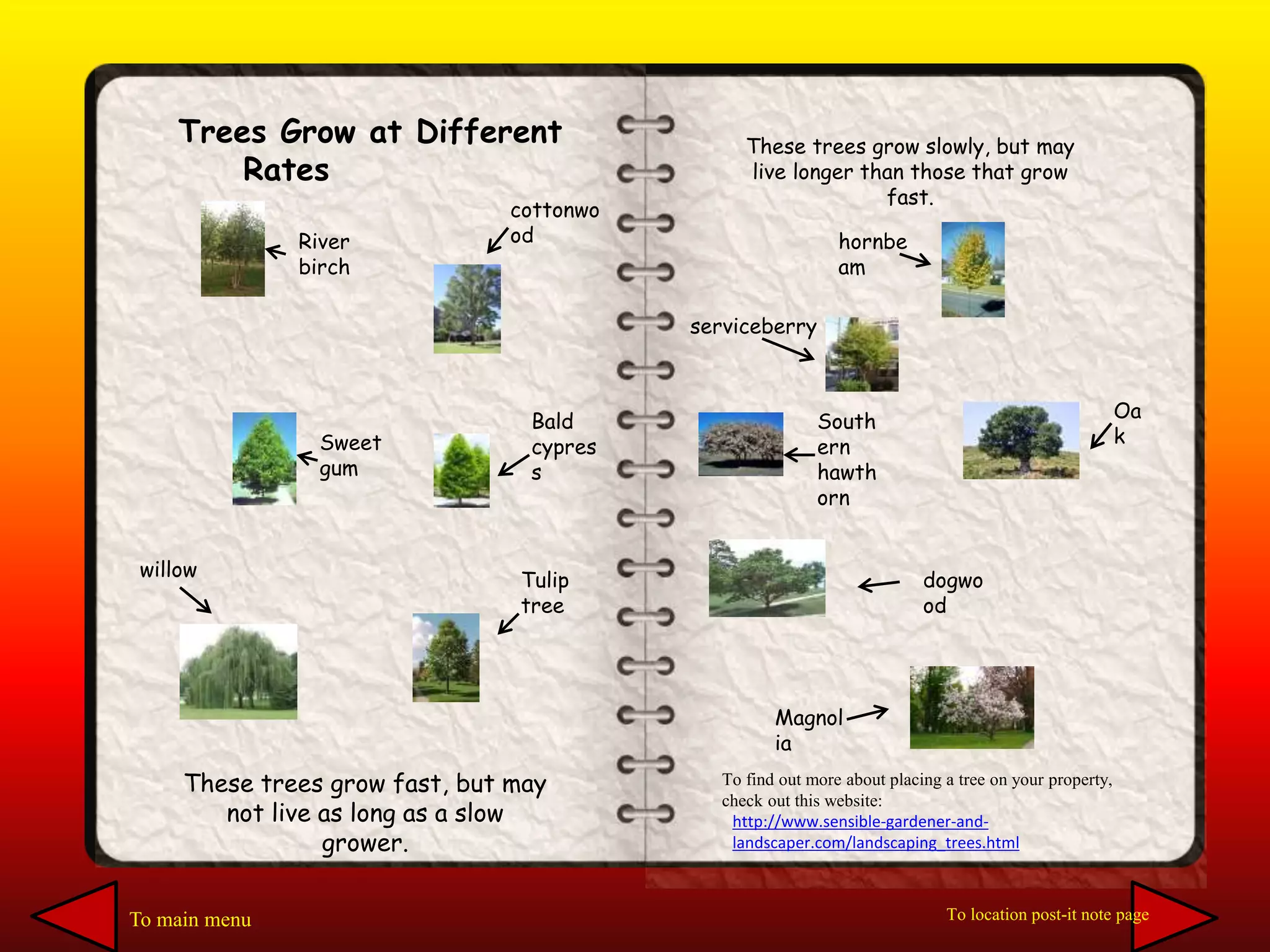
Trees Grow at Different
Rates
These trees grow fast, but may
not live as long as a slow
grower.
River
birch
cottonwo
od
Sweet
gum
willow
Bald
cypres
s
Tulip
tree
These trees grow slowly, but may
live longer than those that grow
fast.
hornbe
am
dogwo
od
South
ern
hawth
orn
Magnol
ia
Oa
k
serviceberry
http://www.sensible-gardener-and-
landscaper.com/landscaping_trees.html
To find out more about placing a tree on your property,
check out this website:
To main menu To location post-it note page
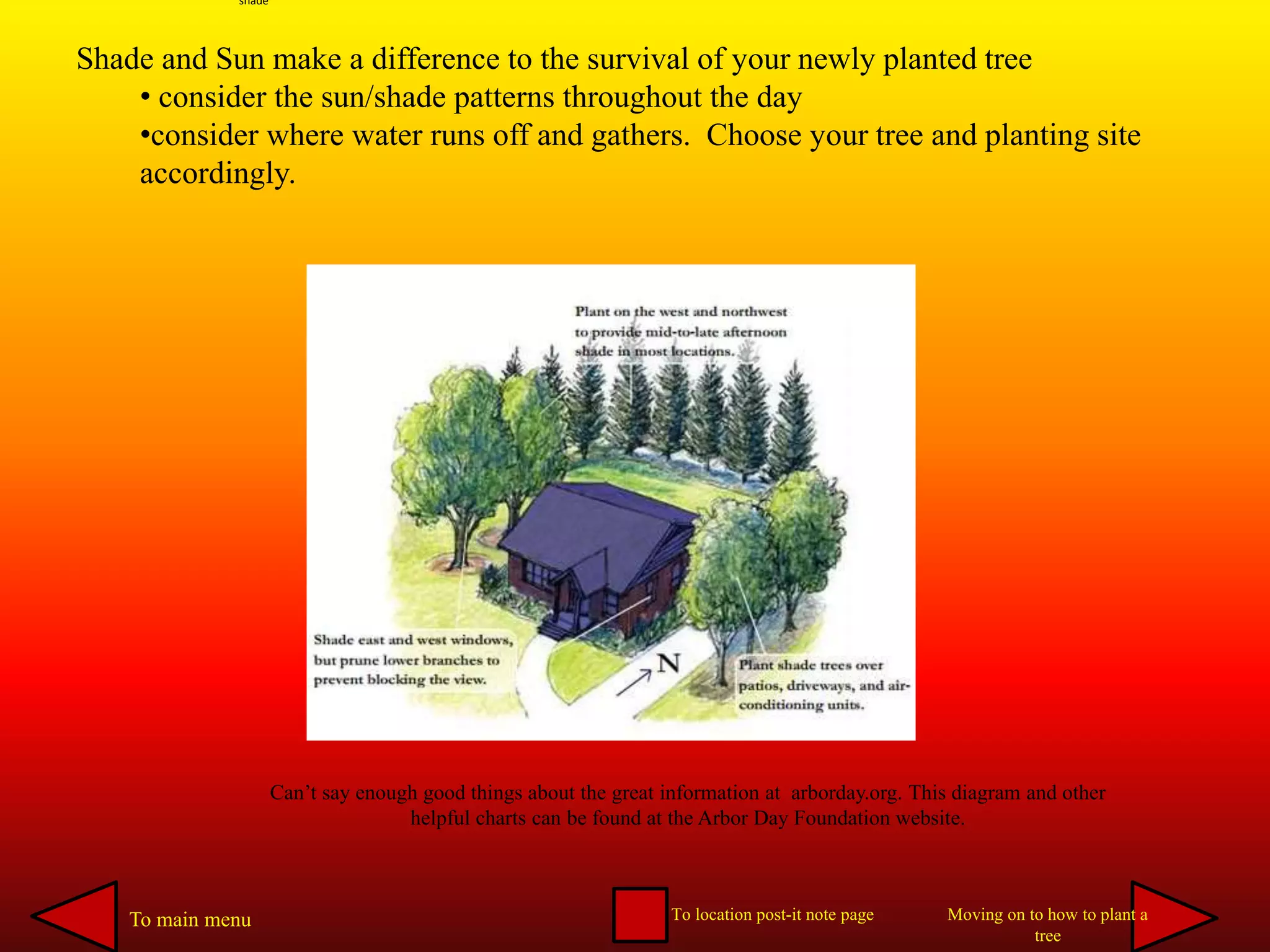
Can’t say enough good things about the great information at arborday.org. This diagram and other
helpful charts can be found at the Arbor Day Foundation website.
Shade and Sun make a difference to the survival of your newly planted tree
• consider the sun/shade patterns throughout the day
•consider where water runs off and gathers. Choose your tree and planting site
accordingly.
shade
To main menu Moving on to how to plant a
tree
To location post-it note page
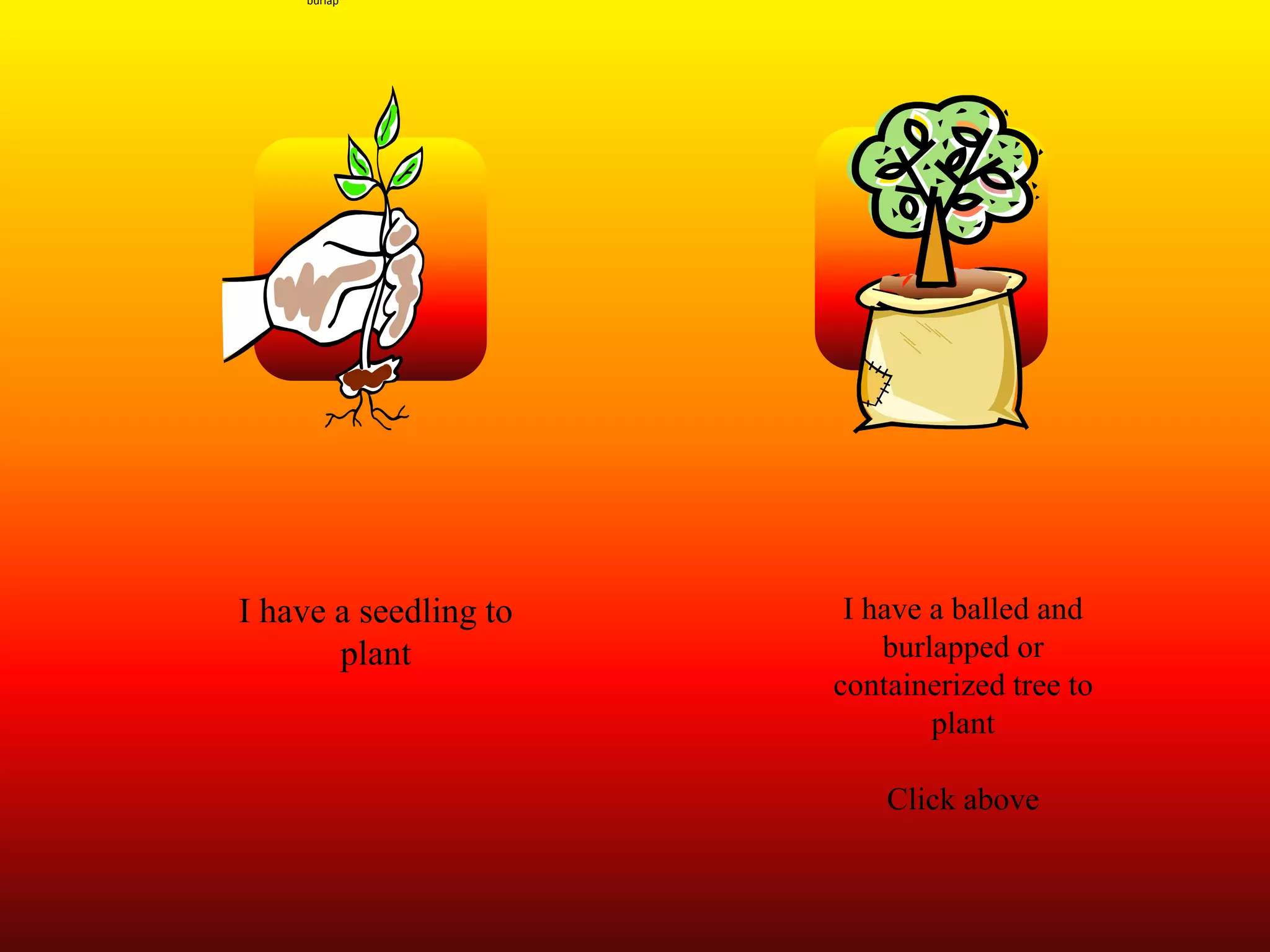
I have a seedling to
plant
I have a balled and
burlapped or
containerized tree to
plant
Click above
burlap
ALWAYS call 811 before you dig a hole. Digging
without calling can disrupt service to an entire
neighborhood, harm you and those around you and
potentially result in fines and repair costs.
Call EVERY time you dig a hole.
http://www.call811.com/
Move on to how to
dig a hole
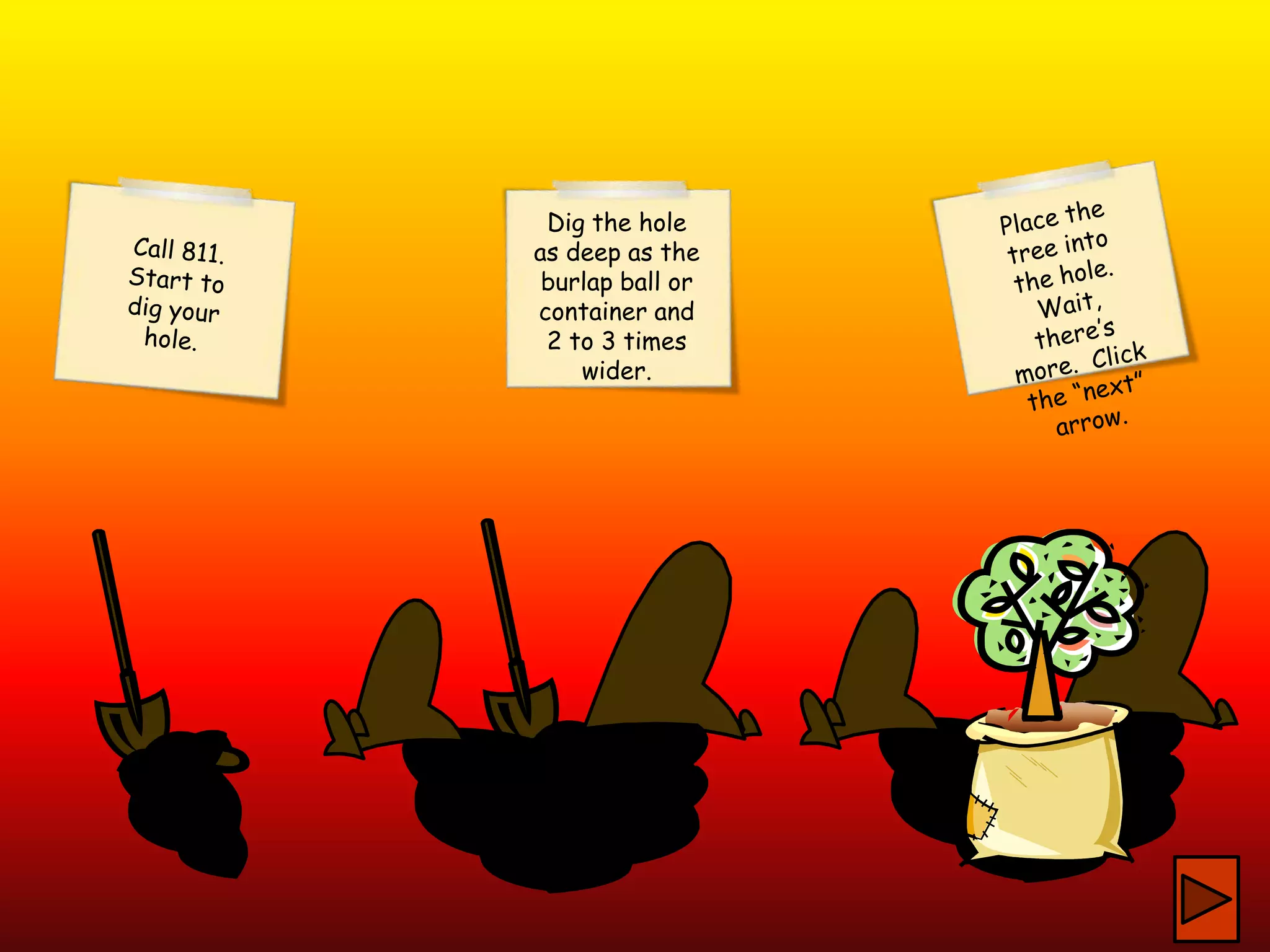
Dig the hole
as deep as the
burlap ball or
container and
2 to 3 times
wider.
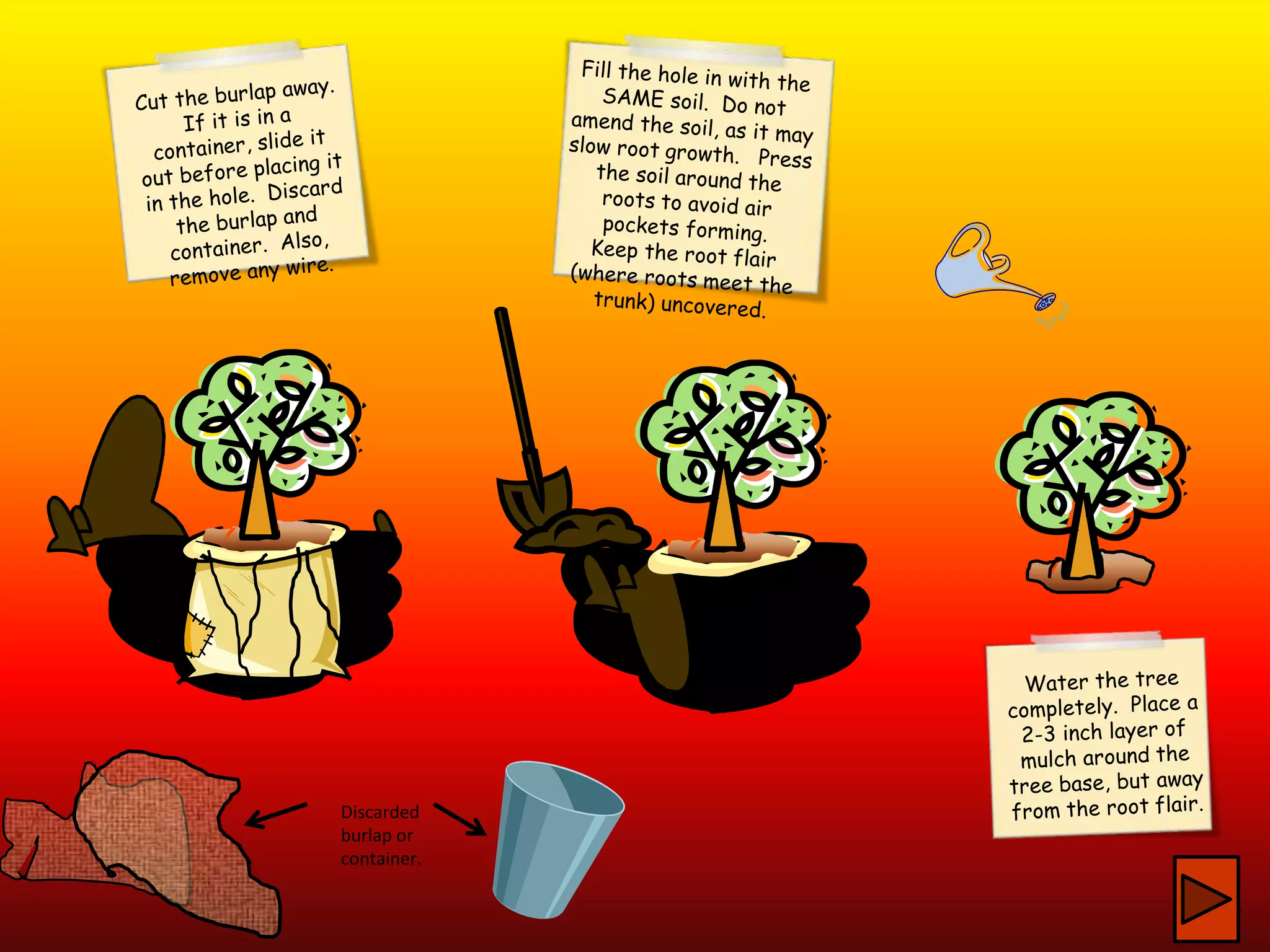
Discarded
burlap or
container.
Go back to main
menu
Learn how to
care for the
newly planted
tree.
care
To main menu
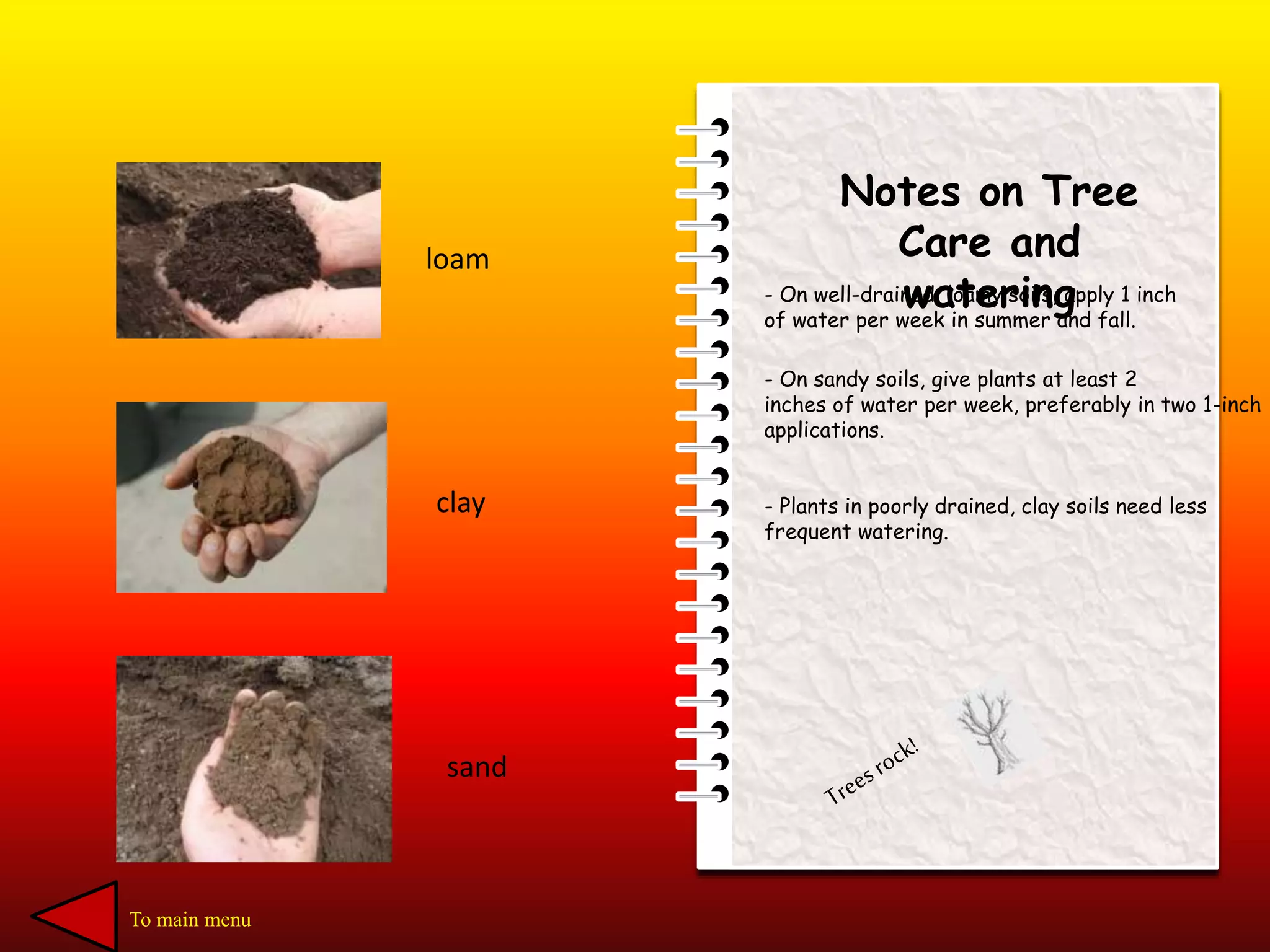
- On well-drained, loamy soils, apply 1 inch
of water per week in summer and fall.
Notes on Tree
Care and
watering
- On sandy soils, give plants at least 2
inches of water per week, preferably in two 1-inch
applications.
- Plants in poorly drained, clay soils need less
frequent watering.
loam
clay
sand
To main menu

How to plant a tree v1

  • 1.
    Planting Trees WithYouth Tom Henderson “The true meaning of life is to plant trees under whose shade you do not plan to sit.” -Tom Henderson Go to next
  • 2.
    Science Notebook How ToPlant A Tree TreesLocationDiggingPlantingCare
  • 3.
    Location location location So many trees, so little time How to choose atree Dig- gety- doo- dah How to dig the hole Long live the tree! How to take care of a tree Grow for it! How to plant the tree Where to plant your tree Location, location, location Trees Location Digging Planting Care
  • 4.
    Science Notebook -Trees needthe right climate. • temperature and rainfall make a difference in how a tree grows. sunligh t mois t soil To main menu
  • 5.
    Two links appear.You can select either to determine which trees grow well in your area. It is recommended that you plant trees that are native to your state. If you do not know which trees are native to your state, your state DNR (Department of Natural Resources) should have a link on their website if you do an internet search. Click on this informatin icon to go to the Arbor Day Tree Wizard To main menu next
  • 6.
    You may decideto plant seedlings instead of a more mature tree. Many states have programs in which they give away free tree seedlings, especially to children. Check if your state does this by doing an internet search. OR Get 10 free trees from the Arbor Day Foundation. Click on the icon below to link to the 10 free trees program. HINT: Be sure to check the shipping schedule for free trees. To main menu Figure out where to plant the tree
  • 7.
    Science Notebook Great! Younow have some ideas about what type of tree you can plant. Let’s just check one more thing before you make a final decision. Soil type can make all the difference. Field Notes on Soil Types Click a soil to see an easy way to tell if this is the type of soil you have. This is sandy soil. It drains well, but loses nutrients and water quickly. This is loam soil. It is ideal for planting. It drains well, yet still holds moisture and nutrients. This is clay soil. It is full of nutrients, but it does not drain well. To main menu To squeeze test
  • 8.
    Sandy Soil SqueezeTest Moisten a handful of soil. It should be damp but not drippy. Squeeze the soil firmly. Open your hand. If it falls apart when you open it, you have sandy soil. Check for trees in your area that grow well in sandy soil. To main menu Continue squeeze test
  • 9.
    Clay Soil SqueezeTest Moisten a handful of soil. It should be damp but not drippy. Squeeze the soil firmly. Open your hand. If it holds it shape and you can clearly see finger dents in it, then it is clay soil. Check to see which type of trees in your area like to grow in clay soil before you settle on a choice. To main menu Continue squeeze test
  • 10.
    Moisten a handfulof soil. It should be damp but not drippy. Squeeze the soil firmly. Open your hand. If it holds it shape, but falls apart when poked, you have loam soil. Lucky YOU! Many types of trees like to grow in this type of soil. Selecting a tree will be easier. Loam Soil Squeeze Test Move on to figuring out where to plant To main menu
  • 11.
    Click here for message Go backto main menu Figure out where to plant the tree
  • 12.
    Field Notes onTree Planting Location Things to consider: Click on a sticky note to find out more To main menu
  • 13.
    Spacing plant massings Min. spacing from wall of 1-story building Min. spacing from cornerof 1-story building Small trees (30' or less) 6-15' 8-10' 6-8' Medium trees (30- 70') 30-40' 15' 12' Large trees (70' or more) 40-50' 20' 15' Data chart from Arborday.org The science notebook has a great chart on tree size taped into it. The tree height chart above will give you more ideas on where to plant your tree. Both charts are from arborday.org To main menu To location post-it note page
  • 14.
    5 Shapes ofTrees Choose a shape that will work with your space. column To main menu To location post-it note page
  • 15.
    Some trees aremessier than others. To main menu To location post-it note page
  • 16.
    Trees Grow atDifferent Rates These trees grow fast, but may not live as long as a slow grower. River birch cottonwo od Sweet gum willow Bald cypres s Tulip tree These trees grow slowly, but may live longer than those that grow fast. hornbe am dogwo od South ern hawth orn Magnol ia Oa k serviceberry http://www.sensible-gardener-and- landscaper.com/landscaping_trees.html To find out more about placing a tree on your property, check out this website: To main menu To location post-it note page
  • 17.
    Can’t say enoughgood things about the great information at arborday.org. This diagram and other helpful charts can be found at the Arbor Day Foundation website. Shade and Sun make a difference to the survival of your newly planted tree • consider the sun/shade patterns throughout the day •consider where water runs off and gathers. Choose your tree and planting site accordingly. shade To main menu Moving on to how to plant a tree To location post-it note page
  • 18.
    I have aseedling to plant I have a balled and burlapped or containerized tree to plant Click above burlap
  • 19.
    ALWAYS call 811before you dig a hole. Digging without calling can disrupt service to an entire neighborhood, harm you and those around you and potentially result in fines and repair costs. Call EVERY time you dig a hole. http://www.call811.com/ Move on to how to dig a hole
  • 20.
    Dig the hole asdeep as the burlap ball or container and 2 to 3 times wider.
  • 21.
  • 22.
    Go back tomain menu Learn how to care for the newly planted tree. care
  • 23.
  • 24.
    - On well-drained,loamy soils, apply 1 inch of water per week in summer and fall. Notes on Tree Care and watering - On sandy soils, give plants at least 2 inches of water per week, preferably in two 1-inch applications. - Plants in poorly drained, clay soils need less frequent watering. loam clay sand To main menu