Green Environment Preservation Society
(GEPS)
(GEPS)
Plant More Trees
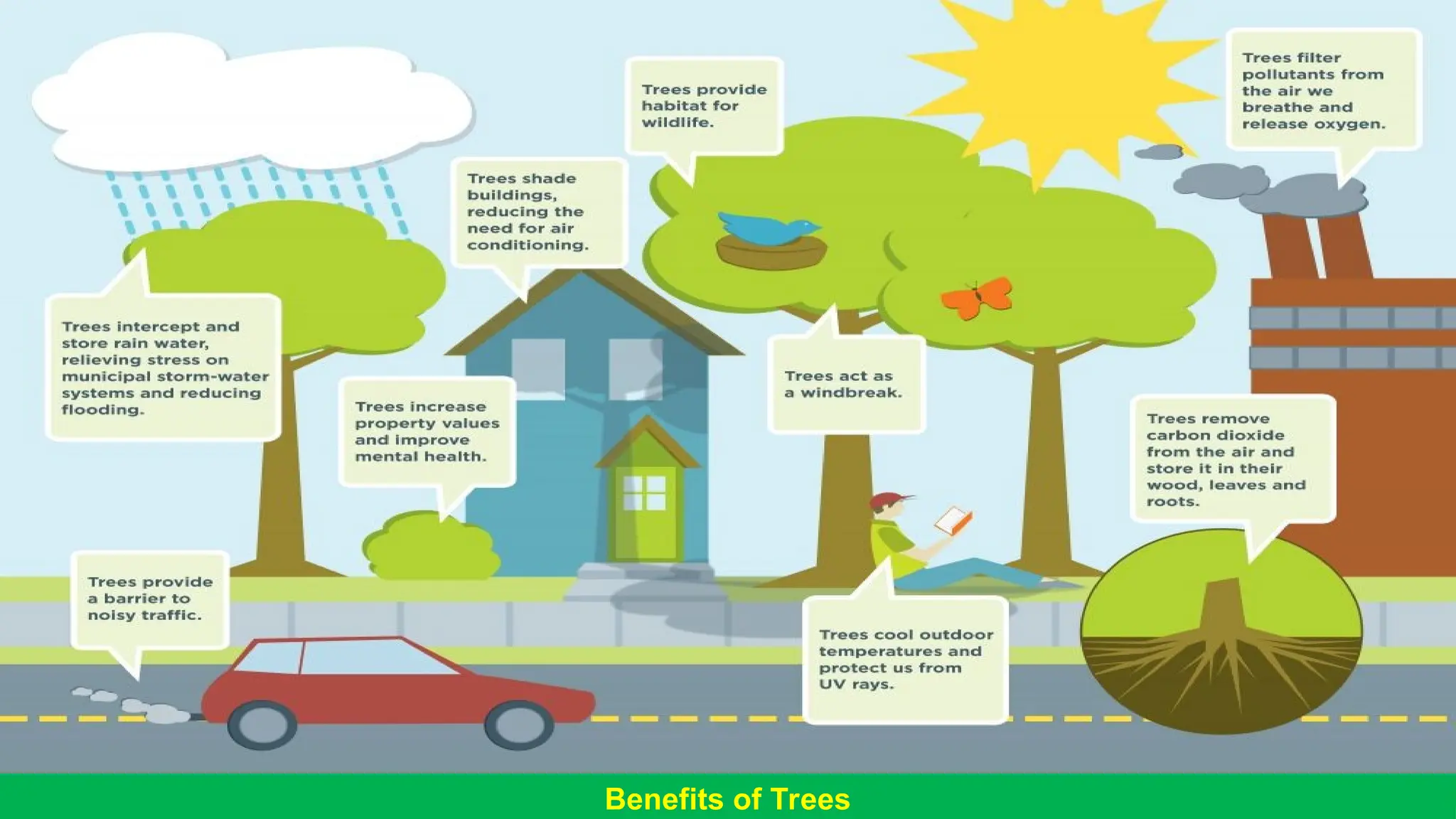
Benefits of Trees
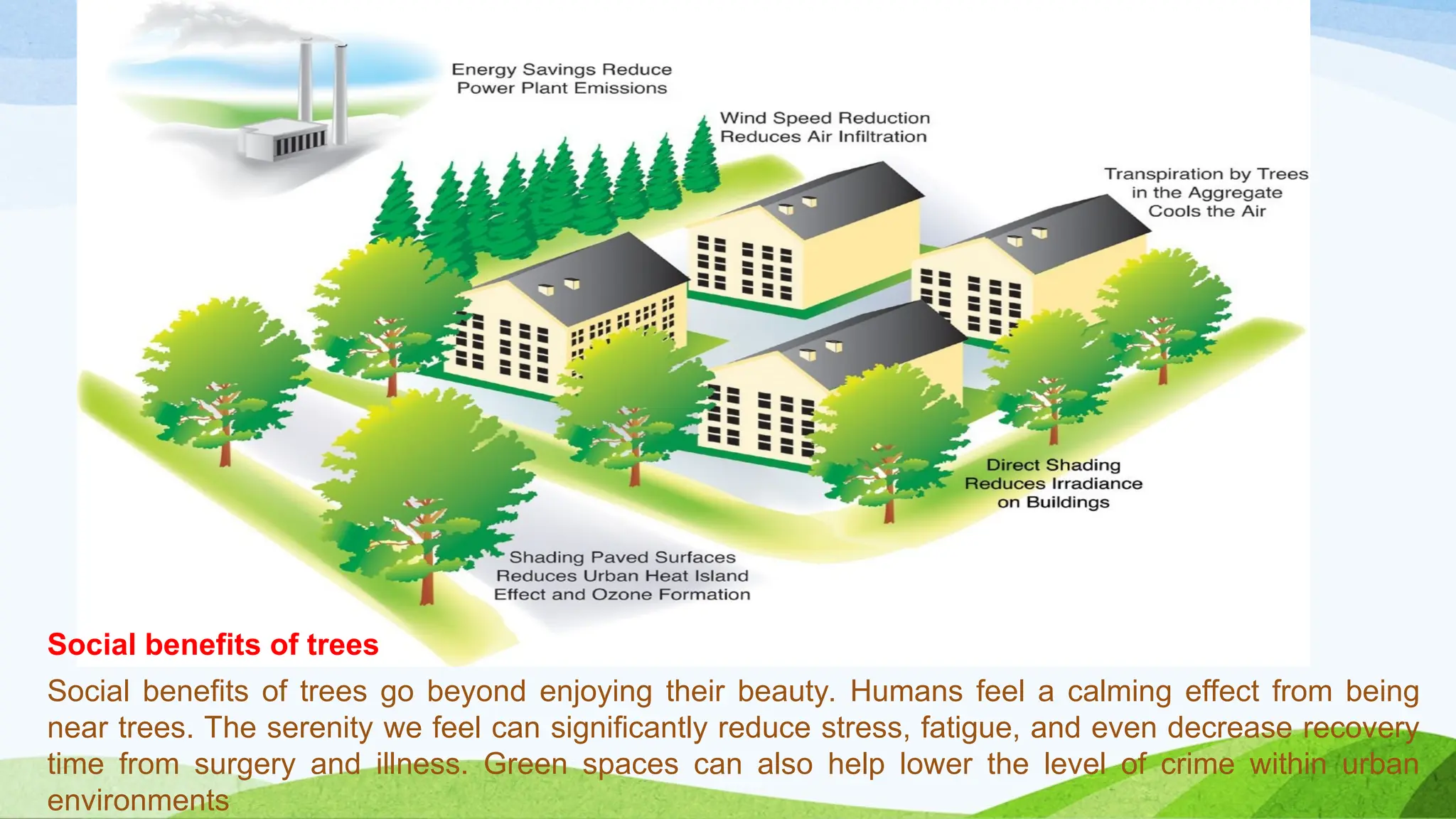
Social benefits of trees go beyond enjoying their beauty. Humans feel a calming effect from being
near trees. The serenity we feel can significantly reduce stress, fatigue, and even decrease recovery
time from surgery and illness. Green spaces can also help lower the level of crime within urban
environments
Social benefits of trees
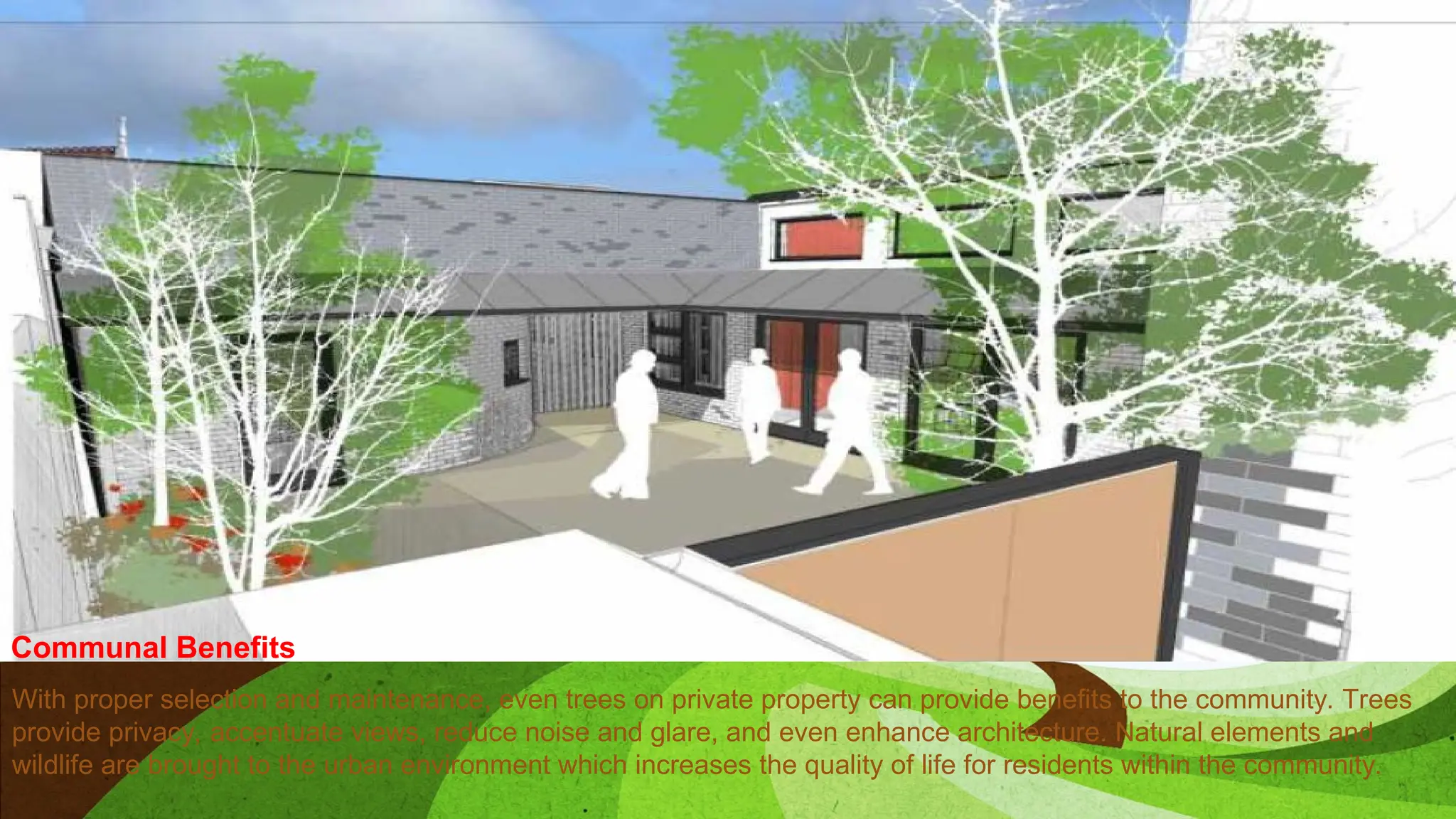
With proper selection and maintenance, even trees on private property can provide benefits to the community. Trees
provide privacy, accentuate views, reduce noise and glare, and even enhance architecture. Natural elements and
wildlife are brought to the urban environment which increases the quality of life for residents within the community.
Communal Benefits
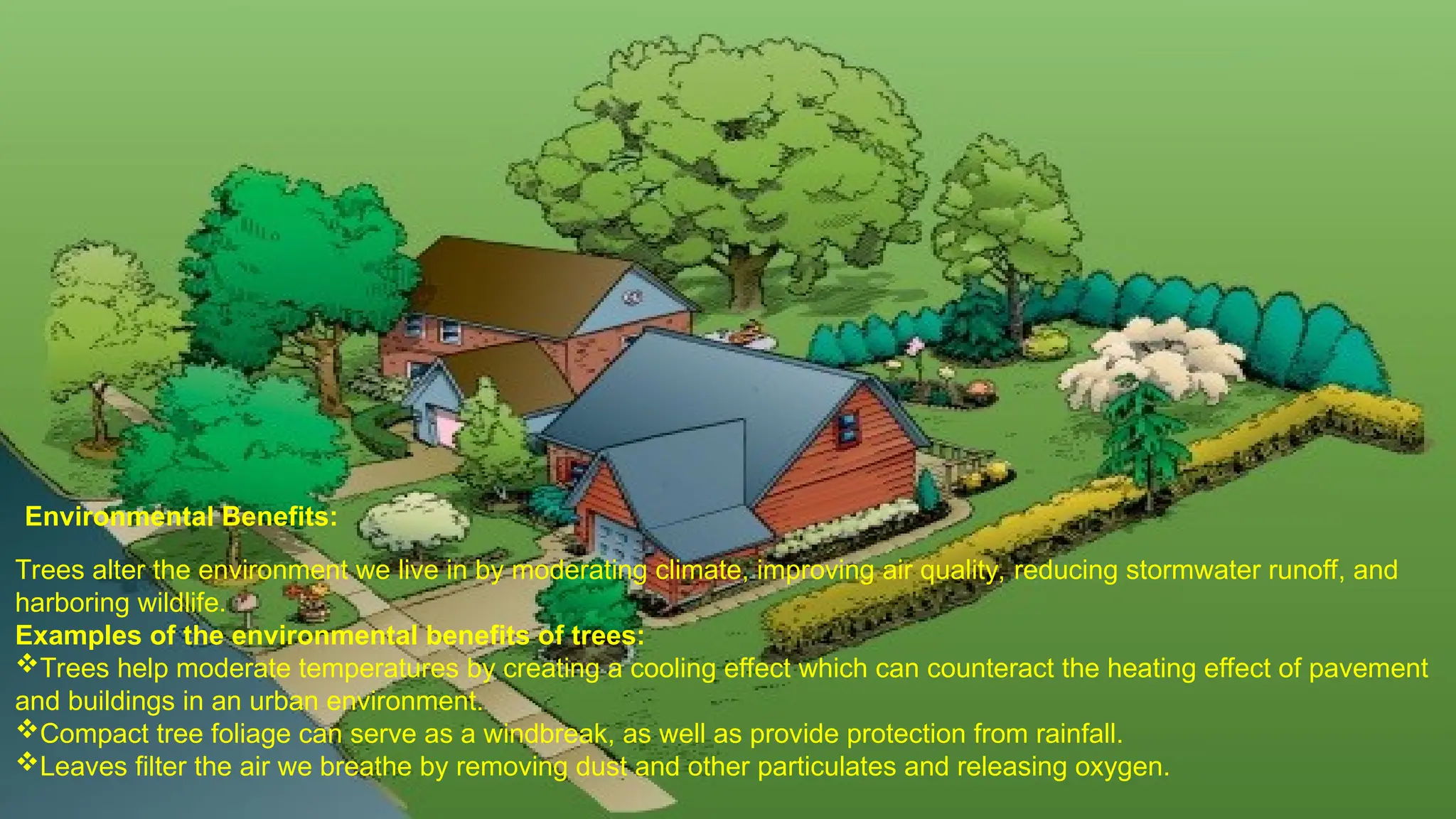
Trees alter the environment we live in by moderating climate, improving air quality, reducing stormwater runoff, and
harboring wildlife.
Examples of the environmental benefits of trees:
Trees help moderate temperatures by creating a cooling effect which can counteract the heating effect of pavement
and buildings in an urban environment.
Compact tree foliage can serve as a windbreak, as well as provide protection from rainfall.
Leaves filter the air we breathe by removing dust and other particulates and releasing oxygen.
Environmental Benefits:
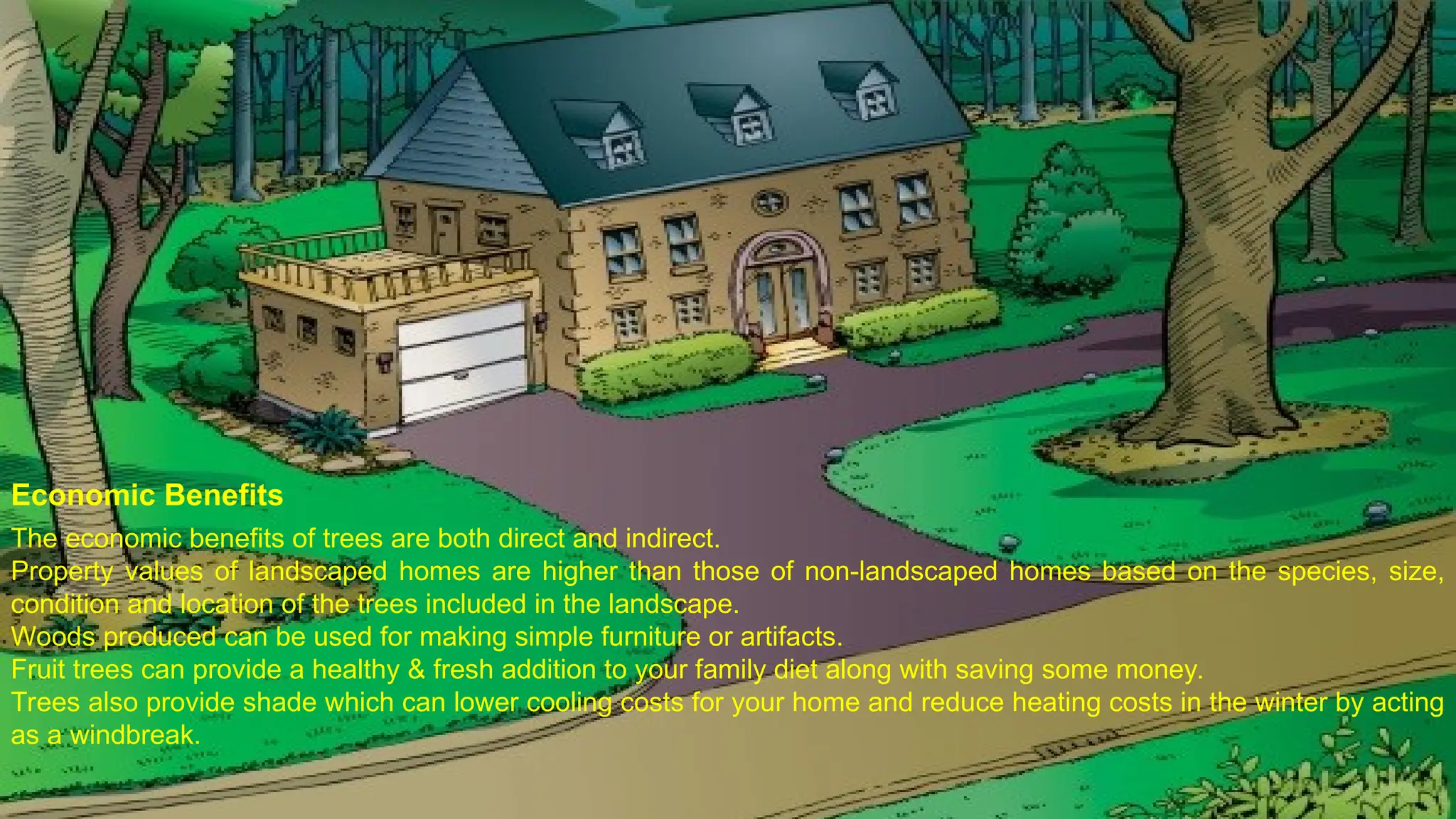
The economic benefits of trees are both direct and indirect.
Property values of landscaped homes are higher than those of non-landscaped homes based on the species, size,
condition and location of the trees included in the landscape.
Woods produced can be used for making simple furniture or artifacts.
Fruit trees can provide a healthy & fresh addition to your family diet along with saving some money.
Trees also provide shade which can lower cooling costs for your home and reduce heating costs in the winter by acting
as a windbreak.
Economic Benefits
How to Plant a Tree
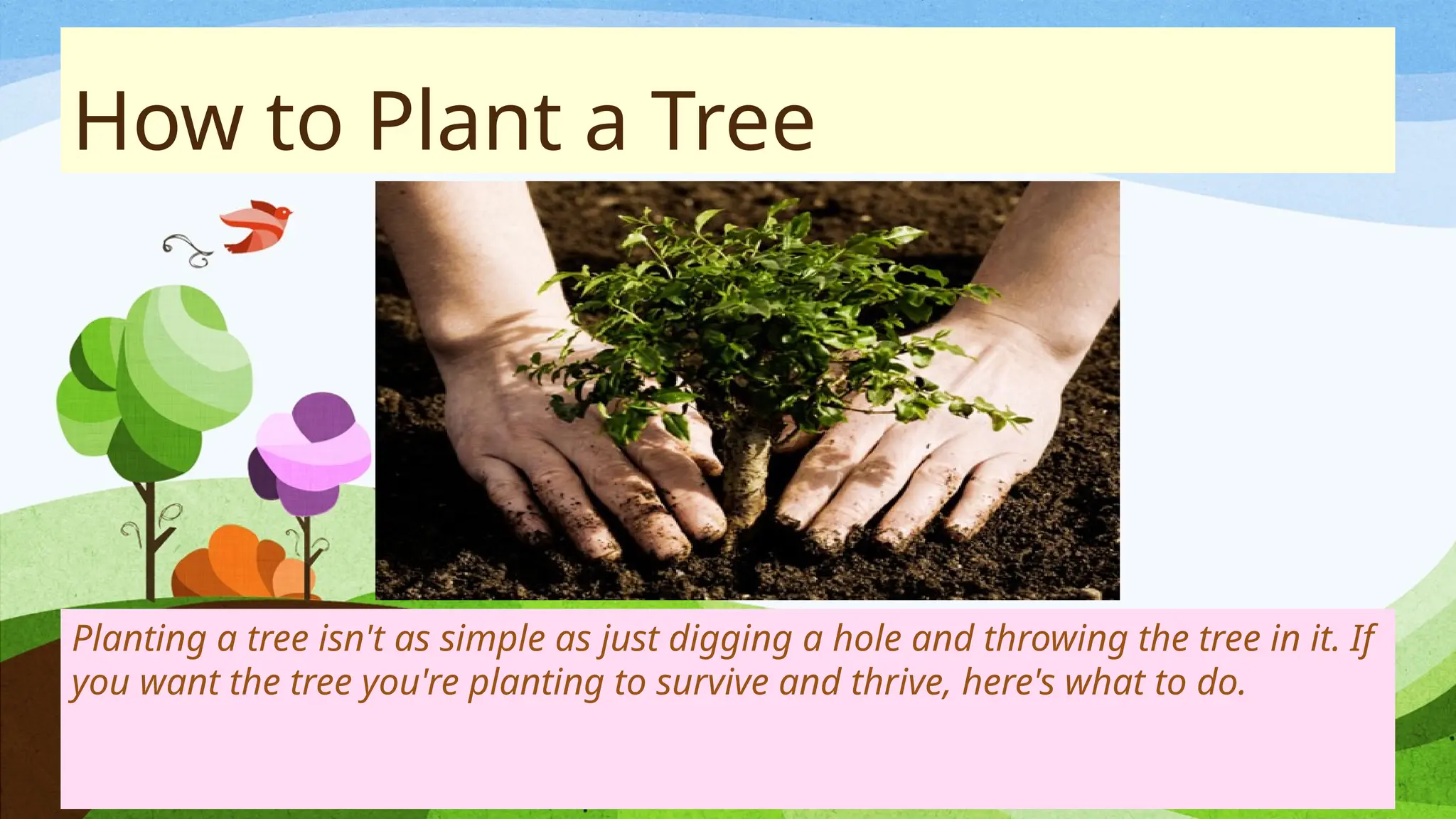
Planting a tree isn't as simple as just digging a hole and throwing the tree in it. If
you want the tree you're planting to survive and thrive, here's what to do.
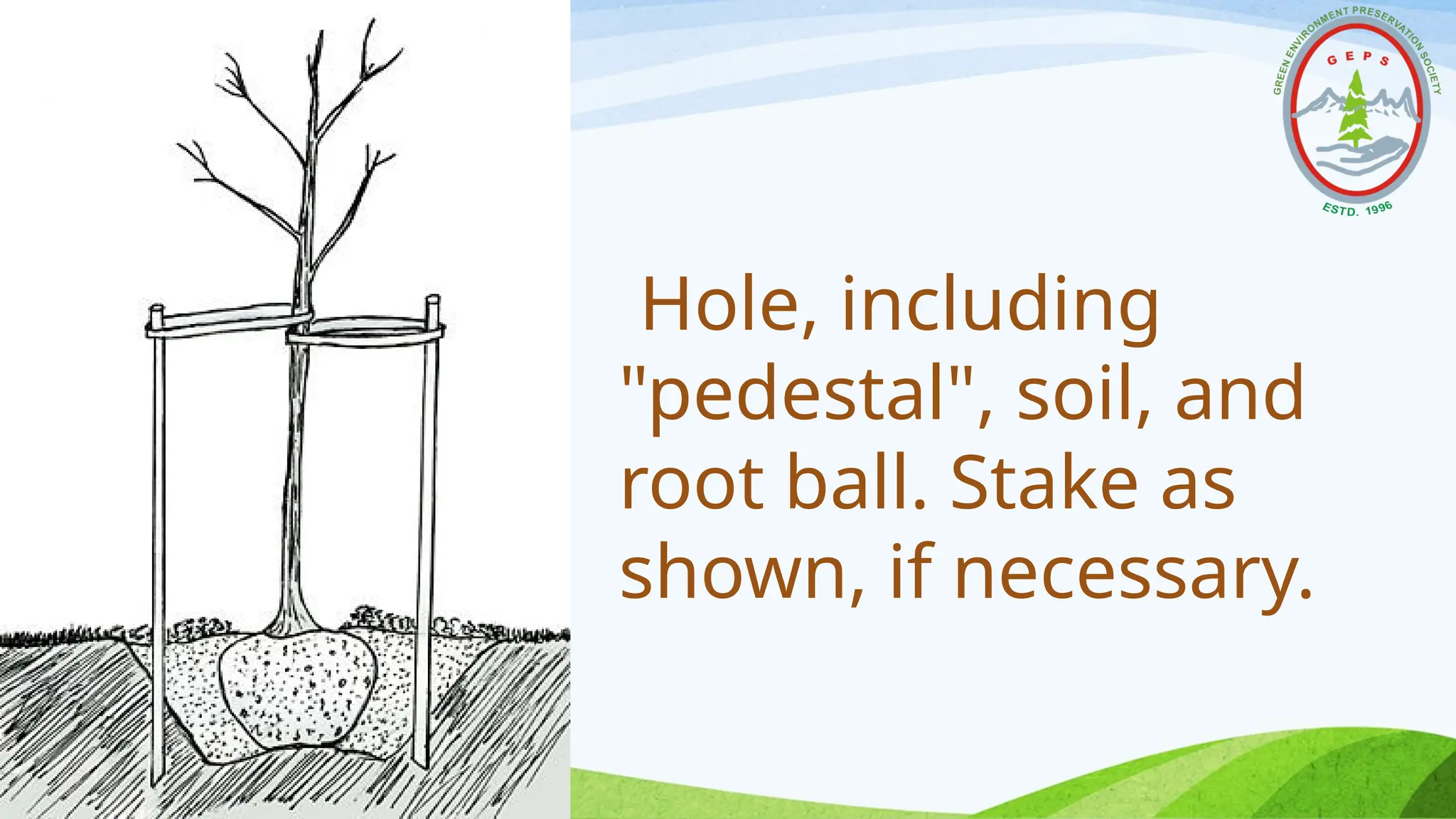
Hole, including
"pedestal", soil, and
root ball. Stake as
shown, if necessary.
Before plantation
• Select the right time of year for planting the tree. Do not
plant in late spring or summer because the heat will stress
the plant and may cause it to die. The best time to plant a
tree is during or before the rainy season.
• Check to see if there are any local requirements
concerning digging deep holes if you need to dig near
telephone and other cables.
• You may have to take proper permission from the local
authority or land owner.
Selecting the spot
Decide where you want the tree. Remember that trees will grow large, so
in addition to arranging it according to how you want the area to look,
think ahead so that you don’t have to cut it in future:
• What will the tree shade, and what it might touch or cover when it is fully
grown?
• Whether you need the spot for any future use?
Selecting the spot
• Will it be too close to any sidewalks, houses, or power lines?
• Does your planting location tend to flood heavily when it is wet?
Choose a site with good drainage. Planting holes can form natural
ponds in non-percolating conditions, and many trees will drown if
their roots are completely submerged.
Selecting the trees
• Choose a suitable tree for the region, climate, and space.
• Research local cultivars of species native to your area. If you will plant a non-
native species, consider carefully why.
• Look at the characteristics of the various species you are considering, including
how quickly and how large they grow, what flowers or fruits they provide, how
much cleanup they require, and their tolerance to diseases, drought, and insects.
• Understand the growth habits of the tree you will plant, and the shape that your
tree will have when it is mature.
• Select a healthy tree. If there are leaves on it, look at the condition of the leaves.
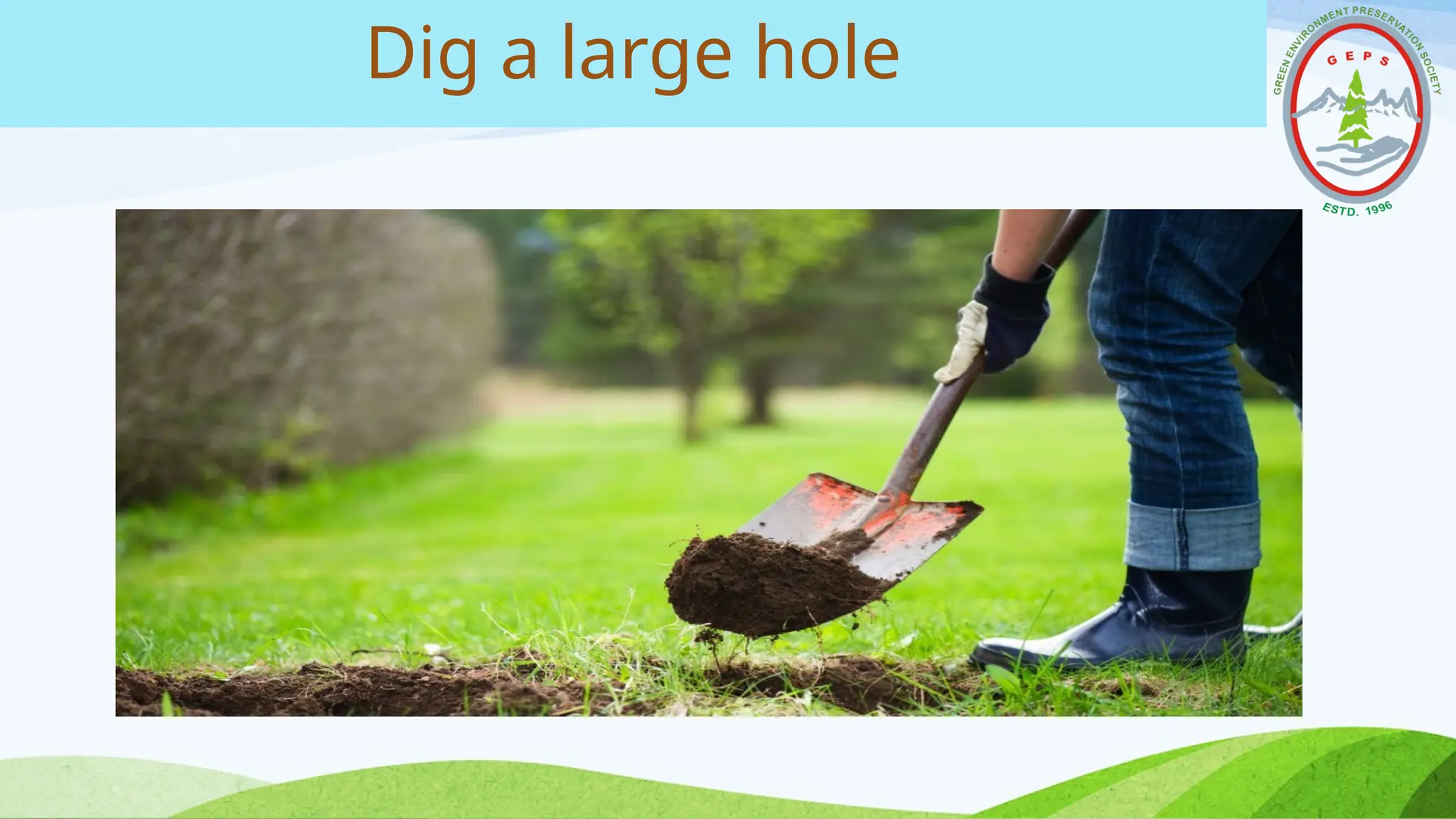
Dig a large hole
Digging the hole
Prepare the hole. Take a suitable shovel and dig a hole. The size of the hole
depends on the plant. Try to dig it a little larger so that your plant will fit easily.
Dig a hole 2-3 times the width of the root ball, not just enough so it will fit. This
lets the roots ease in more easily and begin to grow outwards into the soil.
Create a pedestal (elevated soil) in the center of the hole. Water the base of the
hole and let the water seep through into the surrounding soil.
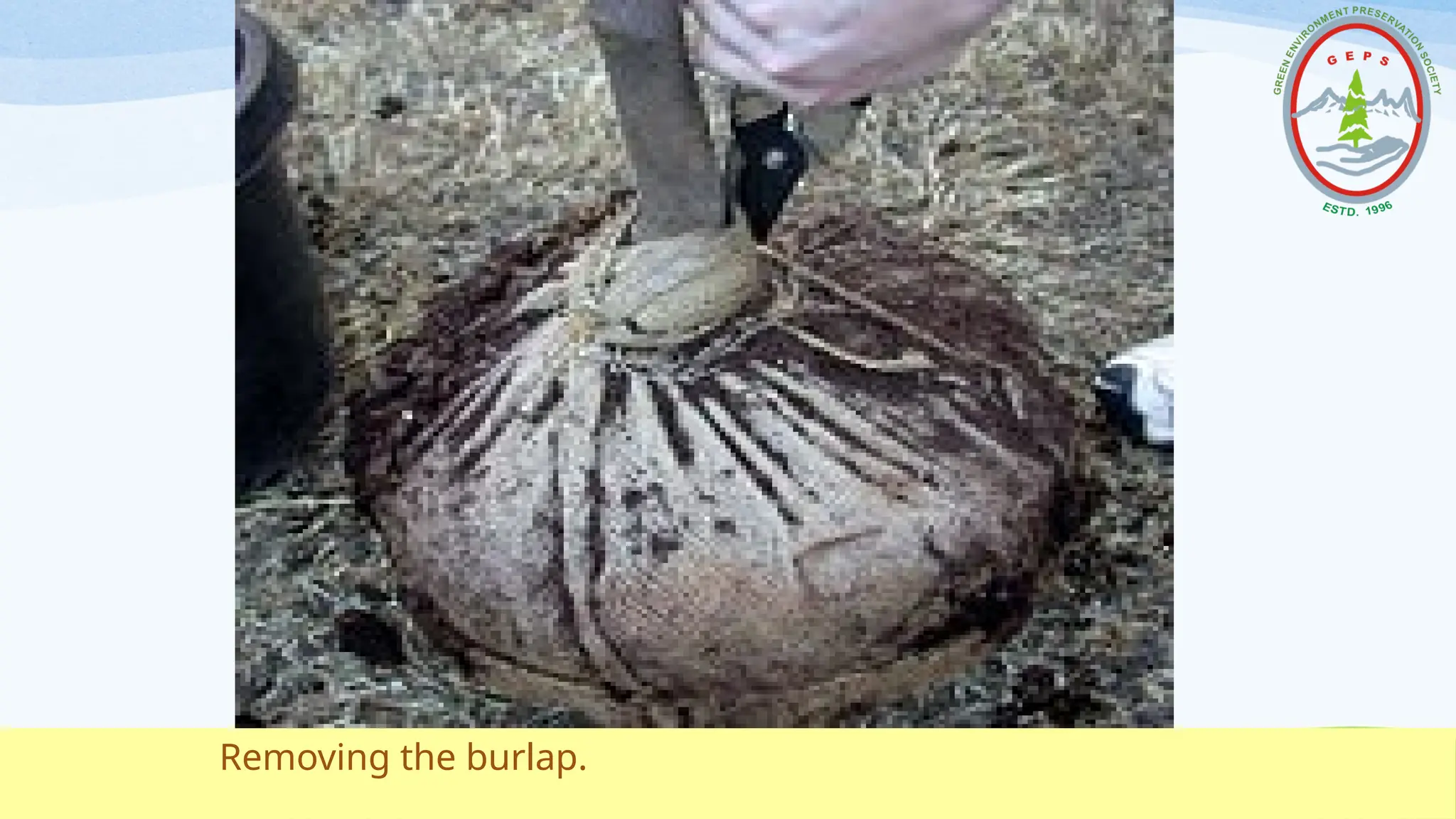
Removing the burlap.
About the hole
• Try to dig the hole with a small "pedestal" of dirt in the center of the hole where
the tree will rest.
• The hole should be a little deeper around the edges but there should be a
pedestal of dirt in the center where the root ball sits. This pedestal prevents the
root ball from sitting continuously in water.
• The point where the tree comes out of the ground should be slightly higher than
the ground around it.
Unwrap the burlap.
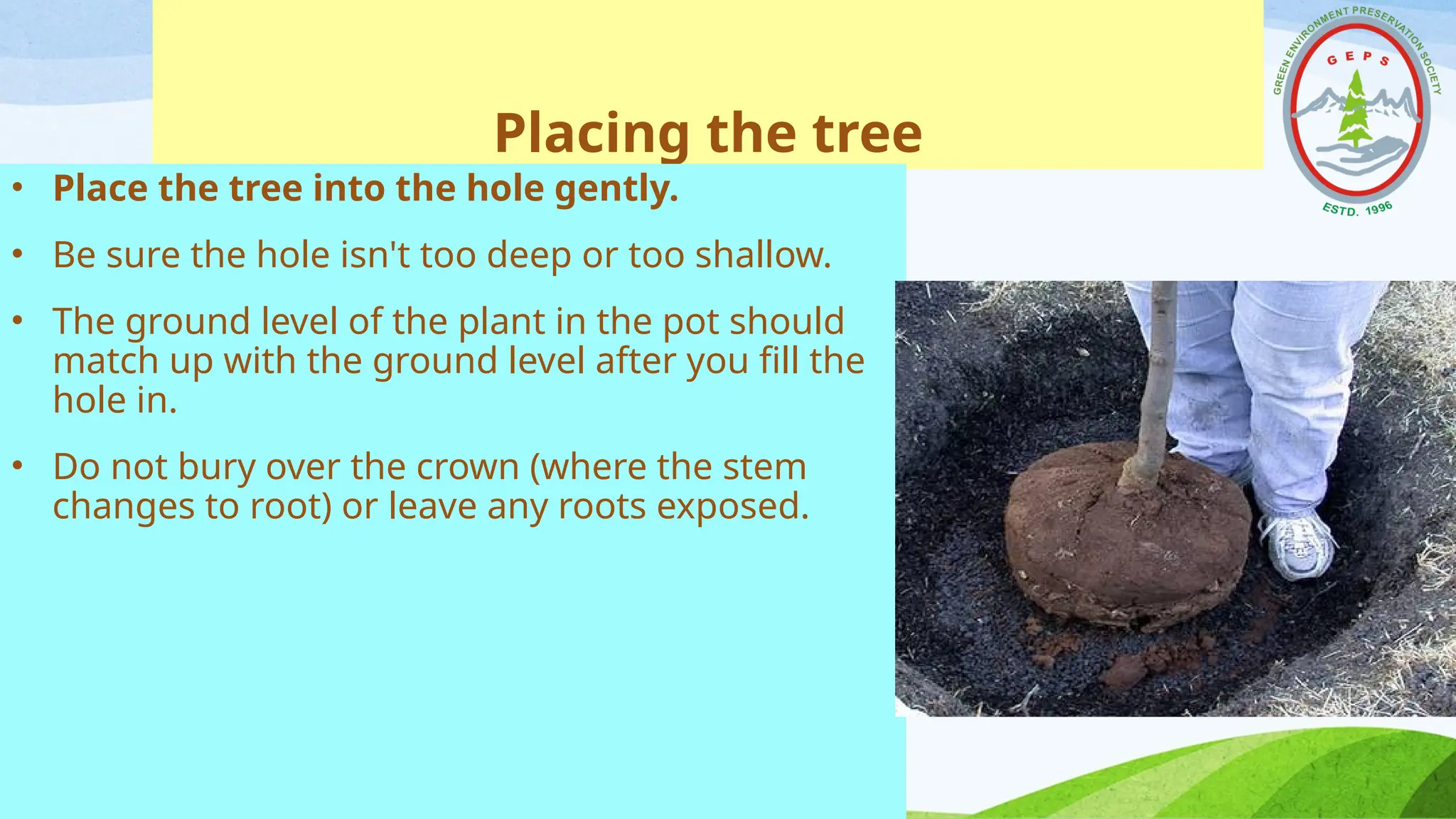
Placing the tree
• Place the tree into the hole gently.
• Be sure the hole isn't too deep or too shallow.
• The ground level of the plant in the pot should
match up with the ground level after you fill the
hole in.
• Do not bury over the crown (where the stem
changes to root) or leave any roots exposed.
Compost or manure will help.
Steps
Use some compost or composted manure if needed. If the soil that
you currently have is not rich, has clay-like qualities or if it has the
consistency of dust or sand, the addition of manure or compost will
give the tree a great start in life. Backfill three quarters of the hole
with existing dirt, one quarter with compost or composted manure.
Over-fertilizing can result in growth that is too fast. This growth might
not be very strong or well-formed. More is not better.
Water the newly planted tree. Allow settling, backfill the remaining
soil, and water again. This will eliminate air pockets.
Apply mulch.
Its not over yet
• Stake the tree if necessary, for about the first year. Make sure that whatever
stakes you use are tied loosely to the trunk and do not dig into the bark or
tighten around the tree.
• Keep watering your tree for the first few years as it gets established. Depending
on the climate and your area, it may need weekly watering until the roots are
established.
Enjoy the tree as it grows over the years with you.
Appreciate its shade and beauty and thank
yourself for adding another tree to the world.
Thank you for listening
From team GEPS

Plant Trees : A basic guide about how to plant trees

  • 1.
    Green Environment PreservationSociety Green Environment Preservation Society (GEPS) (GEPS) Plant More Trees
  • 2.
  • 3.
    Social benefits oftrees go beyond enjoying their beauty. Humans feel a calming effect from being near trees. The serenity we feel can significantly reduce stress, fatigue, and even decrease recovery time from surgery and illness. Green spaces can also help lower the level of crime within urban environments Social benefits of trees
  • 4.
    With proper selectionand maintenance, even trees on private property can provide benefits to the community. Trees provide privacy, accentuate views, reduce noise and glare, and even enhance architecture. Natural elements and wildlife are brought to the urban environment which increases the quality of life for residents within the community. Communal Benefits
  • 5.
    Trees alter theenvironment we live in by moderating climate, improving air quality, reducing stormwater runoff, and harboring wildlife. Examples of the environmental benefits of trees: Trees help moderate temperatures by creating a cooling effect which can counteract the heating effect of pavement and buildings in an urban environment. Compact tree foliage can serve as a windbreak, as well as provide protection from rainfall. Leaves filter the air we breathe by removing dust and other particulates and releasing oxygen. Environmental Benefits:
  • 6.
    The economic benefitsof trees are both direct and indirect. Property values of landscaped homes are higher than those of non-landscaped homes based on the species, size, condition and location of the trees included in the landscape. Woods produced can be used for making simple furniture or artifacts. Fruit trees can provide a healthy & fresh addition to your family diet along with saving some money. Trees also provide shade which can lower cooling costs for your home and reduce heating costs in the winter by acting as a windbreak. Economic Benefits
  • 7.
    How to Planta Tree Planting a tree isn't as simple as just digging a hole and throwing the tree in it. If you want the tree you're planting to survive and thrive, here's what to do.
  • 8.
    Hole, including "pedestal", soil,and root ball. Stake as shown, if necessary.
  • 9.
    Before plantation • Selectthe right time of year for planting the tree. Do not plant in late spring or summer because the heat will stress the plant and may cause it to die. The best time to plant a tree is during or before the rainy season. • Check to see if there are any local requirements concerning digging deep holes if you need to dig near telephone and other cables. • You may have to take proper permission from the local authority or land owner.
  • 10.
    Selecting the spot Decidewhere you want the tree. Remember that trees will grow large, so in addition to arranging it according to how you want the area to look, think ahead so that you don’t have to cut it in future: • What will the tree shade, and what it might touch or cover when it is fully grown? • Whether you need the spot for any future use?
  • 11.
    Selecting the spot •Will it be too close to any sidewalks, houses, or power lines? • Does your planting location tend to flood heavily when it is wet? Choose a site with good drainage. Planting holes can form natural ponds in non-percolating conditions, and many trees will drown if their roots are completely submerged.
  • 12.
    Selecting the trees •Choose a suitable tree for the region, climate, and space. • Research local cultivars of species native to your area. If you will plant a non- native species, consider carefully why. • Look at the characteristics of the various species you are considering, including how quickly and how large they grow, what flowers or fruits they provide, how much cleanup they require, and their tolerance to diseases, drought, and insects. • Understand the growth habits of the tree you will plant, and the shape that your tree will have when it is mature. • Select a healthy tree. If there are leaves on it, look at the condition of the leaves.
  • 13.
  • 14.
    Digging the hole Preparethe hole. Take a suitable shovel and dig a hole. The size of the hole depends on the plant. Try to dig it a little larger so that your plant will fit easily. Dig a hole 2-3 times the width of the root ball, not just enough so it will fit. This lets the roots ease in more easily and begin to grow outwards into the soil. Create a pedestal (elevated soil) in the center of the hole. Water the base of the hole and let the water seep through into the surrounding soil.
  • 15.
  • 16.
    About the hole •Try to dig the hole with a small "pedestal" of dirt in the center of the hole where the tree will rest. • The hole should be a little deeper around the edges but there should be a pedestal of dirt in the center where the root ball sits. This pedestal prevents the root ball from sitting continuously in water. • The point where the tree comes out of the ground should be slightly higher than the ground around it.
  • 17.
  • 18.
    Placing the tree •Place the tree into the hole gently. • Be sure the hole isn't too deep or too shallow. • The ground level of the plant in the pot should match up with the ground level after you fill the hole in. • Do not bury over the crown (where the stem changes to root) or leave any roots exposed.
  • 19.
  • 20.
    Steps Use some compostor composted manure if needed. If the soil that you currently have is not rich, has clay-like qualities or if it has the consistency of dust or sand, the addition of manure or compost will give the tree a great start in life. Backfill three quarters of the hole with existing dirt, one quarter with compost or composted manure. Over-fertilizing can result in growth that is too fast. This growth might not be very strong or well-formed. More is not better. Water the newly planted tree. Allow settling, backfill the remaining soil, and water again. This will eliminate air pockets.
  • 21.
  • 22.
    Its not overyet • Stake the tree if necessary, for about the first year. Make sure that whatever stakes you use are tied loosely to the trunk and do not dig into the bark or tighten around the tree. • Keep watering your tree for the first few years as it gets established. Depending on the climate and your area, it may need weekly watering until the roots are established.
  • 23.
    Enjoy the treeas it grows over the years with you. Appreciate its shade and beauty and thank yourself for adding another tree to the world.
  • 24.
    Thank you forlistening From team GEPS