How to ~ Interview

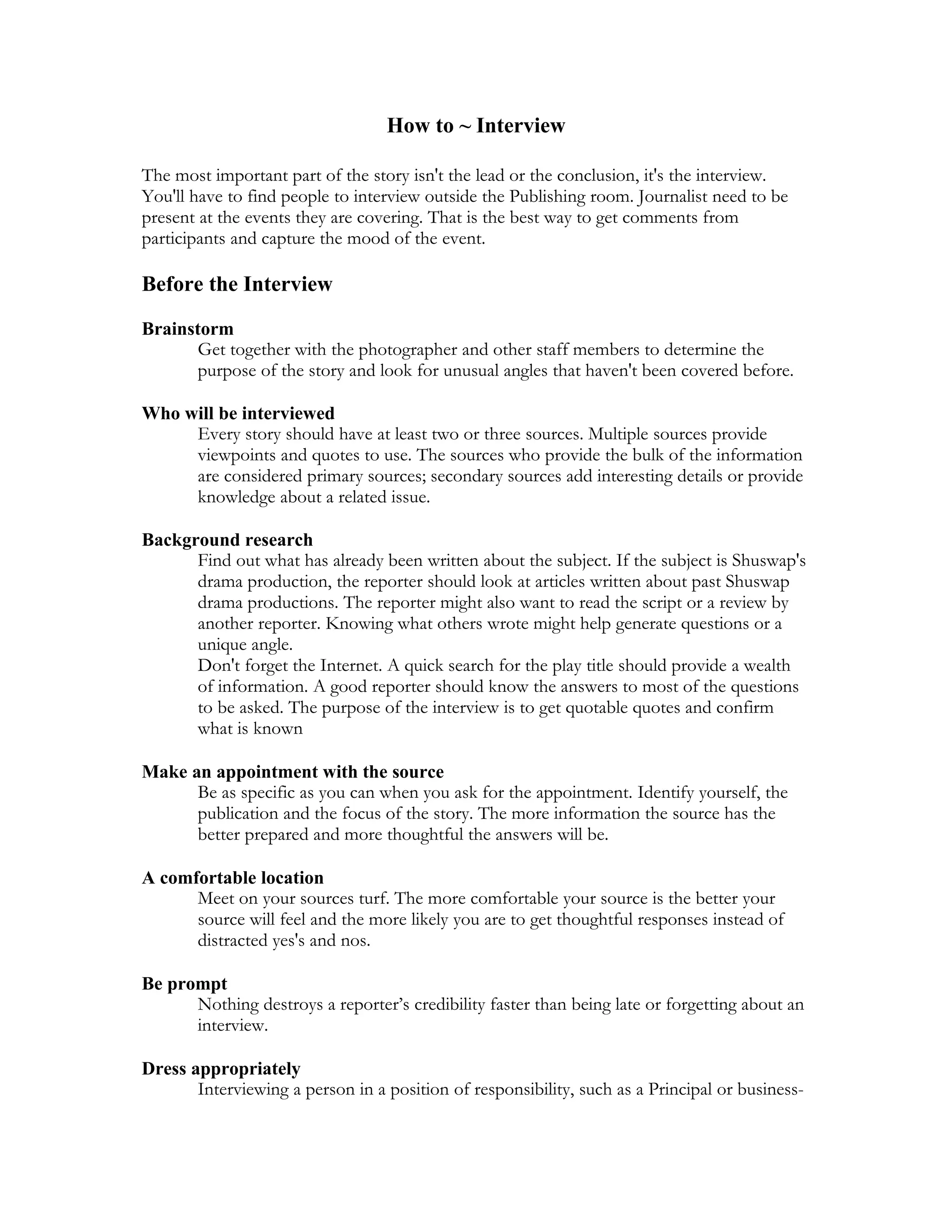
The most important part of the story isn't the lead or the conclusion, it's the interview.
You'll have to find people to interview outside the Publishing room. Journalist need to be
present at the events they are covering. That is the best way to get comments from
participants and capture the mood of the event.

Before the Interview

Brainstorm
      Get together with the photographer and other staff members to determine the
      purpose of the story and look for unusual angles that haven't been covered before.

Who will be interviewed
     Every story should have at least two or three sources. Multiple sources provide
     viewpoints and quotes to use. The sources who provide the bulk of the information
     are considered primary sources; secondary sources add interesting details or provide
     knowledge about a related issue.

Background research
      Find out what has already been written about the subject. If the subject is Shuswap's
      drama production, the reporter should look at articles written about past Shuswap
      drama productions. The reporter might also want to read the script or a review by
      another reporter. Knowing what others wrote might help generate questions or a
      unique angle.
      Don't forget the Internet. A quick search for the play title should provide a wealth
      of information. A good reporter should know the answers to most of the questions
      to be asked. The purpose of the interview is to get quotable quotes and confirm
      what is known

Make an appointment with the source
      Be as specific as you can when you ask for the appointment. Identify yourself, the
      publication and the focus of the story. The more information the source has the
      better prepared and more thoughtful the answers will be.

A comfortable location
      Meet on your sources turf. The more comfortable your source is the better your
      source will feel and the more likely you are to get thoughtful responses instead of
      distracted yes's and nos.

Be prompt
      Nothing destroys a reporter’s credibility faster than being late or forgetting about an
      interview.

Dress appropriately
       Interviewing a person in a position of responsibility, such as a Principal or business-
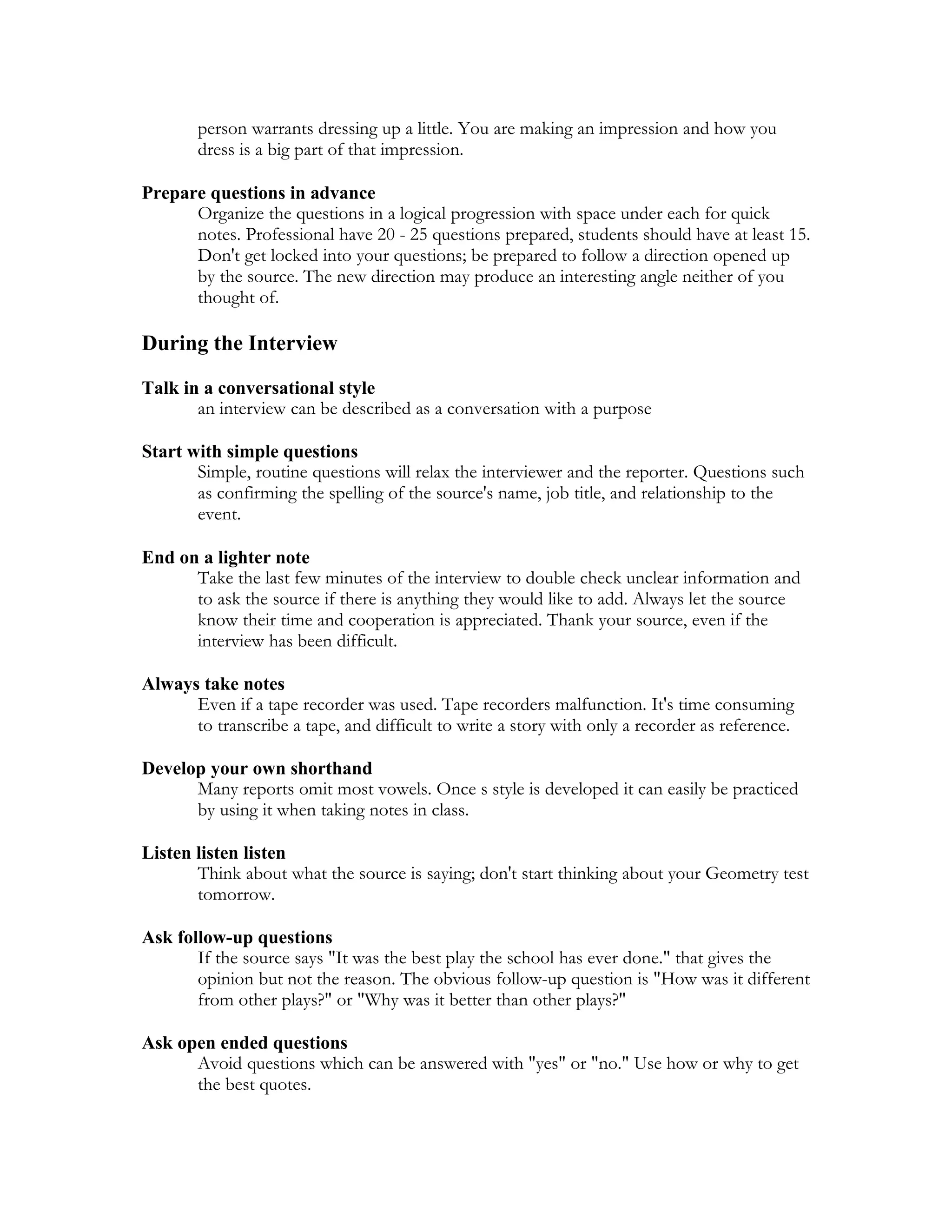
person warrants dressing up a little. You are making an impression and how you
       dress is a big part of that impression.

Prepare questions in advance
      Organize the questions in a logical progression with space under each for quick
      notes. Professional have 20 - 25 questions prepared, students should have at least 15.
      Don't get locked into your questions; be prepared to follow a direction opened up
      by the source. The new direction may produce an interesting angle neither of you
      thought of.

During the Interview

Talk in a conversational style
       an interview can be described as a conversation with a purpose

Start with simple questions
       Simple, routine questions will relax the interviewer and the reporter. Questions such
       as confirming the spelling of the source's name, job title, and relationship to the
       event.

End on a lighter note
      Take the last few minutes of the interview to double check unclear information and
      to ask the source if there is anything they would like to add. Always let the source
      know their time and cooperation is appreciated. Thank your source, even if the
      interview has been difficult.

Always take notes
      Even if a tape recorder was used. Tape recorders malfunction. It's time consuming
      to transcribe a tape, and difficult to write a story with only a recorder as reference.

Develop your own shorthand
      Many reports omit most vowels. Once s style is developed it can easily be practiced
      by using it when taking notes in class.

Listen listen listen
       Think about what the source is saying; don't start thinking about your Geometry test
       tomorrow.

Ask follow-up questions
       If the source says "It was the best play the school has ever done." that gives the
       opinion but not the reason. The obvious follow-up question is "How was it different
       from other plays?" or "Why was it better than other plays?"

Ask open ended questions
      Avoid questions which can be answered with "yes" or "no." Use how or why to get
      the best quotes.
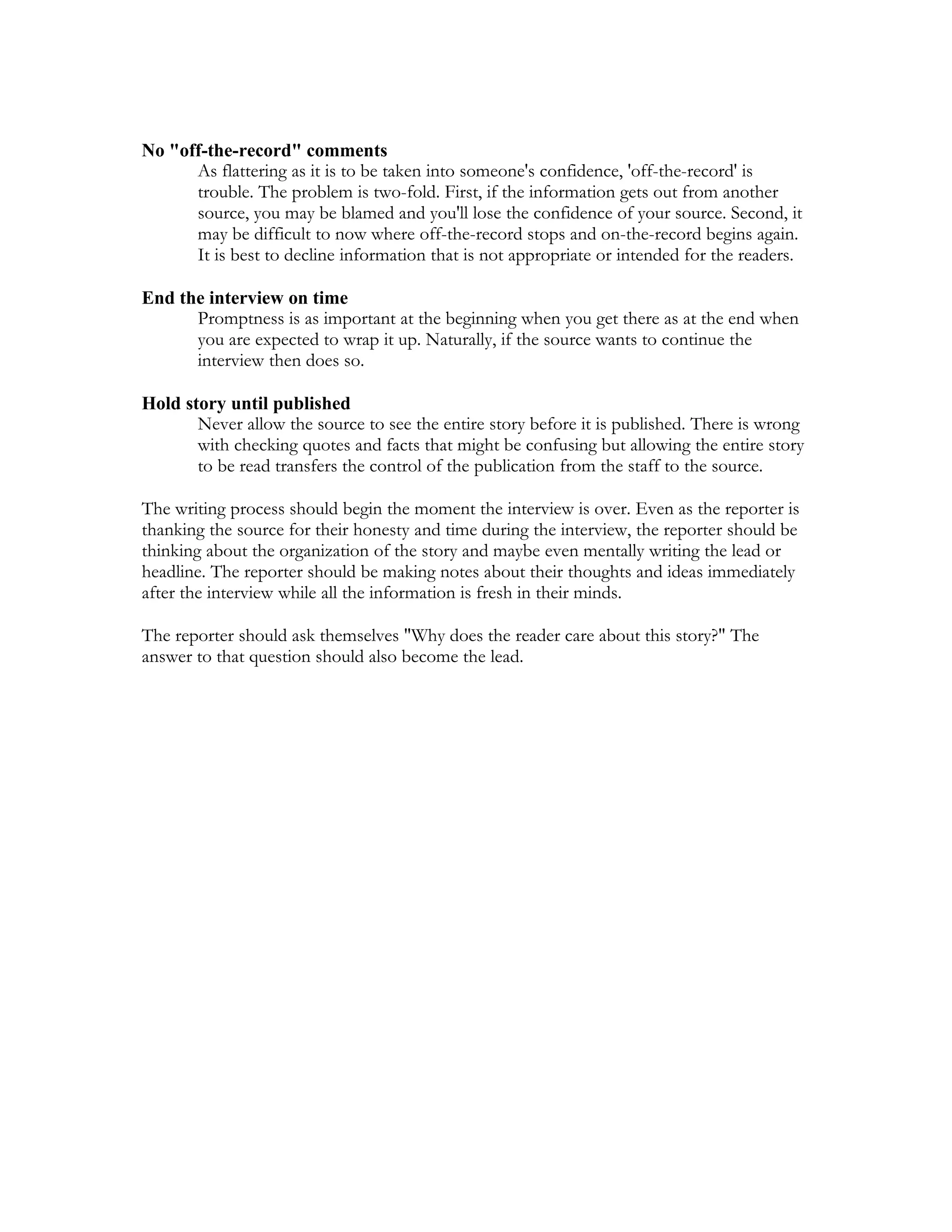
No "off-the-record" comments
      As flattering as it is to be taken into someone's confidence, 'off-the-record' is
      trouble. The problem is two-fold. First, if the information gets out from another
      source, you may be blamed and you'll lose the confidence of your source. Second, it
      may be difficult to now where off-the-record stops and on-the-record begins again.
      It is best to decline information that is not appropriate or intended for the readers.

End the interview on time
      Promptness is as important at the beginning when you get there as at the end when
      you are expected to wrap it up. Naturally, if the source wants to continue the
      interview then does so.

Hold story until published
       Never allow the source to see the entire story before it is published. There is wrong
       with checking quotes and facts that might be confusing but allowing the entire story
       to be read transfers the control of the publication from the staff to the source.

The writing process should begin the moment the interview is over. Even as the reporter is
thanking the source for their honesty and time during the interview, the reporter should be
thinking about the organization of the story and maybe even mentally writing the lead or
headline. The reporter should be making notes about their thoughts and ideas immediately
after the interview while all the information is fresh in their minds.

The reporter should ask themselves "Why does the reader care about this story?" The
answer to that question should also become the lead.

How To Interview

  • 1.
    How to ~Interview The most important part of the story isn't the lead or the conclusion, it's the interview. You'll have to find people to interview outside the Publishing room. Journalist need to be present at the events they are covering. That is the best way to get comments from participants and capture the mood of the event. Before the Interview Brainstorm Get together with the photographer and other staff members to determine the purpose of the story and look for unusual angles that haven't been covered before. Who will be interviewed Every story should have at least two or three sources. Multiple sources provide viewpoints and quotes to use. The sources who provide the bulk of the information are considered primary sources; secondary sources add interesting details or provide knowledge about a related issue. Background research Find out what has already been written about the subject. If the subject is Shuswap's drama production, the reporter should look at articles written about past Shuswap drama productions. The reporter might also want to read the script or a review by another reporter. Knowing what others wrote might help generate questions or a unique angle. Don't forget the Internet. A quick search for the play title should provide a wealth of information. A good reporter should know the answers to most of the questions to be asked. The purpose of the interview is to get quotable quotes and confirm what is known Make an appointment with the source Be as specific as you can when you ask for the appointment. Identify yourself, the publication and the focus of the story. The more information the source has the better prepared and more thoughtful the answers will be. A comfortable location Meet on your sources turf. The more comfortable your source is the better your source will feel and the more likely you are to get thoughtful responses instead of distracted yes's and nos. Be prompt Nothing destroys a reporter’s credibility faster than being late or forgetting about an interview. Dress appropriately Interviewing a person in a position of responsibility, such as a Principal or business-
  • 2.
    person warrants dressingup a little. You are making an impression and how you dress is a big part of that impression. Prepare questions in advance Organize the questions in a logical progression with space under each for quick notes. Professional have 20 - 25 questions prepared, students should have at least 15. Don't get locked into your questions; be prepared to follow a direction opened up by the source. The new direction may produce an interesting angle neither of you thought of. During the Interview Talk in a conversational style an interview can be described as a conversation with a purpose Start with simple questions Simple, routine questions will relax the interviewer and the reporter. Questions such as confirming the spelling of the source's name, job title, and relationship to the event. End on a lighter note Take the last few minutes of the interview to double check unclear information and to ask the source if there is anything they would like to add. Always let the source know their time and cooperation is appreciated. Thank your source, even if the interview has been difficult. Always take notes Even if a tape recorder was used. Tape recorders malfunction. It's time consuming to transcribe a tape, and difficult to write a story with only a recorder as reference. Develop your own shorthand Many reports omit most vowels. Once s style is developed it can easily be practiced by using it when taking notes in class. Listen listen listen Think about what the source is saying; don't start thinking about your Geometry test tomorrow. Ask follow-up questions If the source says "It was the best play the school has ever done." that gives the opinion but not the reason. The obvious follow-up question is "How was it different from other plays?" or "Why was it better than other plays?" Ask open ended questions Avoid questions which can be answered with "yes" or "no." Use how or why to get the best quotes.
  • 3.
    No "off-the-record" comments As flattering as it is to be taken into someone's confidence, 'off-the-record' is trouble. The problem is two-fold. First, if the information gets out from another source, you may be blamed and you'll lose the confidence of your source. Second, it may be difficult to now where off-the-record stops and on-the-record begins again. It is best to decline information that is not appropriate or intended for the readers. End the interview on time Promptness is as important at the beginning when you get there as at the end when you are expected to wrap it up. Naturally, if the source wants to continue the interview then does so. Hold story until published Never allow the source to see the entire story before it is published. There is wrong with checking quotes and facts that might be confusing but allowing the entire story to be read transfers the control of the publication from the staff to the source. The writing process should begin the moment the interview is over. Even as the reporter is thanking the source for their honesty and time during the interview, the reporter should be thinking about the organization of the story and maybe even mentally writing the lead or headline. The reporter should be making notes about their thoughts and ideas immediately after the interview while all the information is fresh in their minds. The reporter should ask themselves "Why does the reader care about this story?" The answer to that question should also become the lead.