HOW TO HAVE CAREER
CONVERSATIONS WITH
STUDENTS
A guide for faculty
Global Career Development Facilitator
Certified Career Services Professional
Certified Professional Resume Writer
Student & Career Development Specialist at Carroll
Community College
Colleen Leary, M.A.
Maryland Career Development Association
National Association of Colleges and
Employers (NACE)
Maryland Community Colleges Affinity
Group
Students view YOU as the experts
Students are more likely to ask their instructors
questions about possible career paths,
internship opportunities, resumes, interviews,
etc., rather than visit Career Services.
You don't have to be a career expert to have effective
career conversations with your students!
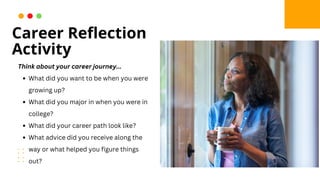
What did you want to be when you were
growing up?
What did you major in when you were in
college?
What did your career path look like?
What advice did you receive along the
way or what helped you figure things
out?
Think about your career journey...
Career Reflection
Activity
Themes
Usually had a different idea of what you want to do
College major may or may not reflect what you’re doing now
Careers may have changed over time
Talked to others about possible career paths
You’ve have your own career journey so that experience in itself
can be helpful for students!
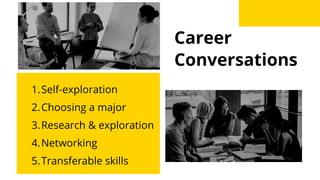
Self-exploration
Choosing a major
Research & exploration
Networking
Transferable skills
1.
2.
3.
4.
5.
Career
Conversations
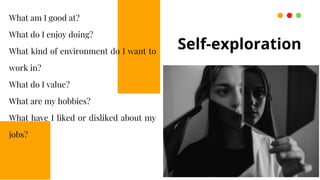
Self-exploration
What am I good at?
What do I enjoy doing?
What kind of environment do I want to
work in?
What do I value?
What are my hobbies?
What have I liked or disliked about my
jobs?
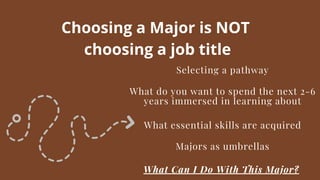
Choosing a Major is NOT
choosing a job title
Selecting a pathway
What do you want to spend the next 2-6
years immersed in learning about
What essential skills are acquired
Majors as umbrellas
What Can I Do With This Major?
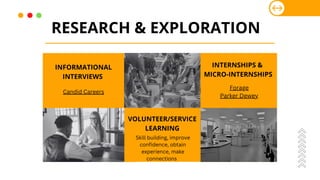
RESEARCH & EXPLORATION
INTERNSHIPS &
MICRO-INTERNSHIPS
VOLUNTEER/SERVICE
LEARNING
INFORMATIONAL
INTERVIEWS
Skill building, improve
confidence, obtain
experience, make
connections
Candid Careers
Forage
Parker Dewey
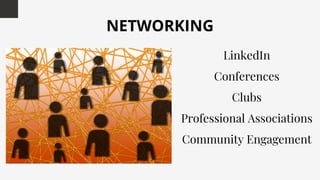
NETWORKING
LinkedIn
Conferences
Clubs
Professional Associations
Community Engagement
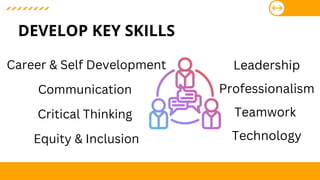
DEVELOP KEY SKILLS
Career & Self Development
Communication
Critical Thinking
Equity & Inclusion
Leadership
Professionalism
Teamwork
Technology
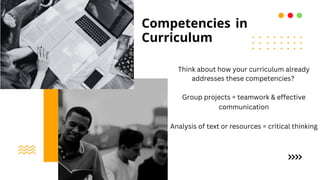
Competencies in
Curriculum
Think about how your curriculum already
addresses these competencies?
Group projects = teamwork & effective
communication
Analysis of text or resources = critical thinking
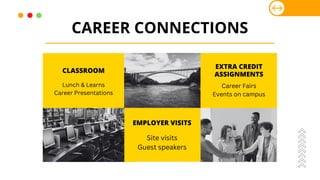
CAREER CONNECTIONS
EXTRA CREDIT
ASSIGNMENTS
EMPLOYER VISITS
CLASSROOM
Lunch & Learns
Career Presentations
Site visits
Guest speakers
Career Fairs
Events on campus
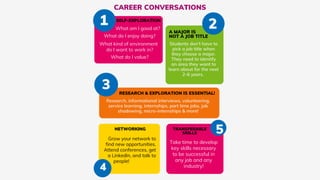
CAREER CONVERSATIONS
SELF-EXPLORATION
What am I good at?
What do I enjoy doing?
What kind of environment
do I want to work in?
What do I value?
1
A MAJOR IS
NOT A JOB TITLE
Research, informational interviews, volunteering,
service learning, internships, part time jobs, job
shadowing, micro-internships & more!
Students don't have to
pick a job title when
they choose a major.
They need to identify
an area they want to
learn about for the next
2-6 years.
2
RESEARCH & EXPLORATION IS ESSENTIAL!
3
NETWORKING
Grow your network to
find new opportunities.
Attend conferences, get
a LinkedIn, and talk to
people!
4
TRANSFERABLE
SKILLS
Take time to develop
key skills necessary
to be successful in
any job and any
industry!
5
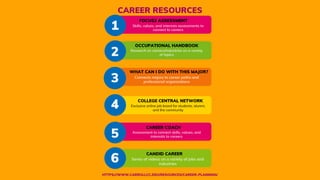
CAREER COACH
CANDID CAREER
FOCUS2 ASSESSMENT
Skills, values, and interests assessments to
connect to careers
1
2
3
4
5
OCCUPATIONAL HANDBOOK
Research on careers/industries on a variety
of topics
COLLEGE CENTRAL NETWORK
WHAT CAN I DO WITH THIS MAJOR?
Connects majors to career paths and
professional organizations
Exclusive online job board for students, alumni,
and the community
Assessment to connect skills, values, and
interests to careers
Series of videos on a variety of jobs and
industries
6
CAREER RESOURCES
HTTPS://WWW.CARROLLCC.EDU/RESOURCES/CAREER-PLANNING/
QUESTIONS?
410-386-8516
Phone Number
cleary@carrollcc.edu
Email Address
https://www.linkedin.com/in/
clearyma/
Website
THANK YOU!!!

How To Have Career Conversations with Students.pdf

  • 1.
    HOW TO HAVECAREER CONVERSATIONS WITH STUDENTS A guide for faculty
  • 2.
    Global Career DevelopmentFacilitator Certified Career Services Professional Certified Professional Resume Writer Student & Career Development Specialist at Carroll Community College Colleen Leary, M.A. Maryland Career Development Association National Association of Colleges and Employers (NACE) Maryland Community Colleges Affinity Group
  • 3.
    Students view YOUas the experts Students are more likely to ask their instructors questions about possible career paths, internship opportunities, resumes, interviews, etc., rather than visit Career Services. You don't have to be a career expert to have effective career conversations with your students!
  • 4.
    What did youwant to be when you were growing up? What did you major in when you were in college? What did your career path look like? What advice did you receive along the way or what helped you figure things out? Think about your career journey... Career Reflection Activity
  • 5.
    Themes Usually had adifferent idea of what you want to do College major may or may not reflect what you’re doing now Careers may have changed over time Talked to others about possible career paths You’ve have your own career journey so that experience in itself can be helpful for students!
  • 6.
    Self-exploration Choosing a major Research& exploration Networking Transferable skills 1. 2. 3. 4. 5. Career Conversations
  • 7.
    Self-exploration What am Igood at? What do I enjoy doing? What kind of environment do I want to work in? What do I value? What are my hobbies? What have I liked or disliked about my jobs?
  • 8.
    Choosing a Majoris NOT choosing a job title Selecting a pathway What do you want to spend the next 2-6 years immersed in learning about What essential skills are acquired Majors as umbrellas What Can I Do With This Major?
  • 9.
    RESEARCH & EXPLORATION INTERNSHIPS& MICRO-INTERNSHIPS VOLUNTEER/SERVICE LEARNING INFORMATIONAL INTERVIEWS Skill building, improve confidence, obtain experience, make connections Candid Careers Forage Parker Dewey
  • 10.
  • 11.
    DEVELOP KEY SKILLS Career& Self Development Communication Critical Thinking Equity & Inclusion Leadership Professionalism Teamwork Technology
  • 12.
    Competencies in Curriculum Think abouthow your curriculum already addresses these competencies? Group projects = teamwork & effective communication Analysis of text or resources = critical thinking
  • 13.
    CAREER CONNECTIONS EXTRA CREDIT ASSIGNMENTS EMPLOYERVISITS CLASSROOM Lunch & Learns Career Presentations Site visits Guest speakers Career Fairs Events on campus
  • 14.
    CAREER CONVERSATIONS SELF-EXPLORATION What amI good at? What do I enjoy doing? What kind of environment do I want to work in? What do I value? 1 A MAJOR IS NOT A JOB TITLE Research, informational interviews, volunteering, service learning, internships, part time jobs, job shadowing, micro-internships & more! Students don't have to pick a job title when they choose a major. They need to identify an area they want to learn about for the next 2-6 years. 2 RESEARCH & EXPLORATION IS ESSENTIAL! 3 NETWORKING Grow your network to find new opportunities. Attend conferences, get a LinkedIn, and talk to people! 4 TRANSFERABLE SKILLS Take time to develop key skills necessary to be successful in any job and any industry! 5
  • 15.
    CAREER COACH CANDID CAREER FOCUS2ASSESSMENT Skills, values, and interests assessments to connect to careers 1 2 3 4 5 OCCUPATIONAL HANDBOOK Research on careers/industries on a variety of topics COLLEGE CENTRAL NETWORK WHAT CAN I DO WITH THIS MAJOR? Connects majors to career paths and professional organizations Exclusive online job board for students, alumni, and the community Assessment to connect skills, values, and interests to careers Series of videos on a variety of jobs and industries 6 CAREER RESOURCES HTTPS://WWW.CARROLLCC.EDU/RESOURCES/CAREER-PLANNING/
  • 16.
  • 17.