HOW TO COMMUNICATE
EFFECTIVELY ?
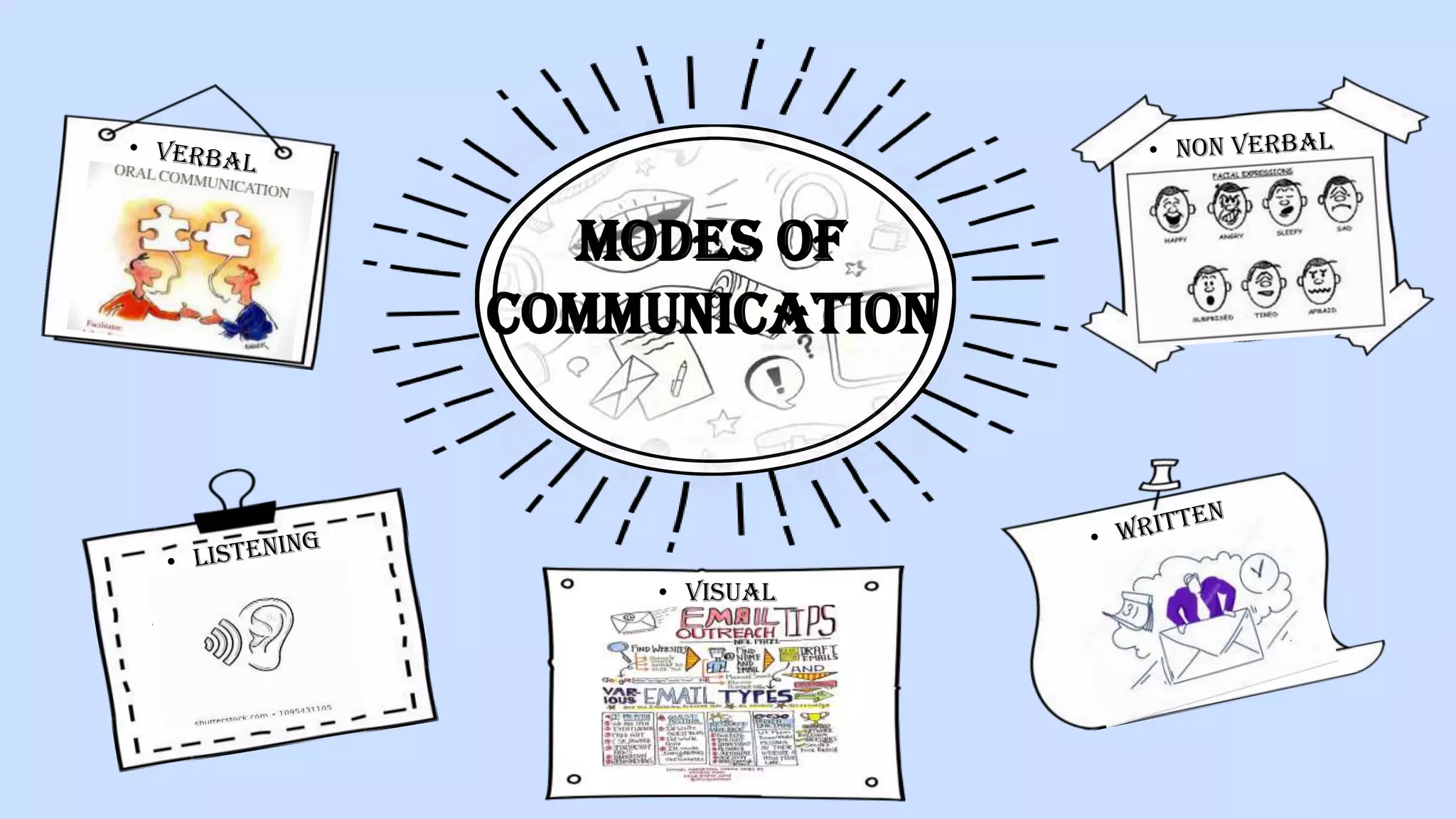
• Visual
MODES OF
COMMUNICATION
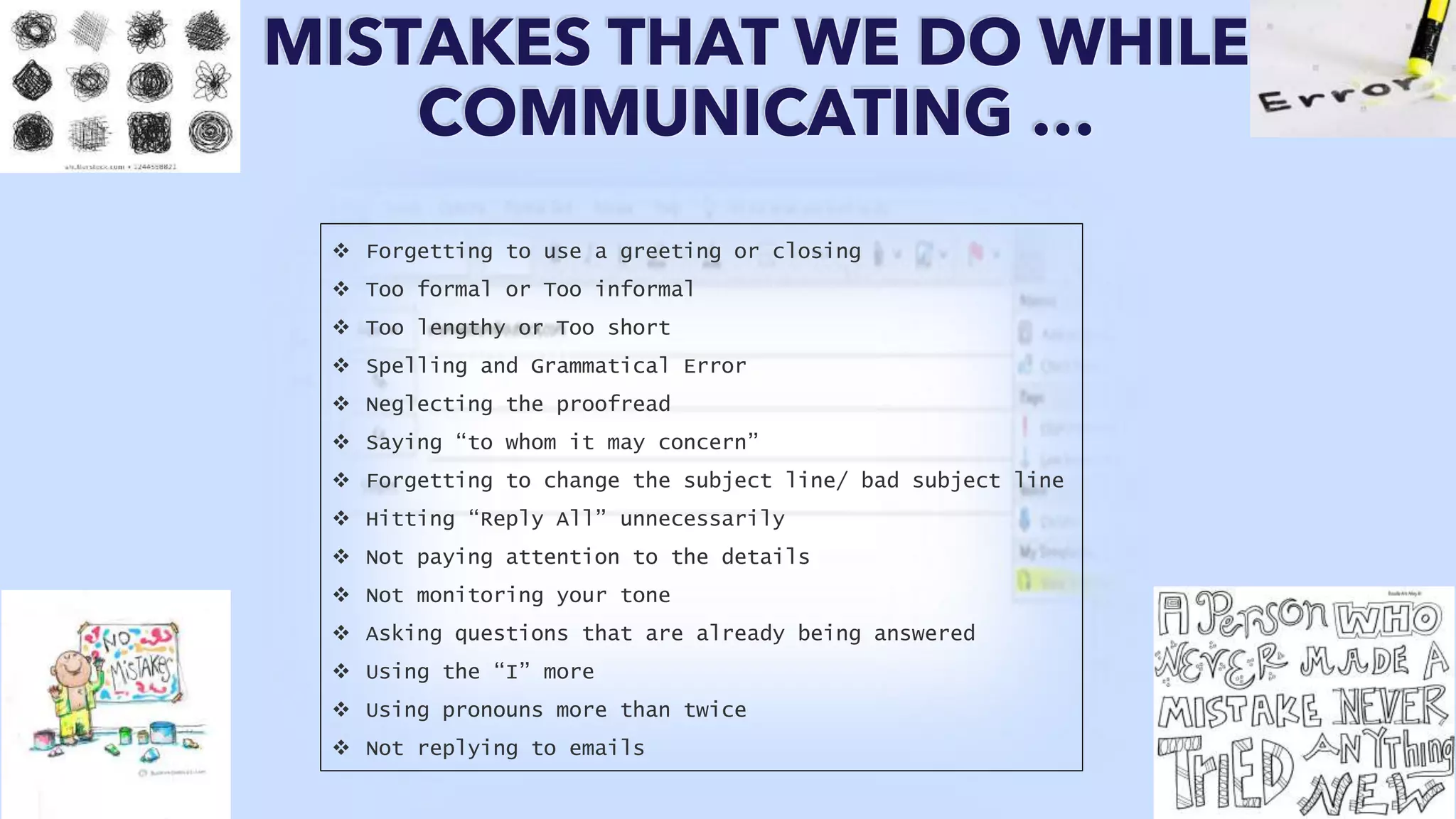
MISTAKES THAT WE DO WHILE
COMMUNICATING …
 Forgetting to use a greeting or closing
 Too formal or Too informal
 Too lengthy or Too short
 Spelling and Grammatical Error
 Neglecting the proofread
 Saying “to whom it may concern”
 Forgetting to change the subject line/ bad subject line
 Hitting “Reply All” unnecessarily
 Not paying attention to the details
 Not monitoring your tone
 Asking questions that are already being answered
 Using the “I” more
 Using pronouns more than twice
 Not replying to emails
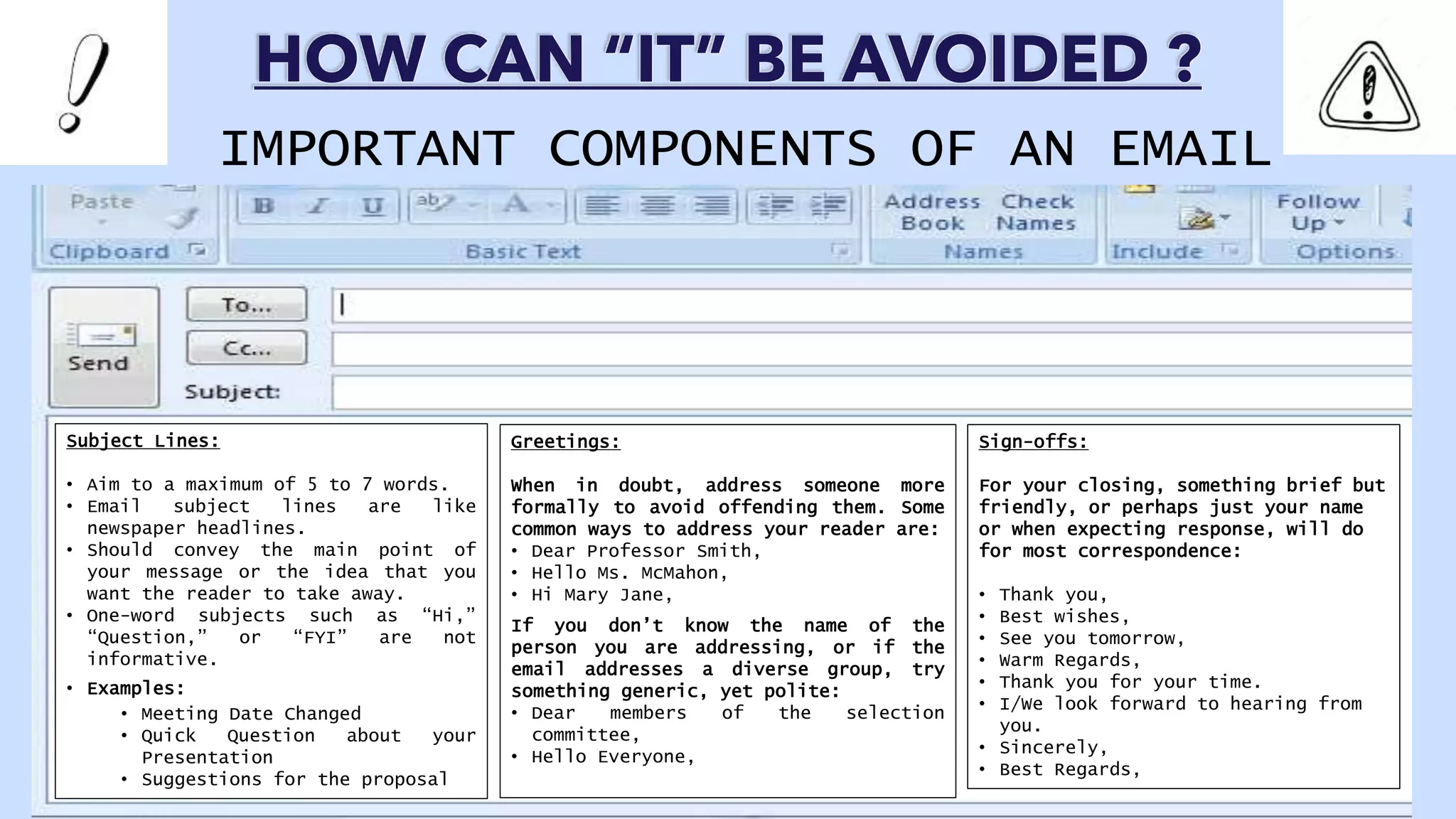
Subject Lines:
• Aim to a maximum of 5 to 7 words.
• Email subject lines are like
newspaper headlines.
• Should convey the main point of
your message or the idea that you
want the reader to take away.
• One-word subjects such as “Hi,”
“Question,” or “FYI” are not
informative.
• Examples:
• Meeting Date Changed
• Quick Question about your
Presentation
• Suggestions for the proposal
Sign-offs:
For your closing, something brief but
friendly, or perhaps just your name
or when expecting response, will do
for most correspondence:
• Thank you,
• Best wishes,
• See you tomorrow,
• Warm Regards,
• Thank you for your time.
• I/We look forward to hearing from
you.
• Sincerely,
• Best Regards,
Greetings:
When in doubt, address someone more
formally to avoid offending them. Some
common ways to address your reader are:
• Dear Professor Smith,
• Hello Ms. McMahon,
• Hi Mary Jane,
If you don’t know the name of the
person you are addressing, or if the
email addresses a diverse group, try
something generic, yet polite:
• Dear members of the selection
committee,
• Hello Everyone,
HOW CAN “IT” BE AVOIDED ?
IMPORTANT COMPONENTS OF AN EMAIL
HOW CAN “IT” BE AVOIDED ?
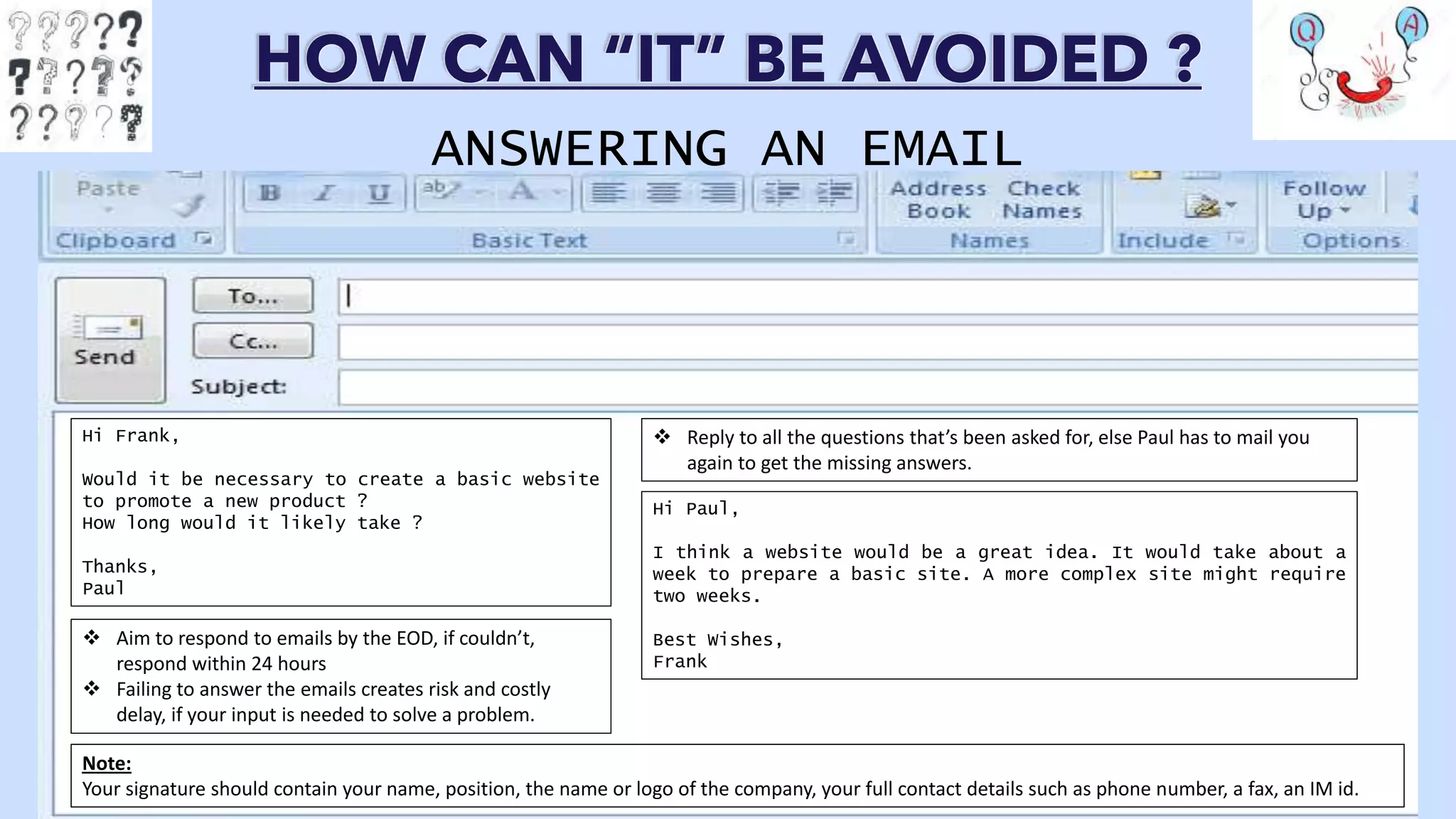
ANSWERING AN EMAIL
Hi Frank,
Would it be necessary to create a basic website
to promote a new product ?
How long would it likely take ?
Thanks,
Paul
Hi Paul,
I think a website would be a great idea. It would take about a
week to prepare a basic site. A more complex site might require
two weeks.
Best Wishes,
Frank
 Aim to respond to emails by the EOD, if couldn’t,
respond within 24 hours
 Failing to answer the emails creates risk and costly
delay, if your input is needed to solve a problem.
 Reply to all the questions that’s been asked for, else Paul has to mail you
again to get the missing answers.
Note:
Your signature should contain your name, position, the name or logo of the company, your full contact details such as phone number, a fax, an IM id.
HOW CAN “IT” BE AVOIDED ?
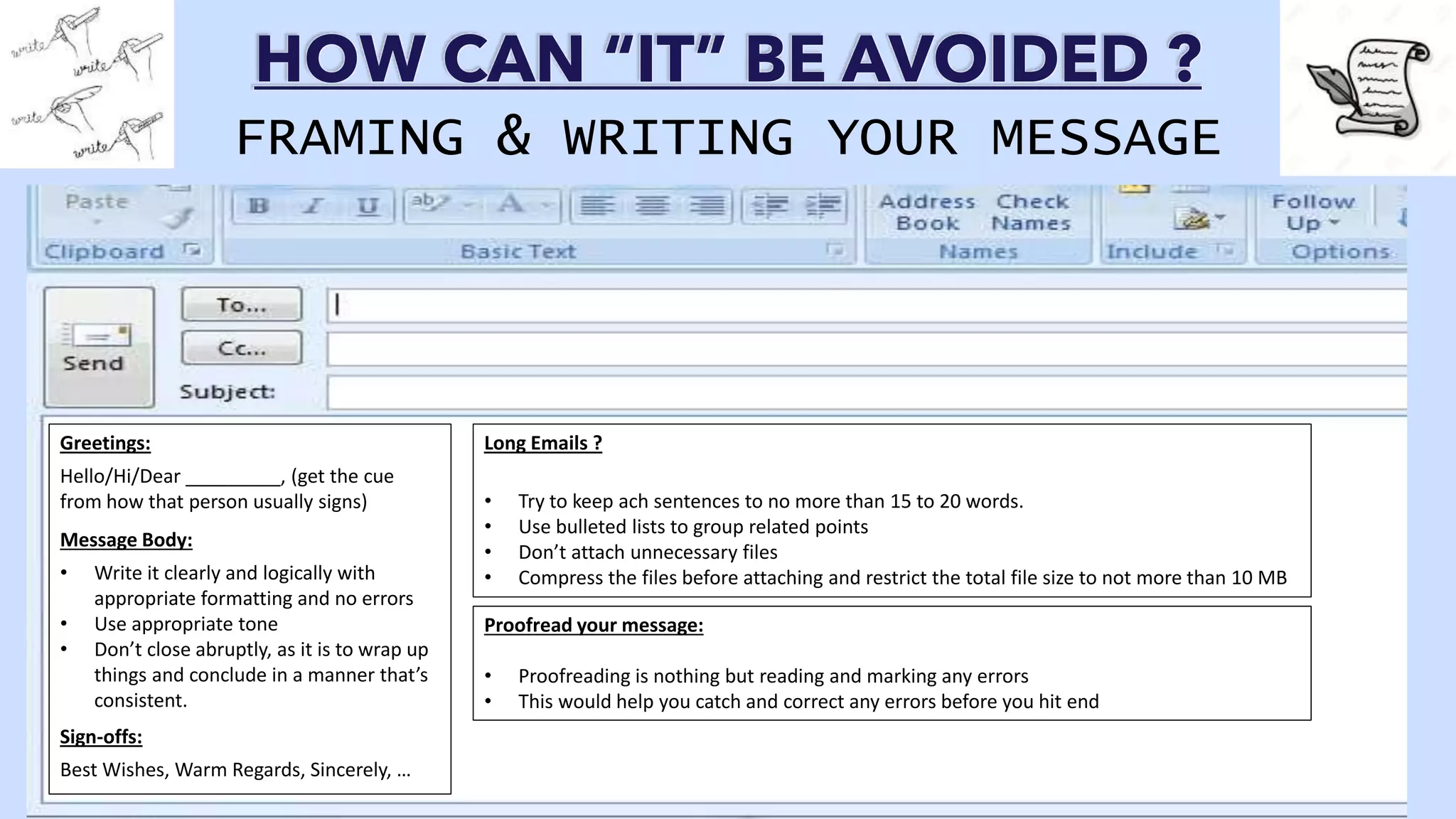
FRAMING & WRITING YOUR MESSAGE
Greetings:
Hello/Hi/Dear _________, (get the cue
from how that person usually signs)
Message Body:
• Write it clearly and logically with
appropriate formatting and no errors
• Use appropriate tone
• Don’t close abruptly, as it is to wrap up
things and conclude in a manner that’s
consistent.
Sign-offs:
Best Wishes, Warm Regards, Sincerely, …
Long Emails ?
• Try to keep ach sentences to no more than 15 to 20 words.
• Use bulleted lists to group related points
• Don’t attach unnecessary files
• Compress the files before attaching and restrict the total file size to not more than 10 MB
Proofread your message:
• Proofreading is nothing but reading and marking any errors
• This would help you catch and correct any errors before you hit end
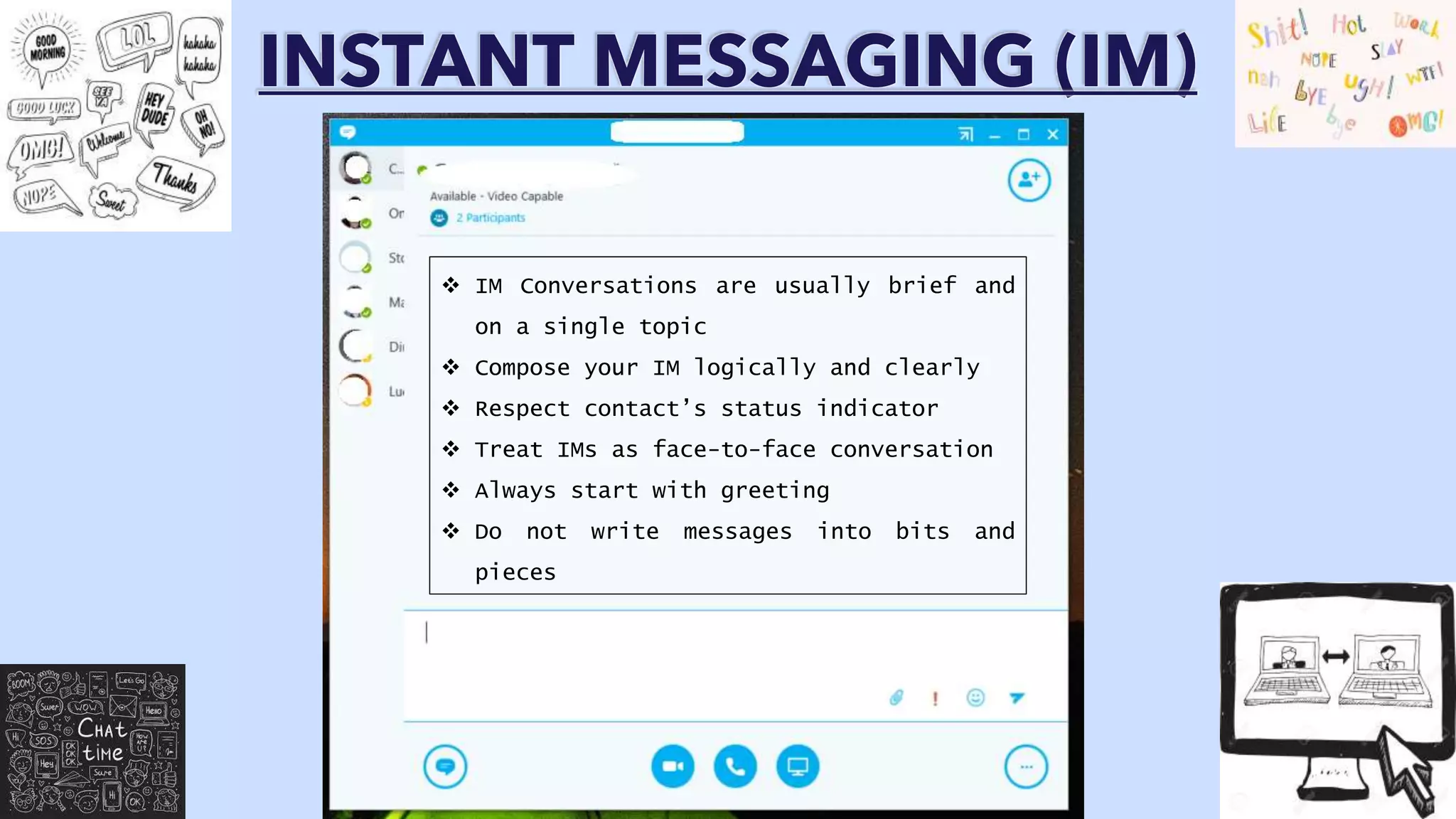
INSTANT MESSAGING (IM)
 IM Conversations are usually brief and
on a single topic
 Compose your IM logically and clearly
 Respect contact’s status indicator
 Treat IMs as face-to-face conversation
 Always start with greeting
 Do not write messages into bits and
pieces
VERBAL COMMUNICATION
WITH CLIENT
 Pay Attention to Your Tone of Voice
 Be Friendly
 Say “No” the Right Way
 Practice Active Listening
 Be Consistent
 Speak Their Language
 Always Say Please and Thank You
 Anticipate Questions
 Ask Questions as Needed
 Paraphrase/Summarize
 Avoid jargon
 Don’t take criticism too personally
 Respond promptly, but don’t be desperate
 Show your expertise
THANK YOU!

How to Communicate Effectively

  • 1.
  • 2.
  • 3.
    MISTAKES THAT WEDO WHILE COMMUNICATING …  Forgetting to use a greeting or closing  Too formal or Too informal  Too lengthy or Too short  Spelling and Grammatical Error  Neglecting the proofread  Saying “to whom it may concern”  Forgetting to change the subject line/ bad subject line  Hitting “Reply All” unnecessarily  Not paying attention to the details  Not monitoring your tone  Asking questions that are already being answered  Using the “I” more  Using pronouns more than twice  Not replying to emails
  • 4.
    Subject Lines: • Aimto a maximum of 5 to 7 words. • Email subject lines are like newspaper headlines. • Should convey the main point of your message or the idea that you want the reader to take away. • One-word subjects such as “Hi,” “Question,” or “FYI” are not informative. • Examples: • Meeting Date Changed • Quick Question about your Presentation • Suggestions for the proposal Sign-offs: For your closing, something brief but friendly, or perhaps just your name or when expecting response, will do for most correspondence: • Thank you, • Best wishes, • See you tomorrow, • Warm Regards, • Thank you for your time. • I/We look forward to hearing from you. • Sincerely, • Best Regards, Greetings: When in doubt, address someone more formally to avoid offending them. Some common ways to address your reader are: • Dear Professor Smith, • Hello Ms. McMahon, • Hi Mary Jane, If you don’t know the name of the person you are addressing, or if the email addresses a diverse group, try something generic, yet polite: • Dear members of the selection committee, • Hello Everyone, HOW CAN “IT” BE AVOIDED ? IMPORTANT COMPONENTS OF AN EMAIL
  • 5.
    HOW CAN “IT”BE AVOIDED ? ANSWERING AN EMAIL Hi Frank, Would it be necessary to create a basic website to promote a new product ? How long would it likely take ? Thanks, Paul Hi Paul, I think a website would be a great idea. It would take about a week to prepare a basic site. A more complex site might require two weeks. Best Wishes, Frank  Aim to respond to emails by the EOD, if couldn’t, respond within 24 hours  Failing to answer the emails creates risk and costly delay, if your input is needed to solve a problem.  Reply to all the questions that’s been asked for, else Paul has to mail you again to get the missing answers. Note: Your signature should contain your name, position, the name or logo of the company, your full contact details such as phone number, a fax, an IM id.
  • 6.
    HOW CAN “IT”BE AVOIDED ? FRAMING & WRITING YOUR MESSAGE Greetings: Hello/Hi/Dear _________, (get the cue from how that person usually signs) Message Body: • Write it clearly and logically with appropriate formatting and no errors • Use appropriate tone • Don’t close abruptly, as it is to wrap up things and conclude in a manner that’s consistent. Sign-offs: Best Wishes, Warm Regards, Sincerely, … Long Emails ? • Try to keep ach sentences to no more than 15 to 20 words. • Use bulleted lists to group related points • Don’t attach unnecessary files • Compress the files before attaching and restrict the total file size to not more than 10 MB Proofread your message: • Proofreading is nothing but reading and marking any errors • This would help you catch and correct any errors before you hit end
  • 7.
    INSTANT MESSAGING (IM) IM Conversations are usually brief and on a single topic  Compose your IM logically and clearly  Respect contact’s status indicator  Treat IMs as face-to-face conversation  Always start with greeting  Do not write messages into bits and pieces
  • 8.
    VERBAL COMMUNICATION WITH CLIENT Pay Attention to Your Tone of Voice  Be Friendly  Say “No” the Right Way  Practice Active Listening  Be Consistent  Speak Their Language  Always Say Please and Thank You  Anticipate Questions  Ask Questions as Needed  Paraphrase/Summarize  Avoid jargon  Don’t take criticism too personally  Respond promptly, but don’t be desperate  Show your expertise
  • 9.