Learn To Avoid Allergies
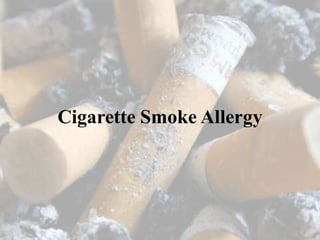
Cigarette Smoke Allergy
• Research shows that respiratory infections and asthma
  are higher in the family smoking individuals. Smoking is
  harmful to everybody. People exposed to secondhand
  smoke will likely increase the risk of allergic
  complications such as bronchitis and sinusitis.

• Moreover, exposure to secondhand smoke may increase
  allergic complications like bronchitis and sinusitis. The
  risks of obtaining allergic complications such as sinusitis
  and bronchitis may increase with exposure to
  secondhand smoke. Each time a cigarette is lit, it harms
  the people in the surroundings.
Detergent Allergy (soap)
• Did you ever think that it's the chemicals in the cleaning
  products are making you scratch your skin? Surprise: “Most of
  the skin reactions are not caused by the cleaning chemicals but
  by perfume additives,” Dr. Wedner says. Almost all soaps and
  detergents contain plant extracts to make them more appealing
  to the consumers.

• The skin may react with irritation, and give you itchiness due to
  rashes.” What to do: Do not use soaps that are non-organic,
  scented, have additives and contain phthalate. Read the label of
  the soaps. Be mindful of “diethyl phthalate” found on the labels
  of various products. Phthalates are known to cause allergic
  reactions even when they are helpful in improving texture. Tide,
  Ivory, and Dove are less irritating products, as well as other
  organic brands.
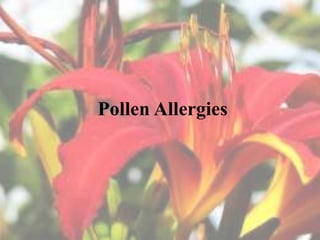
Pollen Allergies
• Plants produce tiny, round or oval pollen grains for
  reproduction. They are too tiny to see with the naked eye. While
  other plant species use cross-pollination, some use the pollen
  from its own flowers to fertilize its own self. Other plants should
  be cross-pollinated by other plants of their own specie.

• For cross-pollination, pollen must be transferred from the
  flower of one plant to that of another of the same species in
  order for fertilization to take place and seeds to form.
  Sometimes, it is the job of the insects to pollinate flowering
  plants. Others rely on the wind to transport pollen. Plain-
  looking plants such as trees, grasses, and weeds; the ones that do
  not have showy flowers, are the types of pollen that commonly
  cause allergic reactions. In order for pollens produced by these
  plants to be suitable for air transport, they must be dry,
  lightweight and small.
Sulfite Allergy
•   Sulfites are a group of naturally occurring sulfur-based compounds. They are
    sometimes added to enhance and preserve some food. An estimate of one out of
    a hundred people sensitive to these compounds has been given by the FDA
    Sensitivity to sulfites have vague roots. Moreover, it may arise in an individual
    at any given time.

•   A reaction to sulfites varies from mild to fatal in sensitive individuals. Since
    1986, a ban has been implemented by the FDA against the use of sulfites on
    fruits and vegetables that are eaten raw. Manufacturers of processed products
    are required by law to list sulfites on their product labels when used. A variety
    of cooked and processed foods have added sulfites in their ingredients. Fresh
    foods no longer contain sulfites. Wine and beer have naturally occurring
    sulfites.

•   It is essential for people with sulfite sensitivity to avoid products which contain
    sulfites. Individuals with sulfite sensitivity are advised to read labels on all food
    products. To assure that you are eating sulfite free meals when dining out,
    inquire from the kitchen staff if sulfite had been used at any point in the food
    preparation.
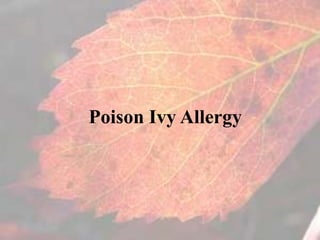
Poison Ivy Allergy
•   The irritant property of poison ivy, poison sumac and poison oak is due to its urushiol content.
    Grazing urushiol with the skin will produce a rash on the area within a few hours. Touching
    objects contaminated with the sap of the poison plants may expose a person to urushiol. These
    objects can be gardening and camping tools or equipment or even a pet's fur which have come
    into contact with the sap.

•   The poison plant leaves, stem, and roots predominantly consist of urushiol. The skin can soak
    up urushiol very fast. Inhalation of airborne urushiol is a risk during the burning of poison
    plants. Aside from skin irritation, contact with urushiol will produce irritation of the nasal
    passages, throat, and lungs. This is especially true when it is inhaled. The climate in Alaska,
    Hawaii, and the Southwest deserts do not provide optimal conditions for the growth of poison
    plants.

•   Vines of poison ivy grow in the Eastern, Midwestern, and Southern parts of the country. On
    the other hand, poison ivy shrubs grow in the northern and western areas. Poison ivy is easy to
    identify. Just count the number of leaflets and you will know. It will always have three leaflets
    attached. Seven to thirteen paired leaves on a stem of a woody shrub characterizes poison
    sumac. A dangling bundle of green berries can be seen in poison sumac. Red, upright berry
    clusters generally grow on harmless sumac. Poison sumac prefers to inhabit wet and swampy
    habitats.
• If you would like to figure out more details on
  allergy symptoms, please go to the author’s
  site.

How to avoid allergies

  • 1.
    Learn To AvoidAllergies
  • 2.
  • 3.
    • Research showsthat respiratory infections and asthma are higher in the family smoking individuals. Smoking is harmful to everybody. People exposed to secondhand smoke will likely increase the risk of allergic complications such as bronchitis and sinusitis. • Moreover, exposure to secondhand smoke may increase allergic complications like bronchitis and sinusitis. The risks of obtaining allergic complications such as sinusitis and bronchitis may increase with exposure to secondhand smoke. Each time a cigarette is lit, it harms the people in the surroundings.
  • 4.
  • 5.
    • Did youever think that it's the chemicals in the cleaning products are making you scratch your skin? Surprise: “Most of the skin reactions are not caused by the cleaning chemicals but by perfume additives,” Dr. Wedner says. Almost all soaps and detergents contain plant extracts to make them more appealing to the consumers. • The skin may react with irritation, and give you itchiness due to rashes.” What to do: Do not use soaps that are non-organic, scented, have additives and contain phthalate. Read the label of the soaps. Be mindful of “diethyl phthalate” found on the labels of various products. Phthalates are known to cause allergic reactions even when they are helpful in improving texture. Tide, Ivory, and Dove are less irritating products, as well as other organic brands.
  • 6.
  • 7.
    • Plants producetiny, round or oval pollen grains for reproduction. They are too tiny to see with the naked eye. While other plant species use cross-pollination, some use the pollen from its own flowers to fertilize its own self. Other plants should be cross-pollinated by other plants of their own specie. • For cross-pollination, pollen must be transferred from the flower of one plant to that of another of the same species in order for fertilization to take place and seeds to form. Sometimes, it is the job of the insects to pollinate flowering plants. Others rely on the wind to transport pollen. Plain- looking plants such as trees, grasses, and weeds; the ones that do not have showy flowers, are the types of pollen that commonly cause allergic reactions. In order for pollens produced by these plants to be suitable for air transport, they must be dry, lightweight and small.
  • 8.
  • 9.
    Sulfites are a group of naturally occurring sulfur-based compounds. They are sometimes added to enhance and preserve some food. An estimate of one out of a hundred people sensitive to these compounds has been given by the FDA Sensitivity to sulfites have vague roots. Moreover, it may arise in an individual at any given time. • A reaction to sulfites varies from mild to fatal in sensitive individuals. Since 1986, a ban has been implemented by the FDA against the use of sulfites on fruits and vegetables that are eaten raw. Manufacturers of processed products are required by law to list sulfites on their product labels when used. A variety of cooked and processed foods have added sulfites in their ingredients. Fresh foods no longer contain sulfites. Wine and beer have naturally occurring sulfites. • It is essential for people with sulfite sensitivity to avoid products which contain sulfites. Individuals with sulfite sensitivity are advised to read labels on all food products. To assure that you are eating sulfite free meals when dining out, inquire from the kitchen staff if sulfite had been used at any point in the food preparation.
  • 10.
  • 11.
    The irritant property of poison ivy, poison sumac and poison oak is due to its urushiol content. Grazing urushiol with the skin will produce a rash on the area within a few hours. Touching objects contaminated with the sap of the poison plants may expose a person to urushiol. These objects can be gardening and camping tools or equipment or even a pet's fur which have come into contact with the sap. • The poison plant leaves, stem, and roots predominantly consist of urushiol. The skin can soak up urushiol very fast. Inhalation of airborne urushiol is a risk during the burning of poison plants. Aside from skin irritation, contact with urushiol will produce irritation of the nasal passages, throat, and lungs. This is especially true when it is inhaled. The climate in Alaska, Hawaii, and the Southwest deserts do not provide optimal conditions for the growth of poison plants. • Vines of poison ivy grow in the Eastern, Midwestern, and Southern parts of the country. On the other hand, poison ivy shrubs grow in the northern and western areas. Poison ivy is easy to identify. Just count the number of leaflets and you will know. It will always have three leaflets attached. Seven to thirteen paired leaves on a stem of a woody shrub characterizes poison sumac. A dangling bundle of green berries can be seen in poison sumac. Red, upright berry clusters generally grow on harmless sumac. Poison sumac prefers to inhabit wet and swampy habitats.
  • 12.
    • If youwould like to figure out more details on allergy symptoms, please go to the author’s site.