KCB Environmental Education Series
December 7, 2013
Amanda Vanhoozier
 Healthy

soil grows healthy plants.
 Healthy plants are healthier. Less stressLess problems. Less pests.
 A gardeners shadow is the best deterrent.
Observation and action.
 Good organic gardening practices prevent
problems.
 Plant selection for local environment.
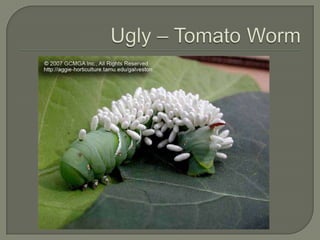
 Don’t be scared of bugs, most are
beneficial.
 Grocery

Store “perfection”
 Accept that your plants may have
pest/blemishes
 Get use to eating from garden
 Get over fear of bugs
 Understand the bigger picture. Aphids and
ants relationships
 Never take it personal
 Healthy

Soil
 Healthy Gardens
 Planting
 Watering
 Planting
 Beneficial Insects and Pollinators
 Let’s Get Physical
 Solutions
 Specific Insects
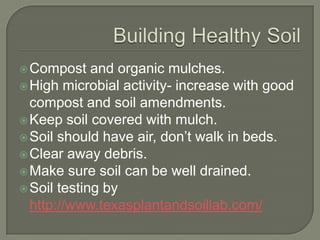
 Compost

and organic mulches.
 High microbial activity- increase with good
compost and soil amendments.
 Keep soil covered with mulch.
 Soil should have air, don’t walk in beds.
 Clear away debris.
 Make sure soil can be well drained.
 Soil testing by
http://www.texasplantandsoillab.com/
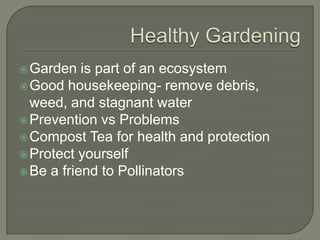
 Garden

is part of an ecosystem
 Good housekeeping- remove debris,
weed, and stagnant water
 Prevention vs Problems
 Compost Tea for health and protection
 Protect yourself
 Be a friend to Pollinators
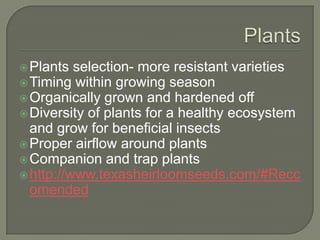
 Plants

selection- more resistant varieties
 Timing within growing season
 Organically grown and hardened off
 Diversity of plants for a healthy ecosystem
and grow for beneficial insects
 Proper airflow around plants
 Companion and trap plants
 http://www.texasheirloomseeds.com/#Recc
omended
 Consistent

and sufficient watering
 Mulch soil to minimize evaporation
 Drip or soaker vs sprinkling
 Well drained beds
 Rain vs city water
 Foliar spray – compost tea, molasses, and
seaweed extract/fish emolusion
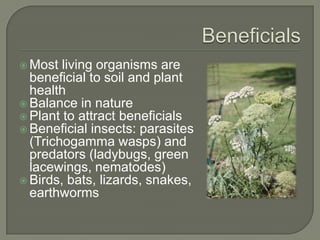
 Most

living organisms are
beneficial to soil and plant
health
 Balance in nature
 Plant to attract beneficials
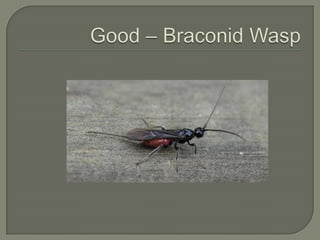
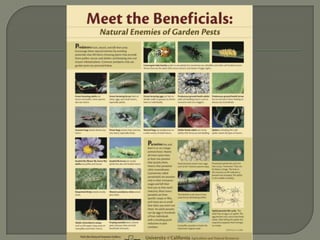
 Beneficial insects: parasites
(Trichogamma wasps) and
predators (ladybugs, green
lacewings, nematodes)
 Birds, bats, lizards, snakes,
earthworms
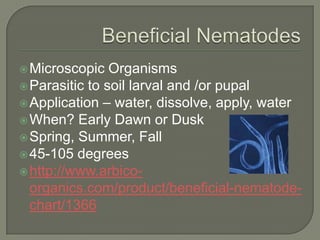
 Microscopic

Organisms
 Parasitic to soil larval and /or pupal
 Application – water, dissolve, apply, water
 When? Early Dawn or Dusk
 Spring, Summer, Fall
 45-105 degrees
 http://www.arbicoorganics.com/product/beneficial-nematodechart/1366
 http://www.arbico-

organics.com/category/beneficial-insectsorganisms/48
 Encourage

beneficial bugs to do the work
 Hand pick pests and drop in soapy water
 Remove eggs
 Blast off with water
 Remove plants past season- pest are
indicators
 Row cover and traps (yellow sticky)
 Plant collars (top of cup)
 Soil solarization
 Blast

of Water
 Least toxic – garlic and soapy water
 Add pepper to make stronger
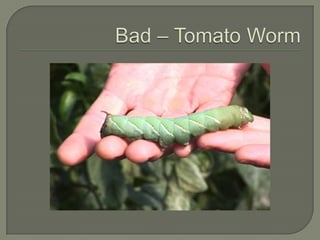
 Bt – Bacillus thuringiensis spray or powder
for caterpillars
 Diatomaceous Earth (food grade)
 Citrus Oil
 Neem
 http://www.arbico-

organics.com/category/problem-solverguide/17

 http://www.dirtdoctor.com/organic/garden/f

aq/
 Healthy

and active soil deters fire ants
 Farm aphids for the nectar – okra
 Clean up- attracted to sweet
 Beneficial nematodes
 Organic drench: compost tea, hort.
molasses, seaweed extract, orange oil
 Boiling water – quick but kills everything
 Bait – controls reproduction
 Use

to increase microbial activity in soil to
prevent fire ants and increase plant health!
 Coppell Community Garden - resources
 http://coppellcommunitygarden.org/files/Ag

itated%20Compost%20Tea.pdf
 Leaves

are a resource not a waste!
 Mulching mower
 Use as mulch under shrubs
 Use in compost piles
 Yard Trimmings Recycling
Amanda Vanhoozier
avan.ole@verizon.net

Bugs 12.7.13

  • 1.
    KCB Environmental EducationSeries December 7, 2013 Amanda Vanhoozier
  • 5.
     Healthy soil growshealthy plants.  Healthy plants are healthier. Less stressLess problems. Less pests.  A gardeners shadow is the best deterrent. Observation and action.  Good organic gardening practices prevent problems.  Plant selection for local environment.  Don’t be scared of bugs, most are beneficial.
  • 6.
     Grocery Store “perfection” Accept that your plants may have pest/blemishes  Get use to eating from garden  Get over fear of bugs  Understand the bigger picture. Aphids and ants relationships  Never take it personal
  • 7.
     Healthy Soil  HealthyGardens  Planting  Watering  Planting  Beneficial Insects and Pollinators  Let’s Get Physical  Solutions  Specific Insects
  • 8.
     Compost and organicmulches.  High microbial activity- increase with good compost and soil amendments.  Keep soil covered with mulch.  Soil should have air, don’t walk in beds.  Clear away debris.  Make sure soil can be well drained.  Soil testing by http://www.texasplantandsoillab.com/
  • 10.
     Garden is partof an ecosystem  Good housekeeping- remove debris, weed, and stagnant water  Prevention vs Problems  Compost Tea for health and protection  Protect yourself  Be a friend to Pollinators
  • 11.
     Plants selection- moreresistant varieties  Timing within growing season  Organically grown and hardened off  Diversity of plants for a healthy ecosystem and grow for beneficial insects  Proper airflow around plants  Companion and trap plants  http://www.texasheirloomseeds.com/#Recc omended
  • 12.
     Consistent and sufficientwatering  Mulch soil to minimize evaporation  Drip or soaker vs sprinkling  Well drained beds  Rain vs city water  Foliar spray – compost tea, molasses, and seaweed extract/fish emolusion
  • 13.
     Most living organismsare beneficial to soil and plant health  Balance in nature  Plant to attract beneficials  Beneficial insects: parasites (Trichogamma wasps) and predators (ladybugs, green lacewings, nematodes)  Birds, bats, lizards, snakes, earthworms
  • 15.
     Microscopic Organisms  Parasiticto soil larval and /or pupal  Application – water, dissolve, apply, water  When? Early Dawn or Dusk  Spring, Summer, Fall  45-105 degrees  http://www.arbicoorganics.com/product/beneficial-nematodechart/1366
  • 16.
  • 17.
     Encourage beneficial bugsto do the work  Hand pick pests and drop in soapy water  Remove eggs  Blast off with water  Remove plants past season- pest are indicators  Row cover and traps (yellow sticky)  Plant collars (top of cup)  Soil solarization
  • 18.
     Blast of Water Least toxic – garlic and soapy water  Add pepper to make stronger  Bt – Bacillus thuringiensis spray or powder for caterpillars  Diatomaceous Earth (food grade)  Citrus Oil  Neem
  • 19.
  • 20.
     Healthy and activesoil deters fire ants  Farm aphids for the nectar – okra  Clean up- attracted to sweet  Beneficial nematodes  Organic drench: compost tea, hort. molasses, seaweed extract, orange oil  Boiling water – quick but kills everything  Bait – controls reproduction
  • 21.
     Use to increasemicrobial activity in soil to prevent fire ants and increase plant health!  Coppell Community Garden - resources  http://coppellcommunitygarden.org/files/Ag itated%20Compost%20Tea.pdf
  • 22.
     Leaves are aresource not a waste!  Mulching mower  Use as mulch under shrubs  Use in compost piles  Yard Trimmings Recycling
  • 23.