Marketing Management
A South Asian Perspective
Chapter 14: Designing and Managing Integrated Marketing Channels
How should
channels be
designed?
To design a marketing channel system, marketers analyze customer
needs and wants, establish channel objectives and constraints, and
identify and evaluate major channel alternatives
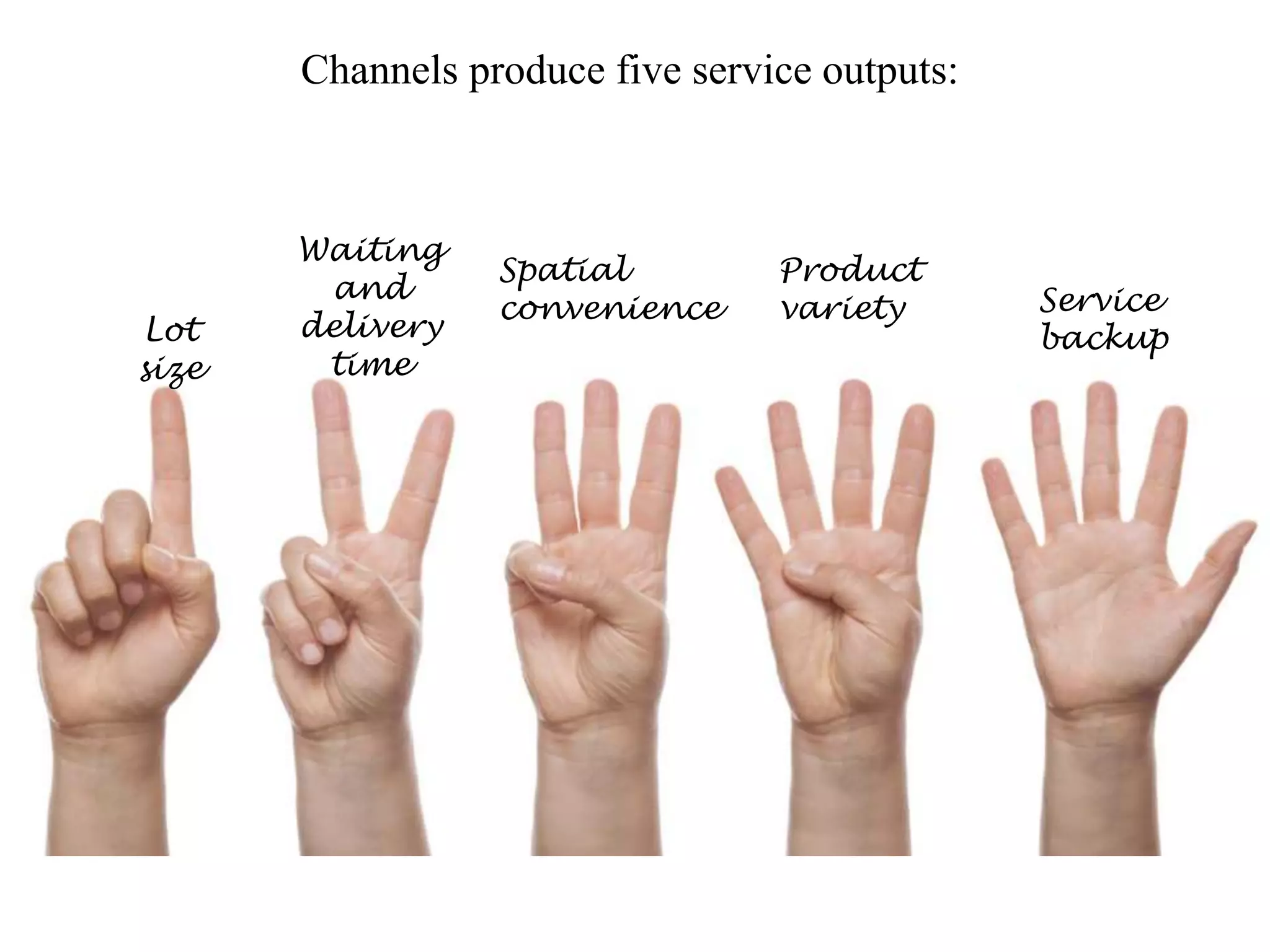
Channels produce
Channels produce five service outputs:
Lot
size
Waiting
and
delivery
time
Spatial
convenience
Product
variety Service
backup
Establishing objectives and constraints
•Planners can identify several market
segments based on desired service and
choose the best channels for each.
•Channel objectives vary with product
characteristics.
•Marketers must adapt their channel
objectives to the larger environment.
•In entering new markets, firms should
closely observe what other firms are
doing.
Identifying Major Channel Alternatives
Each channel has unique strengths and
weaknesses.
Channel alternatives differ in three ways:
•Types of intermediaries
•Number of intermediaries*
•Terms and responsibilities of channel
members*
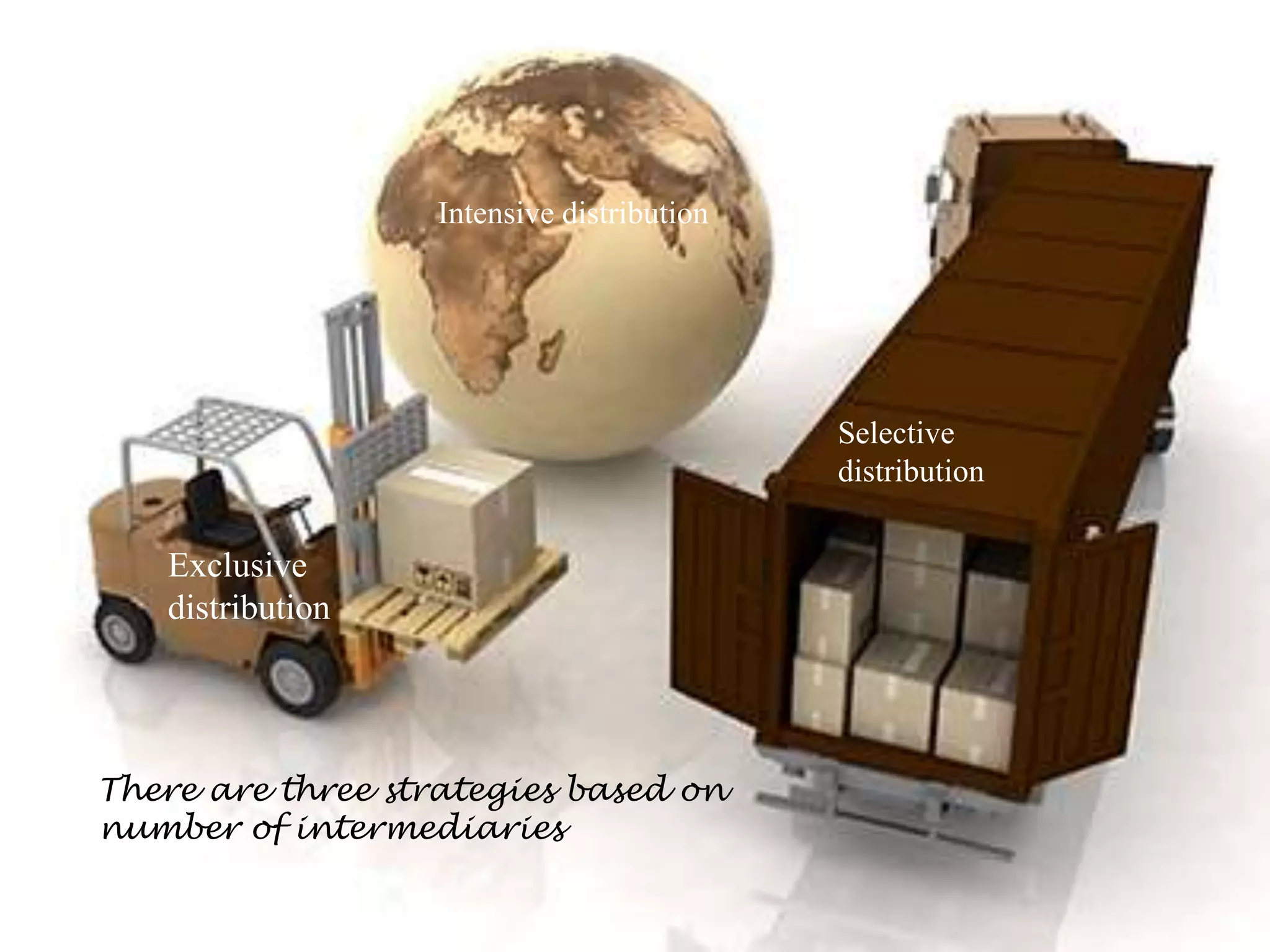
There are three strategies based on
number of intermediaries
Exclusive
distribution
Selective
distribution
Intensive distribution
Terms and responsibility of channel members
Main elements of “trade-
relations mix” are :
•Price policy
•Conditions of sale
•Distributors’ territorial
rights
•Mutual services and
responsibility
Evaluating Major Channel Alternatives
Each channel alternative will produce a
different level of sales and costs. Firms
would have to evaluate the costs and
benefits and then arrive at a decision.
thank you
Priti Verma
LSR
How should channels be designed

How should channels be designed

  • 1.
    Marketing Management A SouthAsian Perspective Chapter 14: Designing and Managing Integrated Marketing Channels
  • 2.
  • 3.
    To design amarketing channel system, marketers analyze customer needs and wants, establish channel objectives and constraints, and identify and evaluate major channel alternatives
  • 4.
    Channels produce Channels producefive service outputs: Lot size Waiting and delivery time Spatial convenience Product variety Service backup
  • 5.
    Establishing objectives andconstraints •Planners can identify several market segments based on desired service and choose the best channels for each. •Channel objectives vary with product characteristics. •Marketers must adapt their channel objectives to the larger environment. •In entering new markets, firms should closely observe what other firms are doing.
  • 6.
    Identifying Major ChannelAlternatives Each channel has unique strengths and weaknesses. Channel alternatives differ in three ways: •Types of intermediaries •Number of intermediaries* •Terms and responsibilities of channel members*
  • 7.
    There are threestrategies based on number of intermediaries Exclusive distribution Selective distribution Intensive distribution
  • 8.
    Terms and responsibilityof channel members Main elements of “trade- relations mix” are : •Price policy •Conditions of sale •Distributors’ territorial rights •Mutual services and responsibility
  • 9.
    Evaluating Major ChannelAlternatives Each channel alternative will produce a different level of sales and costs. Firms would have to evaluate the costs and benefits and then arrive at a decision.
  • 10.