

Media and Society

WHAT’S ON YOUR MIND
Faith facts

“I believe that I cannot by my own reason or strength
believe in Jesus Christ, my Lord, or come to Him. But the
Holy Spirit has called me by the Gospel, enlightened me
with His gifts, sanctified and kept me in the true faith.”
Explanation to the third article, Small Catechism
Faith facts
 For “everyone who calls on the name of the Lord will be
    saved.”
   How then will they call on Him in whom they have not
    believed?
   And how are they to believe in Him of whom they have never
    heard?
   And how are they to hear without someone preaching?
   And how are they to preach unless they are sent?
   As it is written, “How beautiful are the feet of those who
    preach the good news!”
Romans 10:13-15
What’s our role?

 Understanding some of the barriers to the
  Gospel
 Ensure the Gospel is proclaimed in ways
  people understand
Hearing and listening


     Media and its messages
       shape the hearers
Hearing and listening


   We need to understand
   • Environment in which people hear
   • Vocabulary they use
   • Attitudes they live with
Paradigm shifts

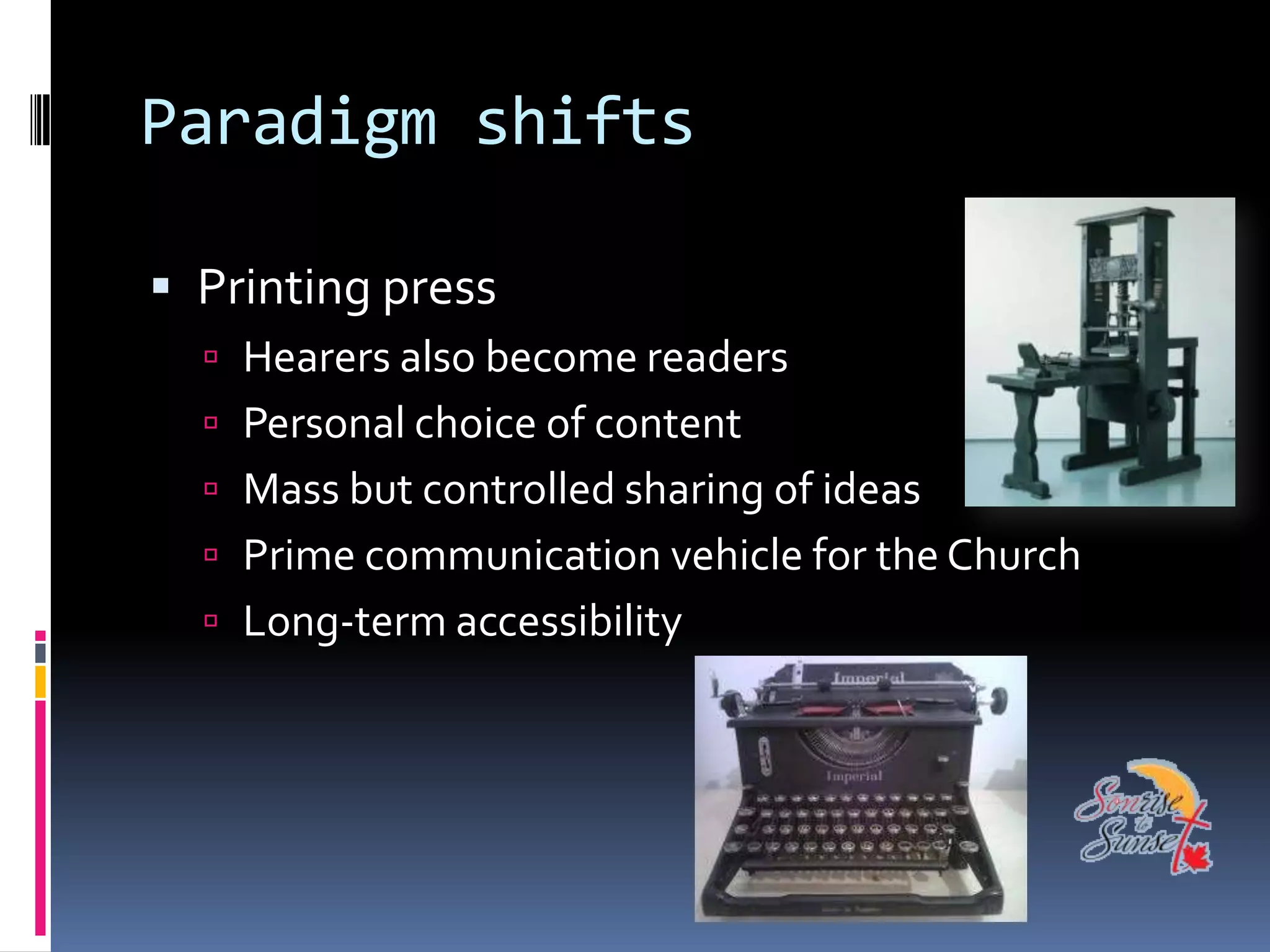
 Printing press
   Hearers also become readers
   Personal choice of content
   Mass but controlled sharing of ideas
   Prime communication vehicle for the Church
   Long-term accessibility
Paradigm shifts
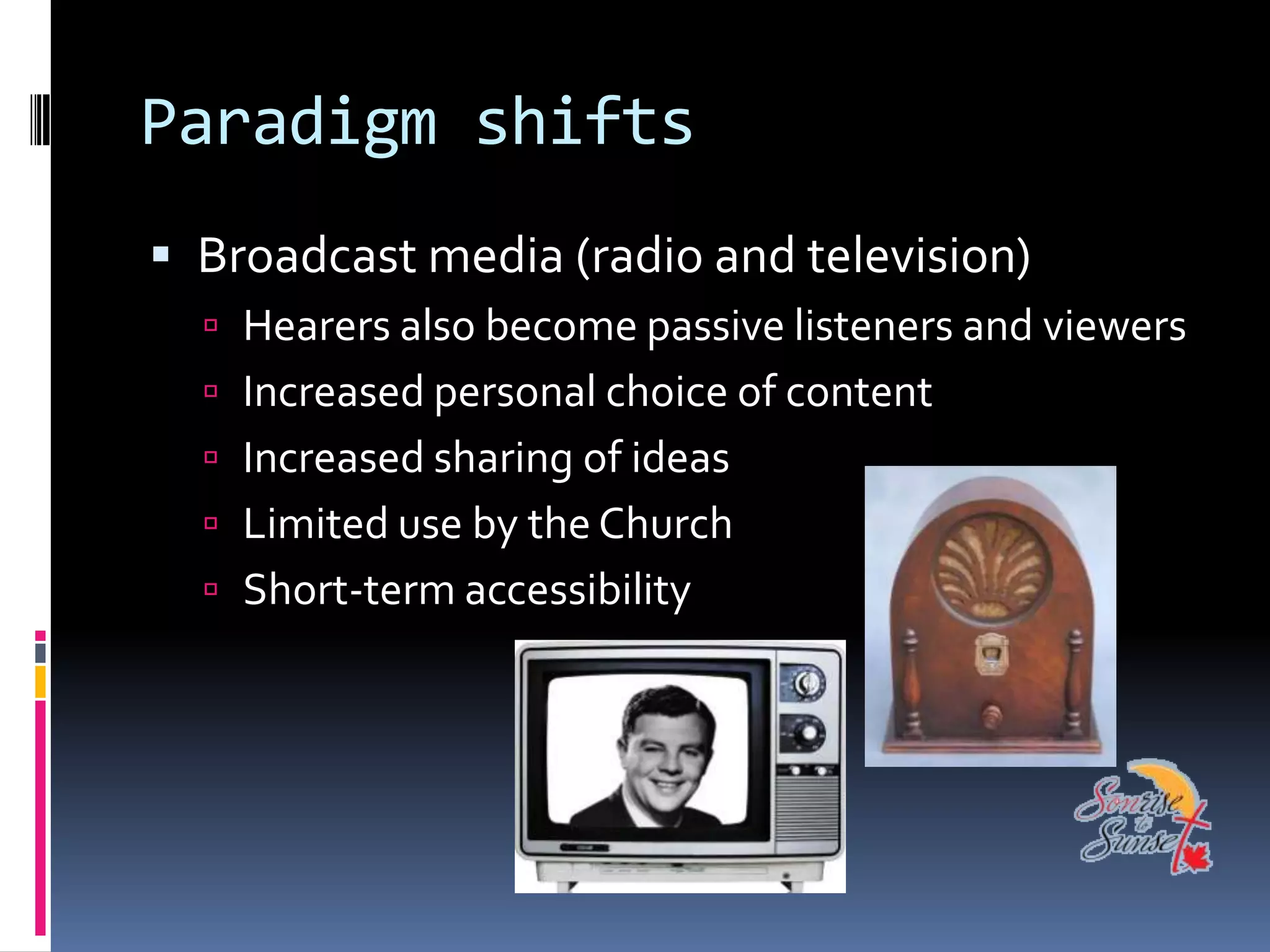
 Broadcast media (radio and television)
   Hearers also become passive listeners and viewers
   Increased personal choice of content
   Increased sharing of ideas
   Limited use by the Church
   Short-term accessibility
Paradigm shifts

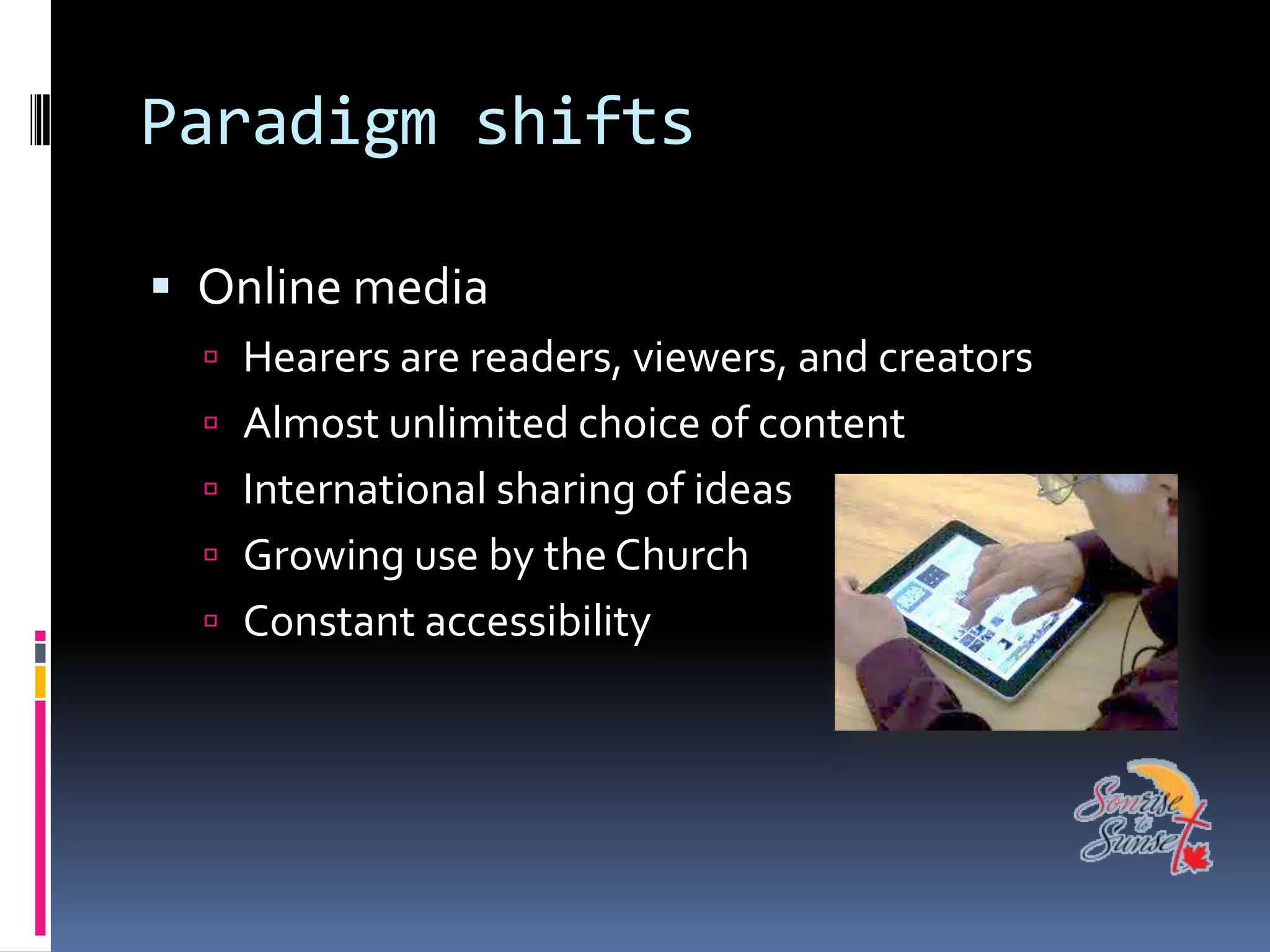
 Online media
   Hearers are readers, viewers, and creators
   Almost unlimited choice of content
   International sharing of ideas
   Growing use by the Church
   Constant accessibility
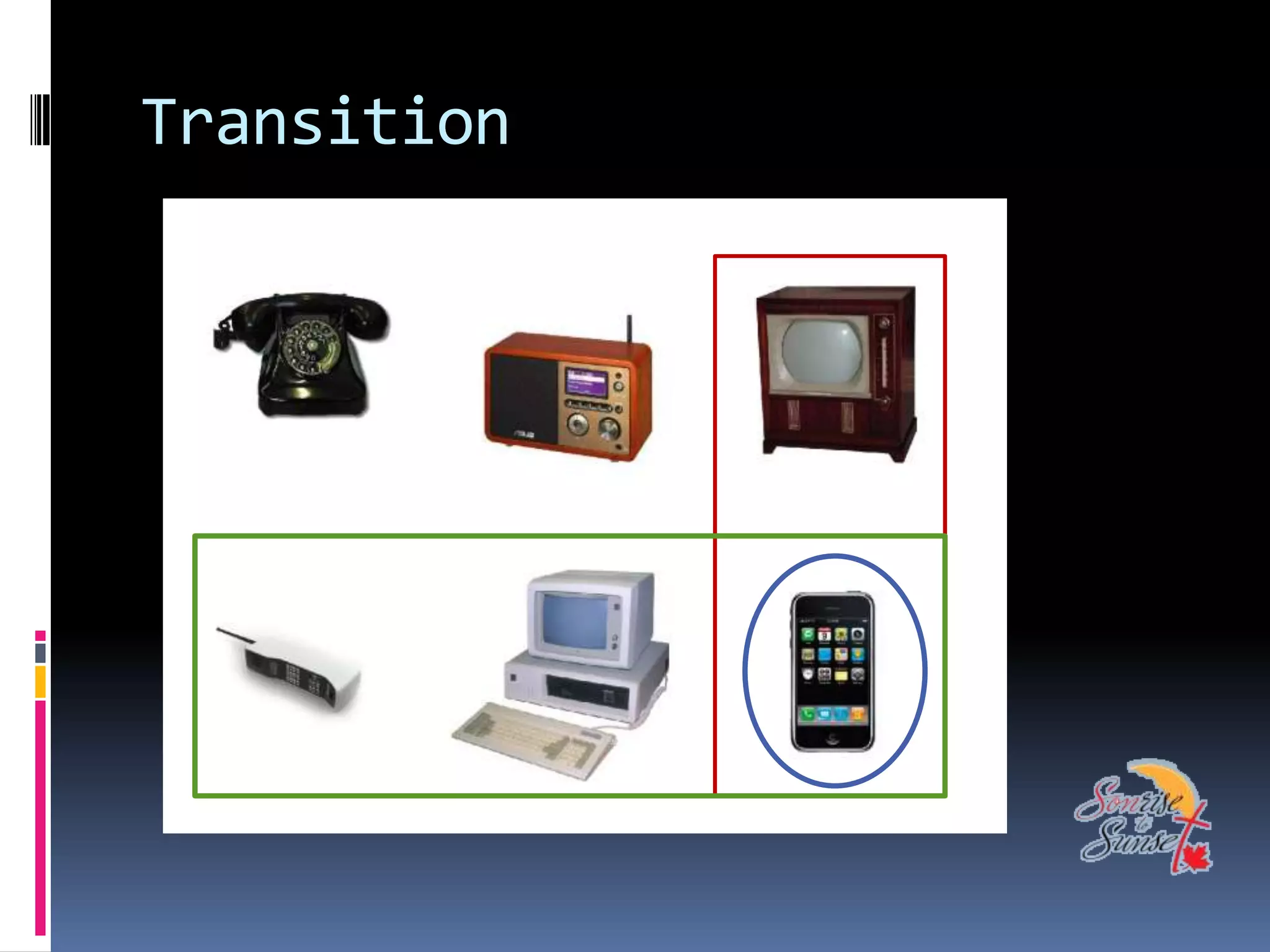
Transition
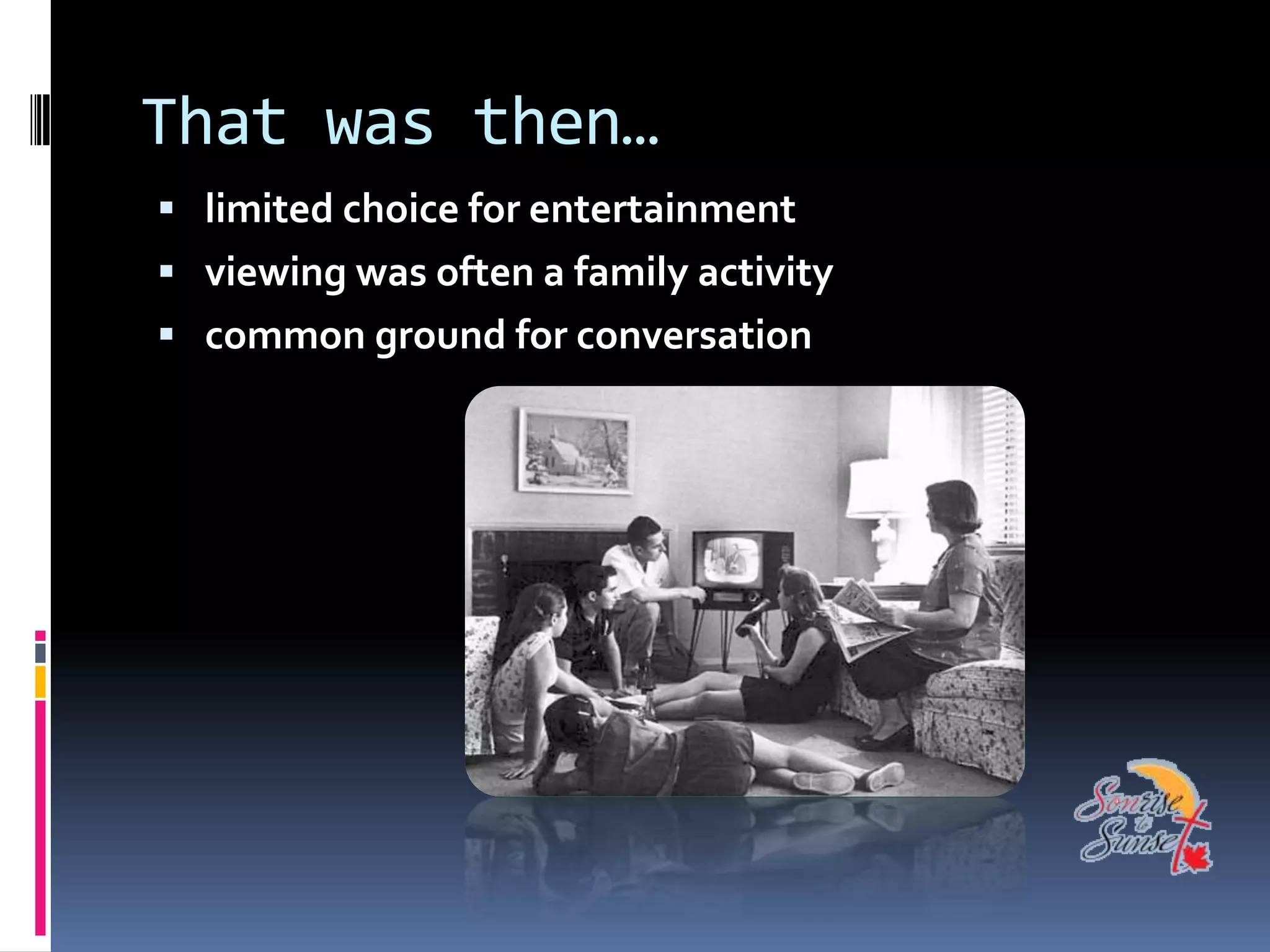
That was then…
 limited choice for entertainment
 viewing was often a family activity
 common ground for conversation
That was then…
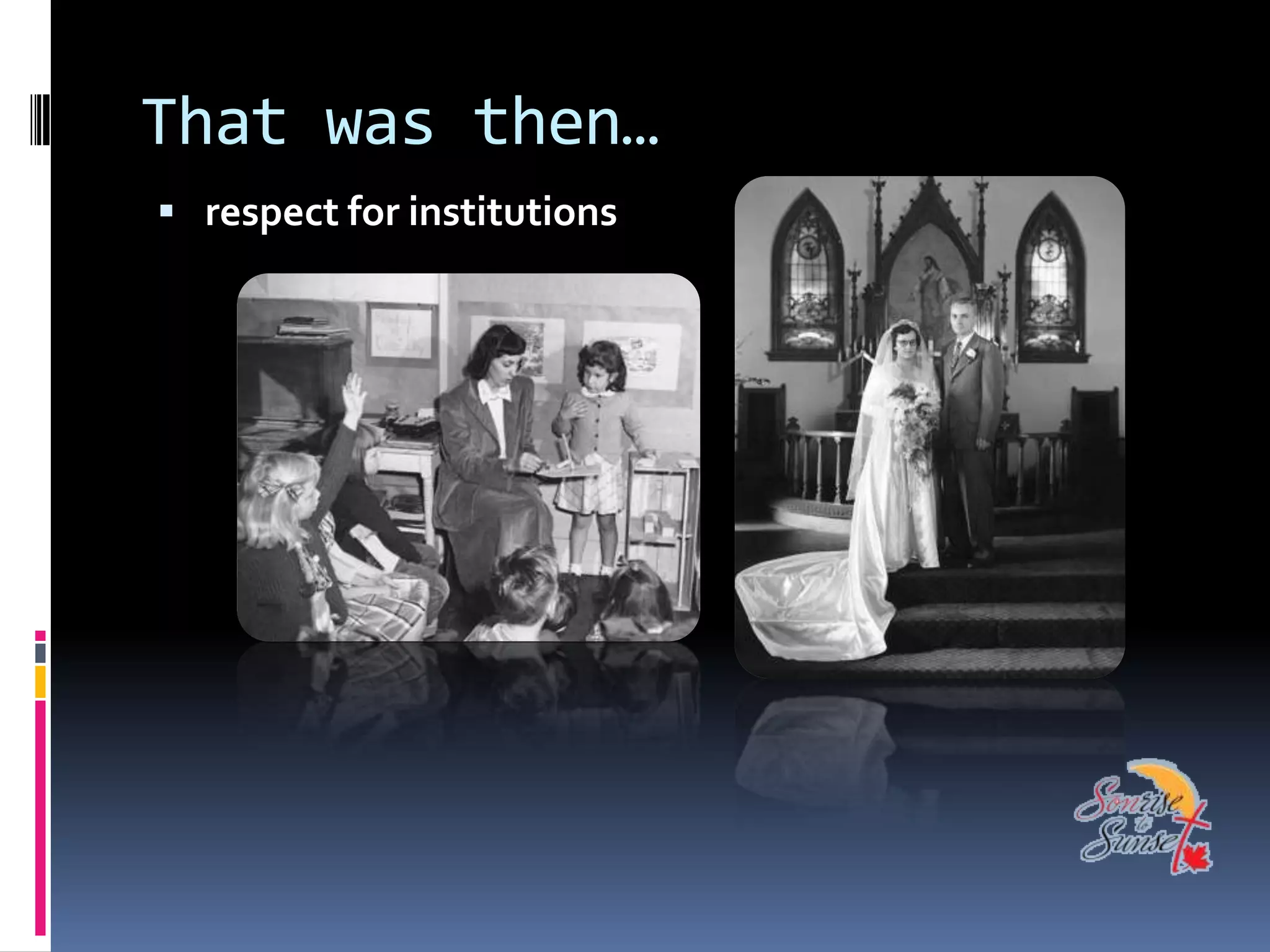
 respect for institutions
That was then…
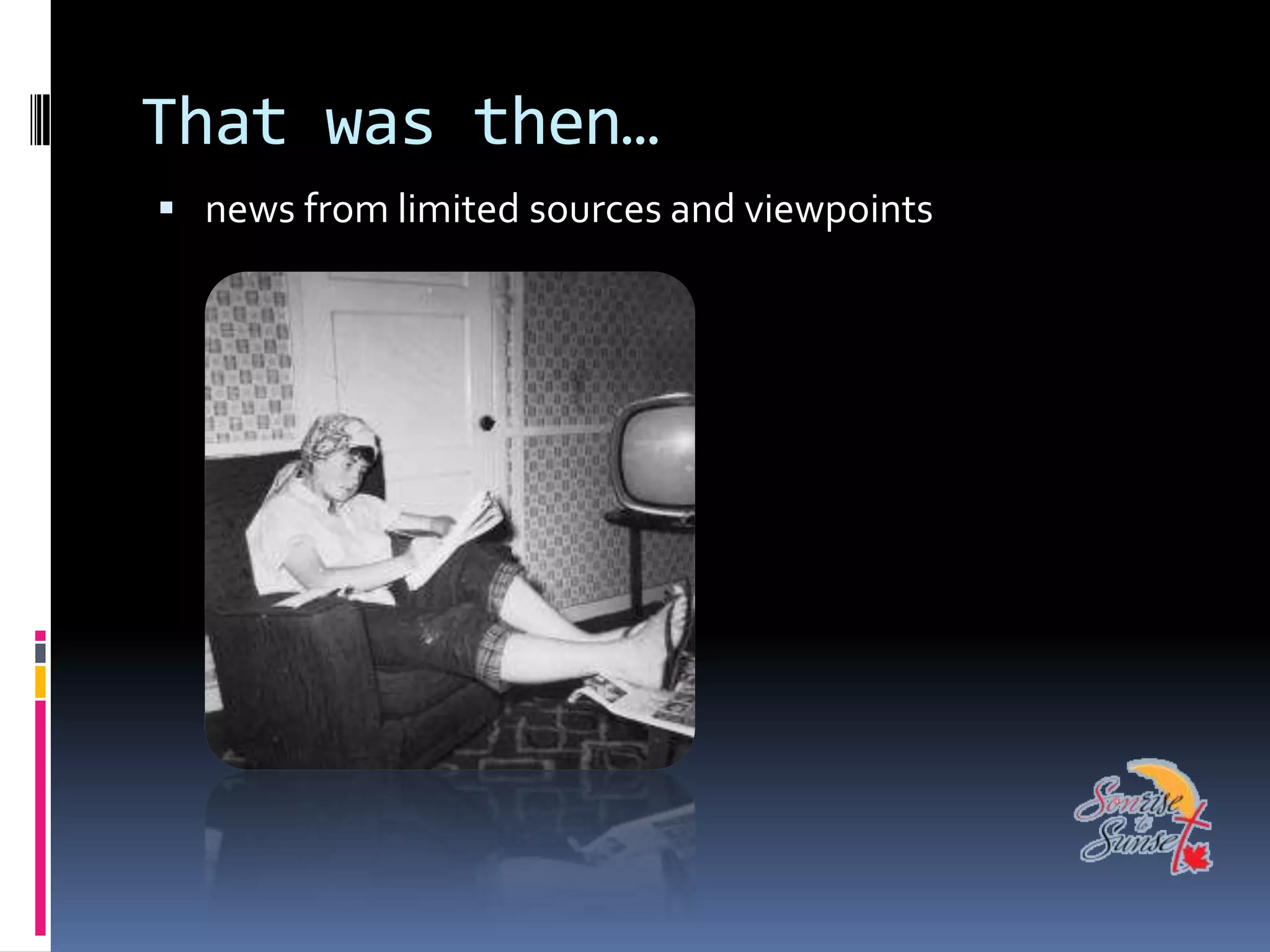
 news from limited sources and viewpoints
That was then

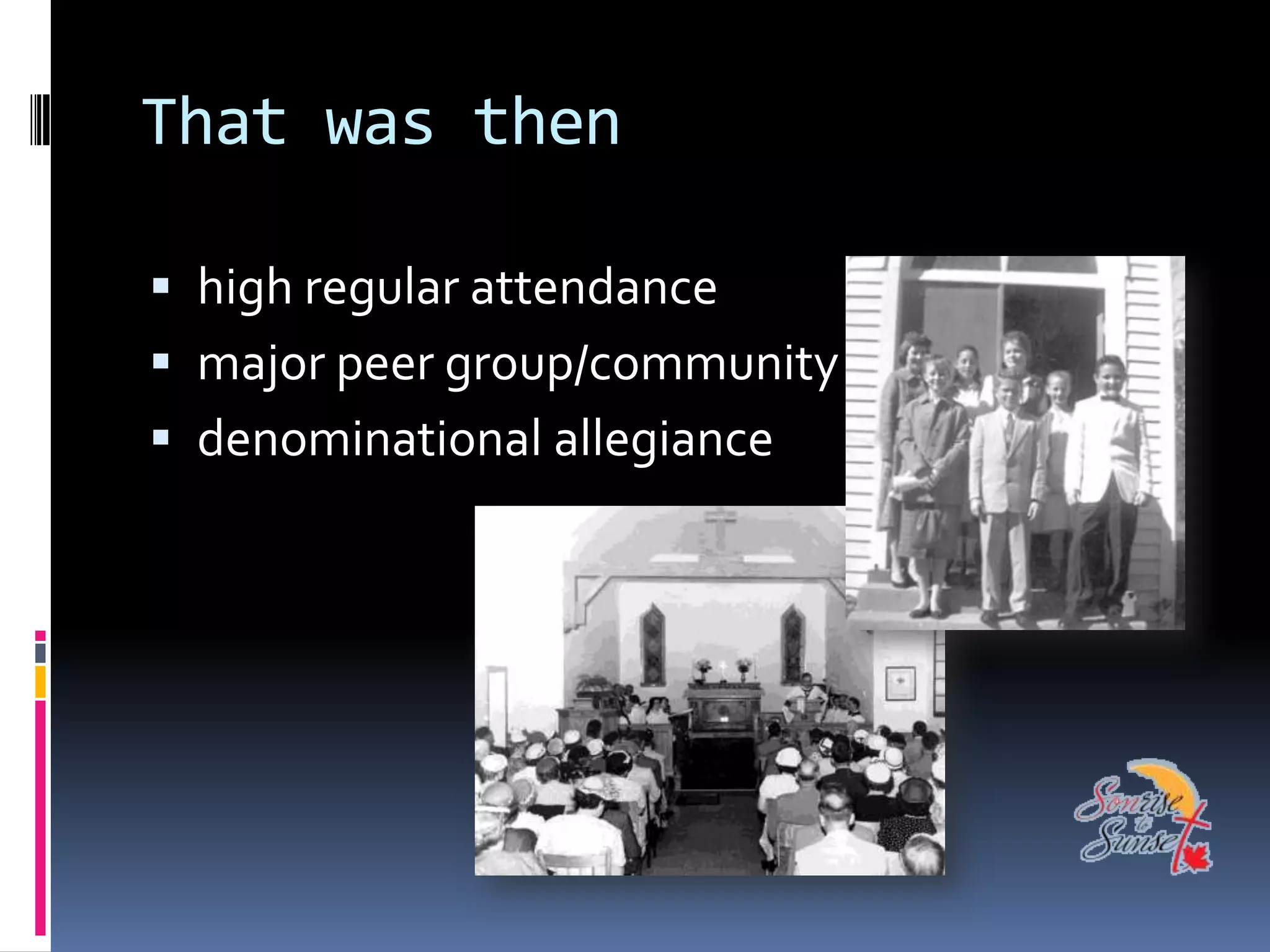
 high regular attendance
 major peer group/community
 denominational allegiance
That was then

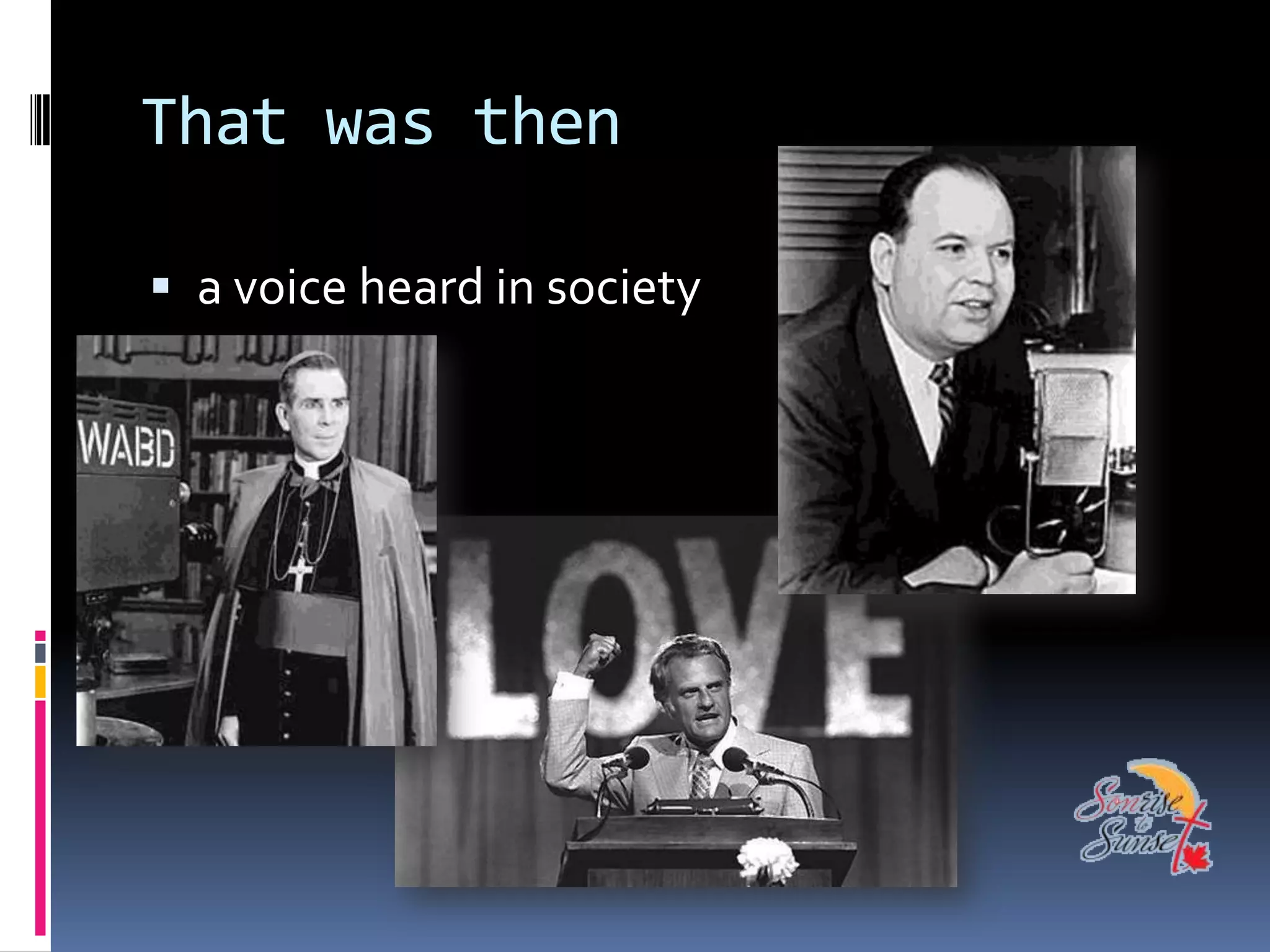
 a voice heard in society
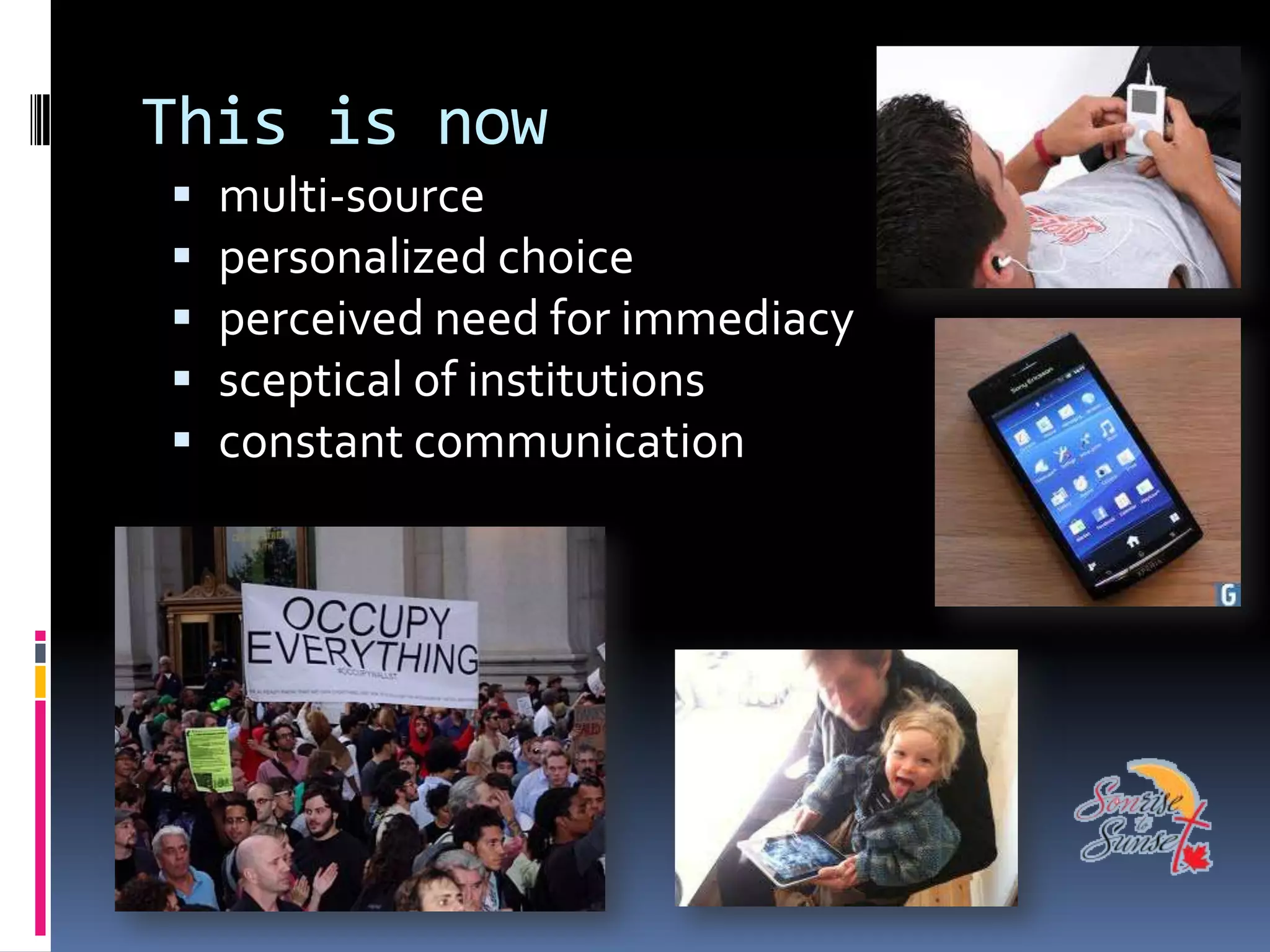
This is now
   multi-source
   personalized choice
   perceived need for immediacy
   sceptical of institutions
   constant communication
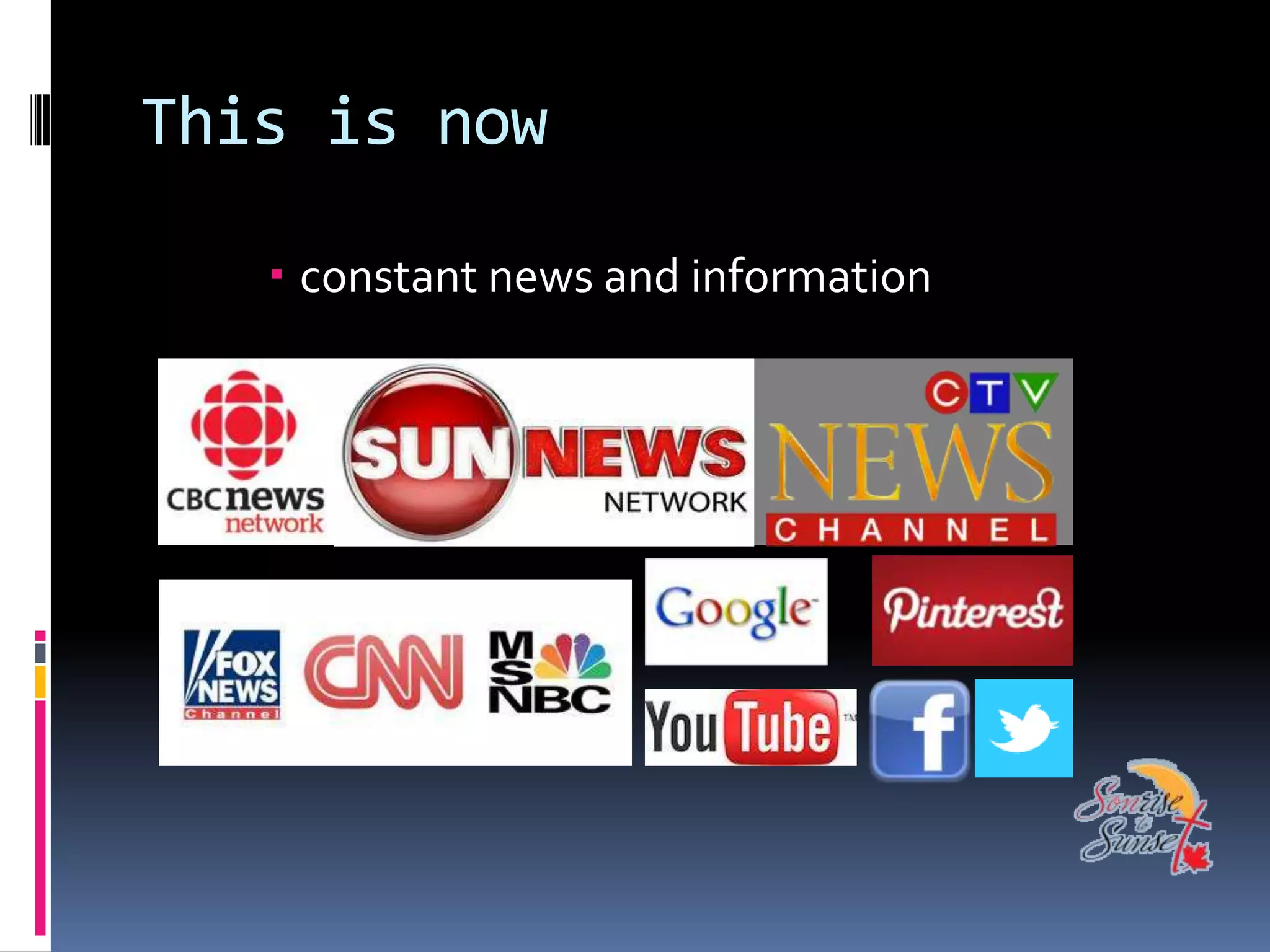
This is now

    constant news and information
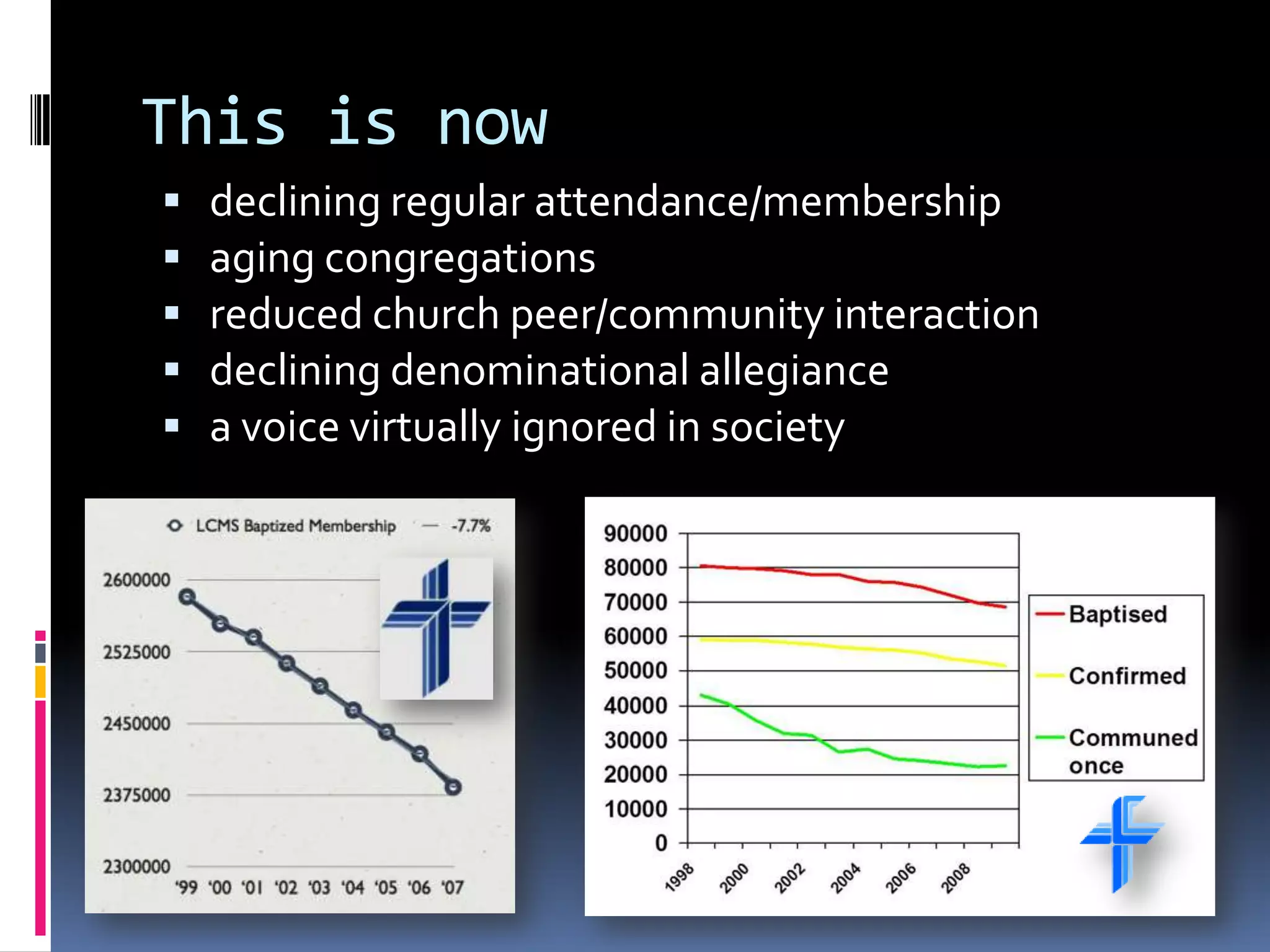
This is now
   declining regular attendance/membership
   aging congregations
   reduced church peer/community interaction
   declining denominational allegiance
   a voice virtually ignored in society
Where are people at?
Mainstream media messaging

 Mostly “a-religious” often “anti-religious”
    worldview
   Moral ambiguity and relativism
   Religious scepticism/disrespect/ridicule
   Interest in spirituality
   Underpinnings in science (modern)
Mainstream media messaging

 “tolerance” as long as you agree with me
 strong belief often branded as fanaticism
 Church viewed as mostly irrelevant
Online media

 All over the map!
 Social media contacts/friends tend to support
  your beliefs
  Facebook friends
  Twitter followers
  Blogs
 Opportunities for planting seeds and sparking
  conversation
Effects of media

 Does media reflect or shape society’s values?
   Broadcast media
   Social media
   Online media
Understanding media
 Commercial media are in the business of
 delivering an audience to an advertiser
    Broadcast
    Newspapers
    Facebook
    Google
    Youtube
 Give people what they want because it
 builds an audience for advertisers
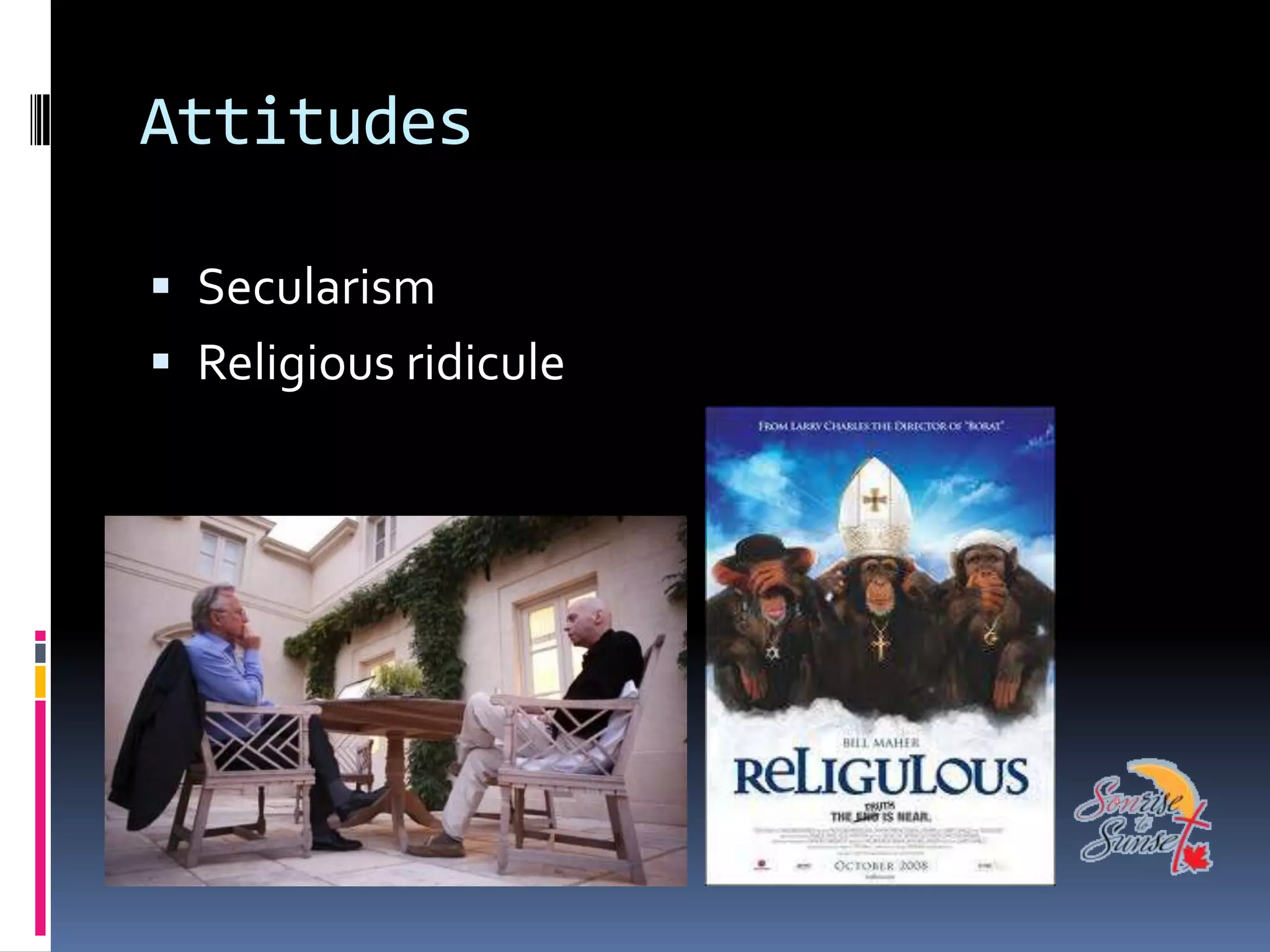
Attitudes

 Secularism
 Religious ridicule
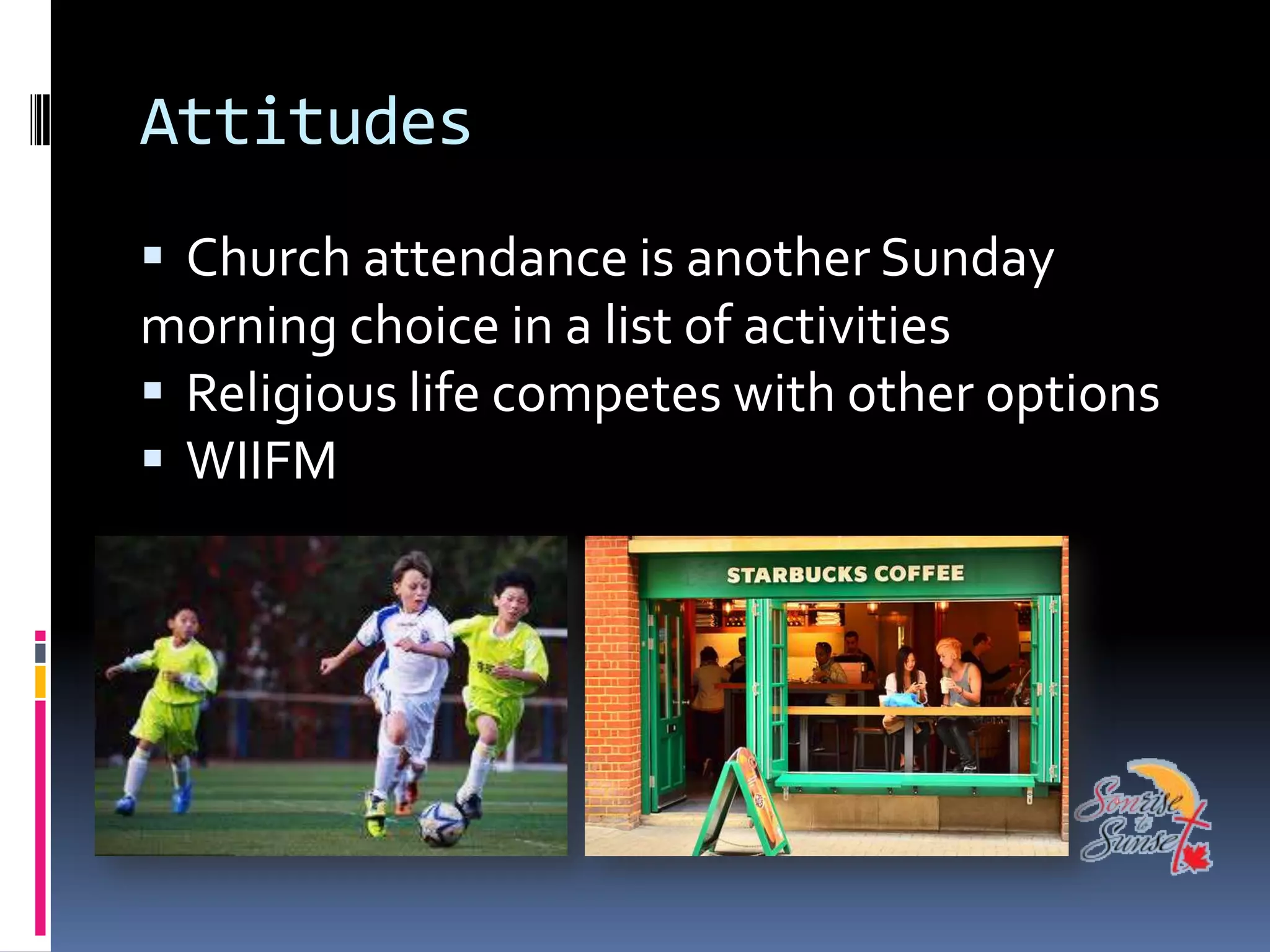
Attitudes
 Church attendance is another Sunday
morning choice in a list of activities
 Religious life competes with other options
 WIIFM
How do we reach this
media-shaped people?
Back to the future - Acts

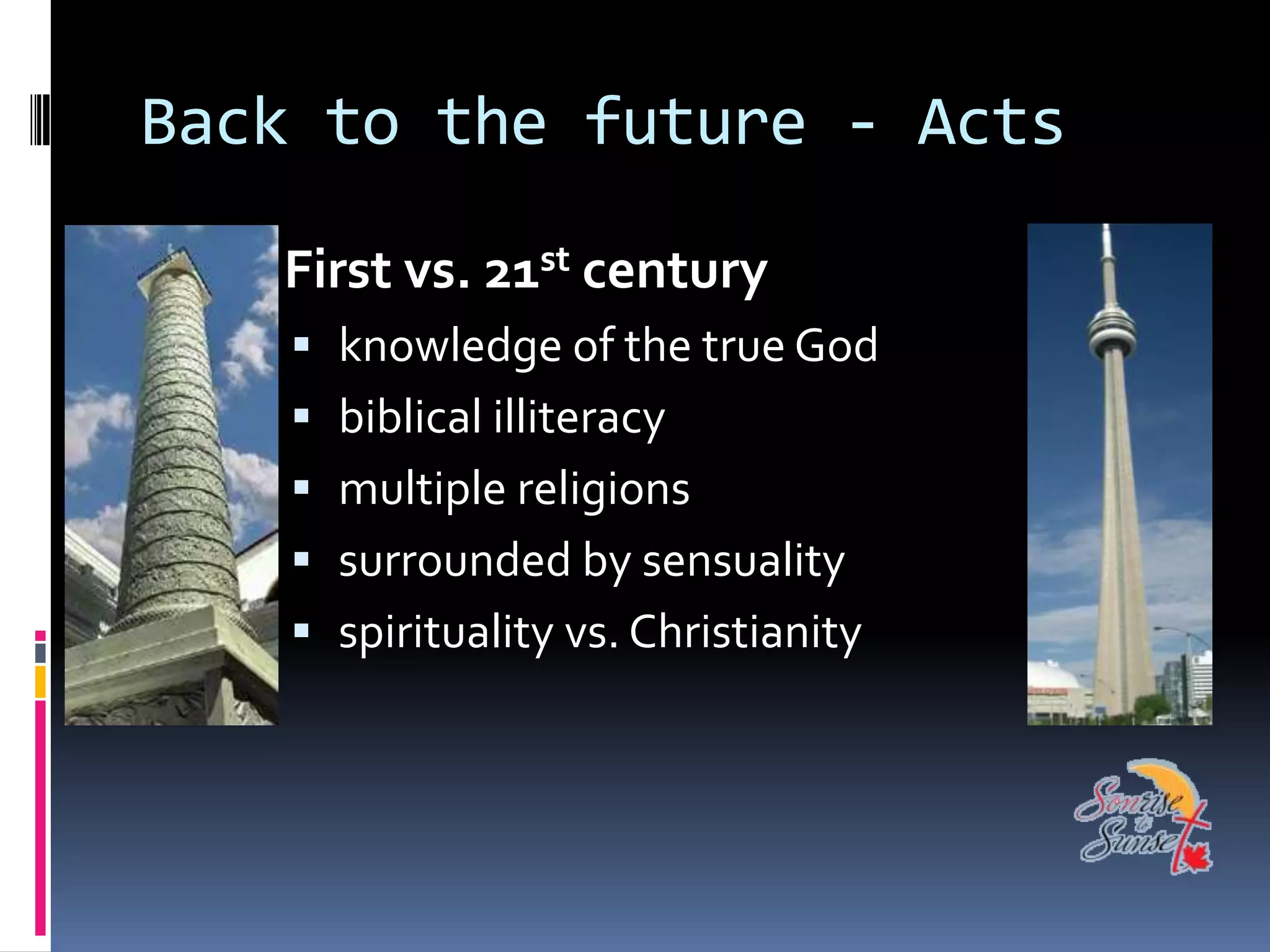
   First vs. 21st century
     knowledge of the true God
     biblical illiteracy
     multiple religions
     surrounded by sensuality
     spirituality vs. Christianity
Back to the future - Acts

 Reliance on the Holy Spirit
 Took a common starting point and taught
  the truth
 Strong awareness of “where people are at”
 Culturally relevant
 Preached with boldness
It boils down to
 who you know,
    not just
 what you know
Who you know

 Build relationships: “friending and following for
  the sake of the Gospel”
 Earn the right to be heard
 Show who you are and Whose you are
 Immersion in God’s Word
Faith facts

 Fundamental belief that the Holy Spirit is
  already at work in some way.
 The Holy Spirit is the only agent by which a
  person can say Jesus Christ is Lord
 We are news bearers/messengers and
  story tellers. “All I know is that once I was
  blind but now I see!”
Mission is being
 salt and light
in an unsavoury,
   dark world.
Questions and comments

 ian@adnamsgroup.com


www.adnamsgroup.com

How media shapes society

  • 1.
  • 2.
    Faith facts “I believethat I cannot by my own reason or strength believe in Jesus Christ, my Lord, or come to Him. But the Holy Spirit has called me by the Gospel, enlightened me with His gifts, sanctified and kept me in the true faith.” Explanation to the third article, Small Catechism
  • 3.
    Faith facts  For“everyone who calls on the name of the Lord will be saved.”  How then will they call on Him in whom they have not believed?  And how are they to believe in Him of whom they have never heard?  And how are they to hear without someone preaching?  And how are they to preach unless they are sent?  As it is written, “How beautiful are the feet of those who preach the good news!” Romans 10:13-15
  • 4.
    What’s our role? Understanding some of the barriers to the Gospel  Ensure the Gospel is proclaimed in ways people understand
  • 5.
    Hearing and listening Media and its messages shape the hearers
  • 6.
    Hearing and listening We need to understand • Environment in which people hear • Vocabulary they use • Attitudes they live with
  • 8.
    Paradigm shifts  Printingpress  Hearers also become readers  Personal choice of content  Mass but controlled sharing of ideas  Prime communication vehicle for the Church  Long-term accessibility
  • 9.
    Paradigm shifts  Broadcastmedia (radio and television)  Hearers also become passive listeners and viewers  Increased personal choice of content  Increased sharing of ideas  Limited use by the Church  Short-term accessibility
  • 10.
    Paradigm shifts  Onlinemedia  Hearers are readers, viewers, and creators  Almost unlimited choice of content  International sharing of ideas  Growing use by the Church  Constant accessibility
  • 12.
  • 13.
    That was then… limited choice for entertainment  viewing was often a family activity  common ground for conversation
  • 14.
    That was then… respect for institutions
  • 15.
    That was then… news from limited sources and viewpoints
  • 16.
    That was then high regular attendance  major peer group/community  denominational allegiance
  • 17.
    That was then a voice heard in society
  • 18.
    This is now  multi-source  personalized choice  perceived need for immediacy  sceptical of institutions  constant communication
  • 19.
    This is now  constant news and information
  • 20.
    This is now  declining regular attendance/membership  aging congregations  reduced church peer/community interaction  declining denominational allegiance  a voice virtually ignored in society
  • 21.
  • 22.
    Mainstream media messaging Mostly “a-religious” often “anti-religious” worldview  Moral ambiguity and relativism  Religious scepticism/disrespect/ridicule  Interest in spirituality  Underpinnings in science (modern)
  • 24.
    Mainstream media messaging “tolerance” as long as you agree with me  strong belief often branded as fanaticism  Church viewed as mostly irrelevant
  • 25.
    Online media  Allover the map!  Social media contacts/friends tend to support your beliefs  Facebook friends  Twitter followers  Blogs  Opportunities for planting seeds and sparking conversation
  • 26.
    Effects of media Does media reflect or shape society’s values?  Broadcast media  Social media  Online media
  • 27.
    Understanding media  Commercialmedia are in the business of delivering an audience to an advertiser  Broadcast  Newspapers  Facebook  Google  Youtube  Give people what they want because it builds an audience for advertisers
  • 28.
  • 29.
    Attitudes  Church attendanceis another Sunday morning choice in a list of activities  Religious life competes with other options  WIIFM
  • 30.
    How do wereach this media-shaped people?
  • 31.
    Back to thefuture - Acts First vs. 21st century  knowledge of the true God  biblical illiteracy  multiple religions  surrounded by sensuality  spirituality vs. Christianity
  • 32.
    Back to thefuture - Acts
  • 33.
    Back to thefuture - Acts
  • 34.
    Back to thefuture - Acts  Reliance on the Holy Spirit  Took a common starting point and taught the truth  Strong awareness of “where people are at”  Culturally relevant  Preached with boldness
  • 35.
    It boils downto who you know, not just what you know
  • 36.
    Who you know Build relationships: “friending and following for the sake of the Gospel”  Earn the right to be heard  Show who you are and Whose you are  Immersion in God’s Word
  • 37.
    Faith facts  Fundamentalbelief that the Holy Spirit is already at work in some way.  The Holy Spirit is the only agent by which a person can say Jesus Christ is Lord  We are news bearers/messengers and story tellers. “All I know is that once I was blind but now I see!”
  • 39.
    Mission is being salt and light in an unsavoury, dark world.
  • 40.
    Questions and comments ian@adnamsgroup.com www.adnamsgroup.com

Editor's Notes

  • #9 Broad brushstrokesOral traditionPrinting pressHearers also become readersPersonal choice of contentMass yet controlled sharing of ideas (elite)Prime communication vehicle for the ChurchLong-term accessibility
  • #10 People still retained the impact of the printing pressBroadcast media (radio and television)Hearers also become passive listeners and viewersIncreased personal choice of contentIncreased sharing of ideasLimited use by the Church (expensive, controlled access, heavy investment in Print)Short-term accessibility
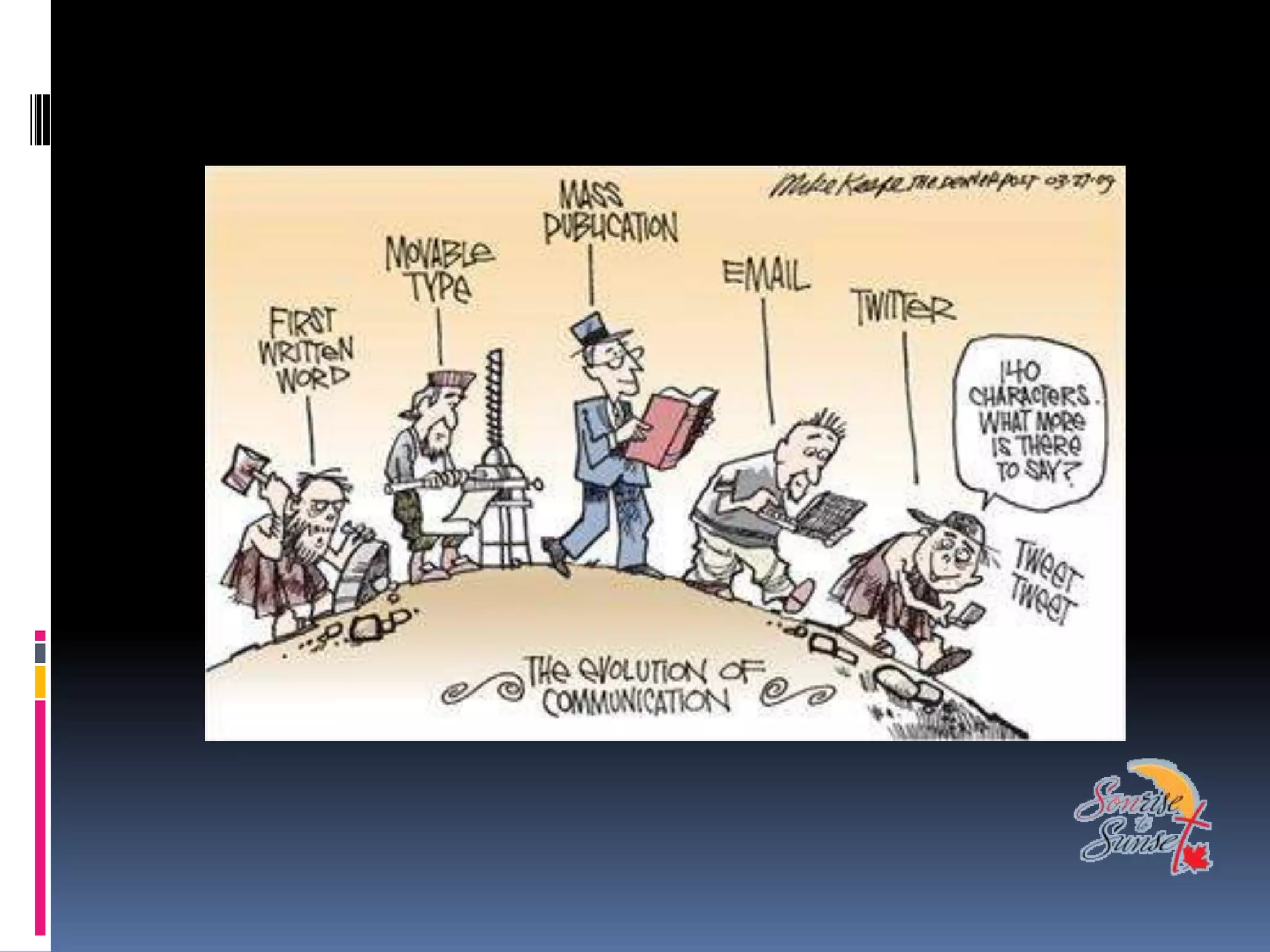
  • #11 Internet media (radio and television)Hearers become readers, viewers, and creators – participatory mediaAlmost unlimited choice of contentInternational sharing of ideasLimited use by the ChurchOngoing constantaccessibilityHere’s a Youtube video that paints a picture of where our world is today.
  • #12 Did you know 2012<object width="560" height="315"><param name="movie" value="http://www.youtube.com/v/YmwwrGV_aiE?version=3&hl=en_US"></param><param name="allowFullScreen" value="true"></param><param name="allowscriptaccess" value="always"></param><embed src="http://www.youtube.com/v/YmwwrGV_aiE?version=3&hl=en_US" type="application/x-shockwave-flash" width="560" height="315" allowscriptaccess="always" allowfullscreen="true"></embed></object>
  • #13 We are living in a transitional time. We are now living with the first generation who have never known a time without computers, smartphones and instant messaging and a generation who still remember the advent of television…and everything in between. One generation turns first to the printed page the other reads from tablets or e-readers. Is one better than the other? No. The content is the same, the reading experience is slightly different, but the same end is reached.
  • #14 limited choice for entertainmentviewing was often a family activity
  • #15 respect for institutions (ie church, government, marriage)
  • #16 news from limited sources and viewpoints (major TV, radio, daily newspapers
  • #17 the church world of ‘50s and ‘60shigh regular attendancemajor peer group/communitydenominational allegiance
  • #18 the church world of ‘50s and ‘60sa voice heard in society (Oswald Hoffman, Billy Graham, Bishop Sheen)
  • #19 the media world of the 21st centurymulti-sourcepersonalized choicepersonal viewingsceptical of institutionsconstant news and information from many sources and viewpoints
  • #20 the media world of the 21st centuryconstant news and information from many sources and viewpoints
  • #21 the church world of the 21st centurydeclining regular attendance: weekly attendance is down, monthly is about where it always has beenaging congregations the boomers are gone and so are their kidsreduced peer/community interaction main peer group is no longer the churchdeclining denominational allegiance evangelicals sheep swap alota voice virtually ignored in society except when there is a scandal or something is said with which the popular culture disagrees
  • #22 Pick out the framework within which this presenter operatesIntroduction to the TED talks (Technology, Entertainment, Design) Ideas Worth Spreading in Scotland earlier this year<object width="853" height="480"><param name="movie" value="http://www.youtube.com/v/yNAGkSbt1xI?version=3&hl=en_US&rel=0"></param><param name="allowFullScreen" value="true"></param><param name="allowscriptaccess" value="always"></param><embed src="http://www.youtube.com/v/yNAGkSbt1xI?version=3&hl=en_US&rel=0" type="application/x-shockwave-flash" width="853" height="480" allowscriptaccess="always" allowfullscreen="true"></embed></object>
  • #23 Media messagingMostly “a-religious” often “anti-religious” worldview: benign indifference as well as intolerance of anyone with biblical conviction; Moral ambiguity and relativism: biblical morality is ignored except for political points or ratingsReligious scepticism/disrespect/ridicule: Interest in spirituality (post- modern) not religious but spiritualUnderpinnings in science (modern) evolutionary framework underpins media messaging
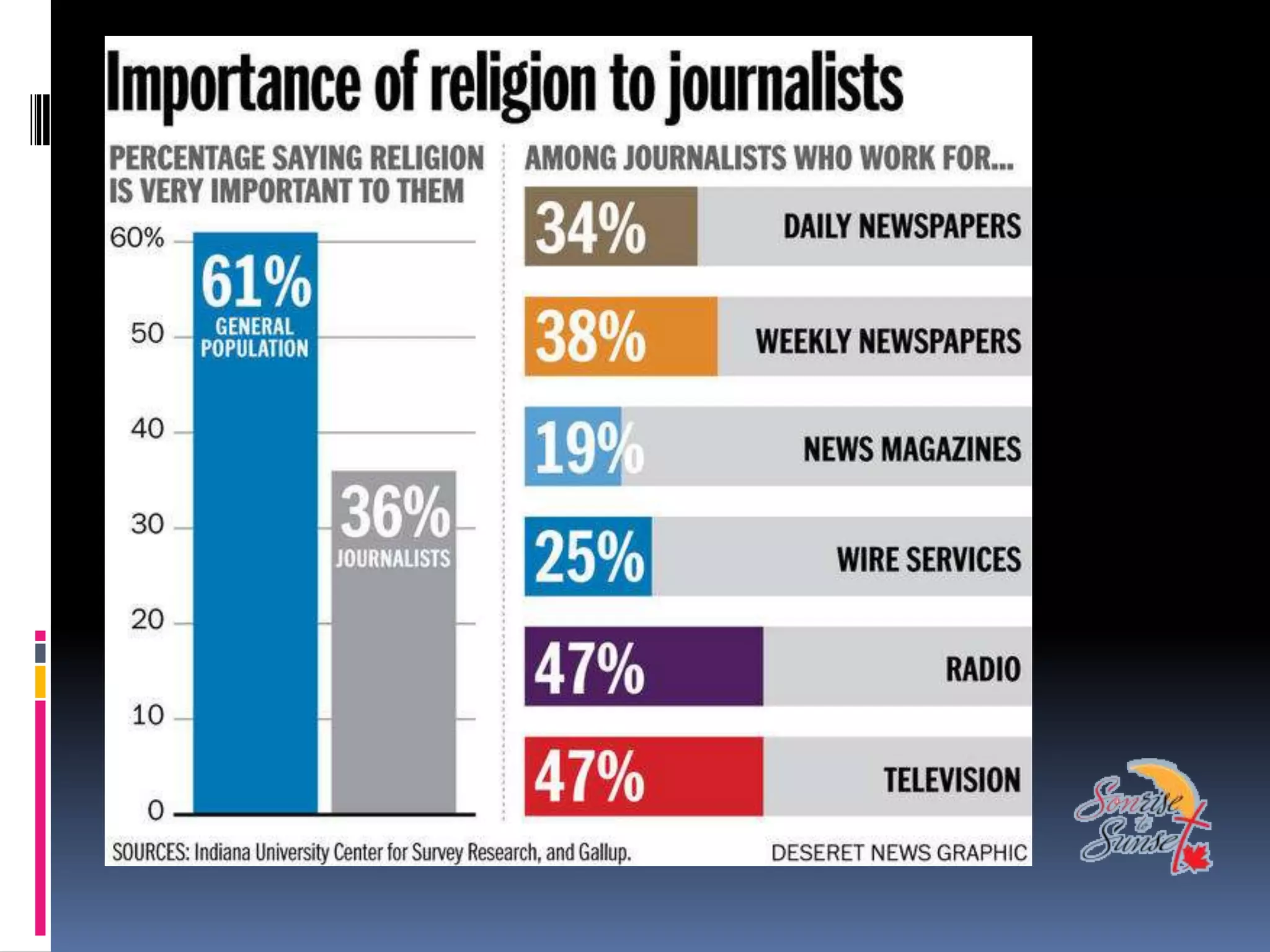
  • #24 Religion in the newsroom. US stats, I expect similar or less in Canadian national newsrooms exceptions in regional or some city newsrooms
  • #25 “tolerance” as long as you agree with meDogmatism or strong belief branded as fanaticism (fundamentalist is a term given to anyone who holds a strong belief)Church viewed as mostly irrelevant
  • #26 Social media contacts/friends tend to support your beliefsReinforcement, Also an opportunity for planting seeds and sparking conversations
  • #27 Does media reflect or shape society’s values?Broadcast media: generally works in a real world vacuum…tend to reflect their own values…reinforce non-biblical world view: passive however moving more toward interactive with Twitter and online engagementSocial media: choose who you are engaged with; usually “safe”; generally avoid controversy: feeds curiosity, builds relationships, redefining communityOnline media: choose what you read, see: creating a culture of multi-tasking…reading/listening; watchingtv /tweeting
  • #28 Does media reflect, lead or reinforce attitudes?Commercial media are in the business of delivering an audience to an advertiserGive people what they want because it builds an audience
  • #29 Secularism: the popularity of Hichens and Dawkins avowed atheists.Religious ridicule: Bill Maher Religulous
  • #30 Church attendance is another Sunday morning choice in a list of activitiesReligious life competes with other optionsWIIFM what’s in it for me…market model…people will attend “if it is worthwhile”
  • #31 How do we reach this media-shaped people
  • #32 We live in a world similar to the 1st centuryLittle knowledge of the true GodActs “to the unknown GodLittle biblical literacyOnly residual “church vocabulary” 47 percent of teens in Canada never attend churchSurrounded by sensualitySpirituality vs Christianity
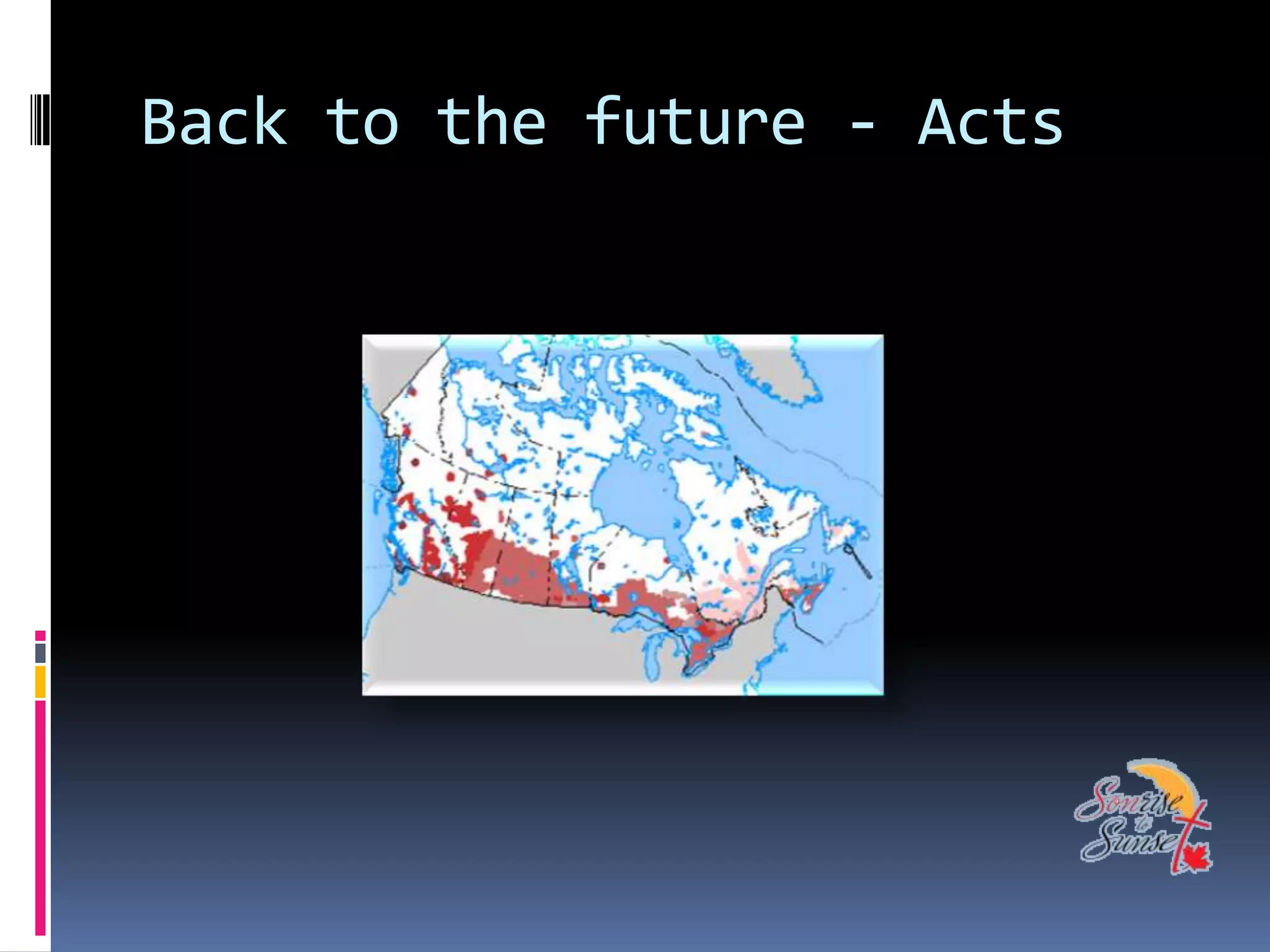
  • #33 Canada: darker red means the higher percentage of unaffiliated
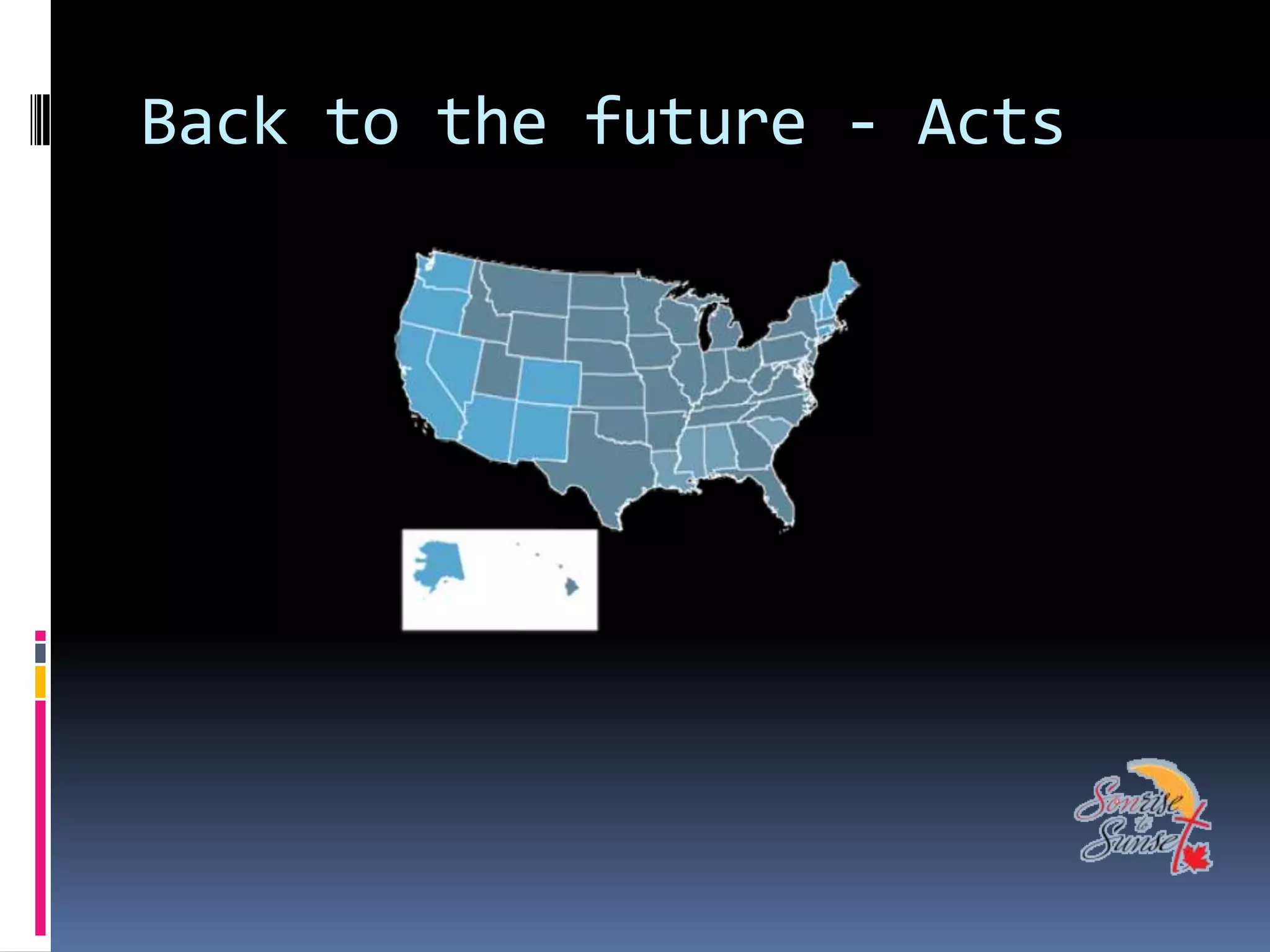
  • #34 US: lighter blue means higher percentage unaffiliated
  • #35 Example of Jesus and the ApostlesReliance on the Holy Spirit Took a common starting point and taught the truth: build bridges to the faithStrong awareness of “where people are at”: understanding your audience, attitudes, values, Preached with boldness…despite consequences; but if people are not in church, where do you preach? Where should the proclamation ocurr?Culturally relevant: While Paul travelled he operated within both the Jewish and Gentile cultures; believer non-believer; all things to all people.
  • #37 It all boils down to who you know, not what you knowBuilding relationships/friending for the sake of the Gospel: personal, Facebook, Twitter, blogs; responsesEarning the right to be heard: friendship…hallmarks of 21st century is peer recommendation; Yelp, online reviews etcShowing vulnerability (not perfect, just forgiven): transparency online and in all communication; integrated (integrity) faith into all of lifeShare your ongoing faith journey and stories
  • #38 Be faithful in proclamation; give people the opportunity to hear and seeFundamental belief that the Spirit is already at work in some way.The Holy Spirit is the only agent by which a person can say Jesus Christ is LordWe are news bearers/messengersShare your ongoing faith journey and stories
  • #39 A Brief History of Communication<object width="960" height="720"><param name="movie" value="http://www.youtube.com/v/rDkxsNmKDGk?version=3&hl=en_US&rel=0"></param><param name="allowFullScreen" value="true"></param><param name="allowscriptaccess" value="always"></param><embed src="http://www.youtube.com/v/rDkxsNmKDGk?version=3&hl=en_US&rel=0" type="application/x-shockwave-flash" width="960" height="720" allowscriptaccess="always" allowfullscreen="true"></embed></object>