How does ECDPM operate as a “think-and-do
tank” in a changing development context?
Mandate, roles, strategy, impact, partners and funding
Content of the presentation
1. Mandate
2. Roles and value added
3. Strategy and areas of work 2017-21
4. Impact areas
5. Institutional partners and resources
6. African partners
1. Mandate
• Leading independent European think & do tank
(established 1986)
• Mission: promote international cooperation that
can effectively address key global development
challenges and generate inclusive and sustainable
solutions
• Linking policy and practice: working towards the
effective implementation of more coherent and
integrated development policies
1. ECDPM’s mandate
2. Governance and management
• Board: comprises 8 members from Europe and
Africa, current chair: Nigerian
• Structure: Director and Deputy Director, 6
programmes, a Learning and Quality Support Unit
and several task forces for new areas of work
• Staff: Some 65 professionals, including 25 support
staff, from diff. European and African background
• Offices: Maastricht, HQ (The Netherlands) and
Brussels (Belgium)
2. Governance and inst. structure
3. Roles and value added
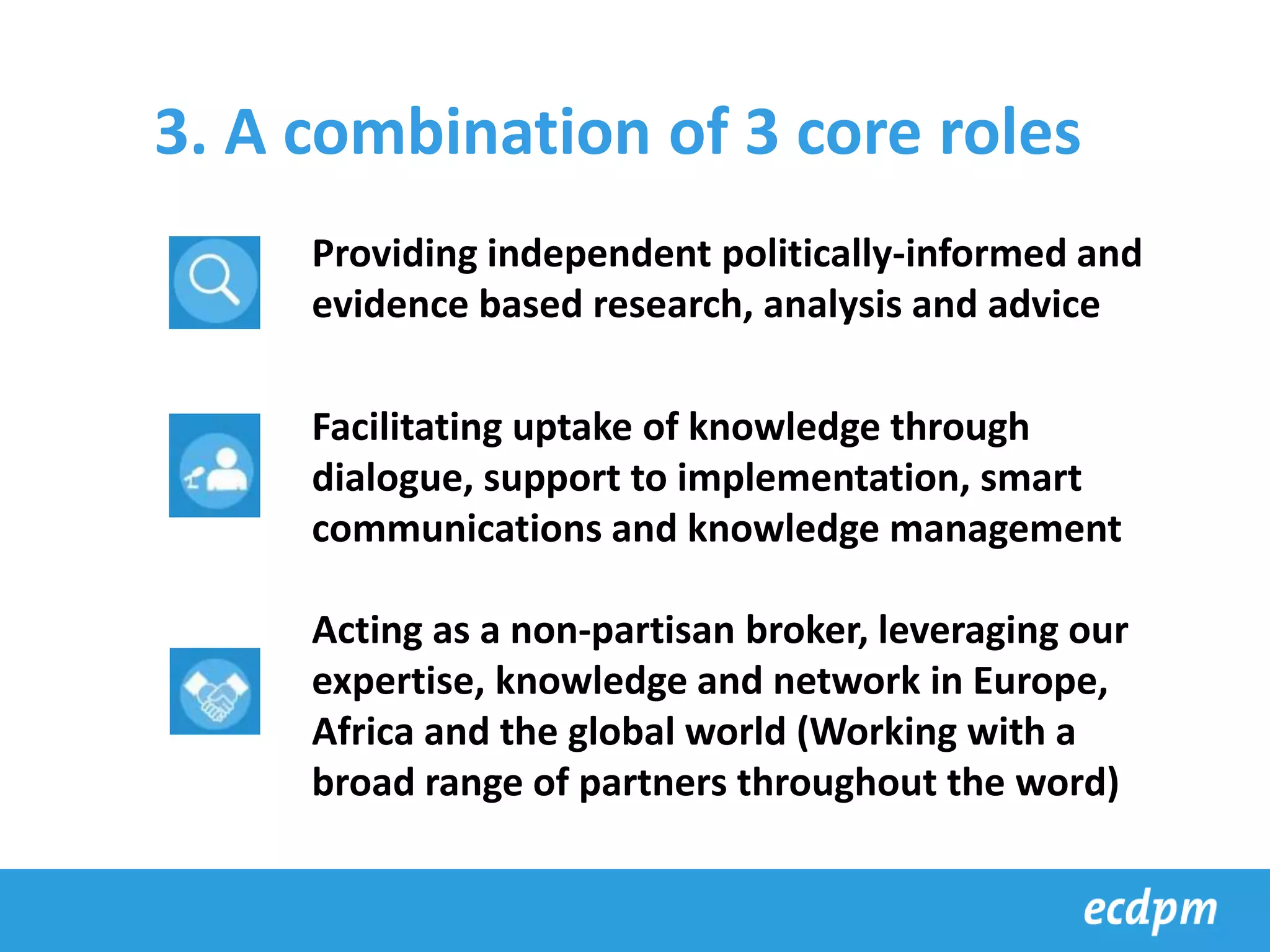
3. A combination of 3 core roles
Providing independent politically-informed and
evidence based research, analysis and advice
Facilitating uptake of knowledge through
dialogue, support to implementation, smart
communications and knowledge management
Acting as a non-partisan broker, leveraging our
expertise, knowledge and network in Europe,
Africa and the global world (Working with a
broad range of partners throughout the word)
4. Strategy and Areas of Work (2017-
2021)
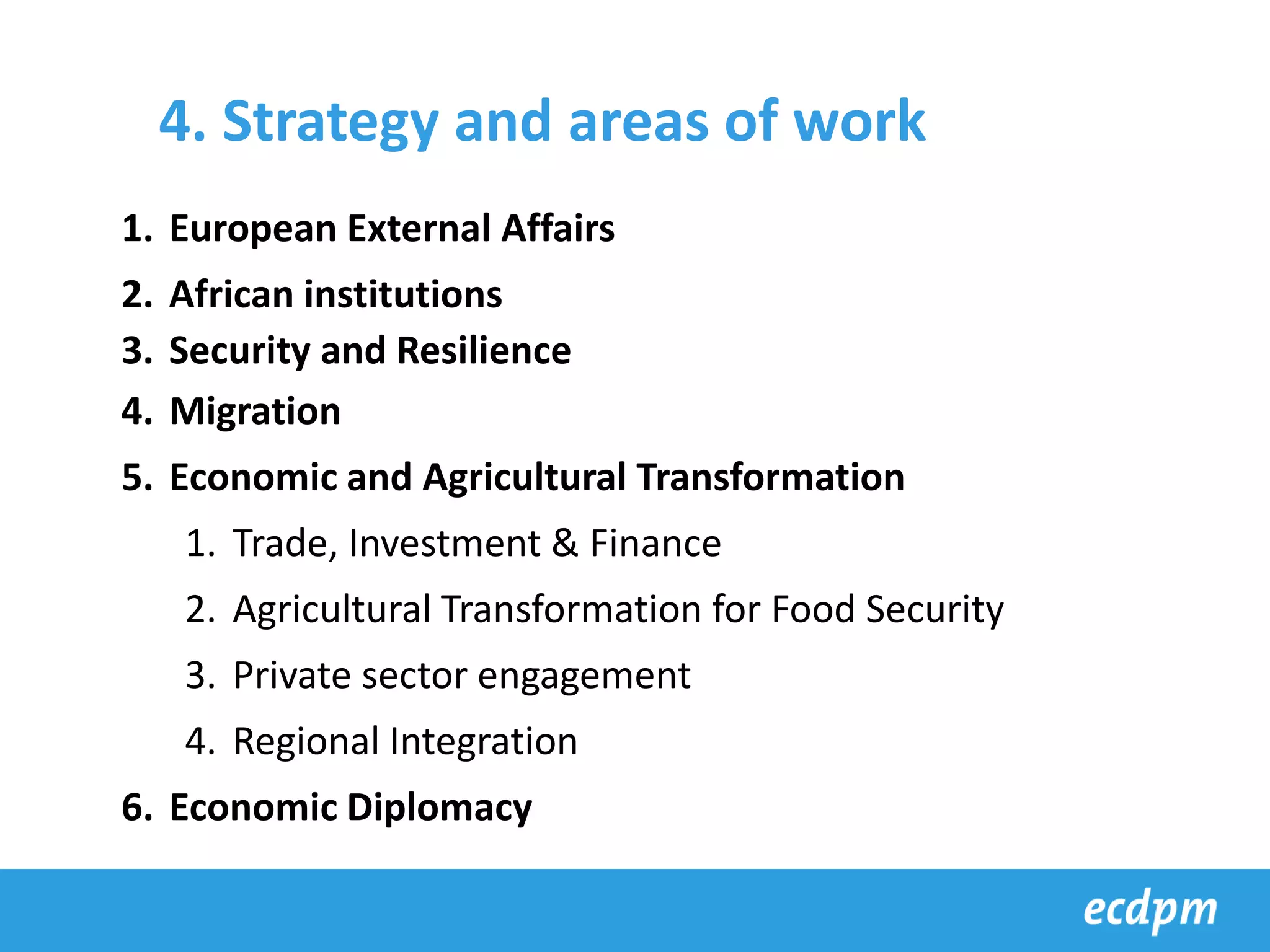
1. European External Affairs
2. African institutions
3. Security and Resilience
4. Migration
5. Economic and Agricultural Transformation
1. Trade, Investment & Finance
2. Agricultural Transformation for Food Security
3. Private sector engagement
4. Regional Integration
6. Economic Diplomacy
4. Strategy and areas of work
5. Impact areas
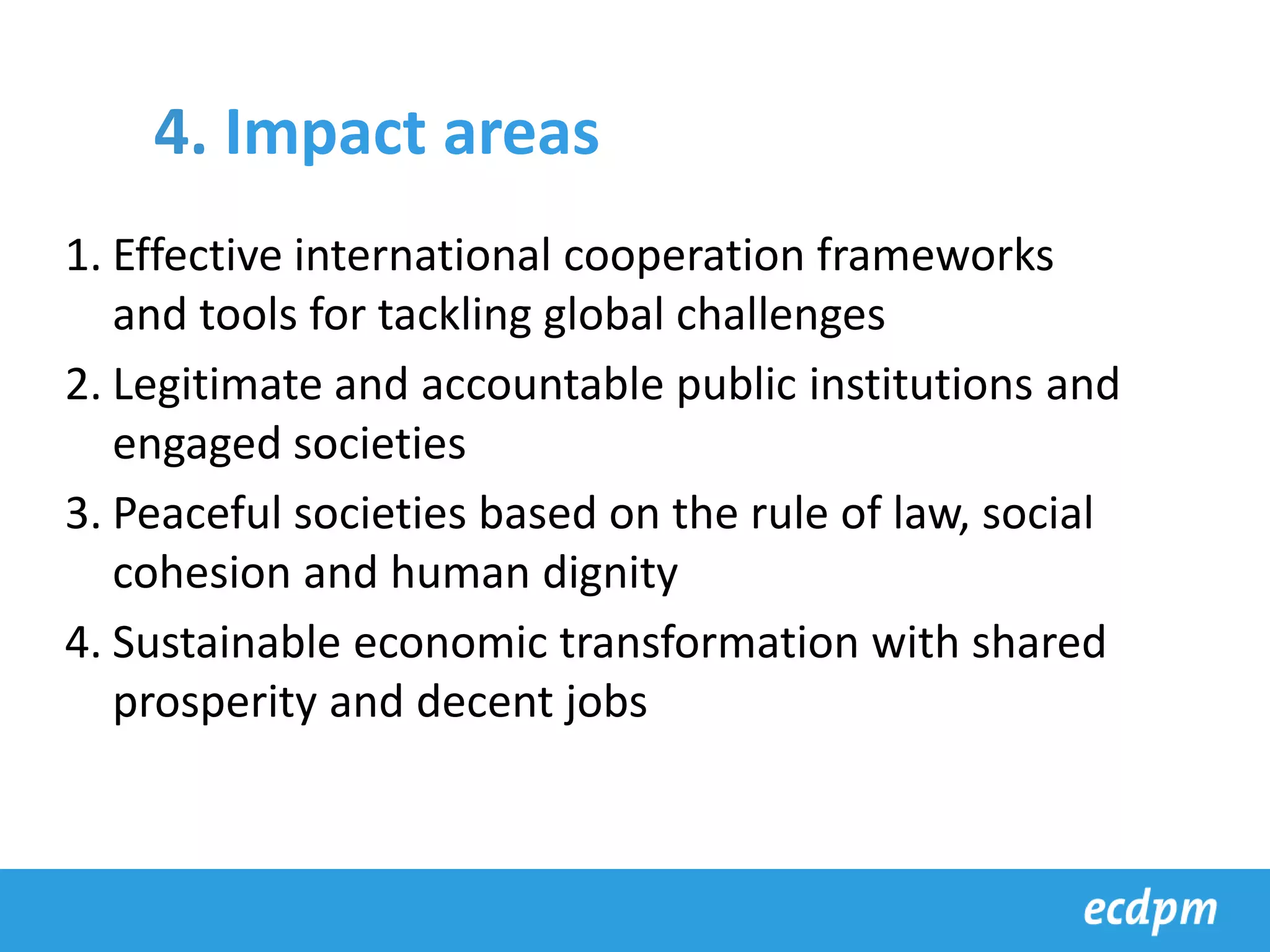
1. Effective international cooperation frameworks
and tools for tackling global challenges
2. Legitimate and accountable public institutions and
engaged societies
3. Peaceful societies based on the rule of law, social
cohesion and human dignity
4. Sustainable economic transformation with shared
prosperity and decent jobs
4. Impact areas
5. Institutional partners
and funding resources
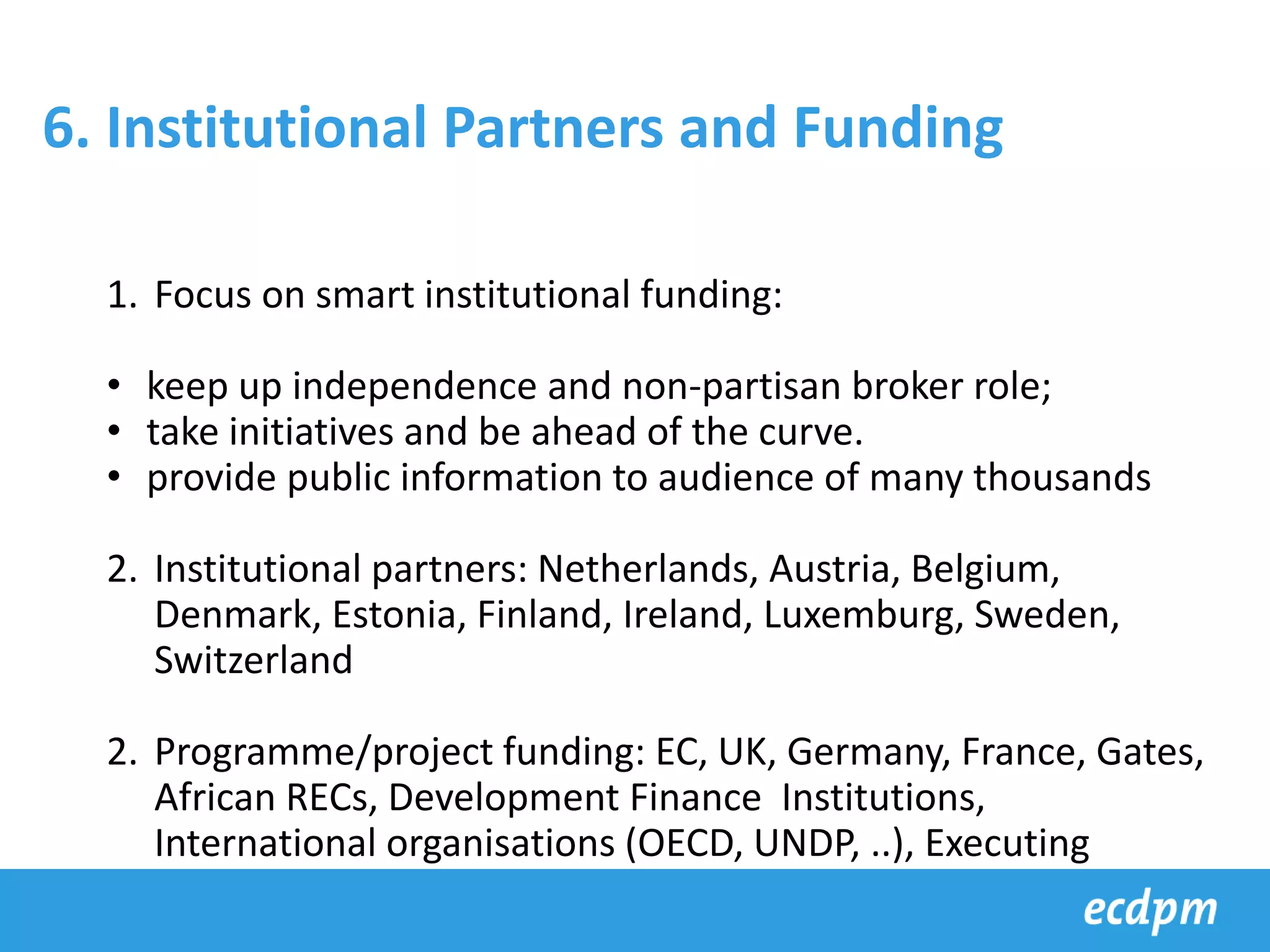
1. Focus on smart institutional funding:
• keep up independence and non-partisan broker role;
• take initiatives and be ahead of the curve.
• provide public information to audience of many thousands
2. Institutional partners: Netherlands, Austria, Belgium,
Denmark, Estonia, Finland, Ireland, Luxemburg, Sweden,
Switzerland
2. Programme/project funding: EC, UK, Germany, France, Gates,
African RECs, Development Finance Institutions,
International organisations (OECD, UNDP, ..), Executing
agencies such as GIZ, SIDA, BTC, ADA, etc
6. Institutional Partners and Funding
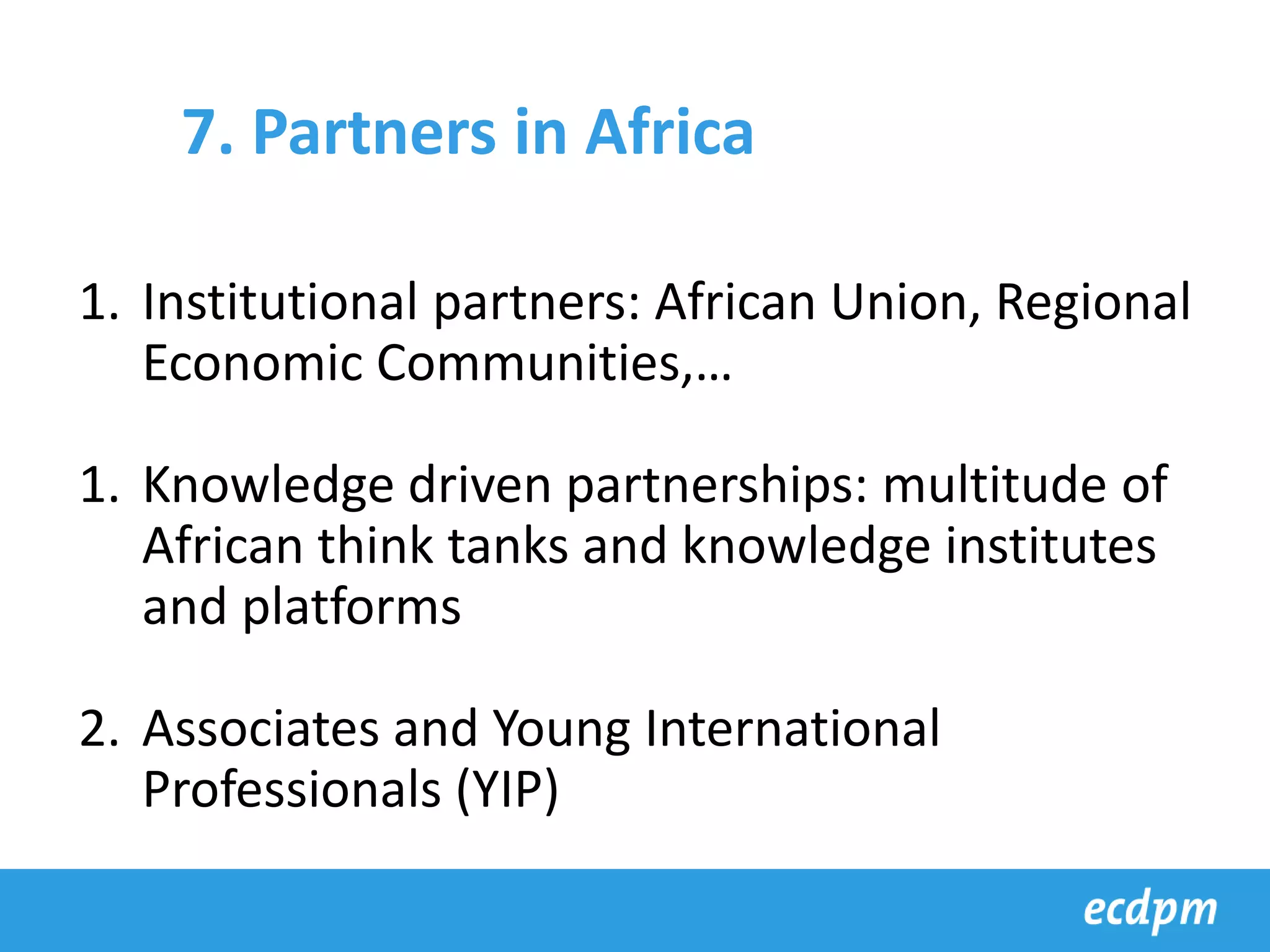
7. Partners in Africa
1. Institutional partners: African Union, Regional
Economic Communities,…
1. Knowledge driven partnerships: multitude of
African think tanks and knowledge institutes
and platforms
2. Associates and Young International
Professionals (YIP)
7. Partners in Africa
Thank you!
www.ecdpm.org
European Centre for Development Policy Management

How does ECDPM operate as a “think-and-do tank” in a changing development context?

  • 1.
    How does ECDPMoperate as a “think-and-do tank” in a changing development context? Mandate, roles, strategy, impact, partners and funding
  • 2.
    Content of thepresentation 1. Mandate 2. Roles and value added 3. Strategy and areas of work 2017-21 4. Impact areas 5. Institutional partners and resources 6. African partners
  • 3.
  • 4.
    • Leading independentEuropean think & do tank (established 1986) • Mission: promote international cooperation that can effectively address key global development challenges and generate inclusive and sustainable solutions • Linking policy and practice: working towards the effective implementation of more coherent and integrated development policies 1. ECDPM’s mandate
  • 5.
  • 6.
    • Board: comprises8 members from Europe and Africa, current chair: Nigerian • Structure: Director and Deputy Director, 6 programmes, a Learning and Quality Support Unit and several task forces for new areas of work • Staff: Some 65 professionals, including 25 support staff, from diff. European and African background • Offices: Maastricht, HQ (The Netherlands) and Brussels (Belgium) 2. Governance and inst. structure
  • 7.
    3. Roles andvalue added
  • 8.
    3. A combinationof 3 core roles Providing independent politically-informed and evidence based research, analysis and advice Facilitating uptake of knowledge through dialogue, support to implementation, smart communications and knowledge management Acting as a non-partisan broker, leveraging our expertise, knowledge and network in Europe, Africa and the global world (Working with a broad range of partners throughout the word)
  • 9.
    4. Strategy andAreas of Work (2017- 2021)
  • 10.
    1. European ExternalAffairs 2. African institutions 3. Security and Resilience 4. Migration 5. Economic and Agricultural Transformation 1. Trade, Investment & Finance 2. Agricultural Transformation for Food Security 3. Private sector engagement 4. Regional Integration 6. Economic Diplomacy 4. Strategy and areas of work
  • 11.
  • 12.
    1. Effective internationalcooperation frameworks and tools for tackling global challenges 2. Legitimate and accountable public institutions and engaged societies 3. Peaceful societies based on the rule of law, social cohesion and human dignity 4. Sustainable economic transformation with shared prosperity and decent jobs 4. Impact areas
  • 13.
  • 14.
    1. Focus onsmart institutional funding: • keep up independence and non-partisan broker role; • take initiatives and be ahead of the curve. • provide public information to audience of many thousands 2. Institutional partners: Netherlands, Austria, Belgium, Denmark, Estonia, Finland, Ireland, Luxemburg, Sweden, Switzerland 2. Programme/project funding: EC, UK, Germany, France, Gates, African RECs, Development Finance Institutions, International organisations (OECD, UNDP, ..), Executing agencies such as GIZ, SIDA, BTC, ADA, etc 6. Institutional Partners and Funding
  • 15.
  • 16.
    1. Institutional partners:African Union, Regional Economic Communities,… 1. Knowledge driven partnerships: multitude of African think tanks and knowledge institutes and platforms 2. Associates and Young International Professionals (YIP) 7. Partners in Africa
  • 17.
    Thank you! www.ecdpm.org European Centrefor Development Policy Management