1) There are several stages of acquiring a first language from birth to age 12, involving babbling, first words, grammar development, and conversational skills.
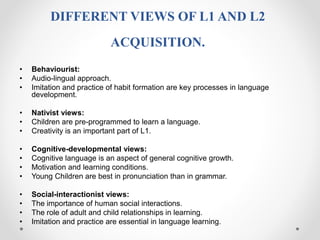
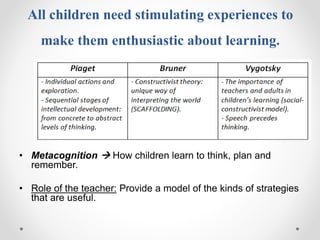
2) Views of first and second language acquisition include behaviorist, nativist, cognitive-developmental, and social-interactionist perspectives incorporating imitation, practice, motivation, and social relationships.
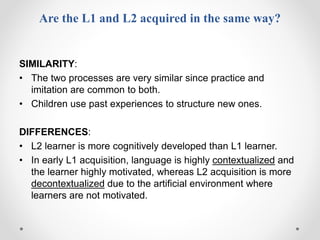
3) While first and second language acquisition share similarities through practice and imitation, second language learners are more cognitively developed but less immersed than first language learners.