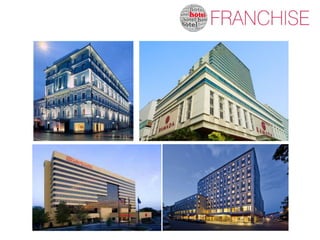
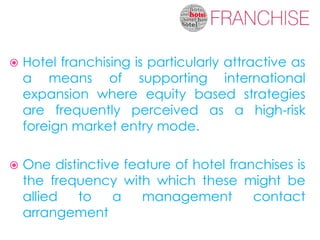
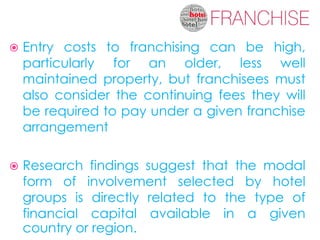
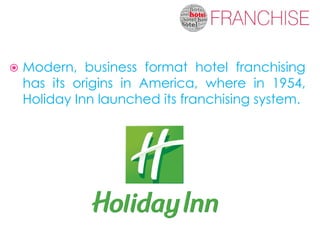
HOTEL FRANCHISE
   Hotel franchising is particularly attractive as
    a means of supporting international
    expansion where equity based strategies
    are frequently perceived as a high-risk
    foreign market entry mode.

   One distinctive feature of hotel franchises is
    the frequency with which these might be
    allied   to   a    management        contact
    arrangement
   Entry costs to franchising can be high,
    particularly for an older, less well
    maintained property, but franchisees must
    also consider the continuing fees they will
    be required to pay under a given franchise
    arrangement

   Research findings suggest that the modal
    form of involvement selected by hotel
    groups is directly related to the type of
    financial capital available in a given
    country or region.
   Modern, business format hotel franchising
    has its origins in America, where in 1954,
    Holiday Inn launched its franchising system.
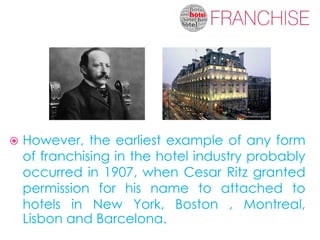
   However, the earliest example of any form
    of franchising in the hotel industry probably
    occurred in 1907, when Cesar Ritz granted
    permission for his name to attached to
    hotels in New York, Boston , Montreal,
    Lisbon and Barcelona.
   Hotel organization with established brand
    names and market reputations use
    franchising as a relatively low risk method to
    expand their chain system.

   It is particularly attractive as a means of
    supporting international expansion where
    based strategies are frequently perceived
    as a high risk foreign market entry mode.
   One distinctive feature of hotel franchises is
    the frequency with which these might be
    allied to a management contract
    arrangement.

   The owner contracts with a franchisor or a
    third party management firm to undertake
    the day-to-day operation of the franchised
    property.
   A hotel franchise involves an agreement
    between a hotel company ( franchisor) and a
    hotel owner (franchisee) that enable the latter
    party gain access to the use of the former’s
    brand name and associated support services
    in return for payment of the prescribed fees.

   Agreements will normally be for a period of
    ten to twenty years, with the franchise
    duration often directly linked to the life of any
    mortgage applying to the hotel property.
   Typically, a franchise agreement will involve
    a one-off, up-front payment plus ongoing
    fees.

   Fundamentally, the existing of business
    format franchising is a recognition that
    capital intensive assets and knowledge-
    based assets can be separate.
   The franchisee undertakes the necessary
    investment in capital assets.

    › Hotel building
    › Plant
    › Furnishing
    › Fitting
   And then enters into a franchise agreement to
    access the value-adding services of the
    franchisor.
     › Brand name
     › Reputation


   Which facilitate the market positioning of the
    property, plus addition services such as
    › Operating procedures
    › Controls
    › Marketing
    › Reservation system
   The franchise enable the hotel owner to
    enhance the return from the investment made
    in the capital assets after payroll costs,
    franchise fees are typically the largest
    operating expense for many hotels.
THANK YOU
   Credit: Pryn

Hotel franchise

  • 1.
  • 3.
    Hotel franchising is particularly attractive as a means of supporting international expansion where equity based strategies are frequently perceived as a high-risk foreign market entry mode.  One distinctive feature of hotel franchises is the frequency with which these might be allied to a management contact arrangement
  • 4.
    Entry costs to franchising can be high, particularly for an older, less well maintained property, but franchisees must also consider the continuing fees they will be required to pay under a given franchise arrangement  Research findings suggest that the modal form of involvement selected by hotel groups is directly related to the type of financial capital available in a given country or region.
  • 5.
    Modern, business format hotel franchising has its origins in America, where in 1954, Holiday Inn launched its franchising system.
  • 6.
    However, the earliest example of any form of franchising in the hotel industry probably occurred in 1907, when Cesar Ritz granted permission for his name to attached to hotels in New York, Boston , Montreal, Lisbon and Barcelona.
  • 7.
    Hotel organization with established brand names and market reputations use franchising as a relatively low risk method to expand their chain system.  It is particularly attractive as a means of supporting international expansion where based strategies are frequently perceived as a high risk foreign market entry mode.
  • 8.
    One distinctive feature of hotel franchises is the frequency with which these might be allied to a management contract arrangement.  The owner contracts with a franchisor or a third party management firm to undertake the day-to-day operation of the franchised property.
  • 9.
    A hotel franchise involves an agreement between a hotel company ( franchisor) and a hotel owner (franchisee) that enable the latter party gain access to the use of the former’s brand name and associated support services in return for payment of the prescribed fees.  Agreements will normally be for a period of ten to twenty years, with the franchise duration often directly linked to the life of any mortgage applying to the hotel property.
  • 10.
    Typically, a franchise agreement will involve a one-off, up-front payment plus ongoing fees.  Fundamentally, the existing of business format franchising is a recognition that capital intensive assets and knowledge- based assets can be separate.
  • 11.
    The franchisee undertakes the necessary investment in capital assets. › Hotel building › Plant › Furnishing › Fitting
  • 12.
    And then enters into a franchise agreement to access the value-adding services of the franchisor. › Brand name › Reputation  Which facilitate the market positioning of the property, plus addition services such as › Operating procedures › Controls › Marketing › Reservation system
  • 13.
    The franchise enable the hotel owner to enhance the return from the investment made in the capital assets after payroll costs, franchise fees are typically the largest operating expense for many hotels.
  • 14.
    THANK YOU Credit: Pryn