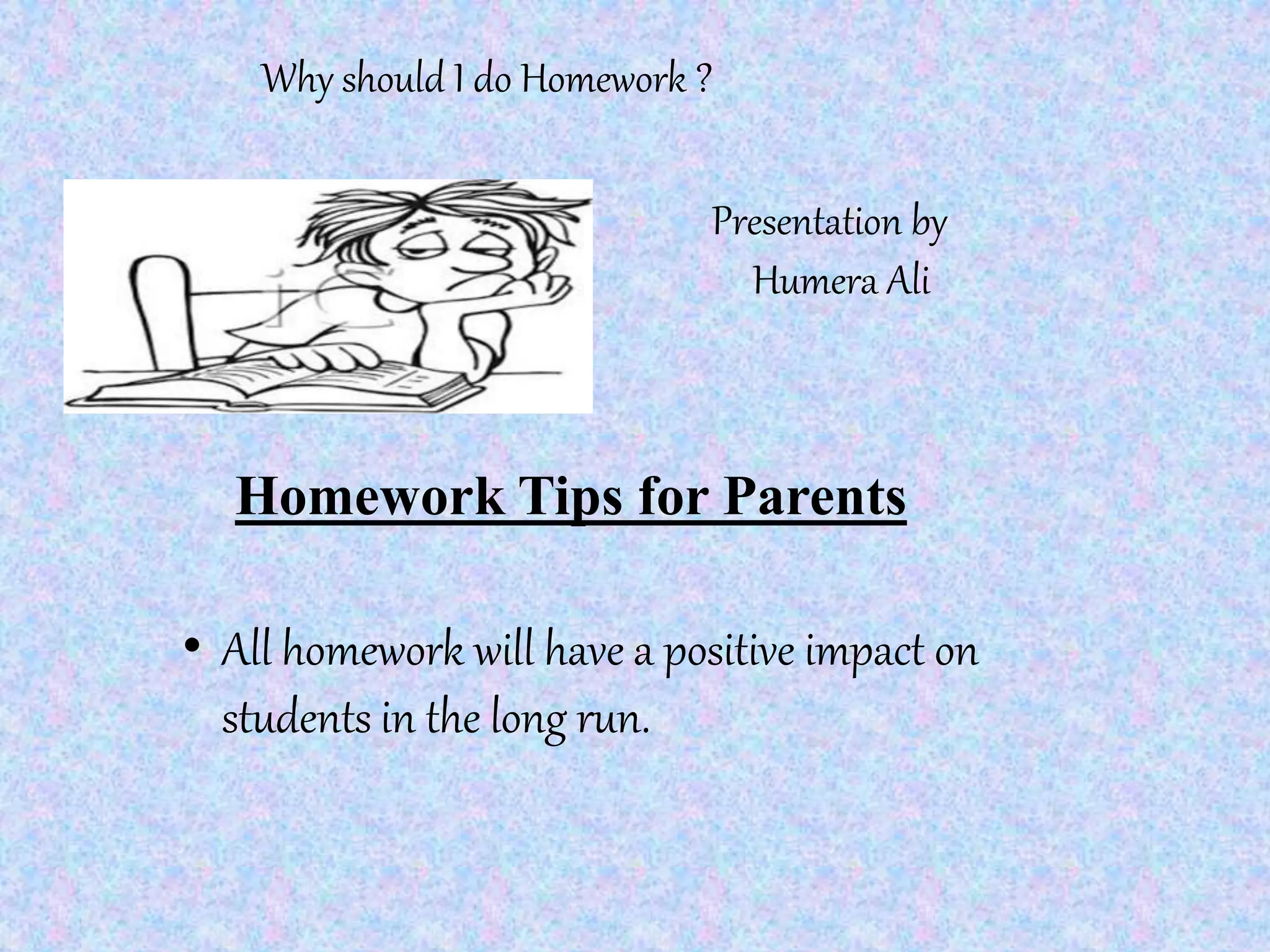
Why should I do Homework ?
Homework Tips for Parents
• All homework will have a positive impact on
students in the long run.
Presentation by
Humera Ali
• Be positive about homework.
• Help your child with time management
• When your child asks for help, provide guidance, not answers .
 Stay informed about your child’s school
assignments.
ď‚§ Help your child figure out what is hard homework
and what is easy homework.
ď‚§ Reward progress in homework
ď‚§ Have your child read aloud to you every night.
ď‚§ Choose a quiet place, free from distractions, for your
child to do his nightly reading assignments.
ď‚§ As your child reads, point out spelling and sound
patterns such as cat, pat, hat.
ď‚§ When your child reads aloud to you and makes
a mistake, point out words she has
missed and help her to read the word correctly.
ď‚§ After your child has stopped to correct a word
he has read, have him go back and reread the
entire sentence from the beginning to make
sure he understands what the sentence is
saying.
ď‚§ Ask your child to tell you in her own words
what happened in a story.
 To check your child’s understanding of
what he is reading, occasionally pause and
ask your child questions about the
characters and events in the story.
ď‚§ Ask your child why she thinks a character acted in a
certain way and ask your child to support her answer
with information from the story.
ď‚§ Before getting to the end of a story, ask your child
what he thinks will happen next and why.
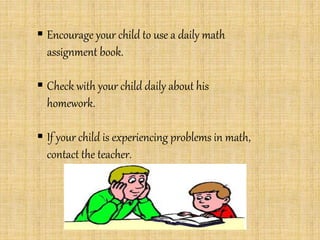
ď‚§ Encourage your child to use a daily math
assignment book.
ď‚§ Check with your child daily about his
homework.
ď‚§ If your child is experiencing problems in math,
contact the teacher.
ď‚§ Check in with the teacher and ask what
you can do to help.

Homework Tips for Parents

  • 1.
    Why should Ido Homework ? Homework Tips for Parents • All homework will have a positive impact on students in the long run. Presentation by Humera Ali
  • 2.
    • Be positiveabout homework. • Help your child with time management • When your child asks for help, provide guidance, not answers .
  • 3.
     Stay informedabout your child’s school assignments.  Help your child figure out what is hard homework and what is easy homework.  Reward progress in homework
  • 4.
    ď‚§ Have yourchild read aloud to you every night. ď‚§ Choose a quiet place, free from distractions, for your child to do his nightly reading assignments. ď‚§ As your child reads, point out spelling and sound patterns such as cat, pat, hat.
  • 5.
    ď‚§ When yourchild reads aloud to you and makes a mistake, point out words she has missed and help her to read the word correctly. ď‚§ After your child has stopped to correct a word he has read, have him go back and reread the entire sentence from the beginning to make sure he understands what the sentence is saying.
  • 6.
     Ask yourchild to tell you in her own words what happened in a story.  To check your child’s understanding of what he is reading, occasionally pause and ask your child questions about the characters and events in the story.
  • 7.
    ď‚§ Ask yourchild why she thinks a character acted in a certain way and ask your child to support her answer with information from the story. ď‚§ Before getting to the end of a story, ask your child what he thinks will happen next and why.
  • 8.
    ď‚§ Encourage yourchild to use a daily math assignment book. ď‚§ Check with your child daily about his homework. ď‚§ If your child is experiencing problems in math, contact the teacher.
  • 9.
    ď‚§ Check inwith the teacher and ask what you can do to help.