Jesselyn C. Hernandez
Instructor
What is Home Management?
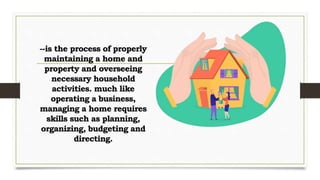
--is the process of properly
maintaining a home and
property and overseeing
necessary household
activities. much like
operating a business,
managing a home requires
skills such as planning,
organizing, budgeting and
directing.
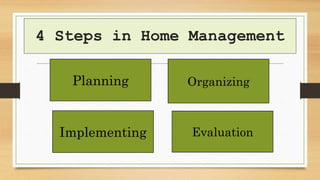
4 Steps in Home Management
Planning Organizing
Implementing Evaluation
1.Planning
•Set up Goals.
Steps in
Planning
• Recognizing Problem
• Searching for various
alternatives
• Choosing between
alternatives
• Acting to carry out the
plan
• Accepting the
consequences
2.Organizing
• This involves the division of
work among family members.
• The act of organizing entails
splitting and grouping tasks.
They are then distributed to all
of the participants.
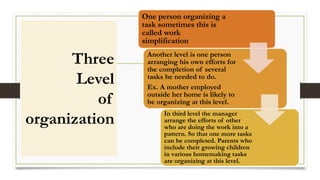
Three
Level
of
organization
One person organizing a
task sometimes this is
called work
simplification
Another level is one person
arranging his own efforts for
the completion of several
tasks he needed to do.
Ex. A mother employed
outside her home is likely to
be organizing at this level.
In third level the manager
arrange the efforts of other
who are doing the work into a
pattern. So that one more tasks
can be completed. Parents who
include their growing children
in various homemaking tasks
are organizing at this level.
3.Implementing
• This refers to the process of
executing the plans and
performing the task given to
each member.
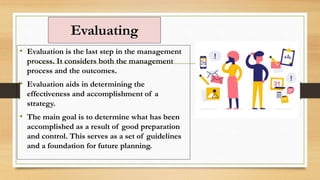
Evaluating
• Evaluation is the last step in the management
process. It considers both the management
process and the outcomes.
• Evaluation aids in determining the
effectiveness and accomplishment of a
strategy.
• The main goal is to determine what has been
accomplished as a result of good preparation
and control. This serves as a set of guidelines
and a foundation for future planning.
Two types of evaluation
*GENERAL EVALUATION
-It might be casual and
subjective. Without
analyzing the outcome
thoroughly, a manager may
recognize a job as good or
bad in a given situation.
*DETAILED EVALUATION
-It is an elaborate type of
evaluation. This means
determining the degree of
excellence of the managerial job
of the home.
-Management processes involves
planning, organizing,
implementing, controlling and
evaluating the things which a
family possess in order to achieve
goals.
Resources
Manpower
Resources
Material
resources
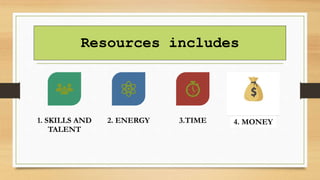
Resources includes
1. SKILLS AND
TALENT
2. ENERGY 3.TIME 4. MONEY
1. Skills and
Talent
• -It is important that these
abilities and talents should
be used for the
improvement not only of
the individual but also of
other persons.
2. Energy
• The amount of energy available to
every member depends on his or her
health condition, age, sex, interest,
and his or her outlook in life
especially toward work.
3.Time
One has to make use of it
wisely, profitably, and
efficiently in performing
assigned tasks
4. Money
Money is important only
as a tool to buy what is
needed in doing a task.
Importance of
Schedule in
Management
A schedule is a plan of
work for a certain period
of time.
The Family Budget
A budget is the amount of money
set aside for planned expenses.
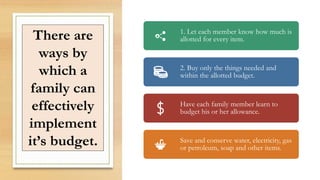
There are
ways by
which a
family can
effectively
implement
it’s budget.
1. Let each member know how much is
allotted for every item.
2. Buy only the things needed and
within the allotted budget.
Have each family member learn to
budget his or her allowance.
Save and conserve water, electricity, gas
or petroleum, soap and other items.
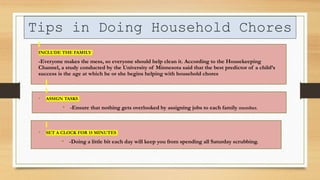
Tips in Doing Household Chores
INCLUDE THE FAMILY
-Everyone makes the mess, so everyone should help clean it. According to the Housekeeping
Channel, a study conducted by the University of Minnesota said that the best predictor of a child’s
success is the age at which he or she begins helping with household chores
• ASSIGN TASKS
• -Ensure that nothing gets overlooked by assigning jobs to each family member.
• SET A CLOCK FOR 15 MINUTES
• -Doing a little bit each day will keep you from spending all Saturday scrubbing.
HAVE SPACE FOR SUPPLIES
-Start by designating one place to store all of your cleaning supplies
BREAK HOUSE CHORES INTO CHUNKS
- Create separate lists for chores that need to be done daily, weekly and monthly,
Maintain focus on just what needs to be done at that specific time.
DEVELOP TIME AWARENESS
-Don’t leave something half done. “Monitor how long each task takes so you can carve
out enough time to accomplish each of your goals”.
CLEAN AS YOU GO
-Teach children to rinse the sink after brushing teeth and empty trash containers when
they’re full, For these often-used spots, consider storing cleaning wipes under the sinks
that are ready for a quick clean after baths are done”.
KEEP IT TOGETHER
-Keep item organized. For example, all coffee supplies go with the coffee maker, so it’s
easy to clean up quickly.
DESIGNATE A DAY FOR LAUNDRY
-Teach the kids that on Saturday you always strip the beds and sort the laundry
Importance of Home
Management
• Managing a house, like running a company,
necessitates skills like planning arranging,
budgeting, and directing. Effective home
management is critical for preserving the
property’s condition as well as the family’s overall
financial well-being
Home Management 1.1.pptx

Home Management 1.1.pptx

  • 1.
  • 2.
    What is HomeManagement?
  • 3.
    --is the processof properly maintaining a home and property and overseeing necessary household activities. much like operating a business, managing a home requires skills such as planning, organizing, budgeting and directing.
  • 4.
    4 Steps inHome Management Planning Organizing Implementing Evaluation
  • 5.
  • 6.
    Steps in Planning • RecognizingProblem • Searching for various alternatives • Choosing between alternatives • Acting to carry out the plan • Accepting the consequences
  • 7.
    2.Organizing • This involvesthe division of work among family members. • The act of organizing entails splitting and grouping tasks. They are then distributed to all of the participants.
  • 8.
    Three Level of organization One person organizinga task sometimes this is called work simplification Another level is one person arranging his own efforts for the completion of several tasks he needed to do. Ex. A mother employed outside her home is likely to be organizing at this level. In third level the manager arrange the efforts of other who are doing the work into a pattern. So that one more tasks can be completed. Parents who include their growing children in various homemaking tasks are organizing at this level.
  • 9.
    3.Implementing • This refersto the process of executing the plans and performing the task given to each member.
  • 10.
    Evaluating • Evaluation isthe last step in the management process. It considers both the management process and the outcomes. • Evaluation aids in determining the effectiveness and accomplishment of a strategy. • The main goal is to determine what has been accomplished as a result of good preparation and control. This serves as a set of guidelines and a foundation for future planning.
  • 11.
    Two types ofevaluation *GENERAL EVALUATION -It might be casual and subjective. Without analyzing the outcome thoroughly, a manager may recognize a job as good or bad in a given situation. *DETAILED EVALUATION -It is an elaborate type of evaluation. This means determining the degree of excellence of the managerial job of the home. -Management processes involves planning, organizing, implementing, controlling and evaluating the things which a family possess in order to achieve goals.
  • 12.
  • 13.
    Resources includes 1. SKILLSAND TALENT 2. ENERGY 3.TIME 4. MONEY
  • 14.
    1. Skills and Talent •-It is important that these abilities and talents should be used for the improvement not only of the individual but also of other persons.
  • 15.
    2. Energy • Theamount of energy available to every member depends on his or her health condition, age, sex, interest, and his or her outlook in life especially toward work.
  • 16.
    3.Time One has tomake use of it wisely, profitably, and efficiently in performing assigned tasks
  • 17.
    4. Money Money isimportant only as a tool to buy what is needed in doing a task.
  • 18.
    Importance of Schedule in Management Aschedule is a plan of work for a certain period of time.
  • 19.
    The Family Budget Abudget is the amount of money set aside for planned expenses.
  • 20.
    There are ways by whicha family can effectively implement it’s budget. 1. Let each member know how much is allotted for every item. 2. Buy only the things needed and within the allotted budget. Have each family member learn to budget his or her allowance. Save and conserve water, electricity, gas or petroleum, soap and other items.
  • 21.
    Tips in DoingHousehold Chores INCLUDE THE FAMILY -Everyone makes the mess, so everyone should help clean it. According to the Housekeeping Channel, a study conducted by the University of Minnesota said that the best predictor of a child’s success is the age at which he or she begins helping with household chores • ASSIGN TASKS • -Ensure that nothing gets overlooked by assigning jobs to each family member. • SET A CLOCK FOR 15 MINUTES • -Doing a little bit each day will keep you from spending all Saturday scrubbing.
  • 22.
    HAVE SPACE FORSUPPLIES -Start by designating one place to store all of your cleaning supplies BREAK HOUSE CHORES INTO CHUNKS - Create separate lists for chores that need to be done daily, weekly and monthly, Maintain focus on just what needs to be done at that specific time. DEVELOP TIME AWARENESS -Don’t leave something half done. “Monitor how long each task takes so you can carve out enough time to accomplish each of your goals”.
  • 23.
    CLEAN AS YOUGO -Teach children to rinse the sink after brushing teeth and empty trash containers when they’re full, For these often-used spots, consider storing cleaning wipes under the sinks that are ready for a quick clean after baths are done”. KEEP IT TOGETHER -Keep item organized. For example, all coffee supplies go with the coffee maker, so it’s easy to clean up quickly. DESIGNATE A DAY FOR LAUNDRY -Teach the kids that on Saturday you always strip the beds and sort the laundry
  • 24.
    Importance of Home Management •Managing a house, like running a company, necessitates skills like planning arranging, budgeting, and directing. Effective home management is critical for preserving the property’s condition as well as the family’s overall financial well-being