

Holy Work and Holy Leisure Oblate Retreat Saint Paul’s Monastery 29 September 2007 Sister Edith Bogue, OSB
Work Work done in the Benedictine tradition is supposed to be regular;  it is supposed  to be productive,  it is supposed  to be worthwhile,  but it is not supposed  to be impossible. Joan Chittister
Why Work? God works. God’s work never ends We are made in  God’s image Jesus rested in order to go out in ministry We work to survive Food and shelter Comfort and joy To learn and grow
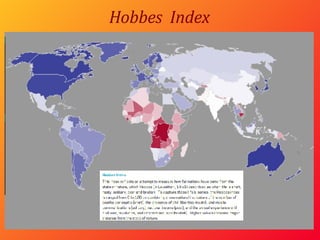
Hobbes  Index
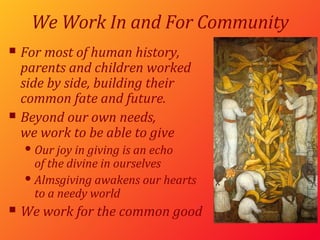
We Work In and For Community For most of human history, parents and children worked side by side, building their  common fate and future. Beyond our own needs, we work to be able to give Our joy in giving is an echo  of the divine in ourselves Almsgiving awakens our hearts to a needy world We work for the common good
Distraction Complexity Work and family Work and church Work and recreation Expanding demands of work The reach of work Salaried work lacks the boundaries of hours Cell phone, text message, e-mail Telecommuting Pieper,  Leisure: The Basis of Culture (p. 66)
 
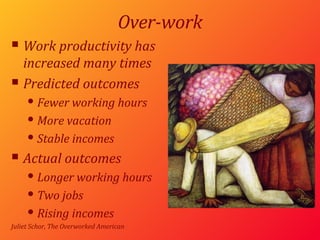
Work productivity has increased many times Predicted outcomes Fewer working hours More vacation Stable incomes Actual outcomes Longer working hours Two jobs Rising incomes Juliet Schor,  The Overworked American Over-work
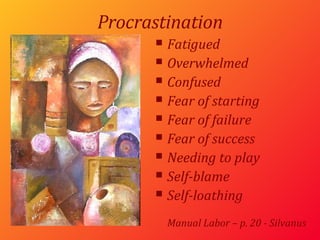
Procrastination Fatigued Overwhelmed Confused Fear of starting Fear of failure Fear of success Needing to play Self-blame Self-loathing Manual Labor – p. 20 - Silvanus
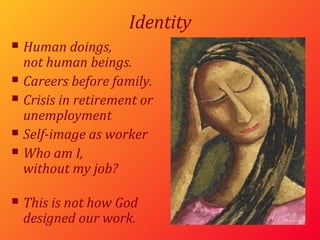
Identity Human doings,  not human beings. Careers before family. Crisis in retirement or unemployment Self-image as worker Who am I, without my job? This is not how God designed our work.
What in my work brings life to me and to the community? What in my work brings stress or distress to me, the community, or the larger world?
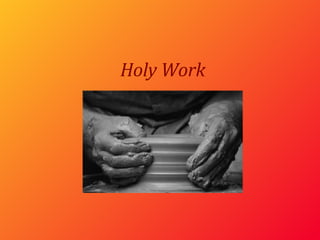
Holy Work
Scripture Work is mentioned hundreds of times Gods work is mentioned as often as human work Building, farming, restoring what was pillaged Religion is work: pilgrimage, sacrifice, prayer Jesus’ parables often include work Workers entrusted with masters’ goods Women working in the home Honest and dishonest workers Work is not directed to wealth. Martha is “distracted” by her work.
 
The Holy Rule Most of  The Rule  is about doing work Opus Dei , the work of prayer Hospitality, table service, mutual & community service Some ask, where is the spirituality of  The Rule ? The works of the monastic life are the tools of the spiritual craft (Ch. 4) Christ’s presence so permeates the world that the Benedictine encounters Christ dozens of times each day – and can serve him. Work is assigned based on personality (cellarer, porter), skills (reader, artistans) & strength (sick) Work of hospitality, and to “speak of holy things” (Saint Scholastica)
 
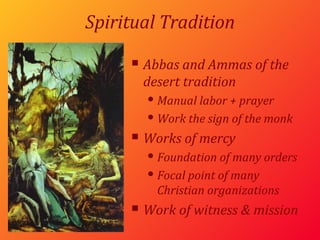
Spiritual Tradition Abbas and Ammas of the desert tradition Manual labor + prayer Work the sign of the monk Works of mercy Foundation of many orders Focal point of many Christian organizations Work of witness & mission
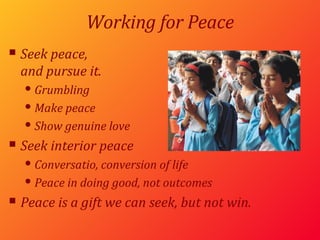
Working for Peace Seek peace,  and pursue it. Grumbling Make peace  Show genuine love Seek interior peace Conversatio , conversion of life Peace in doing good, not outcomes Peace is a gift we can seek, but not win.
Work of God First work is prayer:  Opus Dei Liturgy – the work of the people Eucharist – giving thanks and praise Vocation – called by God Early Protestants developed the concept of  calling in the lay life (not only religious or clerics) The work that is in front of you is the work that God has given you this day. Gifts are given for the good of all (1 Cor. 12) Discernment: who and what does God call you to be through this work?
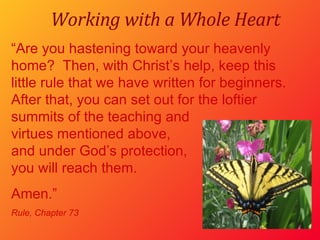
Working with a Whole Heart “ Are you hastening toward your heavenly home?  Then, with Christ’s help, keep this little rule that we have written for beginners.  After that, you can set out for the loftier summits of the teaching and  virtues mentioned above,  and under God’s protection,  you will reach them.  Amen.” Rule, Chapter 73
 

Holy Work

  • 1.
    Holy Work andHoly Leisure Oblate Retreat Saint Paul’s Monastery 29 September 2007 Sister Edith Bogue, OSB
  • 2.
    Work Work donein the Benedictine tradition is supposed to be regular; it is supposed to be productive, it is supposed to be worthwhile, but it is not supposed to be impossible. Joan Chittister
  • 3.
    Why Work? Godworks. God’s work never ends We are made in God’s image Jesus rested in order to go out in ministry We work to survive Food and shelter Comfort and joy To learn and grow
  • 4.
  • 5.
    We Work Inand For Community For most of human history, parents and children worked side by side, building their common fate and future. Beyond our own needs, we work to be able to give Our joy in giving is an echo of the divine in ourselves Almsgiving awakens our hearts to a needy world We work for the common good
  • 6.
    Distraction Complexity Workand family Work and church Work and recreation Expanding demands of work The reach of work Salaried work lacks the boundaries of hours Cell phone, text message, e-mail Telecommuting Pieper, Leisure: The Basis of Culture (p. 66)
  • 7.
  • 8.
    Work productivity hasincreased many times Predicted outcomes Fewer working hours More vacation Stable incomes Actual outcomes Longer working hours Two jobs Rising incomes Juliet Schor, The Overworked American Over-work
  • 9.
    Procrastination Fatigued OverwhelmedConfused Fear of starting Fear of failure Fear of success Needing to play Self-blame Self-loathing Manual Labor – p. 20 - Silvanus
  • 10.
    Identity Human doings, not human beings. Careers before family. Crisis in retirement or unemployment Self-image as worker Who am I, without my job? This is not how God designed our work.
  • 11.
    What in mywork brings life to me and to the community? What in my work brings stress or distress to me, the community, or the larger world?
  • 12.
  • 13.
    Scripture Work ismentioned hundreds of times Gods work is mentioned as often as human work Building, farming, restoring what was pillaged Religion is work: pilgrimage, sacrifice, prayer Jesus’ parables often include work Workers entrusted with masters’ goods Women working in the home Honest and dishonest workers Work is not directed to wealth. Martha is “distracted” by her work.
  • 14.
  • 15.
    The Holy RuleMost of The Rule is about doing work Opus Dei , the work of prayer Hospitality, table service, mutual & community service Some ask, where is the spirituality of The Rule ? The works of the monastic life are the tools of the spiritual craft (Ch. 4) Christ’s presence so permeates the world that the Benedictine encounters Christ dozens of times each day – and can serve him. Work is assigned based on personality (cellarer, porter), skills (reader, artistans) & strength (sick) Work of hospitality, and to “speak of holy things” (Saint Scholastica)
  • 16.
  • 17.
    Spiritual Tradition Abbasand Ammas of the desert tradition Manual labor + prayer Work the sign of the monk Works of mercy Foundation of many orders Focal point of many Christian organizations Work of witness & mission
  • 18.
    Working for PeaceSeek peace, and pursue it. Grumbling Make peace Show genuine love Seek interior peace Conversatio , conversion of life Peace in doing good, not outcomes Peace is a gift we can seek, but not win.
  • 19.
    Work of GodFirst work is prayer: Opus Dei Liturgy – the work of the people Eucharist – giving thanks and praise Vocation – called by God Early Protestants developed the concept of calling in the lay life (not only religious or clerics) The work that is in front of you is the work that God has given you this day. Gifts are given for the good of all (1 Cor. 12) Discernment: who and what does God call you to be through this work?
  • 20.
    Working with aWhole Heart “ Are you hastening toward your heavenly home? Then, with Christ’s help, keep this little rule that we have written for beginners. After that, you can set out for the loftier summits of the teaching and virtues mentioned above, and under God’s protection, you will reach them. Amen.” Rule, Chapter 73
  • 21.