By:
Samreen Soomro
Afshan Jokhio
Ambreen Bashir
Abdul Nasir
Health Information System (HIS): Its
Importance and Assessment
CONTENTS
2
 Introduction
 Goals
 Importance Of HIS
 Components Of HIS
 Basic Steps For HIS Assessment
 Assessment Of HIS
 Conclusion
 Recommendation
Goal
 Improve participant’s knowledge on health
information system.
3
Definitions
 Information System
Provide specific information support to the decision-
making process at each level of an organization
(Winter, A. 2010)
 Health Information System (HIS)
 An information processing and storing subsystem
of a health care organization.
 May be a single institution(a hospital) or a group
of health care institutions (health care network)
4
Importance of a Health Information
System
 Produces information needed by
 Patients, communities, service providers,
programmer
managers, policy-makers, providers of funds,
global
agencies and organizations
 Information used for
 Better management, assess coverage and
quality of services; costs and expenditures.
 Detect and control emerging and endemic
health problems
 Monitor progress towards health goals; and
promote equity.5
Importance of a Health Information
System
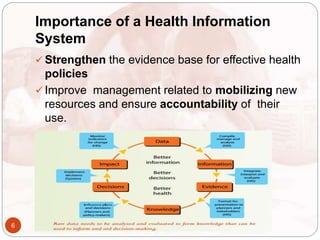
 Strengthen the evidence base for effective health
policies
 Improve management related to mobilizing new
resources and ensure accountability of their
use.
6
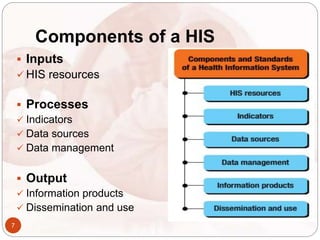
Components of a HIS
 Inputs
 HIS resources
 Processes
 Indicators
 Data sources
 Data management
 Output
 Information products
 Dissemination and use
7
Components of a HIS cont….
 HIS resource
 Legislative, regulatory and planning frameworks
 Personnel, finances, logistics support.
 Indicators
 Determinants of health; health system inputs,
outputs and outcomes.
 Data sources
 Individual records, service records and
resource records.
8
Components of a HIS cont….
 Data management
 Data collection, storage, quality-assurance and
flow, processing, compilation and analysis
 Information products
 Data transformed into information for evidence
and knowledge to shape health action
 Dissemination and use
 Making information readily accessible to decision-
makers
9
Basic Steps For HIS
Assessment:
10
 Formulate TOR
 Assembling and review information
 Confirmation of the services
 Identification of the indicators
 Designing & testing the assessment tools.
Continue……
11
 Prepare for field data collection
 Conduct the assessment
 Analyze the result and prepare report
 Formulate the recommendation and prepare
followup
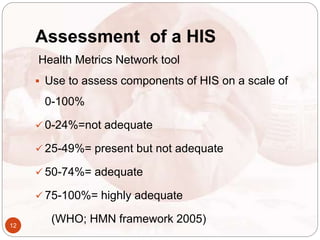
Assessment of a HIS
Health Metrics Network tool
 Use to assess components of HIS on a scale of
0-100%
 0-24%=not adequate
 25-49%= present but not adequate
 50-74%= adequate
 75-100%= highly adequate
(WHO; HMN framework 2005)12
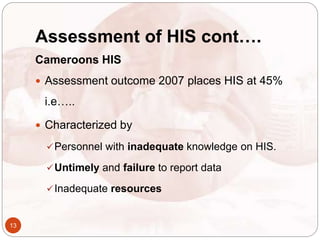
Assessment of HIS cont….
Cameroons HIS
 Assessment outcome 2007 places HIS at 45%
i.e…..
 Characterized by
Personnel with inadequate knowledge on HIS.
Untimely and failure to report data
Inadequate resources
13
Conclusion
 Better and stronger HIS can resolved
inadequacies in health systems.
 Awareness of the importance and components of
a HIS is a prerequisite to all those involved with
its activities
 Self -assessment of HIS is necessary for its
strengthening and use for better decisions and
better health.
14
Recommendations
 Assignment of skilled personnel to the HIS unit
accompanied by better remuneration
 The dissemination and use of information from
the system for decision-making.
 More emphasis on electronic than paper-based
data reporting
15
WE HOPE THIS WAS
INFORMATIVE
THANKS FOR YOUR KIND
ATTENTION
16

Hmis

  • 1.
    By: Samreen Soomro Afshan Jokhio AmbreenBashir Abdul Nasir Health Information System (HIS): Its Importance and Assessment
  • 2.
    CONTENTS 2  Introduction  Goals Importance Of HIS  Components Of HIS  Basic Steps For HIS Assessment  Assessment Of HIS  Conclusion  Recommendation
  • 3.
    Goal  Improve participant’sknowledge on health information system. 3
  • 4.
    Definitions  Information System Providespecific information support to the decision- making process at each level of an organization (Winter, A. 2010)  Health Information System (HIS)  An information processing and storing subsystem of a health care organization.  May be a single institution(a hospital) or a group of health care institutions (health care network) 4
  • 5.
    Importance of aHealth Information System  Produces information needed by  Patients, communities, service providers, programmer managers, policy-makers, providers of funds, global agencies and organizations  Information used for  Better management, assess coverage and quality of services; costs and expenditures.  Detect and control emerging and endemic health problems  Monitor progress towards health goals; and promote equity.5
  • 6.
    Importance of aHealth Information System  Strengthen the evidence base for effective health policies  Improve management related to mobilizing new resources and ensure accountability of their use. 6
  • 7.
    Components of aHIS  Inputs  HIS resources  Processes  Indicators  Data sources  Data management  Output  Information products  Dissemination and use 7
  • 8.
    Components of aHIS cont….  HIS resource  Legislative, regulatory and planning frameworks  Personnel, finances, logistics support.  Indicators  Determinants of health; health system inputs, outputs and outcomes.  Data sources  Individual records, service records and resource records. 8
  • 9.
    Components of aHIS cont….  Data management  Data collection, storage, quality-assurance and flow, processing, compilation and analysis  Information products  Data transformed into information for evidence and knowledge to shape health action  Dissemination and use  Making information readily accessible to decision- makers 9
  • 10.
    Basic Steps ForHIS Assessment: 10  Formulate TOR  Assembling and review information  Confirmation of the services  Identification of the indicators  Designing & testing the assessment tools.
  • 11.
    Continue…… 11  Prepare forfield data collection  Conduct the assessment  Analyze the result and prepare report  Formulate the recommendation and prepare followup
  • 12.
    Assessment of aHIS Health Metrics Network tool  Use to assess components of HIS on a scale of 0-100%  0-24%=not adequate  25-49%= present but not adequate  50-74%= adequate  75-100%= highly adequate (WHO; HMN framework 2005)12
  • 13.
    Assessment of HIScont…. Cameroons HIS  Assessment outcome 2007 places HIS at 45% i.e…..  Characterized by Personnel with inadequate knowledge on HIS. Untimely and failure to report data Inadequate resources 13
  • 14.
    Conclusion  Better andstronger HIS can resolved inadequacies in health systems.  Awareness of the importance and components of a HIS is a prerequisite to all those involved with its activities  Self -assessment of HIS is necessary for its strengthening and use for better decisions and better health. 14
  • 15.
    Recommendations  Assignment ofskilled personnel to the HIS unit accompanied by better remuneration  The dissemination and use of information from the system for decision-making.  More emphasis on electronic than paper-based data reporting 15
  • 16.
    WE HOPE THISWAS INFORMATIVE THANKS FOR YOUR KIND ATTENTION 16