HIV POLICY ISSUES 
Omid Zamani 
MD, MPH
POLICY: 
 a set of decisions that give rise to specific 
proposals for action. 
 A general rule adopted to influence and determine 
decisions or procedures. 
 Many people equate policy with legislation, but it 
also includes non-legislative decisions such as 
setting standards, allocating resources between 
organizations, changing the levels of subsidies or 
taxes or consulting specific groups in the policy-making 
process.
POLICY ISSUES 
Policy issues may include; 
 the absence of a policy, 
 an adverse or inadequate policy, or 
 the improper enforcement of a policy.
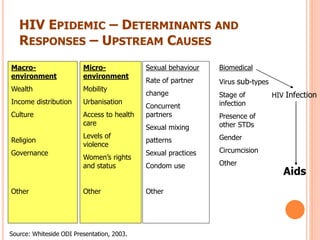
HIV EPIDEMIC – DETERMINANTS AND 
RESPONSES – UPSTREAM CAUSES 
Biomedical 
Virus sub-types 
Stage of 
infection 
Presence of 
other STDs 
Gender 
Circumcision 
Other 
HIV Infection 
Aids 
Sexual behaviour 
Rate of partner 
change 
Concurrent 
partners 
Sexual mixing 
patterns 
Sexual practices 
Condom use 
Other 
Micro-environment 
Mobility 
Urbanisation 
Access to health 
care 
Levels of 
violence 
Women’s rights 
and status 
Other 
Macro-environment 
Wealth 
Income distribution 
Culture 
Religion 
Governance 
Other 
Source: Whiteside ODI Presentation, 2003.
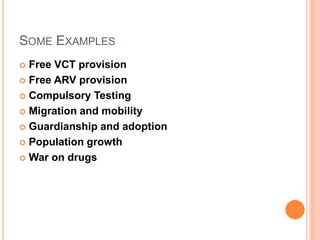
SOME EXAMPLES 
 Free VCT provision 
 Free ARV provision 
 Compulsory Testing 
 Migration and mobility 
 Guardianship and adoption 
 Population growth 
 War on drugs
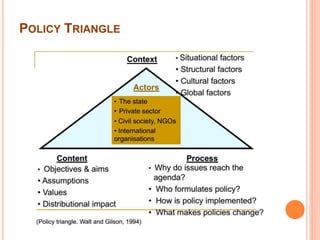
POLICY TRIANGLE
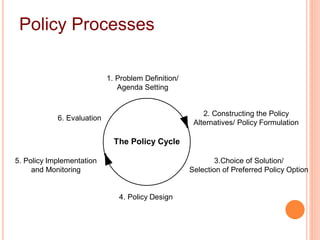
Policy Processes 
1. Problem Definition/ 
Agenda Setting 
2. Constructing the Policy 
Alternatives/ Policy Formulation 
3.Choice of Solution/ 
Selection of Preferred Policy Option 
4. Policy Design 
6. Evaluation 
5. Policy Implementation 
and Monitoring 
The Policy Cycle
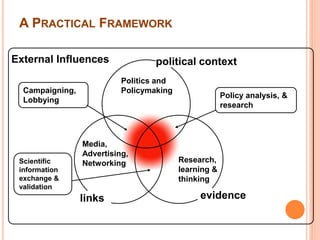
A PRACTICAL FRAMEWORK 
External Influences political context 
links evidence 
Campaigning, 
Lobbying 
Politics and 
Policymaking 
Media, 
Advertising, 
Networking Research, 
learning & 
thinking 
Scientific 
information 
exchange & 
validation 
Policy analysis, & 
research
USING THE FRAMEWORK 
 The external environment: Who are the key actors? What 
is their agenda? How do they influence the political context? 
 The political context: Is there political interest in change? Is 
there room for manoeuvre? How do they perceive the 
problem? 
 The evidence: Is it there? Is it relevant? Is it practically 
useful? Are the concepts familiar or new? Does it need re-packaging? 
 Links: Who are the key individuals? Are there existing 
networks to use? How best to transfer the information? The 
media? Campaigns?
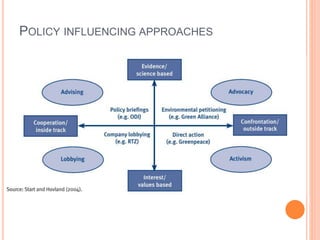
POLICY INFLUENCING APPROACHES
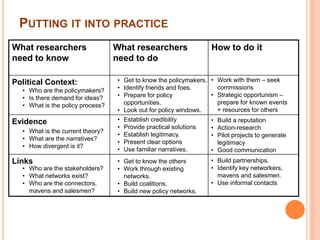
PUTTING IT INTO PRACTICE 
What researchers 
need to know 
What researchers 
need to do 
How to do it 
Political Context: 
• Who are the policymakers? 
• Is there demand for ideas? 
• What is the policy process? 
Evidence 
• What is the current theory? 
• What are the narratives? 
• How divergent is it? 
Links 
• Who are the stakeholders? 
• What networks exist? 
• Who are the connectors, 
mavens and salesmen? 
• Get to know the policymakers. 
• Identify friends and foes. 
• Prepare for policy 
opportunities. 
• Look out for policy windows. 
• Work with them – seek 
commissions 
• Strategic opportunism – 
prepare for known events 
+ resources for others 
• Establish credibility 
• Provide practical solutions 
• Establish legitimacy. 
• Present clear options 
• Use familiar narratives. 
• Build a reputation 
• Action-research 
• Pilot projects to generate 
legitimacy 
• Good communication 
• Get to know the others 
• Work through existing 
networks. 
• Build coalitions. 
• Build new policy networks. 
• Build partnerships. 
• Identify key networkers, 
mavens and salesmen. 
• Use informal contacts
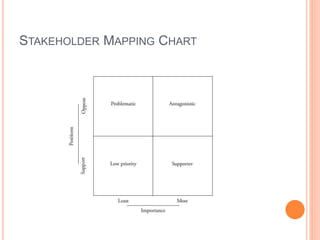
STAKEHOLDER MAPPING CHART
STAKEHOLDER ANALYSIS 
1. What are the stakeholders’ concerns and interest? 
2. What do the stakeholders expect from HIV 
programs in your district/region/ province? 
3. What do you need to do to meet the stakeholders’ 
expectations? Or to avoid confrontation?
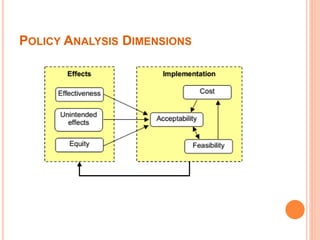
POLICY ANALYSIS DIMENSIONS
RESOURCES 
 A Framework for Analyzing Public Policies: Practical 
Guide, The National Collaborating Centre for Healthy Public 
Policy (NCCHPP), Canada, 2012 www.ncchpp.ca 
 Bridging the Gap between Research and Policy in 
Combating HIV/AIDS in Developing Countries. Overseas 
Development Institute, 2004 
 ROMA: a guide to policy engagement and influence. 
Overseas Development Institute, 2014 www.odi.org.uk/rapid/ 
 Evidence-Based Planning for Sustainability of 
Government Reproductive Health Services. PathFinder 
International, 2008 
 Advocacy Tools and Guidelines; Promoting Policy 
Change. CARE 2001 
 Evidence-informed Health Policy. presentation by Arash 
Rashidian MD PhD EMRO regional workshop on Knowledge 
Translation and Exchange, 2009
OMID ZAMANI 
MD, MPH 
 Researcher, Regional Knowledge Hub for HIV/AIDS 
Surveillance 
 Member of Medical and Health Sociology Scientific 
Group, Iranian Sociological Association 
 Member of Environment & Health Communication Sci 
entific Group, Iranian Association of Cultural Studies 
& Communication 
 Email: Omid@zamani.info 
 Web: http://zamani.info

Hiv policy issues

  • 1.
    HIV POLICY ISSUES Omid Zamani MD, MPH
  • 2.
    POLICY:  aset of decisions that give rise to specific proposals for action.  A general rule adopted to influence and determine decisions or procedures.  Many people equate policy with legislation, but it also includes non-legislative decisions such as setting standards, allocating resources between organizations, changing the levels of subsidies or taxes or consulting specific groups in the policy-making process.
  • 3.
    POLICY ISSUES Policyissues may include;  the absence of a policy,  an adverse or inadequate policy, or  the improper enforcement of a policy.
  • 4.
    HIV EPIDEMIC –DETERMINANTS AND RESPONSES – UPSTREAM CAUSES Biomedical Virus sub-types Stage of infection Presence of other STDs Gender Circumcision Other HIV Infection Aids Sexual behaviour Rate of partner change Concurrent partners Sexual mixing patterns Sexual practices Condom use Other Micro-environment Mobility Urbanisation Access to health care Levels of violence Women’s rights and status Other Macro-environment Wealth Income distribution Culture Religion Governance Other Source: Whiteside ODI Presentation, 2003.
  • 5.
    SOME EXAMPLES Free VCT provision  Free ARV provision  Compulsory Testing  Migration and mobility  Guardianship and adoption  Population growth  War on drugs
  • 6.
  • 7.
    Policy Processes 1.Problem Definition/ Agenda Setting 2. Constructing the Policy Alternatives/ Policy Formulation 3.Choice of Solution/ Selection of Preferred Policy Option 4. Policy Design 6. Evaluation 5. Policy Implementation and Monitoring The Policy Cycle
  • 8.
    A PRACTICAL FRAMEWORK External Influences political context links evidence Campaigning, Lobbying Politics and Policymaking Media, Advertising, Networking Research, learning & thinking Scientific information exchange & validation Policy analysis, & research
  • 9.
    USING THE FRAMEWORK  The external environment: Who are the key actors? What is their agenda? How do they influence the political context?  The political context: Is there political interest in change? Is there room for manoeuvre? How do they perceive the problem?  The evidence: Is it there? Is it relevant? Is it practically useful? Are the concepts familiar or new? Does it need re-packaging?  Links: Who are the key individuals? Are there existing networks to use? How best to transfer the information? The media? Campaigns?
  • 10.
  • 11.
    PUTTING IT INTOPRACTICE What researchers need to know What researchers need to do How to do it Political Context: • Who are the policymakers? • Is there demand for ideas? • What is the policy process? Evidence • What is the current theory? • What are the narratives? • How divergent is it? Links • Who are the stakeholders? • What networks exist? • Who are the connectors, mavens and salesmen? • Get to know the policymakers. • Identify friends and foes. • Prepare for policy opportunities. • Look out for policy windows. • Work with them – seek commissions • Strategic opportunism – prepare for known events + resources for others • Establish credibility • Provide practical solutions • Establish legitimacy. • Present clear options • Use familiar narratives. • Build a reputation • Action-research • Pilot projects to generate legitimacy • Good communication • Get to know the others • Work through existing networks. • Build coalitions. • Build new policy networks. • Build partnerships. • Identify key networkers, mavens and salesmen. • Use informal contacts
  • 12.
  • 13.
    STAKEHOLDER ANALYSIS 1.What are the stakeholders’ concerns and interest? 2. What do the stakeholders expect from HIV programs in your district/region/ province? 3. What do you need to do to meet the stakeholders’ expectations? Or to avoid confrontation?
  • 14.
  • 15.
    RESOURCES  AFramework for Analyzing Public Policies: Practical Guide, The National Collaborating Centre for Healthy Public Policy (NCCHPP), Canada, 2012 www.ncchpp.ca  Bridging the Gap between Research and Policy in Combating HIV/AIDS in Developing Countries. Overseas Development Institute, 2004  ROMA: a guide to policy engagement and influence. Overseas Development Institute, 2014 www.odi.org.uk/rapid/  Evidence-Based Planning for Sustainability of Government Reproductive Health Services. PathFinder International, 2008  Advocacy Tools and Guidelines; Promoting Policy Change. CARE 2001  Evidence-informed Health Policy. presentation by Arash Rashidian MD PhD EMRO regional workshop on Knowledge Translation and Exchange, 2009
  • 16.
    OMID ZAMANI MD,MPH  Researcher, Regional Knowledge Hub for HIV/AIDS Surveillance  Member of Medical and Health Sociology Scientific Group, Iranian Sociological Association  Member of Environment & Health Communication Sci entific Group, Iranian Association of Cultural Studies & Communication  Email: Omid@zamani.info  Web: http://zamani.info