SECG
Early Dwelling
Shift fromnomadic, hunter-gatherer system
to a combination of farming and hunting
Domestication of animals and plants
Created Societies of villages near caves or
along shores and streams
SECG
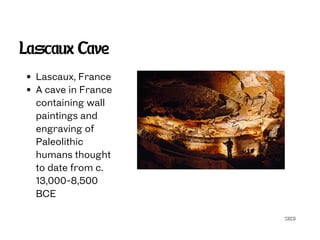
Lascaux Cave
Lascaux, France
Acave in France
containing wall
paintings and
engraving of
Paleolithic
humans thought
to date from c.
13,000-8,500
BCE
6.
SECG
Built Shelter
Primitive lifestylewas nomadic
Temporary shelter was designed in direct
response to climate, local materials, and
hunting patterns
Built with limited investment in time and
energy
SECG
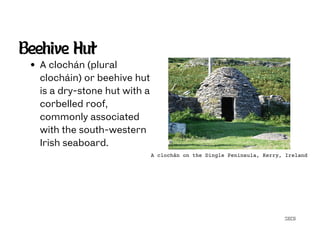
Beehive Hut
A clochán(plural
clocháin) or beehive hut
is a dry-stone hut with a
corbelled roof,
commonly associated
with the south-western
Irish seaboard.
A clochán on the Dingle Peninsula, Kerry, Ireland
SECG
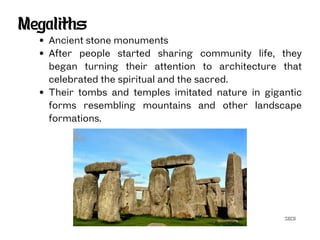
Megaliths
Ancient stone monuments
Afterpeople started sharing community life, they
began turning their attention to architecture that
celebrated the spiritual and the sacred.
Their tombs and temples imitated nature in gigantic
forms resembling mountains and other landscape
formations.
15.
SECG
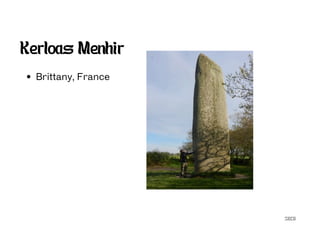
Menhir
Monolith: A prehistoricmonument consisting of an
upright stone, usually standing alone but sometimes
aligned with others in parallel rows.
SECG
Dolmen
From the worddaul, a table, and maen, a stone;
A prehistoric stone monument consisting of two or
more large upright stones supporting a horizontal
stone slab or capstone, and usually regarded as a
tomb.
SECG
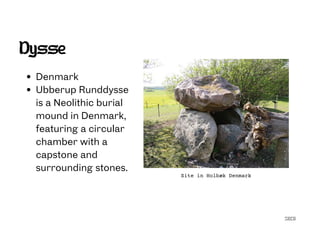
Dysse
Denmark
Ubberup Runddysse
is aNeolithic burial
mound in Denmark,
featuring a circular
chamber with a
capstone and
surrounding stones.
Site in Holbæk Denmark
20.
SECG
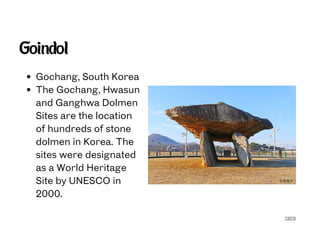
Goindol
Gochang, South Korea
TheGochang, Hwasun
and Ganghwa Dolmen
Sites are the location
of hundreds of stone
dolmen in Korea. The
sites were designated
as a World Heritage
Site by UNESCO in
2000.
SECG
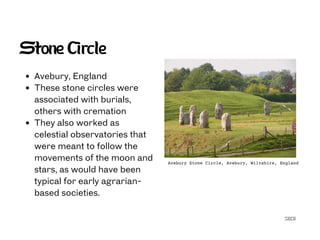
Stone Circle
Avebury, England
Thesestone circles were
associated with burials,
others with cremation
They also worked as
celestial observatories that
were meant to follow the
movements of the moon and
stars, as would have been
typical for early agrarian-
based societies.
Avebury Stone Circle, Avebury, Wiltshire, England
24.
SECG
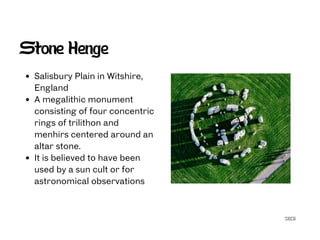
Stone Henge
Salisbury Plainin Witshire,
England
A megalithic monument
consisting of four concentric
rings of trilithon and
menhirs centered around an
altar stone.
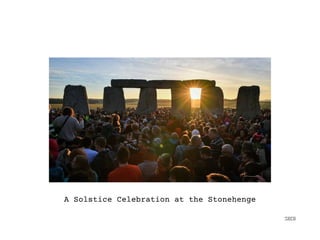
It is believed to have been
used by a sun cult or for
astronomical observations
SECG
Early Cities
Ice ageto the Neolithic Age; the earth’s climate
warmed up
As settlements became more permanent, hunting
started farming communities
New architecture was also developed to represent
communal and spiritual values
29.
SECG
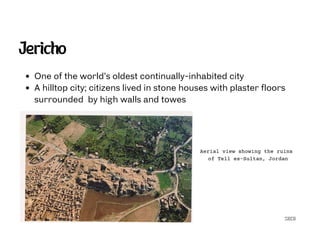
Jericho
One of theworld’s oldest continually-inhabited city
A hilltop city; citizens lived in stone houses with plaster floors
surrounded by high walls and towes
Aerial view showing the ruins
of Tell es-Sultan, Jordan
30.
SECG
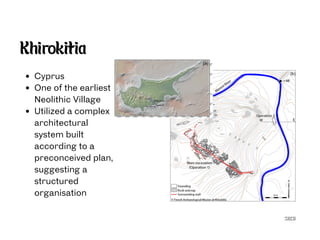
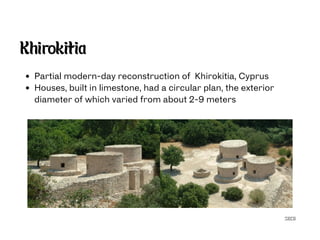
Khirokitia
Cyprus
One of theearliest
Neolithic Village
Utilized a complex
architectural
system built
according to a
preconceived plan,
suggesting a
structured
organisation
SECG
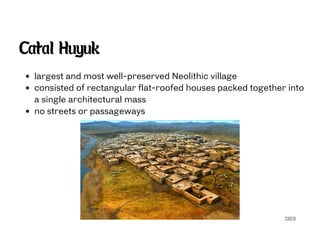
Catal Huyuk
largest andmost well-preserved Neolithic village
consisted of rectangular flat-roofed houses packed together into
a single architectural mass
no streets or passageways





![HISTORY OF ARCHITECTURE (ARC1101) new [Autosaved].pptx](https://cdn.slidesharecdn.com/ss_thumbnails/historyofarchitecturearc1101newautosaved-250413075445-4cff2a16-thumbnail.jpg?width=640&height=640&fit=bounds)


