Historical figures of Ancient
            Rome
        Phillip O’Neill
               &
         Jercy Wang
Romulus and Remus
     Romulus and Remus were the founders of Rome
according to the Roman mythology. They were twin
brothers who were the supposed sons of the god Mars
and the priestess Rhea Silvia. Romulus and Remus
were discovered by Faustulus, a shepherd, who
brought the children to their home. the twin brothers
killed Amulius and restated Numleon, their
grandfather as king of Alba Longa, then decided to
find their own town. Romulus and Remus had chosen
a town where the she-wolf had nursed them. After
Romulus began to build walls on them Palatine Hill,
but Remus jeered a them because they were so low.
Romulus and Remus cont.
     Then Romulus gave a name Roma to the new
building city, after his name. The first citizens of
Roma were mostly outlaws and fugitives, to whom
Romulus gave the settlement on the Capitoline Hill.
After that Romulus decided to kidnap women from
the Sabine's, which was an Italian Tribe so he
proclaimed a festival and invited many Sabine's to it.
But, that made all the Sable men furious, that
Romulus was kidnapping the women and declared
war on him. He soon disappeared one day during a
terrible storm.
Hannibal and the Carthaginian
            Wars
      Hannibal was the leader of the military forces of
Carthage that fought against Rome in the second
Punic War. Hannibal accompanied his father on the
Carthaginian expedition to conquer Spain. Hannibal
was the chief agent in carrying out the plans by
which his brother-in-law Hasdrubal extended and
considered the Carthaginian dominion on the Iberian
Peninsula. When Hasdrubal was assassinated in 221
B.C, the army chose Hannibal as commander in
chief. The second Punic War broke out in 218 when
Hannibal took control of the Greek city and Roman
ally, Saguntum (in Spain).
Hannibal and the Punic wars Cont.
     Hannibal was full of surprises when Rome was
trying to defeat him. He went further north on the
Rhone river than the Romans expected and crossed
the river with his elephants on floatation devices. He
won the battles in Trebia and at Lake Trasimene. He
continued through the Apennine Mountains that run
down through much of Italy like a spine. Another
battle victory was at the Battle of Cannae, the
Romans lost thousands of troops, including their
Roman leader. Hannibal won against Lucius
Aemilius at Cannae.
Cicero
    Marcus Tullius Cicero was born on January
3,106 B.C. He came from a rich municipal family of
the equestrian order. He also considered one of the
greatest Roman orators and prose stylists. He
introduced the Romans to the chief schools of Greek
philosophy and created a Latin philosophical
vocabulary as a linguist, translator, and philosopher.
The peak of Cicero's authority and prestige came
when the eighth-century understanding, and his
impact on leading understanding thinkers such as
John Locke, David Hume, and Montesquieu.
Cicero Cont.
    He's one of the most important bodies of primary
material for the writing and revision of Roman
history. He was a Roman philosopher. He wrote
philosophical works were the times he was forcibly
prevented from taking places in politics. He
indentified himself primarily with the Academy,
thought he found much to admire also on the stoa
and Lyceum. He pent two years in Greece studying
philosophy and rhetoric with Antiochus and Stoic
Posidonius. Upon his return he won election to a
major office that brought lifelong membership of the
senate and soon established himself as the
Foremost advocate of the age. Cicero sided
reluctantly with the opposition as the lesser threat to
Roman institutions.
Julius Caesar and Augustus
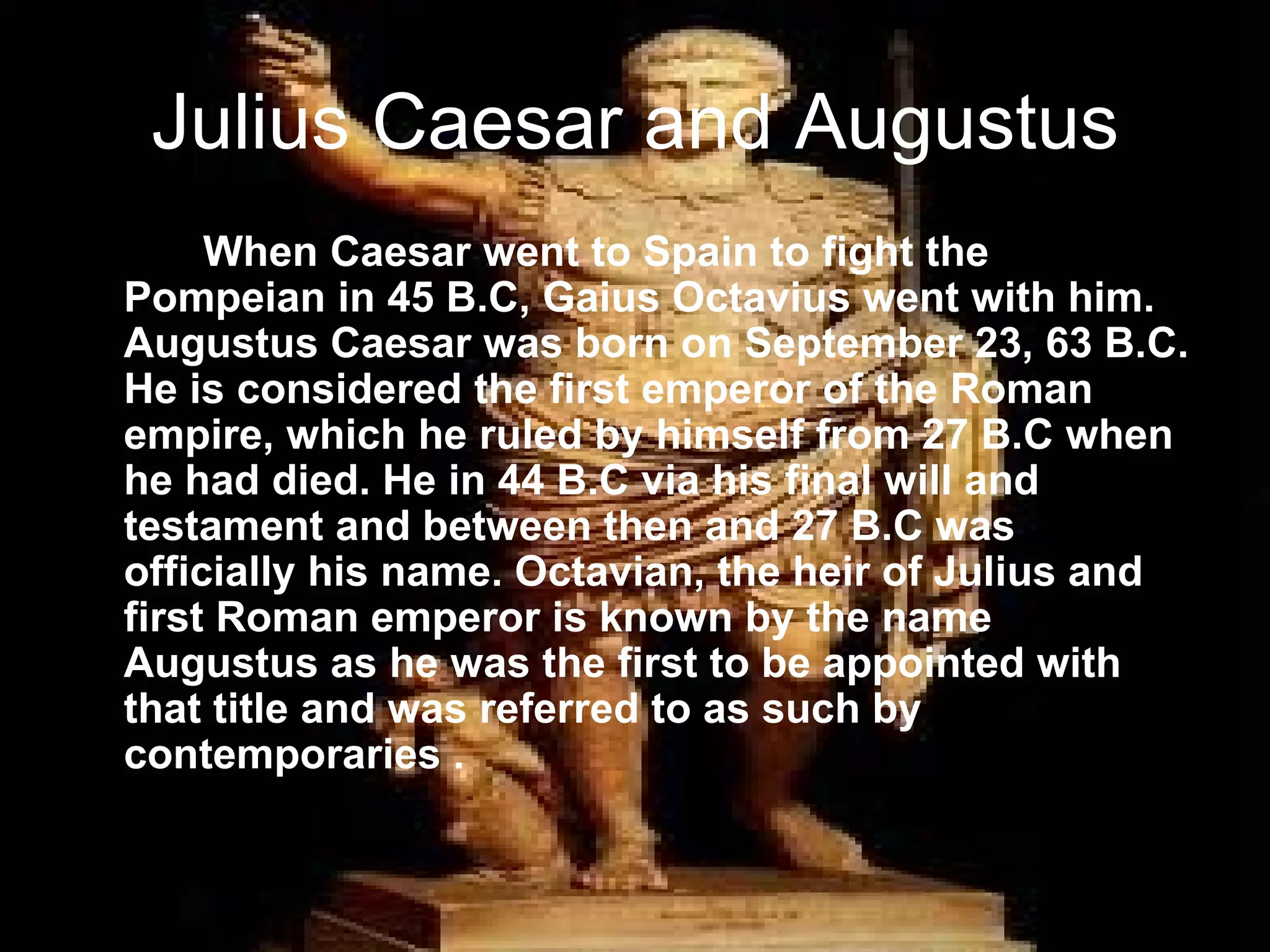
     When Caesar went to Spain to fight the
Pompeian in 45 B.C, Gaius Octavius went with him.
Augustus Caesar was born on September 23, 63 B.C.
He is considered the first emperor of the Roman
empire, which he ruled by himself from 27 B.C when
he had died. He in 44 B.C via his final will and
testament and between then and 27 B.C was
officially his name. Octavian, the heir of Julius and
first Roman emperor is known by the name
Augustus as he was the first to be appointed with
that title and was referred to as such by
contemporaries .
Julius Caesar and Augustus CONT.
     The taking of the name Caesar was originated as
 Augustus when he was originally dictator upon his
 adoption. Octavian served under Julius Caesar in
 the Spanish expedition of 46 BC despite his delicate
 health. Caesar's legacies to the Roman public from
 whatever finds he was able to raise himself. While
 we today know Octavian as Augustus, every
 emperor was certainly awarded the title. As Lepidus
 died when the problem with Sextus Pompeius, it
 gave Antony and Octavian rulers of the Roman
 world. Julius Caesar died on August 19, 14 AD.
Hadrian
Hadrian was born on January "24" 76 B.C. Hadrian was
  the central figure of these five great emperor. Trajan
  also known as Hadrian's birth place was Italica in
  Hispania Beatrice. His ancestors had come to Spain
  generations before from a town called Picenum at
  the end of the second Punic War. Hadrian carried the
  congratulations of the Molesian legions to Hadrian
  along the Rhine. He married Trajan's grand niece
  Vibiasabina, his junior, though she's ten years old.
  He traveled to closely every province of the Empire.
  He used his relationship with his Greek favorite
  Antonius to underline his Philhellenism that brought
  cultures of ancient times.
Hadrian CONT.
    Hadrian's parents name were Paulina Major and
Paulina, Punnus Aelius Hadrianus. He was a roman
emperor from 117 to 138. He is best known for
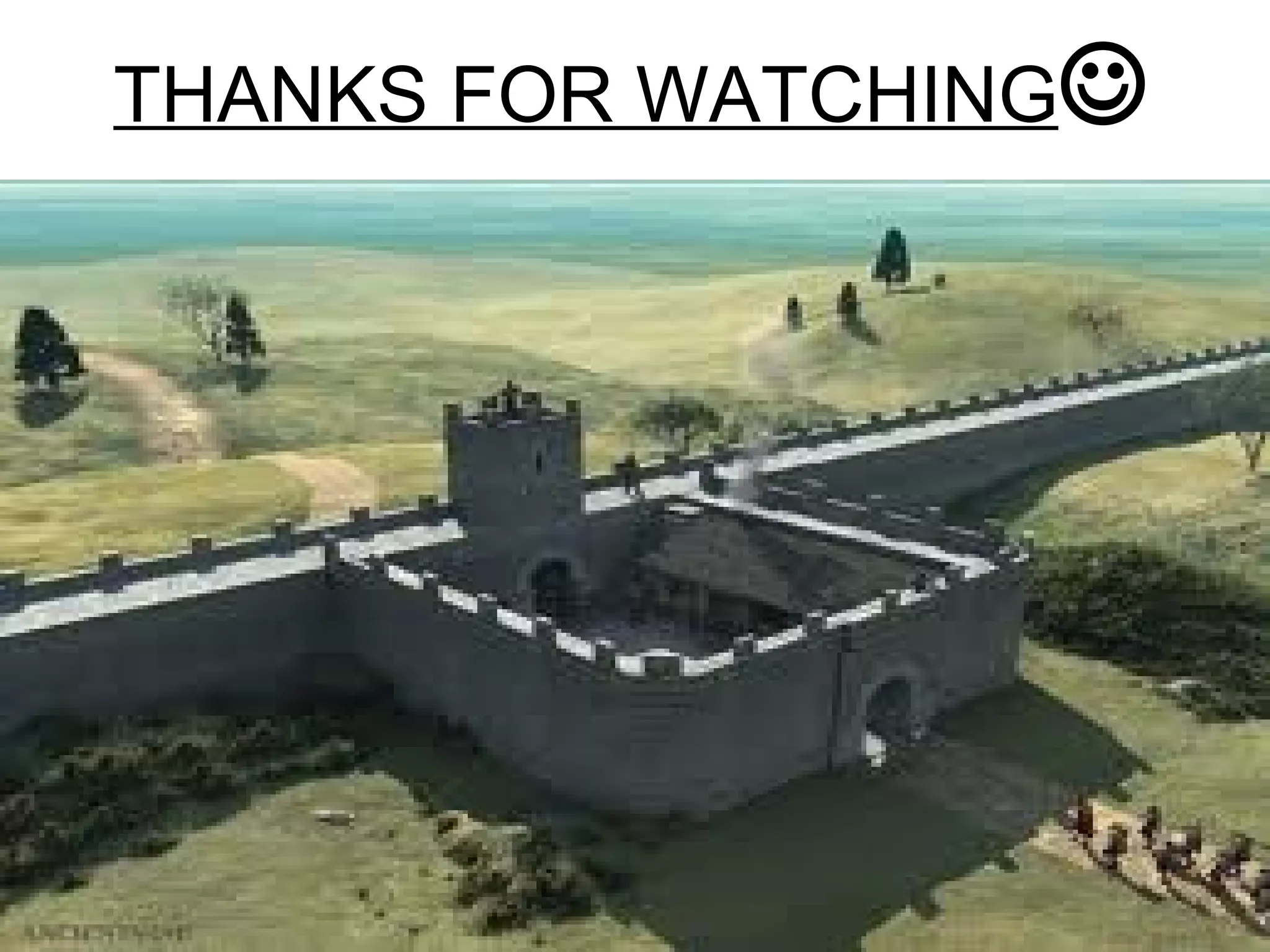
building Hadrian's wall, which spotted the northern
limit of Roman Britain. In, Rome he rebuilt the
Pantheon and constructed the Temple of Verus and
Roma. He spent extensive amounts of his time with
the military. He secured the Protection of the regions
really fast- one potential opponent Lusius Quietus
was promptly dismissed. Despite his own special
reputation as a military leader, his reign was marked
by a general lack of major military problems, apart
from the Second Roman-Jewish War.
THANKS FOR WATCHING

Historical figures of ancient rome

  • 1.
    Historical figures ofAncient Rome Phillip O’Neill & Jercy Wang
  • 2.
    Romulus and Remus Romulus and Remus were the founders of Rome according to the Roman mythology. They were twin brothers who were the supposed sons of the god Mars and the priestess Rhea Silvia. Romulus and Remus were discovered by Faustulus, a shepherd, who brought the children to their home. the twin brothers killed Amulius and restated Numleon, their grandfather as king of Alba Longa, then decided to find their own town. Romulus and Remus had chosen a town where the she-wolf had nursed them. After Romulus began to build walls on them Palatine Hill, but Remus jeered a them because they were so low.
  • 3.
    Romulus and Remuscont. Then Romulus gave a name Roma to the new building city, after his name. The first citizens of Roma were mostly outlaws and fugitives, to whom Romulus gave the settlement on the Capitoline Hill. After that Romulus decided to kidnap women from the Sabine's, which was an Italian Tribe so he proclaimed a festival and invited many Sabine's to it. But, that made all the Sable men furious, that Romulus was kidnapping the women and declared war on him. He soon disappeared one day during a terrible storm.
  • 4.
    Hannibal and theCarthaginian Wars Hannibal was the leader of the military forces of Carthage that fought against Rome in the second Punic War. Hannibal accompanied his father on the Carthaginian expedition to conquer Spain. Hannibal was the chief agent in carrying out the plans by which his brother-in-law Hasdrubal extended and considered the Carthaginian dominion on the Iberian Peninsula. When Hasdrubal was assassinated in 221 B.C, the army chose Hannibal as commander in chief. The second Punic War broke out in 218 when Hannibal took control of the Greek city and Roman ally, Saguntum (in Spain).
  • 5.
    Hannibal and thePunic wars Cont. Hannibal was full of surprises when Rome was trying to defeat him. He went further north on the Rhone river than the Romans expected and crossed the river with his elephants on floatation devices. He won the battles in Trebia and at Lake Trasimene. He continued through the Apennine Mountains that run down through much of Italy like a spine. Another battle victory was at the Battle of Cannae, the Romans lost thousands of troops, including their Roman leader. Hannibal won against Lucius Aemilius at Cannae.
  • 6.
    Cicero Marcus Tullius Cicero was born on January 3,106 B.C. He came from a rich municipal family of the equestrian order. He also considered one of the greatest Roman orators and prose stylists. He introduced the Romans to the chief schools of Greek philosophy and created a Latin philosophical vocabulary as a linguist, translator, and philosopher. The peak of Cicero's authority and prestige came when the eighth-century understanding, and his impact on leading understanding thinkers such as John Locke, David Hume, and Montesquieu.
  • 7.
    Cicero Cont. He's one of the most important bodies of primary material for the writing and revision of Roman history. He was a Roman philosopher. He wrote philosophical works were the times he was forcibly prevented from taking places in politics. He indentified himself primarily with the Academy, thought he found much to admire also on the stoa and Lyceum. He pent two years in Greece studying philosophy and rhetoric with Antiochus and Stoic Posidonius. Upon his return he won election to a major office that brought lifelong membership of the senate and soon established himself as the Foremost advocate of the age. Cicero sided reluctantly with the opposition as the lesser threat to Roman institutions.
  • 8.
    Julius Caesar andAugustus When Caesar went to Spain to fight the Pompeian in 45 B.C, Gaius Octavius went with him. Augustus Caesar was born on September 23, 63 B.C. He is considered the first emperor of the Roman empire, which he ruled by himself from 27 B.C when he had died. He in 44 B.C via his final will and testament and between then and 27 B.C was officially his name. Octavian, the heir of Julius and first Roman emperor is known by the name Augustus as he was the first to be appointed with that title and was referred to as such by contemporaries .
  • 9.
    Julius Caesar andAugustus CONT. The taking of the name Caesar was originated as Augustus when he was originally dictator upon his adoption. Octavian served under Julius Caesar in the Spanish expedition of 46 BC despite his delicate health. Caesar's legacies to the Roman public from whatever finds he was able to raise himself. While we today know Octavian as Augustus, every emperor was certainly awarded the title. As Lepidus died when the problem with Sextus Pompeius, it gave Antony and Octavian rulers of the Roman world. Julius Caesar died on August 19, 14 AD.
  • 10.
    Hadrian Hadrian was bornon January "24" 76 B.C. Hadrian was the central figure of these five great emperor. Trajan also known as Hadrian's birth place was Italica in Hispania Beatrice. His ancestors had come to Spain generations before from a town called Picenum at the end of the second Punic War. Hadrian carried the congratulations of the Molesian legions to Hadrian along the Rhine. He married Trajan's grand niece Vibiasabina, his junior, though she's ten years old. He traveled to closely every province of the Empire. He used his relationship with his Greek favorite Antonius to underline his Philhellenism that brought cultures of ancient times.
  • 11.
    Hadrian CONT. Hadrian's parents name were Paulina Major and Paulina, Punnus Aelius Hadrianus. He was a roman emperor from 117 to 138. He is best known for building Hadrian's wall, which spotted the northern limit of Roman Britain. In, Rome he rebuilt the Pantheon and constructed the Temple of Verus and Roma. He spent extensive amounts of his time with the military. He secured the Protection of the regions really fast- one potential opponent Lusius Quietus was promptly dismissed. Despite his own special reputation as a military leader, his reign was marked by a general lack of major military problems, apart from the Second Roman-Jewish War.
  • 12.