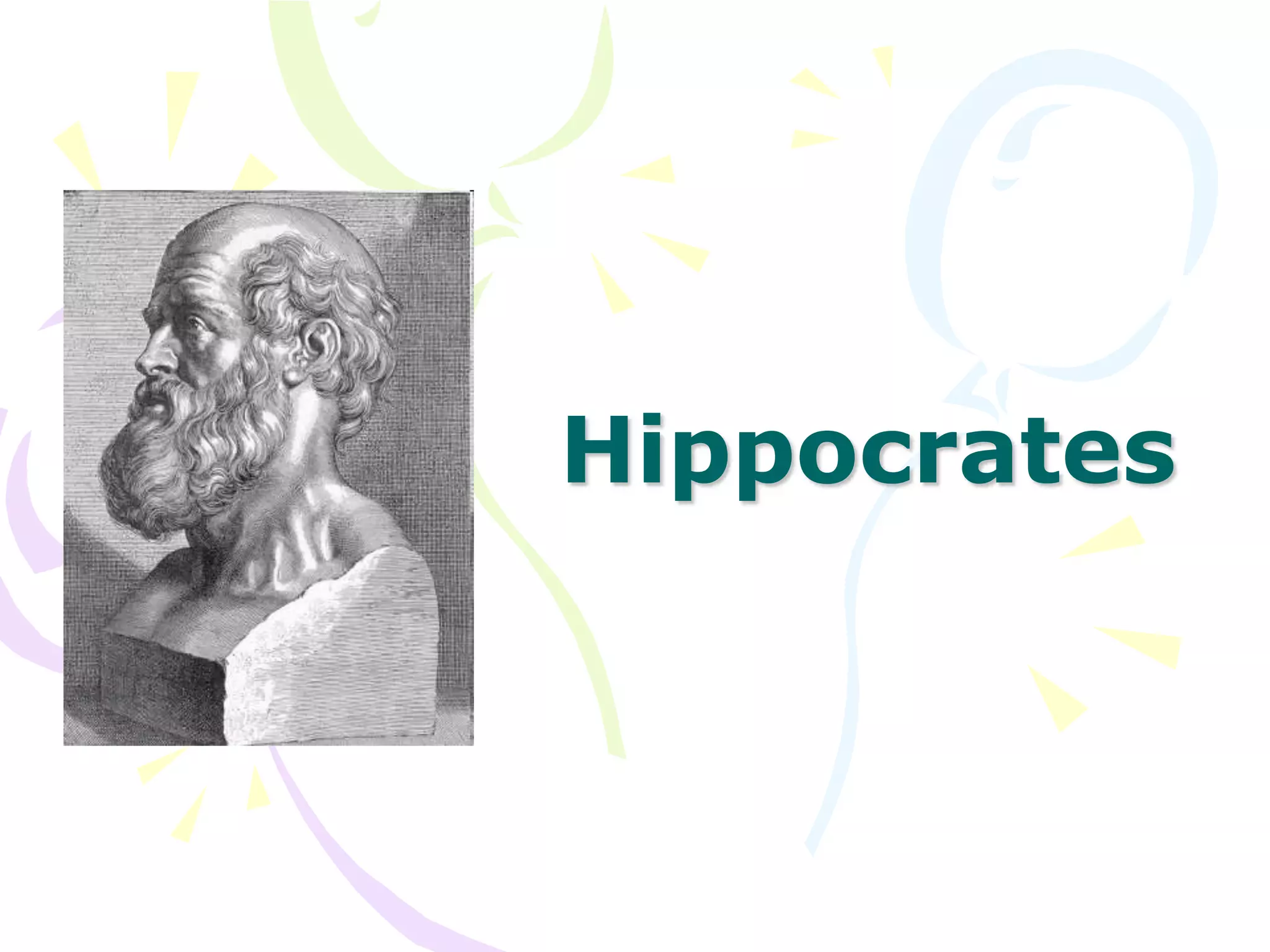
Hippocrates
CONTENT
• BIOGRAHPY
• HIPPOCRATIC THEORY
• HUMORISM AND CRISIS
• PROFESSIONALISM
• DIRECT CONTRIBUTIONS TO
MEDICINE
• HIPPOCRAT OATH
BIOGRAPHY
• Born around the year 460 BC
• Father : Heraclides
• Mother :Praxitela
• Sons: Thessalus and Draco
• Son in law : Polybus (was also his
student)
Hippocratic theory
• The first physician to reject
superstitions
• Ancient Greek schools of medicine
were split (into the Knidian and
Koan) on how to deal with disease.
• Hippocratic medicine and its
philosophy are far removed from that
of modern medicine.
HUMORISM AND CRISIS
• all illness was the result of an
imbalance in the body of the four
humours, fluids which in health were
naturally equal in proportion
• illness would begin to triumph and
the patient would succumb to death,
or the opposite would occur and
natural processes would make the
patient recover
• The therapeutic approach was based
on "the healing power of nature"
PROFESSIONALISM
• Doctors were told to make sure
their hands were clean before
they treated patients. He said the
operating room should be well
lighted and look cheerful. His
thought patients in good spirits
would heal faster.
• Physicians should be men of
honor, according to Hippocrates.
He encouraged them to work as
hard as possible for the good of
the sick.
DIRECT CONTRIBUTIONS
TO MEDICINE
• Hippocrates and his followers were
first to describe many diseases and
medical conditions.
• Hippocrates was also the first
physician to describe Hippocratic face
in Prognosis
• Hippocrates began to categorize
illnesses
• symptomatology
HIPPOCRATIC OATH
• The Hippocratic Oath is an oath
traditionally taken by doctors
swearing to ethically practice
medicine.
By: Swasti Singh chauhan
Group 22

hippo 1.pptx

  • 1.
  • 2.
    CONTENT • BIOGRAHPY • HIPPOCRATICTHEORY • HUMORISM AND CRISIS • PROFESSIONALISM • DIRECT CONTRIBUTIONS TO MEDICINE • HIPPOCRAT OATH
  • 3.
    BIOGRAPHY • Born aroundthe year 460 BC • Father : Heraclides • Mother :Praxitela • Sons: Thessalus and Draco • Son in law : Polybus (was also his student)
  • 4.
    Hippocratic theory • Thefirst physician to reject superstitions • Ancient Greek schools of medicine were split (into the Knidian and Koan) on how to deal with disease. • Hippocratic medicine and its philosophy are far removed from that of modern medicine.
  • 5.
    HUMORISM AND CRISIS •all illness was the result of an imbalance in the body of the four humours, fluids which in health were naturally equal in proportion
  • 6.
    • illness wouldbegin to triumph and the patient would succumb to death, or the opposite would occur and natural processes would make the patient recover
  • 7.
    • The therapeuticapproach was based on "the healing power of nature"
  • 8.
    PROFESSIONALISM • Doctors weretold to make sure their hands were clean before they treated patients. He said the operating room should be well lighted and look cheerful. His thought patients in good spirits would heal faster.
  • 9.
    • Physicians shouldbe men of honor, according to Hippocrates. He encouraged them to work as hard as possible for the good of the sick.
  • 10.
    DIRECT CONTRIBUTIONS TO MEDICINE •Hippocrates and his followers were first to describe many diseases and medical conditions. • Hippocrates was also the first physician to describe Hippocratic face in Prognosis
  • 11.
    • Hippocrates beganto categorize illnesses • symptomatology
  • 12.
    HIPPOCRATIC OATH • TheHippocratic Oath is an oath traditionally taken by doctors swearing to ethically practice medicine.
  • 13.
    By: Swasti Singhchauhan Group 22