Topic:
Hip Adduction Muscles
Presented by:
Malaika Zahoor
Komal Faisal
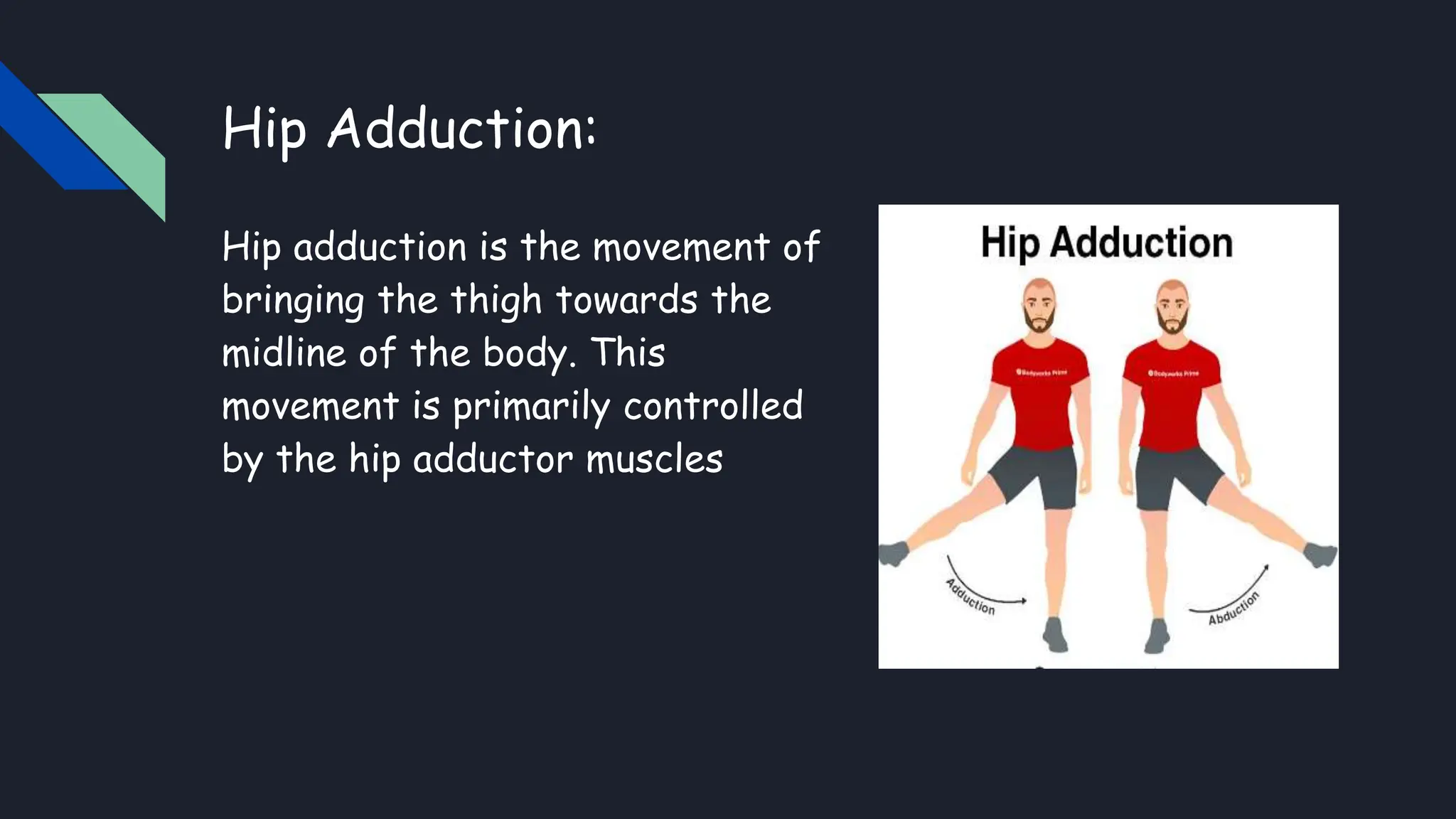
Hip Adduction:
Hip adduction is the movement of
bringing the thigh towards the
midline of the body. This
movement is primarily controlled
by the hip adductor muscles
Primary Hip Adductors
● Pectineus
● Adductor longus
● Gracilis
● Adductor brevis
● Adductor magnus—both heads
Pectineus:
Origin: Pectineal line of the pubis.
Insertion: Pectineal line of the femur
just below the lesser trochanter.
Nerve Supply: Obturator nerve (L2-L4).
Blood Supply: Branches of the obturator artery.
Action: Adducts and flexes the thigh at the
hip joint; assists in medial rotation of the thigh.
Youtube link:
Adductor longus:
Origin: Pubic bone, near the pubic symphysis.
Insertion: Middle third of the linea aspera of the
femur.
Nerve Supply: Obturator nerve (L2-L4).
Blood Supply: Branches of the obturator artery.
Action: Adducts and flexes the thigh at the hip joint.
Youtube link:
Gracilis:
Origin: Pubic symphysis.
Insertion: Medial surface of the tibia, just below the medial condyle.
Nerve Supply: Obturator nerve (anterior division) and branches of the
tibial nerve (L4-S3).
Blood Supply: Branches of the medial circumflex femoral artery and
the obturator artery.
Action: Adducts the thigh, flexes and medially rotates the leg at the
knee joint.
Gracilis:
Youtube link:
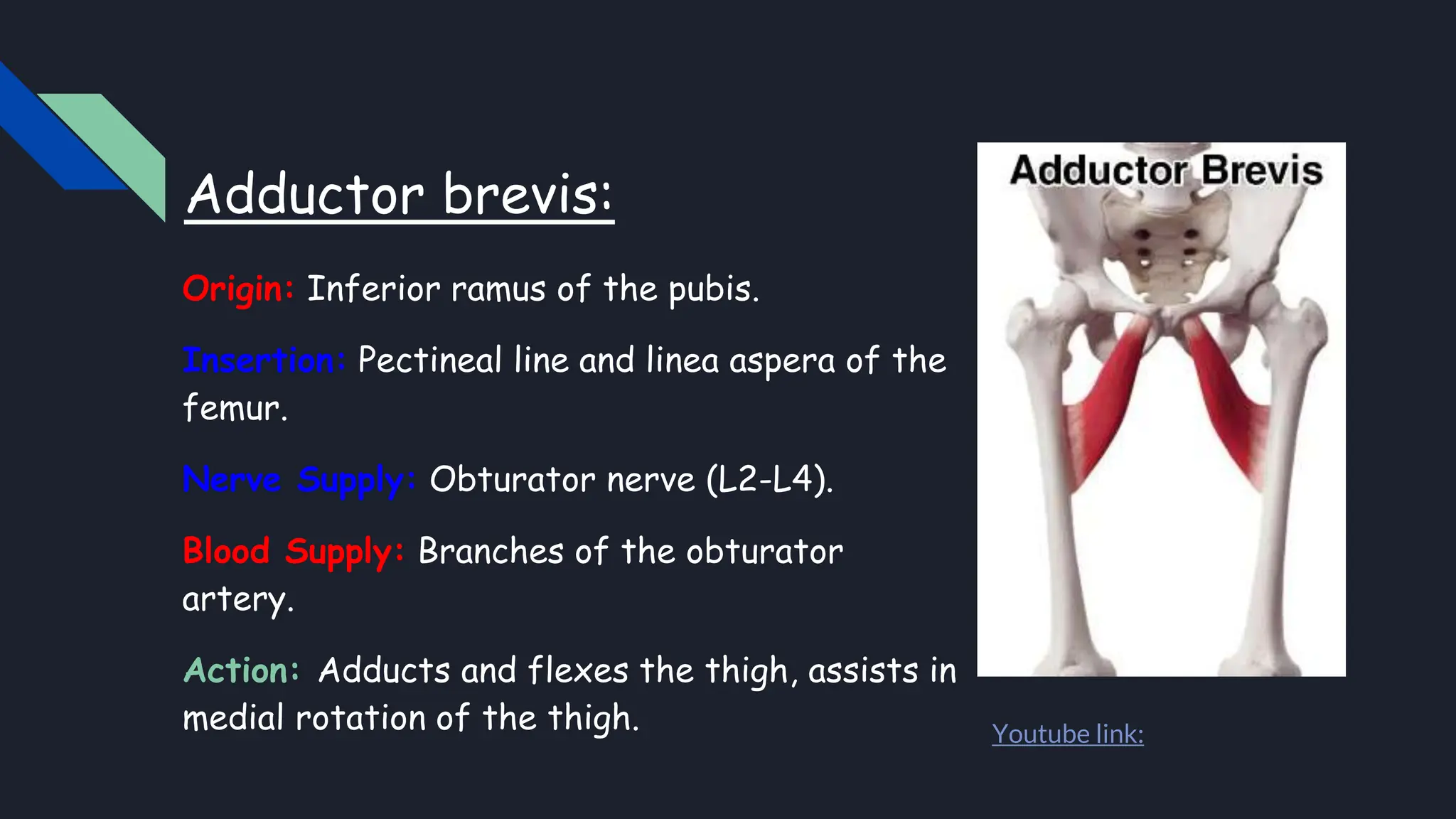
Adductor brevis:
Origin: Inferior ramus of the pubis.
Insertion: Pectineal line and linea aspera of the
femur.
Nerve Supply: Obturator nerve (L2-L4).
Blood Supply: Branches of the obturator
artery.
Action: Adducts and flexes the thigh, assists in
medial rotation of the thigh. Youtube link:
Adductor magnus—both heads:
Origin: Inferior ramus of the pubis, ischial tuberosity, and ischial
ramus.
Insertion: Linea aspera and adductor tubercle of the femur.
Nerve Supply: Obturator nerve (anterior division) and tibial portion of
the sciatic nerve (L2-S1).
Blood Supply: Branches of the femoral artery (medial circumflex
femoral, deep femoral, and obturator arteries).
Action: Adducts, extends, and flexes the thigh at the hip joint; assists
in medial rotation.
Adductor magnus
both heads:
Youtube link:
Role of Hip Adductor Muscles in Thigh Adduction
and Rotation:
Adductor Magnus:
● Medial Rotation: When the hip is flexed, the anterior fibers of
adductor magnus assist in medial rotation of the thigh.
● Lateral Rotation: The posterior fibers of adductor magnus
assist in lateral rotation of the thigh when the hip is extended.
Gracilis: Medial Rotation: Gracilis helps in medial rotation of the
thigh when the hip is flexed.
Pectineus: Medial Rotation: Pectineus also contributes to medial
rotation of the thigh when the hip is flexed.
Thank you

Hip abductors lower limb anatomy.........

  • 1.
    Topic: Hip Adduction Muscles Presentedby: Malaika Zahoor Komal Faisal
  • 2.
    Hip Adduction: Hip adductionis the movement of bringing the thigh towards the midline of the body. This movement is primarily controlled by the hip adductor muscles
  • 3.
    Primary Hip Adductors ●Pectineus ● Adductor longus ● Gracilis ● Adductor brevis ● Adductor magnus—both heads
  • 4.
    Pectineus: Origin: Pectineal lineof the pubis. Insertion: Pectineal line of the femur just below the lesser trochanter. Nerve Supply: Obturator nerve (L2-L4). Blood Supply: Branches of the obturator artery. Action: Adducts and flexes the thigh at the hip joint; assists in medial rotation of the thigh. Youtube link:
  • 5.
    Adductor longus: Origin: Pubicbone, near the pubic symphysis. Insertion: Middle third of the linea aspera of the femur. Nerve Supply: Obturator nerve (L2-L4). Blood Supply: Branches of the obturator artery. Action: Adducts and flexes the thigh at the hip joint. Youtube link:
  • 6.
    Gracilis: Origin: Pubic symphysis. Insertion:Medial surface of the tibia, just below the medial condyle. Nerve Supply: Obturator nerve (anterior division) and branches of the tibial nerve (L4-S3). Blood Supply: Branches of the medial circumflex femoral artery and the obturator artery. Action: Adducts the thigh, flexes and medially rotates the leg at the knee joint.
  • 7.
  • 8.
    Adductor brevis: Origin: Inferiorramus of the pubis. Insertion: Pectineal line and linea aspera of the femur. Nerve Supply: Obturator nerve (L2-L4). Blood Supply: Branches of the obturator artery. Action: Adducts and flexes the thigh, assists in medial rotation of the thigh. Youtube link:
  • 9.
    Adductor magnus—both heads: Origin:Inferior ramus of the pubis, ischial tuberosity, and ischial ramus. Insertion: Linea aspera and adductor tubercle of the femur. Nerve Supply: Obturator nerve (anterior division) and tibial portion of the sciatic nerve (L2-S1). Blood Supply: Branches of the femoral artery (medial circumflex femoral, deep femoral, and obturator arteries). Action: Adducts, extends, and flexes the thigh at the hip joint; assists in medial rotation.
  • 10.
  • 11.
    Role of HipAdductor Muscles in Thigh Adduction and Rotation: Adductor Magnus: ● Medial Rotation: When the hip is flexed, the anterior fibers of adductor magnus assist in medial rotation of the thigh. ● Lateral Rotation: The posterior fibers of adductor magnus assist in lateral rotation of the thigh when the hip is extended. Gracilis: Medial Rotation: Gracilis helps in medial rotation of the thigh when the hip is flexed. Pectineus: Medial Rotation: Pectineus also contributes to medial rotation of the thigh when the hip is flexed.
  • 12.