Hardware synthesis
Outline
• Design flow
• RTL Architecture
• Input specification
• Specification profiling
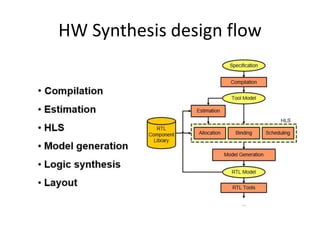
HW Synthesis design flow
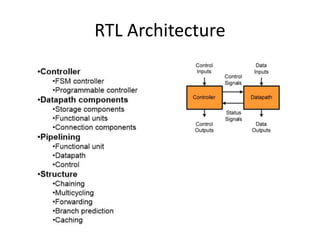
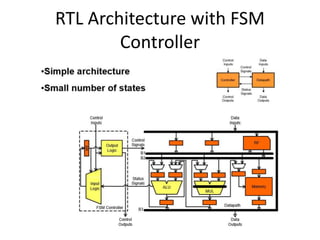
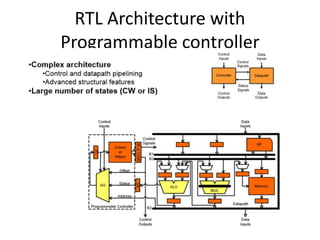
RTL Architecture
RTL Architecture with FSM
Controller
RTL Architecture with
Programmable controller
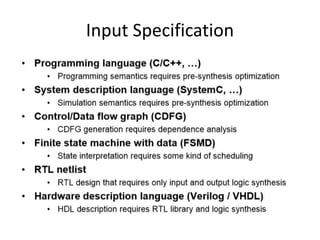
Input Specification
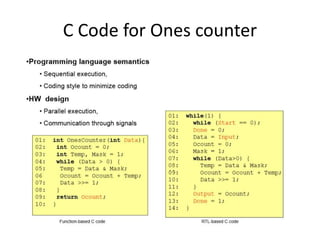
C Code for Ones counter
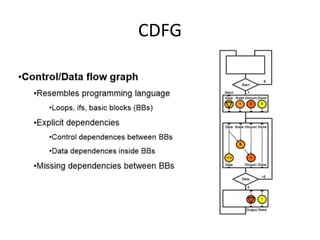
CDFG
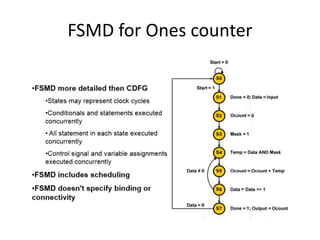
FSMD for Ones counter
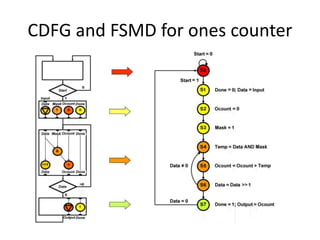
CDFG and FSMD for ones counter
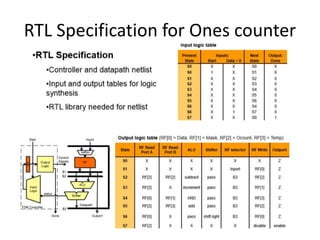
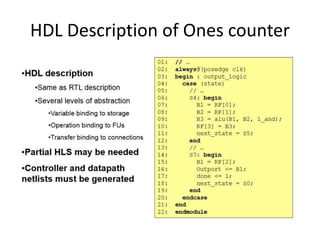
RTL Specification for Ones counter
HDL Description of Ones counter
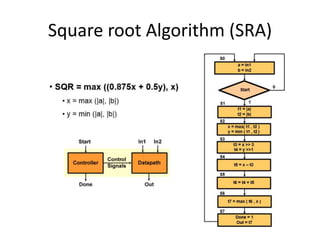
Square root Algorithm (SRA)
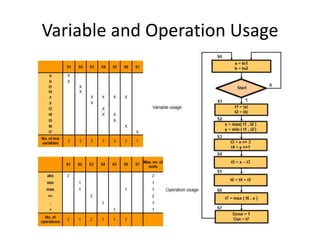
Variable and Operation Usage
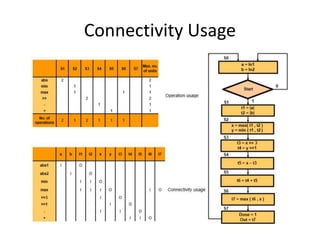
Connectivity Usage
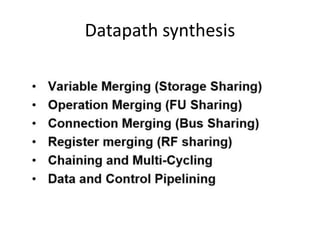
Datapath synthesis
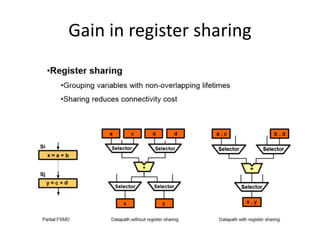
Gain in register sharing
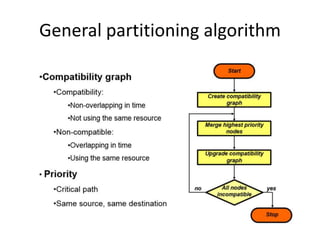
General partitioning algorithm
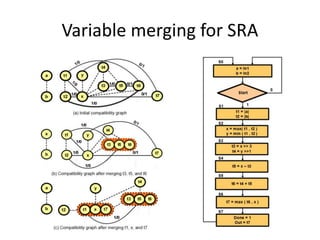
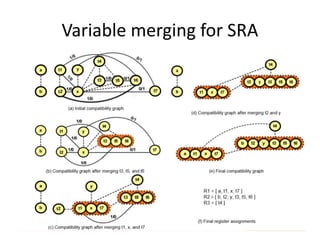
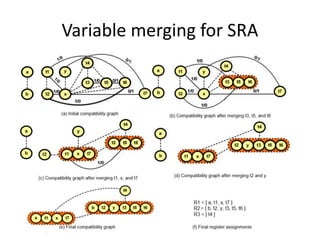
Variable merging for SRA
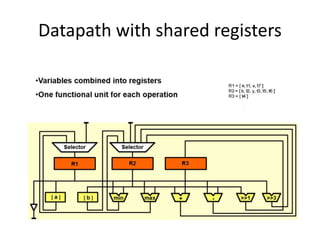
Datapath with shared registers
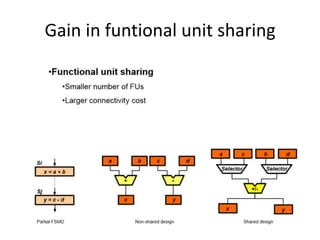
Gain in funtional unit sharing
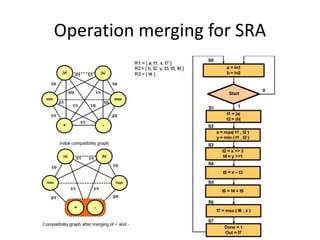
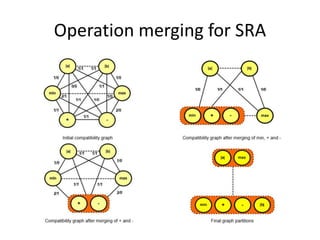
Operation merging for SRA
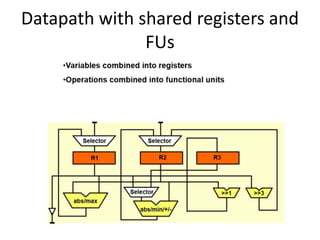
Datapath with shared registers and
FUs
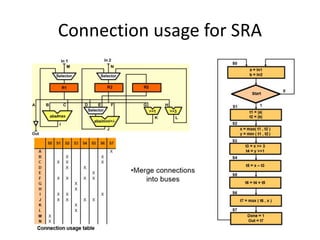
Connection usage for SRA
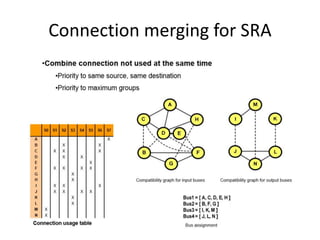
Connection merging for SRA
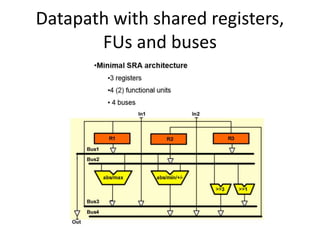
Datapath with shared registers,
FUs and buses
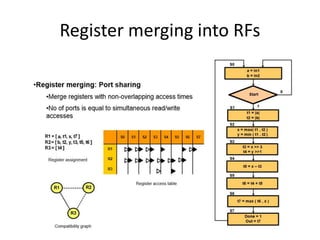
Register merging into RFs
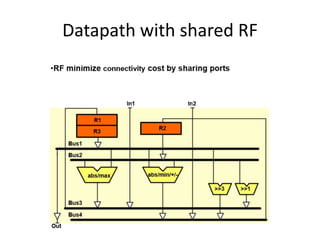
Datapath with shared RF
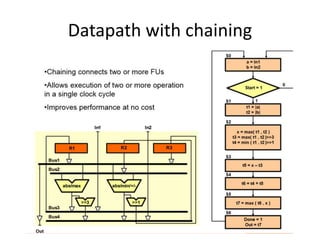
Datapath with chaining
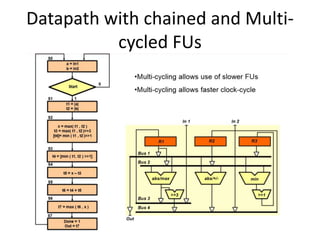
Datapath with chained and Multi-
cycled FUs
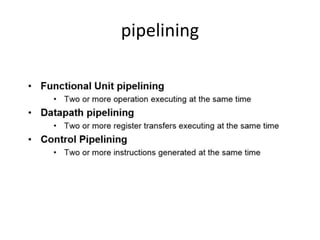
pipelining
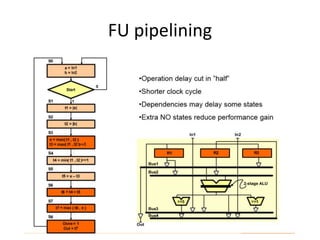
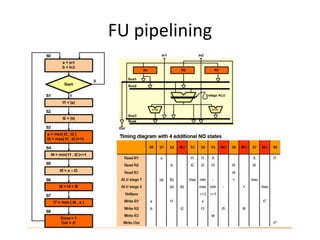
FU pipelining
FU pipelining
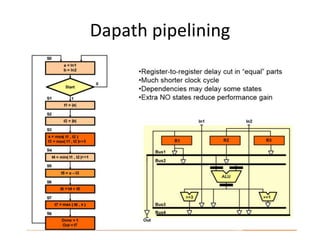
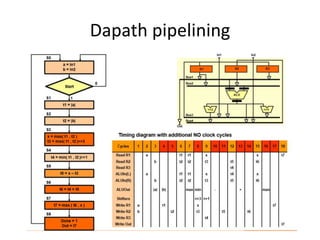
Dapath pipelining
Dapath pipelining
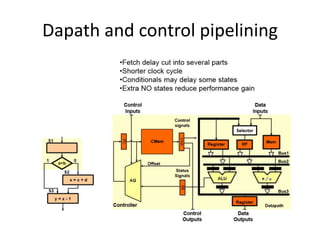
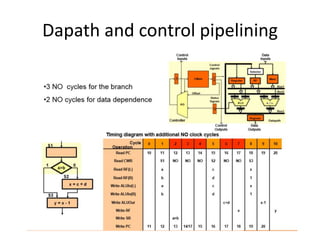
Dapath and control pipelining
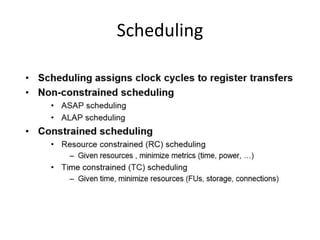
Scheduling
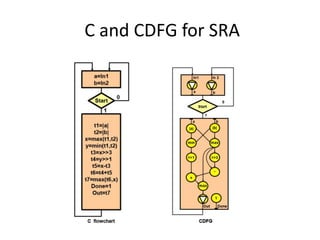
C and CDFG for SRA
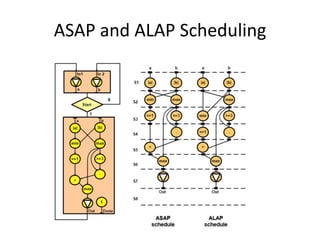
ASAP and ALAP Scheduling
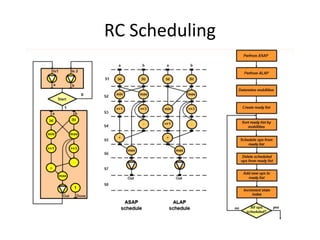
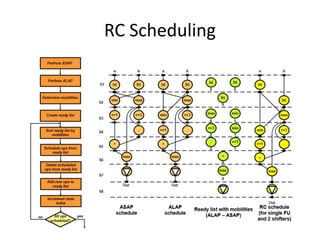
RC Scheduling
RC Scheduling
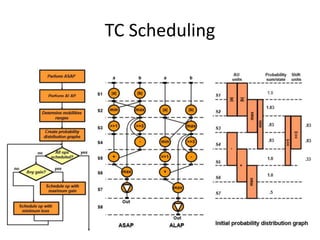
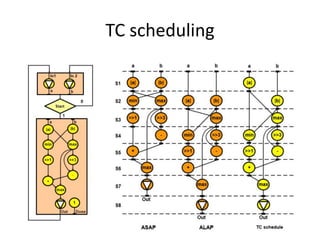
TC Scheduling
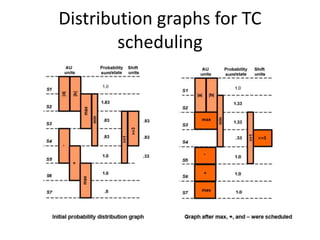
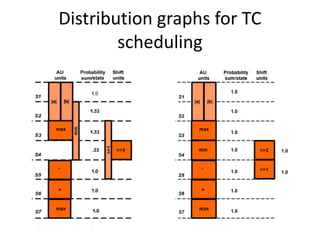
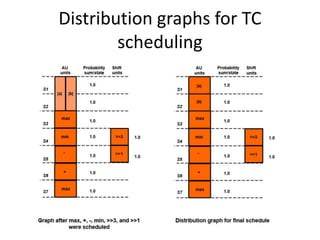
Distribution graphs for TC
scheduling
Distribution graphs for TC
scheduling
Distribution graphs for TC
scheduling
TC scheduling
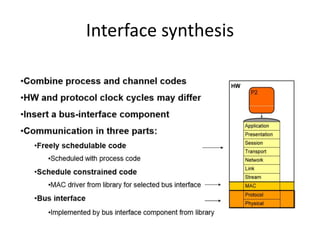
Interface synthesis
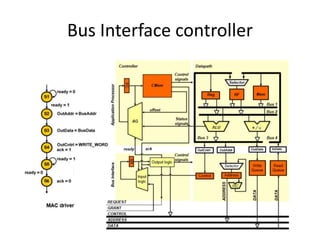
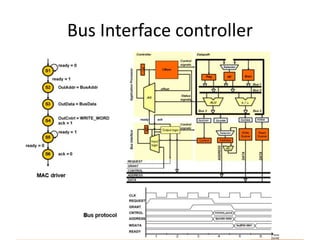
Bus Interface controller
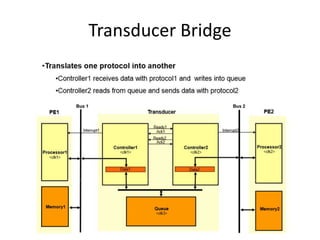
Transducer Bridge
Summary
• Generation of hardware designs for some
models like CDFG and FSMD is studied. Several
procedures to optimize such designs like
• merging the registers ,
• connections and operators are studied.
• Optimization techniques like chaining and
multicycling are also studied. Finally two
scheduling algorithms are studied.
Conclusion
• The technological advances and ever increasing
market demands for new applications system
complexities are growing at exponential rate.
In-order to deal with complexity we need to
move to system level design. For that we need
to have models with well defined semantics for
automatic generation and synthesis. Model
based approach helps in reducing the system
design time by having intermediate models
which are the TLMs in the design flow. TLMs
allow us to generate hardware and software
automatically.
Future Work
• Generation and simulation of timed TLM.
• Including RTOS models to the design so that
multiple processes can be mapped to a single
processor.
• Study of Including hardware blocks into the
design.
• Study of other academic tools from various
universities and their functionalities.
• Synthesizing the design to a FPGA board to
make the first prototype.

HighLevel Synthesis Algorithms for the vlsi