High-intensity discharge
          lamp


K.A.PRAJNAY
09011BB003
FSP-5TH SEM
JNAFAU
Definition:
High-intensity discharge lamps (HID lamps)
are a type of electrical lamp which produces
light by means of an electric arc
between tungsten electrodes housed inside a
translucent or transparent fused quartz or
fused alumina arc tube.
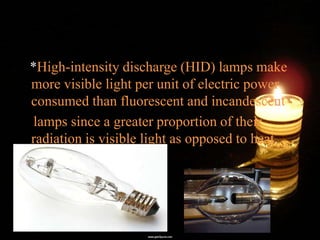
*High-intensity discharge (HID) lamps make
more visible light per unit of electric power
consumed than fluorescent and incandescent
lamps since a greater proportion of their
radiation is visible light as opposed to heat.
Construction:
Various different types of chemistry are used in the arc tubes of HID
lamps, depending on the desired characteristics of light
intensity, correlated color temperature, color rendering index (CRI),
energy efficiency, and lifespan.
 *Varieties of HID lamp include:
-Mercury vapor lamps
-Metal halide (MH) lamps
-Ceramic MH lamps
-Sodium vapor lamps
-Xenon short-arc lamps
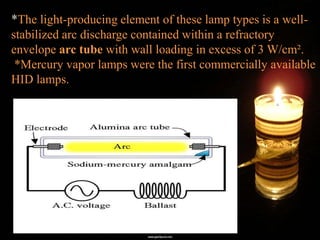
*The light-producing element of these lamp types is a well-
stabilized arc discharge contained within a refractory
envelope arc tube with wall loading in excess of 3 W/cm².
 *Mercury vapor lamps were the first commercially available
HID lamps.
APPLICATIONS:

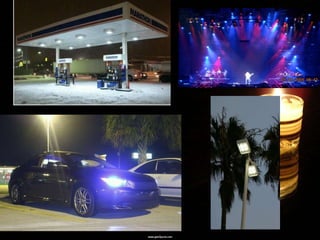
*HID lamps are typically used when high levels of light over large
areas are required, and when energy efficiency and/or light intensity
are desired. These areas include gymnasiums, large public
areas, warehouses, movie theaters, football stadiums, outdoor activity
areas, roadways, parking lots, and pathways.

*More recently, HID lamps have been used in small retail and even
residential environments because of advances in reduced lumen bulbs.

*HID lamps have also become common on many aircraft as
replacements for traditional landing and taxi lights.

*HID lamps are also used in lamps for underwater diving
Benefits:
Benefit #1: HID lighting creates a more natural form of light, which
results in higher visibility.
Benefit #2: HID lighting produces around three times more light
than a traditional factory bulb.
Benefit #3: HID lighting lasts much longer than tradition halogen
factory headlights, so you won't have to make numerous, frequent
replacements.
Benefit #4: HID lighting is far more energy efficient.
Drawbacks:
Drawback #1: HID lighting can be expensive. A quality system
can cost upwards of $500.
Drawback #2: HID lighting is extremely bright which can be
irritating for passing vehicles.
THANK U

High-intensity discharge lamp

  • 1.
    High-intensity discharge lamp K.A.PRAJNAY 09011BB003 FSP-5TH SEM JNAFAU
  • 2.
    Definition: High-intensity discharge lamps(HID lamps) are a type of electrical lamp which produces light by means of an electric arc between tungsten electrodes housed inside a translucent or transparent fused quartz or fused alumina arc tube.
  • 3.
    *High-intensity discharge (HID)lamps make more visible light per unit of electric power consumed than fluorescent and incandescent lamps since a greater proportion of their radiation is visible light as opposed to heat.
  • 4.
    Construction: Various different typesof chemistry are used in the arc tubes of HID lamps, depending on the desired characteristics of light intensity, correlated color temperature, color rendering index (CRI), energy efficiency, and lifespan. *Varieties of HID lamp include: -Mercury vapor lamps -Metal halide (MH) lamps -Ceramic MH lamps -Sodium vapor lamps -Xenon short-arc lamps
  • 5.
    *The light-producing elementof these lamp types is a well- stabilized arc discharge contained within a refractory envelope arc tube with wall loading in excess of 3 W/cm². *Mercury vapor lamps were the first commercially available HID lamps.
  • 6.
    APPLICATIONS: *HID lamps aretypically used when high levels of light over large areas are required, and when energy efficiency and/or light intensity are desired. These areas include gymnasiums, large public areas, warehouses, movie theaters, football stadiums, outdoor activity areas, roadways, parking lots, and pathways. *More recently, HID lamps have been used in small retail and even residential environments because of advances in reduced lumen bulbs. *HID lamps have also become common on many aircraft as replacements for traditional landing and taxi lights. *HID lamps are also used in lamps for underwater diving
  • 8.
    Benefits: Benefit #1: HIDlighting creates a more natural form of light, which results in higher visibility. Benefit #2: HID lighting produces around three times more light than a traditional factory bulb. Benefit #3: HID lighting lasts much longer than tradition halogen factory headlights, so you won't have to make numerous, frequent replacements. Benefit #4: HID lighting is far more energy efficient.
  • 9.
    Drawbacks: Drawback #1: HIDlighting can be expensive. A quality system can cost upwards of $500. Drawback #2: HID lighting is extremely bright which can be irritating for passing vehicles.
  • 10.