© 2010. Version 3.0
Claudio Sallaberry
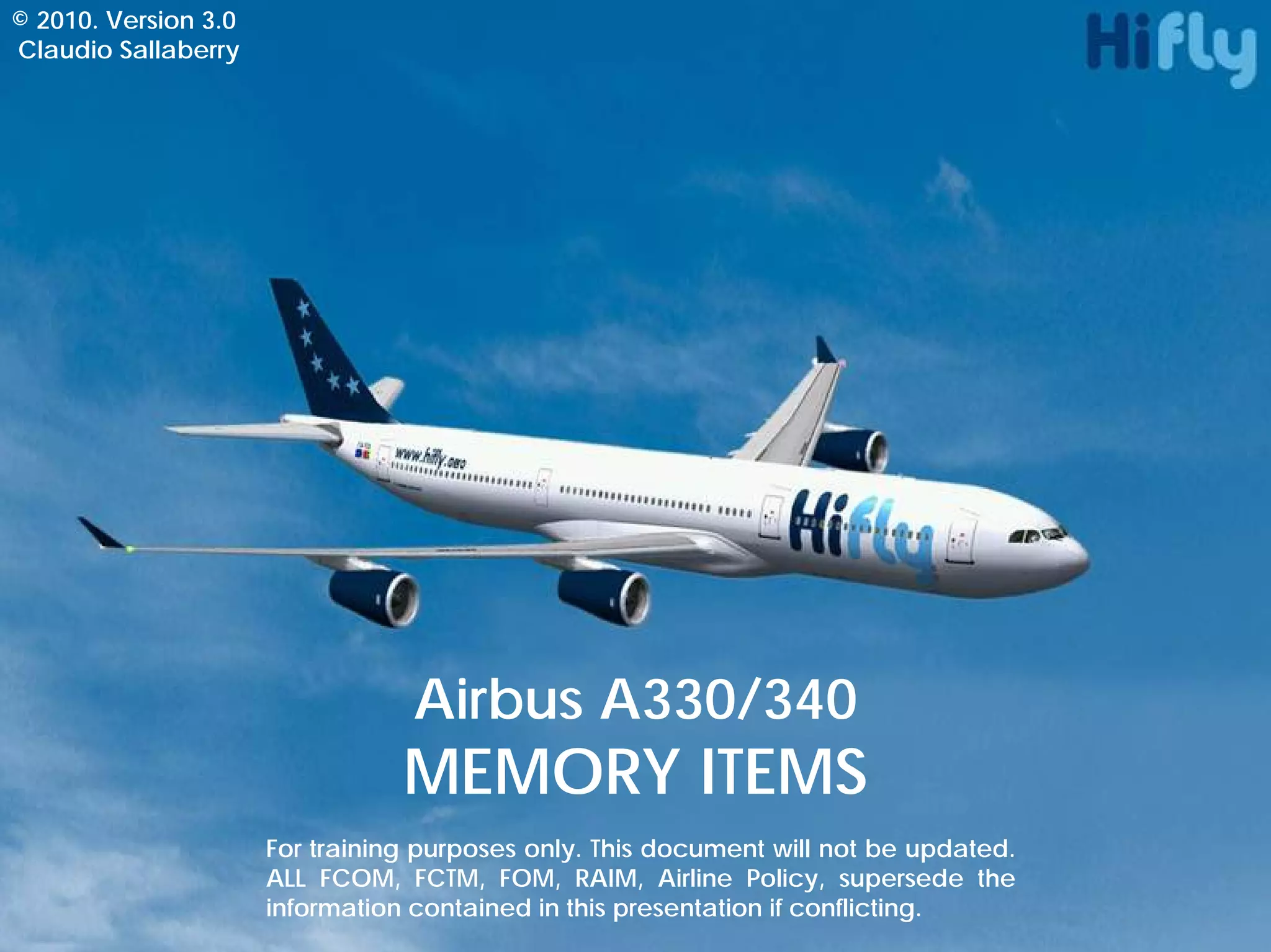
Airbus A330/340
MEMORY ITEMS
For training purposes only. This document will not be updated.
ALL FCOM, FCTM, FOM, RAIM, Airline Policy, supersede the
information contained in this presentation if conflicting.
1. Windshear.
2. Windshear Ahead.
3. TCAS.
4. EGPWS.
5. Loss of Braking.
6. Emergency Descent (Immediate actions).
7. Unreliable Speed Indication (Immediate actions).
8. Crew Incapacitation.
9. Stall Recovery.
10. Stall Warning at Lift-off.
Memory Items
The following procedures are to be applied without referring to paper
(FCOM 3.02.01 page 2a). Most of them are Emergency or Abnormal
procedures not displayed on ECAM.
Reactive Windshear …….……….….… “WINDSHEAR TOGA”
TCAS ……………….………………. “TCAS, I HAVE CONTROL”
EGPWS ………………………..……………..... “PULL UP, TOGA”
Loss of braking ……………….…………. “LOSS OF BRAKING”
Emergency Descent ……………... “EMERGENCY DESCENT”
Unreliable Speed ……………...……….. “UNRELIABLE SPEED”
Memory Items Callouts
The aim of such callouts is to callout the appropriate procedure by
calling out, in most cases, the title of the procedure. This will allow the
crew to be aware of the situation and be prepared to properly react
(Crew coordination, task sharing and communication). FCOM 3.03.90
page 4.
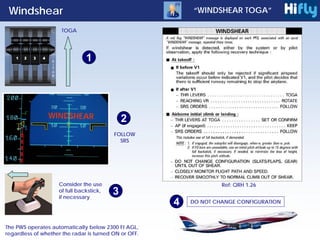
Windshear
WINDSHEAR
FOLLOW
SRS
DO NOT CHANGE CONFIGURATION
“WINDSHEAR TOGA”
PF
Consider the use
of full backstick,
if necessary
TOGA
1
3
2
4
The PWS operates automatically below 2300 Ft AGL,
regardless of whether the radar is turned ON or OFF.
Ref: QRH 1.26
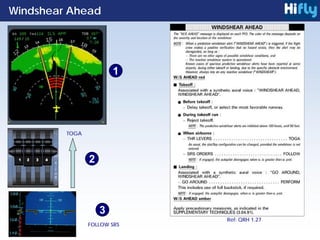
Windshear Ahead
TOGA
FOLLOW SRS
1
2
3
Ref: QRH 1.27
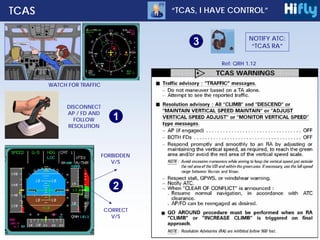
TCAS
FORBIDDEN
V/S
CORRECT
V/S
NOTIFY ATC:
“TCAS RA”
“TCAS, I HAVE CONTROL”
WATCH FOR TRAFFIC
DISCONNECT
AP / FD AND
FOLLOW
RESOLUTION
PF
1
2
3
Ref: QRH 1.12
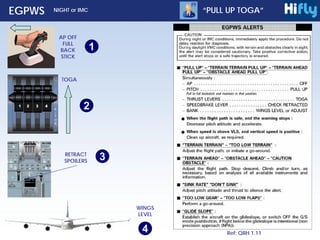
EGPWS
TOGA
RETRACT
SPOILERS
WINGS
LEVEL
“PULL UP TOGA”
NIGHT or IMC
AP OFF
FULL
BACK
STICK
PF
1
2
3
4 Ref: QRH 1.11
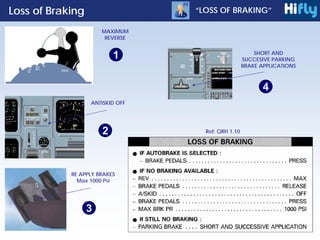
ANTISKID OFF
RE APPLY BRAKES
Max 1000 Psi
SHORT AND
SUCCESIVE PARKING
BRAKE APPLICATIONS
“LOSS OF BRAKING”
Loss of Braking
PF
1
2
3
MAXIMUM
REVERSE
4
Ref: QRH 1.10
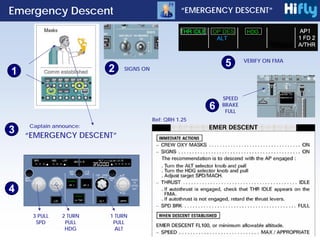
Emergency Descent
SIGNS ON
2
“EMERGENCY DESCENT”
Captain announce:
1
3
4
1 TURN
PULL
ALT
2 TURN
PULL
HDG
3 PULL
SPD
SPEED
BRAKE
FULL
6
5 VERIFY ON FMA
Ref: QRH 1.25
“EMERGENCY DESCENT”
PF
Unreliable Speed
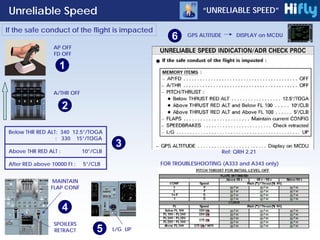
AP OFF
FD OFF
A/THR OFF
SPOILERS
RETRACT L/G UP
Below THR RED ALT: 340 12.5°/TOGA
: 330 15°/TOGA
Above THR RED ALT : 10°/CLB
After RED above 10000 Ft : 5°/CLB
MAINTAIN
FLAP CONF
If the safe conduct of the flight is impacted
“UNRELIABLE SPEED”
PF
GPS ALTITUDE DISPLAY on MCDU
FOR TROUBLESHOOTING (A333 and A343 only)
1
2
3
4
5
6
Ref: QRH 2.21
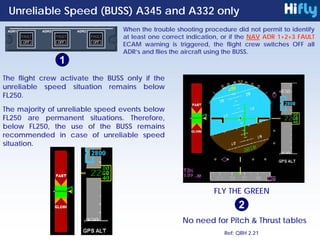
FLY THE GREEN
Unreliable Speed (BUSS) A345 and A332 only
The flight crew activate the BUSS only if the
unreliable speed situation remains below
FL250.
The majority of unreliable speed events below
FL250 are permanent situations. Therefore,
below FL250, the use of the BUSS remains
recommended in case of unreliable speed
situation.
When the trouble shooting procedure did not permit to identify
at least one correct indication, or if the NAV ADR 1+2+3 FAULT
ECAM warning is triggered, the flight crew switches OFF all
ADR’s and flies the aircraft using the BUSS.
No need for Pitch & Thrust tables
1
2
Ref: QRH 2.21
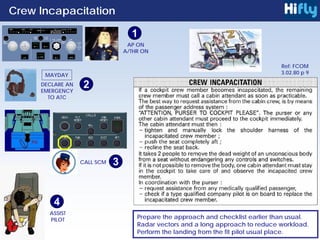
Crew Incapacitation
AP ON
A/THR ON
CALL SCM
ASSIST
PILOT
DECLARE AN
EMERGENCY
TO ATC
MAYDAY
Prepare the approach and checklist earlier than usual.
Radar vectors and a long approach to reduce workload.
Perform the landing from the fit pilot usual place.
1
2
3
4
Ref: FCOM
3.02.80 p 9
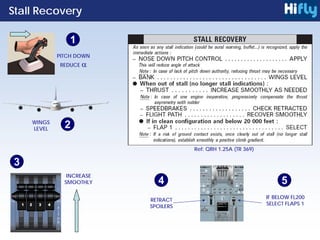
Stall Recovery
INCREASE
SMOOTHLY
RETRACT
SPOILERS
WINGS
LEVEL
PITCH DOWN
REDUCE α
1
2
3
4
IF BELOW FL200
SELECT FLAPS 1
5
Ref: QRH 1.25A (TR 369)
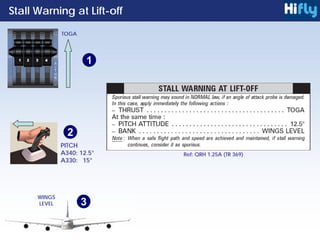
Stall Warning at Lift-off
TOGA
WINGS
LEVEL
PITCH
A340: 12.5°
A330: 15°
1
2
3
Ref: QRH 1.25A (TR 369)
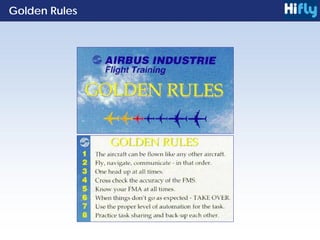
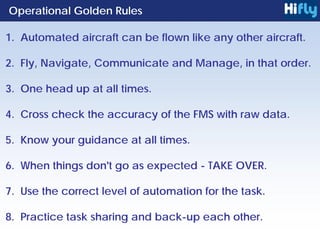
Golden Rules
1. Automated aircraft can be flown like any other aircraft.
2. Fly, Navigate, Communicate and Manage, in that order.
3. One head up at all times.
4. Cross check the accuracy of the FMS with raw data.
5. Know your guidance at all times.
6. When things don't go as expected - TAKE OVER.
7. Use the correct level of automation for the task.
8. Practice task sharing and back-up each other.
Operational Golden Rules
HIFLY  MEMORY ITEMS.pdf

HIFLY MEMORY ITEMS.pdf

  • 1.
    © 2010. Version3.0 Claudio Sallaberry Airbus A330/340 MEMORY ITEMS For training purposes only. This document will not be updated. ALL FCOM, FCTM, FOM, RAIM, Airline Policy, supersede the information contained in this presentation if conflicting.
  • 2.
    1. Windshear. 2. WindshearAhead. 3. TCAS. 4. EGPWS. 5. Loss of Braking. 6. Emergency Descent (Immediate actions). 7. Unreliable Speed Indication (Immediate actions). 8. Crew Incapacitation. 9. Stall Recovery. 10. Stall Warning at Lift-off. Memory Items The following procedures are to be applied without referring to paper (FCOM 3.02.01 page 2a). Most of them are Emergency or Abnormal procedures not displayed on ECAM.
  • 3.
    Reactive Windshear …….……….….…“WINDSHEAR TOGA” TCAS ……………….………………. “TCAS, I HAVE CONTROL” EGPWS ………………………..……………..... “PULL UP, TOGA” Loss of braking ……………….…………. “LOSS OF BRAKING” Emergency Descent ……………... “EMERGENCY DESCENT” Unreliable Speed ……………...……….. “UNRELIABLE SPEED” Memory Items Callouts The aim of such callouts is to callout the appropriate procedure by calling out, in most cases, the title of the procedure. This will allow the crew to be aware of the situation and be prepared to properly react (Crew coordination, task sharing and communication). FCOM 3.03.90 page 4.
  • 4.
    Windshear WINDSHEAR FOLLOW SRS DO NOT CHANGECONFIGURATION “WINDSHEAR TOGA” PF Consider the use of full backstick, if necessary TOGA 1 3 2 4 The PWS operates automatically below 2300 Ft AGL, regardless of whether the radar is turned ON or OFF. Ref: QRH 1.26
  • 5.
  • 6.
    TCAS FORBIDDEN V/S CORRECT V/S NOTIFY ATC: “TCAS RA” “TCAS,I HAVE CONTROL” WATCH FOR TRAFFIC DISCONNECT AP / FD AND FOLLOW RESOLUTION PF 1 2 3 Ref: QRH 1.12
  • 7.
    EGPWS TOGA RETRACT SPOILERS WINGS LEVEL “PULL UP TOGA” NIGHTor IMC AP OFF FULL BACK STICK PF 1 2 3 4 Ref: QRH 1.11
  • 8.
    ANTISKID OFF RE APPLYBRAKES Max 1000 Psi SHORT AND SUCCESIVE PARKING BRAKE APPLICATIONS “LOSS OF BRAKING” Loss of Braking PF 1 2 3 MAXIMUM REVERSE 4 Ref: QRH 1.10
  • 9.
    Emergency Descent SIGNS ON 2 “EMERGENCYDESCENT” Captain announce: 1 3 4 1 TURN PULL ALT 2 TURN PULL HDG 3 PULL SPD SPEED BRAKE FULL 6 5 VERIFY ON FMA Ref: QRH 1.25 “EMERGENCY DESCENT” PF
  • 10.
    Unreliable Speed AP OFF FDOFF A/THR OFF SPOILERS RETRACT L/G UP Below THR RED ALT: 340 12.5°/TOGA : 330 15°/TOGA Above THR RED ALT : 10°/CLB After RED above 10000 Ft : 5°/CLB MAINTAIN FLAP CONF If the safe conduct of the flight is impacted “UNRELIABLE SPEED” PF GPS ALTITUDE DISPLAY on MCDU FOR TROUBLESHOOTING (A333 and A343 only) 1 2 3 4 5 6 Ref: QRH 2.21
  • 11.
    FLY THE GREEN UnreliableSpeed (BUSS) A345 and A332 only The flight crew activate the BUSS only if the unreliable speed situation remains below FL250. The majority of unreliable speed events below FL250 are permanent situations. Therefore, below FL250, the use of the BUSS remains recommended in case of unreliable speed situation. When the trouble shooting procedure did not permit to identify at least one correct indication, or if the NAV ADR 1+2+3 FAULT ECAM warning is triggered, the flight crew switches OFF all ADR’s and flies the aircraft using the BUSS. No need for Pitch & Thrust tables 1 2 Ref: QRH 2.21
  • 12.
    Crew Incapacitation AP ON A/THRON CALL SCM ASSIST PILOT DECLARE AN EMERGENCY TO ATC MAYDAY Prepare the approach and checklist earlier than usual. Radar vectors and a long approach to reduce workload. Perform the landing from the fit pilot usual place. 1 2 3 4 Ref: FCOM 3.02.80 p 9
  • 13.
    Stall Recovery INCREASE SMOOTHLY RETRACT SPOILERS WINGS LEVEL PITCH DOWN REDUCEα 1 2 3 4 IF BELOW FL200 SELECT FLAPS 1 5 Ref: QRH 1.25A (TR 369)
  • 14.
    Stall Warning atLift-off TOGA WINGS LEVEL PITCH A340: 12.5° A330: 15° 1 2 3 Ref: QRH 1.25A (TR 369)
  • 15.
  • 16.
    1. Automated aircraftcan be flown like any other aircraft. 2. Fly, Navigate, Communicate and Manage, in that order. 3. One head up at all times. 4. Cross check the accuracy of the FMS with raw data. 5. Know your guidance at all times. 6. When things don't go as expected - TAKE OVER. 7. Use the correct level of automation for the task. 8. Practice task sharing and back-up each other. Operational Golden Rules