Heterocyclic Chemistry: Parts 2 and 3
                              Year 3, Semester 1
                       Dr Boa, C301, a.n.boa@hull.ac.uk

Contents Overview
Part 2
1.   HETEROCYCLES - INTRODUCTION
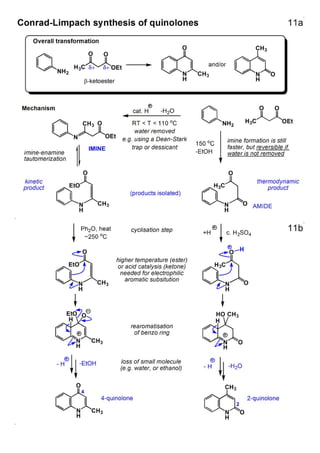
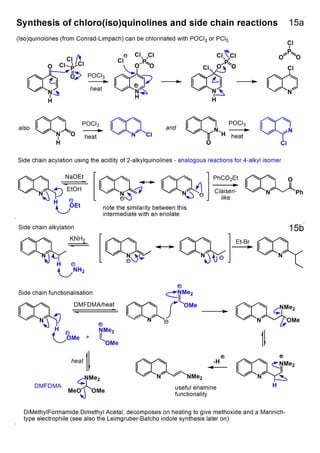
2.   QUINOLINES & QUINOLONES
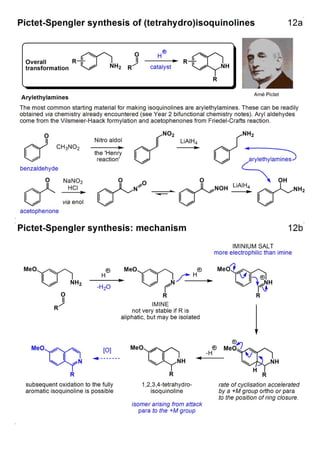
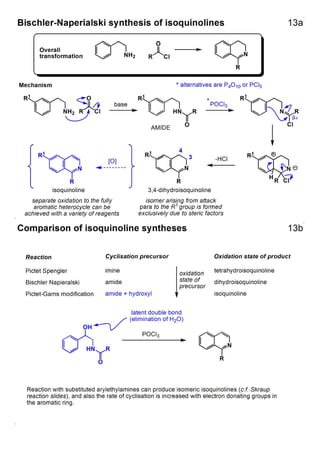
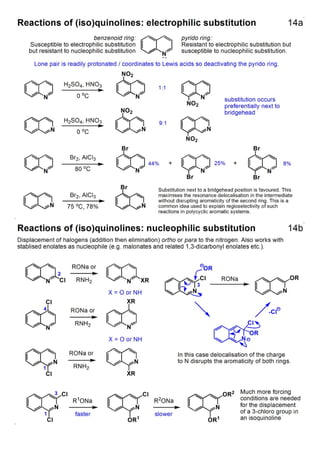
3.   ISOQUINOLINES
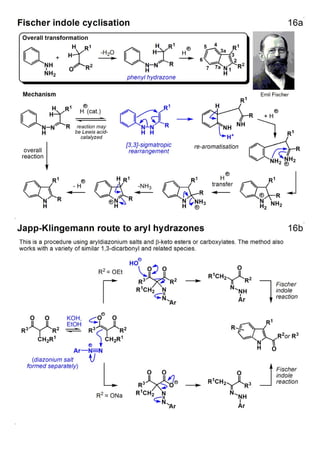
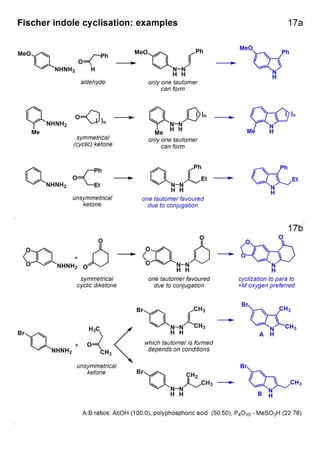
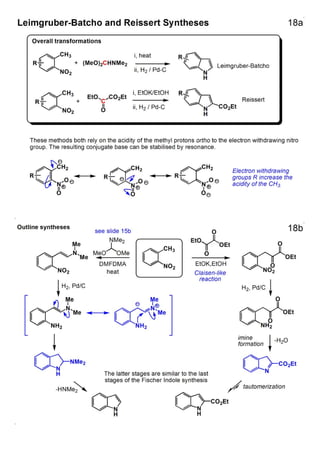
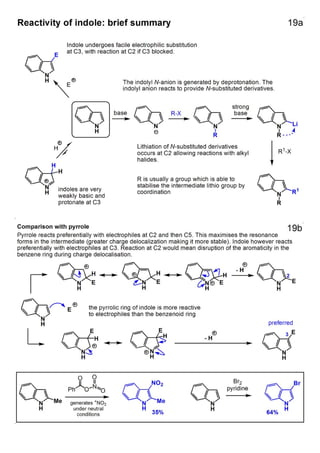
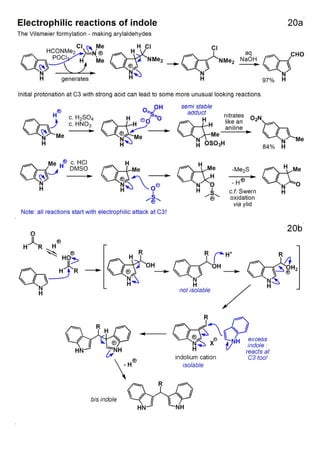
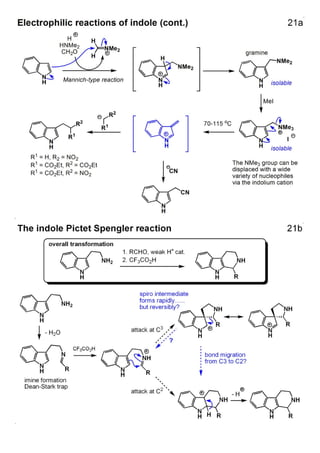
4.   INDOLES
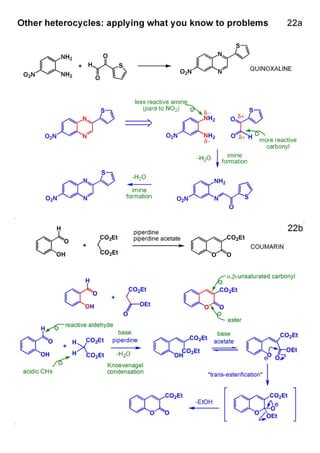
5.   MISC. HETEROCYCLES & MID COURSE REVIEW

Part 3
1.   1,3-DIPOLAR CYCLOADDITION REACTIONS - INTRODUCTION
2.   ISOXAZOLES AND ISOXAZOLINES
3.   ISOXAZOLIDINES
4.   DIAZOLES AND TRIAZOLES
5.   COURSE REVIEW

Suggested reading
•   Organic Chemistry, 1st Ed., J. Clayden, N. Greeves, S. Warren and P. Wothers,
    OUP. Chapters 42, 43 and 44 (sections thereof).
•   Aromatic Heterocyclic Chemistry, D.T. Davies, OUP, QD 400 D2
•   Heterocyclic Chemistry, T.L. Gilchrist, QD 400 G5
•   Heterocyclic Chemistry, J.A. Joule, K. Mills and G.F. Smith, QD 400 J8

Learning outcomes:
At the end of the course you should be able to:
1. Identify, draw and be familiar with the names of the classes of heterocyclic
    molecules covered in the course (not detailed nomenclature)
2. Distinguish between cyclisation and cycloaddition reactions and describe the
    general features of each class
3. Formulate products arising from cyclisation and cycloaddition reactions. I.e. work
    out what heterocycle is produced from a given set of reagents (including methods
    for making 1,3-dipoles)
4. Apply the ring modification reactions covered to given heterocycles
5. Give synthetic sequences for the syntheses covered (identify intermediates)
6. Describe the influence of reaction conditions on product (isomer) distribution
7. Explain isomer distribution in cyclisation reactions in terms of thermodynamic and
    kinetic effects.
8. Describe the effect of ring substituents on rates of cyclisation reaction and isomer
    distribution.

For a full set of notes and sample past paper questions (some with solutions) see
http://www.hull.ac.uk/php/chsanb/teaching.html
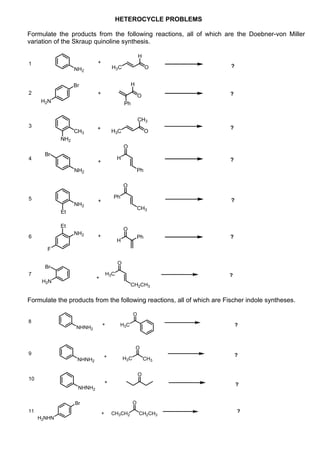
HETEROCYCLE PROBLEMS

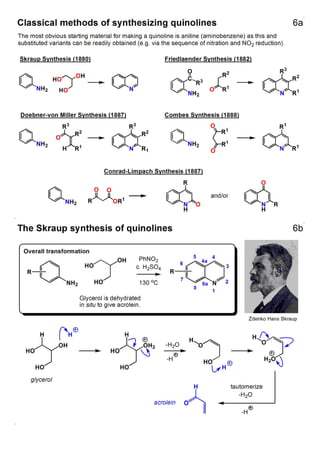
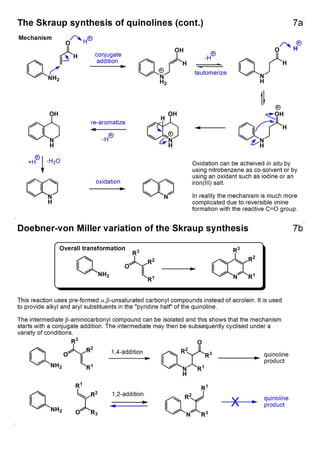
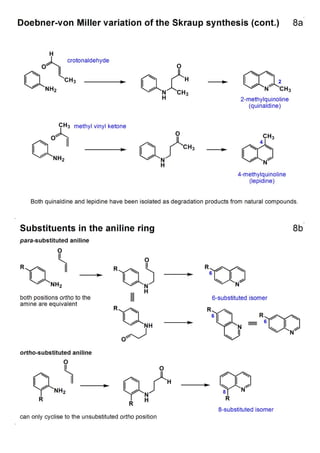
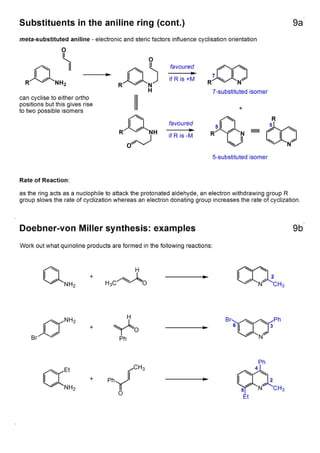
Formulate the products from the following reactions, all of which are the Doebner-von Miller
variation of the Skraup quinoline synthesis.

                                                          H
1                           +
                                        H3 C                   O        ?
                   NH2


                   Br                               H
2                           +                                          ?
                                                          O
      H2 N                                     Ph


                                                          CH3
3                           +                                          ?
                   CH3                  H3C                    O
             NH2
                                               O
       Br
4                                         H                            ?
                            +
                   NH2                                    Ph

                                               O

5                                       Ph
                            +                                           ?
                   NH2
                                                          CH3
             Et

             Et
                                               O
                   NH2      +
6                                                         Ph           ?
                                          H
        F

                                          O
       Br
7                                   H3C                                ?
                            +
      H2N
                                                    CH2CH3


Formulate the products from the following reactions, all of which are Fischer indole syntheses.

                                                      O
8
                                +            H3 C                           ?
                    NHNH2


                                                        O
9                                                                           ?
                                +              H3 C           CH3
                    NHNH2

                                                          O
10
                                    +                                       ?
                    NHNH2

                   Br                                 O
11                              +       CH3CH2            CH2CH3            ?
     H2NHN
Br                                           O
12                               +                                                                           ?
                                            H3C             CH3
                   NHNH2

                                                        O
                      NHNH2
13                               +                                                                           ?
      MeO

                                                        O
14                                  +                                                                            ?
                   NHNH2                      H3C            Ph
            CH3

                                                        O

15                               +                                                                           ?
               CH3
            NHNH2


                   F                                O
16                               +                                                                           ?
                   NHNH2


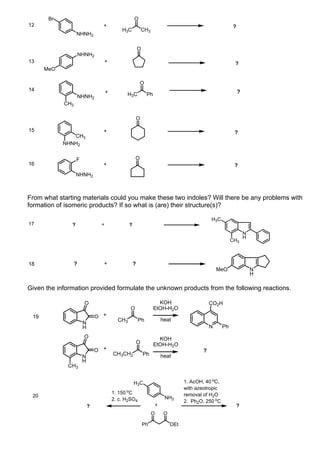
From what starting materials could you make these two indoles? Will there be any problems with
formation of isomeric products? If so what is (are) their structure(s)?

                                                                                                H3C
17             ?                +               ?
                                                                                                                     N
                                                                                                                     H
                                                                                                            CH3


18                ?              +                  ?
                                                                                                    MeO                  N
                                                                                                                         H

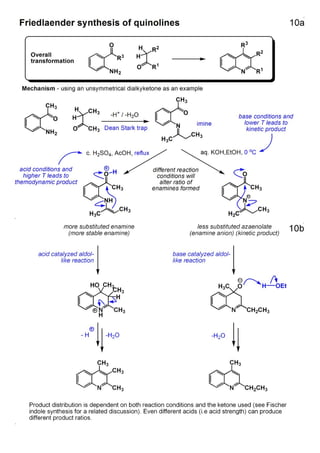
Given the information provided formulate the unknown products from the following reactions.

                        O                                           KOH                         CO2H
                                                O                 EtOH-H2O
 19                            O +
                                          CH3           Ph                heat
                       N
                       H                                                                        N      Ph
                        O                                           KOH
                                                        O         EtOH-H2O
                               O +                                                          ?
                                        CH3CH2              Ph            heat
                       N
                       H
              CH3


                                                    H3C                              1. AcOH, 40 oC,
                                                                                     with azeotropic
                                        1. 150 oC                                    removal of H2O
 20                                                                        NH2
                                        2. c. H2SO4                                  2. Ph2O, 250 oC
                           ?                                          +                                          ?
                                                                  O        O

                                                            Ph                 OEt

Heterocycles 2

  • 1.
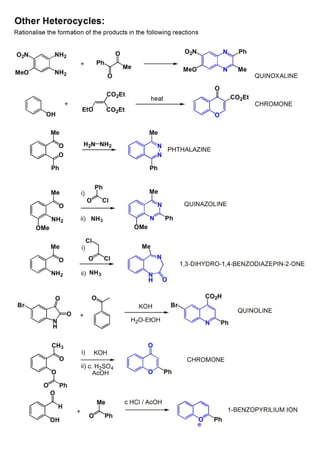
    Heterocyclic Chemistry: Parts2 and 3 Year 3, Semester 1 Dr Boa, C301, a.n.boa@hull.ac.uk Contents Overview Part 2 1. HETEROCYCLES - INTRODUCTION 2. QUINOLINES & QUINOLONES 3. ISOQUINOLINES 4. INDOLES 5. MISC. HETEROCYCLES & MID COURSE REVIEW Part 3 1. 1,3-DIPOLAR CYCLOADDITION REACTIONS - INTRODUCTION 2. ISOXAZOLES AND ISOXAZOLINES 3. ISOXAZOLIDINES 4. DIAZOLES AND TRIAZOLES 5. COURSE REVIEW Suggested reading • Organic Chemistry, 1st Ed., J. Clayden, N. Greeves, S. Warren and P. Wothers, OUP. Chapters 42, 43 and 44 (sections thereof). • Aromatic Heterocyclic Chemistry, D.T. Davies, OUP, QD 400 D2 • Heterocyclic Chemistry, T.L. Gilchrist, QD 400 G5 • Heterocyclic Chemistry, J.A. Joule, K. Mills and G.F. Smith, QD 400 J8 Learning outcomes: At the end of the course you should be able to: 1. Identify, draw and be familiar with the names of the classes of heterocyclic molecules covered in the course (not detailed nomenclature) 2. Distinguish between cyclisation and cycloaddition reactions and describe the general features of each class 3. Formulate products arising from cyclisation and cycloaddition reactions. I.e. work out what heterocycle is produced from a given set of reagents (including methods for making 1,3-dipoles) 4. Apply the ring modification reactions covered to given heterocycles 5. Give synthetic sequences for the syntheses covered (identify intermediates) 6. Describe the influence of reaction conditions on product (isomer) distribution 7. Explain isomer distribution in cyclisation reactions in terms of thermodynamic and kinetic effects. 8. Describe the effect of ring substituents on rates of cyclisation reaction and isomer distribution. For a full set of notes and sample past paper questions (some with solutions) see http://www.hull.ac.uk/php/chsanb/teaching.html
  • 25.
    HETEROCYCLE PROBLEMS Formulate theproducts from the following reactions, all of which are the Doebner-von Miller variation of the Skraup quinoline synthesis. H 1 + H3 C O ? NH2 Br H 2 + ? O H2 N Ph CH3 3 + ? CH3 H3C O NH2 O Br 4 H ? + NH2 Ph O 5 Ph + ? NH2 CH3 Et Et O NH2 + 6 Ph ? H F O Br 7 H3C ? + H2N CH2CH3 Formulate the products from the following reactions, all of which are Fischer indole syntheses. O 8 + H3 C ? NHNH2 O 9 ? + H3 C CH3 NHNH2 O 10 + ? NHNH2 Br O 11 + CH3CH2 CH2CH3 ? H2NHN
  • 26.
    Br O 12 + ? H3C CH3 NHNH2 O NHNH2 13 + ? MeO O 14 + ? NHNH2 H3C Ph CH3 O 15 + ? CH3 NHNH2 F O 16 + ? NHNH2 From what starting materials could you make these two indoles? Will there be any problems with formation of isomeric products? If so what is (are) their structure(s)? H3C 17 ? + ? N H CH3 18 ? + ? MeO N H Given the information provided formulate the unknown products from the following reactions. O KOH CO2H O EtOH-H2O 19 O + CH3 Ph heat N H N Ph O KOH O EtOH-H2O O + ? CH3CH2 Ph heat N H CH3 H3C 1. AcOH, 40 oC, with azeotropic 1. 150 oC removal of H2O 20 NH2 2. c. H2SO4 2. Ph2O, 250 oC ? + ? O O Ph OEt