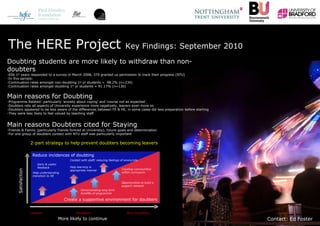
The HERE Project  Key Findings: September 2010 Doubting students are more likely to withdraw than non-doubters -656 1 st  years responded to a survey in March 2008, 370 granted us permission to track their progress (NTU) -In this sample: -Continuation rates amongst non-doubting 1 st  yr students =  98.2% (n=234) Continuation rates amongst doubting 1 st  yr students = 91.17% (n=136) Main reasons for Doubting -Programme Related: particularly ‘anxiety about coping’ and ‘course not as expected’.  Doubters rate all aspects of University experience more negatively, leavers even more so Doubters appeared to be less aware of the differences between FE & HE, in some cases did less preparation before starting They were less likely to feel valued by teaching staff Main reasons Doubters cited for Staying Friends & Family (particularly friends formed at University), future goals and determination For one group of doubters contact with NTU staff was particularly important Satisfaction More likely to continue Leavers Doubters Non-Doubters 2-part strategy to help prevent doubters becoming leavers Contact: Ed Foster Reduce incidences of doubting Create a supportive environment for doubters Early & useful feedback Contact with staff/ reducing feelings of anonymity Help understanding transition to HE Help learning in appropriate manner Creating communities within curriculum Opportunities to build a support network Demonstrating long term benefits of programme

Here Project Poster September 2010

  • 1.
    The HERE Project Key Findings: September 2010 Doubting students are more likely to withdraw than non-doubters -656 1 st years responded to a survey in March 2008, 370 granted us permission to track their progress (NTU) -In this sample: -Continuation rates amongst non-doubting 1 st yr students = 98.2% (n=234) Continuation rates amongst doubting 1 st yr students = 91.17% (n=136) Main reasons for Doubting -Programme Related: particularly ‘anxiety about coping’ and ‘course not as expected’. Doubters rate all aspects of University experience more negatively, leavers even more so Doubters appeared to be less aware of the differences between FE & HE, in some cases did less preparation before starting They were less likely to feel valued by teaching staff Main reasons Doubters cited for Staying Friends & Family (particularly friends formed at University), future goals and determination For one group of doubters contact with NTU staff was particularly important Satisfaction More likely to continue Leavers Doubters Non-Doubters 2-part strategy to help prevent doubters becoming leavers Contact: Ed Foster Reduce incidences of doubting Create a supportive environment for doubters Early & useful feedback Contact with staff/ reducing feelings of anonymity Help understanding transition to HE Help learning in appropriate manner Creating communities within curriculum Opportunities to build a support network Demonstrating long term benefits of programme