Heart Failure -Overview
Dr.Elamaran.E
Senior resident
Department Of CTVS
Definition
• Clinical syndrome
– Symptoms & signs typical of heart failure
– Objective evidence –abnormality of heart
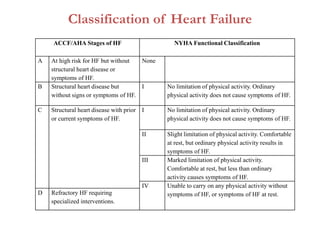
Classification of Heart Failure
ACCF/AHA Stages of HF NYHA Functional Classification
A At high risk for HF but without
structural heart disease or
symptoms of HF.
None
B Structural heart disease but
without signs or symptoms of HF.
I No limitation of physical activity. Ordinary
physical activity does not cause symptoms of HF.
C Structural heart disease with prior
or current symptoms of HF.
I No limitation of physical activity. Ordinary
physical activity does not cause symptoms of HF.
II Slight limitation of physical activity. Comfortable
at rest, but ordinary physical activity results in
symptoms of HF.
III Marked limitation of physical activity.
Comfortable at rest, but less than ordinary
activity causes symptoms of HF.
IV Unable to carry on any physical activity without
symptoms of HF, or symptoms of HF at rest.D Refractory HF requiring
specialized interventions.
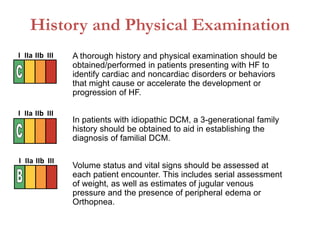
A thorough history and physical examination should be
obtained/performed in patients presenting with HF to
identify cardiac and noncardiac disorders or behaviors
that might cause or accelerate the development or
progression of HF.
In patients with idiopathic DCM, a 3-generational family
history should be obtained to aid in establishing the
diagnosis of familial DCM.
Volume status and vital signs should be assessed at
each patient encounter. This includes serial assessment
of weight, as well as estimates of jugular venous
pressure and the presence of peripheral edema or
Orthopnea.
History and Physical Examination
I IIa IIb III
I IIa IIb III
I IIa IIb III
Diagnostic Tests
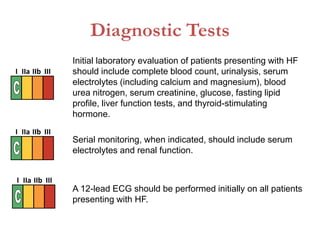
Initial laboratory evaluation of patients presenting with HF
should include complete blood count, urinalysis, serum
electrolytes (including calcium and magnesium), blood
urea nitrogen, serum creatinine, glucose, fasting lipid
profile, liver function tests, and thyroid-stimulating
hormone.
Serial monitoring, when indicated, should include serum
electrolytes and renal function.
A 12-lead ECG should be performed initially on all patients
presenting with HF.
I IIa IIb III
I IIa IIb III
I IIa IIb III
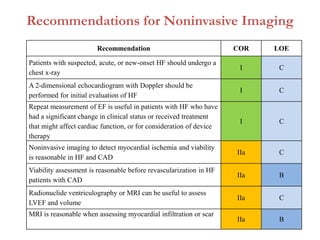
Recommendations for Noninvasive Imaging
Recommendation COR LOE
Patients with suspected, acute, or new-onset HF should undergo a
chest x-ray
I C
A 2-dimensional echocardiogram with Doppler should be
performed for initial evaluation of HF
I C
Repeat measurement of EF is useful in patients with HF who have
had a significant change in clinical status or received treatment
that might affect cardiac function, or for consideration of device
therapy
I C
Noninvasive imaging to detect myocardial ischemia and viability
is reasonable in HF and CAD
IIa C
Viability assessment is reasonable before revascularization in HF
patients with CAD
IIa B
Radionuclide ventriculography or MRI can be useful to assess
LVEF and volume
IIa C
MRI is reasonable when assessing myocardial infiltration or scar
IIa B
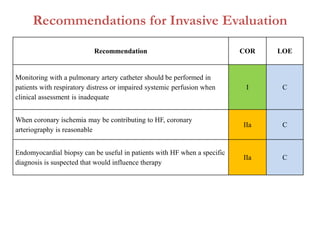
Recommendations for Invasive Evaluation
Recommendation COR LOE
Monitoring with a pulmonary artery catheter should be performed in
patients with respiratory distress or impaired systemic perfusion when
clinical assessment is inadequate
I C
When coronary ischemia may be contributing to HF, coronary
arteriography is reasonable
IIa C
Endomyocardial biopsy can be useful in patients with HF when a specific
diagnosis is suspected that would influence therapy
IIa C
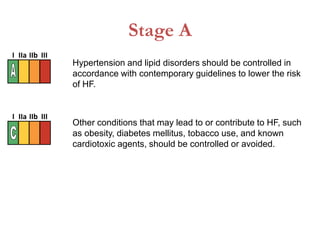
Stage A
Hypertension and lipid disorders should be controlled in
accordance with contemporary guidelines to lower the risk
of HF.
Other conditions that may lead to or contribute to HF, such
as obesity, diabetes mellitus, tobacco use, and known
cardiotoxic agents, should be controlled or avoided.
I IIa IIb III
I IIa IIb III
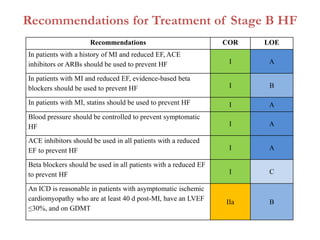
Recommendations for Treatment of Stage B HF
Recommendations COR LOE
In patients with a history of MI and reduced EF, ACE
inhibitors or ARBs should be used to prevent HF I A
In patients with MI and reduced EF, evidence-based beta
blockers should be used to prevent HF I B
In patients with MI, statins should be used to prevent HF I A
Blood pressure should be controlled to prevent symptomatic
HF I A
ACE inhibitors should be used in all patients with a reduced
EF to prevent HF I A
Beta blockers should be used in all patients with a reduced EF
to prevent HF I C
An ICD is reasonable in patients with asymptomatic ischemic
cardiomyopathy who are at least 40 d post-MI, have an LVEF
≤30%, and on GDMT
IIa B
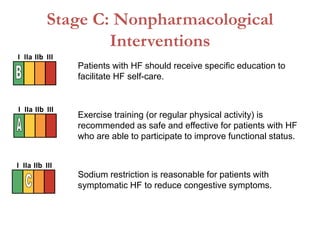
Stage C: Nonpharmacological
Interventions
Patients with HF should receive specific education to
facilitate HF self-care.
Exercise training (or regular physical activity) is
recommended as safe and effective for patients with HF
who are able to participate to improve functional status.
Sodium restriction is reasonable for patients with
symptomatic HF to reduce congestive symptoms.
I IIa IIb III
I IIa IIb III
I IIa IIb III
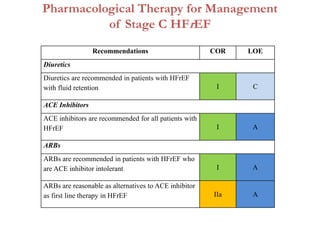
Pharmacological Therapy for Management
of Stage C HFrEF
Recommendations COR LOE
Diuretics
Diuretics are recommended in patients with HFrEF
with fluid retention I C
ACE Inhibitors
ACE inhibitors are recommended for all patients with
HFrEF I A
ARBs
ARBs are recommended in patients with HFrEF who
are ACE inhibitor intolerant I A
ARBs are reasonable as alternatives to ACE inhibitor
as first line therapy in HFrEF IIa A
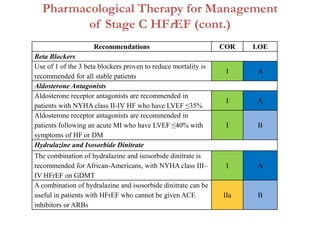
Pharmacological Therapy for Management
of Stage C HFrEF (cont.)
Recommendations COR LOE
Beta Blockers
Use of 1 of the 3 beta blockers proven to reduce mortality is
recommended for all stable patients
I A
Aldosterone Antagonists
Aldosterone receptor antagonists are recommended in
patients with NYHA class II-IV HF who have LVEF ≤35%
I A
Aldosterone receptor antagonists are recommended in
patients following an acute MI who have LVEF ≤40% with
symptoms of HF or DM
I B
Hydralazine and Isosorbide Dinitrate
The combination of hydralazine and isosorbide dinitrate is
recommended for African-Americans, with NYHA class III–
IV HFrEF on GDMT
I A
A combination of hydralazine and isosorbide dinitrate can be
useful in patients with HFrEF who cannot be given ACE
inhibitors or ARBs
IIa B
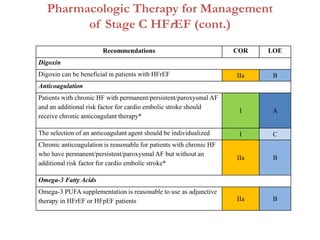
Pharmacologic Therapy for Management
of Stage C HFrEF (cont.)
Recommendations COR LOE
Digoxin
Digoxin can be beneficial in patients with HFrEF IIa B
Anticoagulation
Patients with chronic HF with permanent/persistent/paroxysmal AF
and an additional risk factor for cardio embolic stroke should
receive chronic anticoagulant therapy*
I A
The selection of an anticoagulant agent should be individualized I C
Chronic anticoagulation is reasonable for patients with chronic HF
who have permanent/persistent/paroxysmal AF but without an
additional risk factor for cardio embolic stroke*
IIa B
Omega-3 Fatty Acids
Omega-3 PUFA supplementation is reasonable to use as adjunctive
therapy in HFrEF or HFpEF patients IIa B
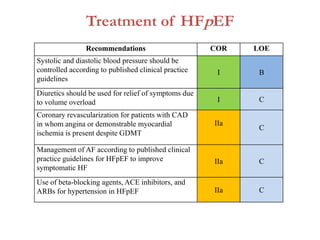
Treatment of HFpEF
Recommendations COR LOE
Systolic and diastolic blood pressure should be
controlled according to published clinical practice
guidelines
I B
Diuretics should be used for relief of symptoms due
to volume overload I C
Coronary revascularization for patients with CAD
in whom angina or demonstrable myocardial
ischemia is present despite GDMT
IIa
C
Management of AF according to published clinical
practice guidelines for HFpEF to improve
symptomatic HF
IIa C
Use of beta-blocking agents, ACE inhibitors, and
ARBs for hypertension in HFpEF IIa C
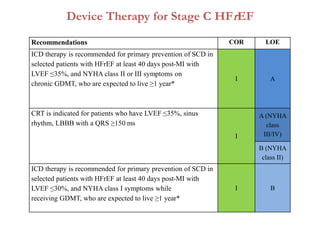
Device Therapy for Stage C HFrEF
Recommendations COR LOE
ICD therapy is recommended for primary prevention of SCD in
selected patients with HFrEF at least 40 days post-MI with
LVEF ≤35%, and NYHA class II or III symptoms on
chronic GDMT, who are expected to live ≥1 year*
I A
CRT is indicated for patients who have LVEF ≤35%, sinus
rhythm, LBBB with a QRS ≥150 ms
I
A (NYHA
class
III/IV)
B (NYHA
class II)
ICD therapy is recommended for primary prevention of SCD in
selected patients with HFrEF at least 40 days post-MI with
LVEF ≤30%, and NYHA class I symptoms while
receiving GDMT, who are expected to live ≥1 year*
I B
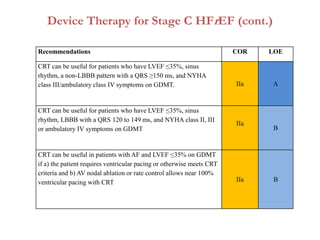
Device Therapy for Stage C HFrEF (cont.)
Recommendations COR LOE
CRT can be useful for patients who have LVEF ≤35%, sinus
rhythm, a non-LBBB pattern with a QRS ≥150 ms, and NYHA
class III/ambulatory class IV symptoms on GDMT. IIa A
CRT can be useful for patients who have LVEF ≤35%, sinus
rhythm, LBBB with a QRS 120 to 149 ms, and NYHA class II, III
or ambulatory IV symptoms on GDMT
IIa
B
CRT can be useful in patients with AF and LVEF ≤35% on GDMT
if a) the patient requires ventricular pacing or otherwise meets CRT
criteria and b) AV nodal ablation or rate control allows near 100%
ventricular pacing with CRT IIa B
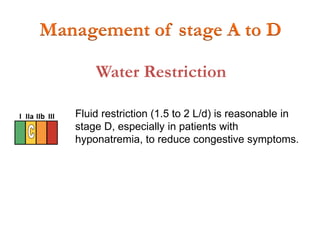
Water Restriction
Fluid restriction (1.5 to 2 L/d) is reasonable in
stage D, especially in patients with
hyponatremia, to reduce congestive symptoms.
I IIa IIb III
Management of stage A to D
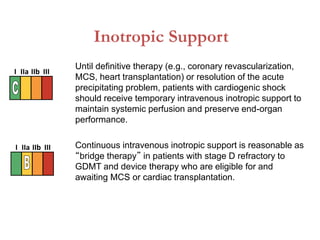
Inotropic Support
Until definitive therapy (e.g., coronary revascularization,
MCS, heart transplantation) or resolution of the acute
precipitating problem, patients with cardiogenic shock
should receive temporary intravenous inotropic support to
maintain systemic perfusion and preserve end-organ
performance.
Continuous intravenous inotropic support is reasonable as
“bridge therapy” in patients with stage D refractory to
GDMT and device therapy who are eligible for and
awaiting MCS or cardiac transplantation.
I IIa IIb III
I IIa IIb III
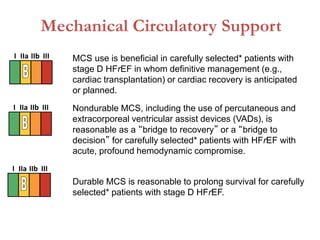
Mechanical Circulatory Support
MCS use is beneficial in carefully selected* patients with
stage D HFrEF in whom definitive management (e.g.,
cardiac transplantation) or cardiac recovery is anticipated
or planned.
Nondurable MCS, including the use of percutaneous and
extracorporeal ventricular assist devices (VADs), is
reasonable as a “bridge to recovery” or a “bridge to
decision” for carefully selected* patients with HFrEF with
acute, profound hemodynamic compromise.
Durable MCS is reasonable to prolong survival for carefully
selected* patients with stage D HFrEF.
I IIa IIb III
I IIa IIb III
I IIa IIb III
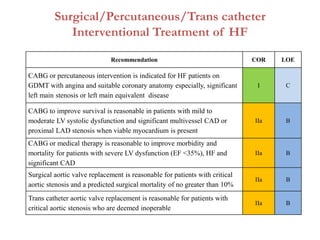
Surgical/Percutaneous/Trans catheter
Interventional Treatment of HF
Recommendation COR LOE
CABG or percutaneous intervention is indicated for HF patients on
GDMT with angina and suitable coronary anatomy especially, significant
left main stenosis or left main equivalent disease
I C
CABG to improve survival is reasonable in patients with mild to
moderate LV systolic dysfunction and significant multivessel CAD or
proximal LAD stenosis when viable myocardium is present
IIa B
CABG or medical therapy is reasonable to improve morbidity and
mortality for patients with severe LV dysfunction (EF <35%), HF and
significant CAD
IIa B
Surgical aortic valve replacement is reasonable for patients with critical
aortic stenosis and a predicted surgical mortality of no greater than 10%
IIa B
Trans catheter aortic valve replacement is reasonable for patients with
critical aortic stenosis who are deemed inoperable
IIa B
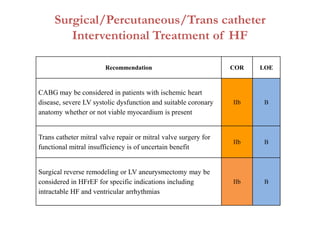
Surgical/Percutaneous/Trans catheter
Interventional Treatment of HF
Recommendation COR LOE
CABG may be considered in patients with ischemic heart
disease, severe LV systolic dysfunction and suitable coronary
anatomy whether or not viable myocardium is present
IIb B
Trans catheter mitral valve repair or mitral valve surgery for
functional mitral insufficiency is of uncertain benefit
IIb B
Surgical reverse remodeling or LV aneurysmectomy may be
considered in HFrEF for specific indications including
intractable HF and ventricular arrhythmias
IIb B
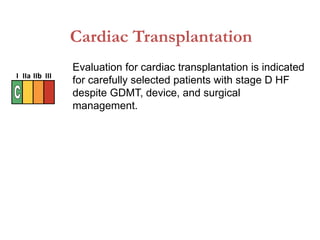
Cardiac Transplantation
Evaluation for cardiac transplantation is indicated
for carefully selected patients with stage D HF
despite GDMT, device, and surgical
management.
I IIa IIb III
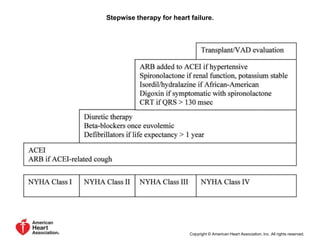
Stepwise therapy for heart failure.
Copyright © American Heart Association, Inc. All rights reserved.
Surgical Interventions
Theory
• Systolic HF leads to an enlarged LV volume to
maintain stroke volume
• This leads to increase in wall stress due to
Laplace's law
stress = pressure x radius ÷ 2 x wall thickness
• The ventricular geometry becomes less ellipsoid
and more spherical leading to progression of left
ventricular dysfunction and worsening heart
failure.
• Removing or excluding portions of the
dysfunctional myocardium returns the left
ventricular cavity to a smaller chamber with
more normal geometry
• This should improve cardiac work efficiency and
theoretically should improve heart failure
symptoms.
• Reducing the LV size
– The Batista operation
– Left ventricular aneurysmectomy
– Ventricular restraint devices
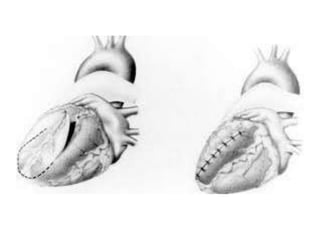
• Reduction left ventriculo plasty
• Developed by Dr. Randas Batista (Brazil) in
1996
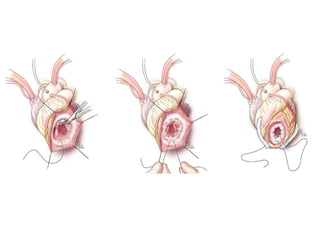
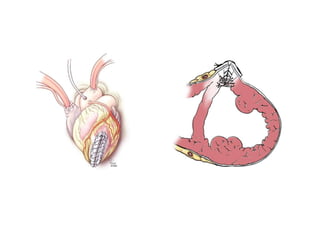
Batista Procedure
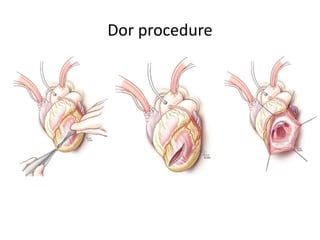
Dor Procedure
• Endoventricular circular patch plasty (EVCPP)
• Surgical reconstruction in the setting of post
infarction aneurysm formation first reported in
1985
Considered Criteria for Surgical Repair
• Previous Anterior MI,
• Dilated left ventricle (end-diastolic volume index
>100 mL/m2)
• Depressed LVEF
• Left ventricular regional dyskinesis or akinesis
>30 percent of the ventricular perimeter
• Symptoms of HF
Contraindications
• Systolic pulmonary artery pressure >60 mmHg
• Severe right ventricular dysfunction
• Regional dyskinesis or akinesis without dilation
of the ventricle
Dor procedure
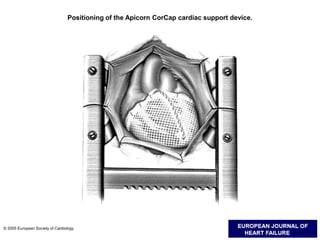
Positioning of the Apicorn CorCap cardiac support device.
© 2005 European Society of Cardiology
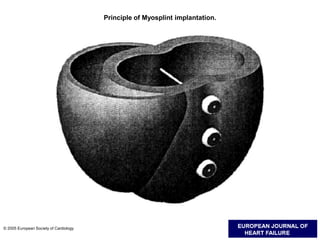
Principle of Myosplint implantation.
© 2005 European Society of Cardiology
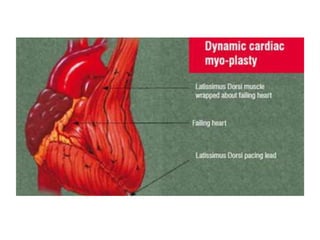
• Re-power the failing heart
– Heart Transplantation
– Dynamic cardio-myoplasty
– Ventricular assist devices and Total Artificial heart
• Improve the cardiac output by reducing
ventricular afterload
– IABP
– Resection of LVOT obstruction

Heart failure

  • 1.
  • 2.
    Definition • Clinical syndrome –Symptoms & signs typical of heart failure – Objective evidence –abnormality of heart
  • 6.
    Classification of HeartFailure ACCF/AHA Stages of HF NYHA Functional Classification A At high risk for HF but without structural heart disease or symptoms of HF. None B Structural heart disease but without signs or symptoms of HF. I No limitation of physical activity. Ordinary physical activity does not cause symptoms of HF. C Structural heart disease with prior or current symptoms of HF. I No limitation of physical activity. Ordinary physical activity does not cause symptoms of HF. II Slight limitation of physical activity. Comfortable at rest, but ordinary physical activity results in symptoms of HF. III Marked limitation of physical activity. Comfortable at rest, but less than ordinary activity causes symptoms of HF. IV Unable to carry on any physical activity without symptoms of HF, or symptoms of HF at rest.D Refractory HF requiring specialized interventions.
  • 7.
    A thorough historyand physical examination should be obtained/performed in patients presenting with HF to identify cardiac and noncardiac disorders or behaviors that might cause or accelerate the development or progression of HF. In patients with idiopathic DCM, a 3-generational family history should be obtained to aid in establishing the diagnosis of familial DCM. Volume status and vital signs should be assessed at each patient encounter. This includes serial assessment of weight, as well as estimates of jugular venous pressure and the presence of peripheral edema or Orthopnea. History and Physical Examination I IIa IIb III I IIa IIb III I IIa IIb III
  • 8.
    Diagnostic Tests Initial laboratoryevaluation of patients presenting with HF should include complete blood count, urinalysis, serum electrolytes (including calcium and magnesium), blood urea nitrogen, serum creatinine, glucose, fasting lipid profile, liver function tests, and thyroid-stimulating hormone. Serial monitoring, when indicated, should include serum electrolytes and renal function. A 12-lead ECG should be performed initially on all patients presenting with HF. I IIa IIb III I IIa IIb III I IIa IIb III
  • 9.
    Recommendations for NoninvasiveImaging Recommendation COR LOE Patients with suspected, acute, or new-onset HF should undergo a chest x-ray I C A 2-dimensional echocardiogram with Doppler should be performed for initial evaluation of HF I C Repeat measurement of EF is useful in patients with HF who have had a significant change in clinical status or received treatment that might affect cardiac function, or for consideration of device therapy I C Noninvasive imaging to detect myocardial ischemia and viability is reasonable in HF and CAD IIa C Viability assessment is reasonable before revascularization in HF patients with CAD IIa B Radionuclide ventriculography or MRI can be useful to assess LVEF and volume IIa C MRI is reasonable when assessing myocardial infiltration or scar IIa B
  • 10.
    Recommendations for InvasiveEvaluation Recommendation COR LOE Monitoring with a pulmonary artery catheter should be performed in patients with respiratory distress or impaired systemic perfusion when clinical assessment is inadequate I C When coronary ischemia may be contributing to HF, coronary arteriography is reasonable IIa C Endomyocardial biopsy can be useful in patients with HF when a specific diagnosis is suspected that would influence therapy IIa C
  • 11.
    Stage A Hypertension andlipid disorders should be controlled in accordance with contemporary guidelines to lower the risk of HF. Other conditions that may lead to or contribute to HF, such as obesity, diabetes mellitus, tobacco use, and known cardiotoxic agents, should be controlled or avoided. I IIa IIb III I IIa IIb III
  • 12.
    Recommendations for Treatmentof Stage B HF Recommendations COR LOE In patients with a history of MI and reduced EF, ACE inhibitors or ARBs should be used to prevent HF I A In patients with MI and reduced EF, evidence-based beta blockers should be used to prevent HF I B In patients with MI, statins should be used to prevent HF I A Blood pressure should be controlled to prevent symptomatic HF I A ACE inhibitors should be used in all patients with a reduced EF to prevent HF I A Beta blockers should be used in all patients with a reduced EF to prevent HF I C An ICD is reasonable in patients with asymptomatic ischemic cardiomyopathy who are at least 40 d post-MI, have an LVEF ≤30%, and on GDMT IIa B
  • 13.
    Stage C: Nonpharmacological Interventions Patientswith HF should receive specific education to facilitate HF self-care. Exercise training (or regular physical activity) is recommended as safe and effective for patients with HF who are able to participate to improve functional status. Sodium restriction is reasonable for patients with symptomatic HF to reduce congestive symptoms. I IIa IIb III I IIa IIb III I IIa IIb III
  • 14.
    Pharmacological Therapy forManagement of Stage C HFrEF Recommendations COR LOE Diuretics Diuretics are recommended in patients with HFrEF with fluid retention I C ACE Inhibitors ACE inhibitors are recommended for all patients with HFrEF I A ARBs ARBs are recommended in patients with HFrEF who are ACE inhibitor intolerant I A ARBs are reasonable as alternatives to ACE inhibitor as first line therapy in HFrEF IIa A
  • 15.
    Pharmacological Therapy forManagement of Stage C HFrEF (cont.) Recommendations COR LOE Beta Blockers Use of 1 of the 3 beta blockers proven to reduce mortality is recommended for all stable patients I A Aldosterone Antagonists Aldosterone receptor antagonists are recommended in patients with NYHA class II-IV HF who have LVEF ≤35% I A Aldosterone receptor antagonists are recommended in patients following an acute MI who have LVEF ≤40% with symptoms of HF or DM I B Hydralazine and Isosorbide Dinitrate The combination of hydralazine and isosorbide dinitrate is recommended for African-Americans, with NYHA class III– IV HFrEF on GDMT I A A combination of hydralazine and isosorbide dinitrate can be useful in patients with HFrEF who cannot be given ACE inhibitors or ARBs IIa B
  • 16.
    Pharmacologic Therapy forManagement of Stage C HFrEF (cont.) Recommendations COR LOE Digoxin Digoxin can be beneficial in patients with HFrEF IIa B Anticoagulation Patients with chronic HF with permanent/persistent/paroxysmal AF and an additional risk factor for cardio embolic stroke should receive chronic anticoagulant therapy* I A The selection of an anticoagulant agent should be individualized I C Chronic anticoagulation is reasonable for patients with chronic HF who have permanent/persistent/paroxysmal AF but without an additional risk factor for cardio embolic stroke* IIa B Omega-3 Fatty Acids Omega-3 PUFA supplementation is reasonable to use as adjunctive therapy in HFrEF or HFpEF patients IIa B
  • 17.
    Treatment of HFpEF RecommendationsCOR LOE Systolic and diastolic blood pressure should be controlled according to published clinical practice guidelines I B Diuretics should be used for relief of symptoms due to volume overload I C Coronary revascularization for patients with CAD in whom angina or demonstrable myocardial ischemia is present despite GDMT IIa C Management of AF according to published clinical practice guidelines for HFpEF to improve symptomatic HF IIa C Use of beta-blocking agents, ACE inhibitors, and ARBs for hypertension in HFpEF IIa C
  • 18.
    Device Therapy forStage C HFrEF Recommendations COR LOE ICD therapy is recommended for primary prevention of SCD in selected patients with HFrEF at least 40 days post-MI with LVEF ≤35%, and NYHA class II or III symptoms on chronic GDMT, who are expected to live ≥1 year* I A CRT is indicated for patients who have LVEF ≤35%, sinus rhythm, LBBB with a QRS ≥150 ms I A (NYHA class III/IV) B (NYHA class II) ICD therapy is recommended for primary prevention of SCD in selected patients with HFrEF at least 40 days post-MI with LVEF ≤30%, and NYHA class I symptoms while receiving GDMT, who are expected to live ≥1 year* I B
  • 19.
    Device Therapy forStage C HFrEF (cont.) Recommendations COR LOE CRT can be useful for patients who have LVEF ≤35%, sinus rhythm, a non-LBBB pattern with a QRS ≥150 ms, and NYHA class III/ambulatory class IV symptoms on GDMT. IIa A CRT can be useful for patients who have LVEF ≤35%, sinus rhythm, LBBB with a QRS 120 to 149 ms, and NYHA class II, III or ambulatory IV symptoms on GDMT IIa B CRT can be useful in patients with AF and LVEF ≤35% on GDMT if a) the patient requires ventricular pacing or otherwise meets CRT criteria and b) AV nodal ablation or rate control allows near 100% ventricular pacing with CRT IIa B
  • 20.
    Water Restriction Fluid restriction(1.5 to 2 L/d) is reasonable in stage D, especially in patients with hyponatremia, to reduce congestive symptoms. I IIa IIb III Management of stage A to D
  • 21.
    Inotropic Support Until definitivetherapy (e.g., coronary revascularization, MCS, heart transplantation) or resolution of the acute precipitating problem, patients with cardiogenic shock should receive temporary intravenous inotropic support to maintain systemic perfusion and preserve end-organ performance. Continuous intravenous inotropic support is reasonable as “bridge therapy” in patients with stage D refractory to GDMT and device therapy who are eligible for and awaiting MCS or cardiac transplantation. I IIa IIb III I IIa IIb III
  • 22.
    Mechanical Circulatory Support MCSuse is beneficial in carefully selected* patients with stage D HFrEF in whom definitive management (e.g., cardiac transplantation) or cardiac recovery is anticipated or planned. Nondurable MCS, including the use of percutaneous and extracorporeal ventricular assist devices (VADs), is reasonable as a “bridge to recovery” or a “bridge to decision” for carefully selected* patients with HFrEF with acute, profound hemodynamic compromise. Durable MCS is reasonable to prolong survival for carefully selected* patients with stage D HFrEF. I IIa IIb III I IIa IIb III I IIa IIb III
  • 23.
    Surgical/Percutaneous/Trans catheter Interventional Treatmentof HF Recommendation COR LOE CABG or percutaneous intervention is indicated for HF patients on GDMT with angina and suitable coronary anatomy especially, significant left main stenosis or left main equivalent disease I C CABG to improve survival is reasonable in patients with mild to moderate LV systolic dysfunction and significant multivessel CAD or proximal LAD stenosis when viable myocardium is present IIa B CABG or medical therapy is reasonable to improve morbidity and mortality for patients with severe LV dysfunction (EF <35%), HF and significant CAD IIa B Surgical aortic valve replacement is reasonable for patients with critical aortic stenosis and a predicted surgical mortality of no greater than 10% IIa B Trans catheter aortic valve replacement is reasonable for patients with critical aortic stenosis who are deemed inoperable IIa B
  • 24.
    Surgical/Percutaneous/Trans catheter Interventional Treatmentof HF Recommendation COR LOE CABG may be considered in patients with ischemic heart disease, severe LV systolic dysfunction and suitable coronary anatomy whether or not viable myocardium is present IIb B Trans catheter mitral valve repair or mitral valve surgery for functional mitral insufficiency is of uncertain benefit IIb B Surgical reverse remodeling or LV aneurysmectomy may be considered in HFrEF for specific indications including intractable HF and ventricular arrhythmias IIb B
  • 25.
    Cardiac Transplantation Evaluation forcardiac transplantation is indicated for carefully selected patients with stage D HF despite GDMT, device, and surgical management. I IIa IIb III
  • 26.
    Stepwise therapy forheart failure. Copyright © American Heart Association, Inc. All rights reserved.
  • 27.
  • 28.
    Theory • Systolic HFleads to an enlarged LV volume to maintain stroke volume • This leads to increase in wall stress due to Laplace's law stress = pressure x radius ÷ 2 x wall thickness • The ventricular geometry becomes less ellipsoid and more spherical leading to progression of left ventricular dysfunction and worsening heart failure.
  • 29.
    • Removing orexcluding portions of the dysfunctional myocardium returns the left ventricular cavity to a smaller chamber with more normal geometry • This should improve cardiac work efficiency and theoretically should improve heart failure symptoms.
  • 30.
    • Reducing theLV size – The Batista operation – Left ventricular aneurysmectomy – Ventricular restraint devices
  • 31.
    • Reduction leftventriculo plasty • Developed by Dr. Randas Batista (Brazil) in 1996 Batista Procedure
  • 33.
    Dor Procedure • Endoventricularcircular patch plasty (EVCPP) • Surgical reconstruction in the setting of post infarction aneurysm formation first reported in 1985
  • 34.
    Considered Criteria forSurgical Repair • Previous Anterior MI, • Dilated left ventricle (end-diastolic volume index >100 mL/m2) • Depressed LVEF • Left ventricular regional dyskinesis or akinesis >30 percent of the ventricular perimeter • Symptoms of HF
  • 35.
    Contraindications • Systolic pulmonaryartery pressure >60 mmHg • Severe right ventricular dysfunction • Regional dyskinesis or akinesis without dilation of the ventricle
  • 36.
  • 39.
    Positioning of theApicorn CorCap cardiac support device. © 2005 European Society of Cardiology
  • 40.
    Principle of Myosplintimplantation. © 2005 European Society of Cardiology
  • 41.
    • Re-power thefailing heart – Heart Transplantation – Dynamic cardio-myoplasty – Ventricular assist devices and Total Artificial heart
  • 43.
    • Improve thecardiac output by reducing ventricular afterload – IABP – Resection of LVOT obstruction