Analysis1
Overview of HDFC BankHousing Development Finance Cooperation Ltd.
1st – Bank to receive an “in principle approval” from RBI.
Incorporated in  August 1994,in the name of                   		“HDFC Bank Ltd.”
1st – Registered Office in Mumbai
HDFC Bank commenced operations as a Scheduled	Commercial Bank in January 1995.2
Business FocusMISSION :            “World Class Indian Bank”.  - OBJECTIVE  :        Maintain Ethical Standards, Professional Integrity &       Cooperate Governence.Business Philosophy :   Based on 4 Core Values -    a) Operational Excellence   b) Customer Focus   c) Product Leadership    d) People3
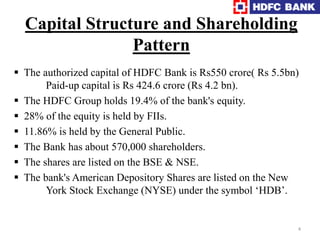
Capital Structure and Shareholding Pattern  The authorized capital of HDFC Bank is Rs550 crore( Rs 5.5bn)      	Paid-up capital is Rs 424.6 crore (Rs 4.2 bn).
  The HDFC Group holds 19.4% of the bank's equity.
  28% of the equity is held by FIIs.
  11.86% is held by the General Public.
  The Bank has about 570,000 shareholders.
  The shares are listed on the BSE & NSE.
  The bank's American Depository Shares are listed on the New 	York Stock Exchange (NYSE) under the symbol ‘HDB’.4
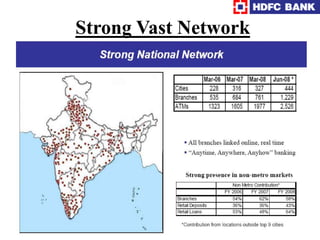
Strong Vast Network5
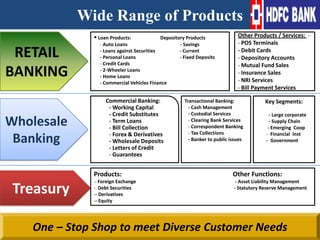
Wide Range of Products6RETAIL BANKINGLoan Products:                        Depository Products                                                        - Auto Loans                                           - Savings     - Loans against Securities                    - Current     -Personal Loans                                    - Fixed Deposits     - Credit Cards     - 2-Wheeler Loans     - Home Loans     - Commercial Vehicles Finance   Other Products / Services:  -- POS Terminals- Debit Cards- Depository Accounts- Mutual Fund Sales- Insurance Sales- NRI Services- Bill Payment ServicesVCommercial Banking:           - Working Capital           - Credit Substitutes           - Term Loans           - Bill Collection           - Forex & Derivatives           - Wholesale Deposits           -Letters of Credit           - GuaranteesTransactional Banking:   - Cash Management   - Custodial Services   - Clearing Bank Services   - Correspondent Banking   - Tax Collections   - Banker to public issuesKey Segments:          - Large corporate          - Supply Chain         - Emerging  Coop        -  Financial  Inst        -  GovernmentWholesale BankingProducts:                                                                     Other Functions: - Foreign Exchange                                                                                 - Asset Liability Management  Debt Securities                                                                                    - Statutory Reserve Management
- Derivatives
- EquityTreasuryOne – Stop Shop to meet Diverse Customer Needs
7
8
9
10
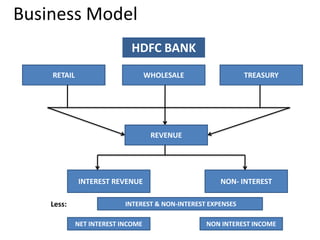
Business ModelHDFC BANKRETAILWHOLESALETREASURYREVENUE  INTEREST REVENUE	NON- INTERESTLess: INTEREST & NON-INTEREST EXPENSESNET INTEREST INCOMENON INTEREST INCOME
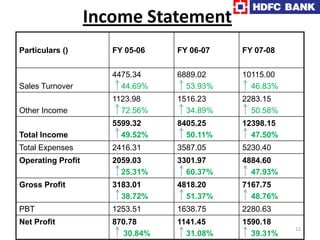
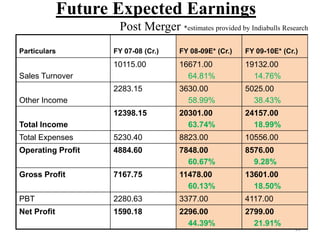
Income Statement12
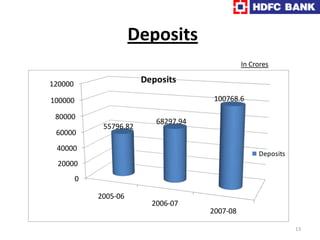
Deposits13In Crores
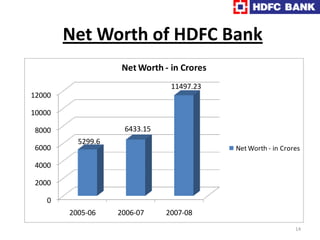
Net Worth of HDFC Bank14
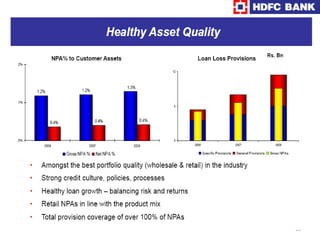
15
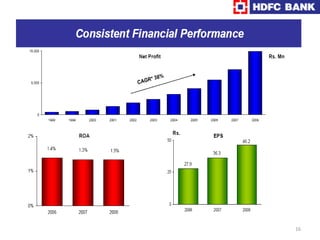
16
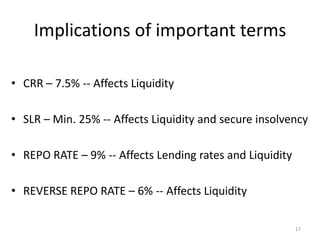
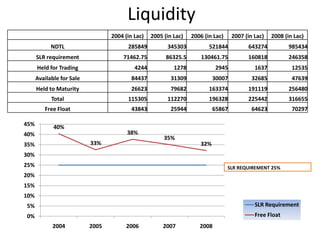
Implications of important termsCRR – 7.5% -- Affects LiquiditySLR – Min. 25% -- Affects Liquidity and secure insolvencyREPO RATE – 9% -- Affects Lending rates and LiquidityREVERSE REPO RATE – 6% -- Affects Liquidity17
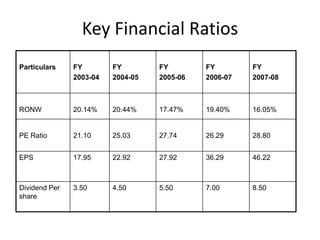
Key Financial Ratios
MERGER OF CBOP WITH HDFC BANK
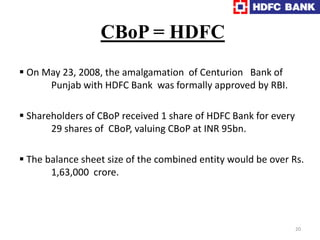
CBoP = HDFC  On May 23, 2008, the amalgamation  of Centurion   Bank of 	Punjab with HDFC Bank  was formally approved by RBI.

HDFC Bank

  • 1.
  • 2.
    Overview of HDFCBankHousing Development Finance Cooperation Ltd.
  • 3.
    1st – Bankto receive an “in principle approval” from RBI.
  • 4.
    Incorporated in August 1994,in the name of “HDFC Bank Ltd.”
  • 5.
    1st – RegisteredOffice in Mumbai
  • 6.
    HDFC Bank commencedoperations as a Scheduled Commercial Bank in January 1995.2
  • 7.
    Business FocusMISSION : “World Class Indian Bank”. - OBJECTIVE : Maintain Ethical Standards, Professional Integrity & Cooperate Governence.Business Philosophy : Based on 4 Core Values - a) Operational Excellence b) Customer Focus c) Product Leadership d) People3
  • 8.
    Capital Structure andShareholding Pattern The authorized capital of HDFC Bank is Rs550 crore( Rs 5.5bn) Paid-up capital is Rs 424.6 crore (Rs 4.2 bn).
  • 9.
    TheHDFC Group holds 19.4% of the bank's equity.
  • 10.
    28%of the equity is held by FIIs.
  • 11.
    11.86%is held by the General Public.
  • 12.
    TheBank has about 570,000 shareholders.
  • 13.
    Theshares are listed on the BSE & NSE.
  • 14.
    Thebank's American Depository Shares are listed on the New York Stock Exchange (NYSE) under the symbol ‘HDB’.4
  • 15.
  • 16.
    Wide Range ofProducts6RETAIL BANKINGLoan Products: Depository Products - Auto Loans - Savings - Loans against Securities - Current -Personal Loans - Fixed Deposits - Credit Cards - 2-Wheeler Loans - Home Loans - Commercial Vehicles Finance Other Products / Services: -- POS Terminals- Debit Cards- Depository Accounts- Mutual Fund Sales- Insurance Sales- NRI Services- Bill Payment ServicesVCommercial Banking: - Working Capital - Credit Substitutes - Term Loans - Bill Collection - Forex & Derivatives - Wholesale Deposits -Letters of Credit - GuaranteesTransactional Banking: - Cash Management - Custodial Services - Clearing Bank Services - Correspondent Banking - Tax Collections - Banker to public issuesKey Segments: - Large corporate - Supply Chain - Emerging Coop - Financial Inst - GovernmentWholesale BankingProducts: Other Functions: - Foreign Exchange - Asset Liability Management Debt Securities - Statutory Reserve Management
  • 17.
  • 18.
    - EquityTreasuryOne –Stop Shop to meet Diverse Customer Needs
  • 19.
  • 20.
  • 21.
  • 22.
  • 23.
    Business ModelHDFC BANKRETAILWHOLESALETREASURYREVENUE INTEREST REVENUE NON- INTERESTLess: INTEREST & NON-INTEREST EXPENSESNET INTEREST INCOMENON INTEREST INCOME
  • 24.
  • 25.
  • 26.
    Net Worth ofHDFC Bank14
  • 27.
  • 28.
  • 29.
    Implications of importanttermsCRR – 7.5% -- Affects LiquiditySLR – Min. 25% -- Affects Liquidity and secure insolvencyREPO RATE – 9% -- Affects Lending rates and LiquidityREVERSE REPO RATE – 6% -- Affects Liquidity17
  • 30.
  • 31.
    MERGER OF CBOPWITH HDFC BANK
  • 32.
    CBoP = HDFC On May 23, 2008, the amalgamation of Centurion Bank of Punjab with HDFC Bank was formally approved by RBI.

Editor's Notes

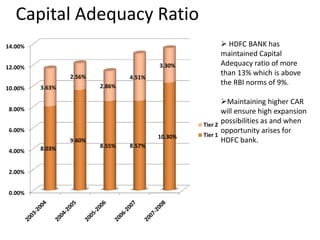
  • #25 The major factors for increasing CAR can be as follow:Raising Capital from Fresh issue of equity shares:Internal generations of funds (Retained Earnings):HDFC bank has a policy of retaining 78% of its earnings and using the funds for advances. Due to higher retention of earnings bank is maintaining higher CAR.Risk Weighted Assets:HDFC bank has given more loans with risks during the years. HDFC Bank has issued loans in huge quantity therefore the risk weight of CAR has increased considerably.
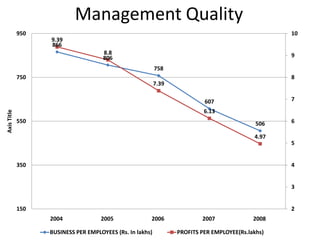
  • #27  Employee per branch for HDFC Bank (merged) has moved up from 17 in FY04 to 39 in FY08. This coupled with high wage inflation has led to significant increase in employee cost to assets ratio. Going ahead, we expect employee per branch to stabilise at current levels and wage inflation to moderate leading to improvement in cost ratios for HDFC Bank.
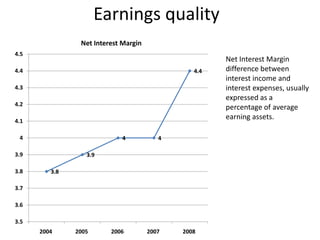
  • #28 ): For banks, interest expenses are their main costs (similar to manufacturing cost for companies) and interest income is their main revenue source. The difference between interest income and expense is known as net interest income. It is the income, which the bank earns from its core business of lending. Net interest margin is the net interest income earned by the bank on its average earning assets. These assets comprises of advances, investments, balance with the RBI and money at call. Margin expansion was contributed by increase in yields across all products partially offset by increase in time deposit costs.  NIM = Interest income – Interest expenses ------------------------------------ Average earning assetsBank NIM has been increasing due to high interest loan advances and low cost deposits . Increasing signifies that bank has been successfully able to able to deploy its average earning assets to generate more revenues.
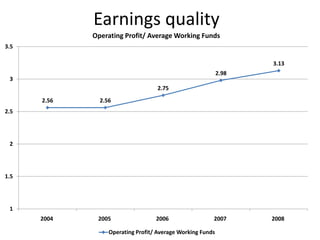
  • #29 This ratio also tells us about the good earning quality of the bank. We can see that the banks operating profit as a percentage of average working funds has been increasing which tells that banks has been is