WHAT IS HAZARDOUS ENERGIES?
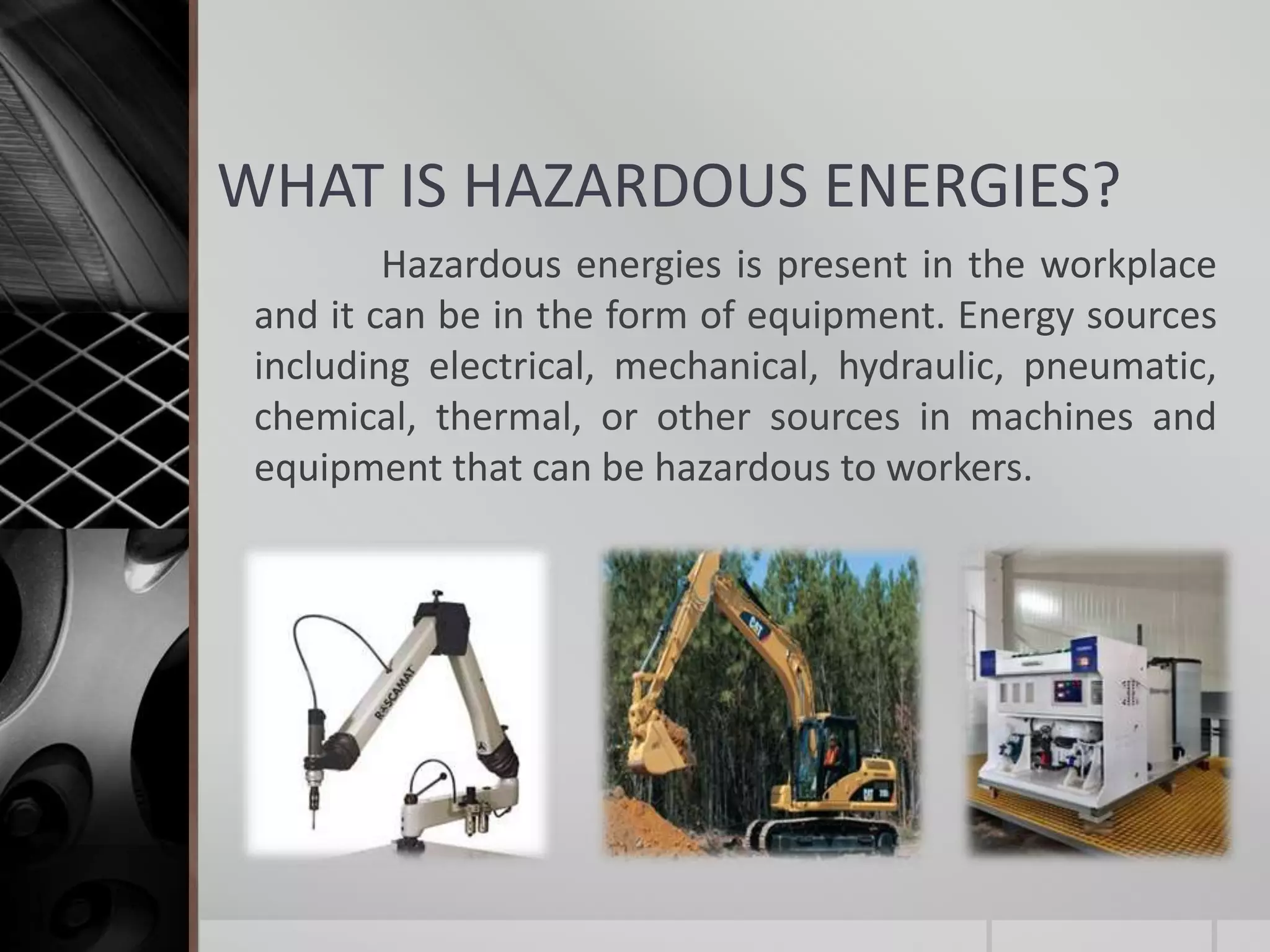
Hazardous energies is present in the workplace
and it can be in the form of equipment. Energy sources
including electrical, mechanical, hydraulic, pneumatic,
chemical, thermal, or other sources in machines and
equipment that can be hazardous to workers.
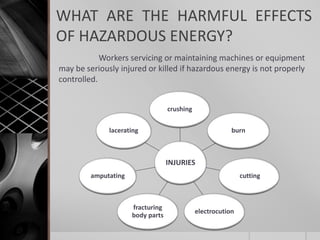
Workers servicing or maintaining machines or equipment
may be seriously injured or killed if hazardous energy is not properly
controlled.
WHAT ARE THE HARMFUL EFFECTS
OF HAZARDOUS ENERGY?
INJURIES
crushing
burn
cutting
electrocution
fracturing
body parts
amputating
lacerating
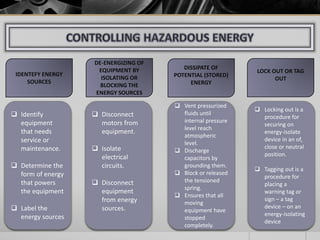
 Identify
equipment
that needs
service or
maintenance.
 Determine the
form of energy
that powers
the equipment
 Label the
energy sources
 Disconnect
motors from
equipment.
 Isolate
electrical
circuits.
 Disconnect
equipment
from energy
sources.
 Vent pressurized
fluids until
internal pressure
level reach
atmospheric
level.
 Discharge
capacitors by
grounding them.
 Block or released
the tensioned
spring.
 Ensures that all
moving
equipment have
stopped
completely.
 Locking out is a
procedure for
securing on
energy-isolate
device in an of,
close or neutral
position.
 Tagging out is a
procedure for
placing a
warning tag or
sign – a tag
device – on an
energy-isolating
device
IDENTEFY ENERGY
SOURCES
DE-ENERGIZING OF
EQUIPMENT BY
ISOLATING OR
BLOCKING THE
ENERGY SOURCES
DISSIPATE OF
POTENTIAL (STORED)
ENERGY
LOCK OUT OR TAG
OUT
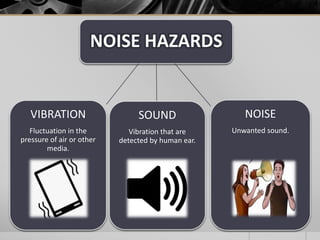
NOISE HAZARDS
VIBRATION
Fluctuation in the
pressure of air or other
media.
SOUND
Vibration that are
detected by human ear.
NOISE
Unwanted sound.
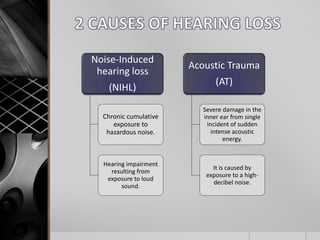
Noise-Induced
hearing loss
(NIHL)
Chronic cumulative
exposure to
hazardous noise.
Hearing impairment
resulting from
exposure to loud
sound.
Acoustic Trauma
(AT)
Severe damage in the
inner ear from single
incident of sudden
intense acoustic
energy.
It is caused by
exposure to a high-
decibel noise.
OSHA’S NOISE STANDARD MEASUREMENTS
• OSHA stands for Occupation Safety and Healthy
Administration.
• Unit used in the measurement of noise is Decibel (dB).
• The higher the decibel number, the higher the intensity
of the sound.
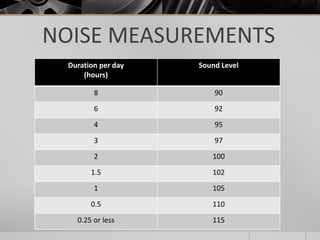
NOISE MEASUREMENTS
Duration per day
(hours)
Sound Level
8 90
6 92
4 95
3 97
2 100
1.5 102
1 105
0.5 110
0.25 or less 115
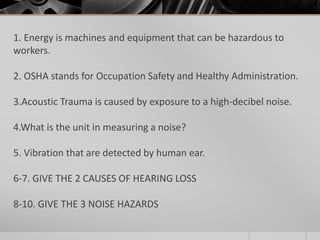
1. Energy is machines and equipment that can be hazardous to
workers.
2. OSHA stands for Occupation Safety and Healthy Administration.
3.Acoustic Trauma is caused by exposure to a high-decibel noise.
4.What is the unit in measuring a noise?
5. Vibration that are detected by human ear.
6-7. GIVE THE 2 CAUSES OF HEARING LOSS
8-10. GIVE THE 3 NOISE HAZARDS
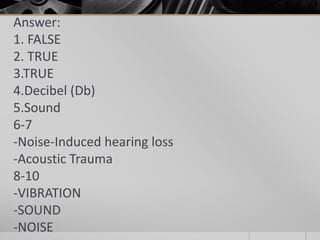
Answer:
1. FALSE
2. TRUE
3.TRUE
4.Decibel (Db)
5.Sound
6-7
-Noise-Induced hearing loss
-Acoustic Trauma
8-10
-VIBRATION
-SOUND
-NOISE

hazardous energies

  • 1.
    WHAT IS HAZARDOUSENERGIES? Hazardous energies is present in the workplace and it can be in the form of equipment. Energy sources including electrical, mechanical, hydraulic, pneumatic, chemical, thermal, or other sources in machines and equipment that can be hazardous to workers.
  • 2.
    Workers servicing ormaintaining machines or equipment may be seriously injured or killed if hazardous energy is not properly controlled. WHAT ARE THE HARMFUL EFFECTS OF HAZARDOUS ENERGY? INJURIES crushing burn cutting electrocution fracturing body parts amputating lacerating
  • 3.
     Identify equipment that needs serviceor maintenance.  Determine the form of energy that powers the equipment  Label the energy sources  Disconnect motors from equipment.  Isolate electrical circuits.  Disconnect equipment from energy sources.  Vent pressurized fluids until internal pressure level reach atmospheric level.  Discharge capacitors by grounding them.  Block or released the tensioned spring.  Ensures that all moving equipment have stopped completely.  Locking out is a procedure for securing on energy-isolate device in an of, close or neutral position.  Tagging out is a procedure for placing a warning tag or sign – a tag device – on an energy-isolating device IDENTEFY ENERGY SOURCES DE-ENERGIZING OF EQUIPMENT BY ISOLATING OR BLOCKING THE ENERGY SOURCES DISSIPATE OF POTENTIAL (STORED) ENERGY LOCK OUT OR TAG OUT
  • 4.
    NOISE HAZARDS VIBRATION Fluctuation inthe pressure of air or other media. SOUND Vibration that are detected by human ear. NOISE Unwanted sound.
  • 5.
    Noise-Induced hearing loss (NIHL) Chronic cumulative exposureto hazardous noise. Hearing impairment resulting from exposure to loud sound. Acoustic Trauma (AT) Severe damage in the inner ear from single incident of sudden intense acoustic energy. It is caused by exposure to a high- decibel noise.
  • 6.
    OSHA’S NOISE STANDARDMEASUREMENTS • OSHA stands for Occupation Safety and Healthy Administration. • Unit used in the measurement of noise is Decibel (dB). • The higher the decibel number, the higher the intensity of the sound.
  • 7.
    NOISE MEASUREMENTS Duration perday (hours) Sound Level 8 90 6 92 4 95 3 97 2 100 1.5 102 1 105 0.5 110 0.25 or less 115
  • 8.
    1. Energy ismachines and equipment that can be hazardous to workers. 2. OSHA stands for Occupation Safety and Healthy Administration. 3.Acoustic Trauma is caused by exposure to a high-decibel noise. 4.What is the unit in measuring a noise? 5. Vibration that are detected by human ear. 6-7. GIVE THE 2 CAUSES OF HEARING LOSS 8-10. GIVE THE 3 NOISE HAZARDS
  • 9.
    Answer: 1. FALSE 2. TRUE 3.TRUE 4.Decibel(Db) 5.Sound 6-7 -Noise-Induced hearing loss -Acoustic Trauma 8-10 -VIBRATION -SOUND -NOISE