Indus Valley Civilization.
   The earliest traces of civilization in the Indian
  subcontinent are to be found in places along, or
      close, to the Indus river. Excavations first
    conducted in 1921-22, in the ancient cities of
Harappa and Mohenjo-Daro, both now in Pakistan,
 pointed to a highly complex civilization that first
     developed some 4,500-5,000 years ago, and
subsequent archaeological and historical research
has now furnished us with a more detailed picture
of the Indus Valley Civilization and its inhabitants.
      The Indus Valley people were most likely
Dravidians, who may have been pushed down into
   south India when the Aryans, with their more
 advanced military technology, commenced their
       migrations to India around 2,000 BCE.
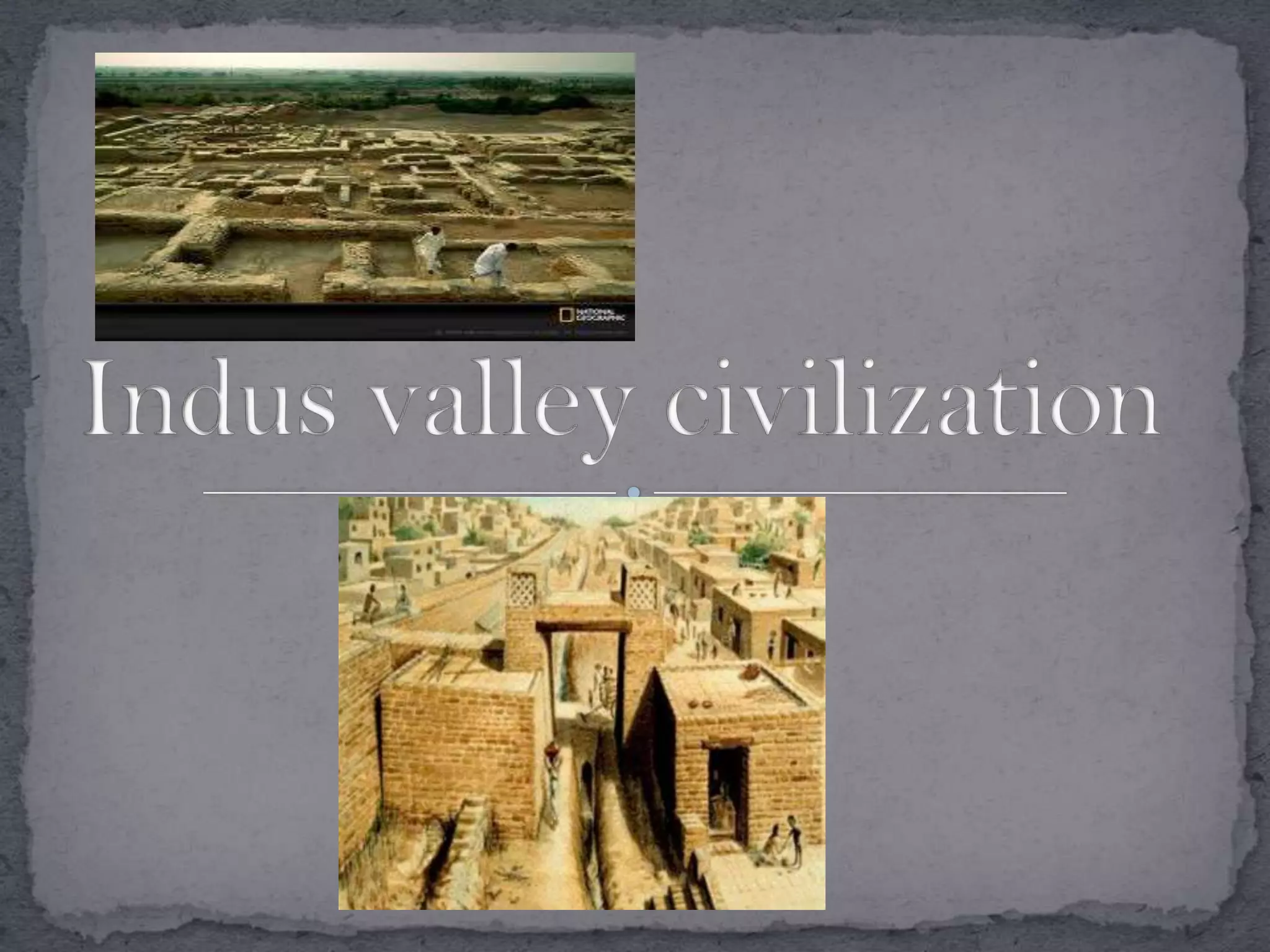
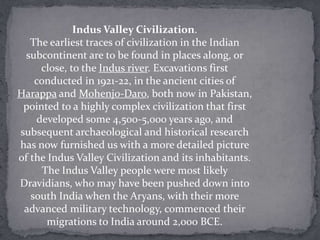
The houses of these cities were solidly built
of bricks and many were multi-storied and
 equipped with bathrooms and lavatories.
The high quality of the pottery, along with
  hoards of gold and silver found at Indus
       Valley sites, suggests great the
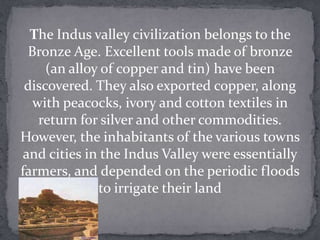
accumulation of great wealth. The city was
 amazingly well planned with broad main
    streets and good secondary streets.
The Indus valley civilization belongs to the
  Bronze Age. Excellent tools made of bronze
     (an alloy of copper and tin) have been
 discovered. They also exported copper, along
   with peacocks, ivory and cotton textiles in
    return for silver and other commodities.
However, the inhabitants of the various towns
 and cities in the Indus Valley were essentially
farmers, and depended on the periodic floods
              to irrigate their land
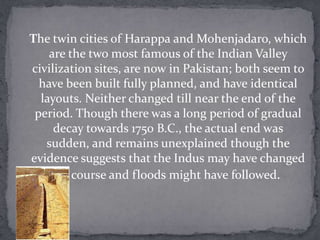
The twin cities of Harappa and Mohenjadaro, which
    are the two most famous of the Indian Valley
civilization sites, are now in Pakistan; both seem to
  have been built fully planned, and have identical
  layouts. Neither changed till near the end of the
 period. Though there was a long period of gradual
     decay towards 1750 B.C., the actual end was
   sudden, and remains unexplained though the
evidence suggests that the Indus may have changed
     its course and floods might have followed.

Hateem

  • 2.
    Indus Valley Civilization. The earliest traces of civilization in the Indian subcontinent are to be found in places along, or close, to the Indus river. Excavations first conducted in 1921-22, in the ancient cities of Harappa and Mohenjo-Daro, both now in Pakistan, pointed to a highly complex civilization that first developed some 4,500-5,000 years ago, and subsequent archaeological and historical research has now furnished us with a more detailed picture of the Indus Valley Civilization and its inhabitants. The Indus Valley people were most likely Dravidians, who may have been pushed down into south India when the Aryans, with their more advanced military technology, commenced their migrations to India around 2,000 BCE.
  • 3.
    The houses ofthese cities were solidly built of bricks and many were multi-storied and equipped with bathrooms and lavatories. The high quality of the pottery, along with hoards of gold and silver found at Indus Valley sites, suggests great the accumulation of great wealth. The city was amazingly well planned with broad main streets and good secondary streets.
  • 4.
    The Indus valleycivilization belongs to the Bronze Age. Excellent tools made of bronze (an alloy of copper and tin) have been discovered. They also exported copper, along with peacocks, ivory and cotton textiles in return for silver and other commodities. However, the inhabitants of the various towns and cities in the Indus Valley were essentially farmers, and depended on the periodic floods to irrigate their land
  • 5.
    The twin citiesof Harappa and Mohenjadaro, which are the two most famous of the Indian Valley civilization sites, are now in Pakistan; both seem to have been built fully planned, and have identical layouts. Neither changed till near the end of the period. Though there was a long period of gradual decay towards 1750 B.C., the actual end was sudden, and remains unexplained though the evidence suggests that the Indus may have changed its course and floods might have followed.