Non-Verbal
Communication
and Listening Skills
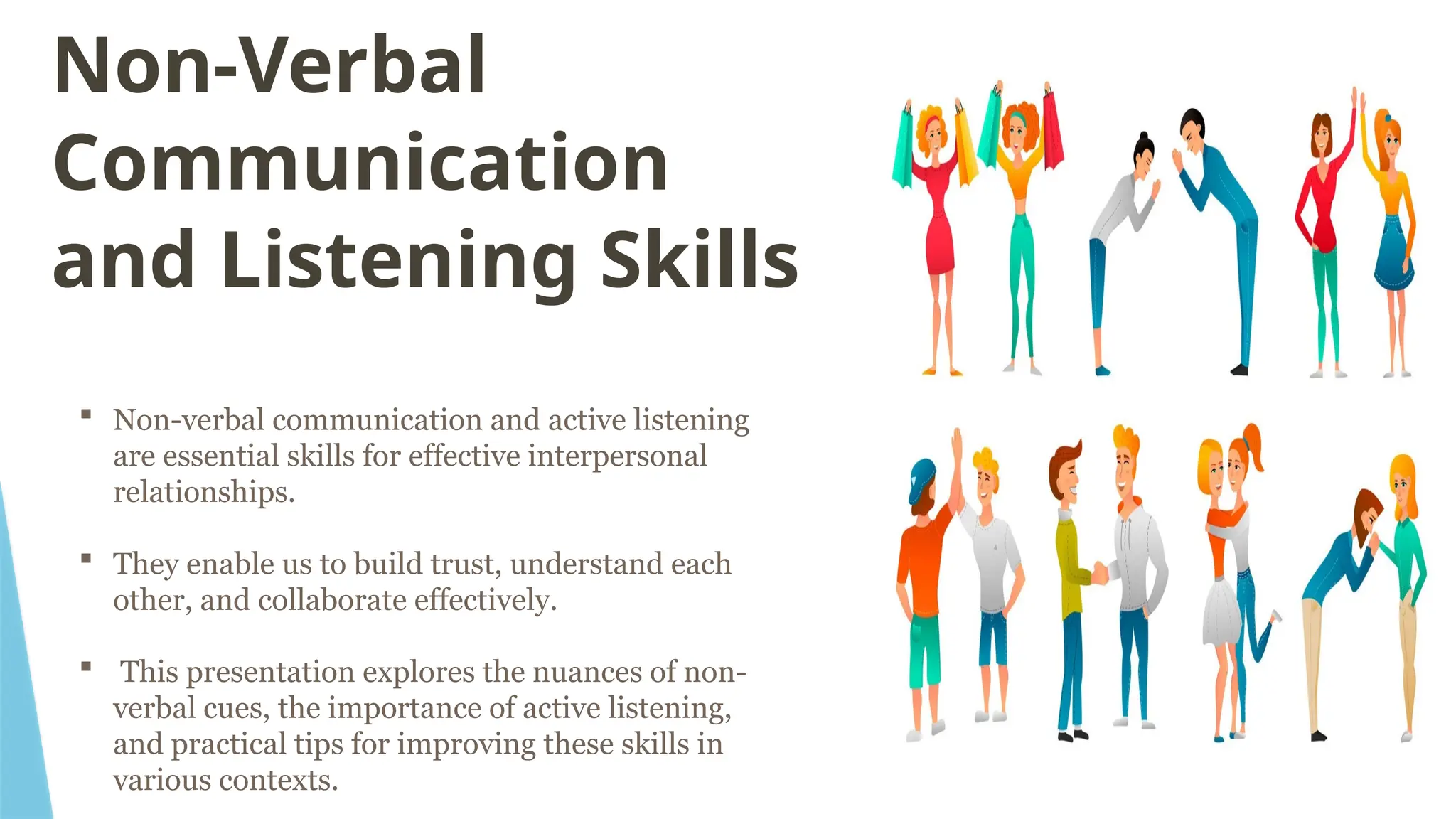
Non-verbal communication and active listening
are essential skills for effective interpersonal
relationships.
They enable us to build trust, understand each
other, and collaborate effectively.
This presentation explores the nuances of non-
verbal cues, the importance of active listening,
and practical tips for improving these skills in
various contexts.
2.
The Importance ofNon-
Verbal Communication
1 Conveying Emotions
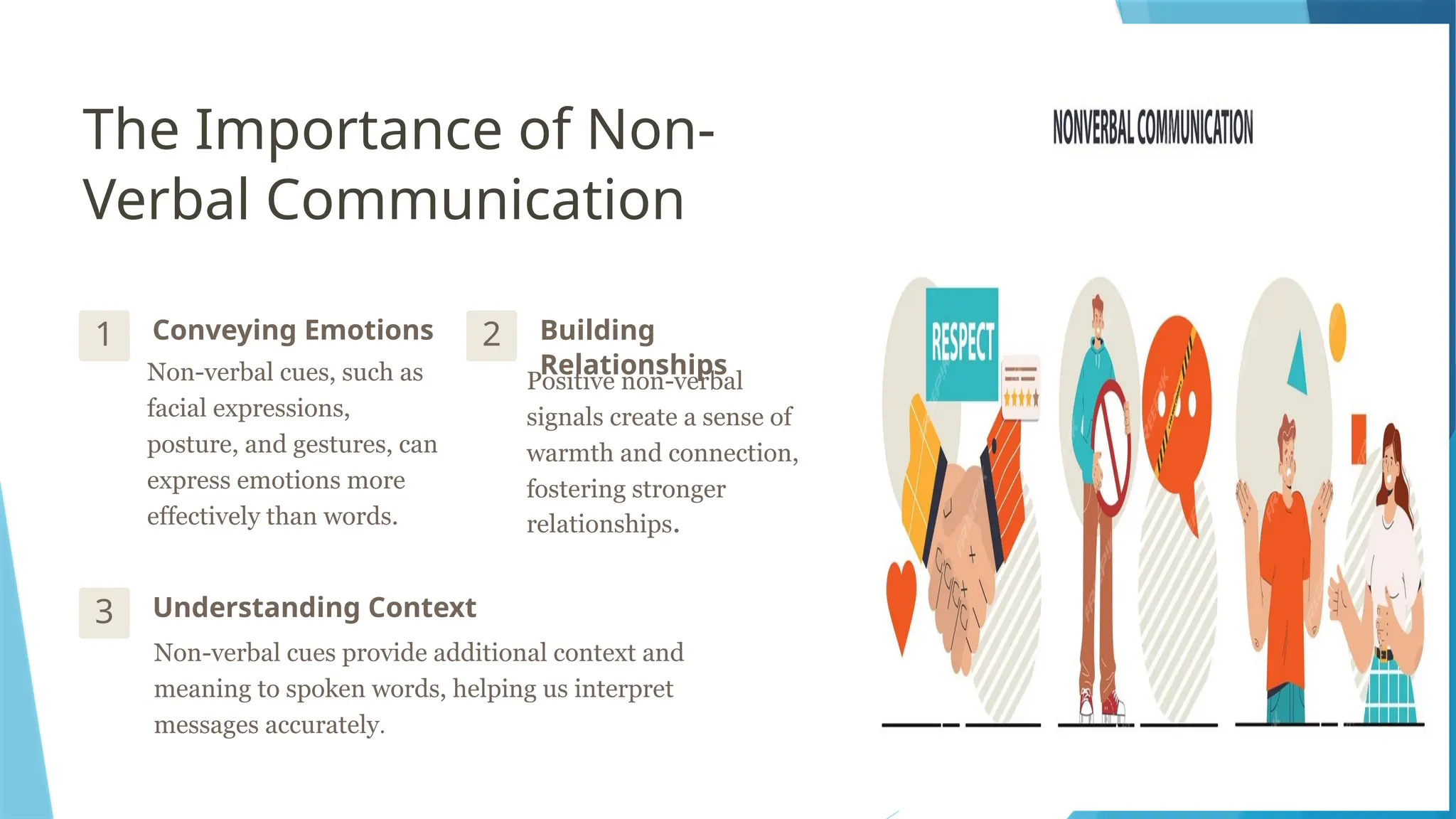
Non-verbal cues, such as
facial expressions,
posture, and gestures, can
express emotions more
effectively than words.
2 Building
Relationships
Positive non-verbal
signals create a sense of
warmth and connection,
fostering stronger
relationships.
3 Understanding Context
Non-verbal cues provide additional context and
meaning to spoken words, helping us interpret
messages accurately.
3.
Key Elements ofNon-Verbal Communication
Facial Expressions
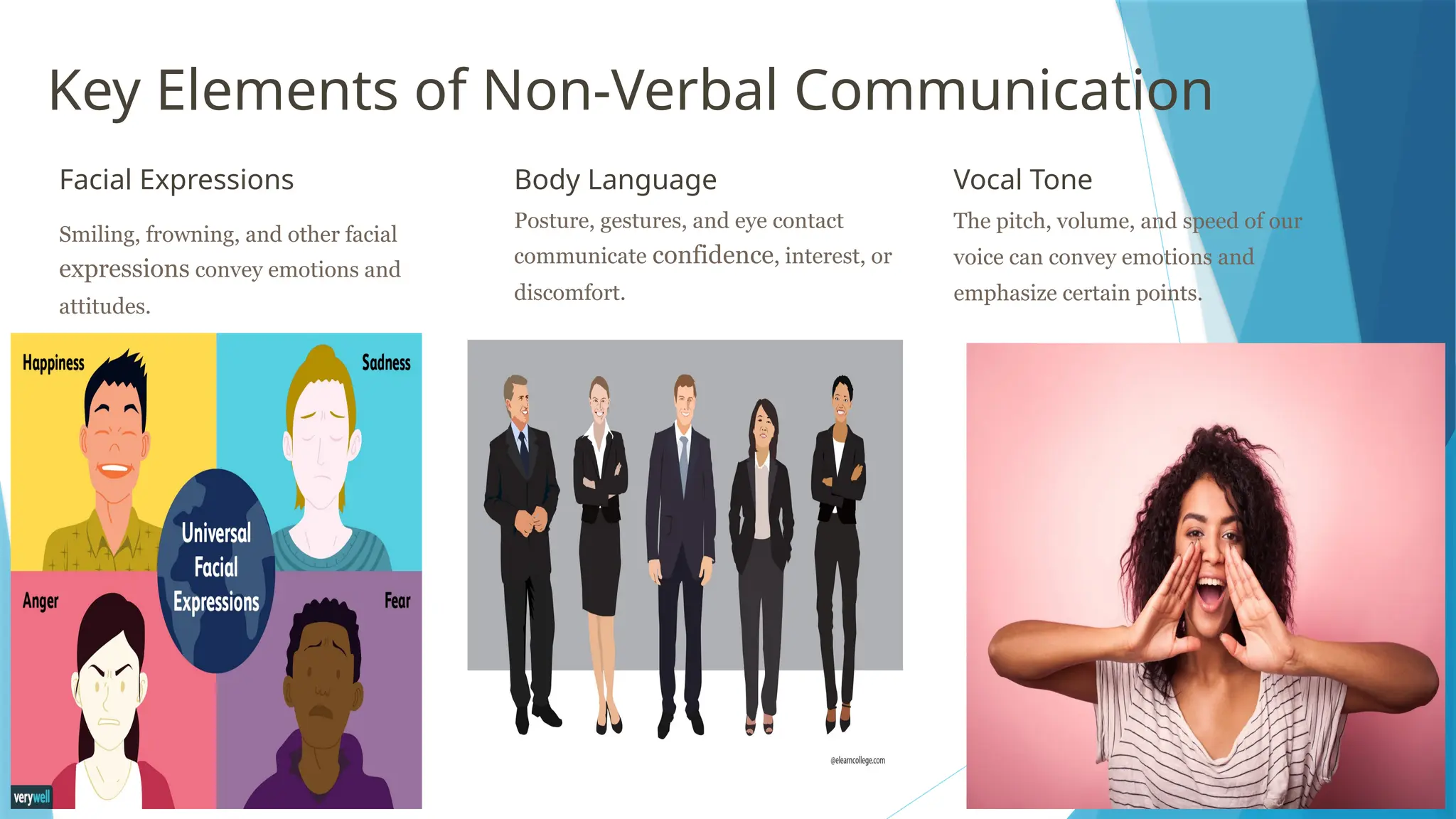
Smiling, frowning, and other facial
expressions convey emotions and
attitudes.
Body Language
Posture, gestures, and eye contact
communicate confidence, interest, or
discomfort.
Vocal Tone
The pitch, volume, and speed of our
voice can convey emotions and
emphasize certain points.
4.
Interpreting Body
Language andFacial
Expressions
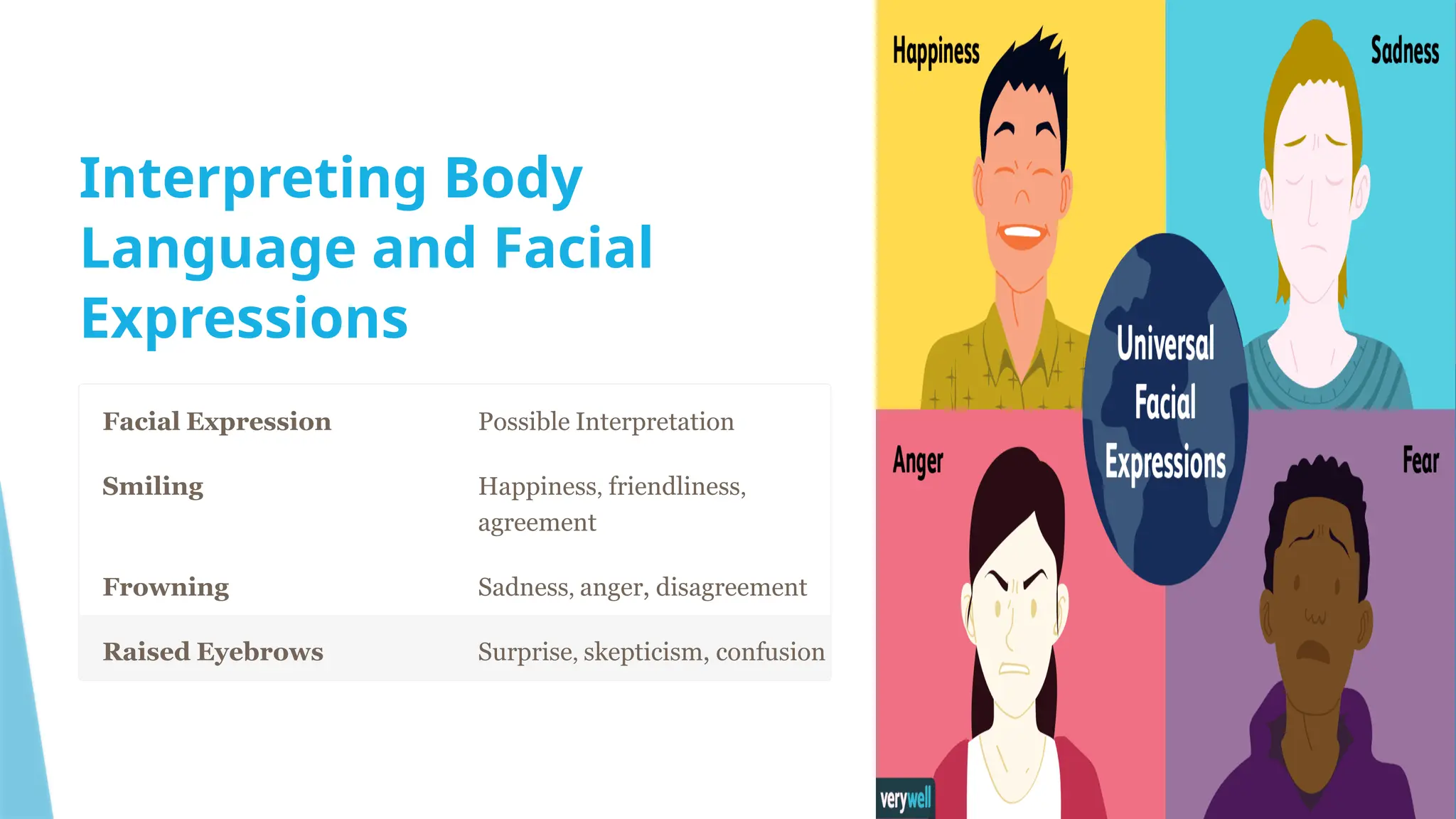
Facial Expression Possible Interpretation
Smiling Happiness, friendliness,
agreement
Frowning Sadness, anger, disagreement
Raised Eyebrows Surprise, skepticism, confusion
5.
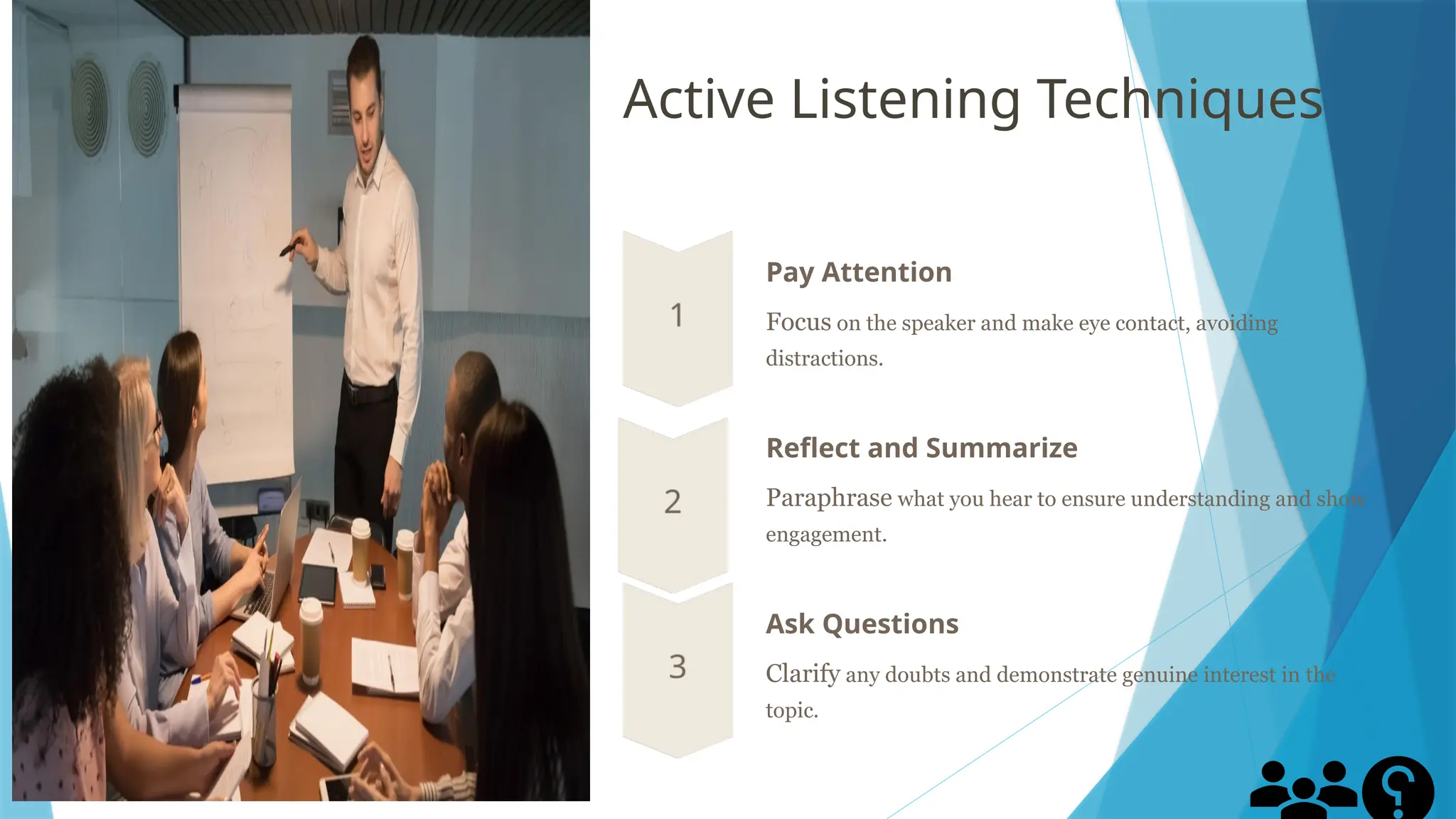
Active Listening Techniques
PayAttention
Focus on the speaker and make eye contact, avoiding
distractions.
Reflect and Summarize
Paraphrase what you hear to ensure understanding and show
engagement.
Ask Questions
Clarify any doubts and demonstrate genuine interest in the
topic.
6.
Practical Tips forImproving
Listening Skills
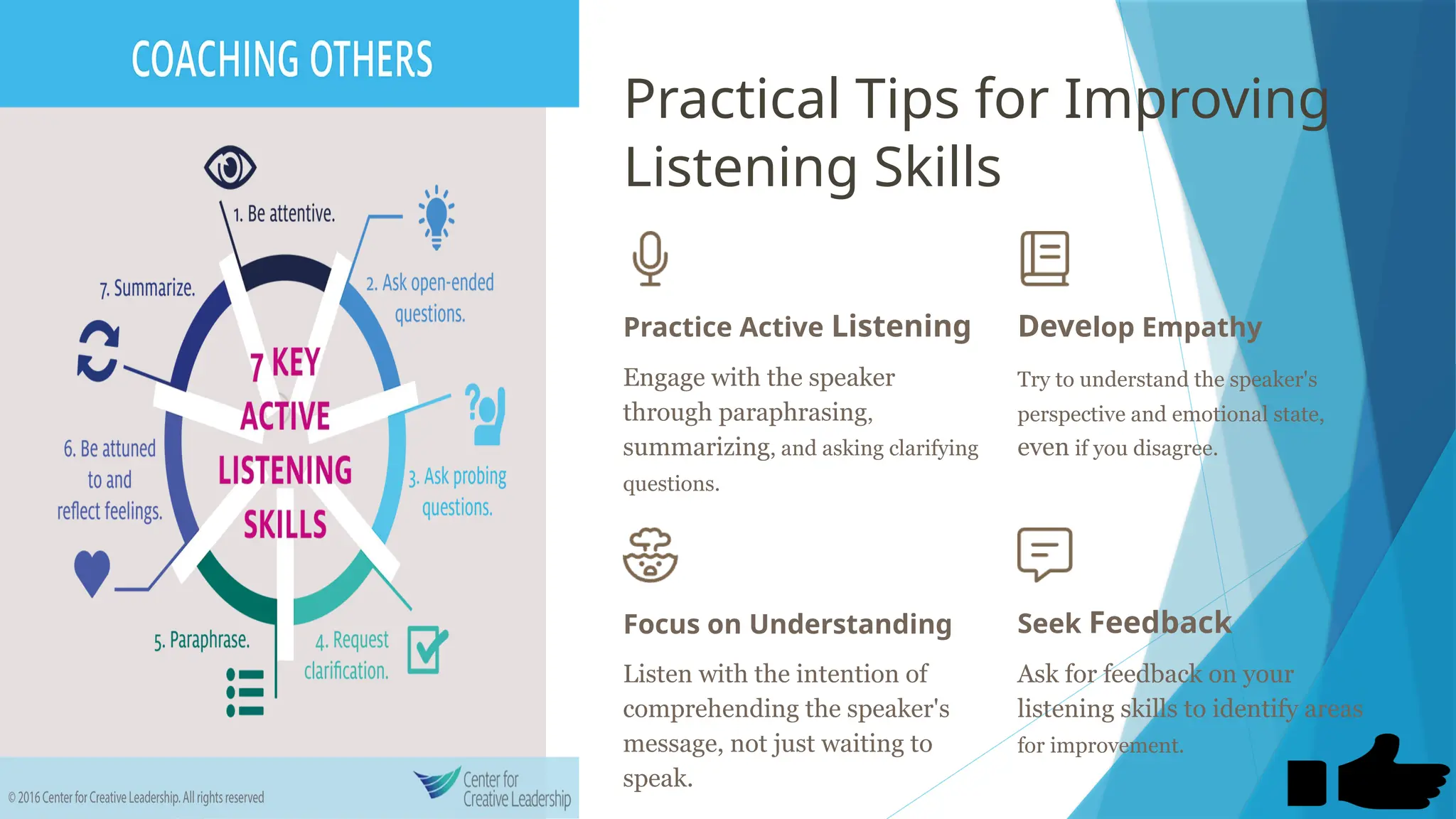
Practice Active Listening
Engage with the speaker
through paraphrasing,
summarizing, and asking clarifying
questions.
Develop Empathy
Try to understand the speaker's
perspective and emotional state,
even if you disagree.
Focus on Understanding
Listen with the intention of
comprehending the speaker's
message, not just waiting to
speak.
Seek Feedback
Ask for feedback on your
listening skills to identify areas
for improvement.
7.
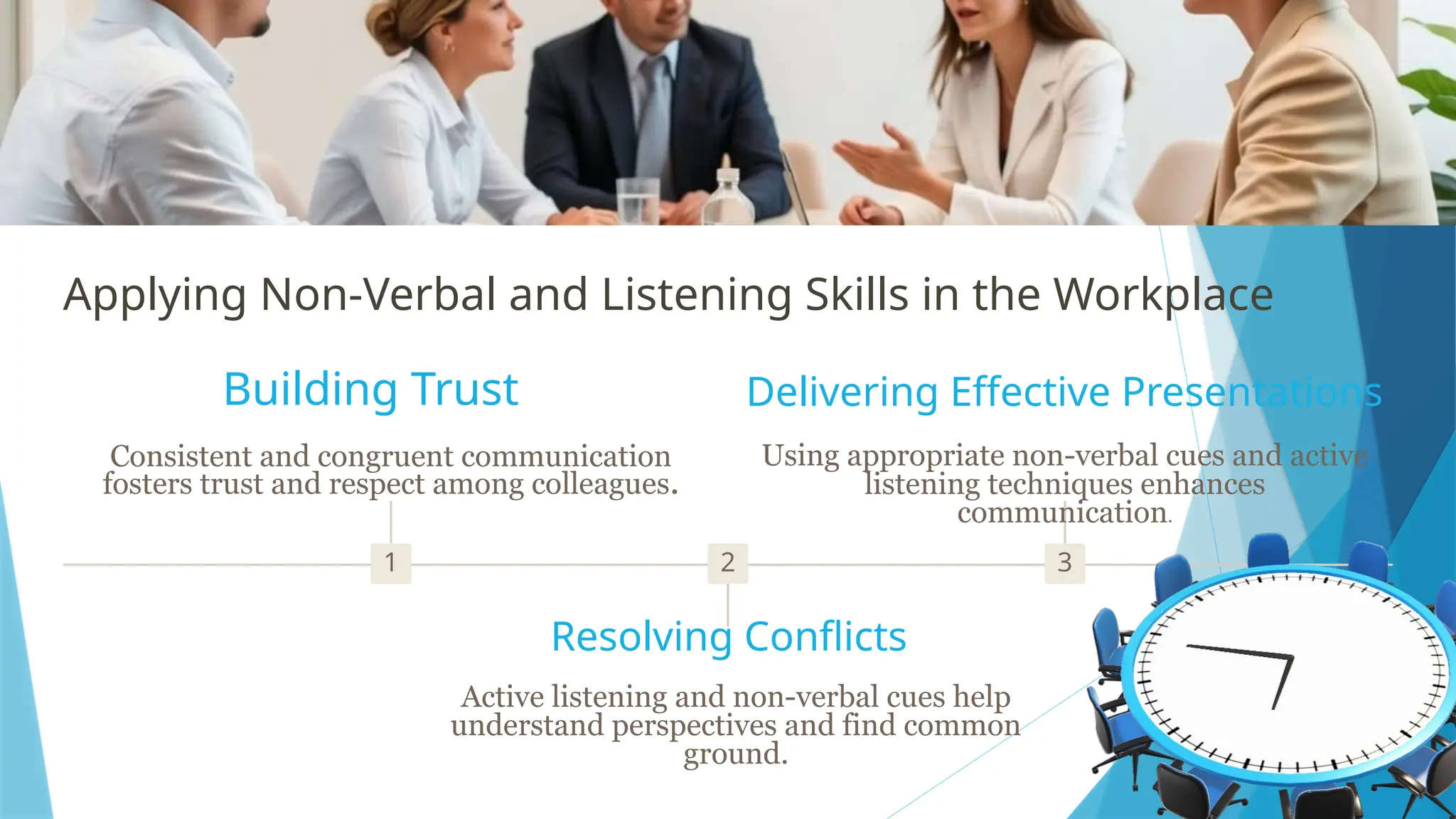
Applying Non-Verbal andListening Skills in the Workplace
1
Building Trust
Consistent and congruent communication
fosters trust and respect among colleagues.
2
Resolving Conflicts
Active listening and non-verbal cues help
understand perspectives and find common
ground.
3
Delivering Effective Presentations
Using appropriate non-verbal cues and active
listening techniques enhances
communication.