   Preparing for interviews
   The interview experience
   Questions to expect and to ask
   Different types of interview
   Assessment Centers
   Psychometric Tests
   Interview resources
 Review own skills, experiences and qualities
   Check CV
   Anticipate questions and identify relevant examples
   Prepare key selling points

 Research organisation
   Websites, reports, articles, company literature, etc
   Contacts with knowledge of organisation or sector
   Relevant articles in the press
   Personal visit or telephone call

 Research job and occupational area
   Job description – or similar
   Current issues

 Prepare your questions
 Practice
   First impressions very powerful
   Allow time to relax
   Dress appropriately
   Entrance, introductions & handshake
   Smile and make eye contact
   Be aware of own movements
   Watch body language of interviewer
   About you
     Tell me about yourself - Bring me up to date with your CV?
     Why did you choose that particular degree programme?
     What experience have you had that is relevant to this post?
     What would you consider your major achievements to date?
   About the job
       What interests you about this job?
       What do you know about this organisation?
       What other options are you considering?
       How do you see your career developing – 5 years?
       If you were Head of Department, what would be your priorities?
   General knowledge
     What do you think of the Government’s policy on college fees?
     What’s your opinion of the Ryanair bid for Aer Lingus?
   Identify the competencies required for
    job
     Review   job description or ask for information
   Define each competency in behavioural
    terms
   Identify past experience to illustrate how
    you demonstrated that behaviour
   Prepare examples for each competency
   Practice talking about your experience
   Try to give a complete answer - STAR
   Listen carefully, seek clarification
   Illustrate answers with real examples and
    evidence
   Be positive – constructive criticism
   Keep answers specific and succinct
   Take time to respond
   Be alert to interviewer’s body language
   Speak clearly, smile and show enthusiasm
   Know what you want to say, and find the
    opportunity
   Good all-round intelligence
   Enthusiasm, commitment and motivation
   Good communication skills
   Team work ability
   Ability to solve problems
   Capacity to work hard
   Initiative and self-reliance
   Balanced personality
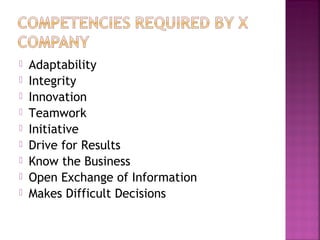
   Adaptability
   Integrity
   Innovation
   Teamwork
   Initiative
   Drive for Results
   Know the Business
   Open Exchange of Information
   Makes Difficult Decisions
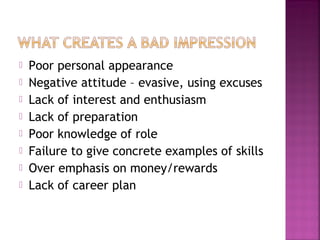
   Poor personal appearance
   Negative attitude – evasive, using excuses
   Lack of interest and enthusiasm
   Lack of preparation
   Poor knowledge of role
   Failure to give concrete examples of skills
   Over emphasis on money/rewards
   Lack of career plan
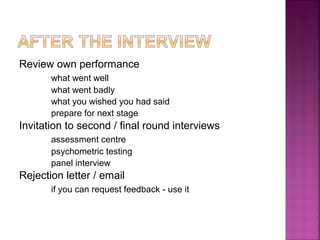
Review own performance
       what went well
       what went badly
       what you wished you had said
       prepare for next stage
Invitation to second / final round interviews
       assessment centre
       psychometric testing
       panel interview
Rejection letter / email
       if you can request feedback - use it
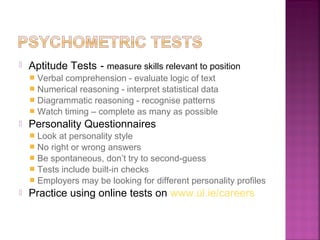
   Aptitude Tests - measure skills relevant to position
     Verbal comprehension - evaluate logic of text
     Numerical reasoning - interpret statistical data
     Diagrammatic reasoning - recognise patterns
     Watch timing – complete as many as possible
   Personality Questionnaires
     Look at personality style
     No right or wrong answers
     Be spontaneous, don’t try to second-guess
     Tests include built-in checks
     Employers may be looking for different personality profiles
   Practice using online tests on www.ul.ie/careers
Hajira fathima

Hajira fathima

  • 2.
    Preparing for interviews  The interview experience  Questions to expect and to ask  Different types of interview  Assessment Centers  Psychometric Tests  Interview resources
  • 3.
     Review ownskills, experiences and qualities  Check CV  Anticipate questions and identify relevant examples  Prepare key selling points  Research organisation  Websites, reports, articles, company literature, etc  Contacts with knowledge of organisation or sector  Relevant articles in the press  Personal visit or telephone call  Research job and occupational area  Job description – or similar  Current issues  Prepare your questions  Practice
  • 4.
    First impressions very powerful  Allow time to relax  Dress appropriately  Entrance, introductions & handshake  Smile and make eye contact  Be aware of own movements  Watch body language of interviewer
  • 5.
    About you  Tell me about yourself - Bring me up to date with your CV?  Why did you choose that particular degree programme?  What experience have you had that is relevant to this post?  What would you consider your major achievements to date?  About the job  What interests you about this job?  What do you know about this organisation?  What other options are you considering?  How do you see your career developing – 5 years?  If you were Head of Department, what would be your priorities?  General knowledge  What do you think of the Government’s policy on college fees?  What’s your opinion of the Ryanair bid for Aer Lingus?
  • 6.
    Identify the competencies required for job  Review job description or ask for information  Define each competency in behavioural terms  Identify past experience to illustrate how you demonstrated that behaviour  Prepare examples for each competency  Practice talking about your experience  Try to give a complete answer - STAR
  • 7.
    Listen carefully, seek clarification  Illustrate answers with real examples and evidence  Be positive – constructive criticism  Keep answers specific and succinct  Take time to respond  Be alert to interviewer’s body language  Speak clearly, smile and show enthusiasm  Know what you want to say, and find the opportunity
  • 8.
    Good all-round intelligence  Enthusiasm, commitment and motivation  Good communication skills  Team work ability  Ability to solve problems  Capacity to work hard  Initiative and self-reliance  Balanced personality
  • 9.
    Adaptability  Integrity  Innovation  Teamwork  Initiative  Drive for Results  Know the Business  Open Exchange of Information  Makes Difficult Decisions
  • 10.
    Poor personal appearance  Negative attitude – evasive, using excuses  Lack of interest and enthusiasm  Lack of preparation  Poor knowledge of role  Failure to give concrete examples of skills  Over emphasis on money/rewards  Lack of career plan
  • 11.
    Review own performance what went well what went badly what you wished you had said prepare for next stage Invitation to second / final round interviews assessment centre psychometric testing panel interview Rejection letter / email if you can request feedback - use it
  • 12.
    Aptitude Tests - measure skills relevant to position  Verbal comprehension - evaluate logic of text  Numerical reasoning - interpret statistical data  Diagrammatic reasoning - recognise patterns  Watch timing – complete as many as possible  Personality Questionnaires  Look at personality style  No right or wrong answers  Be spontaneous, don’t try to second-guess  Tests include built-in checks  Employers may be looking for different personality profiles  Practice using online tests on www.ul.ie/careers