HACKING THE
INTERNET OF THINGS
FOR GOOD
By Marc Rogers
Principal Security Analyst at Lookout, Inc.

WE LIVE IN A CONNECTED WORLD





Everyday objects are being transformed by the addition of
sensors that enable them to interact with the world,
processors that enable them to think about it,
and network interfaces that allow them to to talk about it.







The benefits that these intelligent, connected devices bring to
our lives are almost too numerous to count.
You can control the temperature in your home from your phone
with a programmable thermostat.

You can ask your car for directions as you drive.

You can check your email from your game console.
As they connect to each other, sharing what they see, hear, and know,
these new intelligent, thinking devices are driving a second Internet Age.
 





But when we give these things intelligence and senses,
we also fundamentally change their nature.
Mundane objects that were once familiar and unremarkable from a security
perspective have suddenly become the keepers of sensitive personal information.



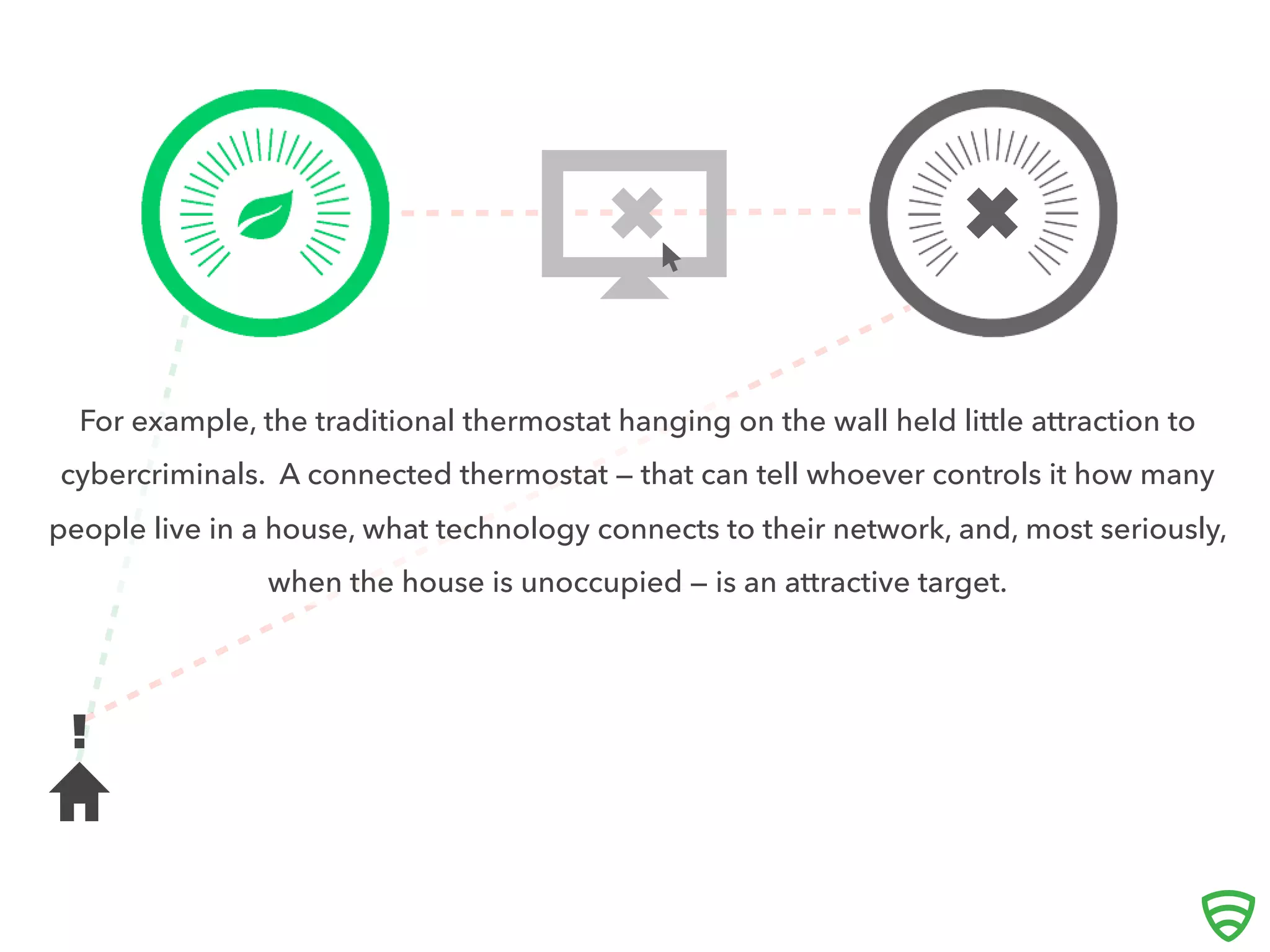
For example, the traditional thermostat hanging on the wall held little attraction to
cybercriminals. A connected thermostat — that can tell whoever controls it how many
people live in a house, what technology connects to their network, and, most seriously,
when the house is unoccupied — is an attractive target.


As we change the nature of things, identifying
vulnerabilities and managing updates quickly and
efficiently will be paramount.
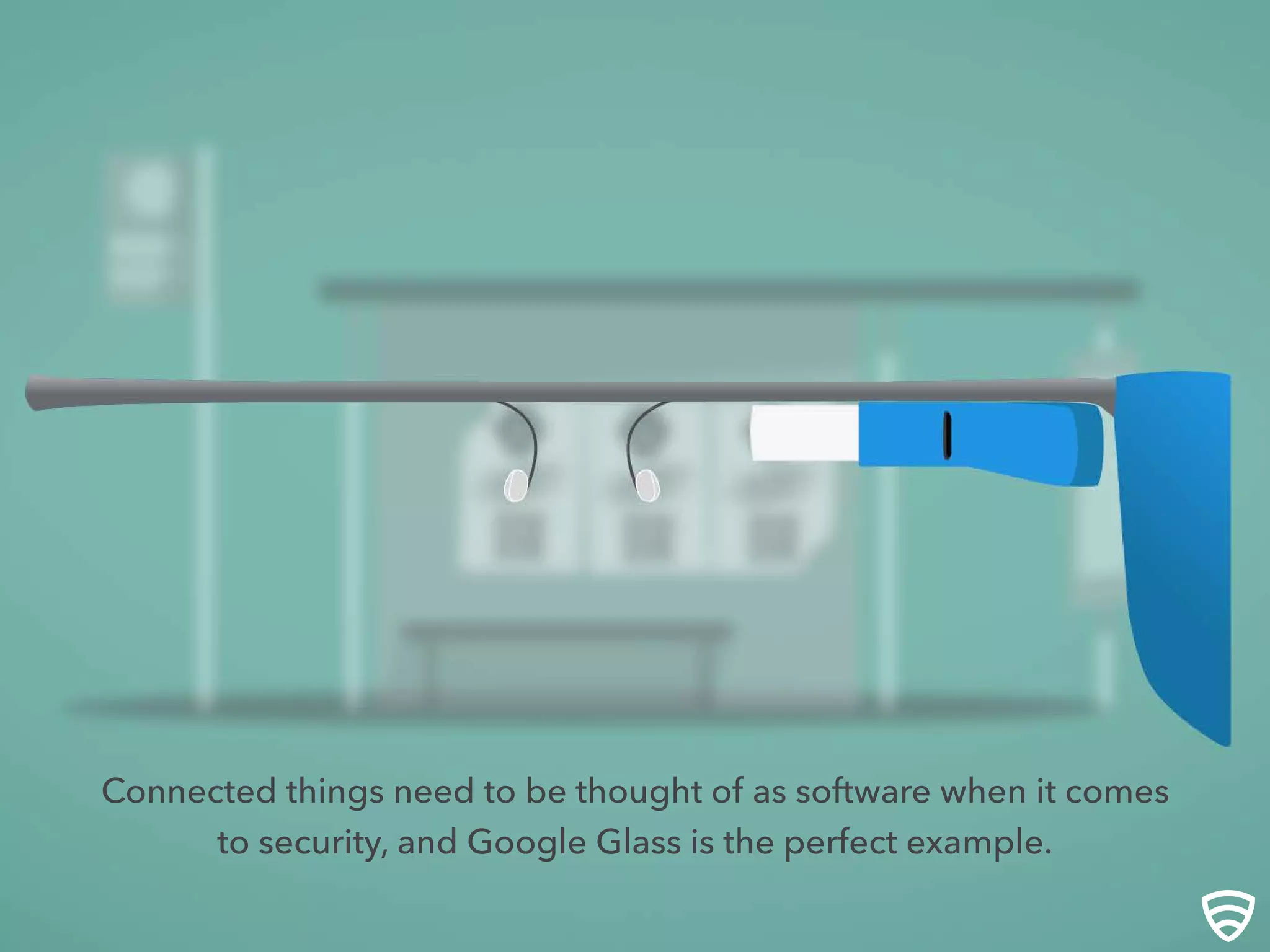
Connected things need to be thought of as software when it comes
to security, and Google Glass is the perfect example.
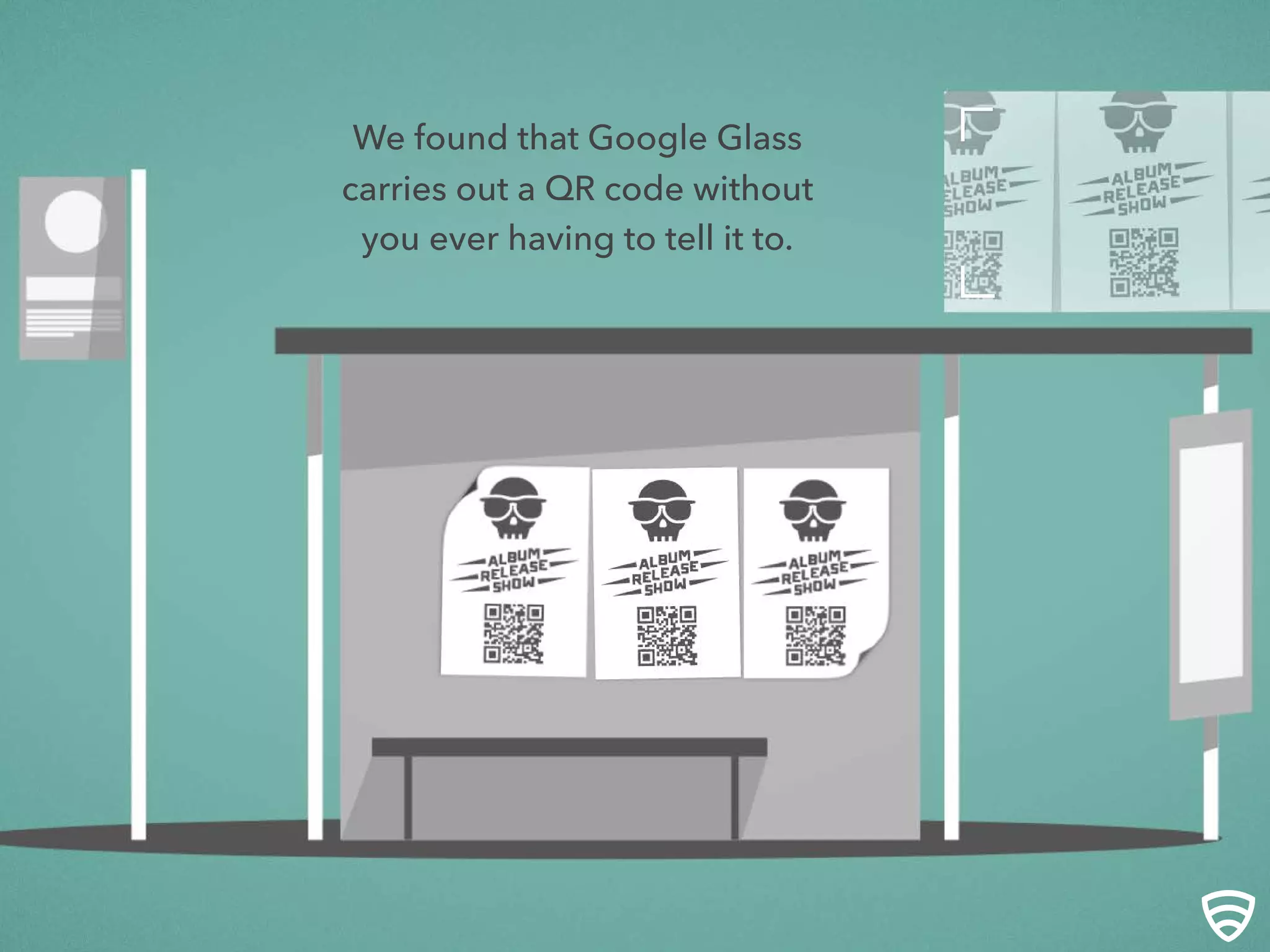
We found that Google Glass
carries out a QR code without
you ever having to tell it to.
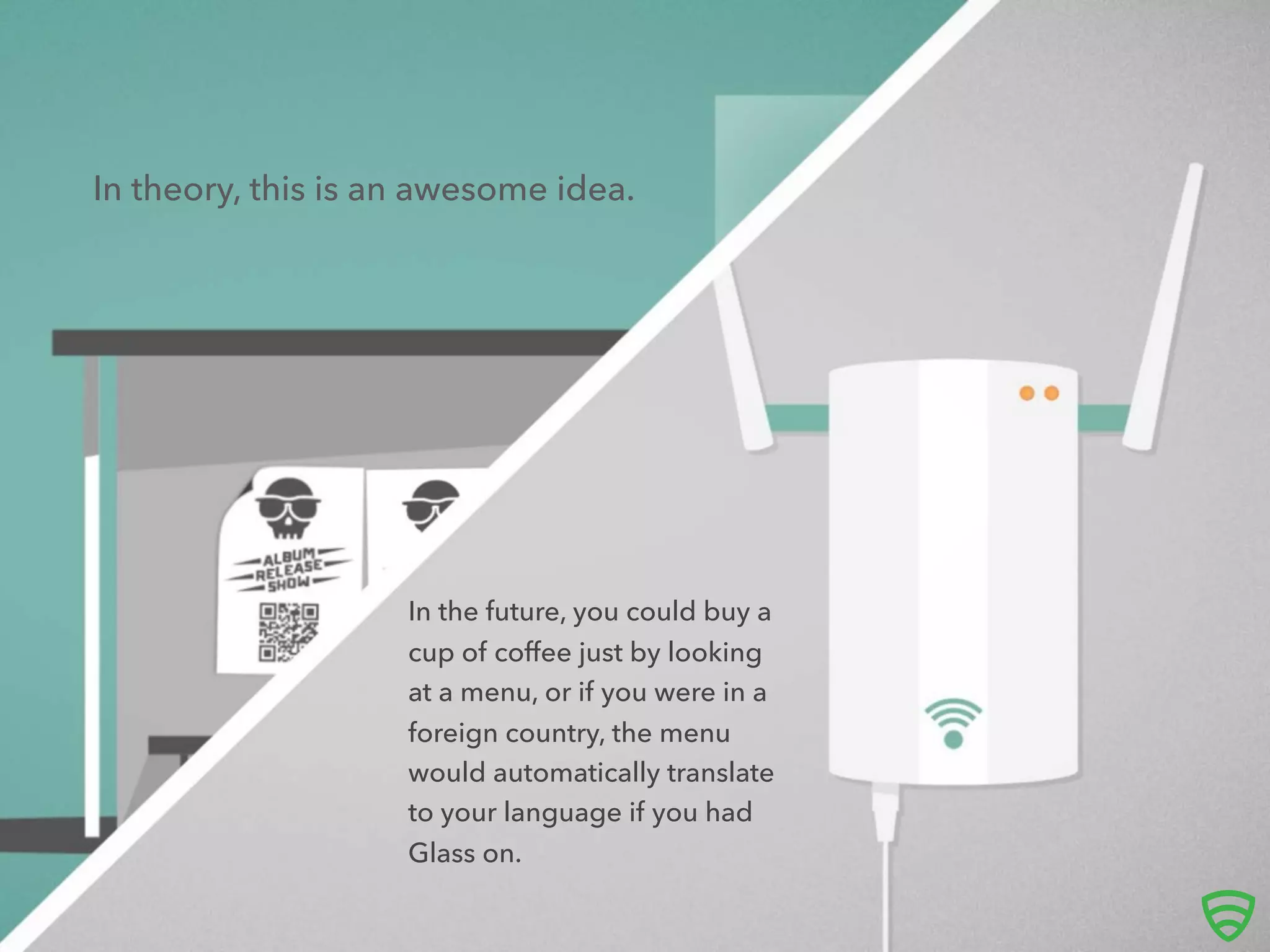
In theory, this is an awesome idea.
In the future, you could buy a
cup of coffee just by looking
at a menu, or if you were in a
foreign country, the menu
would automatically translate
to your language if you had
Glass on.
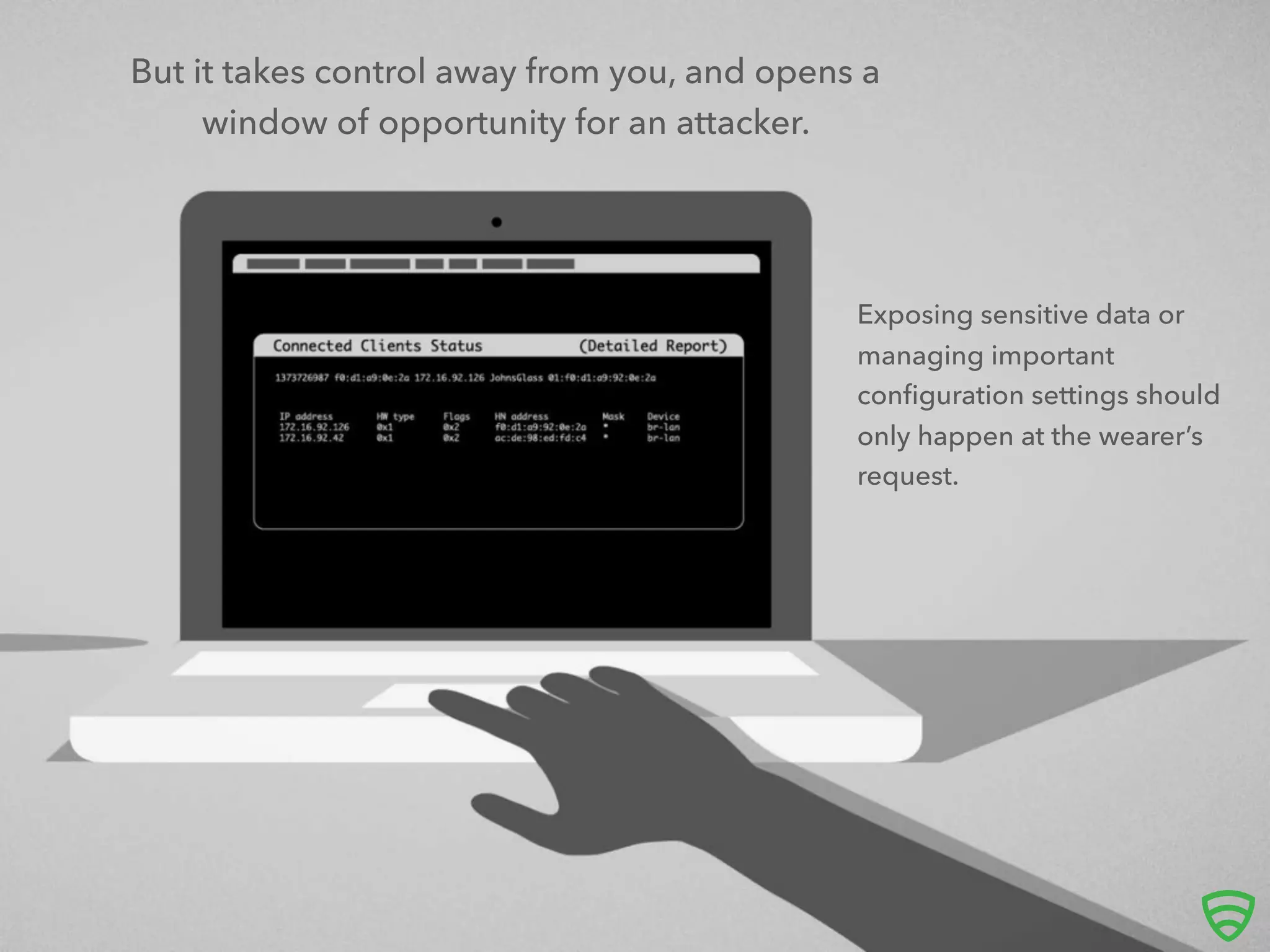
But it takes control away from you, and opens a
window of opportunity for an attacker.
Exposing sensitive data or
managing important
configuration settings should
only happen at the wearer’s
request.
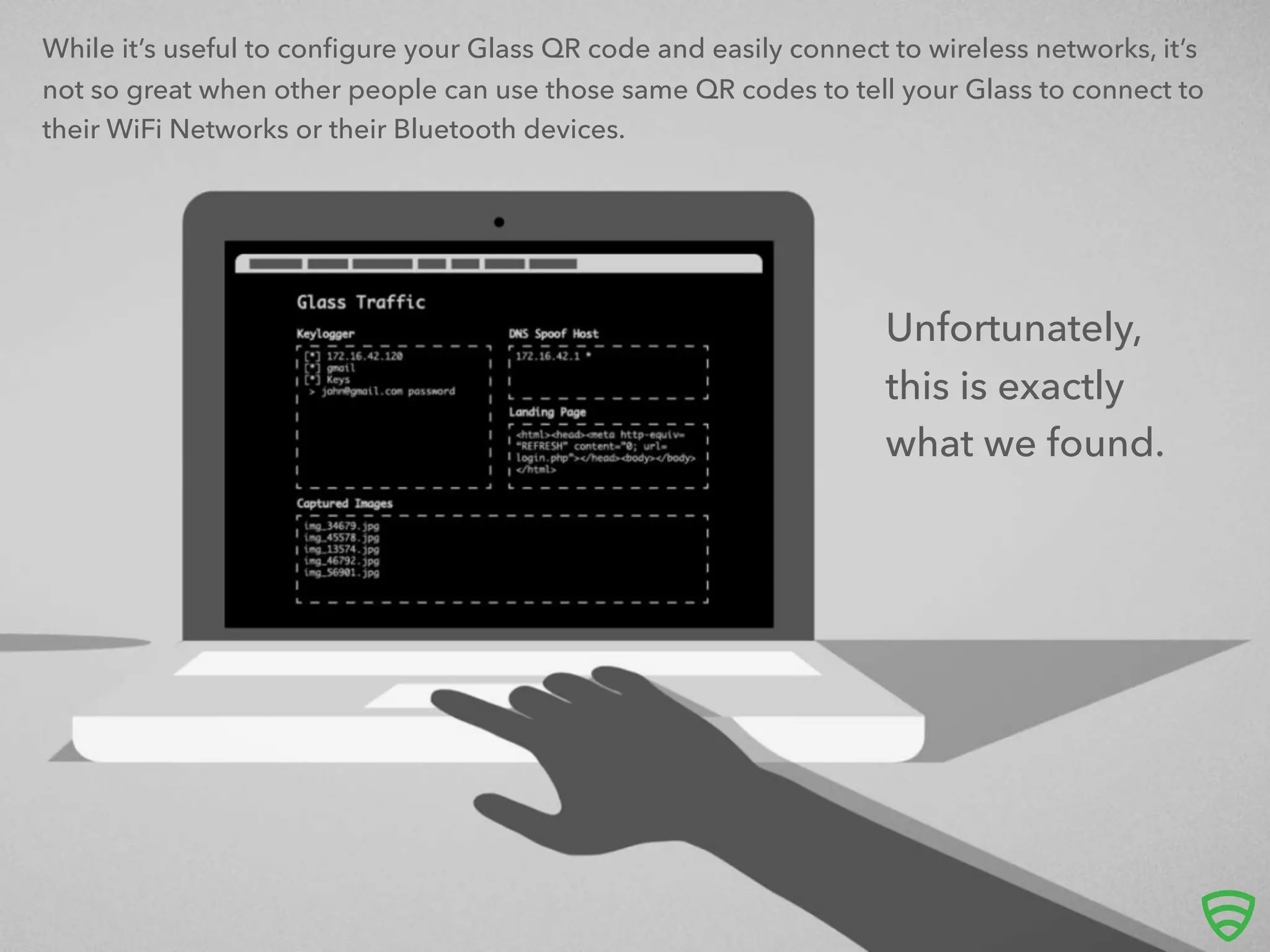
While it’s useful to configure your Glass QR code and easily connect to wireless networks, it’s
not so great when other people can use those same QR codes to tell your Glass to connect to
their WiFi Networks or their Bluetooth devices.
Unfortunately,
this is exactly
what we found.
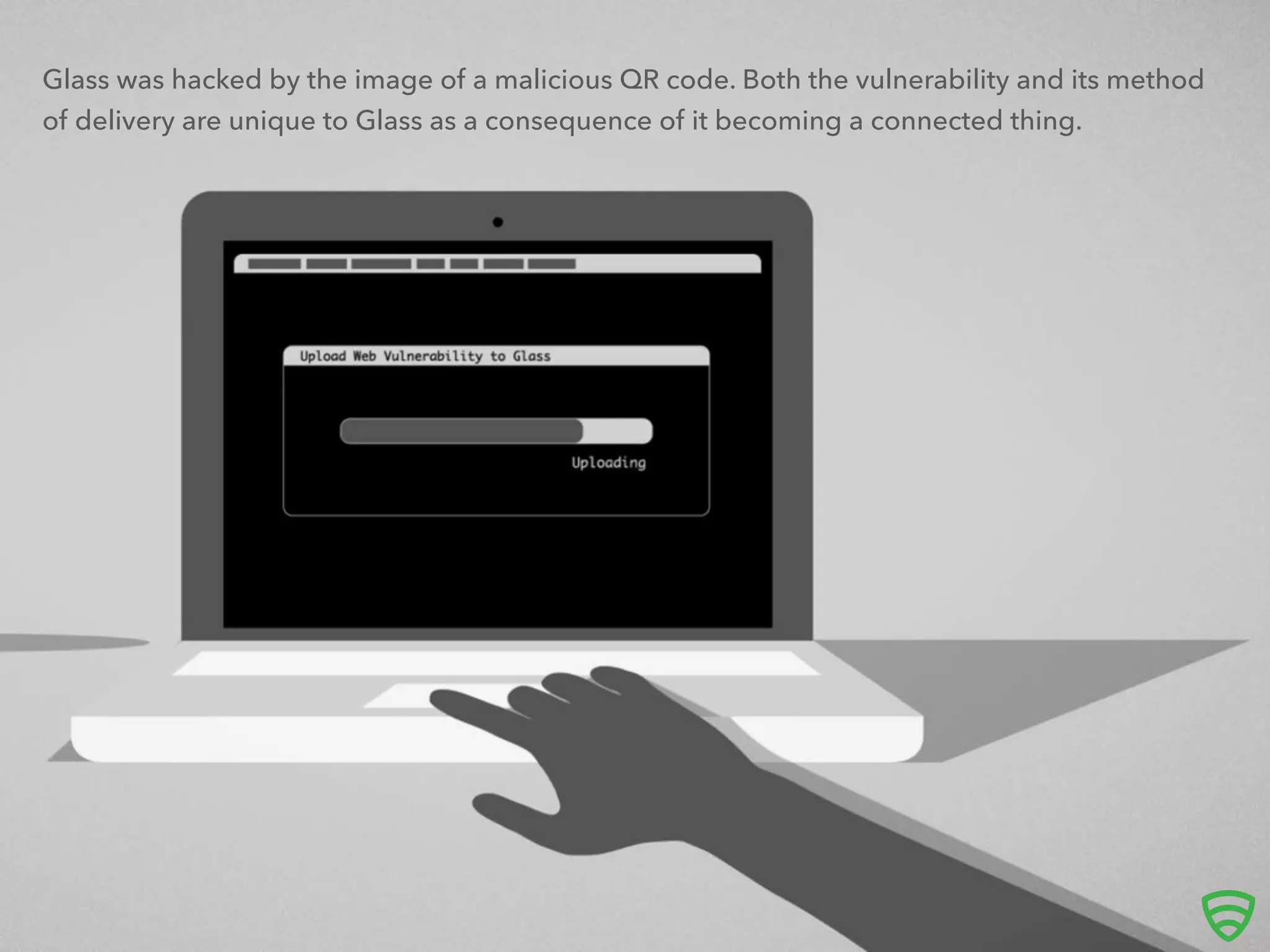
Glass was hacked by the image of a malicious QR code. Both the vulnerability and its method
of delivery are unique to Glass as a consequence of it becoming a connected thing.
Lookout recommended that Google limit QR code execution to
points where the user has solicited it.
We disclosed our findings to Google on May 16.
Everything is OK
Google clearly worked quickly to fix the vulnerability as
the issue was fixed by version XE6, released on June 4th.
Google made changes that reflected this recommendation.
This responsive turnaround indicates the depth of
Google’s commitment to privacy and security for
this device and set a benchmark for how connected
things should be secured going forward.

Embedded hardware developers should take a page out of
Google’s vulnerability management process and approach
wearables, connected things and anything with a sensor with the
same mindset that Google is currently treating Glass.

Just as pressing, in our connected world, security and updates
must be baked into these new devices from the start.

Companies with roots in software engineering will understand
this, while many others may struggle with the unfamiliar issues
and sheer complexity of managing millions of things.
Because a wide array of traditionally mundane items are being connected, many
companies creating connected devices are unfamiliar with the potential dangers they
may be creating for users by failing to act when vulnerabilities arise.
At least four models of insulin pump sold by the manufacturer
Medtronic were vulnerable to wireless attack.
In 2011, Jerome Radcliffe discovered that
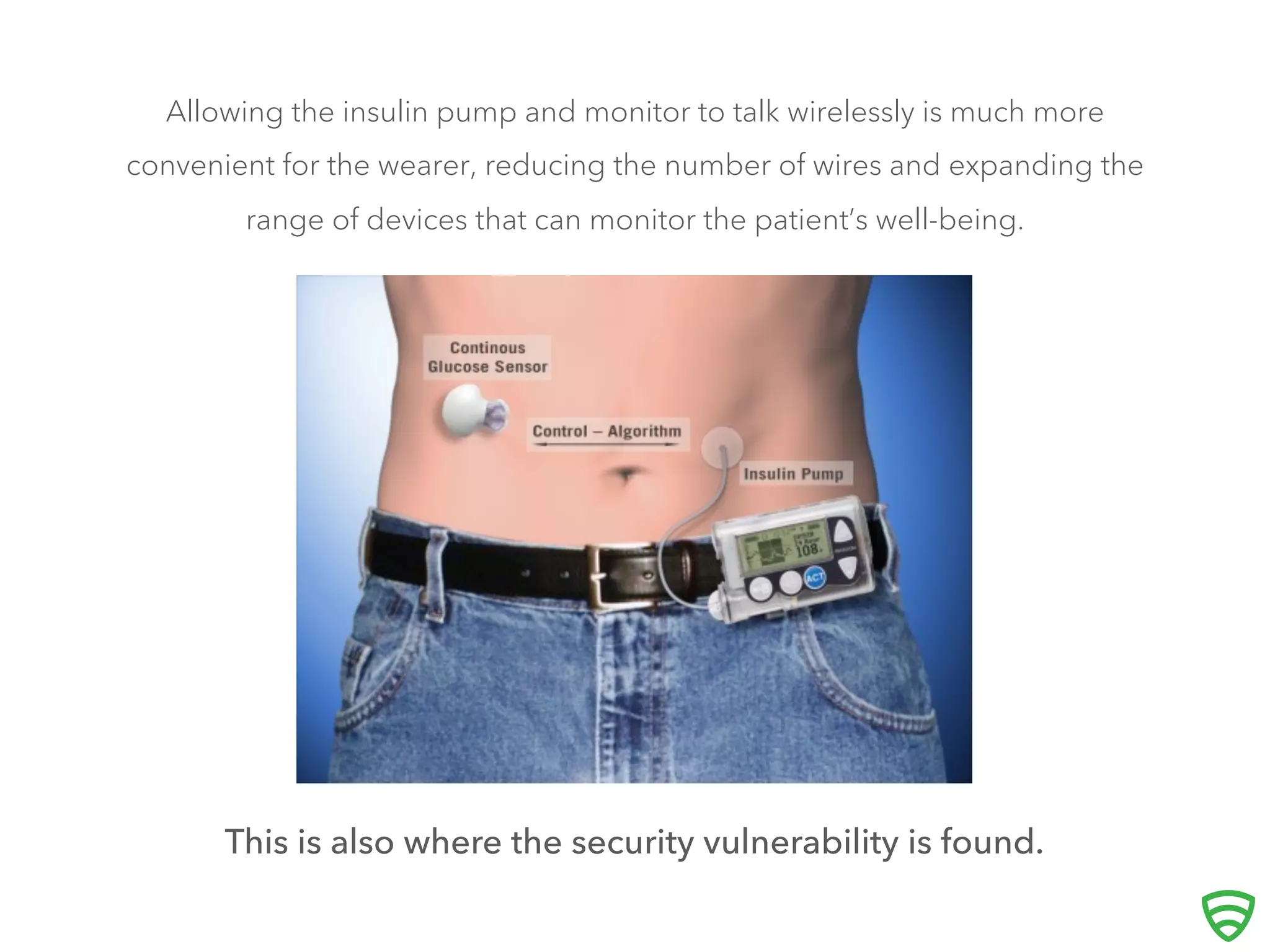
An insulin pump is an intelligent, connected medical device that
replaces the more traditional syringe method of delivering insulin.
The insulin pump most often works in conjunction with a continuous glucose monitor, a
device with multiday sensors that continuously measures blood glucose levels, passing the
telemetry on to an insulin pump so it can calculate how much insulin to deliver.
This is where the wireless connectivity comes in handy.
Allowing the insulin pump and monitor to talk wirelessly is much more
convenient for the wearer, reducing the number of wires and expanding the
range of devices that can monitor the patient’s well-being.
This is also where the security vulnerability is found.
diagram
In designing the way these devices communicate, the only security measure implemented
by the manufacturer was the need to use a valid serial number when communicating. This
means an attacker who uses radio equipment to monitor the traffic between a patient’s
monitor and insulin pump can replay that traffic, disabling the insulin pump or, even
worse, fooling the insulin pump into delivering incorrect dosages of medicine.

As a consequence, two years on, the Medtronic
Paradigm 512, 522, 712, and 722 insulin pumps
remain vulnerable to wireless attack.
Radcliffe disclosed his findings to Medtronic who ultimately denied that
they were a major concern due to the fact that there was no sign of the
issues being exploited in the wild and due to the fact that they felt it would
be technically difficult for a malicious party to carry the attacks out.
In a world where computing is getting closer to our physical
selves, companies incorporating sensors into their devices
can’t afford a failure of imagination, or a vulnerability
management failure.

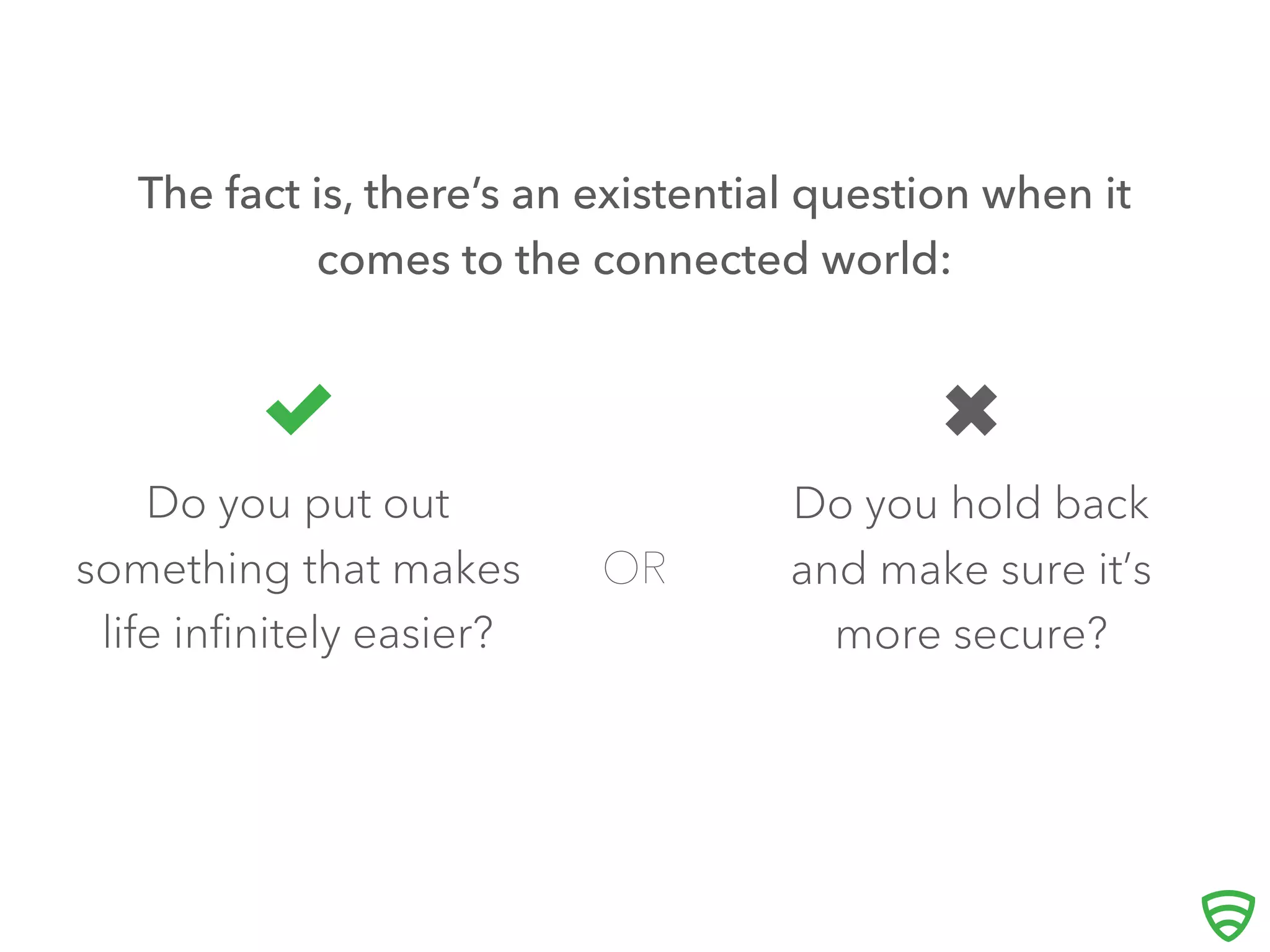
The fact is, there’s an existential question when it
comes to the connected world:
Do you put out
something that makes
life infinitely easier?
OR
 Do you hold back
and make sure it’s
more secure?
It’s going to take a new kind of imagination for every
hardware and software company to secure the next
generation of devices. We can do this.
Read more about our approach to securing the connected world at
http://bit.ly/hackingforgood
Keep in touch with
@lookout
/mylookout
blog.lookout.com
contact@lookout.com
http://bit.ly/connected-world
@marcwrogers

Hacking the Internet of Things for Good

  • 1.
    HACKING THE INTERNET OFTHINGS FOR GOOD By Marc Rogers Principal Security Analyst at Lookout, Inc.
  • 2.
     WE LIVE INA CONNECTED WORLD     
  • 3.
    Everyday objects arebeing transformed by the addition of sensors that enable them to interact with the world, processors that enable them to think about it, and network interfaces that allow them to to talk about it. 
  • 4.
          The benefits thatthese intelligent, connected devices bring to our lives are almost too numerous to count.
  • 5.
    You can controlthe temperature in your home from your phone with a programmable thermostat. 
  • 6.
    You can askyour car for directions as you drive.
  • 7.
     You can checkyour email from your game console.
  • 8.
    As they connectto each other, sharing what they see, hear, and know, these new intelligent, thinking devices are driving a second Internet Age.  
  • 9.
         But when wegive these things intelligence and senses, we also fundamentally change their nature. Mundane objects that were once familiar and unremarkable from a security perspective have suddenly become the keepers of sensitive personal information. 
  • 10.
      For example, thetraditional thermostat hanging on the wall held little attraction to cybercriminals. A connected thermostat — that can tell whoever controls it how many people live in a house, what technology connects to their network, and, most seriously, when the house is unoccupied — is an attractive target.  
  • 11.
    As we changethe nature of things, identifying vulnerabilities and managing updates quickly and efficiently will be paramount.
  • 12.
    Connected things needto be thought of as software when it comes to security, and Google Glass is the perfect example.
  • 13.
    We found thatGoogle Glass carries out a QR code without you ever having to tell it to.
  • 14.
    In theory, thisis an awesome idea. In the future, you could buy a cup of coffee just by looking at a menu, or if you were in a foreign country, the menu would automatically translate to your language if you had Glass on.
  • 15.
    But it takescontrol away from you, and opens a window of opportunity for an attacker. Exposing sensitive data or managing important configuration settings should only happen at the wearer’s request.
  • 16.
    While it’s usefulto configure your Glass QR code and easily connect to wireless networks, it’s not so great when other people can use those same QR codes to tell your Glass to connect to their WiFi Networks or their Bluetooth devices. Unfortunately, this is exactly what we found.
  • 17.
    Glass was hackedby the image of a malicious QR code. Both the vulnerability and its method of delivery are unique to Glass as a consequence of it becoming a connected thing.
  • 18.
    Lookout recommended thatGoogle limit QR code execution to points where the user has solicited it. We disclosed our findings to Google on May 16.
  • 19.
    Everything is OK Googleclearly worked quickly to fix the vulnerability as the issue was fixed by version XE6, released on June 4th. Google made changes that reflected this recommendation.
  • 20.
    This responsive turnaroundindicates the depth of Google’s commitment to privacy and security for this device and set a benchmark for how connected things should be secured going forward. 
  • 21.
    Embedded hardware developersshould take a page out of Google’s vulnerability management process and approach wearables, connected things and anything with a sensor with the same mindset that Google is currently treating Glass. 
  • 22.
    Just as pressing,in our connected world, security and updates must be baked into these new devices from the start. 
  • 23.
    Companies with rootsin software engineering will understand this, while many others may struggle with the unfamiliar issues and sheer complexity of managing millions of things. Because a wide array of traditionally mundane items are being connected, many companies creating connected devices are unfamiliar with the potential dangers they may be creating for users by failing to act when vulnerabilities arise.
  • 24.
    At least fourmodels of insulin pump sold by the manufacturer Medtronic were vulnerable to wireless attack. In 2011, Jerome Radcliffe discovered that
  • 25.
    An insulin pumpis an intelligent, connected medical device that replaces the more traditional syringe method of delivering insulin. The insulin pump most often works in conjunction with a continuous glucose monitor, a device with multiday sensors that continuously measures blood glucose levels, passing the telemetry on to an insulin pump so it can calculate how much insulin to deliver. This is where the wireless connectivity comes in handy.
  • 26.
    Allowing the insulinpump and monitor to talk wirelessly is much more convenient for the wearer, reducing the number of wires and expanding the range of devices that can monitor the patient’s well-being. This is also where the security vulnerability is found. diagram
  • 27.
    In designing theway these devices communicate, the only security measure implemented by the manufacturer was the need to use a valid serial number when communicating. This means an attacker who uses radio equipment to monitor the traffic between a patient’s monitor and insulin pump can replay that traffic, disabling the insulin pump or, even worse, fooling the insulin pump into delivering incorrect dosages of medicine. 
  • 28.
    As a consequence,two years on, the Medtronic Paradigm 512, 522, 712, and 722 insulin pumps remain vulnerable to wireless attack. Radcliffe disclosed his findings to Medtronic who ultimately denied that they were a major concern due to the fact that there was no sign of the issues being exploited in the wild and due to the fact that they felt it would be technically difficult for a malicious party to carry the attacks out.
  • 29.
    In a worldwhere computing is getting closer to our physical selves, companies incorporating sensors into their devices can’t afford a failure of imagination, or a vulnerability management failure. 
  • 30.
    The fact is,there’s an existential question when it comes to the connected world: Do you put out something that makes life infinitely easier? OR  Do you hold back and make sure it’s more secure?
  • 31.
    It’s going totake a new kind of imagination for every hardware and software company to secure the next generation of devices. We can do this. Read more about our approach to securing the connected world at http://bit.ly/hackingforgood
  • 32.
    Keep in touchwith @lookout /mylookout blog.lookout.com contact@lookout.com http://bit.ly/connected-world @marcwrogers