



Hackathon Survival Guide

Ching-Wei Chen (@cweichen)
Director of Developer Program, Gracenote
What's a Hack?
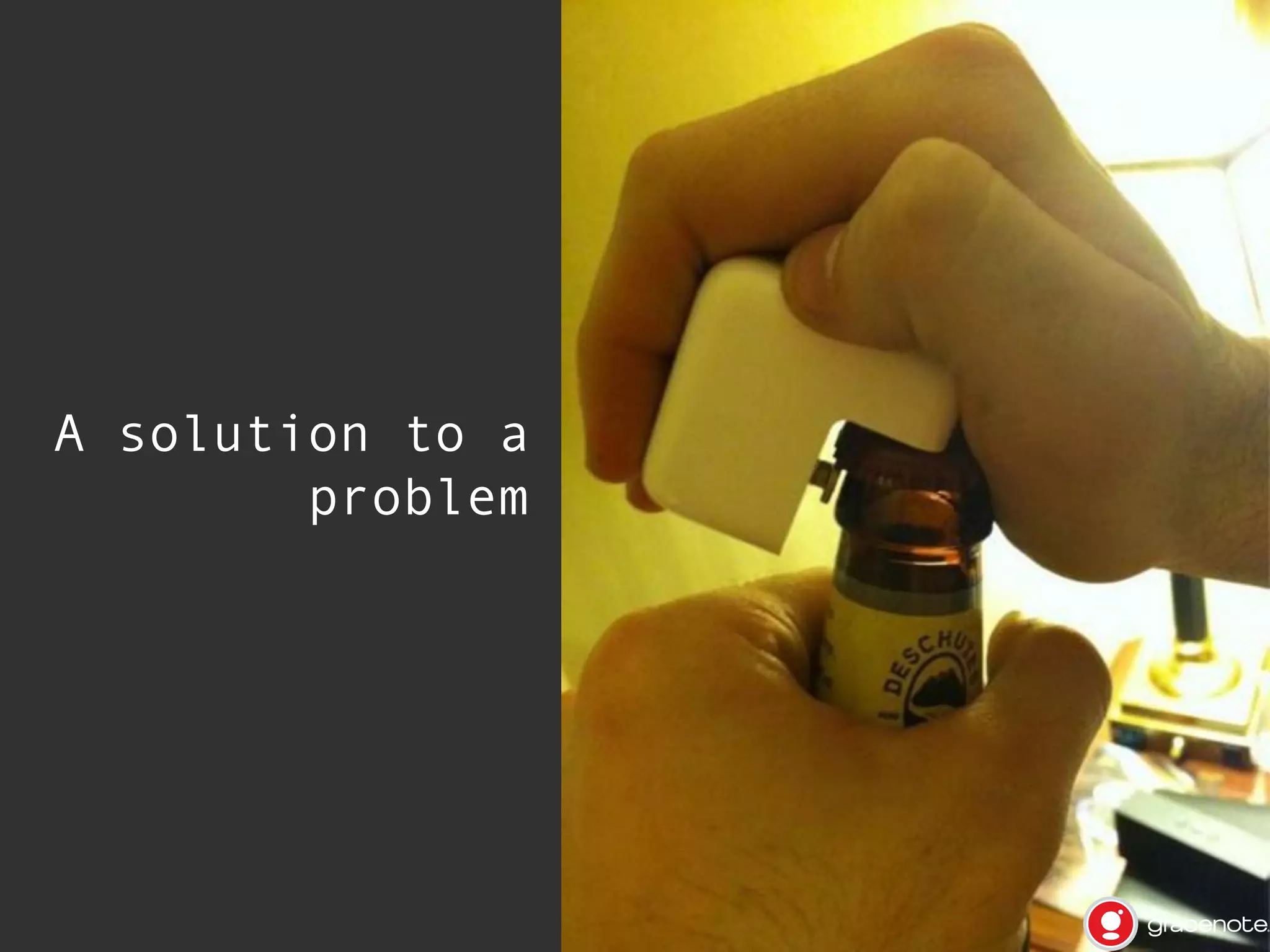
A solution to a
problem
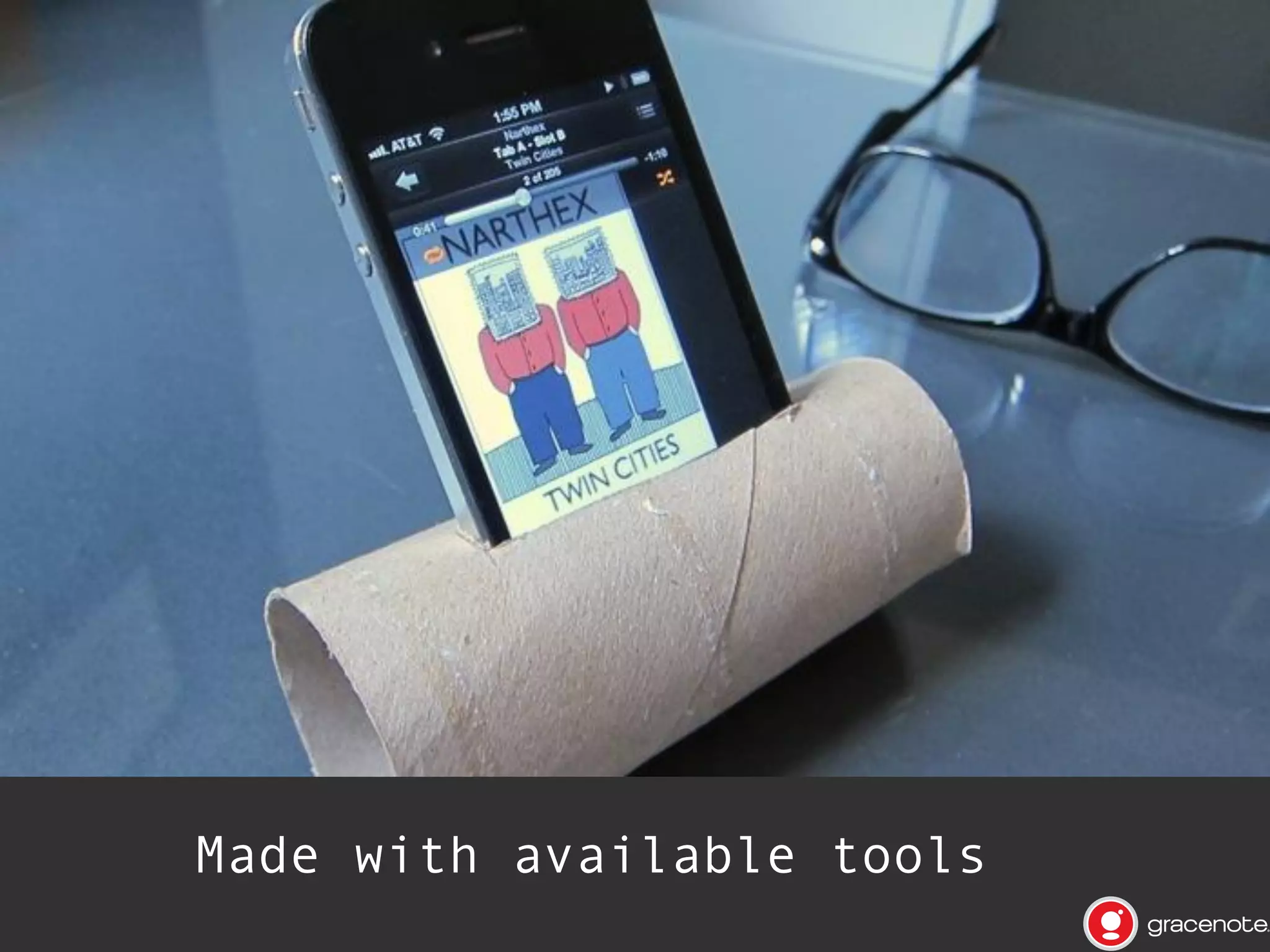
Made with available tools
That works!
What's a Hackathon?
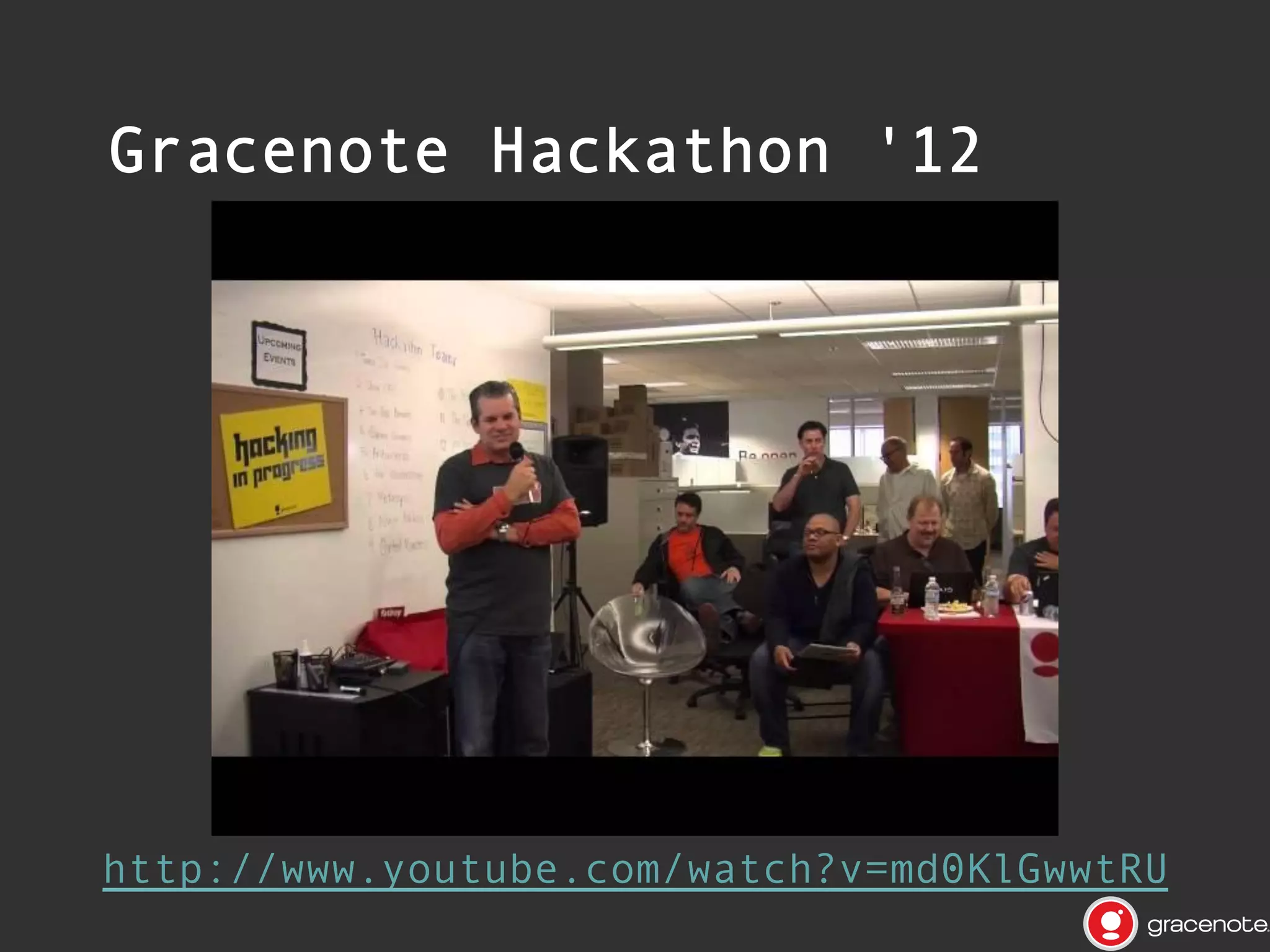
Gracenote Hackathon '12

http://www.youtube.com/watch?v=md0KlGwwtRU
A Day In The Life
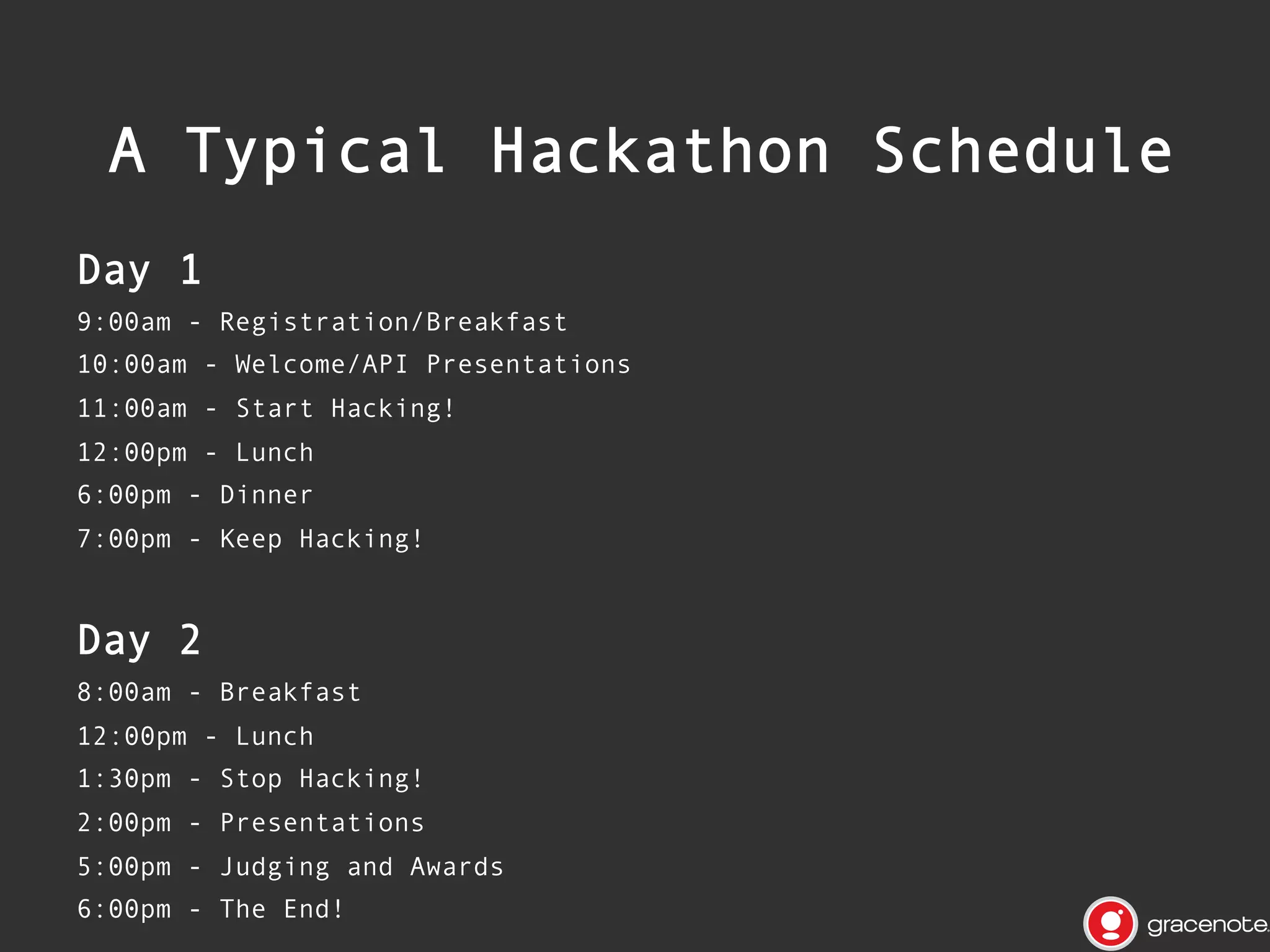
A Typical Hackathon Schedule
Day 1
9:00am - Registration/Breakfast
10:00am - Welcome/API Presentations
11:00am - Start Hacking!
12:00pm - Lunch
6:00pm - Dinner
7:00pm - Keep Hacking!

Day 2
8:00am - Breakfast
12:00pm - Lunch
1:30pm - Stop Hacking!
2:00pm - Presentations
5:00pm - Judging and Awards
6:00pm - The End!
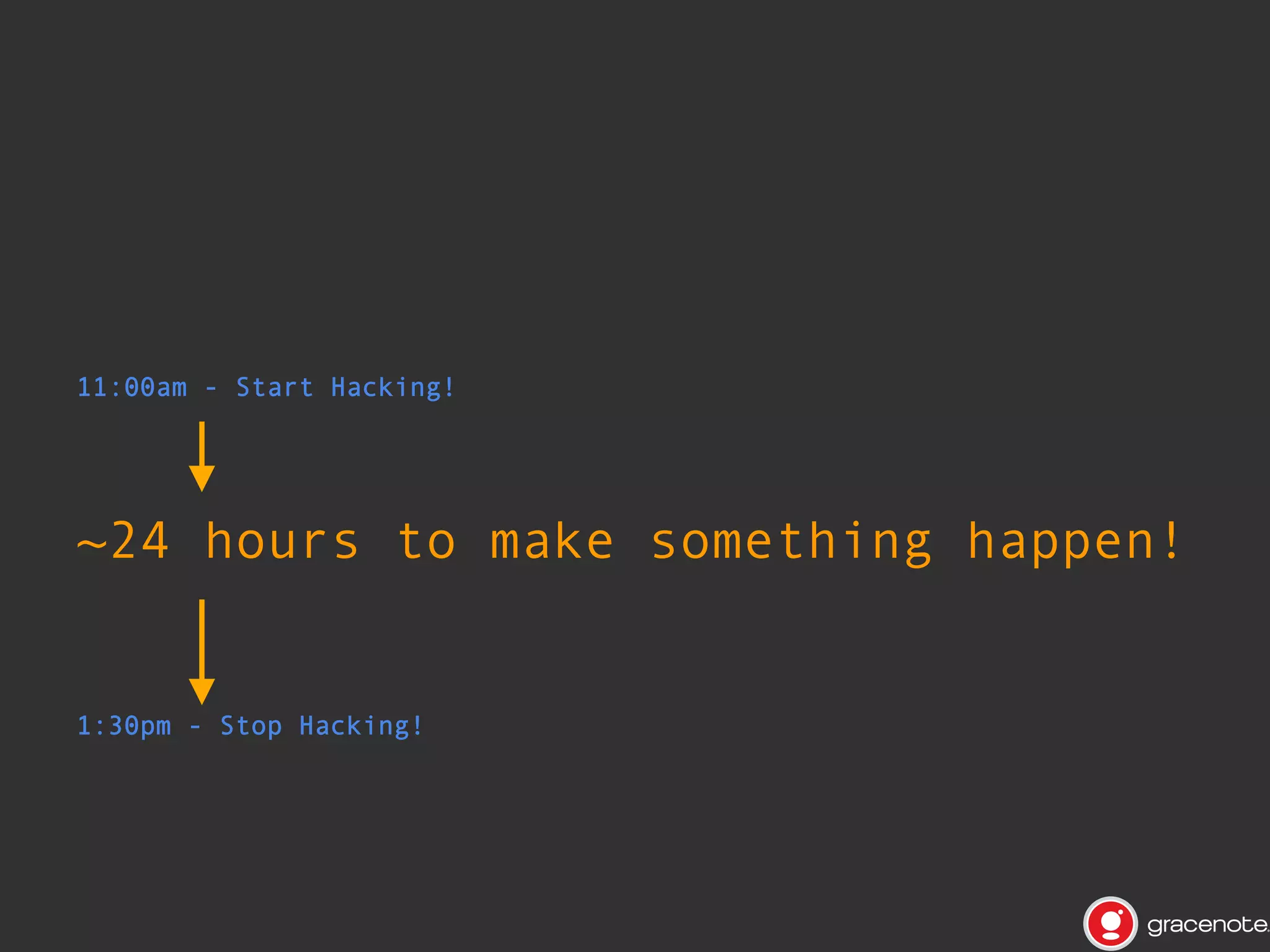
11:00am - Start Hacking!

~24 hours to make something happen!

1:30pm - Stop Hacking!
The 5 Stages of Hacking
Stage 1:
The Big Idea
Stage 1: The Big Idea

•  "This

is going to change the
world!"

•  You

want to solve the big
problems, use every API, and do
something no one has ever done
before

•  Sometimes

the best idea is one
that scratches your own itch
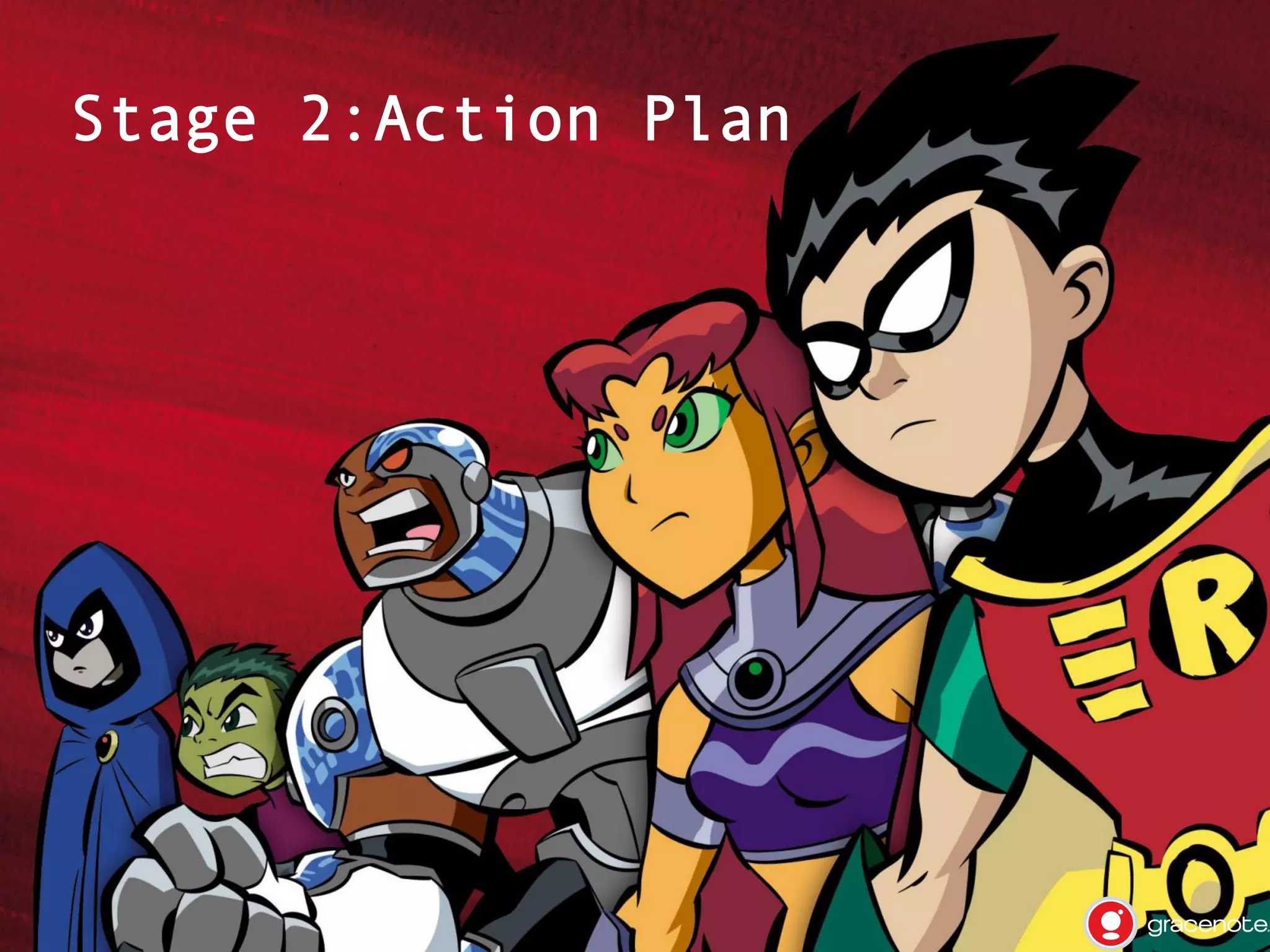
Stage 2:Action Plan
Stage 2: Action Plan

•  Figure
help
o 

out which APIs and data can

Mashape, Programmable Web, Google, Yahoo

•  Design

the hack

•  (If

working in a team) Divide and
conquer
o 
o 

Identify strengths of each team member,
and divide up the work
Define clear interfaces, inputs and
outputs, between each component
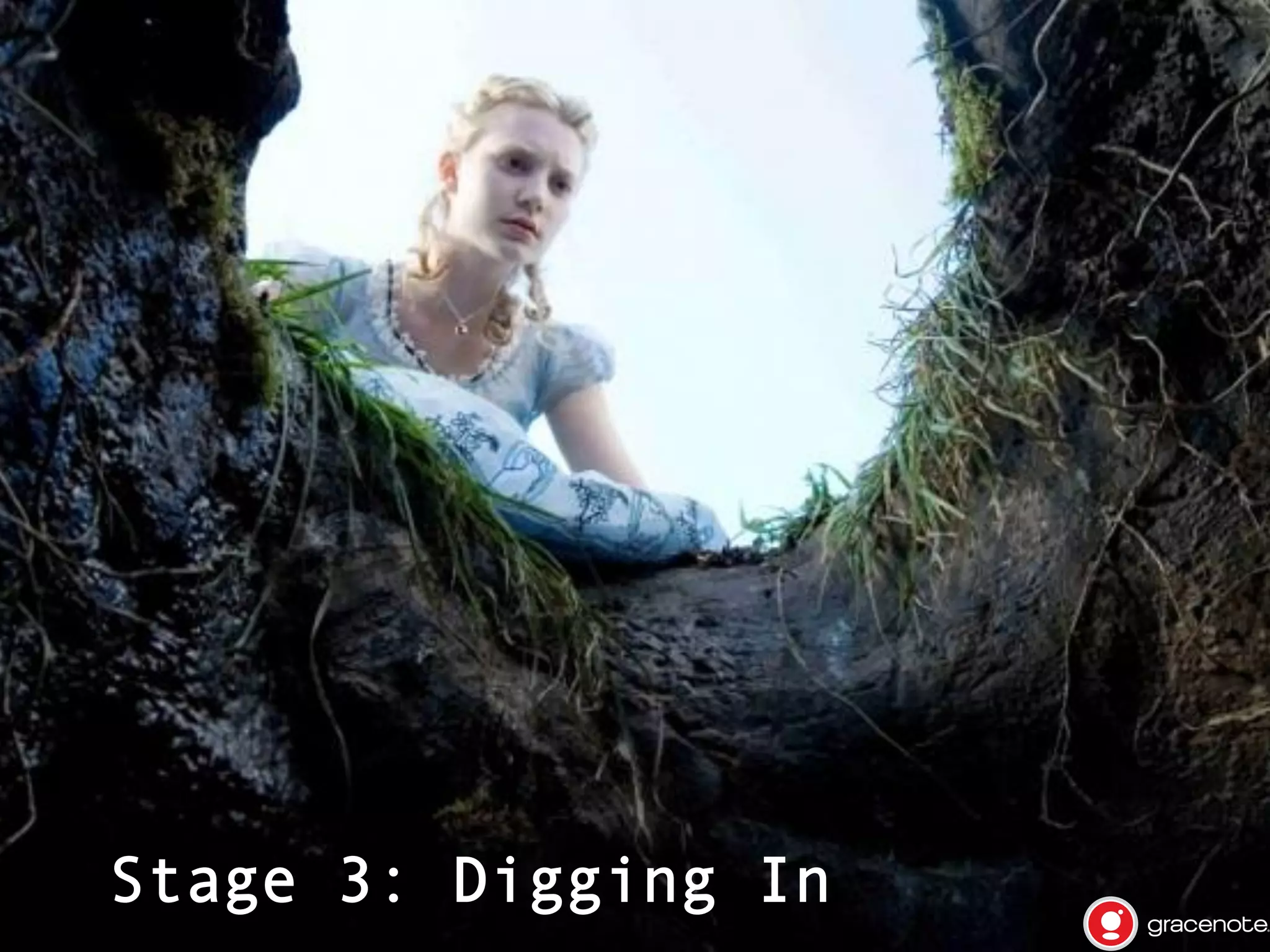
Stage 3: Digging In
Stage 3: Digging In

•  Time
o 
o 
o 

Google, Google, Google
API Docs, Tutorials, Stack Overflow
The more you dig, the deeper you go

•  Baby
o 
o 

to get down to serious hacking

steps

"Hello world!" first
Make sure you have something to show every
step of the way - printfs, beeps, blinks,
anything! This way you can climb out of
holes without losing everything.

•  Dig

far enough, and you'll
eventually reach...
Stage 4:
Stage 4:
Stage 4: "Recalculating!"

•  Some

things don't work as you
originally thought, some
assumptions are completely wrong,
you'll think there's no way out

•  But

there is usually something else
that does something pretty close

•  Stay

open minded, and revisit the
original idea and design
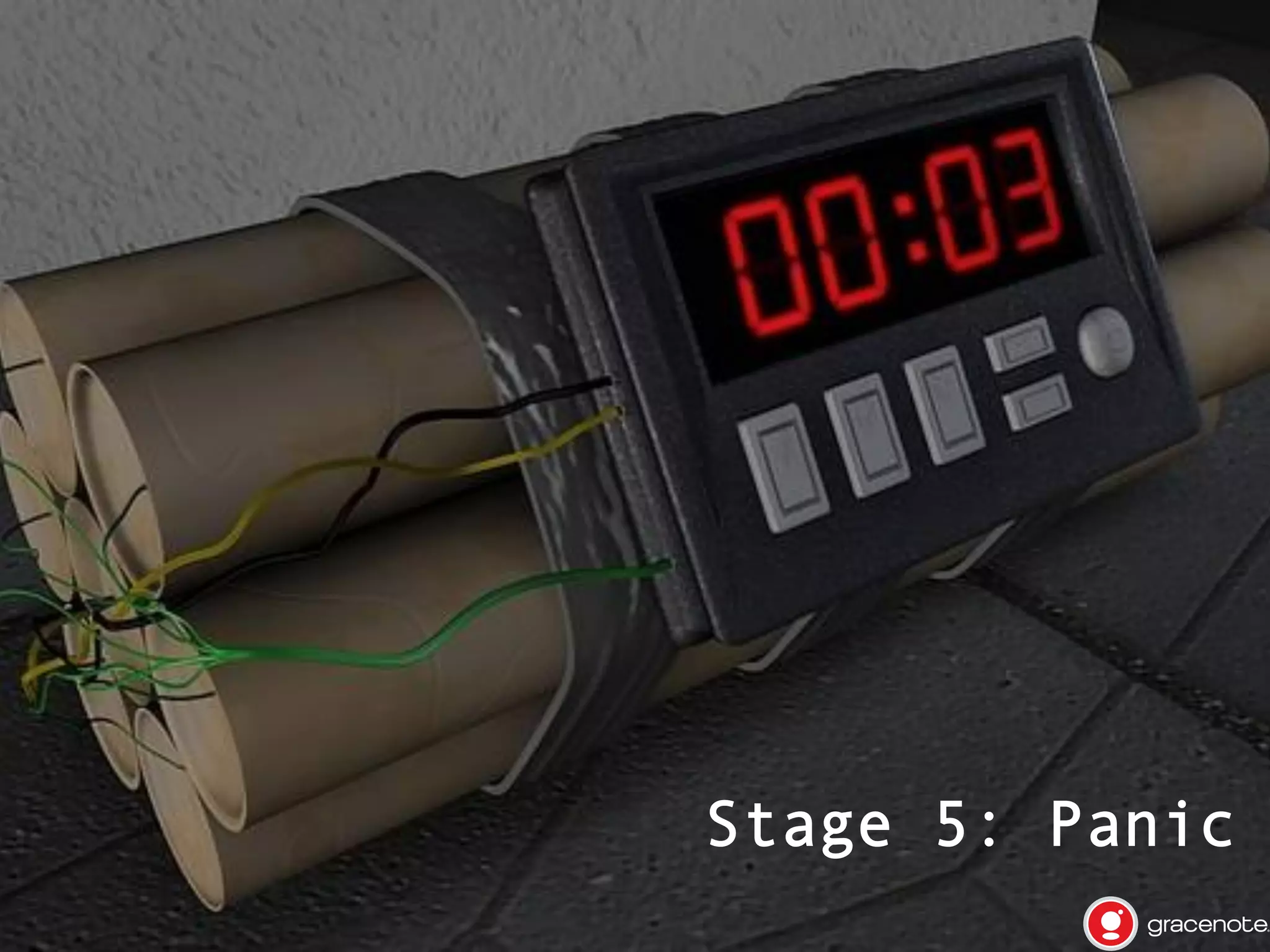
Stage 5: Panic
Stage 5: Panic

•  Time's

almost up, and it's not
totally working yet!

•  Even

things that were working
usually stop working around an
hour before hacking ends

•  What

do I do??!!
Start with your
pitch, and work
backwards
The 4 “Be’s”
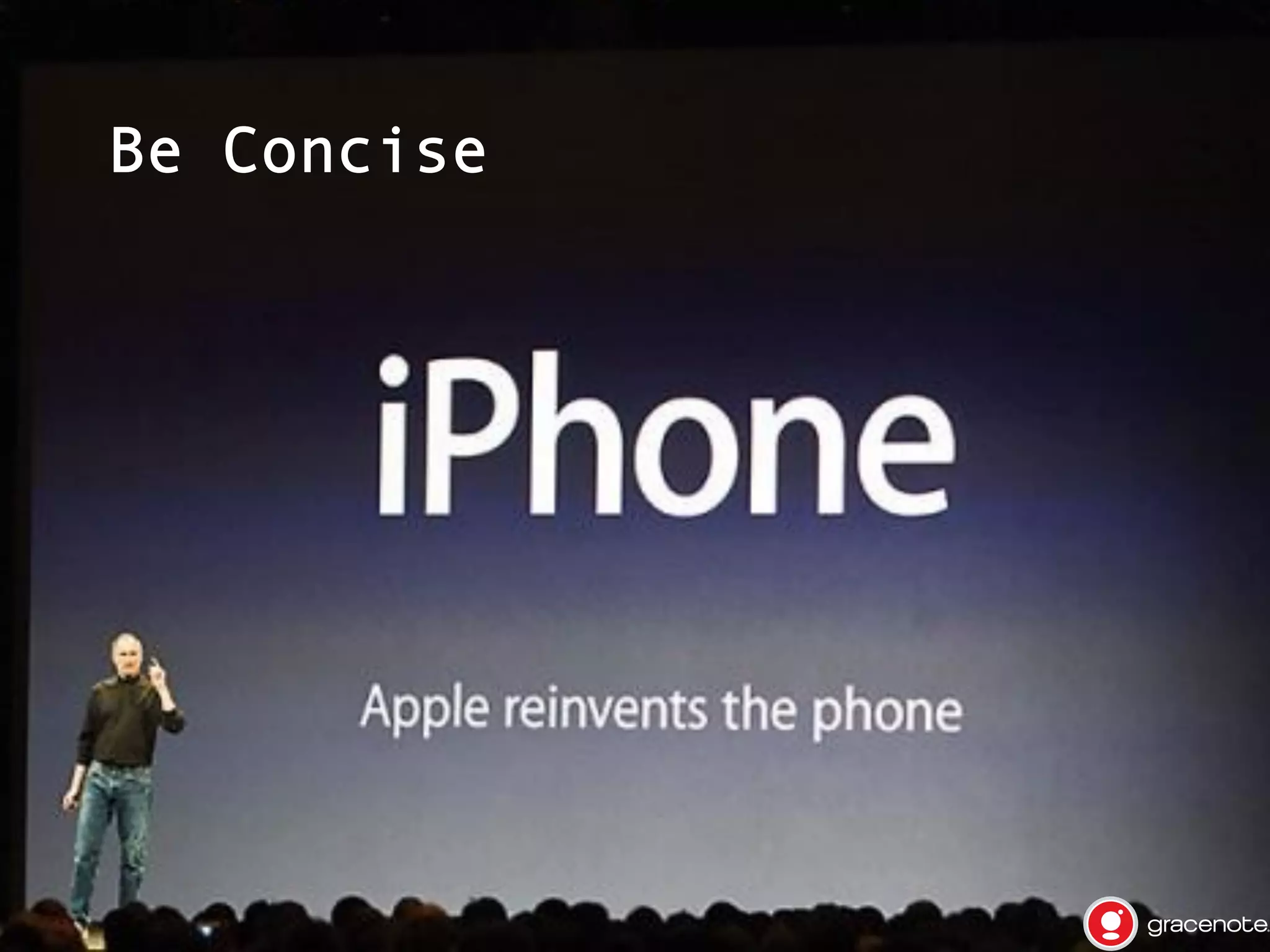
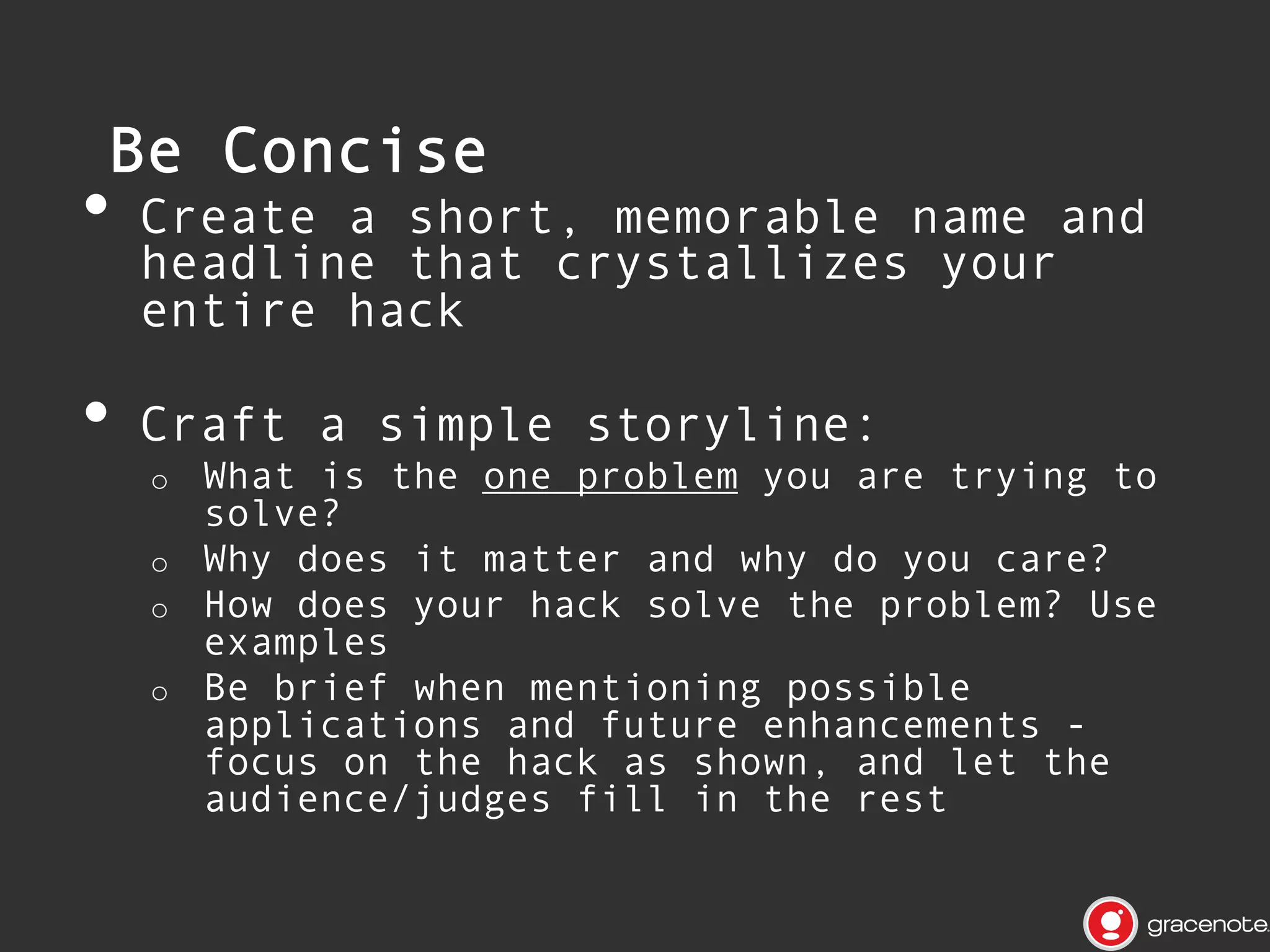
Be Concise
Be Concise

•  Create

a short, memorable name
and tagline that crystallizes
your entire hack

•  Craft
o 
o 
o 
o 

a focused storyline:

What is the one problem you are trying
to solve?
Why does it matter and why do you care?
How does your hack solve the problem?
Don’t complicate the story with endless
lists of possible enhancements
Be Focused
Be Focused
• 

Your only goal is to pitch

• 

A completed hack that does just
one thing well is better than a
hack that does lots of things
poorly

• 

Don't be afraid to make
assumptions or mock-up data
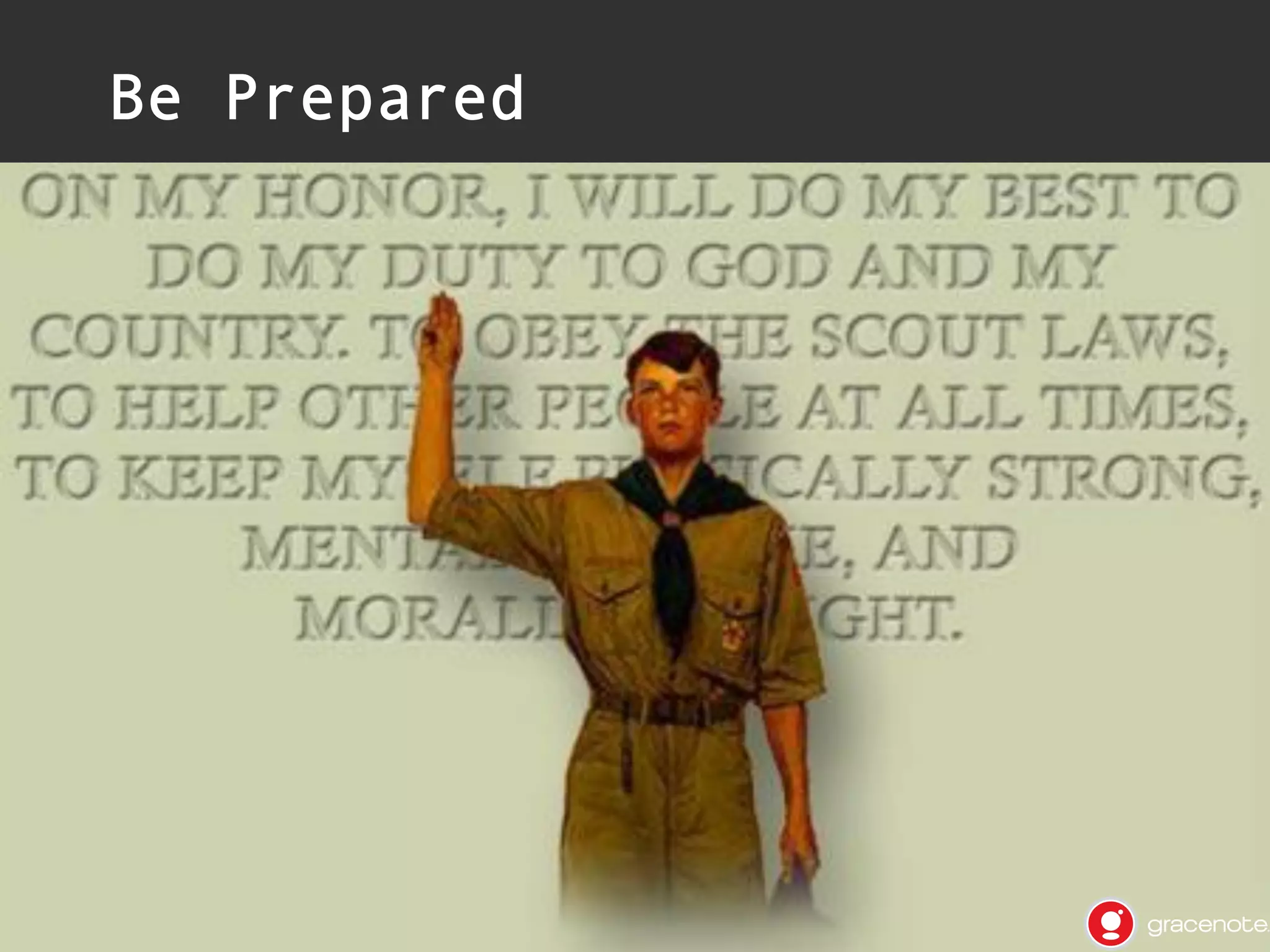
Be Prepared
Be Prepared

•  Run through lots of examples to
find one or two that work well

• 

Make a video or screencast as soon
as everything is working

• 

What will you do if Wifi is down?

• 

Do an A/V test
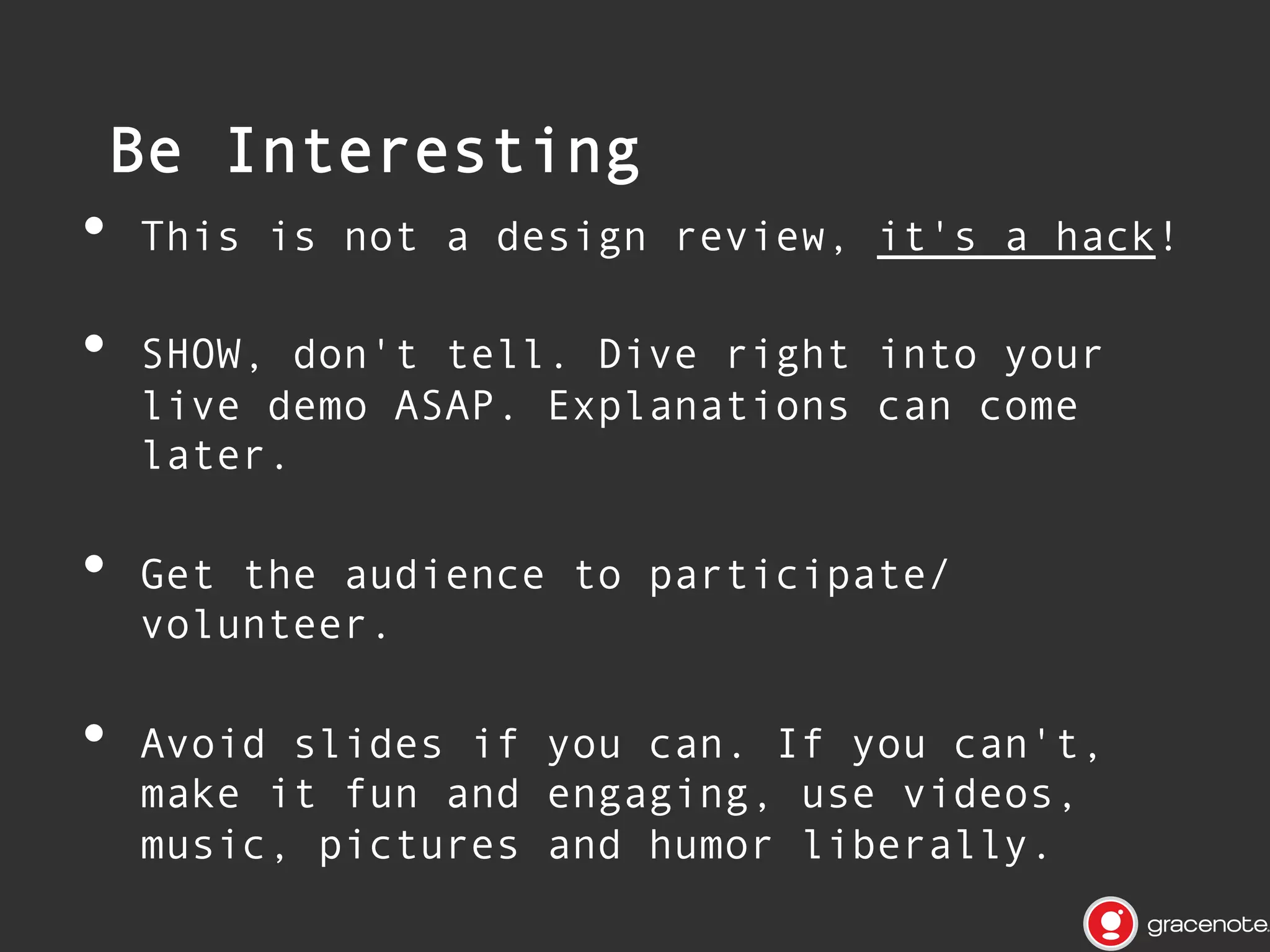
Be Interesting
Be Interesting

• 
• 
• 
• 

This isn’t a design review, it's a hack!
SHOW, don't tell. Dive right into your
live demo ASAP. Explanations can come
later.
Avoid slides if you can. If you must,
make them fun and engaging - use videos,
music, pictures and humor liberally.
Get the audience to participate.
If you follow this guide...
https://developer.gracenote.com
@gracenotedev

Ching-Wei Chen (@cweichen)
Director of Developer Program

Hackathon Survival Guide

  • 1.
    Hackathon Survival Guide Ching-WeiChen (@cweichen) Director of Developer Program, Gracenote
  • 2.
  • 3.
    A solution toa problem
  • 4.
  • 5.
  • 6.
  • 7.
  • 8.
    A Day InThe Life
  • 9.
    A Typical HackathonSchedule Day 1 9:00am - Registration/Breakfast 10:00am - Welcome/API Presentations 11:00am - Start Hacking! 12:00pm - Lunch 6:00pm - Dinner 7:00pm - Keep Hacking! Day 2 8:00am - Breakfast 12:00pm - Lunch 1:30pm - Stop Hacking! 2:00pm - Presentations 5:00pm - Judging and Awards 6:00pm - The End!
  • 10.
    11:00am - StartHacking! ~24 hours to make something happen! 1:30pm - Stop Hacking!
  • 11.
    The 5 Stagesof Hacking
  • 12.
  • 13.
    Stage 1: TheBig Idea •  "This is going to change the world!" •  You want to solve the big problems, use every API, and do something no one has ever done before •  Sometimes the best idea is one that scratches your own itch
  • 14.
  • 15.
    Stage 2: ActionPlan •  Figure help o  out which APIs and data can Mashape, Programmable Web, Google, Yahoo •  Design the hack •  (If working in a team) Divide and conquer o  o  Identify strengths of each team member, and divide up the work Define clear interfaces, inputs and outputs, between each component
  • 16.
  • 17.
    Stage 3: DiggingIn •  Time o  o  o  Google, Google, Google API Docs, Tutorials, Stack Overflow The more you dig, the deeper you go •  Baby o  o  to get down to serious hacking steps "Hello world!" first Make sure you have something to show every step of the way - printfs, beeps, blinks, anything! This way you can climb out of holes without losing everything. •  Dig far enough, and you'll eventually reach...
  • 18.
  • 19.
    Stage 4: "Recalculating!" • Some things don't work as you originally thought, some assumptions are completely wrong, you'll think there's no way out •  But there is usually something else that does something pretty close •  Stay open minded, and revisit the original idea and design
  • 20.
  • 21.
    Stage 5: Panic • Time's almost up, and it's not totally working yet! •  Even things that were working usually stop working around an hour before hacking ends •  What do I do??!!
  • 23.
    Start with your pitch,and work backwards
  • 24.
  • 25.
  • 26.
    Be Concise •  Create ashort, memorable name and tagline that crystallizes your entire hack •  Craft o  o  o  o  a focused storyline: What is the one problem you are trying to solve? Why does it matter and why do you care? How does your hack solve the problem? Don’t complicate the story with endless lists of possible enhancements
  • 27.
  • 28.
    Be Focused •  Your onlygoal is to pitch •  A completed hack that does just one thing well is better than a hack that does lots of things poorly •  Don't be afraid to make assumptions or mock-up data
  • 29.
  • 30.
    Be Prepared •  Runthrough lots of examples to find one or two that work well •  Make a video or screencast as soon as everything is working •  What will you do if Wifi is down? •  Do an A/V test
  • 31.
  • 32.
    Be Interesting •  •  •  •  This isn’ta design review, it's a hack! SHOW, don't tell. Dive right into your live demo ASAP. Explanations can come later. Avoid slides if you can. If you must, make them fun and engaging - use videos, music, pictures and humor liberally. Get the audience to participate.
  • 33.
    If you followthis guide...
  • 35.