D e v e l o p e r S w i t c h D r e a m s
C r a f t i n g t h e G N O M E D X
Christian Hergert (christian@hergert.me)
GNOME is so much more than a desktop
What is GNOME?
●
Compositor (Mutter, Shell)
●
Project with strong design ethic (UX, Hig)
●
File Manager (Nautilus, Sushi)
●
Hardware Abstractions
(Bluetooth, Network, Disk, Media, Power, Input)
●
Graphics Toolkits (Gtk+, Clutter, St)
●
Language Enablement
(GObject, Python, JavaScript, Vala, Perl, Mono)
What is GNOME? (Continued)
●
Content Storage and Exctraction (Tracker, Gom)
●
Personal Data Management
(E-D-S, Calendar, Notes, Tasks, Todo)
●
Application Suite (Evolution, Gnumeric, GIMP, Gedit)
●
Web Browser (Epiphany, WebKitGtk)
●
IPC (D-Bus/kdbus, GVariant, Gsettings)
●
Media Framework (GStreamer, pulseaudio, rygel)
●
Translations (damned lies, gtranslator)
●
Artwork (backgrounds, iconography)
What is GNOME? (Continued)
●
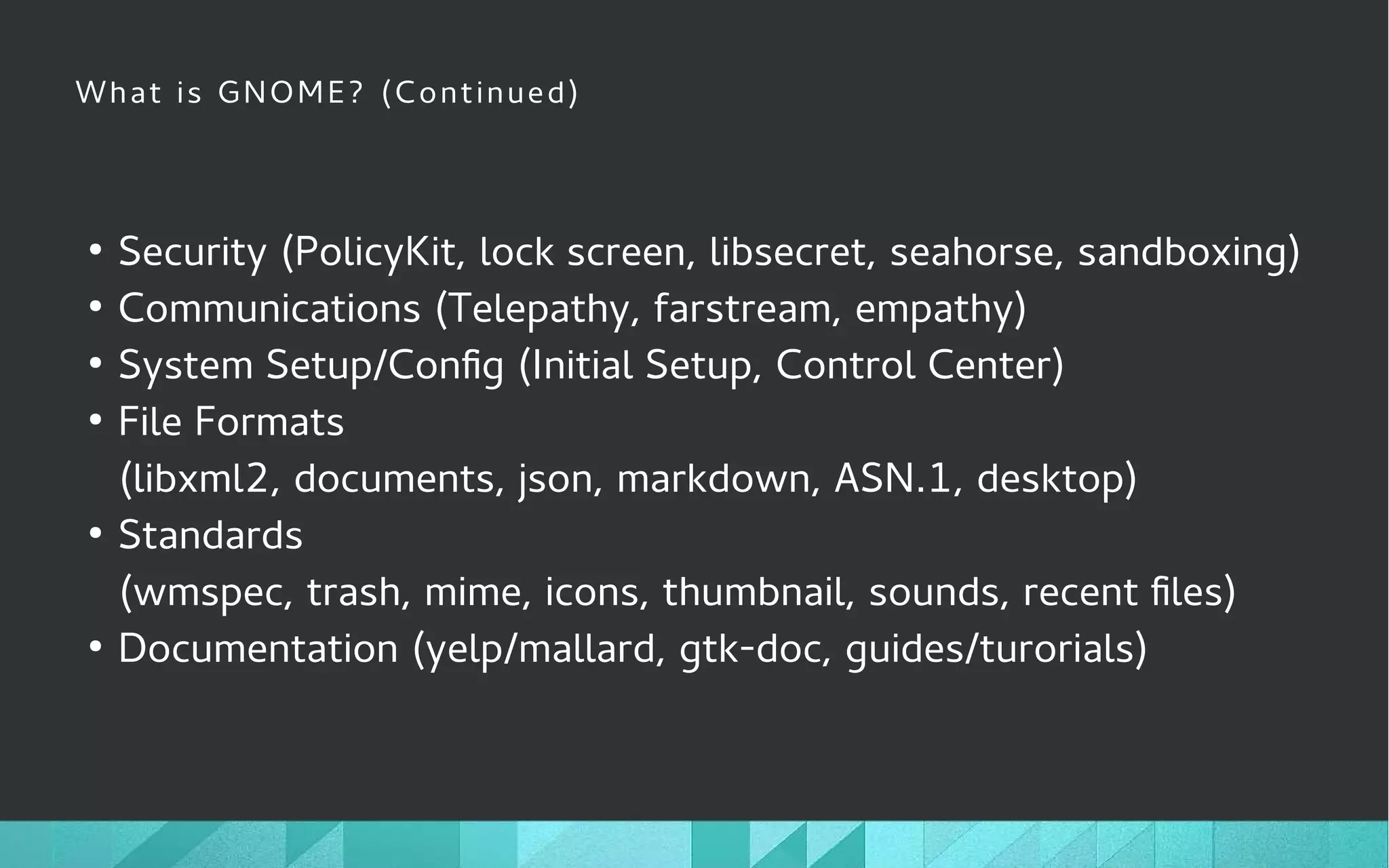
Security (PolicyKit, lock screen, libsecret, seahorse, sandboxing)
●
Communications (Telepathy, farstream, empathy)
●
System Setup/Config (Initial Setup, Control Center)
●
File Formats
(libxml2, documents, json, markdown, ASN.1, desktop)
●
Standards
(wmspec, trash, mime, icons, thumbnail, sounds, recent files)
●
Documentation (yelp/mallard, gtk-doc, guides/turorials)
What is GNOME? (Continued)
●
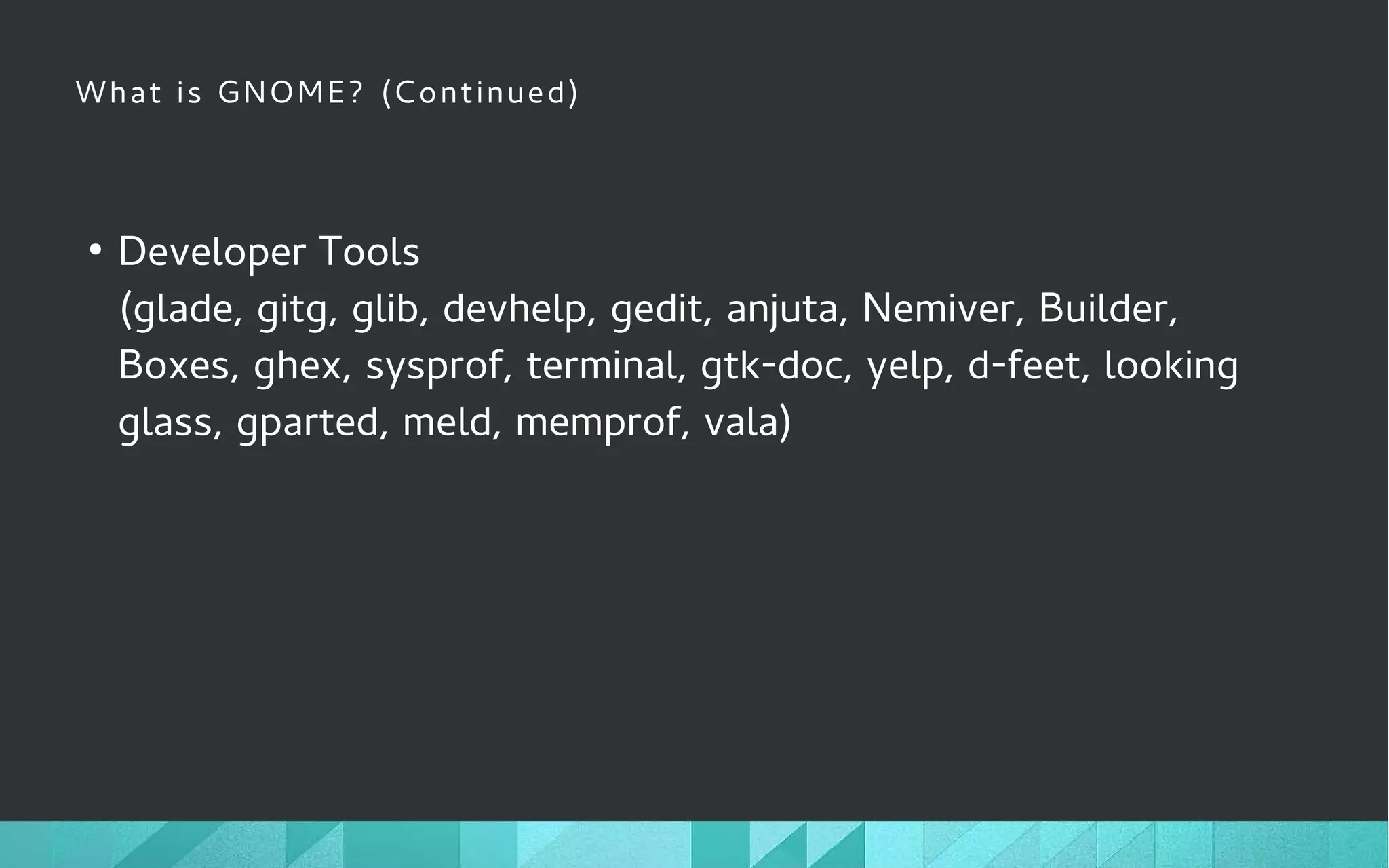
Developer Tools
(glade, gitg, glib, devhelp, gedit, anjuta, Nemiver, Builder,
Boxes, ghex, sysprof, terminal, gtk-doc, yelp, d-feet, looking
glass, gparted, meld, memprof, vala)
GNOME is a massive achievement
But there is an elephant in the GNU/room
It's really hard to contribute to Free Software
So I did some research on why
Learning how to get started is the largest hurdle in
contributing to Free Software
We have hundreds of contributors that would be here
right now if we could bridge that gap
Clearly this is unacceptable
We built a fantastic platform
(Now let's help people build things for it)
DX = UX for Developers
The term “Developer” is very broad
Lots of people, lots of skill-sets, varying expertise
You shouldn't have to be an expert on every part of our
platform to begin contributing
We need to provide tools and education to go from
beginner, to intermediate, to expert
If more people try our platform,
we'll have more contributors
(It's a numbers game)
So let's make it as easy as possible to get started
Suggestion
Add “Developer Mode” switch to Control Center
Developer Mode Switch
●
GNOME SDK runtime made available
●
Developer Suite
(Builder, glade, Nemiver, gitg, code-assistance,
toolchain, gedit, devhelp, sysprof)
●
“Getting Started for Developers” guides
Suggestion
“GNOME Ambassadors” who can help point new
developers in the right direction
(For now you can just join #gnome-love)
Developers need documentation
Developers need Documentation
●
It needs to be idiomatic
●
It needs to be accurate
●
It needs to be at your fingertips when coding
Perfect documentation is improbable
(So allow developers to edit it when it's wrong)
GNOME's design patterns are fantastic
(Now let's make them easy to create)
GNOME's platform libraries are great
(Now let's make them easy to consume)
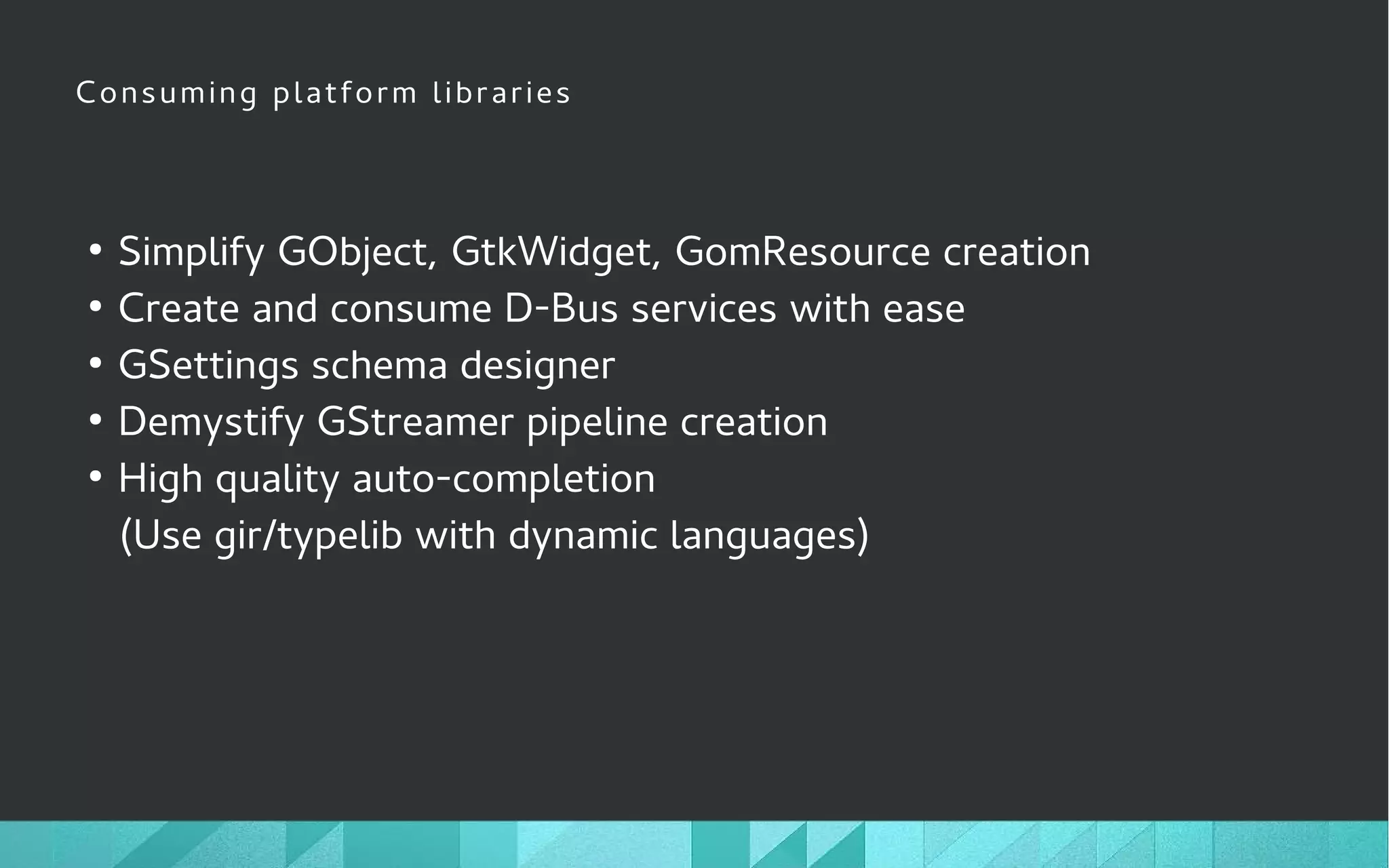
Consuming platform libraries
●
Simplify GObject, GtkWidget, GomResource creation
●
Create and consume D-Bus services with ease
●
GSettings schema designer
●
Demystify GStreamer pipeline creation
●
High quality auto-completion
(Use gir/typelib with dynamic languages)
Developers are always searching for things
(So let's make that fast and comprehensive)
Sometimes the documentation simply doesn't exist
(So provide cross-project search to fi nd code examples)
Releasing applications on distribution life-cycles is no
longer a viable strategy
Distribution Life-cycles
●
Typically 6-months to 2-years
●
Developers often rely on them for new dependencies
(And no time to build/test against unstable GNOME)
●
And now your application broke with the new release
(Everyone blames each other, ABIs insufficient)
●
Application fixed upstream, doesn't get shipped until next release
●
Repeat process
Do we ever ship a stable combination?
(Kernel, Drivers, Desktop, Applications)
Even worse, which distribution would you choose to
synchronize your releases with?
(Synchronizing with GNOME might be best option)
But what if you want to ship early, often?
Suggestion: xdg-app
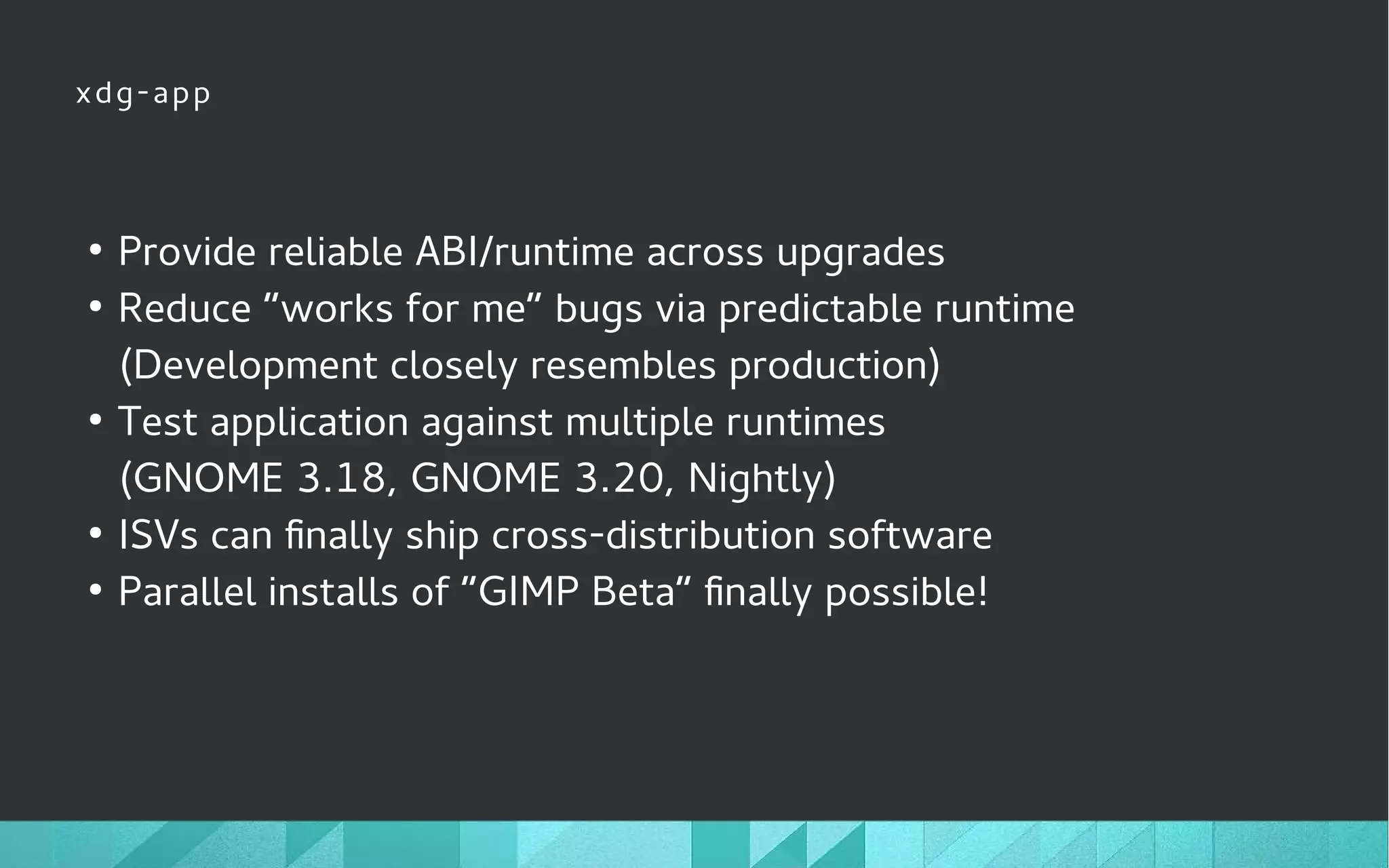
xdg-app
●
Provide reliable ABI/runtime across upgrades
●
Reduce “works for me” bugs via predictable runtime
(Development closely resembles production)
●
Test application against multiple runtimes
(GNOME 3.18, GNOME 3.20, Nightly)
●
ISVs can finally ship cross-distribution software
●
Parallel installs of “GIMP Beta” finally possible!
Builder should provide an app simulator to make testing
multiple GNOME releases painless
(More GNOME Continuous testers means more bugs fi xed)
Psst! Stop testing your application in tree!
(If you're interested in testing what your users run)
Builder and xdg-app will help you do this automatically
(Eventually)
Build systems are boring
(Sorta like me)
Build Systems
●
Make autotools fast (possible!)
●
Make it more declarative (Go Philip Withnall Go!)
●
Automate what we can
●
Document what we can't automate
●
Make alternate build systems possible (cmake, meson)
Developer Outreach
GNOME has the potential to be the
“Desktop for Developers”
Developer Outreach
●
Web Development
(Django/Rails/Node, HTML/JS/CSS)
●
Emerging Languages (golang, rust)
●
Internet of Things and Embedded
●
Mobile Development
●
DevOps/Docker/Atomic
It's my opinion that improving our DX is one of the best
things we can do for the eff ectiveness and longevity of
GNOME and Free Software
Questions and Comments?
Please join us at the Builder BoF!
All day Tuesday and Wednesday
Thanks for all your support!
https://www.indiegogo.com/projects/builder-an-ide-of-our-gnome

guadec-2015-developer-switch-dreams

  • 1.
    D e ve l o p e r S w i t c h D r e a m s C r a f t i n g t h e G N O M E D X Christian Hergert (christian@hergert.me)
  • 2.
    GNOME is somuch more than a desktop
  • 3.
    What is GNOME? ● Compositor(Mutter, Shell) ● Project with strong design ethic (UX, Hig) ● File Manager (Nautilus, Sushi) ● Hardware Abstractions (Bluetooth, Network, Disk, Media, Power, Input) ● Graphics Toolkits (Gtk+, Clutter, St) ● Language Enablement (GObject, Python, JavaScript, Vala, Perl, Mono)
  • 4.
    What is GNOME?(Continued) ● Content Storage and Exctraction (Tracker, Gom) ● Personal Data Management (E-D-S, Calendar, Notes, Tasks, Todo) ● Application Suite (Evolution, Gnumeric, GIMP, Gedit) ● Web Browser (Epiphany, WebKitGtk) ● IPC (D-Bus/kdbus, GVariant, Gsettings) ● Media Framework (GStreamer, pulseaudio, rygel) ● Translations (damned lies, gtranslator) ● Artwork (backgrounds, iconography)
  • 5.
    What is GNOME?(Continued) ● Security (PolicyKit, lock screen, libsecret, seahorse, sandboxing) ● Communications (Telepathy, farstream, empathy) ● System Setup/Config (Initial Setup, Control Center) ● File Formats (libxml2, documents, json, markdown, ASN.1, desktop) ● Standards (wmspec, trash, mime, icons, thumbnail, sounds, recent files) ● Documentation (yelp/mallard, gtk-doc, guides/turorials)
  • 6.
    What is GNOME?(Continued) ● Developer Tools (glade, gitg, glib, devhelp, gedit, anjuta, Nemiver, Builder, Boxes, ghex, sysprof, terminal, gtk-doc, yelp, d-feet, looking glass, gparted, meld, memprof, vala)
  • 7.
    GNOME is amassive achievement
  • 8.
    But there isan elephant in the GNU/room
  • 9.
    It's really hardto contribute to Free Software
  • 10.
    So I didsome research on why
  • 11.
    Learning how toget started is the largest hurdle in contributing to Free Software
  • 12.
    We have hundredsof contributors that would be here right now if we could bridge that gap
  • 13.
    Clearly this isunacceptable
  • 14.
    We built afantastic platform (Now let's help people build things for it)
  • 15.
    DX = UXfor Developers
  • 16.
    DX = UXfor Developers
  • 17.
  • 18.
    Lots of people,lots of skill-sets, varying expertise
  • 19.
    You shouldn't haveto be an expert on every part of our platform to begin contributing
  • 20.
    We need toprovide tools and education to go from beginner, to intermediate, to expert
  • 21.
    If more peopletry our platform, we'll have more contributors (It's a numbers game)
  • 22.
    So let's makeit as easy as possible to get started
  • 23.
    Suggestion Add “Developer Mode”switch to Control Center
  • 24.
    Developer Mode Switch ● GNOMESDK runtime made available ● Developer Suite (Builder, glade, Nemiver, gitg, code-assistance, toolchain, gedit, devhelp, sysprof) ● “Getting Started for Developers” guides
  • 25.
    Suggestion “GNOME Ambassadors” whocan help point new developers in the right direction (For now you can just join #gnome-love)
  • 26.
  • 27.
    Developers need Documentation ● Itneeds to be idiomatic ● It needs to be accurate ● It needs to be at your fingertips when coding
  • 28.
    Perfect documentation isimprobable (So allow developers to edit it when it's wrong)
  • 29.
    GNOME's design patternsare fantastic (Now let's make them easy to create)
  • 30.
    GNOME's platform librariesare great (Now let's make them easy to consume)
  • 31.
    Consuming platform libraries ● SimplifyGObject, GtkWidget, GomResource creation ● Create and consume D-Bus services with ease ● GSettings schema designer ● Demystify GStreamer pipeline creation ● High quality auto-completion (Use gir/typelib with dynamic languages)
  • 32.
    Developers are alwayssearching for things (So let's make that fast and comprehensive)
  • 33.
    Sometimes the documentationsimply doesn't exist (So provide cross-project search to fi nd code examples)
  • 34.
    Releasing applications ondistribution life-cycles is no longer a viable strategy
  • 35.
    Distribution Life-cycles ● Typically 6-monthsto 2-years ● Developers often rely on them for new dependencies (And no time to build/test against unstable GNOME) ● And now your application broke with the new release (Everyone blames each other, ABIs insufficient) ● Application fixed upstream, doesn't get shipped until next release ● Repeat process
  • 36.
    Do we evership a stable combination? (Kernel, Drivers, Desktop, Applications)
  • 37.
    Even worse, whichdistribution would you choose to synchronize your releases with? (Synchronizing with GNOME might be best option)
  • 38.
    But what ifyou want to ship early, often?
  • 39.
  • 40.
    xdg-app ● Provide reliable ABI/runtimeacross upgrades ● Reduce “works for me” bugs via predictable runtime (Development closely resembles production) ● Test application against multiple runtimes (GNOME 3.18, GNOME 3.20, Nightly) ● ISVs can finally ship cross-distribution software ● Parallel installs of “GIMP Beta” finally possible!
  • 41.
    Builder should providean app simulator to make testing multiple GNOME releases painless (More GNOME Continuous testers means more bugs fi xed)
  • 42.
    Psst! Stop testingyour application in tree! (If you're interested in testing what your users run)
  • 43.
    Builder and xdg-appwill help you do this automatically (Eventually)
  • 44.
    Build systems areboring (Sorta like me)
  • 45.
    Build Systems ● Make autotoolsfast (possible!) ● Make it more declarative (Go Philip Withnall Go!) ● Automate what we can ● Document what we can't automate ● Make alternate build systems possible (cmake, meson)
  • 46.
  • 47.
    GNOME has thepotential to be the “Desktop for Developers”
  • 48.
    Developer Outreach ● Web Development (Django/Rails/Node,HTML/JS/CSS) ● Emerging Languages (golang, rust) ● Internet of Things and Embedded ● Mobile Development ● DevOps/Docker/Atomic
  • 49.
    It's my opinionthat improving our DX is one of the best things we can do for the eff ectiveness and longevity of GNOME and Free Software
  • 50.
  • 51.
    Please join usat the Builder BoF! All day Tuesday and Wednesday
  • 52.
    Thanks for allyour support! https://www.indiegogo.com/projects/builder-an-ide-of-our-gnome