75 0 75 150 225 300 m
Bioretention Cells
Curb Grates
Permeable Pavement
Legend
PROJECT BY:
Laura Bond
Sarah Lagpacan
Bailey Klimchak
Nick Schrader
Dylan Warner
Madison Butcher
Stormwater Management on The Ohio State University’s Athletics Campus
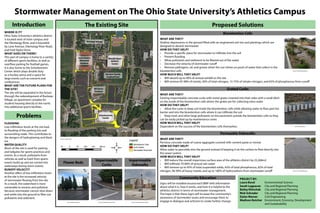
WHERE IS IT?
Ohio State University’s athletics district
is located west of main campus and
the Olentangy River, and is bounded
by Lane Avenue, Olentangy River Road,
and Fred Taylor Drive.
WHAT GOES ON THERE?
This part of campus is home to a variety
of different sports facilities, as well as
overflow parking for football games.
It is also home to the Schottenstein
Center which plays double duty
as a hockey arena and a space for
large events such as concerts and
conferences.
WHAT ARE THE FUTURE PLANS FOR
THE SITE?
The site will be expanded in the future
through the redevelopment of Buckeye
Village, an apartment complex for
student housing directly to the north,
into additional sports facilities.
Introduction
Flower Beds
Proposed Solutions
WHAT ARE THEY?
Shallow depressions in the ground filled with an engineered soil mix and plantings which are
designed to absorb stormwater
HOW DO THEY HELP?
•	 Provide a specific place for stormwater to infiltrate into the soil
•	 Prevent flooding
•	 Allow pollutants and sediment to be filtered out of the water
•	 Decrease the velocity of stormwater runoff
•	 Remove pathogens, oil, and grease when the sun shines on pools of water that collect in the
bioretention cells
WHAT ARE THEY?
Existing impermeable concrete curbs with metal grates inserted into their sides with a small ditch
on the inside of the bioretention cells where the grates are for collecting extra water
HOW DO THEY HELP?
•	 Allow the curbs to keep soil inside the bioretention cells while allowing water to flow past the
barrier and into the bioretention cells where it can infiltrate the soil
•	 Keep trash and other large pollutants on the pavement outside the bioretention cells so they
can be easily picked up by maintenance crews
HOW MUCH WILL THEY HELP?
Dependent on the success of the bioretention cells themselves
Problems
FLOODING
Low infiltration levels at the site lead
to flooding of the parking lots and
surrounding roads. This contributes to
the dangers of hydroplaning and black
ice.
WATER QUALITY
Much of the site is used for parking
and tailgates for sports practices and
events. As a result, pollutants from
vehicles as well as trash from sports
events build up and are carried into
waterways during storm events.
RUNOFF VELOCITY
Another effect of low infiltration levels
at the site is the increased velocity
of stormwater flowing from the site.
As a result, the watershed is more
vulnerable to erosion and pollution
because stormwater cannot slow down
and settle into the ground to filter out
pollutants and sediment.
The Existing Site
Bioretention Cells
Grated Curbs
WHAT ARE THEY?
Pervious concrete made of coarse aggregate covered with cement paste or mortar
HOW DO THEY HELP?
Allow water to percolate into the ground instead of keeping it on the surface to flow directly into
the sewer system.
HOW MUCH WILL THEY HELP?
•	 Will reduce the overall impervious surface area of the athletics district by 25,268m2
•	 Will infiltrate 70-80% of annual rain water
•	 Will remove up to 95% of total suspended solids, 65% of total phosphorous, 82% of total
nitrogen, 96-99% of heavy metals, and up to 100% of hydrocarbons from stormwater runoff
Permeable Sidewalks
Impermeable
Curbs
Impermeable
Sidewalks
HOW MUCH WILL THEY HELP?
•	 Will absorb up to 90% of annual rainfall on the site
•	 Will remove 95-98% of metals, 40% of total nitrogen, 15-75% of nitrate-nitrogen, and 65% of phosphorous from runoff
Signs will be installed around each BMP with information
about what it is, how it works, and how it is helpful to the
athletics district in terms of stormwater management.
The hope is that these signs will increase the community’s
awareness of stormwater issues and encourage them to
engage in dialogue and activism to create further change.
Community Education
Environmental Science
City and Regional Planning
Civil Engineering
Environment, Economy, Development
and Sustainability
Source: Dylan Warner
Source: CentralCoastLIDI.org
Source: ConcreteParking.org
Source: Madison Butcher Source: Google Maps Street ViewSource: Google Maps Street View
Source: Google Earth
Lane Ave. OlentangyRiverRd.
Schottenstein
Center
Buckeye Village
FredTaylorDr.
Woody Hayes
Athletic
Center
Harmon Family
Football Park
Jesse Owens
Memorial
Stadium
Bill Davis
Stadium

Group_3_Athletics_Final_Design_Board

  • 1.
    75 0 75150 225 300 m Bioretention Cells Curb Grates Permeable Pavement Legend PROJECT BY: Laura Bond Sarah Lagpacan Bailey Klimchak Nick Schrader Dylan Warner Madison Butcher Stormwater Management on The Ohio State University’s Athletics Campus WHERE IS IT? Ohio State University’s athletics district is located west of main campus and the Olentangy River, and is bounded by Lane Avenue, Olentangy River Road, and Fred Taylor Drive. WHAT GOES ON THERE? This part of campus is home to a variety of different sports facilities, as well as overflow parking for football games. It is also home to the Schottenstein Center which plays double duty as a hockey arena and a space for large events such as concerts and conferences. WHAT ARE THE FUTURE PLANS FOR THE SITE? The site will be expanded in the future through the redevelopment of Buckeye Village, an apartment complex for student housing directly to the north, into additional sports facilities. Introduction Flower Beds Proposed Solutions WHAT ARE THEY? Shallow depressions in the ground filled with an engineered soil mix and plantings which are designed to absorb stormwater HOW DO THEY HELP? • Provide a specific place for stormwater to infiltrate into the soil • Prevent flooding • Allow pollutants and sediment to be filtered out of the water • Decrease the velocity of stormwater runoff • Remove pathogens, oil, and grease when the sun shines on pools of water that collect in the bioretention cells WHAT ARE THEY? Existing impermeable concrete curbs with metal grates inserted into their sides with a small ditch on the inside of the bioretention cells where the grates are for collecting extra water HOW DO THEY HELP? • Allow the curbs to keep soil inside the bioretention cells while allowing water to flow past the barrier and into the bioretention cells where it can infiltrate the soil • Keep trash and other large pollutants on the pavement outside the bioretention cells so they can be easily picked up by maintenance crews HOW MUCH WILL THEY HELP? Dependent on the success of the bioretention cells themselves Problems FLOODING Low infiltration levels at the site lead to flooding of the parking lots and surrounding roads. This contributes to the dangers of hydroplaning and black ice. WATER QUALITY Much of the site is used for parking and tailgates for sports practices and events. As a result, pollutants from vehicles as well as trash from sports events build up and are carried into waterways during storm events. RUNOFF VELOCITY Another effect of low infiltration levels at the site is the increased velocity of stormwater flowing from the site. As a result, the watershed is more vulnerable to erosion and pollution because stormwater cannot slow down and settle into the ground to filter out pollutants and sediment. The Existing Site Bioretention Cells Grated Curbs WHAT ARE THEY? Pervious concrete made of coarse aggregate covered with cement paste or mortar HOW DO THEY HELP? Allow water to percolate into the ground instead of keeping it on the surface to flow directly into the sewer system. HOW MUCH WILL THEY HELP? • Will reduce the overall impervious surface area of the athletics district by 25,268m2 • Will infiltrate 70-80% of annual rain water • Will remove up to 95% of total suspended solids, 65% of total phosphorous, 82% of total nitrogen, 96-99% of heavy metals, and up to 100% of hydrocarbons from stormwater runoff Permeable Sidewalks Impermeable Curbs Impermeable Sidewalks HOW MUCH WILL THEY HELP? • Will absorb up to 90% of annual rainfall on the site • Will remove 95-98% of metals, 40% of total nitrogen, 15-75% of nitrate-nitrogen, and 65% of phosphorous from runoff Signs will be installed around each BMP with information about what it is, how it works, and how it is helpful to the athletics district in terms of stormwater management. The hope is that these signs will increase the community’s awareness of stormwater issues and encourage them to engage in dialogue and activism to create further change. Community Education Environmental Science City and Regional Planning City and Regional Planning City and Regional Planning Civil Engineering Environment, Economy, Development and Sustainability Source: Dylan Warner Source: CentralCoastLIDI.org Source: ConcreteParking.org Source: Madison Butcher Source: Google Maps Street ViewSource: Google Maps Street View Source: Google Earth Lane Ave. OlentangyRiverRd. Schottenstein Center Buckeye Village FredTaylorDr. Woody Hayes Athletic Center Harmon Family Football Park Jesse Owens Memorial Stadium Bill Davis Stadium